
The science of Secret Santa
Studies keep finding the same things. People like getting what they asked for, a higher price doesn't buy more thanks, and useful beats flashy.
So ask for hints, keep the limit low, wrap it neatly at work and say thank you. Few studies look at Secret Santa itself, so most of these findings come from research on gifts in general.
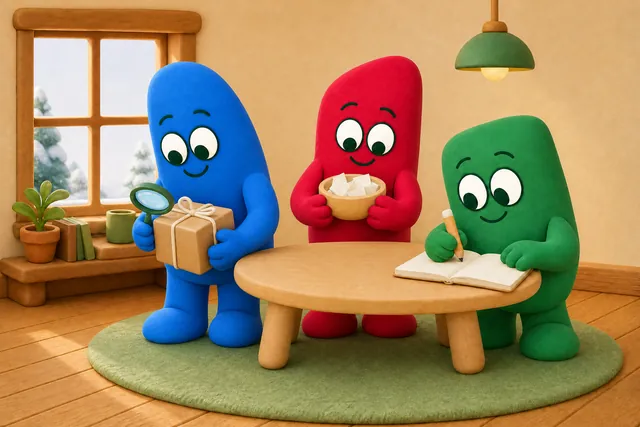
Should you buy from their wish list?
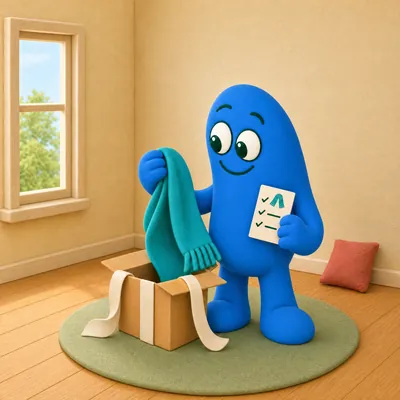
Yes. People like the gifts they asked for more than surprises.
Givers guess the opposite. They think a surprise looks more thoughtful, but the person who opens it would rather have the thing they wanted.
Secret Santa helps here. In one study that included a real Secret Santa, close friends who stayed secret stuck to the wish list more often. With no name on the gift, there was nothing to show off.
5 studies by Gino and Flynn found people prefer the gift they asked for.
For your Secret Santa: ask everyone for a few hints, then buy from them.
Does spending more make the gift better?
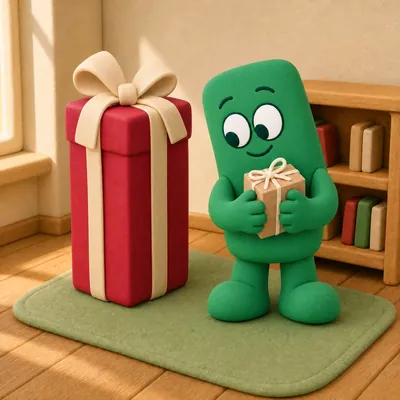
No. A pricier gift doesn't buy more thanks.
Givers expect a dearer gift to be liked more. The people who got the gifts didn't feel that way: how thankful they were did not go up with the price.
For your Secret Santa: a low limit costs nobody any thanks, and it lets everyone join.
Why do “wow” gifts often miss?
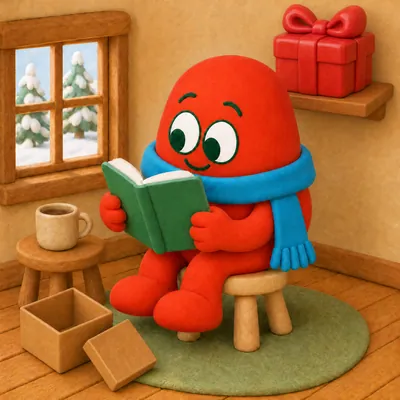
Givers chase the big smile. The person getting it wants something they will use.
In one study, givers chose flowers over a little bonsai tree, even though the tree would please for longer. Other studies find that people care most about how easy a gift is to use.
114 studies, in a review by Freling and others, show givers and the people they give to judge the same gift differently.
For your Secret Santa: pick the thing they will still use next month, not the joke that is funny for ten seconds. Our list of Secret Santa gifts to avoid helps.
Does wrapping matter?
A little, and it depends on who gives it.
From a friend, a neat wrap raised hopes, so the gift inside seemed a bit less special. From someone people knew less well, a neat wrap looked like care, and the same gift was liked more.
3 studies by Rixom, Mas and Rixom looked at neat and messy wrapping.
For your Secret Santa: at work, or with people you barely know, wrap it neatly. With close family, a messy wrap is fine.
Why does a Secret Santa need clear rules?
Gift giving runs on rules that nobody writes down.
A sociologist counted the Christmas gifts in one American town. He found clear rules about who gives what to whom. Nobody wrote them down, yet almost everyone followed them.
People who study gifts have long seen them as a chain: you give, you take, you give back. A Secret Santa is a small, fair version of that chain. Everyone gives one gift, and everyone gets one.
More than 4,000 gifts were counted in that one town.
For your Secret Santa: say the rules before the draw: the limit, the date, and whether it's real gifts or jokes. Our host's guide has a message you can send.
Is the mystery part of the fun?
It may be. Not knowing can make a nice feeling last.
In a lab study, people who got a small surprise and stayed unsure about it felt good for longer. They had guessed the opposite. The study was about not knowing why something nice happened, not who sent it, so this is a hint, not proof.
For your Secret Santa: don't rush the reveal. A day or two of guessing can be part of the gift.
What about the gift you don't want?
Relax. Givers mind far less than you think.
People think passing a gift on will hurt the giver, but givers mostly don't mind. The same goes for swapping it in a shop: givers mostly want the other person to end up with something they like. People swapped more readily when a gift receipt came with it.
And say thank you. People who write thanks think it matters less than it does, and they think it will feel more awkward than it does.
4 studies by Givi and Tavallaei found givers don't mind a swap.
For your Secret Santa: put a gift receipt in the box, and send a short thank you after the exchange.
Is the draw really fair?
It can be. A fair draw shuffles again until nobody has their own name.
Shuffle names once and someone often draws their own name. On average, one person gets their own name, whether the group is small or huge.
About 37 in 100 shuffles leave nobody with their own name.
In the other 63, someone gets their own name, so a fair draw shuffles again.
For your Secret Santa: let our generator do the shuffle. It keeps the draw fair, honors any pairs you block and keeps every match private.
Where do these findings come from?
- Gino and Flynn: Give them what they want
- Ward and Broniarczyk: Ask and you shall (not) receive
- Flynn and Adams: Money can't buy love
- Yang and Urminsky: The smile-seeking hypothesis
- Baskin, Wakslak, Trope and Novemsky: Why feasibility matters more to gift receivers
- Freling and others: Exploring gift gaps
- Rixom, Mas and Rixom: Presentation matters
- Caplow: Christmas gifts and kin networks and Rule enforcement without visible means
- Open Encyclopedia of Anthropology: Gifts
- Wilson, Centerbar, Kermer and Gilbert: The pleasures of uncertainty
- Adams, Flynn and Norton: The gifts we keep on giving
- Givi and Tavallaei: The gift exchange taboo
- Kumar and Epley: Undervaluing gratitude
- University of Technology Sydney: The baffling statistics of Secret Santa
- Steinicke, Penz and Penz: On a combinatorial problem in the Secret Santa ritual