
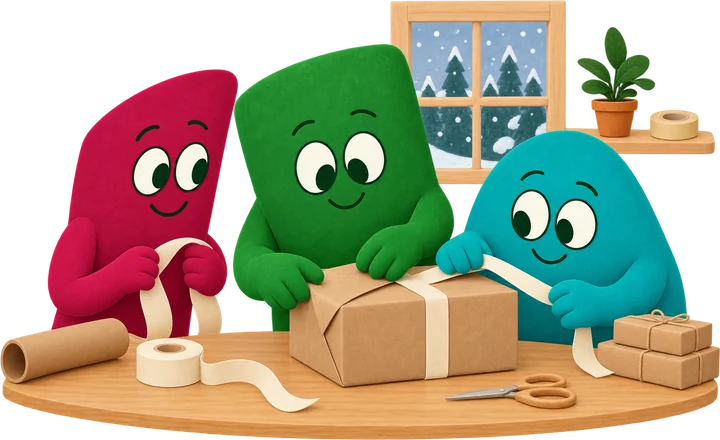
Short answer. Fold the paper tightly round a firm box, hold the end flaps flat and tie ribbon or string across them.
For a flat gift, tucked folds can hold the last flap in place. Use a cloth wrap or a folded paper bag if you have no wrapping paper either.
What do you need to wrap without tape?
Choose a box with firm corners, paper that holds a crease, and string or ribbon long enough to cross the parcel both ways. Keep a small clip nearby to hold a fold while you tie.
Thin tissue tears if you pull it tight. Stiff card is hard to tuck, so plain wrapping paper or light kraft paper is a simpler place to start.
Clear enough space on the table to turn the parcel while keeping one hand on the loose folds.

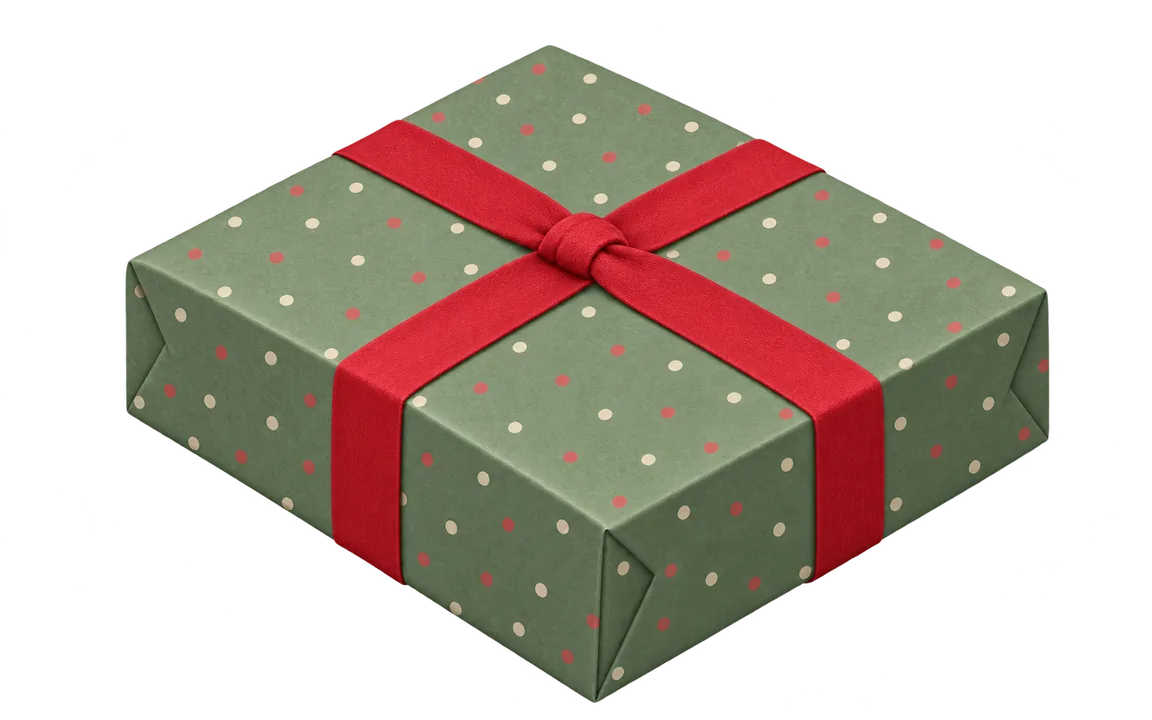
A parcel held shut by ribbon alone
The ribbon crosses the box both ways and keeps every flap flat.
How do tuck and origami folds stay closed?
A tucked wrap holds the final paper point beneath an earlier flap, with the overlapping layers keeping it in place. Start with a thin book or a shallow box, and check that opposite paper corners overlap across its top.
-
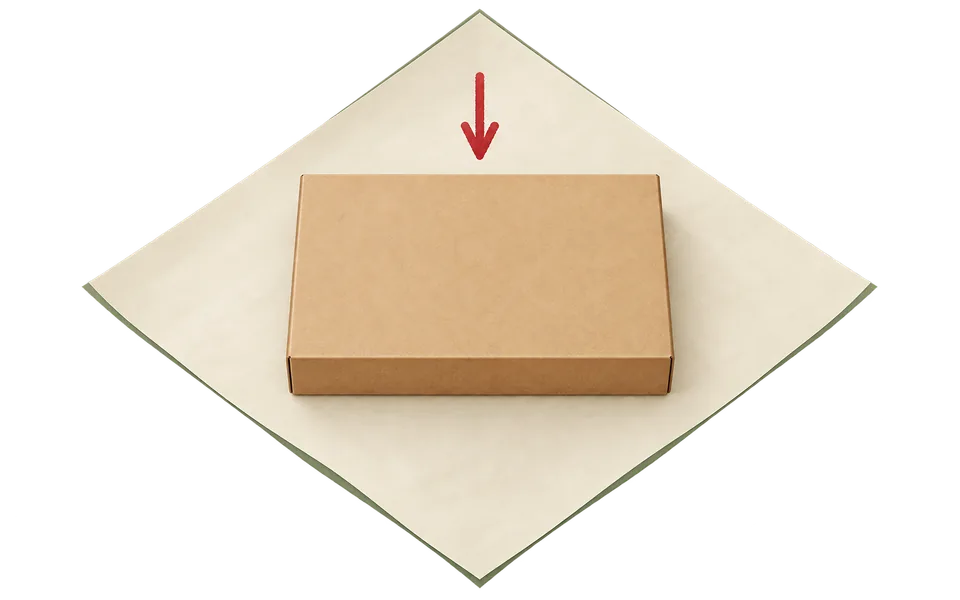
Place the gift in the middle of a square sheet, with a corner of paper pointing towards you.
-
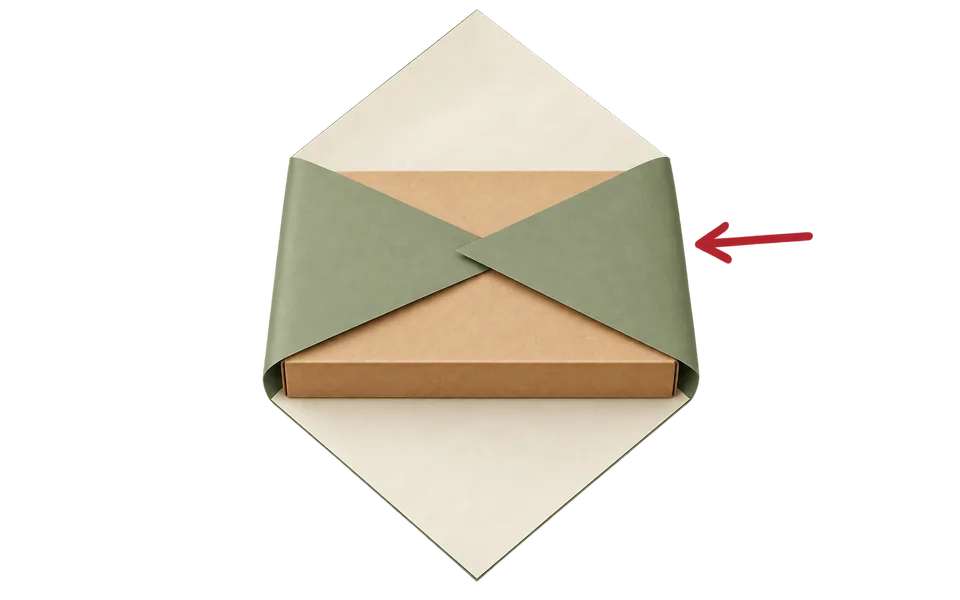
Fold the left corner across the gift, then the right corner over it. Press each crease against the edge of the box.
-
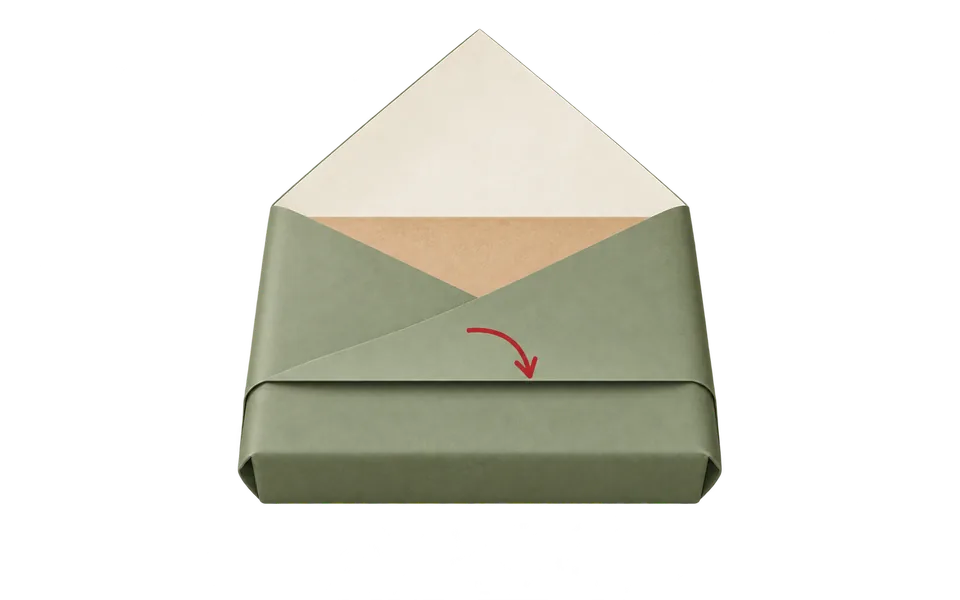
Bring the near corner over those flaps. Fold its tip underneath itself to make a straight edge across the gift.
-
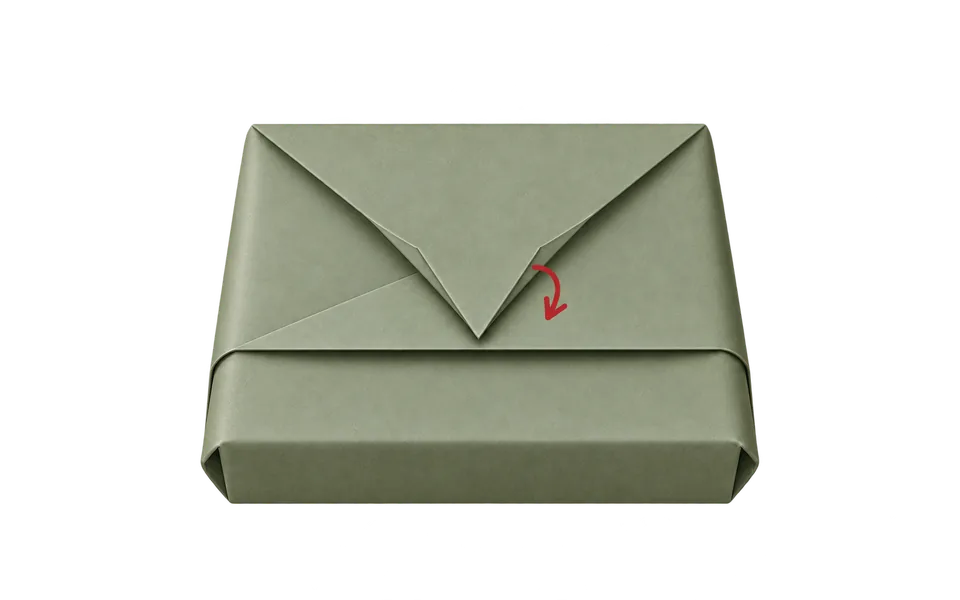
Bring the far corner down over the top. Fold in its side edges so the tip fits the pocket.
-
Slide the final tip under the near flap, between it and the two side flaps. Press the layers flat.
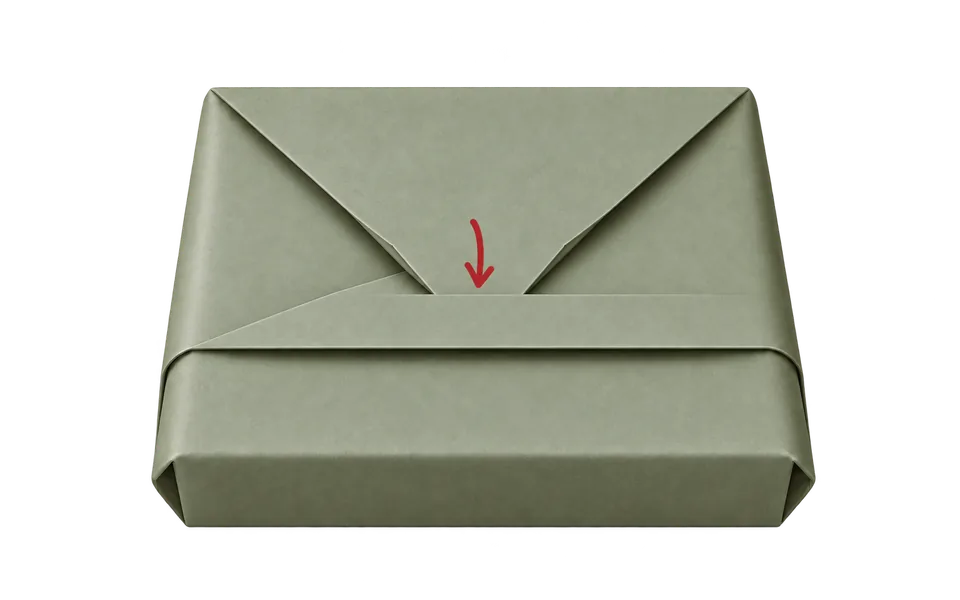
Keep the tucked flap facing up as you hand over the gift, adding ribbon if the point slips out when you lift it. Use a firm box and a ribbon closure for a heavy gift.
How does the Japanese diagonal method work?
The diagonal approach puts the box at an angle to the paper. This lets the corners reach across the gift, which may help when a straight wrap leaves a gap.

For a simple version, place a shallow box diagonally near one corner of a square sheet. Bring the nearest paper point up over the lid, then bring in the two side points, creasing each against the box.
Move the box a little if a side does not reach. Check every edge is covered before you finish with the far point.
You have 2 ways to close it:
- No tape: tuck the final point beneath the overlapping side flaps, or tie ribbon over the join.
- One piece of tape: hold the final point with a small piece of tape on the paper. Washi tape is still tape, even if it is easy to peel.
The department store version uses a rolling motion, so the flat version above is a simpler starting point. Whichever you choose, turning the box cannot fix paper that is too small to cover it.
How do you keep the folds shut with ribbon or string?
Use a cross so one band holds the long seam and the other holds the end flaps. Fold the paper as for a standard box wrap, holding the loose seam with a clip.
-
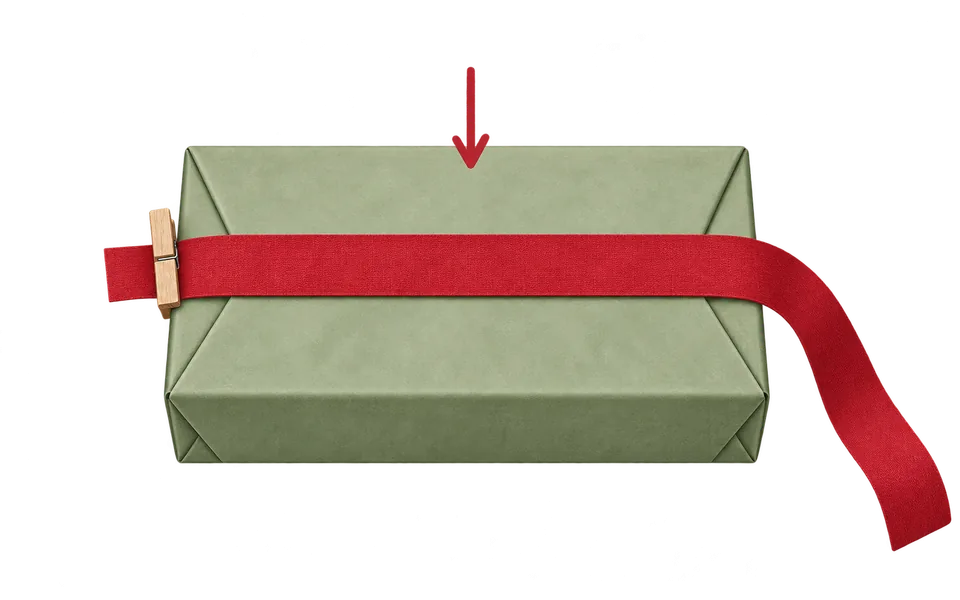
Set the parcel seam down and lay ribbon across the lid, leaving one short tail long enough for a bow.
-
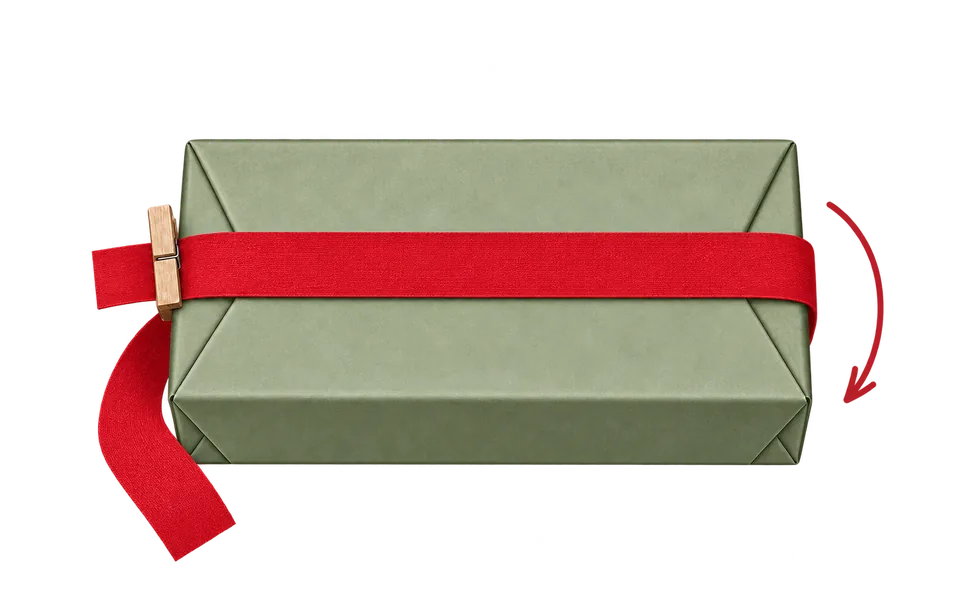
Take the longer end round the box and back to the top, holding the loose flaps flat as it passes.
-
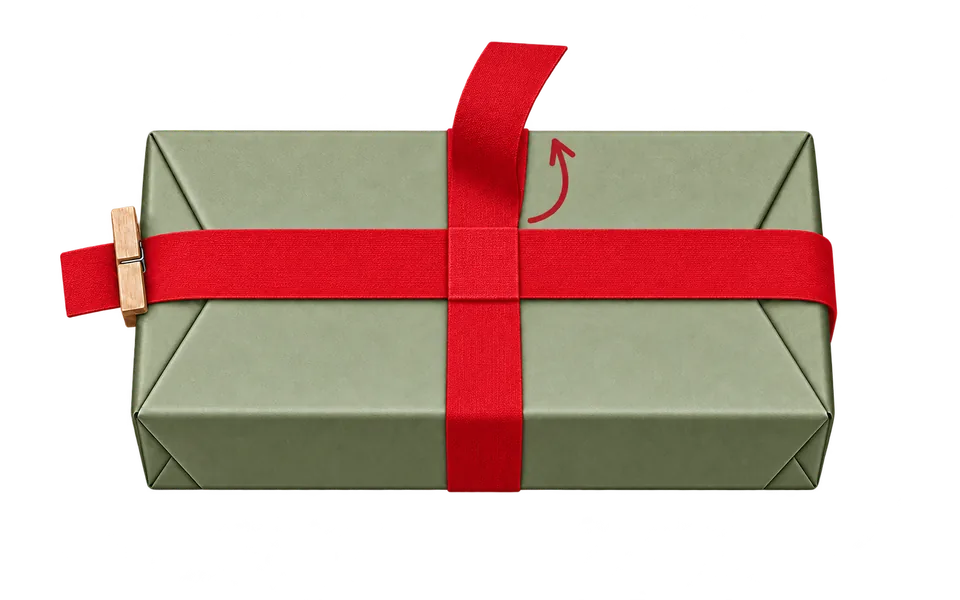
Cross the long end over the short tail, turn it at a right angle and take it round the other two sides.
-
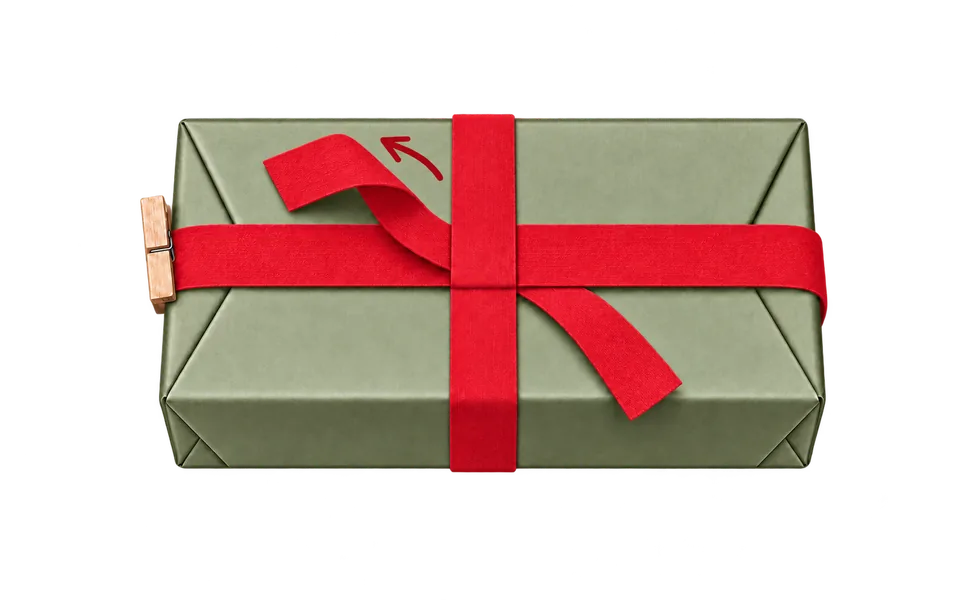
Bring it back to the top, tuck it beneath the crossing bands and tie the ends in a bow.
-
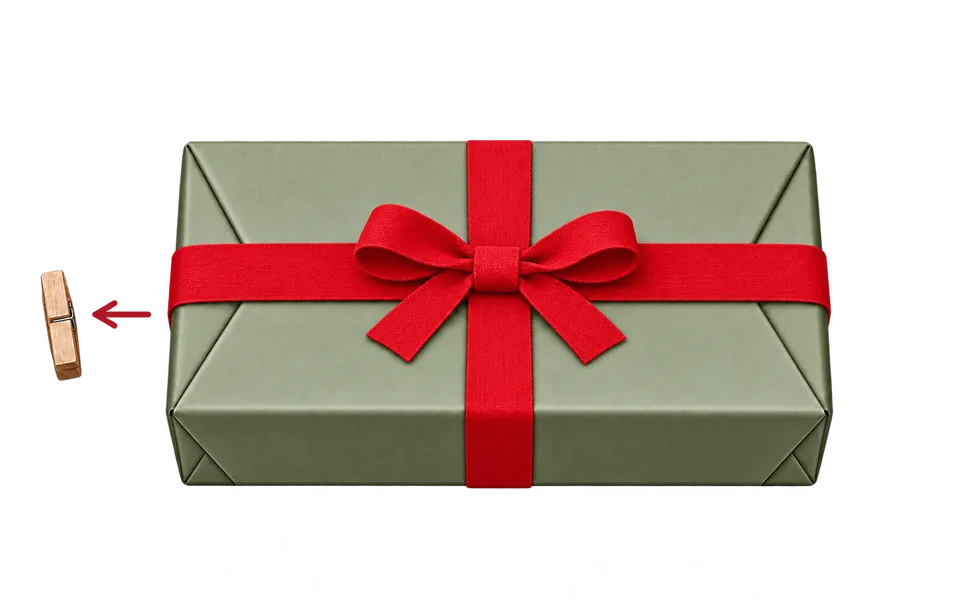
Slide each band over the flaps it needs to hold, then remove the clip.
Hold the folds with a ribbon cross
One band holds the seam and the other holds the ends. Keep a hand on each loose flap until the ribbon is snug.
Use broad ribbon on soft packaging so the ties do not cut into the paper. String suits a firm box. Pull just enough to hold the wrap flat, without denting the corners.
For a fuller finish, see how to make a bow with ribbon.
What can you use without wrapping paper?
A paper bag

Use a clean bag that already has a sealed base. Add the gift, fold the top down twice and close it with a clip. Or punch two holes through the folded top, thread ribbon through them and tie a bow.
A bag made from a loose sheet usually needs tape or glue at the base, so choose a ready made bag to avoid both.
Newspaper or an old map
Choose a sheet that is clean and dry. Wrap the gift in plain tissue first if ink could mark the surface. Fold the outer sheet round the gift and tie it with string.
Keep a map's best part on top by checking where it falls before you crease. Do not use a map, score or page that someone still needs.
A scarf or cloth
Cloth corners can tie to each other, so you need no separate fastener. The furoshiki guide shows the basic box wrap and folds for bottles and books.
How do you wrap a book without tape?
A firm book is a good shape for the tucked method. For a softer paperback, slip a piece of card underneath before you start.
If the paper is too narrow for the diagonal fold, wrap it straight round the book. Bring the long edges together at the back, fold in the short ends and hold each flap flat with your palm.
Tie ribbon in a cross, with the knot on the front cover. Keep it loose enough to slide off without bending the book. Tuck the gift tag beneath the ribbon so it comes away with the wrap.
Why do the folds keep coming loose?
- The paper feels springy. Press each crease along a ruler before tucking it.
- The final point is too short. Open the wrap and shift the gift, or use ribbon to hold the flap.
- There is a thick lump at each end. Trim excess paper before folding again.
- The parcel opens when lifted. Tie a second band across the loose ends and carry the gift from below.
For a parcel sent by post, put the finished gift in a suitable outer box. A decorative tuck or ribbon is not a postal closure.
Which supplies help with the next wrap?
A roll of kraft paper and a length of twine cover lots of small boxes. Save clean ribbon after a gift is opened and keep it with your wrapping kit.
Paper and ties
*Paid link
Furoshiki cloth for knotted gift wrapping

A furoshiki wrapping cloth that folds and ties around a present, so the fabric itself becomes part of the gift.
Why we like it
On the evening before a birthday, you can knot an oddly shaped present into a tidy bundle without scissors or paper.
Tying replaces the crisp creases and taped seams that make paper wrapping fiddly. The finished bundle ends up with a knot on top that doubles as a carrying handle.
Craft twine for tying wrapped presents

Plain twine for tying around wrapped presents, finishing simple bows, attaching gift tags and adding a rustic touch to handmade crafts.
Why we like it
If you wrap presents without tape, this twine holds folded paper or fabric shut with a few tight turns and a knot.
Nothing sticks to the sheet, so it stays reusable, and odd shapes like jars or rolled posters still close neatly. Each finished parcel opens with a tug on the bow, leaving its paper whole to fold away and reuse.
Product prices and availability are accurate as of the date/time indicated and are subject to change. Any price and availability information displayed on Amazon.com at the time of purchase will apply to the purchase of this product.