
Your mom once made you finish every vegetable on your plate. Now she’s sneaking your toddler ice cream before dinner and pretending she doesn’t hear you. What happened?
Here’s the thing—she’s not losing her mind or ignoring your rules to spite you. Something fundamental shifts when parents become grandparents, and research has finally caught up to explain exactly why. Understanding these mechanisms won’t necessarily stop the candy drawer at Grandma’s house, but it will transform your frustration into something more useful: empathy.
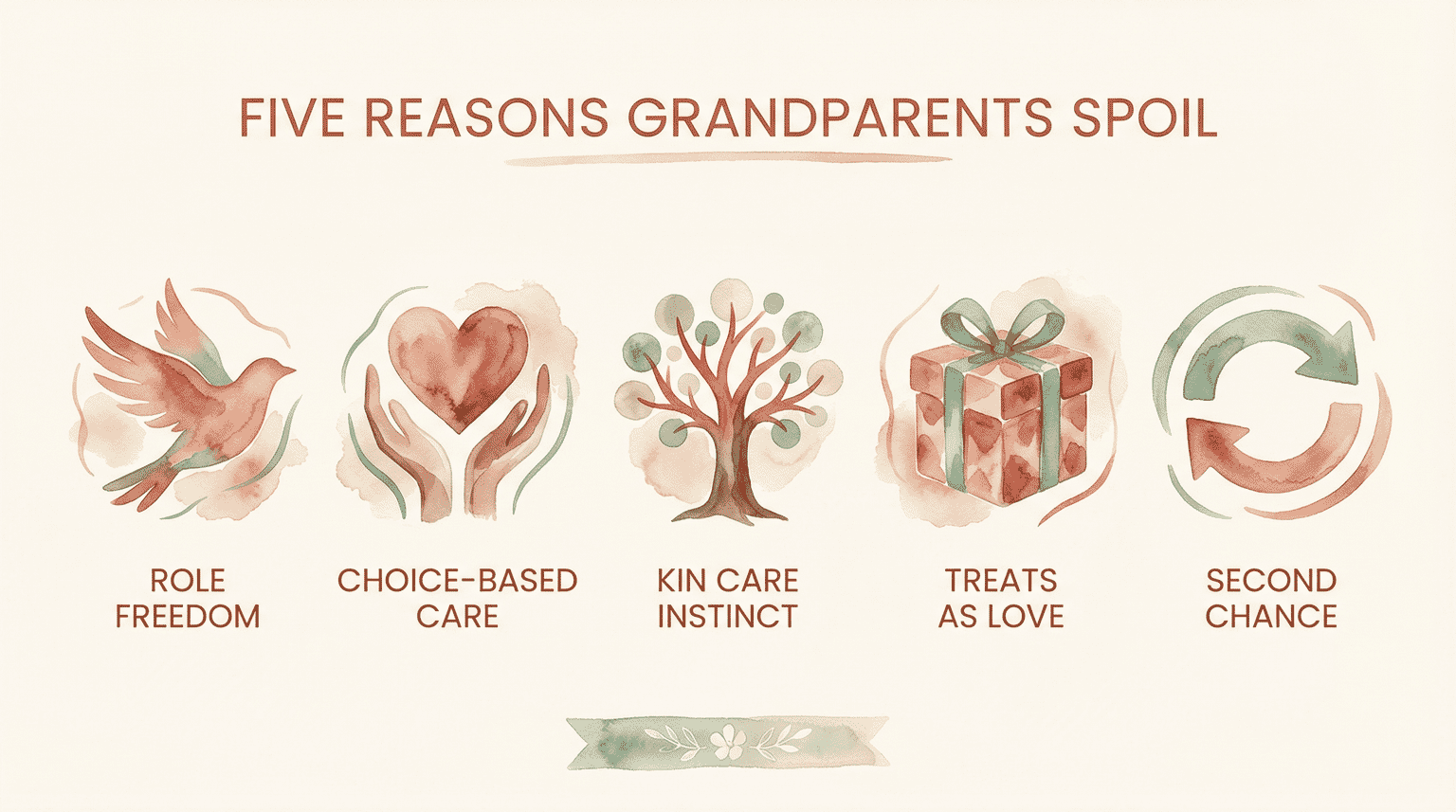
Grandparents spoil grandchildren for several research-backed psychological reasons.:
- Role freedom – Without daily discipline responsibilities, they can focus purely on enjoyment
- Choice-based caregiving – Voluntary involvement produces fundamentally more positive attitudes
- Kin care motive – An evolutionary instinct drives investment in genetic relatives
- Treats as love language – 34% of grandparents use food and gifts specifically to express affection
- Second-chance psychology – They’re making concessions they didn’t make as stressed young parents
My librarian brain couldn’t let this go without digging into the research. What I found wasn’t judgment fuel—it was a window into understanding why the people who raised us suddenly seem like entirely different caregivers.
Key Takeaways
- Spoiling is tied to grandparent identity—research shows they lose pleasure in the role when forced into full-time parenting duties
- 34% of grandparents use treats specifically to express love, compared to just 22% of parents
- Grandparents who experienced scarcity in childhood are measurably more likely to overfeed grandchildren—it’s survival instinct, not indulgence
- Understanding the “why” transforms frustrating conversations into productive ones
- The goal isn’t stopping grandparents from being grandparents—it’s channeling their generosity in ways that work for everyone
The Role Freedom Mechanism
Here’s what happens when you become a grandparent: you get to keep all the fun parts and hand back the hard parts.
Research published in the Journal of Aging Studies (2025) found that when grandparents take on full parenting responsibilities, they experience a “loss of pleasure commonly associated with being able to spoil grandchildren.” In other words, spoiling isn’t a character flaw—it’s tied directly to the grandparent identity itself.

“Having the opportunity to do special things outside of your normal routine is one of the best things about having grandparents.”
— Dr. Kasey Davis, Board-Certified Child Psychologist, St. Louis Children’s Hospital
I’ve watched this happen with my own parents. When they’re babysitting for a few hours, my kids get the good stuff—extra stories, flexible bedtimes, treats that appear from mysterious hiding spots. But during our two-week visit last summer when they had to manage the full chaos? Suddenly they were enforcing bedtimes and limiting screen time just like we do.
The spoiling isn’t random. It requires freedom from the daily grind to exist.
The Choice vs. Obligation Effect

Voluntary caregiving produces fundamentally different behavior than required caregiving. This isn’t speculation—it’s documented science.
“When people do things out of choice and not of need, their approach, attitudes and interactions are much more positive, leading to better outcomes.”
— Dr. Michael Martin, Pediatric and Internal Medicine Physician, Sharp HealthCare
Think about what this means practically. Parents must feed children vegetables, enforce homework time, and say no to the fifteenth snack request. Grandparents get to choose their moments. They can swoop in for the birthday party and leave before the sugar crash. They can buy the noisy toy and go home to silence.
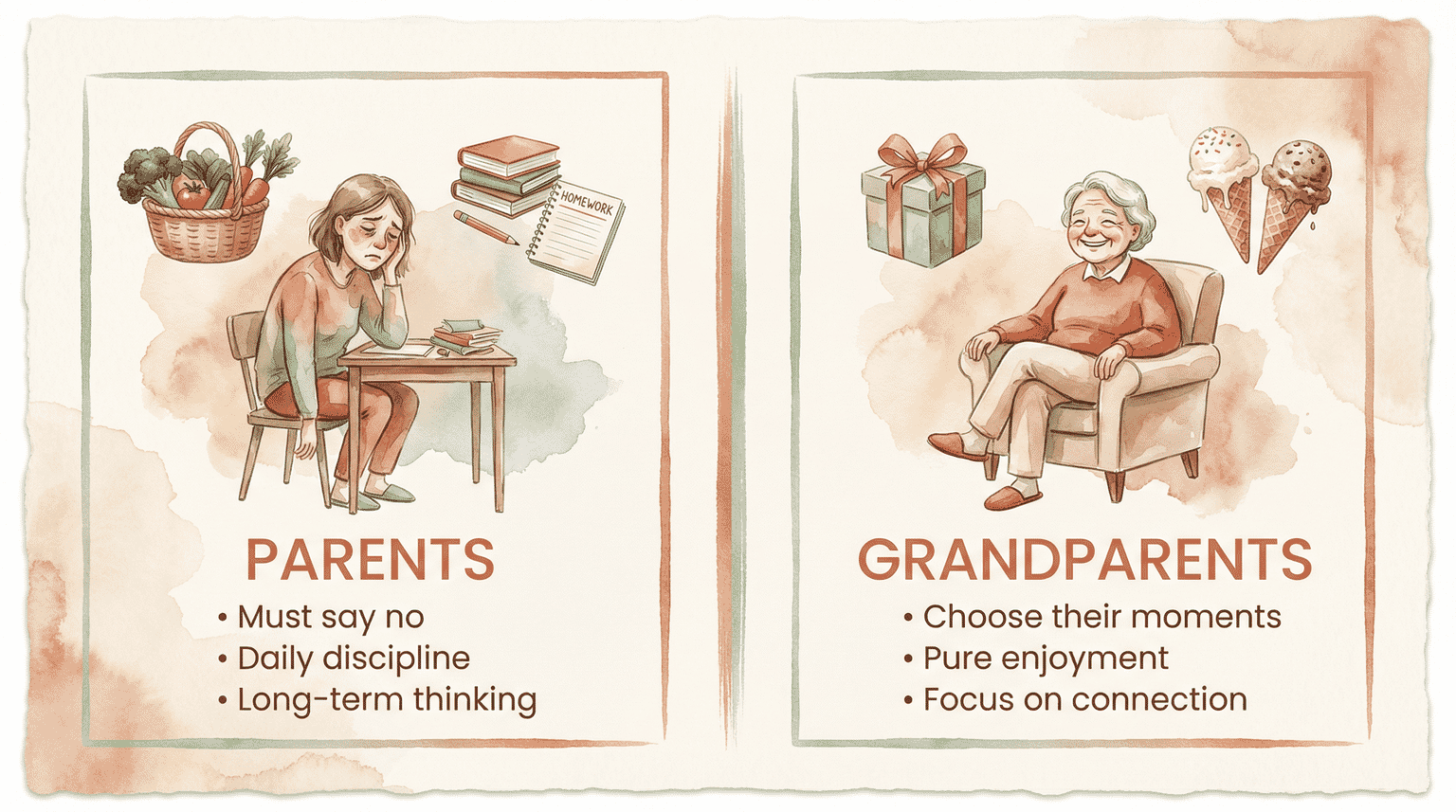
This choice-based engagement changes everything:
- Lower stress during interactions
- Focus on connection rather than correction
- Permission to indulge without long-term consequences
- Joy as the primary emotional register
In my house, this looks like my mother-in-law arriving with presents and leaving before anyone melts down. She’s not being strategic—she’s simply experiencing grandparenting as it’s meant to be: chosen, not compelled.
The Kin Care Motive
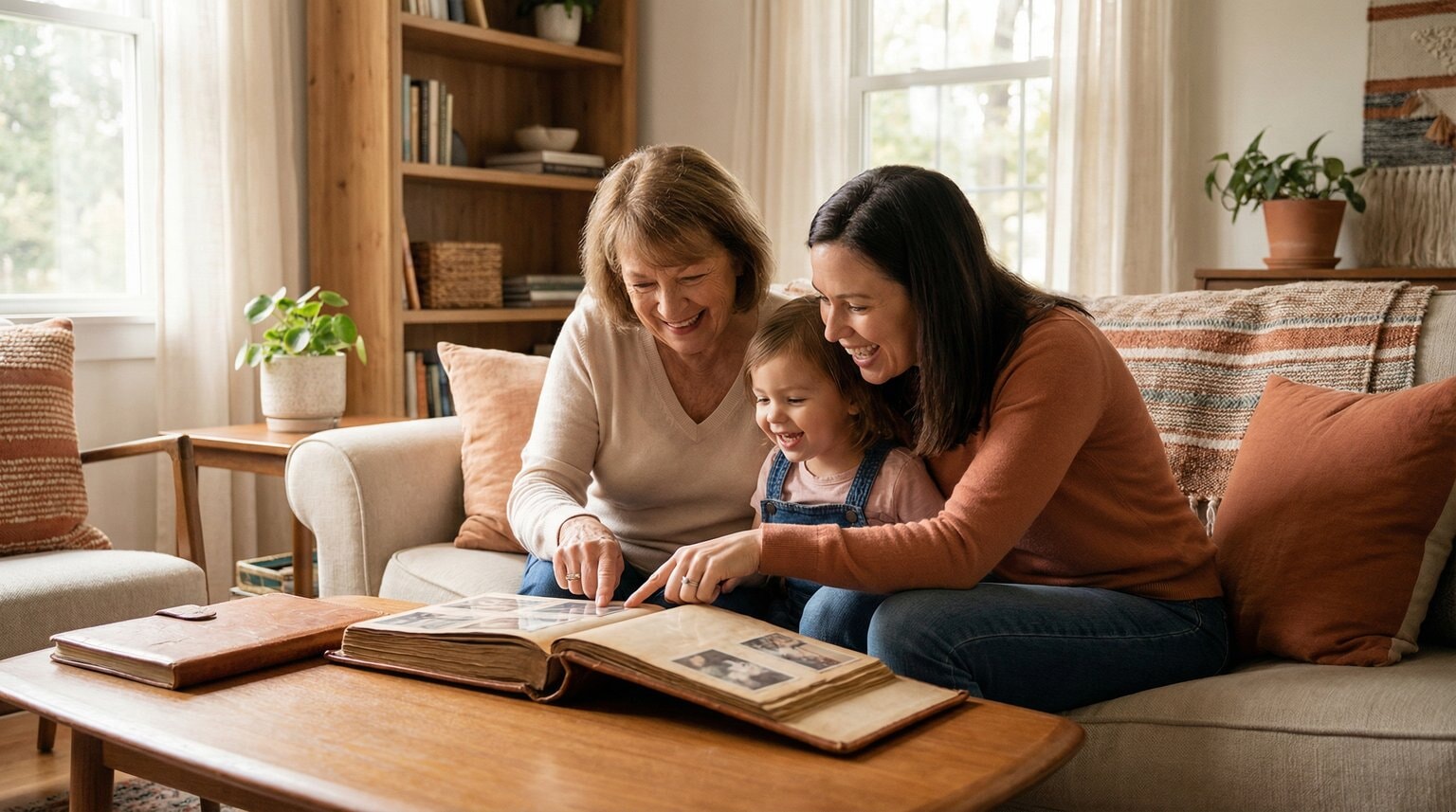
Evolutionary psychology offers another explanation that surprised me. Research on family dynamics identifies something called the “kin care motive”—an instinctive drive to invest heavily in genetic relatives.
This isn’t just cultural or emotional. It’s biological programming that helped ensure offspring survival across human evolution. The grandparents who invested resources in grandchildren helped those children thrive, passing on both genes and the caregiving instinct itself.
Today, that ancient programming doesn’t know the difference between “ensuring survival” and “buying another stuffed animal.” The impulse to provide abundantly for grandchildren may be hardwired, not chosen.
For parents feeling frustrated by the constant influx, this reframe helps: your mother isn’t undermining you. She’s responding to deep evolutionary programming that says give to this child.
The Treats-as-Love-Language Phenomenon
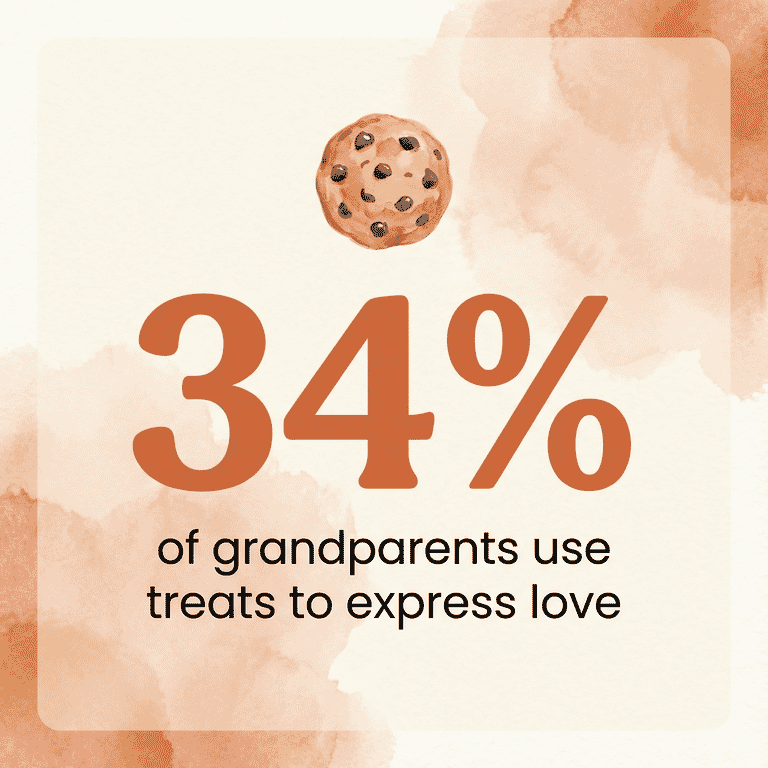
Here’s a statistic that stopped me: A 2023 systematic review in the journal Nutrients found that 34% of grandparents use treats specifically to express love—compared to just 22% of parents.
The same research revealed grandparents provide an average of 2.75 snacks per caregiving occasion, with 65% engaging in what researchers call “structured treat provision.”
Nearly half provide treats weekly; over one-fifth provide them daily. The researchers found that 41% of grandparents naturally adopt an “indulgent” feeding style—nearly double the rate of any other approach.
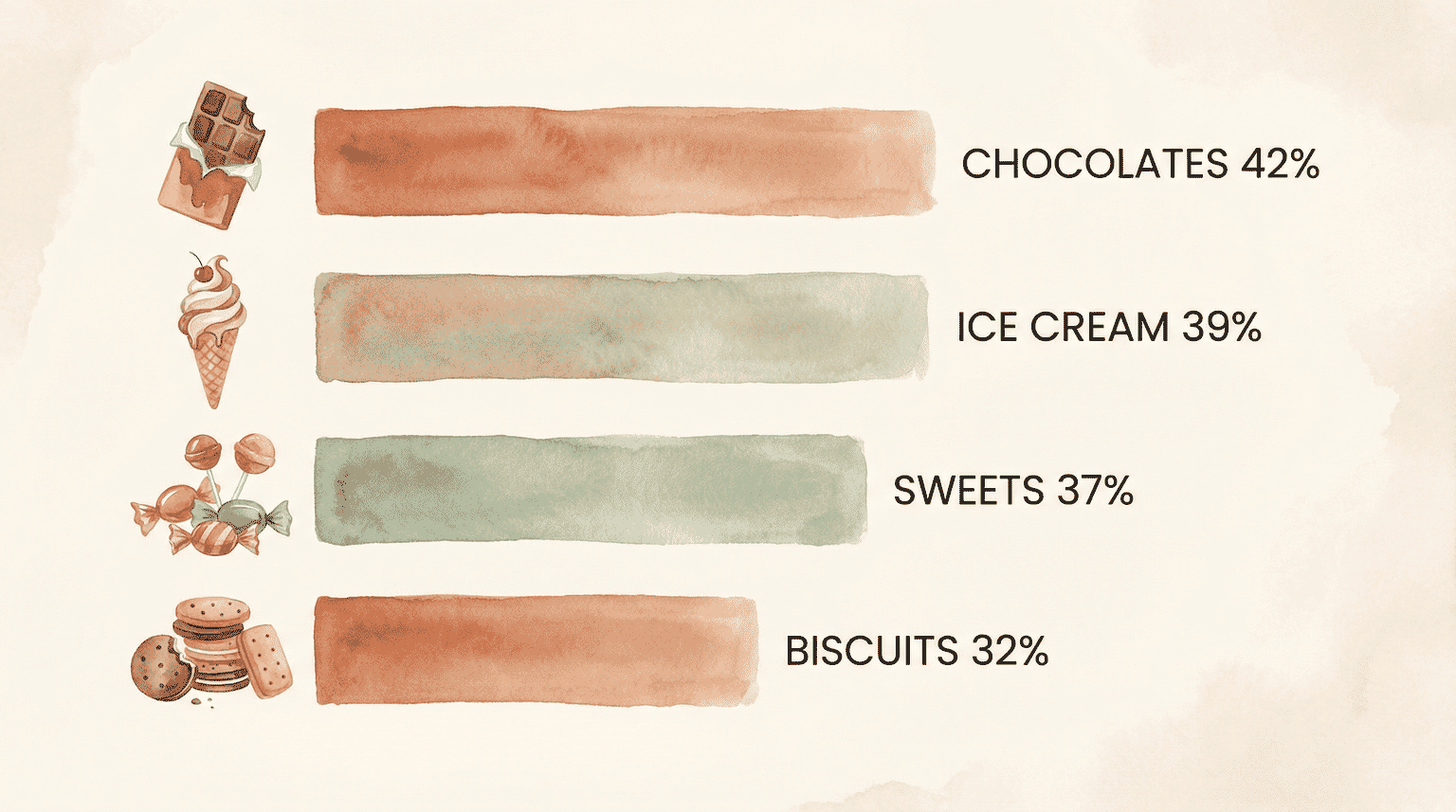
Common grandparent treats include:
- Chocolates (42%)
- Ice cream (39%)
- Sweets (37%)
- Biscuits (32%)
This isn’t ignorance about nutrition. It’s love speaking the only language some grandparents know how to fluently express.
I’ve seen this with my father, who grew up in a household where affection wasn’t verbalized. He shows my kids he loves them by keeping their favorite snacks stocked, by always having a treat ready when they visit. The cookies aren’t about sugar—they’re about connection.
The Scarcity Response
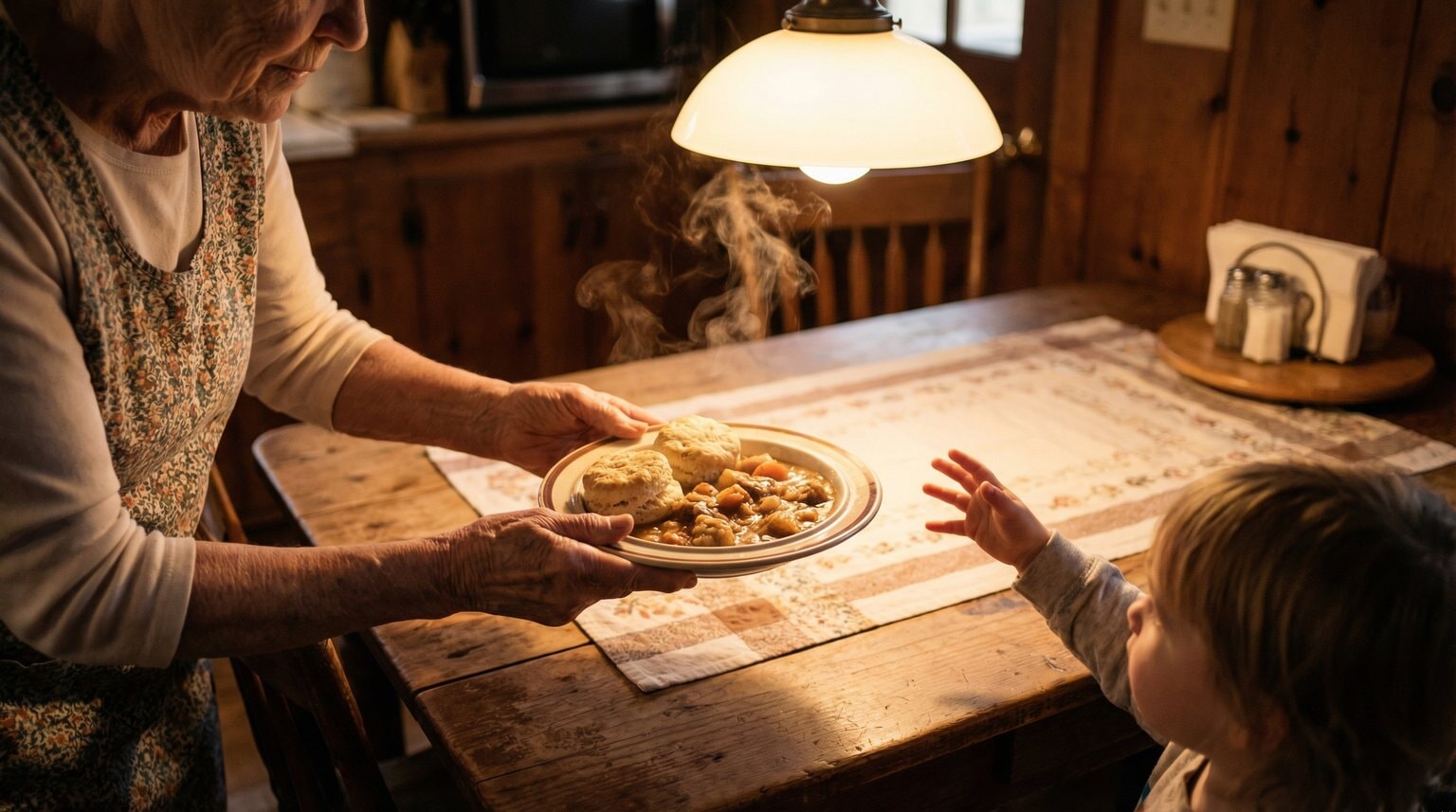
This mechanism hit me hardest when I found the research. A 2021 longitudinal study from China examining over 19,000 children discovered that grandparents who experienced famine during their own childhoods had measurably higher rates of overfeeding grandchildren.
The researchers identified a “long-term fear of hunger” that manifests across generations. These grandparents consider eating more to be successful feeding. They worry about grandchildren experiencing the scarcity they survived.
This isn’t spoiling in the traditional sense—it’s ensuring survival that no longer needs ensuring.
If your parents or in-laws grew up during:
- Wartime rationing
- Economic depression
- Food insecurity
- Immigration with uncertain resources
Their impulse to feed your children abundantly may be trauma-driven, not indulgence-driven. The grandmother pushing second helpings might be the child who went hungry, determined no one she loves ever will.
Understanding this doesn’t mean accepting unlimited treats. But it changes the conversation from “stop spoiling my kid” to “I see why you want to give them everything.”
The Second-Chance Psychology
Research on Spanish grandparents (2024) documented something grandparents rarely admit directly: they’re making “concessions for their grandchildren that they would not have made for their own children.”
One grandmother in the study acknowledged: “I do not let them have sweets, but I did not with my own kids either… but sometimes I do buy them some sweets.”
This is second-chance parenting in action. Grandparents have perspective now. They know which battles mattered and which ones didn’t. They remember being stressed young parents who couldn’t enjoy their children as fully as they wished.
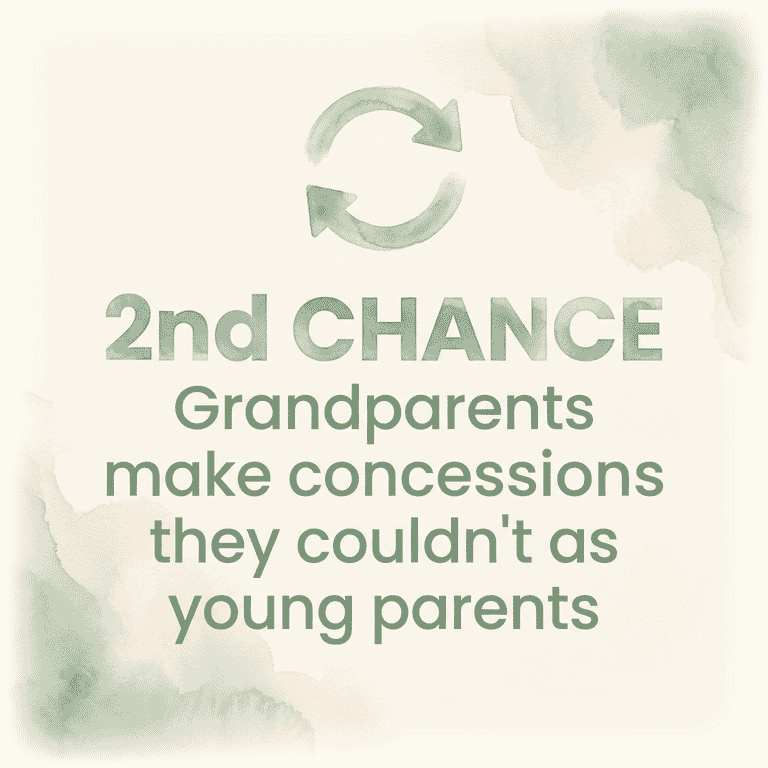
Grandchildren offer a do-over. Not to fix mistakes, exactly—but to experience childhood alongside someone they love without the exhaustion and anxiety that dominated their parenting years.
I’ve caught myself feeling a pang when my parents are endlessly patient with my kids in ways they weren’t with me. But then I remember: they were surviving. Now they’re savoring.
The Perceived Right
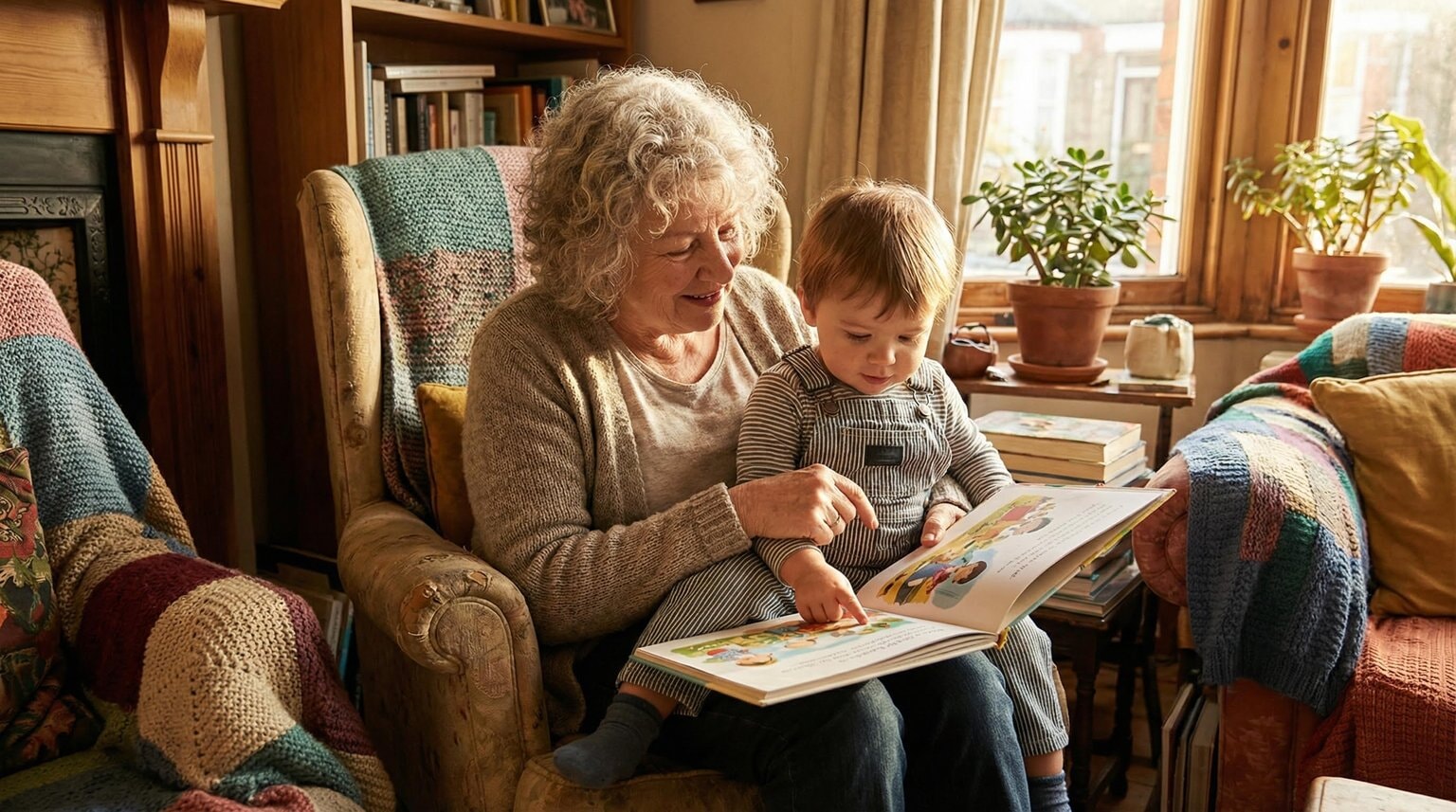
Perhaps the most illuminating finding comes from a qualitative study of Turkish grandmothers (2022). One grandmother stated it plainly: “He only comes to my house twice a week, so I can do whatever I want. And I think I have the right to spoil him.”
“What often happens in these scenarios is a subtle power struggle. Parents need their authority recognized, while grandparents want the freedom to spoil and enjoy their grandchildren.”
— Dr. Jeff Segal, Clinical Psychologist, Psychology Today
After decades of sacrificial parenting—the sleepless nights, the financial strain, the constant putting-someone-else-first—grandparents often feel they’ve earned the right to simply enjoy. Spoiling becomes the reward for years of discipline.
One Spanish grandmother summarized it perfectly: “When I have her, I do what I want and you, when you have her, do what you want.”
This isn’t disrespect toward parents. It’s grandparents claiming their distinct role—one they believe they’ve earned.
What This Means for Parents
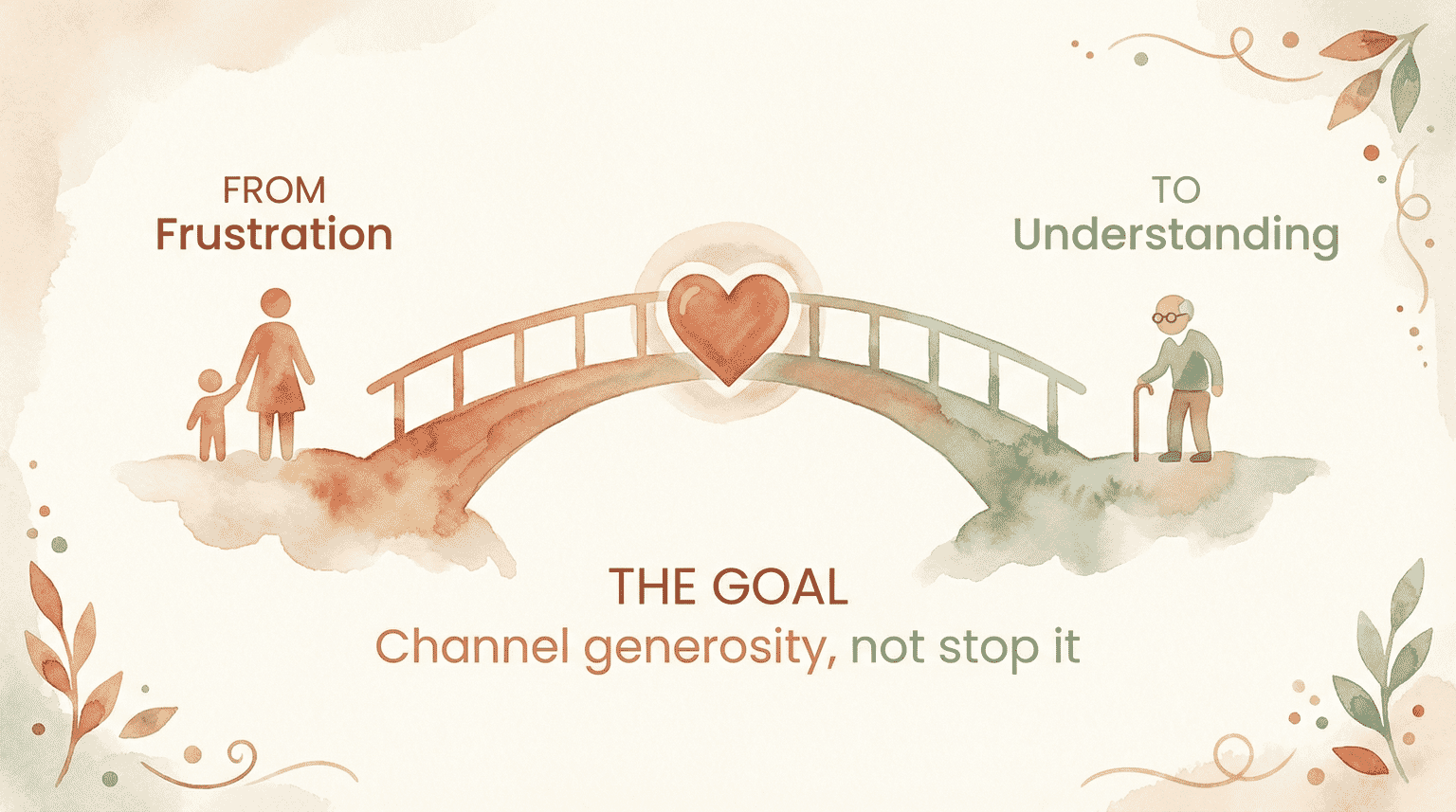
Understanding these mechanisms won’t stop your mother from buying another toy. But it accomplishes something important: it moves you from adversarial frustration to informed compassion.
Your parents aren’t trying to undermine you. They’re responding to:
- Role expectations about what grandparents do
- Biological programming to invest in descendants
- Historical experiences that shaped their relationship with abundance
- Emotional needs to connect through giving
- Perspective that comes only with age
This doesn’t mean accepting every behavior. When grandparent spoiling genuinely conflicts with your values or your child’s wellbeing, you’ll need conversations. For practical approaches, see our guide on how to talk to grandparents about gifts without damaging relationships.
But those conversations go better when you understand you’re not fighting against carelessness or disrespect. You’re navigating powerful psychological forces that have real explanations.
The goal isn’t to stop grandparents from being grandparents. It’s to channel their generosity in ways that work for everyone. Sometimes that means redirecting gift urges toward experiences. Sometimes it means choosing which battles matter. Sometimes it means letting Grandma’s house have Grandma’s rules—within reason.
For families dealing with genuine overwhelm from gift overflow, our practical solutions for managing gift overflow offers specific strategies. (Including what to say at the door.)
Frequently Asked Questions
Is it normal for grandparents to spoil grandchildren?
Yes—research confirms this is standard grandparent behavior. A 2023 systematic review found 41% of grandparents naturally adopt an indulgent caregiving style, and child psychologists note that occasional rule-bending is psychologically healthy for the grandparent-grandchild relationship. The desire to spoil is tied to grandparent role identity itself.
Why do grandparents treat grandchildren better than they treated their own children?
Grandparents care for children by choice rather than obligation, which research shows fundamentally changes their approach. When caregiving is voluntary, attitudes become more positive. Additionally, they’ve gained perspective on which parenting battles actually mattered—and they’re often making concessions they couldn’t afford (emotionally or financially) as stressed young parents.
Can grandparents spoiling affect child development?
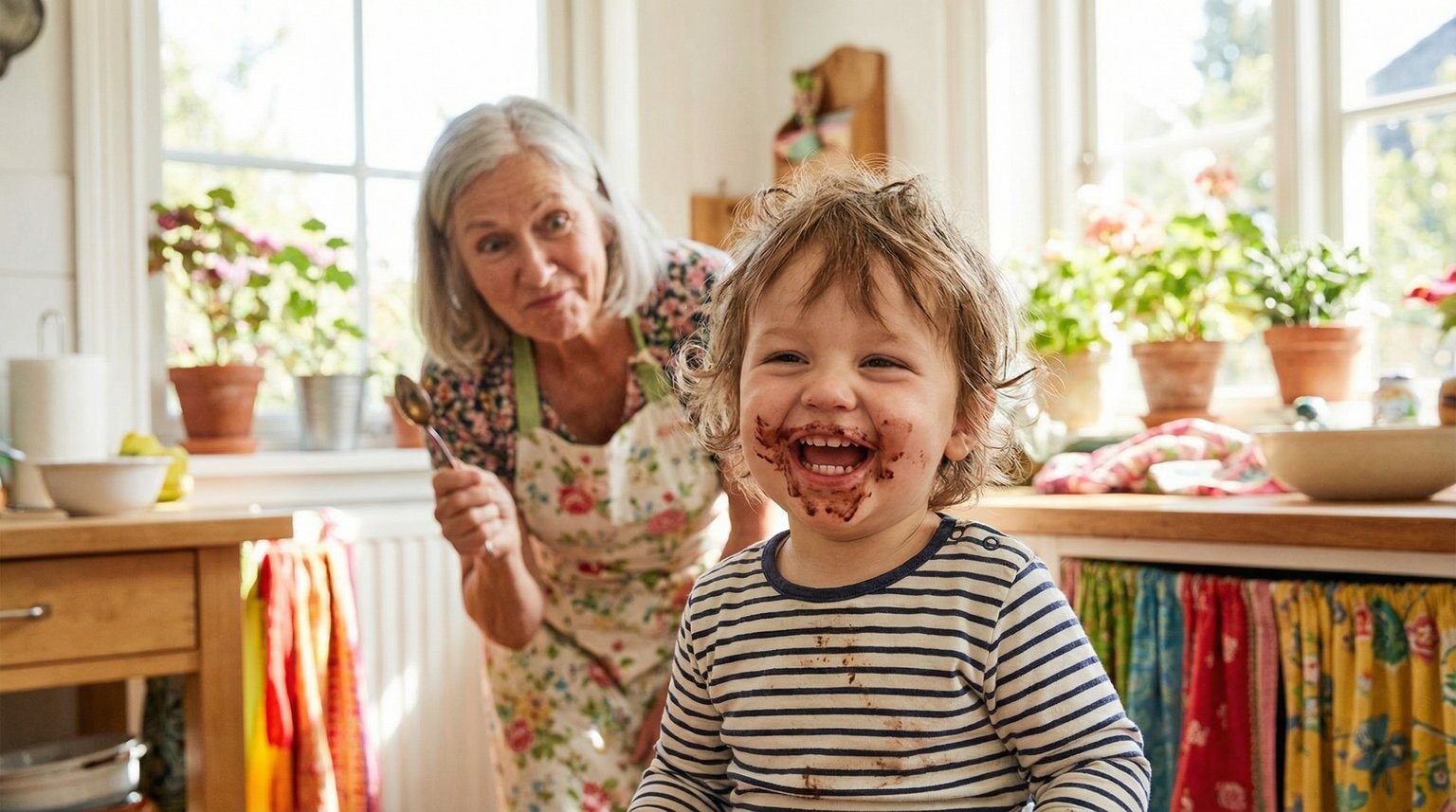
Research indicates extensive grandparent care can influence children’s health habits. Studies show children primarily cared for by grandparents have higher rates of childhood obesity, linked to increased treat provision and reduced activity restrictions. However, strong grandparent relationships also contribute positively to emotional development and decreased depression.
Why do grandparents give so many treats?
Treats function as a love language. Research shows 34% of grandparents use treats specifically to express affection, compared to 22% of parents. For grandparents who experienced scarcity in their own childhoods—or who struggle to verbalize affection—offering abundant food represents care, security, and love in tangible form.
How do I stop grandparents from spoiling my child?
Rather than trying to stop spoiling entirely, focus on understanding and redirecting. Experts recommend proactive conversations with clear expectations, providing written schedules, and suggesting shared experiences as alternatives to material gifts. Avoid criticism—research shows grandparents feel hurt when caring gestures are directly criticized.
I’m Curious
Once you understood why your parents or in-laws spoil, did it change how you approached the conversation? I’m curious whether the “why” reframe helped anyone navigate this with more patience—or whether it just added frustration.
Your spoiling stories help other parents feel less alone in this.
References
- Journal of Aging Studies (2025) – Research on how grandparent role identity relates to spoiling behavior
- Sharp HealthCare – Dr. Michael Martin on choice-based caregiving psychology
- Nutrients Systematic Review (2023) – Statistics on grandparent feeding styles and treat provision
- Economics & Human Biology (2021) – Longitudinal study on famine experience and grandparent feeding patterns
- Geriatric Nursing (2024) – Spanish grandparent study on second-chance psychology
- BMC Public Health (2022) – Turkish grandmother perspectives on the right to spoil
- Psychology Today (2025) – Dr. Jeff Segal on grandparent-parent power dynamics

Share Your Thoughts