

Your daughter just finished opening presents at her birthday party. There are seventeen new toys scattered across the living room floor—and grandma is already asking where you’d like her to put the three she has in the car “for later.”
You love that your parents and in-laws adore your kids. You really do. But somewhere between the fourth stuffed animal and the battery-operated drum set that seemed wildly wrong, you started wondering: How do I say something without crushing their joy?

Here’s the thing—this conversation protects your relationship with them, not threatens it. Research from the Gottman Institute puts it directly: “Setting clear boundaries is a necessity in any healthy relationship. Without boundaries, we can begin to feel angry and resentful, which may ultimately harm (or even end) the relationship.”
If you’re dealing with too many gifts from everyone, not just grandparents, the same principles apply. But grandparents deserve their own approach because the relationship—and the stakes—are different.
Key Takeaways
- Grandparents over-gift because gifts represent love and connection—understanding their motivation transforms frustration into compassion
- The Gottman “gentle start-up” approach prevents defensiveness: acknowledge love, use “I feel” statements, invite collaboration
- Redirect generosity toward experiences, books, savings contributions, or one meaningful gift instead of many
- When conversations fail, practical tactics like intercepting gifts and implementing “one in, one out” give you control
- Your boundary protects the relationship—research shows unaddressed resentment damages family bonds more than honest conversations
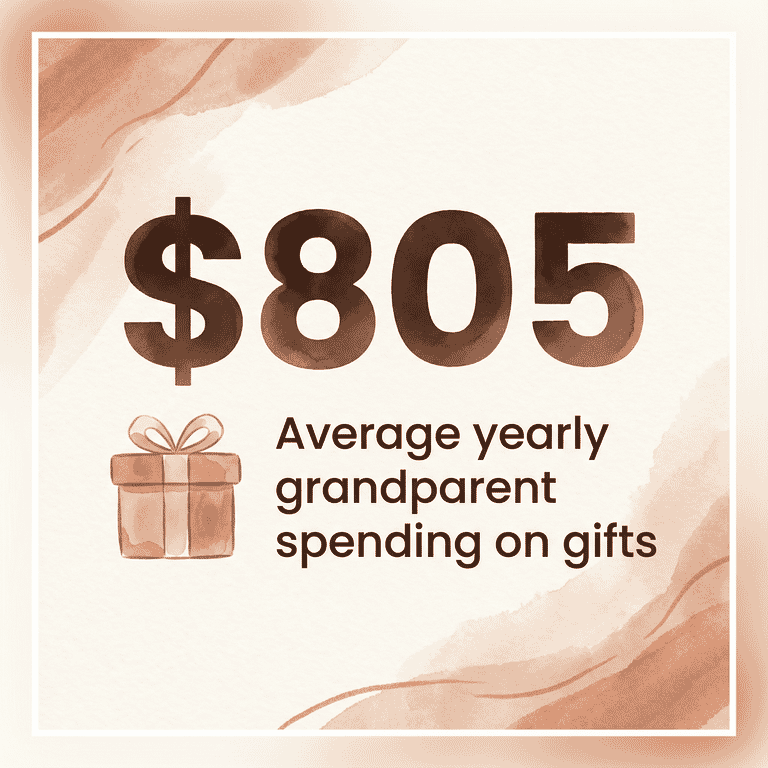
AARP research shows that 86% of grandparents buy gifts for their grandchildren, averaging $805 per year on presents alone. This is normal grandparent behavior.
Which means the conversation you’re about to have? Also completely normal. You’re not the first parent to feel buried under an avalanche of well-intentioned generosity.
Why Grandparents Over-Gift in the First Place

Before you plan what to say, it helps to understand what’s actually driving the gift avalanche.
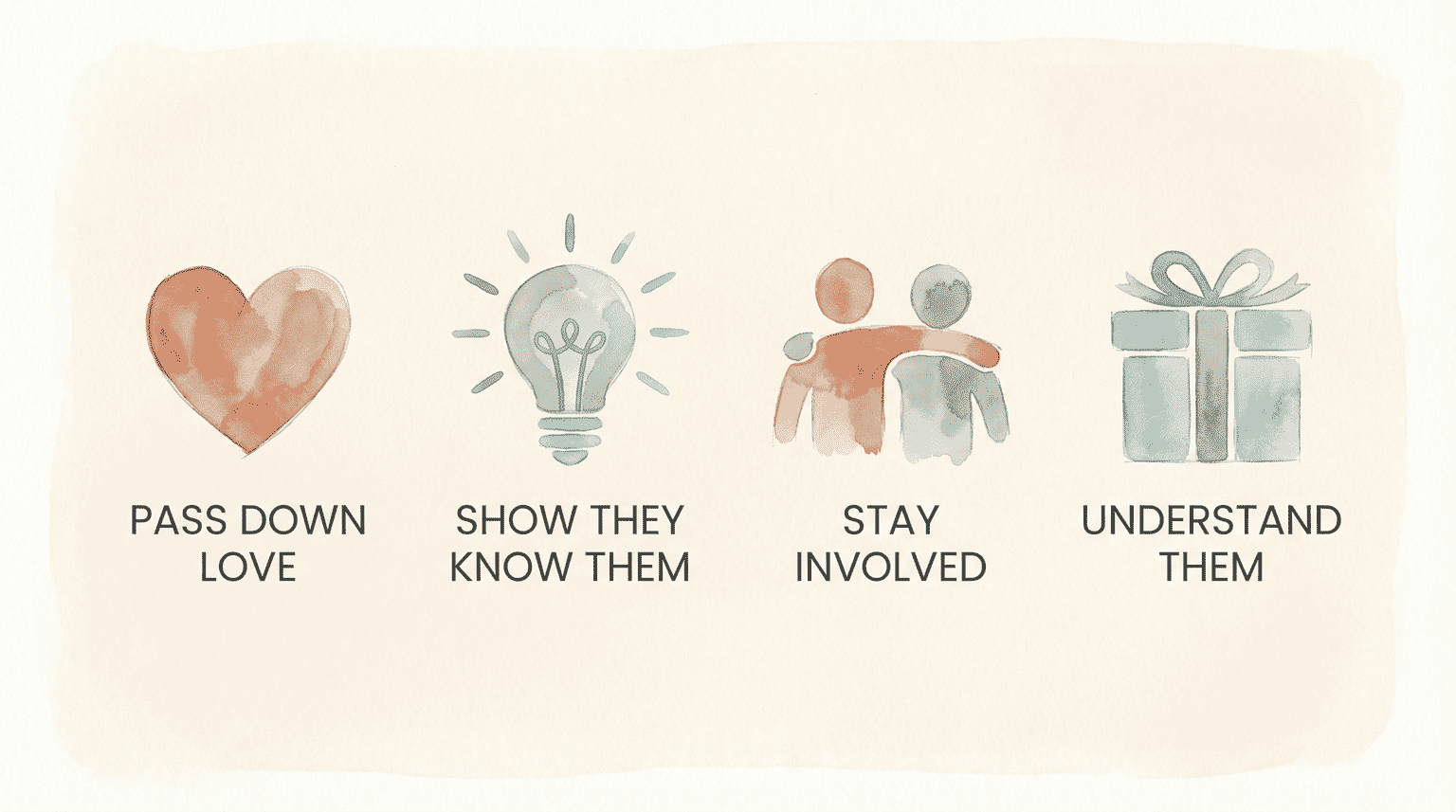
Research from the University of San Diego identified four core motivations behind grandparent gift-giving: wanting to pass down traditions and love, showing grandchildren they truly know them, seeking to understand their grandchildren’s authentic selves, and staying actively involved in their lives.
That personalized toy your mother-in-law found? It’s her way of saying I see your child. I understand what makes them happy.
Gifts often function as a love language, especially for grandparents who can’t be there daily. For long-distance grandparents particularly, a package in the mail is tangible proof they’re thinking of your child.
Here’s what surprised me when I dug into the research: grandparents often want guidance but feel uncertain how to ask. A 2022 NIH study on intergenerational relationships found that contemporary grandparents frequently report “treading on eggshells,” wanting to help but fearful of overstepping.
They may actually welcome clear direction about what you need—if you can deliver it with warmth.
Understanding why grandparents feel compelled to spoil can transform your frustration into compassion. The gift isn’t really about stuff. It’s about connection.
The Conversation Framework That Actually Works
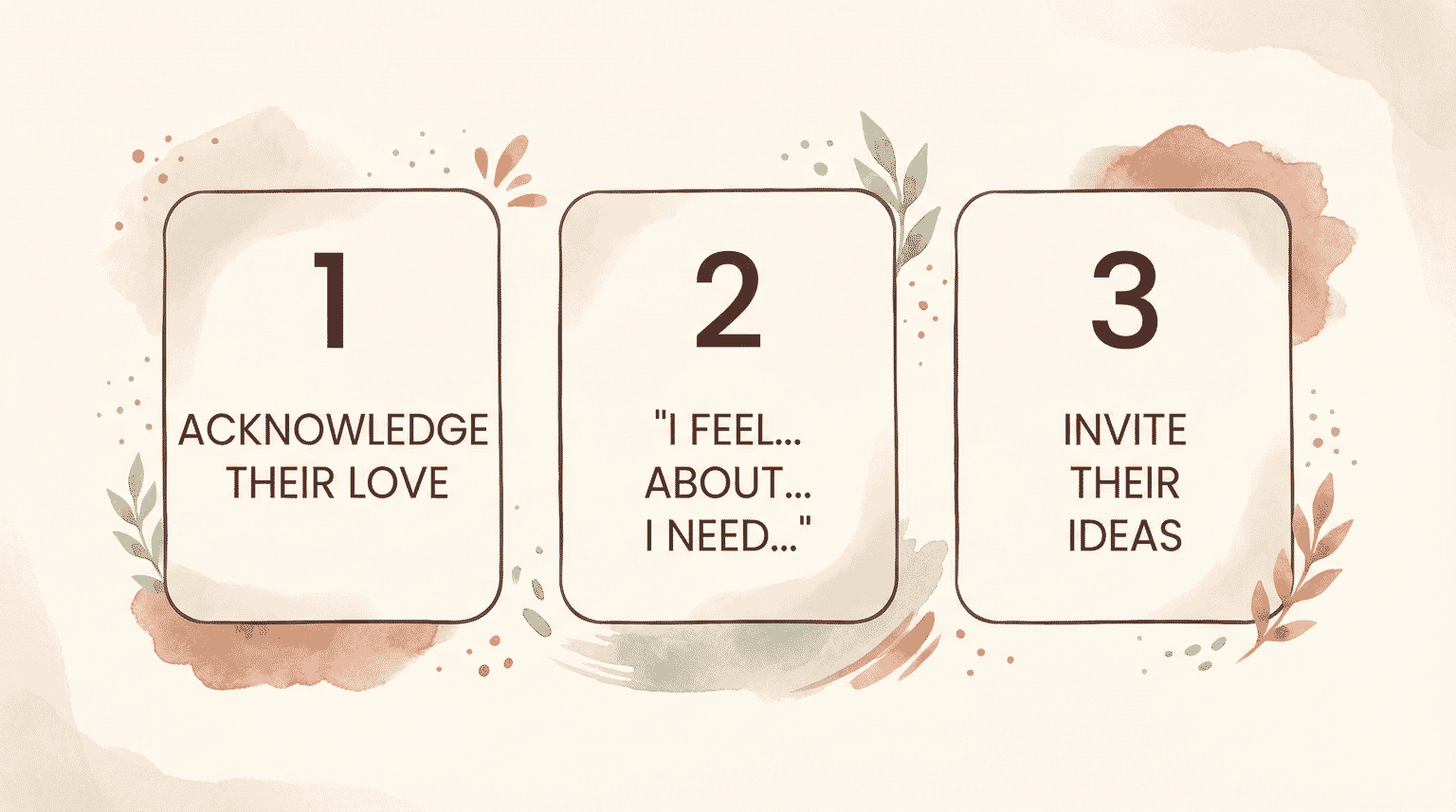
The Gottman Institute’s research on family communication offers a three-step approach they call the “gentle start-up.” I’ve adapted it specifically for gift-giving conversations:
Step 1: Acknowledge their loving intent. Before anything else, recognize what’s behind their generosity. They’re trying to express love—just in a way that’s creating challenges for you.
Step 2: Use the “I feel… About what… I need” structure. This keeps the focus on your experience rather than their behavior, which prevents defensiveness.
Step 3: Invite collaboration. Ask for their ideas rather than dictating solutions.
Before you have this conversation, a few preparation notes from the Parenting Decoded podcast: Both parents should discuss talking points together beforehand. If you’re anticipating a strong reaction, consider having the conversation in public (restaurants tend to encourage restraint).
And critically—start by making sure they feel loved and appreciated.
Scripts for the Initial Conversation

Script A: Talking to Your Own Parents
“Mom/Dad, I need to talk with you about something, and I want you to know this comes from a place of love. We’re so grateful for everything you do for [child’s name]—they absolutely adore you, and that relationship means everything to us.
I’ve been feeling overwhelmed by how many toys are coming into our house. It’s not about your generosity—I know that comes from your heart. I feel stressed when I see [child] getting overstimulated by too many new things at once. I need us to find a balance that helps them actually appreciate what they receive.
What would mean the most to [child] is time with you. Could we talk about doing more experiences together instead of gifts? I’d love your ideas on what that could look like.”
Script B: Talking to In-Laws
For in-laws, your partner should take the lead. This isn’t about hiding—it’s about respecting the family dynamic that already exists.
“[Partner] has asked me to talk with you about something that’s been on our minds. First—we’re so grateful that you love [child] the way you do. We see it in everything you give them.
We’ve been feeling overwhelmed by the sheer number of toys in our house. It’s not that we don’t appreciate your thoughtfulness—we really do. We just need to find a different approach that works better for our family.
We were hoping you’d be open to focusing on experiences or just one meaningful gift. What do you think?”
Script C: The “We’ve Been Thinking” Approach
This works when you want a softer entry point:
“We’ve been thinking a lot about what we want [child] to remember about their childhood. And honestly? We want them to remember you—not stuff.
Research actually shows that grandparents who are most loved aren’t the ones who bought the most. They’re the ones who created rituals and spent time. We’d love to talk about how we can make that happen more.”
Scripts for Specific Situations
Before the Holidays
Timing matters. Have this conversation 4-6 weeks before major gift-giving occasions—not the week before when they’ve already shopped.
“Christmas is coming up, and before things get busy, we wanted to share where we’re at with gifts this year.
We’re trying to focus on quality over quantity—maybe one or two meaningful things rather than lots of smaller items.
Would you be open to coordinating with us so we can make sure [child] really appreciates what they get?”
When You’ve Already Asked Once
“I know we talked about this before, and I appreciate that you’ve been trying. I’ve noticed a lot of new toys coming in lately, and I need us to stick closer to what we discussed. This really matters to our family. Can we revisit what would work for everyone?”
For Long-Distance Grandparents
Distance complicates everything. Gifts feel like one of the few ways they can stay present.
“We know it’s hard being far away, and we see how much the kids love getting packages from you—it makes them feel connected to you.
We’d love to channel some of that into experiences you can do together, even from a distance. What about a monthly video call activity, or a subscription to something you can enjoy together?”
When They Ask “What Should I Get?”
This is the golden opportunity. Don’t waste it.
“We’re so glad you asked! Honestly, what [child] would love most is [specific experience, book, or contribution]. We’re also building their college fund if you’d rather contribute there. And books—they can never have too many books.”
Phrases That Backfire (And What to Say Instead)
| Instead of… | Try… |
|---|---|
| “You’re spoiling them” | “I’ve noticed they get overwhelmed when there’s too much at once” |
| “They don’t need anything” | “What they really need is time with you” |
| “We don’t have room” | “We want them to really treasure what they have” |
| “That’s too much” | “Could we focus on one special thing this year?” |
| “Stop buying so much” | “I need us to find a balance together” |
The difference? The left column triggers defensiveness because it sounds like criticism. The right column keeps the focus on your needs and your child’s experience.
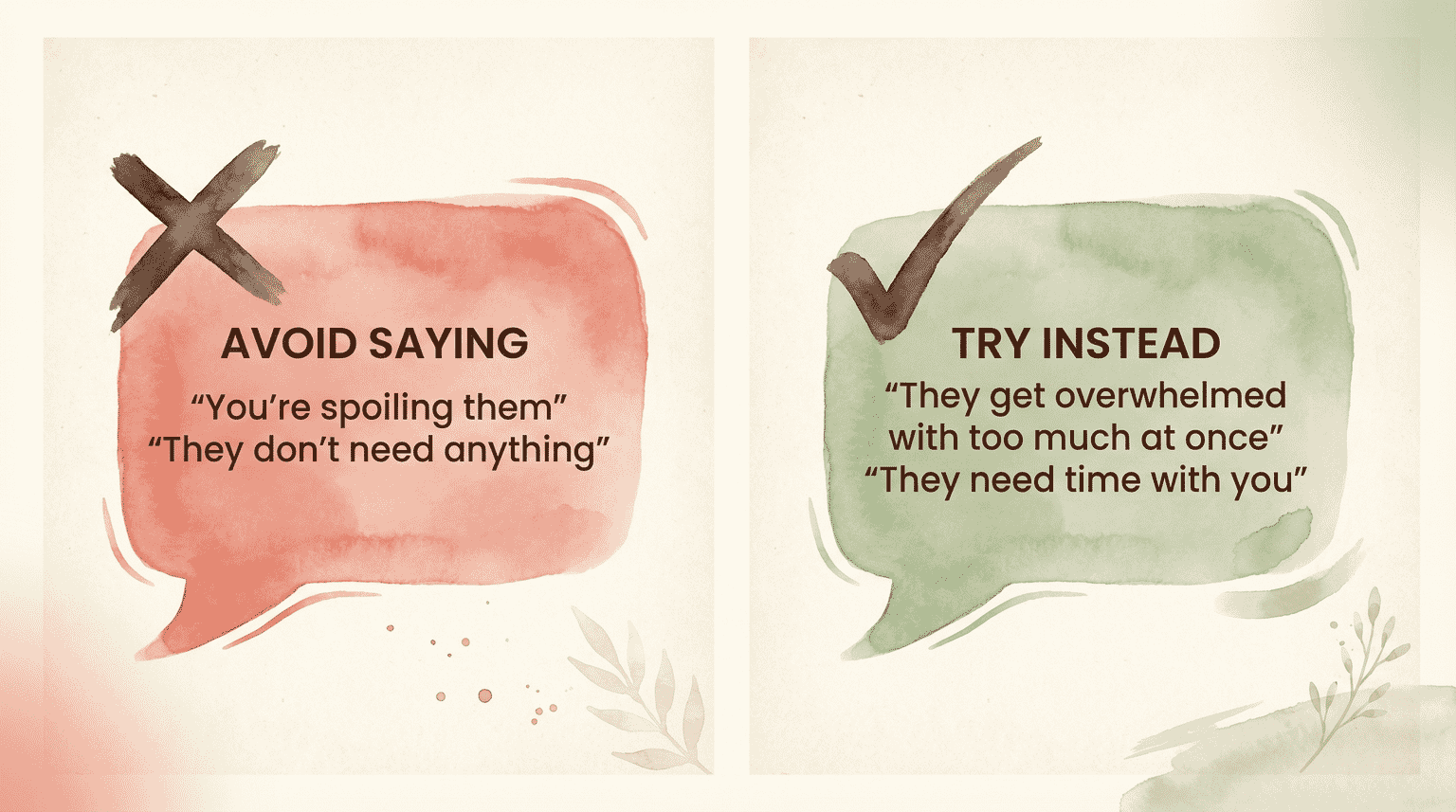
When you frame the conversation around your child’s experience rather than grandparents’ behavior, you invite collaboration instead of defensiveness.
Redirecting Their Generosity
Grandparents want to give. Your job isn’t to stop the giving—it’s to redirect it toward things that won’t overwhelm your home.
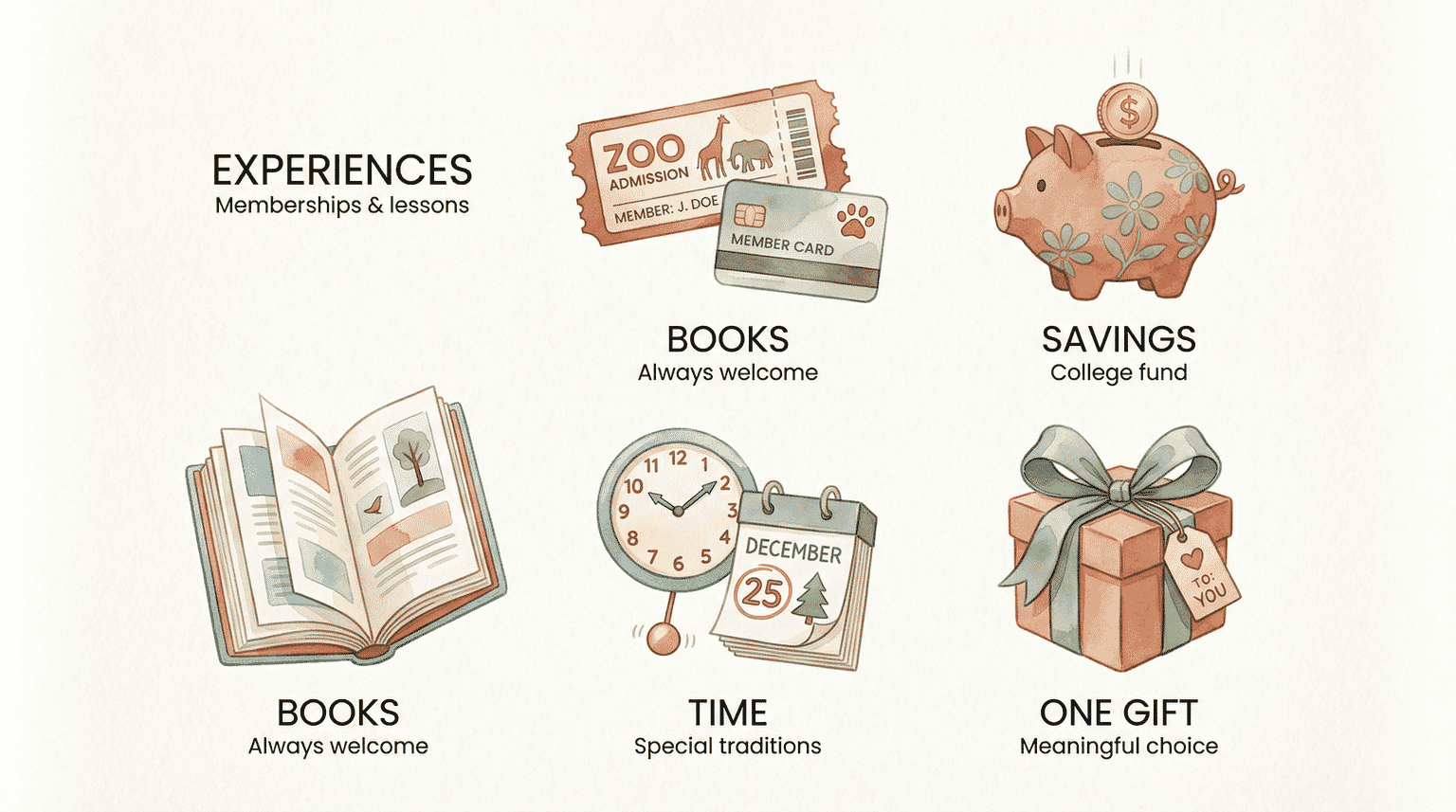
Experience gifts create memories without clutter: zoo memberships, museum passes, swimming lessons, movie tickets, or “adventure coupons” for special outings together.
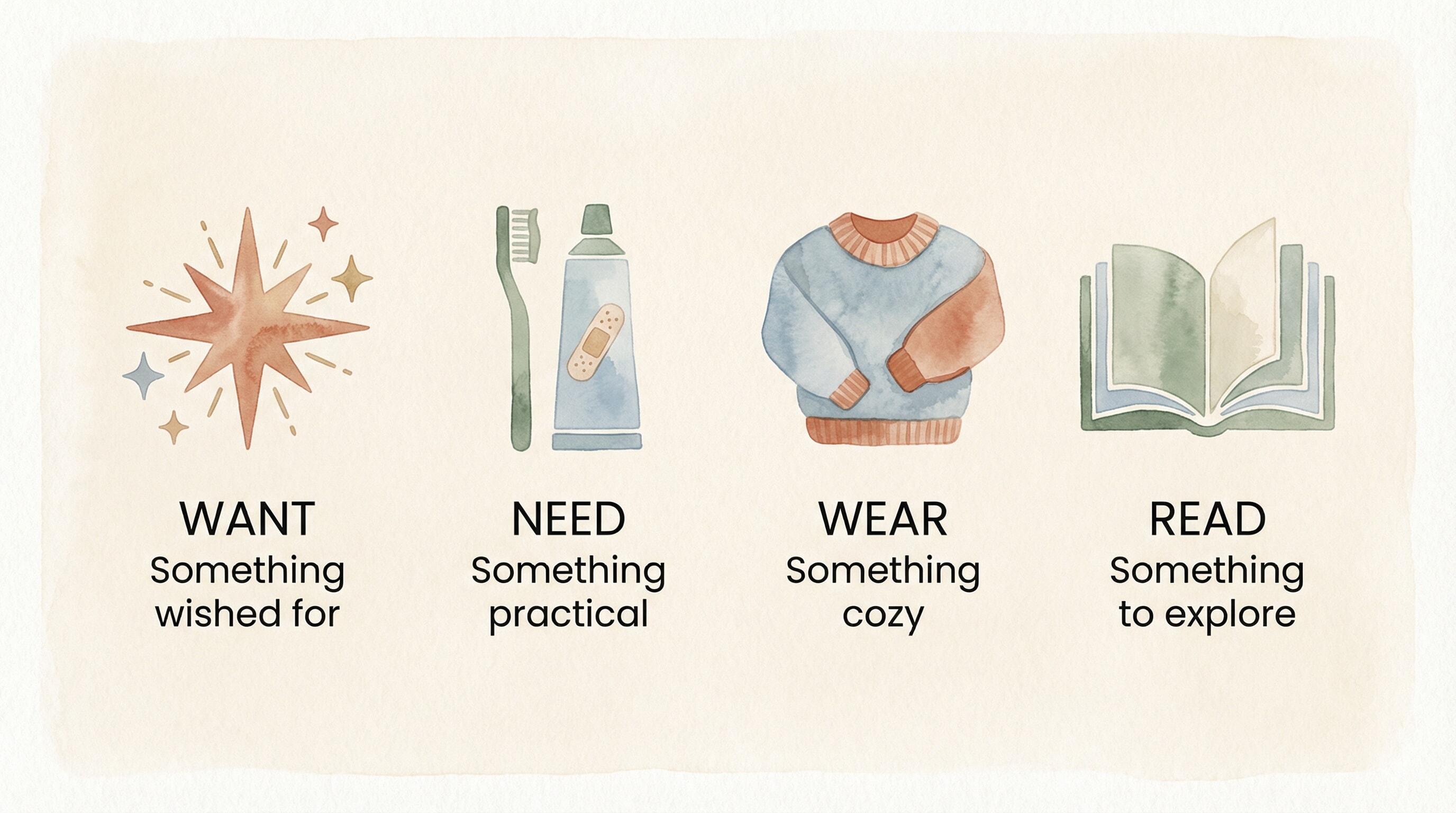
The Four Gift Tradition gives structure: something they want, something they need, something to wear, something to read. This helps grandparents feel like they’re still giving generously while keeping volume manageable.
Many grandparents actually love having a framework. It takes the guesswork out of gift-giving and ensures their presents feel meaningful rather than lost in a pile.
Contribution gifts build toward the future: additions to a 529 college fund, a savings account for a special experience, or contributions toward something bigger the child is saving for.
Time gifts are the hidden treasure: a monthly baking date, a weekly phone call, teaching them a skill grandma or grandpa knows. Research on what children actually remember shows they’re far more likely to recall these rituals than any toy.
The books exception: Many families tell grandparents they can give as many books as they want. Books don’t clutter the same way toys do, and the reading connection builds its own kind of bond.
For more on finding the right balance with grandparent gift-giving, the key is offering concrete alternatives rather than just restrictions.
When They Don’t Listen
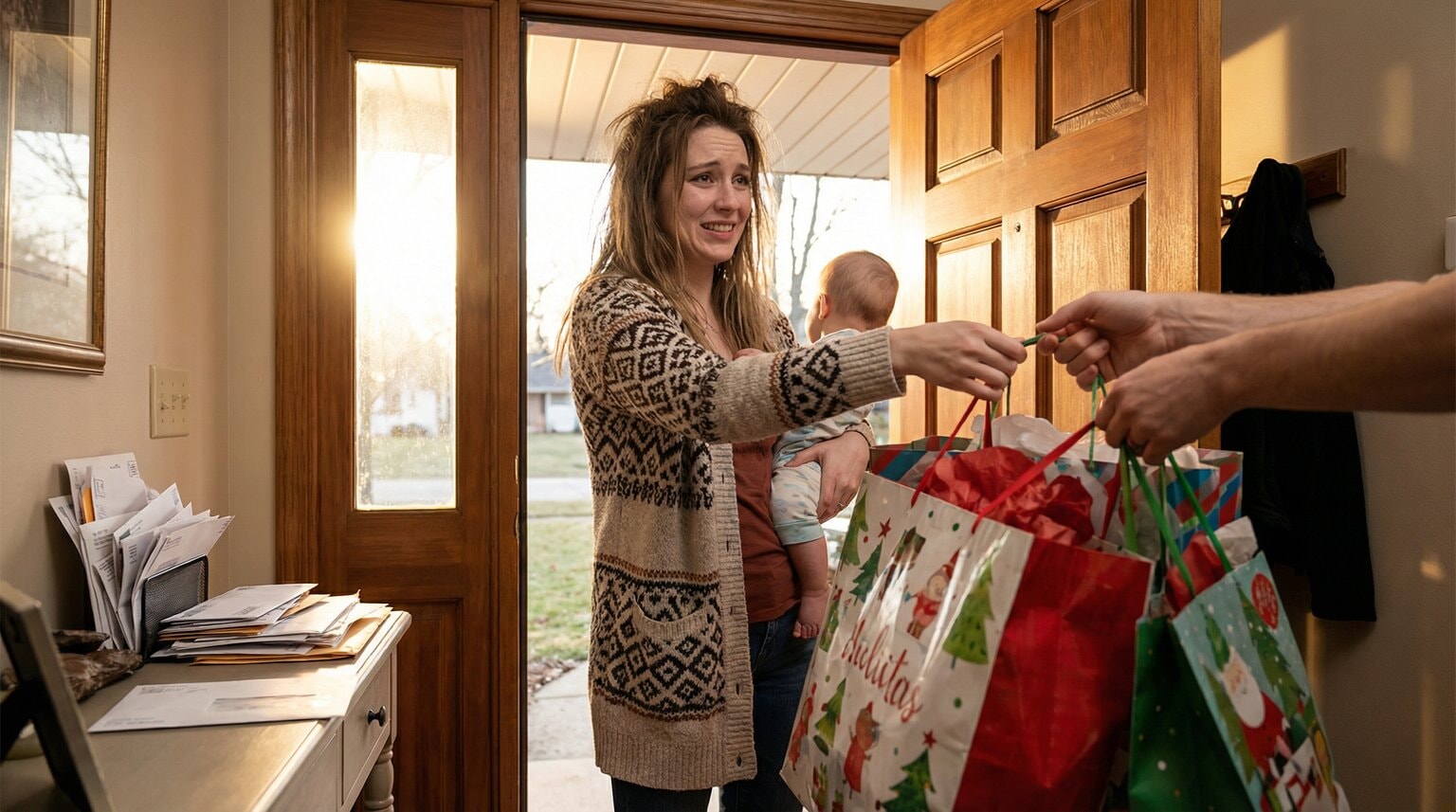
Here’s the truth: some gift-giving will persist despite your best conversations. That’s okay. You can’t control what they do—only how you respond.
Practical tactics that work:
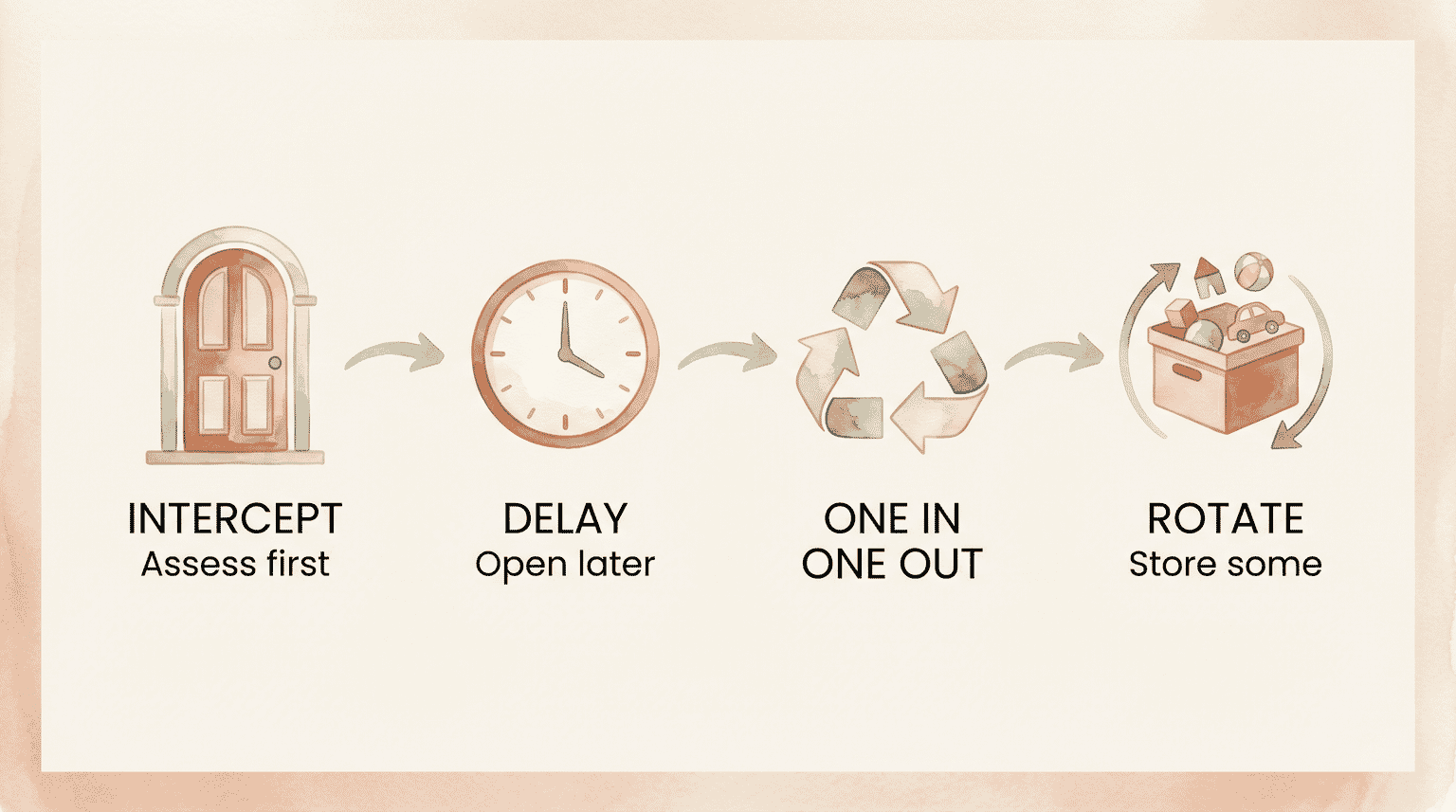
- Intercept at the door. Before kids see the gifts, assess what’s appropriate to give now versus save for later
- Open gifts after they leave. This lets you control the pace and prevents overwhelm
- Implement “one in, one out.” For every new toy, one gets donated. Some families even tell grandparents this policy—it helps them see the real impact of their giving
- Rotate toys. What they gave doesn’t need to be out all the time
The follow-up conversation script:
“We talked about this before, and I understand you want to show [child] you love them.
But I need you to understand that this is creating real stress in our home. When you bring more than we discussed, I feel like our agreement doesn’t matter.
I need us to stick with what we agreed, or I’ll have to [specific consequence—donate extras, open gifts without them present, etc.].”
If conversations continue to fail, there’s more guidance on when grandparents continue ignoring your requests.
Managing Hurt Feelings

Defensiveness happens because grandparents’ identity as good grandparents feels threatened. Their gift-giving is tied to their self-image as loving, generous, involved family members. When you ask them to change, they may hear “you’re doing grandparenting wrong.”
Validate their feelings without abandoning your boundary:
“I can see this is hard to hear, and I’m sorry if it feels like criticism—it’s really not. You are an amazing grandparent. [Child] adores you. I just need us to adjust this one thing.”
If the conversation goes poorly, repair is possible:
“I’ve been thinking about our conversation, and I want you to know how much I appreciate your love for [child]. I didn’t mean to make you feel unappreciated. Can we try talking about this again?”
Psychologist Terri Apter, author of Grandparenting: On Love and Relationships Across Generations, offers important perspective: “Silencing yourself to avoid conflict may avoid open conflict but it limits your relationship.”
You can set boundaries kindly without apologizing for having them.
Quick Reference: Your Conversation Cheat Sheet
Before the conversation:
- Both parents agree on the message
- Choose a calm moment (not during the gift avalanche)
- Lead with appreciation
The framework:
- Acknowledge their love
- “I feel… About what… I need…”
- Offer alternatives
- Invite their ideas
Best alternatives to suggest:
- Experience gifts (memberships, lessons, outings)
- Books (unlimited!)
- Contributions to savings
- Time together
- One meaningful gift instead of many
If it doesn’t work:
- Intercept and rotate
- Open gifts later
- Follow up with firmer conversation
- Implement consequences if needed
Frequently Asked Questions

How do I tell my parents to stop buying my kids so much stuff?
Use the gentle start-up approach: “I feel overwhelmed when gifts pile up. I need us to find a balance.” Lead with appreciation, share your specific concern, and offer alternatives like experience gifts or contributions to savings.
Why do grandparents buy so many gifts?
Research identifies four core motivations: wanting to stay connected, showing they know and understand their grandchild, maintaining involvement in the child’s life, and expressing love in tangible ways. For many grandparents, gifts are how they say “I’m thinking of you.”
How do you set boundaries with grandparents without hurting feelings?
Start by acknowledging their love before stating your need. Use “I” statements (“I feel overwhelmed”) rather than “you” statements (“You’re spoiling them”). Offer alternative ways they can express generosity so they still feel valued.
What can grandparents give instead of toys?
Experience gifts, books, contributions to college savings, magazine subscriptions, or one-on-one time with the child. The Four Gift Tradition offers a helpful framework: something they want, need, wear, and read.
What About You?
Have you had “the talk” with grandparents about gift overflow? I’d love to hear what worked—or what made things awkward. The scripts that actually land in real conversations are gold for other parents navigating this.
I read every response and your scripts help other parents immensely.
References
- The Gottman Institute: Setting Healthy Boundaries with Grandparents – Research on boundary-setting communication in family relationships
- British Psychological Society: So, You’re About to Become a Grandparent? – Expert guidance on grandparent-parent dynamics from Terri Apter
- Parenting Decoded: Gifts and Grandparents – Practical conversation strategies and scripts
- PMC: Grandparenting as the Resolution of Kinship as Experience – Academic research on modern grandparent dynamics
- GE Editing: Psychology of Beloved Grandparents – Research on what children remember about grandparents

Share Your Thoughts