
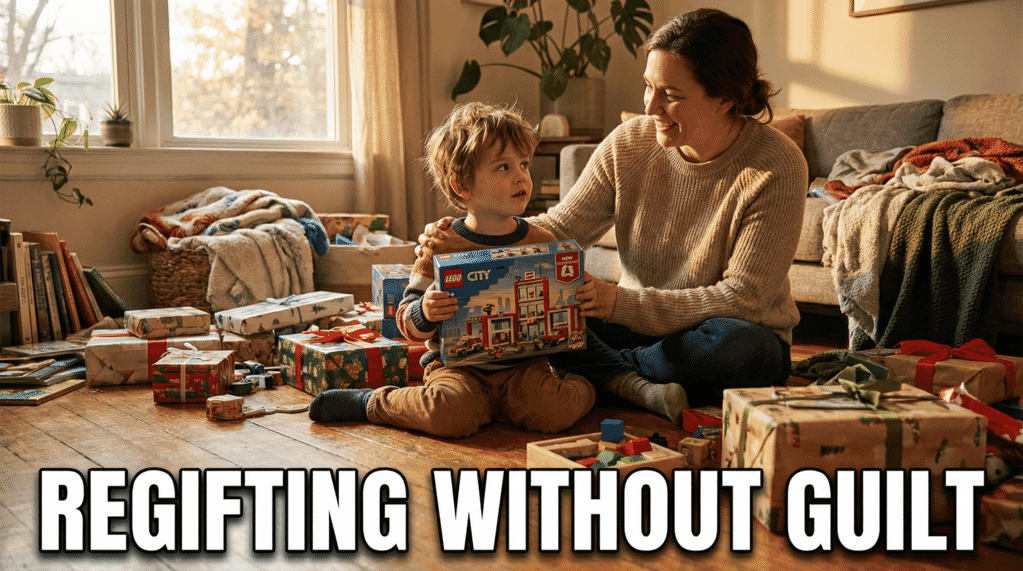
You’re standing in front of the closet where you stashed that duplicate LEGO set from your daughter’s birthday party three months ago. Another party invite just arrived. The question hits you: Is this okay?

Here’s the thing—”regifting” as a concept is barely three decades old. The term was literally coined in a 1995 Seinfeld episode where a label maker circulates between characters, prompting the memorable question: “If he can regift, why can’t you degift?”
That cultural moment captured something we all feel intuitively but rarely articulate: gift-giving has rules, and we’re terrified of breaking them.
But here’s what my librarian brain discovered when I dug into the research: our anxiety about regifting is largely misplaced. A 2025 study found that recipients are actually more receptive to receiving pre-owned items as gifts than givers anticipate. Even more surprising? Gift-givers frequently overestimate how much the price tag matters to receivers.
So why does regifting still feel so complicated?
Key Takeaways
- Recipients are more open to regifted items than givers expect—your anxiety is probably misplaced
- Use the Two-Rulebook Framework to decide: Is this an economic decision or a symbolic one?
- The 3-6 month waiting period lets the gift’s “sacred power” fade naturally
- Kids who participate in generous giving actually show calmer stress responses afterward
- Frame regifting as abundance-sharing, not rejection-avoiding
Why Regifting Feels So Complicated (And Why It Shouldn’t)
The anthropologist Marcel Mauss put it this way: “Even when it has been abandoned by the giver, it still possesses something of him.” That’s the gut feeling we’re wrestling with—gifts carry part of the giver’s identity.
When my 10-year-old hesitates to give away something Grandma bought her, even though she’s never touched it, she’s responding to something real.
But here’s what I’ve learned watching gifts flow through a house of 8 kids: thoughtful regifting is generosity, not deception. It’s finding the right home for something that deserves to be loved.
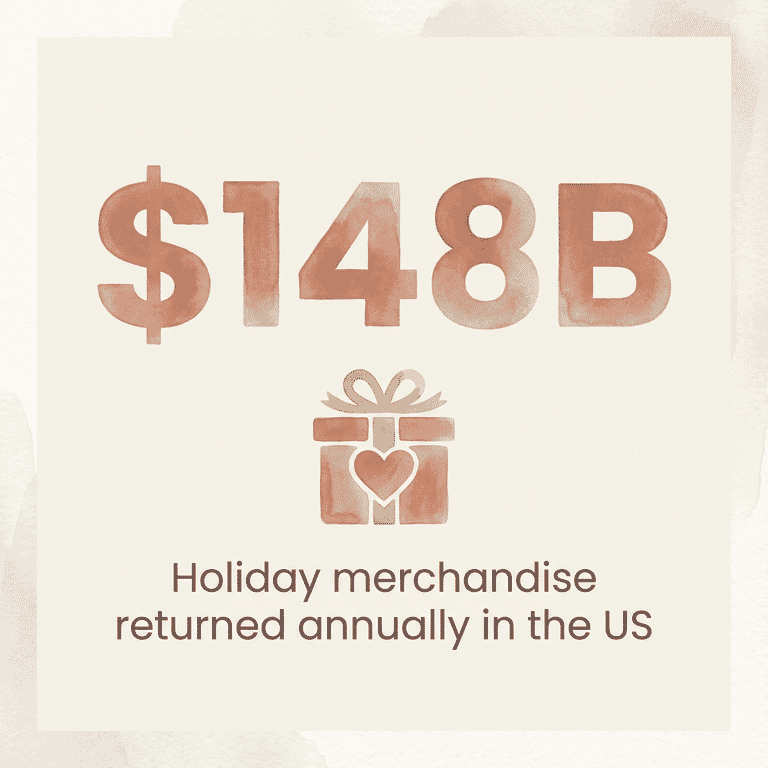
The National Retail Federation estimates approximately $148 billion of holiday merchandise gets returned annually. That’s not ingratitude—that’s mismatched gifts seeking better matches.
If you’re navigating common gift-giving challenges, regifting is one tool in a much larger toolkit. The key is doing it intentionally.
The Two-Rulebook Framework for Family Regifting Decisions
Consumer researchers Deborah Cohn and Leon Schiffman identified something that changed how I think about this: families operate from two distinct “rulebooks” when handling unwanted gifts. Understanding which one applies transforms regifting from awkward guessing into clear decision-making.
The Economic Rulebook
Some situations are purely practical. You’re thinking about value, utility, and waste avoidance.
The Economic Rulebook applies when:
- You received duplicate items (the birthday party haul phenomenon)
- Items don’t fit your family’s lifestyle or values
- Quality items arrived with no connection to the recipient
- The giver explicitly said “exchange it if you need to”
With economic situations, regifting is straightforward. The goal is preventing waste while ensuring items find appreciative homes.
The Symbolic Rulebook
Other situations involve relationships and meaning. The gift represents something beyond its material value.
The Symbolic Rulebook applies when:
- The original giver invested emotional significance
- Discovery would damage an important relationship
- The item connects to shared memories or inside jokes
- Close family members chose it specifically for your child
For Symbolic Rulebook followers, regifting is “allowed only when considering the feelings of both the original giver and the new recipient.”
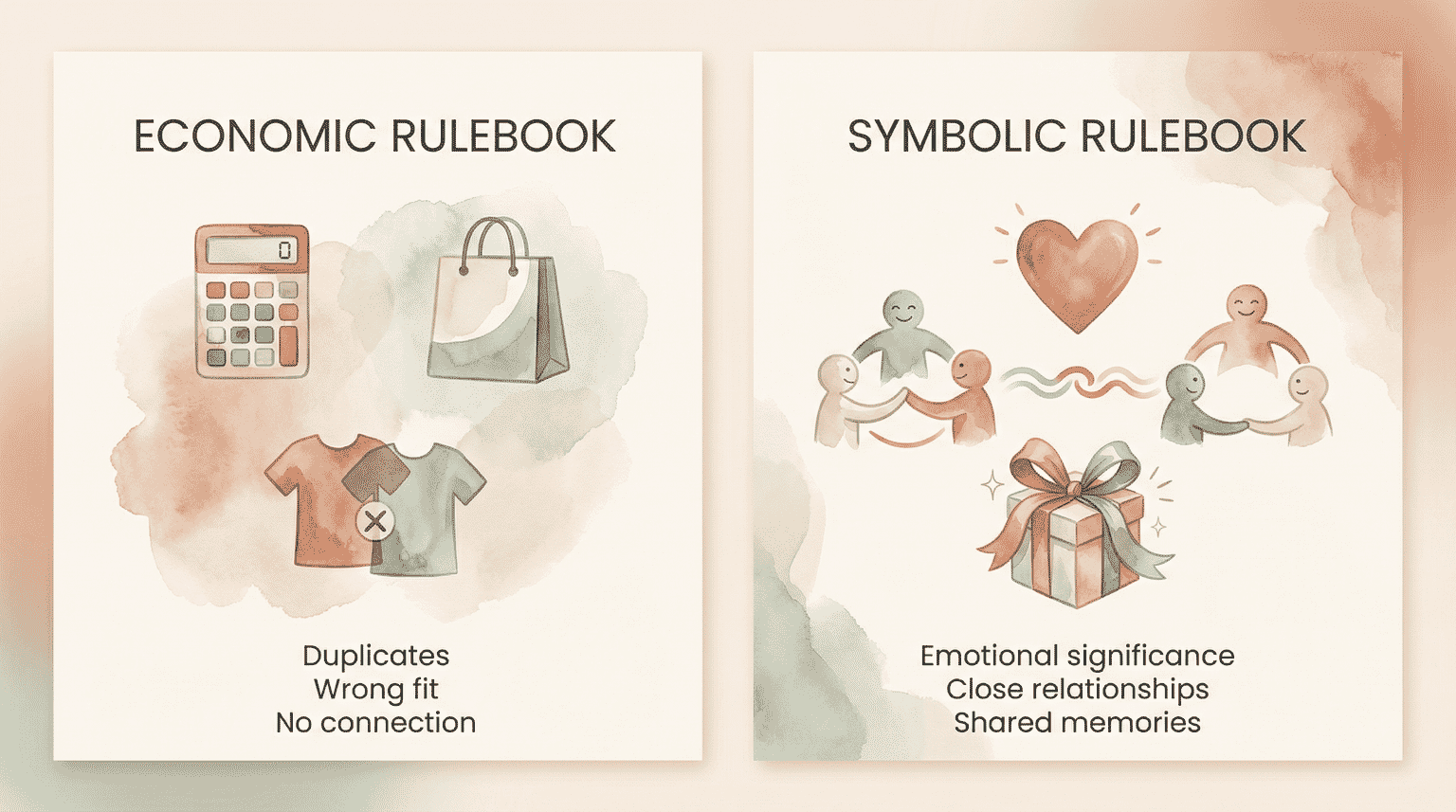
Quick decision checkpoint: Before regifting, ask yourself: Is this primarily about finding a practical home for an item, or am I navigating relationship dynamics? Your answer determines which rulebook to follow.
Five Strategies for Ethical Family Regifting
Strategy #1: The Waiting Period
Research shows that the “sacred power” of gifts fades over time. What feels impossible to regift immediately becomes acceptable after a few months. I call this the waiting period effect.
Practical application:
- 3-6 months: Standard holding period for most items
- Exception: Duplicates can be regifted immediately (you’re keeping one!)
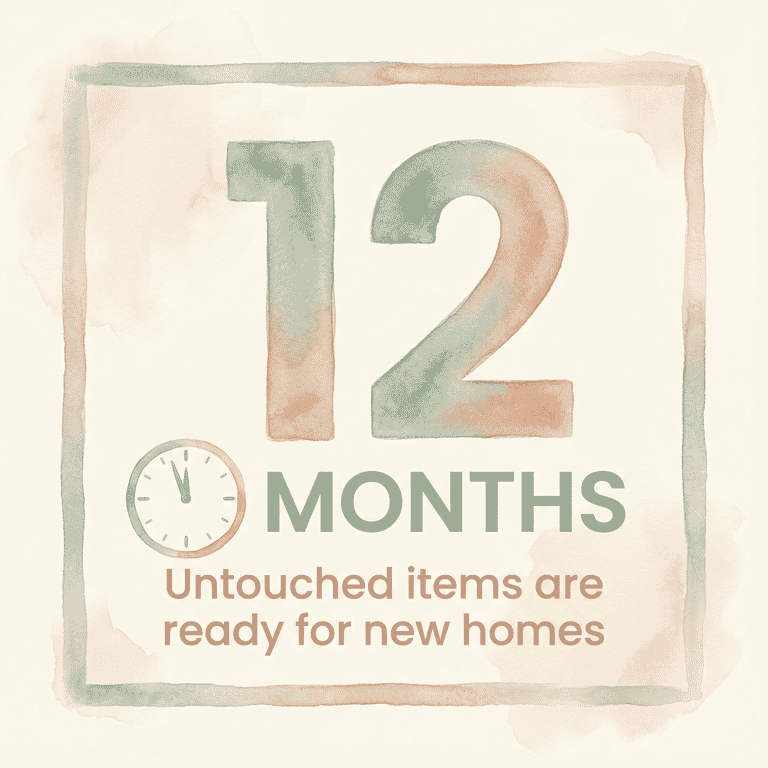
- 12-month rule: After a year, items that haven’t been touched are clearly seeking a new home
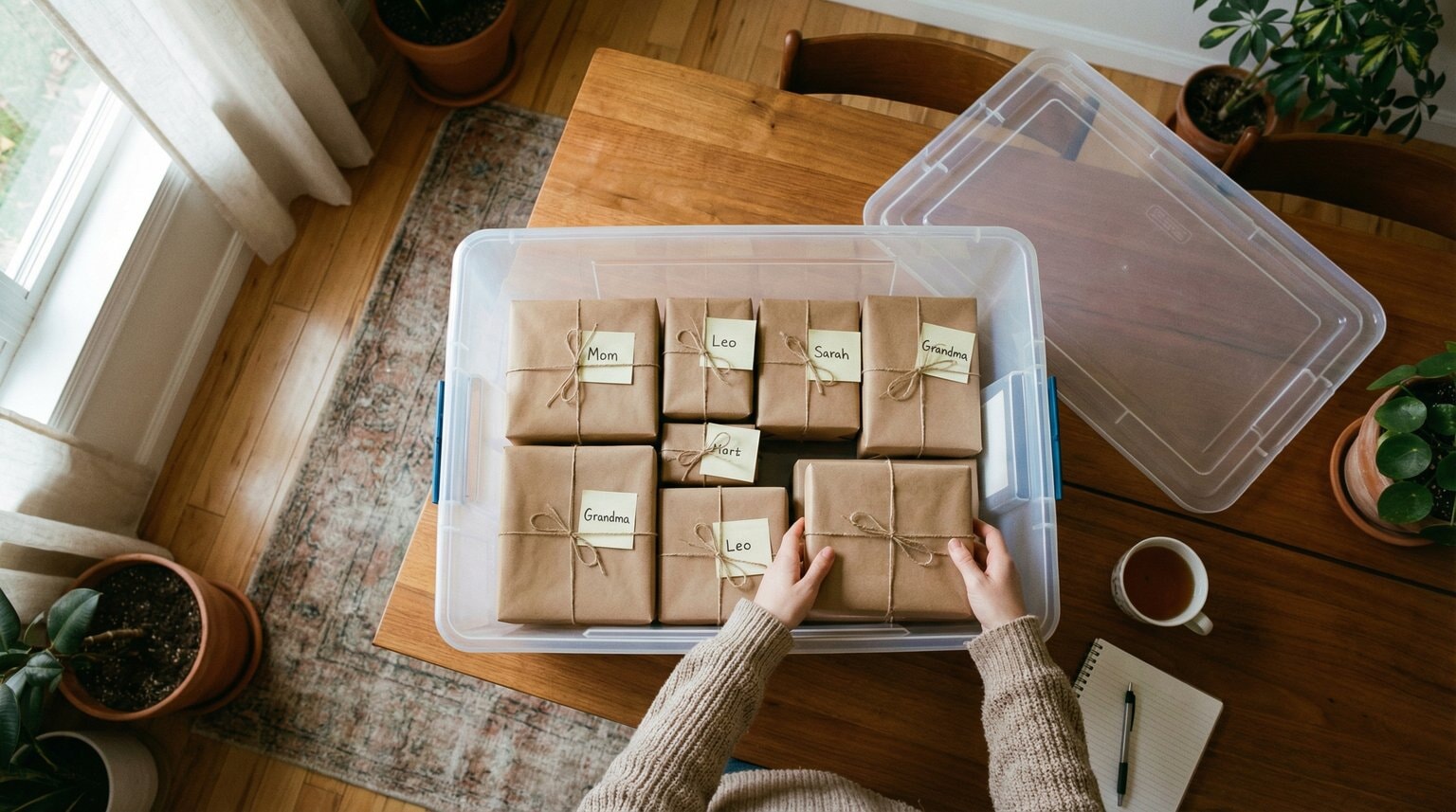
In my house, I keep a dedicated bin in the guest room closet. Items go in with a sticky note showing the date received and who gave them.
This matters more than you’d think when managing handling duplicate birthday gifts. The sticky note system has saved me from embarrassing mix-ups more times than I can count.
Strategy #2: The Thoughtfulness Test
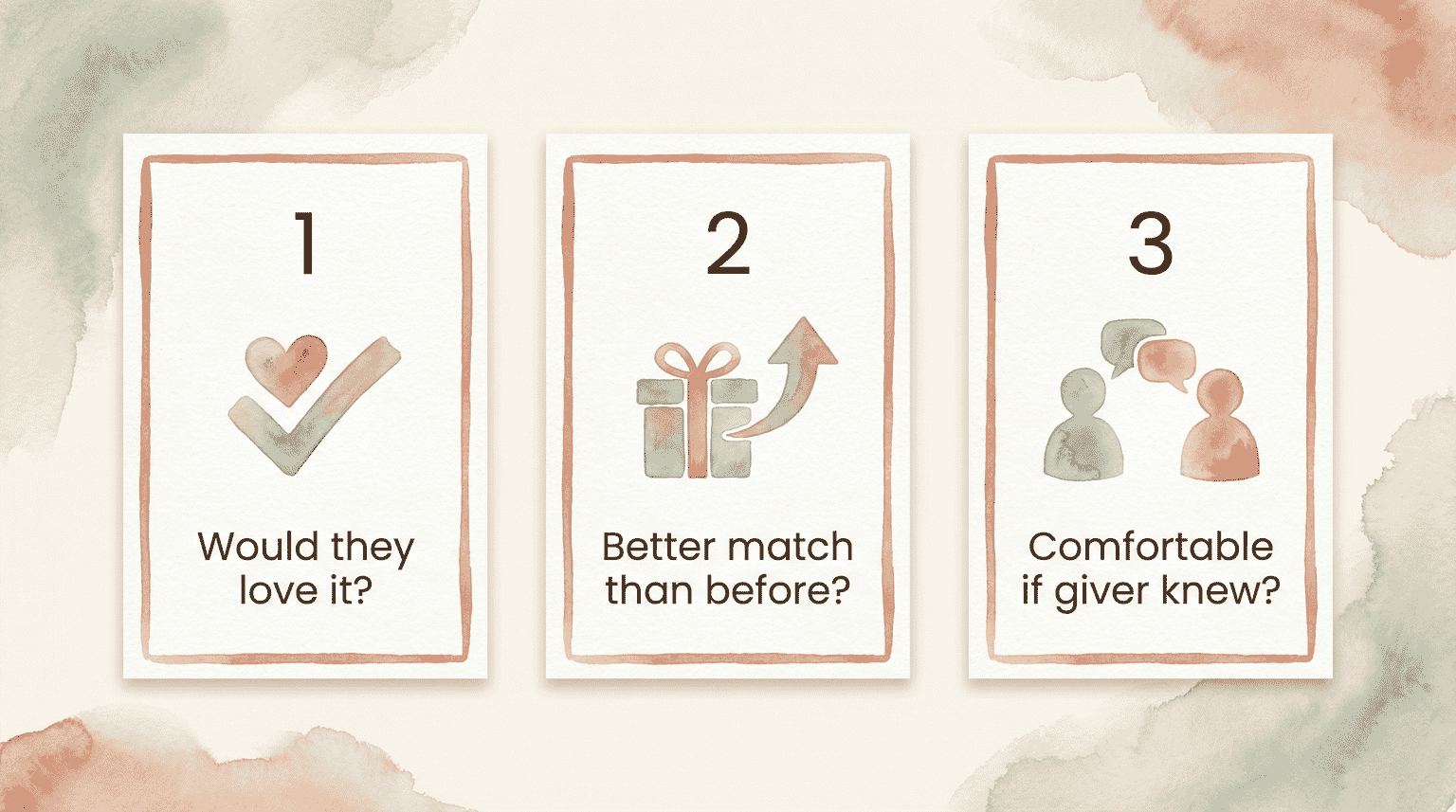
Before any regift, run through three questions:
- Would the new recipient genuinely appreciate this? Not “could they use it”—would they love it?
- Is this a better match than the original pairing? Regifting should improve the gift-recipient fit.
- Would I be comfortable if the original giver knew? If imagining that conversation makes you cringe, reconsider.
Strategy #3: The Circle Check
This is where most regifting disasters happen. Map the item’s social journey before it moves.
Never regift within overlapping circles:
- Same classroom (birthday party ecosystems are small)
- Same extracurricular activities
- Families who regularly socialize together
- Anyone likely to visit the original giver’s home
I learned this the hard way when my 8-year-old proudly showed her gymnastics coach a book—that the coach had given her teammate two months earlier. Lesson learned.
Strategy #4: The Condition Standards
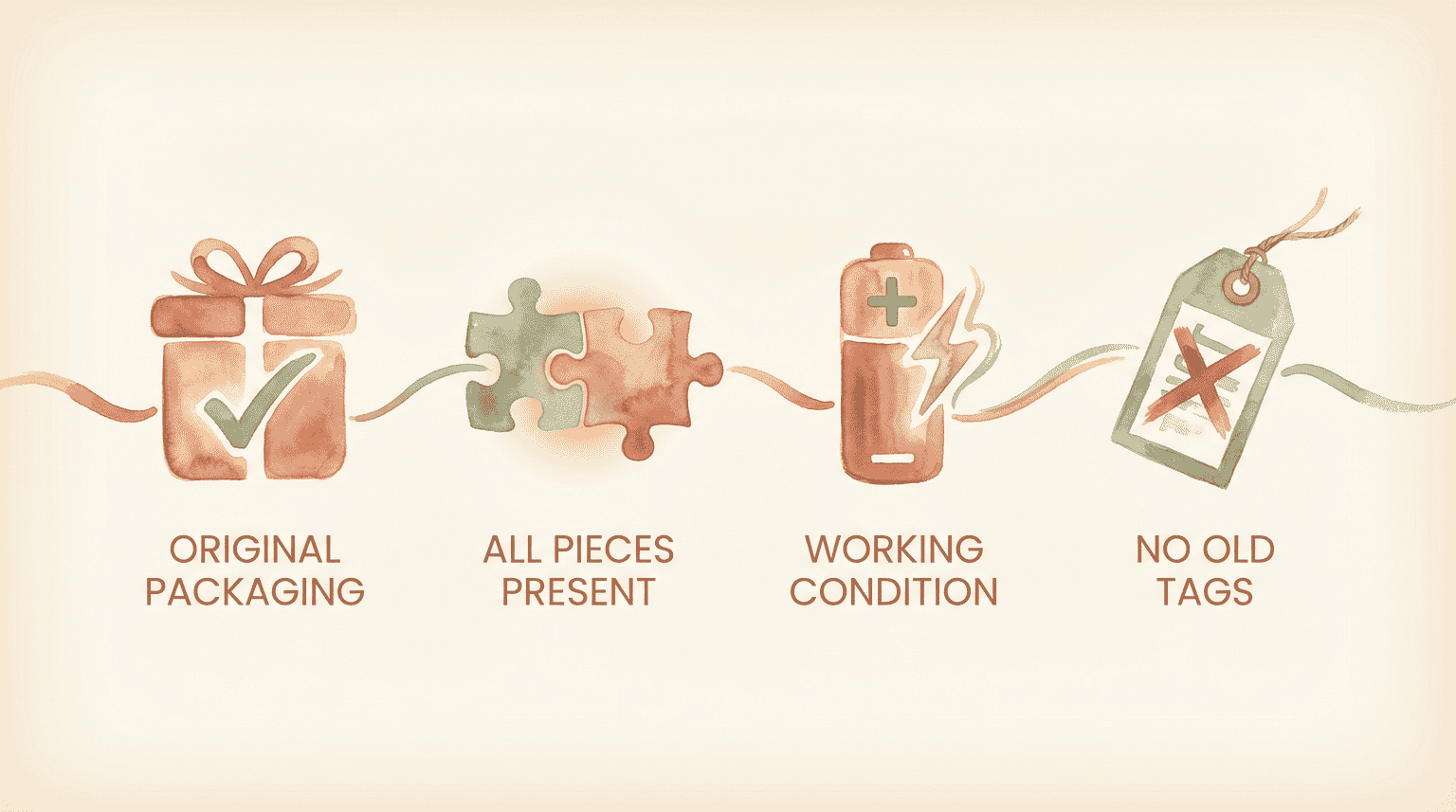
Non-negotiable requirements:
- Original packaging (or equivalent new packaging)
- All pieces present (check puzzles, games, building sets)
- Working condition (test batteries, moving parts)
- No identifying marks (previous gift tags, inscriptions, names written inside)
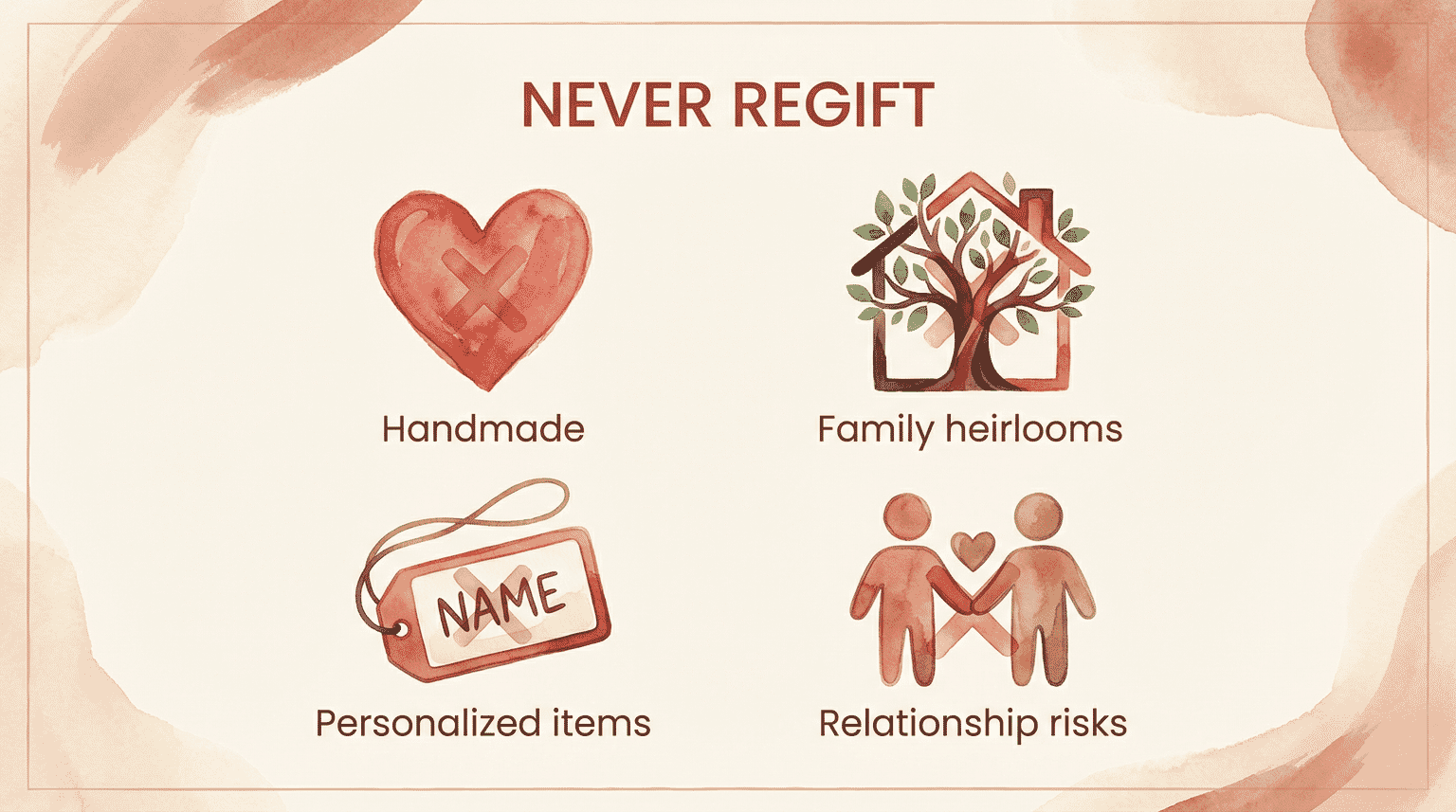
Items that should never be regifted:
- Personalized or monogrammed items
- Handmade gifts
- Family heirlooms
- Anything the original giver would recognize
When in doubt, donate. You still model generosity without the relationship risk.
Strategy #5: The Generosity Framing
How you talk about regifting matters as much as whether you do it. Position it as abundance-sharing, not rejection-avoiding.
Language that works:
- “This toy wants to be played with—let’s find it someone who will love it”
- “We have so much! Let’s share our extras”
- “Someone picked this out with love, and now we can share that love forward”
Research from UC Davis found something remarkable: children who gave more to others showed calmer physiological responses afterward.
As researcher Paul Hastings noted, “Prosocial behaviors may be intrinsically effective for soothing one’s own arousal.” Translation? Generous acts actually feel good to kids—physically, measurably good.
Talking to Your Child About Regifting: Scripts That Work

I’ve had these conversations dozens of times across age ranges. Here’s language that actually works.
When Your Child Receives Duplicate Gifts
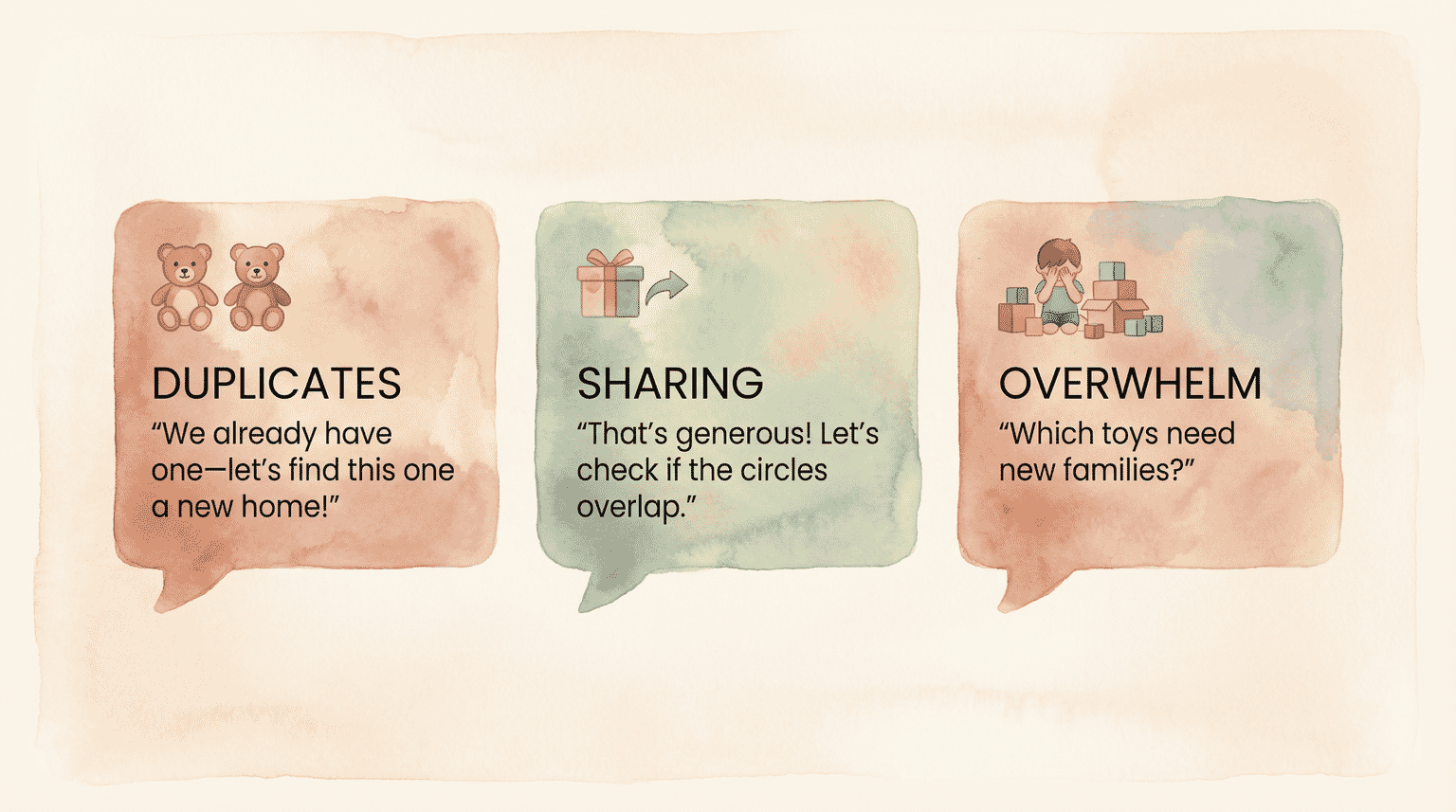
Try: “We already have one of these—that means someone else would really love it! Should we find it a new home, or do you want to keep this one and share the other?”
Involve your child in deciding which duplicate stays. This small choice transforms them from passive recipient to active decision-maker.
When Your Child Wants to Give Away a Received Gift
Try: “You want to share this with Maya? That’s really generous. Let’s just make sure [original giver] won’t see it at Maya’s house. Does Maya’s family know [giver]?”
You’re teaching the circle check naturally, without lecturing about social consequences.
When Managing Gift Overwhelm
Try: “You have so many wonderful things! Let’s choose a few to share with kids who would really love them. Which toys do you think need new families?”
The UC Davis research supports this approach: children with mothers who modeled compassionate giving were more likely to be generous themselves—and felt better afterward.
When Your Child Asks “Is This New?”
Honesty matters here, scaled to age:
For younger children (under 6): “Someone gave this to us, and it’s perfect for you.”
For older children: “Actually, this was a gift to our family, but I knew you’d love it more than anyone. Good gifts deserve people who really appreciate them.”
Most young children never ask. Older kids often appreciate the transparency—and the implied compliment that you thought of them.
The Logistics: Tracking, Storing, and Thank-You Notes

Building a Gift Tracking System
A simple spreadsheet prevents embarrassment:
- Item | Giver | Date | Occasion | Status
Review annually. Items past the 12-month mark with “closet” status? Time to find new homes or donate.
Storage Solutions
- Dedicated container or closet section (not mixed with regular toys)
- Out of children’s daily play rotation
- Grouped by age-appropriateness or occasion type
The Thank-You Note Question
Write thank-you notes for all gifts received—regardless of regifting plans.
Focus your gratitude on the giver’s thoughtfulness, not the item itself: “Thank you so much for thinking of Emma! She loved opening your gift.” This is genuine (she probably did enjoy the opening), honest (you’re thanking the thought), and keeps relationships intact.
If the regift destination overlaps with the giver’s social circle, skip regifting entirely. Donate instead.
When to Skip Regifting Entirely
Some situations call for keeping or donating—never regifting:
- Handmade items (donate anonymously if unwanted)
- Close family gifts with emotional investment (keep, even if unused)
- Items with identifying features the giver would recognize
- Anything where discovery would damage a relationship you value
Donation offers the same generosity benefits without the social risk. Your child still learns about sharing abundance. You still reduce waste. Everyone wins.
Frequently Asked Questions

Is regifting rude or tacky?
Regifting is neither rude nor tacky when done thoughtfully. Research shows recipients are more receptive to pre-owned items than givers expect. The key is following the symbolic rulebook when relationships matter: consider the original giver’s feelings, ensure genuine appreciation from the new recipient, and avoid overlapping social circles.
What items should never be regifted?
Never regift personalized items, handmade gifts, family heirlooms, or anything the original giver would recognize. Items showing wear, missing pieces, or with previous gift tags should be donated rather than regifted. When discovery could damage a valued relationship, donation is always safer.
How do you regift properly?
Follow five strategies: (1) Wait 3-6 months to let the gift’s “sacred power” fade, (2) Apply the thoughtfulness test—would the new recipient genuinely love it? (3) Check that social circles don’t overlap, (4) Ensure original condition with all packaging, and (5) Frame it as generosity rather than disposal.
How do you explain regifting to a child?
Use generosity-focused language: “Someone gave this to us, but we think [friend] would really love it.” For duplicates: “We already have one! Let’s find this one a new home where it can be played with.” Research shows children who participate in giving decisions feel calmer and more satisfied afterward.
Your Turn
Have you regifted? I’m curious whether you tell your kids about it or keep it quiet—and whether anyone’s ever been caught. The etiquette around this seems to be shifting, and I’d love to hear where your family lands.
Your regifting stories might be exactly what another parent needs to hear.
References
- What motivates second-hand gift-giving? – Research on recipient receptiveness to pre-owned gifts
- Give and take: how gift-giving forges society – Anthropological foundations of gift exchange
- Is It Better to Give Than Receive? – UC Davis research on children’s generosity and wellbeing
- Gift Giving, Gift Returning – The two rulebooks framework for handling unwanted gifts

Share Your Thoughts