
Standing in your living room after your daughter’s birthday party, you count seventeen new toys. Grandma and Grandpa are beaming. Your kid already forgot half of them. And you’re mentally calculating how long until you can quietly donate the duplicates without anyone noticing.
Here’s the thing: your parents or in-laws aren’t trying to make your life harder. They’re trying to love your child in the most tangible way they know how. The trick isn’t stopping that love—it’s channeling it somewhere more meaningful.
Key Takeaways
- Grandparents spend an average of $2,562 yearly on grandchildren, with gift purchases being the largest category at $805 per year
- Experience gifts like zoo memberships and classes create lasting memories that toys can’t match
- Start redirect conversations with appreciation, then offer specific alternatives—like non-toy consumables kids love—with easy purchase pathways
- Children with close grandparent relationships show more prosocial behaviors—and that closeness comes from connection, not cardboard boxes
- Create a shared wish list to remove friction and make meaningful giving simple
Why This Conversation Matters (and Why It’s Hard)
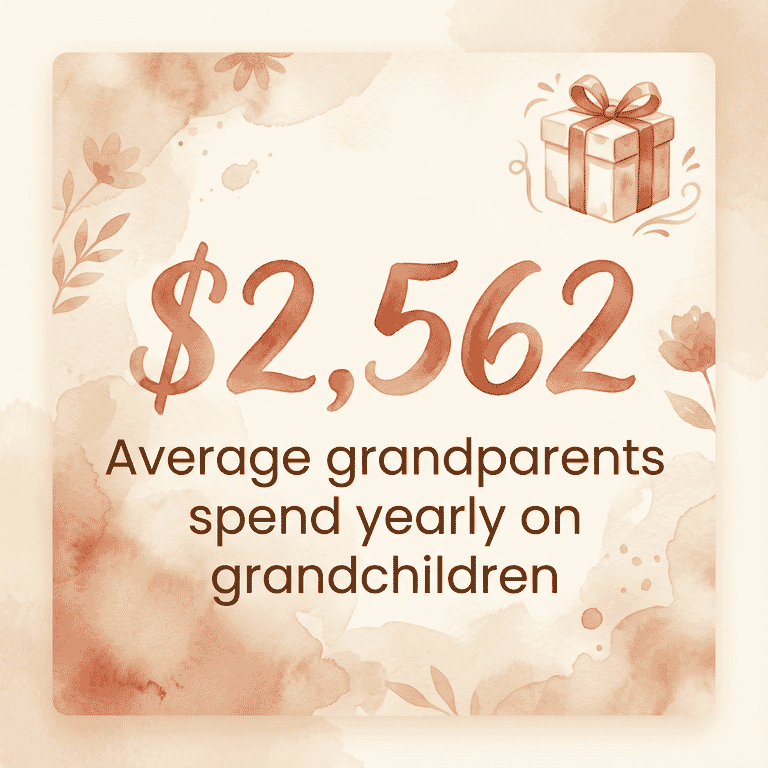
The scale of grandparent generosity is genuinely staggering. Research from North Dakota State University (2025) found that nearly 94% of grandparents provide some monetary help each year, spending an average of $2,562 annually on their grandchildren. The largest category? Gift purchases, with 86% of grandparents buying gifts averaging $805 per year.
That’s a lot of love wrapped in a lot of packaging.
But here’s what makes this conversation so tricky: a systematic review published in 2023 found that both grandparents and parents are reluctant to discuss their differences openly, fearing family conflict.
Parents feel reliant on grandparents and don’t want to impose. Grandparents want to maintain harmony and ensure ongoing access to grandchildren. Everyone’s tiptoeing. Nobody’s talking. And the toys keep piling up.
If you’re already managing gift overwhelm from multiple sources, you know this affects everything—your space, your child’s attention span, your sanity. Research consistently shows children with access to excessive toys demonstrate shortened attention spans and less creative play.
“You remember when you taught your child to ride a bicycle, and you just kind of hung on to the back until they got their balance? That’s all you’re doing as a grandparent. You’re supporting them, helping them get their balance. But it’s their ride. This is their baby.”
— Nancy Sanchez, Stanford Children’s Health
The goal isn’t blocking grandparent generosity. It’s helping them hold on to the bicycle seat in ways that actually matter.
Understanding Why Grandparents Give So Much
Before you can redirect, you need to understand the motivation. And honestly? This changed how I approached the conversation entirely.
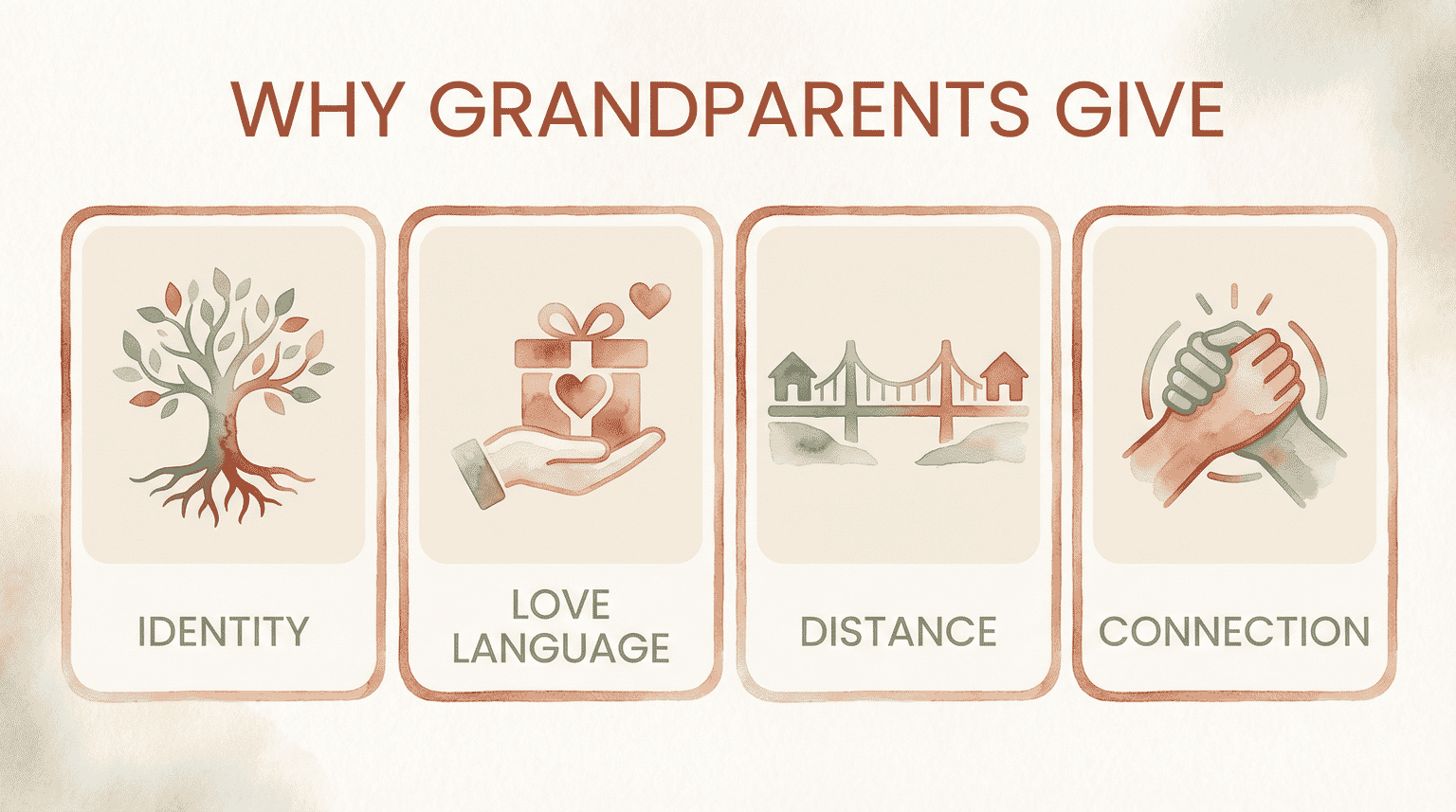
It’s about identity, not just generosity. Research shows many grandparents believe it’s their “right to spoil” grandchildren—especially since they hold less daily authority. When you don’t set the rules, gifts become a primary way to matter.
It’s a love language. For grandparents whose primary love language is gift-giving, those wrapped packages are literal expressions of love. Asking them to stop feels like asking them to love less.
It’s a substitution. Research from the European Economic Review found that grandmothers specifically substitute between time and gift transfers. When they can’t be present as often, they compensate with material gifts. The distant grandparent who sends five packages? That’s often longing, not excess.
They genuinely want to be involved. A Good Housekeeping survey found that 90% of grandparents watch their grandchildren because they want to—only 10% felt it was an obligation. This isn’t duty. It’s desire.
For a deeper understanding of why grandparents spoil, including generational and psychological factors, see our comprehensive explainer. But the short version? They’re not trying to undermine you. They’re trying to love your kid the way they know how.
Conversation Scripts That Actually Work

Timing matters more than words. Never have this conversation during a gift-giving occasion. Not on Christmas morning when Grandma is watching for reactions. Not at the birthday party. Pick a calm Tuesday when nothing is at stake.
Start with genuine appreciation:
“Mom, I want you to know how much it means to me that you love [child’s name] so much. They light up when they see you, and I know that’s partly because you’re so generous with them.”
Then redirect toward what you need:
“I’ve been thinking about what [child’s name] really needs right now, and I realized the best gift isn’t something we can wrap. They need more experiences—time making memories, learning things together. Would you be open to trying something different this birthday?”
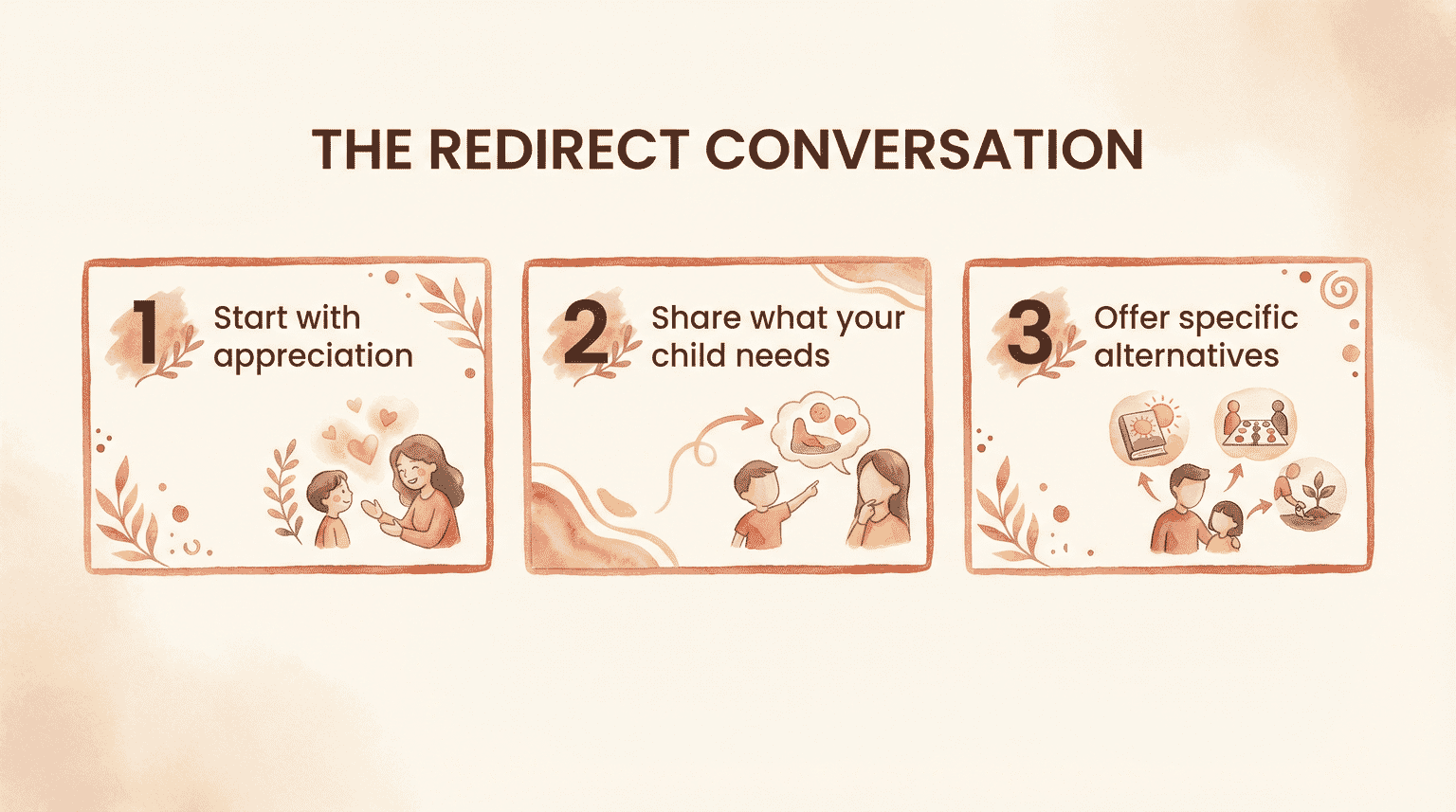
Make alternatives specific and easy:
“I set up a 529 college fund and can send you the link—even $25 adds up over time. Or there’s a zoo membership we’ve been eyeing where you could take them yourself a few times a year.”
When the first conversation doesn’t land:
“I know this is different from what you’re used to. I’m not saying never buy anything—I’m saying I want [child’s name] to remember you, not just your presents. What if we tried one experience gift this time and see how it goes?”
Psychologist Terri Apter, author of Grandparenting: On Love and Relationships Across Generations, offers language grandparents can use when they’re unsure: “‘Do you think the child might like…?’ signals that you see the parent as expert without having to silence yourself.”
That question structure works both directions.
Experience Gifts Worth Suggesting

These alternatives aren’t consolation prizes—they’re upgrades. Research from North Dakota State University found that kids who have close relationships with grandparents show more prosocial behaviors and see their grandparents as important role models. That closeness comes from connection, not cardboard boxes.
Memberships that keep giving:
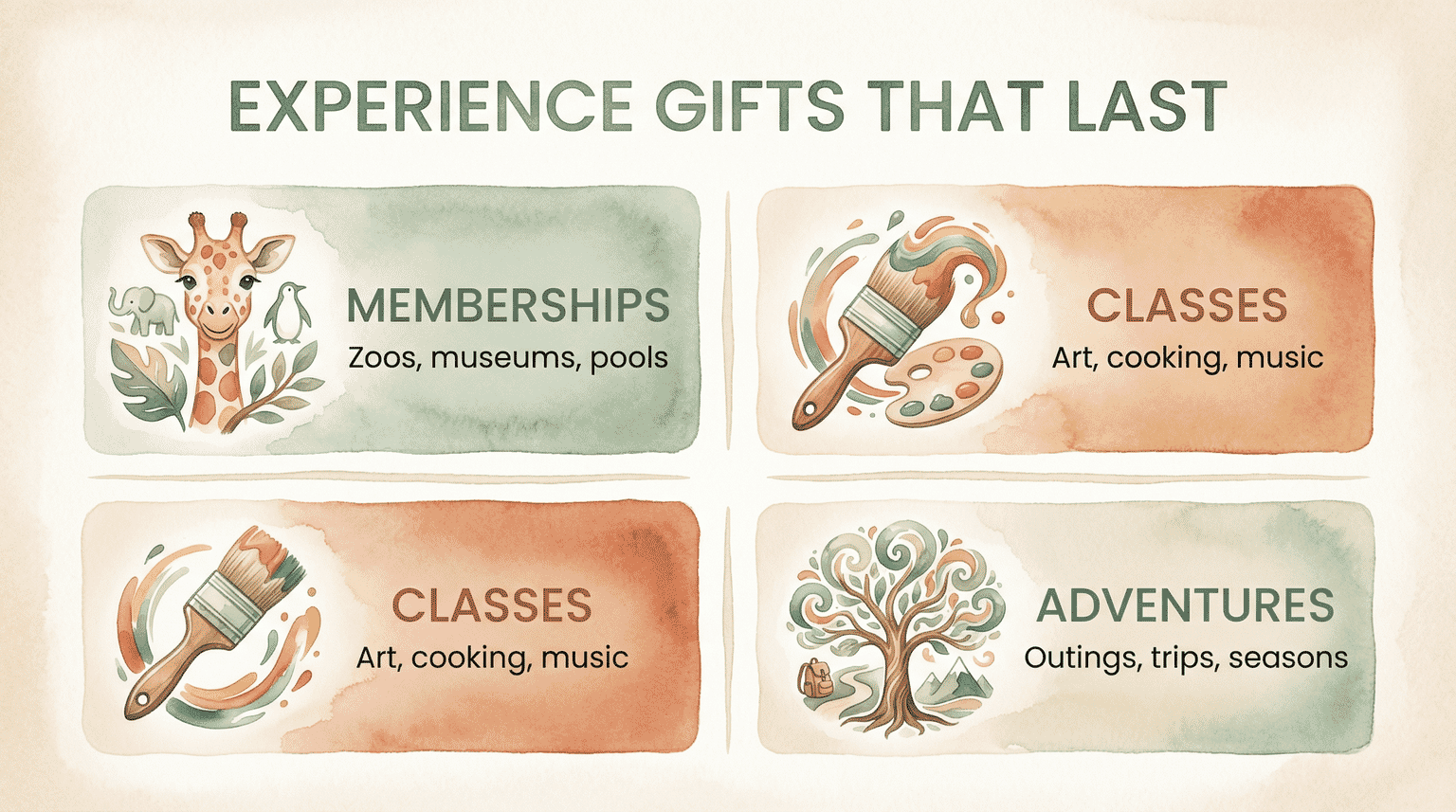
- Zoo or aquarium annual passes (grandparent-grandchild outings built in)
- Children’s museum memberships
- Local nature center or botanical garden family passes
- Swimming pool or YMCA family memberships
Classes you can attend together:
- Art classes (many studios offer multi-generational sessions)
- Cooking classes designed for kids
- Swimming lessons (grandparents can be the designated cheering section)
- Music programs, especially for ages 4+
Adventure outings:
- “Grandparent Day” at trampoline parks or skating rinks
- Tickets to age-appropriate shows or movies
- Seasonal experiences: pumpkin patches, holiday light displays, strawberry picking
- Camping trips or cabin weekends
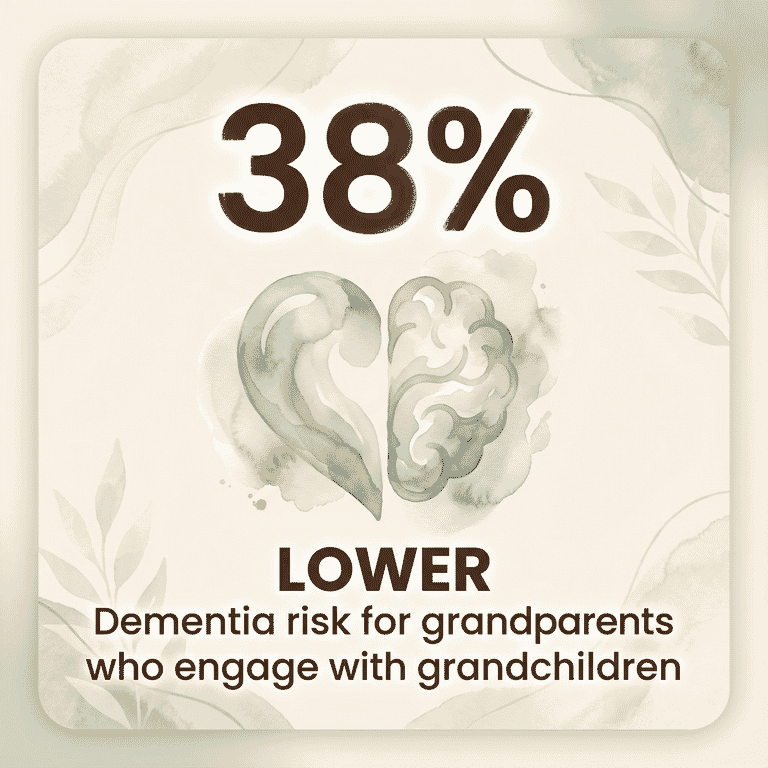
The British Psychological Society (2025) notes that grandparents who engage with grandchildren have a reduced risk of developing dementia compared to those who don’t. Time together isn’t just good for kids—it protects grandparent health too.
Research consistently shows that meaningful engagement between generations creates cognitive benefits that last. For grandparents, staying actively involved with grandchildren provides mental stimulation and emotional purpose.
This isn’t just about the kids—it’s about giving grandparents a reason to redirect their generosity toward experiences that benefit everyone’s wellbeing.
Financial Alternatives That Build Futures
Here’s what surprised me: many grandparents actually prefer contributing to something meaningful. The NDSU research found that grandparents want to teach financial lessons and help younger generations achieve economic success. They just need permission to redirect.
529 education funds: The most popular financial alternative. Contributions grow tax-free for education expenses, and many grandparents appreciate the tangible “I’m investing in their future” aspect. Most plans allow anyone to contribute with just an account number.
Savings bonds: Old-school, but grandparents of a certain generation love them. A Series I bond feels like a “real” gift—something physical they can hand over—while teaching patience and compound interest.
UTMA/UGMA custodial accounts: More flexible than 529s for smaller, regular contributions. Funds can be used for anything benefiting the child, not just education.
How to make financial gifts feel personal:
- Create a simple chart showing how contributions grow over time
- Let grandparents write a letter to accompany each contribution
- Take a photo of your child holding a “certificate” showing the gift
- Celebrate milestones: “Grandma’s birthday gifts paid for a semester of preschool!”
Memory-Making Alternatives

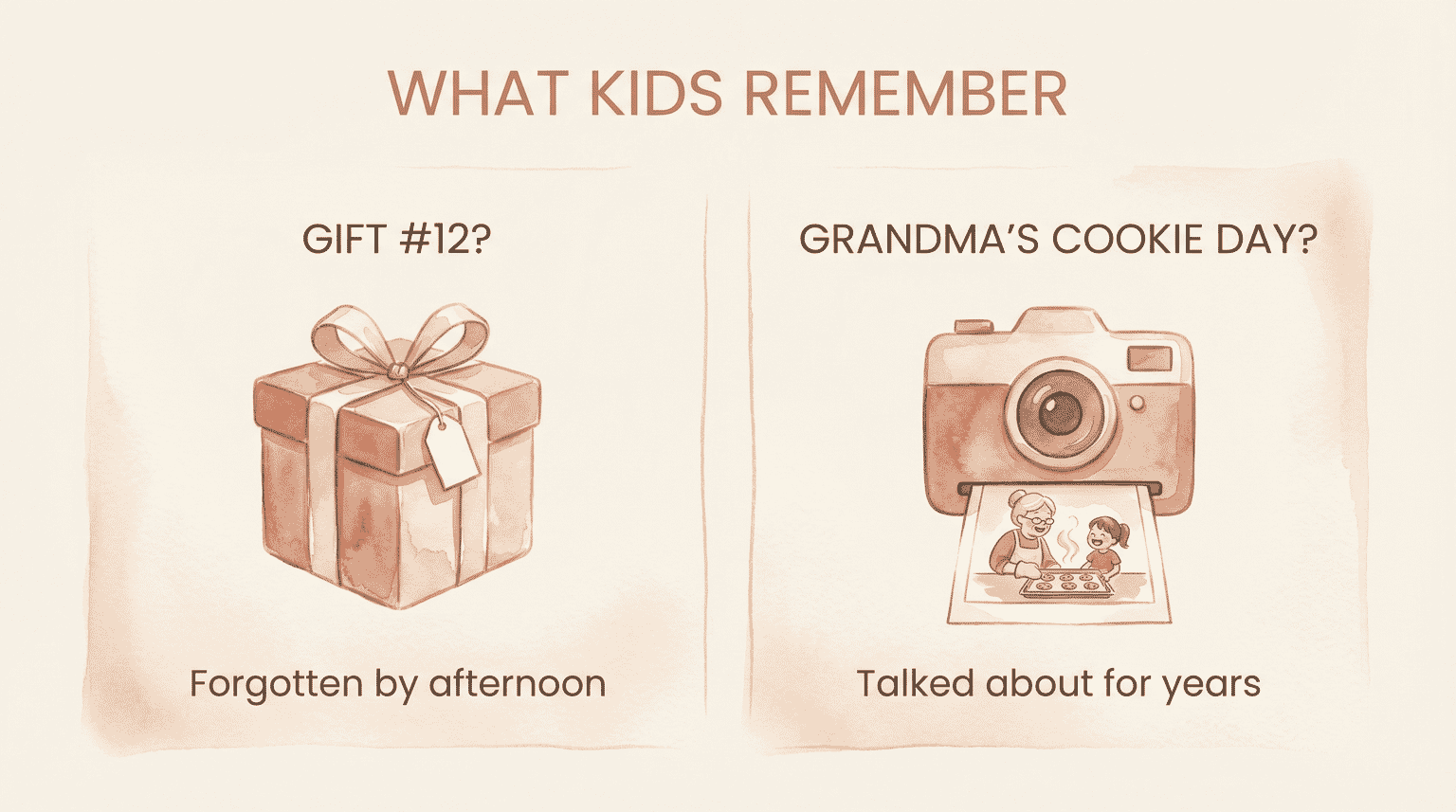
My 12-year-old still talks about the weekend she spent with my mom making her grandmother’s cookie recipe. She doesn’t remember what toys she got that Christmas. But she remembers the flour fight.
Photo projects:
- Annual photo books grandparents create with pictures from the year
- Scrapbooks they build together during visits
- Framed photos from shared adventures
Family history:
- Recorded stories about grandparents’ childhoods (apps like StoryCorps make this easy)
- Heritage items with their stories written down
- Recipe cards in grandparent’s handwriting with the history of each dish
Tradition creation:
- Annual “Grandparent Day” with specific activities
- Holiday traditions owned by grandparents (cookie baking, ornament making)
- Seasonal outings that become expected: apple picking every September, first snow sledding
Research on intergenerational solidarity shows that young adults with tight-knit grandparent relationships provide more support to their own parents later. These traditions are investments that compound across generations.
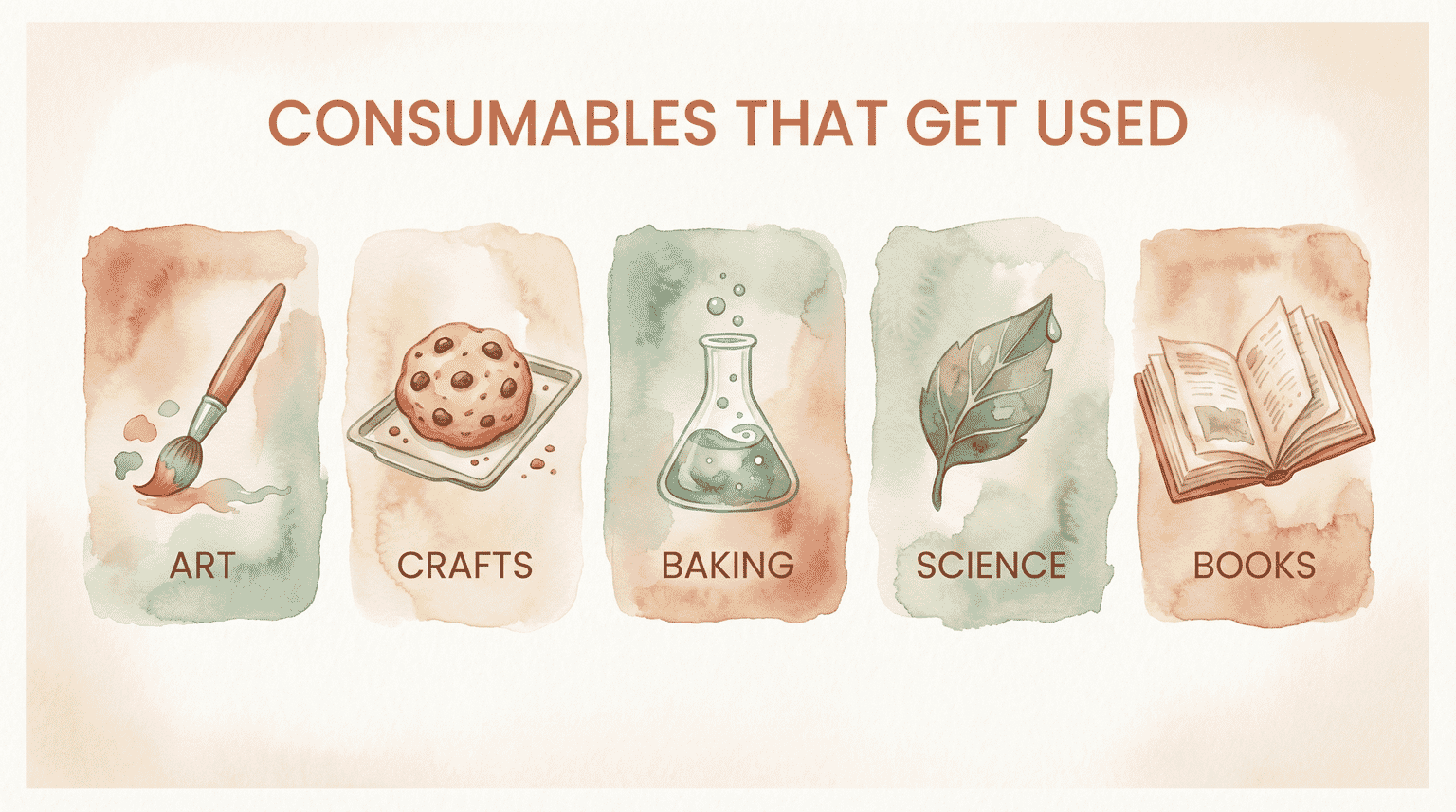
Consumable Gifts That Get Used
When grandparents really need to buy something, direct them toward things that get used up—no long-term storage required.
Art supplies and craft kits: Crayons, markers, paint sets, Play-Doh. My rule: if it’s consumable and creative, go wild. Quality colored pencils feel luxurious and actually get used.
Baking and cooking ingredients: A box with cookie mix, sprinkles, and themed cookie cutters. Bonus if it comes with a date for baking together.
Science experiment kits: The kind that contain one project’s worth of supplies. Used, enjoyed, done—no toy-box competition.
Outdoor exploration supplies: Bug catching kits, seed starting sets, bird feeders with seed. Nature-based and finite.
Books: Always. Building a library is never clutter. Grandparents can inscribe them, making each one a keepsake.
Making Alternatives Easy to Choose
The best way to redirect grandparent generosity? Remove the friction.
Create a shared wish list: Digital vs physical wishlists—Amazon lists, Giftful, or a simple Google Doc. Update it regularly with specific items, experiences, and fund contribution links. Make it dead simple to click and buy exactly what you want.
Establish the “one gift plus experience” rule: Grandparents who need to wrap something can choose one modest gift—plus a shared experience gift. This honors their desire to give while setting limits.
Reinforce what works: When grandparents try alternatives, celebrate loudly. Send photos of your child at the zoo membership visit. Frame the moment. Make the experience gift feel more rewarding than watching wrapping paper get shredded.
The thank-you that shapes behavior: Have your child call or video chat specifically about the experience. “Grandma, remember when we saw the penguins? That was the best day.” This feedback loop reinforces exactly what you want more of.
When Boundaries Need Reinforcement

Most grandparents respond to gentle redirection. Some don’t.
When grandparents won’t stop buying despite conversations, you’re in different territory. Signs that normal spoiling has become problematic include:
- Ignoring explicitly stated boundaries
- Undermining your parenting with gifts (“Don’t tell Mom”)
- Using gifts to compete for a child’s affection
- Becoming defensive or hostile when you set limits
For these situations, you may need firmer language:
“I know this is hard to hear, but we’ve asked several times now, and the extra toys are genuinely creating problems. We need you to check with us before buying anything. This isn’t about not appreciating your love—it’s about respecting our family’s needs.”
But here’s the success story to hold onto. One grandmother interviewed by Good Housekeeping described her approach: “Brittany gives me the rules and I don’t deviate from the rules. If she says that they have to go to bed at 8 p.m., I put them to bed at 8 p.m.”
When asked about this shift, she added: “My mother didn’t respect my parenting style, whereas I respect Brittany’s.”
That’s what healthy boundaries look like—not less love, just better-directed love.
“Children spot the difference between parents’ rules and grandparents’ house rules, so some discrepancy in levels of indulgence and discipline do no harm. But take your cues from parents as to which of their rules… are red lines.”
— Terri Apter, Psychologist and Author of Grandparenting: On Love and Relationships Across Generations
Some flexibility is fine. It’s the red lines that matter.
Frequently Asked Questions

What can grandparents give instead of toys?
Meaningful alternatives include experience gifts (zoo memberships, activity classes, adventure outings), financial contributions (529 education funds, savings bonds), memory-making gifts (photo books, family history projects), and consumables (art supplies, baking kits, books). Research shows grandchildren who have close relationships with grandparents through shared experiences show more prosocial behaviors than those with primarily material connections.
How do I tell grandparents to stop buying so many gifts?
Start the conversation before gift-giving occasions, not after. Lead with appreciation for their generosity, then frame your request around your child’s needs rather than your preferences. Offering specific alternatives with clear purchase pathways—like a shared wish list or 529 contribution link—makes it easier for grandparents to redirect their giving in ways you welcome.
Why do grandparents buy so many presents?
Grandparents often experience gift-giving as their primary way to express love, especially when they have less authority in their grandchildren’s daily lives. Research shows grandmothers particularly substitute between time and gift transfers—when they can’t be present often, they compensate with material gifts. Many also believe it’s their “right to spoil” since they don’t set the daily rules.
How do you set gift boundaries with grandparents?
The most effective boundaries focus on redirection rather than rejection. Create a shared wish list system grandparents can access, establish “one gift plus experience” guidelines, and celebrate when they try alternatives. Family psychologists recommend distinguishing between harmless indulgence and red lines that contradict your parenting values.
Your Turn
What alternative has your grandparent actually gotten excited about? I’ve had success with experience gifts and total flops with 529 contributions (boring, apparently). Would love to hear what redirection actually stuck in your family.
I read every comment—your grandparent success stories help so many families.
References
- Grandparenting and Financial Assistance to Grandchildren – NDSU Extension research on grandparent spending patterns and financial gift alternatives
- Strengthening Grandparent/Grandchild Ties – Research on benefits of close grandparent relationships for child development
- The Influence of Grandparents on Children’s Dietary Health – Systematic review on grandparent-parent dynamics and conflict avoidance
- So, you’re about to become a grandparent? – British Psychological Society guidance on grandparent communication and boundaries
- The New Age of Grandparenting – Survey data on grandparent motivations and modern family dynamics

Share Your Thoughts