

You searched for “over-gifting” and found pages about codependent adult relationships. But you’re here because you’re wondering if you bought your kid too many birthday presents. Let me help with that.

Here’s what the science of gift-giving actually shows: Carnegie Mellon gift-giving research confirms that cost has little relationship with how well a gift is received. Yet many of us keep adding to the cart anyway. I’ve done it myself—eight kids means I’ve had plenty of opportunities to overcorrect.
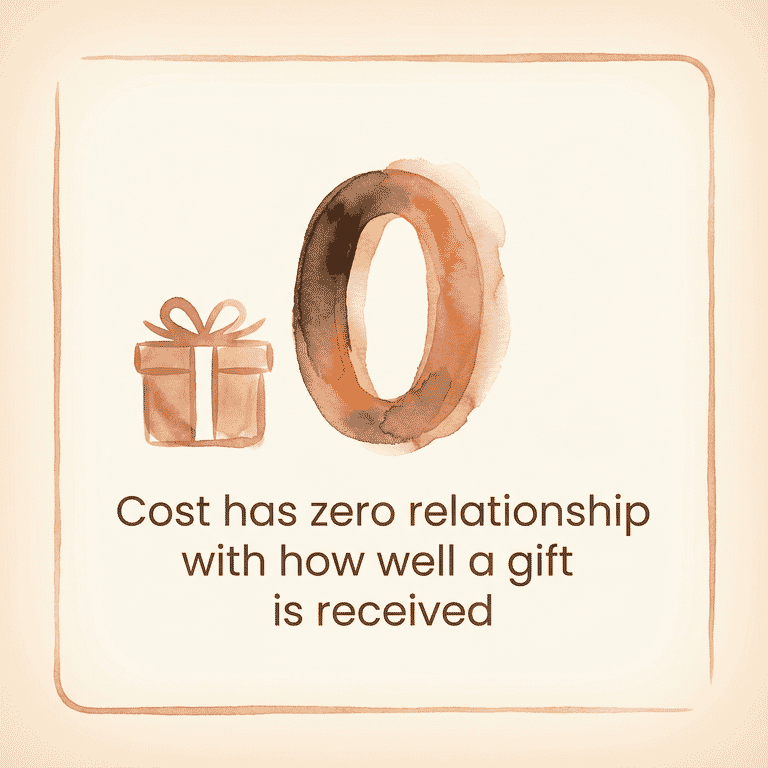
This finding surprised researchers too. We assume expensive equals impressive, but recipients consistently rate thoughtfulness over price tags.
The disconnect between what givers think matters and what recipients actually value? It’s at the heart of most over-gifting patterns.
Key Takeaways
- Cost has zero relationship with how well a gift is received, according to Carnegie Mellon research
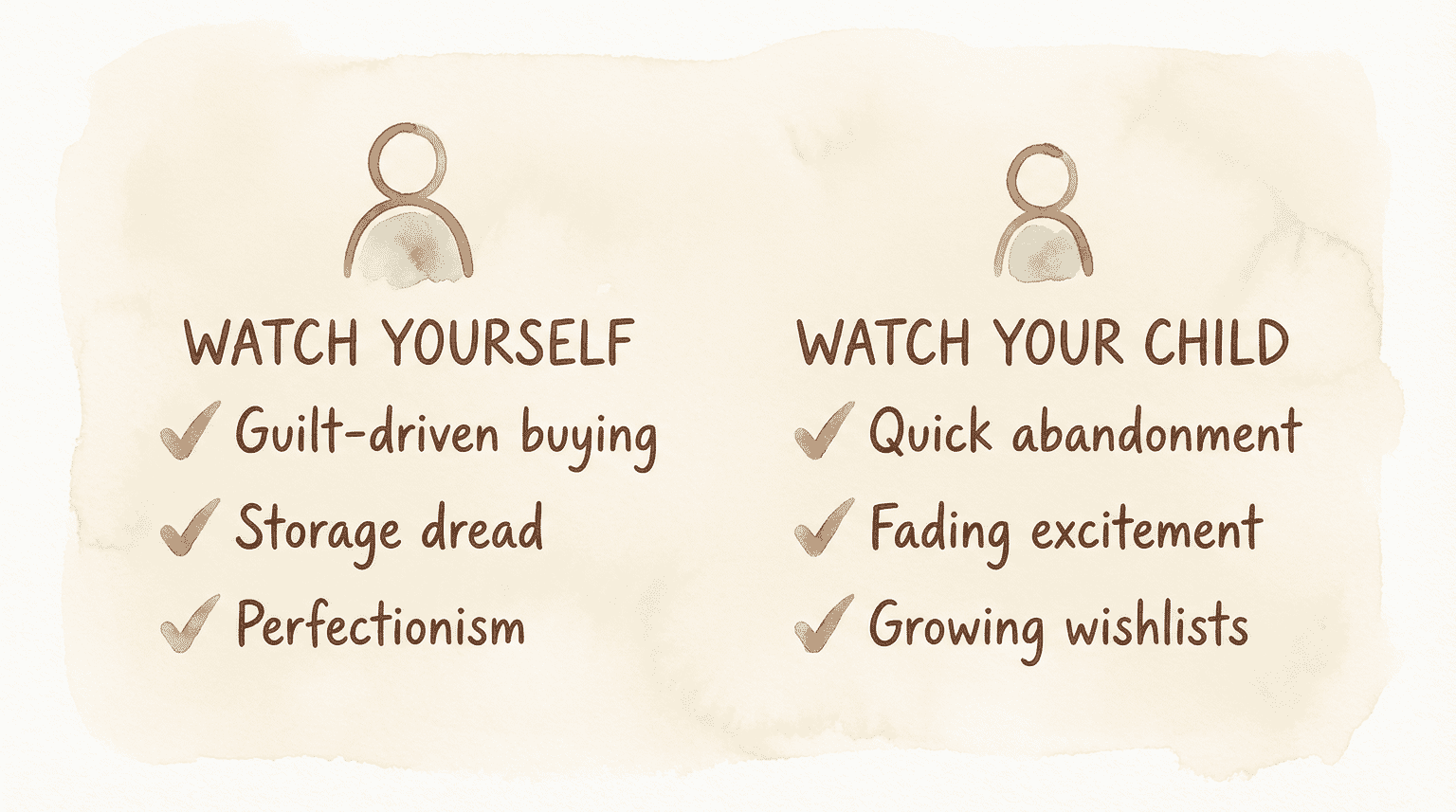
- Watch your own patterns: guilt-driven buying, perfectionism about presentation, and storage dread are warning signs
- Watch your child’s reactions: diminishing excitement and quick toy abandonment signal overwhelm
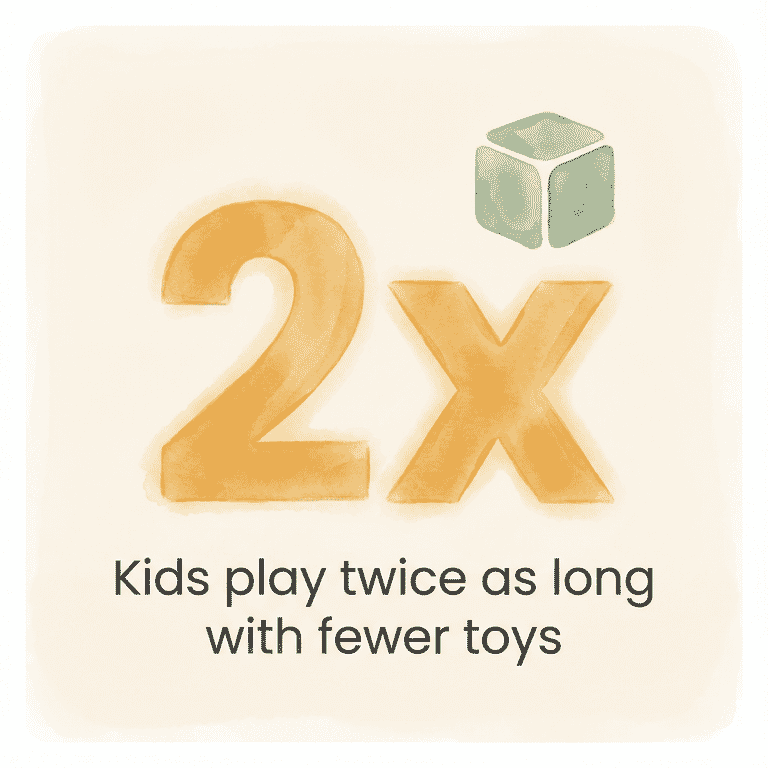
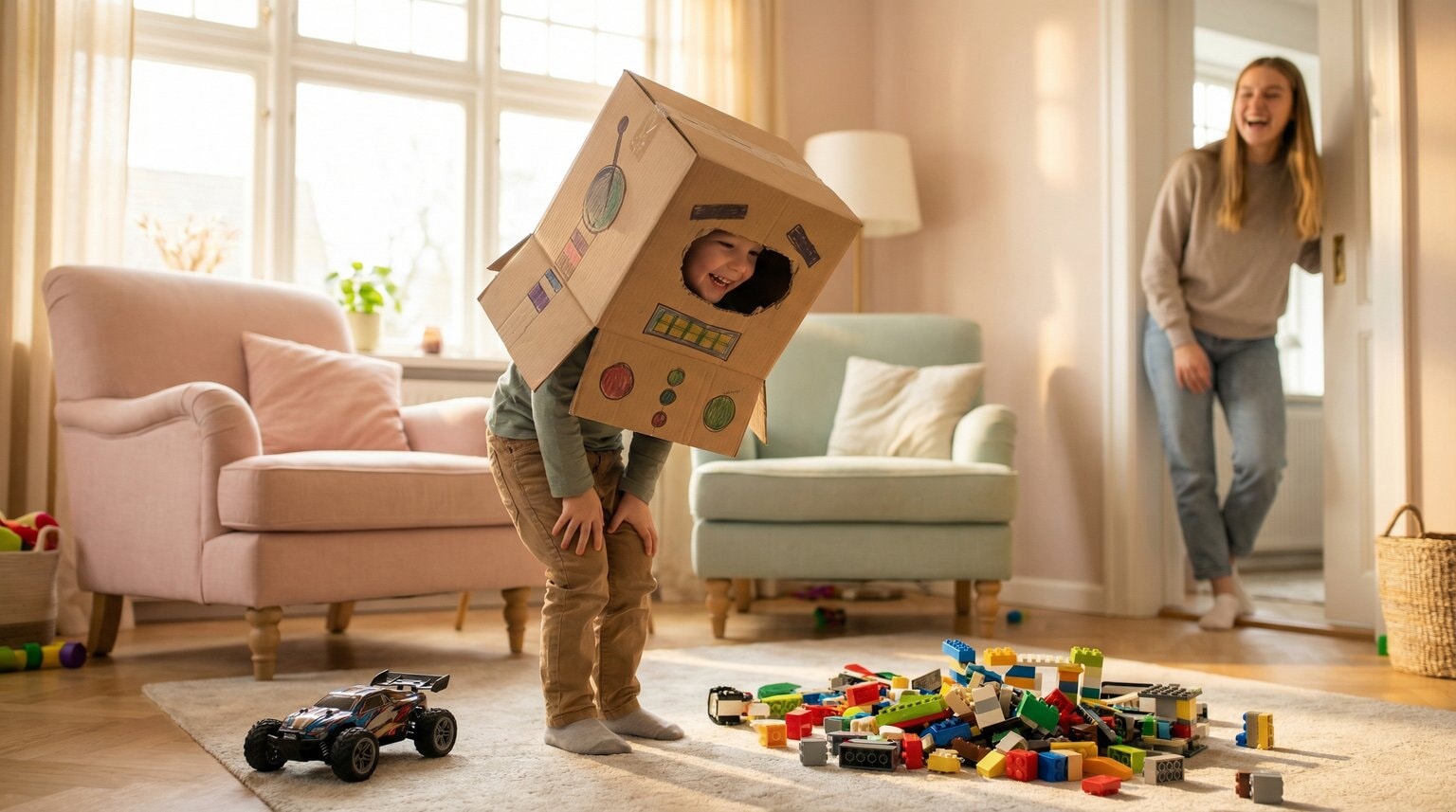
- Children with fewer toys actually play longer and more creatively
- Scaling back won’t devastate your kids—they’re just happy to get a gift
Signs in Your Behavior

Watch for these patterns in yourself:
- Guilt-driven purchasing. You buy because not buying feels wrong, not because your child needs anything specific.
- Chasing the “wow” reaction. Researchers call this the “smile-seeking hypothesis”—fixating on the moment of unwrapping rather than lasting enjoyment.
- Equating spending with love. A 2024 study from the Journal of Consumer Psychology found that givers place far more importance on gift-giving norms than recipients do.
- Perfectionism about timing and presentation. If a slightly late gift triggers real anxiety, that’s worth noticing.
- Dreading the storage situation. When you’re buying gifts while mentally calculating where they’ll even go, something’s off.
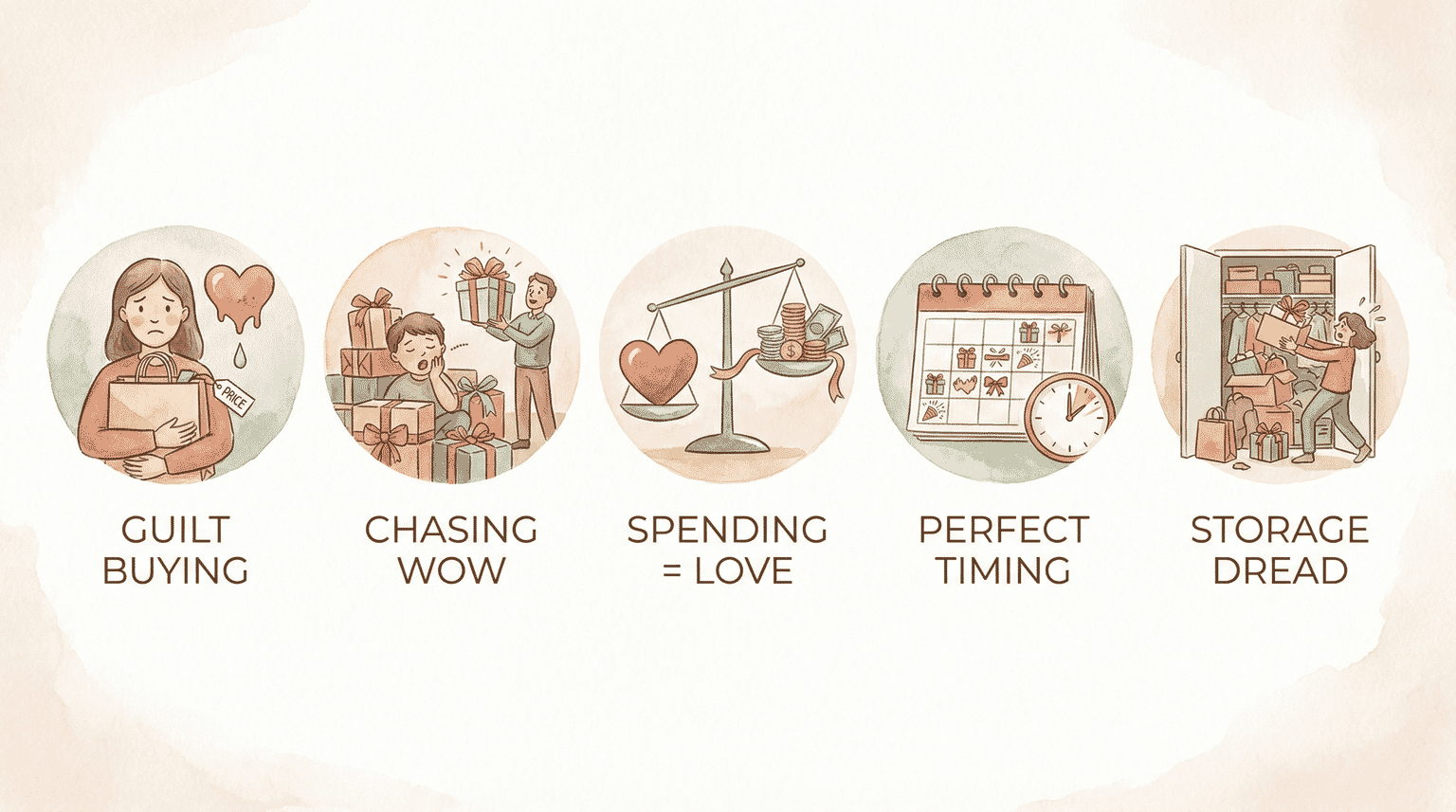
Here’s the thing. These behaviors come from a good place—you want your child to feel loved and celebrated. But the research suggests we’re working harder than we need to.
Signs in Your Child’s Behavior

Your child’s reactions matter too:
- Diminishing excitement. Each gift gets a shorter reaction than the last.
- Abandoned toys within days. Research shows children with fewer toys actually play longer and more creatively.
- Growing wishlists despite more gifts. The “wanting” never catches up.
- Brief or absent gratitude. Quick “thanks” with eyes already on the next box.
- Comparison to peers’ gifts. Focus shifts from what they have to what others got.
The research on toy quantity is pretty striking. When kids have fewer options, they don’t feel deprived—they actually engage more deeply with what they have.
It’s counterintuitive, but abundance can actually work against the creative, focused play we’re hoping to encourage.
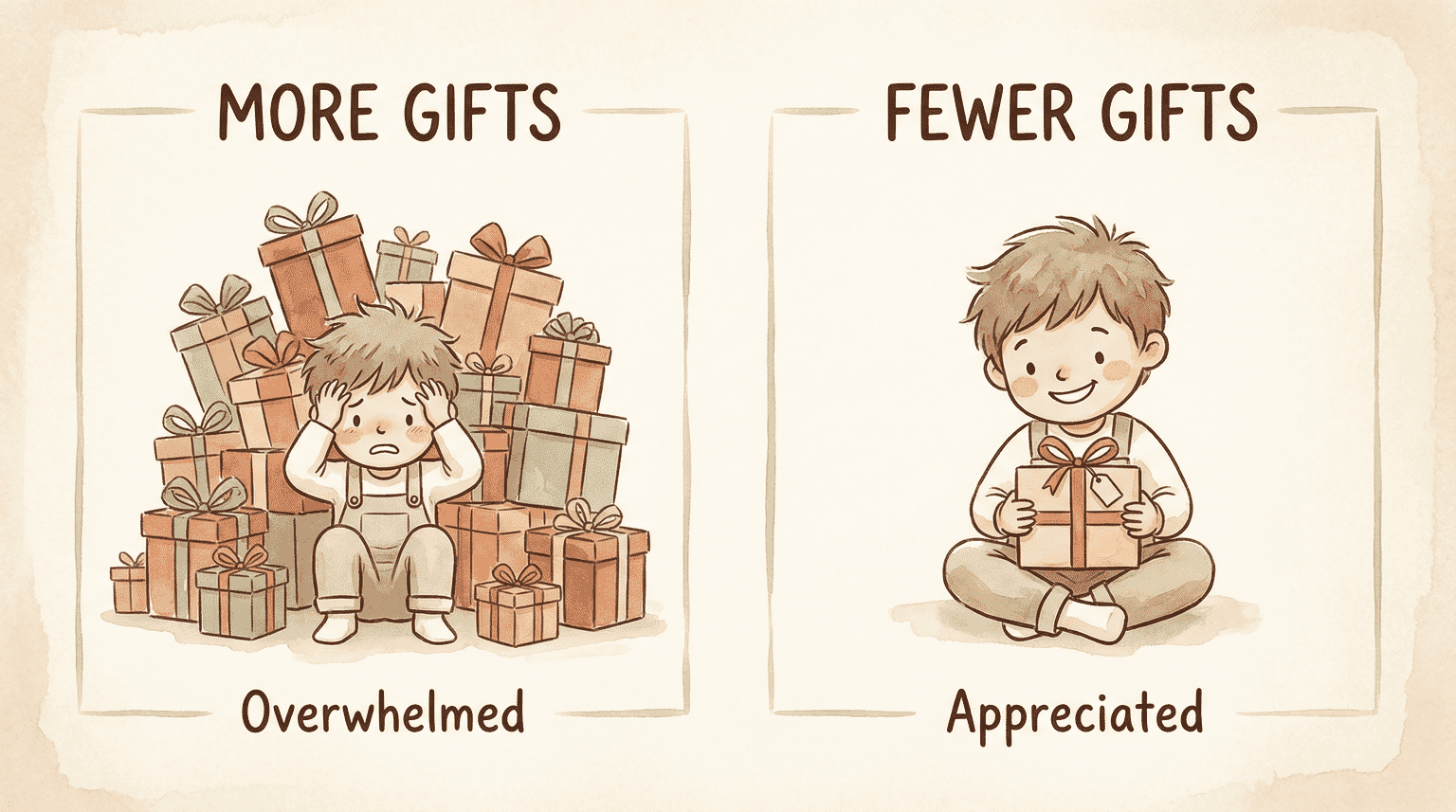
According to Psychology Today research, recipients of excessive giving can experience confusion and underlying anxiety. Kids sense when something beneath the surface doesn’t quite match up.

The good news? Your fears don’t match their reality. As Professor Jeffrey Galak notes, children are “just happy to get a gift.” Scaling back won’t devastate them—it might actually help them appreciate what gifts actually teach your child.
Frequently Asked Questions
How do I know if I’m giving my child too many gifts?
Watch both your behaviors (guilt-driven buying, dreading storage) and your child’s reactions (quick abandonment, diminishing excitement). If you’re compensating with quantity, that’s a clear sign.
What are the effects of over-gifting on children?
Research shows children may struggle to develop genuine gratitude and begin expecting material gifts as emotional substitutes. Practical, meaningful gifts actually create more happiness than impressive piles.
What About You?
Do any of these signs ring true? I’m curious what’s helped you scale back—or whether you’ve decided abundance works just fine for your family.
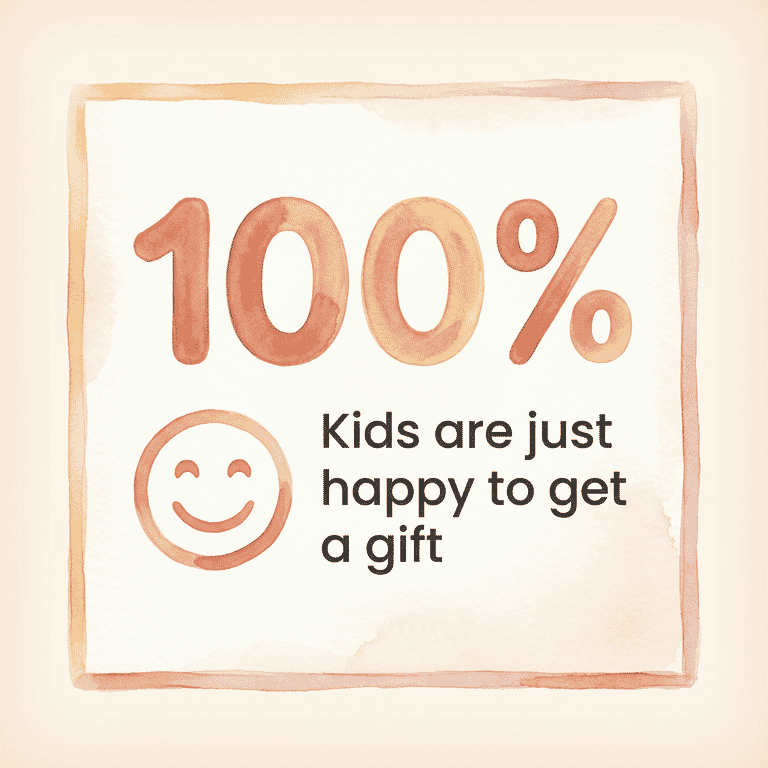
Remember: the pressure you’re feeling about gift quantity? Your kids don’t share it. They’re just happy to be thought of.
That’s not permission to skip celebrating them—it’s permission to stop stressing about whether you did enough.
Your experiences help other parents navigate the gift-giving guilt too.
References
- The Art and Science of Gift-Giving – Carnegie Mellon and National University of Singapore research on giver-receiver psychology
- Better Late Than Never? – 2024 research on gift-giving norm pressure
- People Who Give Too Much – Psychology of excessive giving patterns

Share Your Thoughts