
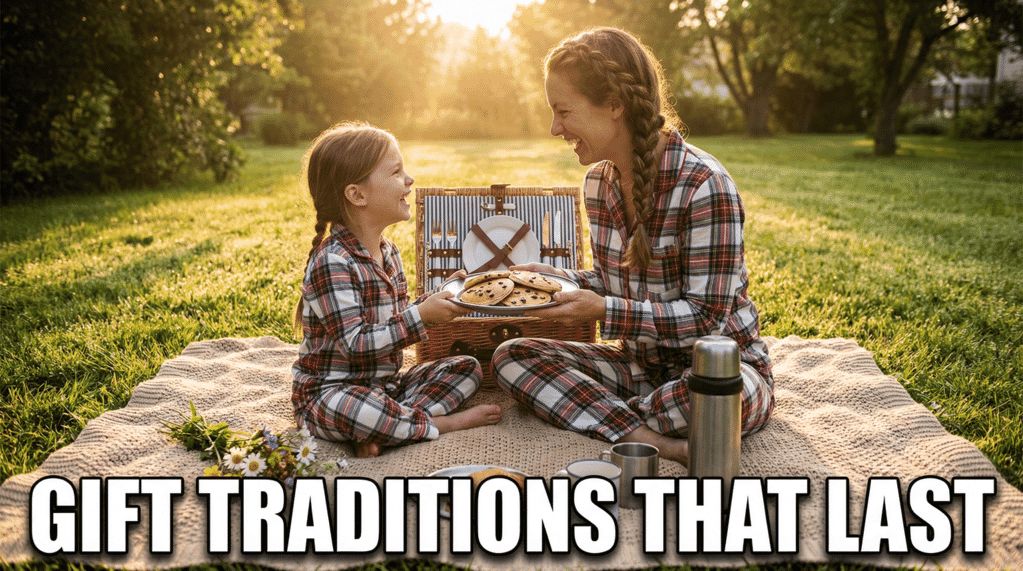
My 6-year-old unwrapped her birthday present last month—a carefully chosen art kit I’d researched for weeks—and immediately asked if she could play with the box. Meanwhile, her 12-year-old sister was still talking about the “pancake picnic” tradition we started three birthdays ago. No gifts involved. Just pajamas, a blanket in the backyard, and a stack of chocolate chip pancakes at sunrise.
Here’s what the research actually shows about that contrast: a 2024 longitudinal study tracking children through sixth grade found that kids who participated in fewer than 10 family events annually had more than three times the risk of behavioral problems compared to those participating in 20+ events. Not more expensive gifts. More shared experiences and traditions.
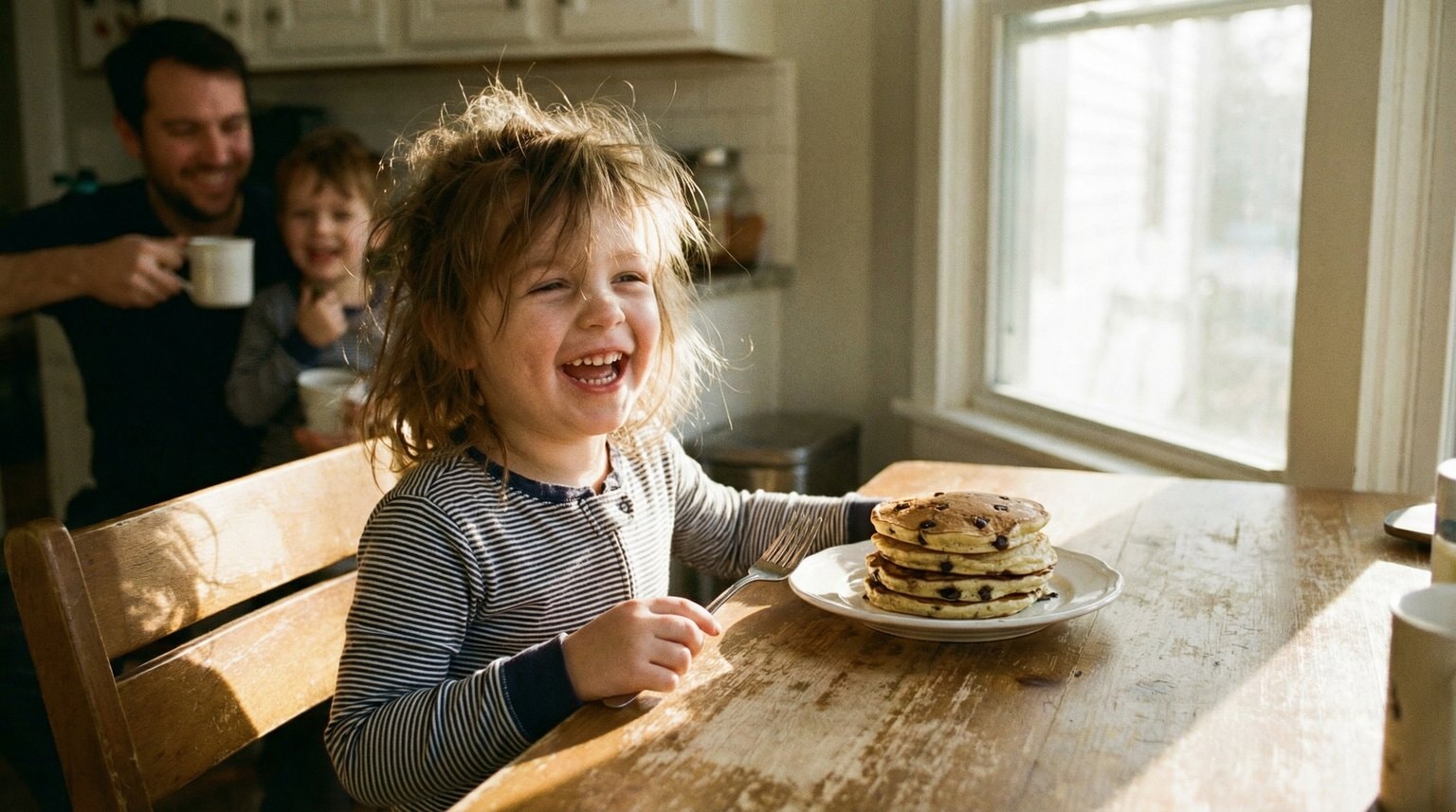
I’ve watched this play out eight times now across my kids, ages 2 through 17. The toys get donated. The traditions get requested year after year. This isn’t about being anti-gift—it’s about understanding why how we give matters—so much more than what we give.
Key Takeaways
- Children with 20+ annual family events show three times fewer behavioral problems than those with fewer than 10—consistency beats elaborateness
- Gift traditions need to evolve with your child’s developmental stage—what works for toddlers won’t resonate with preteens
- Experience gifts create stronger, longer-lasting memories than material presents—research confirms memories linger after objects lose appeal
- The “smile-seeking hypothesis” explains why we overbuy—we optimize for the unwrapping moment instead of long-term enjoyment—a psychological bias worth understanding
- Traditions can go dormant and return—give them permission to evolve without declaring them dead
What Makes a Gift Tradition Actually Stick
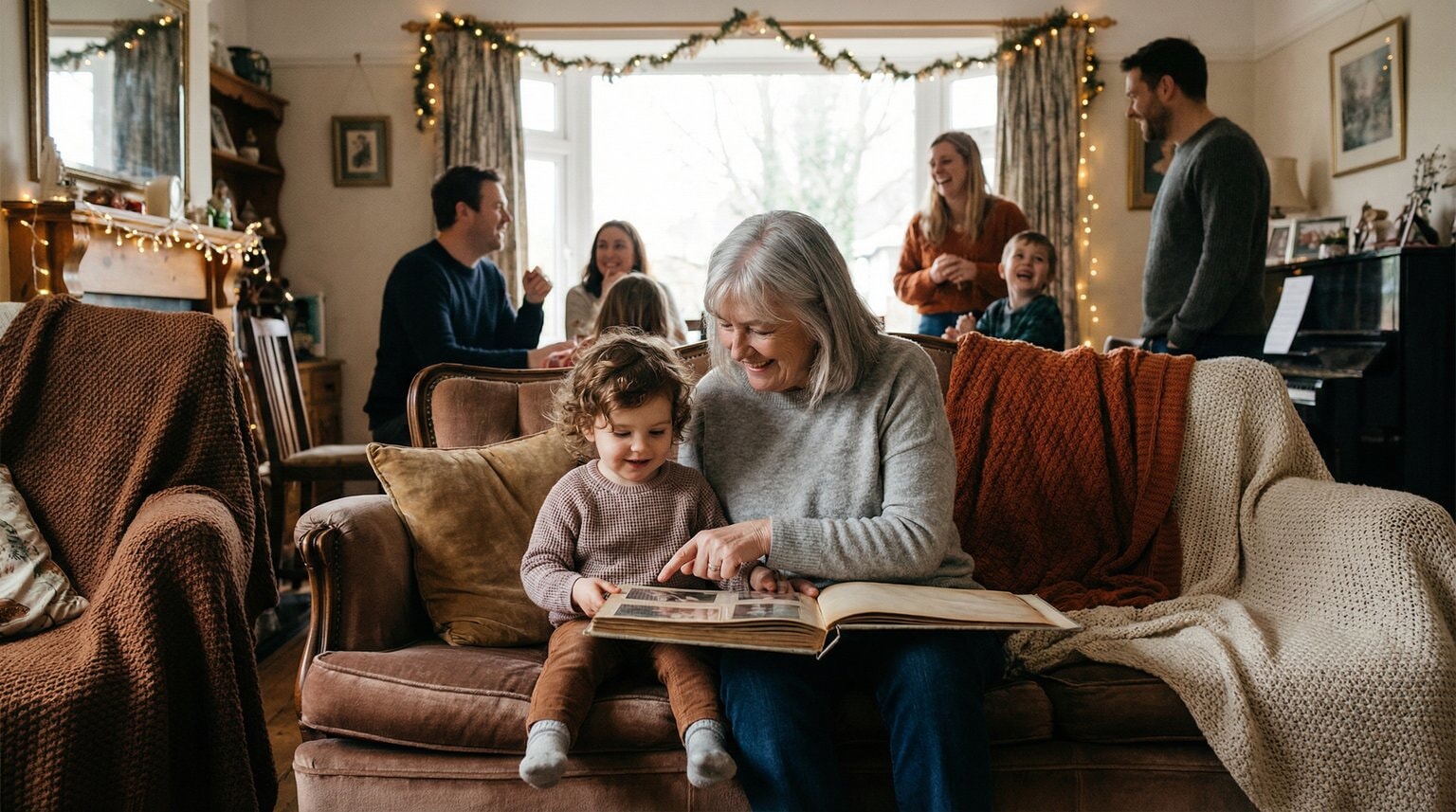
Dawn O. Braithwaite, Willa Cather Professor of Family Communication at the University of Nebraska-Lincoln, defines family rituals as “voluntary, recurring, patterned communication events whose jointly enacted performance by family members honors what they regard as sacred.”
That sounds academic, but here’s what it means practically: a tradition isn’t just something you do once. It’s something your family chooses to repeat because it represents who you are together.
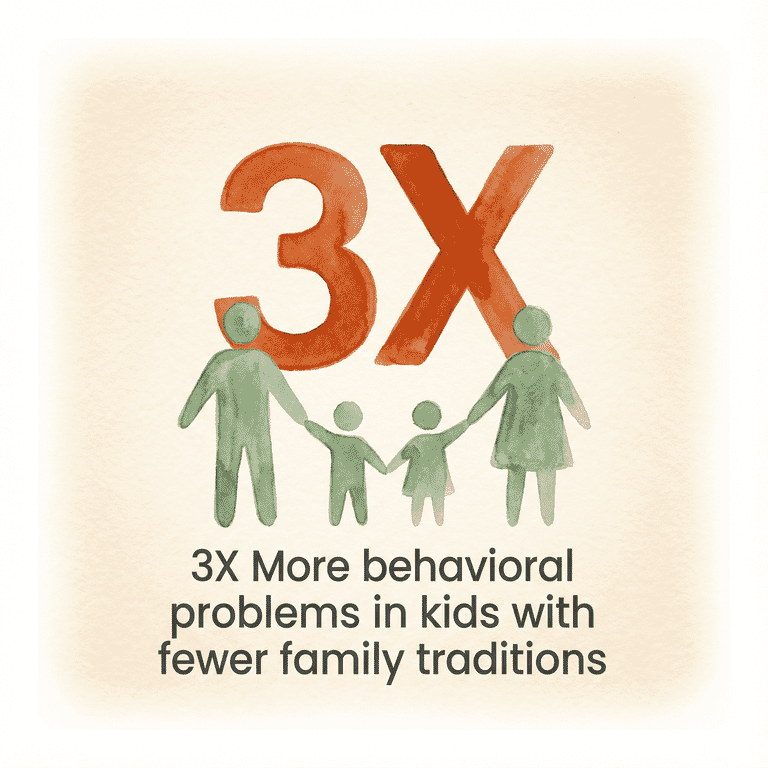
The 2022 research on annual family events found families celebrated an average of 15.47 annual events—everything from birthdays to seasonal traditions like Three Kings Day. Children from families with numerous events showed higher prosocial behavior and fewer behavioral problems.
The key wasn’t elaborate celebrations; it was consistent participation in shared family experiences.
Researchers have documented that cultural experiences fostered through family events “continue to be a part of the child’s life, even after they leave their parents’ home.” My 17-year-old still requests her birthday interview tradition—the same questions we’ve asked every year since she was three. The answers evolve. The connection doesn’t.
The science reveals something called “bonding value”—the idea that gifts carry meaning distinct from their monetary or practical value. That handmade coupon book from your 7-year-old? Objectively worthless. Emotionally priceless.
Gift traditions work the same way. The value isn’t in the tradition itself; it’s in what repeating it says about your family. Understanding the science behind gift-giving helps explain why these moments matter so much—and when gift problems arise, traditions often provide the framework for solving them.
Age-by-Age Gift Tradition Framework
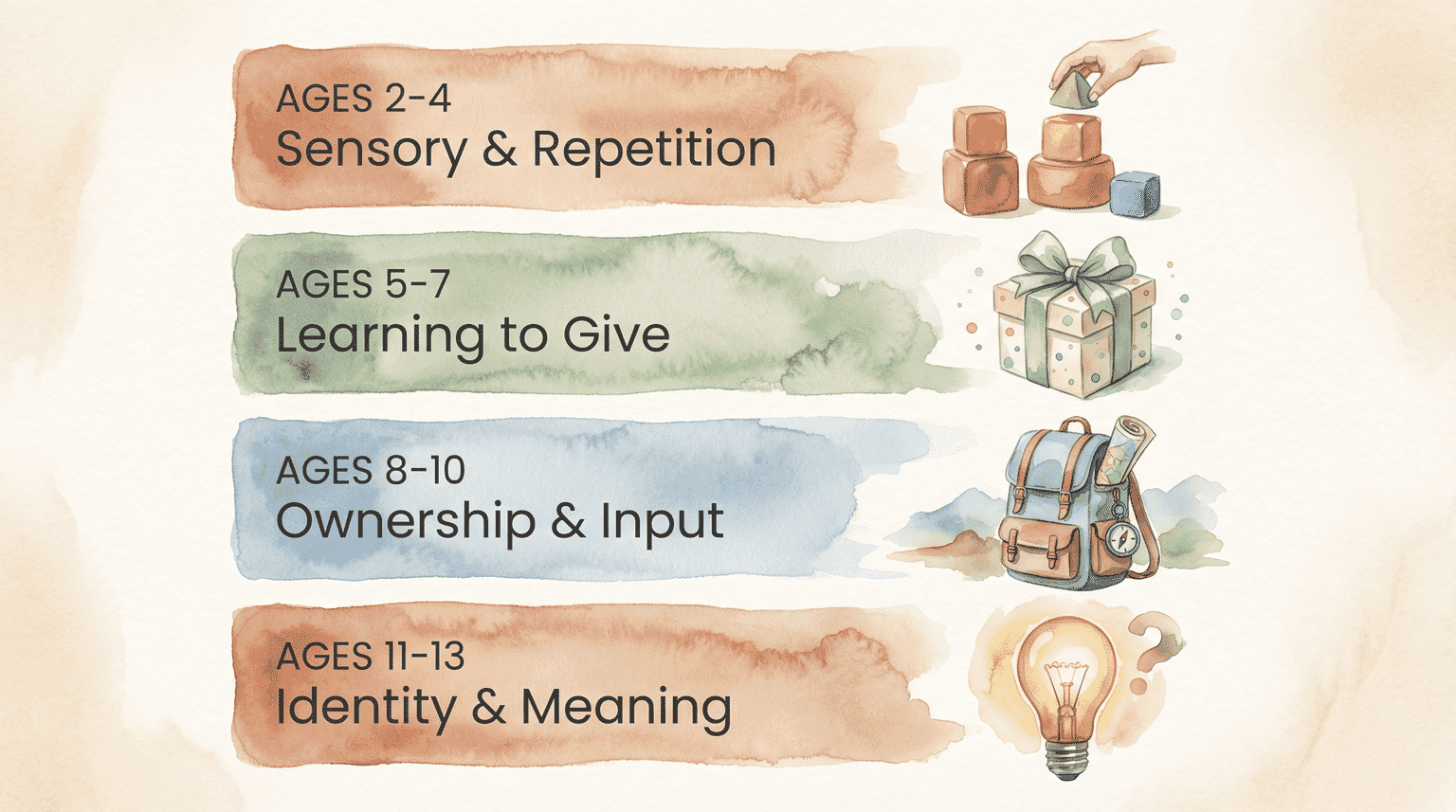
Toddlers (Ages 2-4): Sensory Over Stuff
My 2-year-old doesn’t understand that the present is inside the wrapping paper. She thinks the crinkly paper is the gift. And developmentally? She’s not wrong.
At this age, episodic memory is just forming. Toddlers experience the world through senses—texture, sound, smell, repetition. They cannot understand delayed gratification, abstract gift concepts, or why they should wait their turn to open presents.
Traditions that work:
- Sensory-focused advent calendars with textures to touch, bells to ring, small items to discover—not chocolate they’ll forget by noon
- Simple unwrapping rituals with deliberate pacing (one present, pause, play)
- “Birthday morning” sensory wake-ups—special breakfast smells, birthday song at the door
- One-gift opening experiences where quality trumps quantity completely
What to avoid: Anything requiring patience they don’t yet possess. Don’t explain charity giving (too abstract). Don’t create complex rules they can’t cognitively process. Don’t expect gratitude performances.
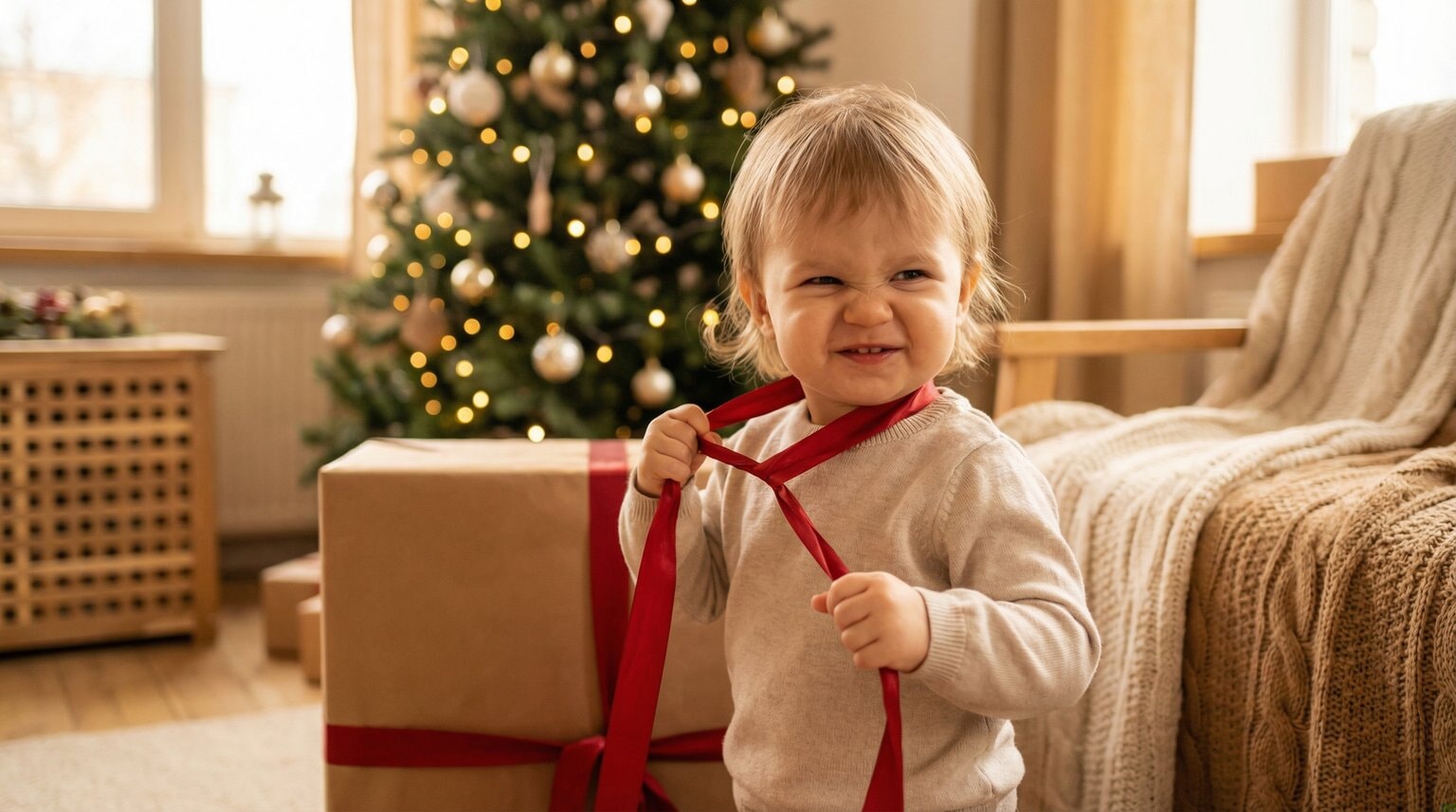
With my toddlers, I’ve learned the tradition IS the experience. The gift inside is almost irrelevant. Last Christmas, my then-3-year-old spent 40 minutes playing with a bow. The research-backed play kitchen waited.
Early Elementary (Ages 5-7): Beginning to Give
Something shifts around age 5. My kids started noticing that other people have feelings about gifts too. This is perspective-taking emerging—the cognitive ability to understand someone else’s viewpoint.
This is prime time to introduce giving traditions, not just receiving ones.
Traditions that work:
- “Something you want, need, wear, read” framework introduction—but keep it simple, one category at a time
- One gift selection for a sibling or parent—with significant guidance
- Experience gift calendars with pictures showing what’s coming (a trip to the zoo, a baking day)
- Thank you rituals with support—not independent thank you notes, but co-created ones
- Birthday “giving back” traditions—bringing one item to donate
What to avoid: Expecting independent charity decisions or complex multi-step traditions. My 6-year-old can choose one gift to donate if I narrow options to three. Asking her to independently select meaningful charity gifts leads to overwhelm and meltdowns.
The research on prosocial development shows children “learn beneficial social conventions through mimicry, especially by imitating parents.” They’re watching how you give more than listening to what you say about giving.
Late Elementary (Ages 8-10): Ownership Emerging
Abstract thinking kicks in during these years. My 8-year-old can finally understand why we limit gifts—not just accept the rule. And my 10-year-old wants ownership of tradition elements, not just participation.
Traditions that work:
- Four-gift rule with child input on what categories mean (“wear” could be shoes OR a costume)
- Charity research projects—they can actually compare organizations now
- Experience gift planning with anticipation calendars they help create
- Tradition ownership roles—”You’re in charge of choosing the movie for movie night”
- Independent thank you culture with specific detail requirements
- Family gift-making projects where they contribute meaningfully
What to avoid: Sudden dramatic tradition changes without explanation—this age group is highly sensitive to fairness and will notice (and object). Don’t ignore peer comparison concerns entirely; they’re developmentally appropriate.
Prof. Jeffrey Galak’s research at Carnegie Mellon found that cost has “little relationship” with how well a gift is received. My 10-year-old finally understands this—she requested “a whole day alone with Mom” for her last birthday instead of a party. Cost: $0. Value: immeasurable.
Preteens (Ages 11-13): Identity and Meaning
This is where the research gets really interesting. The 2024 longitudinal study specifically studied sixth-graders (ages 11-12) because this age group benefits most from active participation in family events. Identity formation is accelerating, and traditions contribute directly to how preteens understand their place in the family.
But here’s the tension: they’re also beginning to question everything.
Traditions that work:
- Experience gifts with planning agency—they research, compare, decide
- Family tradition modification input—”What should we change about how we do Christmas morning?”
- Intergenerational wisdom-sharing traditions—more on this below
- Charity cause selection with research responsibility
- Budget-conscious gift planning with real financial constraints they help navigate
- Tradition documentation roles—family historian, photo organizer, recipe keeper
Research on intergenerational programs found significant positive effects for youth in sense of purpose and attitudes toward older people.
“Gaining advice from someone who has actually lived through life.”
— Intergenerational program participant, explaining why wisdom-sharing matters
My 12-year-old’s favorite tradition is now her annual “wisdom lunch” with her grandmother—no gifts, just conversation and advice.
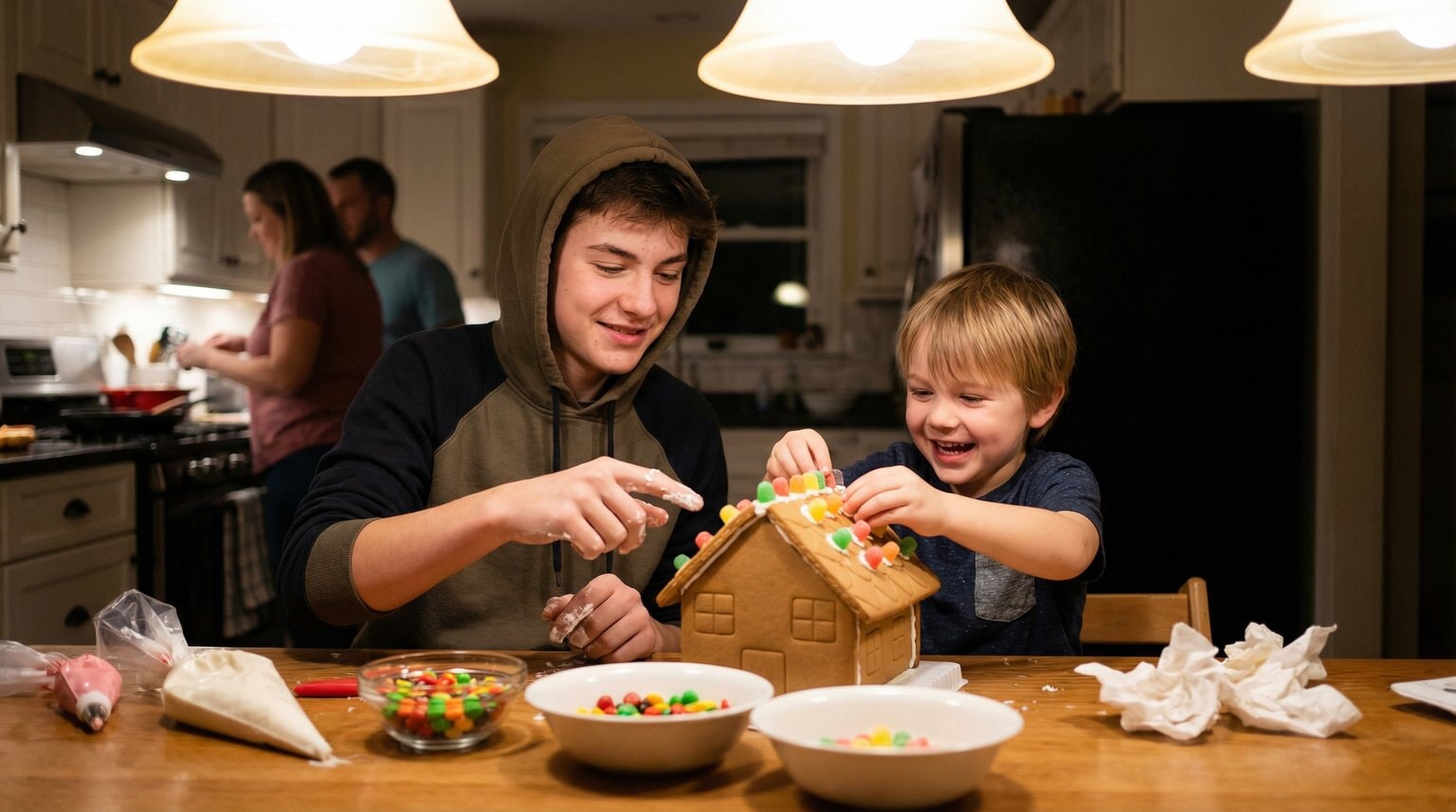
Evolution guidance: Let them skip occasional traditions without catastrophizing. Create new teen-appropriate additions alongside childhood traditions. When my 15-year-old opted out of the family gingerbread house last year, we let her—and she showed up anyway, “just to watch.” (She ended up doing the roof.)
Christmas Morning Dynamics: The Science of Why We Overbuy
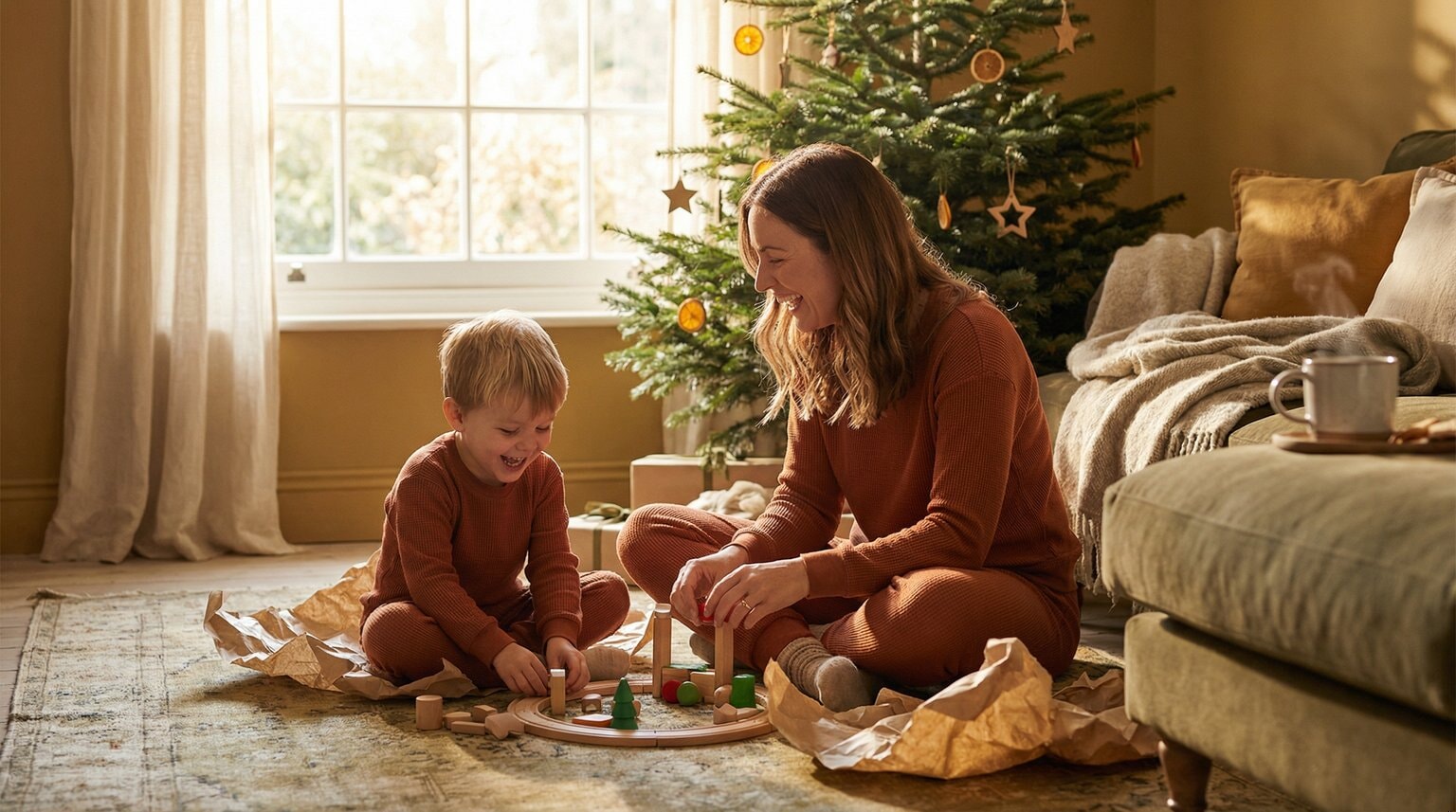
Here’s something that made me feel better about every gift-giving failure I’ve ever had: research on the “smile-seeking hypothesis” explains why parents consistently overbuy.
Prof. Adelle Yang at the National University of Singapore identified it: “There is a natural perspective gap” between givers and receivers. We givers focus on the moment of exchange, wanting to see the biggest immediate reaction. We buy the flashiest thing. But receivers feel greater gratitude for presents that bring longer-term enjoyment.
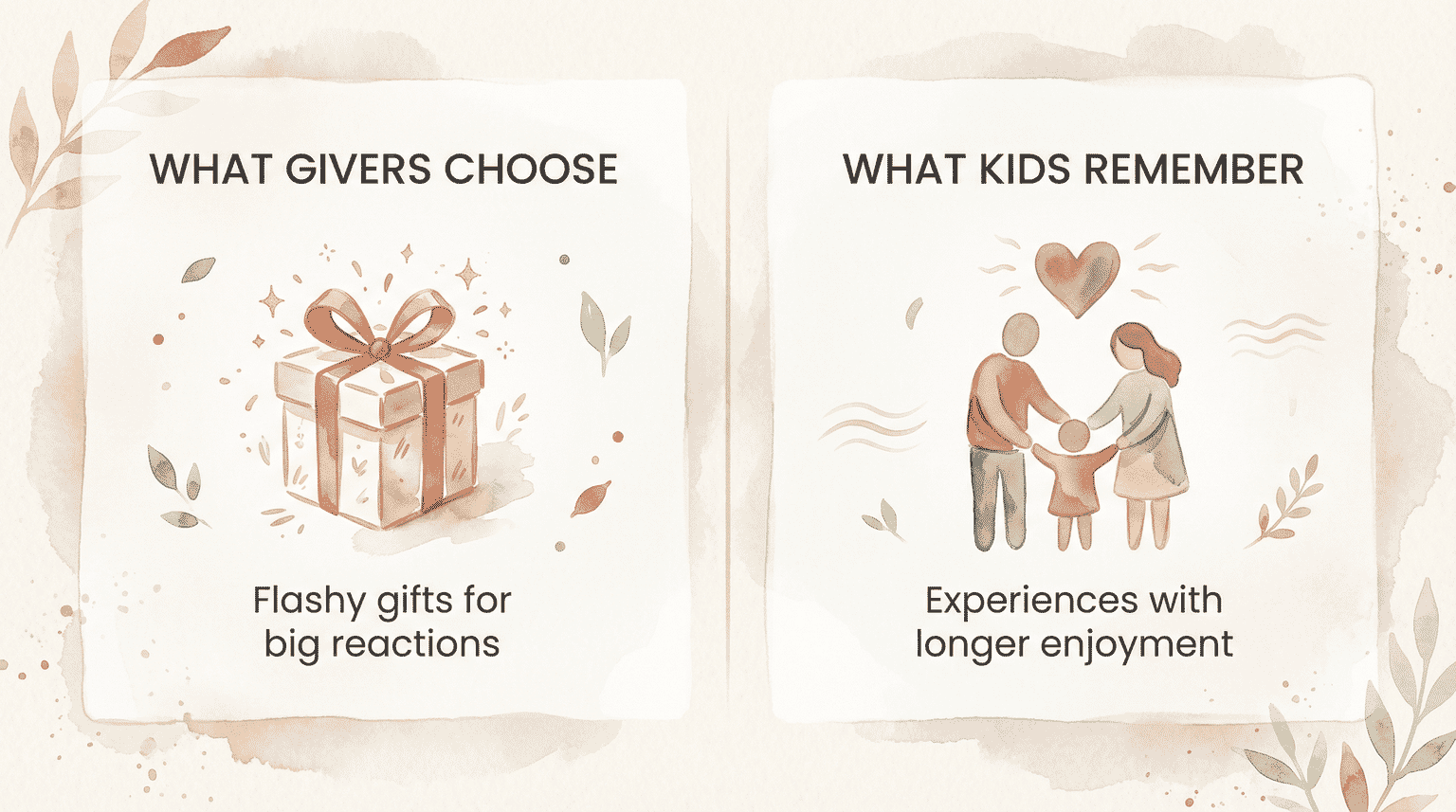
This is why my kids remember the matching family pajamas tradition (worn for months) more than the elaborate presents underneath the tree.
Traditions that counteract the overbuy impulse:
- One-at-a-time opening rituals—no frenzy allowed, each gift gets attention
- Post-opening connection traditions—playing with one gift together before opening more
- The “experience before stuff” approach—start with a family breakfast, delay gifts until afternoon
- Anticipation calendars that spread the excitement across December
These rituals also help counter digital influence on gift expectations—when kids see influencers unboxing mountains of toys, family traditions provide a healthier alternative framework.
Age-specific considerations:
- Toddlers: Pace matters infinitely more than quantity. Three gifts opened slowly beat ten ripped through.
- Elementary: Let them participate in distribution—being the “gift helper” creates investment.
- Preteens: They can help manage younger siblings’ expectations and model patience.
For managing extended family gift volume, Prof. Julian Givi’s research offers reassurance: “Pretty much every time you give a sentimental gift, it ends up being a home run.” Suggest grandparents contribute to experiences or savings accounts, framing it as what kids actually prefer—because research shows they do.
Birthday Rituals That Build Memory
The 2022 study found 98.8% of families celebrate children’s birthdays—making it nearly universal. But birthday traditions may matter even more than holiday traditions because they’re individual, focused entirely on one child.
The birthday interview tradition:
Every year since age 3, we ask each child the same questions: Favorite color? Best friend? What do you want to be when you grow up? What makes you happy? What’s your favorite thing about our family?
At 17, my oldest has 14 years of answers. Watching her revisit them last year—how her answers evolved, what stayed consistent—was more meaningful than any gift we’ve ever given.
Age-appropriate approaches:
- Toddlers: Sensory morning rituals—special breakfast smells, birthday songs, texture-rich decorations they can touch
- Elementary: Birthday interviews they help design—adding their own questions each year
- Preteens: Experience gift selection with research and planning responsibility
The birthday letter tradition:
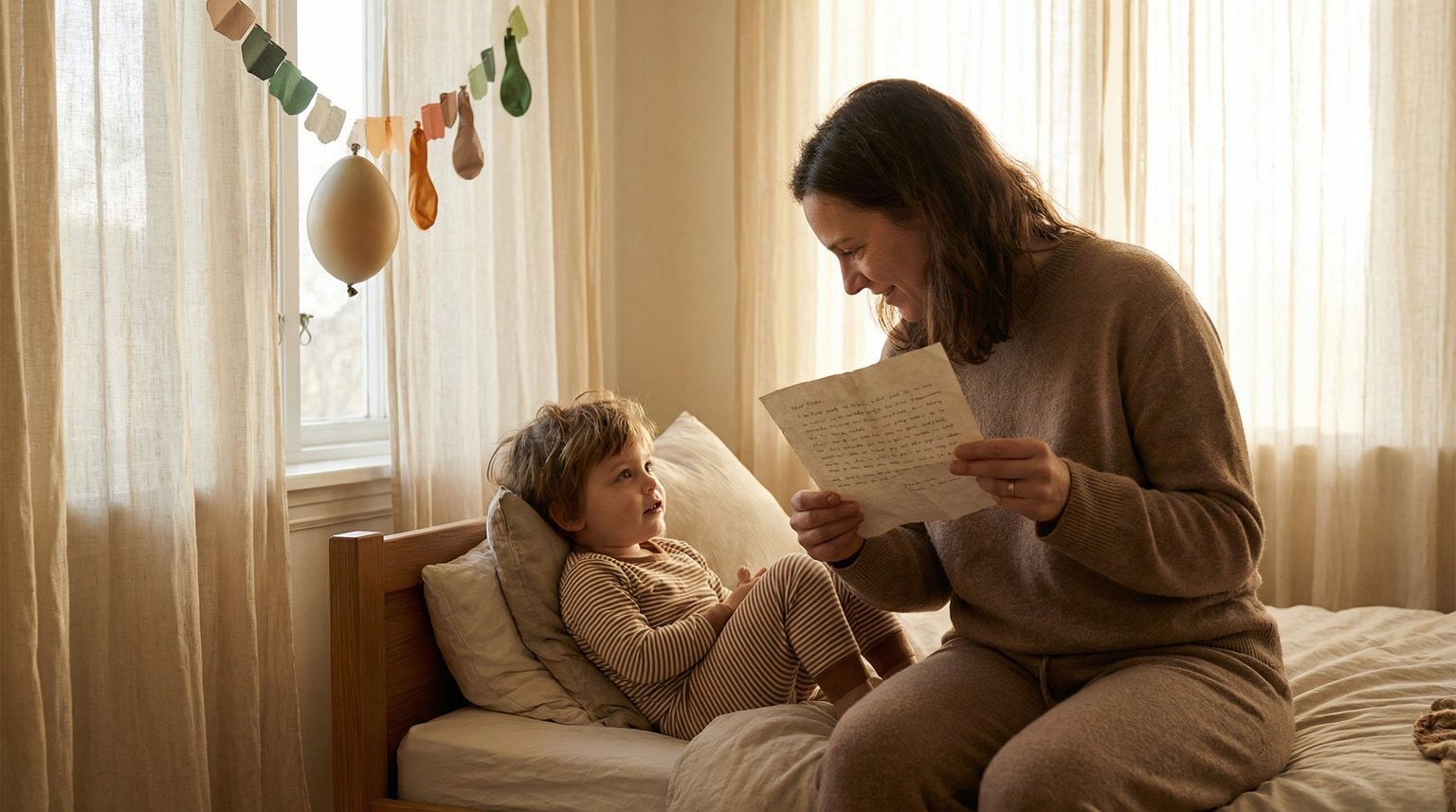
I write each child a letter on their birthday—what I observed in them that year, what made me proud, what I hope for them. They go in a box they’ll get at 18. This costs nothing but attention.
“Thoughtful gifts strengthen close relationships.”
— Psychology Today research on gift-giving impact
My kids don’t remember most toys from three years ago. They absolutely remember the birthday letters they’ve already sneaked peeks at.
Creating Thank You Culture (Without the Battles)
Let me be honest: thank you notes have caused more conflict in my house than almost any other tradition. But when I understood the developmental progression, everything changed.
The gratitude progression:
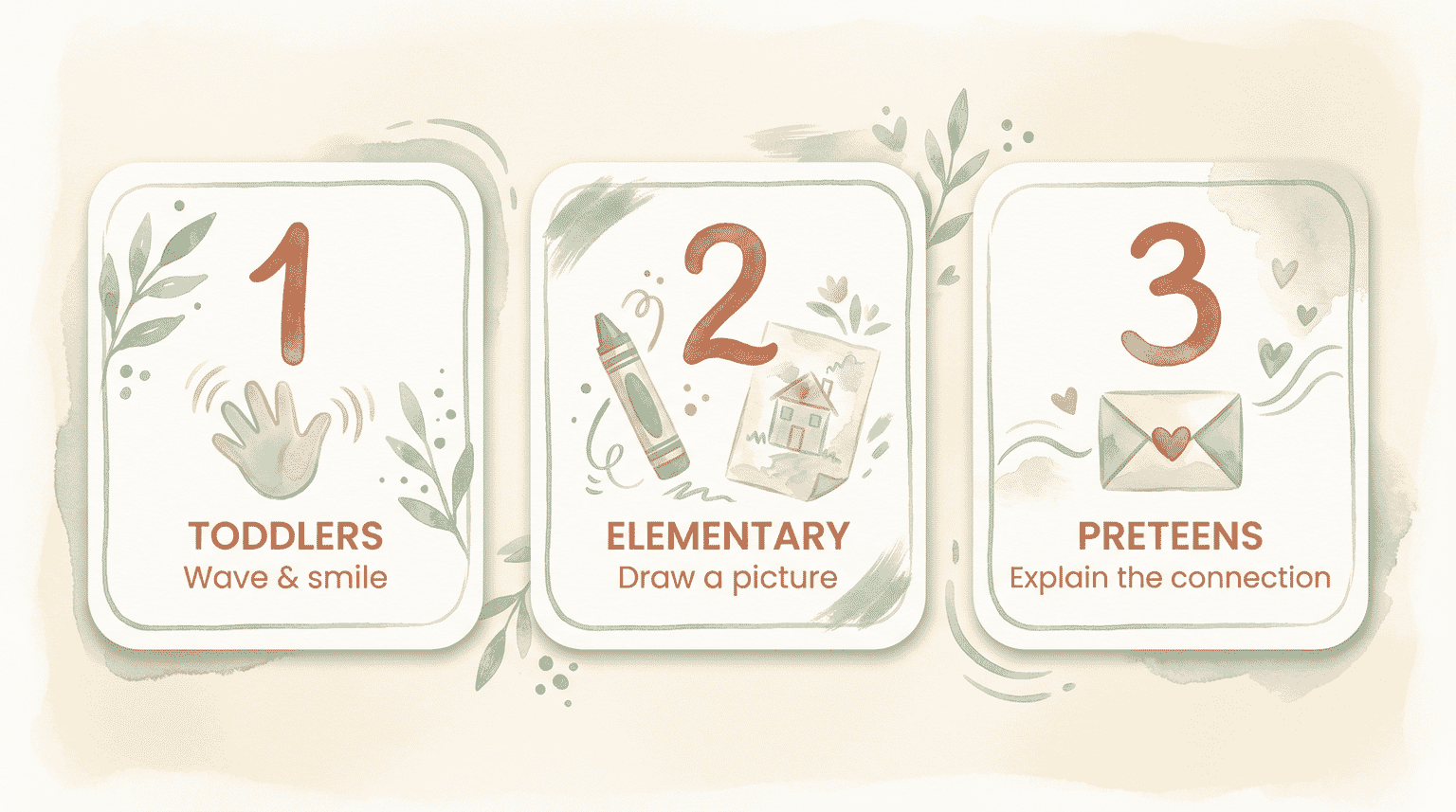
- Toddlers: Modeled thank you with physical gestures—wave, blown kiss, high five
- Early elementary: Assisted thank you notes with pictures they draw
- Late elementary: Independent thank you with specific detail requirements (“Thank you for the book. I especially liked the chapter about…”)
- Preteens: Thank you as relationship maintenance—explaining why it matters to the giver
The shift happened when I started framing thank yous not as obligation, but as connection. The research on family events shows that “social adaptation skills improve through participation” in family rituals. Thank you culture is a skill they’re practicing, not a punishment they’re enduring.
The gratitude moment before opening:
Before any gift gets opened in our house—birthday or holiday—we pause. Who gave this? What do we know about how they chose it? This 30-second ritual transforms gift-opening from consumption to connection.
For extended family thank you systems, we’ve landed on video messages for distant relatives. My kids are more willing to record a 30-second thank you video than write a formal note, and grandparents consistently tell us they prefer it. Meeting kids where they are developmentally isn’t lowering standards—it’s effective teaching.
If you’re working on instilling lasting gift values in children, the thank you ritual is where values become visible. It’s the practice, not the lecture.
Experience Traditions vs. Material Gifts: What the Science Actually Shows
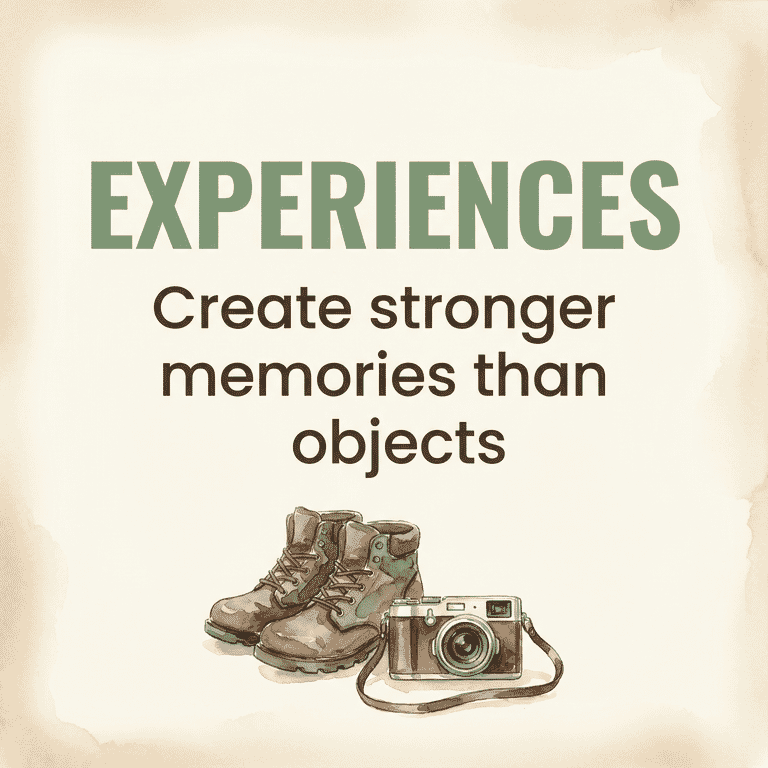
The research is consistent: experience gifts create stronger memories than objects. Prof. Galak explains that if you’re optimizing for the gift exchange, “you want to give the sparkliest thing you can deliver. But that’s doing the receiver a disservice.”
New experiences bring greater overall happiness because memories linger long after material gifts have lost their appeal.
Creating experience traditions by age:
Toddlers: Sensory experiences—petting zoo, museum touch exhibits, nature walks with collection bags. Elementary: Adventure experiences with anticipation calendars showing countdown. Preteens: Experience gifts they research, compare, and plan themselves.
Low-cost experience alternatives:
- “Yes Day” traditions (child chooses day’s activities within budget)
- Sunrise or sunset traditions for birthdays
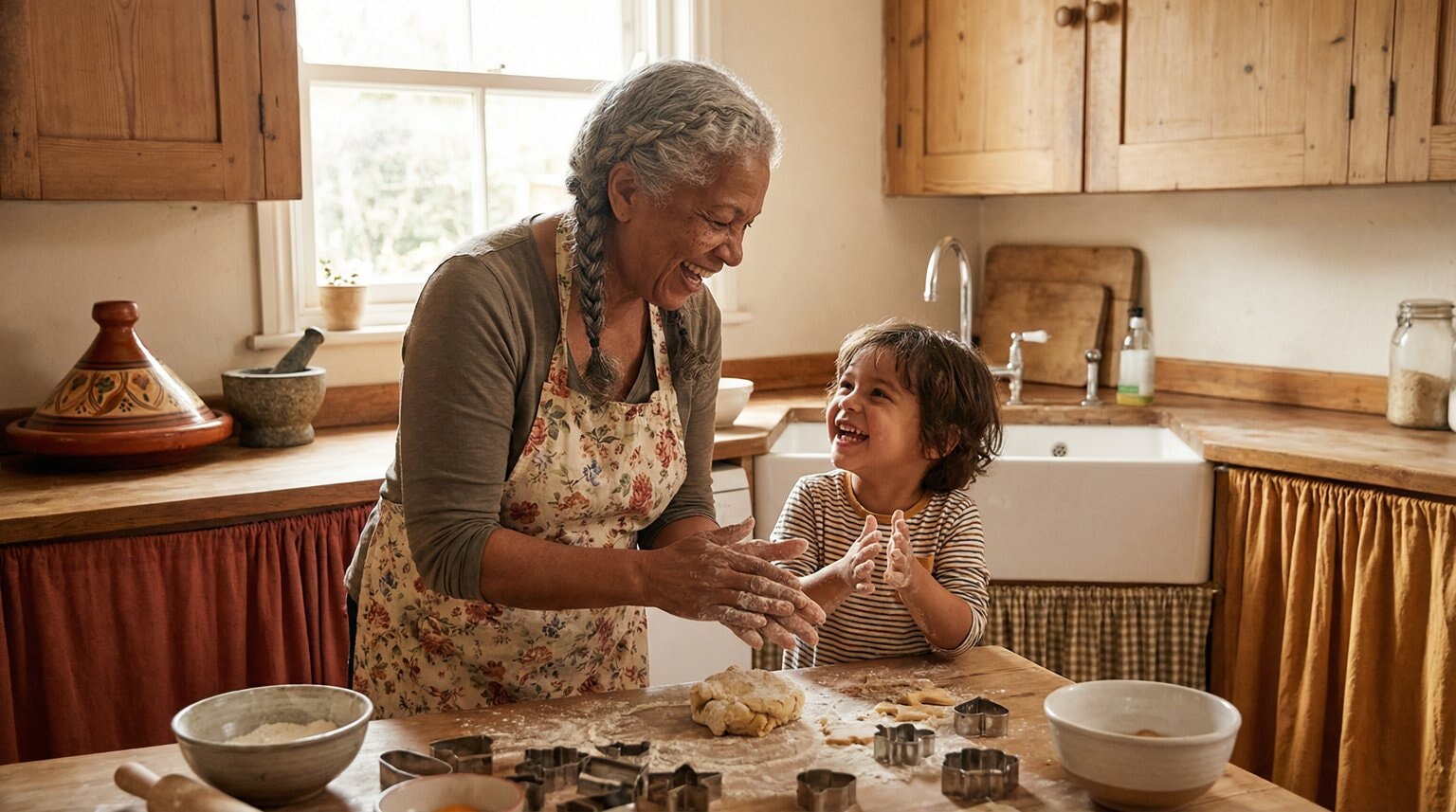
- Cooking traditions where child picks the menu
- “Adventure walks” with predetermined challenges
- Backyard camping nights
How to frame experience gifts:
When my 8-year-old expected a toy and got “zoo membership,” I learned to front-load the framing. Now we present experience gifts with visual calendars showing what’s coming. We name them clearly: “This year’s birthday present is an ADVENTURE.”
The Psychology Today research confirms experiential gifts “create powerful memories and deepen emotional connections.” My kids don’t remember most toys from three years ago. They absolutely remember the overnight train ride to visit cousins.
Cultural and Family-Specific Traditions
Braithwaite’s research identifies four tradition types: imported (brought from family of origin), culture-based, calendar-based (birthdays, holidays), and daily routines. Understanding where your traditions come from helps you adapt them intentionally.
For blended families, Braithwaite offers crucial guidance: “You can’t just impose the rituals from your original family into the stepfamily.” She shares a successful approach where a family went through Christmas ornaments together—choosing which to bring from both original families, then creating new ornaments each year representing the new family unit.
Creating new traditions that honor heritage:
Research shows cultural experiences “play an important role in fostering a child’s identity”—and continue to be part of their life even after leaving home. If your family has cultural gift-giving traditions, adapting rather than abandoning them helps children understand where they come from.
In multicultural families, this might mean:
- Celebrating multiple gift-giving occasions from different traditions
- Explaining the why behind each tradition
- Creating hybrid traditions that blend heritage practices
My husband’s family had elaborate gift-opening rituals; mine had simple ones. We blended them—keeping the “one at a time” element from his side, adding the “gratitude pause” from mine. The result is uniquely ours.
When Traditions Need to Evolve
Braithwaite’s research includes a lovely example: a family that left carrots out for Santa’s reindeer. Eventually, the kids grew up. But the adult children still wanted the carrots—the tradition had become about family identity, not childhood belief.
Signs a tradition needs updating:
- Children actively dread rather than anticipate it
- The tradition creates more stress than connection
- It no longer matches any family member’s developmental stage
- The “why” has been completely lost
How to retire traditions without loss:
When my oldest outgrew the birthday crown tradition (worn by birthday child all day), we didn’t eliminate it—we evolved it. Now the birthday person chooses whether to wear it. My 17-year-old opted out for three years. At 16, she asked for it back “ironically.” At 17, the irony was gone.
Traditions can “time out,” as Braithwaite describes, and return later. Give them permission to go dormant without declaring them dead.
Maintaining core meaning while updating form:
The essence of our Christmas morning tradition has stayed constant for 15 years: everyone together, no one opens alone, breakfast before gifts. But the form has evolved dramatically—from toddler-paced single openings to teenager-managed distribution systems.
Braithwaite notes traditions continue “through teenage years… bringing dating partners and new spouses.” The traditions that survive are ones with meaning flexible enough to absorb new people and stages.
The Four-Gift Rule and Other Frameworks
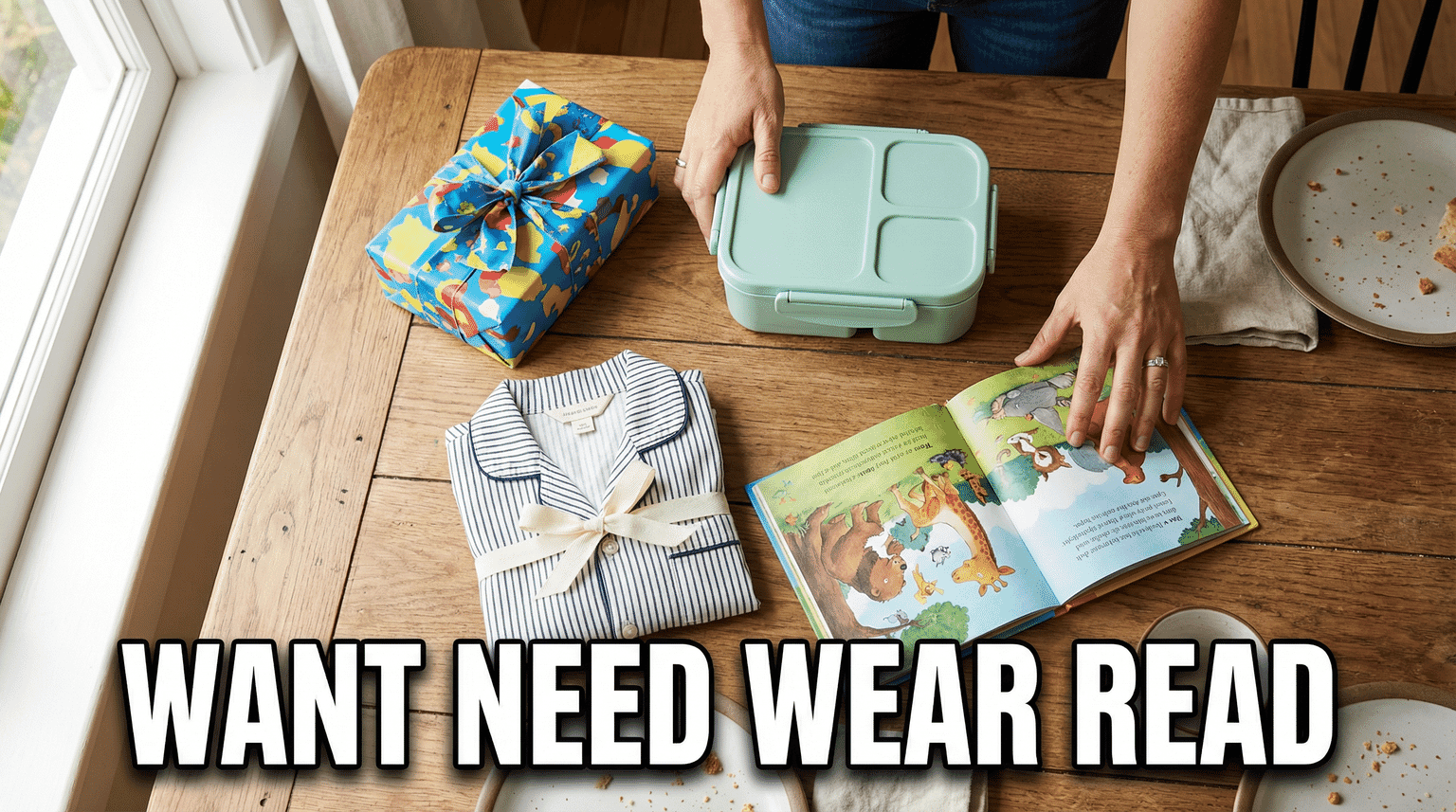
The four-gift rule—something you want, something you need, something to wear, something to read—has gained popularity because it solves a real problem: decision fatigue and expectation management.
For a detailed guide to implementing the four-gift rule, including scripts for introducing it to extended family, that spoke article goes deeper. Here’s what matters for establishing it as tradition:
Why frameworks help:
- Reduces the “perspective gap” between givers and receivers
- Creates shared expectations (child knows roughly what’s coming)
- Prevents the overwhelm of too many options or too many gifts
- Allows meaningful gifts without excess
Age-appropriate framework introductions:
- Ages 5-7: Introduce concept simply; let them choose one category focus
- Ages 8-10: Full participation in defining what each category means
- Ages 11+: Framework becomes collaborative planning tool
When frameworks create rigidity:
Some kids thrive on structure; others feel constrained by it. If the framework causes more conflict than it solves, adapt it. In our house, “read” expanded to include audiobooks and podcasts because my dyslexic 10-year-old felt excluded by the original definition. Flexibility in service of connection beats rigid rule-following every time.
What Children Actually Remember
After eight kids and fifteen years of gift-giving occasions, I’ve conducted my own informal research: what do kids actually remember?
The memorable elements:
- Sensory details (smells, sounds, textures)
- Emotional peaks (anticipation, surprise, connection)
- Repetition across years (the tradition itself becomes the memory)
- Active participation (not passive receiving)
The forgettable elements:
- Specific gift contents (unless emotionally significant)
- Price or elaborateness
- Perfect execution
The research on annual events confirms: “Annual events are special experiences for a child.” What makes them special isn’t expense or elaboration—it’s the experience of being together, doing something meaningful, year after year.
Creating tradition artifacts:
Beyond photos, consider:
- Annual questionnaires with the same questions each year
- Tradition journals where you record what happened
- Recipe cards in children’s handwriting as they age
- Audio or video recordings of traditions in action
For more on gifts children actually remember years later, that spoke article explores the science of memory formation and gift impact.
The Psychology Today research puts it beautifully: “A quirky vase or well-loved sweater might someday remind someone of the love and effort” behind it. The gift is just the vessel. The memory is in the giving.
Frequently Asked Questions
How many family traditions should we have?
Research found families average 15.47 annual events, but quality matters more than quantity. Start with 2-3 meaningful traditions you can maintain consistently, then add others as they feel natural. The behavioral benefits come from participation in family events generally, not from hitting a specific number. In my house, we’ve found 5-6 anchor traditions work better than attempting twenty.
What if my child resists new gift traditions?
Resistance often signals the tradition doesn’t match the child’s developmental stage or wasn’t introduced with enough context. For elementary-age children, involve them in planning. For preteens, explain the “why” behind changes—research shows this age group responds to reasoning. Consider phasing in changes over multiple years rather than overhauling everything at once.
How do we handle different gift-giving approaches with extended family?
Family communication research suggests direct, early conversations work better than hoping relatives will “get the hint.” Share your family’s approach positively (“We’re focusing on experiences this year”) rather than criticizing theirs. For persistent gift-givers, suggest specific experience contributions or savings account deposits.
Are expensive gifts better than simple ones?
No. Carnegie Mellon research found cost has “little relationship” with how well gifts are received. Prof. Julian Givi’s research shows sentimental gifts—photos, handmade items, personalized keepsakes—consistently outperform expensive purchases. Children remember the ritual and connection, not the price tag.
How do you start a family gift tradition?
According to Braithwaite, traditions can be imported from your family of origin, based on cultural heritage, tied to the calendar, or created fresh. Start by discussing what your family values most—connection, generosity, memory-making—then select one simple tradition reflecting those values. Research shows consistency matters more than complexity.
Share Your Story
What gift tradition does your family treasure most? I’m always looking for ideas that create connection without adding stuff—and the best ones come from real families who’ve done them for years.
Share yours in the comments—I read every one and often discover our next family tradition.
References
- Family Events and Child Behavior in Late Childhood – 2024 longitudinal study on behavioral outcomes and family event participation
- Experience of Annual Events in the Family and Social Adjustment – Research on prosocial behavior and annual family event participation
- The Benefits of Intergenerational Wisdom-Sharing – Study on youth development through intergenerational programs
- Braithwaite: Pandemic Rewriting, Strengthening Family Traditions – Expert insights on family rituals and adaptation
- The Power of Gifting – Psychology of experiential gifts and relationship impact
- The Art and Science of Gift-Giving – Consumer psychology research on giver-receiver dynamics
Latest in Gift Traditions
-
Birthday Countdown Ideas for Kids: Build Anticipation Without Overwhelm
by
· Updated
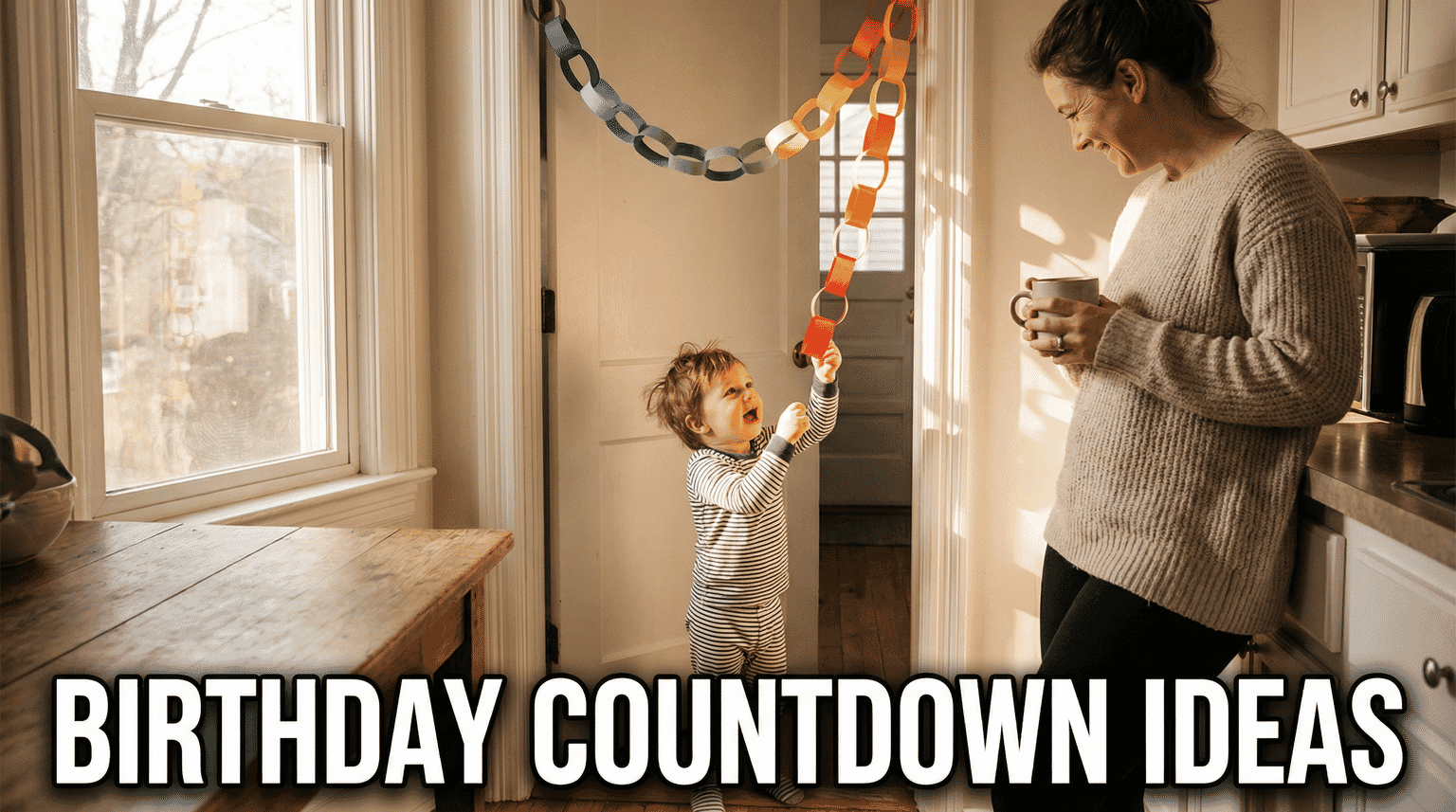
Continue reading →: Birthday Countdown Ideas for Kids: Build Anticipation Without OverwhelmYour child has asked how many more sleeps? four times since breakfast and you’re dreading the craft store trip. Turns out the simplest countdowns work best, and that relentless anticipation is actually boosting their brain in surprising ways.
-
Cultural Gift Expectations: A Family Guide
by
· Updated
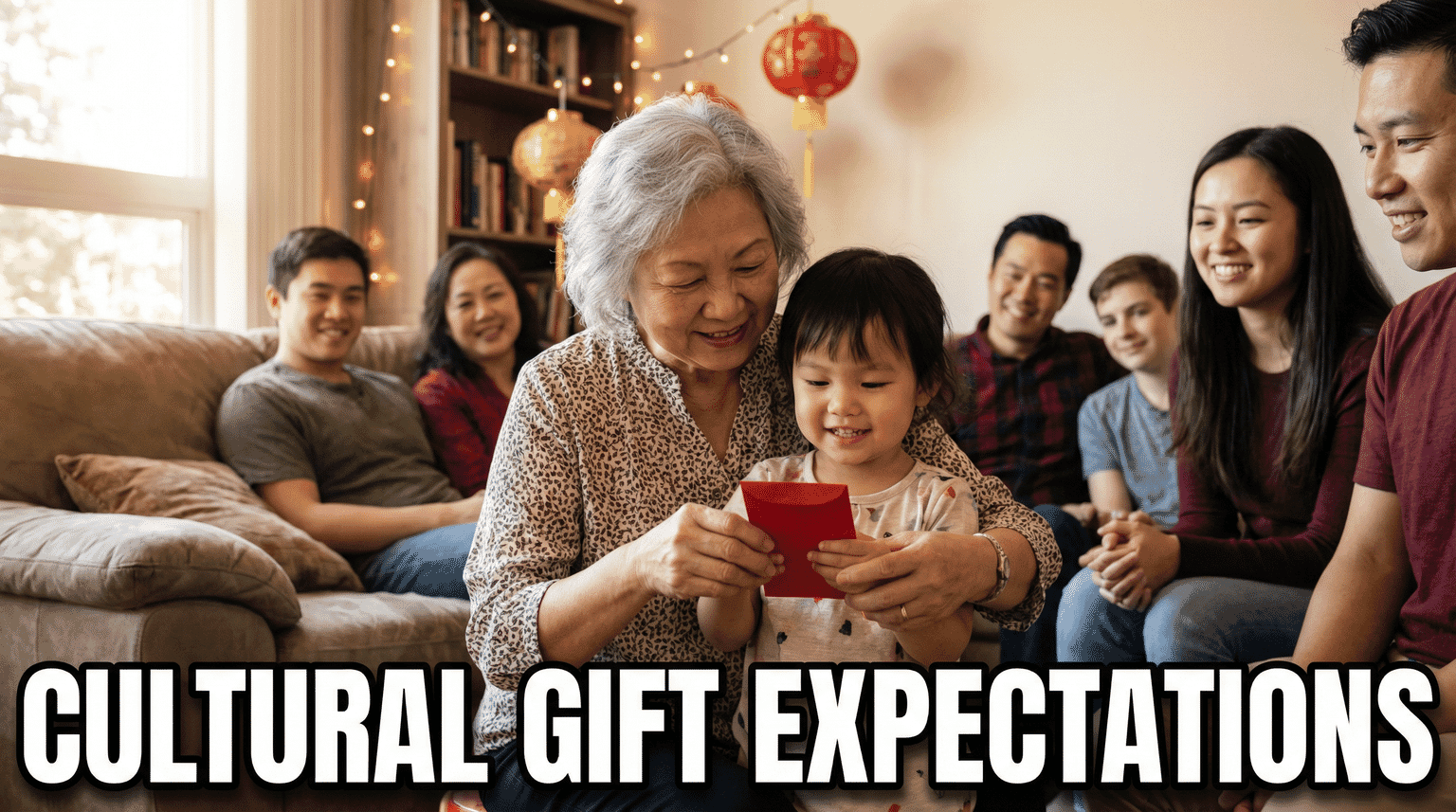
Continue reading →: Cultural Gift Expectations: A Family GuideWhen my four-year-old ripped open his red envelope in front of Grandma before she’d even let go, I realized we weren’t just blending families. We were blending entirely different gift languages. Here’s how to navigate yours without memorizing cultural rulebooks.
-
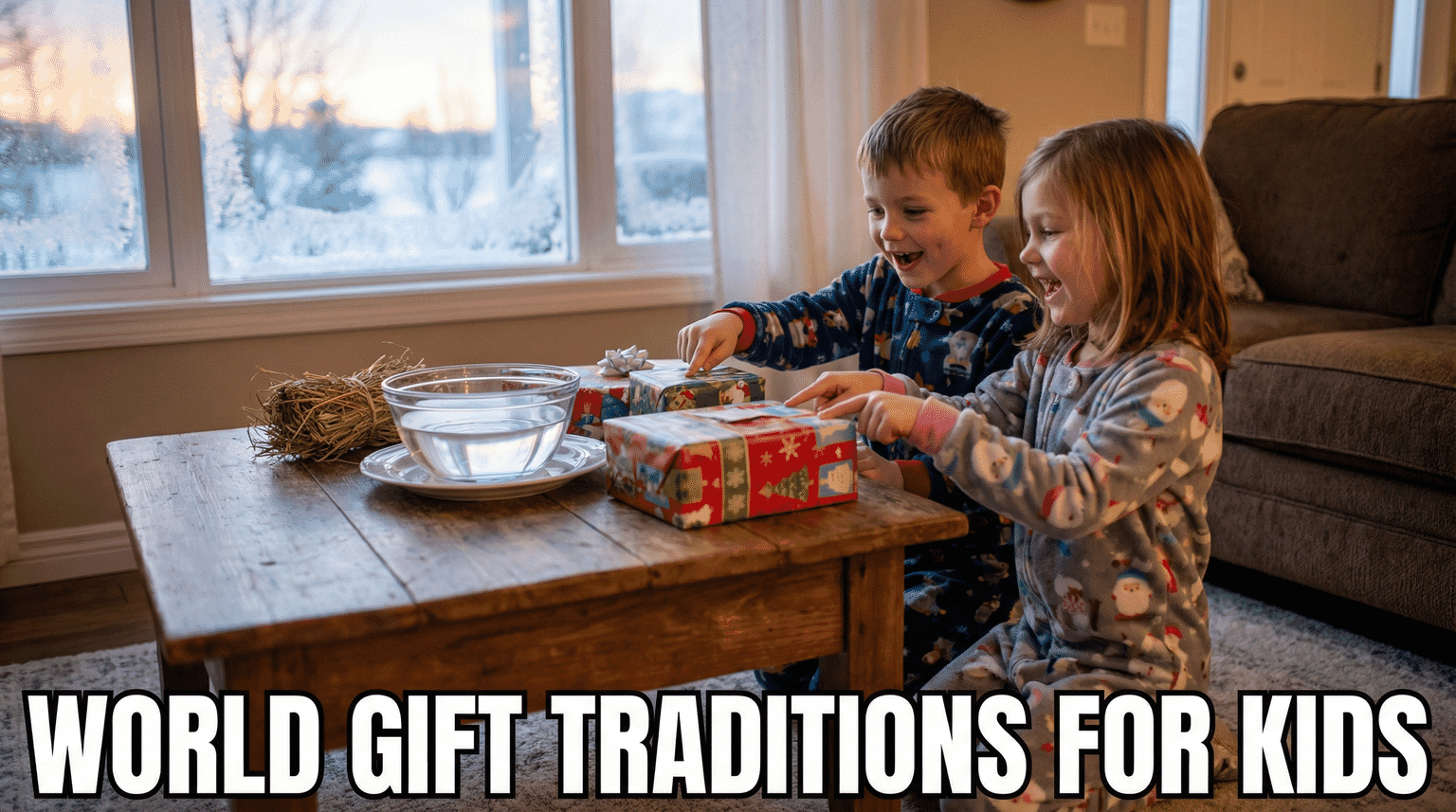
International Gift Traditions to Adopt in Your Family
by
· Updated
Continue reading →: International Gift Traditions to Adopt in Your FamilyA UC Davis study found that American kids wait nearly four times longer for gifts than for food, accidentally building patience through our holiday traditions. Here are gift-giving customs from around the world that can intentionally teach your kids delayed gratification, generosity, and thoughtfulness.
-
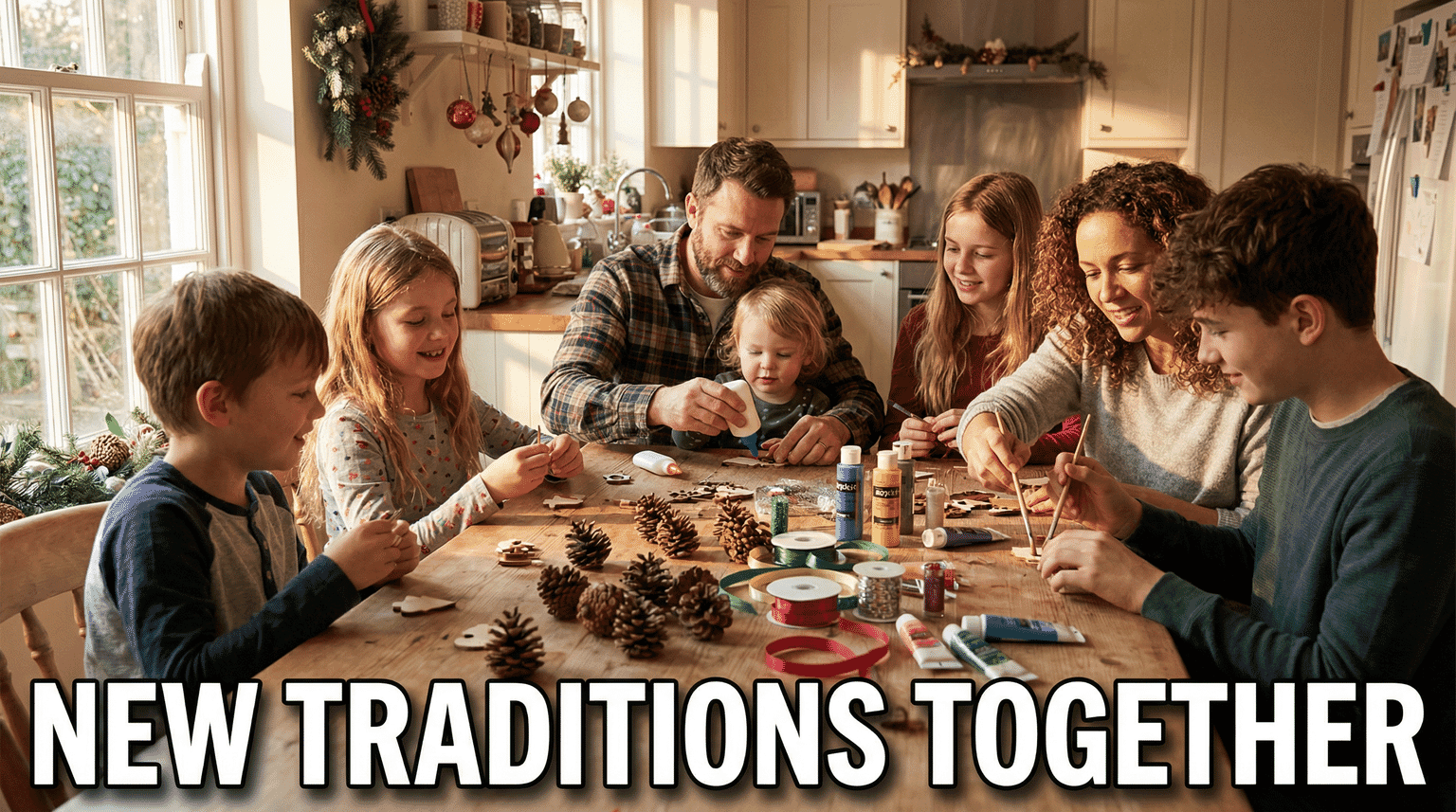
Blended Family Gift Traditions That Build Unity
by
· Updated
Continue reading →: Blended Family Gift Traditions That Build UnityHis kids expect stockings by birth order. Your kids open gifts on Christmas Eve. Everyone’s watching to see if you’ll get it right. Here’s how to turn competing traditions into something that actually brings your new family closer.
-
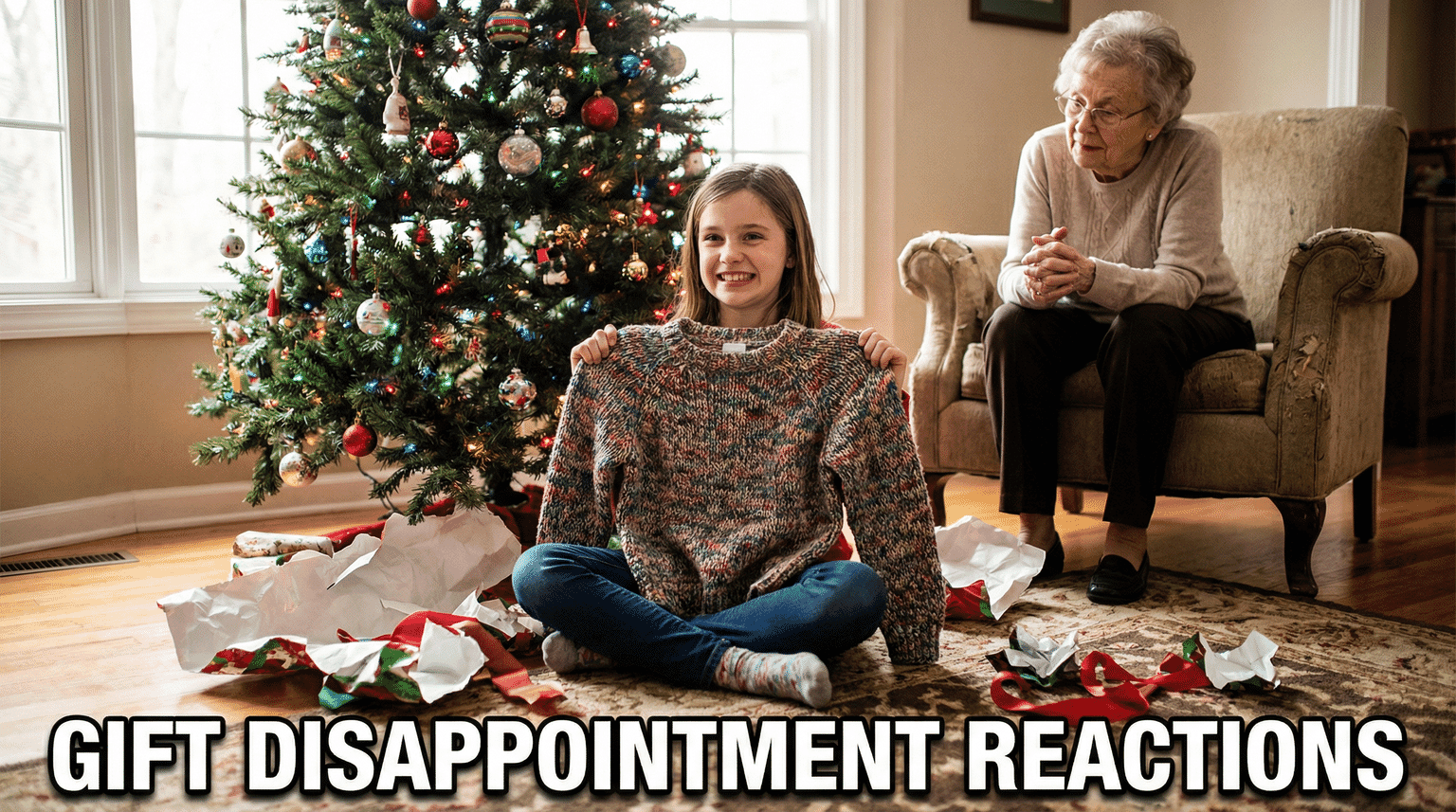
Teaching Gratitude When Gifts Disappoint Kids
by
· Updated
Continue reading →: Teaching Gratitude When Gifts Disappoint KidsYour child’s disappointed face just hurt Grandma’s feelings, and now you’re managing two upset people while your stomach drops. Here’s why this moment is actually a crucial teaching opportunity and exactly what to say next time.
-
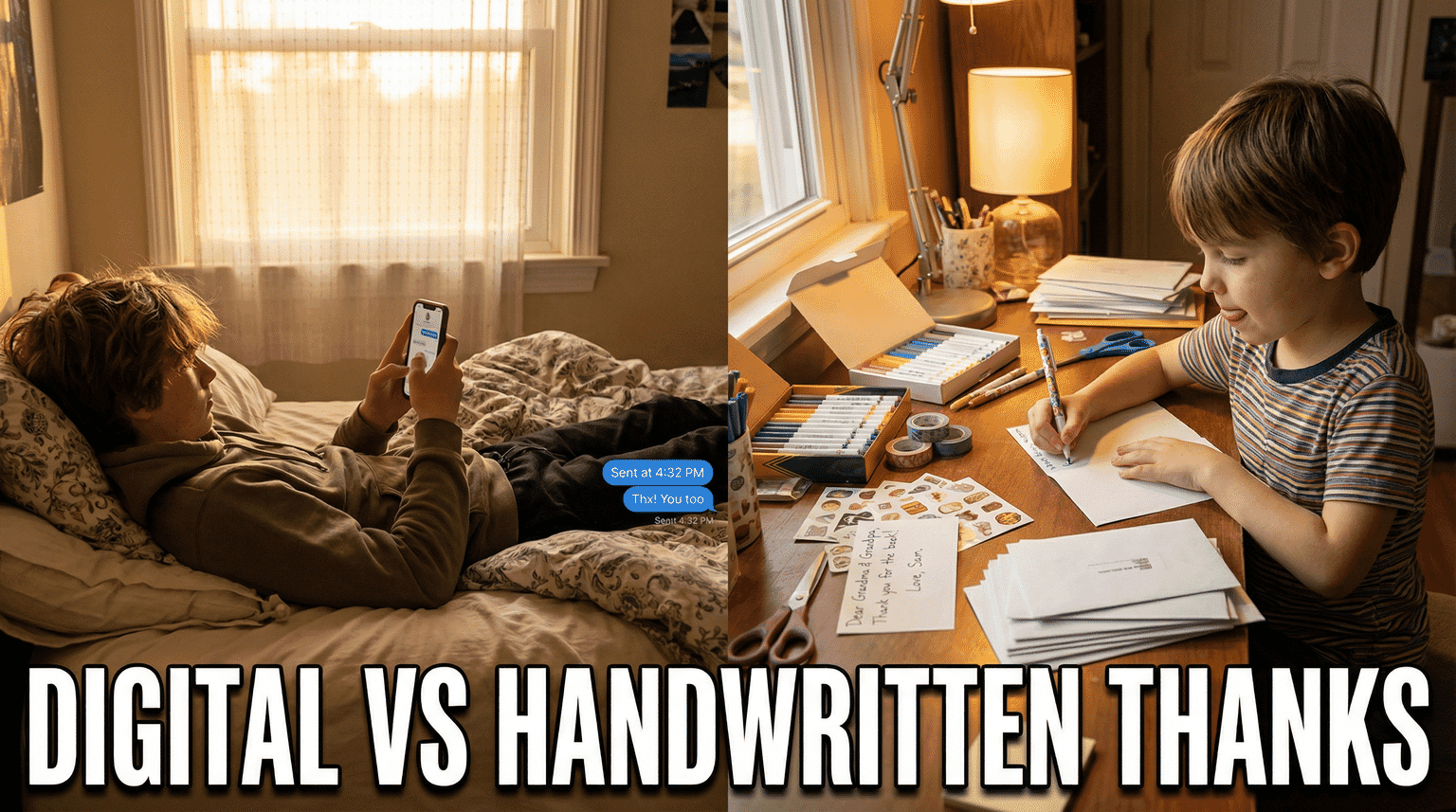
Digital vs Handwritten Thank You Notes: What Science Says
by
· Updated
Continue reading →: Digital vs Handwritten Thank You Notes: What Science SaysWhen my teenager asked if an Instagram DM counted as a thank you note, I realized I needed actual research instead of etiquette assumptions. What neuroscientists found about your child’s brain during handwriting versus typing might change how you approach gratitude in your family.

Share Your Thoughts