
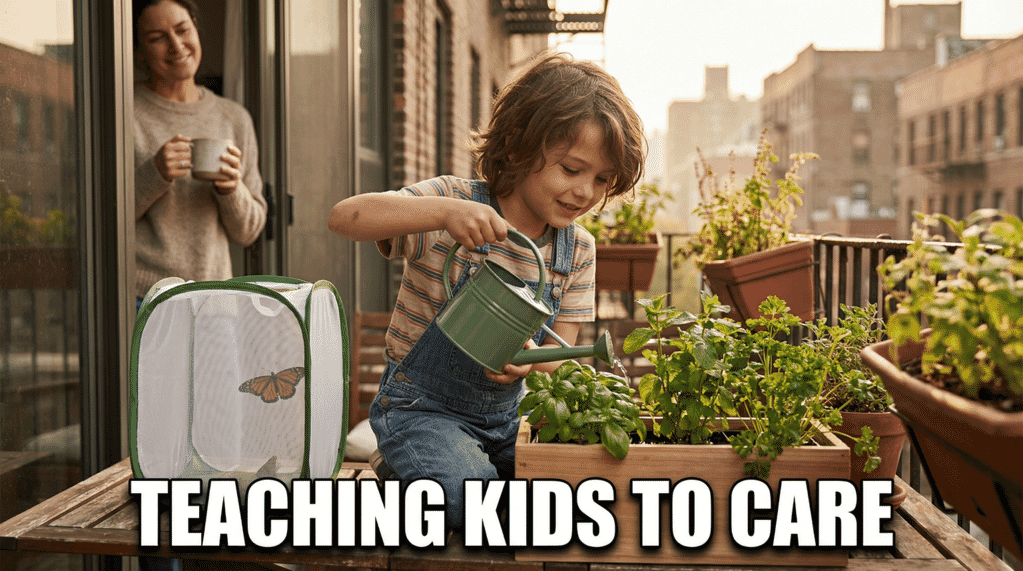
You’ve got the best intentions. You want to raise kids who care about the planet. But standing in the toy aisle, staring at a wall of plastic wrapped in more plastic, you’re wondering: how exactly do I turn this moment into a values lesson without becoming that parent who gives a lecture with every birthday present?
Here’s what I’ve learned researching this topic and watching it play out across eight kids: the gift itself matters less than what happens around it. The conversation, the choosing, the ongoing engagement—that’s where environmental values actually take root. And the research backs this up in ways that surprised even my librarian brain.
What follows are five practical strategies for transforming ordinary gift moments into opportunities for teaching environmental values. No guilt trips. No perfection required. Just approaches that actually work with real kids.
Key Takeaways
- Use concrete words like “helps keep rivers clean” instead of abstract terms like “sustainable”—kids under 9 can’t define environmental jargon but instantly grasp simple cause and effect
- Gifts requiring ongoing care (plants, habitats, adoption programs) build psychological nature connection more effectively than one-time eco products
- Kids who actively participate in gift selection show 21% more prosocial behavior than those who passively receive
- Children systematically underestimate how much their peers care about the environment—peer activities can reveal shared values
- The ages 7-10 window is peak time for environmental value formation
Strategy #1: Use Concrete Language, Not Abstract Terms
My 6-year-old nods earnestly when I mention “sustainability.” She has absolutely no idea what I’m talking about.
A 2021 study on children’s environmental perceptions confirmed what I’d observed at home: children ages 8-9 couldn’t define terms like “sustainability” or “carbon footprint.” But here’s the interesting part—they immediately understood the same concepts when researchers framed them as “taking care of the planet” or “helping animals.”
The research takeaway is clear: our environmental vocabulary fails kids, not their capacity to understand.
What to Say Instead
When you’re giving an eco-friendly gift, skip the abstract terms entirely:
Instead of: “This toy is sustainable and has a lower carbon footprint.”
Try: “This was made in a way that helps keep rivers clean for fish.”
Instead of: “We chose recyclable packaging.”
Try: “See how this box can go back to the earth? It turns into dirt that helps plants grow.”
One child in that same study put it perfectly when looking at an eco-label on oranges: “I like the sticker because it says you’re taking care of the planet when you eat them.” Kids respond to direct cause and effect, not environmental jargon.
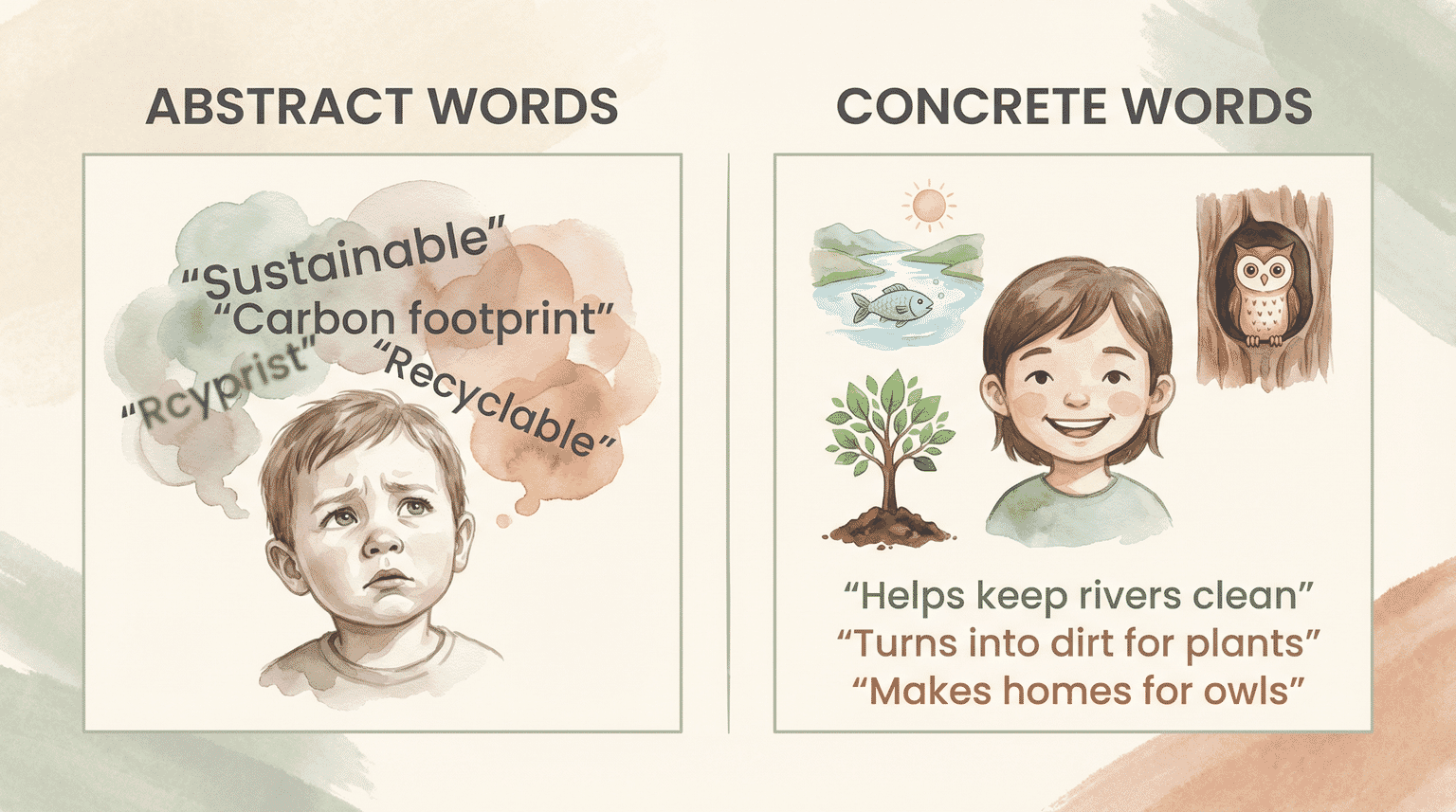
In my house, this looks like connecting every eco-choice to something they can picture. The wooden blocks? “These came from trees that are replanted, so forests keep making homes for owls.” Simple. Visual. Concrete.
Strategy #2: Choose Gifts That Require Ongoing Care
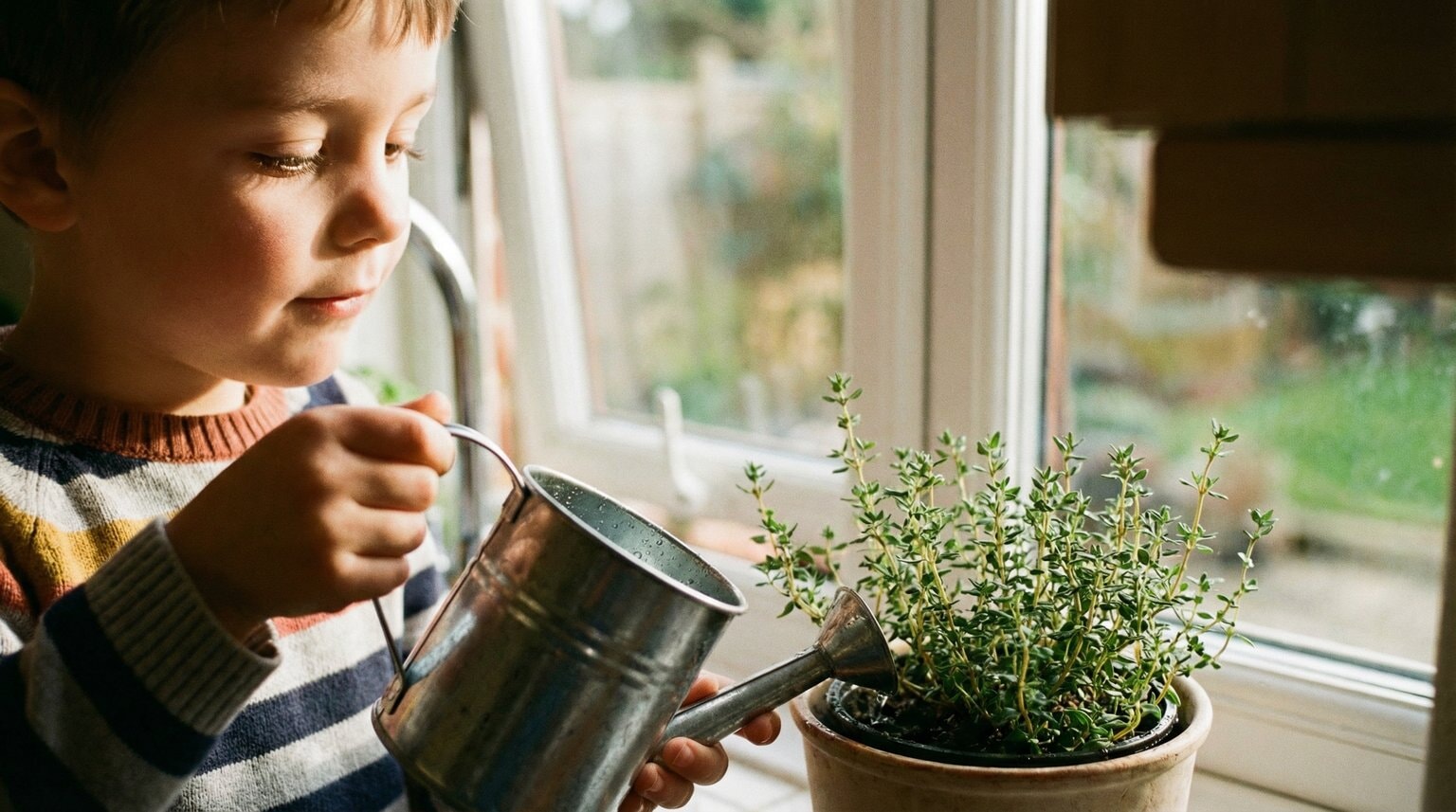
Here’s a finding that changed how I think about environmental gifts: physical exposure to nature isn’t enough. A 2022 study published in Wellbeing, Space and Society found that what matters is fostering a psychological connection to nature—not just being outside.
This is why a trip to the park doesn’t automatically create an environmentalist, but caring for a tomato plant might.
The Child Mind Institute’s 2024 review puts it bluntly: “Living things die if mistreated or not cared for properly.” Entrusting children with caring for something alive teaches consequences in a way no lecture can.
Gift Categories That Build Responsibility
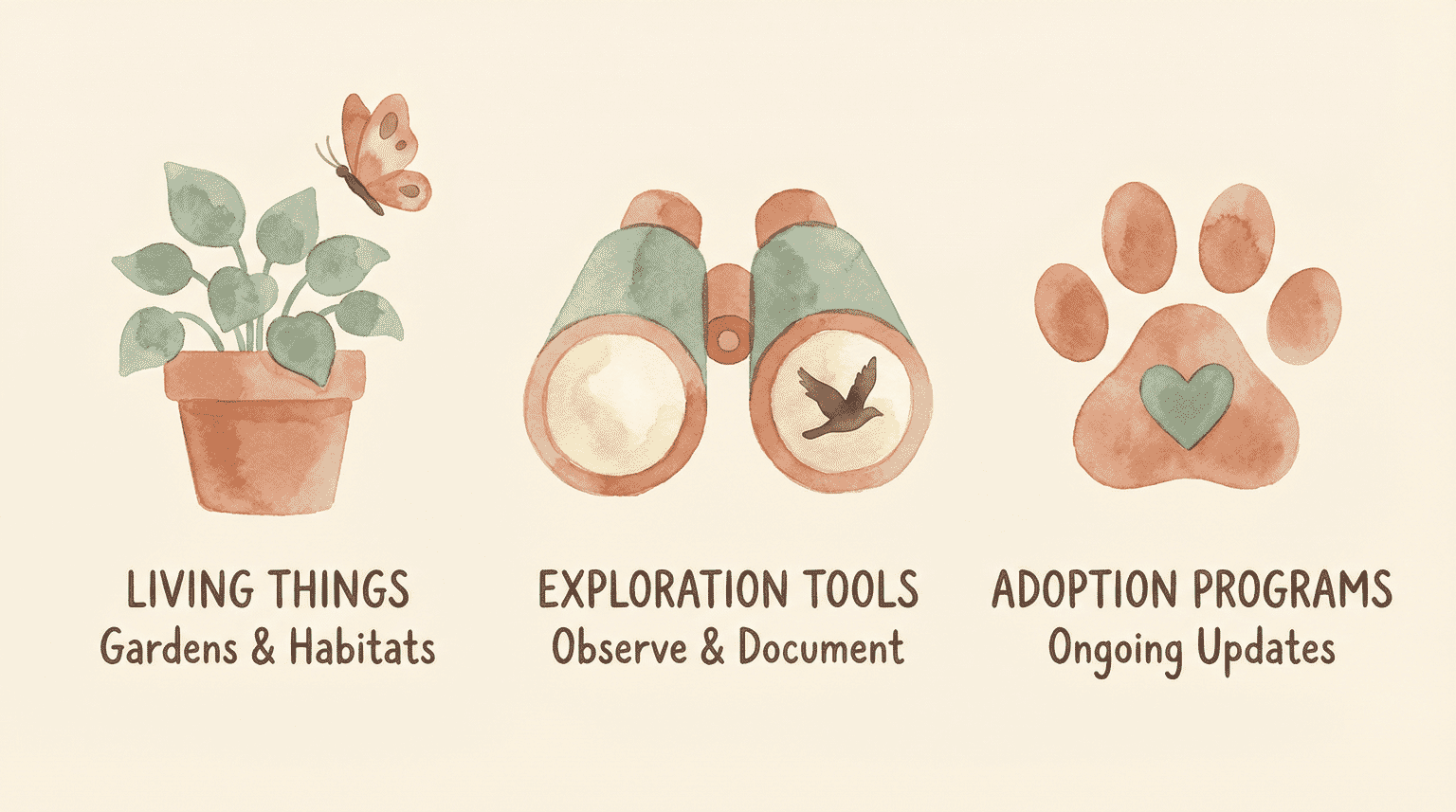
Living things with feedback loops:
- Gardening kits (herbs grow fast enough to maintain interest)
- Butterfly or ladybug habitats
- Windowsill ecosystems
Nature exploration tools:
- Bug observation containers they’ll use repeatedly
- Bird feeders that need refilling
- Nature journals for ongoing documentation
Adoption programs with updates:
- Wildlife adoption certificates that include regular reports
- Tree-planting programs that send growth photos
The key is ongoing engagement. My 10-year-old still remembers the ladybugs we released three years ago because she was responsible for their habitat. The expensive electronic pet from that same birthday? Forgotten within a month.
Strategy #3: Make Gift Selection a Shared Decision
Research on prosocial behavior in children found that when kids actively participate in decision-making—rather than passively receiving—they’re more likely to internalize the values behind those decisions.
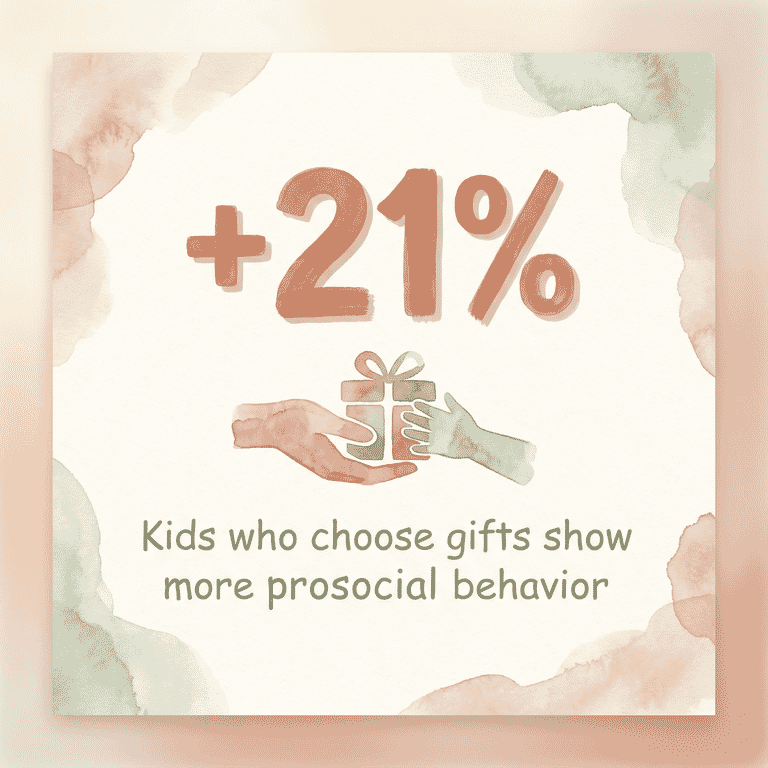
The study showed that participation in activities (β = 0.21) was positively associated with prosocial behavior. That’s not a small effect—it’s the difference between a value that fades and one that sticks.
Applied to gift-giving, this means the choosing matters as much as the giving.
How to Involve Children
For the gift they’re giving someone else:
Let them compare two options using simple criteria: “This one was made close to us, so it didn’t travel far in trucks. This one is wrapped in plastic that doesn’t break down. Which do you think Grandma would feel good about?”
For their own wish list:
Instead of just asking what they want, add: “Are there any gifts you’ve been wanting that also do something good for animals or the planet?”
For family traditions:
Consider involving kids in decisions about breaking the cycle of excessive consumption by letting them choose between more presents or one meaningful experience.
When my 8-year-old helped choose his cousin’s birthday gift, he spent twenty minutes comparing options. Was he considering environmental impact with every factor? No. But he was practicing the process of thoughtful choosing—and that’s the skill that sticks.
Strategy #4: Include Peer Activities
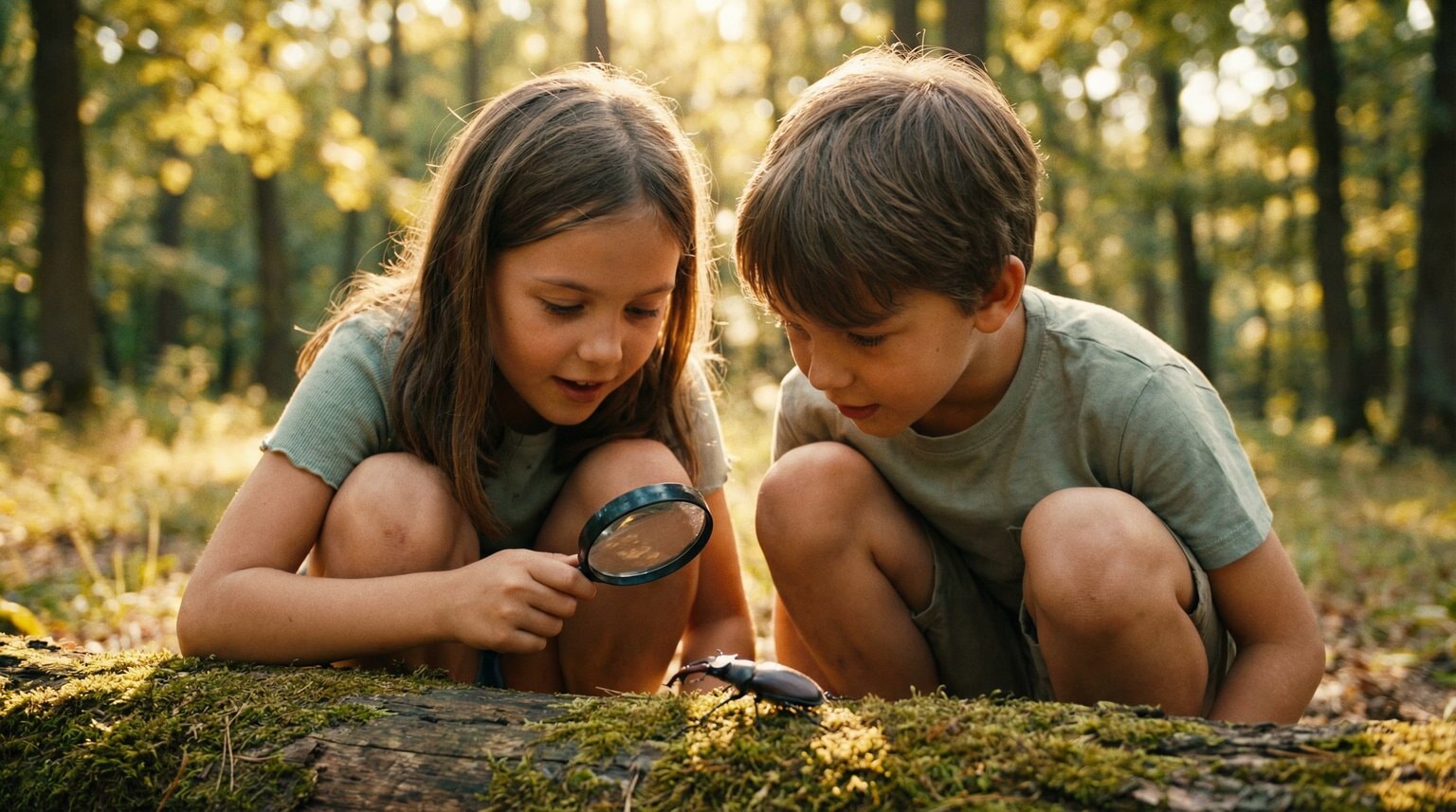
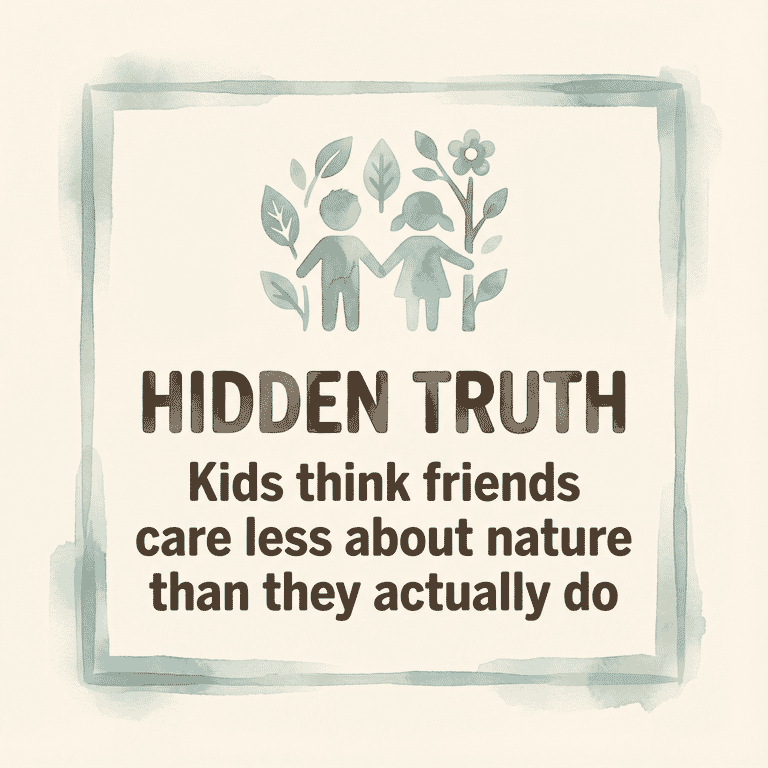
Here’s a finding that genuinely surprised me: research from 2023 discovered that children systematically underestimate how much their peers care about the environment. Kids think their friends don’t care as much as they actually do.
Why this matters for gifts: If your child believes they’re alone in valuing environmental choices, that value weakens.
As researchers noted, “If educators do not address children’s underestimation of their peers’ biospheric values, there is a risk of creating a negative feedback loop that diminishes the child’s biospheric values over time.”
Peer-Based Gift Strategies
Group activity gifts:
- Nature scavenger hunts designed for playdates
- Garden projects that invite a friend to help
- Beach or trail cleanup kits packaged for two
- Wildlife center memberships that include a guest pass
- Nature camp registrations where they can bring a buddy
- Craft kits using recycled materials meant for collaborative creating
Community-building gifts:
- Supplies for hosting a “swap party” with friends
- Materials for a neighborhood pollinator garden
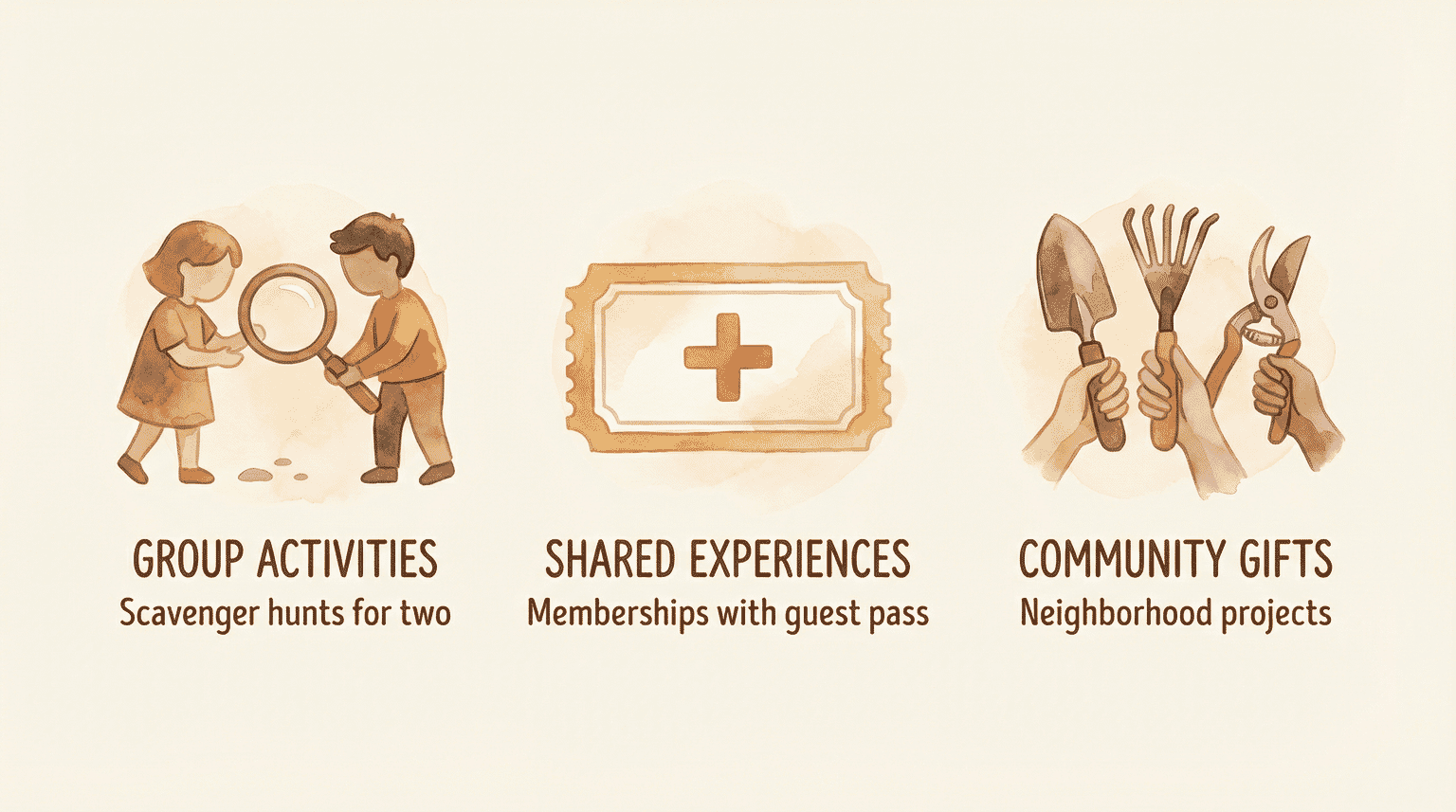
The goal is creating contexts where kids discover their friends share their environmental values. My 12-year-old was convinced she was the “weird one” for caring about plastic waste—until a beach cleanup with her scout troop revealed half her friends felt the same way. That peer validation did more for her environmental identity than years of my gentle encouragement.
Strategy #5: Model Appreciation, Not Just Purchase
Foundational research on environmental commitment found something striking: when environmental activists and educators were asked about the sources of their values, two answers dominated. The first was special places in nature from childhood. The second was family role models who demonstrated appreciation for the natural world.
Not family members who lectured. Not parents who bought the right things. Adults who showed—through word and deed—that nature was a source of genuine enjoyment and fascination.
Four Behaviors That Matter
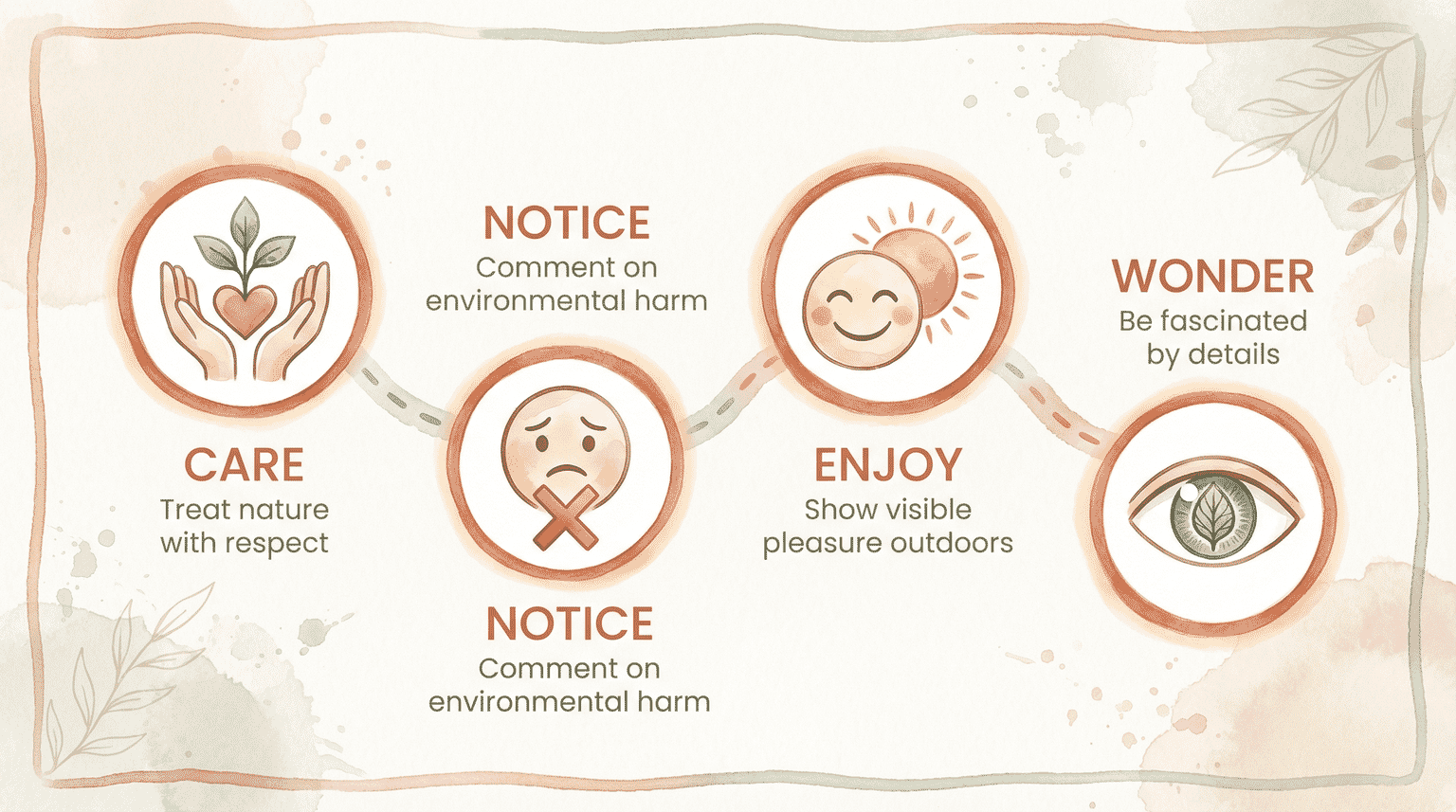
Researchers identified four specific ways adults transmit environmental values:
- Care for the land: Treating outdoor spaces as worthy of attention and respect
- Disapproval of destructive practices: Commenting (not lecturing) when you notice environmental harm
- Pleasure at being in nature: Visibly enjoying outdoor moments
- Fascination with natural details: Giving close attention to plants, animals, weather patterns
Notably, the significant adults in these studies never demonstrated fear of nature, heedlessness, or destructiveness.
During Gift Moments
This translates to gift-giving in practical ways:
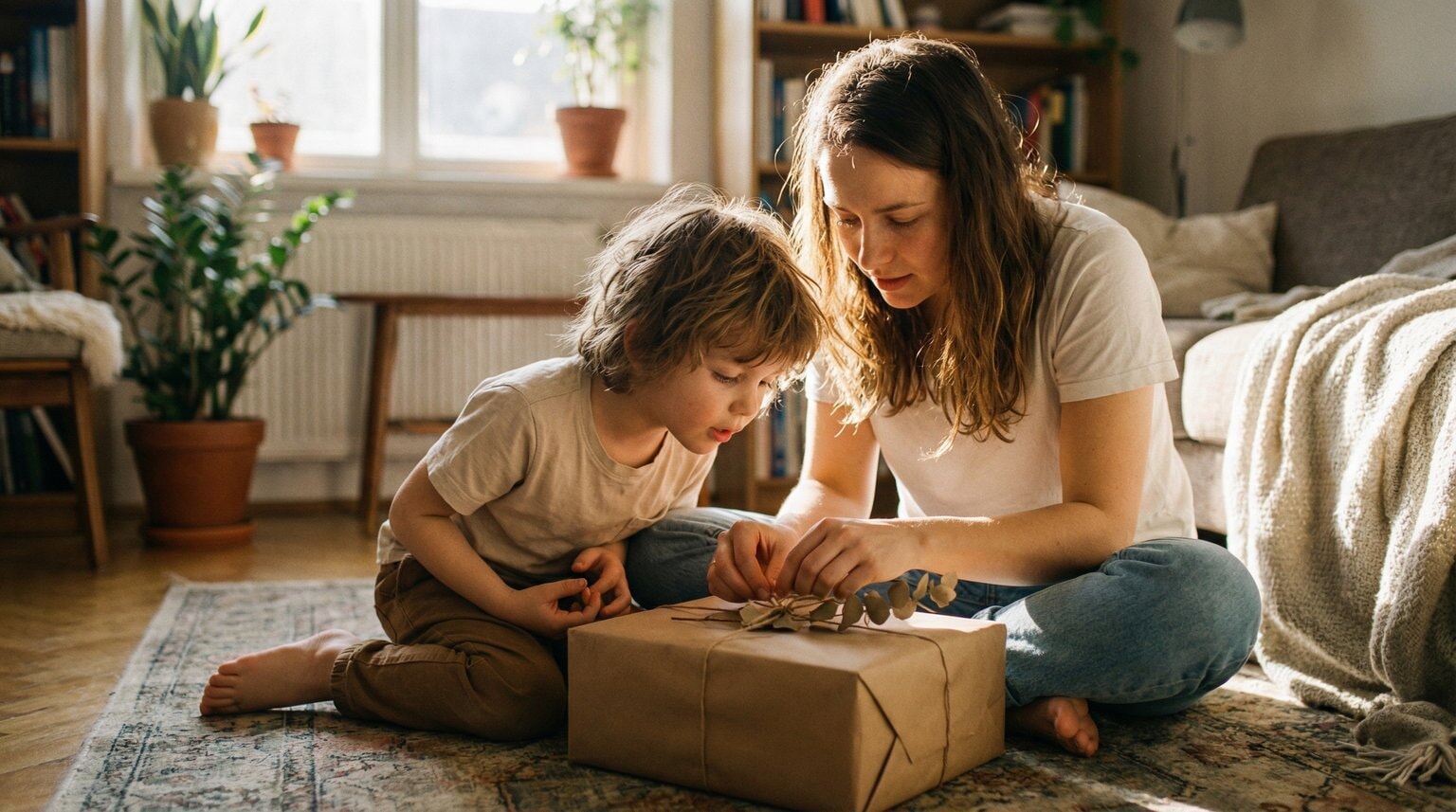
When unwrapping: “I love that this came in paper instead of plastic—it feels better, doesn’t it?”
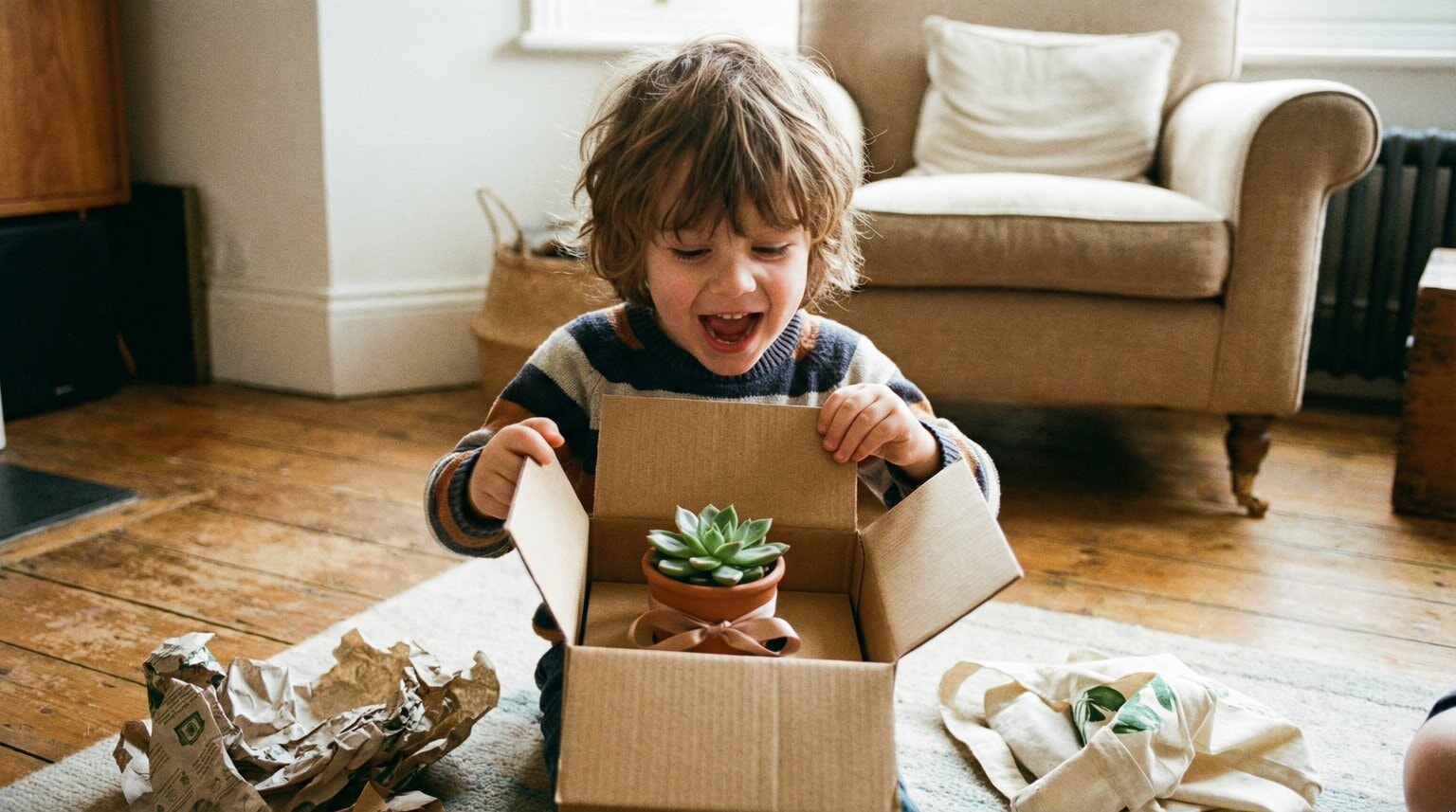
When a living gift arrives: Express genuine curiosity, not just approval. “I wonder what this caterpillar eats? Let’s find out together.”
When choosing gifts together: Share your own excitement. “I get so happy when I find something that was made thoughtfully.”
I’ve noticed my kids mirror my reactions. When I’m genuinely delighted by the beeswax wrapping on a gift, they notice. When I’m performatively enthusiastic about something “sustainable,” they sense the difference.
The Developmental Window That Matters
One more piece of research worth knowing: longitudinal studies show that pro-environmental behavior peaks around age 10, with environmental attitudes forming around age 7 and then declining through age 14.
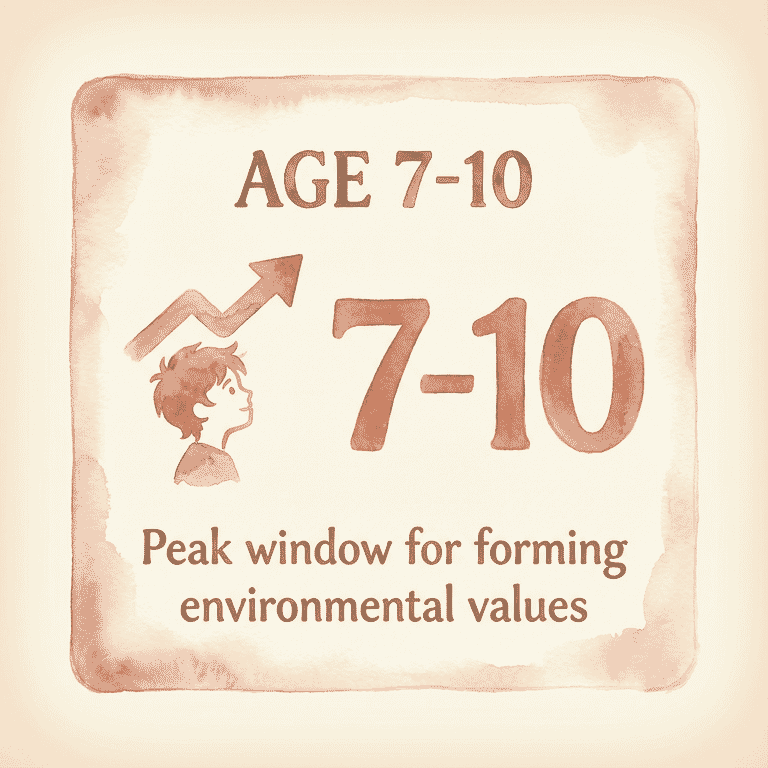
This doesn’t mean teenagers are a lost cause—but it does mean the 7-10 window is particularly receptive for environmental value formation.
The growing eco-gift movement is worth paying attention to during these years especially.
If you’ve got kids in that range, the strategies above will land differently than with teenagers. And if your kids are younger, you’re building the foundation that makes age 7-10 so receptive in the first place.
Frequently Asked Questions
How do you explain environmental issues to a child?
Use concrete language rather than abstract terms. Research shows children ages 8-9 can’t define “sustainability” but immediately understand “taking care of the planet” or “helping animals.” Connect environmental actions to visible outcomes they can observe—rivers, animals, trees—not concepts they can’t picture.
What age should you start teaching kids about the environment?
Environmental attitudes begin forming around age 7 and are particularly receptive through age 10. However, simpler concepts can be introduced earlier through nature exposure and concrete experiences. The key is meeting children where they are developmentally with language they understand.
How do you make sustainability fun for kids?
Choose gifts and activities that involve ongoing engagement rather than one-time use. Research links nature connection to emotional development, suggesting nature-based activities provide inherent enjoyment. Peer activities work especially well—studies show children underestimate how much their friends care about the environment, so group experiences can be revelatory.
What are eco-friendly gift ideas for children?
The most effective environmental teaching gifts share three qualities: they require ongoing care (building responsibility), they create psychological nature connection (not just physical exposure), and they invite shared activities with peers or family. Gardening kits, wildlife adoption programs, and nature exploration tools tend to outperform one-time-use eco products.
I’m Curious
How do you teach environmental values through gifts? I’d love to hear which eco-friendly presents have been hits—and which ones collected dust despite good intentions.
Your eco-gift wins and fails help me guide other parents through this maze.
References
- Exploration of children’s value patterns in relation to biospheric values and pro-environmental behavior – Research on how children develop and express environmental values
- Children’s Perceptions about Environmental Sustainability – Study on age-appropriate environmental communication
- Creating A Child-Friendly Social Environment for Prosocial Behaviors – Research on environmental factors influencing children’s prosocial development
- Connection to Nature is Associated with Social-Emotional Learning – Study linking nature connection to developmental outcomes
- Why Kids Need to Spend Time in Nature – Child Mind Institute review of nature’s developmental benefits

Share Your Thoughts