
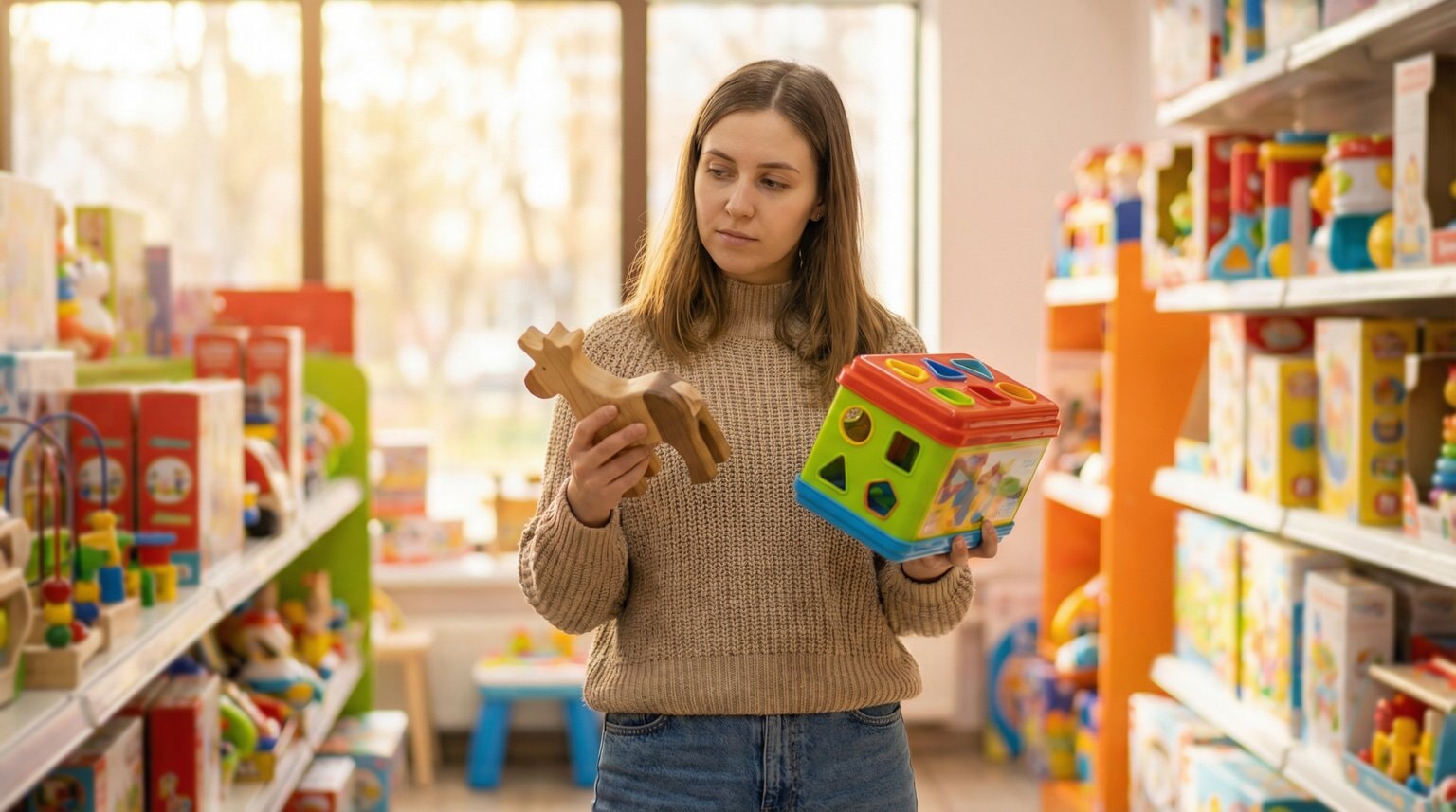
Standing in the toy aisle, you’re surrounded by plastic. Bright, shiny plastic in every direction—and something feels off. Maybe it’s the chemical smell wafting from that package, or the nagging thought that this $15 toy will be forgotten by February.
Here’s what finally pushed me to dig deeper: researchers at the University of Michigan identified more than 100 chemicals of concern in plastic toys—and those chemicals continue releasing for up to 15 years.
My librarian brain couldn’t let that go.
Key Takeaways
- Plastic toys contain 100+ chemicals of concern that continue off-gassing for up to 15 years—budget toys show the highest levels
- Look for OEKO-TEX, GOTS, and FSC certifications—not just “eco-friendly” claims
- Sustainable toys cost more upfront but often prove cheaper per month when calculated by actual use
- Ages 3-6 represent a critical window for environmental habit formation through play
- Quality wooden toys can serve multiple children across years, becoming family treasures rather than landfill
What’s Actually in the Toy Box?
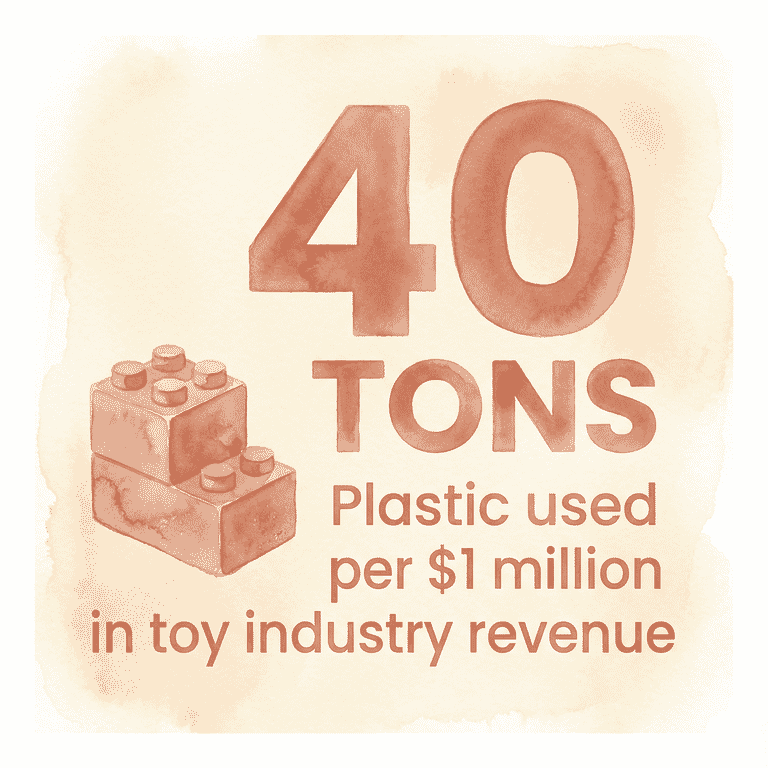
The toy industry uses 40 tons of plastic for every $1 million in revenue, making it the most plastic-intensive industry globally. That statistic from Atmos Magazine’s industry analysis stopped me cold. With the average child receiving roughly 40 pounds of toys annually, we’re not talking about a small problem.
But here’s what really matters to parents: the health piece. The University of Michigan research found plasticizers make up between 5% and 50% of a toy’s weight.
These chemicals fall into two categories—volatile organic compounds (that “new plastic smell”) that release quickly, and semi-volatile chemicals that continue off-gassing for over a decade.
Professor Olivier Jolliet, who led the research, offers practical guidance for concerned parents.
“If your child opens a toy on Christmas and it smells like plastic, I would recommend that in the first days and weeks perhaps the kids use it for a short time but as soon as he’s not using it, remove it until it doesn’t smell anymore.”
— Professor Olivier Jolliet, University of Michigan School of Public Health
Budget toys marketed to ages 3-5 showed the highest levels of heavy metals including lead, cadmium, and chromium, according to research published in Sustainable Production and Consumption. That’s an equity issue as much as an environmental one—families trying to stretch gift budgets face higher chemical exposure risks.
What Makes a Toy Genuinely Sustainable?
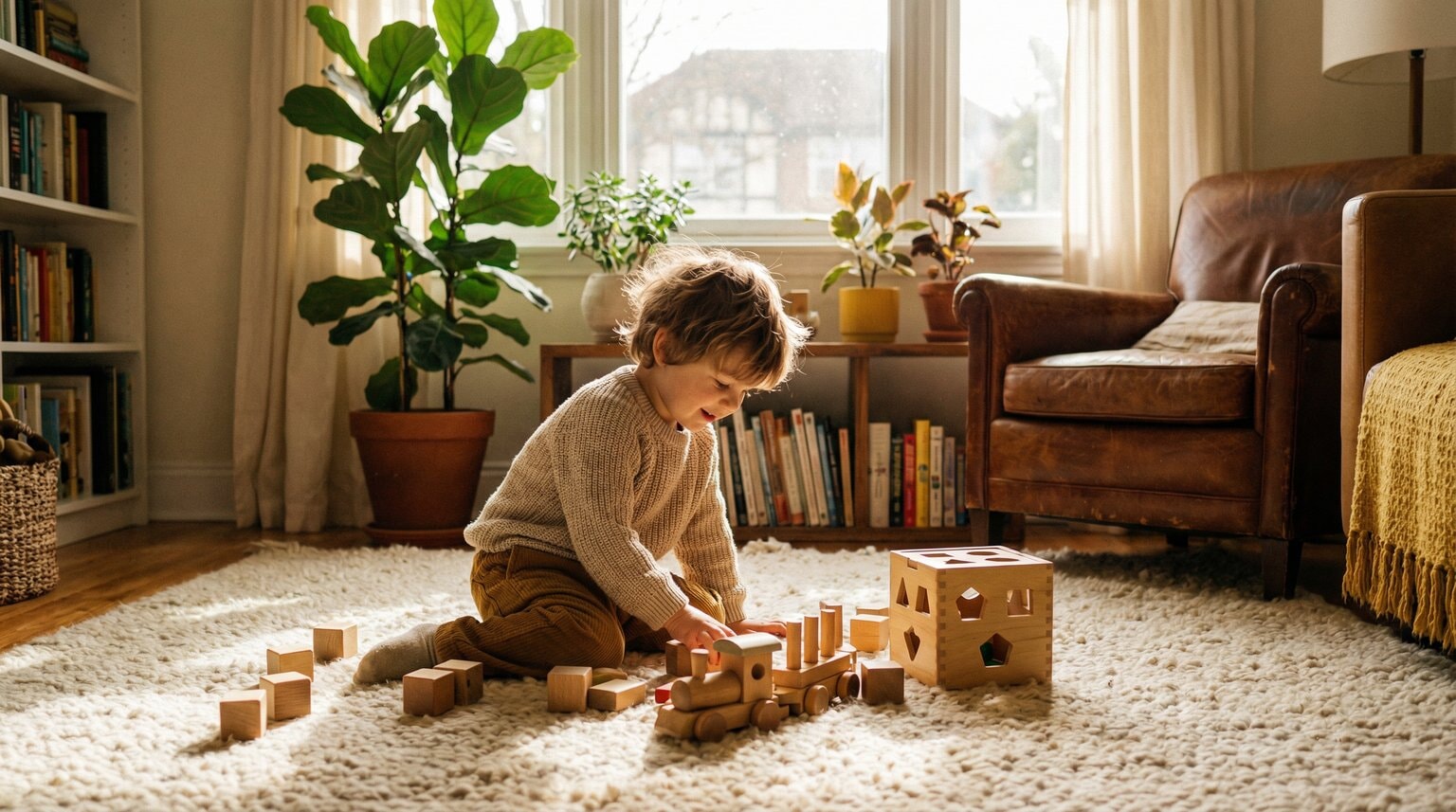
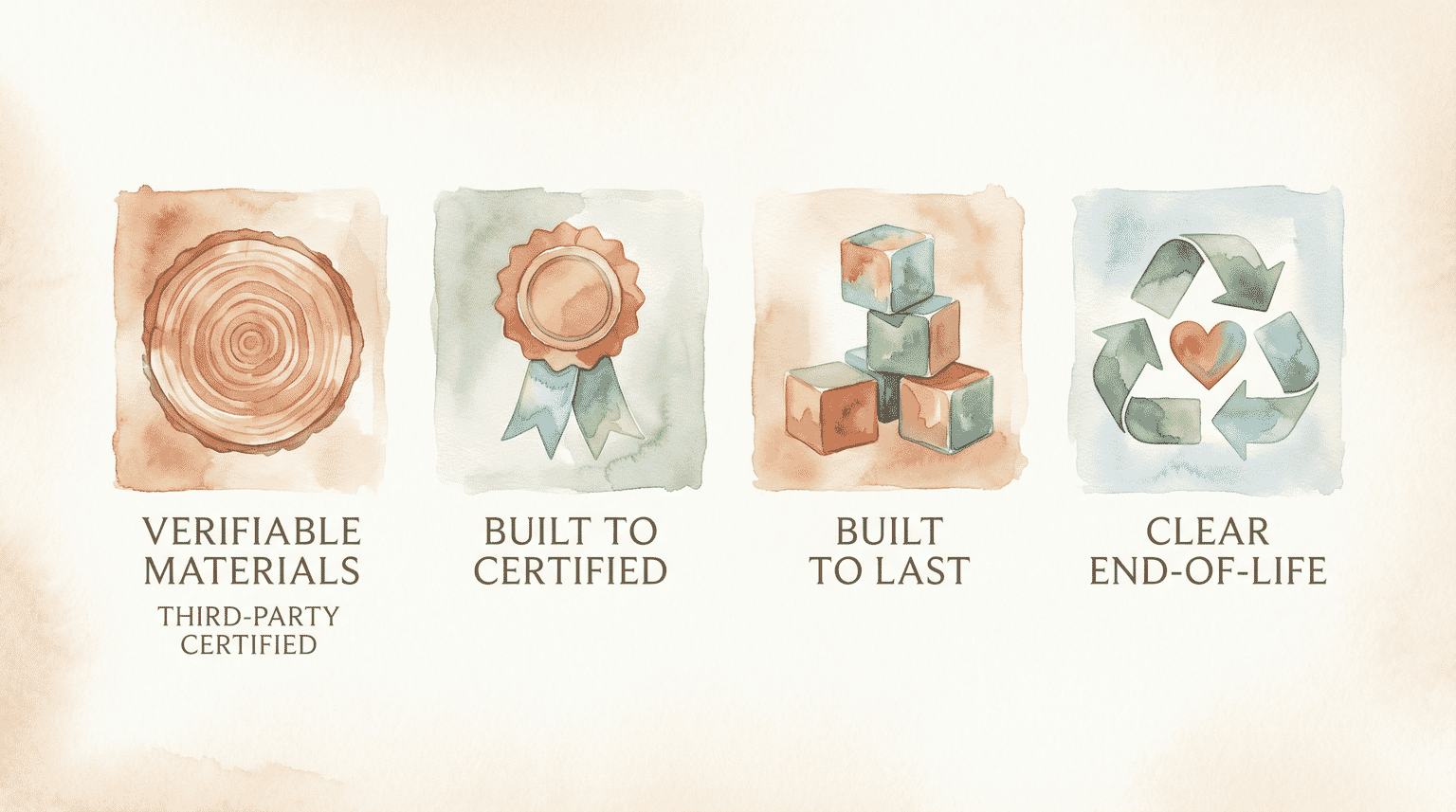
Eco-friendly toys are products manufactured from sustainable or recycled materials, free of harmful chemicals, and designed for long-term use with minimal environmental impact. According to researchers at the Technical University of Denmark, genuinely sustainable toys meet four criteria: benign materials (wood, organic cotton, recycled plastics), safety certifications (OEKO-TEX, GOTS), proven durability, and responsible end-of-life options.
Let me break down what I actually look for after testing hundreds of toys across eight kids:
1. Materials you can verify. Not just “natural” on the label—but what material, sourced where, finished how?
2. Third-party certifications. Brand claims mean nothing without independent verification.
3. Built to survive siblings. In my house, that’s the real durability test. A toy needs to work for my 4-year-old today and still be standing when my 2-year-old reaches that age.
4. End-of-life clarity. Can it be passed down, donated, recycled, or composted? If the answer is “landfill,” that’s a red flag.
Spotting Greenwashing
Here’s where my research training kicks in. Watch for:
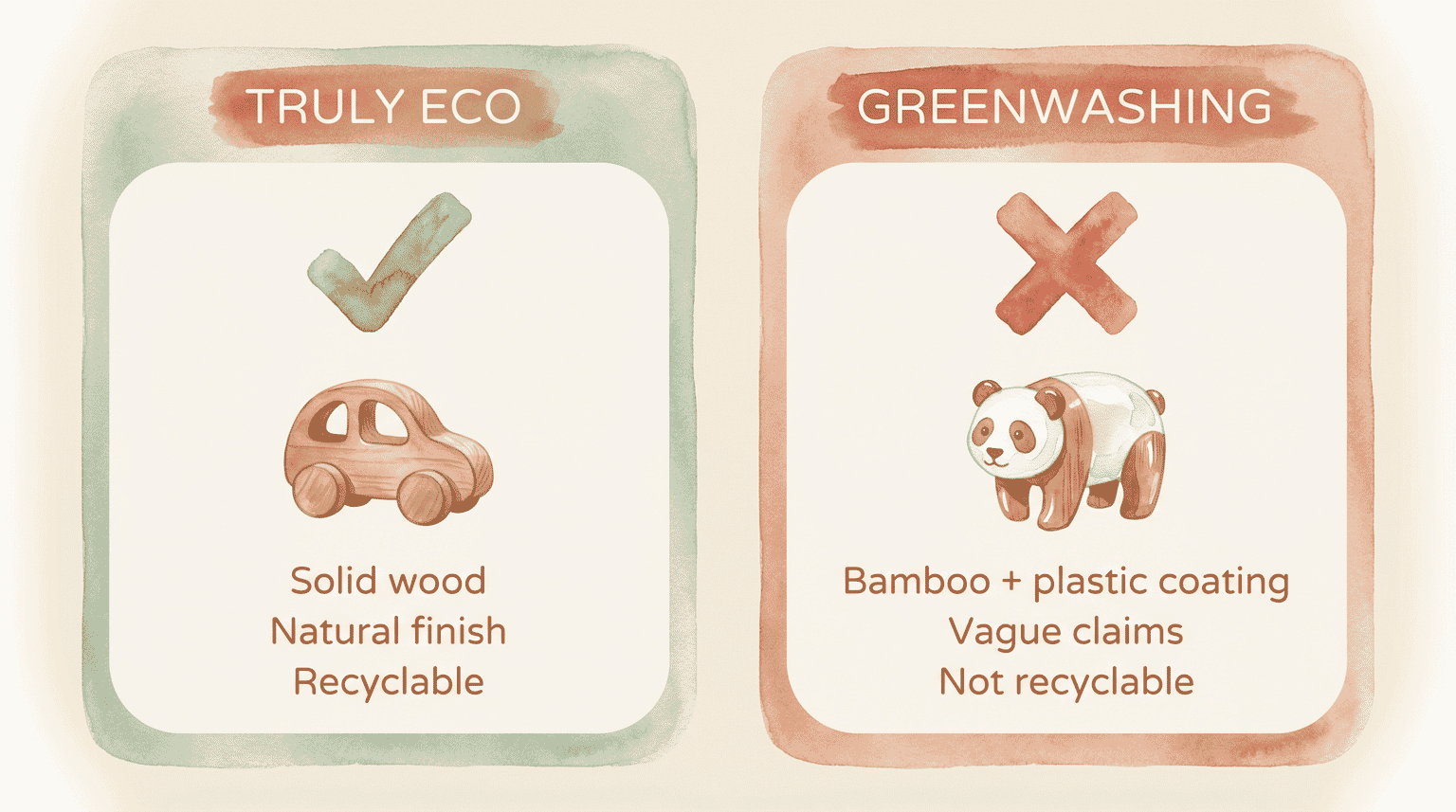
- Bamboo toys that need plastic coating. Dr. Amanda Gummer, research psychologist with the Good Play Guide, notes that bamboo must be coated in plastic to pass safety standards, eliminating recyclability.
- Vague “eco-friendly” claims without specifics. What certification? What materials?
- Resistance to sharing supplier information. Transparent brands will tell you where and how their toys are made.
Psychology Today’s research on eco-friendly products suggests our brains actually detect superficial sustainability claims—the insula (the brain’s deception-detector) activates when we sense greenwashing. Trust that instinct.
Your Sustainable Materials Guide
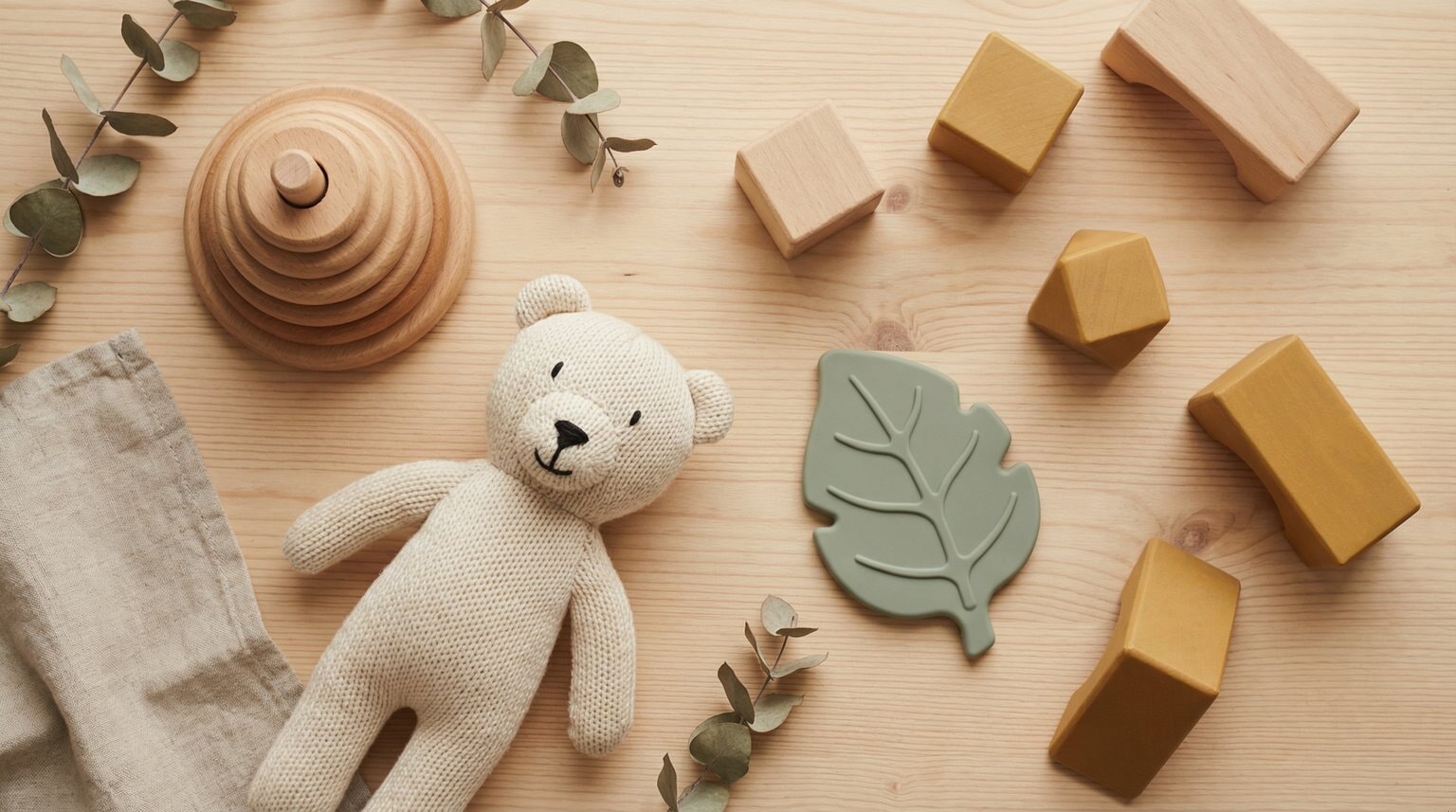
Not all natural materials are created equal. Here’s what I’ve learned works across age ranges:
Untreated or Naturally Finished Wood
DePaul University’s lifecycle analysis confirmed what many parents suspect: plastic toys create higher greenhouse gas emissions than wooden alternatives.
“I would prefer to choose wooden toys for my daughter, provided they do not have hazardous additives or lacquers.”
— Lei Huang, Research Specialist, University of Michigan
What to look for: FSC-certified wood, food-grade finishes (beeswax, natural oils), or completely untreated. Avoid painted wood unless the paint is specifically certified non-toxic.
Age notes: Solid wooden toys work from infancy through elementary years. My 8-year-old still uses the same wooden blocks that all seven older siblings played with.
Recycled Plastics
Yes, recycled plastic is still plastic—but it avoids the extraction impact of new production. Companies like Green Toys use 100% recycled plastic from milk jugs and yogurt containers.
What to look for: Brands that specify their recycled content percentage and source. “Made with recycled materials” could mean 1% recycled.
Age notes: Recycled plastic works well for water toys, outdoor play, and sandbox toys where durability matters and wood isn’t practical.
Organic Textiles
GOTS-certified organic cotton and minimally processed wool avoid pesticide residues and synthetic treatments.
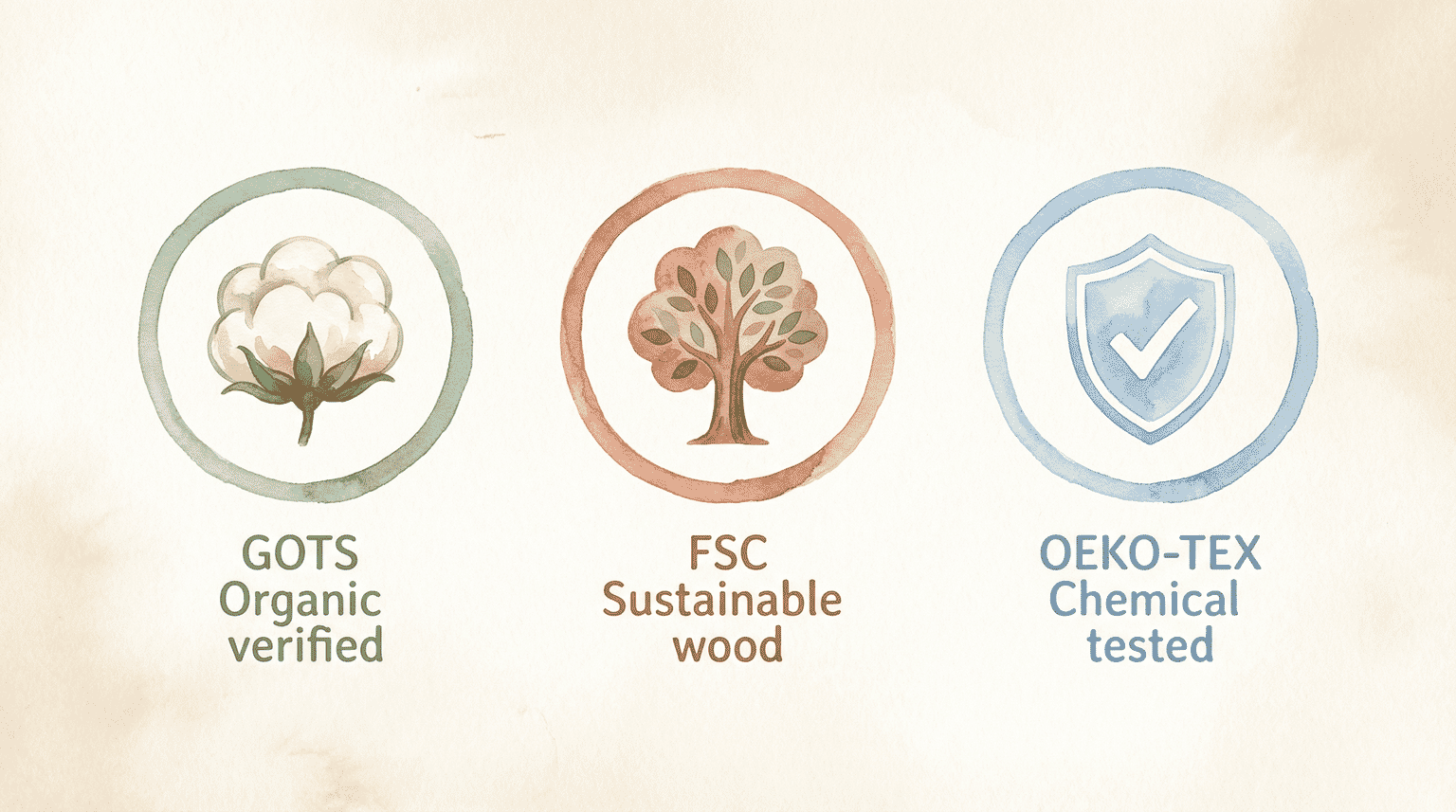
What to look for: GOTS or OEKO-TEX Standard 100 certification. The OEKO-TEX standard specifically tests for harmful chemicals—that matters for toys that end up in mouths.
Age notes: Ideal for babies and toddlers (stuffed animals, soft dolls, play silks). My littles mouth everything, so textile certification actually keeps me sleeping at night.
Food-Grade Silicone
For teethers and baby toys, food-grade silicone offers a non-toxic alternative to plastic without the cold hardness of wood.
What to look for: Specifically labeled “food-grade” and free from fillers.
Age notes: Birth to 18 months primarily. These become less relevant as mouthing decreases.
Certifications That Actually Matter
After sorting through dozens of eco-labels, here’s the hierarchy that actually means something:
| Certification | What It Verifies | Why It Matters |
|---|---|---|
| OEKO-TEX Standard 100 | Textiles tested for harmful substances | Goes beyond legal requirements |
| GOTS | Organic fiber content and processing | Covers entire supply chain |
| FSC | Sustainable wood sourcing | Prevents deforestation |
| ASTM F963 | US toy safety standards | Required baseline, not sustainability |
The gap to watch: ASTM F963 is legally required for toys sold in the US, but it’s a safety standard—not a sustainability or non-toxic certification. Many harmful chemicals are still legal.
Teaching Environmental Values Through Play
Here’s where the research gets genuinely exciting. A 2023 study indexed in NIH/PMC found that ages 3-6 represent a critical window for habit formation. When researchers had preschoolers use an interactive environmental toy for just 15 minutes daily over two weeks, classification accuracy improved by 31.25%.
But the most striking finding? Behavioral transfer extended beyond the toy. Parents reported children began correcting others’ misclassification and proactively sharing what they’d learned.
The key is what researchers call “meaningful memory”—positive emotional experiences paired with concrete objects create stronger retention than abstract instruction.

Play offers a powerful entry point for environmental conversations with young children.
“Play is a really powerful tool to open up conversations around many issues. Parents are looking for products that are both sustainably made and help kids learn about environmental issues.”
— Dr. Amanda Gummer, Research Psychologist, Good Play Guide
In my house, this looks like conversations that start with a wooden toy—”This came from a tree that someone planted”—and expand into bigger ideas. Our teaching environmental responsibility through gifts guide digs deeper into this approach.
Sustainable toys become physical reminders of values, not just playthings.
The Economics of Quality Toys
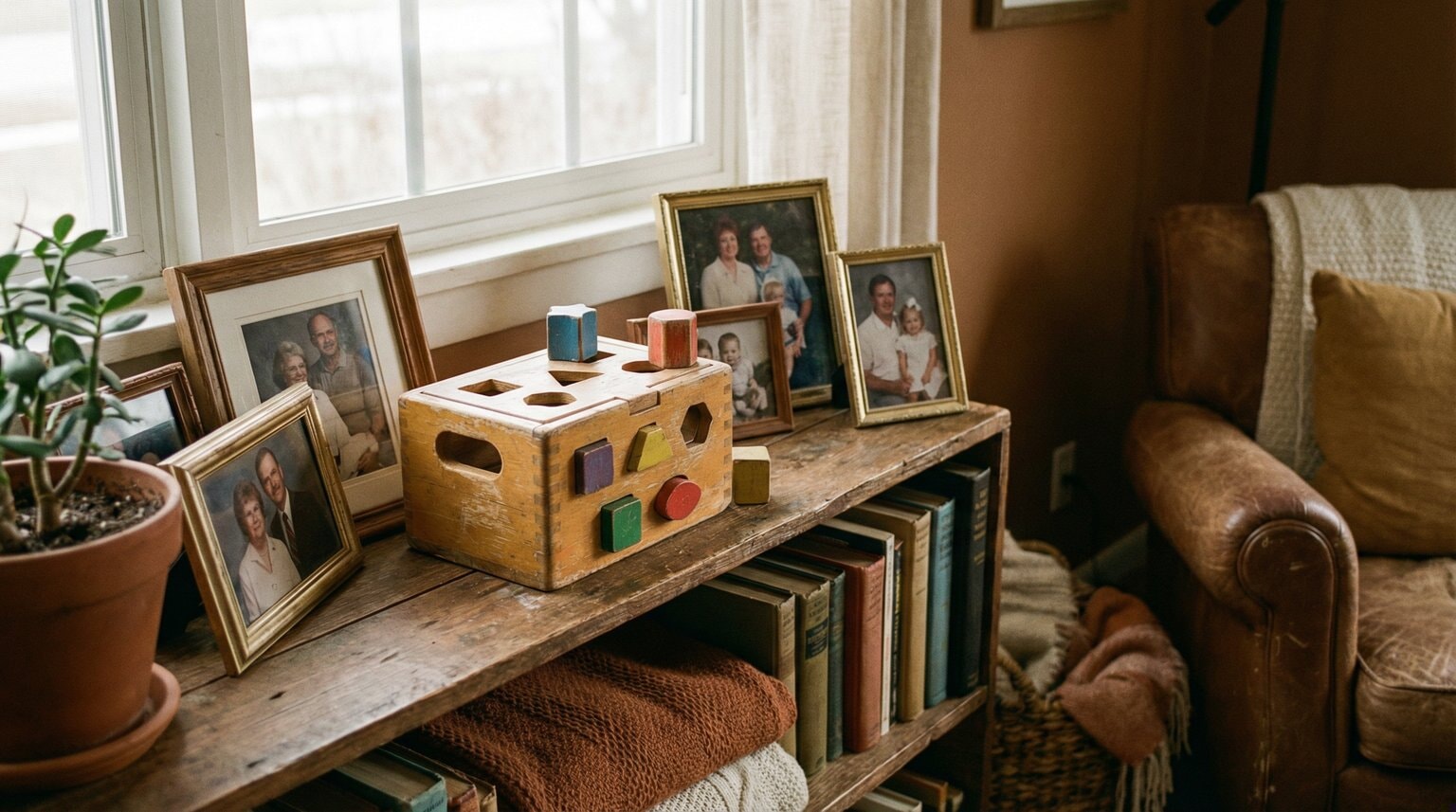
I’ll be direct: sustainable toys cost more upfront. But after watching toys cycle through eight children, I’ve become obsessed with cost-per-use calculations.
Example from our playroom:
A high-quality wooden shape sorter costs $34 versus $15 for plastic. But the wooden version:
- Lasts 5-10 times longer
- Serves children from 12 months to 4+ years
- Maintains resale or hand-me-down value
- Contains no chemicals of concern
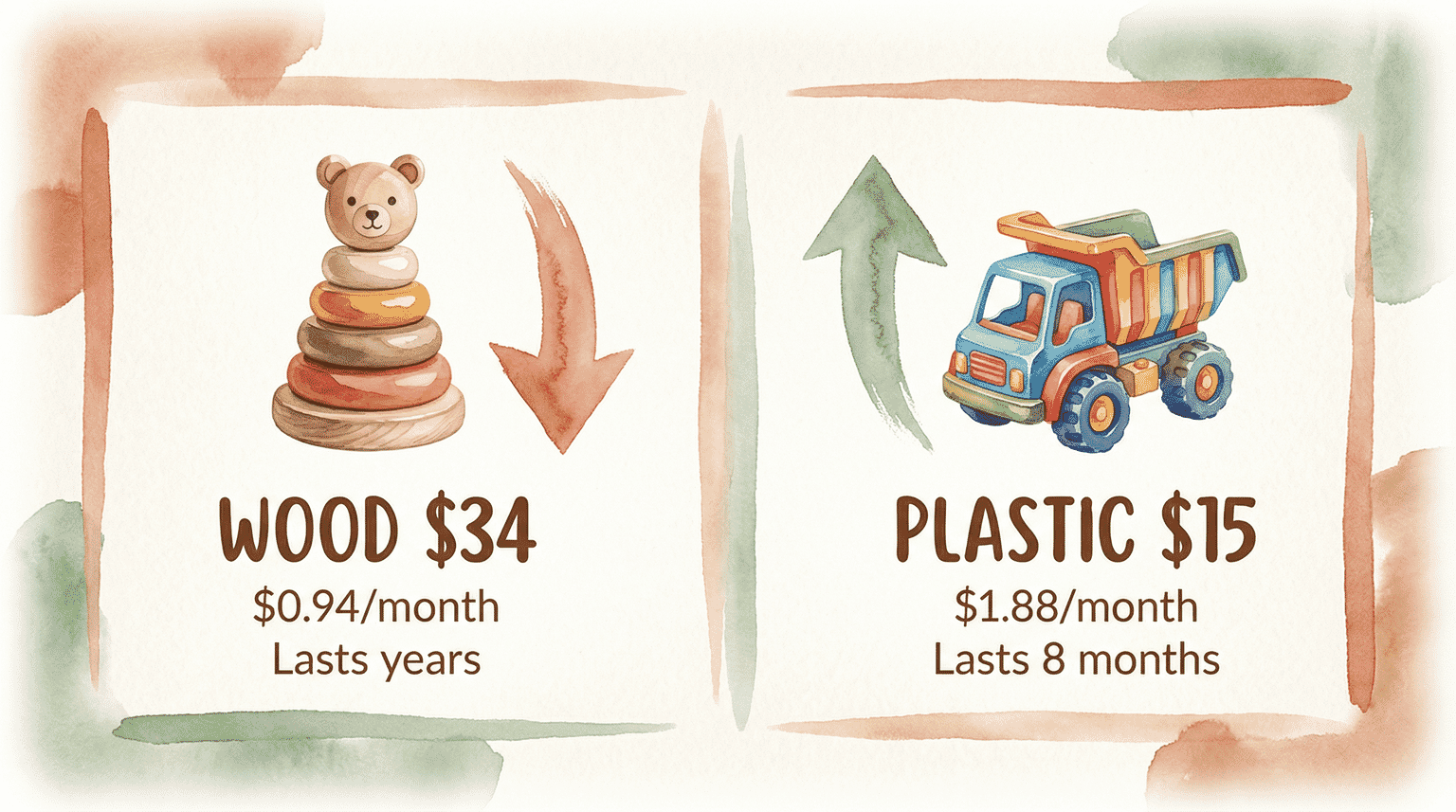
Monthly cost: $0.94 for wood versus $1.88 for plastic that lasts 8 months.
This isn’t just my math. Research in Sustainable Production and Consumption identified duration of product use as one of three main factors in environmental footprint. A heavy toy trashed quickly has exponentially more impact than a lighter toy used for years.
A 2024 cross-generational study of 78 participants found explicit dissatisfaction with modern, disposable designs.
“Older toys were often sturdier and were passed on from older family members to the next generations. Sometimes there were stories connected to them, and so they have sentimental value.”
— Participant, Cross-Generational Toy Study, 2024
When you choose fewer, better toys, you’re not depriving your child—you’re investing in objects that can carry meaning across years and siblings.
Navigating Gift-Giving Conversations
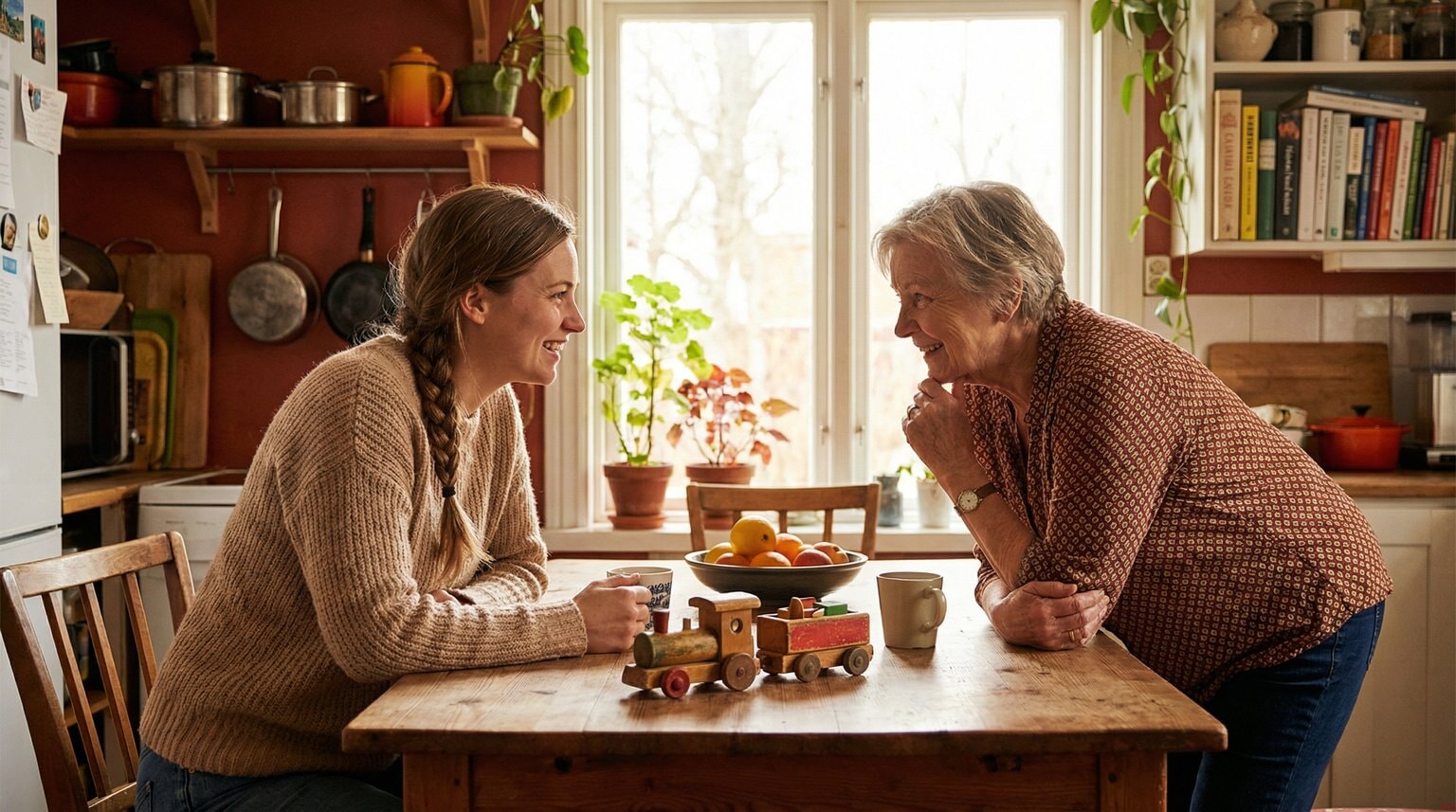
The grandparents mean well. So does the aunt who shows up with plastic everything. Here’s what I’ve learned about having these conversations without damaging relationships:
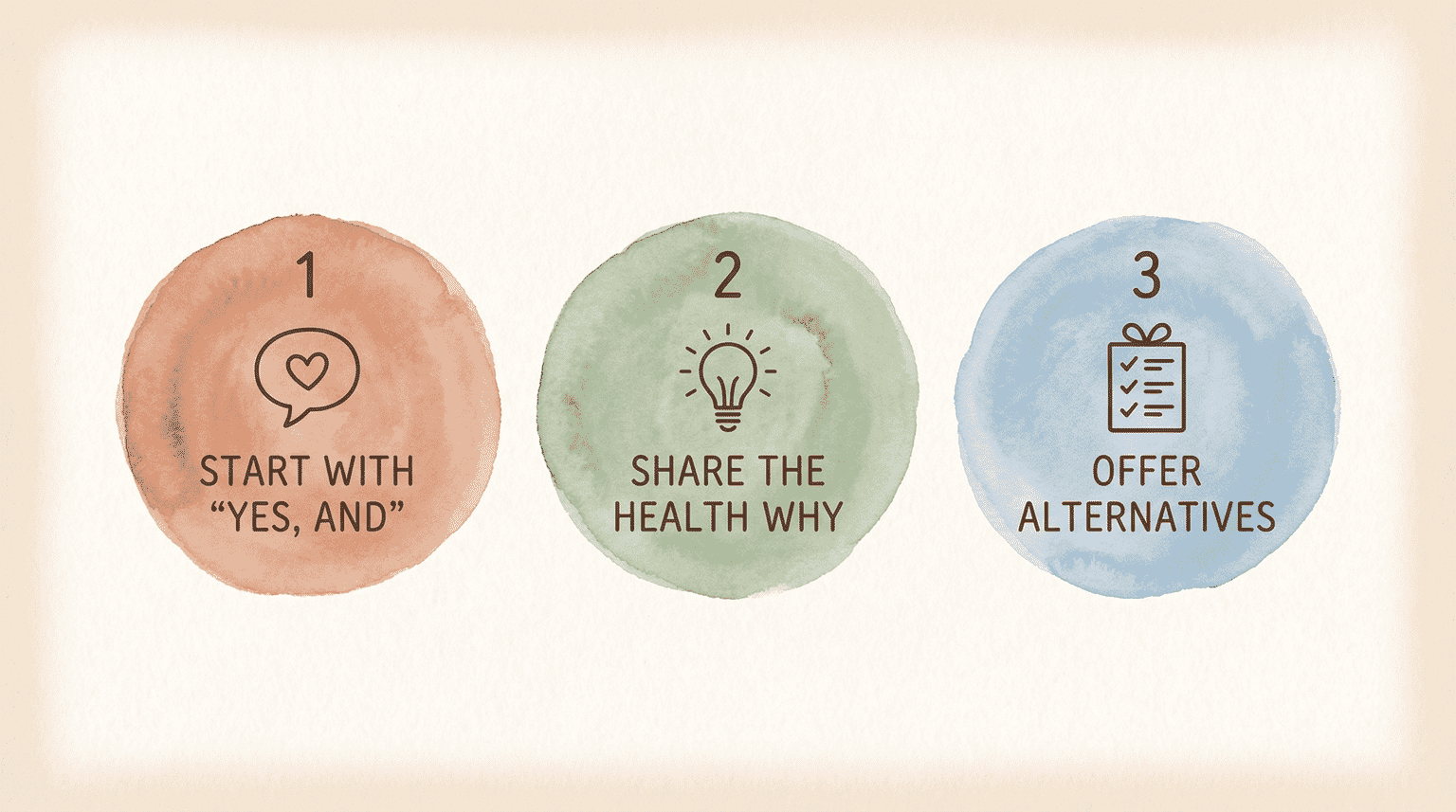
Start with “yes, and”: “We love that you want to spoil the kids, and we’ve been trying to create more space in the playroom. Would you consider experience gifts or one special toy?”
Share the why briefly: Most relatives respond to the health angle more readily than environmental arguments. “We’re trying to reduce plastic chemical exposure” lands differently than an eco-lecture.
Offer alternatives: Keep a running list of gifts that reflect your family’s values—experiences, memberships, quality items from specific brands.
Accept imperfection: Some plastic toys will arrive. That’s okay. The goal is progress, not purity.
Making the Sustainable Choice Feel Meaningful
Here’s something I didn’t expect from the research: choosing eco-friendly products actually affects your brain chemistry. Psychology Today reports that when we acquire something beautiful and beneficial to the planet, our brain’s pleasure centers activate alongside regions that process ethical decision-making—creating what researchers call a “moral reward” response.
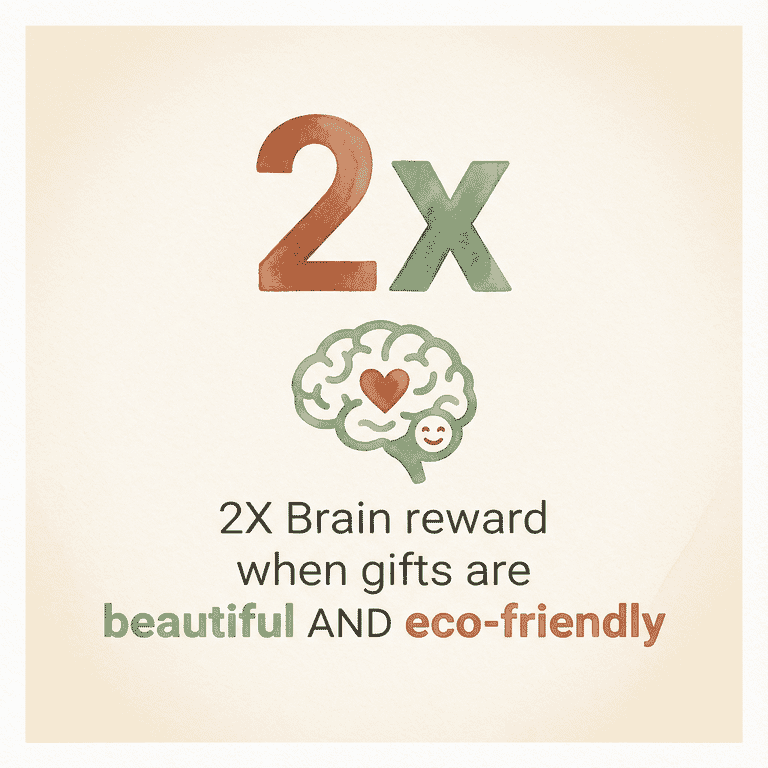
For parents wrestling with eco-anxiety (and honestly, who isn’t?), this offers something tangible. Sustainable toy choices become small acts of agency in an overwhelming environmental landscape.
These gifts become more than objects. They become reminders of lifestyle choices, deepening in sentimental value over time.
That’s why the wooden train set from my oldest—now used by my youngest—feels like family history in a way the broken plastic toys never could.
Frequently Asked Questions
Are plastic toys harmful to children?
University of Michigan researchers identified more than 100 chemicals of concern in plastic toys, including plasticizers that continue releasing for up to 15 years. Budget toys marketed to young children showed highest levels of heavy metals. While not all plastic toys are immediately dangerous, minimizing exposure—especially for children who mouth toys—reduces cumulative chemical burden.
What certifications should I look for in children’s toys?
OEKO-TEX Standard 100 (tests for harmful substances in textiles), GOTS (verifies organic materials and processing), and FSC (sustainable wood sourcing) are the most meaningful certifications. ASTM F963 is legally required but covers safety, not sustainability or chemical concerns beyond federal minimums.
Are wooden toys better than plastic?
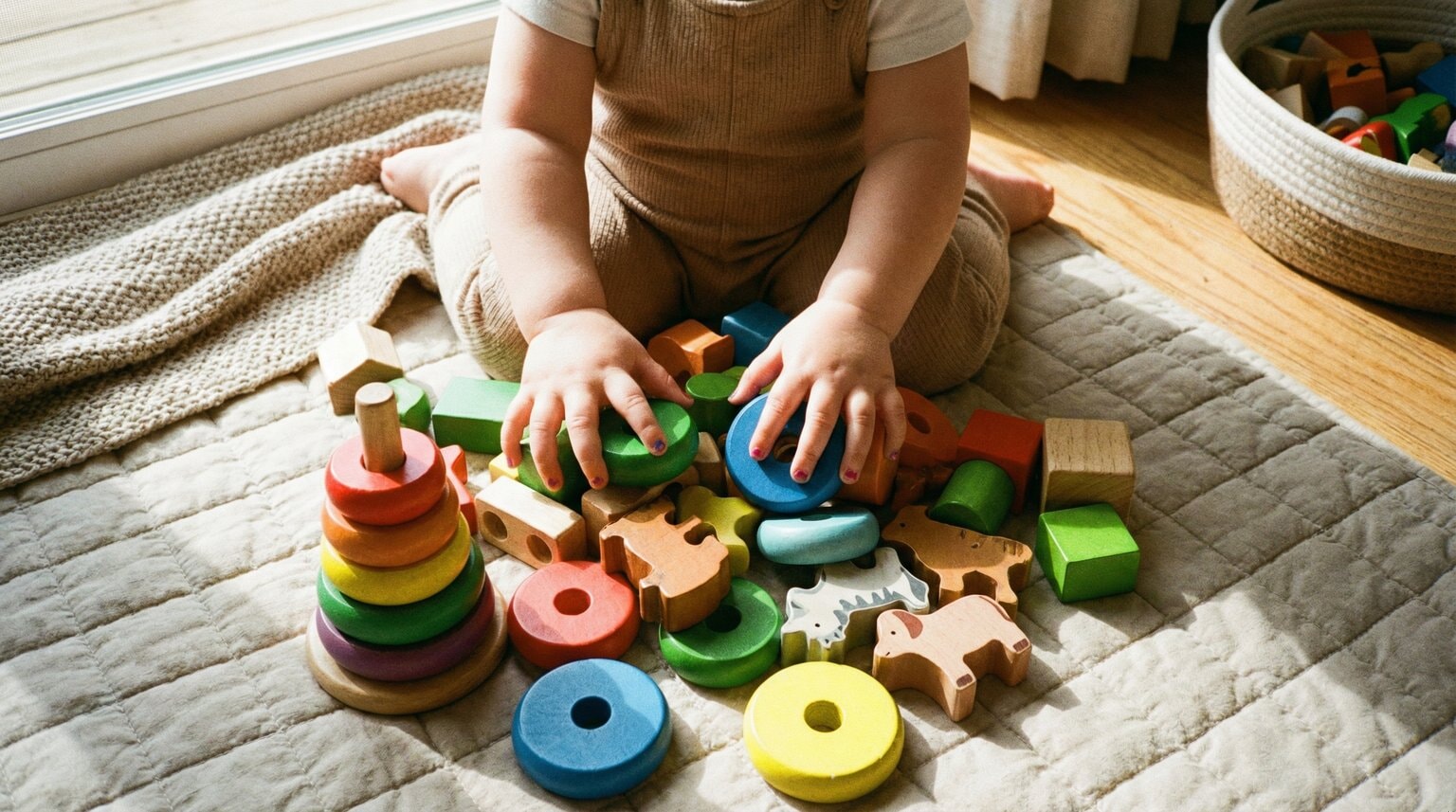
DePaul University’s lifecycle analysis found plastic toys create higher greenhouse gas emissions than wooden alternatives. Wooden toys also avoid the 100+ chemical concerns identified in plastic toys. However, researchers note wooden toys should use food-grade or natural finishes—avoid hazardous lacquers.
Are eco-friendly toys worth the extra cost?
When calculated by cost-per-use, sustainable toys often prove more economical. A $34 wooden toy lasting three years costs $0.94/month versus a $15 plastic alternative lasting eight months at $1.88/month—plus wooden toys maintain hand-me-down and resale value.
How do I know if a toy is truly eco-friendly?
Look for verifiable certifications (not just claims), transparent material sourcing, designed durability, and clear end-of-life options. Red flags include bamboo toys (often require plastic coating), vague “eco” labeling without specifics, and brands that won’t share supplier information.
Join the Conversation
Have you made the switch to eco-friendly toys? I’m curious which sustainable brands have held up—and whether quality has matched the promises (and the price tags).
Your sustainable toy wins and fails help other parents navigate the greenwashing.
References
- University of Michigan School of Public Health – Chemical concerns in plastic toys
- DePaul University Research – Toy lifecycle analysis
- NIH/PMC Environmental Education Study – Educational toy effectiveness
- NIH/PMC Cross-Generational Study – Toy durability preferences
- Atmos Magazine – Toy industry environmental impact
- Yale School of the Environment – Toy sustainability analysis
- Psychology Today – Psychology of sustainable purchases
- Sustainable Production and Consumption – Green toy adoption research

Share Your Thoughts