
“I want THAT one!” Your child points at the screen, and you realize they’ve just watched their third unboxing video.. Here’s the thing: a 2024 study found that 48% of YouTube videos watched by young children include consumerism—branded content, unboxing videos, and direct calls to purchase. The wanting isn’t random. It’s by design.

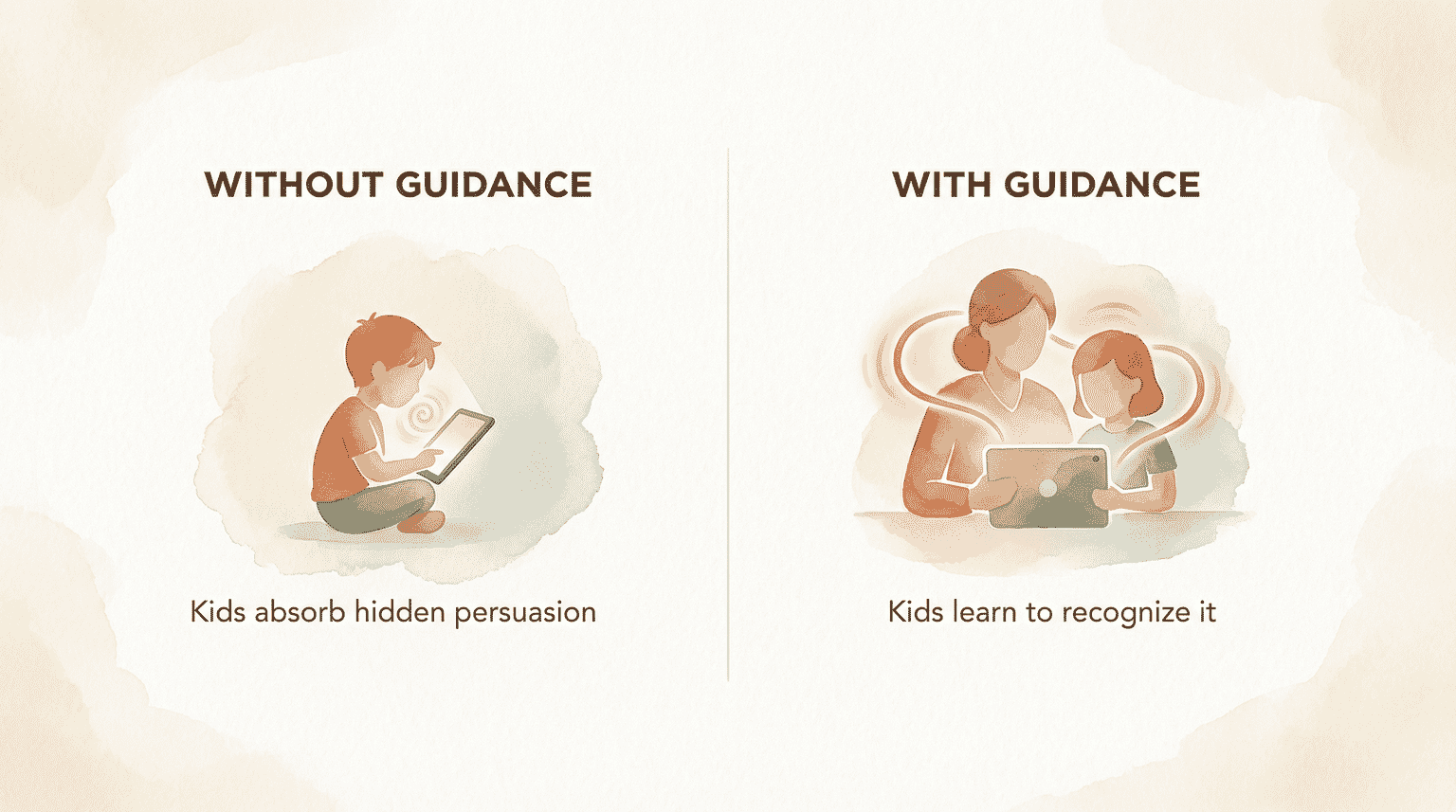
And here’s what my librarian brain needed to understand: children under 12 genuinely cannot recognize when they’re being advertised to. BYU researcher Jason Freeman puts it simply: “Children don’t really understand that some videos are trying to persuade them to take certain actions, like buying products.”
So logic won’t work. But these four phrases will.
Key Takeaways
- Nearly half of kids’ YouTube content contains hidden advertising they can’t recognize
- Four simple phrases can transform “I want that!” demands into teaching moments
- Always validate the feeling before setting the boundary—it reduces resistance
- Critical engagement with content teaches kids to recognize manufactured desire for life
Four Phrases That Actually Work

1. “That toy looks really exciting to you.”
Start here. Always. This validates the feeling without promising the purchase. I’ve watched this defuse tension with my 4-year-old dozens of times—she just needs to know I see her excitement before she can hear anything else.
2. “What would you do with it first?”
This simple question shifts them from wanting to thinking. Sometimes my kids describe elaborate play scenarios. Sometimes they go quiet because they don’t actually know. Either way, you’ve moved from demand to conversation.
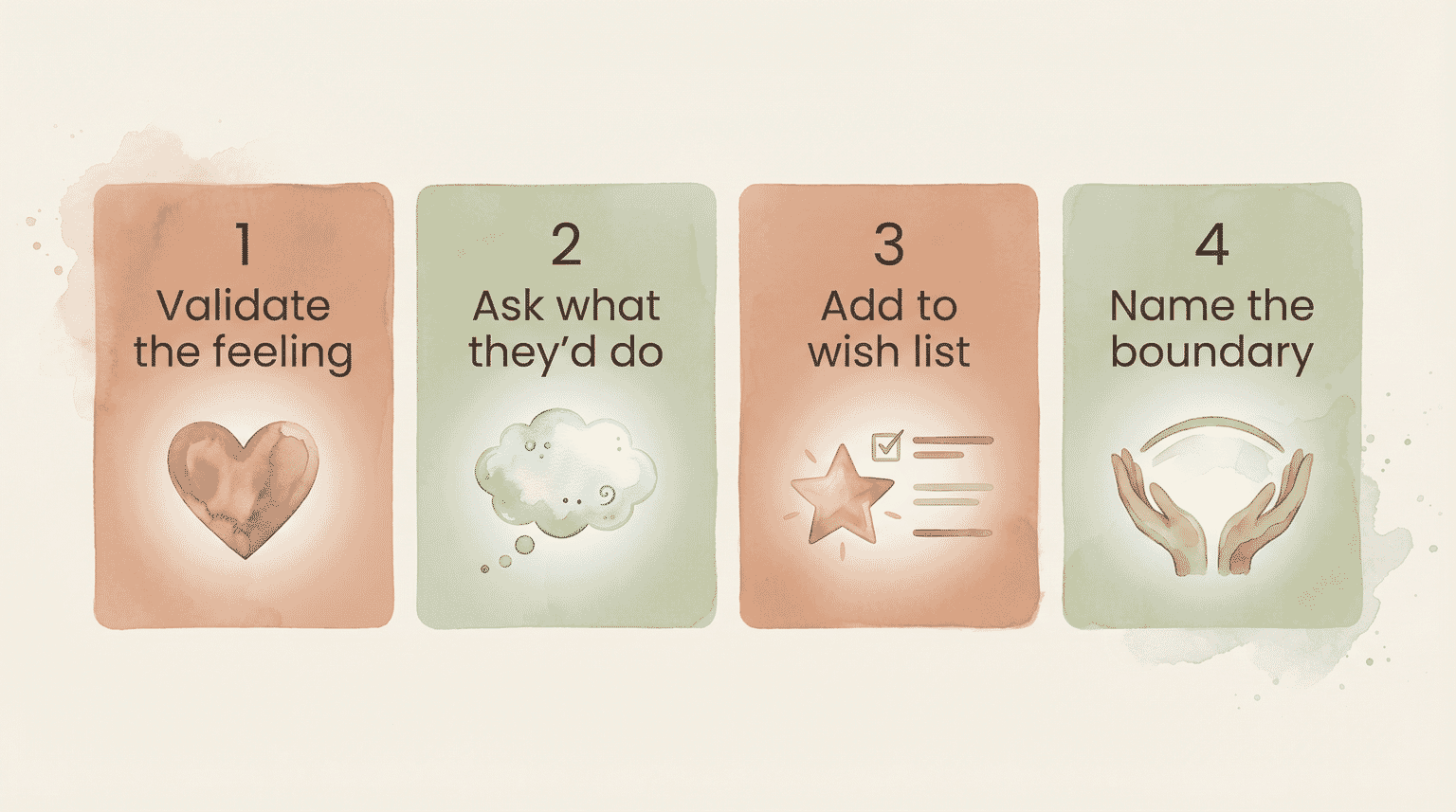
3. “Let’s add it to your wish list.”
The wish list is magic. It honors the desire without immediate action. For kids dealing with pester power—that relentless cycle of ask-ask-ask—this gives them somewhere to put the wanting that isn’t your wallet.
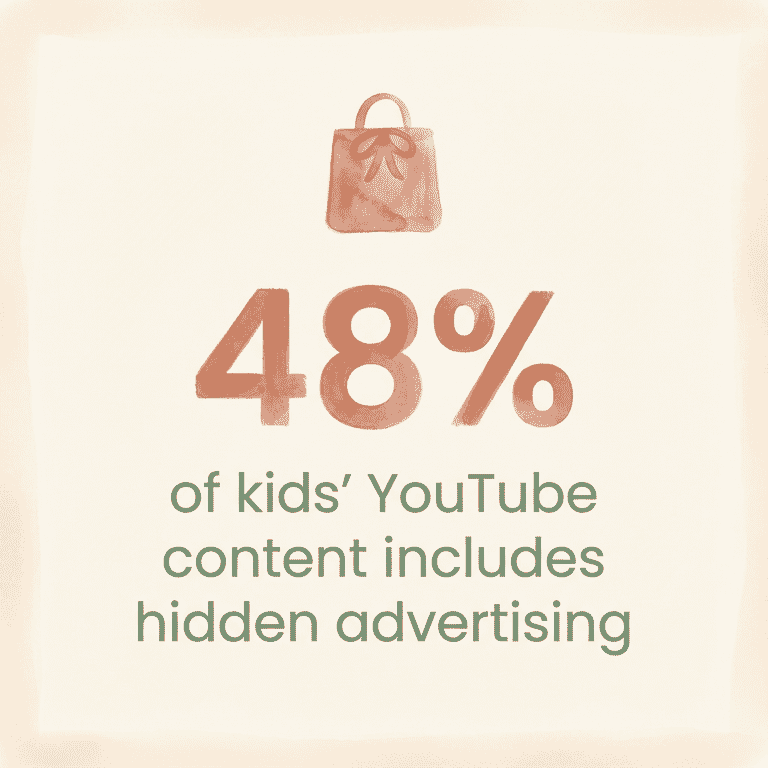
That number isn’t a fluke. Nearly half of what your child watches on YouTube is designed to make them want things. Unboxing videos, branded content, and subtle product placements are everywhere.
The algorithms know exactly what they’re doing—and your kid’s developing brain doesn’t stand a chance against professional marketing.
4. “We’re not getting new toys today, and I know that’s disappointing.”
When the boundary needs to be clear, name both parts: the limit AND the feeling. No negotiation, no justification, just acknowledgment.
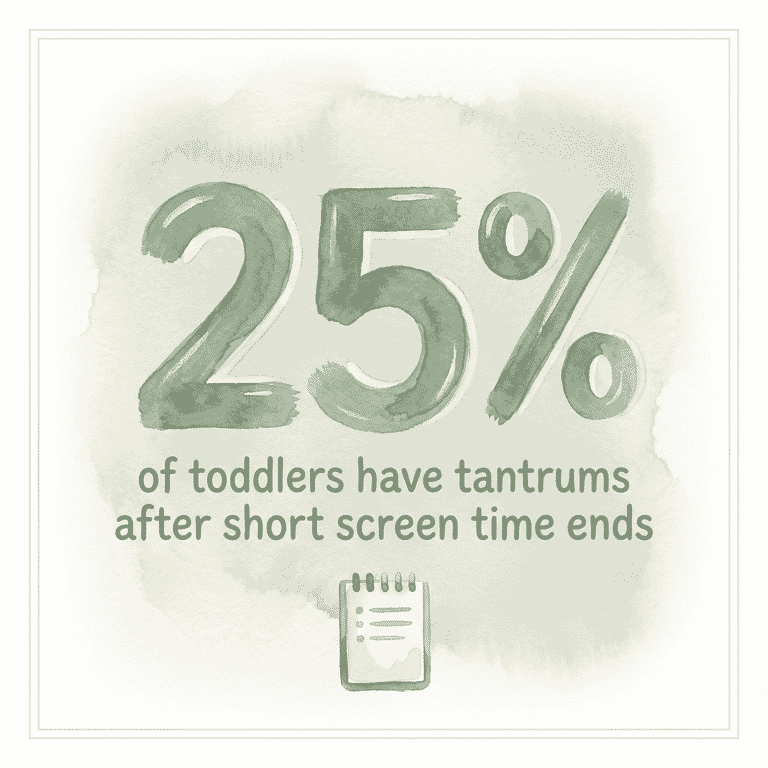
Research shows that 25% of toddlers have tantrums after just short tablet exposure. That screen-removal meltdown is real, and it’s predictable.
Validation before the boundary reduces that resistance. You’re not giving in—you’re just acknowledging that disappointment is hard before you hold the line.
Why This Matters

These aren’t just scripts for the checkout line. They’re teaching moments. Freeman’s research suggests that “when parents critically engage with this content created for children, they are able to teach their children how the content might shape their attitudes and behavior.”
You’re not just saying no. You’re helping them recognize manufactured desire—a skill they’ll need for life.
For a deeper look at how digital content shapes what kids want, I’ve written more about navigating this new landscape of YouTube-driven wishlists.
I’m Curious

Which response has worked best for your “I want that!” moments? I’m always collecting scripts that actually land with real kids—share yours below.
Your tried-and-true phrases might save another parent from YouTube meltdown number three today.
References
- YouTube for young children study – Content analysis of consumerism in children’s videos
- Mobile Media and Toddler Responses – Research on screen removal and tantrum behavior

Share Your Thoughts