
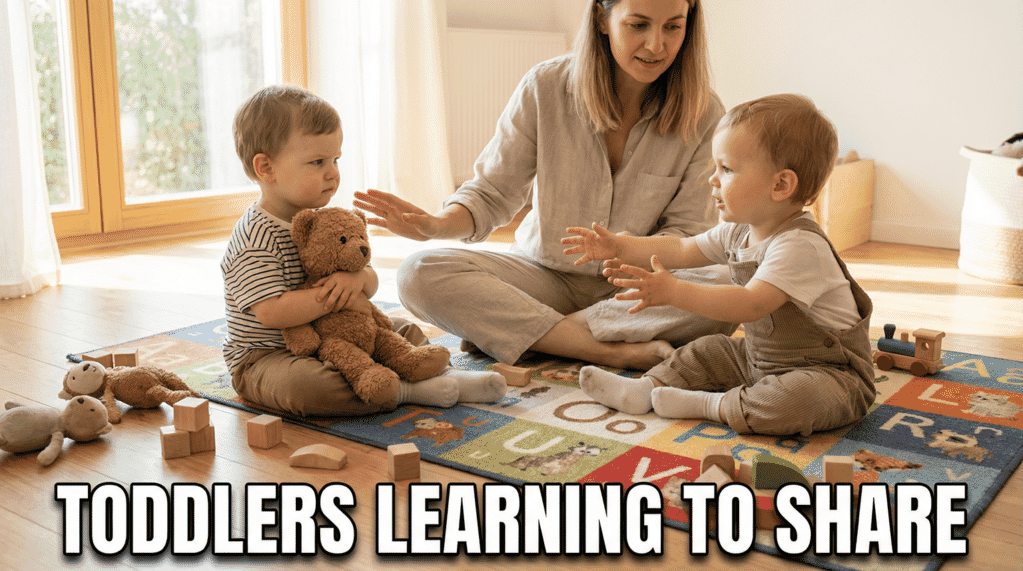
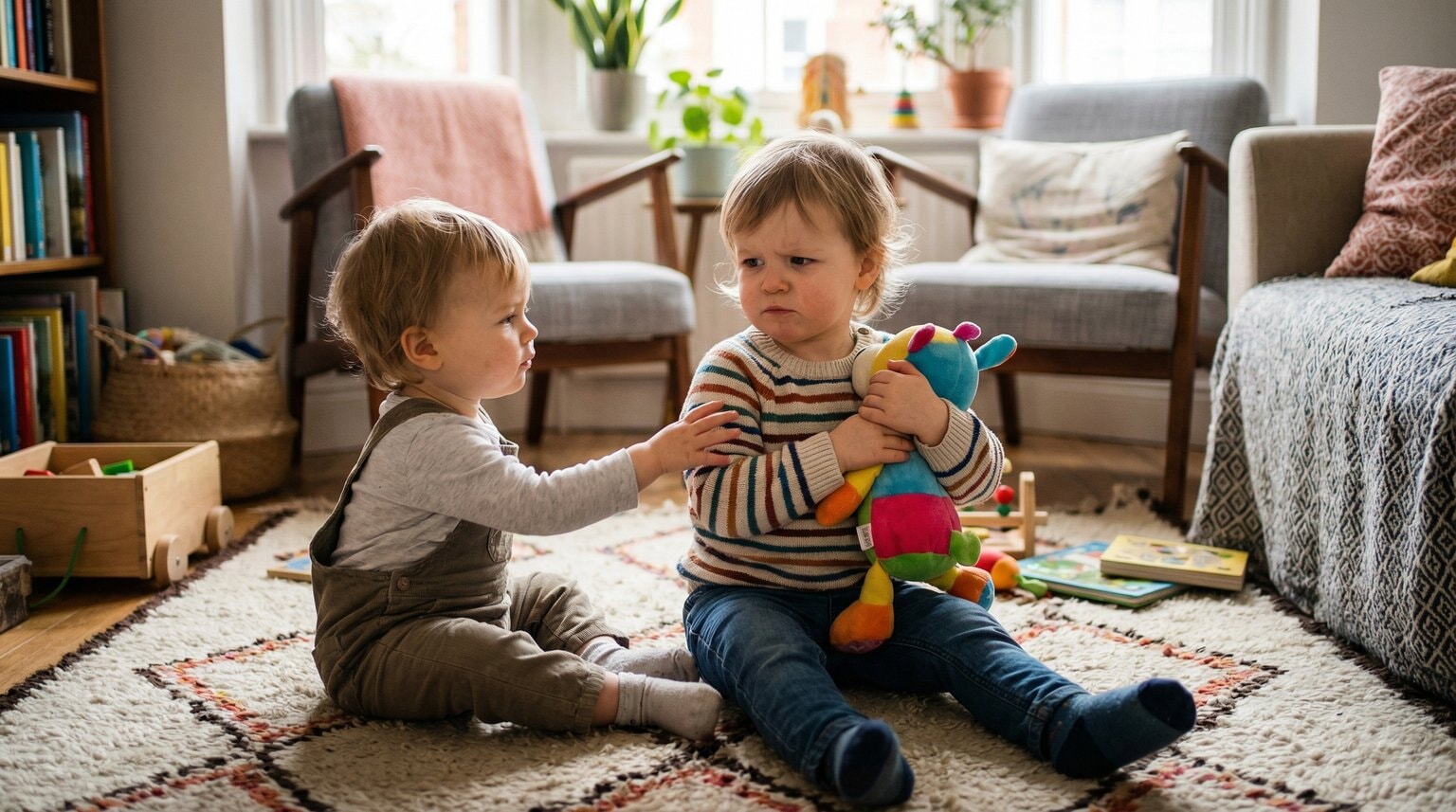
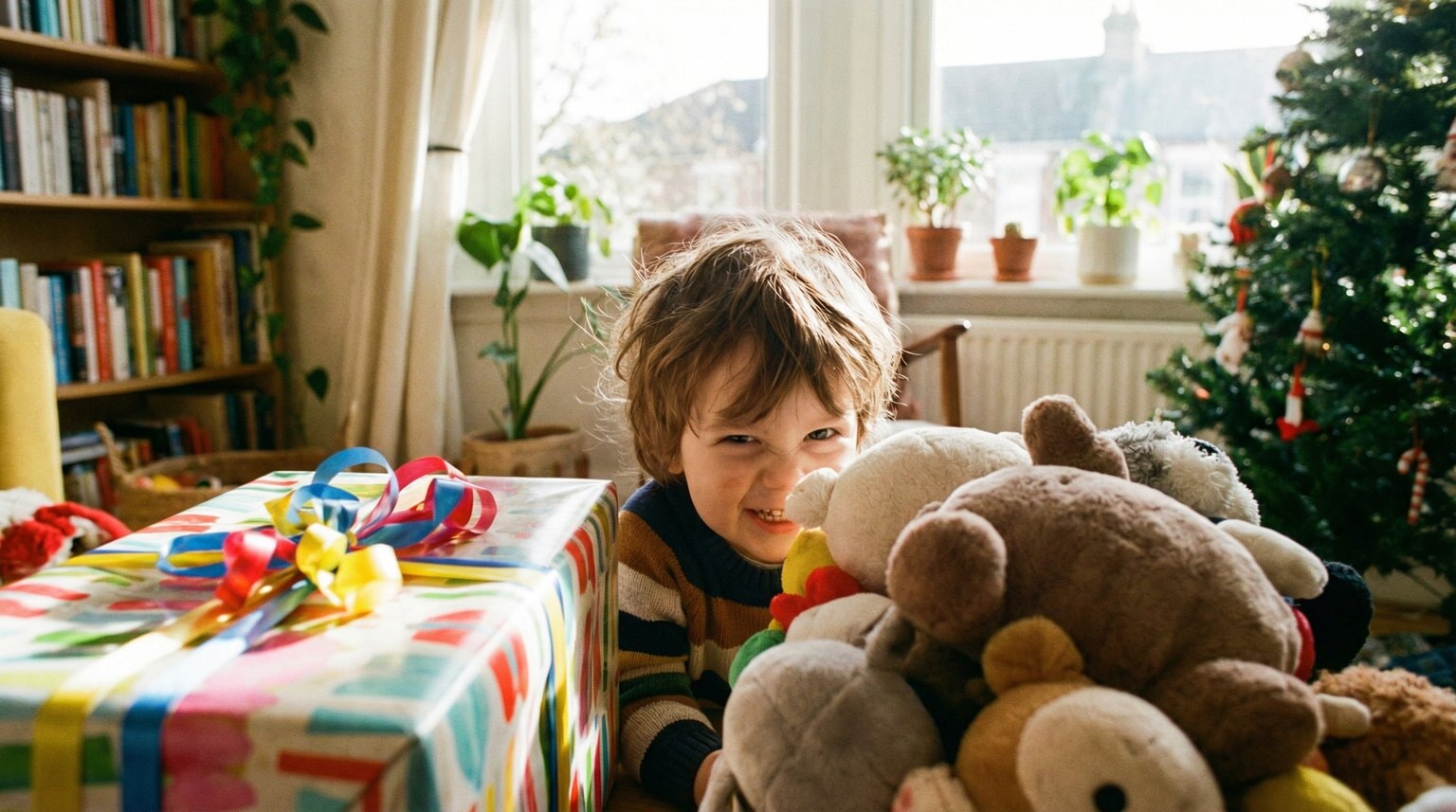
Your 2-year-old just snatched a toy from his playdate buddy, and the other mom is giving you that look. Before you spiral into “what am I doing wrong,” let me share something that might surprise you: your toddler probably can’t share yet.—and that’s exactly what his brain is supposed to be doing right now.
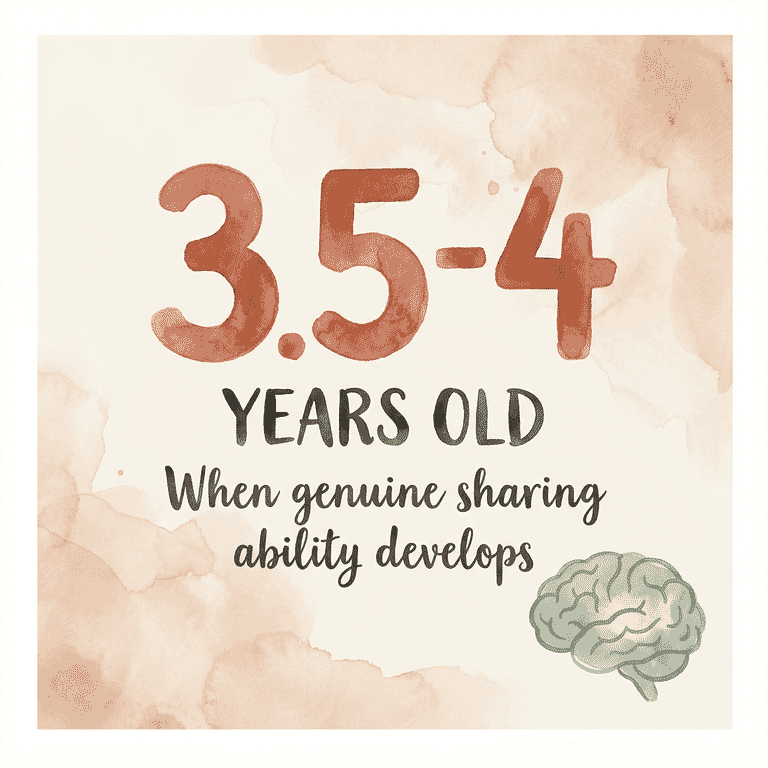
Here’s the real answer most parenting sites won’t give you straight: genuine sharing ability typically develops between 3.5 and 4 years old. Before that, your toddler’s brain literally hasn’t built the neural connections required to understand why giving up something they want would ever make sense.
I’ve watched this unfold with all eight of my kids, and my librarian brain couldn’t let it go without digging into the research. What I found changed how I parent—and eliminated a lot of unnecessary guilt.
Key Takeaways
- Genuine sharing develops at 3.5-4 years old—before that, your toddler’s brain literally can’t do it
- The word “mine” is actually a cognitive achievement, not a behavior problem
- Turn-taking (toy comes back) develops before true sharing (giving without return)
- Forcing toddlers to share backfires—kids actually share more when they act fast than when they’re made to think about it
- Before age 3, focus on modeling sharing yourself rather than mandating it
Why Your Toddler’s Brain Can’t Share Yet
The reason your 2-year-old can’t share isn’t stubbornness or poor parenting. It’s neuroscience.
Sharing requires what developmental psychologists call “Theory of Mind”—the ability to understand that other people have different thoughts, feelings, and desires than your own. According to BabyCenter’s developmental research (2024), children between ages 2 and 3 are “pretty self-centered” because “their brains haven’t developed the connections yet to know that not everyone feels the way they do.”
This isn’t selfishness. It’s developmental reality.
Think about what sharing actually requires your child to do:
- Recognize that another person wants the same thing they want
- Understand that the other person’s feelings matter
- Delay their own gratification
- Regulate the big emotions that come with giving something up
That’s a lot of cognitive heavy lifting for a brain that’s still building its basic architecture.
Research on perspective-taking confirms the challenge. A 2021 study found that while 3-year-olds show sensitivity to others’ perspectives in their eye gaze, they don’t consistently act on that understanding.
They may know sharing is expected—but doing it is another matter entirely. Understanding the science behind giving helps explain why this gap between knowing and doing persists well into preschool.
The Age-by-Age Timeline (What to Actually Expect)
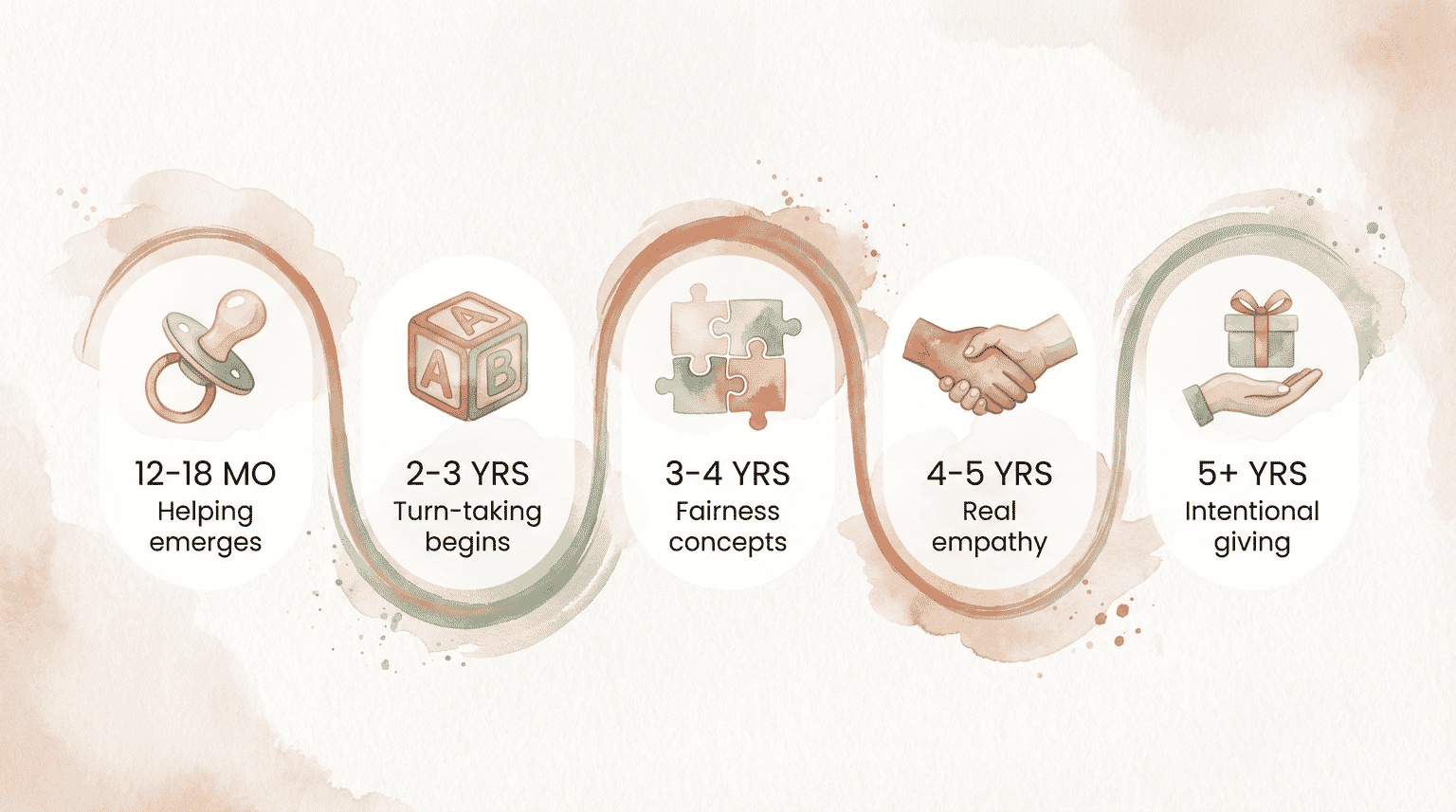
Here’s the granular breakdown I wish someone had given me with my first baby:
| Age | Sharing Ability | What You’ll See |
|---|---|---|
| 12-18 months | None yet | Parallel play; “mine” emerges; will help but not share |
| 18-24 months | Minimal | May hand objects but wants them back immediately |
| 2-3 years | Emerging | Can take turns with heavy adult support |
| 3-4 years | Developing | Beginning to understand; average sharing is 2.5 out of 10 items |
| 4-5 years | Establishing | Can share with guidance; fairness concepts emerge |
| 5+ years | Maturing | Understands fairness; shares more intentionally |
Let me walk you through each stage in detail so you know exactly what’s developmentally appropriate at every age.
12-18 Months: The Helping Phase
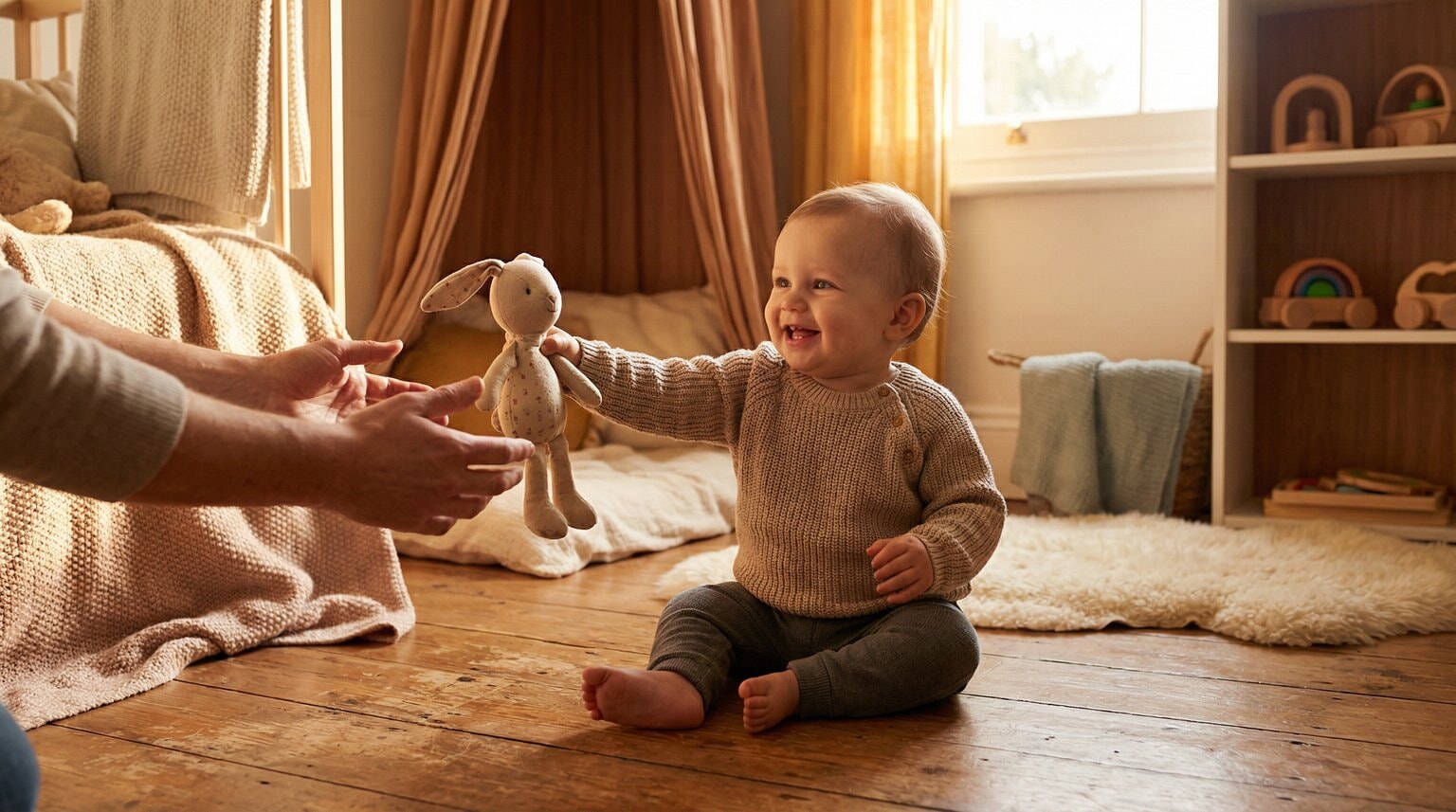
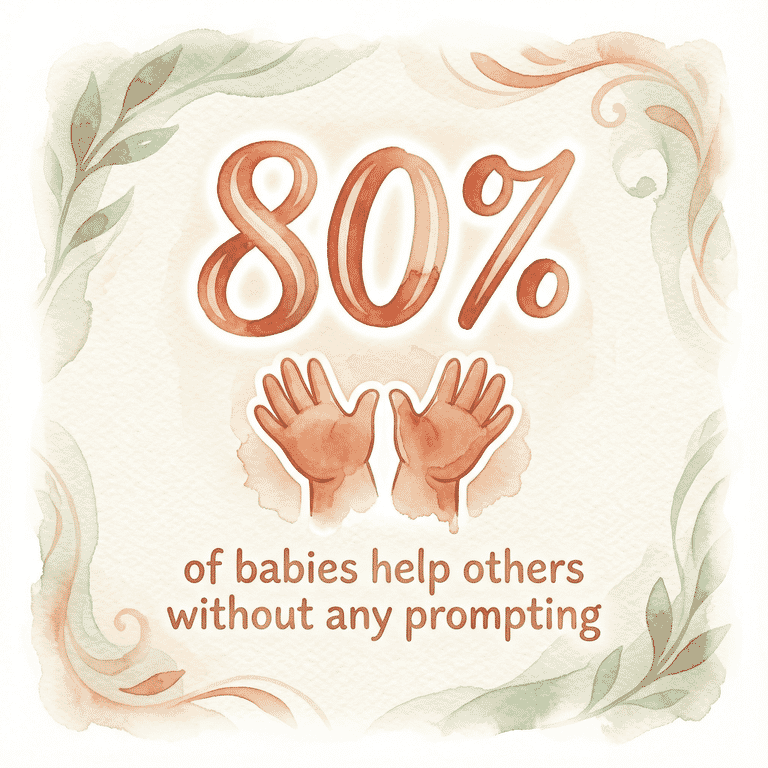
Here’s something that surprised me: your baby is actually wired to help before they can share. Research from UC Berkeley (2025) found that over 80% of babies 12 months and younger offered to help researchers retrieve out-of-reach items—almost all within the first 20 seconds, without any prompting.
Rose Donohue, the Washington University researcher behind the study, put it this way: “Young kids have much more advanced and innate abilities to learn prosocial behaviors and kindness and empathy than scientists ever thought.”
But helping and sharing are different skills. Your one-year-old will happily hand you a block you dropped. Ask them to give up the block they’re playing with? Different story entirely.
At this age, children play “side by side with other children rather than with them,” according to the Raising Children Network (2025). This parallel play is completely normal. They’re also just starting to understand words like “no” and “mine”—crucial concepts that actually precede sharing ability.
18-24 Months: The “Mine” Milestone
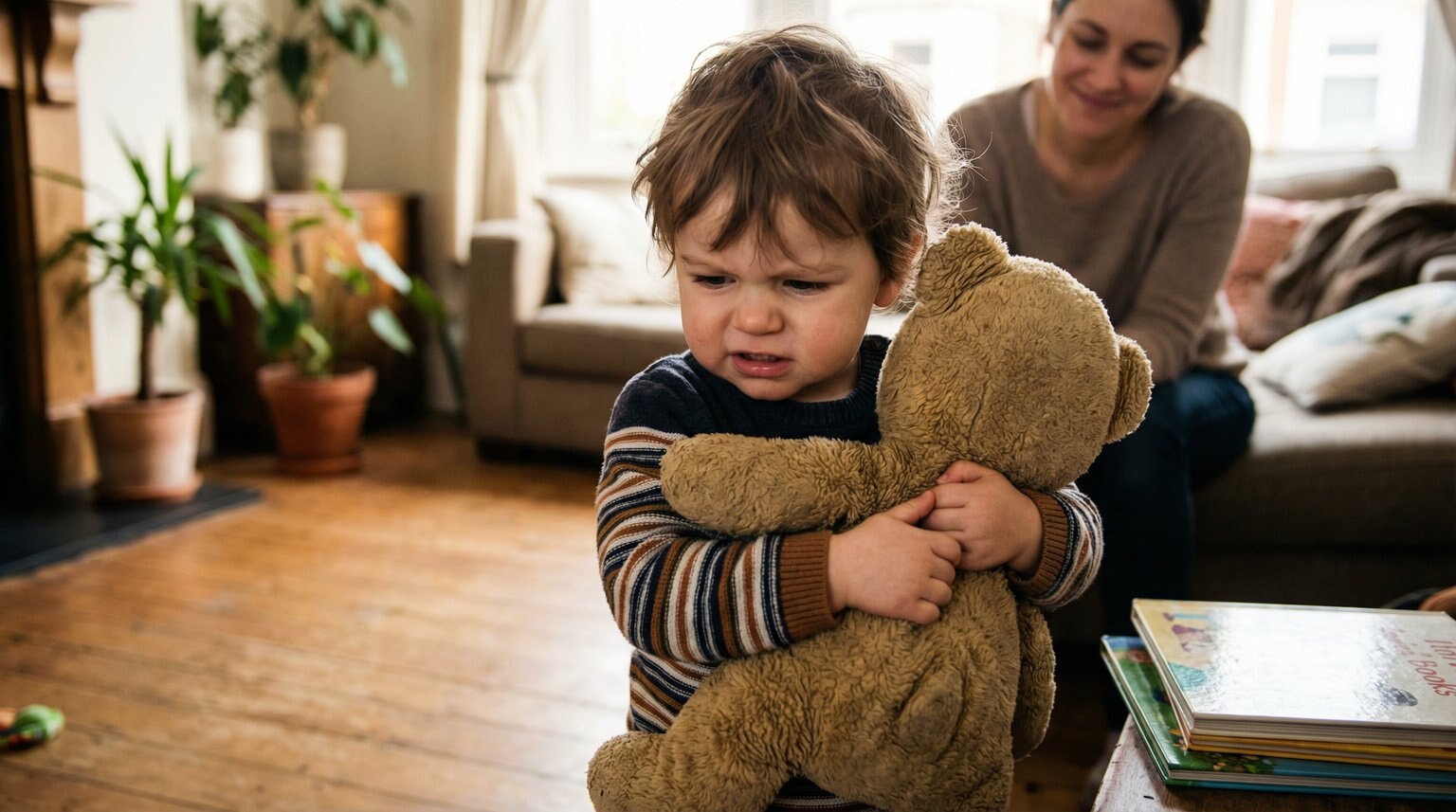
When my fourth child started shrieking “MINE!” at 16 months, I remember thinking we were in trouble. Turns out, I had it backwards.
The word “mine” signals a cognitive achievement, not a behavior problem. Children must understand ownership before they can choose to share. Research published in Infant Behavior and Development (2024) found that empathic concern shows “pronounced developmental growth between 10 and 18 months,” with a key shift happening around 18 months when children’s own distress at others’ crying decreases while their concern for others increases.
This is the beginning of empathy—but it’s not sharing yet. Your 18-month-old might hand you a toy, then immediately want it back. In my house, this looks like a constant loop: give, grab, tears, repeat. Completely normal.
2-3 Years: Turn-Taking Training Wheels
The Raising Children Network (2023) puts it bluntly: “Your 2-year-old probably doesn’t understand sharing.”
But here’s the good news: “By 3 years, many children are beginning to understand about turn-taking and sharing.”
Note the word “beginning.” At this stage, turn-taking works—but only with heavy adult involvement. You’re essentially serving as their external brain, narrating: “Now it’s your turn… now it’s Emma’s turn… see how she’s waiting?”
I’ve found timers incredibly helpful here. Not because my 2-year-old understands the concept of time, but because the beep gives them something concrete. The toy will come back when the bell rings. That predictability makes letting go slightly less terrifying.
3-4 Years: The Math Starts Working
Around age 3, something shifts. Children begin understanding that sharing means everyone gets something—a basic fairness concept.
But here’s the reality check: research across 12 countries found that the most common amount shared by 3-4 year olds was zero. A 2021 study published in Cognition documented that 3-year-olds shared an average of 2.48 stickers out of 10, while 5-year-olds shared 3.54.
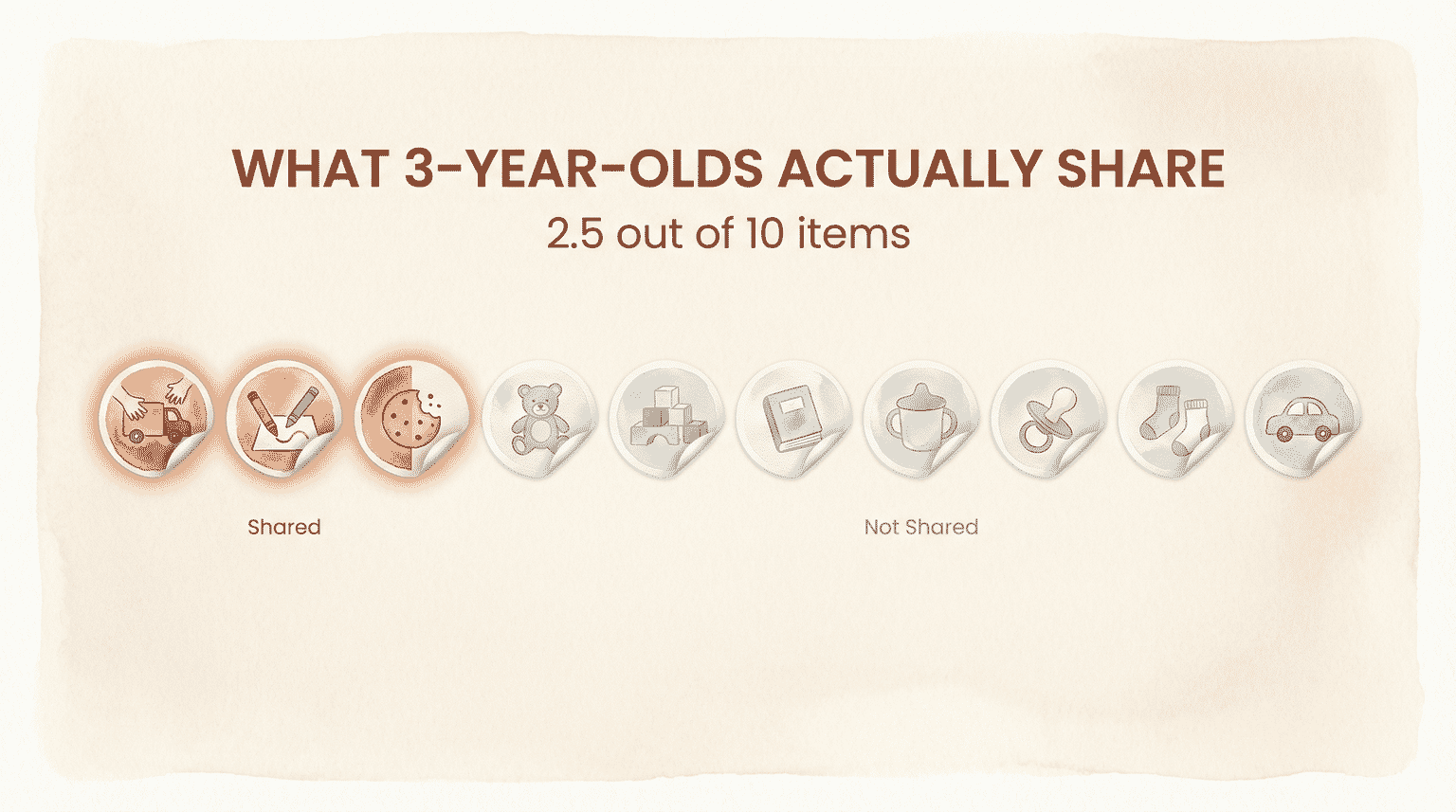
Your 3-year-old understanding that sharing is “fair” and your 3-year-old actually doing it are two very different things. The gap between knowing and doing is developmentally normal.
4-5 Years: Fairness Gets Real

This is where Theory of Mind really comes online. Research on preschoolers ages 4-6 shows that children with higher Theory of Mind abilities share more and demonstrate greater fairness in resource distribution. They can now genuinely understand that giving something away will make another person feel good—and that matters to them.
By 5, many children show genuine empathy and develop real friendships. They care about what friends think and share better than ever before, though they may still struggle to prioritize others’ needs above their own.
5+ Years: Intentional Generosity
Something beautiful happens around age 5 and beyond: sharing becomes a choice rather than a requirement. Children at this age begin sharing based on fairness understanding—they want things to be equal. Cross-cultural research shows 8-year-olds share approximately 4 out of 10 resources, with a stronger fairness norm emerging.
Older children also start considering more complex factors: reciprocity, friendship, and whether someone “deserves” to receive. Sharing becomes sophisticated. For parents focused on the long game, this is when you can start thinking about raising generous children who give intentionally.
Turn-Taking vs. True Sharing: Know the Difference
Parents often conflate these, but they’re different skills with different timelines.
Turn-taking means temporarily giving up an item with the expectation of getting it back. One person plays, then the other. The toy comes back.
True sharing means simultaneously using something together or giving something away without expectation of return.
Turn-taking is cognitively simpler—and develops first. With heavy adult support, most 2-3 year olds can manage turn-taking. True sharing requires understanding fairness and typically doesn’t emerge until 3.5-4 years.
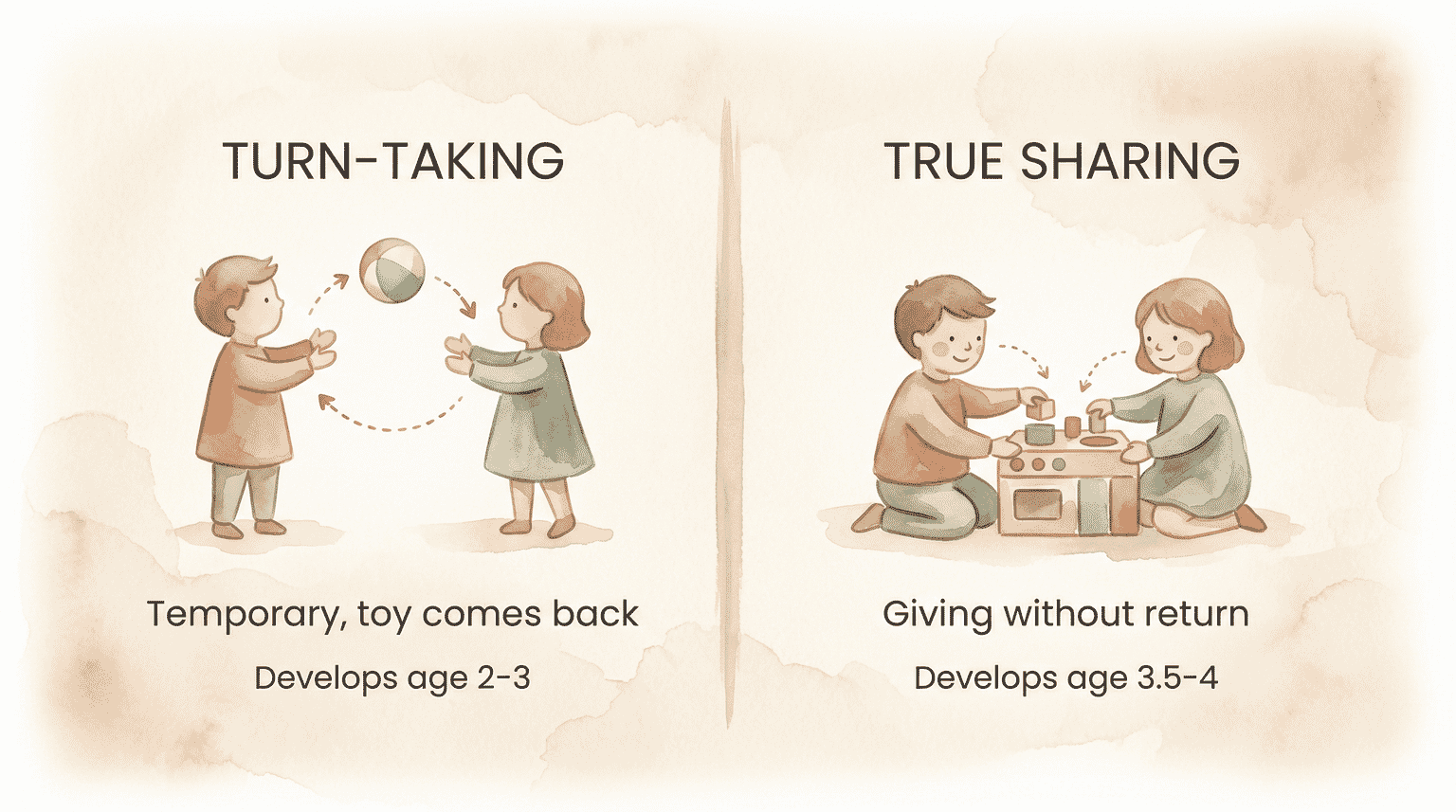
In my house, I frame almost everything as turn-taking for the under-3 crowd. “You can have it back” is magic words.
Why Forcing Sharing Backfires
Here’s where the research genuinely surprised me.
The Raising Children Network states directly that “consequences for not sharing probably won’t help your toddler learn to share.” When the brain isn’t ready, punishment just creates shame and confusion without building the skill.
But here’s the counterintuitive finding that changed how I respond in the moment: a study found that children share more when acting spontaneously than after deliberation. Kids in time pressure conditions shared significantly more stickers (average 3.65) than kids given time to think (average 2.69).
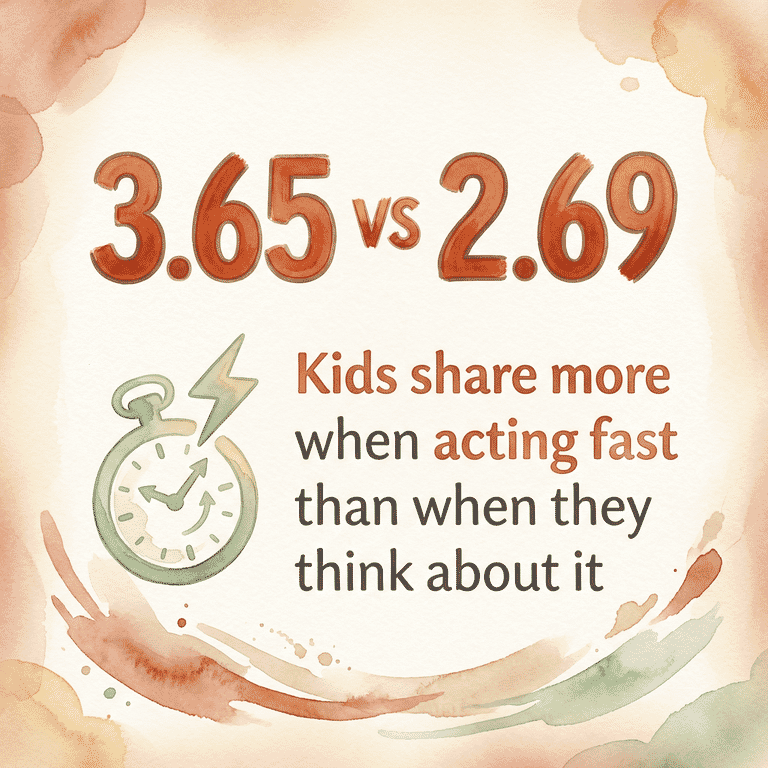
What does this mean practically? Stop making them “think about it.” The more you pause and lecture, the less likely they are to share.
If sharing is going to happen, it happens fast—or it doesn’t happen at all. Trust their instincts rather than forcing deliberation.
What Actually Helps (By Age)
Before Age 3: Model, Don’t Mandate
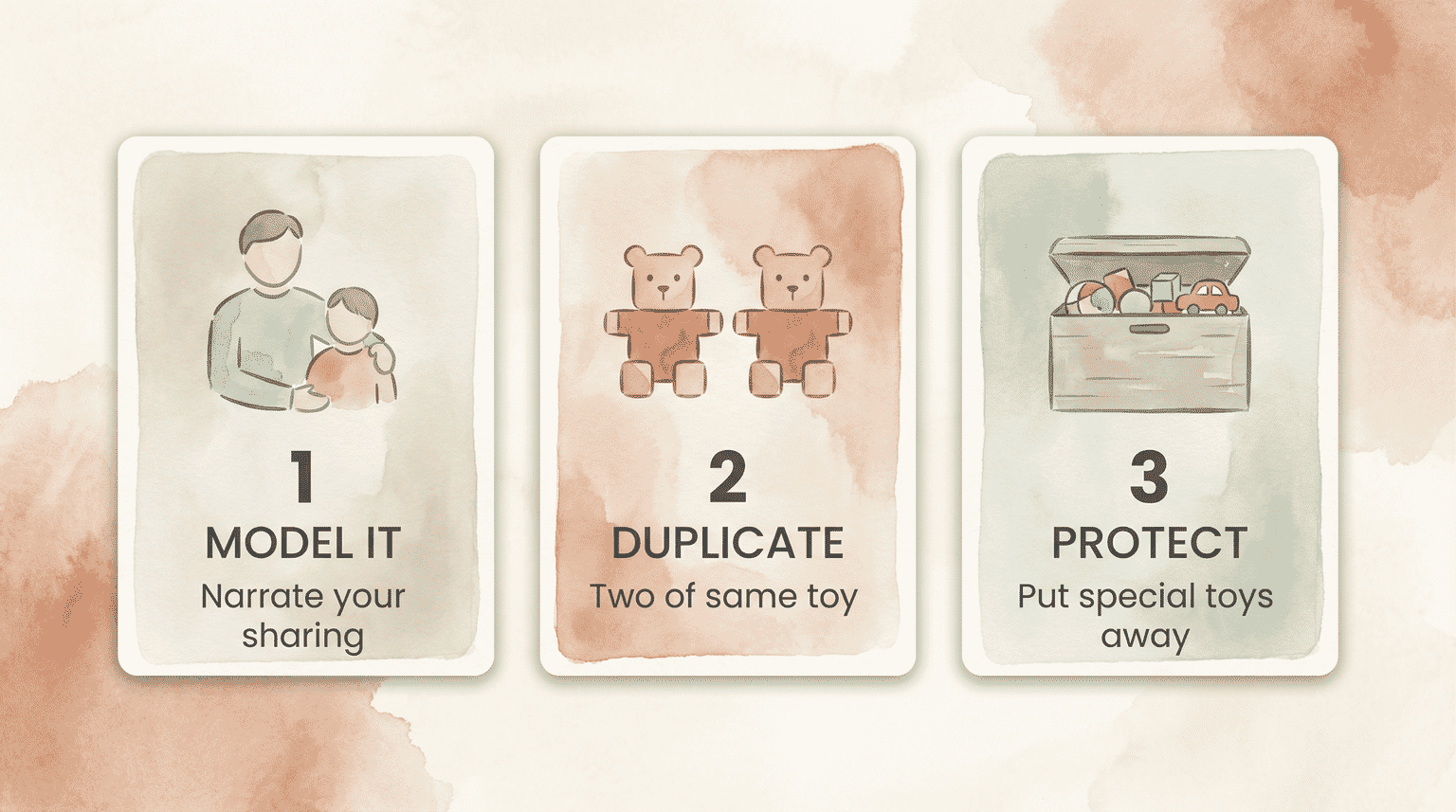
- Narrate your own sharing: “I’m sharing my apple with Daddy. Now we both have some!”
- Play give-and-take games: Simple games of passing objects back and forth build the neural pathways
- Don’t expect sharing: Set up playdates with duplicate toys instead
- Put away special items: It’s okay for some toys to be off-limits before guests arrive
Harvard and MIT researchers (2022) discovered that children as young as 8-10 months understand sharing as a relationship signal. They’re watching you. What you model matters long before they can imitate.
As Dr. Kelley Yost Abrams puts it: “You are your baby’s first social experience. The relationship your baby has with you becomes the model for all future social interactions.”
Ages 3-4: Practice With Support
- Use trading as a bridge: “Would you like to trade your red car for her blue one?”
- Timers work: “When the timer beeps, it’s her turn”
- Praise attempts: “I saw you let him hold the dinosaur! That was kind.”
- Stay neutral when it fails: No shame, just try again tomorrow
Ages 4+: Build on Fairness
- Talk about feelings: “How do you think she felt when you shared?”
- Let them practice with low-stakes items: Stickers, snacks, art supplies
- Discuss what “fair” means: Different situations call for different divisions
- Point out sharing in stories and real life: “Look, those friends are sharing the swing”
Signs Your Child Is Getting Ready
Watch for these readiness indicators:
- Counting ability: Research links numerical understanding to fair sharing
- Interest in others’ emotions: “Why is she sad?”
- Spontaneous giving: Offering you a bite of their snack without prompting
- Cooperative play emergence: Moving beyond parallel play
- Language development: Vocabulary for negotiation (“How about…” “What if…”)
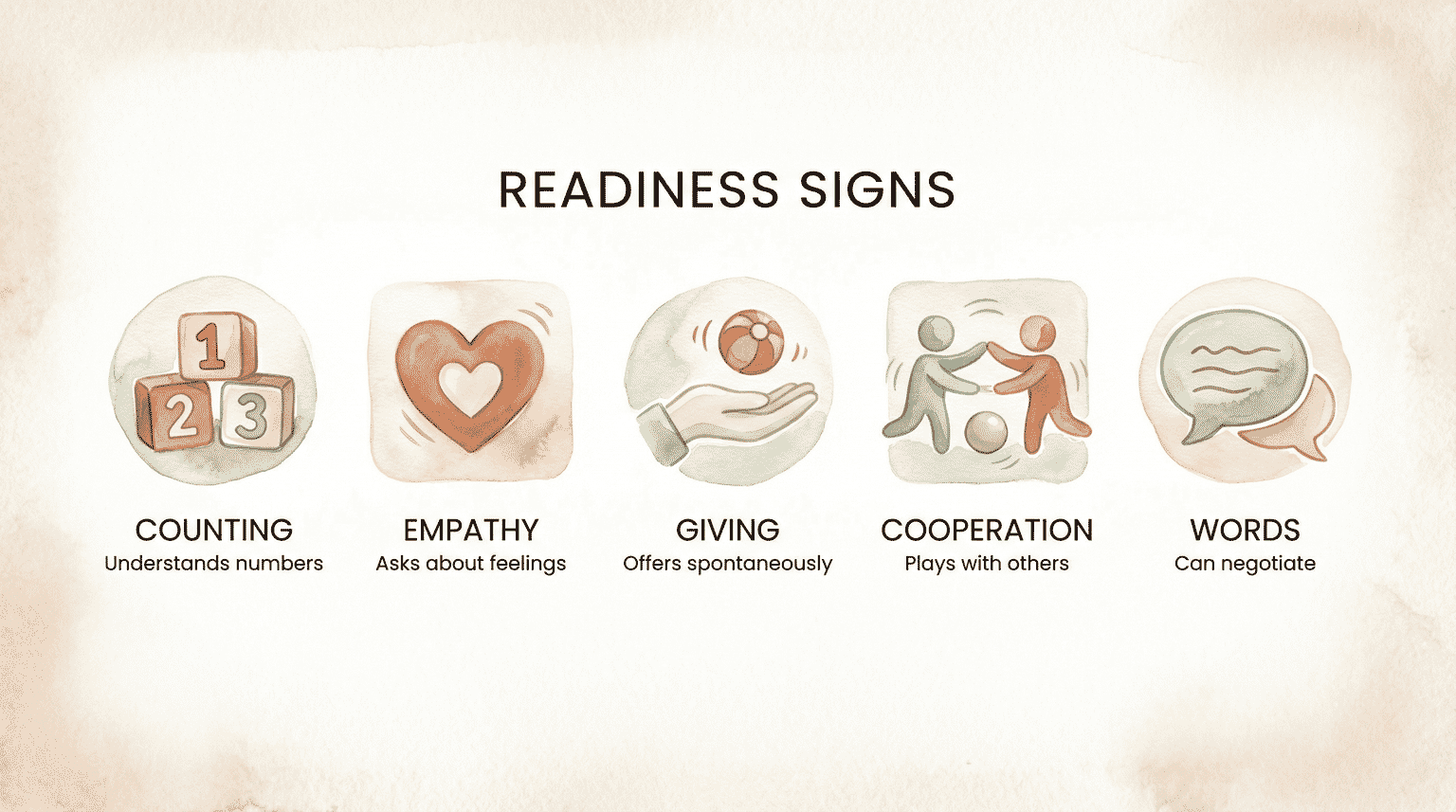
When you see these signs, your child is building the cognitive toolkit for genuine sharing. And honestly? It’s pretty exciting to watch it click into place.
Frequently Asked Questions
At what age should a child share toys?
Children typically develop genuine sharing ability between 3.5 and 4 years old. Before age 3, most toddlers lack the cognitive ability to understand sharing—their brains haven’t developed the perspective-taking skills required. Turn-taking with heavy adult support may begin around age 2, but expecting true voluntary sharing before age 3 is developmentally unrealistic.
Is it normal for a 3-year-old not to share?
Yes, completely normal. Research across 12 countries found the most common amount shared by 3-4 year olds was zero. Three-year-olds are just beginning to understand turn-taking concepts, and their brains haven’t fully developed the ability to see situations from another person’s perspective.
Why do toddlers struggle with sharing?
Toddlers struggle with sharing because their brains haven’t developed “Theory of Mind”—the ability to understand that other people have different thoughts and desires. This cognitive skill doesn’t typically develop until around age 3-4. Additionally, toddlers can’t yet delay gratification or regulate the big emotions that arise when asked to give up something they want.
Should you force a toddler to share?
No. Developmental experts advise against forcing toddlers to share because their brains aren’t ready to understand the concept. Consequences for not sharing won’t help your toddler learn—focus instead on modeling sharing, narrating turn-taking, and setting realistic expectations.
What is the difference between sharing and taking turns?
Turn-taking means temporarily giving up an item with the expectation of getting it back. Sharing means using something together or giving it away without expecting it returned. Turn-taking is cognitively simpler and develops first—around age 2-3 with adult support. True sharing requires understanding fairness and typically emerges at 3.5-4 years.
What About You?
At what age did sharing finally “click” for your child? I remember the exact moment my third kid voluntarily handed over a toy—felt like a parenting miracle. I’d love to hear when it happened for yours, and whether there was anything that seemed to help it along.
Your sharing timeline stories help other parents feel less alone in this.
References
- Raising Children Network – Sharing and Learning to Share – Australian parenting resource on developmental timeline and strategies
- Infant Behavior and Development (2024) – Research on empathic concern development in infancy
- BabyCenter (2024) – Developmental milestones for social skills
- Greater Good Science Center, UC Berkeley (2025) – Research on helping behavior in one-year-olds
- Raising Children Network (2025) – 15-18 month developmental milestones
- Cognition (2021) – Study on spontaneous vs. deliberate sharing in young children
- Harvard Gazette (2022) – Research on infant understanding of sharing and relationships

Share Your Thoughts