
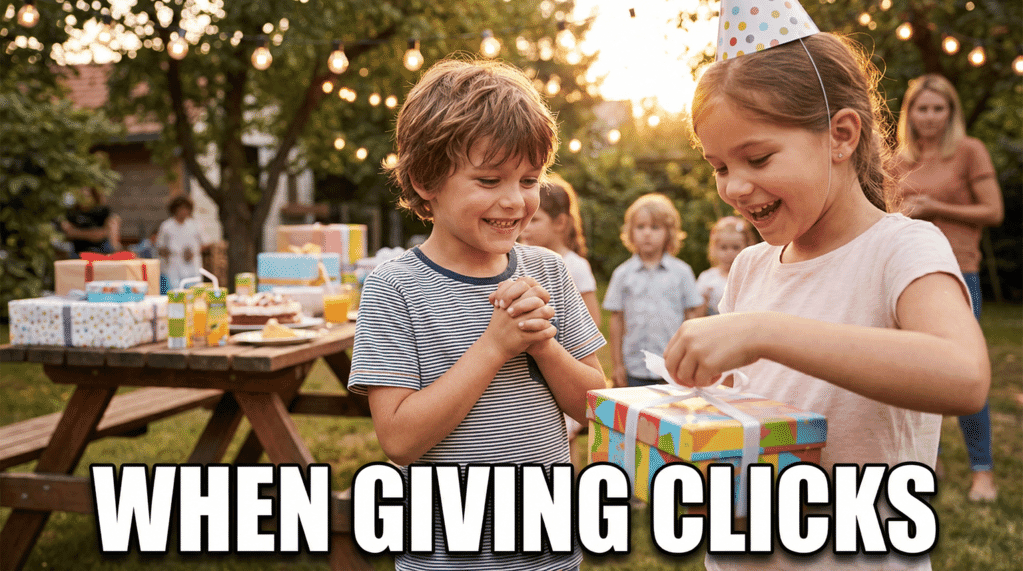
Your 3-year-old just ripped through the wrapping paper, glanced at the toy, and went back to playing with the ribbon. Meanwhile, your 7-year-old carefully selected a gift for Grandma all on her own. What changed?
Here’s the short answer: most children truly understand gift giving around age 5. That’s when they develop the cognitive ability to recognize that other people have different thoughts, feelings, and preferences than they do. Before that? They can participate in the ritual, but the deeper meaning doesn’t click yet.
Key Takeaways
- Most children truly understand gift giving around age 5 when theory of mind develops
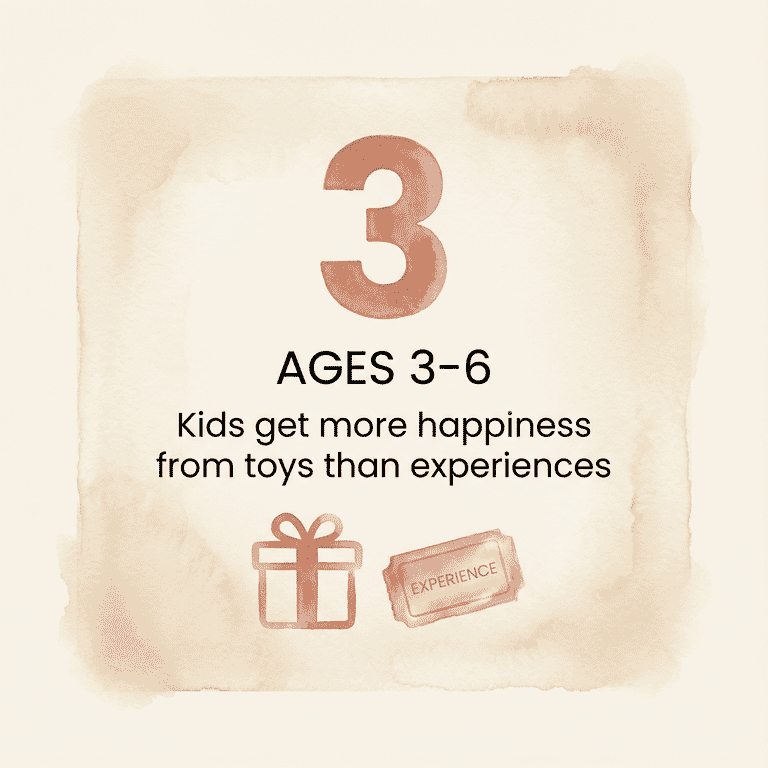
- Kids ages 3-6 get more happiness from material gifts than experiences—their brains aren’t ready for complex appreciation yet
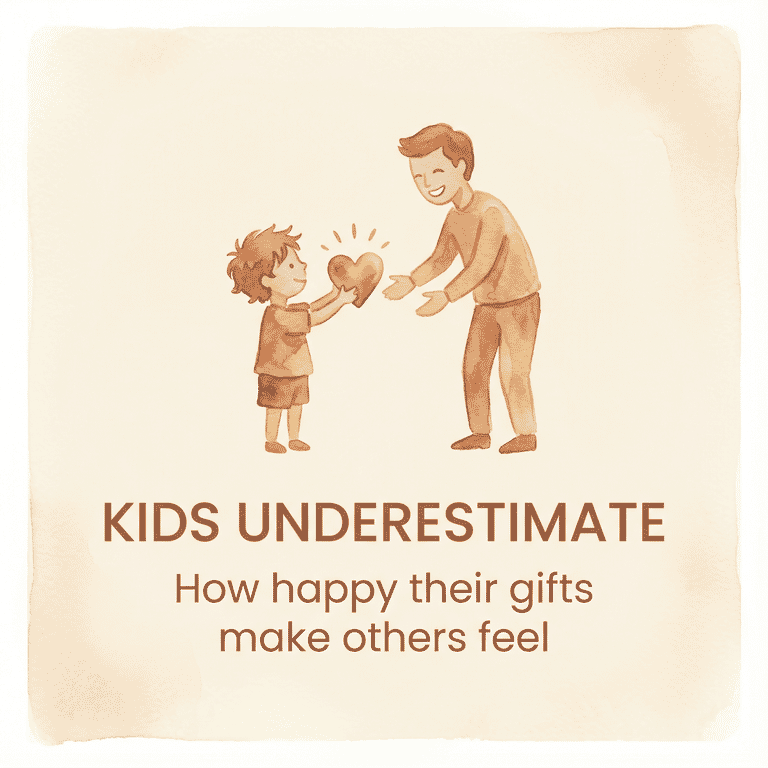
- Children consistently underestimate how happy their gifts make recipients feel
- Pointing out the recipient’s reaction builds understanding faster than lectures about generosity. (See also: when kids learn to say thank you.)
The Quick Age Breakdown
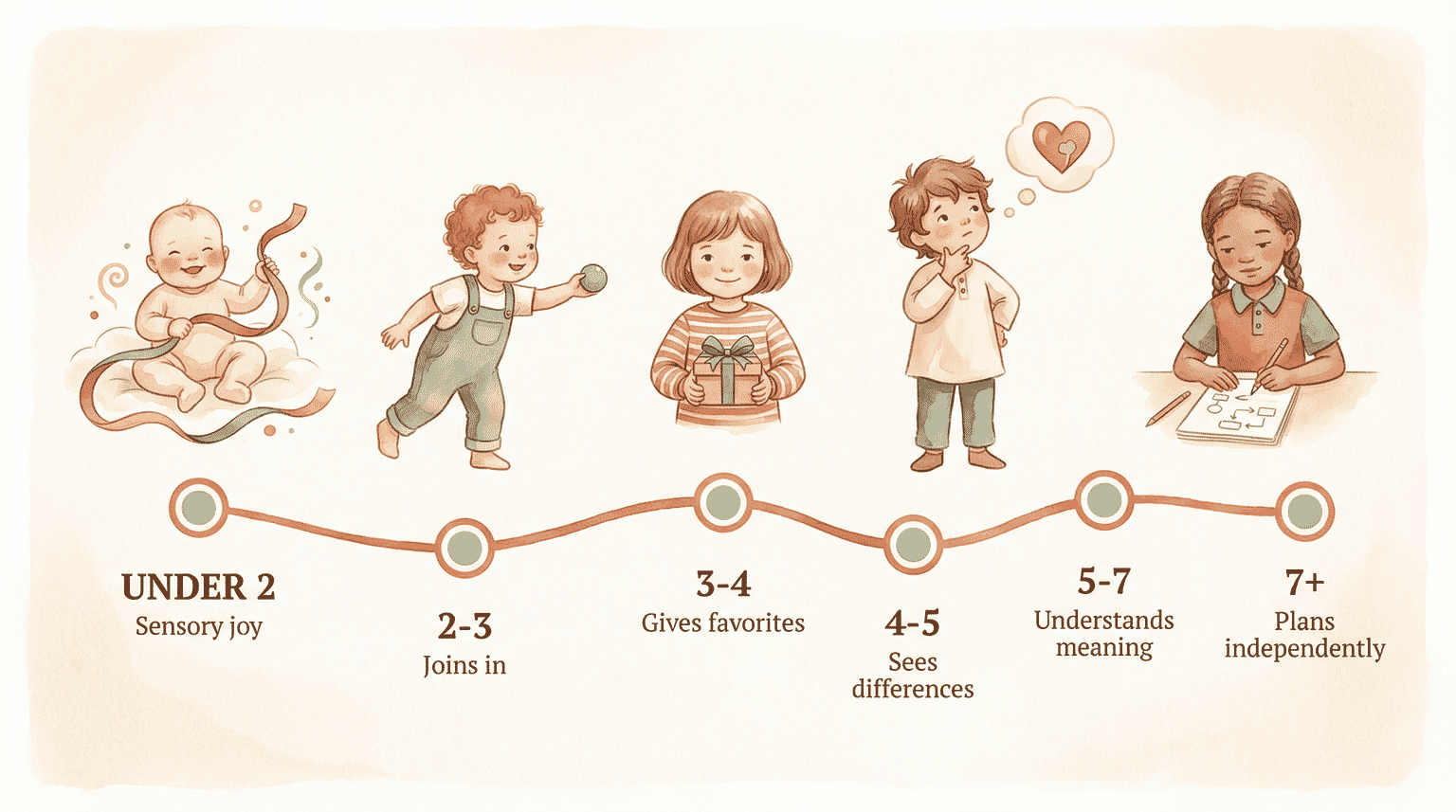
Under 2: Enjoys the sensory experience of receiving—the colors, the paper, the attention. No concept of giving or reciprocity.
Ages 2-3: Participates in gift-giving rituals but doesn’t grasp the purpose. Research shows that 2-year-olds don’t yet respond to generous acts by wanting to reciprocate—but by age 3, they do. This marks the beginning of understanding.
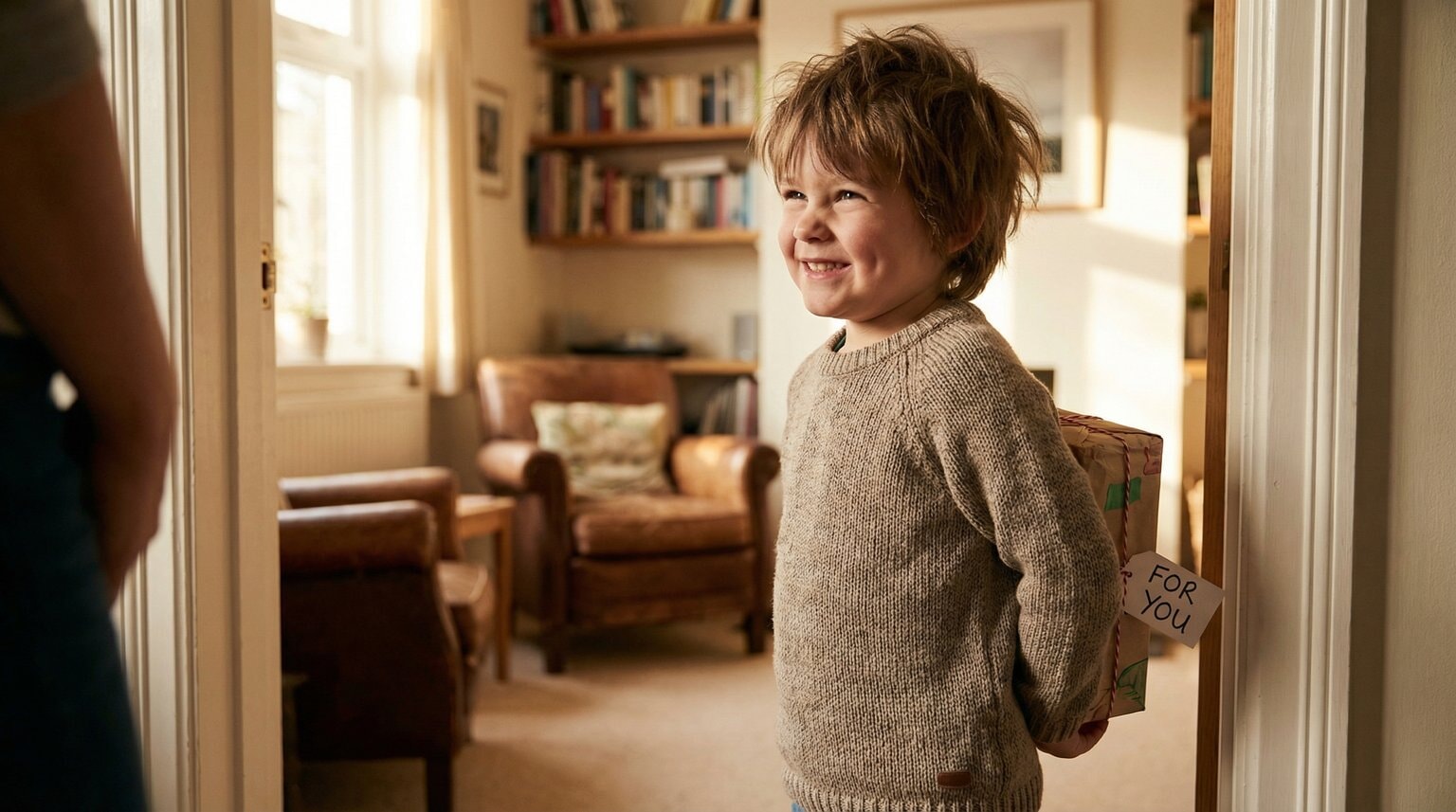
Ages 3-4: Gets that giving is an activity people do, but struggles to choose gifts others would actually like. In my house, this looks like my 4-year-old wrapping up her favorite snack for her sister, genuinely puzzled when it’s not a hit.
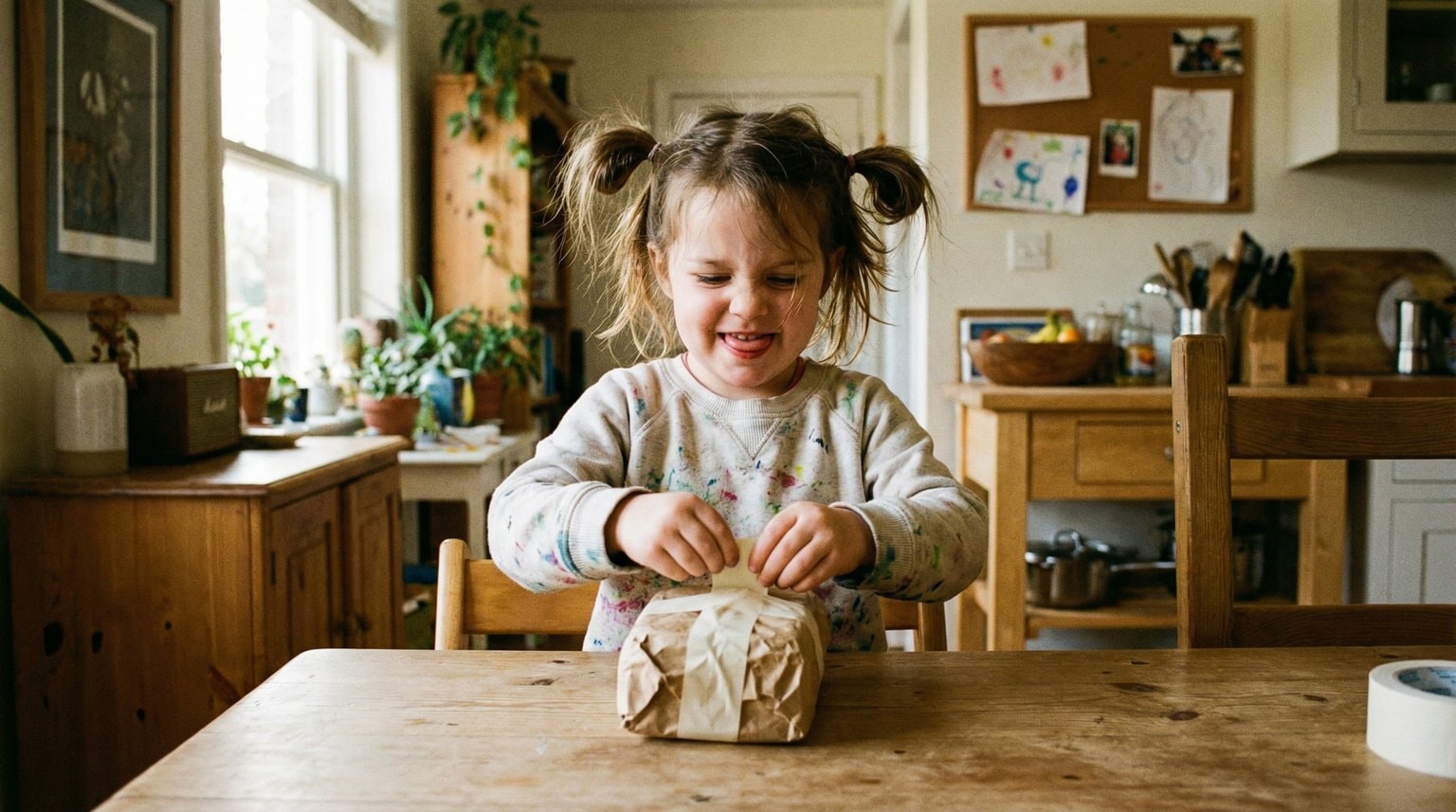
Ages 4-5: Begins grasping that others want different things. This is theory of mind developing—the foundation for meaningful gift giving.
Ages 5-7: Understands reciprocity and the emotional meaning behind gifts. Can select thoughtfully with guidance.
Ages 7+: Plans and selects gifts independently, considering the recipient’s actual interests.
Why Young Kids React the Way They Do
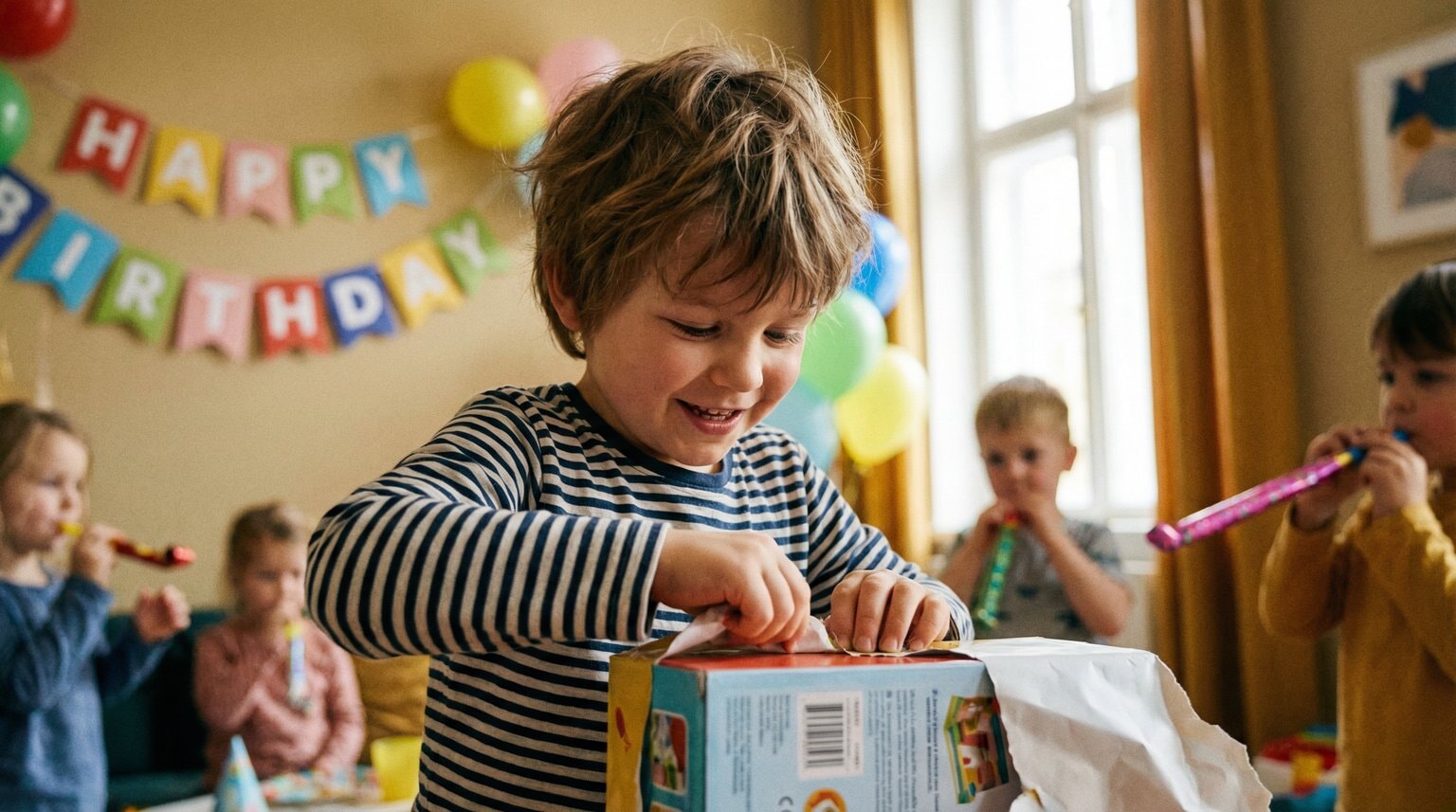
University of Chicago researchers found that children ages 3-6 get more happiness from material gifts than experiences—the opposite of adults.
“An experience is much more complex than a material good. To fully appreciate and derive happiness from experiences, children require cognitive sophistication.”
— Dr. Lan Nguyen Chaplin, University of Chicago
Translation? Your preschooler isn’t ungrateful when they fixate on the toy instead of the “experience” of the birthday party. Their brain is doing exactly what it should for their age.
This explains why that expensive trip to the zoo might get forgotten, but the small stuffed animal from the gift shop becomes a treasured companion.
For a deeper look at how children process gifts at each stage, check out the science of how children process gifts.
One Thing That Actually Helps
Here’s what I’ve learned with eight kids: don’t just tell children to give—show them the impact. Stony Brook University research found that kids consistently underestimate how happy recipients will be when they give something. They think “it’s no big deal,” while recipients feel genuinely cared for.
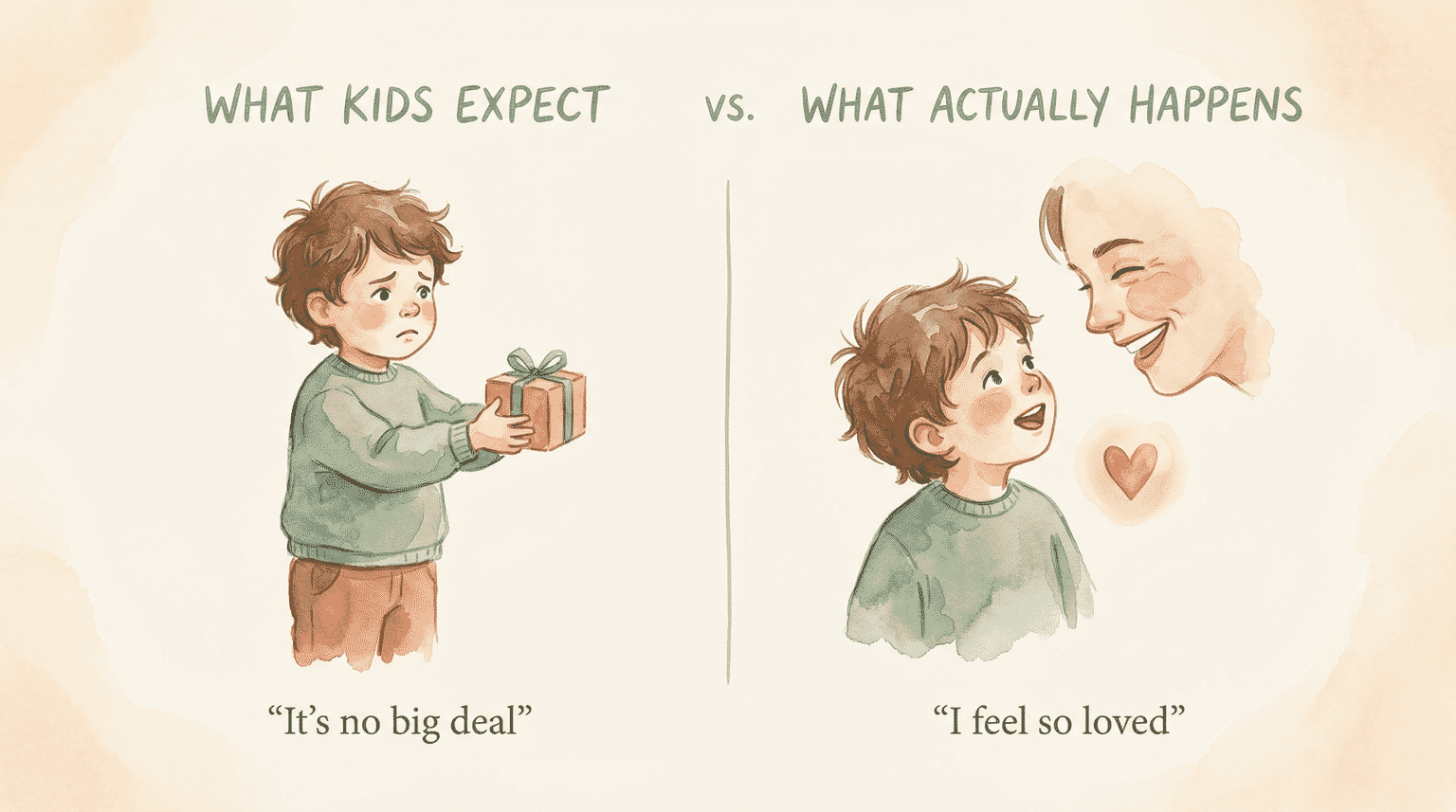
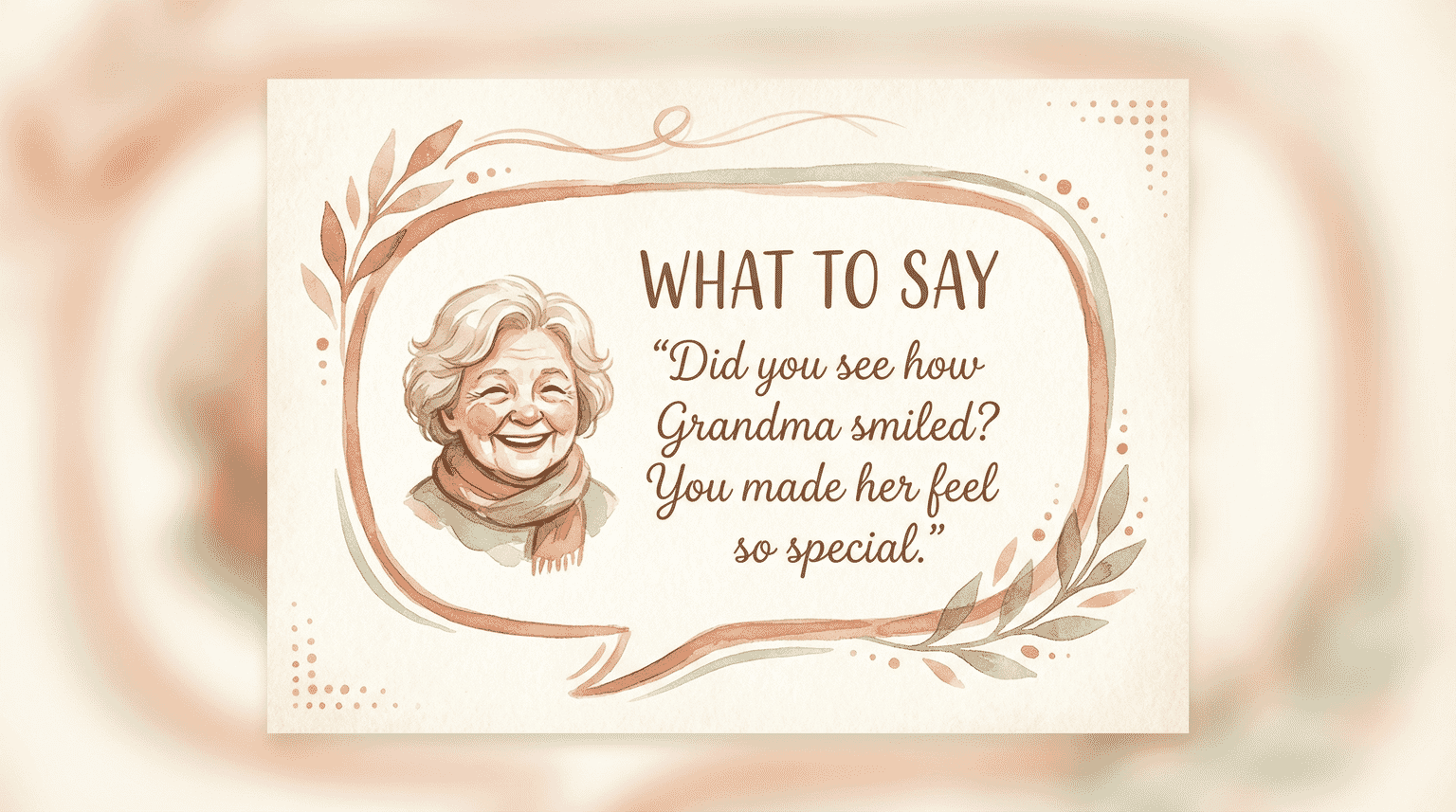
Point out the recipient’s face when your child gives something. “Did you see how Grandma smiled? You made her feel so special.” That feedback loop builds understanding faster than any lecture about generosity.
The research shows this gap between expectation and reality is consistent across ages. Children genuinely don’t realize the emotional weight their gifts carry.
When you narrate the recipient’s joy, you’re giving your child data their brain can’t collect on its own. You’re building the neural pathways for empathy and generosity.
Frequently Asked Questions
At what age do children understand gift giving?
Most children begin truly understanding gift giving around age 5, when they develop theory of mind—the ability to recognize others have different preferences than they do. Before 5, kids can participate but don’t fully grasp why we give.
When should kids start giving gifts to others?
Children can meaningfully participate starting around age 3-4 with guidance. They understand giving as an activity but may need help choosing age-appropriate gifts others would enjoy. By 7, most can plan and select independently.
Over to You
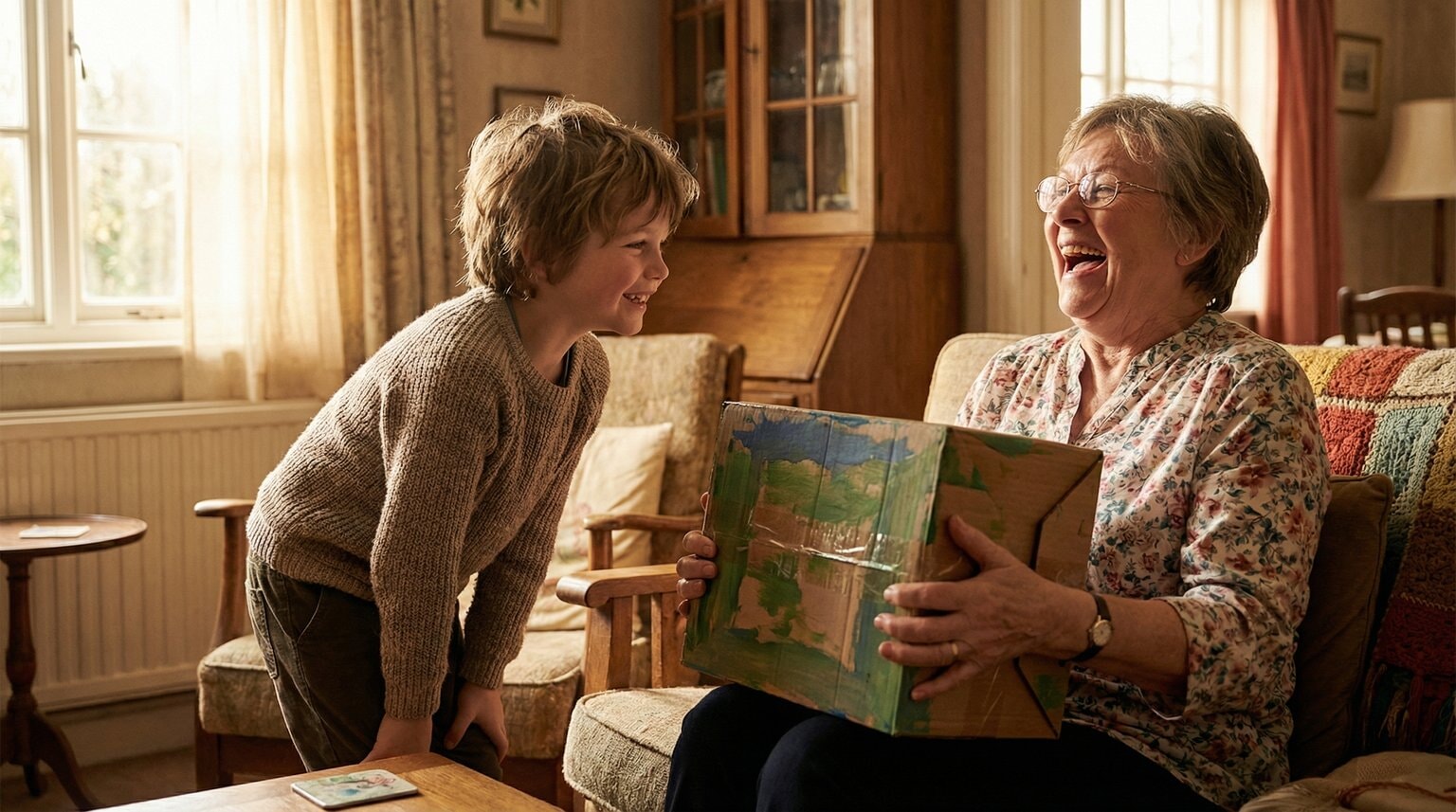
When did gift-giving “click” for your child—when they actually got excited about giving, not just receiving? That shift is one of my favorite parenting moments to witness. I’d love to hear what age it happened and what triggered it.
Your stories help other parents know what to expect at each age.
References
- University of Chicago Study on Children and Material Gifts – Research on how children ages 3-17 experience happiness from gifts vs. experiences
- Stony Brook University Research on Kindness in Children – Study on how children perceive their own acts of giving
- Parenting Science Guide to Friendship Development – Research-based overview of reciprocity development in children

Share Your Thoughts