
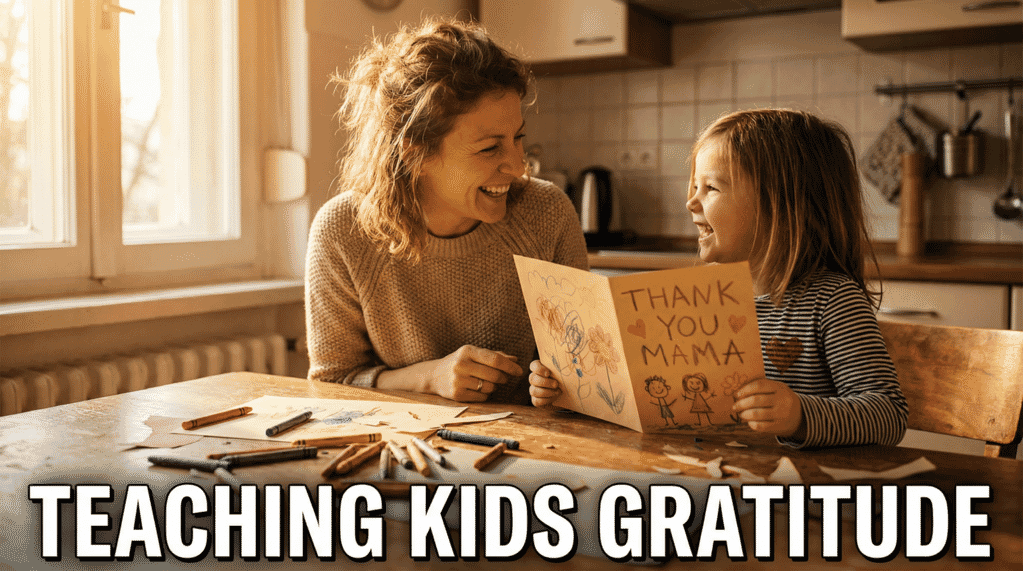
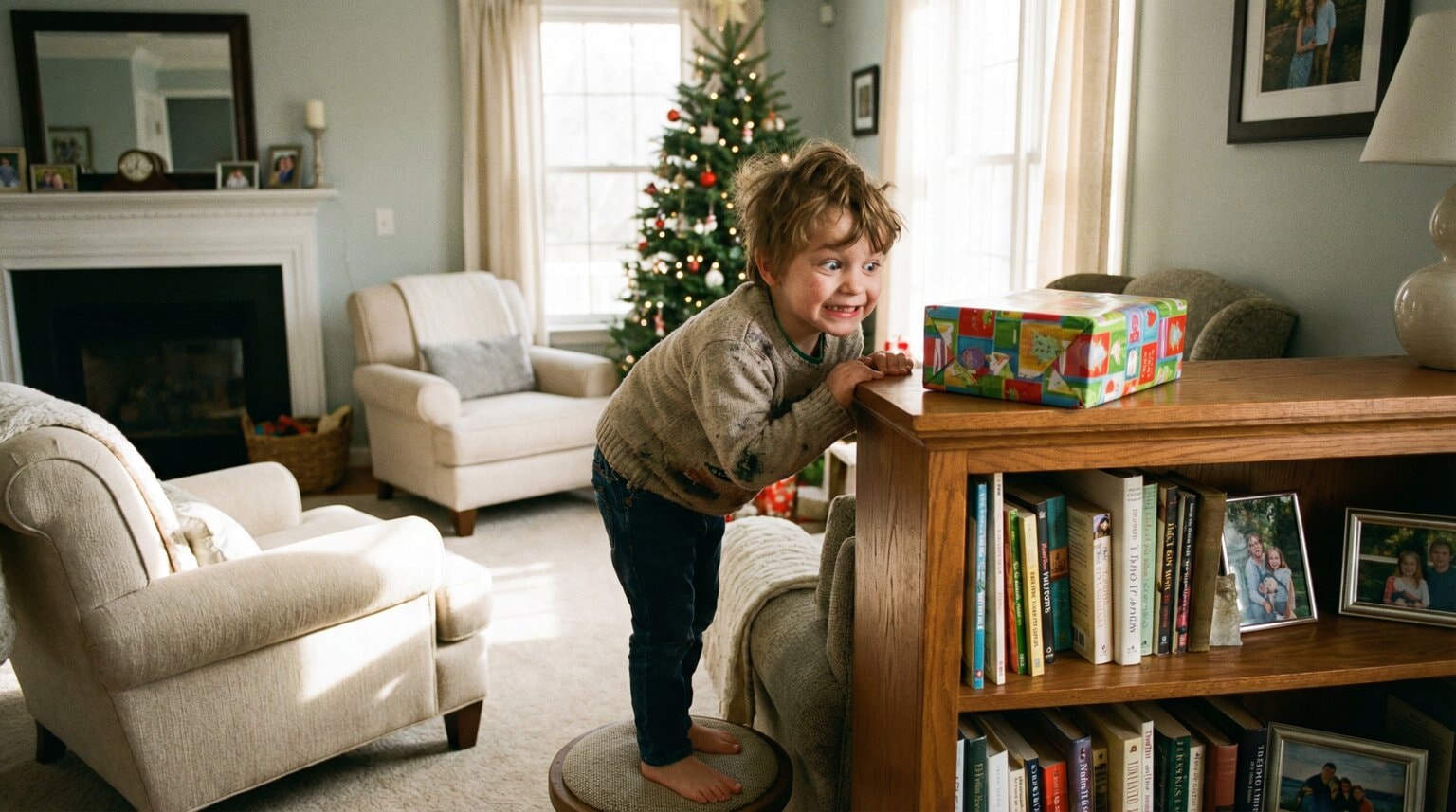
Your 3-year-old just ripped open a birthday gift, squealed with delight, and ran off to play—without a single “thank you.” You’re mortified. Grandma’s watching. But here’s what I’ve learned after eight kids and a lot of digging into the research: what’s happening is probably exactly what should be happening.
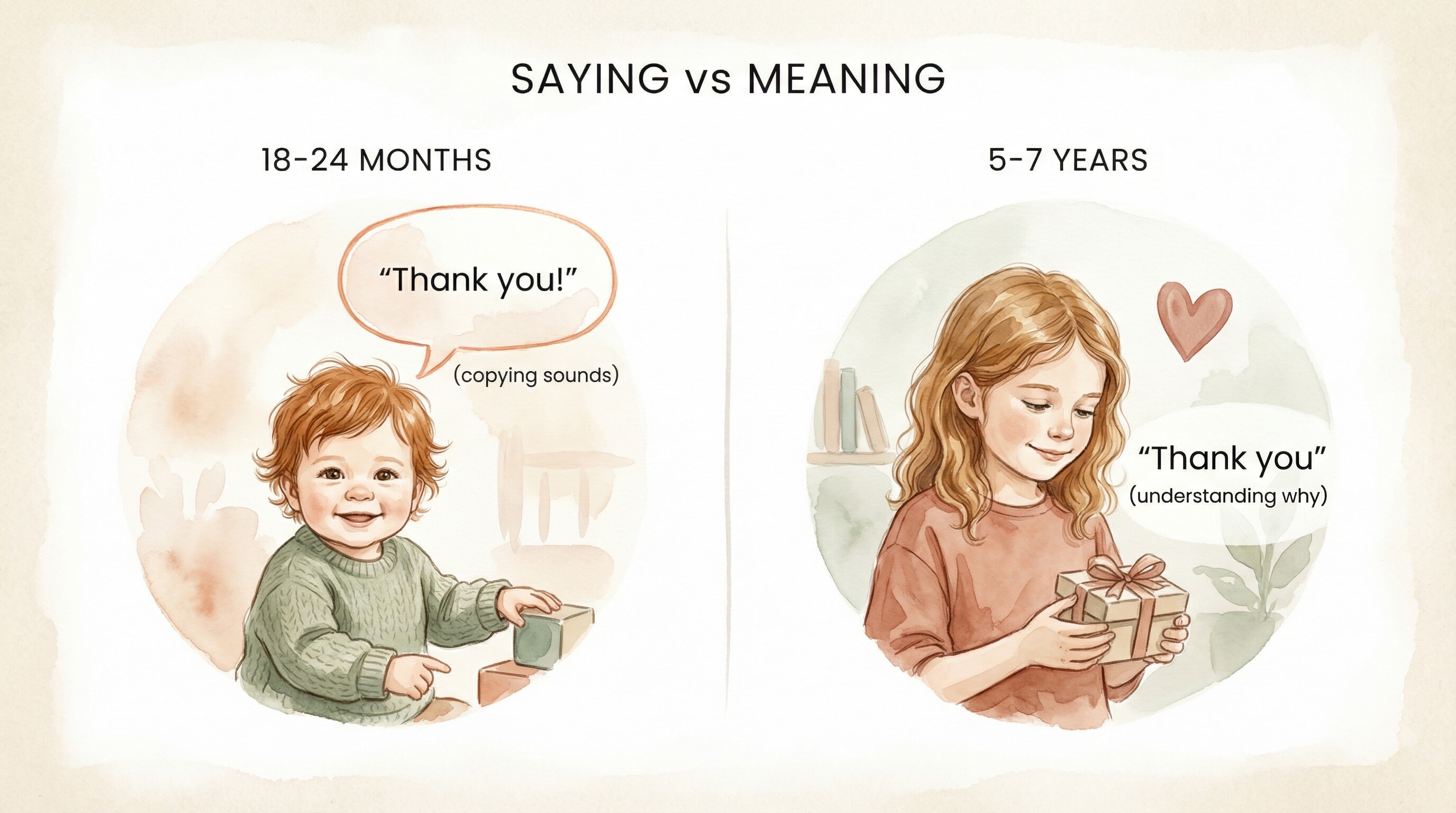
Children typically start saying “thank you” through imitation around 18-24 months. However, genuine understanding—grasping why we thank others—develops around ages 5-7 when perspective-taking abilities emerge. Consistent, unprompted thank-yous usually appear between ages 7-10.
Key Takeaways
- Toddlers saying “thank you” at 18-24 months are mimicking sounds, not expressing genuine gratitude
- True understanding of gratitude requires perspective-taking abilities that develop around ages 5-7
- Ask “How did that make you feel?” instead of “What do you say?” to connect emotion to gratitude
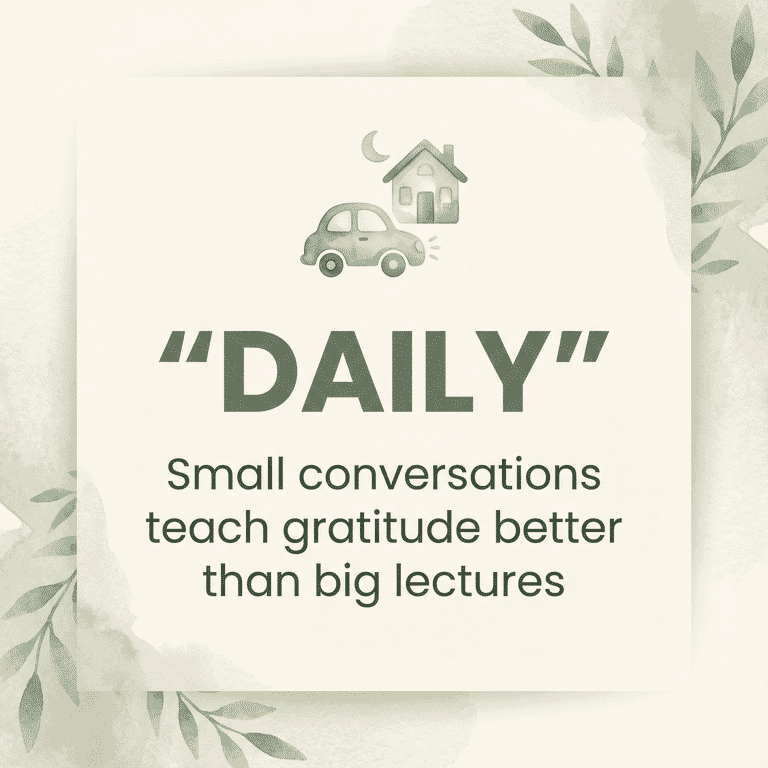
- Daily small conversations teach gratitude more effectively than big sit-down lectures. (When ready, try the 3-sentence thank you.)
The Two Phases Every Parent Should Know
Here’s what my librarian brain couldn’t let go: there’s a huge difference between saying thank you and meaning it. And most parenting advice completely ignores this distinction.
Phase 1: The Mimicking Stage (18-24 months)
Medical developmental guidelines confirm that toddlers learn to say “thank you” as social mimicry during this window. They’re copying what they hear—like little parrots. My 2-year-old says “thank you” when I hand her a cracker because she’s heard it a thousand times. She has zero idea why.
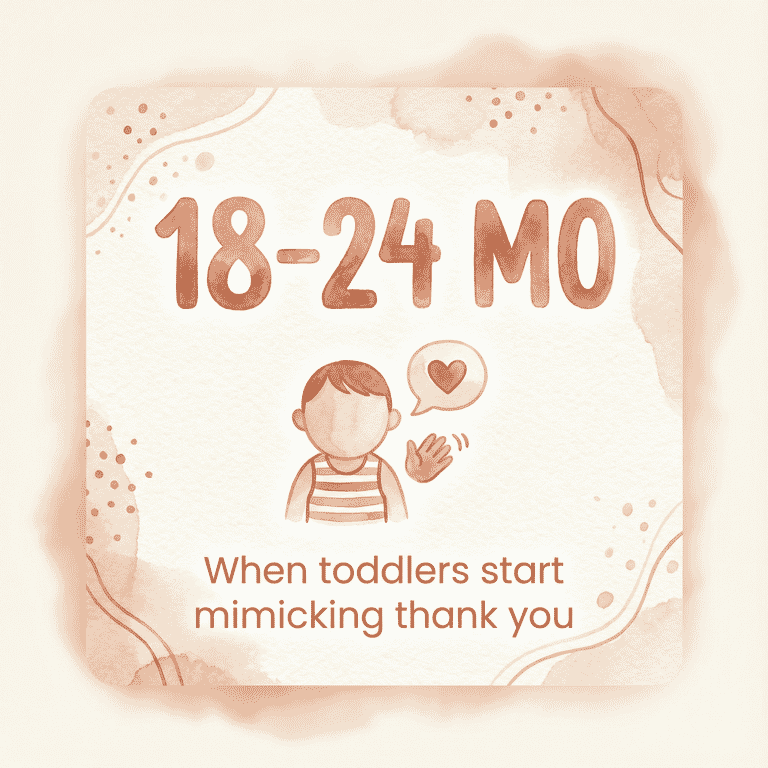
This mimicking stage is completely normal and actually an important first step. Your toddler is learning the social script even if the meaning hasn’t clicked yet.
Think of it like learning to wave goodbye. The gesture comes first. Understanding that it means “I’ll miss you” comes much later.
Phase 2: The Understanding Stage (5-7 years)
Research from UNC-Chapel Hill’s Raising Grateful Children project found something fascinating: kids as young as 6 can recognize the difference between saying “thank you” and meaning it. They’ll actually say things like, “She said thank you, but she didn’t mean it.” They get the concept—even if they can’t consistently apply it themselves.
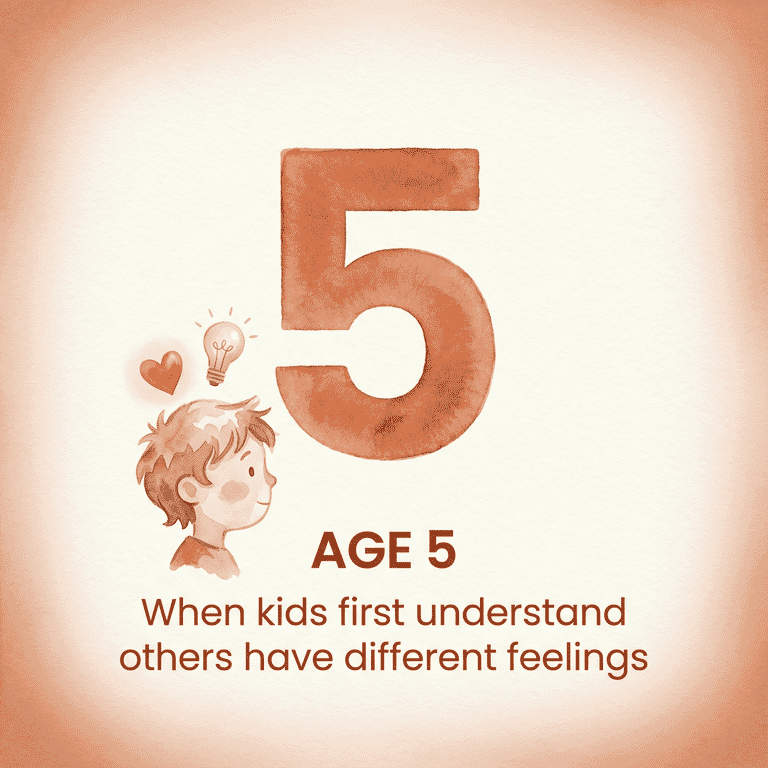
This tracks with what Greater Good Science Center researchers explain about theory of mind developing around age 5. That’s when children start understanding that others have unique thoughts and feelings—the cognitive foundation genuine gratitude requires.
What’s Actually Realistic By Age
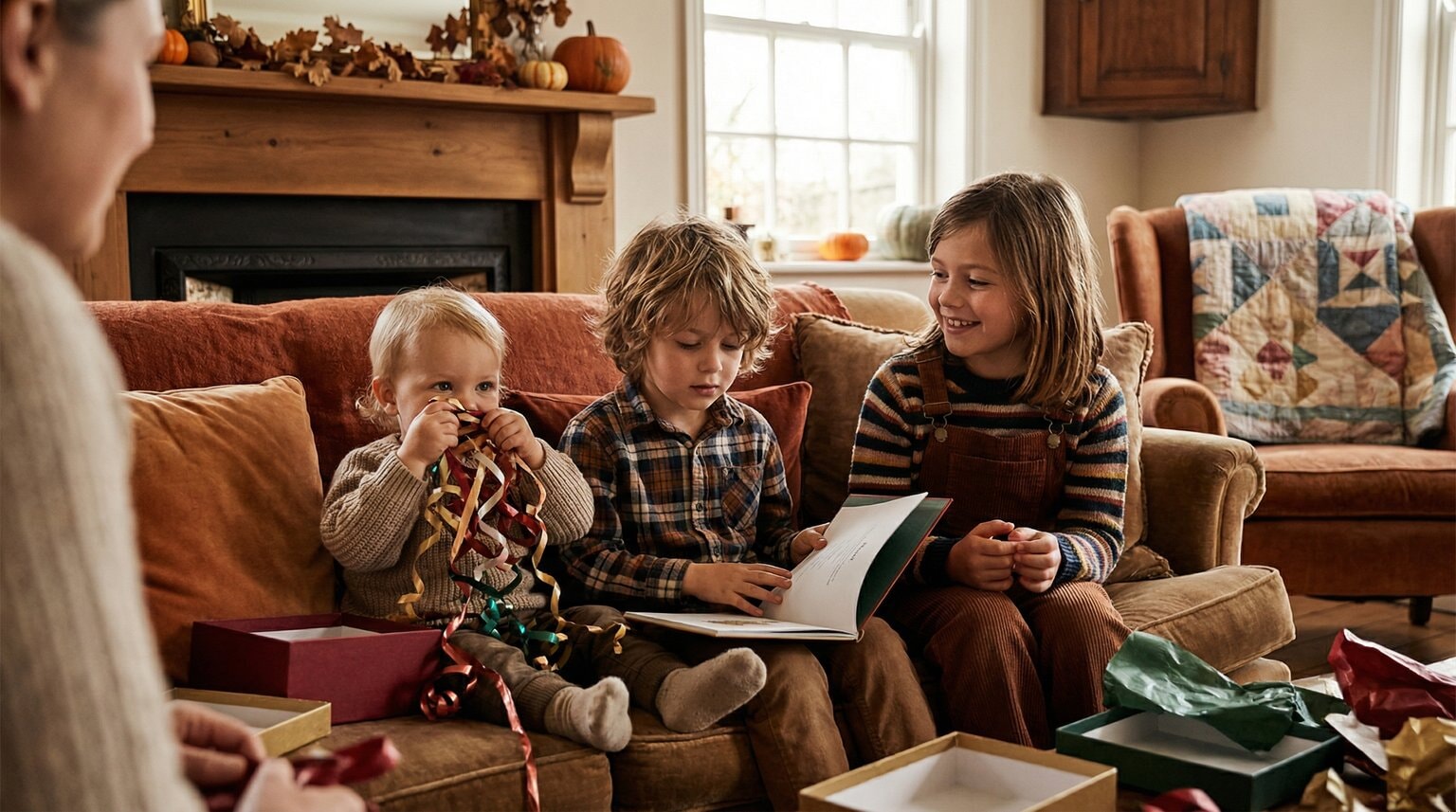
I’ve watched this unfold eight times now. Here’s what to expect:
- Ages 2-4: Prompted thank-yous. Completely normal. They’re learning the script, not the meaning.
- Ages 5-7: Emerging understanding. They’re starting to connect gratitude to why someone did something kind.
- Ages 7-10: Reliable expression. This is when research shows children can genuinely experience and express gratitude consistently.
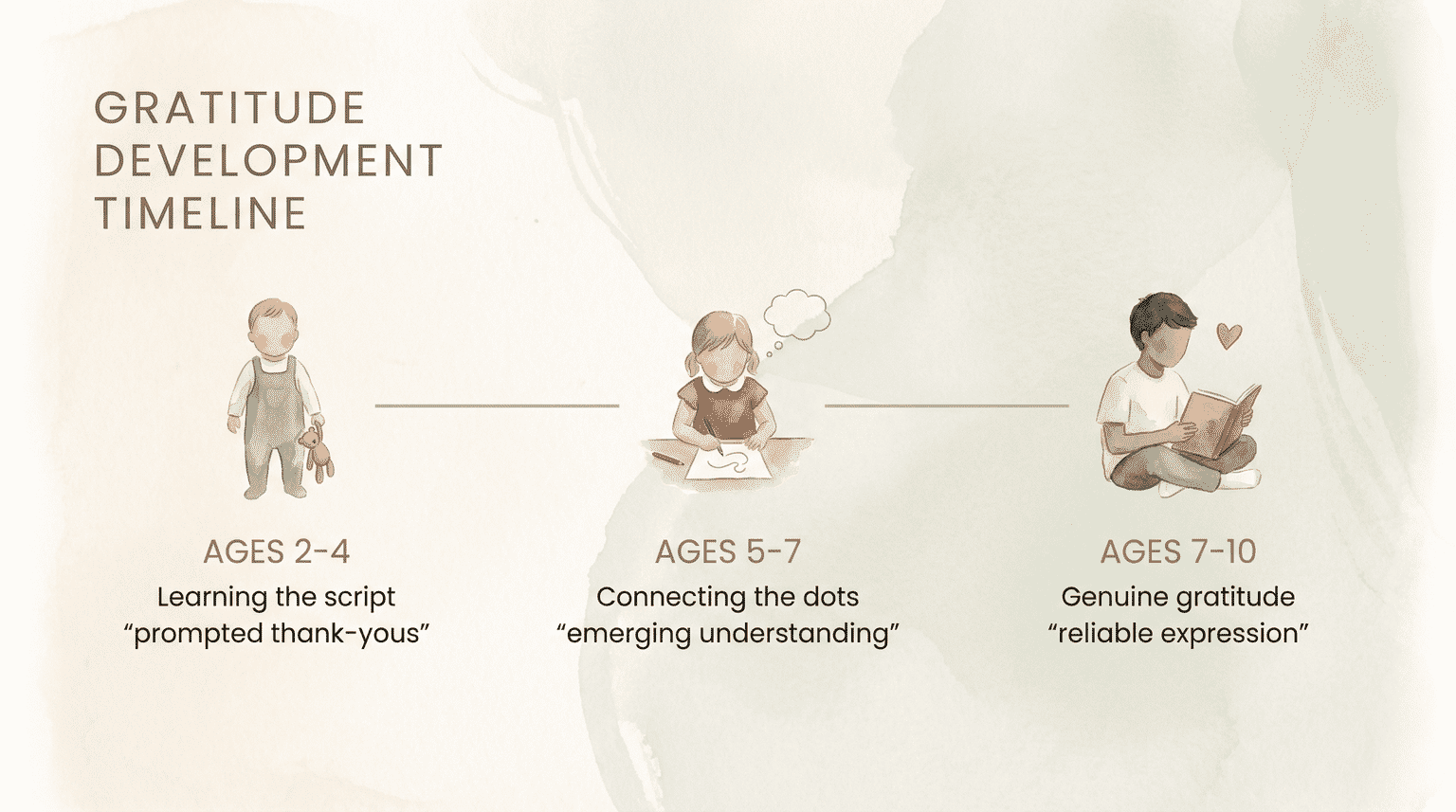
So yes, it’s completely normal for your 3-year-old to forget. The brain regions involved in gratitude are literally still developing.
Around age 5, something shifts in your child’s brain. They begin to understand that other people have different thoughts and feelings than they do.
This milestone—called theory of mind—is the foundation for genuine empathy and gratitude. Without it, “thank you” is just sounds without meaning.
One Better Approach Than “What Do You Say?”
Johns Hopkins’ Dr. Jennifer Katzenstein recommends a simple shift that changed how I handle this in my house:
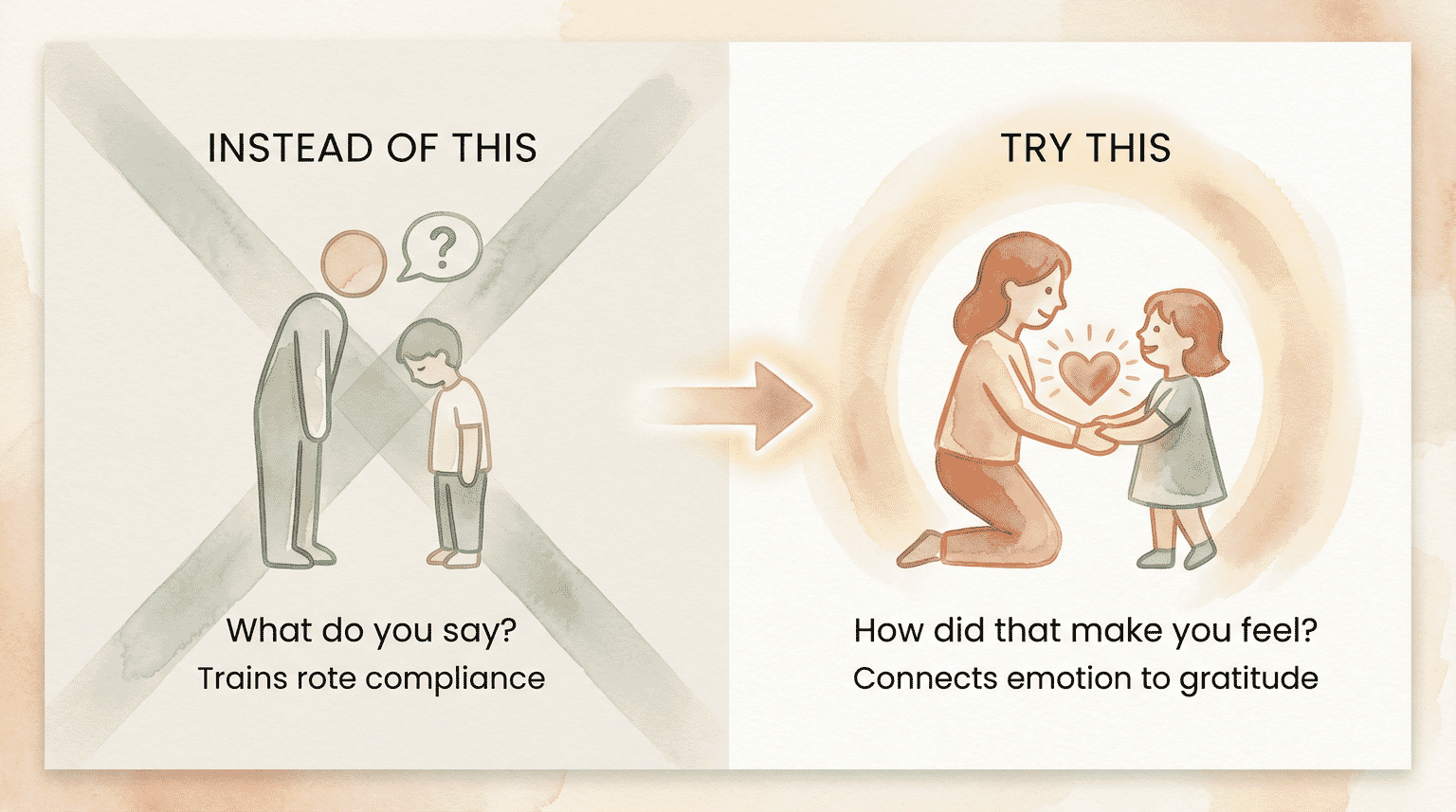
Instead of prompting “What do you say?”—try asking “How did that make you feel?”
This connects the emotion of gratitude to the words, rather than training rote compliance. It’s also the foundation for the psychology behind gift-giving and eventually raising generous children who genuinely care about others.
The research backs up this approach in everyday moments too.
“We think a lot of gratitude lessons are learned in daily conversations, rather than big, sit-down, let’s-instill-a-virtue discussions.”
— Andrea Hussong, Professor at UNC-Chapel Hill
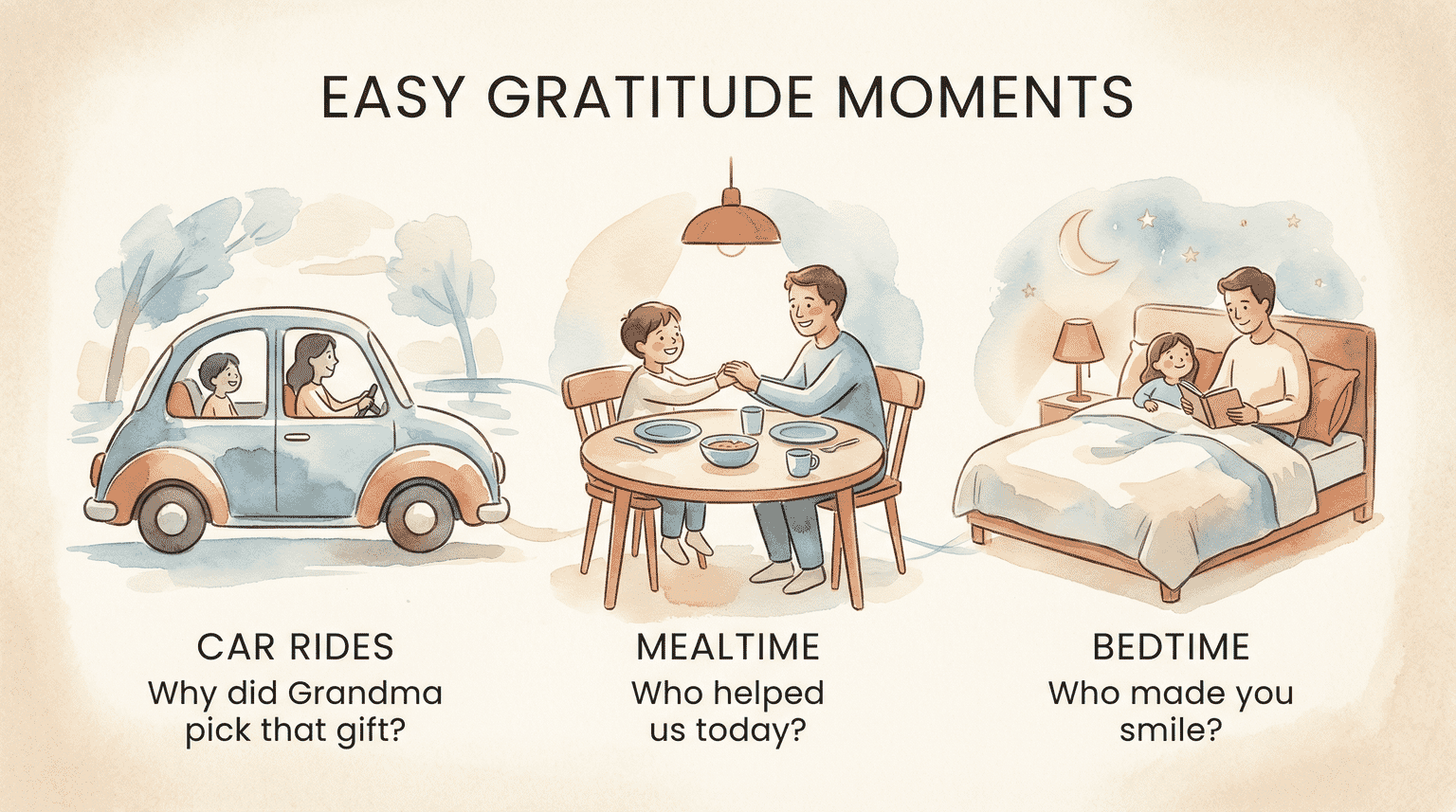
In my house, this looks like car-ride chats about why Grandma chose that particular gift, or bedtime reflections on who made us smile that day. Small moments. No lectures.
The best part? These micro-moments don’t require any extra time. You’re already in the car. You’re already doing bedtime.
Just slip in one simple question: “Who was kind to you today?” or “What made you feel happy?” The seeds get planted without anyone feeling lectured.
The research is clear: model it, don’t force it. Your toddler is watching you thank the grocery clerk. That matters more than any prompted performance.
Share Your Story
What’s your approach to thank-yous—do you prompt, wait it out, or something in between? I’m still figuring out the balance between teaching manners and forcing empty words. Would love to hear what’s worked in your house.
Your real stories help other parents know they’re not alone in this.
References
- UNC-Chapel Hill Raising Grateful Children Project – Research on how children develop genuine gratitude
- American Psychological Association – Neuroscience of gratitude development in children
- Greater Good Science Center – Developmental timeline for gratitude expression
- Johns Hopkins Medicine – Practical strategies for teaching gratitude

Share Your Thoughts