
You’ve probably seen it happen. The wrapping paper settles like colorful snow across the living room, your child sits surrounded by a mountain of gifts, and then comes the question you were dreading: “Is that all?”
My librarian brain couldn’t let this pattern go without investigating. Turns out, research on children and consumer culture consistently shows that more gifts don’t equal more happiness—and may actually work against it. A University of Rhode Island intervention found that teaching children to distinguish between wants and needs had measurable positive effects on their wellbeing.
The problem isn’t ungrateful kids. The problem is that we’re working against brain chemistry when we pile on the presents.
That’s where gift-giving frameworks come in. These intentional structures help families step off what researchers call the “hedonic treadmill”—where new acquisitions quickly become the revised standard and stop bringing joy. As clinical case manager Krista Jarvis puts it: “The greatest gift we can give to ourselves and those we love is to be intentional about where and how we spend our precious energy.”
Key Takeaways
- The 4-gift rule (Want, Need, Wear, Read) reduces holiday overwhelm while making each gift more meaningful
- Research shows children who learn to distinguish wants from needs have higher wellbeing scores
- Multiple framework options exist—choose the one that matches your family’s values and capacity
- Start conversations early and involve kids in the process using the folded paper method

The 4-Gift Rule Explained
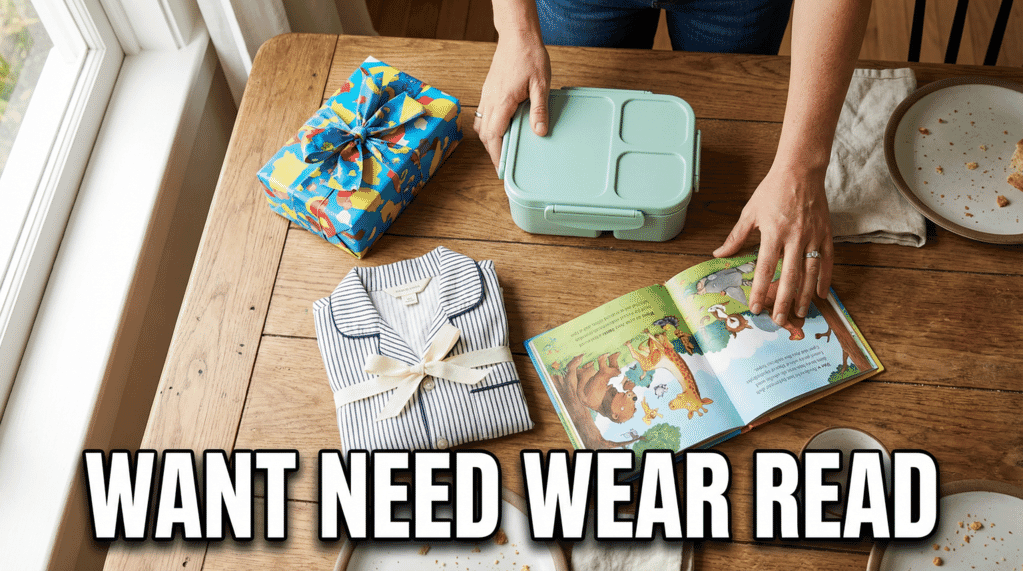
The 4-gift rule is a Christmas gift-giving framework where each child receives exactly four presents: something they want (a desired item), something they need (a practical necessity), something to wear (clothing), and something to read (a book). Research suggests that teaching children to distinguish wants from needs supports healthy development.
Here’s what each category looks like in practice:
- Want: The wish-list item they’ve been dreaming about—the toy, game, or gadget that lights up their eyes
- Need: Something practical they’d be getting anyway—new sheets, a lunchbox, art supplies for school
- Wear: Clothing they’ll actually use—cozy pajamas, a special outfit, shoes they’ve outgrown
- Read: A book matched to their interests and reading level—or one you’ll read together
What I find fascinating is how this framework has moved beyond Pinterest boards into institutional adoption. Wayne State University’s police department uses this exact structure for their annual children’s gift drive, specifically seeking “items children want, need, can wear or can read.”
As Captain Brandi Richards explains: “Helping them in this small way may pay off in bigger ways in the long run.” When a university police department adopts your parenting framework for community giving, you know it’s not just a trendy idea—it’s a structure that works across contexts.
Why Does Limiting Gifts Benefit Children?

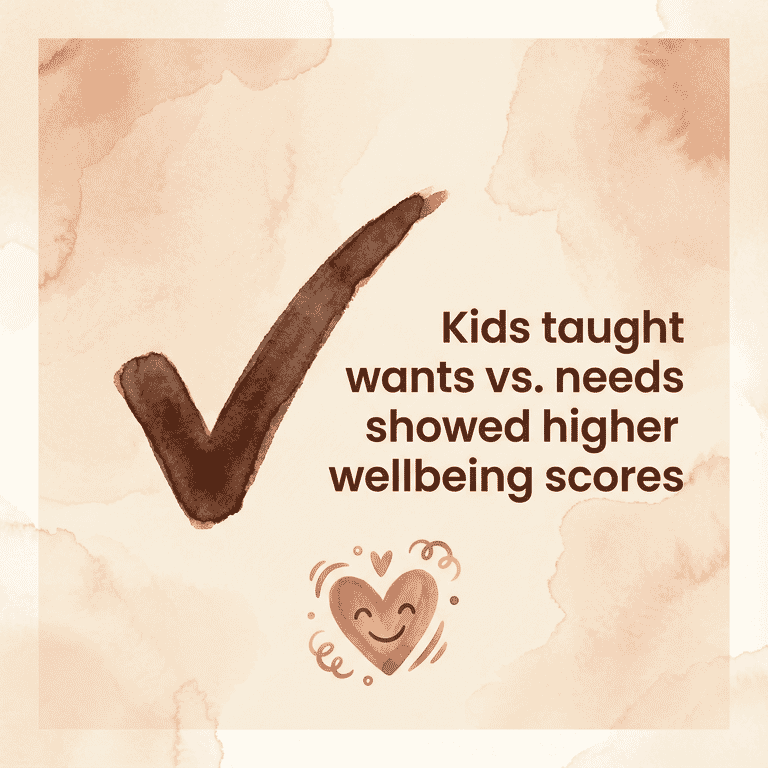
The want vs. need distinction isn’t arbitrary—it’s an evidence-based educational concept. The University of Rhode Island study found that when children ages 8-11 learned to differentiate between wants and needs, they showed statistically significant improvements in subjective wellbeing. This makes sense when you understand what developmental researchers have documented: children more engaged with consumer culture tend to show lower wellbeing levels.
The framework also taps into something consumer psychologists have studied for decades: rituals create meaning. Academic research on consumer behavior describes gift giving as “a central component of numerous exchange rituals”—structured, repetitive activities that provide comfort through their predictability.
When Christmas morning follows a known pattern, children feel anchored rather than overwhelmed. I’ve watched this play out eight times now. My kids know what to expect, which paradoxically makes each gift feel more special, not less.
The “Read” category deserves special mention. Child psychologist Daniel Bagner of Florida International University emphasizes that activities like reading together create lasting bonds: “That small investment goes a long way in strengthening your connection and reducing behavior problems.”
A book isn’t just a gift—it’s an invitation to spend time together, which is exactly what makes teaching your children about gift values resonate beyond the holiday itself.
Which Framework Fits Your Family?
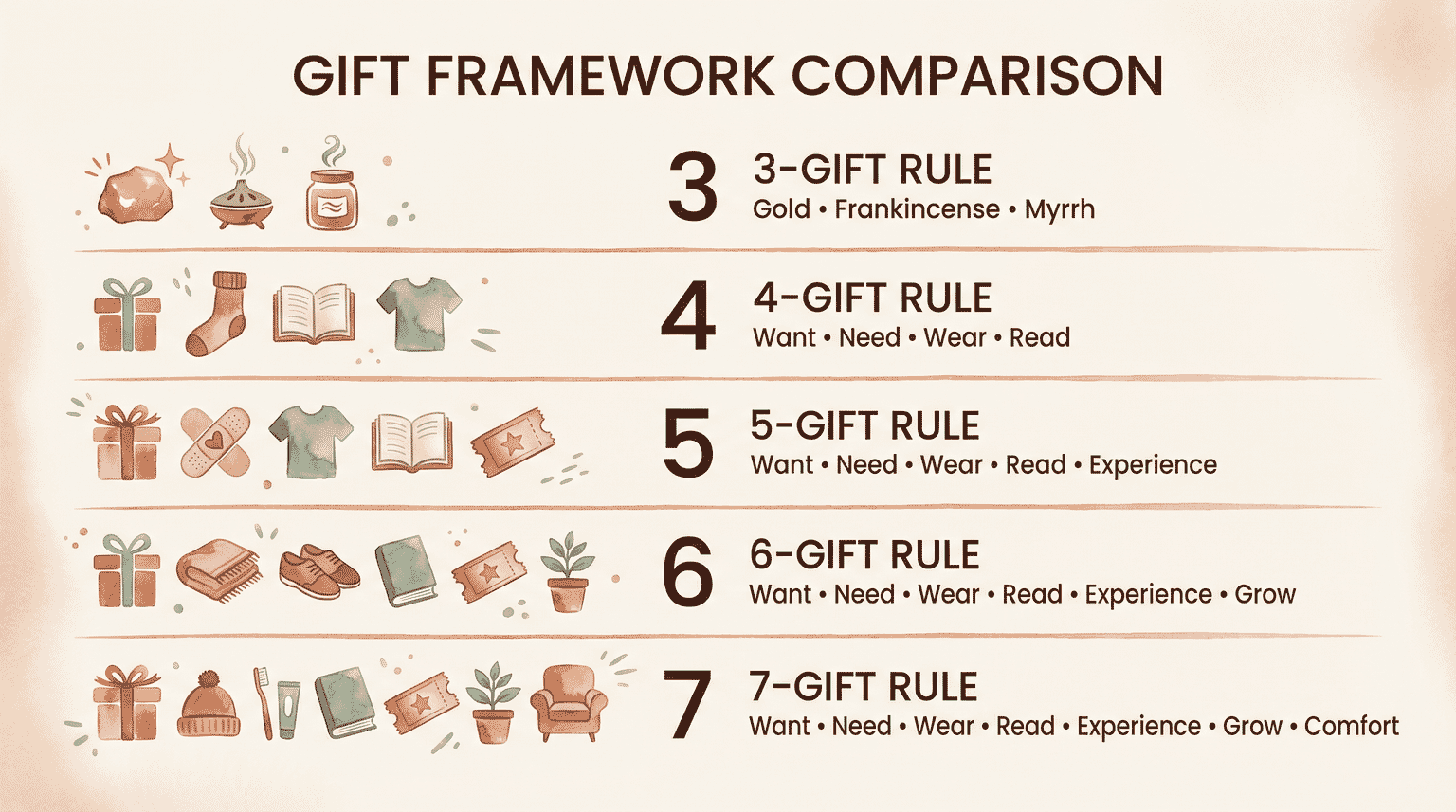
The 4-gift rule isn’t the only option. Here’s how the major frameworks compare:
| Framework | Gifts | Categories | Best For |
|---|---|---|---|
| 4-Gift Rule | 4 | Want, Need, Wear, Read | Families wanting structure with variety |
| 3-Gift Rule | 3 | Gold, Frankincense, Myrrh | Religious families or minimalists |
| 5-Gift Rule | 5 | Want, Need, Wear, Read, Experience | Families prioritizing memories |
| Something to Share | 5 | Want, Need, Wear, Read, Give | Families emphasizing generosity |
| Experience-Only | Varies | Activities and outings only | Minimalist families or those with excess stuff |
The 3-Gift Rule mirrors the Three Wise Men: something valuable (gold), something practical (frankincense), and something meaningful or spiritual (myrrh). In my house, this translates to a desired item, a useful item, and something for the soul—a journal, craft kit, or donation in their name.
The 5-Gift Rule adds an experience category: tickets, lessons, a special outing, or a trip. Consumer psychology research shows that experiential gifts often foster stronger social connections than material gifts, making this variation ideal for families who find they already have plenty of “stuff.”
Something to Share replaces the experience with a give category—something for the child to donate or share. This works beautifully for developing your family’s complete gift-giving philosophy around generosity.
Experience-Only skips physical gifts entirely in favor of activities and outings. Honestly? I’ve never managed this one with eight kids—someone always needs new snow boots—but I’ve seen it work beautifully for families who’ve hit peak toy saturation.
How Do You Start the 4-Gift Rule?

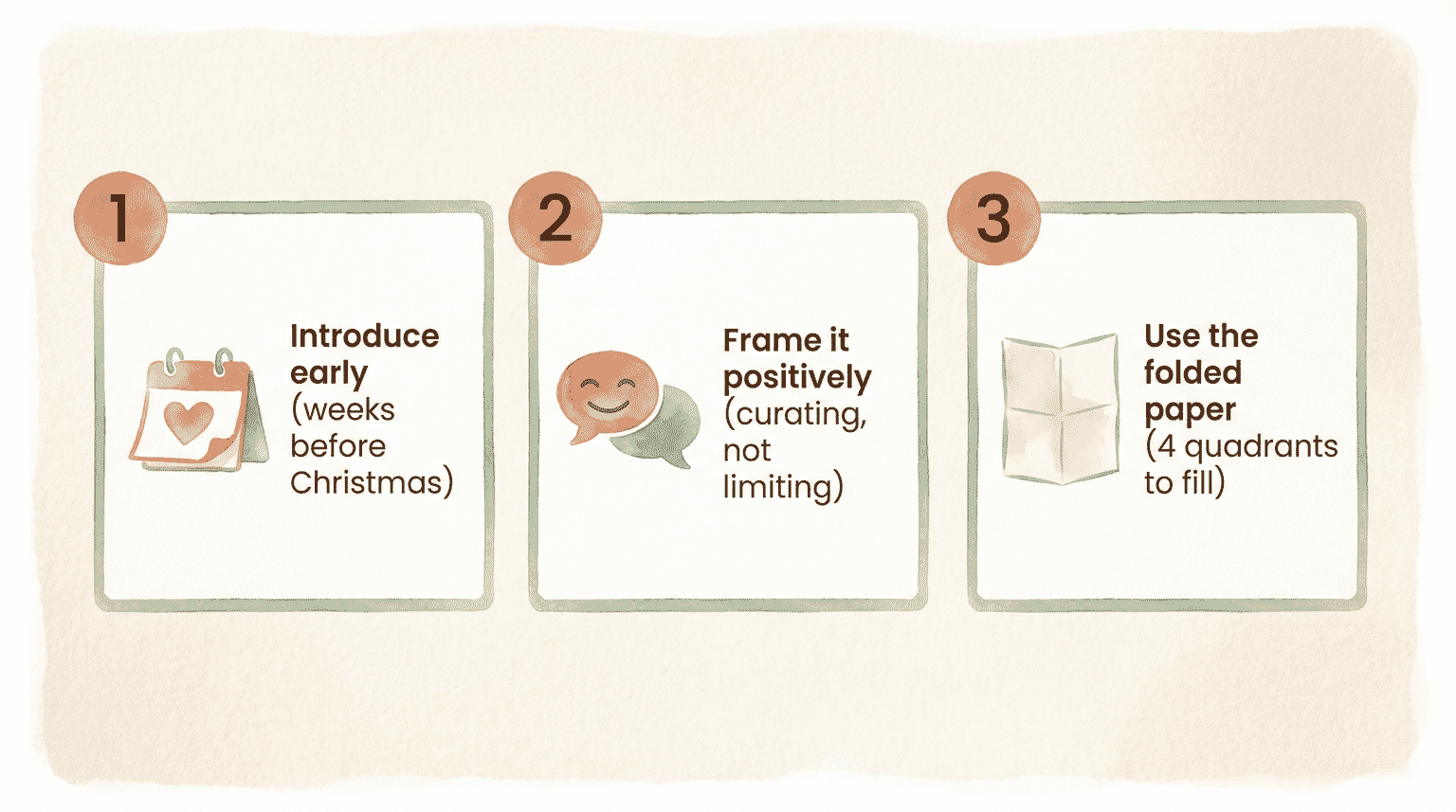
Timing matters. Introduce the framework weeks before Christmas—during Advent, while decorating, or when the first catalog arrives. Never spring it on Christmas morning.
Start the conversation positively:
“This year, we’re picking four special gifts for you—something you really want, something useful, something cozy to wear, and a great book to read together. Let’s figure out what goes in each category.”
Use the folded paper method. Give each child a paper divided into four quadrants. They fill in ideas for each category throughout December. This transforms limiting into curating—they’re involved in the decision, not subjected to it.
Age Appropriateness Quick Reference
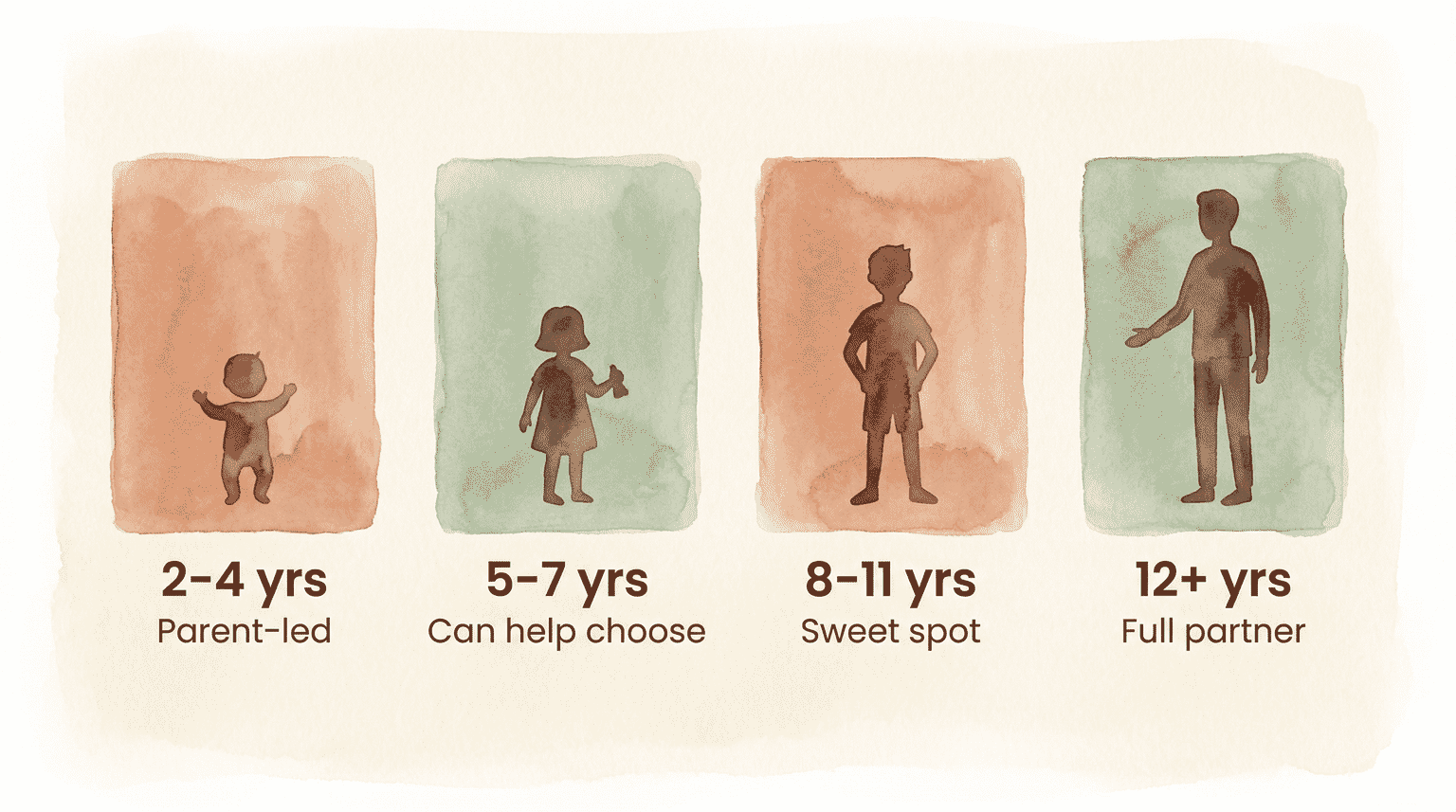
- Ages 2-4: Parent-led; focus on Want and Wear since they don’t distinguish categories yet
- Ages 5-7: Can actively participate in Want selection and understand the basic structure
- Ages 8-11: Full category comprehension—this is the sweet spot where research shows kids can meaningfully distinguish wants from needs
- Ages 12+: Co-create all selections; they’re old enough to understand and appreciate the “why” behind the framework
Coordinating with extended family:
“We’re doing something new this year—focusing on four meaningful gifts per child instead of lots of smaller things. Would you like to ‘own’ one category? Grandma’s special outfit or Grandpa’s book pick would mean so much more than another toy that gets lost in the pile.”
This gives grandparents a specific, important role rather than feeling restricted. In my experience, they often embrace it once they see their gift become the special sweater or the beloved book.
What If Grandparents Want to Give More?

Resistance happens. Here’s how to handle the most common challenges:
Initial child disappointment: Expect it, especially in year one. Acknowledge their feelings without caving: “I hear you—it feels different. Let’s see how it goes this year.” Children adapt faster than we expect when the structure is clear and consistent. By year two, my kids were defending our approach to cousins.
Grandparents who want to give more: Some grandparents express love through abundance. Offer alternatives: “Would you want to fund their summer camp instead?” or “What about a special outing just the two of you?” Experience gifts from grandparents often become the most treasured memories.
Partner disagreement: Start smaller. Maybe it’s 4 gifts from Santa and no limit from parents—or vice versa. Finding middle ground beats all-or-nothing battles. For more ideas on working through these conversations, see our guide to common gift-giving problems and how to solve them.
When to adapt: Frameworks aren’t rigid rules. Special circumstances—a child who’s had a hard year, a major milestone, a first Christmas in a new home—might call for flexibility. The goal is intentionality, not deprivation.

As Jarvis reminds us, “You are allowed to focus on the things that bring the most joy and support yours and others’ physical, mental and financial well-being rather than deplete it.”
Quick Reference Summary
The 4-gift rule and its variations solve a real problem backed by real research: children surrounded by abundance often feel less satisfied, not more. Structured gift-giving frameworks provide predictability, teach the difference between wants and needs, and make each gift more meaningful.
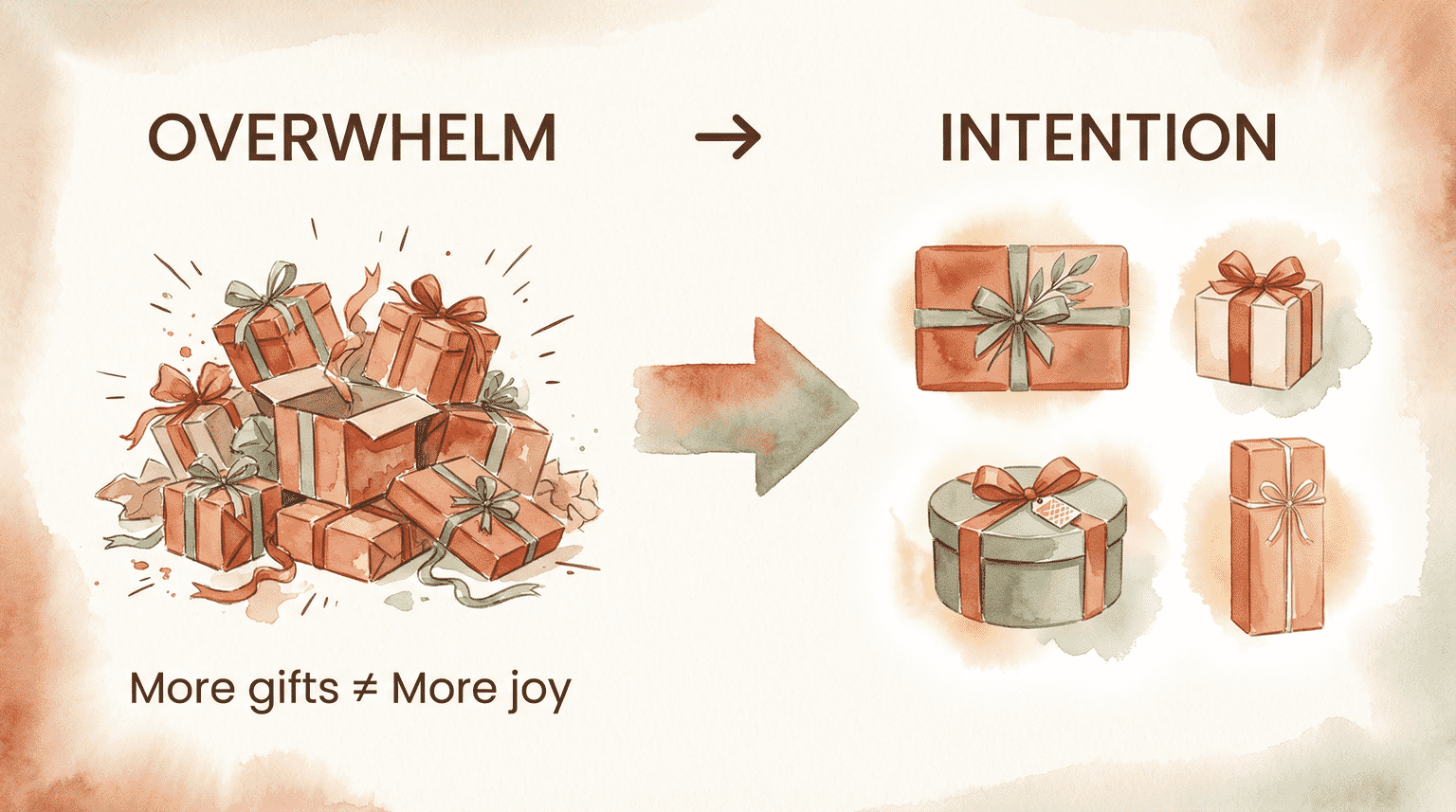
Your three-sentence takeaway: Choose the framework that fits your family’s values and capacity. Introduce it early, involve your children in the process, and coordinate with extended family. Expect an adjustment period—then watch as Christmas morning becomes calmer and more connected.
Frequently Asked Questions
What is the 4 gift rule?
The 4-gift rule gives each child exactly four presents: something they want, something they need, something to wear, and something to read. Research shows that teaching children to distinguish wants from needs has measurable positive effects on wellbeing, making this framework both practical and developmentally supportive.

What’s the difference between the 3, 4, and 5 gift rules?
The 3-gift rule (based on the Three Wise Men) offers fewer gifts with spiritual significance. The 4-gift rule balances desire, practicality, clothing, and literacy. The 5-gift rule adds an experience or activity category, which consumer psychology research suggests may foster stronger family connections than material gifts alone.
How do I get my family on board?
Start the conversation early—weeks before Christmas—and frame it positively. Invite extended family to “own” specific categories rather than feel restricted. Offer alternatives like experience gifts or contributions to savings accounts. Most resistance fades when family members feel included rather than limited.
What age can children understand this framework?
Children ages 2-4 need parent-led selection. By ages 5-7, kids can participate in choosing their “want” item. Research suggests ages 8-11 is when children fully comprehend the distinction between wants and needs, making this the ideal age for meaningful engagement with all four categories.
Share Your Story
Does your family use a gift rule framework? I’m curious which version works for you—and whether the structure has reduced holiday stress or just created new negotiations.
I read every comment and love learning what works in different families.
References
- University of Rhode Island Media Literacy Study – Research on teaching children to distinguish wants from needs and wellbeing outcomes
- Wayne State University Gift Drive – Institutional adoption of the 4-gift framework for community giving
- Florida International University Holiday Tips – Child psychology expert guidance on structured approaches during holidays

Share Your Thoughts