

Last month, my 10-year-old asked if she could throw her birthday party on Roblox. Not “play Roblox at her party”—host the entire event inside the platform. Her friends would gather as avatars. They’d bring virtual gifts. She’d already designed the party space.
My librarian brain immediately needed to understand what was happening here. And what I discovered explains why so many parents feel confused when their kids beg for Robux or Minecoins—and why dismissing virtual gifts as “not real” might actually miss something important.
Key Takeaways
- Virtual items function as social currency for kids—how avatars look signals status and belonging to peers
- Children treat digital wardrobes like physical closets—accumulating many items but consistently using favorites
- The average Roblox player spends about $10 monthly, making this mainstream behavior, not outlier spending
- Loot boxes in popular games function as gambling mechanics for children seeking rare items
- Co-playing with your kids creates natural opportunities to guide their digital decision-making
What Virtual Gifts Actually Are (And Why They Matter)
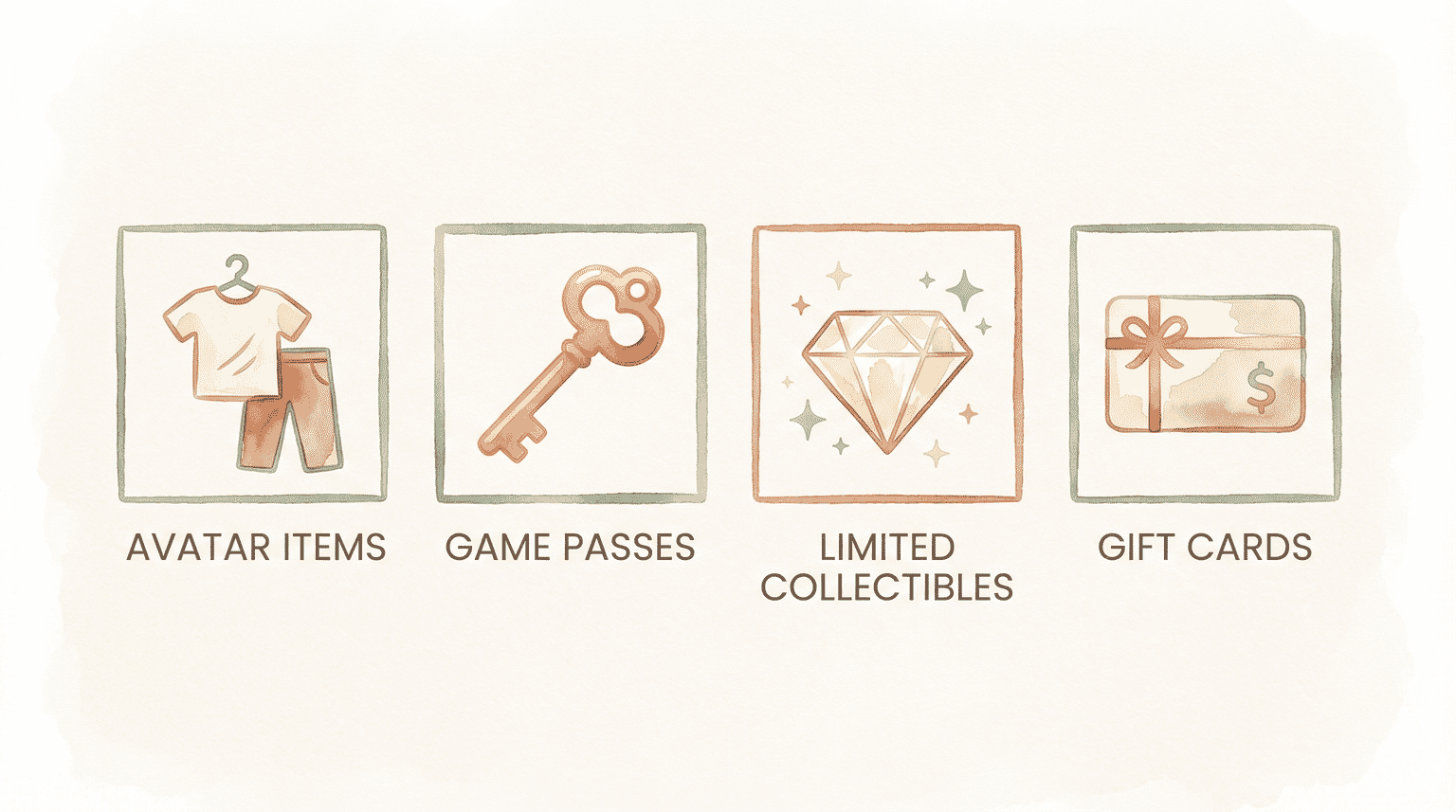
Virtual gifts in Roblox and Minecraft are digital items purchased with in-game currency—avatar outfits, accessories, game passes, and limited-edition collectibles that children use for self-expression and social connection.
The main types include:
- Avatar items: Clothing, hairstyles, faces, and accessories that customize a child’s digital representation
- Game passes: Unlocks for special abilities or access within specific games
- Limited items: Rare collectibles that can increase in value and be traded
- Gift cards: Physical cards exchanged for Robux or Minecoins, increasingly given at birthdays
This isn’t fringe behavior. A 2024 University of Oregon analysis found that 65% of Generation Alpha now uses Roblox, up from 34% just two years earlier.

That jump from 34% to 65% in just two years tells us something important. This isn’t a passing trend—it’s becoming the default way kids socialize.
And Jeff Lin, PhD in Psychology from the University of Washington and Game Director at Meta’s Horizon Metaverse, puts it plainly: the line between digital life and “real” life simply doesn’t exist for most kids anymore.
“I don’t think anyone ten years ago would have imagined virtual birthday parties as the norm. But it’s very normal to kids these days to think about their digital life and their real life as just being a blend.”
— Jeff Lin, PhD, Game Director at Meta’s Horizon Metaverse
That blend is exactly what’s confusing parents—and exactly what we need to understand.
Why Your Child Thinks Robux Is Real Money

Here’s what took me a while to grasp: when my daughter asks for a specific avatar outfit, she’s not being materialistic in the way it might appear. She’s doing something developmentally appropriate—experimenting with identity in a social environment.
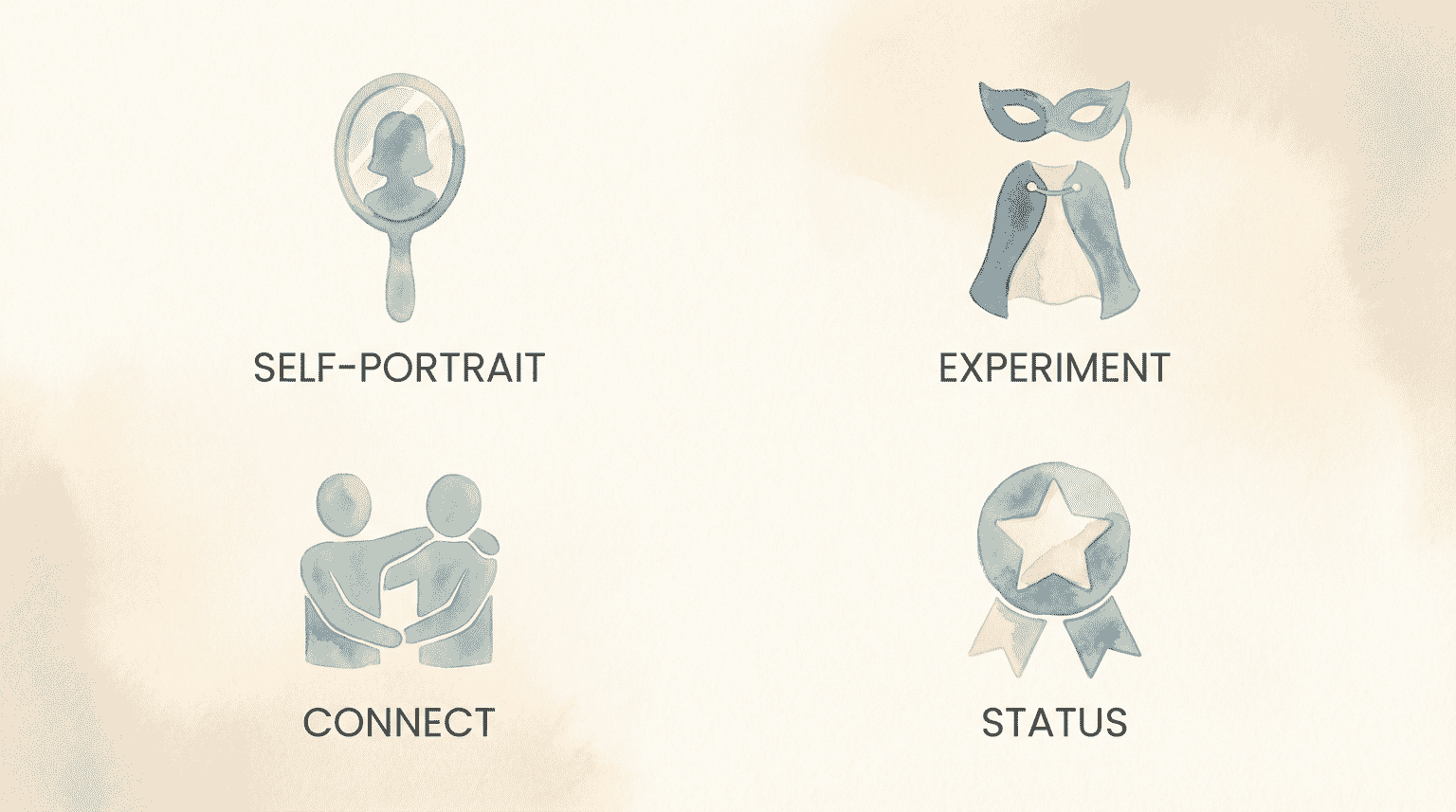
Research from arXiv studying 48 children ages 8-13 found that kids use avatars for four main purposes: accurately portraying themselves, experimenting with alter egos, connecting socially with friends, and signaling status to peers.
One child in the study explained her avatar choice simply: “It has black hair like me.” Another admitted: “I don’t really wear ripped jeans, but it just looks good on the avatar.”
This is identity exploration wearing a digital costume. And it comes with real social stakes.
The same research documented what children call the “bacon hair” phenomenon—free, default avatars mark players as newcomers and invite social judgment. As one child put it: “People make fun of them, not just because of the bacon hair, but because it probably means they’re newer.”
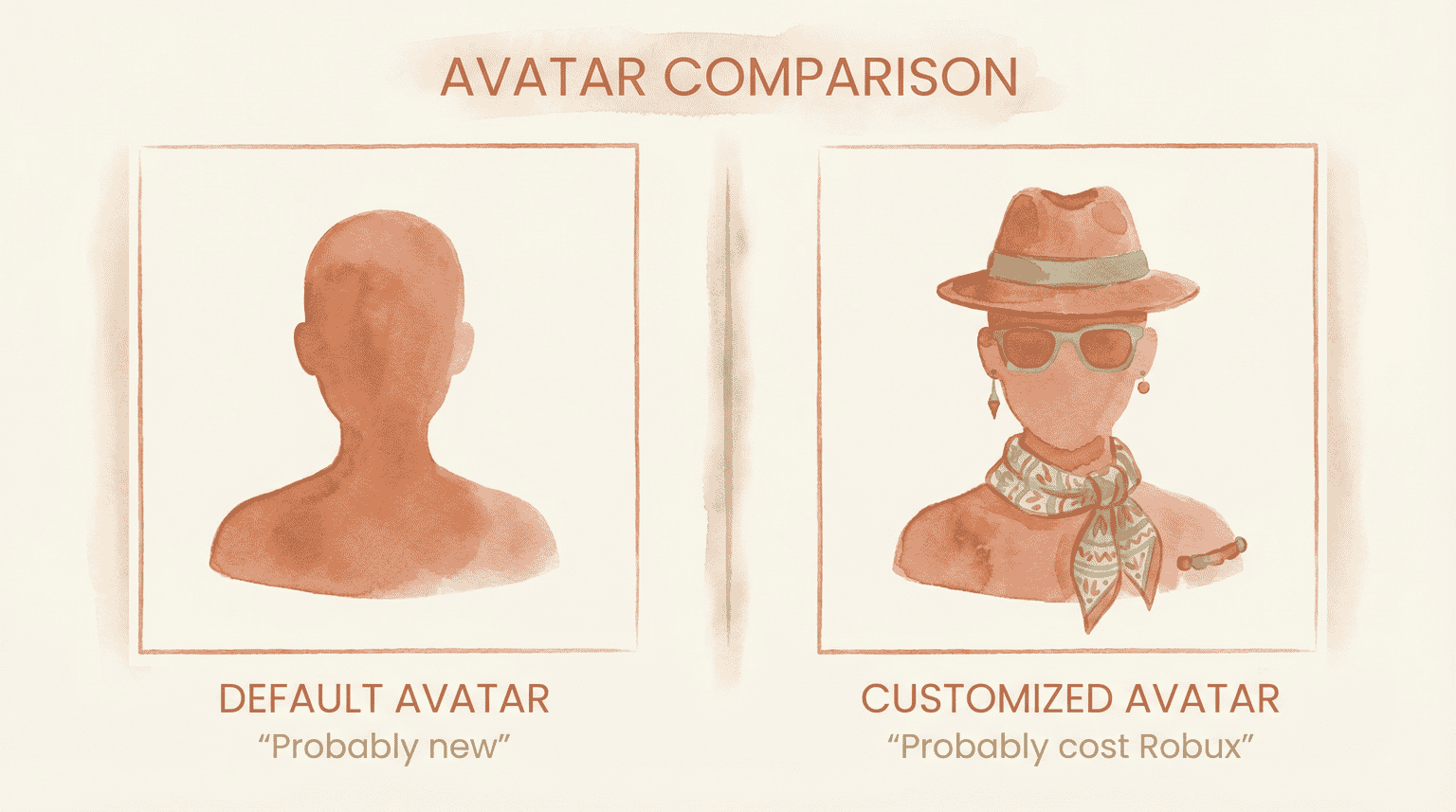
Children in the study consistently associated visual quality with monetary value: “If it looks really nice and good, then it probably cost Robux.”
For kids navigating this social landscape, virtual items aren’t frivolous—they’re tools for belonging.
The “Wardrobe Effect” (And What Parents Get Wrong)
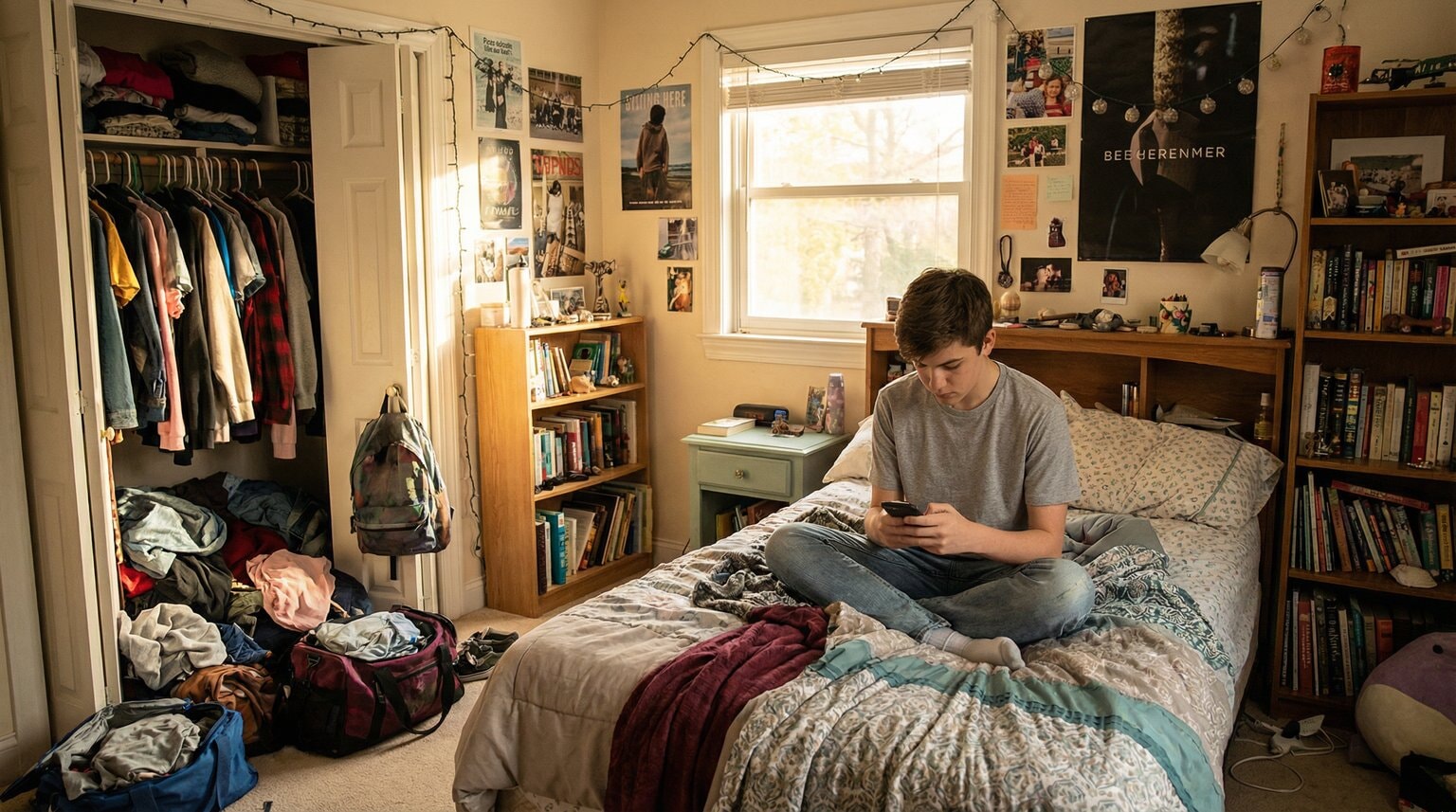
Here’s something that surprised me and might comfort you: researchers found that children accumulate many avatar items but consistently use only one favorite. One participant hadn’t changed their main avatar “for as long as I’ve been playing Roblox.”
Sound familiar? It’s exactly how my teenagers treat their actual closets—full of clothes, wearing the same three outfits on rotation.
Child development specialists call this the “Wardrobe Effect,” and it reframes the “wasted money” concern. Children still expressed excitement about their collections and remembered items they “used to think looked nice,” even when no longer worn. The accumulation itself serves developmental purposes beyond individual purchases.
What we’re watching isn’t materialism—it’s normal identity experimentation that happens to occur in a digital space. Understanding this doesn’t mean unlimited spending, but it does mean we can engage with our kids about virtual purchases without dismissing what matters to them.
Inside the $2.4 Billion Economy
Let’s talk numbers, because the scale matters.
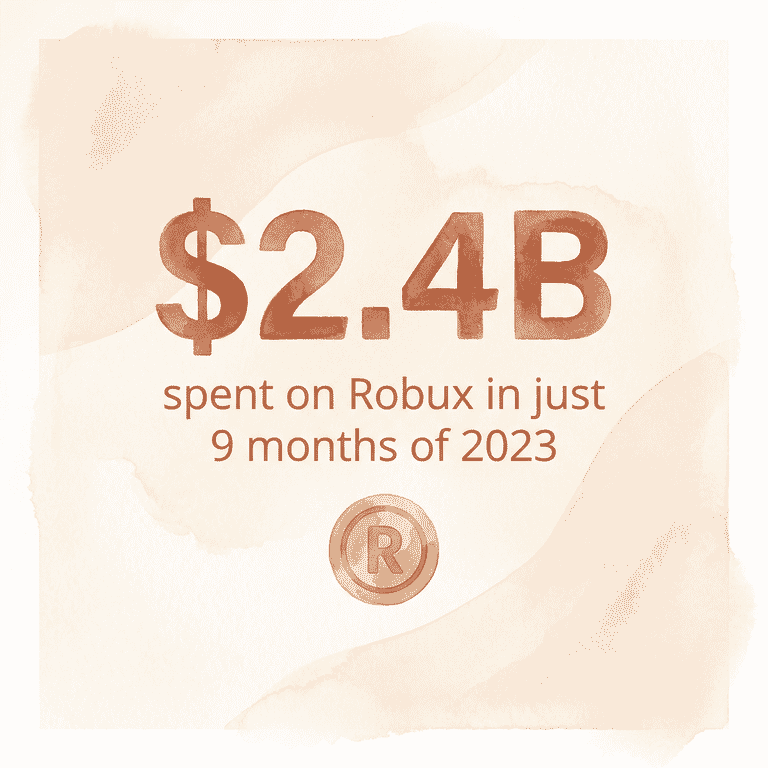
The University of Oregon research found the average Roblox player spends about $10 monthly on virtual currency. In just the first three quarters of 2023, users purchased $2.39 billion worth of Robux globally.
That’s not a typo. Nearly two and a half billion dollars in nine months, spent primarily by children on items that exist only as pixels.
According to a 2023 ACM study, Roblox hosts approximately 24 million games created by 9.5 million developers—and 54.86% of its daily active users are under age 13.
What are kids actually buying? Avatar customizations dominate, followed by game passes that unlock abilities within specific experiences. Limited-edition items create trading economies where children learn concepts like scarcity and value assessment.
But here’s where my parental radar activates: that same ACM research documented that loot boxes—randomized reward systems—are “rampant” in top Roblox games. These function as what researchers carefully termed “de facto gambling” for children seeking rare items.
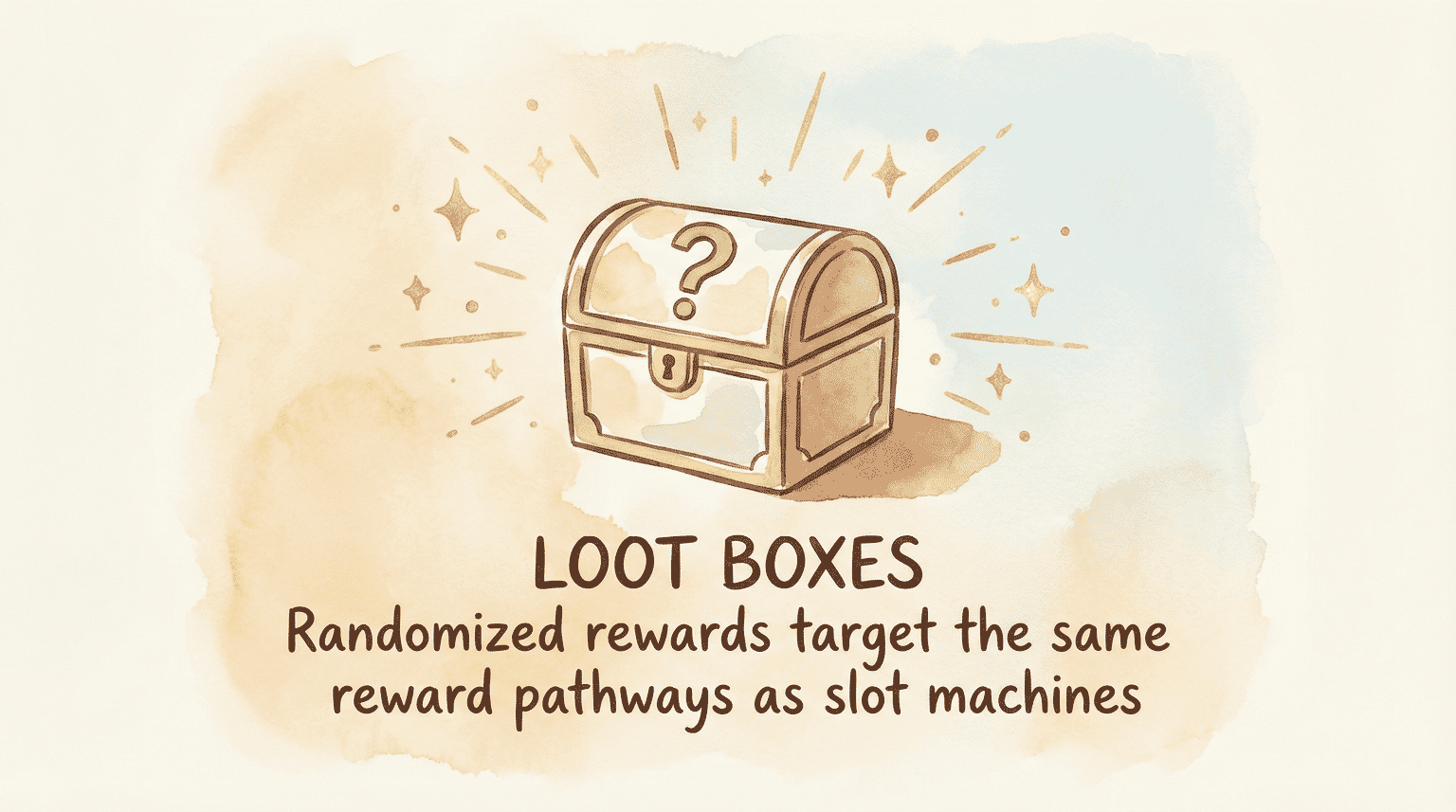
The psychological pull of “maybe this time I’ll get the legendary item” operates on the same reward pathways that make slot machines compelling to adults.
The platforms differ somewhat. Minecraft’s marketplace offers more direct purchases with clearer pricing, while Roblox’s user-generated economy creates wider variation in value and more opportunities for impulse decisions.
The Two-Sided Reality Parents Face

I’ll be honest: researching this topic left me holding two truths that feel contradictory but aren’t.
On one side, investigative research reported by The Guardian found that children as young as five could communicate with adults in testing scenarios, with minimal effective age verification.
“The new safety features announced by Roblox don’t go far enough. Children can still chat with strangers not on their friends list, and with 6 million experiences, how can parents be expected to moderate?”
— Damon De Ionno, Revealing Reality
He’s right. We can’t monitor everything. And real parents have shared real horror stories—grooming incidents, exposure to inappropriate content, children developing anxiety after encountering disturbing material.
On the other side, University of Utah Health launched a mental health initiative on Roblox specifically because that’s where teens already are.
“We are meeting teens where they are and connecting them with valuable information in a way that seamlessly ties into the game experience.”
— Dr. James Ashworth, Huntsman Mental Health Institute
The platform is being used to teach coping skills, mindfulness, and emotional regulation—with chat disabled and usernames anonymized for safety.
Similarly, researchers published in the Journal of Medical Internet Research created a Roblox game that successfully improved body image among 9-13 year olds. Eighty percent of participants enjoyed it; 76% would recommend it to friends.
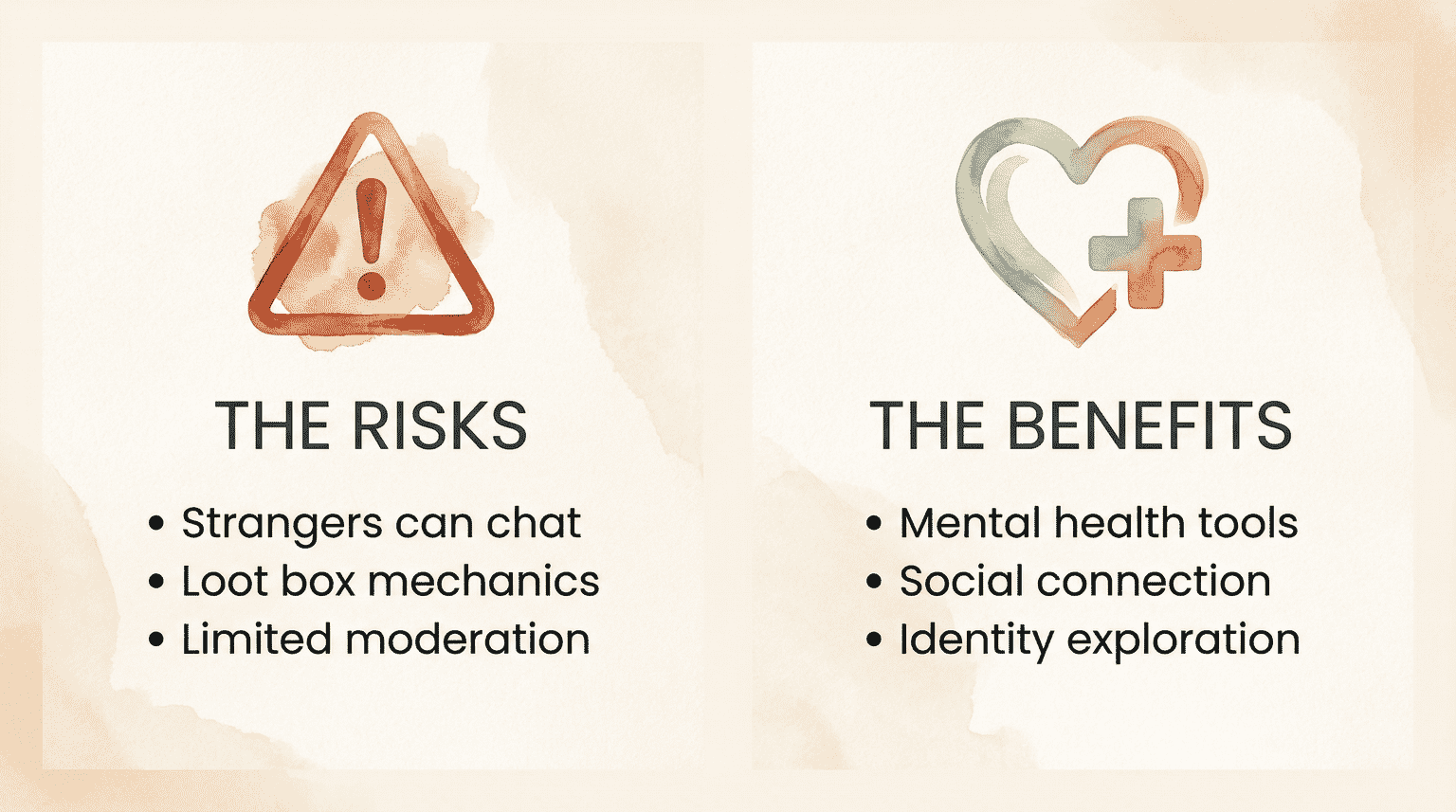
These platforms aren’t inherently harmful or beneficial. They’re environments that amplify both possibilities.
What This Means for Your Family
After diving deep into this research, here’s where I’ve landed for my own household—and what I’d suggest exploring in yours.
Virtual currency can be a financial literacy sandbox. The University of Oregon research found that children who engage with Roblox economies learn real concepts: spending within limits, saving for larger purchases, assessing value, even basic trading principles. Games like Adopt Me! teach “the basics of trading and value through figuring out what different pets are worth.”
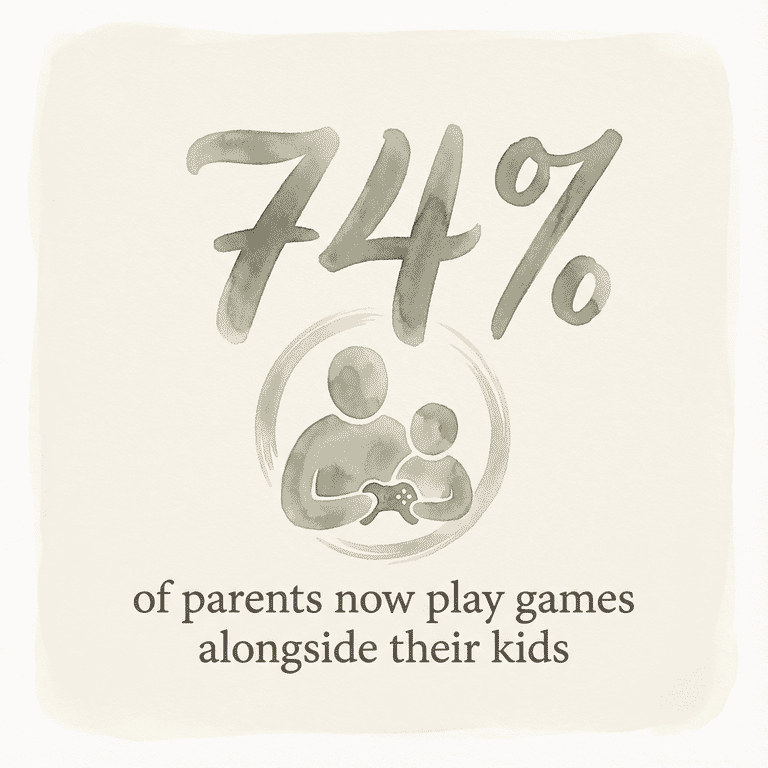
The key is involvement. That same research found 74% of parents now play games alongside their children—up from 30% in 2008.
This co-play creates natural opportunities to discuss purchases, model decision-making, and observe what your child actually values.
Dismissal carries opportunity cost. When we tell kids virtual items are “fake” or “a waste,” we miss the chance to understand their social world and guide their thinking. Those items are real within the context that matters to them. If you’re curious about how gaming compares to traditional toys developmentally, the answer is more nuanced than most headlines suggest.
Reasonable limits still matter. Just because virtual gifts serve developmental purposes doesn’t mean unlimited spending makes sense. Monthly budgets, parental controls, and conversations about loot box mechanics all help children develop judgment they’ll need in increasingly digital economies.
This connects to larger shifts. Virtual gift culture isn’t happening in isolation—it’s part of the broader evolution of digital gift culture that’s reshaping how all of us exchange generosity and mark celebrations.
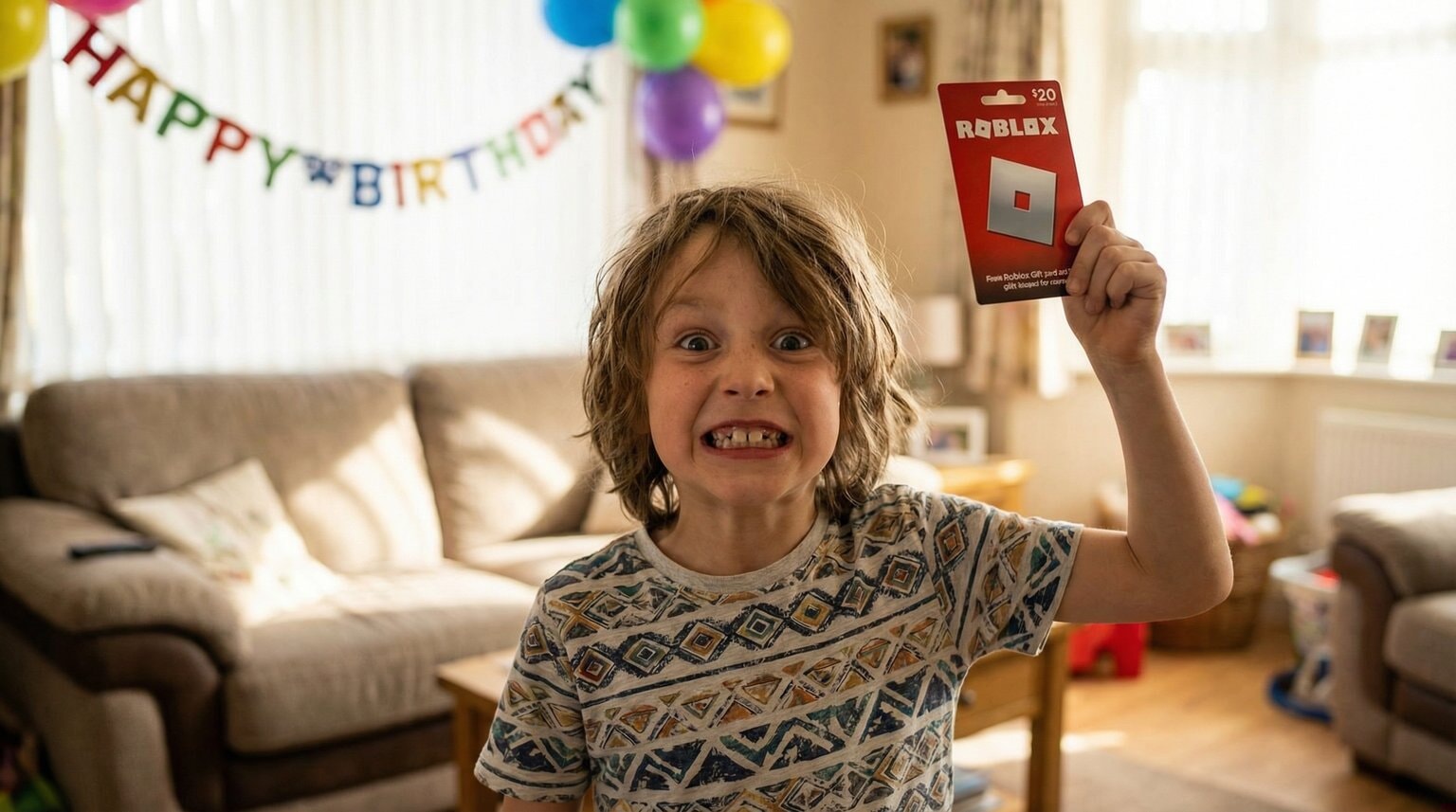
My 10-year-old did get her Roblox party, by the way. I watched her friends gather, exchange virtual gifts, and genuinely celebrate together. It looked nothing like my childhood birthdays—and somehow, watching her face, it looked exactly the same.
Frequently Asked Questions
Why do kids want Robux so badly?
Virtual items function as social currency among children—how their avatar looks signals status to peers. Research shows kids make judgments about players based on whether their items “probably cost Robux.” For children, these aren’t frivolous purchases but tools for identity expression and belonging.
How much do kids typically spend on Roblox?
The average player spends approximately $10 per month on Robux. In the first three quarters of 2023, users purchased $2.39 billion worth of Robux globally—indicating this is mainstream behavior, not outlier spending.
Are virtual gifts a waste of money?
Research shows children treat virtual items like physical wardrobes—accumulating many but consistently using favorites. While individual purchases may go unused, the activity of choosing and customizing serves identity experimentation purposes that are developmentally normal.
Is it safe to give kids Robux?
Robux itself is safe, but spending requires oversight. Loot boxes are prevalent in popular games and function as gambling mechanics for children seeking rare items. Set spending limits through parental controls, and consider co-playing to understand what your child encounters.
Share Your Story
Has virtual gift culture shown up at your house? I’d love to hear whether your kid has asked for Robux, in-game items, or even a virtual birthday party—and how you’ve navigated the “but it’s not real money” conversation.
I read every comment—virtual parenting questions are my new research rabbit hole.
References
- University of Oregon – Robux IRL Financial Literacy Study – Generation Alpha Roblox usage and spending patterns
- ACM DIS ’23 – Harmful Design in User-Generated Virtual Worlds – Demographics and monetization patterns on Roblox
- arXiv – Understanding Children’s Avatar Making – Psychology of avatar customization and the Wardrobe Effect
- The Guardian – Revealing Reality Research – Platform safety investigation findings
- University of Utah Health – Teen Mental Health Initiative – Positive platform interventions for adolescents
- JMIR – Roblox Body Image Study – Platform demographics and engagement patterns

Share Your Thoughts