
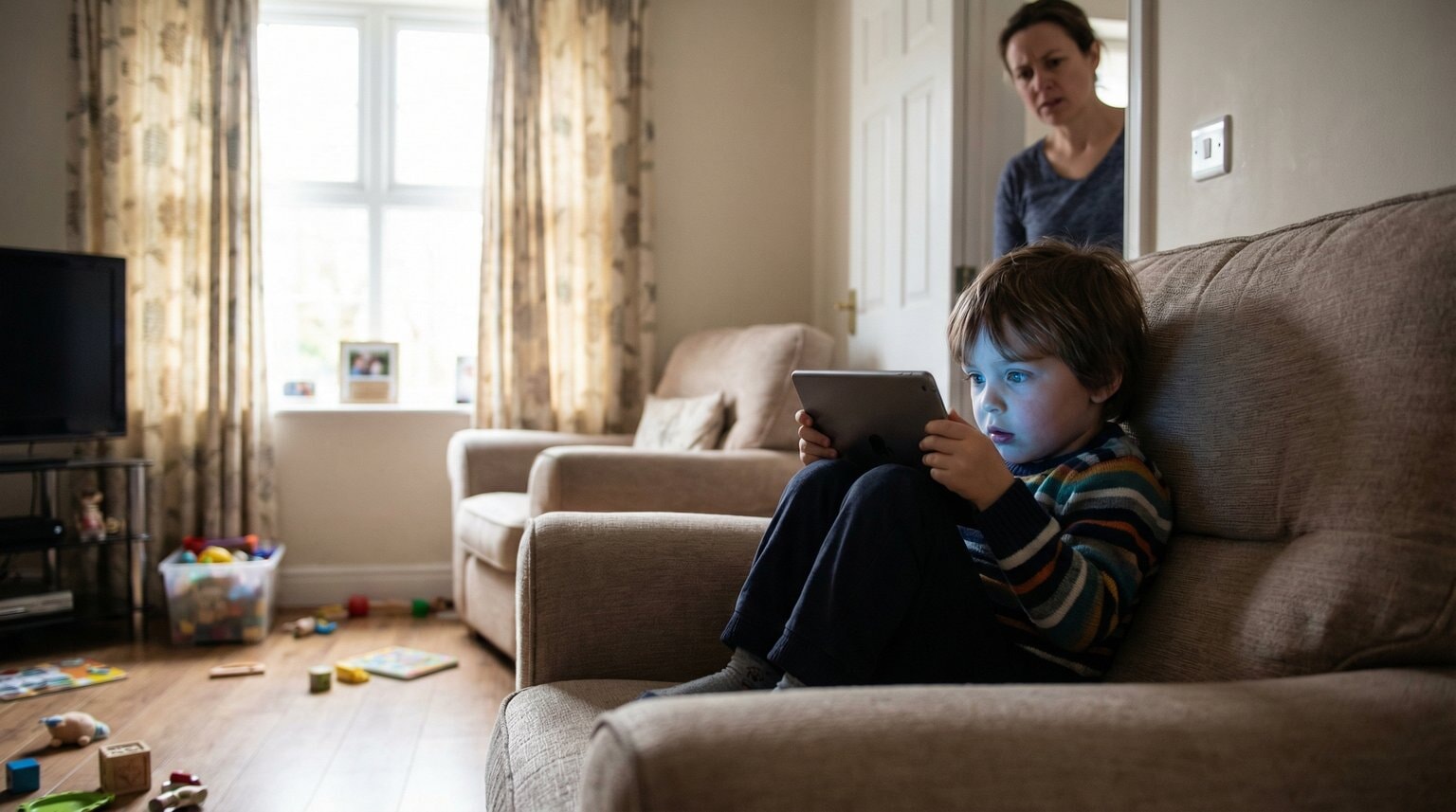
Your child is glued to yet another video of someone opening plastic eggs. You’re not alone—and there’s a reason this content is so magnetic.
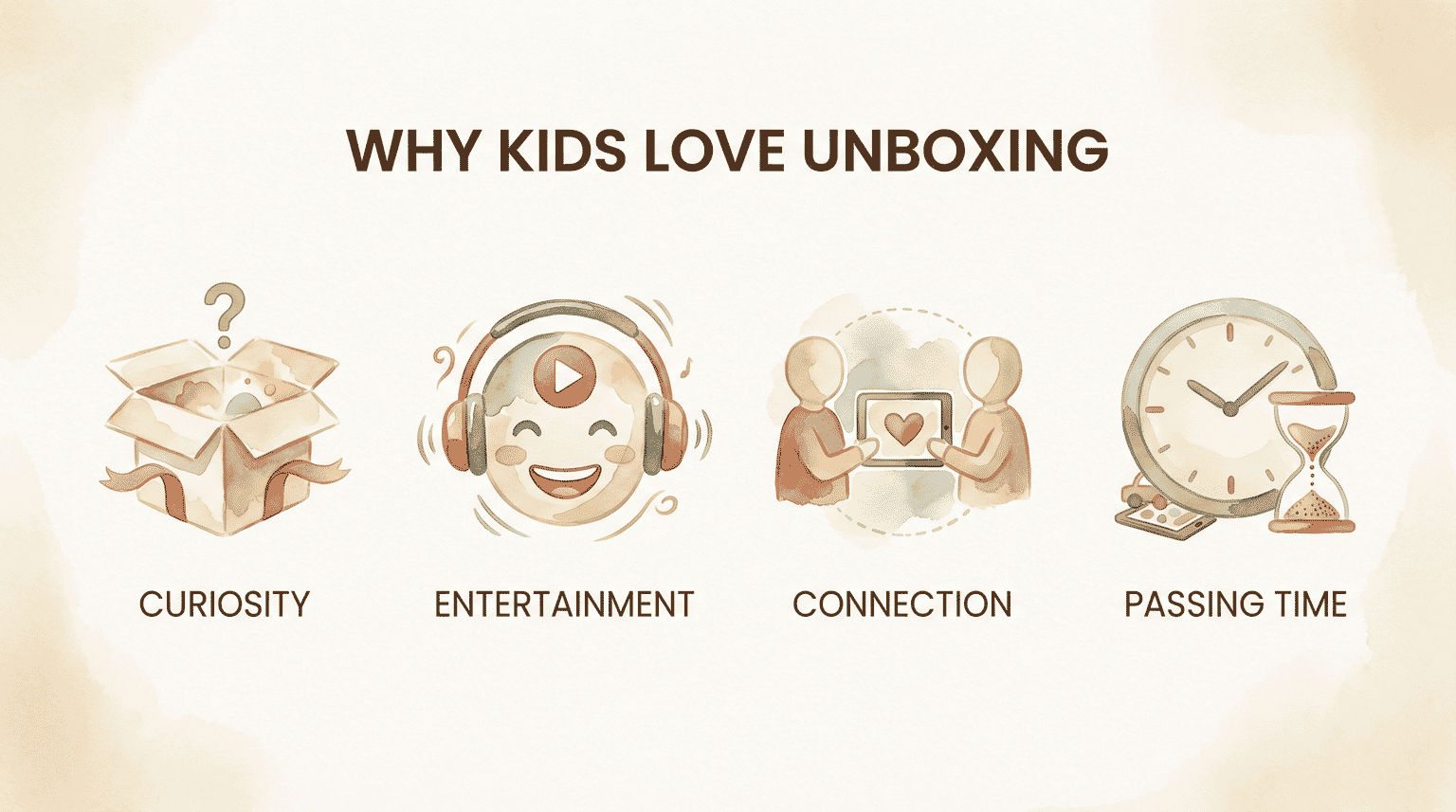
Here’s what the research actually shows: A 2020 study found four motivations drive unboxing viewing—curiosity, entertainment, social connection, and passing time. The anticipation-reward cycle triggers dopamine release during that reveal moment. It’s basically brain candy.
The problem? Michael Rich, MD, director of the Center on Media and Child Health at Boston Children’s Hospital, puts it bluntly:
“Unboxing videos teach children to want things. It feeds into the ‘give me’ culture.”
— Dr. Michael Rich, MD, Director of Center on Media and Child Health, Boston Children’s Hospital
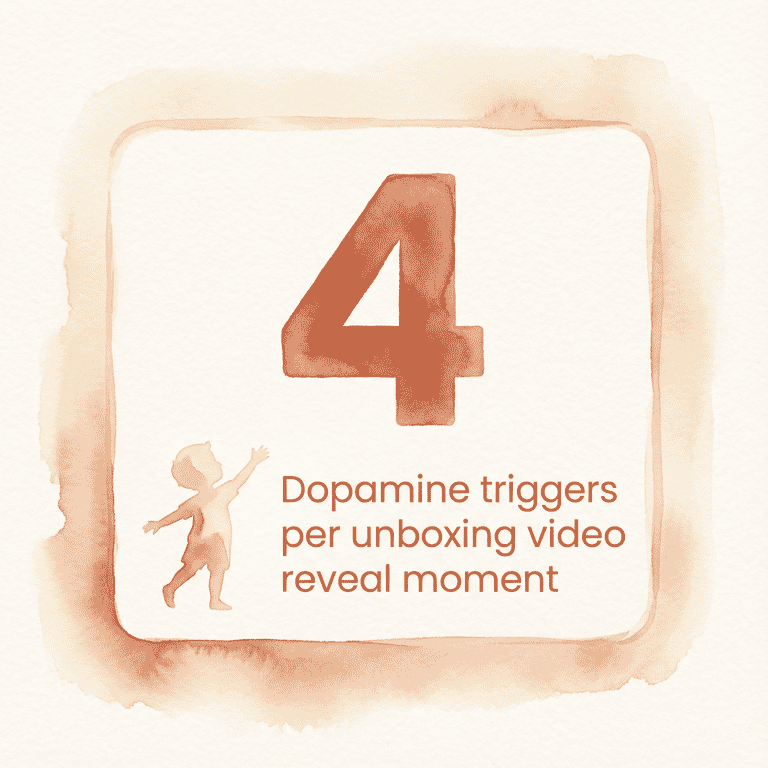
Each reveal moment in an unboxing video triggers a small dopamine hit in your child’s developing brain. It’s not that they’re weak-willed—they’re responding exactly how human brains are wired to respond to anticipation and surprise.
The question isn’t how to eliminate this drive. It’s how to redirect it toward experiences that build rather than consume.
So what actually works instead? Activities that deliver the same anticipation-reveal satisfaction without the consumerism modeling.
Key Takeaways
- Unboxing videos trigger dopamine through anticipation-reward cycles—it’s brain chemistry, not bad parenting
- Craft and maker videos flip the script from “I need things” to “I can make things”
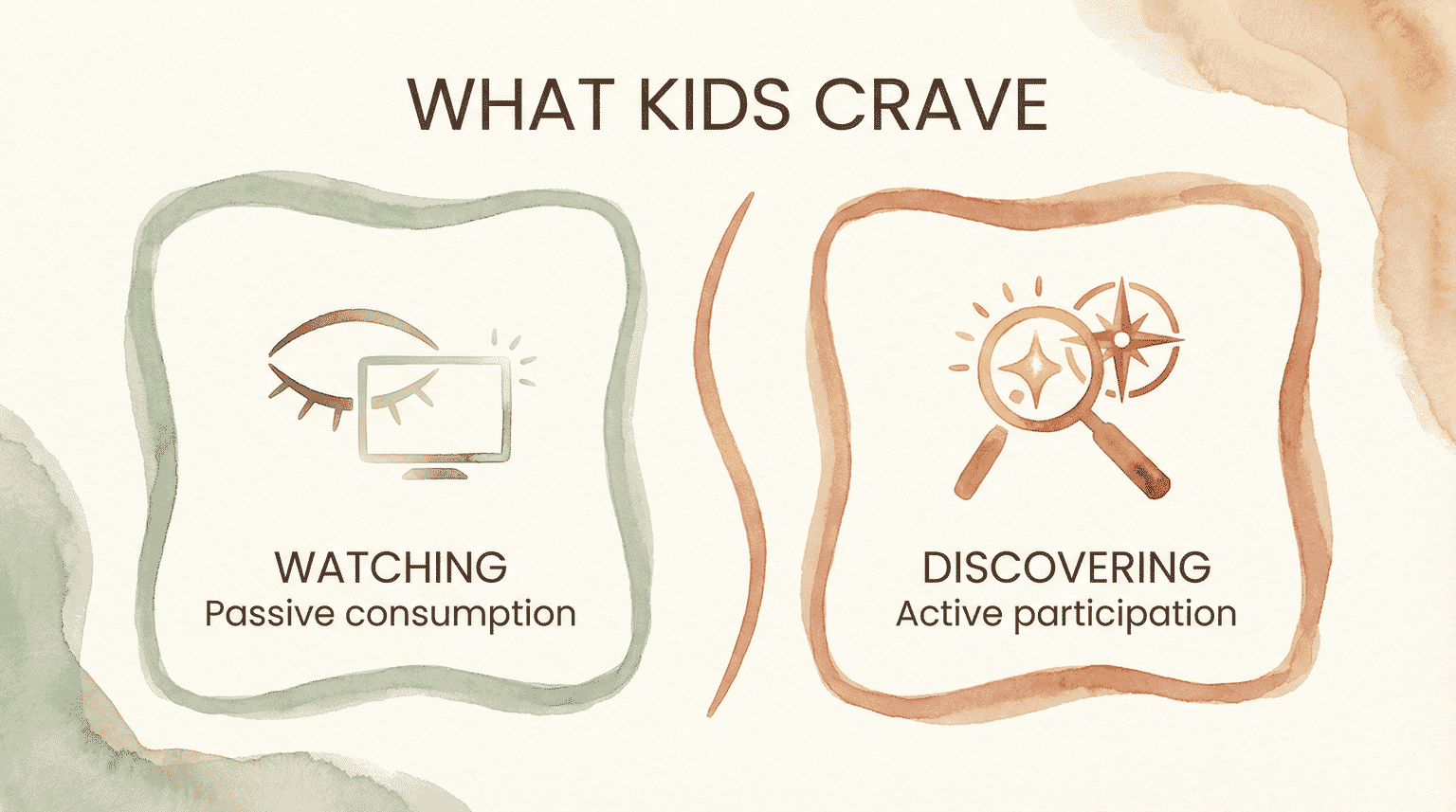
- Kids crave hands-on discovery over passive consumption—give them reveal moments they participate in
- The key is replicating anticipation, surprise, and discovery without modeling “I want that” as the reward
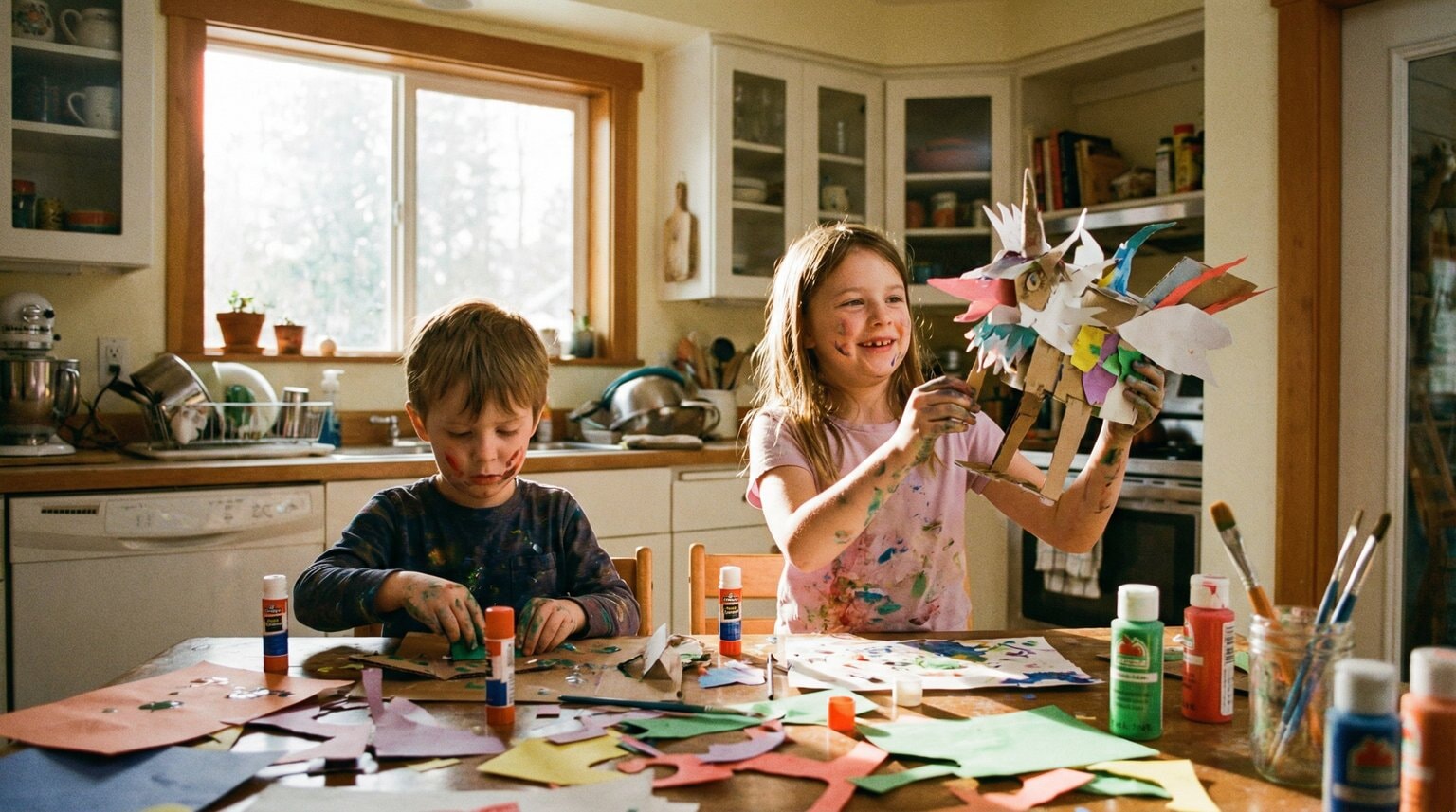
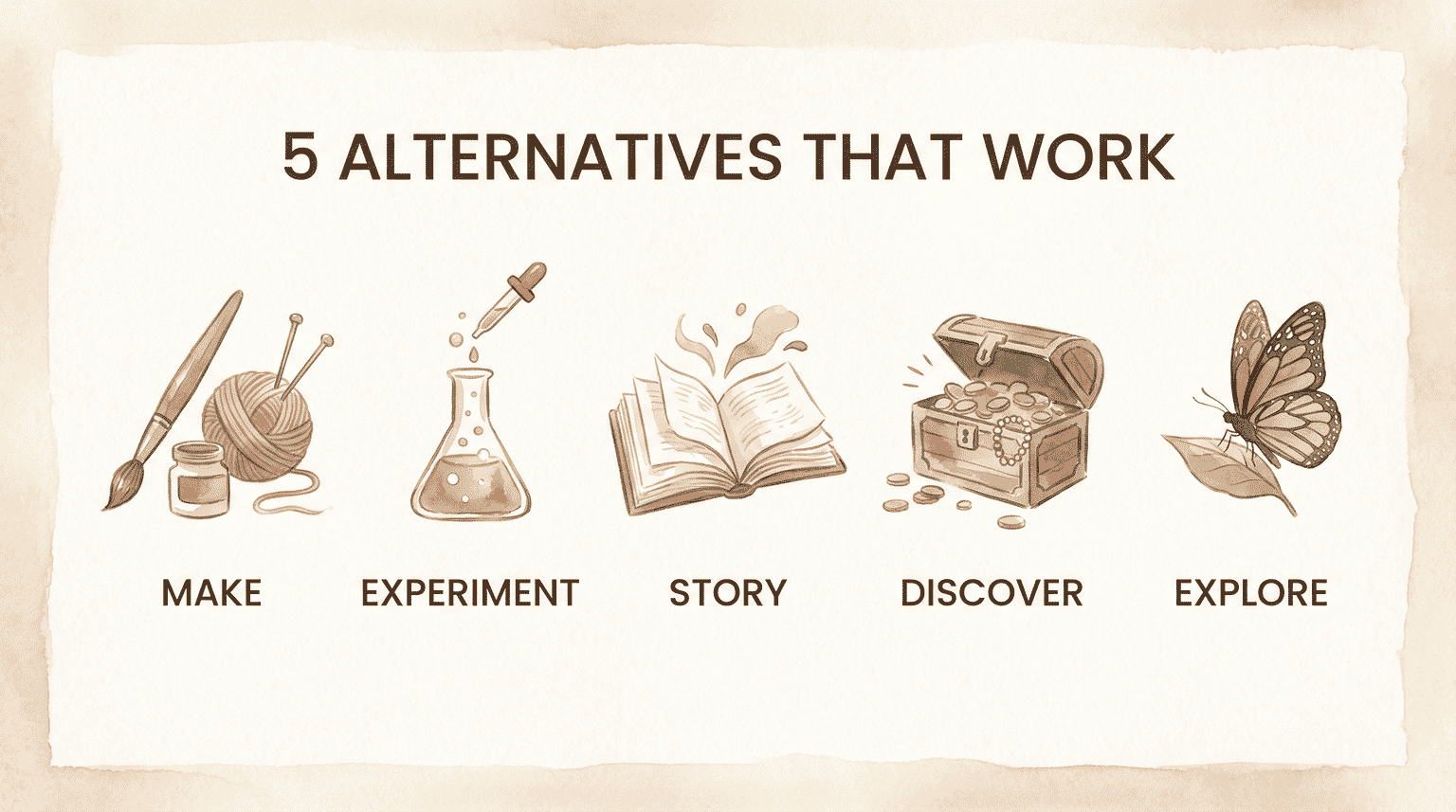
1. Craft and Maker Videos
Channels where kids create rather than consume tap into the same curiosity—but flip the script. Your child watches someone transform materials into something new, experiencing that reveal moment when the project comes together.
The difference? They’re learning “I can make things” instead of “I need things.”
2. Science Experiment Channels
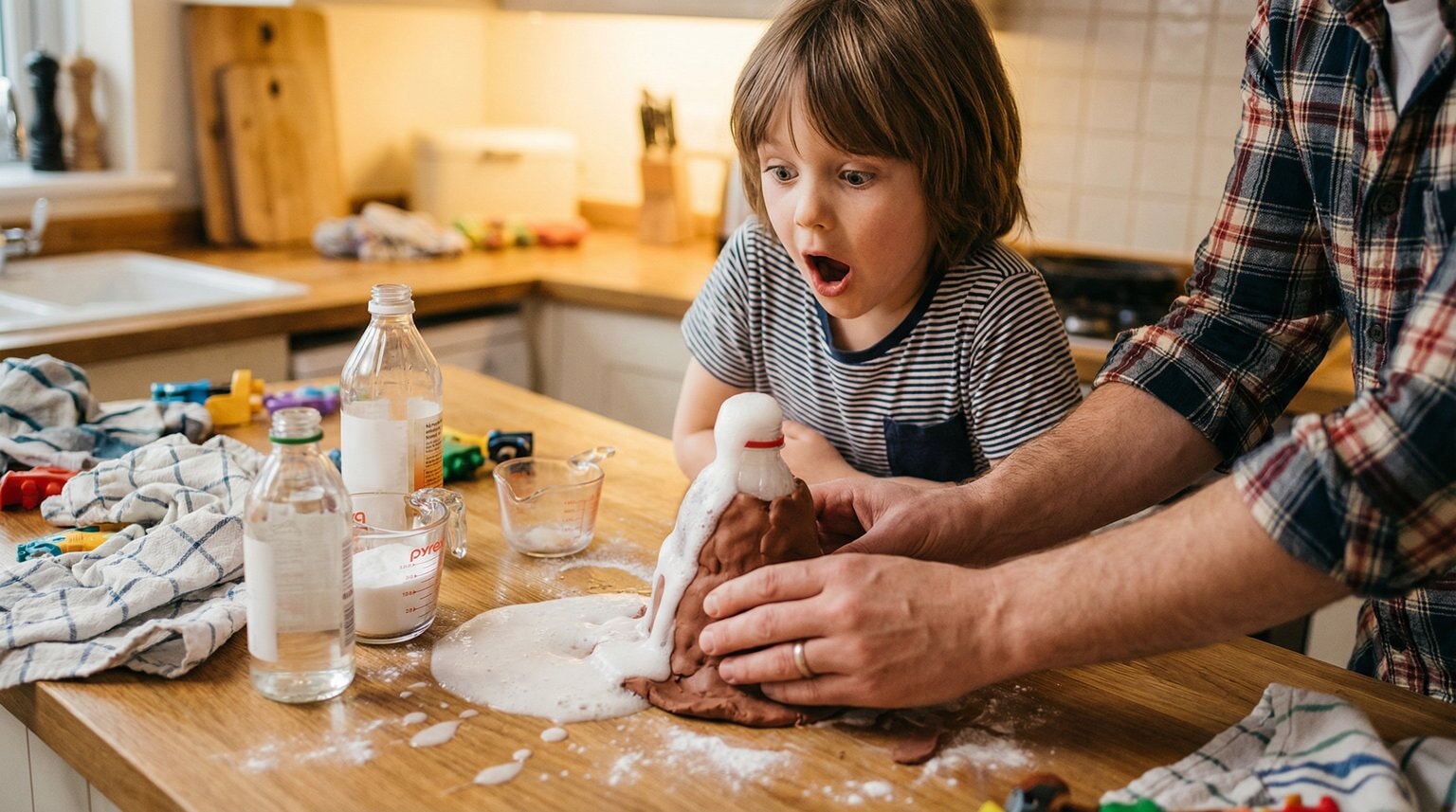
Hypothesis, test, reveal. Science content has the anticipation-reward structure built right in. Will the volcano erupt? What happens when you mix these colors?
That moment of discovery scratches the same itch as opening a package.
3. Story Time Content
Narrative suspense offers reveals without selling. What happens next in the story? The surprise ending? This delivers anticipation and payoff through plot rather than products.
Stories tap into the same neural pathways as unboxing—that “what’s next?” feeling—but the reward is meaning, not merchandise.
4. Real Play Activities
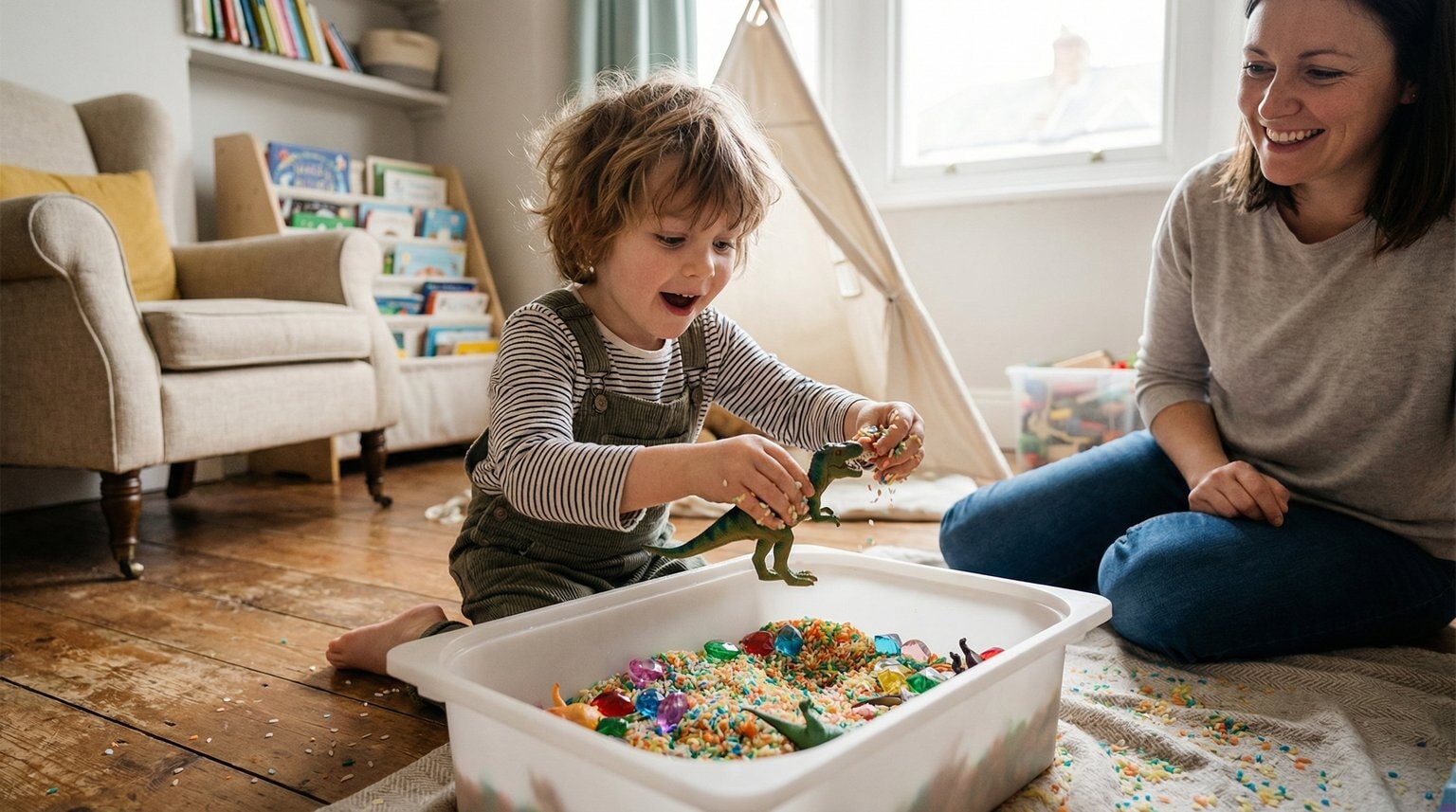
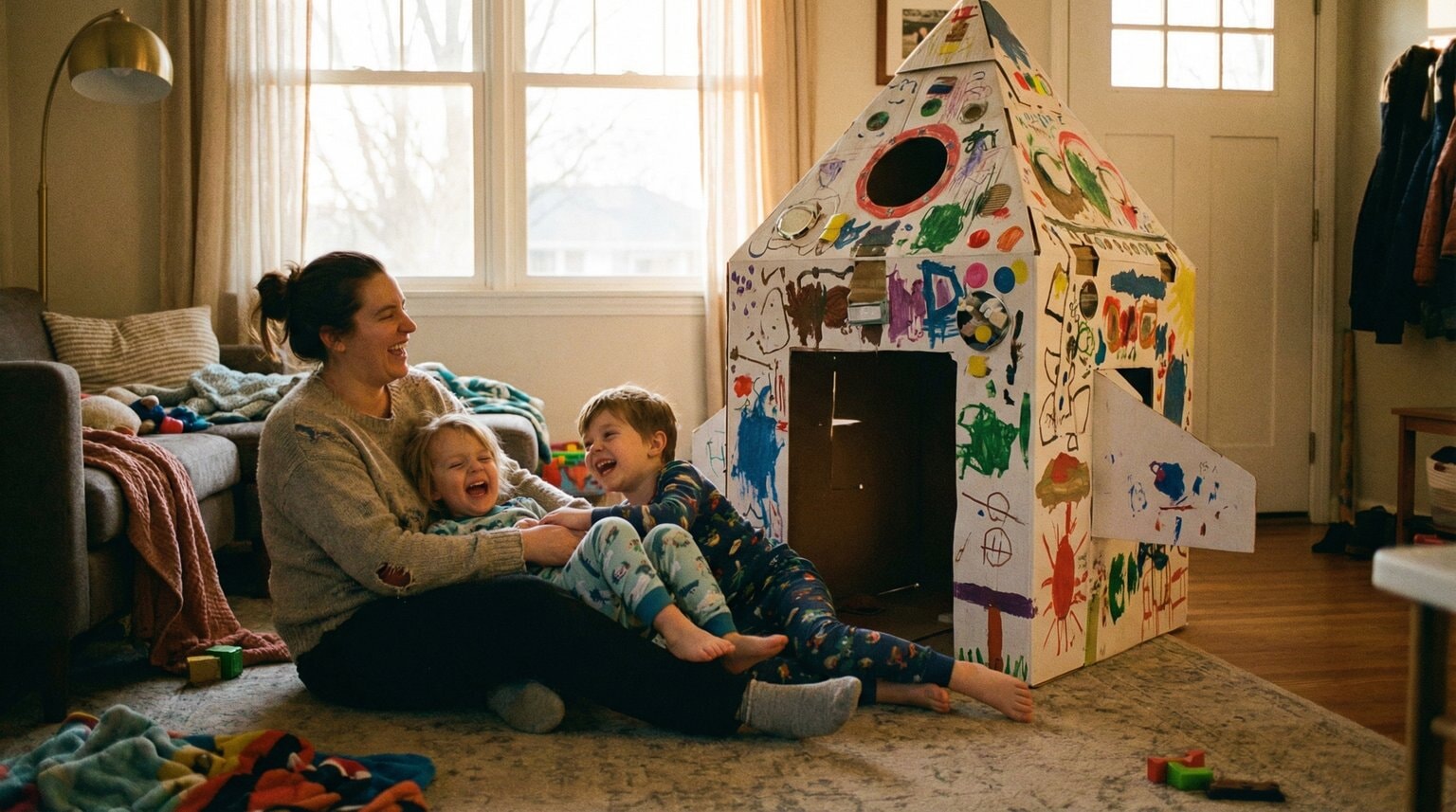
This is where I’ve seen the biggest wins in my house. Mystery sensory bins, scavenger hunts, or DIY “mystery boxes” using items you already own give kids the hands-on reveal experience.
Research on child engagement confirms children crave interactive experiences over passive consumption. They want to participate in discovery, not just watch it.
The magic isn’t in the content—it’s in their hands. When kids dig through a sensory bin and pull out a hidden treasure, they get the same dopamine hit as watching an unboxing. But they’re the ones doing it.

5. Nature Discovery Content
Animal reveals, hidden creatures, ecosystem surprises—nature content delivers genuine wonder. What’s inside that cocoon? Where did that fox go?
The natural world provides endless reveal moments without a single product placement.

Why These Alternatives Work
The key? These alternatives work because they replicate what children’s brains actually crave—anticipation, surprise, and discovery—without modeling “I want that” as the reward.
For parents dealing with deeper habits, our guide to breaking the unboxing addiction offers transition strategies. Understanding how digital content shapes what kids expect from gifts helps too.
Once you see the psychology, redirecting becomes much easier.
What About You?
Have any of these alternatives worked at your house? I’m always looking for unboxing replacements that actually hold kids’ attention—share what’s worked.
Your ideas might spark someone else’s next family tradition.
References
- Kim (2020) – ResearchGate – Unboxing video viewing motivations and parasocial interaction research
- NIH/PMC (2022) – Child relationship formation and interactive engagement research

Share Your Thoughts