
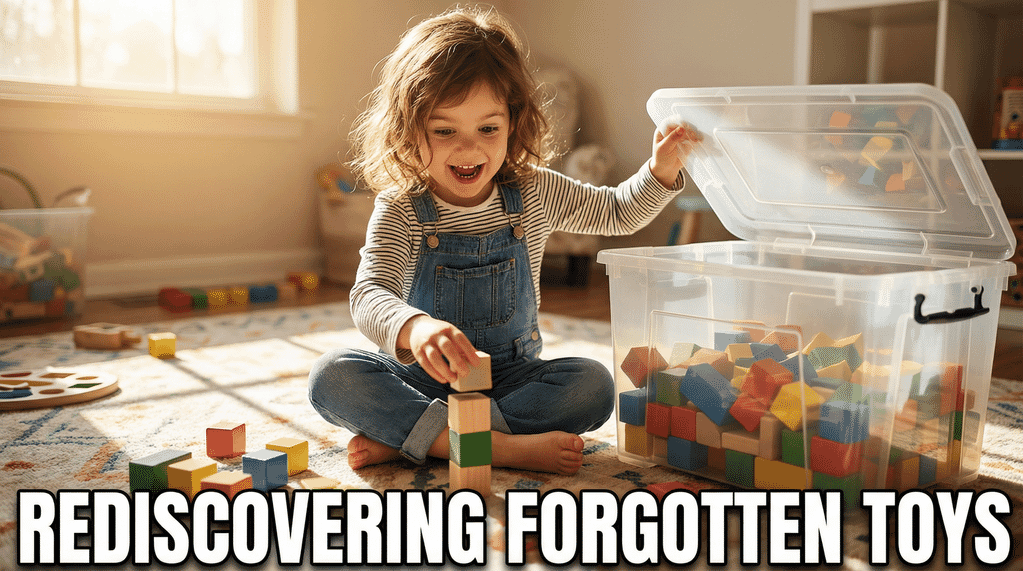
My 4-year-old spent Tuesday morning rediscovering a set of wooden blocks she hadn’t seen in three weeks. She built a “castle for tiny dragons” and spent 45 minutes elaborating on their backstory. Those blocks had been sitting untouched for months before I put them in storage. Now they were the most exciting thing in the house.
That’s toy rotation in action—and it’s not just an organizational trick. There’s actual developmental science behind why it works so well.
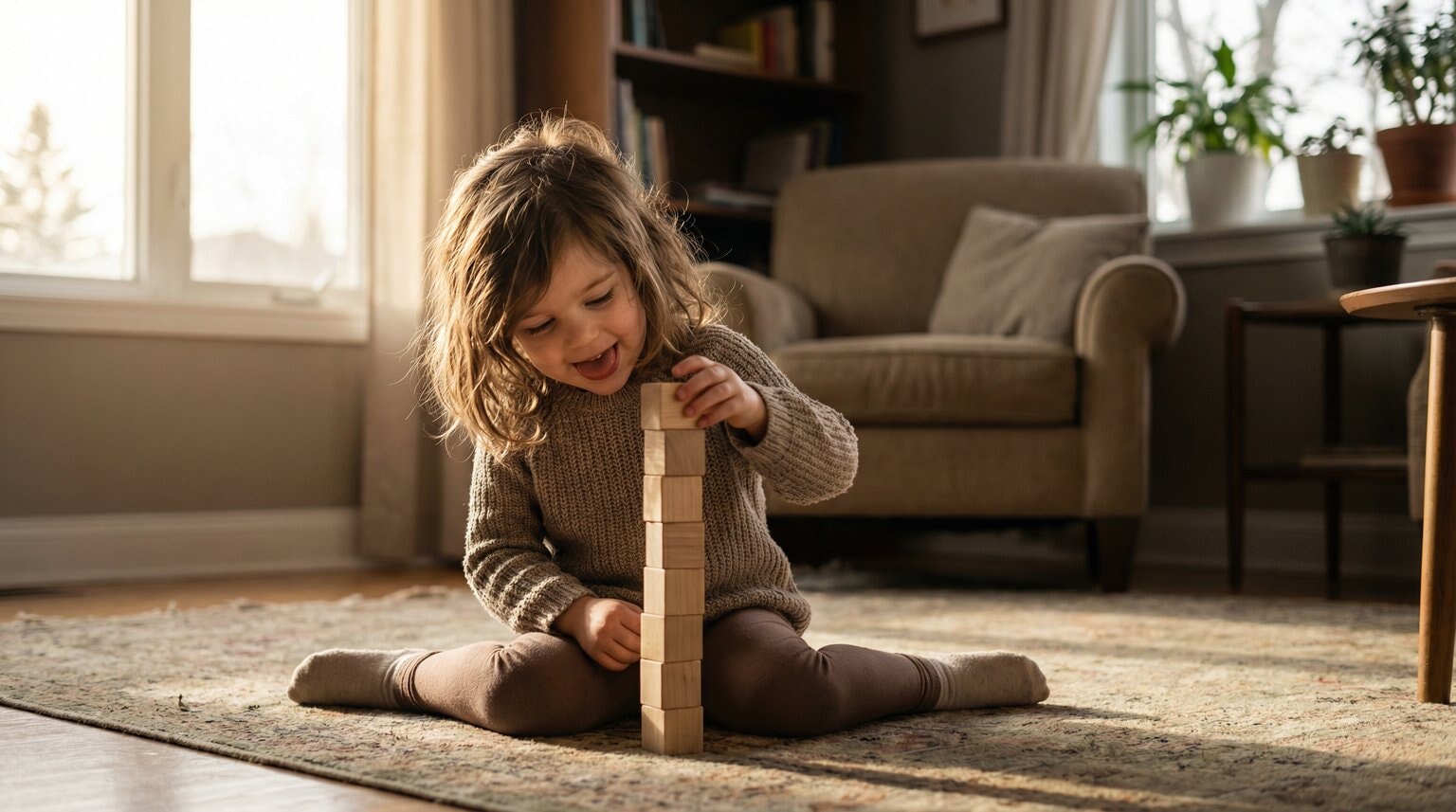
Toy rotation is a system where you divide your child’s toys into groups—typically three or four—and make only one group available. at a time while the rest stay in storage. Unlike simply reducing toys, rotation maintains variety while encouraging the repeated interaction that developmental research identifies as key to building cognitive skills—especially with construction toys. The “new” toys appearing every week or two aren’t new at all—they’re familiar toys made fresh by absence.
Here’s how to set it up in under 30 minutes, and why the research says it genuinely matters for your child’s development.
Key Takeaways
- Building and rebuilding the same toys multiple times drives spatial skill development—rotation creates fresh opportunities for this
- The simple 3-bin system takes under 30 minutes to set up and works for any family
- Watch for behavioral cues (toys untouched, shorter play sessions) rather than following rigid schedules
- Some toys should never rotate—comfort objects, current obsessions, and mastery toys need consistent access
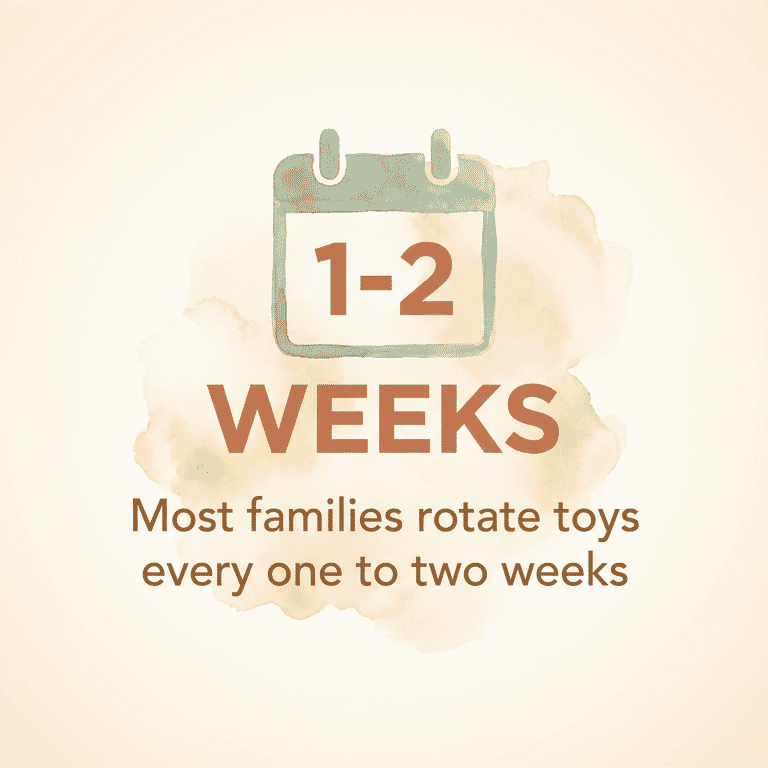
- Most families find rotating every 1-2 weeks hits the sweet spot between novelty and familiarity
The 3-Bin Rotation System
Forget complicated organizational schemes. The simplest approach works best, and it’s the one I’ve refined over years of managing toys for 8 kids.
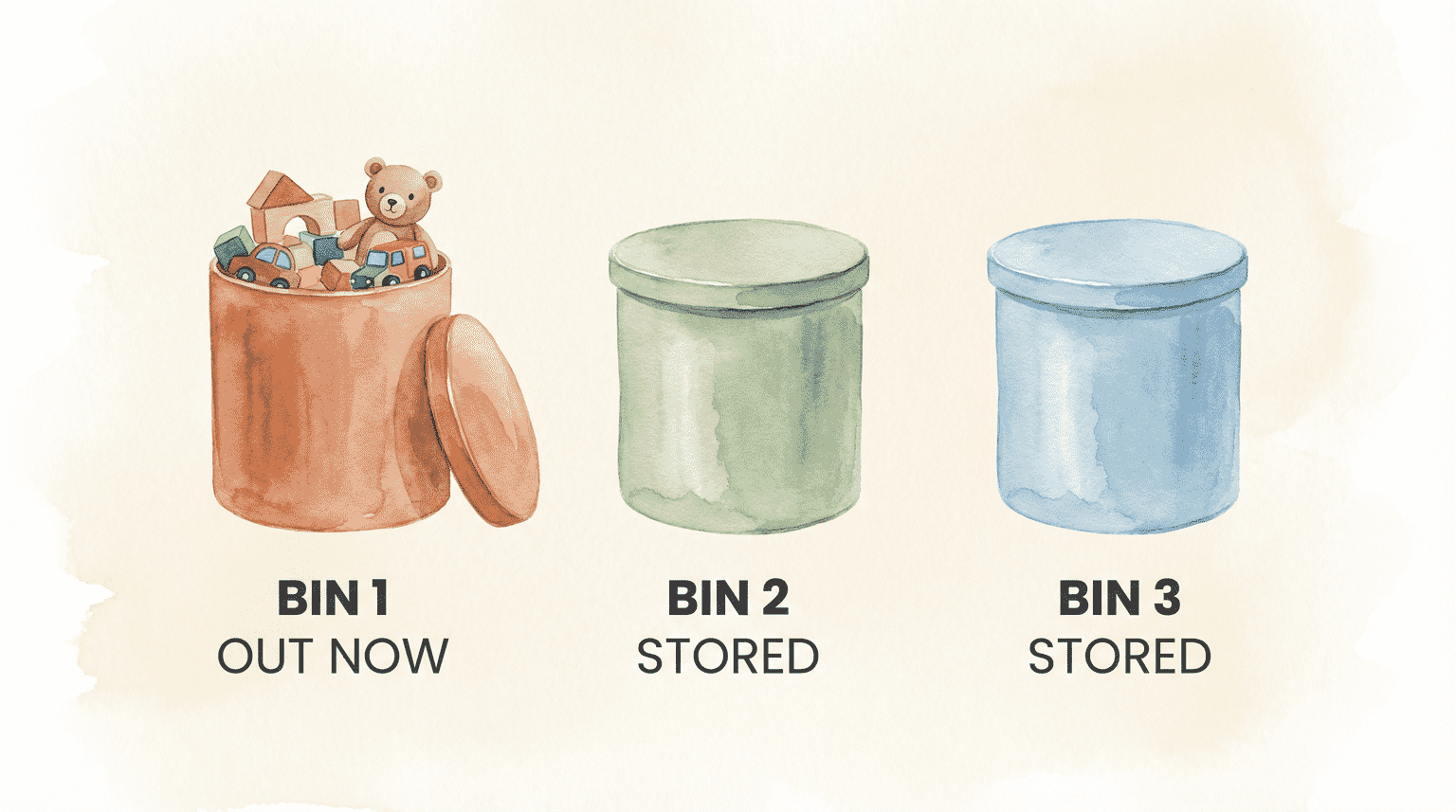
Step 1: Gather and sort into three groups.
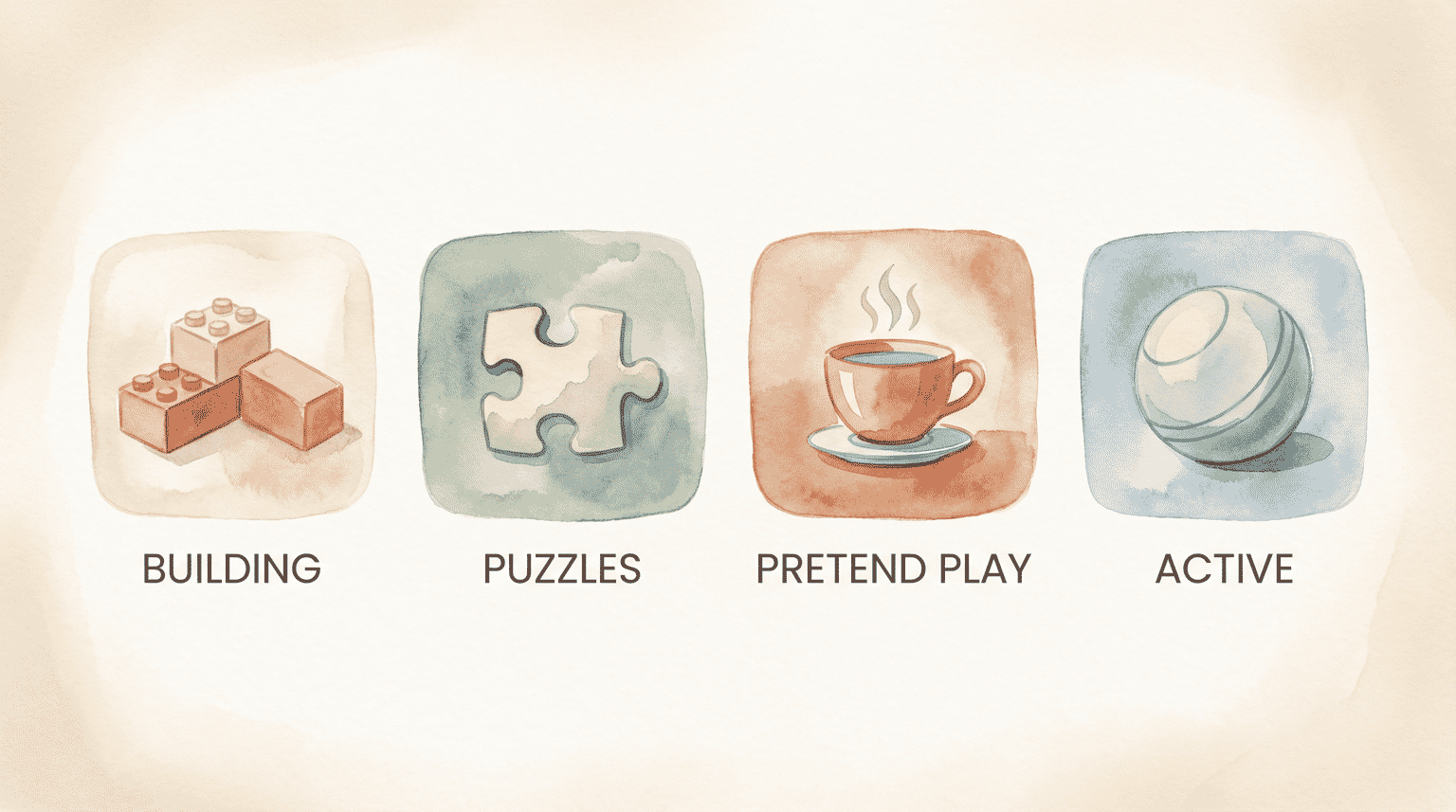
Pull out all the toys and divide them roughly equally into three bins, baskets, or boxes. Don’t overthink the sorting—just aim for variety in each group. Each bin should include:
- Something for building or creating
- Something for pretend play
- Something for puzzles or problem-solving
- Something active or sensory
Step 2: Display one group; store two.
Put one group in your play area. The other two go somewhere out of sight—closet, garage, under a bed. Use opaque containers so your child isn’t constantly reminded of what’s “missing.”
Step 3: Involve your child (age-appropriately).
Toddlers won’t understand the system, and that’s fine. But preschoolers and older kids can participate in choosing what goes where. My 6-year-old loves being the “toy librarian” who decides what gets checked out next. This involvement often aligns with your family’s gift-giving values—teaching that we don’t need everything available all the time.
Step 4: Rotate based on cues, not calendars.
More on this below, but resist the urge to set rigid schedules. Watch your child instead.
Step 5: Keep a small “constant” category.
Some toys stay out permanently. Comfort objects, current obsessions, and certain open-ended basics earn permanent residence. I’ll explain which ones and why.
Why This Actually Works: The Rebuilding Principle
Here’s where my librarian brain gets excited.
Most articles about toy rotation focus on reducing overwhelm or creating novelty. Those benefits are real, but they miss the deeper mechanism. A 2023 systematic review in developmental psychology identified what actually drives cognitive growth from construction toys: building and rebuilding multiple times is the key parameter for practicing spatial representations.
Not building once. Building again and again.
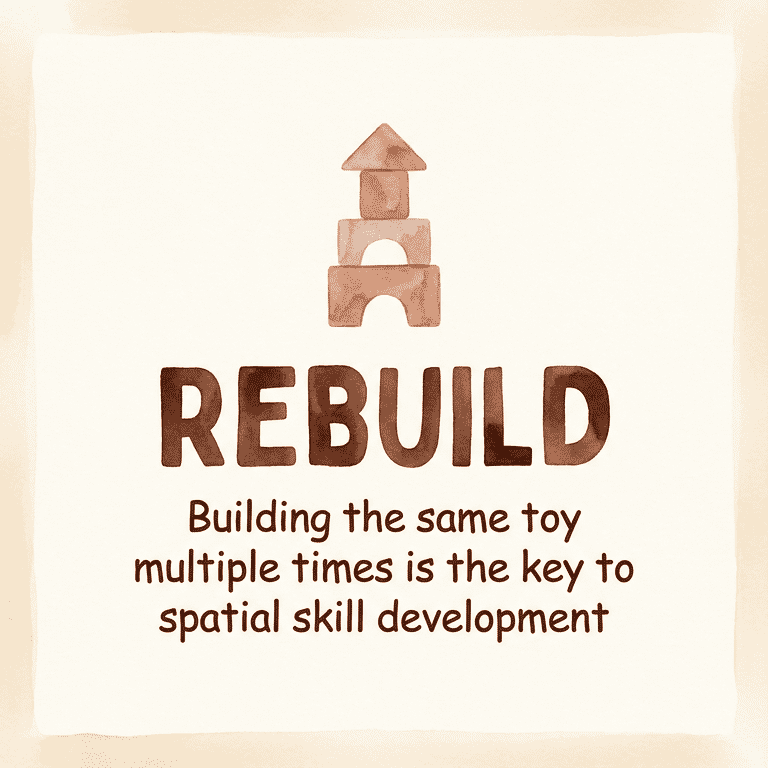
The researchers put it bluntly: “To compose an architectural setting once and create stories inside the structure, such as a doll house, is not an efficient way of practicing spatial skills because building and rebuilding multiple times is the key parameter for practicing spatial representations.”
This explains the problem with many of today’s popular toys. Licensed themed sets—think the detailed LEGO Star Wars kits—often “act more as collection items than construction toys.”
Kids follow the instructions, complete the build, display it on a shelf, and rarely pull it apart again. The cognitive benefit evaporates.
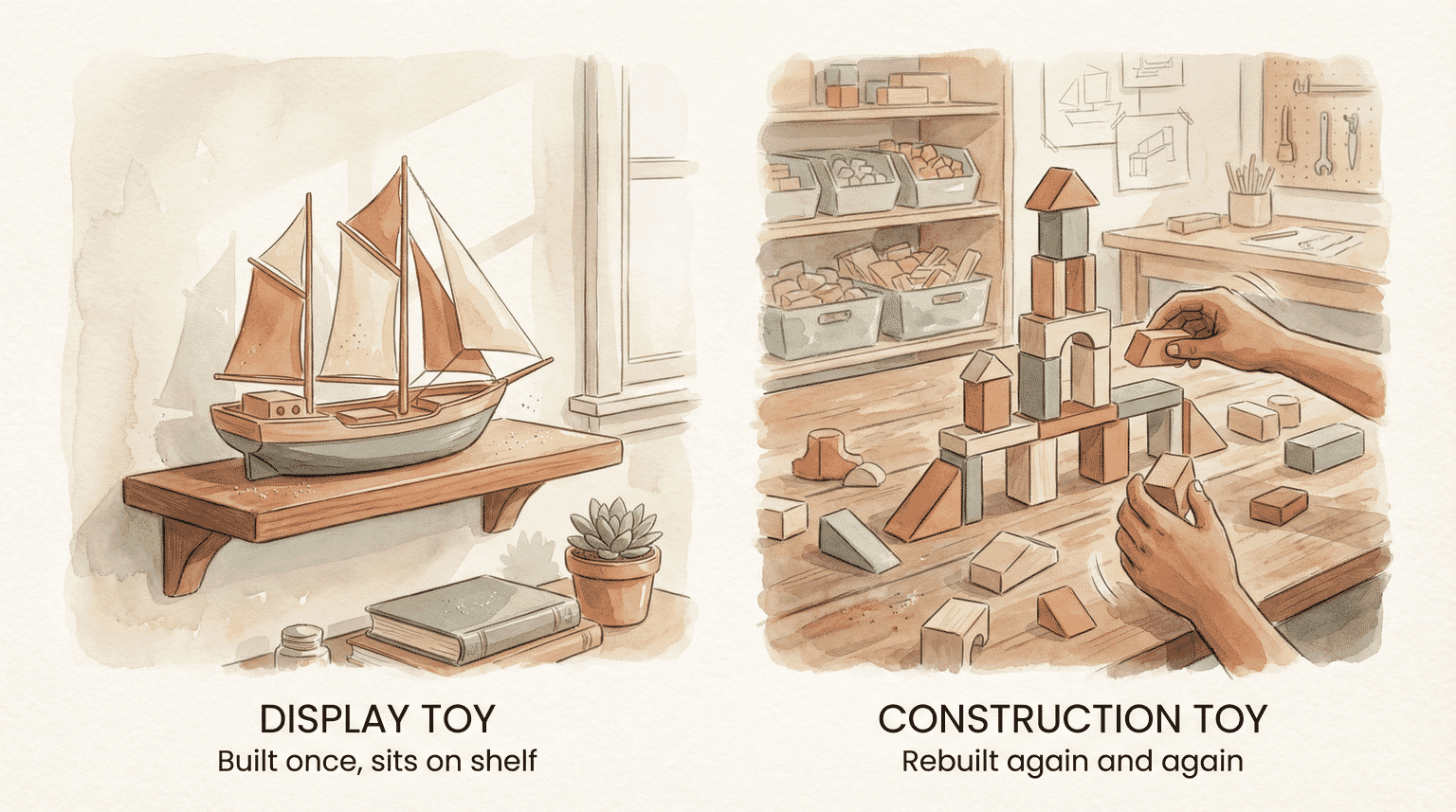
Rotation solves this by creating fresh opportunities for that repeated interaction. When the wooden blocks come back after three weeks, my daughter doesn’t just glance at a finished structure. She builds something entirely new. Then tomorrow, she rebuilds it differently. That rebuilding is where the developmental magic happens.
This connects to the research on fewer toys and deeper play—quality of engagement matters more than quantity of options. Rotation artificially creates the “fewer toys” environment without actually getting rid of anything.
What Goes Where: The Toy Type Matrix
Not all toys are created equal when it comes to rotation. The research suggests prioritizing certain categories and understanding which cognitive skills different toys support.
High-Priority Rotation Toys (Rotate These Regularly)
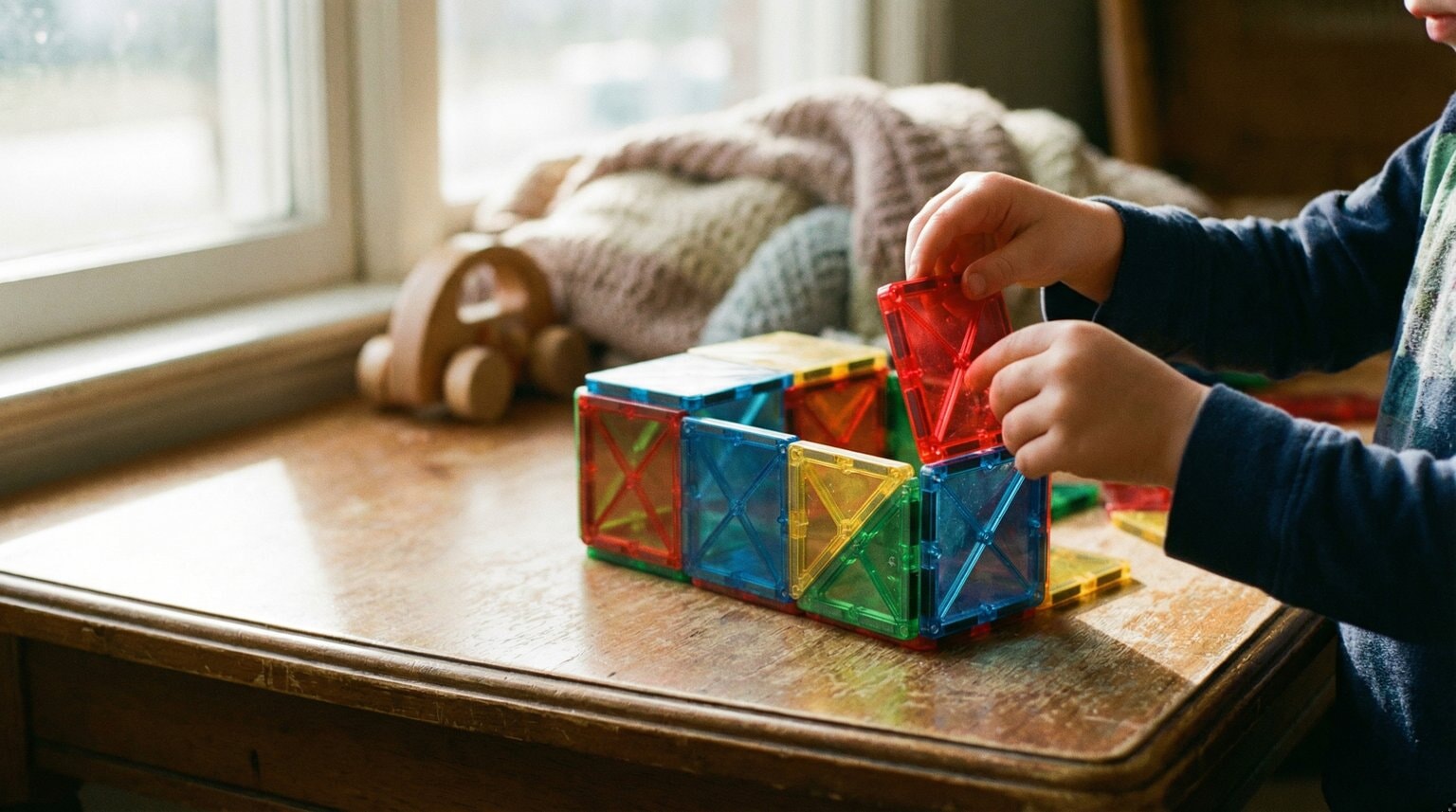
Open-ended construction toys deserve prime rotation spots. Blocks, magnetic tiles, and building sets without prescribed outcomes encourage that repeated building the research highlights. Florida International University research found that puzzles, building blocks, and pattern games actively develop mental rotation skills—abilities that later support math, science, and even reading. This aligns with broader research on how gifts shape children’s developing brains.
Puzzles and spatial toys benefit from rotation because absence resets the challenge. (Time it around their birthday with a 5-day purge ritual.). A puzzle that’s become automatic regains its problem-solving value after a few weeks away.
Pretend play sets (play kitchen items, dress-up clothes, action figures) cycle well because they inspire different narratives each time they reappear. These toys support creating space for imaginative play that drives creativity.
Lower-Priority Rotation Toys
Art supplies can stay accessible—rotating crayons and paper creates unnecessary friction.
Comfort objects never rotate. That stuffed bunny your toddler sleeps with? Leave it alone.
Current obsessions stay out regardless of rotation schedule. If your child is in a dinosaur phase, dinosaurs remain.
The “Collection Item” Problem
Watch for toys that become display pieces rather than play tools. The systematic review noted that themed construction sets often get built once and sit—which undermines the cognitive benefits toys are designed to provide. If you notice a toy hasn’t been touched since it was assembled, consider whether it belongs in rotation or whether it needs to be encouraged for rebuilding.
Reading the Room: When to Rotate
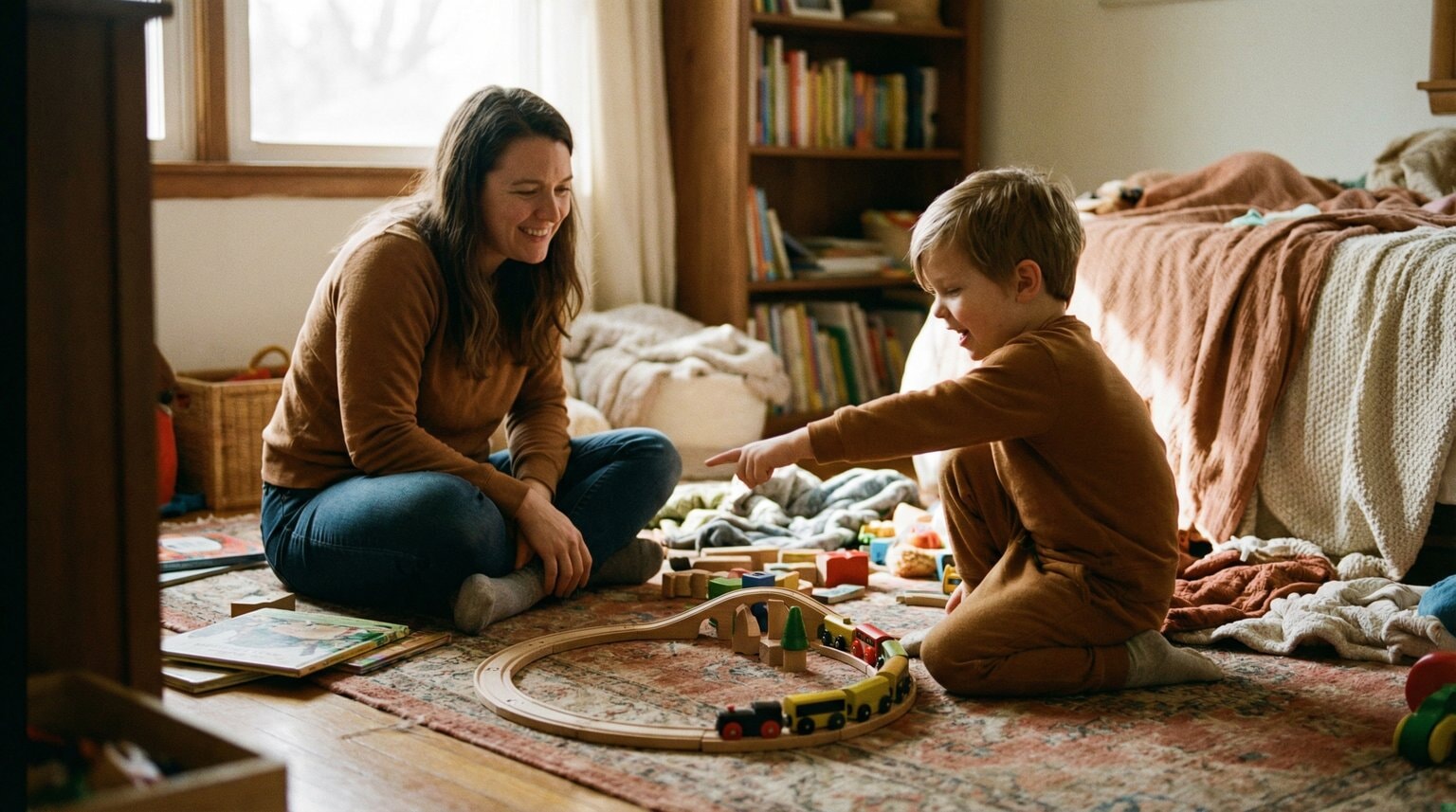
I used to rotate on a schedule—every Sunday, swap the bins. It worked fine. But I’ve learned to watch for behavioral cues instead, and the research supports this approach.
Signs It’s Time to Rotate
- Toys sitting untouched for several days. If the same toys keep getting ignored, novelty has worn off.
- Play sessions getting shorter. When your child moves quickly from toy to toy without settling in, available options may feel stale.
- Requests for “something new.” This is the obvious one—and rotation lets you deliver “new” without buying anything.
- Behavior problems during play. Sometimes overwhelm or boredom manifests as frustration, and a refresh helps.
Signs Rotation Is Working
- Deep engagement with individual toys. Building projects that span multiple days. Elaborate pretend scenarios.
- Excitement at swap time. When your child reacts to “rotated in” toys like they’re brand new.
- Independent play lengthening. Research shows that when children can focus without overwhelm, they play longer.
General Timing Guidance
For most families, rotation every 1-2 weeks works well. Toddlers often benefit from more frequent swaps (their attention spans are shorter), while preschoolers and older children can go longer between rotations.
But trust what you observe over any prescribed schedule. Your child will tell you when it’s time.
The “Keep Out” Category: What Shouldn’t Rotate
Here’s the counter-intuitive insight the research supports: not everything should rotate. Some toys earn permanent availability.
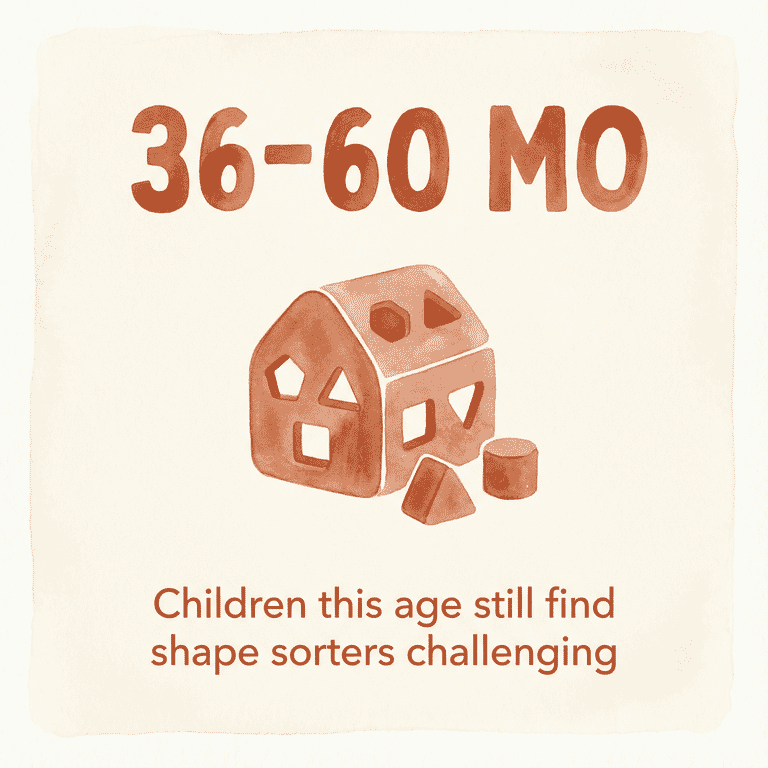
NSF-funded research tracking children aged 12 to 60 months revealed something surprising about shape sorters. These toys remain developmentally challenging far longer than most parents assume—even children aged 36-60 months are less efficient than adults at shape sorting tasks. Problem-solving with these toys actually improves with consistent access, not novelty.
Research on coding toys found similar patterns: children develop deeper understanding through repeated interactions with the same toys. “Active bodily engagement strengthens and supports learning connections,” researchers observed after 42 hours of video observation.
Mastery requires familiarity. Some toys need to stay put.
Toys That Should Stay Constant
- One set of basic building blocks. The foundational open-ended toy.
- A current “mastery” toy. Whatever your child is actively figuring out—don’t interrupt that process.
- Comfort and security items. Obvious, but worth stating.
- Outdoor/active equipment. Balls, ride-ons, and climbing toys don’t benefit from scarcity.
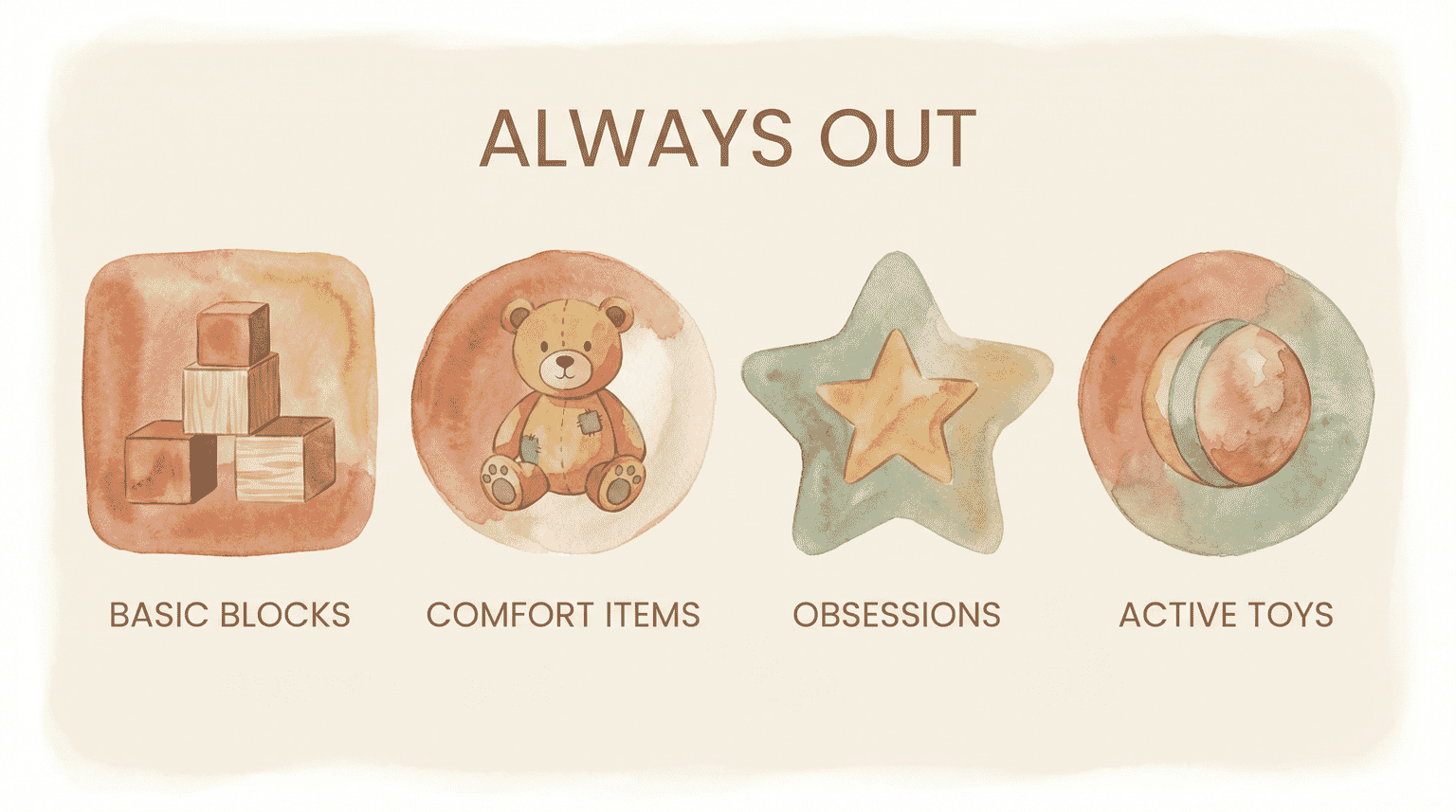
Aim for 3-5 permanent toys that never leave. Everything else can rotate.
Age-Appropriate Expectations
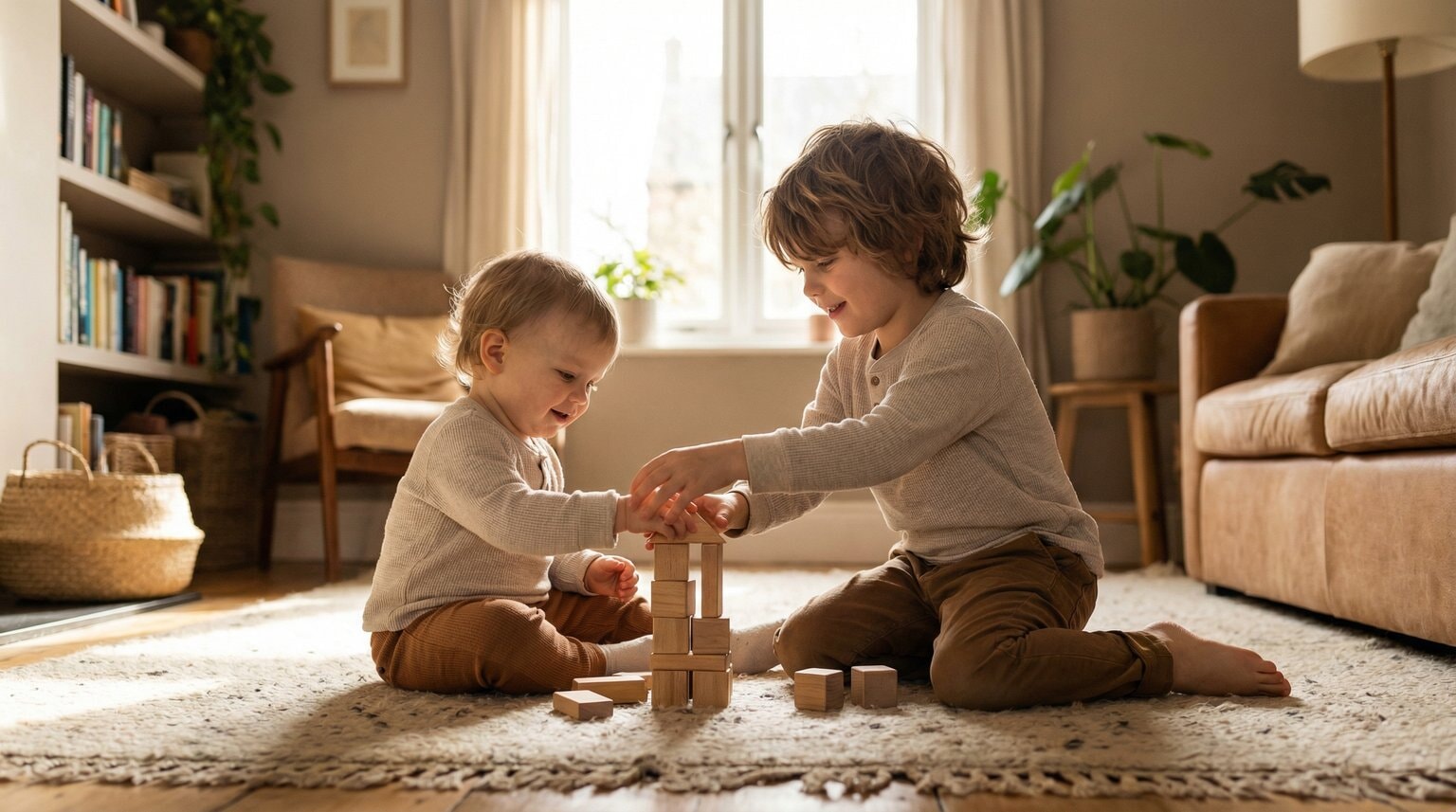
Different ages engage with rotation differently, and the research offers some guidance here.
| Age | Rotation Notes | Developmental Context |
|---|---|---|
| 12-18 months | Keep it simple; rotation matters less than safety and variety | NSF research shows this age uses shape sorters for basic exploration, not true spatial problem-solving |
| 18-30 months | Begin rotation; toddlers respond strongly to “new” toys appearing | Major developmental shift in spatial thinking occurs in this window |
| 30-48 months | Standard rotation works well; these children can participate in choosing | Geometric problem-solving and complex strategy emerge |
| 4-6 years | Longer rotation intervals; deeper engagement with familiar toys | FIU research confirms spatial play supports later math and reading |
| 6+ years | Focus rotation on open-ended toys; collections may not need rotating | Children this age develop systematic building strategies |
The key takeaway? Start simple with younger kids and extend intervals as they grow. Watch how your child responds rather than following age guidelines too rigidly.
Making It Work in Real Life
I’ve been rotating toys for years, and I’ll be honest: some weeks I forget. The bins get mixed up. A kid “rescues” a toy from storage. My husband doesn’t know which bin we’re on.
It still works.
The system is forgiving because the underlying principle is simple: limit what’s available so children engage more deeply with what is. The specific mechanics matter less than the general practice.
If this feels overwhelming, start even simpler:
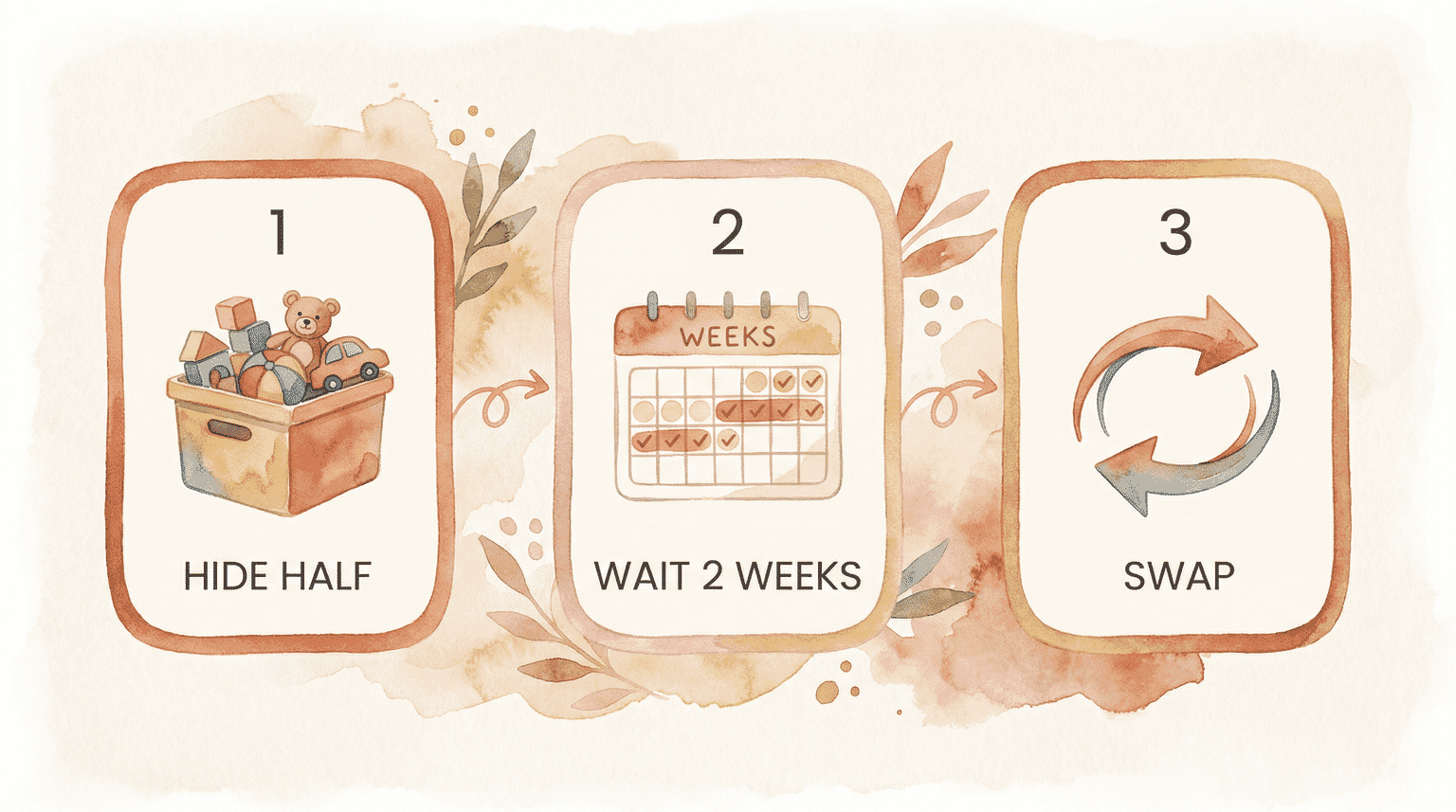
- Put half the toys in a closet
- Wait two weeks
- Swap them
That’s it. You can refine from there.
Frequently Asked Questions
How many toys should a child have out at once?
Most child development experts recommend 8-12 toys visible at a time, though the specific number matters less than variety across play types. A 2023 developmental review found that children engage more deeply when they can return to familiar toys repeatedly—suggesting fewer toys with rotating availability beats a large static collection.
How often should I rotate toys?
Watch for engagement cues rather than following a rigid schedule. Signs it’s time: toys sitting untouched for several days, play sessions becoming shorter, or requests for “something new.” For most families, this translates to every 1-2 weeks.
Does toy rotation actually help children?
Yes—though not for the reasons most parents assume. Research shows that “building and rebuilding multiple times” drives spatial skill development. Rotation doesn’t just reduce overwhelm; it creates renewed opportunities for the repeated interaction that research links to cognitive growth.
What toys should not be rotated?
Comfort objects, toys at peak engagement, and open-ended builders your child returns to daily should stay accessible. Research shows deep mastery requires consistent access. Keep a small “constant” category of 3-5 favorites that never leave.
Over to You
Do you rotate toys? I’m curious whether you follow a schedule or just swap things out when play goes stale—and whether your kids notice when old favorites come back.
Your rotation timing insights could help so many parents get this right.
References
- Malleability of spatial skills: bridging developmental psychology and toy design – 2023 systematic review on construction toys and spatial cognition
- Developmental Changes in Children’s Object Insertions – NSF research on developmental milestones in spatial problem-solving
- Florida International University eye-tracking research – 2025 study on children’s spatial visualization strategies

Share Your Thoughts