
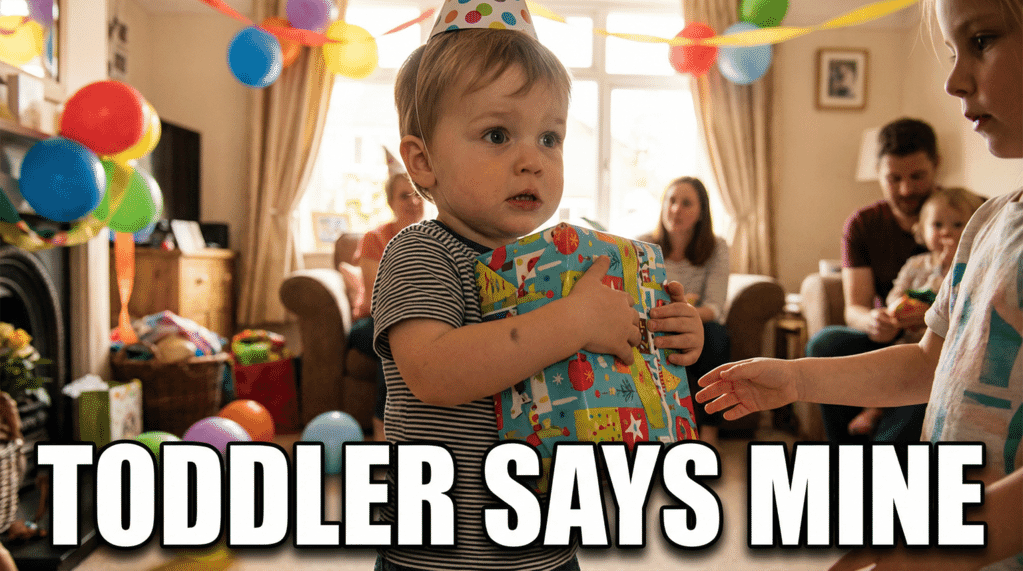
If your toddler shouts “mine!” at birthday presents (including ones that aren’t theirs), you’re not raising a tiny tyrant. You’re watching a major cognitive milestone in action.
Key Takeaways
- “Mine!” signals your toddler just discovered they exist as a separate person—a major cognitive milestone around 18-24 months
- Sharing is the hardest prosocial skill for toddlers—harder than helping or comforting
- 32% of possessive toddlers still chose to share the same toy when given the chance
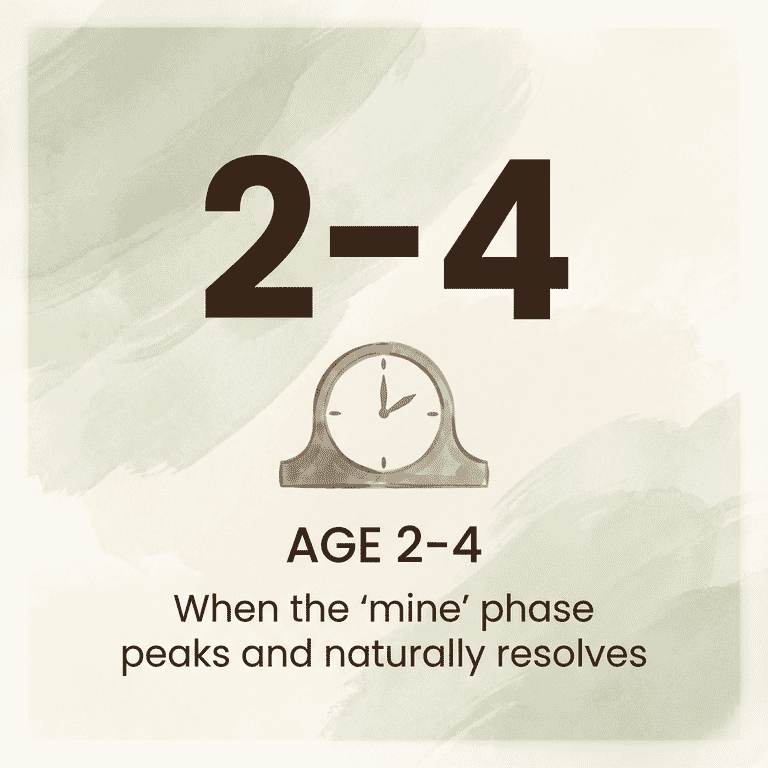
- The “mine” phase typically peaks around age 2 and resolves by 3-4 naturally
What’s Actually Happening
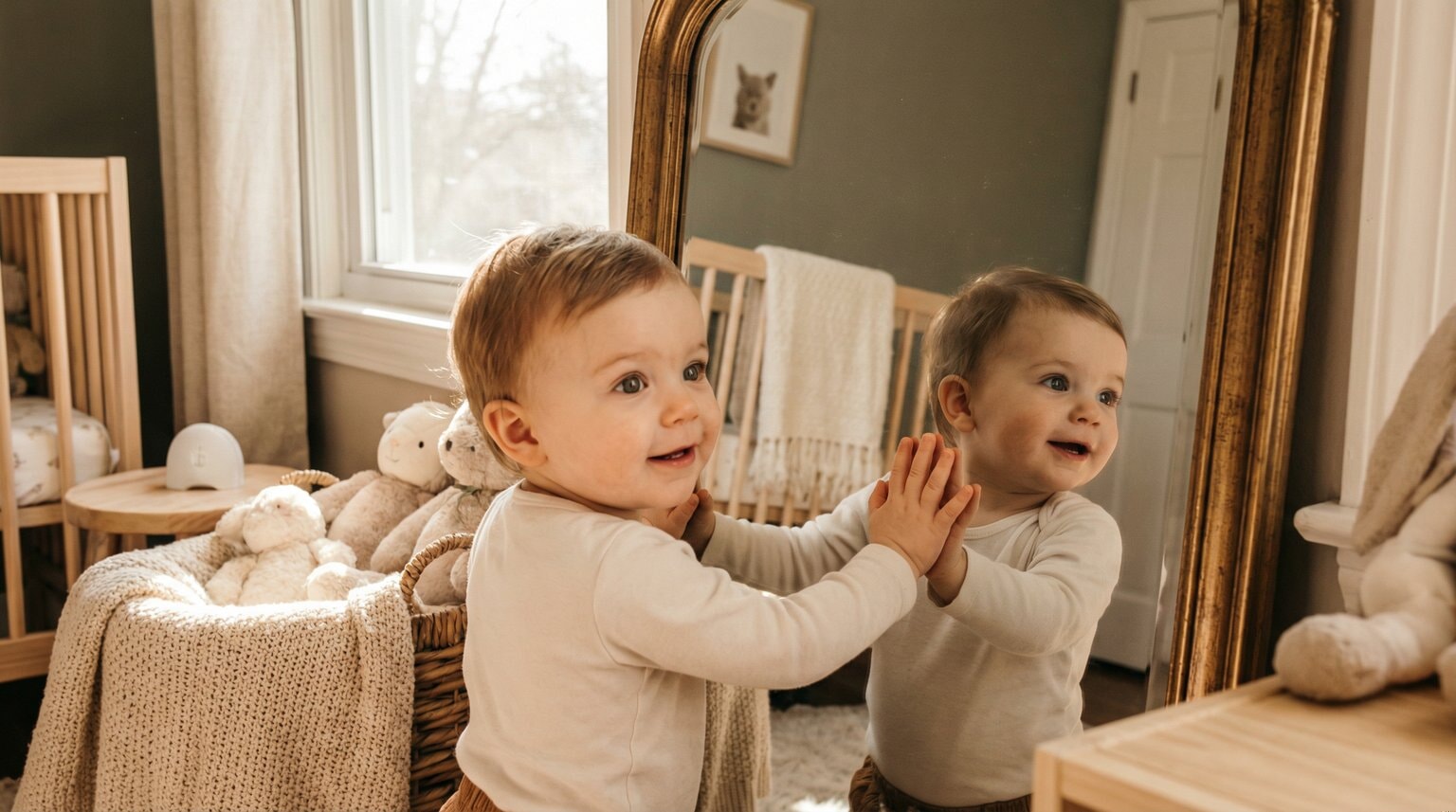
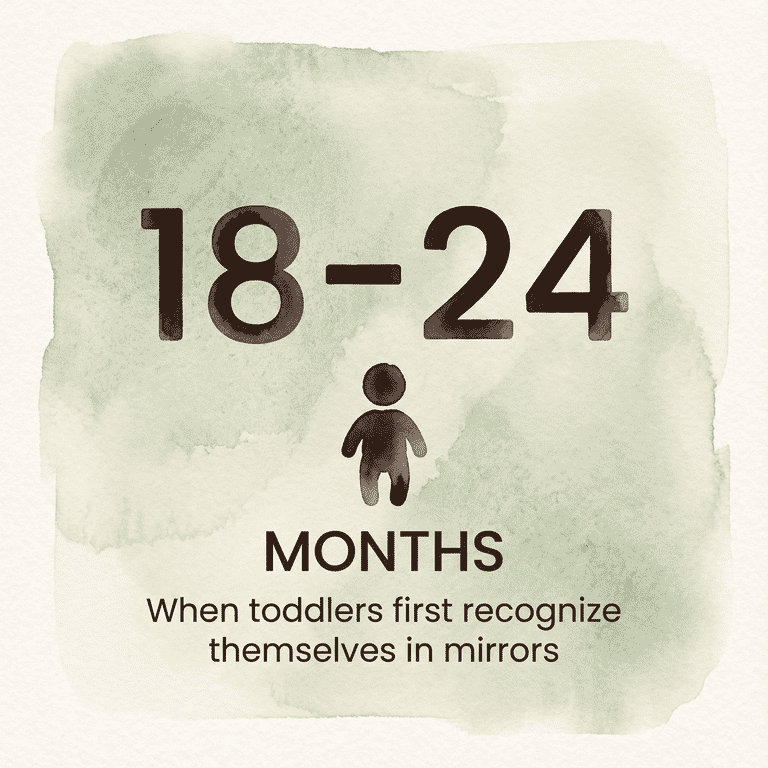
Here’s what the research shows: that insistent “MINE!” means your toddler just discovered they exist as a separate person. Around 18-24 months, children develop self-recognition—the ability to see themselves in a mirror and think “that’s me.”
And “mine” is how they practice this brand-new awareness.
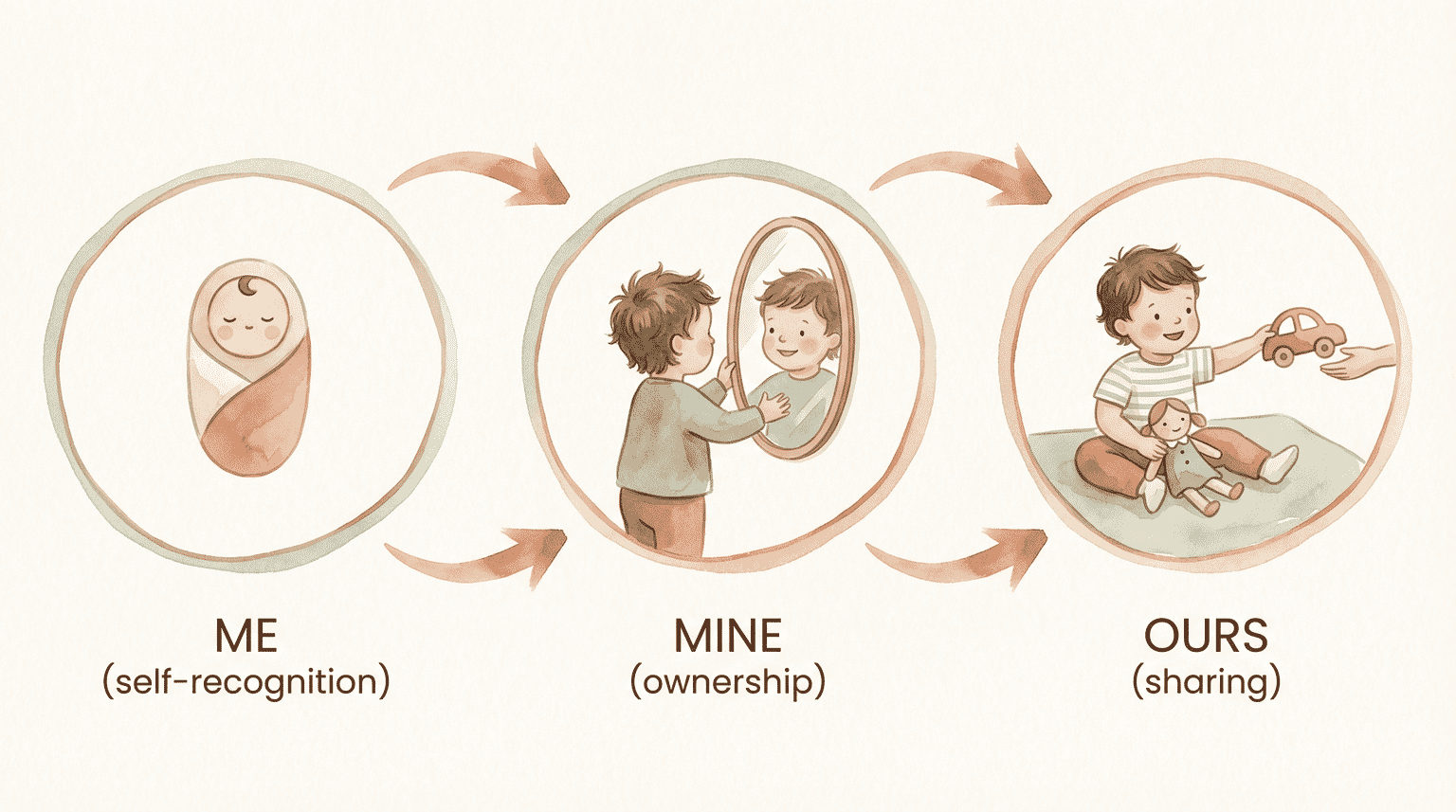
A 2022 study from PMC found that sharing of toys only emerges after self-recognition develops. Your toddler literally has to understand “me” before they can claim “mine”—and they have to master “mine” before they can genuinely share.
“They’ve just found out that they have a will, and they want to exercise it.”
— Susanne Denham, Professor of Developmental Psychology, George Mason University
This doesn’t mean your 2-year-old is selfish. They’re beginning to use pronouns—an important part of speech that helps them communicate ownership and understand their identity.
It’s actually a sign their brain is developing exactly as it should. The possessiveness comes first. The sharing comes later.
Why Gifts Make It Intense
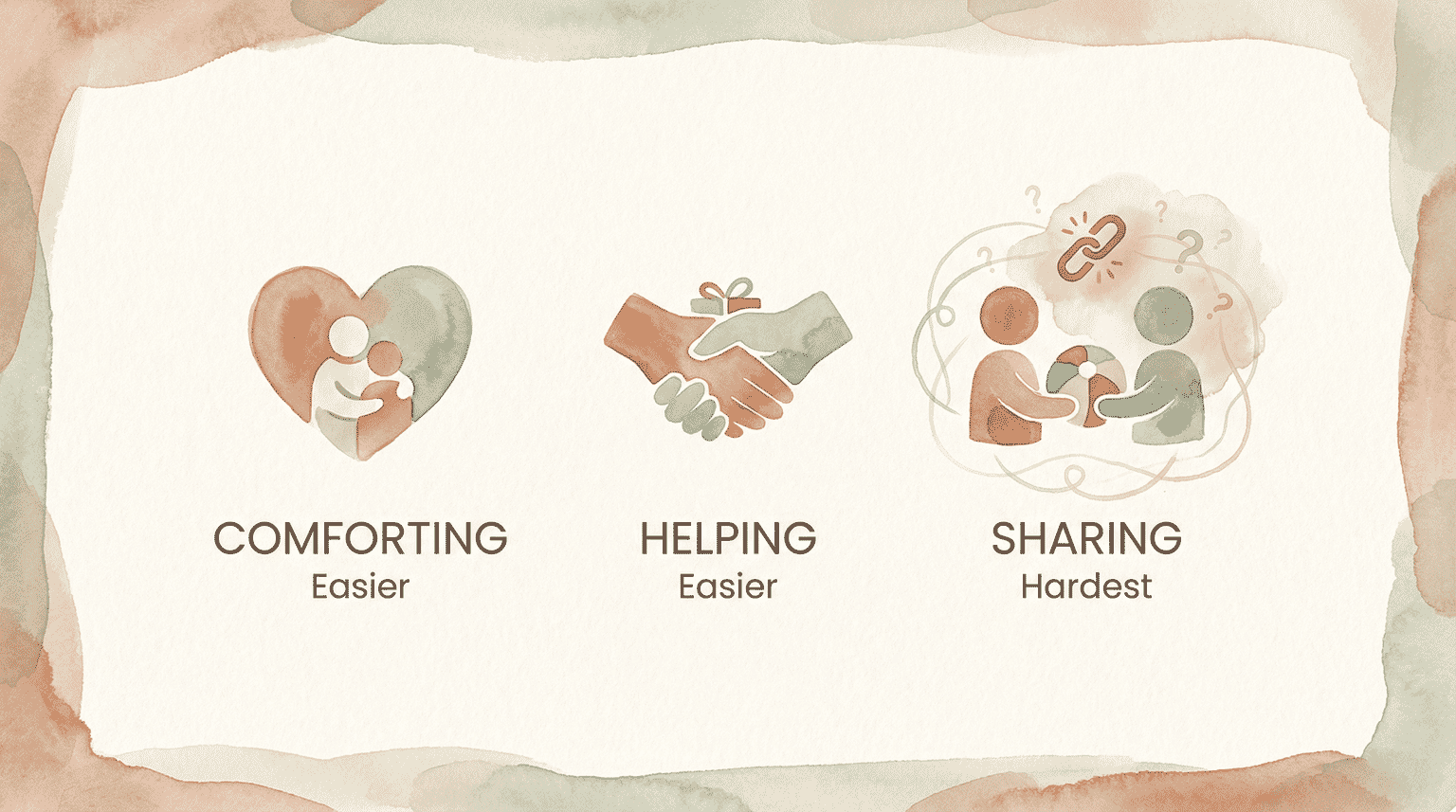
Gift situations are possessiveness on hard mode. A 2022 Frontiers in Psychology study found that sharing is actually the hardest prosocial skill for toddlers—scoring significantly lower than helping or comforting behaviors.
Add the excitement of birthdays, the confusion of watching siblings open presents, and all those big emotions? No wonder gift moments trigger nuclear-level “MINE!” responses.
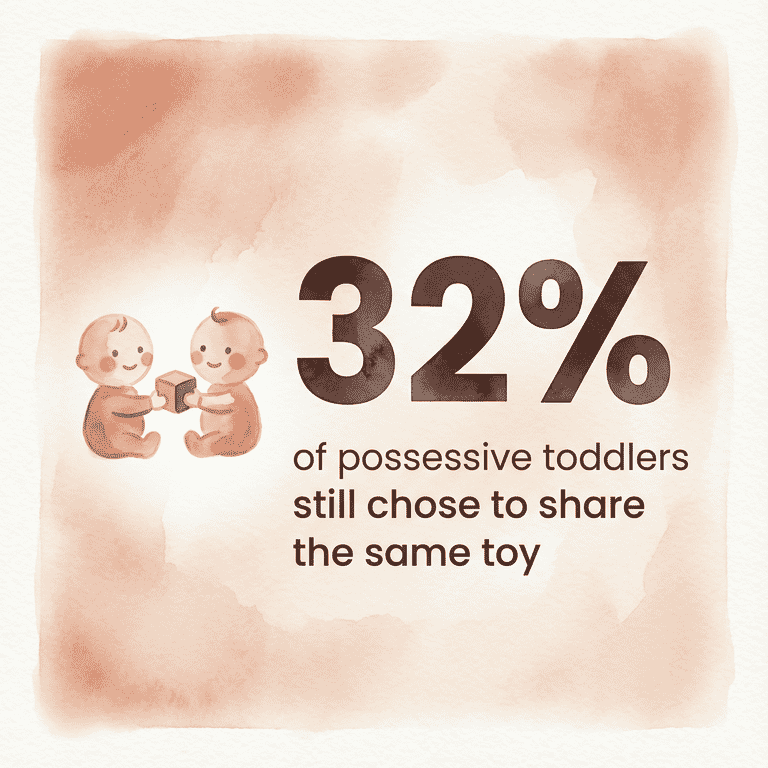
Here’s something that surprised me: research published in PNAS (2021) found that 32% of toddlers who showed possessive behavior toward an object still shared that same object when given the chance. Possessiveness and generosity can coexist—even in the same moment, with the same toy.
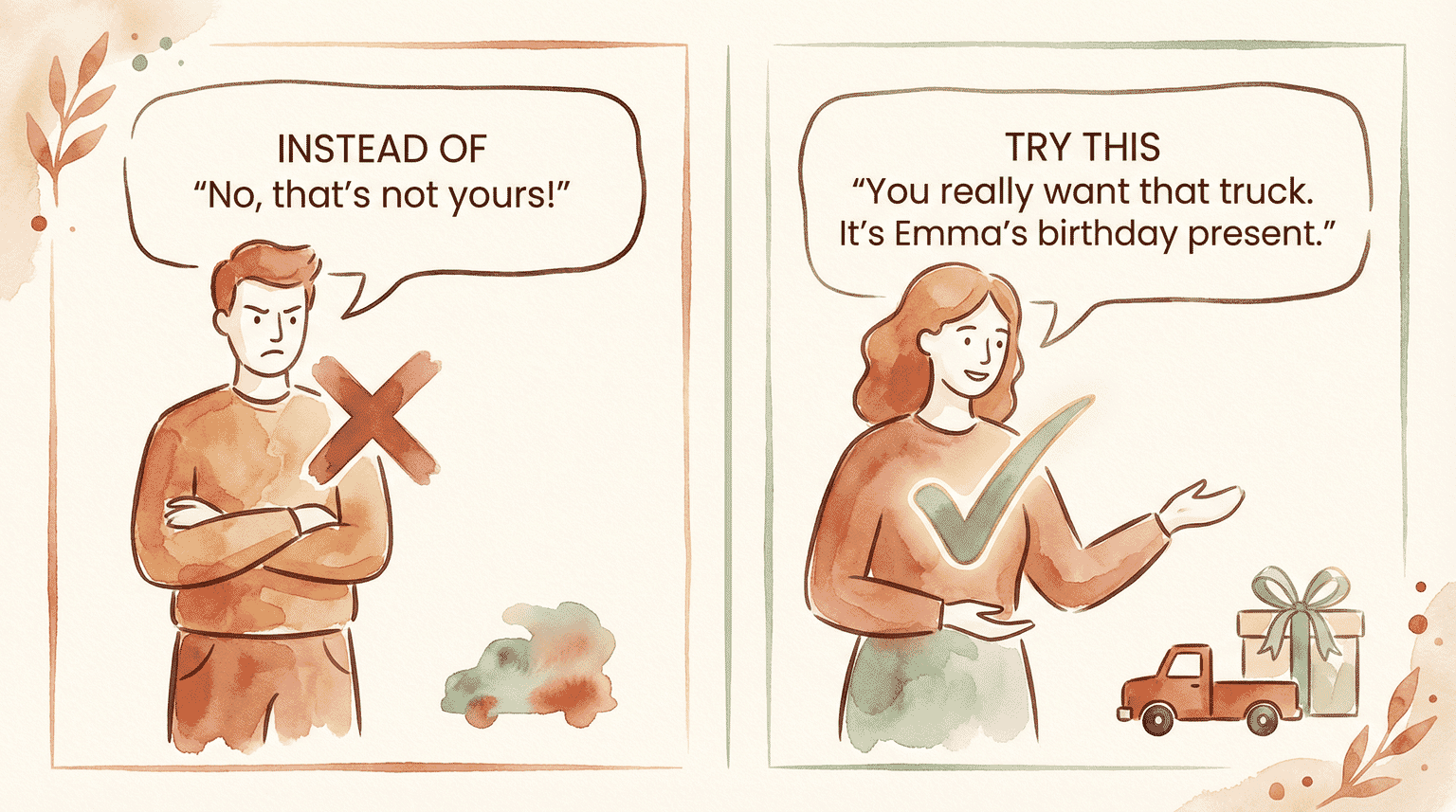
If your toddler claims everything at a birthday party, a simple acknowledgment works better than correction: “You really want to hold that truck. It’s Emma’s birthday present, and she’s excited about it too.”
Validating their feelings doesn’t mean giving in. It means helping them feel heard while you guide them toward understanding.
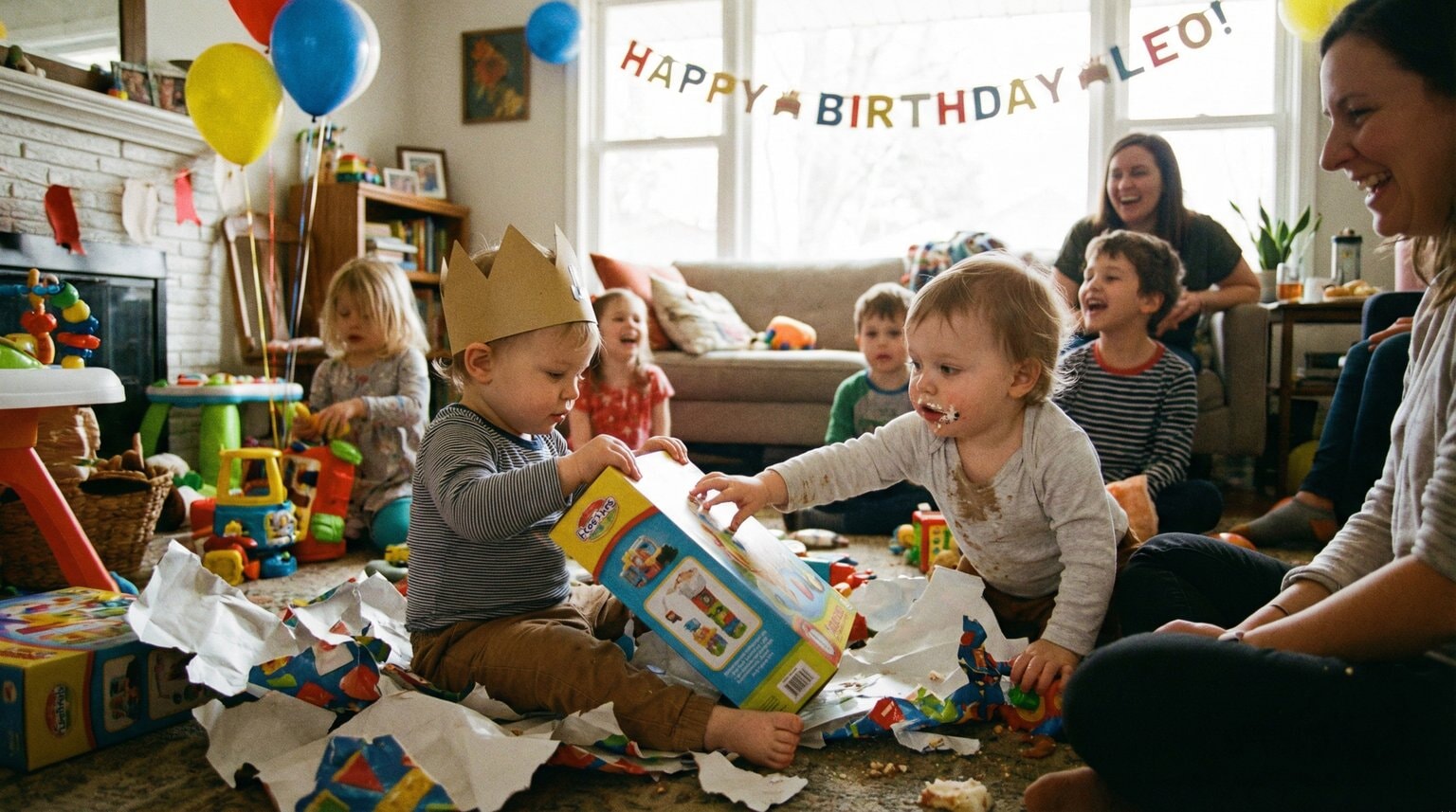
And if you’ve noticed your toddler gets more excited about the box than the gift inside—there’s a reason for that.
The Bottom Line
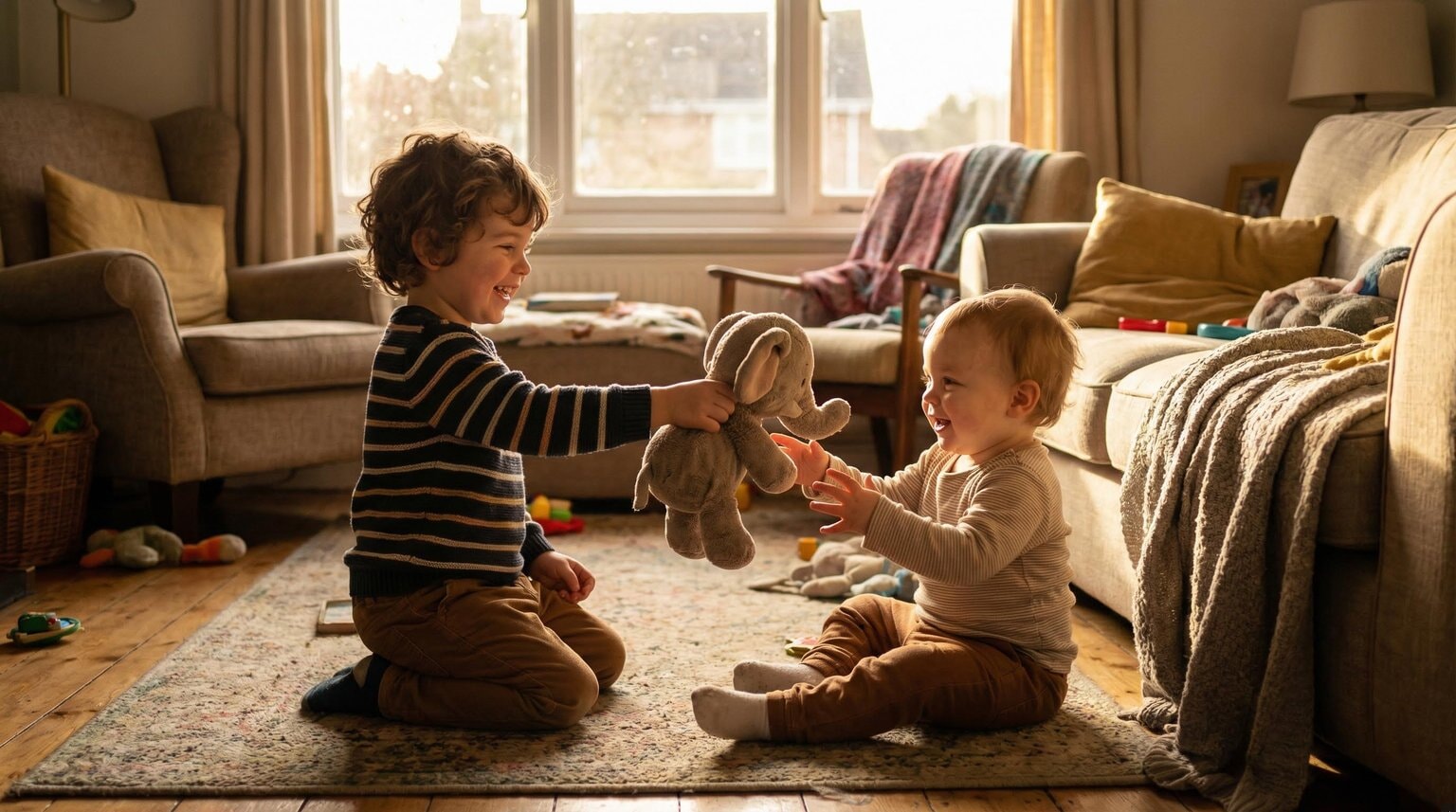
The “mine” phase typically peaks around age 2 and resolves by 3-4 as language, emotional regulation, and perspective-taking develop. It’s not a character flaw—it’s your toddler’s brain doing exactly what it should.
For the full developmental timeline of when toddlers actually learn to share, the research is reassuring. This phase has an expiration date.
Want to understand more about the psychology behind how kids experience gifts? That’s where the really fascinating research lives.
I’m Curious
What’s the most ridiculous thing your toddler has claimed as “MINE”? I once had a standoff over a used napkin. These stories make the “mine” phase a little funnier—and remind us all it’s temporary.
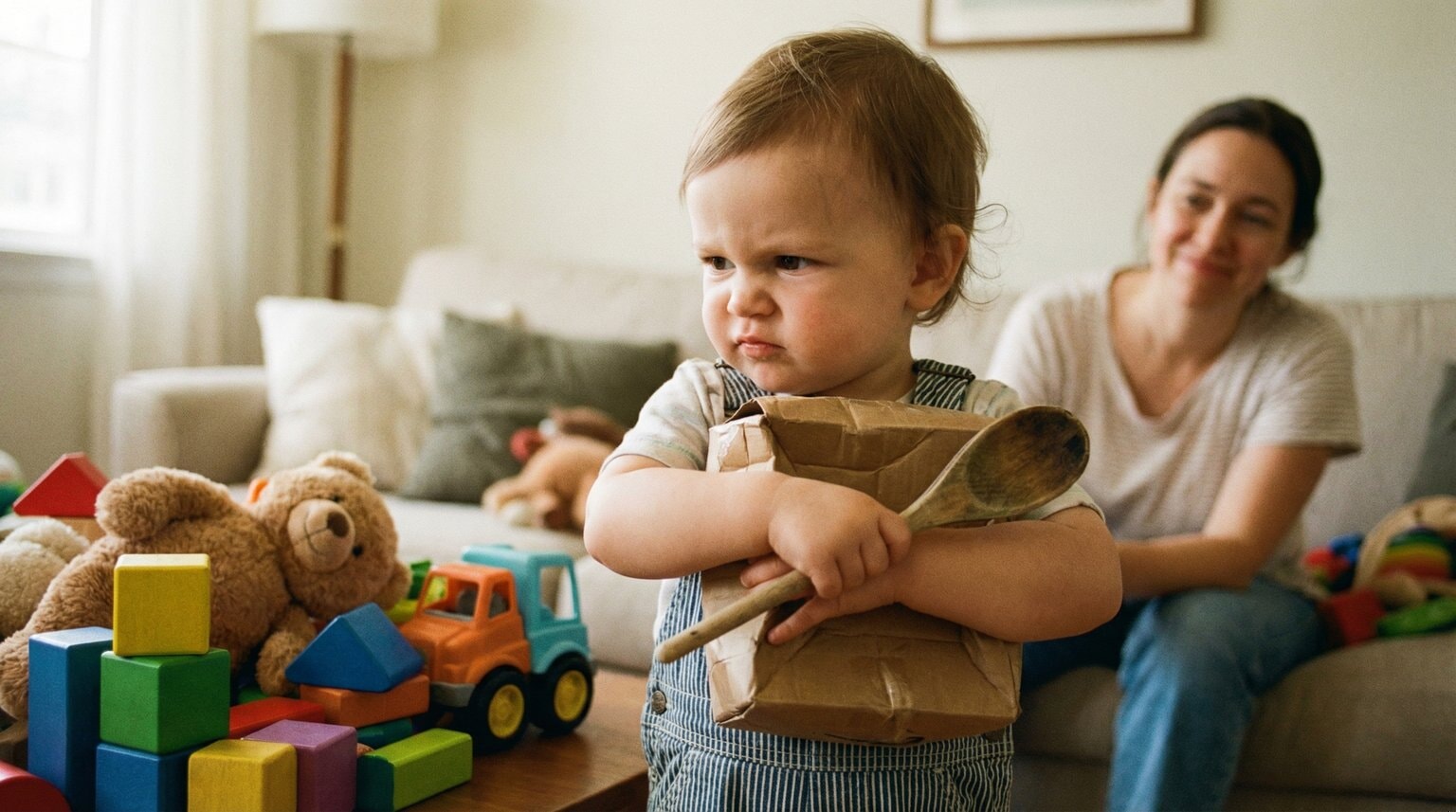
These “mine” stories remind us we’re all surviving the same beautiful chaos.
References
- PMC Self-Recognition Study (2022) – Research on self-awareness and emotional knowledge development
- Frontiers in Psychology (2022) – Prosocial behavior development in toddlerhood
- PNAS Infant Sharing Study (2021) – Research on possessive tendencies and sharing behavior

Share Your Thoughts