
Your child is staring at a blank card like it personally offended them. You’ve said “just write something nice” three times. Here’s the fix: a 3-sentence formula they can memorize once and use forever.
Key Takeaways
- The 3-sentence formula works for any gift: thank you for [gift], I love it because [detail], I can’t wait to [use it/see you]
- Templates reduce mental load so kids can focus on the message, not the structure
- Adding specific details transforms “mom made me write this” into something genuine
- Check the age guide to know when to help and when to step back
The Formula
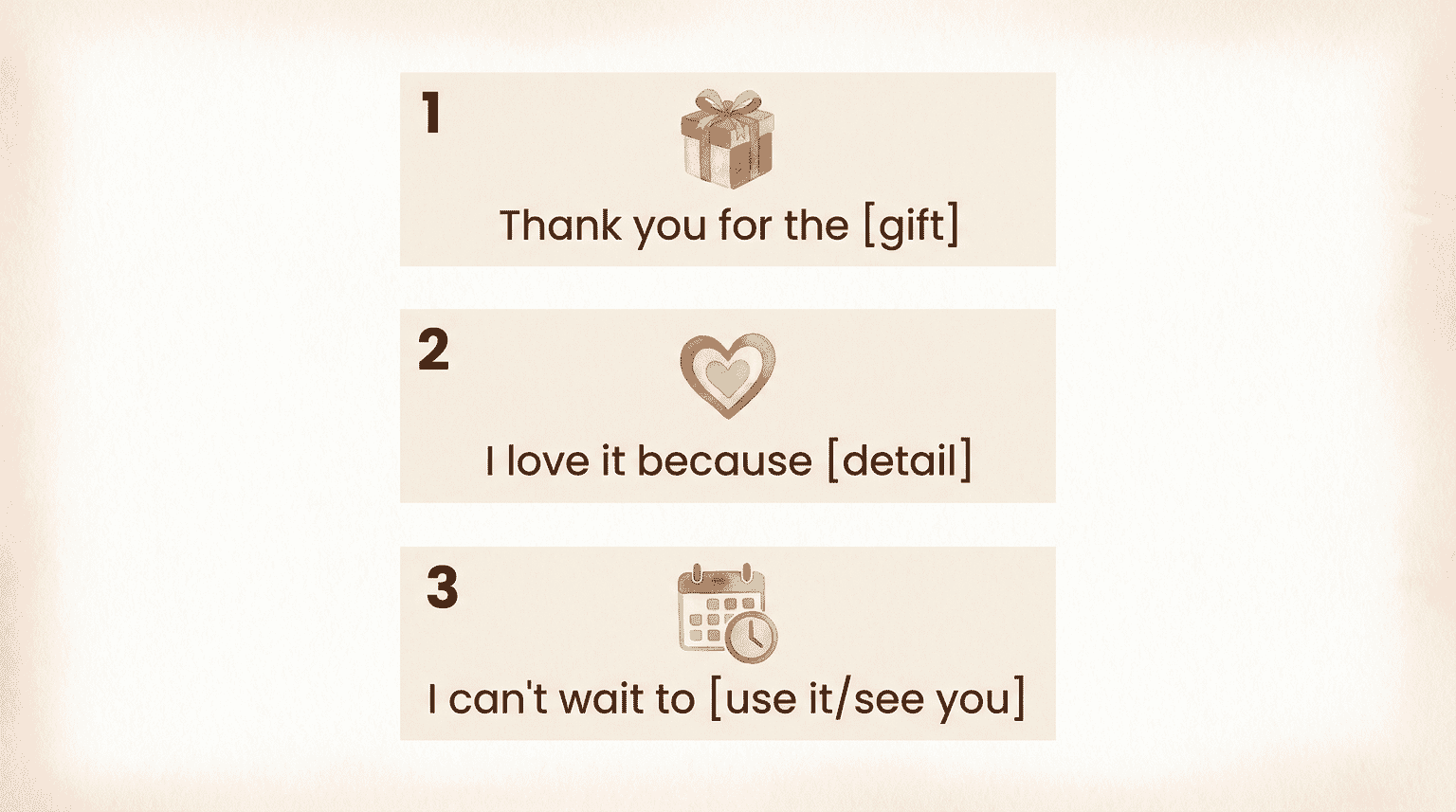
The 3-Sentence Thank You Note:
- Thank you for the [specific gift].
- I love it because [one detail about why].
- I can’t wait to [how you’ll use it/see them].
That’s it. Here’s what it looks like in practice:
“Dear Grandma, Thank you for the art supplies. I love them because the markers have so many colors. I can’t wait to draw you a picture! Love, Emma”
— Example thank you note using the 3-sentence formula
Research from Ohio State University confirms this structure works because it hits three essentials: be personal (use their name), be specific (state what you’re thankful for), and be sincere (explain why it matters to you).
The beauty of this formula? It works for literally any gift, from LEGO sets to cash to experiences. Once kids memorize it, they’ve got a tool for life.
Why This Formula Actually Works
Here’s what the research shows: writing is genuinely hard for kids. According to Massachusetts General Hospital’s Clay Center, “Writing involves multi-tasking, and it can be taxing on one’s executive functions.”
A template reduces that mental load so kids can focus on the message, not the structure.
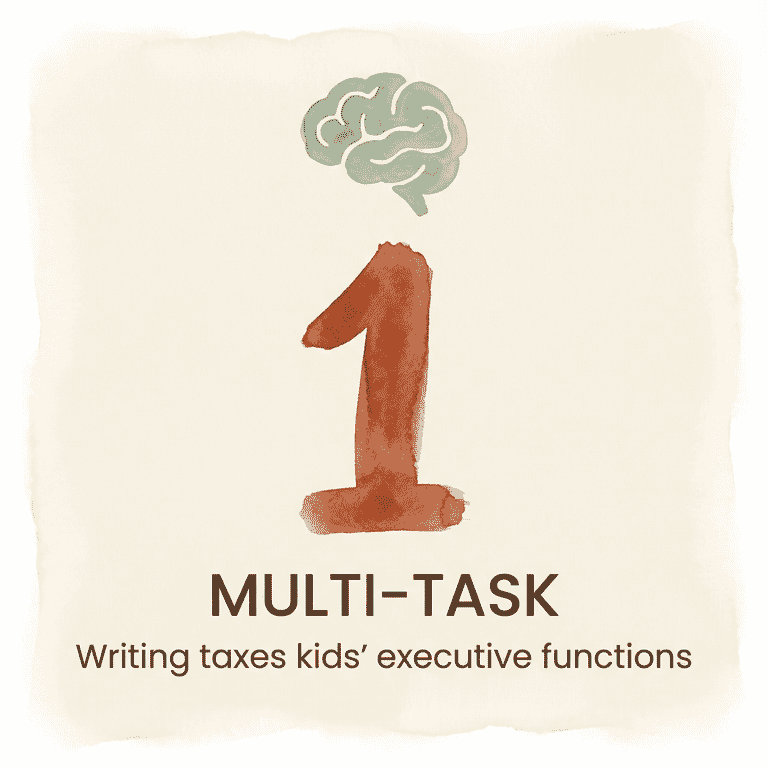
Think about everything that goes into writing a thank you note: holding the pencil, forming letters, spelling words, organizing thoughts, and expressing genuine feeling. That’s a lot of simultaneous demands on a developing brain.
The formula handles the “organizing thoughts” piece automatically, freeing up mental energy for everything else.
The specificity in sentence two matters more than you’d think. Psychology research from 2024 found that prompted thank-yous feel less genuine—unless the writer adds specific details. That middle sentence transforms “mom made me write this” into something that actually feels real.
Quick Age Guide
How much help your child needs depends on their age. Here’s a quick breakdown:
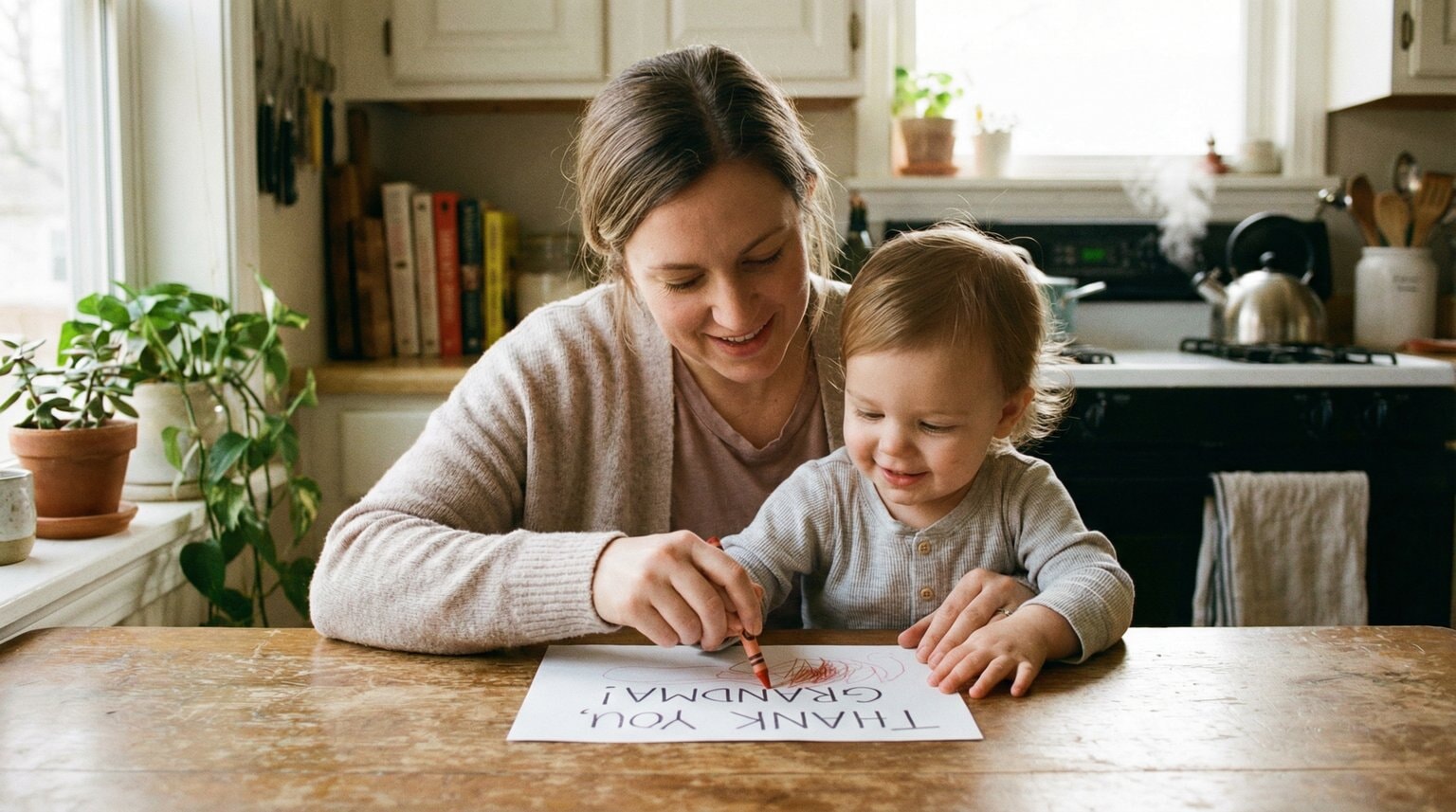
- Ages 3-5: They draw a picture; you write their words underneath
- Ages 6-8: They write with the formula in front of them; you help spell
- Ages 9-12: They write independently; you remind them of the formula once

The key is gradually releasing responsibility. What starts as you doing most of the work becomes them doing it all—with a little nudge to get started.
Ready-to-Use Scripts
Sometimes kids need more than a formula—they need the actual words. Here are scripts you can adapt for any situation:
For a birthday toy:
“Thank you for the LEGO set. I love it because I can build a spaceship. I can’t wait to show you what I make!”
— Example script for toy gifts
For money or a gift card:
“Thank you for the birthday money. I love it because I get to pick something special. I can’t wait to find the perfect thing!”
— Example script for monetary gifts
For an experience gift:
“Thank you for taking me to the trampoline park. I loved it because we jumped together. I can’t wait to see you again soon!”
— Example script for experience gifts

If your child seemed disappointed by a gift, the formula still works—focus sentence two on the giver’s thoughtfulness: “I love that you remembered I like art stuff.”
When to Step Back
Younger kids need you beside them, pointing at each sentence. By age 9 or 10, give them the formula and walk away.
One tip from the research: emails get lost, but handwritten cards get saved. The effort shows. (Read the full digital vs handwritten debate.)
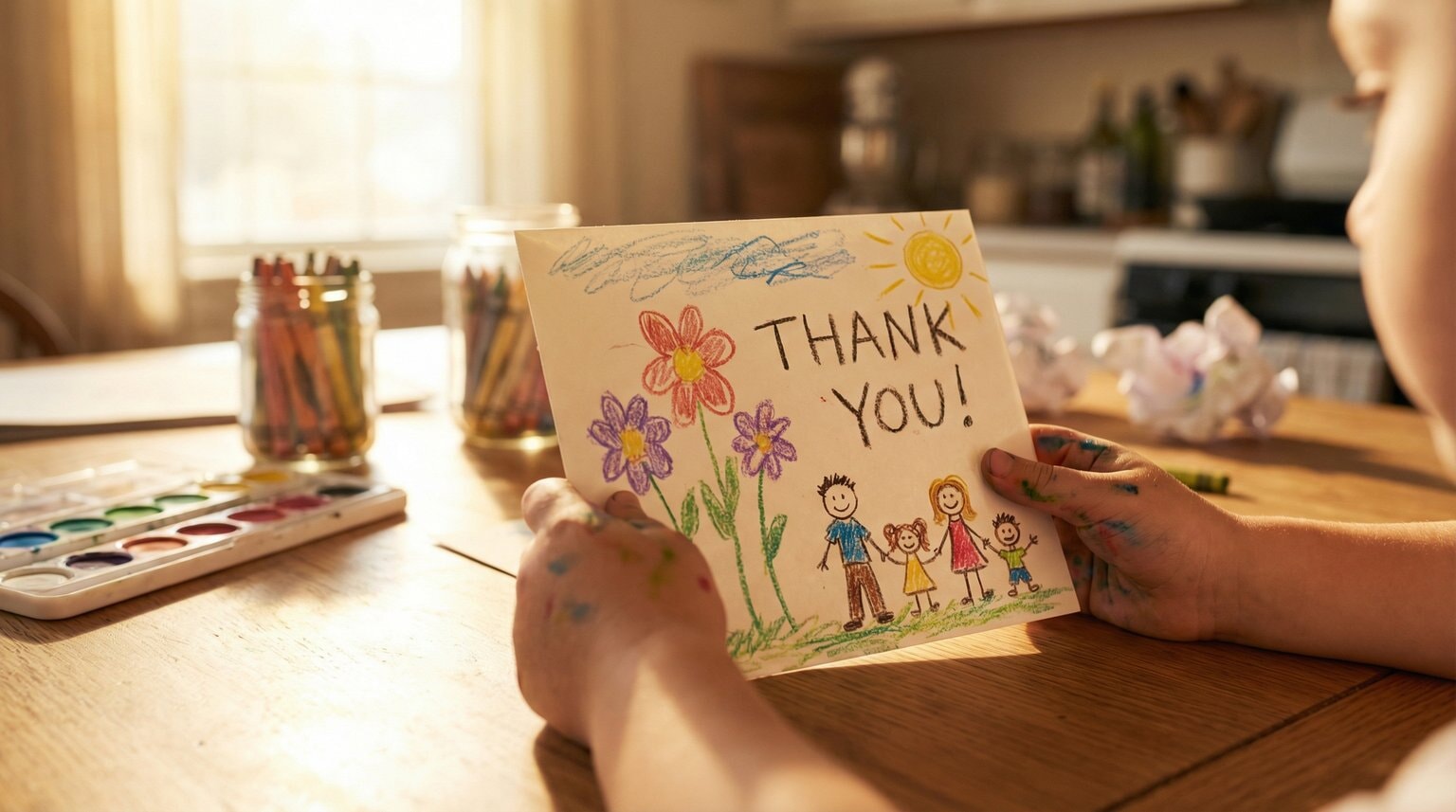
There’s something about a child’s handwriting—imperfect letters, creative spelling, maybe a sticker or two—that an email simply can’t replicate. Grandparents keep these cards for years.
Struggling with other common gift-giving challenges? Thank you notes are just one piece of helping kids navigate the whole gift experience.
Share Your Story
How do thank you notes go at your house—smooth routine or annual battle? I’ve tried sticker rewards, assembly lines, and just doing them myself. Would love to know what’s actually made this easier for other families.
Your tricks might save another parent from the annual note drama.
References
- MGH Clay Center for Young Healthy Minds – Research on writing challenges and template strategies for children
- Ohio State University Extension – Framework for effective thank you note structure
- Harvard Business Review – Research on handwritten vs. digital gratitude expressions

Share Your Thoughts