
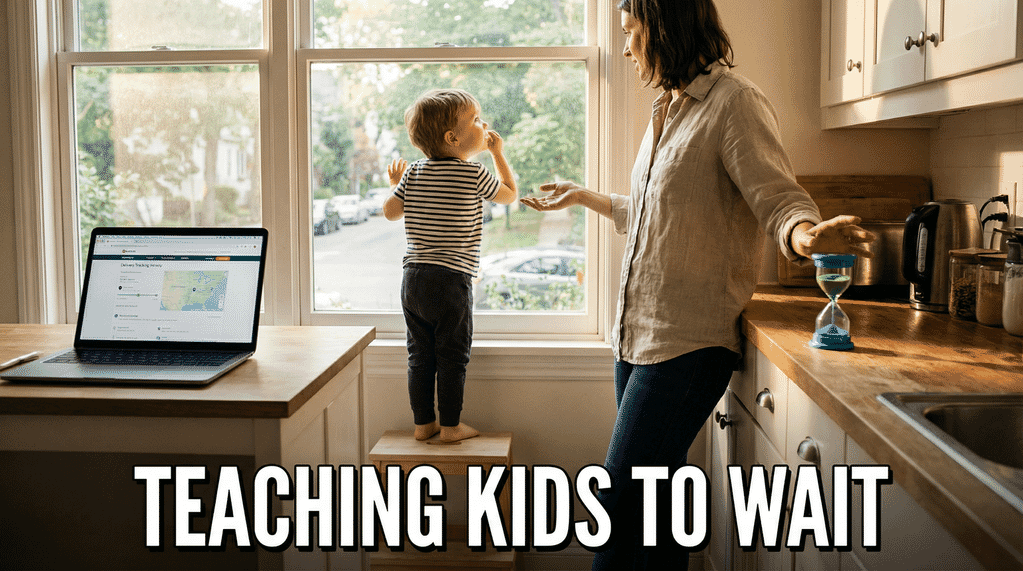
Your 6-year-old just asked if the package has arrived—for the fourth time in an hour. It was ordered this morning. Meanwhile, your teenager is refreshing the tracking app like it’s a video game, and your toddler is melting down because the microwave takes thirty whole seconds.
Sound familiar? You’re not imagining that patience has become harder to teach. Educational psychologist Michele Borba puts it plainly: “It’s a now generation—everything is instant and accessible and kids are used to having everything quickly.” The Saturday morning cartoon wait is extinct. Purchases arrive in hours. Rewards come with minimal effort.

Here’s what the research actually shows: this matters more than we might think. A 2024 study tracking nearly 3,000 Singapore preschoolers found that children who demonstrated better ability to delay gratification performed significantly better in reading and math, with fewer behavioral issues over time.
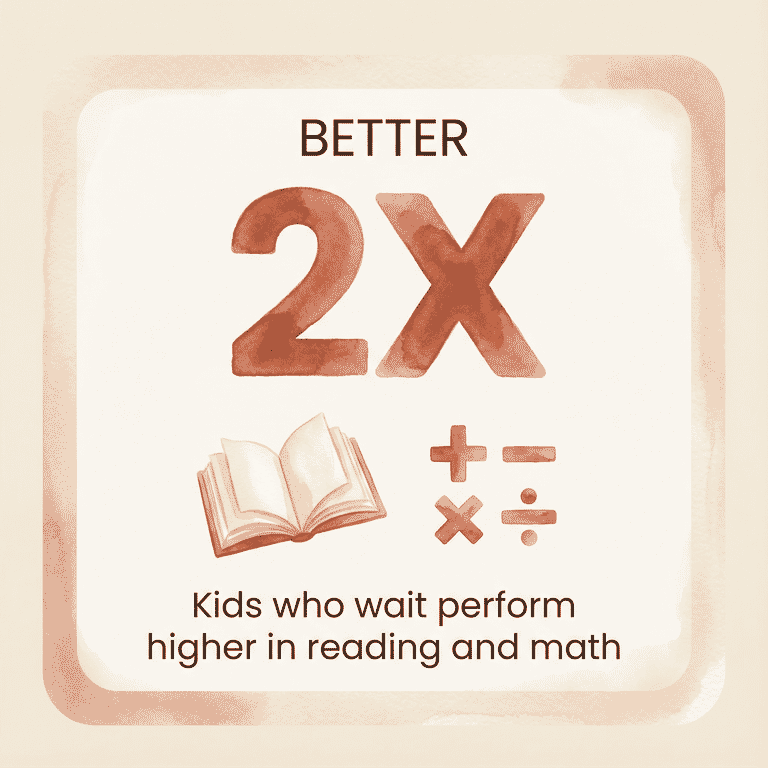
The good news? Patience isn’t a personality trait your child either has or lacks—it’s a learnable skill. The Singapore research followed kids over time and found that early patience training had lasting effects on academic performance.
As University of Michigan psychologist Pamela Davis-Kean explains, “Patience is another name for self-regulation, which is both behavioral and emotional.” Translation: we can train it.
Key Takeaways
- Children who can delay gratification perform significantly better academically and have fewer behavioral issues
- Keeping promises consistently builds the trust foundation that makes kids willing to wait
- Use “not now” instead of “no” to validate desires while teaching timing matters
- Age-appropriate wait times start at 30 seconds for toddlers and build gradually
- Allowing boredom and creating daily micro-waits actively trains the patience muscle
Building the Foundation: Trust and Environment First

Before any patience strategy can work, two things must be in place. I’ve learned this the hard way across eight kids—you can’t teach waiting if the foundation is cracked.
Keep Your Promises Consistently
Here’s something that surprised my librarian brain when I dug into the research: children who trust that promised rewards will actually arrive are significantly more willing to wait. Foundational studies found that kids who believed adults would follow through waited much longer than those with reason to doubt.
In my house, this looks like never promising something I can’t deliver. If I say “after dinner,” it happens after dinner. If I say “this weekend,” I put it on the calendar where they can see it. Every broken promise—even small ones—chips away at your child’s motivation to wait next time.
Tell Them Exactly How Long They’ll Wait
Abstract waiting is torture for developing brains. Research shows that when children know the specific duration of a wait, they’re far more likely to tolerate it successfully. Their brains can conceptualize an endpoint and work toward it.
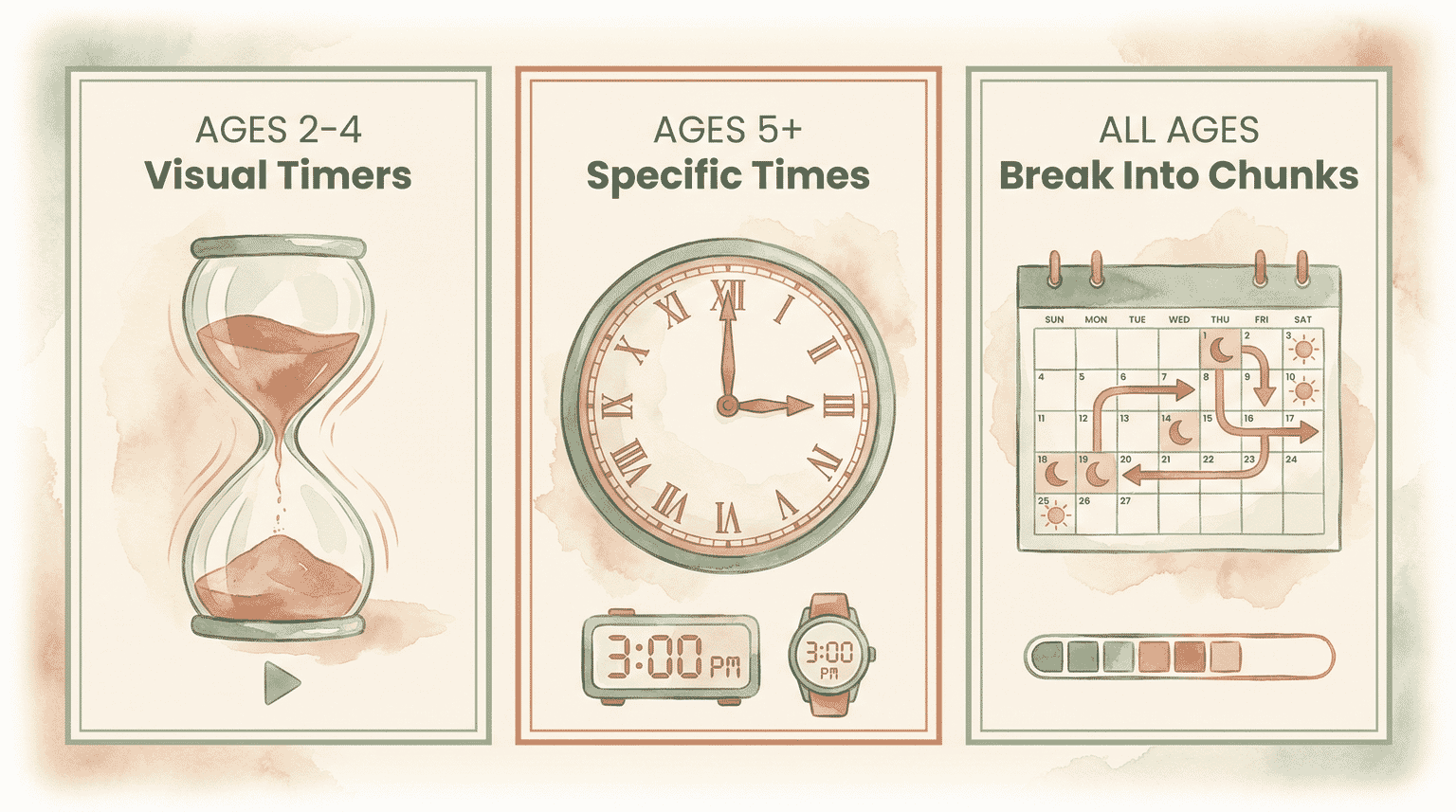
For younger kids (2-4): Use visual timers. “When this sand runs out, then we’ll go.”
For older kids (5+): Give specific times. “Your package will arrive Thursday after school.”
For all ages: Break long waits into chunks. “Three more sleeps until Grandma visits.”
Create an Environment of “Enough”
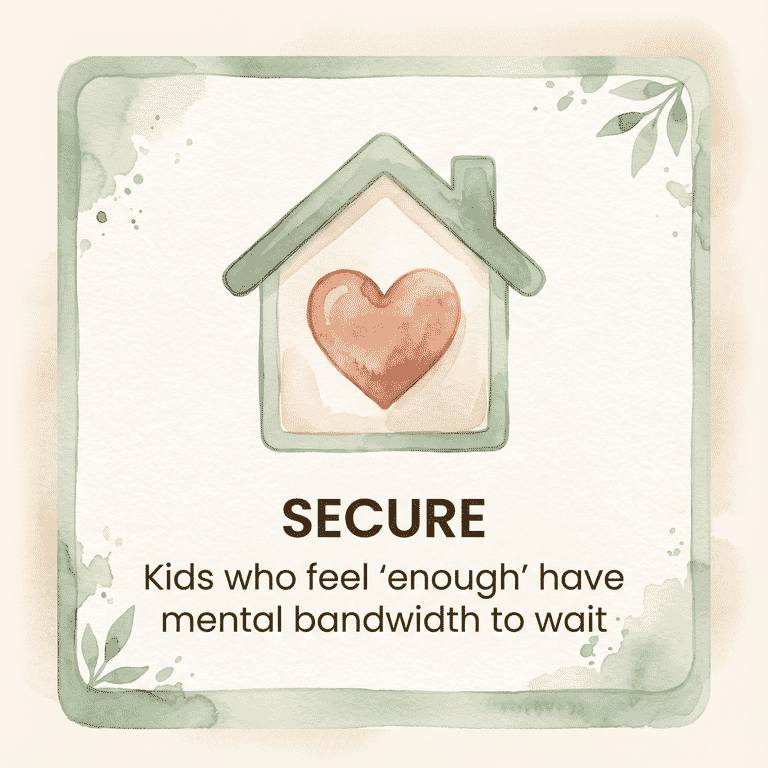
This one’s counterintuitive, but research on scarcity reveals something important: children who perceive scarcity—of resources, attention, or security—struggle more with delayed gratification. When kids feel like there might not be enough, waiting feels risky.
This doesn’t mean giving them everything. It means creating stability around basics. Regular meals, predictable routines, and confidence that their needs will be met.
Kids who feel secure in “enough” have the mental bandwidth to wait for extras. The years between toddlerhood and kindergarten are especially impactful for this foundation work—Penn State’s Pamela Cole identifies this as the critical window for patience development.
Active Strategies: Building the Waiting Muscle
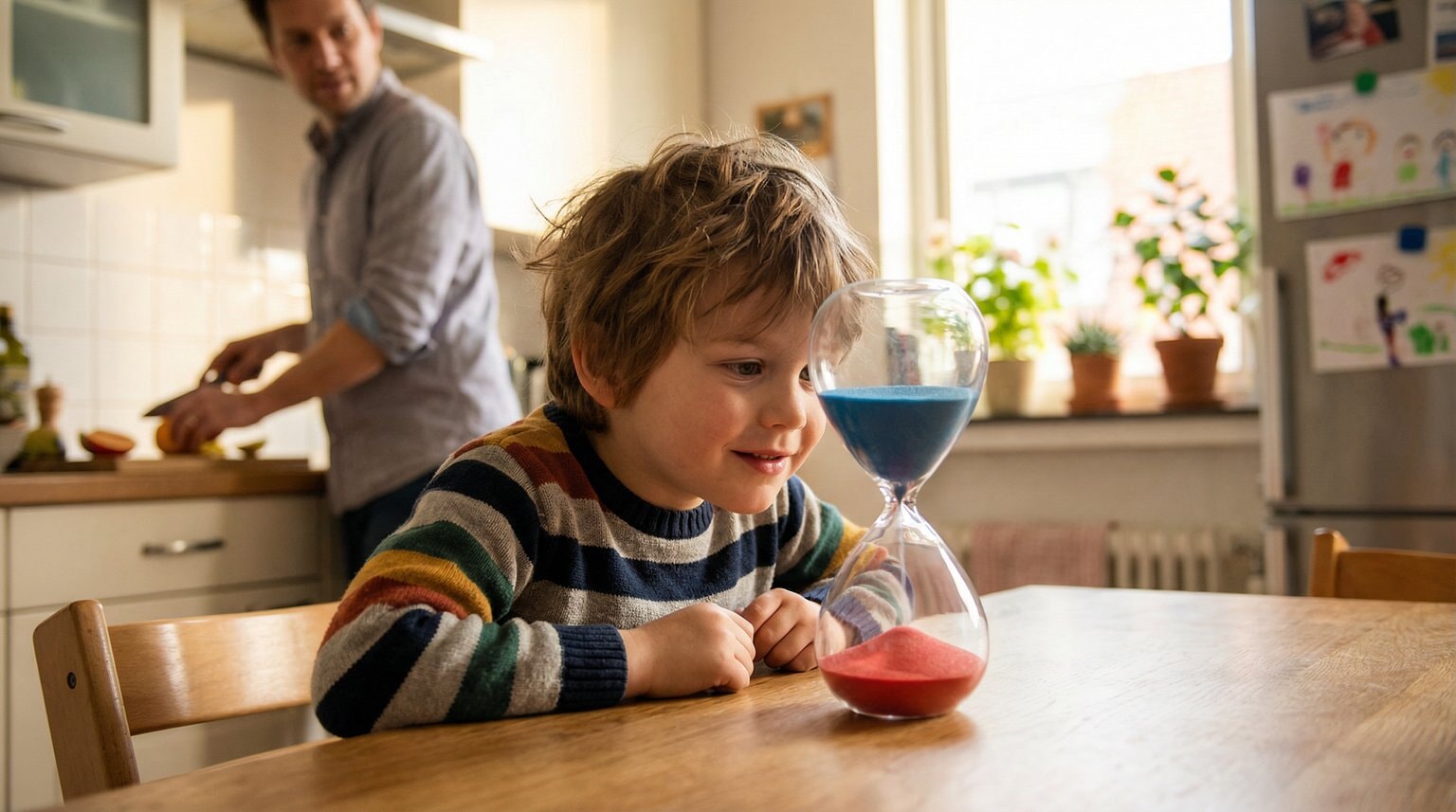
With the foundation set, these strategies actively train patience through practice. Think of them like reps at a gym—small, repeated efforts that build capacity over time.
Use “Not Now” Instead of “No”
Harvard psychologist Richard Bromfield recommends this simple language shift that my own kids respond to dramatically differently. “No” shuts down hope. “Not now” acknowledges the desire while setting a boundary.
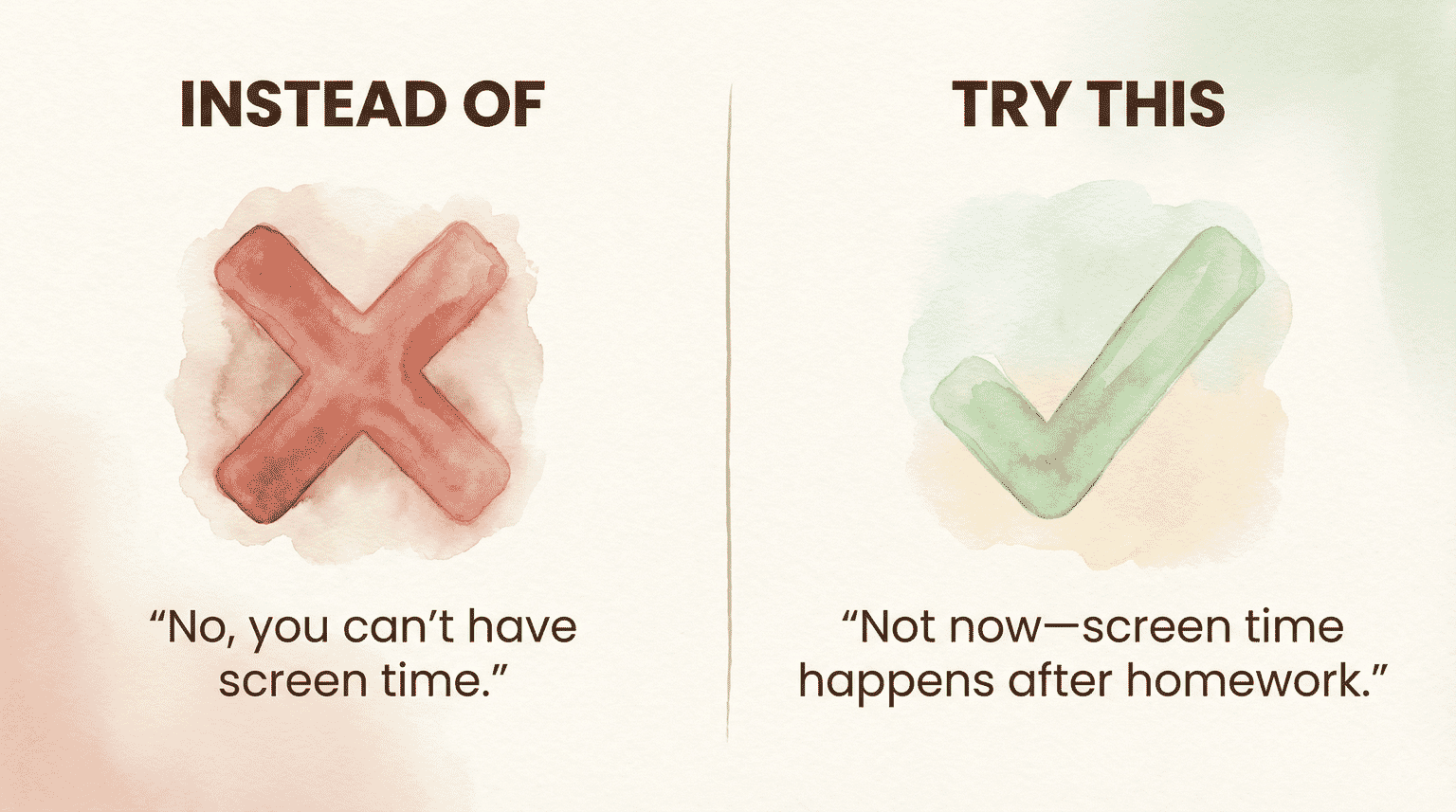
The distinction matters because “not now” validates their want (they’re not wrong for wanting it) while teaching that timing matters. It preserves the possibility, which makes waiting feel purposeful rather than punishing.
Let Boredom Happen
I know, I know—it feels cruel to watch your child complain about having “nothing to do.” But researchers studying temperance interventions identified “allowing boredom” as a key component of patience development. The SPACE for Patience Model specifically includes this because boredom paired with curiosity builds creativity and problem-solving.

When my 8-year-old says she’s bored, I’ve trained myself to respond with, “That’s okay—see what your brain comes up with.” It’s uncomfortable at first. But the research is clear: eliminating every moment of boredom prevents children from developing the tolerance for waiting that patience requires.
Create Daily Micro-Waits
You don’t need elaborate exercises. Build tiny waiting moments into existing routines:
- Snacks after one small task: “First put your backpack away, then snack.”
- Timer games: “Let’s see if you can wait until this song ends.”
- Countdown routines: “We’ll leave in five minutes—want to count down with me?”
- Turn-taking: “You’ll get the blue cup tomorrow. Today is your sister’s turn.”
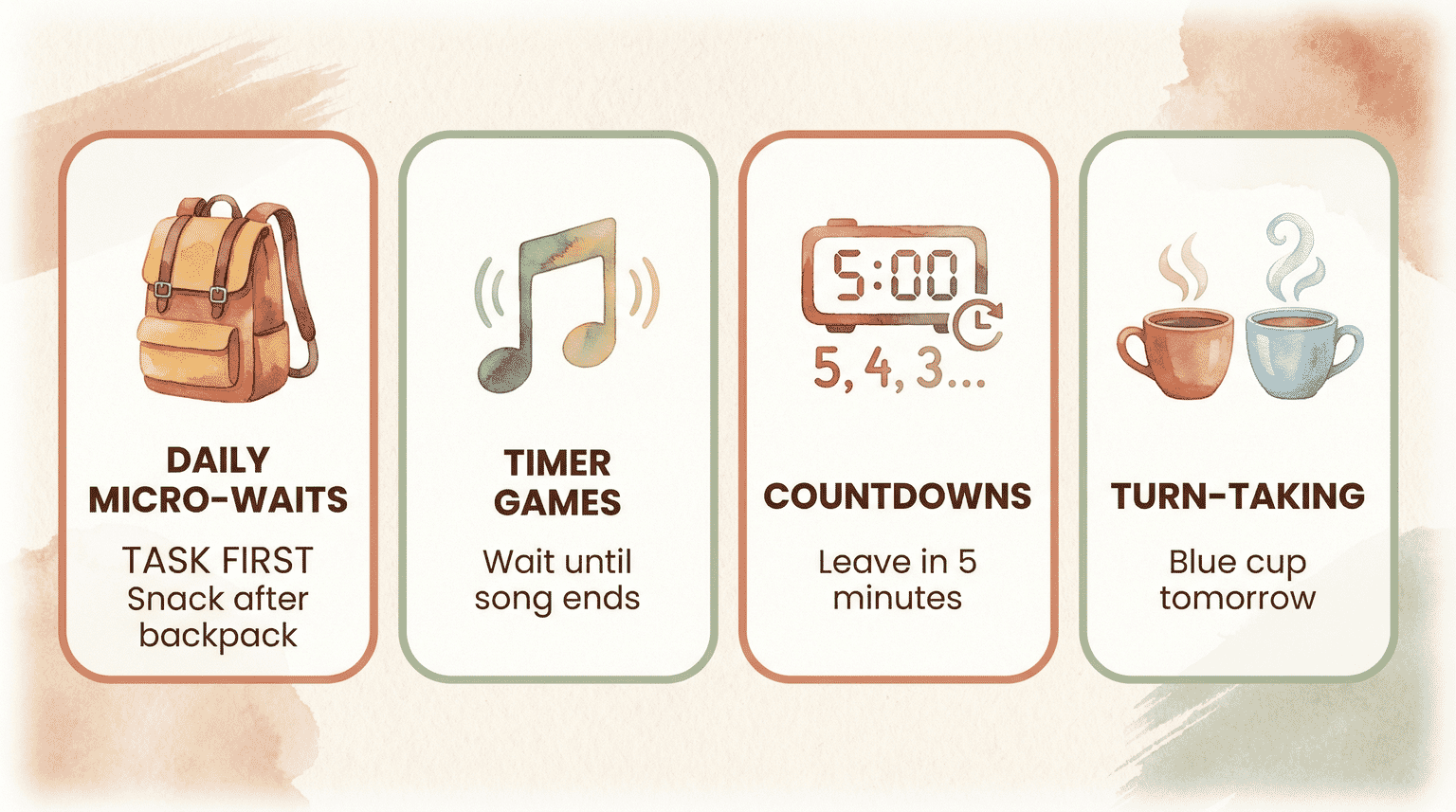
Start with waits your child can actually succeed at—30 seconds for toddlers, 2-5 minutes for preschoolers. Success builds confidence. Then gradually extend.
Turn Anticipation Into Excitement
This reframe changed everything in my house. Waiting doesn’t have to mean suffering—it can mean savoring. When we’re counting down to a birthday or vacation, I lean into the anticipation:
Instead of: “I know it’s hard to wait.”
Try: “What’s the first thing you want to do when we get there? Let’s make a list!”
Anticipation activates the same reward centers as actually receiving something. When children learn to enjoy the looking-forward part, waiting transforms from punishment to pleasure. This connects naturally to thinking about how many birthday gifts create optimal excitement—sometimes fewer presents with more anticipation beats a mountain of instant gratification.
What to Say: Quick Scripts for Common Scenarios
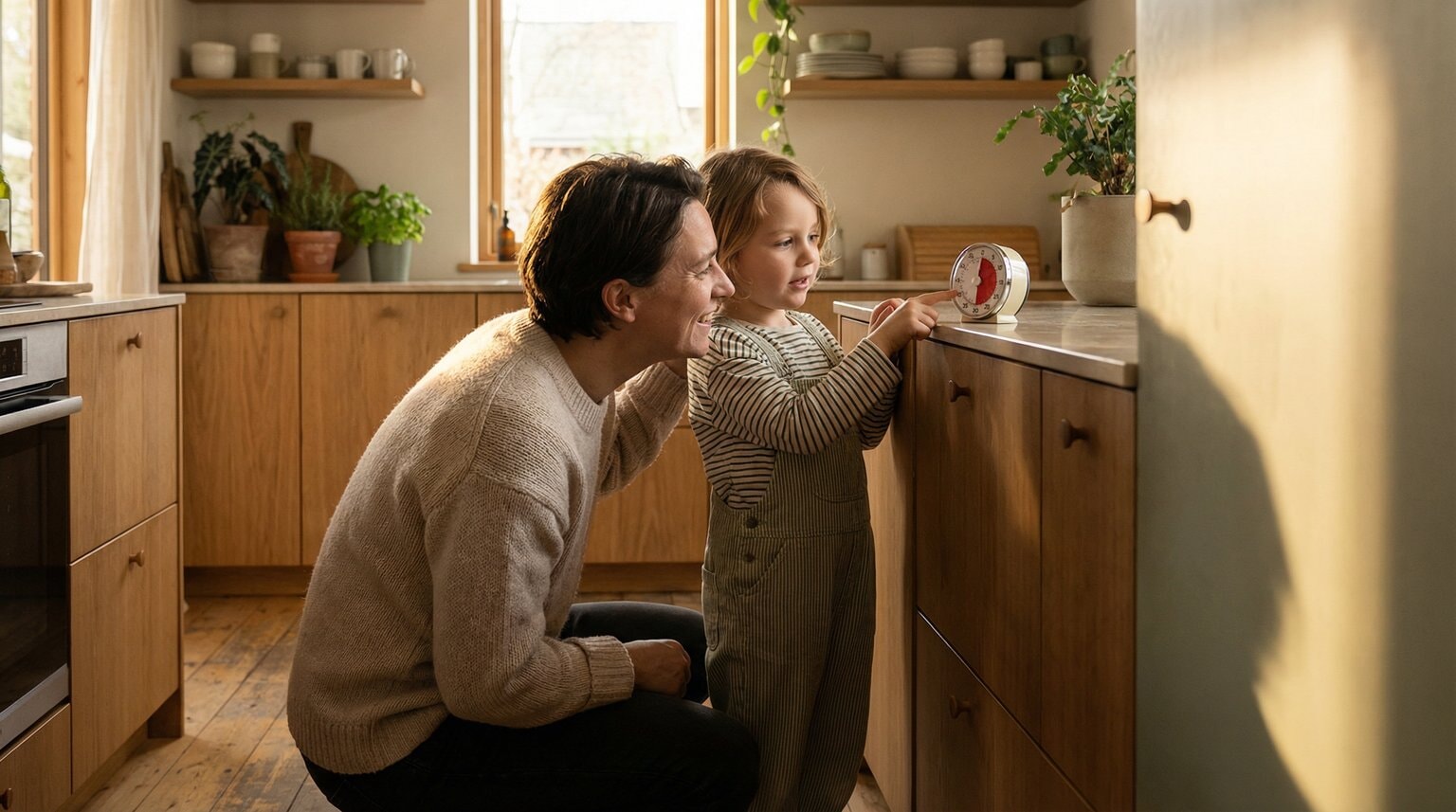
Here’s what these strategies sound like in real moments. I keep these phrases in rotation:
Waiting for screen time:
When your child says: “Can I watch now? NOW?”
Try: “Screen time starts at 4:00. What should we do for the next 20 minutes while we wait?”
Why it works: Acknowledges the want, gives specific timeline, redirects to active choice.
Waiting for snacks:
When your child says: “I’m STARVING. I need it RIGHT NOW.”
Try: “I hear you’re really hungry. Snack will be ready in two minutes—want to set the timer and watch it count down?”
Why it works: Validates the feeling, gives control through timer, makes waiting concrete.
Waiting for purchases:
When your child says: “Can we buy that? Please please please?”
Try: “That looks cool. Let’s put it on your wish list and think about it for a week. If you still want it, we’ll talk about how to make it happen.”
Why it works: Doesn’t dismiss desire, introduces intentional waiting period, implies possibility.
Waiting for events:
When your child says: “When is my birthday coming? It’s taking forever!”
Try: “I know waiting is hard when you’re excited! Let’s make a paper chain—one ring for each day. You can tear one off each morning.”
Why it works: Validates difficulty, makes abstract time visual and interactive.
Waiting for your attention:
When your child says: “Mom! MOM! MOMMMM!” (while you’re on a call)
Try: Hold up a finger, make eye contact, then say: “I see you need me. Give me two minutes to finish, then I’m all yours.”
Why it works: Acknowledges them immediately (reducing panic), gives specific timeline, keeps promise.
Understanding how digital gift culture shapes expectations can help you see why these moments feel so charged for kids raised on instant delivery.
When It’s Working: What Progress Actually Looks Like
Don’t expect overnight transformation. I’ve seen patience develop across eight kids, and it’s always gradual. Here’s what improvement looks like:
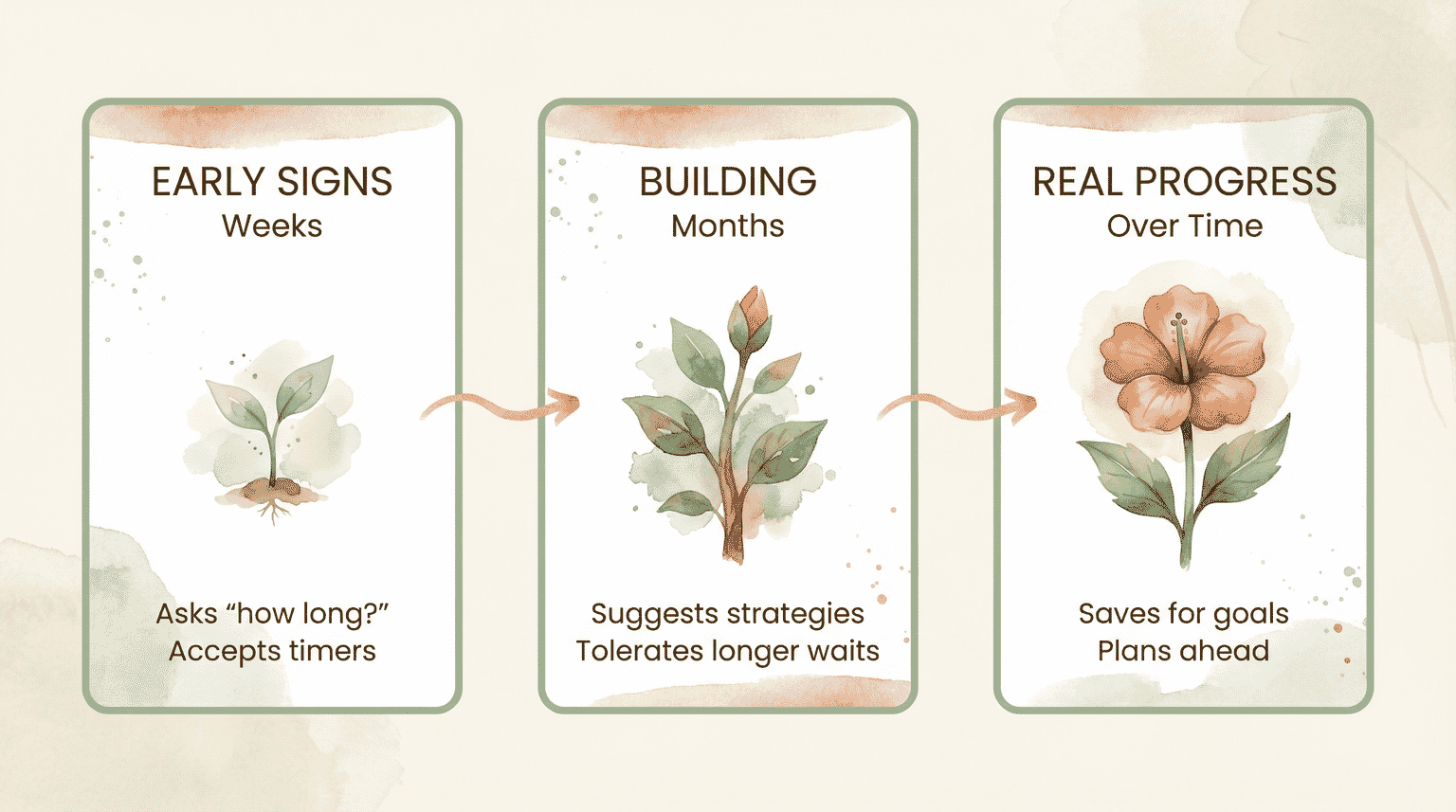
Early signs (within weeks):
- Asking “how long?” instead of demanding “now”
- Accepting timer use without meltdown
- Occasionally occupying themselves during short waits
Building momentum (within months):
- Suggesting waiting strategies themselves (“Should I set a timer?”)
- Tolerating longer delays without falling apart
- Expressing anticipation as excitement rather than frustration
Real progress (over time):
- Saving money for wanted items
- Planning ahead for delayed goals
- Recovering faster when waits are extended unexpectedly
About regression: It’s normal and doesn’t mean you’ve failed. Stress, illness, schedule disruptions, and increased screen exposure all temporarily reduce patience capacity. Return to shorter waits and rebuild. Research consistently shows the skill doesn’t disappear—it just needs reinforcing.
For a deeper dive into what patience looks like at each developmental stage, see our detailed guide to delayed gratification by age.
Quick Reference: Realistic Waiting by Age
| Age | Realistic Wait Capacity | Best Strategies |
|---|---|---|
| 2-3 years | 30 seconds to 2 minutes | Visual timers, distraction, physical countdown (fingers) |
| 4-5 years | 2-5 minutes | Timer games, simple earning systems, “not now” language |
| 6-7 years | 5-15 minutes | Abstract countdowns, anticipation building, saving for goals |
| 8-10 years | 15-30 minutes | Multi-day goals, delayed rewards, internal motivation |
| 11+ years | Extended periods | Long-term saving, project planning, outcome visualization |
Note: By age 6-7, children can start thinking about their own behavior and consequences—this is when patience teaching becomes more explicit and collaborative.
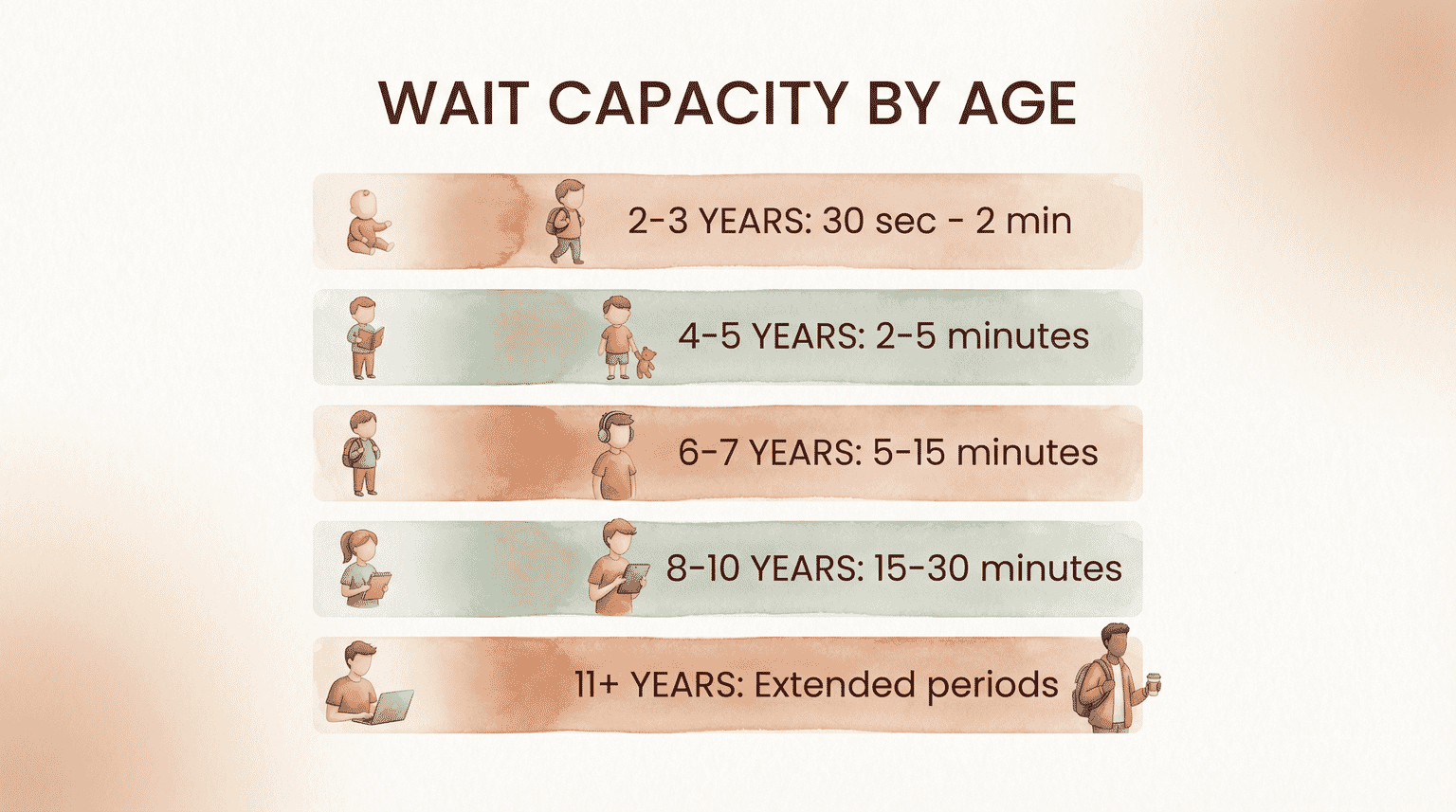
The visual above offers a quick reference for setting realistic expectations. Remember: these are starting points, not limits. Every child develops differently, and success at the lower end builds confidence to stretch further.
The Bigger Picture
The neuroscience of patience reveals something parents often forget: we’re not fighting our children’s nature.
“We live in a social world and we can’t have everything we want when we want it—that’s where patience and self-control come in.”
— Pamela Cole, Penn State Developmental Psychologist
The ability to wait is woven into human development. We’re simply training it in an environment designed to undermine it.
“The best parenting does not remove obstacles—it teaches children how to climb over them with patience and persistence.”
— Richard Bromfield, Harvard Psychologist
That’s hard work. But every micro-wait, every kept promise, every moment of tolerated boredom builds something that will serve them for life.
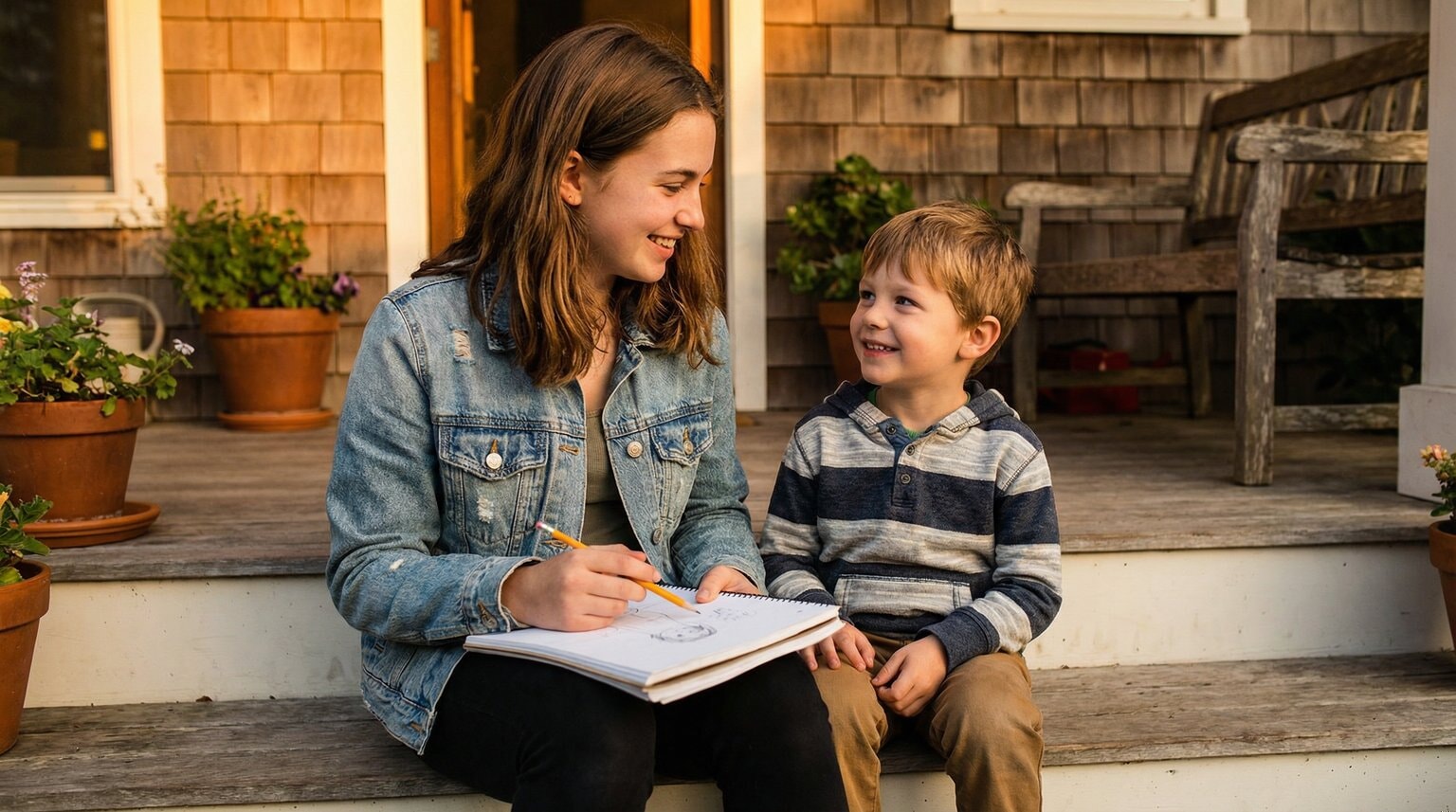
In my house, with eight kids at every developmental stage, I’ve watched patience grow like any other skill—unevenly, imperfectly, but unmistakably. The 17-year-old who can save for months toward a goal was once the 4-year-old who couldn’t wait thirty seconds for a snack. The training worked. Slowly, messily, but it worked.
Frequently Asked Questions
How long should I make my child wait?
Start with waits they can actually succeed at—30 seconds to 2 minutes for toddlers, 2-5 minutes for preschoolers, building up from there. Success breeds confidence. If they’re failing most waiting challenges, you’ve set the bar too high. Scale back and rebuild.
What if my partner doesn’t enforce waiting the same way?
Consistency helps, but perfection isn’t required. Children can learn that different contexts have different rules. What matters most is that your promises are kept in your interactions. Have a brief conversation about the basics—especially promise-keeping—and accept some variation.

Should I use rewards to teach patience?
Yes, initially. The reward validates that waiting works—it proves the payoff is real. This builds the trust foundation that makes future waiting easier. As patience develops, you can gradually phase out external rewards as internal satisfaction takes over.
My child used to be patient but isn’t anymore—what happened?
Regression is completely normal and usually linked to stress, schedule changes, transitions, illness, or increased screen exposure. It doesn’t mean the skill is lost—just temporarily overwhelmed. Return to shorter waits, rebuild trust through kept promises, and be patient with their patience.
I’m Curious
What’s worked for building patience in your instant-gratification kid? I’ve tried timers, rewards, and just modeling endless patience myself (with varying success). Would love to hear which strategies have actually stuck.
Because honestly, we’re all figuring out this patience thing together.
References
- 3 Ways To Raise Patient Kids In An Instant-Fix World – 2024 Singapore longitudinal study on delayed gratification outcomes
- Patience is learned. Here’s how to teach your kids to wait – University of Michigan expert insights on patience development
- The Future of Evidence-Based Temperance Interventions – SPACE for Patience Model and intervention research
- Impact of perceived scarcity on delay of gratification – Research on environment, self-efficacy, and waiting ability

Share Your Thoughts