

Your child checks the tracking app for the third time today. The package was ordered six hours ago. “Why isn’t it here yet?” she asks, genuinely confused. Welcome to parenting in the two-day shipping generation—where “waiting” has become a foreign concept and patience feels like a skill from another era.
Here’s the thing my librarian brain couldn’t let go: when I started researching why my kids seemed to struggle with waiting more than I remembered struggling, I expected to find strategies. What I found instead changed how I approach this entirely.

Key Takeaways
- Children are 9x more likely to wait when they trust adults will follow through—delayed gratification is built on reliability, not willpower
- The single most effective intervention is removing temptation from sight—75% of kids waited when rewards were hidden vs. 0% when visible
- Calm distraction beats active distraction—children who stayed still were 1.5x more likely to wait successfully
- Creating if/then plans before temptation hits gives kids a ready-made response when challenging moments arrive
- Your kept promises matter more than any technique—every “later” that becomes “now” builds their capacity to wait
The Hidden Foundation Most Parents Miss
Children are nine times more likely to wait for a larger reward when they trust the adult will deliver.
That statistic stopped me cold. A 2024 review of marshmallow test research found that in conditions with reliable experimenters, 9 of 14 children waited the full 15 minutes for a bigger reward. With unreliable experimenters? Only 1 of 14 waited.
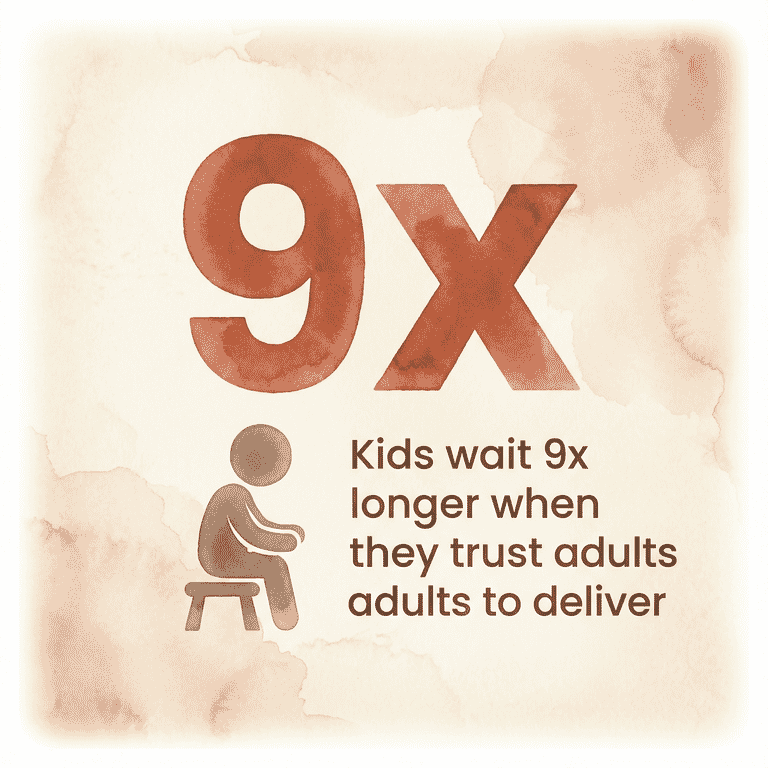
This reframes everything. Delayed gratification isn’t primarily about willpower—it’s about trust. Your child’s ability to wait depends heavily on whether they believe you’ll actually follow through.
I’ve watched this play out eight times now. My most patient child? The one who’s never been promised something I didn’t deliver. My most demanding child? The one who—I’ll admit—experienced too many “maybe later” promises that never materialized during a chaotic season of our lives.
Quick self-assessment: Think about the last month. When you said “later,” did later happen? When you promised something, did you deliver exactly as described? Your follow-through is building or eroding your child’s capacity to wait.
The reliable experimenter effect (as researchers call it) explains why your most patient child might become demanding at grandma’s house—and why a child from an unpredictable environment might struggle to wait even in ideal conditions. Trust must exist before self-control can develop.
Why Amazon Prime Changed Everything (And What to Do About It)

Let’s be honest about the world our kids are growing up in. Two-day delivery is now the baseline expectation—and one-day or same-day is increasingly common. Streaming auto-plays the next episode before the credits finish. One-click purchasing happens in front of children constantly.
Research on how digital culture has shifted gift-giving expectations confirms what we’re all sensing: the expectation of instant availability is being trained into our kids daily.
Here’s what the research actually shows about environment design: In the original marshmallow studies, approximately 75% of children waited the full 15 minutes when rewards were hidden from view. When both rewards were visible? Zero children waited.
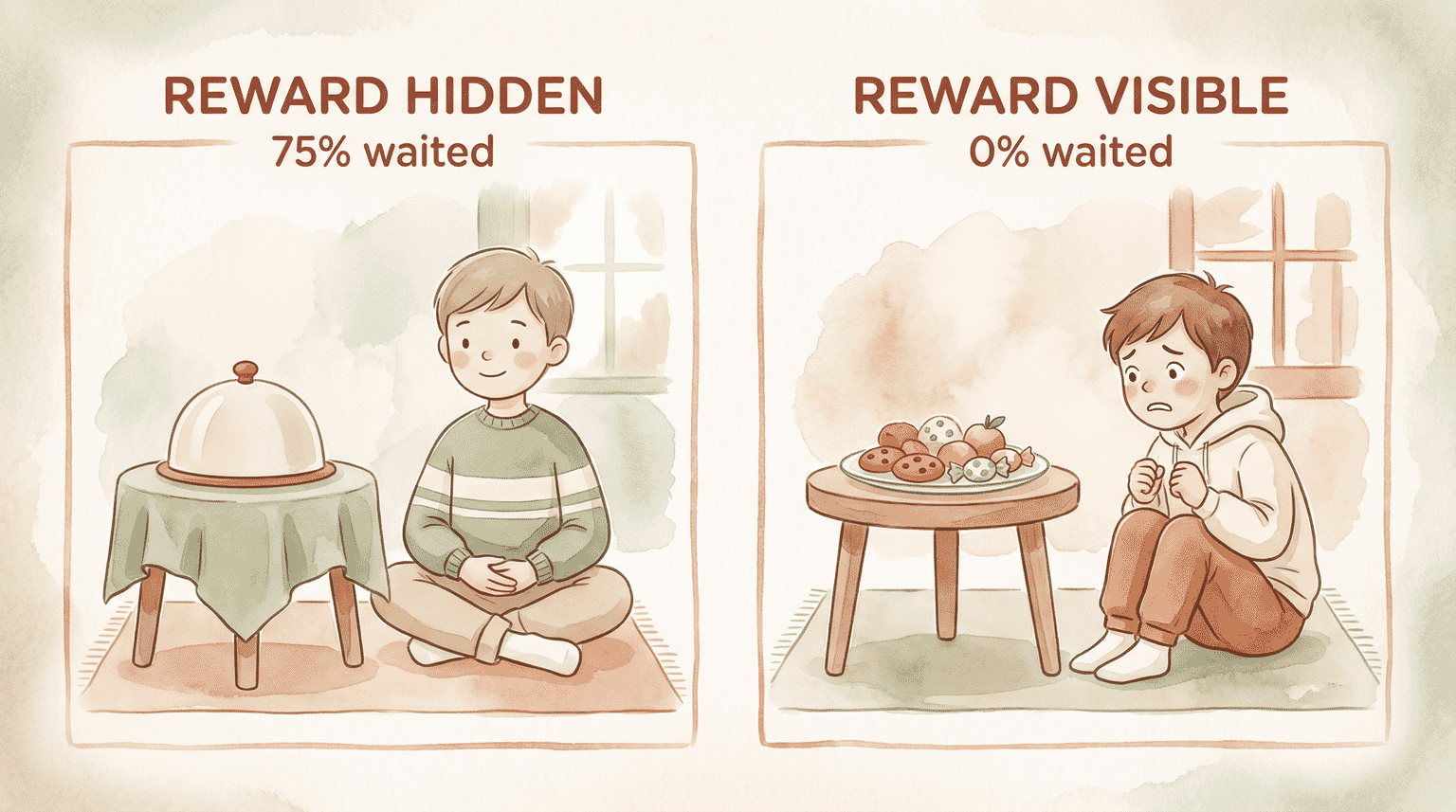
The single most effective intervention is removing temptation from sight.
This translates directly to modern parenting:
- Wishlist, don’t browse. When your child sees something they want online, add it to a wishlist instead of leaving tabs open. “Let’s save that for your birthday list” removes the item from immediate view while honoring the desire.
- Manage delivery notifications. Consider whether your child needs to know a package is arriving today. Sometimes the surprise serves patience better than the tracking.
- Adjust streaming settings. Turn off auto-play. That 10-second gap between episodes is a micro-practice in waiting.
- Model visible waiting. Let your kids see you put items in a cart and close the browser. “I’m going to wait until next month for that.”
The 5 Strategies That Actually Work
Based on research from developmental psychologists and the APA’s guide to building self-control, here’s what consistently helps children learn to wait—strategies I’ve tested across all eight of my kids.
Strategy 1: Make Waiting Visible
Abstract time means nothing to young children. A 2024 ThinkPsych analysis recommends visual calendars marking when treats or privileges occur, helping children understand expectations and anticipate future rewards.
In my house, this looks like:
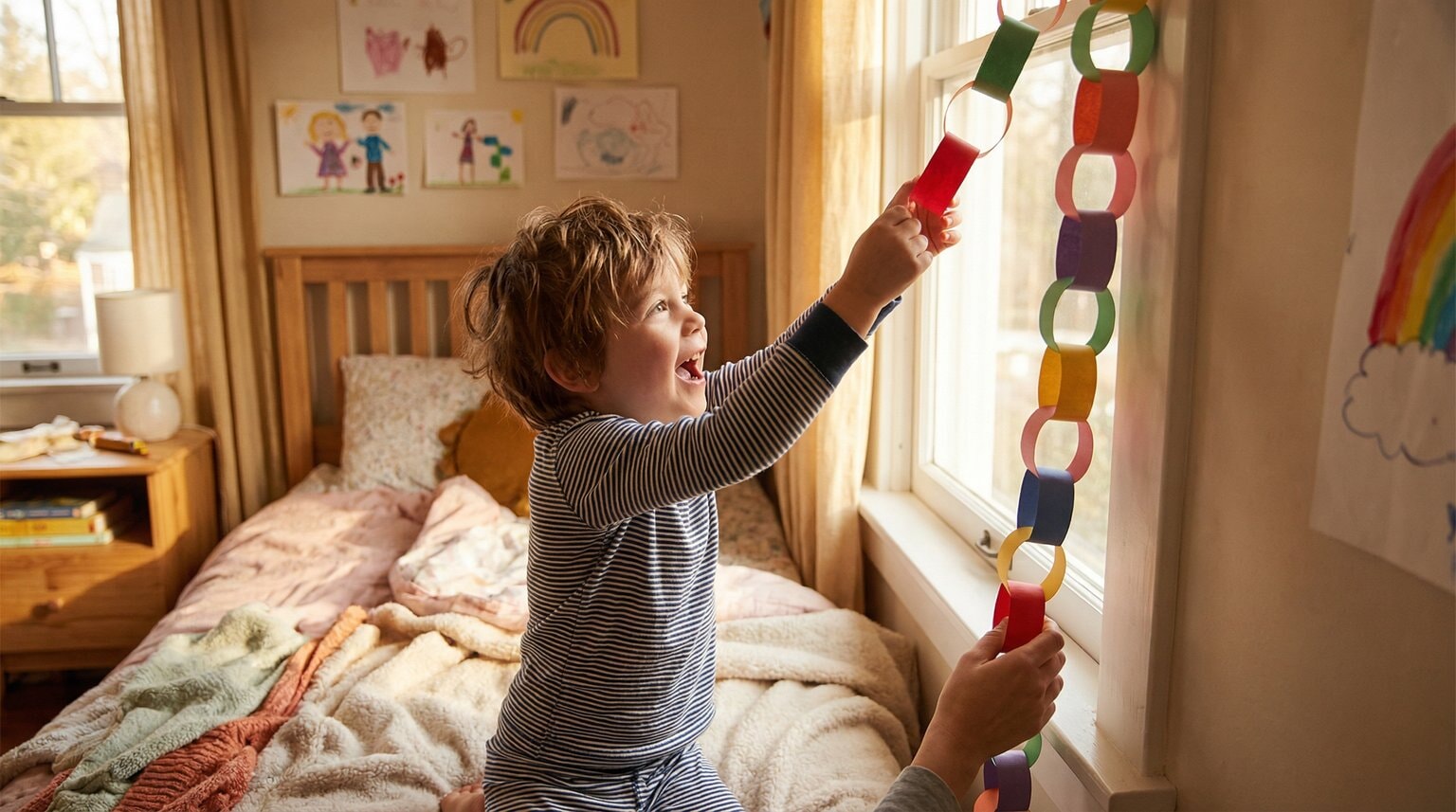
- Paper chain countdowns (remove one link per day)
- Wishlist trackers that show items “getting closer” to birthdays
- Savings progress jars for money goals
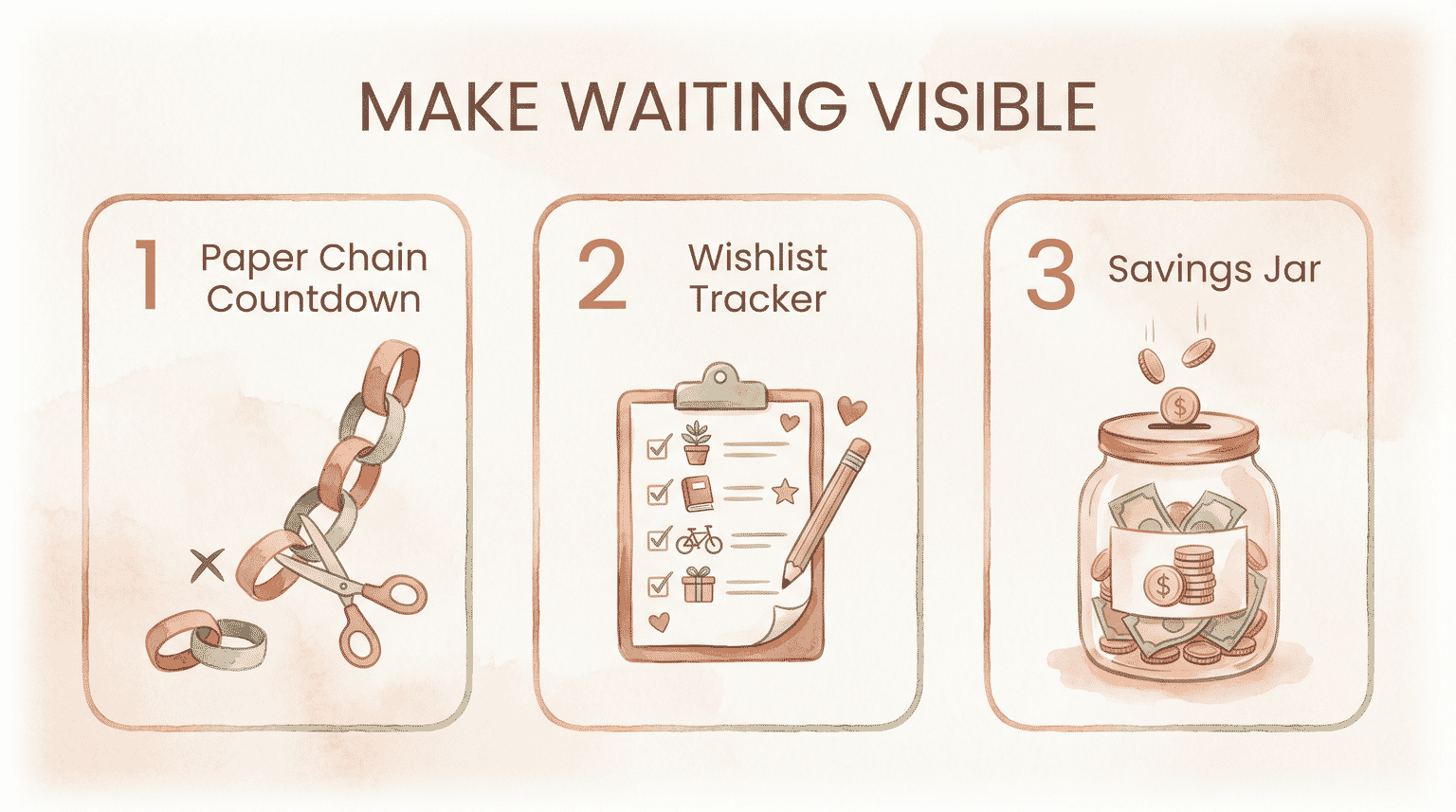
“Let’s put it on your wish list and watch it get closer to your birthday. We can look at the countdown together each morning.”
— Try saying this
For birthday countdown ideas that make waiting feel like excitement rather than deprivation, tangible visuals beat verbal promises every time. My 4-year-old doesn’t understand “two weeks,” but she absolutely understands a chain with 14 links.
Strategy 2: Teach Calm Distraction (Not Active Distraction)
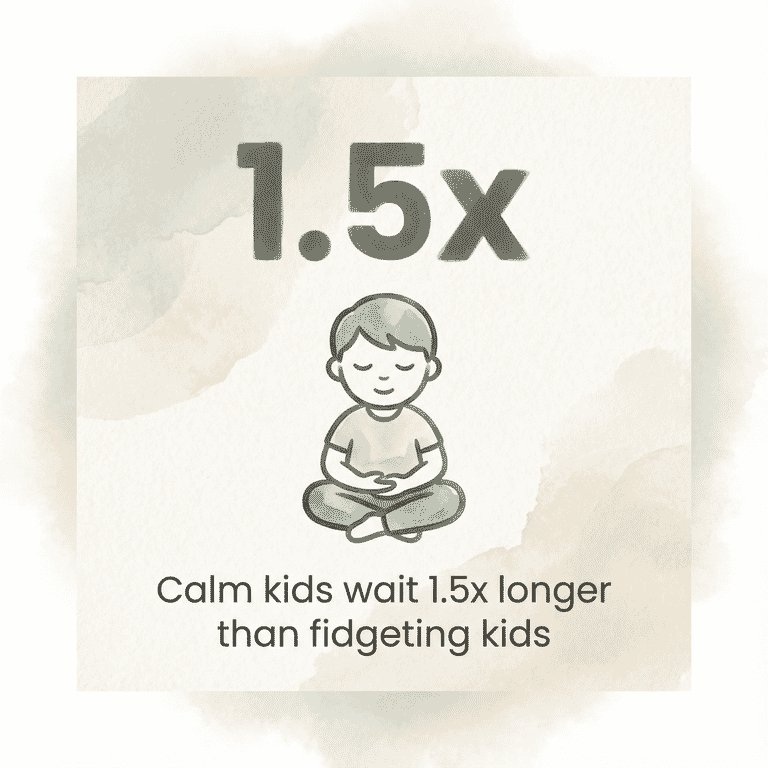
Here’s a finding that surprised me: Research on children’s self-control strategies found that “Passive Regulators”—children who stayed calm with minimal fidgeting—were 1.5 times more likely to wait the full time compared to “Active Regulators” who tried active distraction techniques.
The children who succeeded weren’t frantically distracting themselves. They turned away, covered their eyes, or simply gave the temptation less attention.
The APA researchers explain it this way: “Children, and adults, are much more successful in delaying gratification when we can distance ourselves from the emotion of the current situation and get closer to our positive future emotions.”
Practical techniques that work:
- Turn your back on the temptation (physical distance helps)
- Cover eyes or look away
- Imagine being somewhere else
- Picture yourself as a “waiting superhero” (this imagination technique has research support)
“Let’s give that thought a vacation while we do something else. You don’t have to think about it right now.”
— Try saying this
Strategy 3: Build If/Then Plans Together
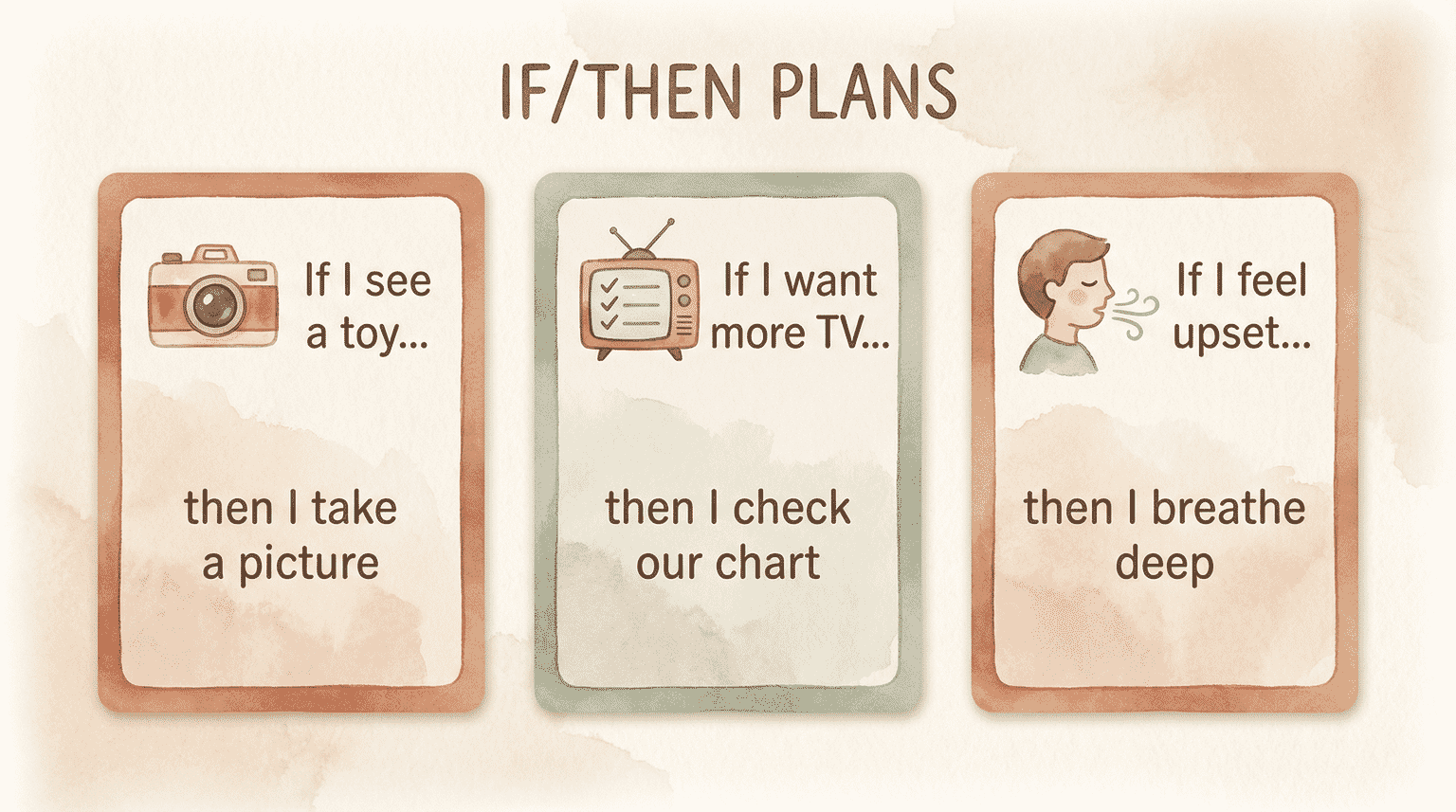
The APA’s research emphasizes helping children make if/then plans to break unwanted automatic responses before temptation hits. This works because the plan is already in place when the challenging moment arrives.
Example plans to create together:
- “If I see a toy I want at the store, then I’ll take a picture for my wish list”
- “If I want to watch another episode, then I’ll check our screen time chart first”
- “If I feel upset about waiting, then I’ll take three deep breaths”
“Let’s make a plan for what you’ll do if you really want something at the store tomorrow. What’s your if/then?”
— Try saying this
Younger children need simpler triggers. My 6-year-old’s plan is “If I want it, I take a picture.” My 12-year-old can handle more complex planning.
Strategy 4: Model Your Own Waiting (With Narration)
Research on 3-year-olds found that children learn delayed gratification by observing adults—but critically, they use a “goal-inference strategy.” They need to understand why the adult is waiting, not just copy the action.
This means silent modeling isn’t enough. You need to narrate your reasoning.
“I really want to order that book right now, but I’m going to wait for my birthday because then it will feel more special. Plus, I have three unread books already!”
— Model this way

Let your kids see you:
- Put items in an online cart and then close the browser
- Check a savings goal before making a purchase
- Choose to wait for a sale or special occasion
- Express genuine pleasure when something you waited for finally arrives
Strategy 5: Practice Anticipation as a Skill
This is where using gifts to teach lasting values intersects with delayed gratification training. Anticipation itself can become a positive experience rather than a painful one.
- Birthday countdowns (not just calendars—actual excitement-building rituals)
- Advent calendars that create daily anticipation practice
- Savings progress trackers where children watch their money grow toward a goal
- “Coming soon” conversations about future events
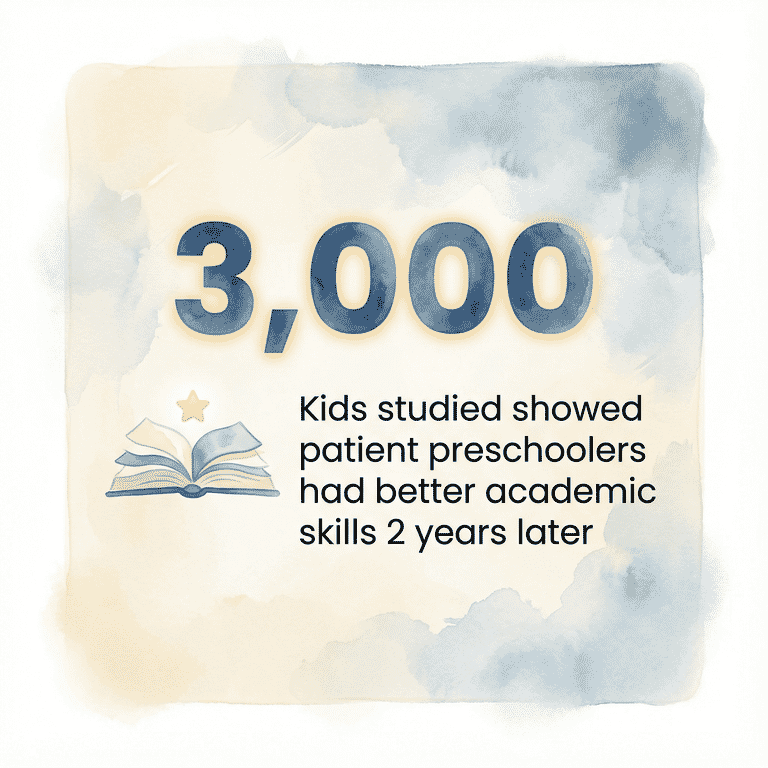
A 2024 study from the National University of Singapore of nearly 3,000 preschool children found that those showing greater self-restraint developed better working memory, stronger academic skills, and fewer behavioral problems two years later.
“It is crucial to nurture children’s emotional, cognitive, and behavioural self-regulation during the preschool years, so as to enhance their school readiness and build a good foundation for their socioemotional functioning and academic skills…”
— Dr. Chen Luxi, National University of Singapore
Anticipation practice builds these skills in a natural, even enjoyable way.
Common Mistakes That Backfire
Research reveals some counterintuitive findings about what doesn’t work—and I’ve made every one of these mistakes myself.
Mistake #1: “Imagine how good the reward will feel”
This seems like it should help, right? But 2024 research found that “imagine the reward” strategies don’t work for children under 12—and may even cause negative emotion at the prospect of waiting. Unlike adults, young children may not take pleasure from anticipation the way we do.
Mistake #2: Bribing with constant small rewards
“If you wait quietly for 5 minutes, you can have a treat.” Done occasionally, this is fine. Done constantly, it undermines intrinsic motivation and teaches children that waiting is only worth doing for external rewards.
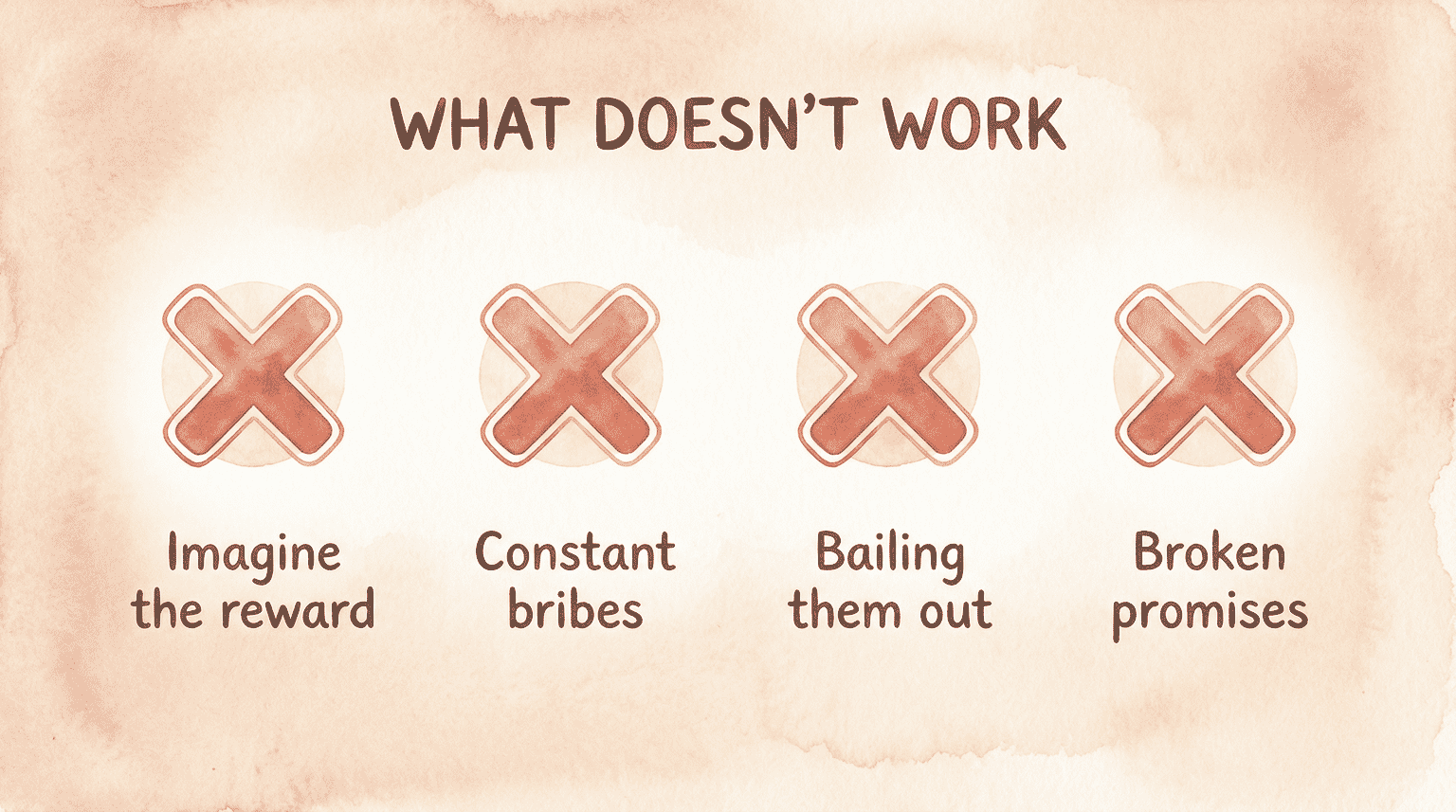
Mistake #3: Lightening consequences when children choose instant gratification
If your child spends their allowance immediately and then you bail them out for something they wanted later, you’ve just taught that delayed gratification isn’t actually necessary. Let children experience the full weight of their choices.
Mistake #4: Being an unreliable adult
This is the foundation. Every “maybe later” that never happens, every promise that slips, every “we’ll see” that means no—these erode the trust required for waiting capacity. This mistake undoes all the others.
When It Falls Apart (And How to Recover)

Here’s what I’ve learned after parenting eight kids through approximately 1,200+ gifts and countless waiting situations: meltdowns are data, not failure.
When your child falls apart after choosing instant gratification and regretting it, or during a wait that felt too long, that’s information about where their current capacity is. You can’t build skills beyond where children are developmentally ready.
The difference between “too hard” and “needs practice”:
- Too hard: Child completely dysregulated, no learning happening, situation beyond their capacity
- Needs practice: Child struggling but managing, some distress but able to engage with strategies, within reach with support
When you’re exhausted:
Some days you’ll bail them out. Some days you’ll give in. Some days the consistent follow-through won’t happen. This is real life with real kids. One lapse doesn’t undo months of reliability—but patterns matter more than moments.
“That was really hard. Waiting is a skill, and you’re still learning it. I’m proud of you for trying. Let’s talk about what might help next time.”
— After a meltdown, try this
The Long Game
The 2018 replication study of the marshmallow test found something important: while delayed gratification does predict positive outcomes, the relationship is weaker than originally claimed and influenced by socioeconomic factors. This means we shouldn’t panic about every instance of impatience—but building these skills still matters.
Developmental research shows that executive function—working memory, mental flexibility, and inhibitory control—serves as the cognitive engine driving delayed gratification capacity. Insights from marshmallow test research confirm that strengthening these cognitive abilities helps children develop patience over time.
Girls typically demonstrate future-oriented choices by age four, while boys develop this capacity closer to age five, according to the Singapore research. Children ages 6-12 begin understanding the value of saving, and around age 12, they can formulate complex saving strategies.
This is a long developmental arc. You’re not failing if your 5-year-old still struggles with waiting—that’s developmentally appropriate.
The APA researchers put it well: “Delaying gratification and exercising are life-long challenges. Helping your child identify and practice strategies can build a foundation for success in the future.”
Your reliability is the gift. Every promise kept builds their capacity to wait. Every “later” that actually becomes “now” strengthens their trust that good things come to those who wait.
For broader strategies for building patience in our instant-everything world, remember: you’re not fighting your child’s nature. You’re building a skill—one kept promise at a time.
Frequently Asked Questions
At what age can children learn delayed gratification?
Children as young as three can begin learning through observation when adults explain their reasoning. Research shows girls typically demonstrate future-oriented choices by age four, while boys develop this capacity closer to age five. The skill continues developing substantially through adolescence, with children around age 12 first able to formulate complex strategies like long-term saving.
What is the marshmallow test and what did it prove?
The marshmallow test was a 1960s Stanford experiment where children could eat one treat immediately or wait 15 minutes for two. It revealed that self-distraction strategies—covering eyes, singing, turning away—help children wait. Later research showed children are nine times more likely to wait when they trust the adult will deliver the promised reward, reframing delayed gratification as a relationship skill.
Why is delayed gratification important for kids?
A 2024 study of nearly 3,000 children found that preschoolers with greater self-restraint developed better working memory, stronger academic skills, and fewer behavioral problems two years later. The ability builds executive function skills—working memory, mental flexibility, and impulse control—that children need for school success and emotional regulation throughout life.
How do I stop my child from wanting everything now?
Start by being reliable—research shows children are nine times more likely to wait when they trust adults will follow through. Remove temptations from sight (this single change increases waiting success dramatically) and teach calm distraction strategies like turning away or covering eyes. Use visual tools like wish lists and countdown calendars to make future rewards feel real.
Join the Conversation
How do you teach waiting in a world where everything arrives instantly? I’m curious whether the old tactics still work—or whether the Amazon Prime era has changed the game entirely for your family.
Share your waiting wins and fails—I read every comment and learn something new.
References
- The Waiting Game: A Review of the Marshmallow Task – Comprehensive review of marshmallow test research including reliability effects
- How to Teach Your Kids Delayed Gratification – Practical strategies for modern parents
- National University of Singapore Preschool Study – Research on delayed gratification and academic outcomes in 3,000 children
- Delayed Gratification: Insights from The Marshmallow Test – Executive function and self-control mechanisms
- Help Them Wait: APA Strategies Guide – Evidence-based strategies for building children’s self-control

Share Your Thoughts