
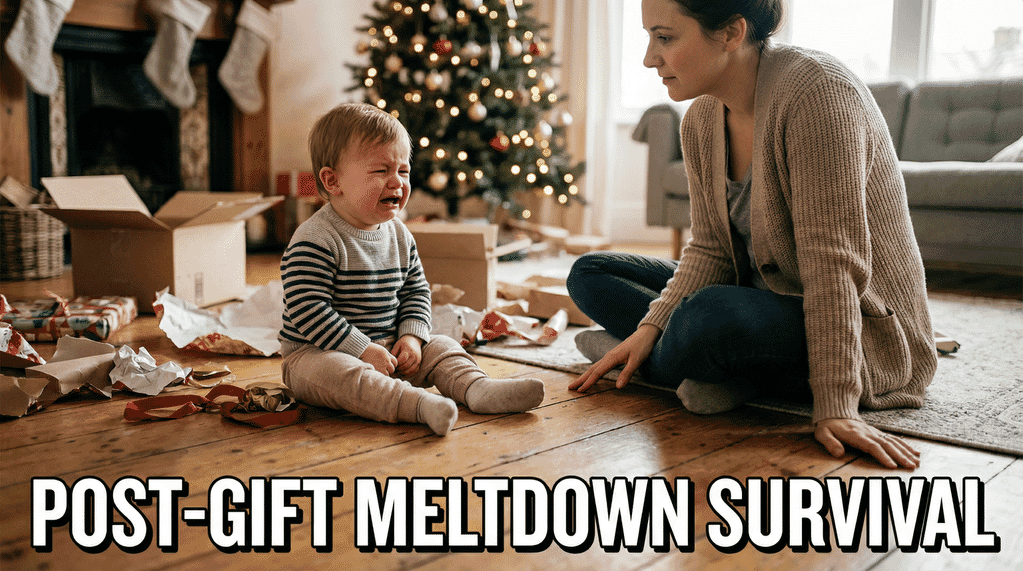
Your child just opened their last gift. Three seconds later, they’re sobbing on the floor. Before you spiral into worrying you’ve raised an ungrateful monster, here’s what’s actually happening: it’s a dopamine crash, not a character flaw.
Key Takeaways
- Post-gift tantrums are a dopamine crash, not bad behavior—your child’s brain is doing exactly what brains do after an emotional peak
- Most tantrums resolve in under 5 minutes when you stop talking and stay quietly present
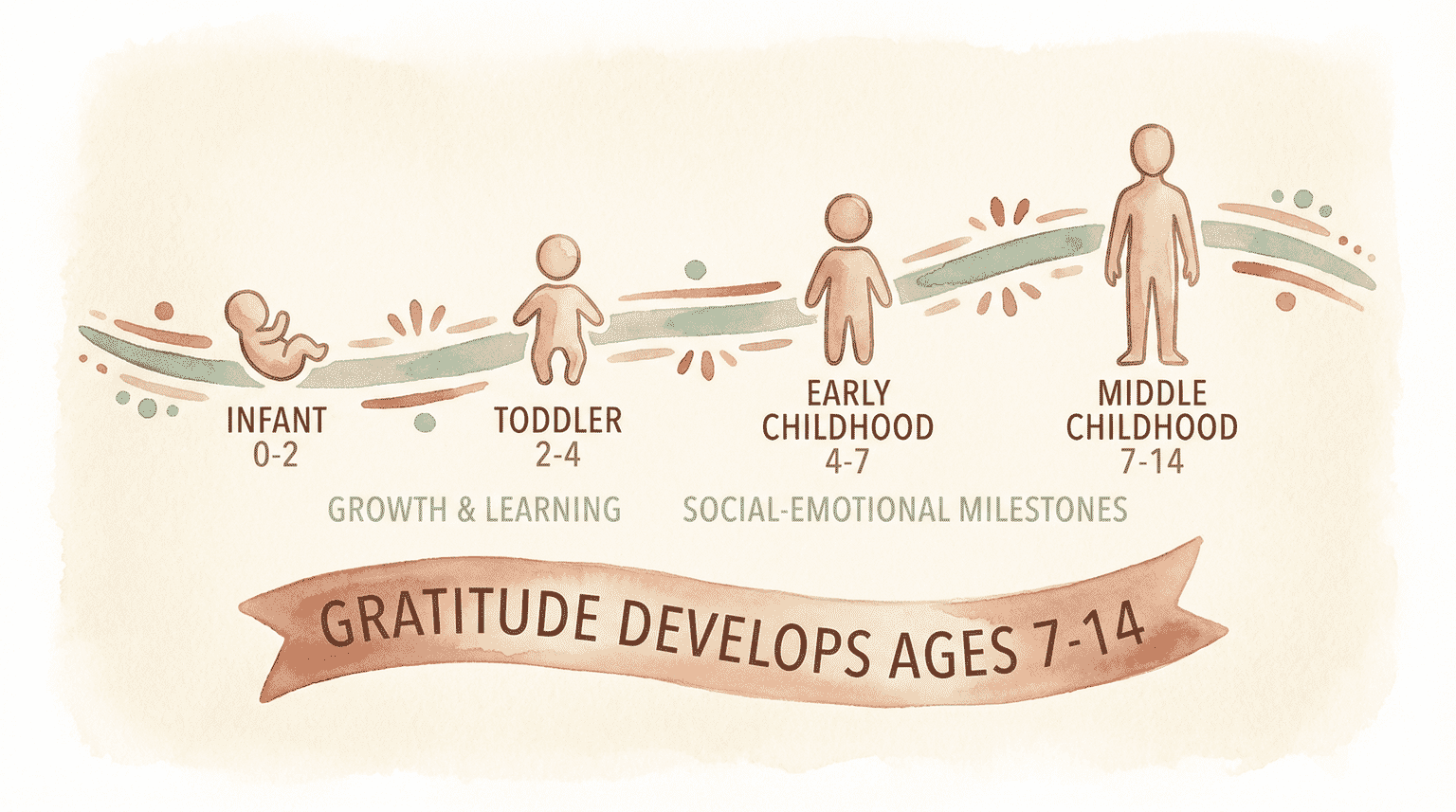
- Children don’t develop genuine gratitude until ages 7-14—your tantruming toddler literally can’t feel what you’re hoping they’ll feel
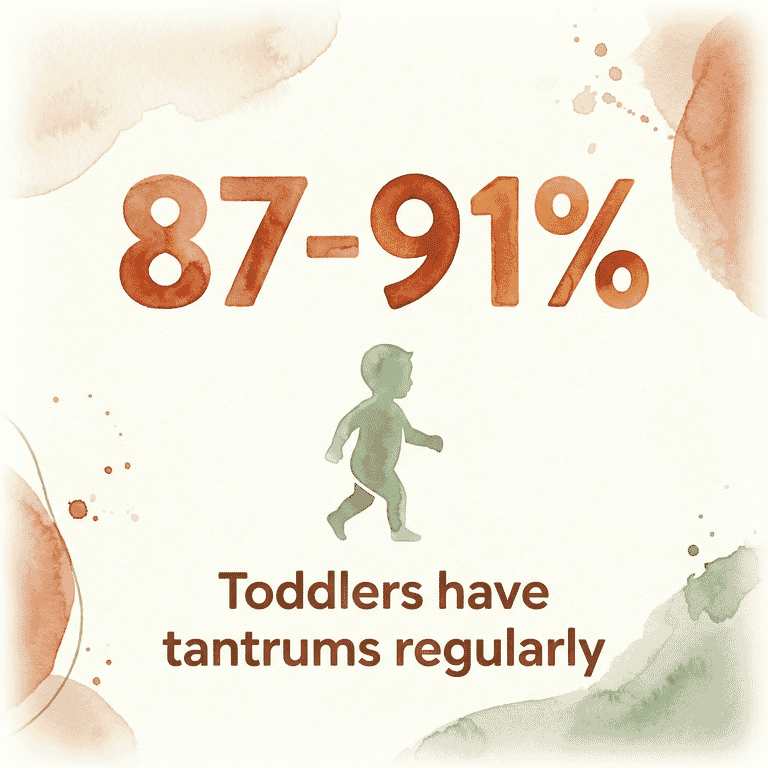
- 87-91% of toddlers have tantrums regularly—gift-opening just concentrates every trigger into one overwhelming moment
The Dopamine Crash Explained
When kids anticipate presents, their brains flood with excitement. Dopamine builds and builds as they tear through wrapping paper—and then it’s over. The presents are opened. The peak has passed.
What follows is predictable biology.
“A child gets into a kind of adrenaline rush which becomes ‘more, more, more, give me, give me, give me,’ and they can’t control it.”
— Dr. Tovah Klein, Director of the Barnard College Center for Toddler Development
The neuroscience of gift-giving reveals a predictable emotional pattern that every parent should understand.
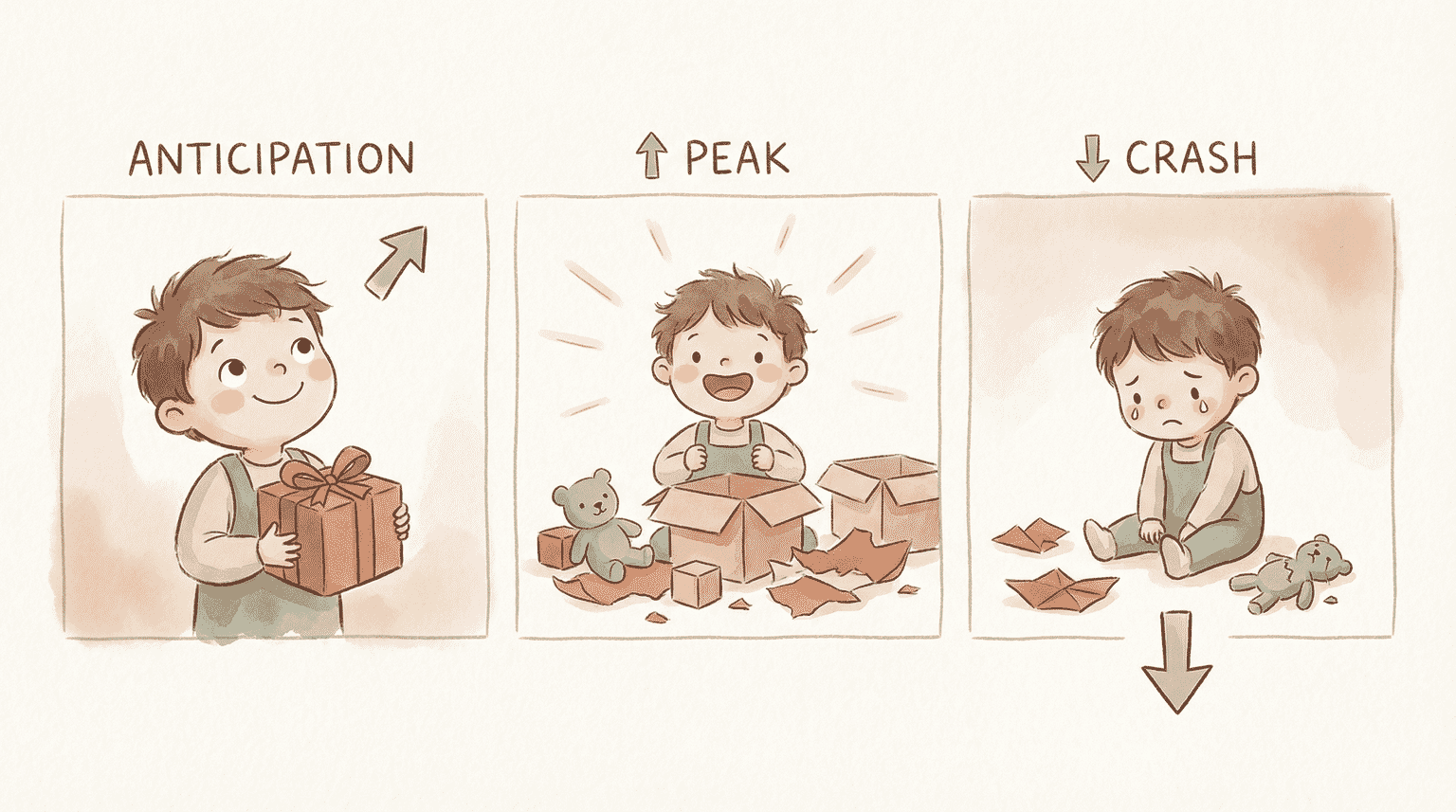
A 2022 NIH study found that most tantrums in young children last under 5 minutes and follow a predictable pattern—anger peaks first, then distress takes over. Your child isn’t choosing this meltdown. Their nervous system is crashing after an emotional peak.
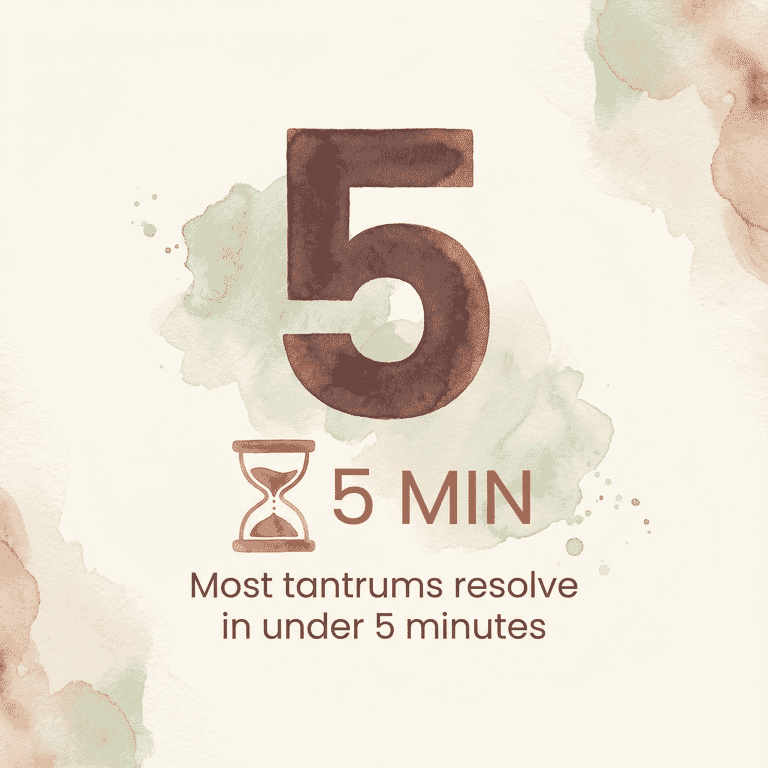
Here’s the reassuring part: you don’t have to fix it. Most meltdowns burn themselves out faster than it takes to microwave leftovers.
Understanding how gift anticipation affects children’s brains makes these moments far less alarming. This isn’t a parenting failure—it’s biology.
What to Do Right Now
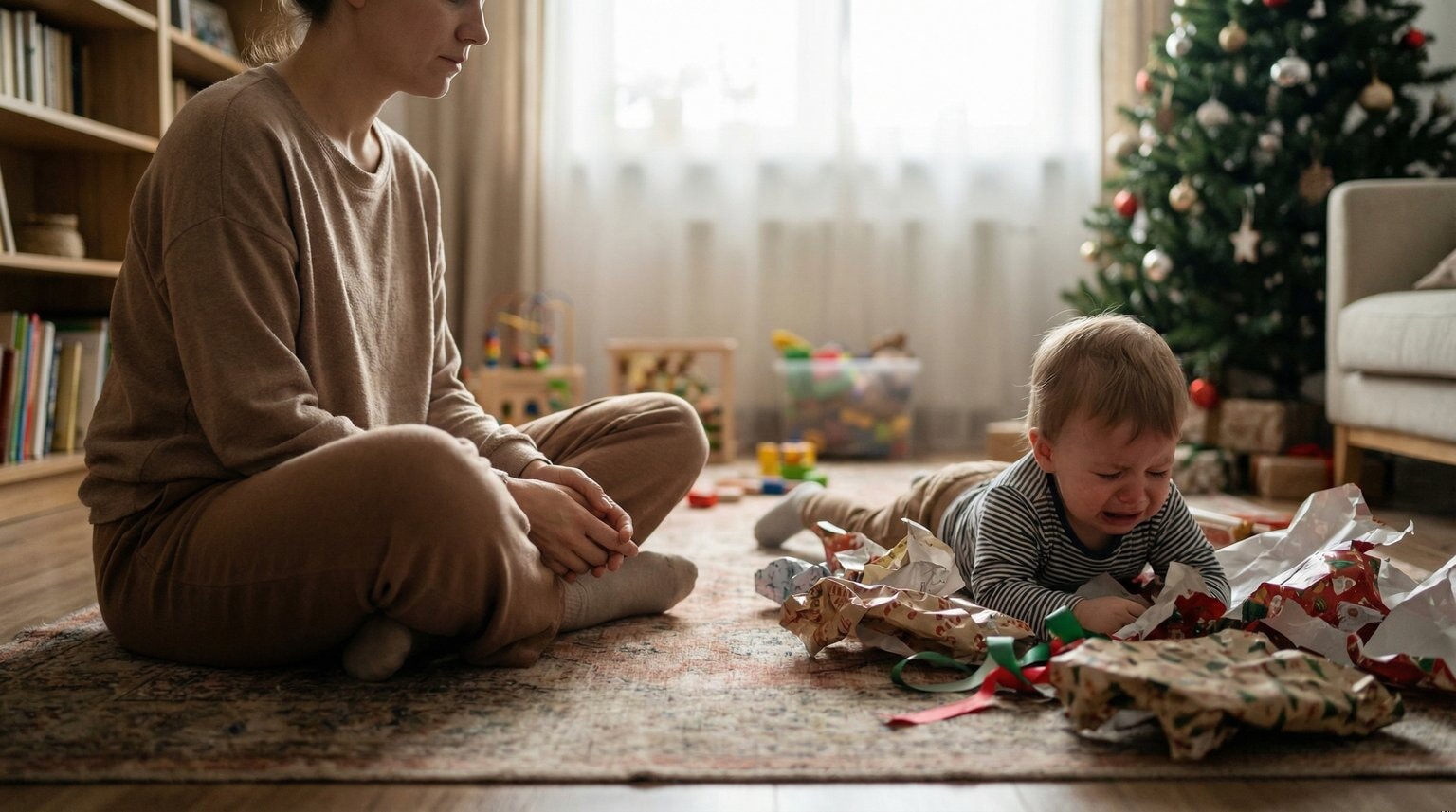
1. Stop talking. Child Mind Institute’s Dr. Steven Dickstein puts it bluntly: “Don’t talk to the kid when they’re not available.” They can’t process logic right now.
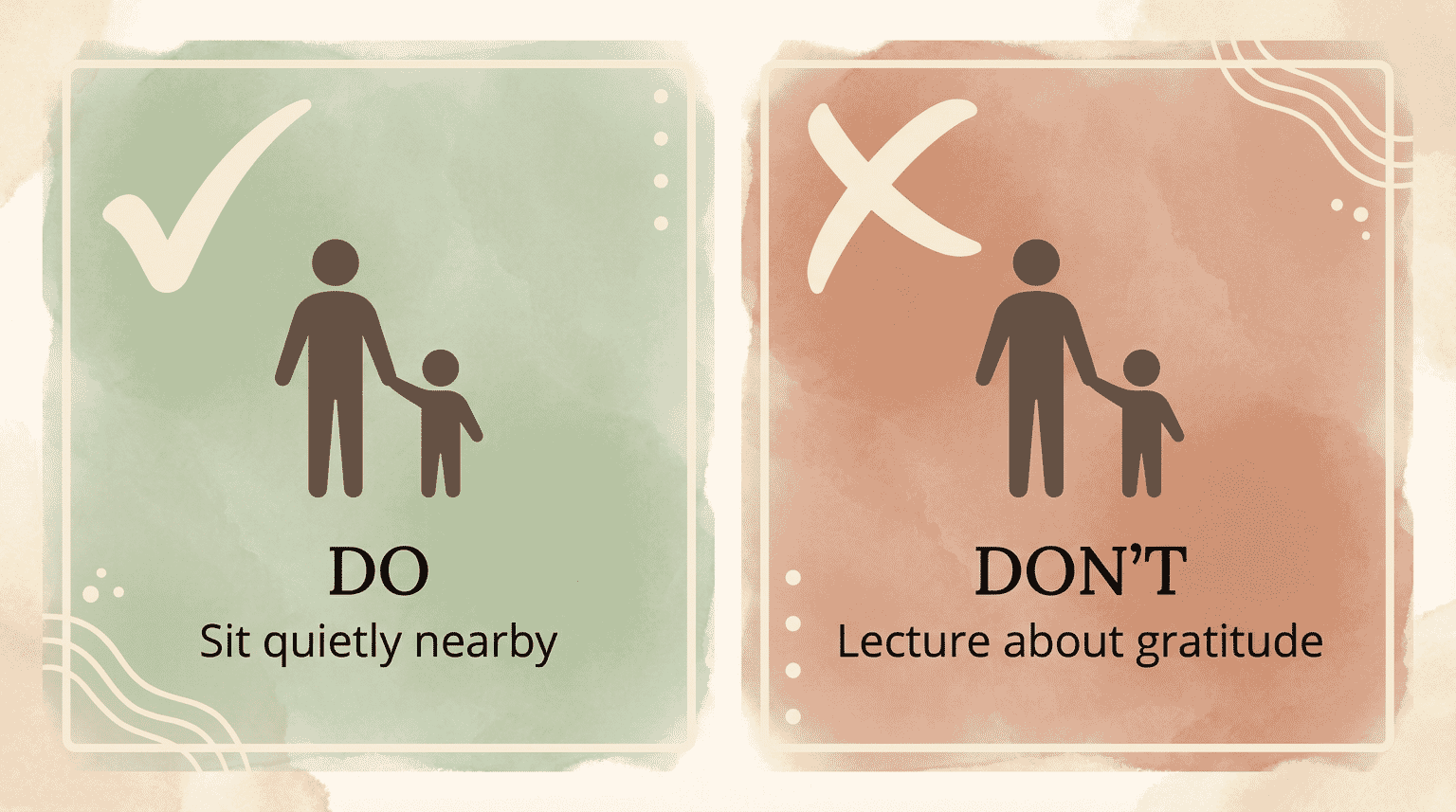
2. Stay close, stay quiet. Your presence matters, but words don’t help mid-meltdown. Sit nearby without pressure.
3. Wait for the shift. Anger gives way to distress, then calm. Most tantrums resolve in under 5 minutes when you don’t escalate.

What NOT to do: Don’t lecture about gratitude. Don’t threaten to take gifts away. Don’t demand a “thank you.” All of these add fuel.
The urge to teach a lesson in the moment is strong. Resist it. There will be plenty of time for gratitude conversations later—when their prefrontal cortex is back online.
This Is Developmental, Not Personal

Child psychologist Tina Payne Bryson offers the reframe every parent needs:
“It’s possible for kids to feel grateful and disappointed at the same time. If your kid expresses disappointment, or is sad, or is pouting, don’t assume they’re ungrateful.”
— Tina Payne Bryson, PhD, Child Psychologist
Here’s what I’ve seen with my own kids: children don’t develop genuine gratitude until ages 7-14. Your tantruming 4-year-old literally cannot feel what you’re hoping they’ll feel.
And research confirms that 87-91% of toddlers have tantrums regularly—gift-opening just concentrates every trigger into one overwhelming moment.
Let that sink in. Nearly nine out of ten toddlers are having regular meltdowns. Yours isn’t broken. Yours is statistically normal.
If siblings are involved, the intensity multiplies—see how to handle sibling gift jealousy for specific scripts that actually work.
Next year, consider preventing overwhelm with the right number of gifts. But right now? Ride it out. This is normal. Your kid isn’t broken—their brain is just doing exactly what brains do after a dopamine peak.
What About You?

What’s been your worst post-gift-opening meltdown? I’ve had kids cry because a present was “too good” to use. The stories help normalize this for other parents white-knuckling through gift-opening chaos right now.
Your gift-opening disaster stories help other parents survive their own chaos.
References
- Temper Tantrums in Toddlers and Preschoolers – NIH research on tantrum patterns and duration
- Developmental Pathways from Preschool Temper Tantrums – NIH study on tantrum prevalence and development
- How to Handle Tantrums and Meltdowns – Child Mind Institute clinical guidance

Share Your Thoughts