
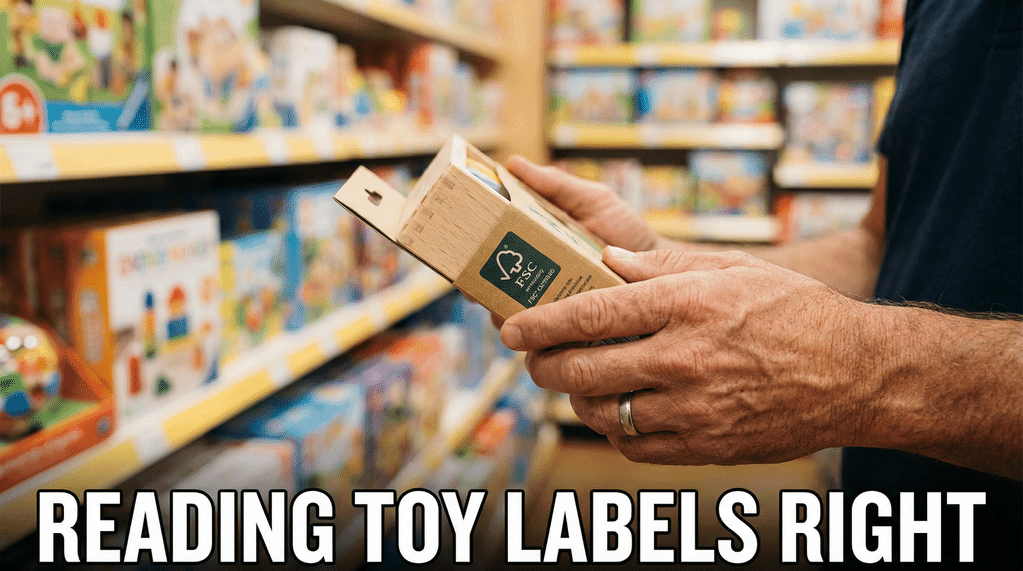
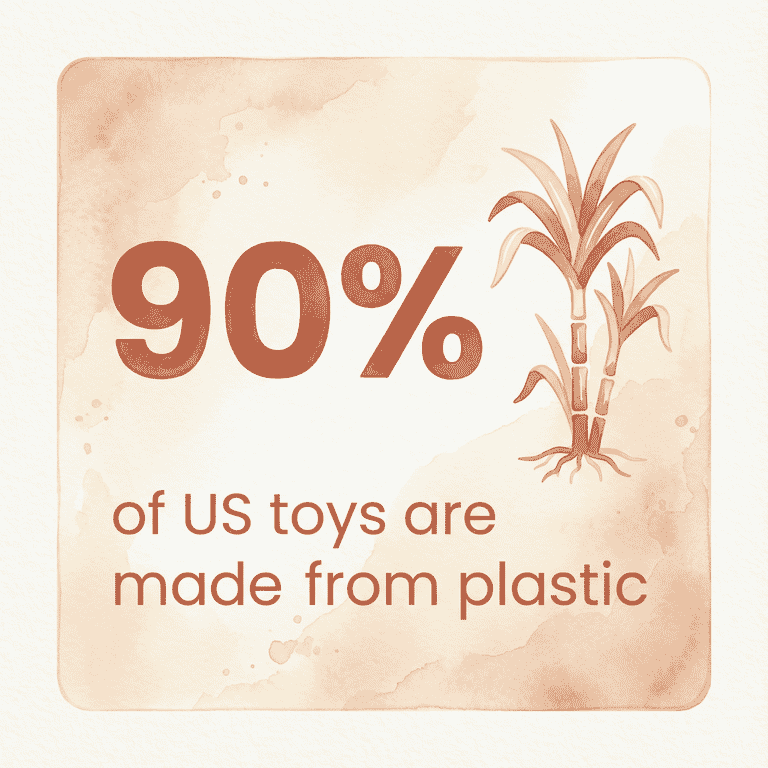
Ninety percent of toys sold in the US are made of plastic. Roughly 80% of all toys end up in landfills, incinerators, or the ocean. When I started digging into sustainable alternatives for my own family’s toy purchases, I expected clear answers. Instead, I found a lot of marketing smoke—and a few materials that genuinely deliver.
Here’s your 90-second guide to what’s actually worth buying.
Key Takeaways
- Three certifications matter: FSC for wood, GOTS for fabric, and OEKO-TEX for safety testing—skip to the trust guide
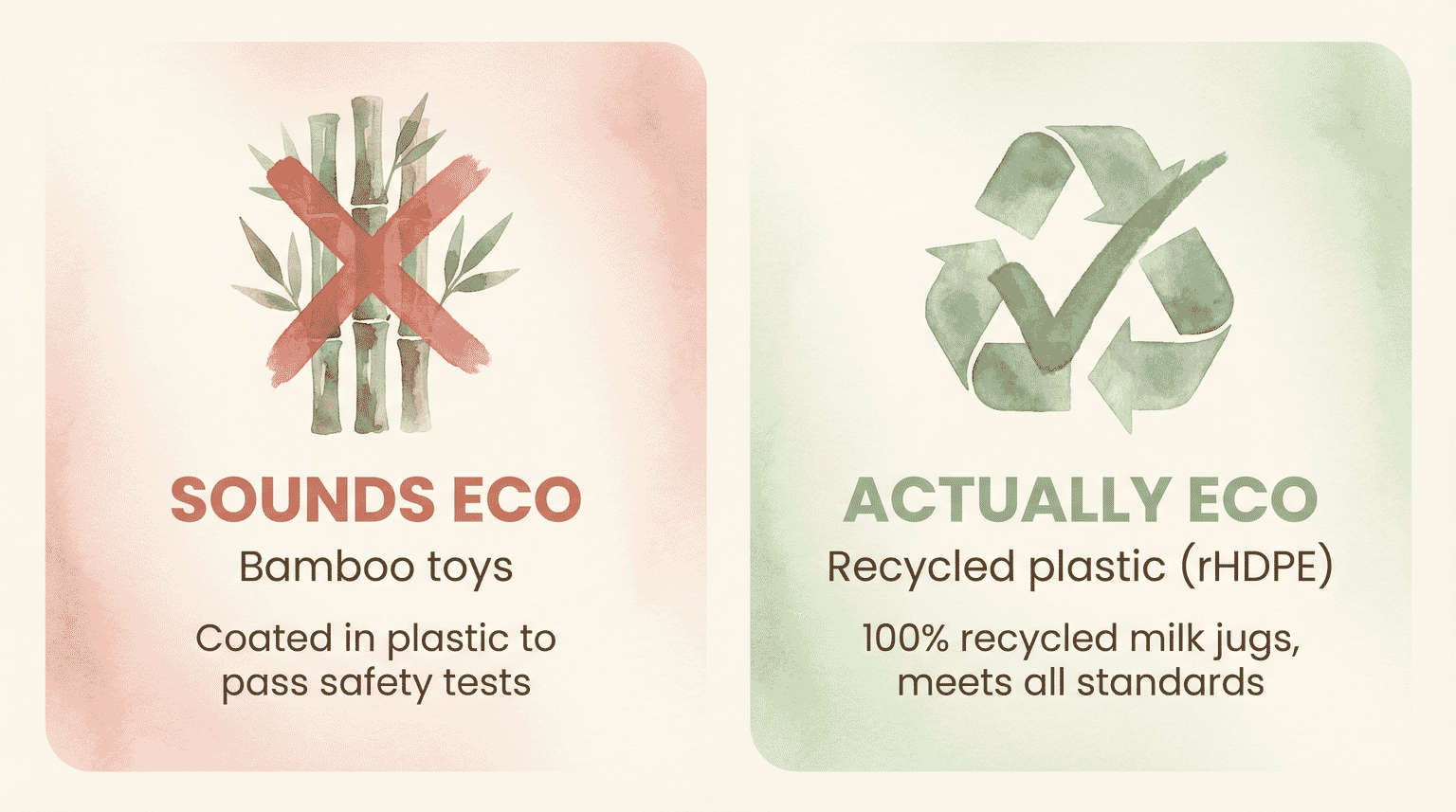
- Recycled plastic (rHDPE) from milk jugs is genuinely sustainable—don’t dismiss all plastic
- Bamboo toys require plastic coating to pass safety standards, making “eco” claims misleading
- If there’s no third-party certification logo, be skeptical of any “sustainable” label
The 3 Materials That Actually Deliver
FSC-Certified Wood
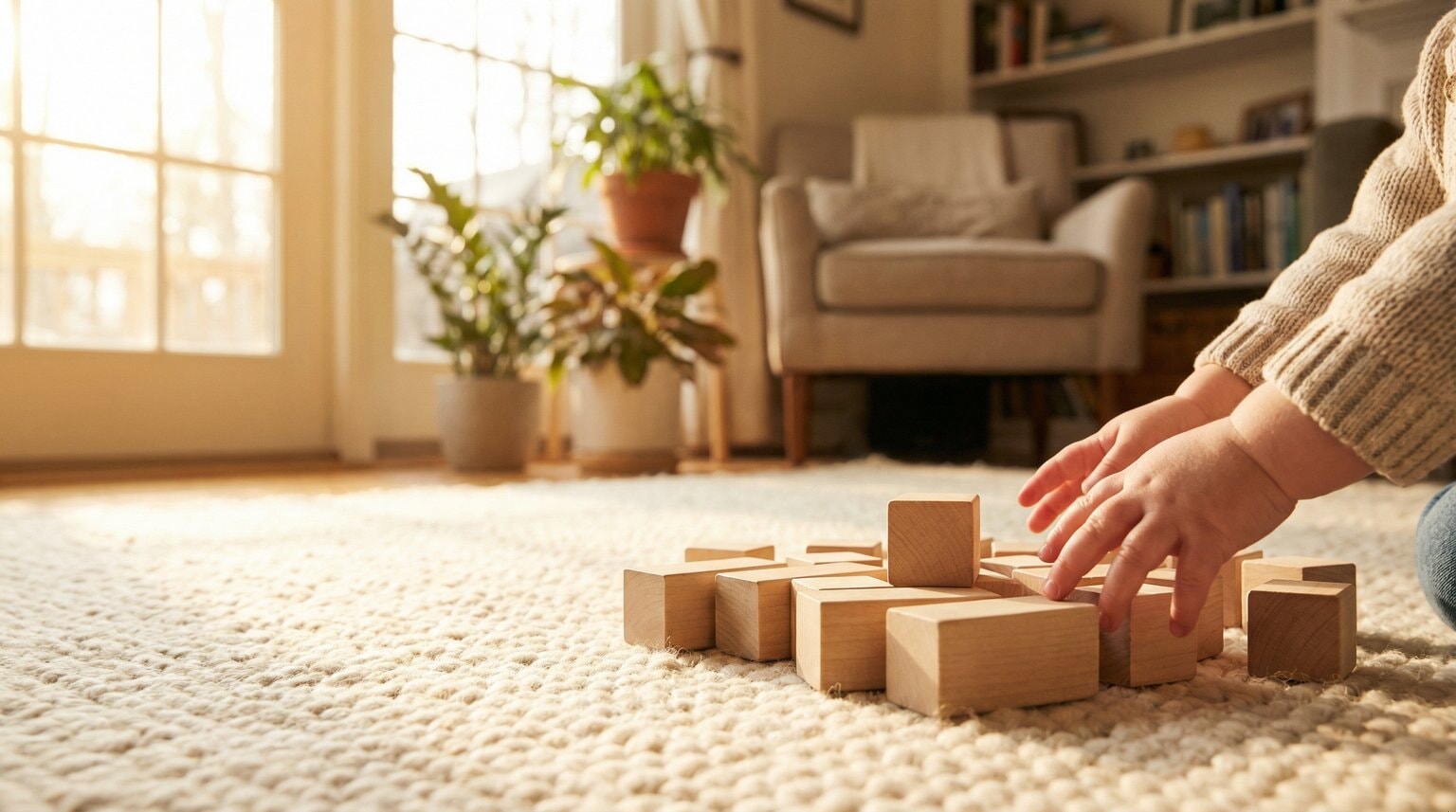
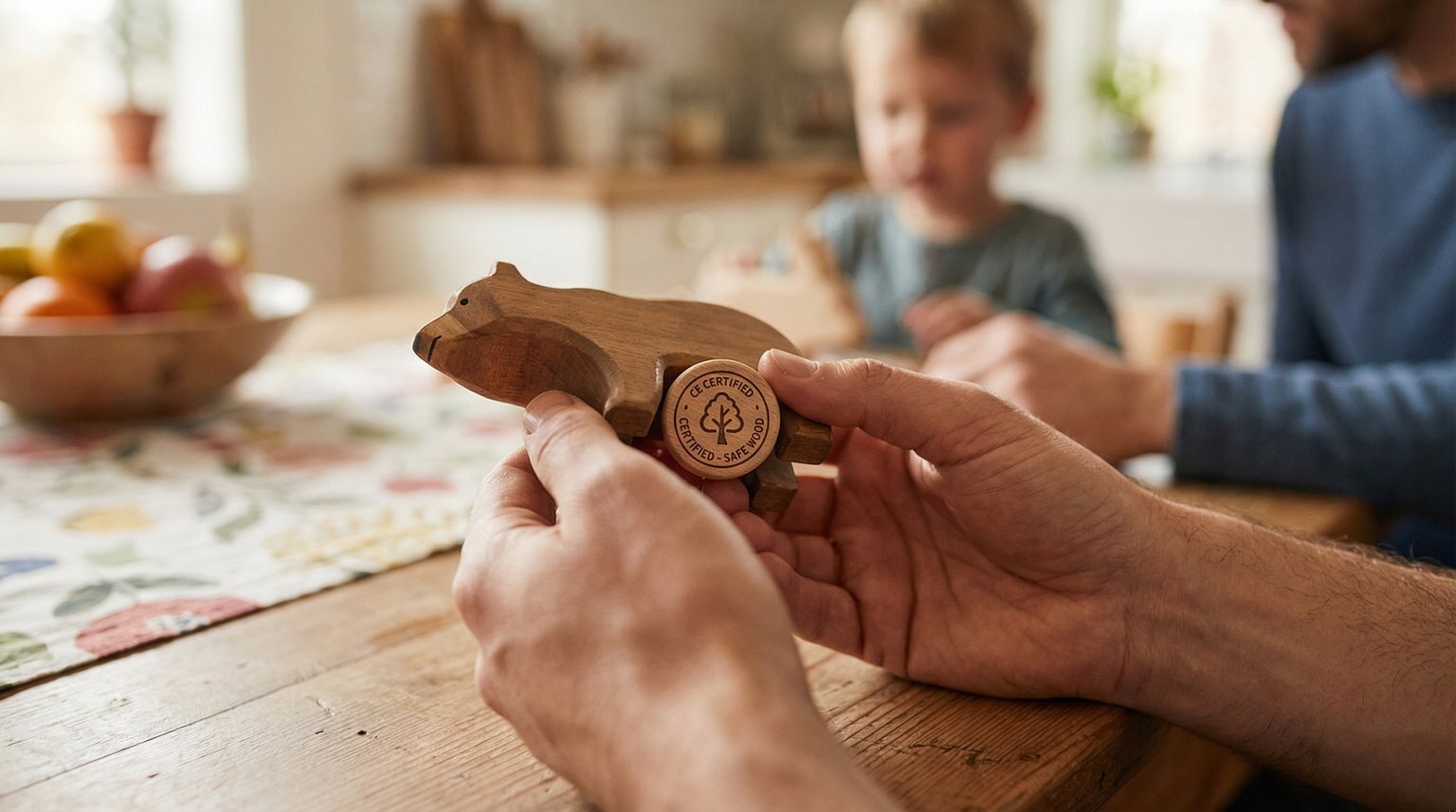
Look for the Forest Stewardship Council (FSC) logo. This certification confirms the wood comes from responsibly managed forests—not just any “wooden toy” claim. Research from Yale Environment Review confirms wood-based toys produce far fewer emissions than plastic across their entire lifecycle.
Bonus: quality wooden toys survive multiple kids. My 10-year-old’s wooden blocks are now entertaining my 2-year-old.
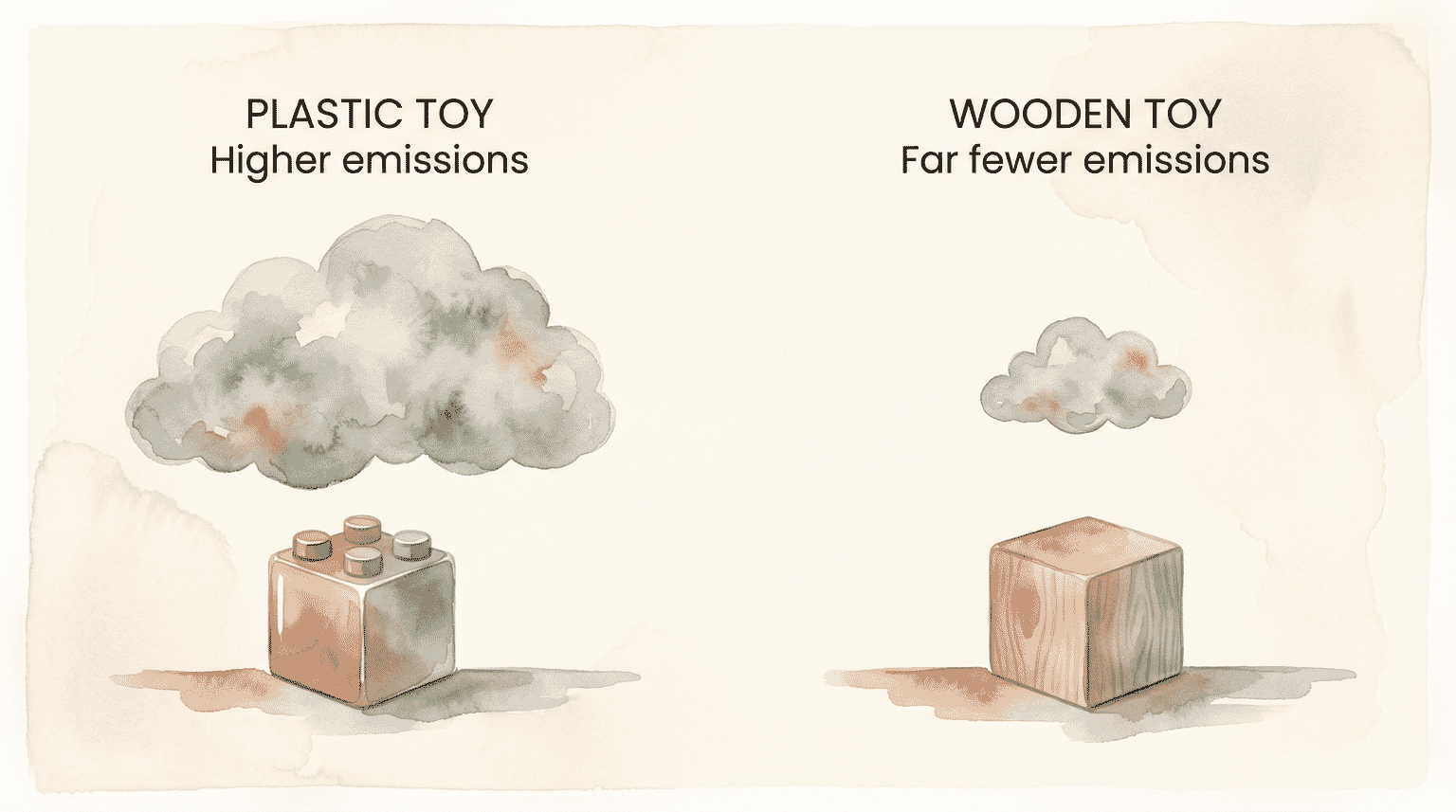
The emissions difference isn’t marginal—it’s substantial. When you factor in manufacturing, transportation, and end-of-life disposal, wooden toys come out dramatically ahead.
And unlike plastic alternatives, quality wooden toys can be passed down, donated, or even composted at end of life. That’s a complete lifecycle win.
GOTS-Certified Organic Cotton
For fabric toys, the Global Organic Textile Standard (GOTS) verifies organic fibers and tests for harmful dyes. This matters because soft toys end up in mouths—a lot. If you’ve ever watched a baby gnaw on a stuffed animal for twenty minutes straight, you understand why certification matters here.
Post-Consumer Recycled Plastic (rHDPE)
Yes, recycled plastic can be genuinely sustainable. Brands like Green Toys make products from 100% recycled milk jugs, meeting all safety standards. Look for “post-consumer recycled” or “rHDPE” on packaging.
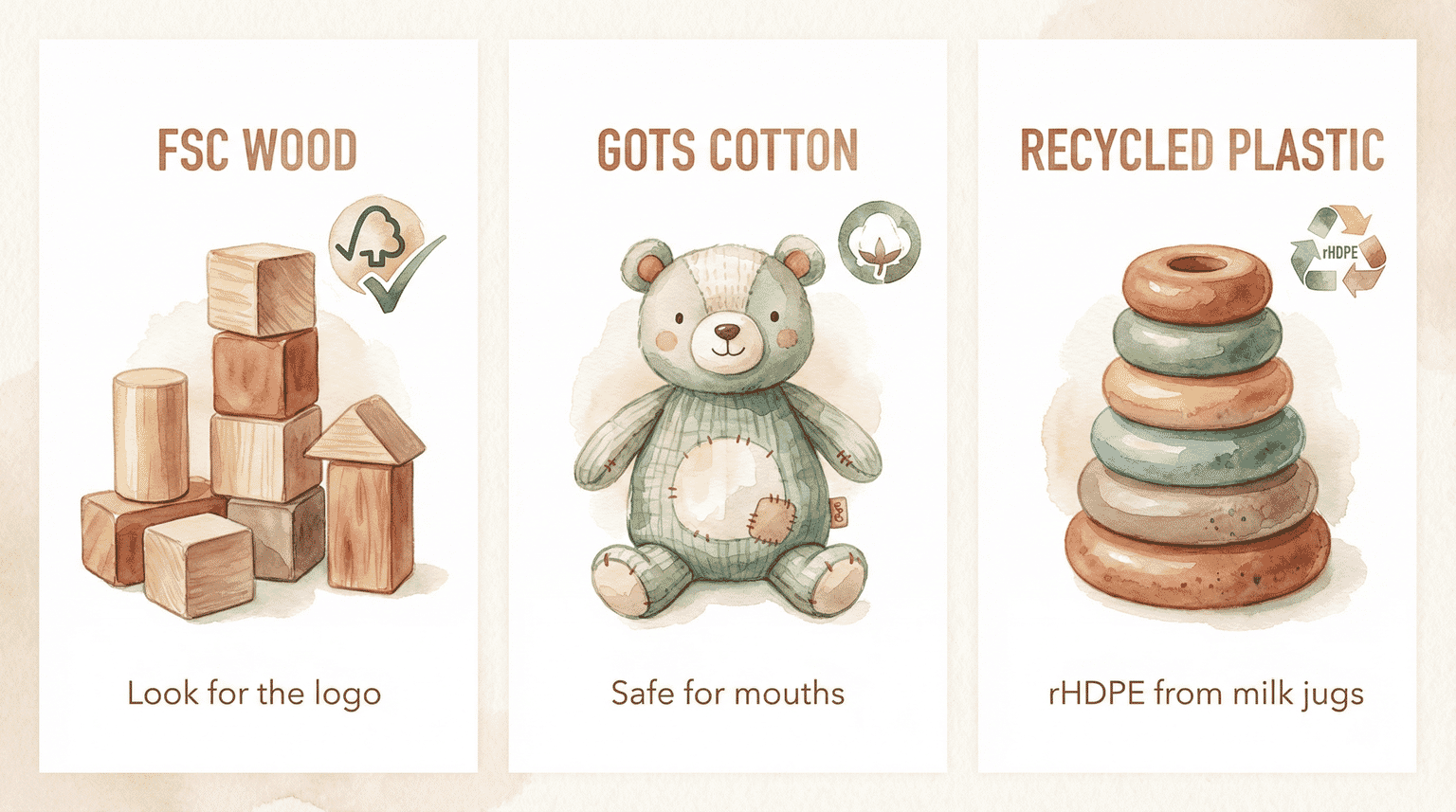
The key distinction? Post-consumer recycled means it’s made from materials that already served their original purpose—like those milk jugs your family finished last week. That’s genuinely circular, not just marketing speak.
The “Eco” Claims That Don’t Hold Up

Bamboo toys sound perfect—until you learn they require plastic coating to pass safety standards. The natural bamboo fibers splinter too easily for children’s products, so manufacturers seal them with synthetic coatings.
“That’s true about bamboo, but in order for it to pass the toy industry’s safety standards it has to be coated in plastic.”
— Dr. Amanda Gummer, Research Psychologist and Founder of the Good Play Guide
“Plant-based” plastic often isn’t biodegradable. LEGO’s sugarcane polyethylene? Still not breaking down in your lifetime. It’s chemically identical to petroleum-based plastic—just sourced differently.
The scale of this problem is staggering. With 90% of US toys made from plastic, even small improvements in material choices could have enormous environmental impact.
But those improvements only happen when parents can distinguish genuine sustainability from clever marketing. And right now, the marketing is winning.
Vague “sustainable” labels without third-party certification mean nothing. If there’s no FSC, GOTS, or OEKO-TEX logo, be skeptical. Companies can slap “eco-friendly” on anything—there’s no regulation requiring proof.
The Labels Worth Trusting
| Certification | What It Tests | Why It Matters |
|---|---|---|
| FSC | Forest sourcing | Confirms responsible wood harvesting |
| GOTS | Organic textiles | No harmful dyes, verified organic content |
| OEKO-TEX | Harmful substances | Tests finished products for safety |
These three certifications represent independent, third-party verification. That means the company had to prove their claims to someone with no financial stake in the outcome. That’s the difference between marketing and accountability.
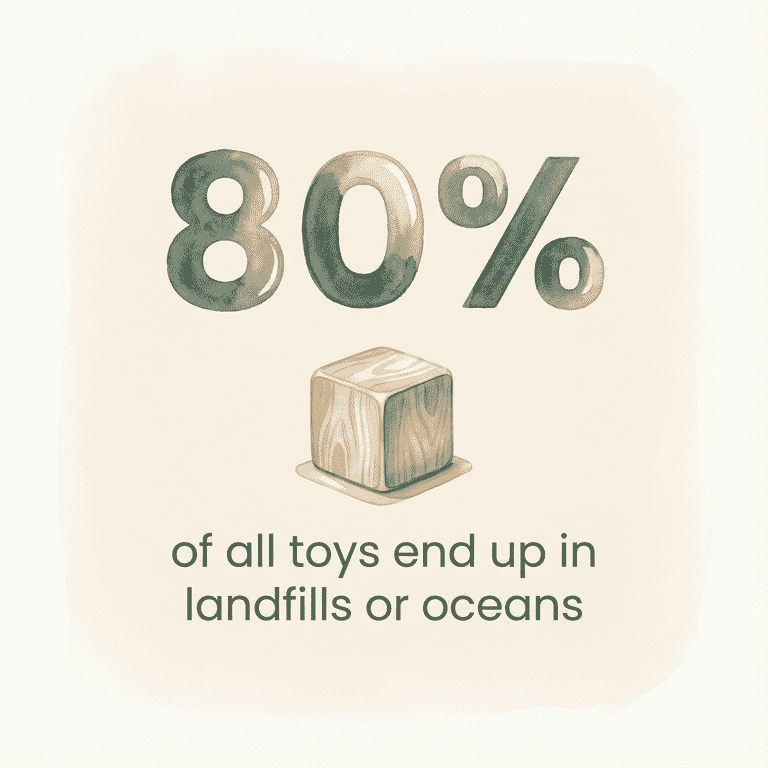
When 80% of toys end up in landfills or oceans, every purchase decision matters. Choosing certified materials isn’t just about your home—it’s about what we’re collectively leaving behind.
The good news? You don’t need to memorize complicated standards. Just look for those three logos and you’ve already filtered out most of the greenwashing.
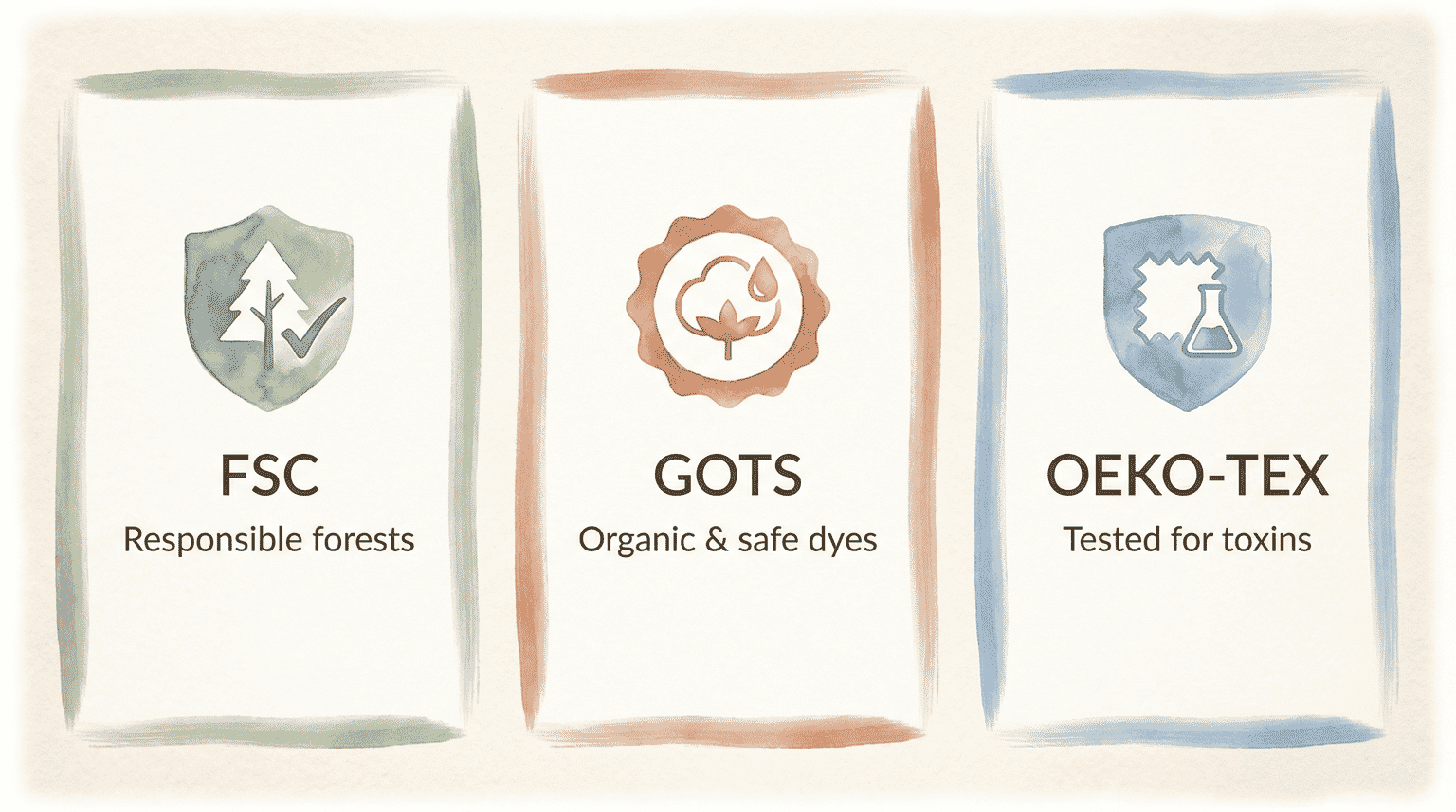
When you’re ready to align toy choices with your family values, these three certifications are your shortcut. And if you want to understand the broader shift toward eco-conscious gifting, you’re not alone—the movement is growing.
The bottom line: Skip the marketing. Look for the logo.
Join the Conversation

Which sustainable toy materials have held up in your house? I’m curious whether wooden or fabric toys have delivered on durability promises—and which “eco” claims turned out to be greenwashing.
Drop a comment below—your real-world testing helps other families skip the greenwashing.
References
- Yale Environment Review – Life cycle analysis of toy materials
- Atmos Magazine – Investigation of sustainable toy industry practices

Share Your Thoughts