
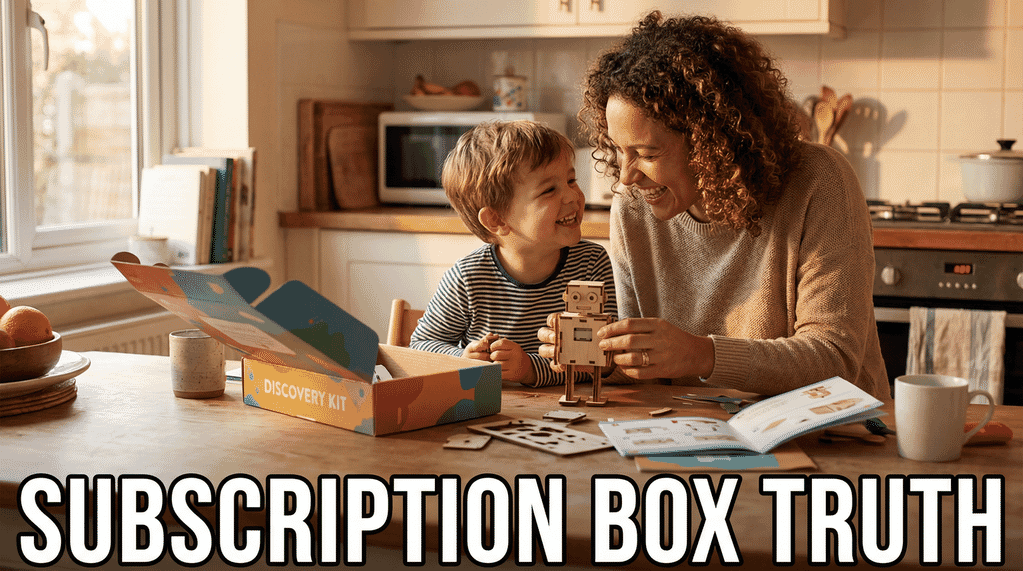
My 6-year-old checks the mailbox every day now. Not for anything specific—just in case. That’s what three months of activity box subscriptions did to our household. The anticipation became its own ritual, separate from whatever was actually inside.
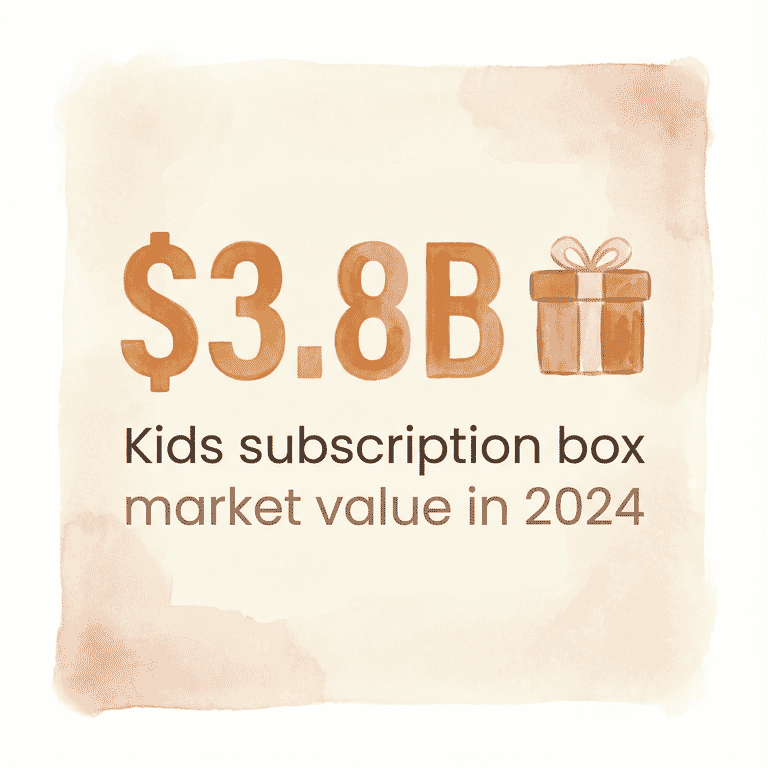
Here’s the thing: I wanted to understand what we’d gotten ourselves into. The kids subscription box market hit $3.8 billion in 2024, and market analysts project it will more than double by 2035. That’s not a fad. That’s a fundamental shift in how families approach play, learning, and—let’s be honest—parental sanity.

So my librarian brain did what it does. I dug into the research, tracked our own family’s experience across multiple subscriptions, and talked to other parents about what actually happens after the honeymoon period ends.
Key Takeaways
- The $3.8 billion subscription box market exploded due to screen fatigue, decision fatigue, and the shift toward experience-based gifts
- Parent enthusiasm typically peaks around month three—plan for this reality check before committing annually
- Match subscriptions to your child’s demonstrated interests, not aspirational ones you wish they had
- Cost-per-activity runs $5-15 compared to $15-30 for equivalent craft store purchases—but only if you actually complete the contents
- Start with one box, easy cancellation terms, and give it three months before deciding
The $3.8 Billion Box
Why did this market explode? Three forces converged.
First, screen fatigue hit critical mass. Parents aren’t anti-technology, but we’re drowning in it. Child development specialists note that hands-on, sensory engagement supports cognitive and emotional learning in ways passive screen experiences cannot replicate. Activity boxes arrive as a ready-made screen alternative—no planning required.
Second, decision fatigue is real. One parent in a 2024 qualitative study put it bluntly: “I’m finding that just juggling motherhood and then work, it really uses up all of my brain space… I kind of just been wanting to outsource it a little bit.” Subscription boxes outsource the researching, shopping, and planning. Everything arrives. You open it. Done.
Third, gift-giving has moved toward experiences and subscriptions. Grandparents discovered they could give the gift that keeps arriving—monthly excitement instead of one-day toy overload.
The STEAM segment (Science, Technology, Engineering, Arts, Mathematics) emerged as the fastest-growing category, aligning with parents’ desire for play that feels productive. We want our kids entertained and learning. Subscription boxes promise both.
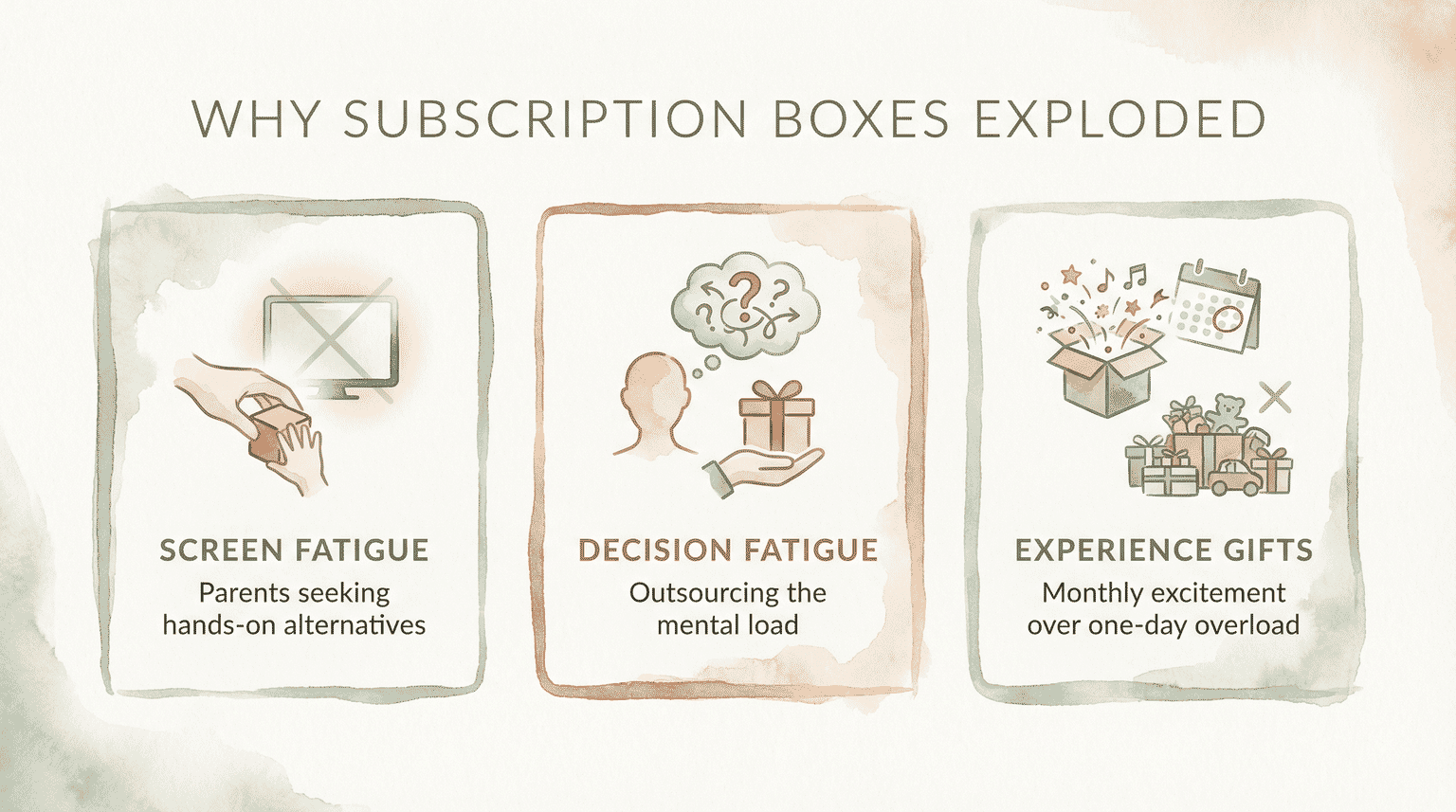
Understanding these drivers helps explain why the market keeps growing—and why so many parents feel the pull toward that monthly box on the porch.
What’s Actually in These Boxes?
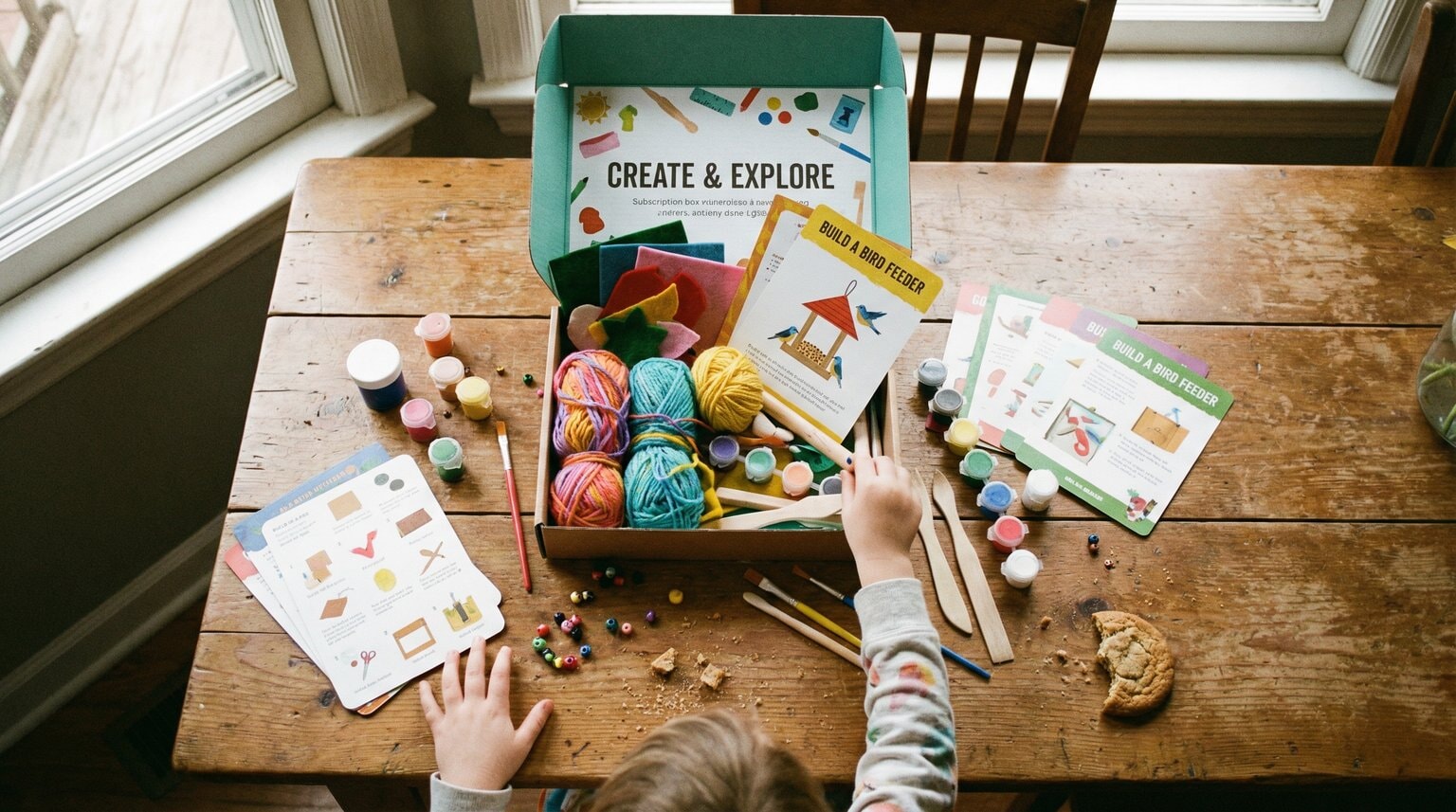
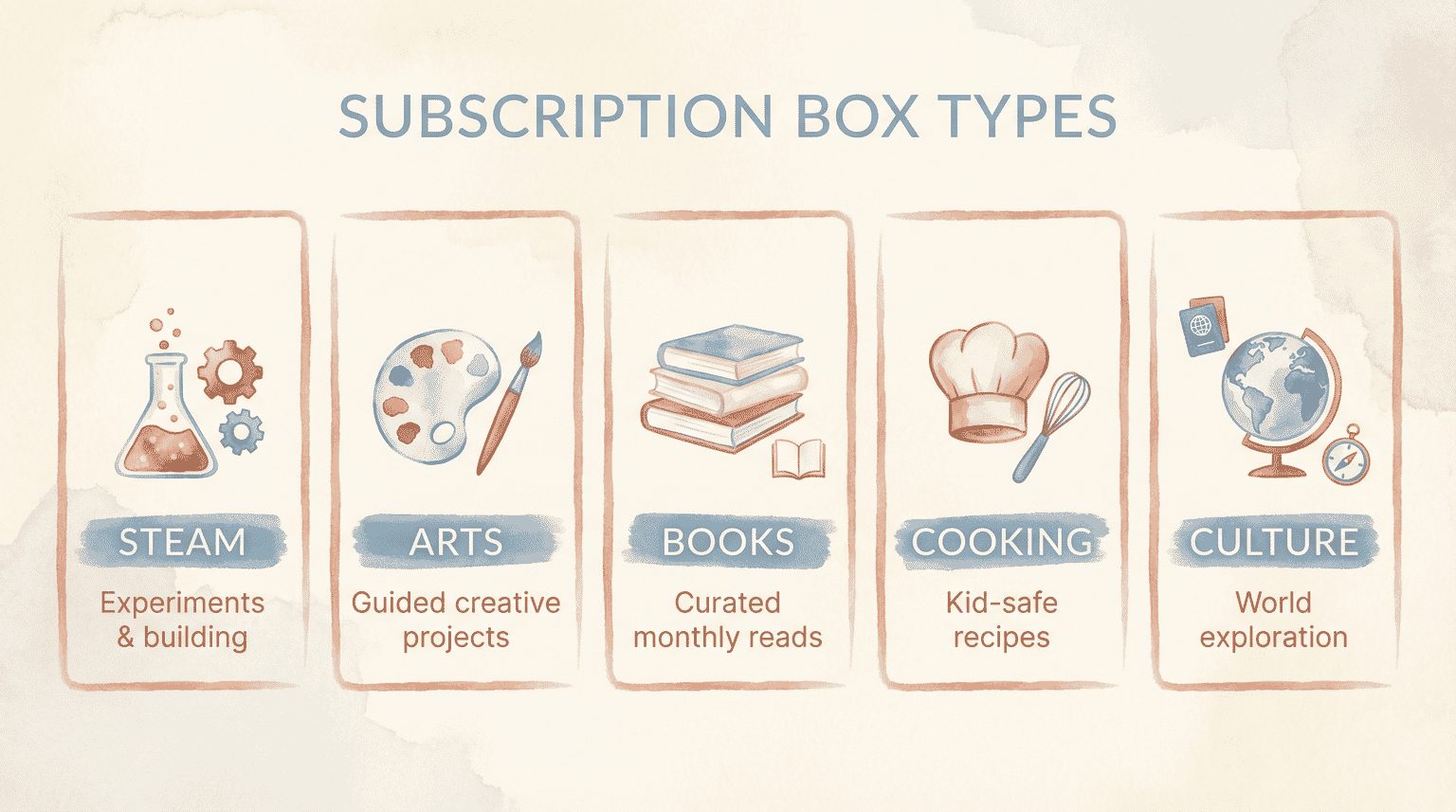
Not all subscription boxes are created equal. Here’s what each major category actually delivers:
STEAM/Science boxes include experiments and building projects with real materials—circuits, chemistry sets, engineering challenges. These tend toward higher price points because supplies cost more. They also require the most parent involvement for younger kids.
Arts and crafts boxes contain guided creative projects with pre-measured supplies. Great for children who love making things; frustrating for kids who hate following instructions.
Book clubs deliver curated titles—often 2-3 books monthly—matched to age and reading level. Lower price point, higher value if your child actually reads them.
Cooking/baking boxes provide kid-safe recipes with specialty ingredients. These require adult supervision but create genuine family activity time.
World culture boxes explore different countries through crafts, stories, and sometimes snacks. Educational content varies widely by brand.
Here’s what struck me when researching: among 19 “best” subscription boxes for children reviewed in 2022, STEM was the largest category—but significant gaps exist. Psychology professor John Marazita of Ohio Dominican University observed: “Psychology is missing out. This is especially concerning given the mental health crisis reported across the country.”
The point isn’t that your child needs psychology boxes specifically. It’s that the market follows trends, not comprehensive developmental coverage. STEAM sells, so STEAM dominates—even when other areas might serve children equally well.
Why the Unopened Box Works

There’s real psychology behind the unboxing phenomenon—and subscription boxes tap into it deliberately.
Anticipation creates engagement. Research on families using subscription meal kits found that child involvement in unpacking increased willingness to engage with contents. The ritual matters. When my kids know a box is coming, they’re invested before it arrives. That investment carries into actually doing the activities.
Novelty drives attention. Children’s brains are wired to notice new things. A subscription box arriving monthly hits that novelty button reliably. The same craft supplies sitting in a drawer? Invisible. Those supplies arriving in a branded box with their name on the label? Suddenly fascinating.
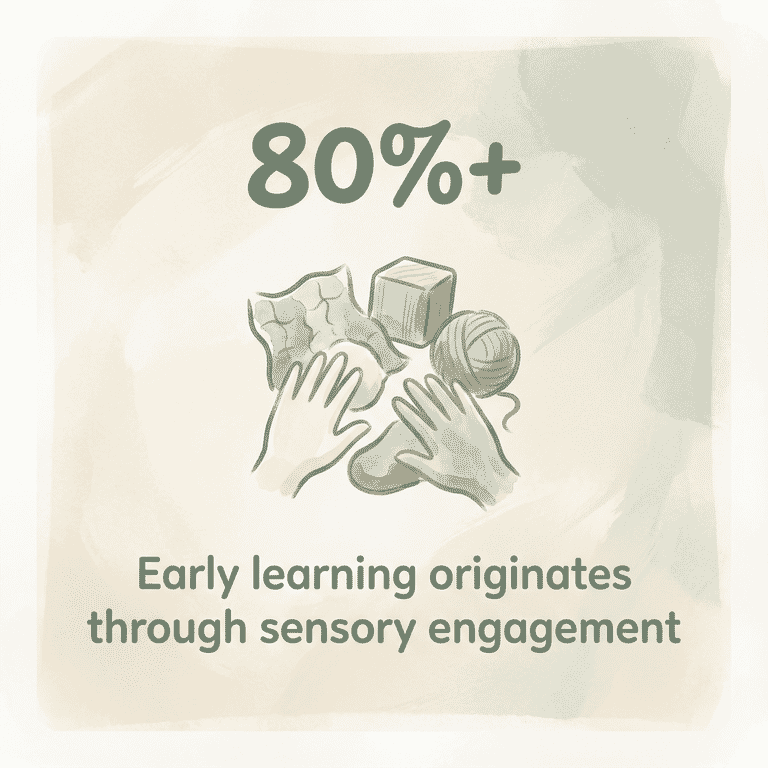
Sensory engagement anchors learning. The vast majority of early learning originates through sensory engagement. Activity kits promote sustained focused interaction because children are handling physical objects, using real tools, solving tangible problems. This isn’t replicable through apps.
That last part—the handling, the doing, the making—matters more than most parents realize when comparing screen time to hands-on activities.
The subscription box model creates built-in family moments—opening it together, figuring it out together, making something together.
“I think our No. 1 value is we’re driving quality time and purposeful play, keeping kids off screens, and minimizing the work that goes into managing ‘toy clutter.’ We’re helping children connect with their parents and their siblings.”
— Kim Conti, Founder of Orbit Crates
The box becomes a family moment—opening it together, figuring it out together, making something together. That’s the part marketing gets right.
What Parents Actually Pay
Let’s talk money honestly, since most subscription sites won’t.
Monthly costs typically range from $15-45, with most boxes falling between $20-30. STEAM and science boxes trend higher due to material costs. Book clubs often cost less. Cooking boxes vary wildly based on ingredient quality.
Hidden costs to watch for:
- Shipping: Some include it; others add $5-8 monthly
- Commitment periods: Annual subscriptions lower per-month cost but lock you in
- Add-on prompts: Many boxes include cards encouraging additional purchases
- Sibling pricing: Doubling subscriptions for multiple kids adds up fast
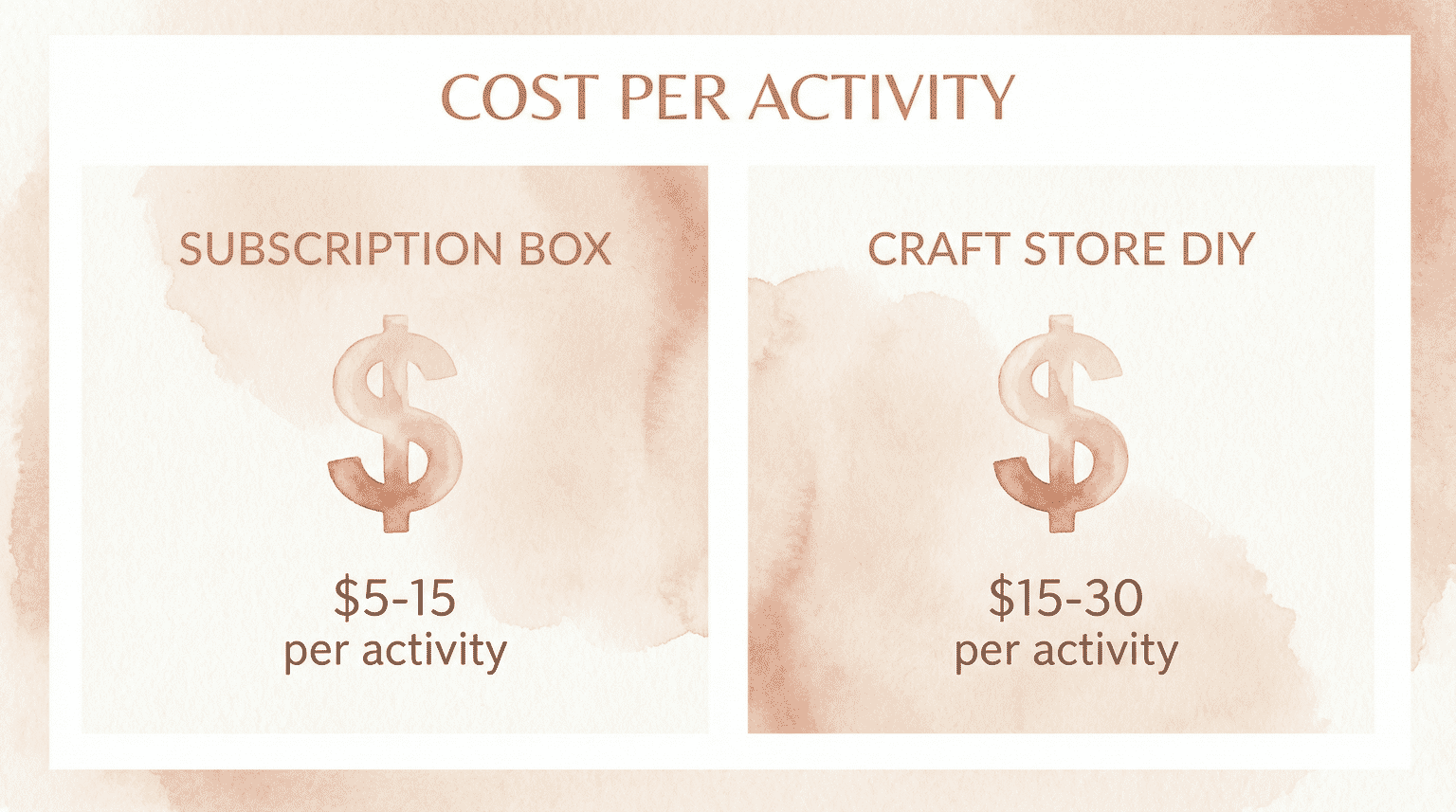
The value calculation depends on usage. Cost-per-activity runs roughly $5-15 compared to $15-30 for equivalent individual craft store purchases—if you complete everything. An untouched box costs infinite dollars per activity.
In my house, the boxes that work are the ones matched to genuine interests—not aspirational interests. My 8-year-old’s science box gets demolished monthly. My 10-year-old’s craft box sometimes sits unopened until I finally do it for her, which defeats the purpose entirely.
The Three-Month Question
Here’s what no subscription company will tell you: parent enthusiasm peaks around month three.
“We found that initially parents want everything to be new, but after about three months, as children begin reaching development milestones, parents don’t care if a toy is new or not.”
— Kim Conti, Founder of Orbit Crates
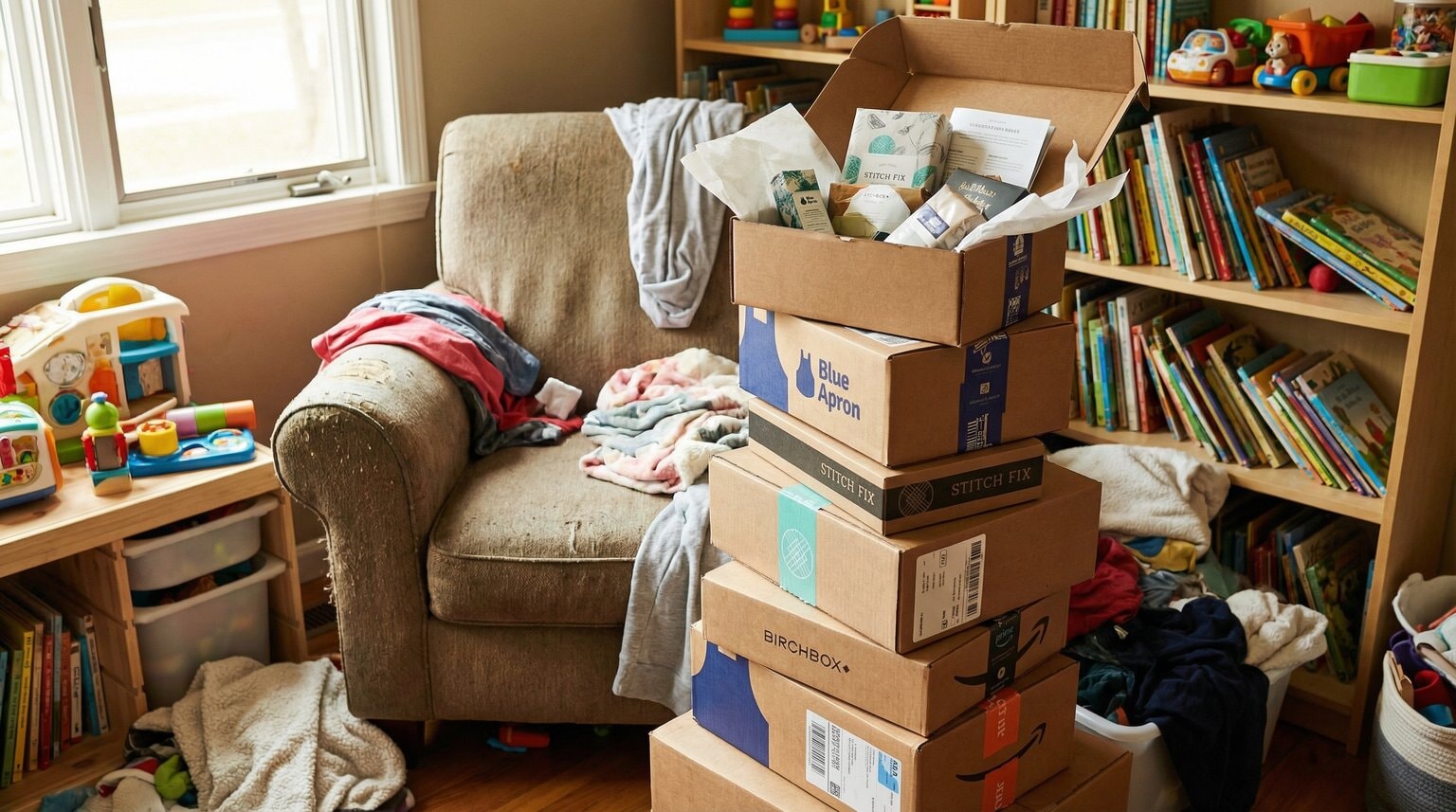
The same applies to activity boxes. Early excitement fades. The novelty mechanism that made the first few boxes magical becomes routine. You start noticing the boxes piling up, half-completed.
Signs of subscription fatigue:
- Boxes sitting unopened for weeks
- Activities started but never finished
- Kids asking “what came?” with diminishing enthusiasm
- Parents feeling guilty about accumulated contents
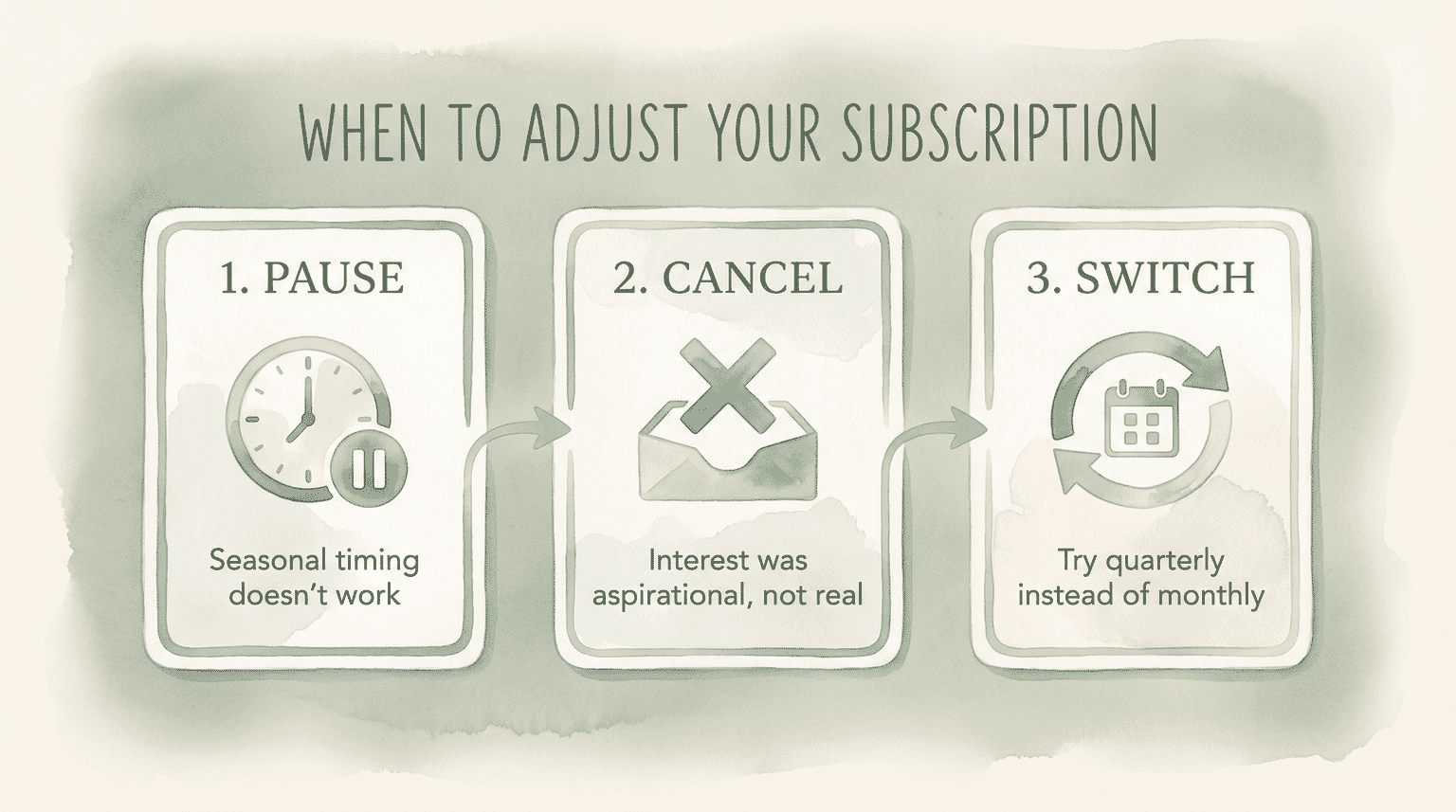
When to pause vs. cancel:
- Pause if seasonal (summer’s too busy, but school year works)
- Cancel if the interest wasn’t real (you hoped they’d like science; they don’t)
- Adjust if timing’s wrong (switch to quarterly instead of monthly)
The flexibility factor matters enormously. Brand policies vary widely—some allow easy pausing; others make cancellation deliberately difficult. Check this before subscribing.
Choosing Without the Marketing Gloss
Every subscription site shows beaming children mid-craft. Here’s what to actually consider:
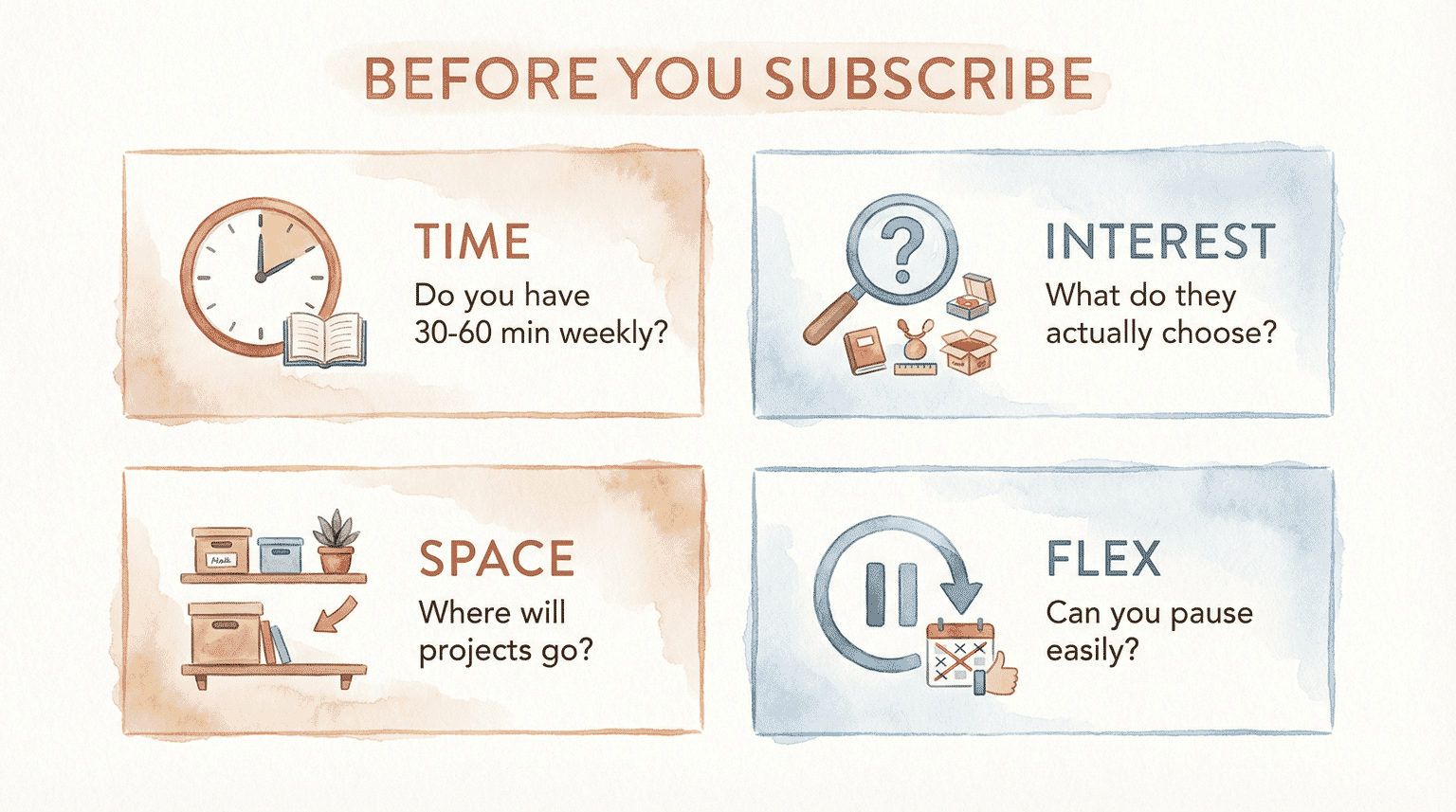
Time investment reality. Most STEAM boxes need 30-60 minutes of focused time, often with adult help for ages under 7. Do you have that time weekly? Be honest.
Interest alignment. What does your child actually choose when given options? Not what you wish they’d choose. My daughter’s Pinterest-worthy craft projects are me-driven; her genuine interests are messier and less photogenic.
Storage capacity. Monthly boxes accumulate. The projects need somewhere to go. The leftover supplies need organizing. Factor this in.
Commitment flexibility. Can you pause easily? Cancel without penalty? Gift unused months to someone else?
Age-appropriate independence. Ages 6-10 often hit the sweet spot for independent engagement with age-appropriate guidance. Children under 3 typically need significant parent involvement. Teenagers may find subscription boxes feel “babyish” unless specifically designed for older kids.
Most boxes target specific age brackets—2-4, 4-6, 6-8, 8-12—designed around developmental capabilities. The best age depends less on number and more on whether your child can follow multi-step instructions and sustain interest in projects.
The Sustainability Question
This part bothers me, so I’ll share what I found.
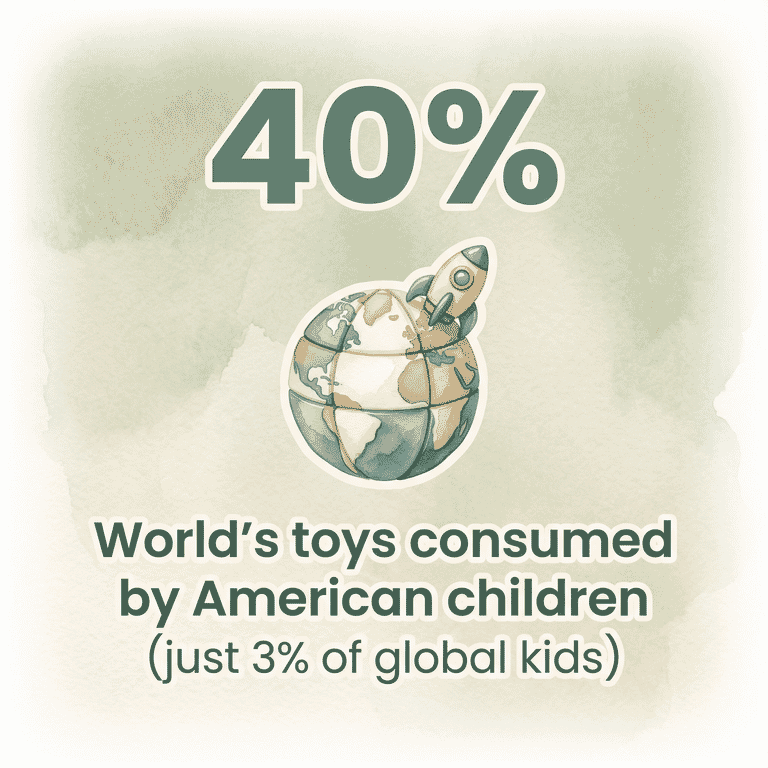
American children represent just 3% of the world’s kids but consume 40% of the world’s toys. Discarded toys contribute roughly 6% of landfill waste. Subscription boxes add to this consumption pattern—monthly packaging, often single-use materials, accumulated stuff.
Some alternatives are emerging: rental/rotation models where toys return after use, swap programs connecting families to exchange completed boxes, and library-style systems for checking out activity kits.
Questions worth asking about any subscription: What happens to packaging? Is it recyclable? Are materials reusable or single-use? Does the company have sustainability commitments?
I haven’t found a perfect option here. Even the most eco-conscious boxes arrive in cardboard with plastic components. If sustainability matters to your family, factor it into the calculation—but know there’s no guilt-free choice.
The Bottom Line
Kids subscription boxes can be worth it—when they match genuine interests, fit your family’s actual capacity, and account for the three-month reality check. They’re not magic. They’re a tool.
For some families, the screen-free alternatives and outsourced planning genuinely improve daily life. For others, they become another source of parental guilt—boxes stacking up, evidence of aspirations that didn’t match reality.

My recommendation: start with one box, matched to a demonstrated interest (not a hoped-for one), with easy cancellation terms. Give it three months. If it’s still working at month four, you’ve found something real.
If not, cancel without shame. The subscription box phenomenon isn’t going anywhere—there will always be another option when you’re ready.
Frequently Asked Questions
Are subscription boxes worth it for kids?
Subscription boxes can be worth it when they match your child’s genuine interests and your household’s capacity to use them. The value calculation depends on cost-per-activity (typically $5-15 per activity vs. $15-30 for individual craft store equivalents) and whether your family will actually complete the contents monthly. The biggest value may be reducing parental decision fatigue—outsourcing activity planning for busy families.
What age is best for subscription boxes?
Most subscription boxes target ages 3-12, with specific brackets designed around developmental capabilities. Children under 3 typically need significant parent involvement, while ages 6-10 often hit the sweet spot for independent engagement. The best age depends less on number and more on whether your child can follow multi-step instructions and sustain interest in projects.
How much do kids subscription boxes cost?
Kids subscription boxes typically range from $15-45 monthly, with most falling in the $20-30 range. STEAM and science boxes tend toward the higher end due to material costs, while book clubs often cost less. Watch for hidden costs: shipping, commitment periods affecting per-month pricing, and add-on purchase prompts within box contents.
What do kids subscription boxes include?
Contents vary by category: STEAM boxes include experiments and building projects; art boxes contain craft supplies and guided projects; book clubs deliver age-appropriate titles (often 2-3 books monthly); cooking boxes provide kid-safe recipes and specialty ingredients. Most include instruction cards, all necessary materials, and parent guides.
I’m Curious
Have you tried a kids’ subscription box? I’d love to hear which ones were hits, which ones got canceled after two months, and whether the mailbox anticipation was worth the cost. Real reviews help other parents decide.
I read every subscription box review you share—they’re worth their weight in shipping boxes.
References
- Kids Activity Box Market Size, Share – 2035 – Market research on industry growth and trends
- Psychological Detective Activity Boxes – Research on gaps in children’s subscription box categories
- Orbit Crates Subscription Toy Rentals – Statistics on toy consumption and environmental impact
- Australian Meal Kit Study – Qualitative research on subscription services and family dynamics

Share Your Thoughts