
Your child’s favorite YouTube creator just spent four minutes raving about a new toy. Was that genuine enthusiasm or a paid ad? Turns out, there’s a simple way to know—and teaching kids to spot it takes about two minutes.

Here’s what the research actually shows: most sponsored content online isn’t labeled clearly. A 2023 SAGE analysis found that over three-fourths of influencer ads have hidden sponsorship disclosures. That means kids are swimming in advertising designed to look like regular content.
This starts with teaching them to recognize when someone’s being paid to recommend something.
Key Takeaways
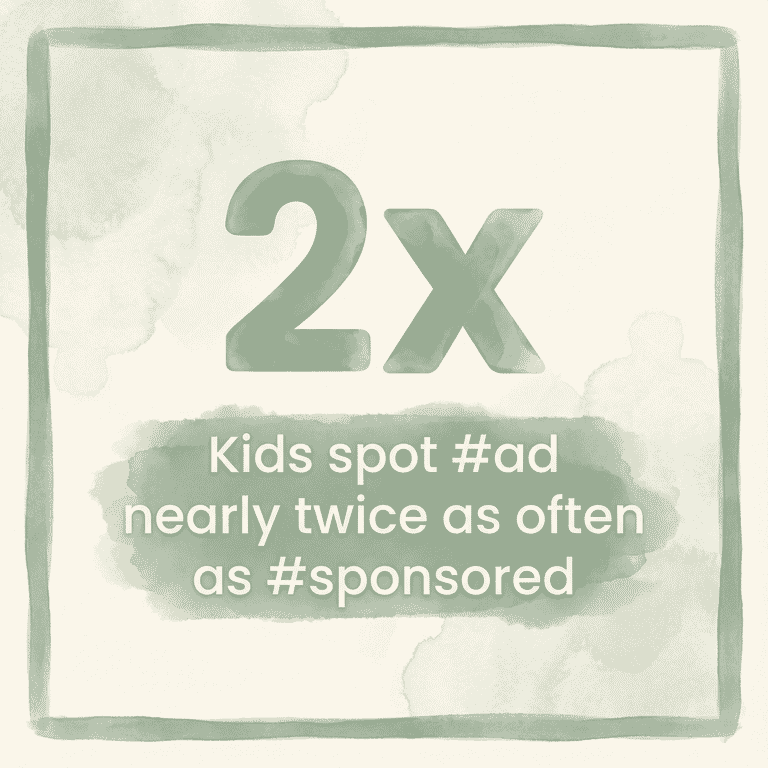
- #ad is the clearest signal — kids recognize it nearly twice as often as #sponsored
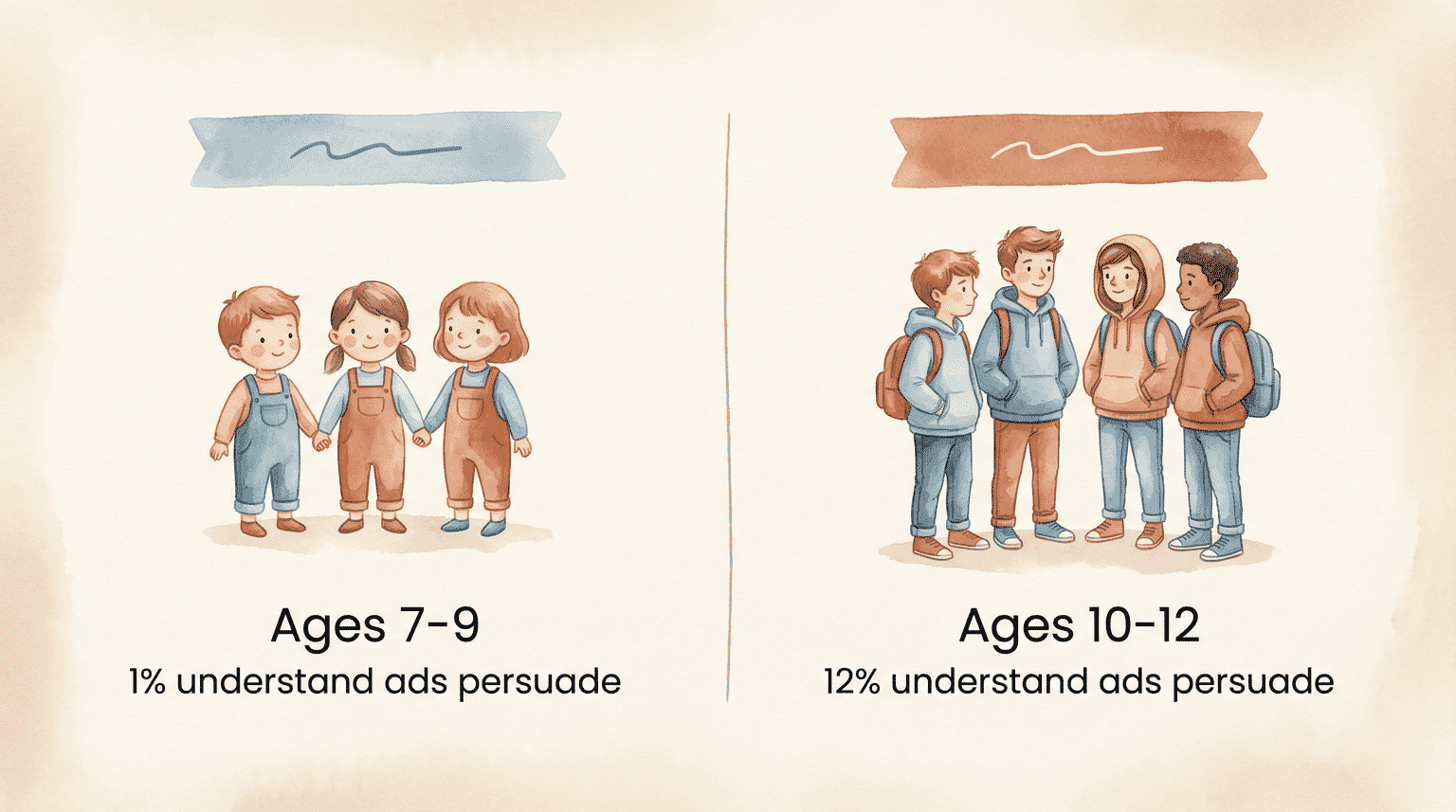
- Only 12% of 10-12 year olds understand that ads are trying to persuade them
- Simply seeing a disclosure label activates kids’ “persuasion knowledge” and makes them more skeptical
- Turn learning into a game with “Spot the Sponsor” during family screen time
The Three Labels to Teach
Not all disclosure labels work equally well. Eye-tracking research from 2021 found that #ad had nearly twice the odds of being recognized as sponsored compared to #sponsored. So teach these three, in order of clarity:
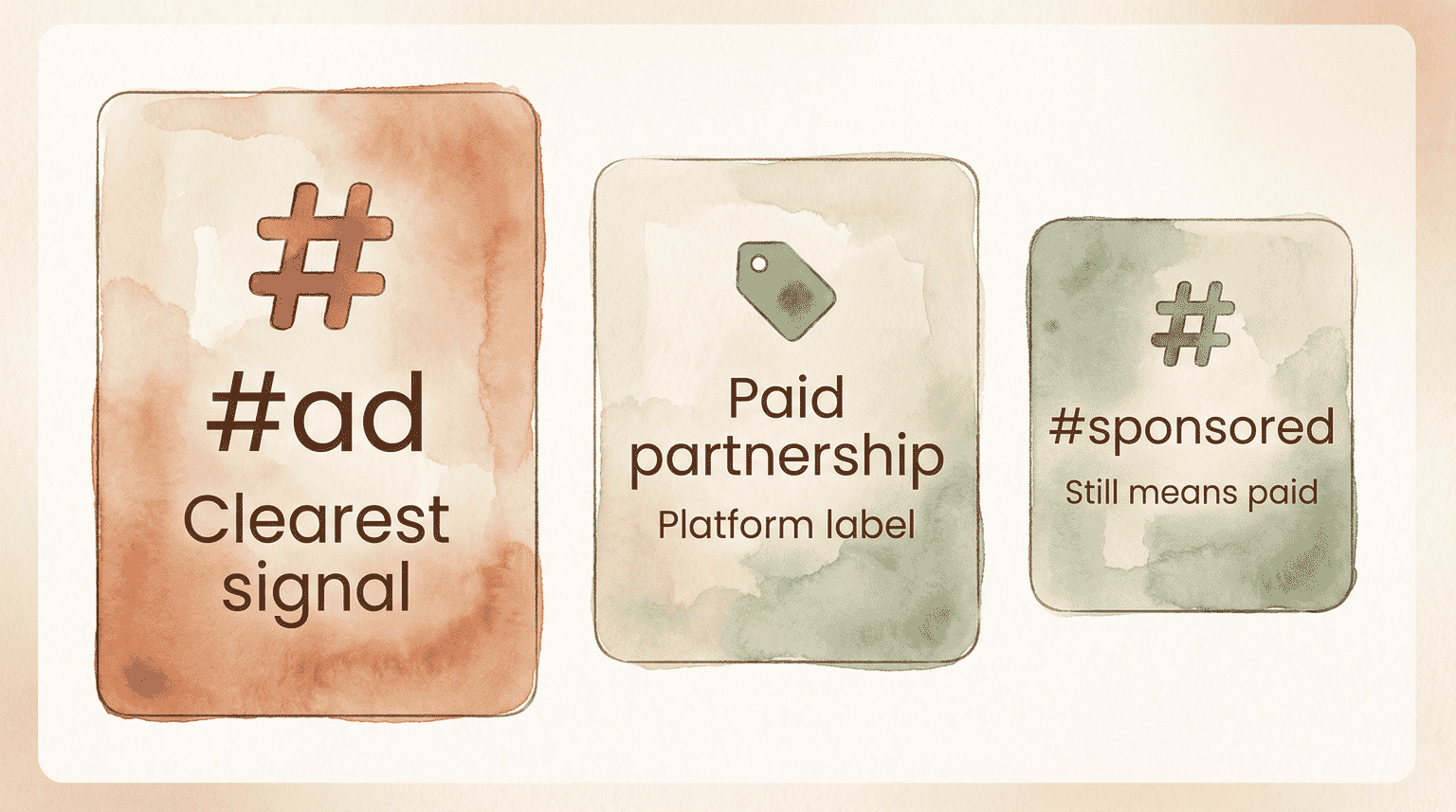
- #ad — The clearest signal. If they see this, it’s paid content.
- “Paid partnership” — Instagram and TikTok’s built-in label at the top of posts.
- #sponsored — Less obvious, but still means money changed hands.
Watch out for sneaky variations. According to regulatory guidelines, terms like #sp, #spon, or #partner are too vague to count as proper disclosure—but influencers use them anyway.
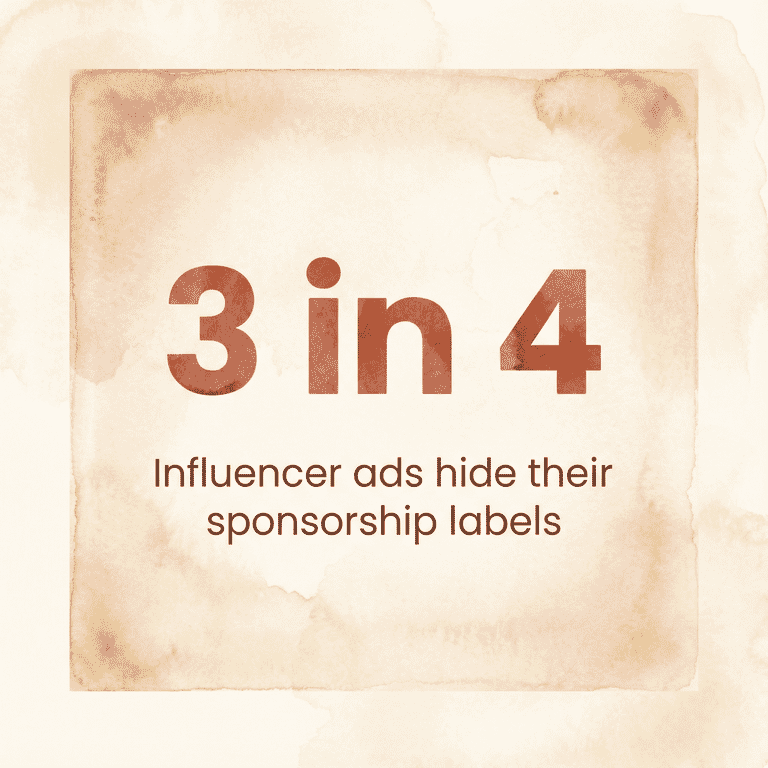
That’s a staggering amount of hidden advertising your kids encounter daily. When creators bury disclosures at the end of long captions or use vague hashtags, the content feels like a genuine recommendation.
This is exactly why teaching the clear labels matters so much—kids need to know what to look for when so much is designed to slip past them.
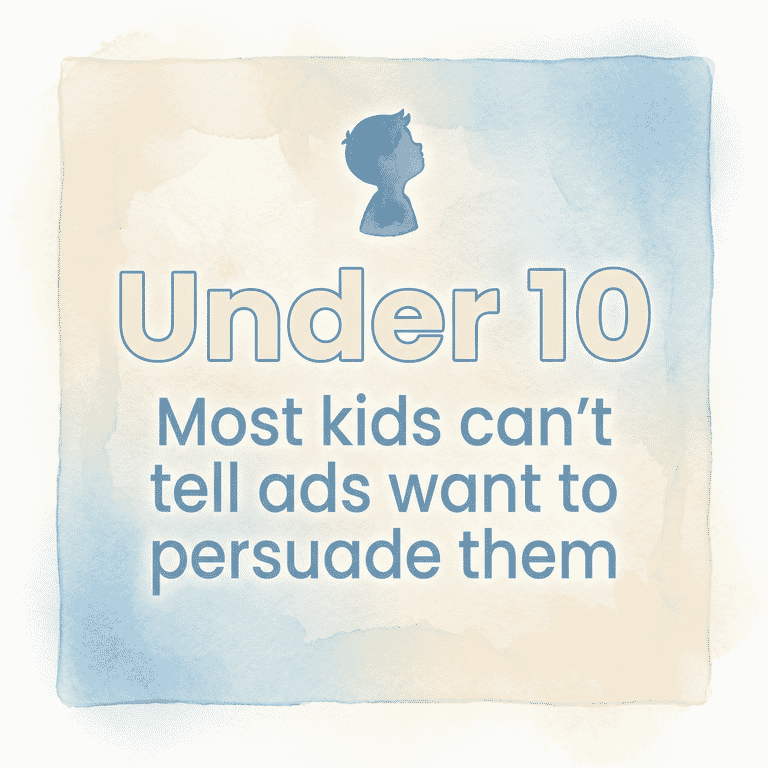
Quick age check: A 2022 systematic review found only 1% of 7-9 year olds and 12% of 10-12 year olds understood that ads are trying to persuade them. Even teenagers don’t automatically think critically about sponsored posts.
So this isn’t a “once and done” conversation.

The gap between younger and older kids is significant, but even 10-12 year olds are nowhere close to full understanding. This developmental reality means parents need to keep the conversation going as kids grow.
Repetition isn’t nagging here—it’s building a crucial skill over time.
Why Bother? Recognition Actually Helps

Here’s the encouraging part: research from 2023 shows that simply seeing “#Ad” activates what psychologists call “persuasion knowledge”—the mental switch that says wait, someone’s trying to sell me something. Recognition alone makes kids more skeptical of the message.
This is why teaching #ad first makes so much sense. When a label is easier to spot, kids are more likely to actually see it—and seeing it triggers that protective skepticism automatically.
You’re not just teaching vocabulary. You’re helping wire their brains to pause before wanting something.
One practice game: Next time you’re scrolling together, play “Spot the Sponsor.” First one to find #ad, #sponsored, or a paid partnership label wins. My kids turned this into a competition faster than I expected.

For a deeper dive into the specific tactics used on platforms kids love most, check out our guide to hidden advertising in YouTube videos.
Frequently Asked Questions
What does #ad mean on social media?
The hashtag #ad signals that a creator was paid to promote a product or service. It’s required by the FTC so viewers know the content is advertising. Research shows #ad is recognized nearly twice as often as #sponsored, making it the clearest signal for kids to watch for.
At what age can kids understand advertising?
Most children under 10 cannot fully grasp that advertising aims to persuade them. A 2022 review found only 1% of 7-9 year olds demonstrated understanding of persuasive intent. Even teenagers don’t automatically apply critical thinking to sponsored content—which is why ongoing conversations matter.
This isn’t a failure of parenting or intelligence—it’s simply how young brains develop. The cognitive skills needed to recognize persuasive intent are still forming throughout childhood.
Your job isn’t to expect them to “get it” immediately. It’s to keep the conversation going until those skills catch up.
What About You?

Have you taught your kids to spot #ad labels? I’m curious whether they actually look for them now—or whether sponsored content still flies under their radar regardless.
Your experiences help other parents navigate this tricky digital landscape.
References
- SAGE Social Media + Society (2023) – Analysis of sponsorship disclosure compliance in influencer marketing
- PubMed Eye-Tracking Study (2021) – Research on disclosure recognition among young social media users
- PLOS ONE Systematic Review (2022) – Meta-analysis of children’s advertising literacy and critical reasoning
- PMC Virtual Influencer Study (2023) – Research on how sponsorship disclosure affects persuasion knowledge

Share Your Thoughts