
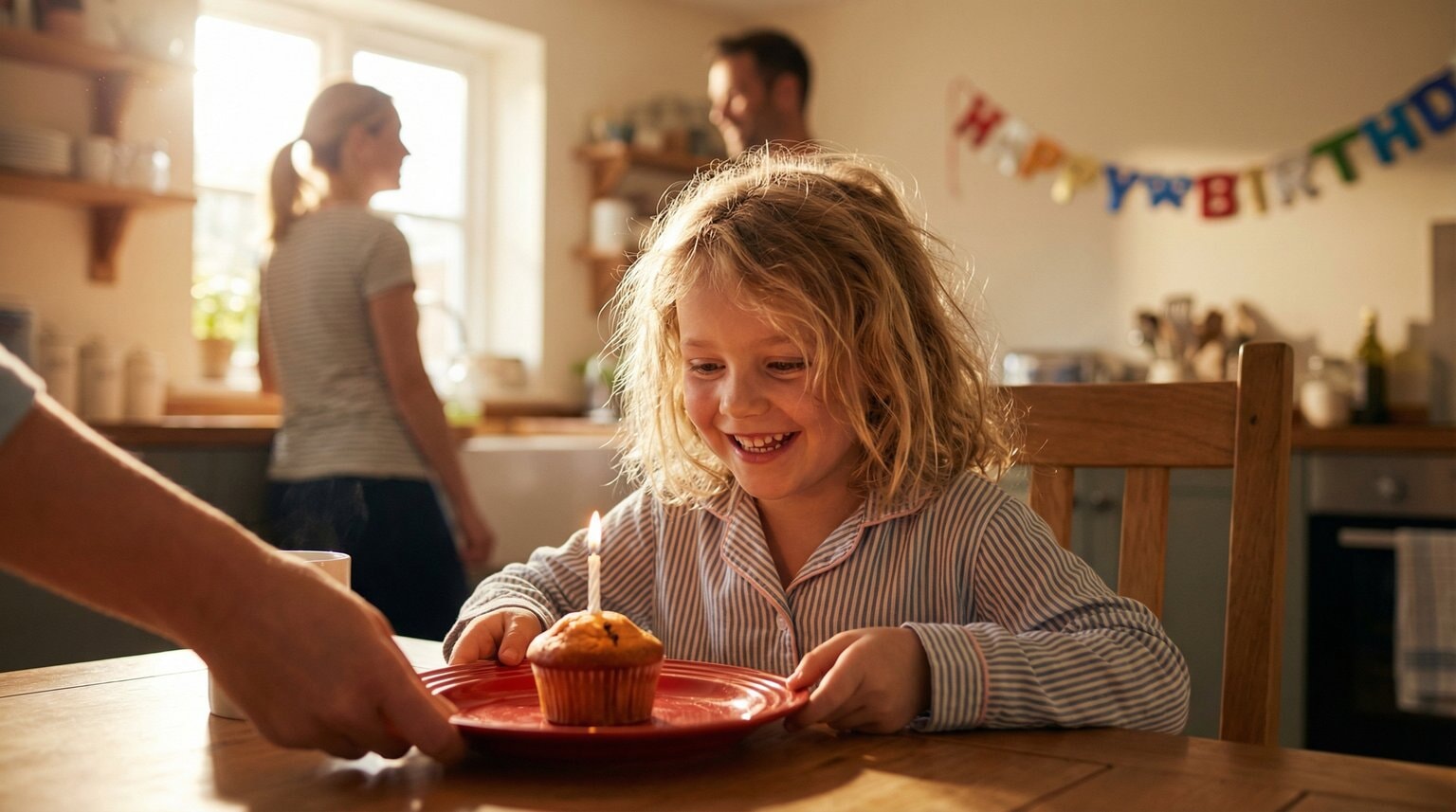
My 6-year-old spotted it before I’d even set the table. “Is that the PLATE? Is it for ME today?” She’d been up since dawn, but this—seeing that familiar red plate come out of the cabinet—was the moment her birthday became real.
A 2024 study found that birthday rituals help children develop emotional security and a sense of belonging. Few days matter more to a child than their birthday, and simple traditions like a special plate—or a birthday crown—transform an ordinary breakfast into something memorable. Here’s everything you need to start, sustain, and eventually pass down this tradition.
Key Takeaways
- The birthday plate tradition creates a powerful visual symbol that children associate with being celebrated and valued
- Consistency matters more than the plate itself—use the same plate year after year to build anticipation and meaning
- Pair the plate with rituals like a special seat, announcement phrase, and meaningful conversation to maximize emotional impact
- Photo documentation creates a visual timeline that becomes one of your family’s most treasured collections
- Extend the tradition to parents and grandparents to model celebrating others, not just being celebrated
What Is the Birthday Plate Tradition?
The birthday plate tradition is a family ritual where a designated special plate is used exclusively for the birthday person’s meals on their special day. The plate—often red, personalized with the child’s name, or handmade by the family—signals that today, this person is celebrated. The same plate returns year after year, building anticipation and creating a visual timeline of childhood.
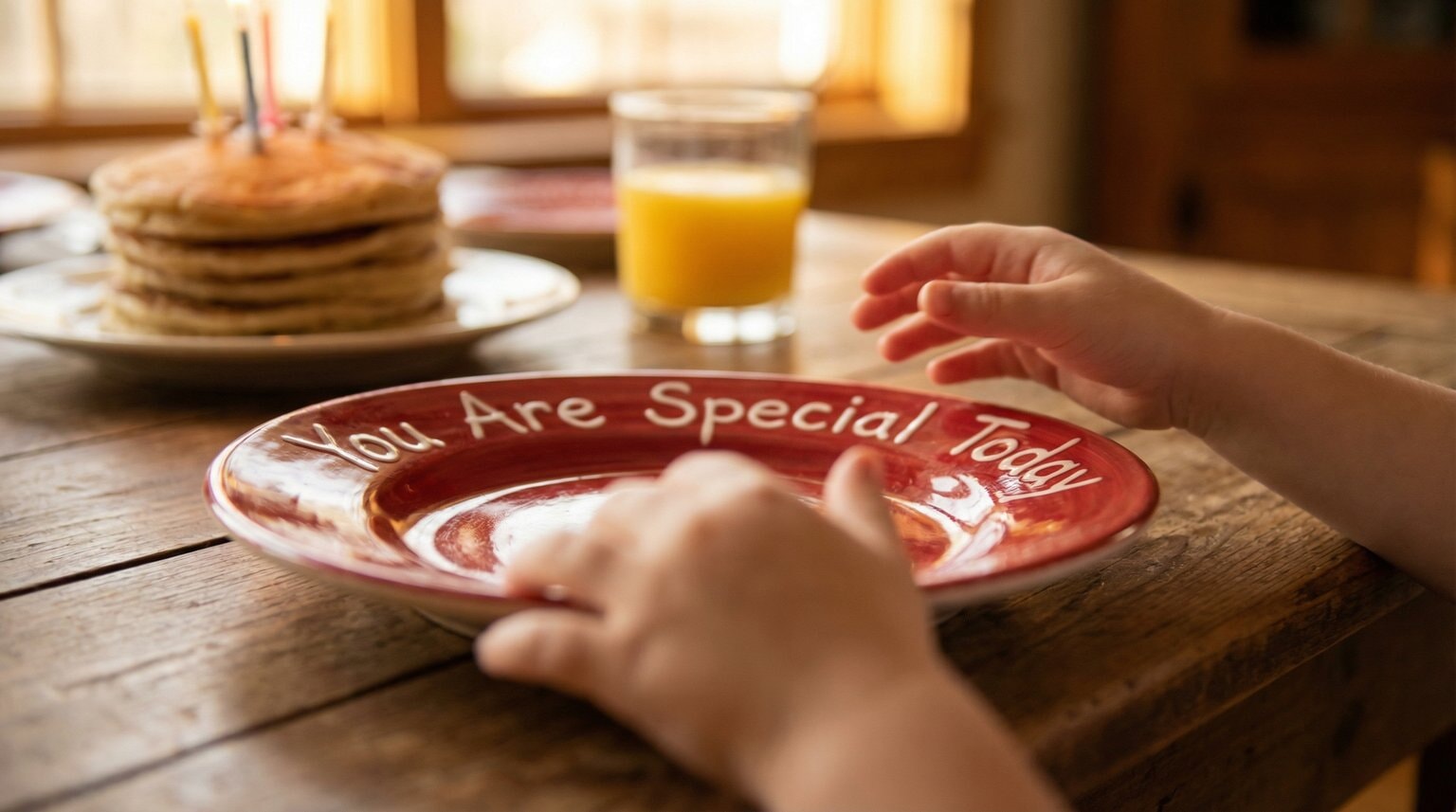
The most recognized version centers on a red ceramic plate, often inscribed with “You Are Special Today.” But families have adapted this tradition in countless ways: hand-painted plates from pottery studios, personalized plates with children’s names, or simple plates designated special through family meaning rather than appearance.
Why does one plate create such outsized emotional impact? Research on identity formation reveals that any symbol associated with a person can become part of their identity. The birthday plate isn’t just dinnerware—it becomes a physical representation of being celebrated and valued.
When my now-17-year-old sees her younger siblings eating from that plate, she still says, “Remember when that was mine?”
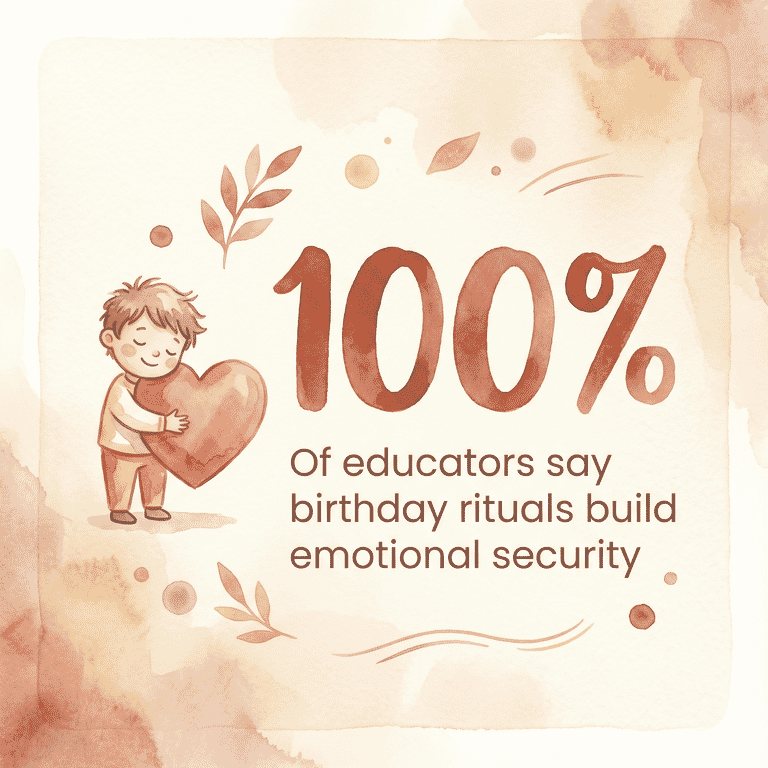
Every single educator surveyed in the 2024 ERIC study agreed: birthday rituals build emotional security in children. That’s not a slight majority or a strong trend—it’s unanimous consensus from the people who watch kids develop every day.
The ritual doesn’t need to be elaborate. A simple plate, used consistently, creates the kind of predictable celebration that helps children feel seen and valued.
If you’re building intentional family gift-giving traditions, the birthday plate offers an ideal starting point—simple to implement, zero ongoing cost, and meaningful across every age.
Choosing Your Birthday Plate
The “right” plate depends on your family’s style, your children’s ages, and your durability needs. Here’s what actually works:
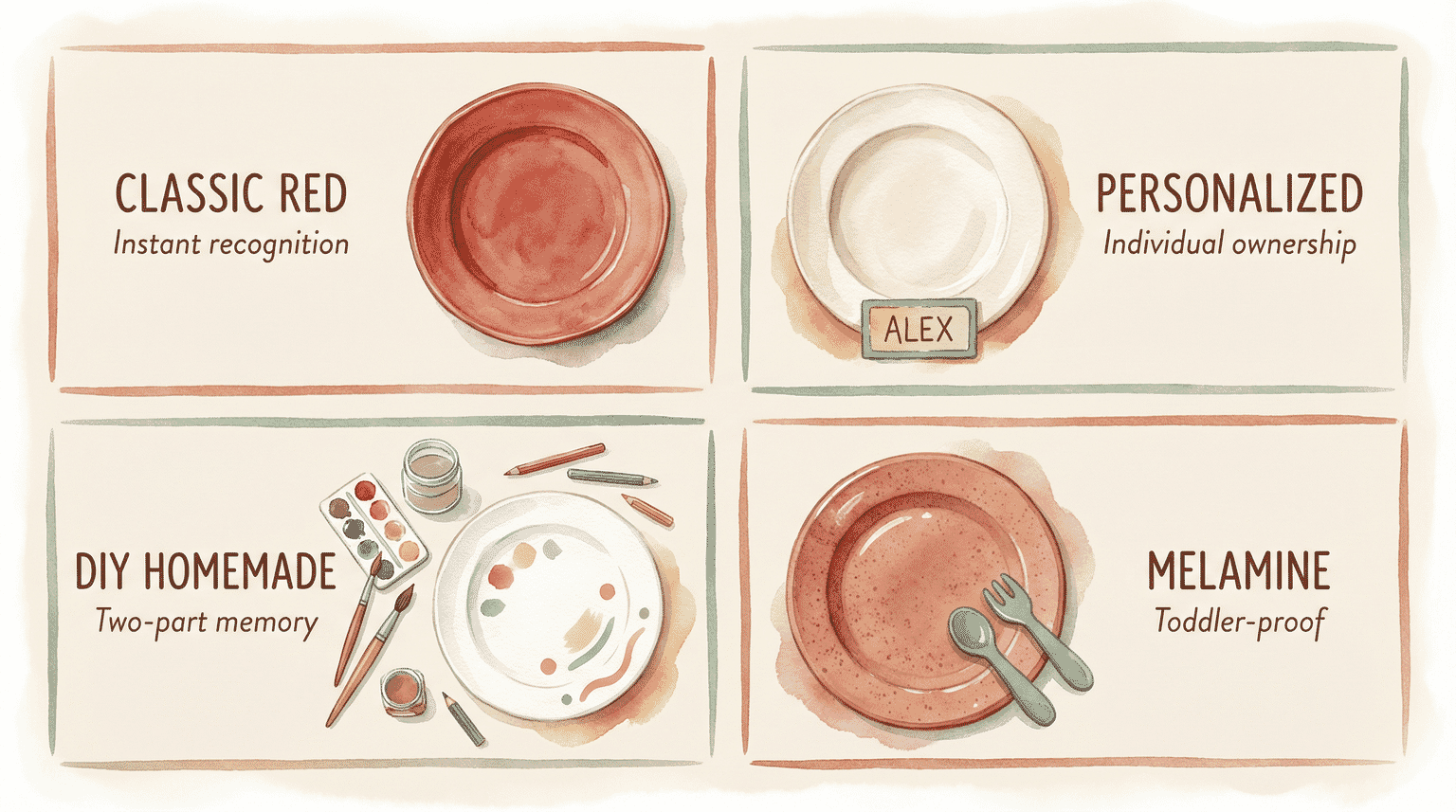
The Classic Red Plate
The original “You Are Special Today” red plate remains popular for good reason—its distinctive color makes the celebration visually obvious to everyone at the table. When the red plate appears, nobody needs to ask whose day it is.
Best for: Families wanting an established tradition with instant recognition
Consider: Ceramic plates require careful handling with younger children
Personalized Name Plates
Custom plates featuring a child’s name create immediate ownership. Younger children especially love seeing their name displayed prominently, and siblings appreciate having “their” version even when it’s not their turn.
Best for: Multi-child families wanting individual plates; children who respond to personalization
Consider: You’ll need one per child, plus consider plates for parents and grandparents
DIY Family Creation
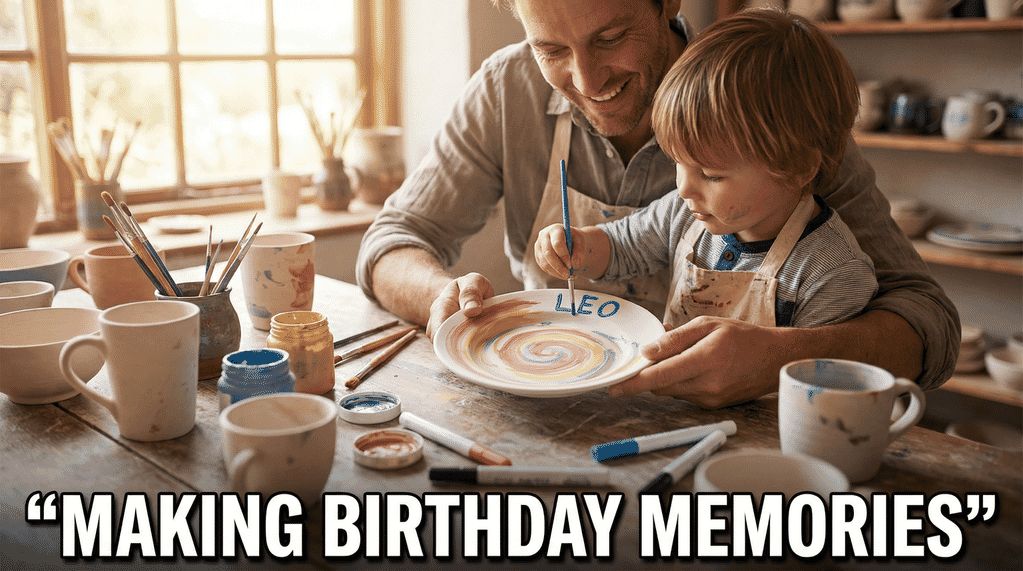
Creating your own plate turns the tradition into a two-part memory: making it together and using it year after year. Use oil-based Sharpie markers or ceramic paint pens on plain white plates, then bake according to marker instructions to set the design.
Best for: Craft-oriented families; children who value things they helped create
Consider: Homemade plates may not survive dishwashers long-term; consider having children design on paper, then transferring to a professionally printed plate
Practical Considerations
Whatever you choose, think about:
- Durability: Melamine plates survive toddler years better than ceramic
- Dishwasher safety: You’ll use this plate for years; hand-wash-only gets old fast
- Size: Standard dinner plate size works across all ages
- Storage: Keep it somewhere visible enough to build anticipation, protected enough to last decades
Making the Moment Matter
The plate alone isn’t the tradition—it’s how you use it.
The Special Seat
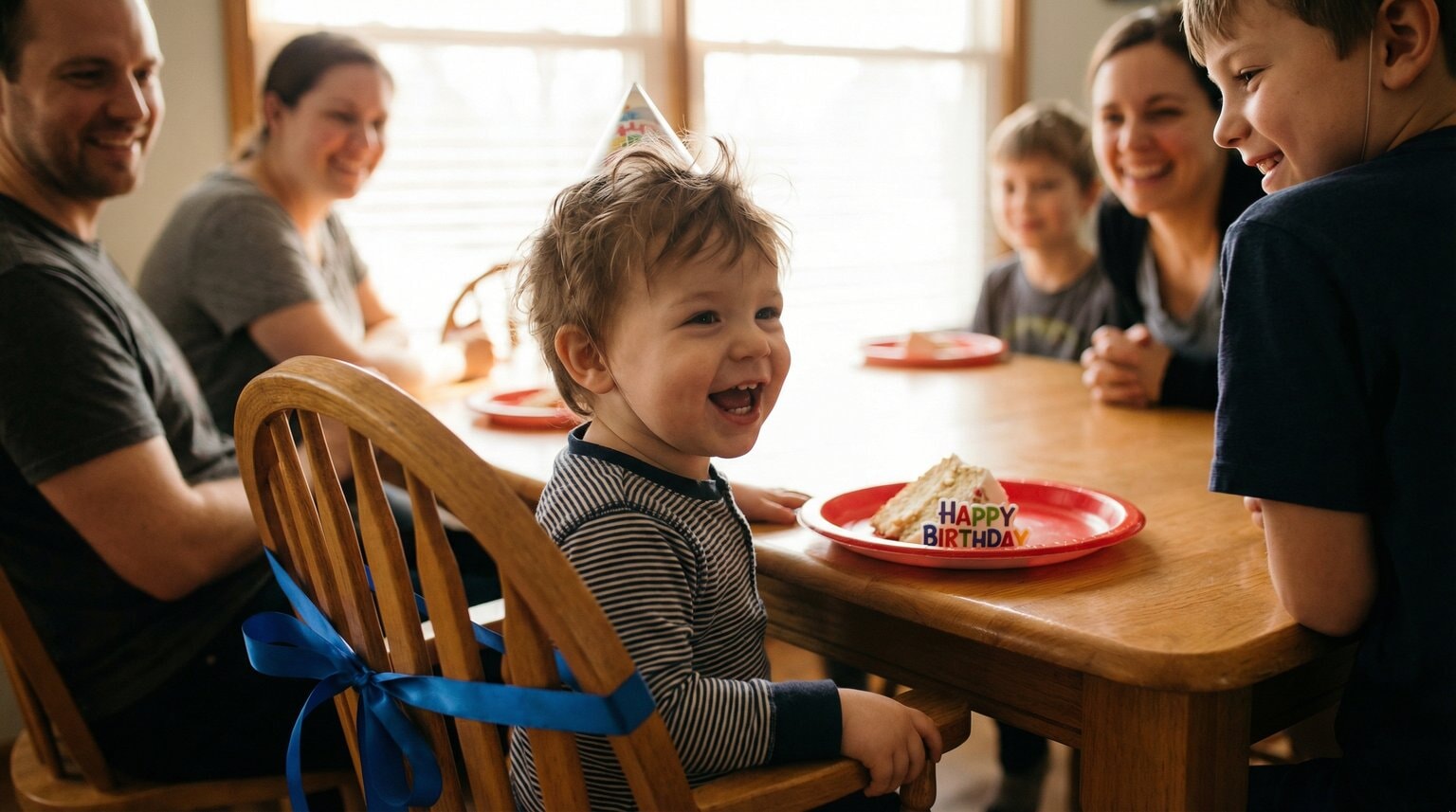
Pair the plate with a designated birthday chair or head-of-table position. In my house, the birthday child gets the “fancy” chair (it’s just a dining chair with a ribbon tied to it, but they act like it’s a throne). This physical positioning reinforces what the plate communicates: today, you’re the center of attention.
Meal Traditions That Pair Perfectly
The birthday breakfast tradition is my favorite pairing. Morning means:
- No party chaos competing for attention
- Quiet family time before the day gets busy
- A chance to start the birthday feeling celebrated
But dinner works beautifully too, especially for the “birthday person chooses the meal” approach. The key is consistency—same meal occasion, year after year.
The Announcement Ritual
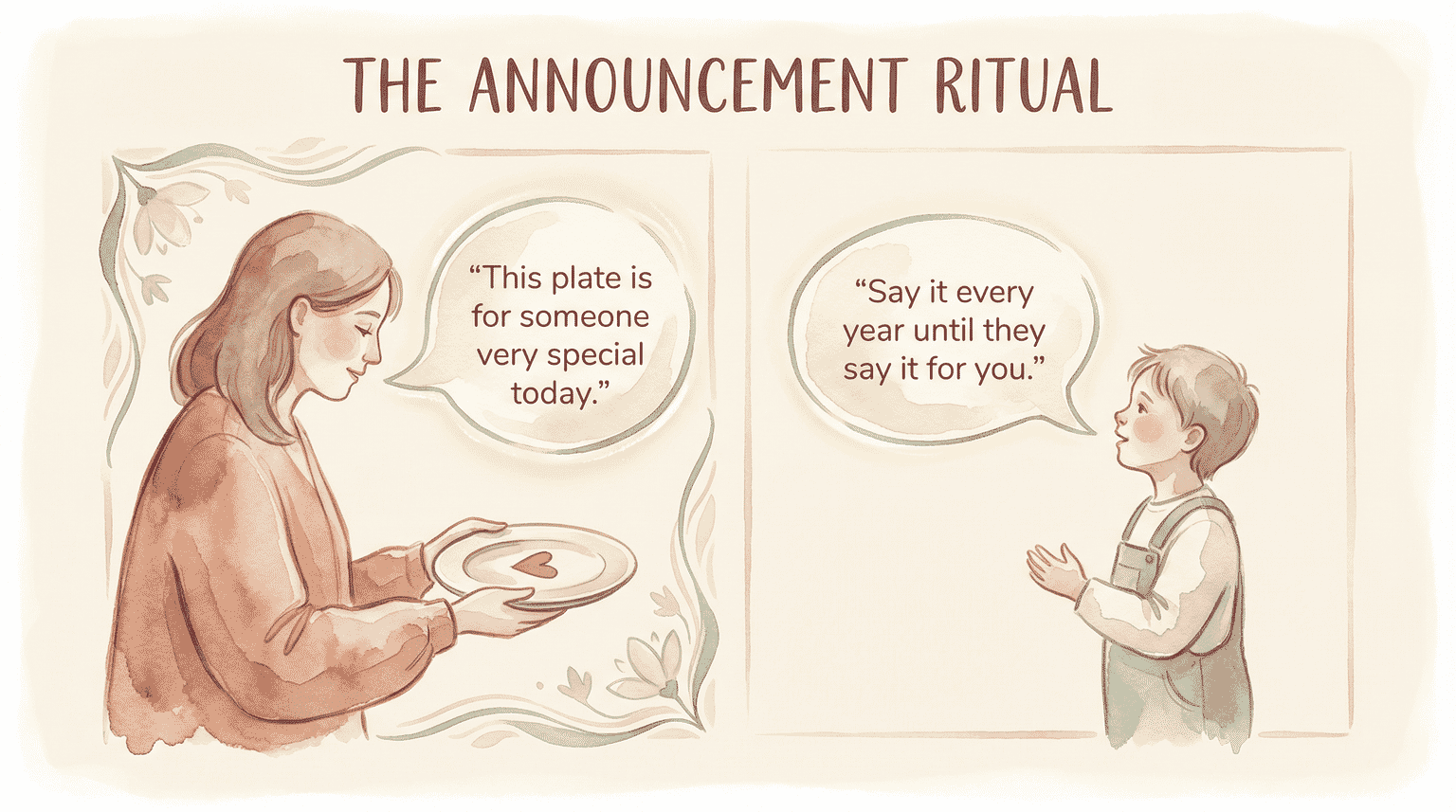
Create a simple phrase that signals the celebration. Ours is: “This plate is for someone very special today.” My 4-year-old now says it unprompted when she sees the plate come out for siblings. That moment—when they internalize the ritual enough to lead it—shows the tradition has taken root.
Consider adding birthday interview questions while the birthday child eats from their plate. The combination creates space for meaningful conversation that wouldn’t happen otherwise.
Conversation That Builds Connection
The plate creates an opening for stories that might not surface otherwise:
- “Do you know what happened the day you were born?”
- “What’s your favorite memory from being [previous age]?”
- “What are you most excited about for this year?”
The science behind why this matters is compelling.
“Within a family, traditions and celebrations help infuse unique meaning, cohesion, and solidarity into family life. For a family, these activities can help connect us to our past, to our community, and perhaps most importantly, to each other.”
— University of Illinois Family Resiliency Center
Sustaining the Tradition Year After Year
Starting is easy. Keeping it meaningful across childhood takes intentionality.
Photo Documentation
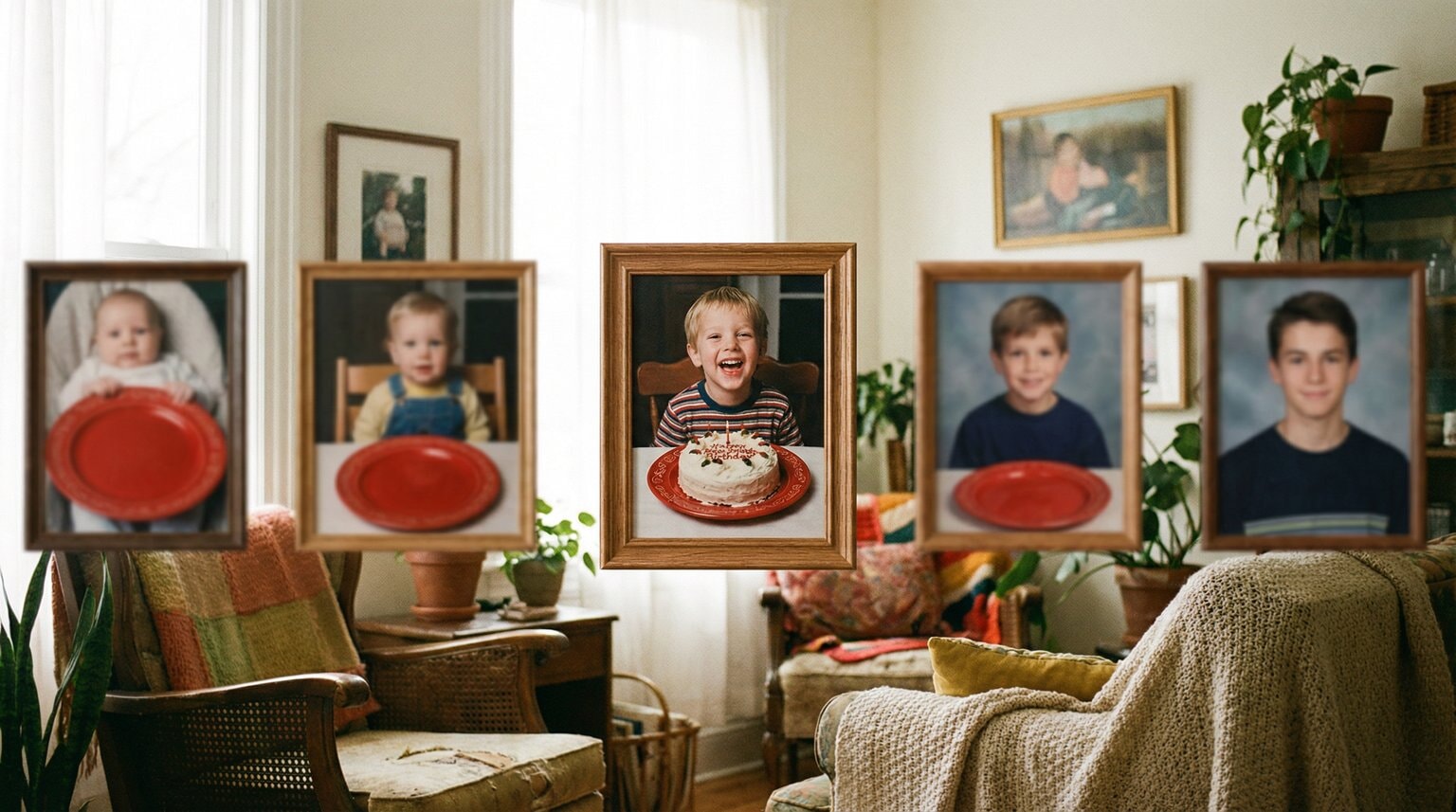
Same plate, same child, different ages creates a powerful visual timeline. We take a plate photo every birthday—my oldest’s collection now spans 17 years of the same red plate with a dramatically changing face above it. These photos have become some of our most treasured images.
Multi-Child Fairness
With 8 kids, “fairness” comes up constantly. The birthday plate actually helps—every child knows their turn is coming, and watching siblings use the plate builds anticipation rather than jealousy.
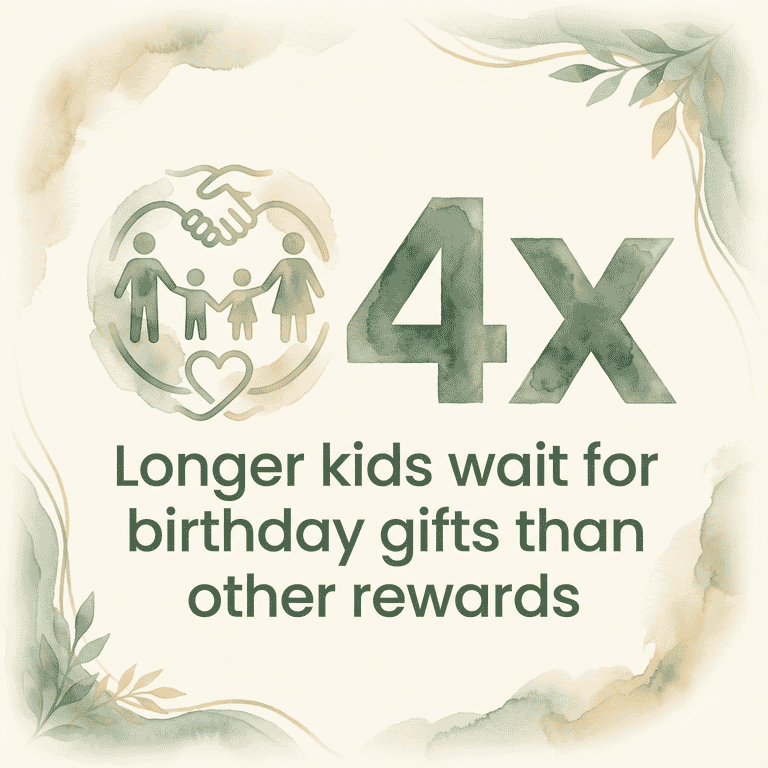
The tradition teaches waiting, which cross-cultural research suggests has real developmental benefits. That study found U.S. children waited nearly four times longer for birthday gifts than other rewards.
Birthday traditions actually shape behavior around patience and delayed gratification—skills that serve kids well beyond childhood.
Evolution Across Childhood
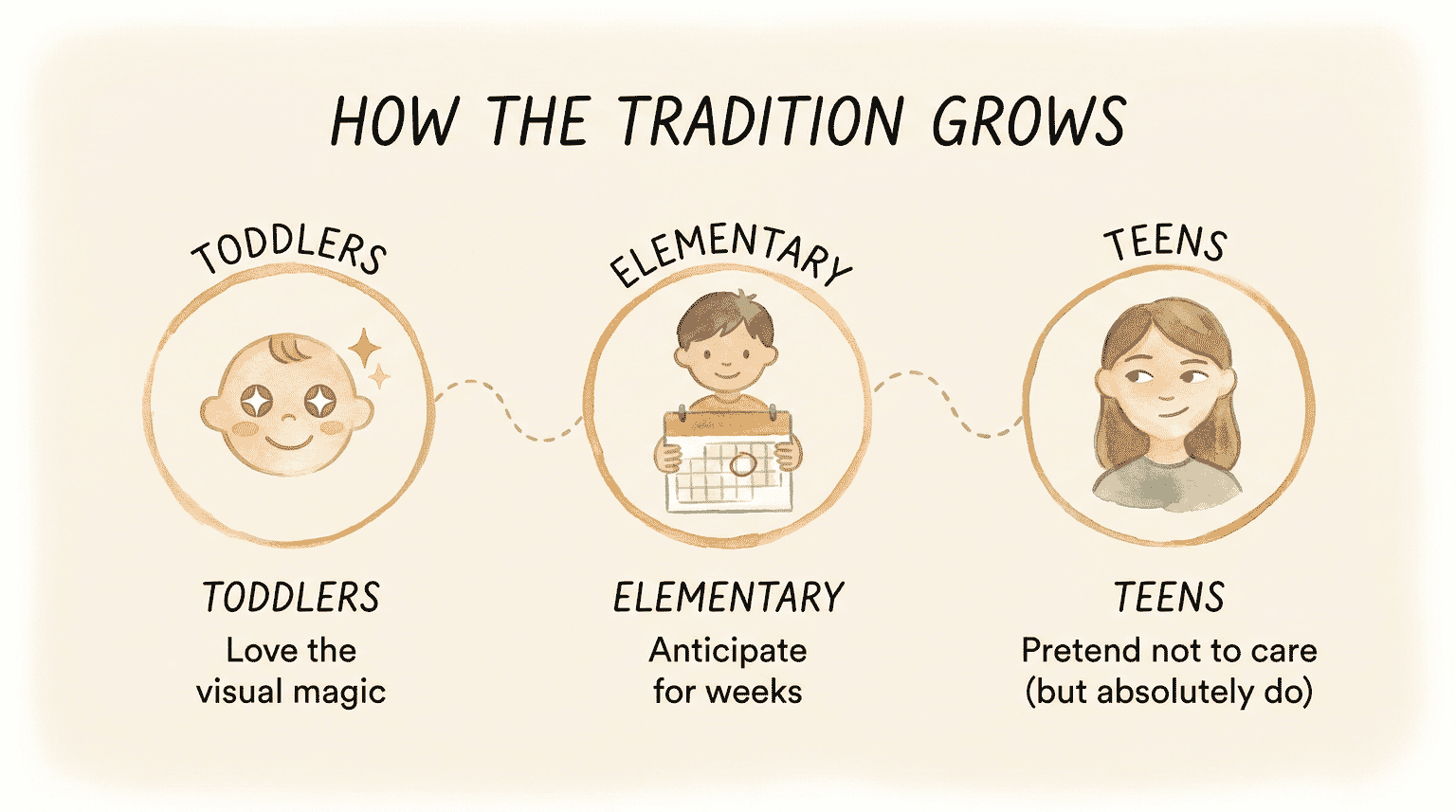
Toddlers love the visual spectacle. Elementary kids anticipate it for weeks. And teenagers? They pretend they don’t care while absolutely noticing if you forget.
My 15-year-old would be mortified if I made a big announcement, but he’d be genuinely hurt if the plate didn’t appear. Adjust the fanfare, never the ritual.
Extending Beyond Kids
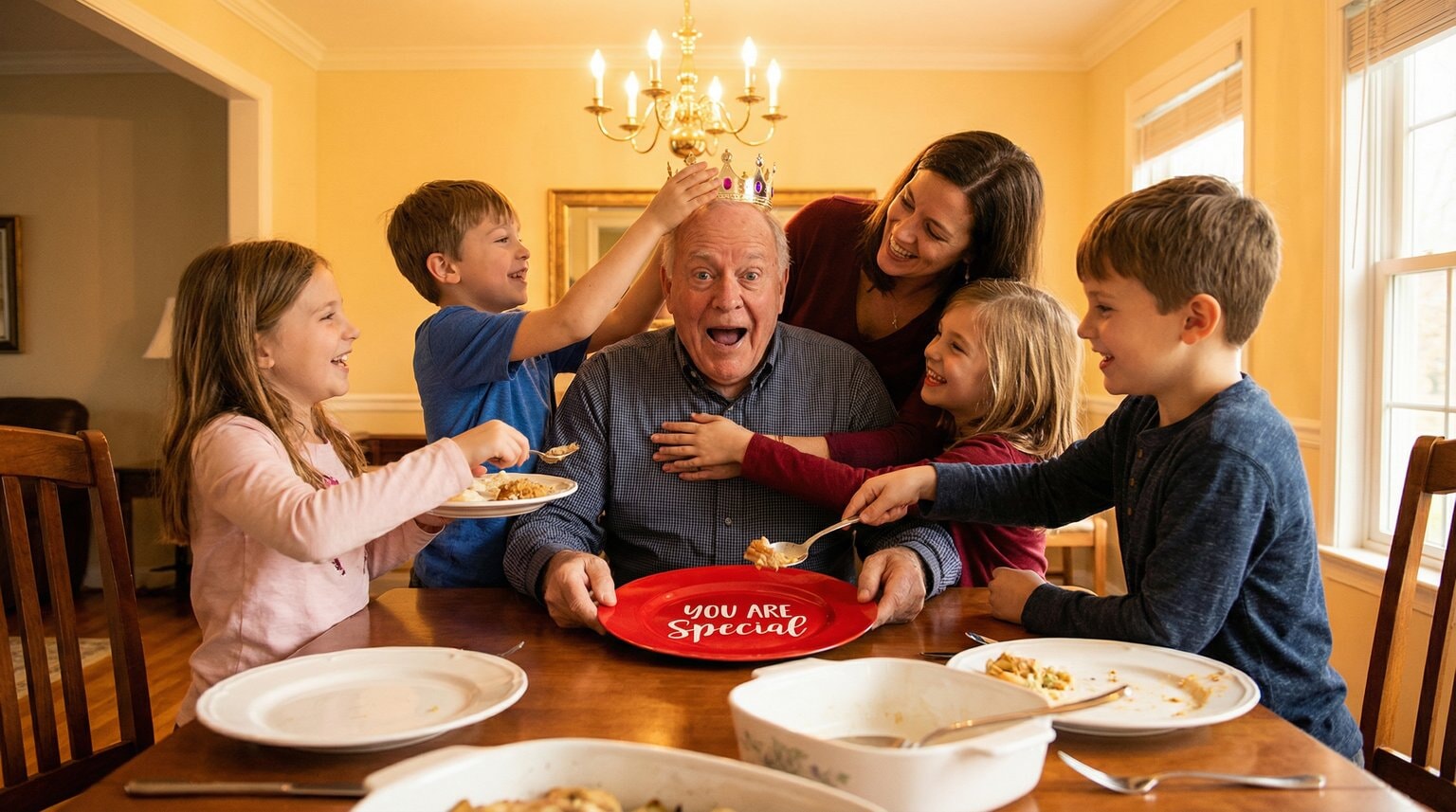
The most powerful moment in our plate tradition came when my kids insisted Dad use it on his birthday. Watching them want to give back what they’d received—that’s the tradition working. Parents and grandparents getting plate days models celebrating others, not just being celebrated.
Passing Down the Tradition
Here’s what the research says and I’ve witnessed: these symbols become part of who we are. The birthday plate isn’t just about childhood—it’s a practice your children will likely carry into their own families someday.
Consider documenting alongside the plate: a birthday memory book with photos from each year, interview answers recorded over time, or notes about what was served and who was present. When my oldest eventually starts her own family, she’ll have both the tradition and its story.

The University of Illinois researchers capture why this matters: traditions connect families “to our past, to our community, and to each other.”
One educator in a 2024 birthday study put it even more directly:
“Learning to be a great human being and being a part of life, and how you interact with each other, and how to be a giver and a receiver, and how to make people feel special and care for each other, I think it is the biggest life lesson.”
— Early Childhood Educator, ERIC Study 2024
A plate teaches that. Not bad for something that sits in your cabinet 364 days a year.
If you’re thinking this sounds nice but complicated, remember the Family Resiliency Center’s advice: “Start small and simple, but most importantly, just do something.” One plate. One meal. One moment of recognition. That’s all it takes to begin.
Frequently Asked Questions
What is the red plate tradition?
The red plate tradition centers on a specific red ceramic plate—often inscribed “You Are Special Today”—used to celebrate family members on birthdays and achievements. The distinctive color makes the celebration visually obvious to everyone at the table, and the same plate is used year after year to build meaning and anticipation.
How do you start a birthday plate tradition?
Choose a plate (purchased or homemade), designate it as the birthday-only plate, and introduce it at the first birthday meal with a simple announcement like “This plate is for someone very special today.” Pair it with a special seat and conversation about what makes the birthday person unique. Consistency matters most—use the same plate year after year.
How do you make a DIY birthday plate?
Use oil-based Sharpie markers or ceramic paint pens on a plain white ceramic plate. Write “You Are Special” or the child’s name, add decorative elements, then bake according to marker instructions to set the design. For greater durability, have children create designs on paper that you transfer to a professionally printed plate.
At what age should you start the birthday plate tradition?
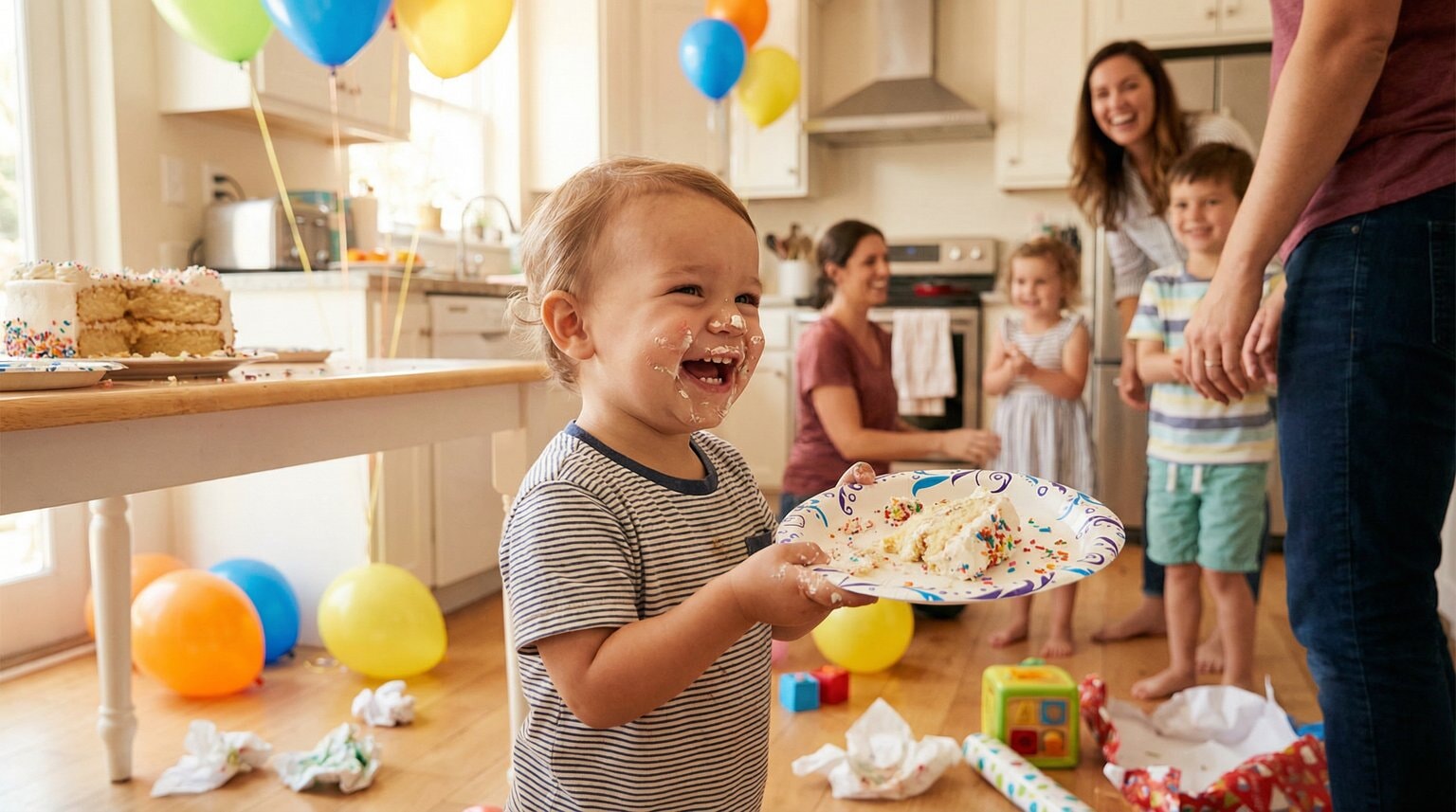
Start as early as the first birthday—even before children understand, you’re establishing the ritual. Toddlers respond to the visual novelty, preschoolers begin anticipating it, and by elementary age, they’ll remind you if you forget. The tradition grows with understanding.
Join the Conversation
Do you have a special plate tradition? I’d love to hear what yours looks like—DIY, store-bought, or handed down through generations. These small rituals have a way of becoming irreplaceable.
I read every response and love discovering how families make birthdays special.
References
- Reimagining Birthday Celebrations Through an Equity and Inclusion Lens (2024) – Research on birthday rituals and children’s emotional security
- Family Traditions and Celebrations (2022) – University of Illinois Family Resiliency Center research on tradition-building
- Identity Selection and the Social Construction of Birthdays (2021) – Research on how birthday symbols become part of personal identity
- Cultures Crossing: The Power of Habit in Delaying Gratification (2022) – Cross-cultural study on birthday traditions and waiting behavior

Share Your Thoughts