
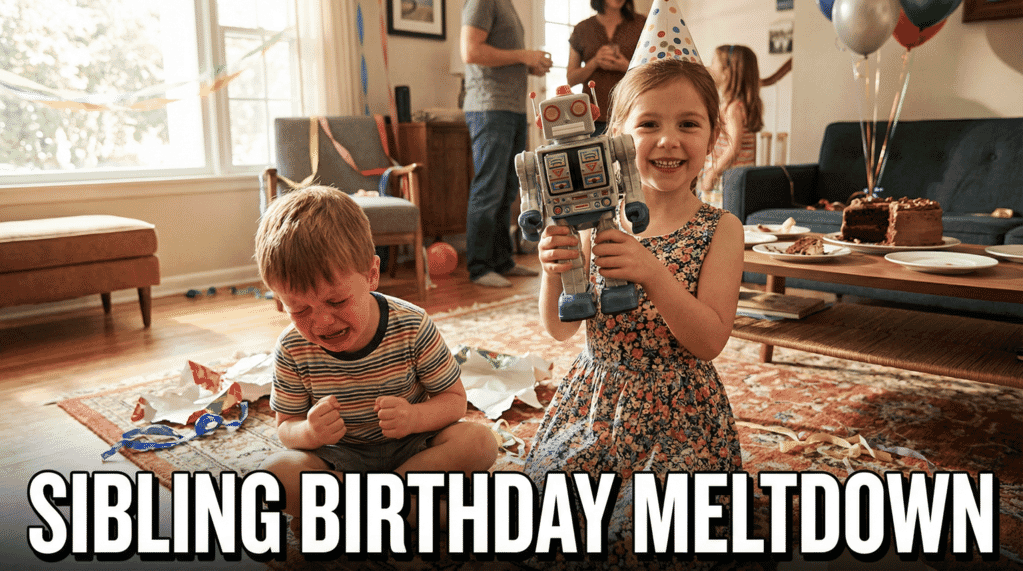
It’s your 6-year-old’s birthday party. Cake’s been cut, candles blown, and now she’s tearing into presents. You glance over at your 4-year-old, and his lower lip is already trembling. Before you can react, he’s on the floor, full meltdown mode, wailing that “it’s not FAIR.”
Sound familiar? I’ve watched this exact scene unfold roughly forty times now—that’s what happens when you have eight kids and host several birthday parties a year. Here’s what I’ve learned: birthday jealousy isn’t a sign you’re raising ungrateful children. It’s a completely predictable response that we can actually prepare for.
Key Takeaways
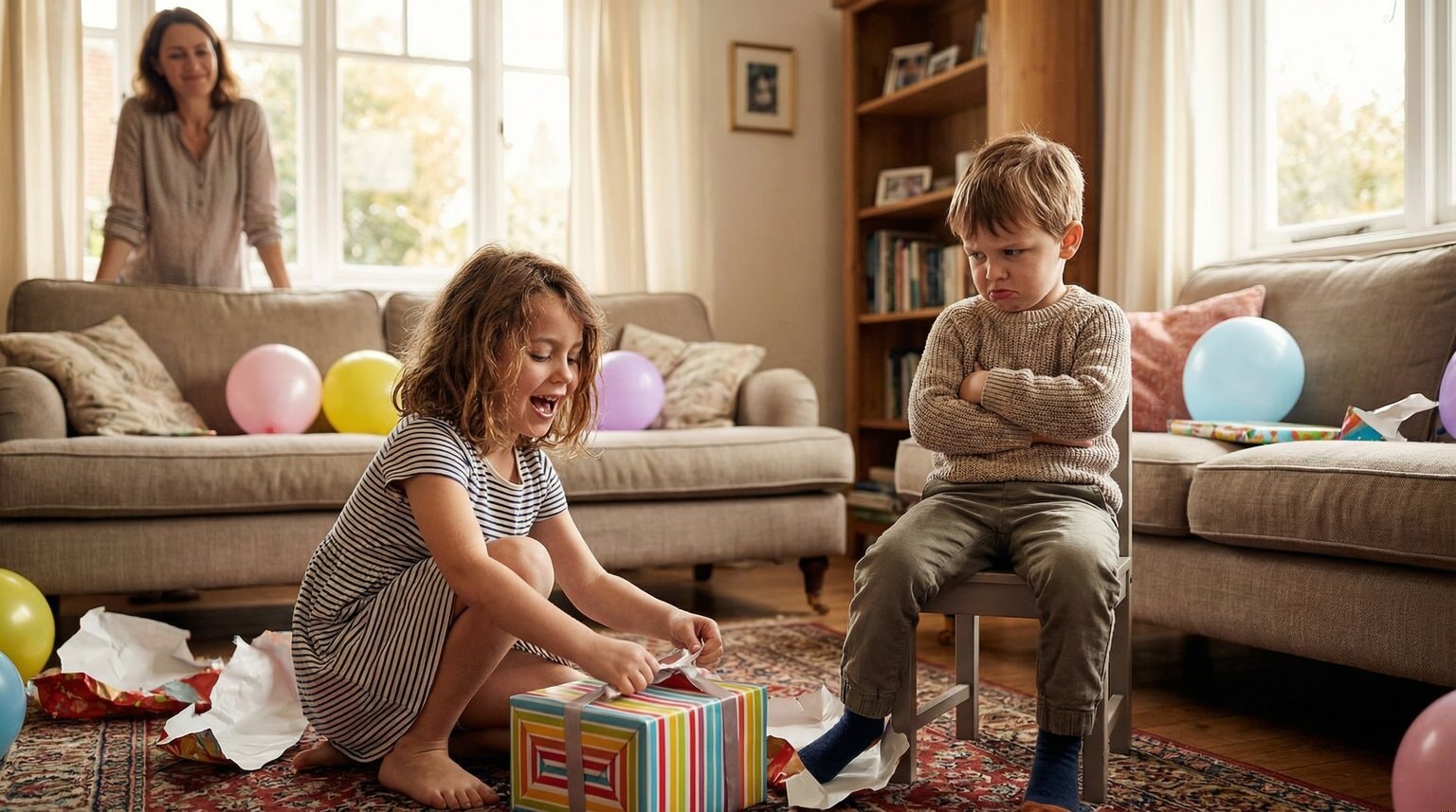
- Birthday jealousy is developmentally normal—toddlers experience nearly 8 conflicts per hour with siblings under regular circumstances
- Give non-birthday siblings meaningful roles, not busywork—photographer, balloon helper, or present passer. (See our 3 roles that actually work.)
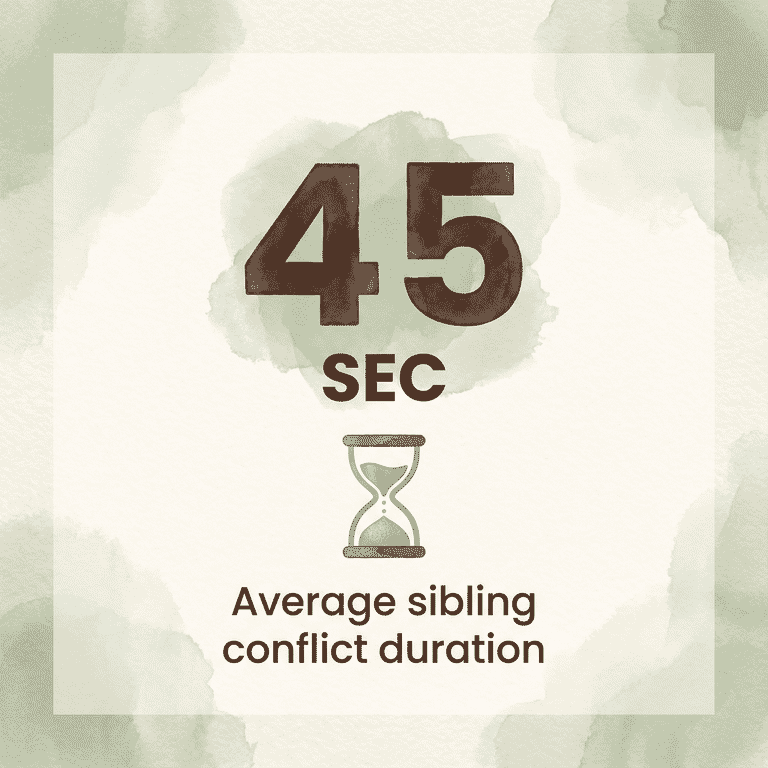
- Most sibling conflicts last just 45 seconds—your goal is to acknowledge and redirect, not solve everything
- Experts generally advise against routine sibling gifts—learning to manage jealousy—and eventually celebrate others’ joy—builds essential emotional resilience
- Plan 15-20 minutes of one-on-one time with the non-birthday child after the party ends
The Real Reason Birthday Jealousy Happens
Before diving into specific party moments, let’s understand what’s actually going on. Research from Northeastern University’s Sibling Research Group found that 2-4 year olds experience approximately 7.65 disputes per hour with their siblings. Birthday parties essentially concentrate all those conflict triggers—attention, possessions, special treatment—into a few intense hours.
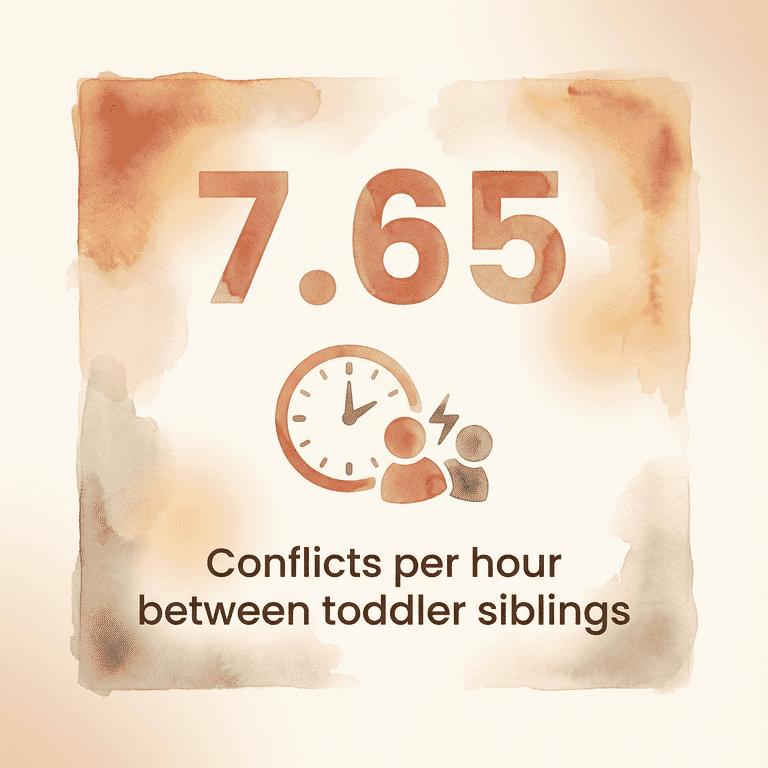
Sibling relationships are what researchers call “involuntary”—children can’t choose them, can’t dissolve them, and can’t escape them. Unlike friendships where kids can walk away, siblings must navigate these big feelings while staying in the relationship.
Understanding why sibling gift jealousy happens at a deeper level can help you respond with more patience.
The good news? Most sibling conflicts last just 45 seconds on average. That meltdown feels eternal, but it’s usually over quickly if you handle it well.
“For a child, not being the center of attention can sometimes be difficult, but it is not unbearable.”
— Dr. Eileen Kennedy-Moore, Child Psychologist
This is our north star—we’re not trying to eliminate uncomfortable feelings, but helping kids learn they can survive them.
Before the Party: Prevention Scenarios
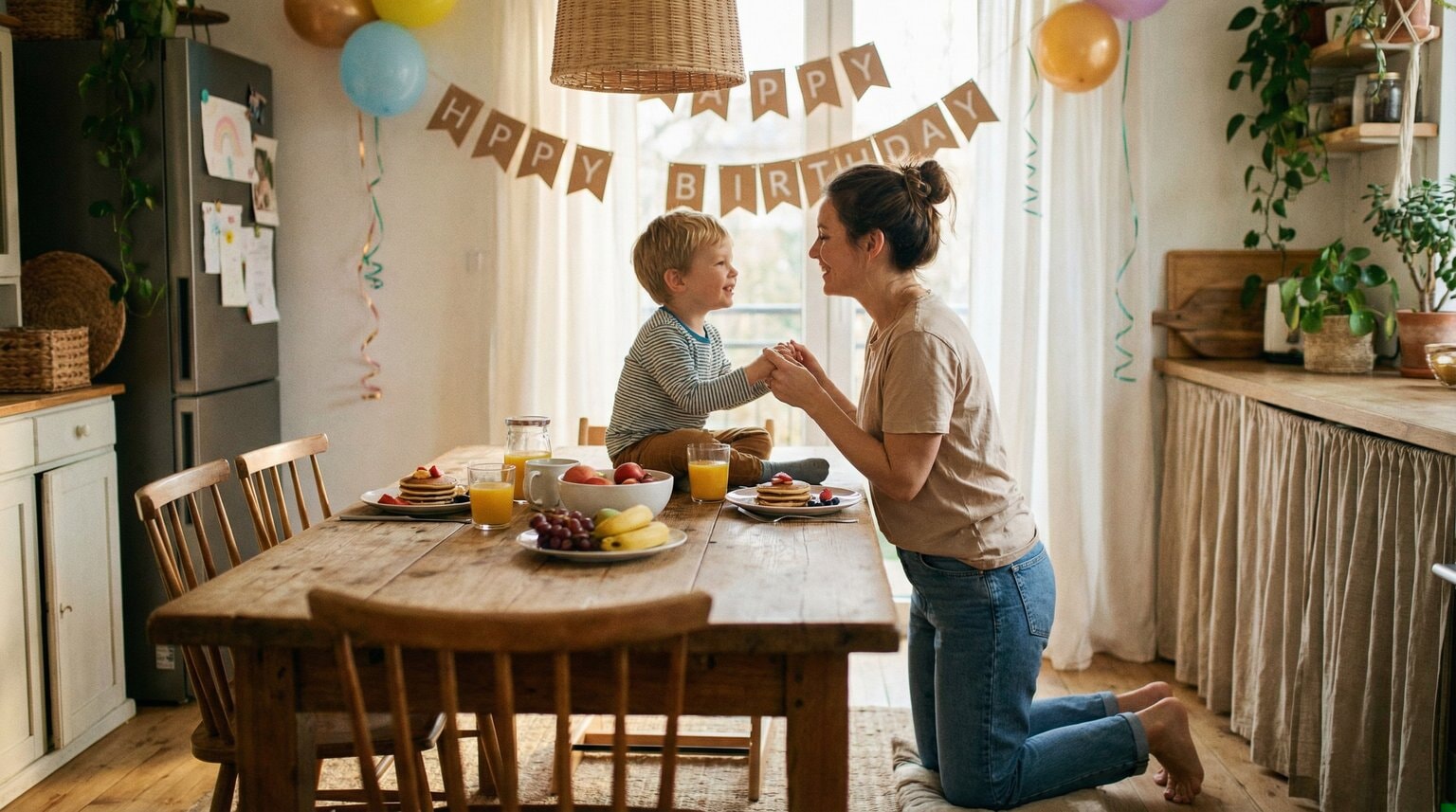
Scenario: The Morning-Of Conversation
What’s happening: You’re getting ready for the party and want to set expectations.
Why it matters: Children do better when they know what’s coming. Surprises trigger bigger emotional responses.
What to do: Have a brief, matter-of-fact conversation at breakfast.
What to say:
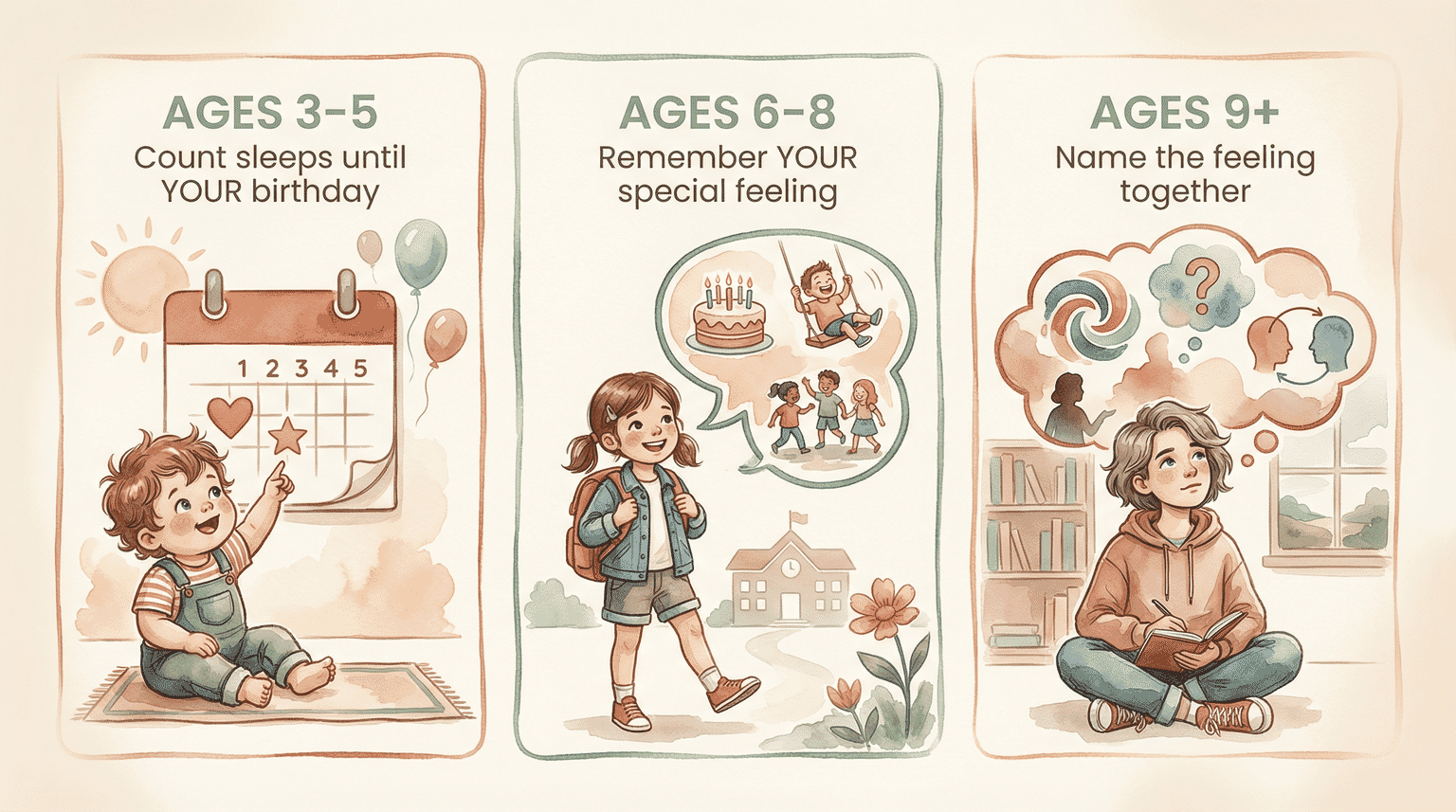
For preschoolers (ages 3-5): “Today is Emma’s birthday party! That means she’ll open presents and blow out candles. You get to help hand her the presents and eat cake. When is YOUR birthday coming?”
For school-age kids (ages 6-8): “Remember how you felt on YOUR birthday when everyone sang to you? Today Emma gets that feeling. I’m counting on you to help make it special—and I’ve got something fun planned for just us later.”
For older kids (ages 9+): “Birthday parties can be weird when you’re not the birthday kid. Totally normal if you feel a little jealous—I did when I was your age. What would help you feel good about today?”
Scenario: “Why Don’t I Get Presents?”
This question will come. Be ready.
What to say:
Ages 3-5: “Presents come on YOUR birthday! Let’s count how many sleeps until then.” (Toddlers need concrete markers—abstract “fairness” means nothing to them yet.)
Ages 6-8: “On your birthday, all the presents are for you. On Emma’s birthday, they’re all for her. Everyone gets their special day.”
Ages 9+: “I get it—watching someone else open presents isn’t the fun part. What ARE you looking forward to today?”
Arrival & Early Party Moments
Scenario: Guest Attention Goes to the Birthday Child
What’s happening: Relatives and guests are fussing over the birthday child while your other kids feel invisible.
Why it happens: Young children are still developing the ability to understand that attention isn’t a finite resource. When someone else gets it, they genuinely feel like there’s less for them.
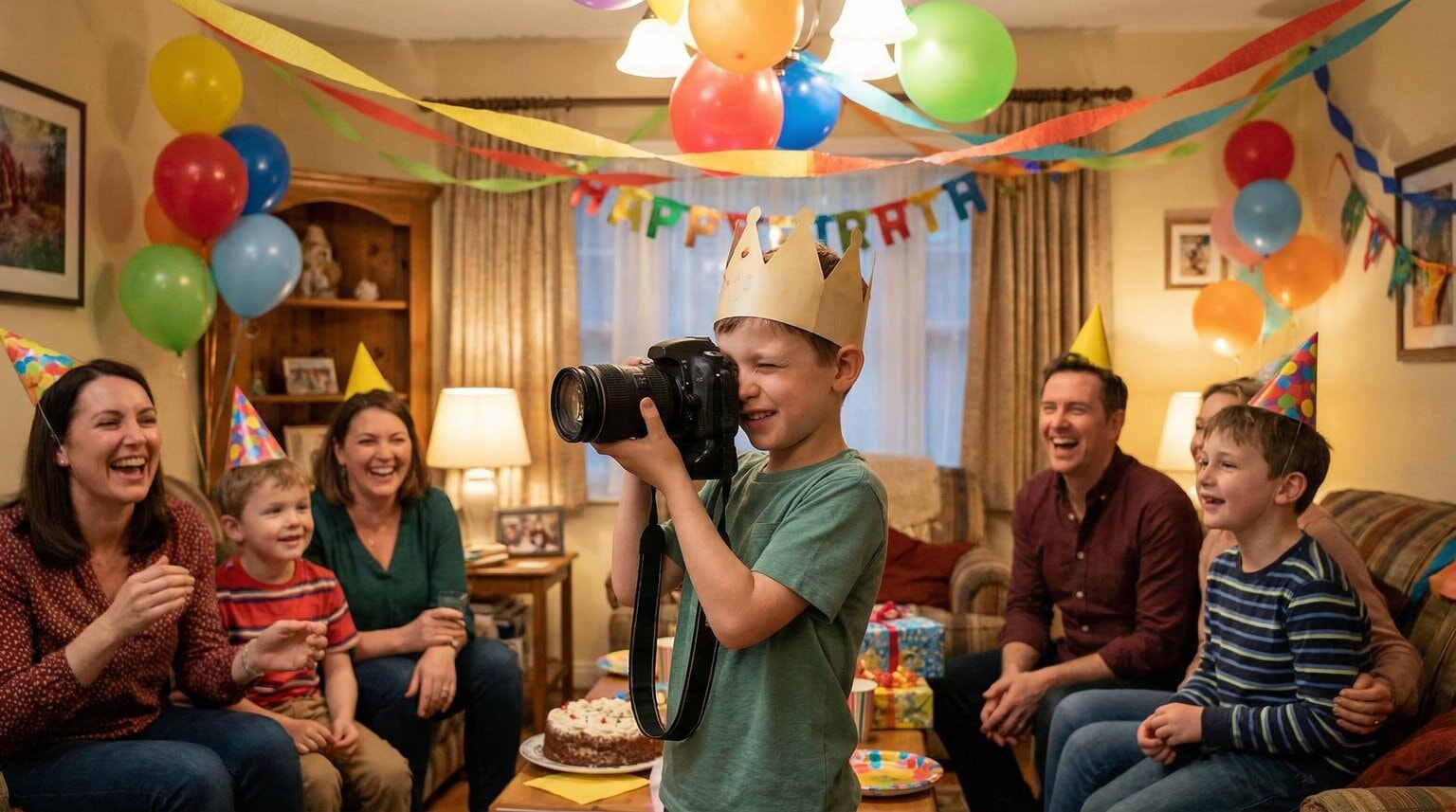
What to do: Give the non-birthday sibling a meaningful job. Not busywork—something that makes them feel important.
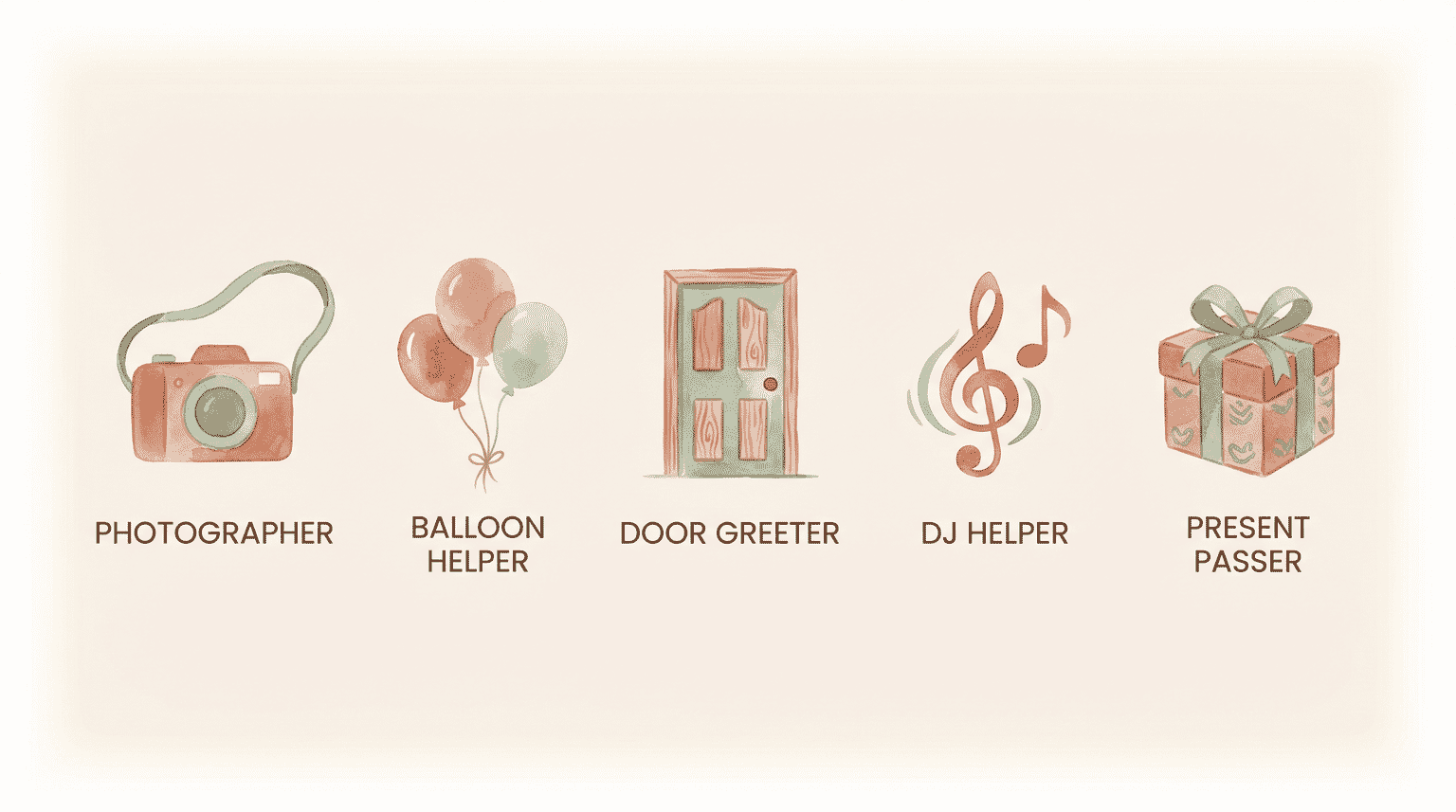
Helper jobs that actually work:
- Official photographer (real camera or play camera for little ones)
- Balloon wrangler
- Door greeter (“You tell everyone where to put presents!”)
- DJ helper (in charge of pressing play on party music)
- Present handler (the person who passes gifts to the birthday child)
Dr. Donna Housman recommends having the birthday child give siblings something small like a treat bag at the start of the party—not as an “equal” gift, but as an acknowledgment of their role in making the day special.
Scenario: Your Child Immediately Wants to Leave
What’s happening: Five minutes in, your non-birthday child is clinging to your leg asking to go home.
Why it happens: They’ve already assessed the situation: this party isn’t about them, and their brain is telling them to escape.
What to do: Validate without caving. And designate one adult to be “their person” for the party—someone who can give them attention without pulling you from hosting duties.
What to say:
“I hear you want to leave. Parties can feel hard when they’re not YOUR party. Let’s find Grandma—she’s going to need your help with something special.”
The Cake Moment
Scenario: Jealousy During Candles and Singing
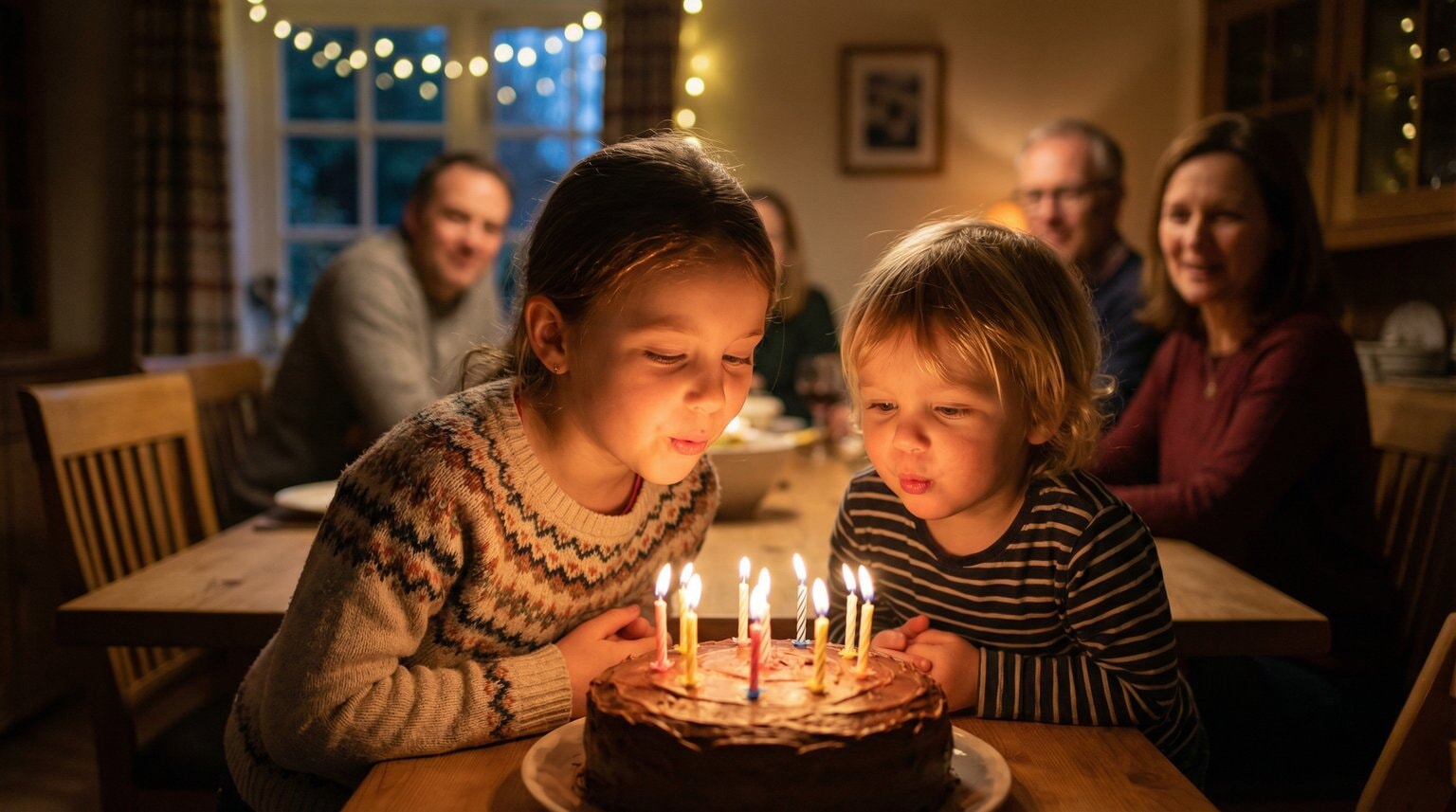
This is a lightning-rod moment. Everyone’s looking at ONE child. Everyone’s singing TO one child. For preschoolers especially, this is almost unbearable.
What to do:
- Position the non-birthday sibling where they feel included, not excluded (next to the birthday child, not across the table)
- Give them a role: holding the lighter for an adult, being ready to pass the cake server, leading the singing
- For very young siblings, let them “help” blow out candles (most birthday kids don’t mind, and it defuses the tension)
What to say:
For preschoolers: “You can help blow! Take a big breath…”
For older kids: “You’re in charge of getting Emma the first piece of cake after she cuts it.”
Gift-Opening: The Hardest Part
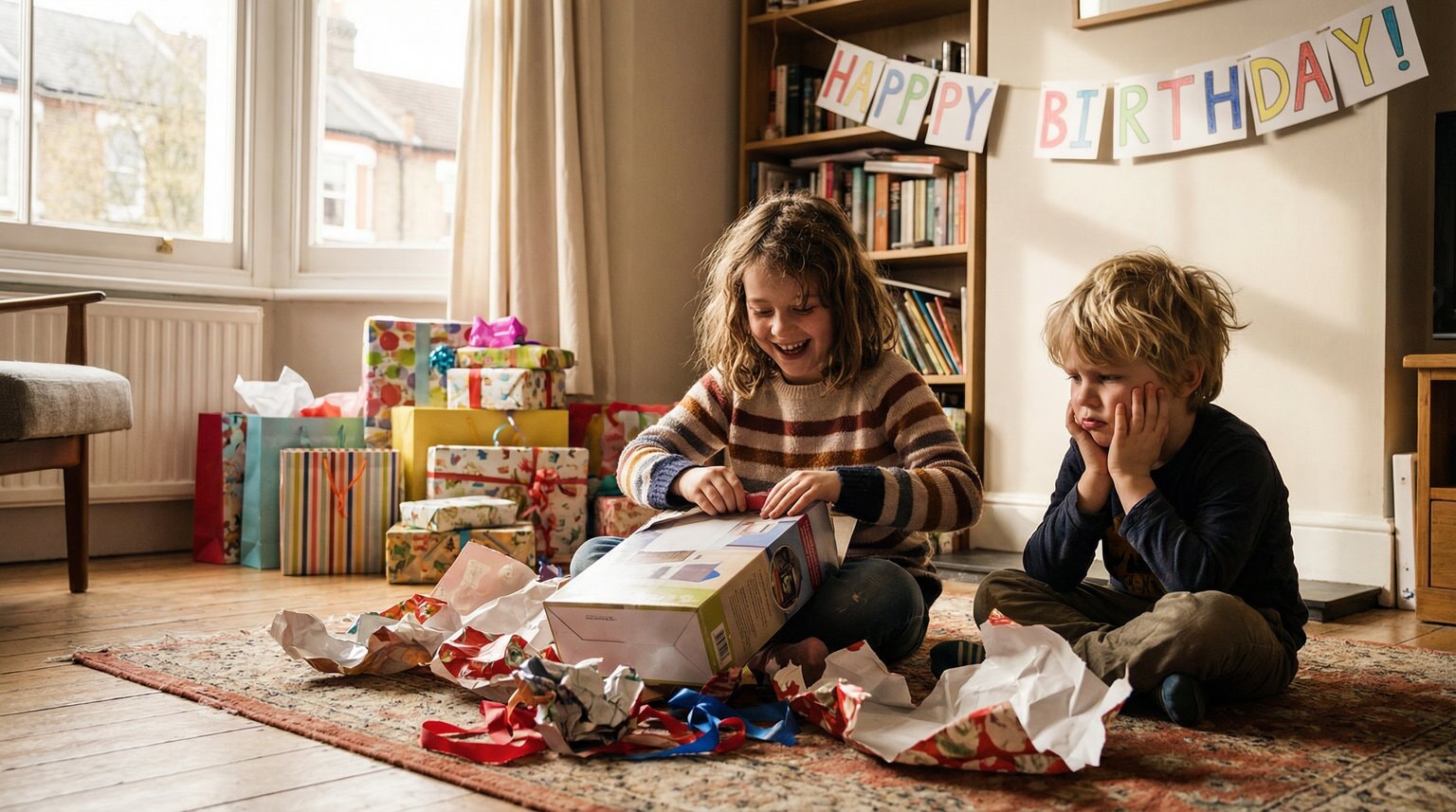
This is where jealousy peaks. Here’s how to handle the three most common scenarios.
Scenario: Meltdown During Unwrapping
What’s happening: Your non-birthday child is crying, grabbing, or loudly complaining while presents are being opened.
Remember the research: These conflicts average 45 seconds. You don’t need to solve everything—you need to get through the next minute.
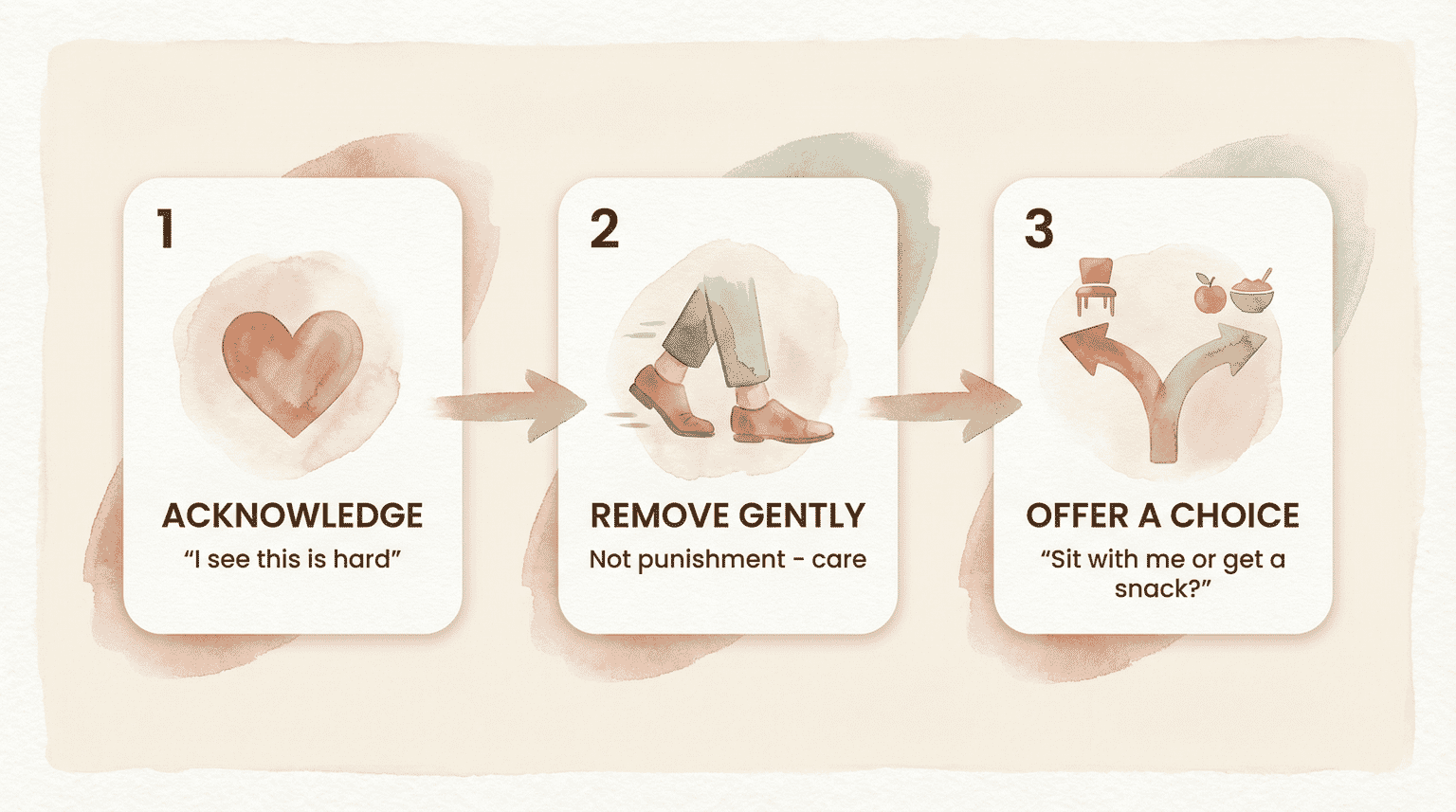
What to do:
1. Acknowledge the feeling briefly (“I see this is hard”)
2. Remove them gently if needed (not as punishment, but as care)
3. Offer a choice (“Do you want to sit with me, or go get a special snack?”)
The science of helping children through difficult emotions reveals something important about our role as parents.
“Being sensitive and responsive to our kids’ feelings doesn’t mean we have to protect them from painful feelings. Empathizing and helping them cope is more empowering than trying to avoid all pain.”
— Dr. Eileen Kennedy-Moore, Child Psychologist
What to say:
“You’re feeling jealous watching Emma get presents. That’s a really normal feeling. Come sit with me, and let’s watch together.”
Scenario: “That’s Not Fair—She Got MORE!”
What’s happening: Your school-age child is mentally tallying every gift and announcing the injustice.
Why it happens: Between ages 5-7, children develop intense focus on quantitative fairness. “More” and “equal” become obsessions—it’s developmentally right on schedule.
What to do: Don’t get pulled into the counting game. Acknowledge the feeling without validating the score-keeping. For more on navigating this, I’ve written about why fair doesn’t mean equal when it comes to gifts.
What to say:
“It feels unfair right now. On YOUR birthday, you got presents just for you, too. Different days, different turns.”
Scenario: Hovering and Grabbing
What’s happening: Your toddler or preschooler is physically trying to grab presents or “help” open them.
Why it happens: Children under 4 literally cannot understand that those presents belong to someone else. Possession = ownership in toddler logic.
What to do: Position a designated adult to gently redirect. Have a small activity ready (sticker book, playdough) for physical distraction.
Party Games & Activities
Scenario: Birthday Child Gets Special Treatment
What’s happening: The birthday child goes first, picks first, or gets special privileges, and your other child protests.
What to do: Prepare them in advance that “birthday kid rules” means the birthday child gets priority today.
What to say:
“Today Emma gets first pick because it’s HER birthday. On your birthday, you’ll get first pick too. That’s how birthday rules work.”
Going Home & After the Party
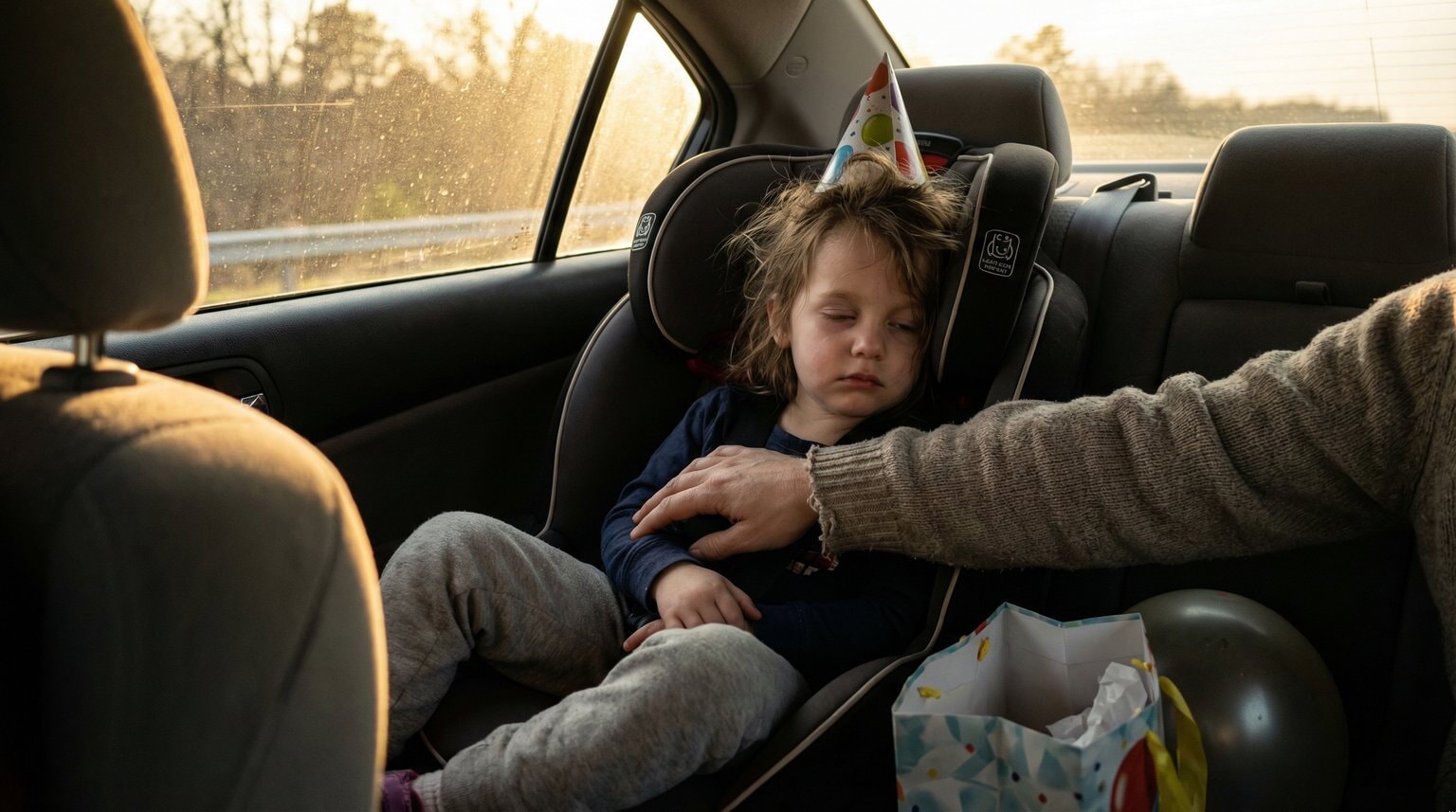
Scenario: The Car Ride Meltdown
What’s happening: The party’s over, and your non-birthday child falls apart on the way home.
Why it happens: They held it together (mostly), and now they’re decompressing. This is actually healthy—they saved the big feelings for a safe space.
What to do: Let them feel it. Don’t rush to fix or dismiss.
What to say:
“That was a lot. It’s OK to feel tired and a little sad it wasn’t your party. What should we do for YOUR birthday?”
Scenario: Lingering Resentment
What to do: Build in 15-20 minutes of one-on-one time with your non-birthday child after the party ends. This isn’t a reward—it’s recognition that they did something hard.
The experience of attending a sibling’s birthday party is practice for managing difficult emotions. Similar dynamics play out during holiday gift comparisons between siblings—and children who learn to cope at birthday parties often handle Christmas better too.
The Unbirthday Gift Debate
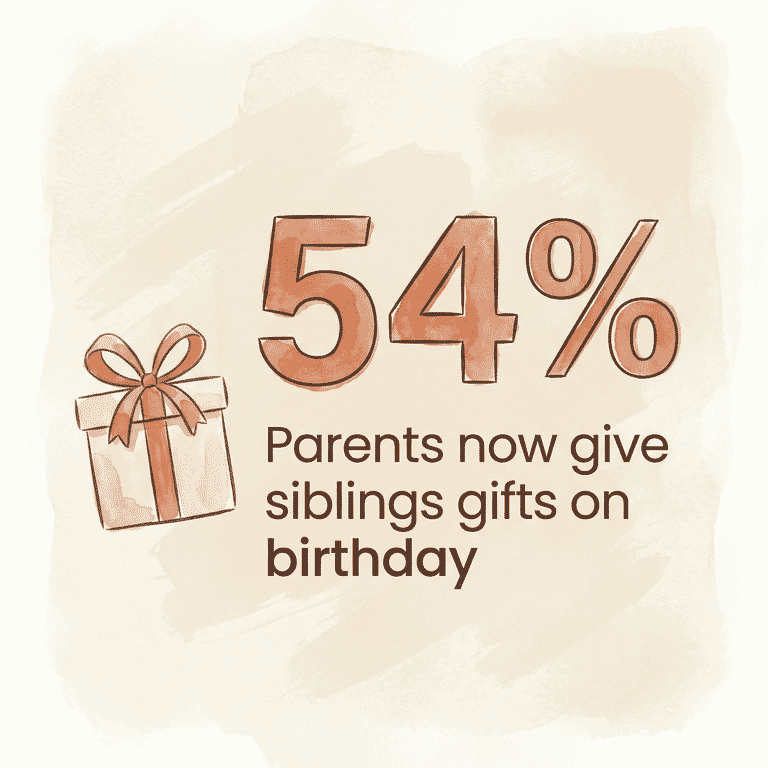
A BabyCenter survey found 54% of parents now give siblings gifts on the birthday child’s special day. My librarian brain had to dig into whether this actually helps.
The expert consensus: Generally, no.
The growing trend of sibling gifts might feel like the path of least resistance, but research suggests it could be a missed opportunity.
Early childhood is precisely when children need practice navigating uncomfortable emotions in safe, supported environments.
The developmental science behind emotional resilience points to an important truth about how children learn to cope.
“Our early childhood is when we get to build that coping set and build that resilience around uncomfortable emotions. Parents are missing an opportunity to help the sibling manage and learn about uncomfortable emotions.”
— Professor Claire Vallotton, Michigan State University
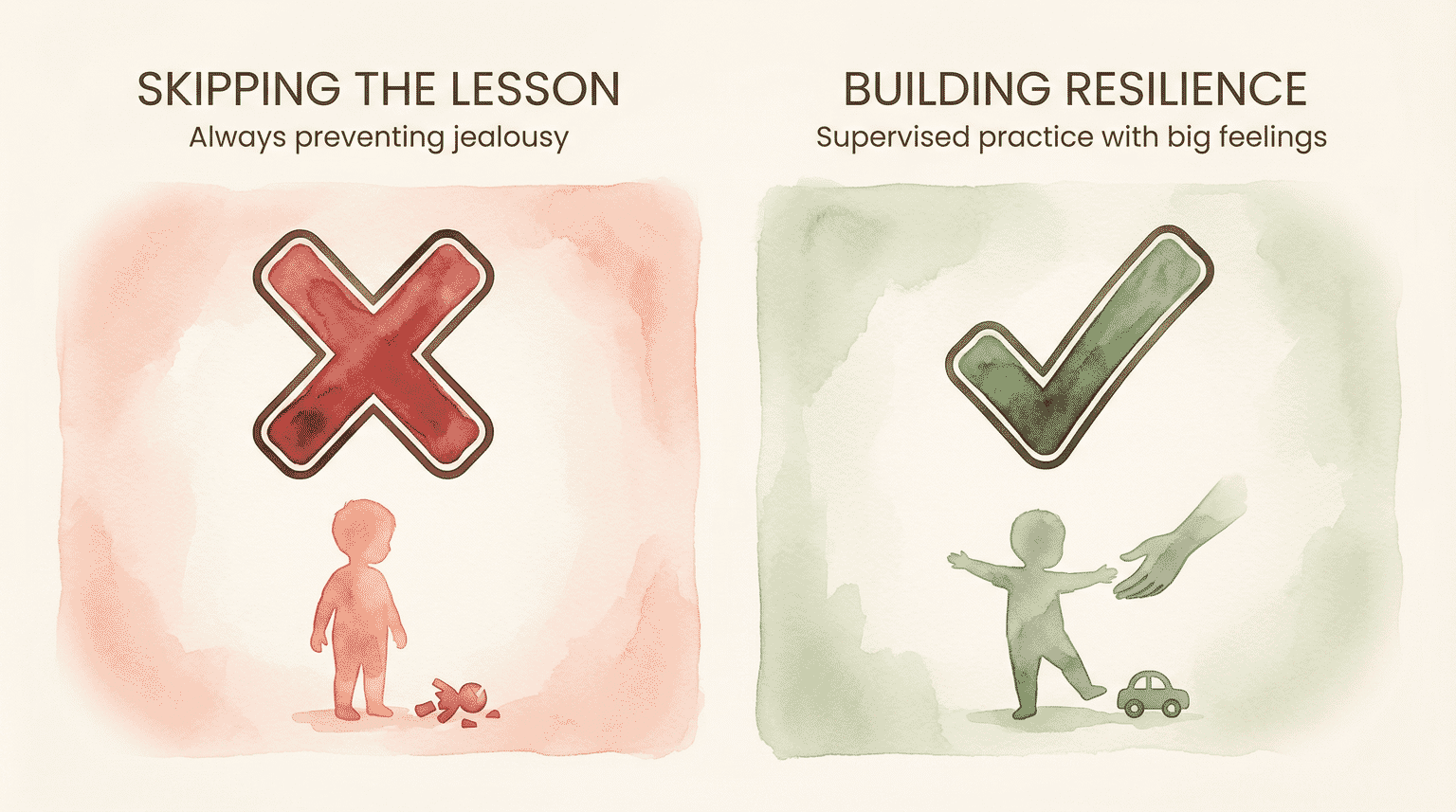
The concern isn’t about being harsh—it’s about what children learn. When we always prevent jealousy, children may conclude that feeling jealous is dangerous or unacceptable. They need supervised practice experiencing uncomfortable emotions to know they can survive them.
When sibling gifts might make sense:
- Children with significant emotional regulation challenges
- Cultural contexts where family-wide celebration is traditional
- Very young toddlers (under 2) who can’t yet understand the concept
- Situations involving significant family stress where this isn’t the right learning moment
For broader strategies on gift-related challenges between siblings, I’ve found that addressing underlying dynamics matters more than managing individual moments.
Birth Order Matters
When Your Older Child Is Jealous at the Younger Sibling’s Party
Different triggers: Older children often experience displacement feelings (“the baby gets everything”) and may find “babyish” parties embarrassing.
Strategies:
- Give them an adult-level responsibility (photographer, timeline manager)
- Acknowledge their more sophisticated perspective: “I know unicorn parties aren’t your thing anymore”
- Plan something age-appropriate for them afterward
When Your Younger Child Is Jealous at the Older Sibling’s Party
Different triggers: Older sibling parties seem “bigger” and more exciting. Younger children may feel like they don’t measure up.
Strategies:
- Frame it as a preview: “Someday you’ll have a sleepover party too!”
- Find capability-based roles appropriate to their age
- Don’t compare party sizes or activities
Quick Reference Scripts
For the jealousy meltdown:
“I see you’re feeling jealous. That’s OK. Come sit with me.”
For “I want presents too!”:
“Presents come on YOUR birthday. When is your birthday? Let’s count!”
For hovering during gift opening:
“Emma needs space to open her presents. You can hand her the next one.”
For the “not fair” complaint:
“It feels unfair right now. On your birthday, the presents are all yours.”
For the post-party meltdown:
“You did something hard today. I’m proud of you. Let’s have some quiet time together.”
Frequently Asked Questions
Is it normal for siblings to be jealous at birthday parties?
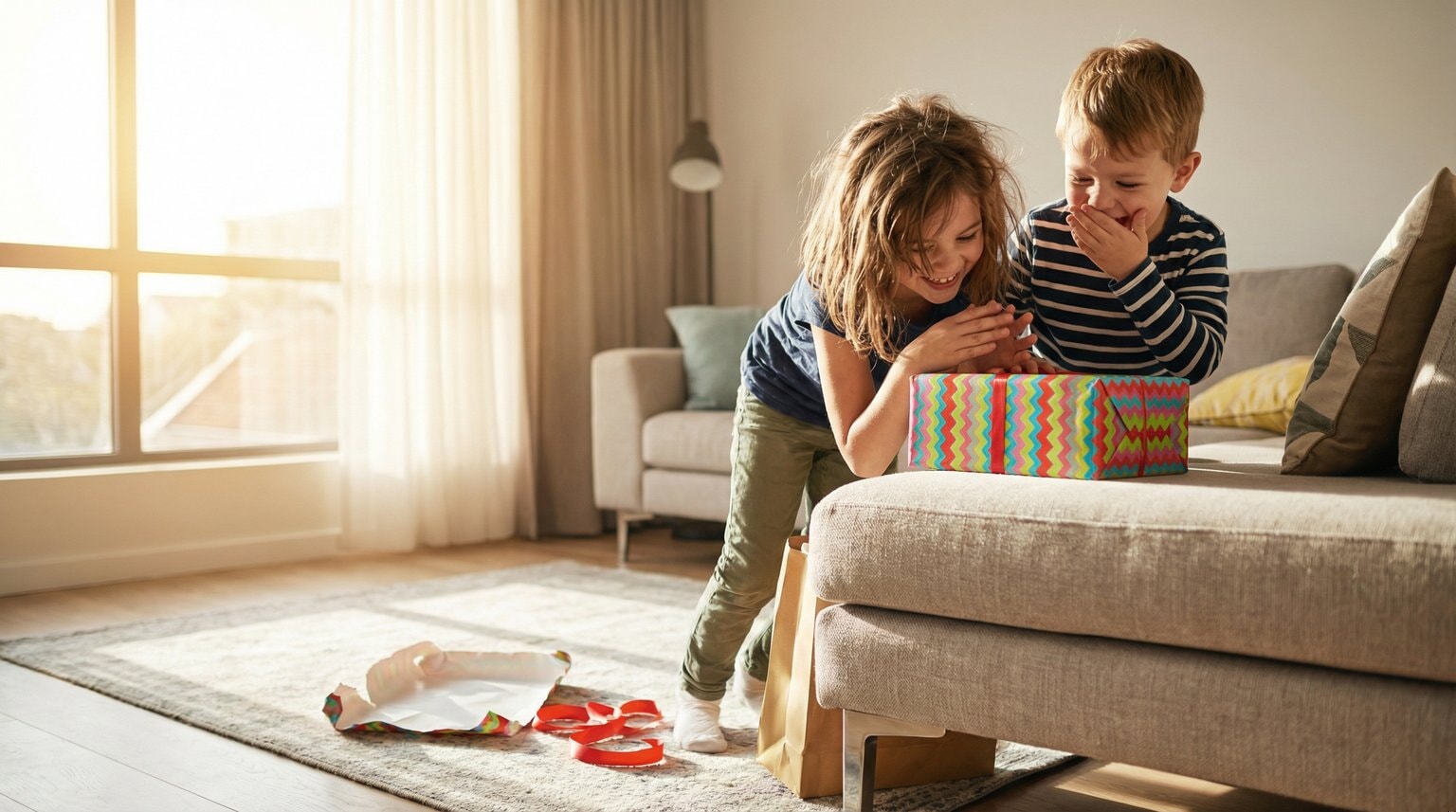
Absolutely. Sibling jealousy can emerge as early as 12 months old, and birthday parties concentrate all the triggers—attention, gifts, special treatment—into one event. Research shows 2-4 year olds have nearly 8 disputes per hour with siblings under normal circumstances. Birthday jealousy isn’t a character flaw; it’s developmentally predictable.
Should I give my other child a gift on my child’s birthday?
Most experts advise against routine sibling gifts. Professor Claire Vallotton notes that learning to manage jealousy and frustration builds essential emotional resilience. However, small comfort items may help children with significant regulation challenges, very young toddlers, or families where cultural traditions emphasize collective celebration.
What do you say to a jealous sibling?
Lead with validation: “I can see you’re feeling sad that your sister is opening presents. It’s hard to watch when you want presents too.” Then redirect: “Your birthday is coming—let’s count how many sleeps.” Avoid dismissing feelings (“Don’t be jealous”) or over-explaining fairness in the moment.
How do I make my other child feel special on sibling’s birthday?
Give them a meaningful role—not busywork, but real responsibility. Younger children can be “official photographer” or balloon helper. Older children can manage the gift table or timeline. After the party, carve out 15-20 minutes of one-on-one time. Roles and connection matter more than compensatory gifts.
Your Turn
What’s worked for managing the non-birthday sibling at parties? I’ve tried helper roles, small gifts, and just riding out the meltdown. Some approaches worked better than others—I’d love to hear what’s clicked for your family.
I read every comment and love learning what works in other families
References
- Northeastern University Sibling Research Group – Sibling conflict frequency and emotional learning research
- BYU Scholars Archive – Adolescent sibling relationship dynamics and control patterns
- YourTango/BabyCenter – Expert perspectives on sibling birthday gifts
- Parents Magazine – Child psychologist guidance on birthday party dynamics
- USA Today – Developmental research on emotional resilience building

Share Your Thoughts