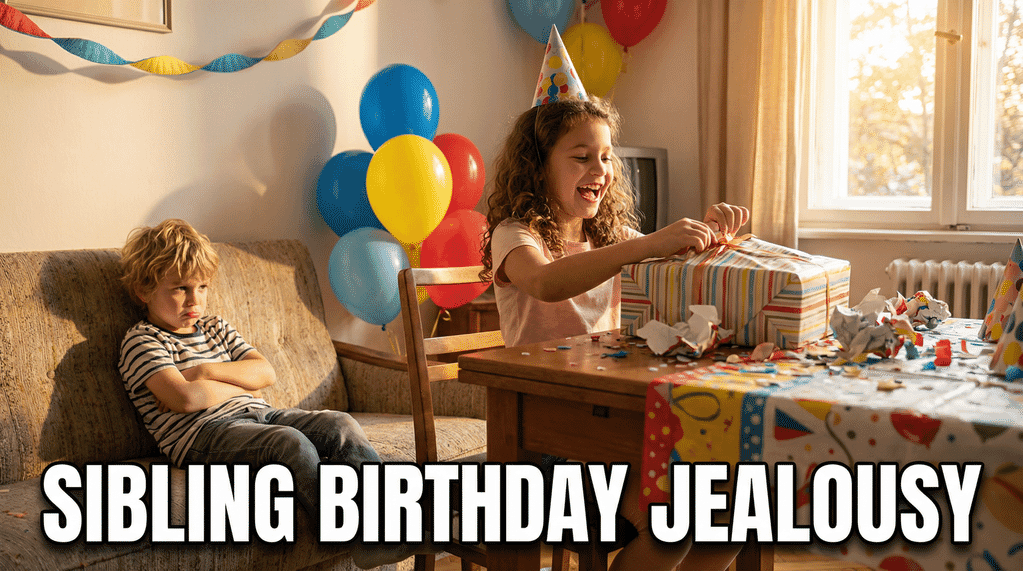
Your five-year-old just watched his sister tear into a mountain of birthday presents. He’s been the “good helper” for exactly twelve minutes. Now he’s under the dining room table, refusing to come out.
Here’s the thing: this isn’t bad behavior. It’s actually his brain doing exactly what it’s supposed to do.
Almost 80% of U.S. children grow up with at least one sibling, and research confirms what every parent already knows—managing sibling relationships, including jealousy over gifts and attention, ranks as one of the most stressful parts of family life. I’ve navigated this with eight kids across seventeen years of birthdays and holidays, and my librarian brain couldn’t let it go without understanding why gift moments trigger such intense reactions.
The answer changed how I handle every gift-giving occasion in our house.
Key Takeaways
- Children interpret gifts as concrete evidence of love—they’re measuring affection, not counting presents
- Kids under six literally cannot process that “equal” doesn’t mean “the same”—teaching this takes years
- Giving non-birthday siblings a helper role transforms them from passive observers to active participants
- Acknowledge jealousy without dismissing it or immediately solving it with compensation
- When jealousy lingers for days, your child needs help processing, not just distraction
What’s Really Behind the Meltdown
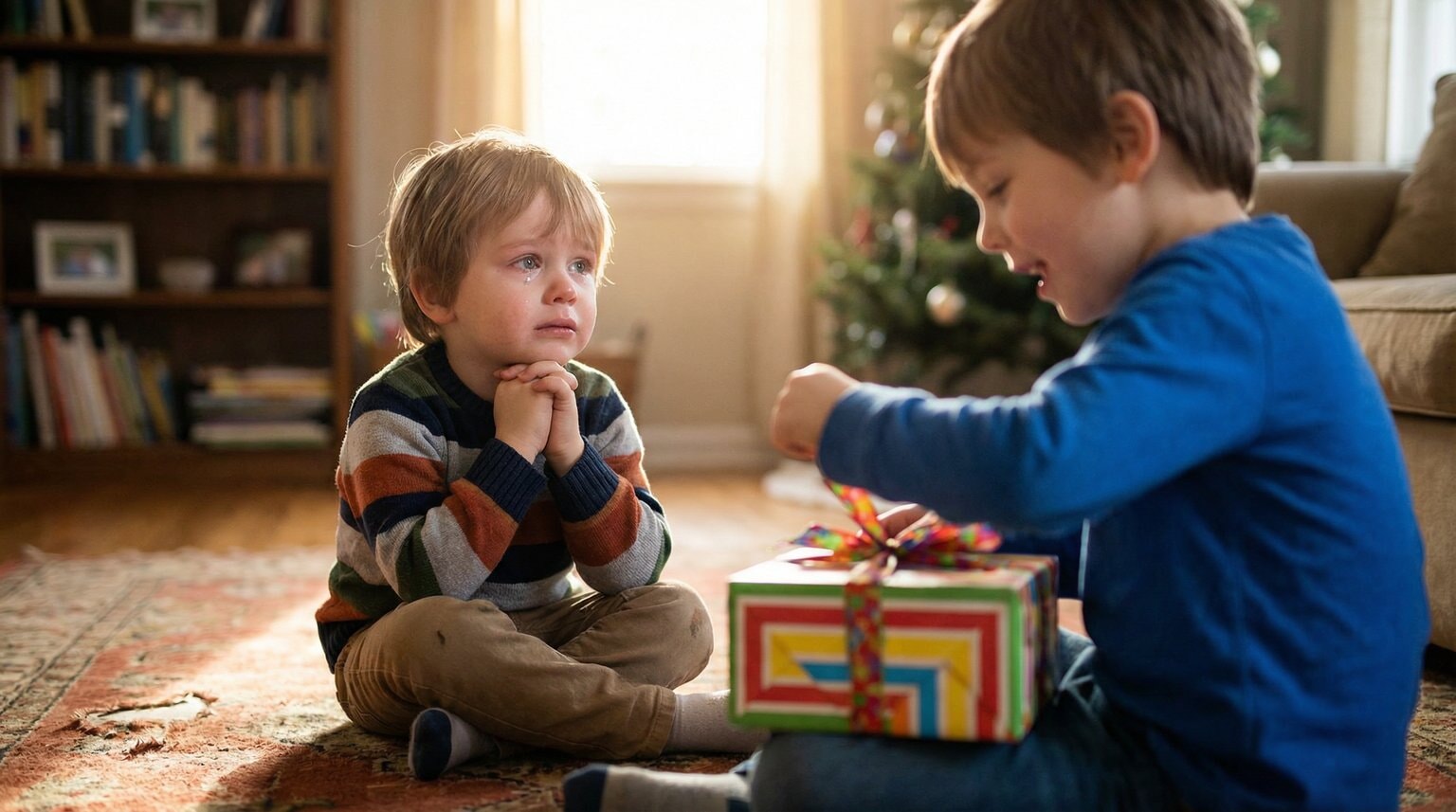
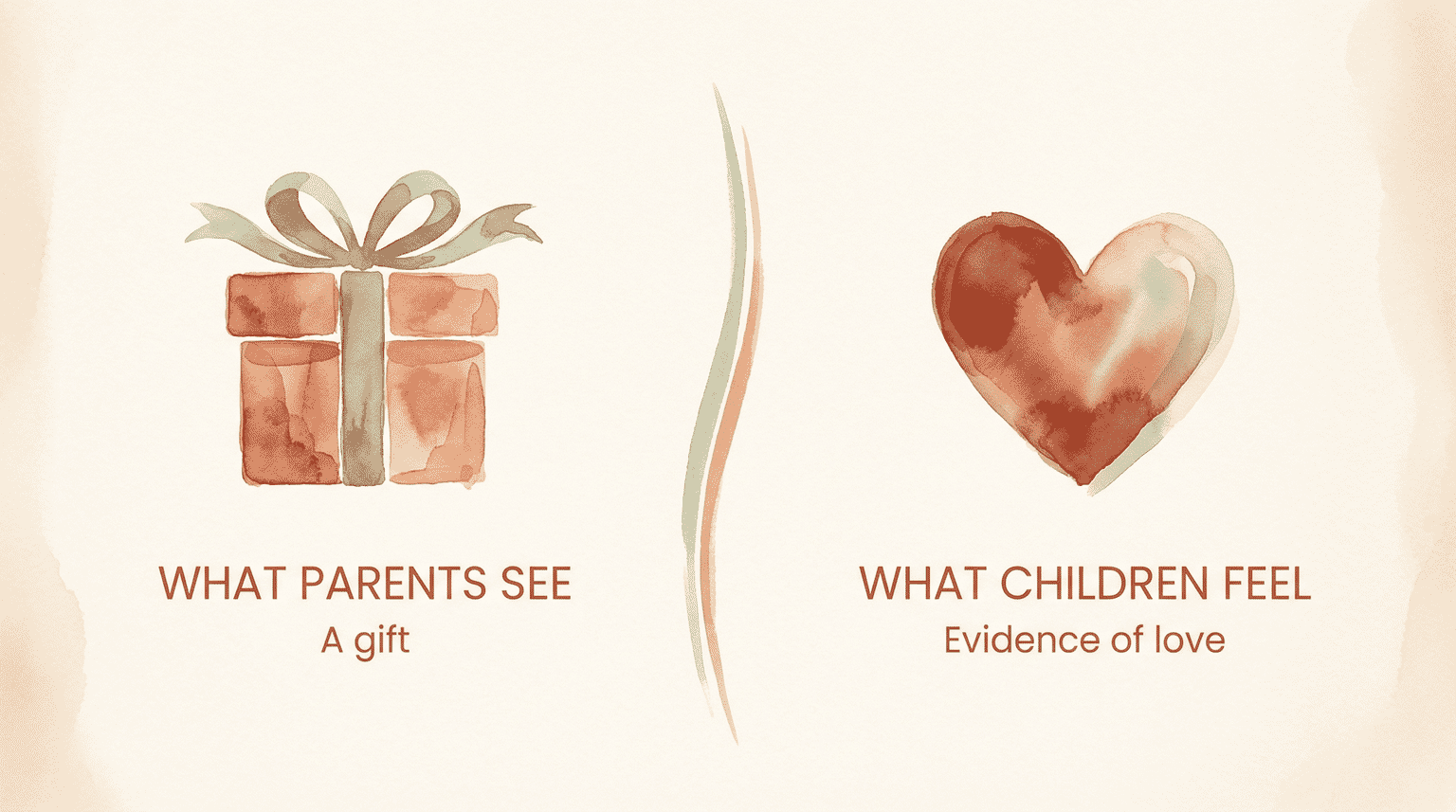
Here’s what the research actually shows: gifts aren’t just objects to children—they’re concrete, visible evidence of love and attention.
A 2024 study examining sibling experiences found that younger siblings felt anger and jealousy when their sibling received special treatment like new items or privileges. The researchers noted that “these benefits significantly impacted siblings, as this kind of attention was concrete and visible evidence of unequal attention.”
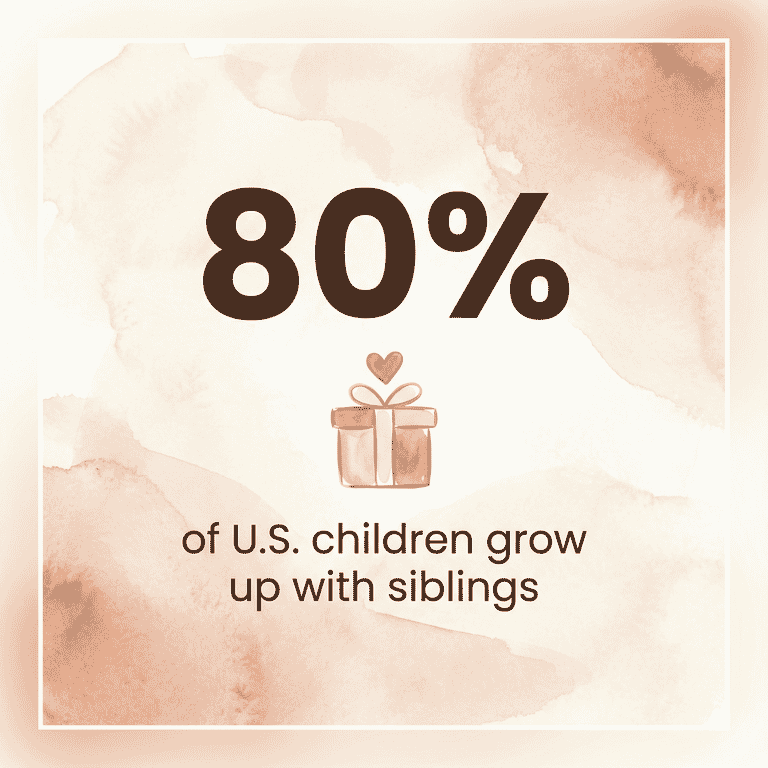
With four out of five children sharing their childhood with siblings, gift-giving moments become inevitable battlegrounds. The competition for parental attention and affection plays out in wrapped packages and torn paper.
Understanding this dynamic helps us respond with empathy rather than frustration when the meltdowns happen.
One five-year-old in the study put it perfectly:
“Sometimes I want to play with my mum and dad. To build houses. But when I have built a house and I want to show them, they are busy with my brother. It is odd that they both need to be with him and don’t want to see what I have built.”
— Five-year-old study participant, PMC sibling research, 2024
That quote stops me every time. It captures exactly what’s happening in a child’s mind during gift-giving—they’re not counting presents, they’re measuring love.
The psychology behind sibling rivalry reveals something important about child development.
“Children want to be seen as the most special by their parents, so they’re always going to push for preferential treatment over their siblings.”
— Professor Jeanine Vivona, College of New Jersey
This isn’t a character flaw. Penn State researcher Mark Feinberg notes that “sibling rivalry serves a developmental purpose: it helps children figure out what is unique and special about themselves.”
The developmental reality: Children under six or seven typically equate “different” with “unfair.” Their brains literally cannot process that equal doesn’t always mean the same. Research on emotion understanding shows children acquire approximately two additional emotion-understanding skills every year starting at age two—which means your three-year-old physically cannot mask disappointment the way your seven-year-old can.
Understanding why gifts hold such powerful meaning for children helps these meltdowns feel less personal. Your child isn’t ungrateful. Their brain is doing exactly what developmental psychology predicts.
Scenario #1: Birthday Parties (When It’s Not Their Day)
What’s Happening
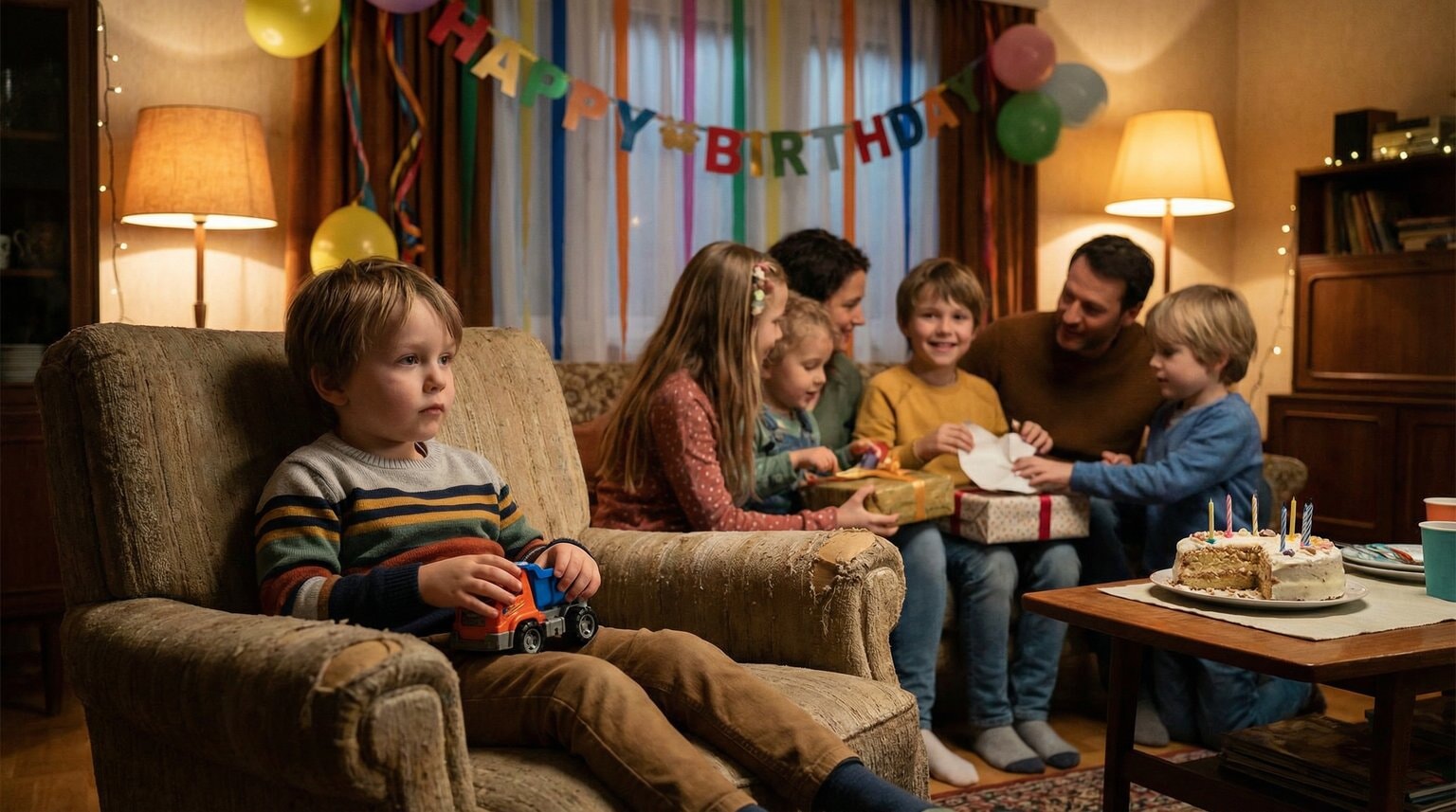
The non-birthday sibling is watching someone else receive concentrated attention, wrapped in shiny paper, for hours. Every gift opened is visible proof that today, someone else is most special.
In my house, I’ve watched this play out eight times from every possible position—the birthday kid, the younger sibling, the older sibling who “should know better.” The intensity varies, but the underlying experience is the same.
Prevention: Before the Party
Have an honest conversation the morning of:
“Today is Maya’s special day, just like you had your special day in March. You might feel a little jealous watching her open presents—that’s a normal feeling. Your job today is to be her helper.”
— Try saying this
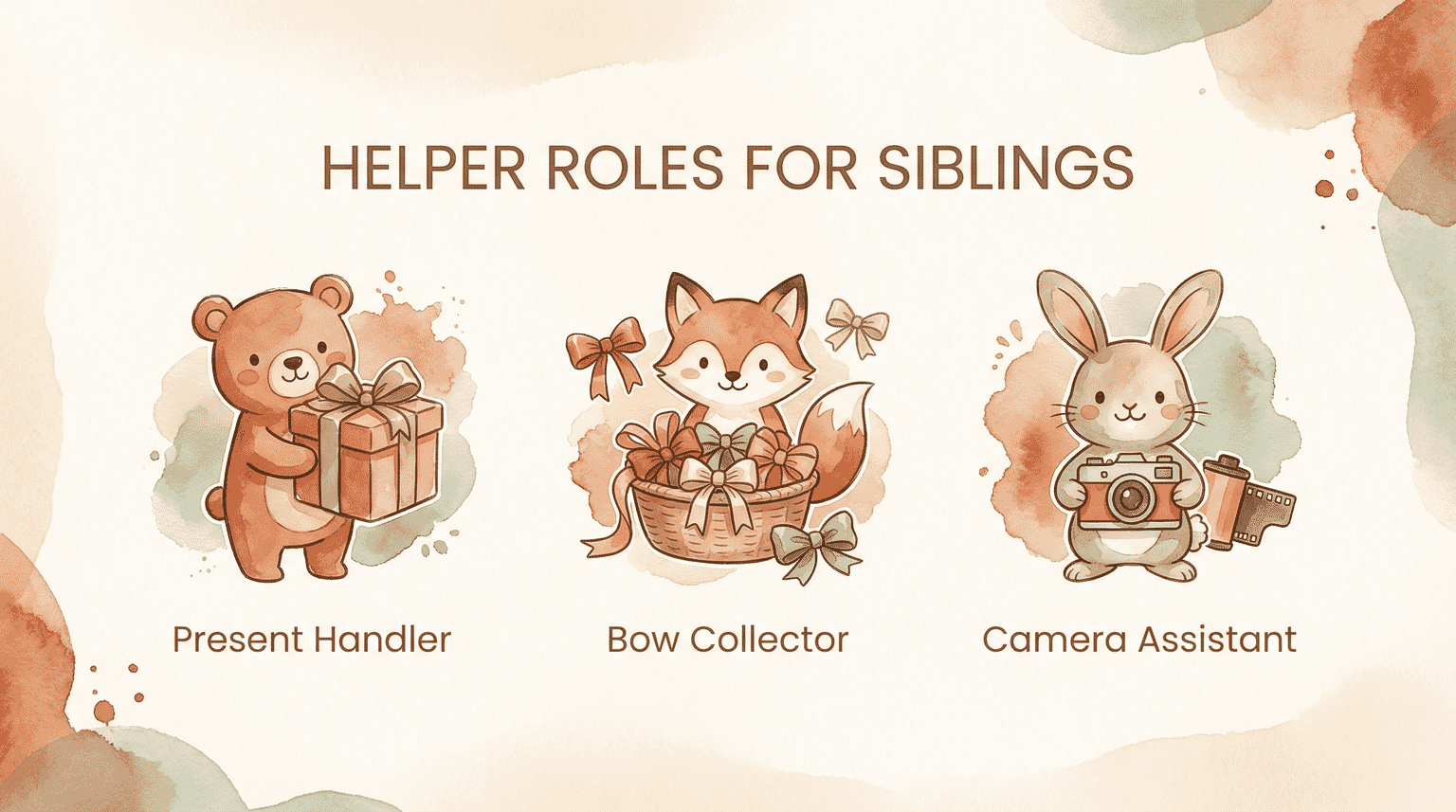
Give them a role. “Present handler” (bringing gifts to the birthday child), “bow collector,” or “camera assistant” transforms them from passive observer to active participant.
The research-backed secret: some families give non-birthday siblings one small wrapped item to open during the party. This isn’t spoiling them—it’s acknowledging that young children need something concrete to hold while processing big feelings.
During the Party
If you see the storm brewing:
- Redirect to their helper role
- Offer a specific task: “Can you help me put these bows in the bag?”
- If meltdown happens, step away quietly rather than making it a scene
What to Say During a Meltdown
When your child says: “It’s not fair! I want presents too!”
Try: “You’re feeling jealous—that’s a hard feeling. Today is Lily’s turn, just like your birthday was your turn. Would you like to help hand her the next gift, or do you need a few minutes with me in the other room?”
Acknowledge the feeling without dismissing it (“Don’t be jealous”) or immediately solving it (“Fine, we’ll get you something later”).
Scenario #2: Holiday Mornings (The Comparison Trap)
What’s Happening
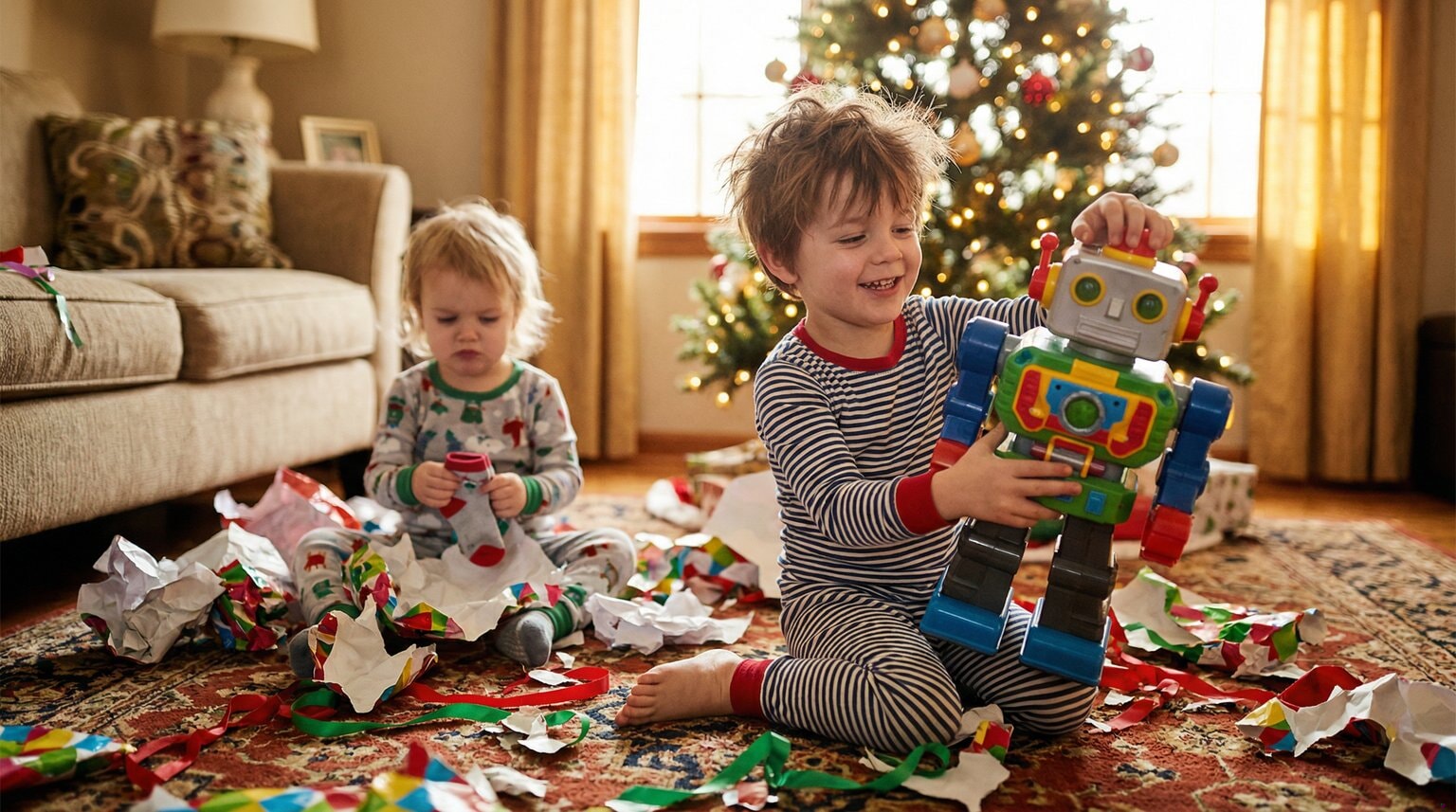
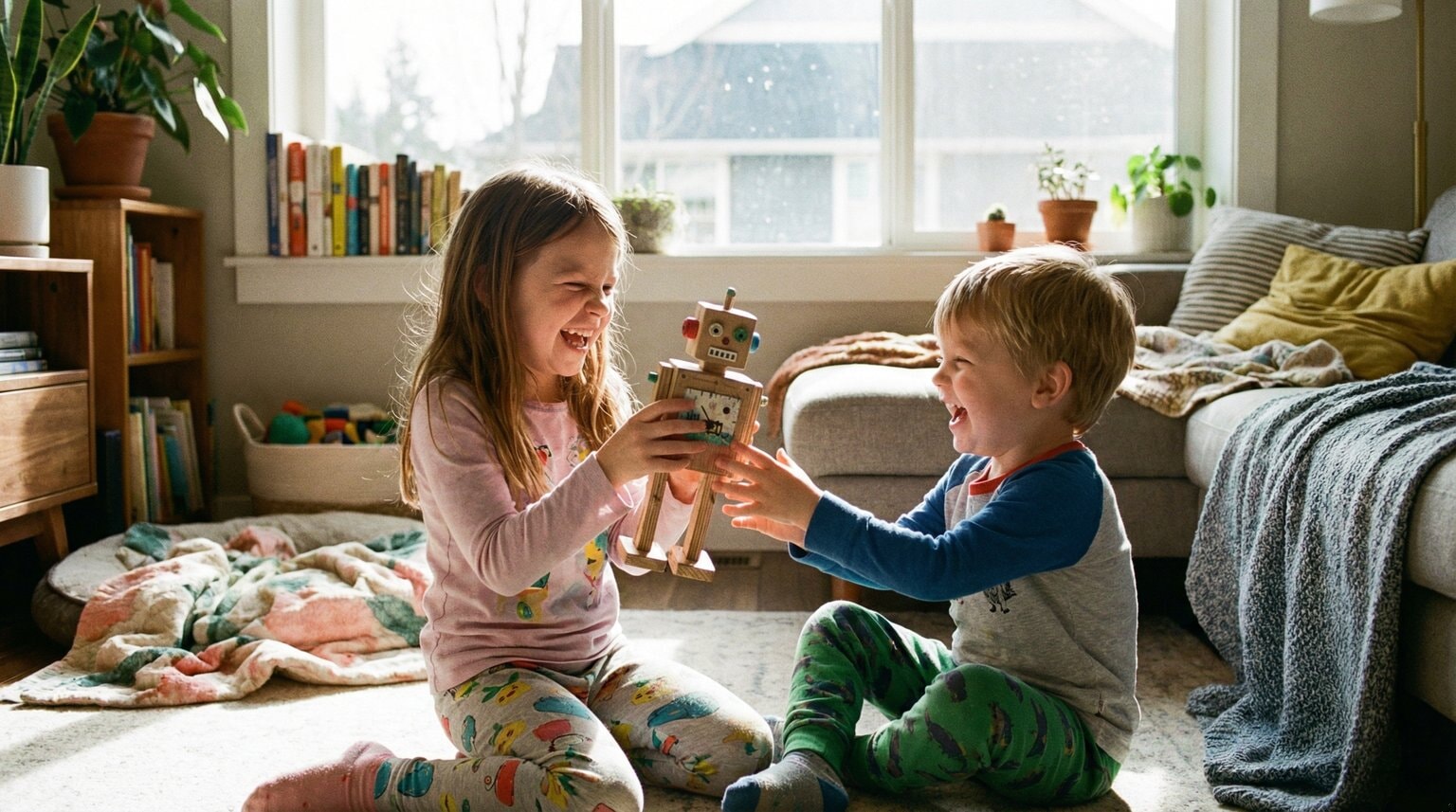
Multiple children opening gifts simultaneously creates real-time comparison. One child rips through everything in four minutes while another savors each gift. One got the “big” present; another got three smaller ones. The math feels impossible.
Prevention: Before the Morning
Gift selection: Consider not just what each child wants, but how gifts will appear side by side. Similar-sized boxes, similar quantities, or deliberately mixing “big” and “small” for each child.
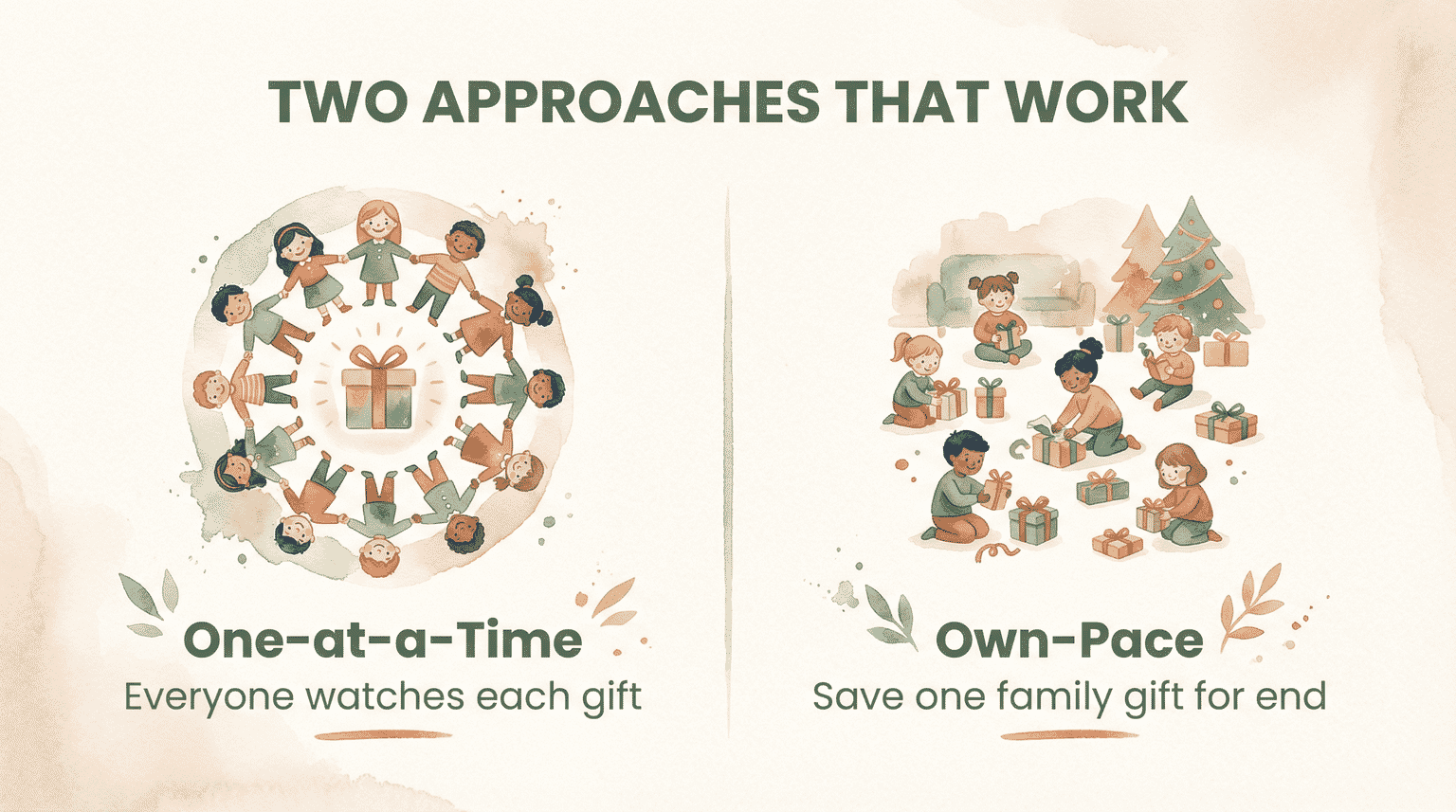
Opening sequence: Some families do one-at-a-time opening where everyone watches. Others let kids go at their own pace but save one “family gift” for the end. Either works—consistency matters more than method.
During Gift Opening
The “I wanted THAT one” moment will happen. Don’t panic.
When your child says: “Why did she get the bigger one?”
Try: “You noticed your gifts look different. That’s because you’re different people who love different things. What’s something special about what you got?”
Avoid the comparison trap yourself. Never ask “Who got the better present?” or “Aren’t you glad you got more things?”
After the Gifts
Plan something immediately after opening—breakfast, a walk, playing with one new item together. The transition from “gift getting” to “regular day” is when lingering resentment often surfaces.
Scenario #3: When Grandparents Give Unequally
What’s Happening
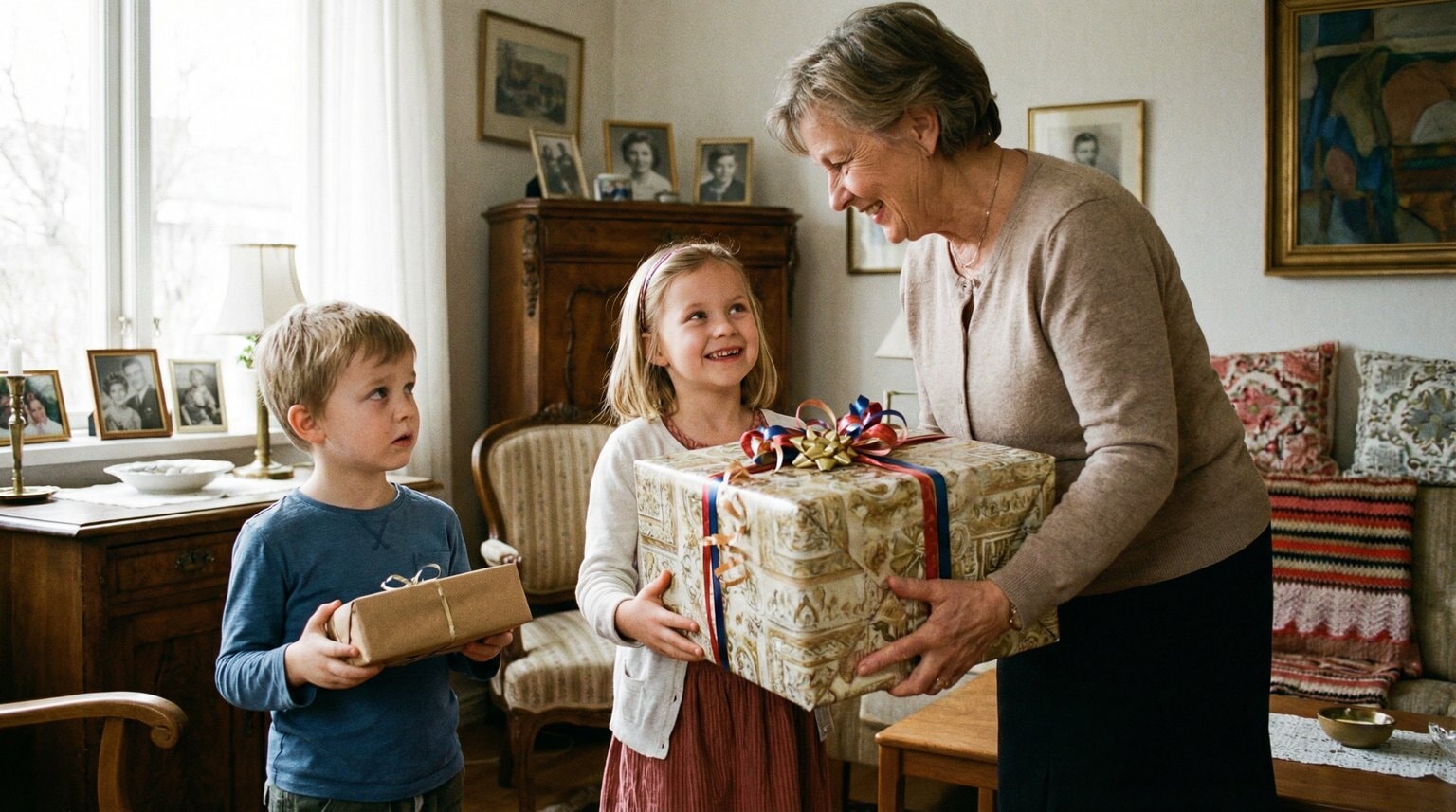
This is the hardest scenario because you didn’t choose it. Grandma brought one grandchild an elaborate gift and the other a token item. Or one child got cash while another got a thoughtfully chosen present. Your child notices immediately.
Prevention: The Conversation Before
If you suspect inequality might happen, have a gentle conversation with relatives:
“The kids are at ages where they really notice when gifts are different. Would you be open to keeping things roughly similar this year? It doesn’t have to be exact—even similar-sized boxes helps.”
— Try saying this to Grandma
Most grandparents don’t realize the impact. They’re often matching gifts to perceived interests without considering sibling dynamics.
During the Moment
You can’t control what relatives give, but you can buffer the experience:
- Redirect attention: “Grandma picked that just for you because she knows you love dinosaurs”
- Avoid commentary on inequality in front of children
- Save processing for later, privately
What to Say to Your Child
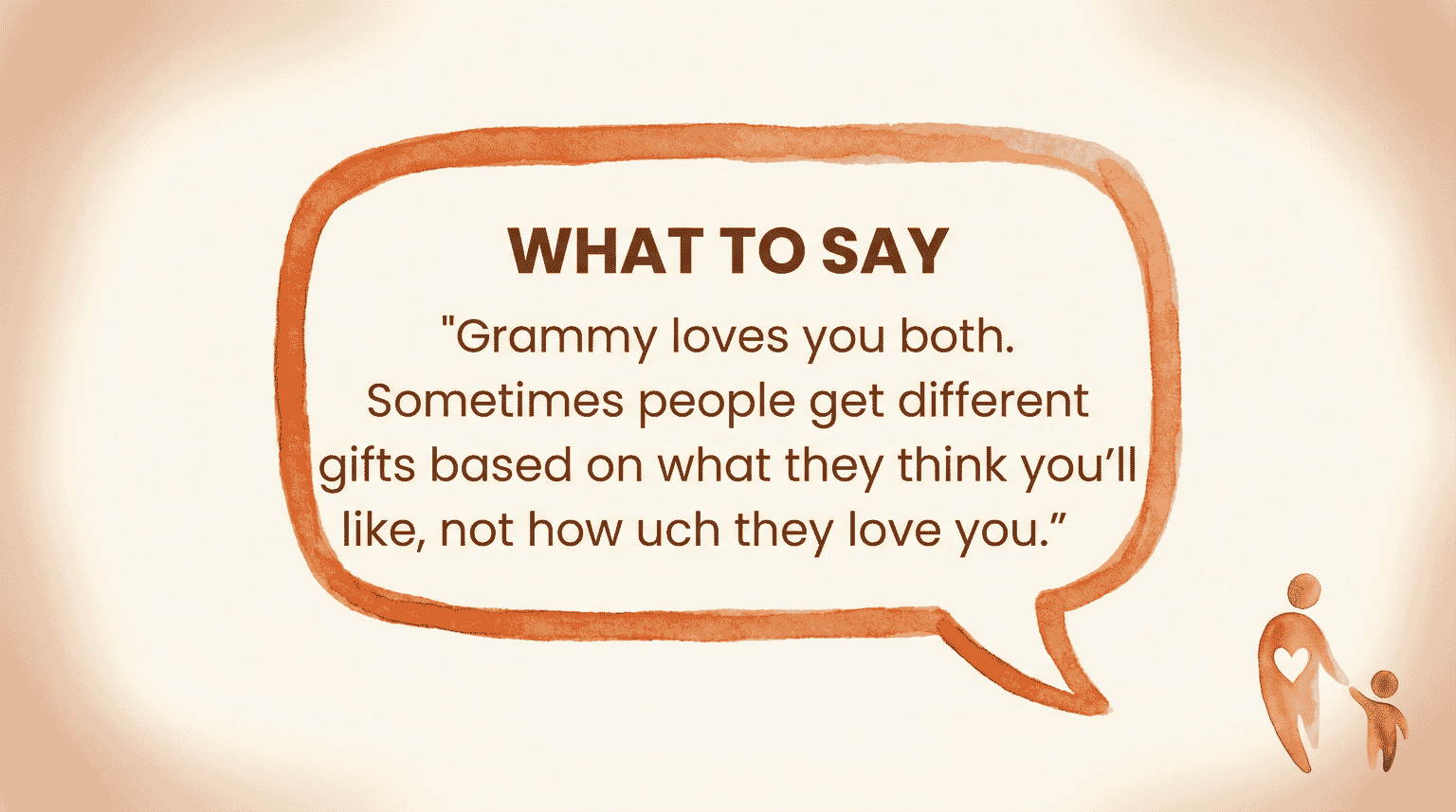
When your child says: “Grammy loves him more—look what he got!”
If this is a recurring pattern, you may need a more direct conversation with relatives. But in the moment, protect your child from feeling responsible for adult dynamics.
Working on helping children find joy in giving, not just receiving can transform how they experience these moments over time.
Scenario #4: Random Gifts (No Occasion, No Warning)
What’s Happening
One child comes home with a prize from school. A friend’s birthday party yields a goody bag. Dad brought home a surprise for the child who had a rough week. There’s no preparation time, and to the other child, it feels completely arbitrary.
What to Do
Resist the urge to immediately compensate (“Let’s get you something too”). This teaches children that someone else’s good fortune automatically entitles them to something.
Instead, acknowledge and redirect to future anticipation:
When your child says: “When do I get something?”
Try: “Your sister got something special today. Your turn will come—maybe at Aunt Sarah’s house next week, or when you finish your swimming lessons. Right now, can you tell her congratulations?”
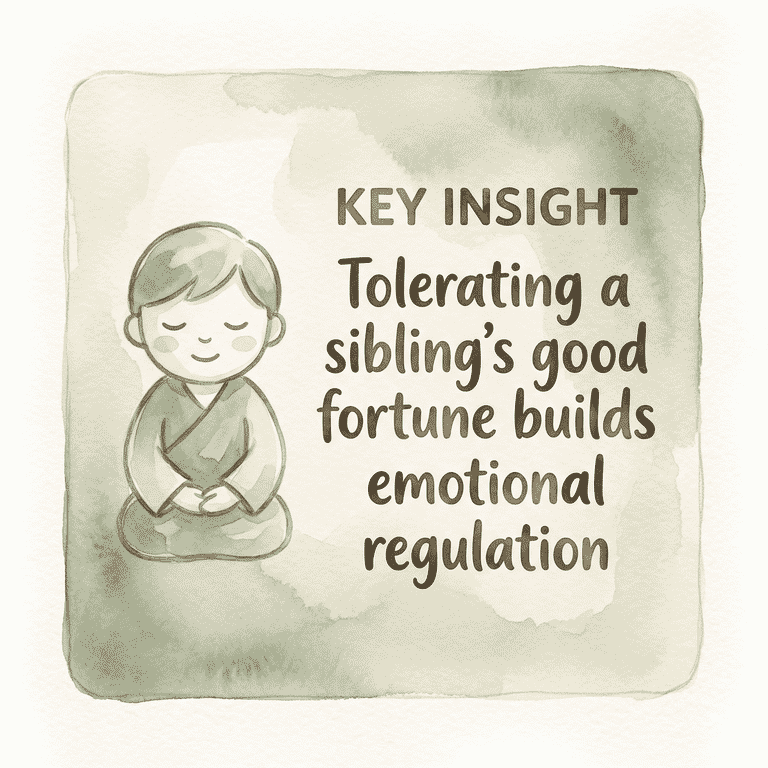
This is hard. I’ve caved countless times, buying matching items to avoid the fight. But research on sibling dynamics suggests that learning to tolerate a sibling’s good fortune without immediate compensation builds emotional regulation skills.
Scenario #5: When Jealousy Lingers
What’s Happening
The gift-giving event ended days ago, but your child keeps mentioning it. “Remember when Ethan got that big LEGO set?” comes up at dinner, at bedtime, randomly in the car.
The moment passed, but the feeling didn’t metabolize.
What to Do
This lingering resentment signals your child needs help processing, not just distraction. Harvard Health research recommends spending individual time with each child—not as compensation, but as genuine connection.
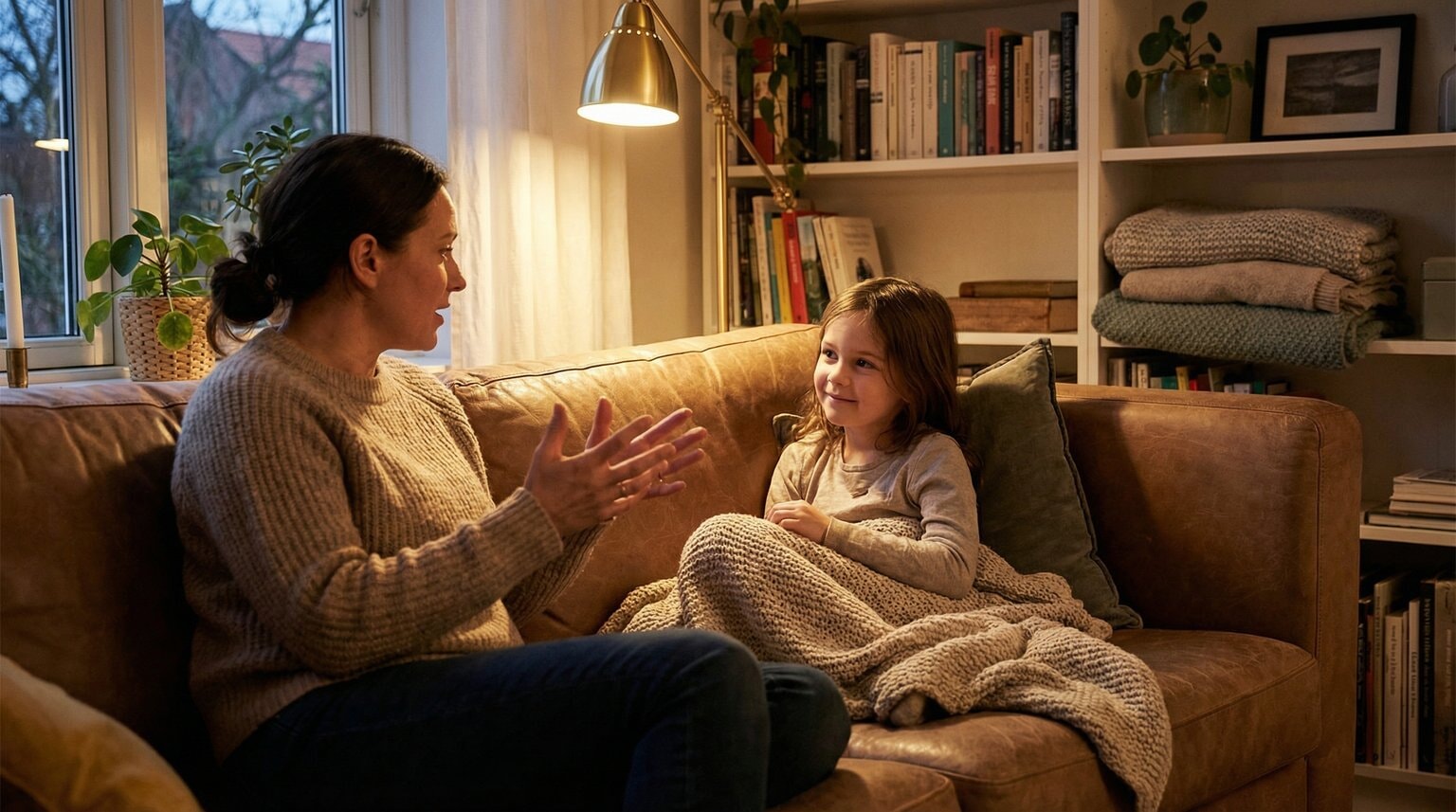
Try a processing conversation during calm time:
“I’ve noticed you’re still thinking about your brother’s birthday presents. Can you tell me more about how you’re feeling?”
— Try saying this
For younger children (under five), play-based processing works better than talking. Dolls or action figures “having a birthday party” lets them work through feelings without direct confrontation.
When Complaints Repeat
When your child brings it up again: “It sounds like you’re still having big feelings about that. We’ve talked about it, and I hear you. Right now, what’s one good thing happening for you this week?”
The goal is acknowledgment without endless revisiting.
The One Rule That Prevents Most Meltdowns
After seventeen years of sibling gift jealousy in my house, here’s what actually works:
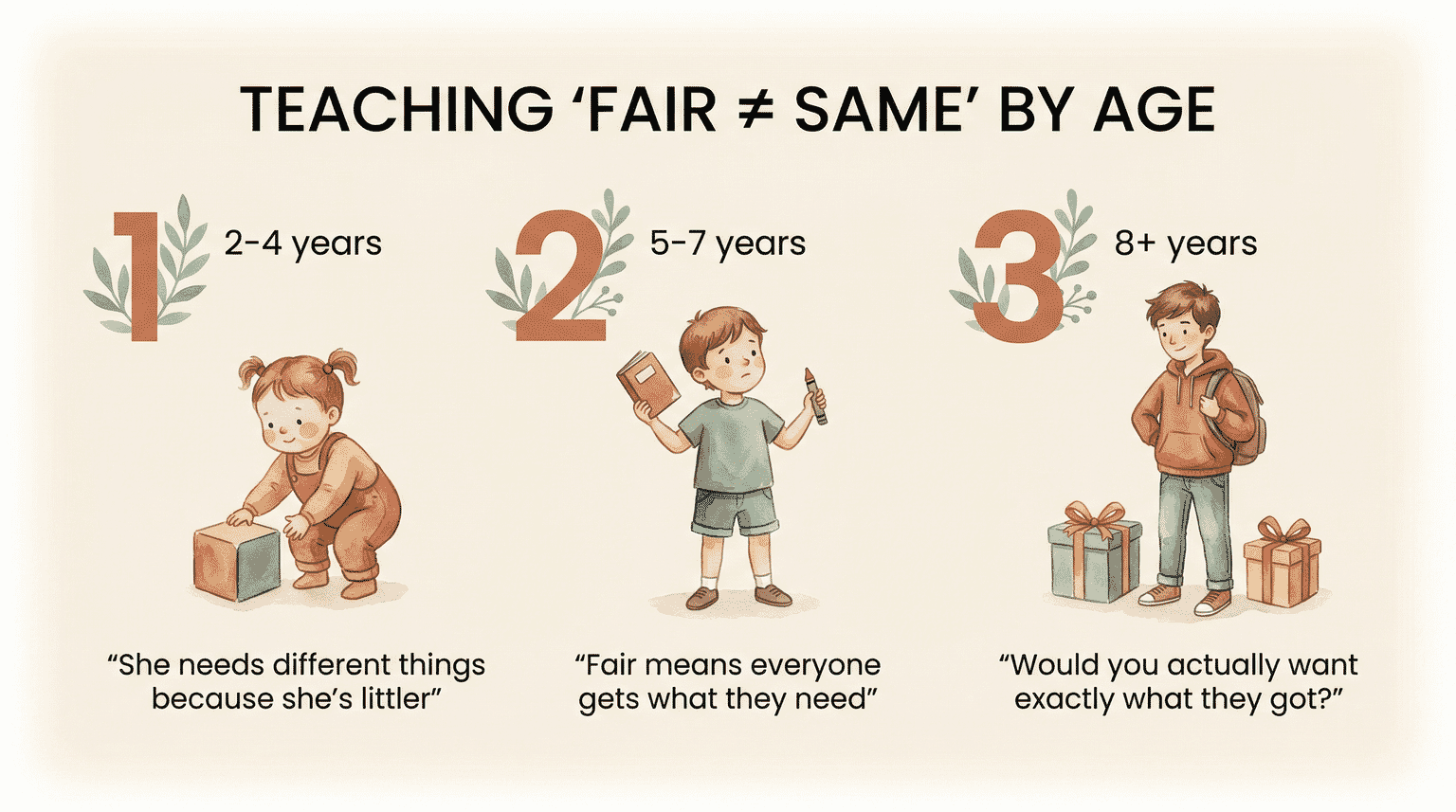
Fair doesn’t mean same—it means each child gets what they need.
Teaching this concept takes years, not one conversation. But you can start planting seeds at any age.
Professor Vivona offers helpful perspective for parents navigating these challenging moments.
“Competition with siblings is just a fact of life. And we, as people with siblings and people with children, can just try to manage it as best we can.”
— Professor Jeanine Vivona, College of New Jersey
This isn’t about eliminating jealousy—it’s about helping children develop the emotional tools to process it. Year-round gratitude practices help more than perfect gift orchestration ever will.
When to be concerned: Some sibling jealousy is normal. But if jealousy is constant, involves physical aggression, or seems to be affecting your child’s overall wellbeing, it may be worth consulting your pediatrician. Research links persistent sibling bullying to lower self-esteem and even depression in adulthood—these patterns deserve attention.
Frequently Asked Questions
Is it normal for siblings to be jealous of each other’s gifts?
Completely normal and developmentally expected. Harvard Health researchers confirm that rivalry between siblings—including over gifts and attention—is a natural part of family life. Children’s brains interpret gifts as concrete evidence of parental love, making jealousy an almost inevitable response.
Should non-birthday siblings get gifts?
There’s no universal right answer. Many families give non-birthday siblings a small wrapped item or special “helper” role rather than equivalent gifts. The goal isn’t eliminating the birthday child’s special day—it’s giving siblings something concrete to manage their feelings during gift opening.
How do you explain fairness to a child?
Children under six typically equate “fair” with “exactly the same.” Start by acknowledging feelings: “You’re upset because Lily got something you wanted.” Then introduce the concept gradually: “Fair means everyone gets what they need.” Most children don’t fully grasp this distinction until late elementary school.
At what age do kids understand fair isn’t always equal?
Research suggests children begin grasping this concept around ages seven to eight, with full understanding developing through late elementary school. Until then, concrete strategies (similar-sized boxes, equal numbers of gifts) may work better than abstract explanations.
Join the Conversation
How do you handle sibling gift jealousy in your house? I’ve tried the “helper role,” the “one small gift for non-birthday sibling,” and the “sorry, it’s not your day” approach—with varying success. What’s actually worked for you? And has anything made it dramatically worse?
I read every comment—your sibling strategies help families beyond your own.
References
- PMC Study on Sibling Experiences – Research on how visible treatment differences impact siblings
- Harvard Health Publishing – Sibling rivalry research and prevention strategies
- PMC Study on Parenting Siblings – Research on sibling relationship management and parental stress
- PMC Study on Emotion Understanding – Developmental progression of emotional comprehension in children

Share Your Thoughts