

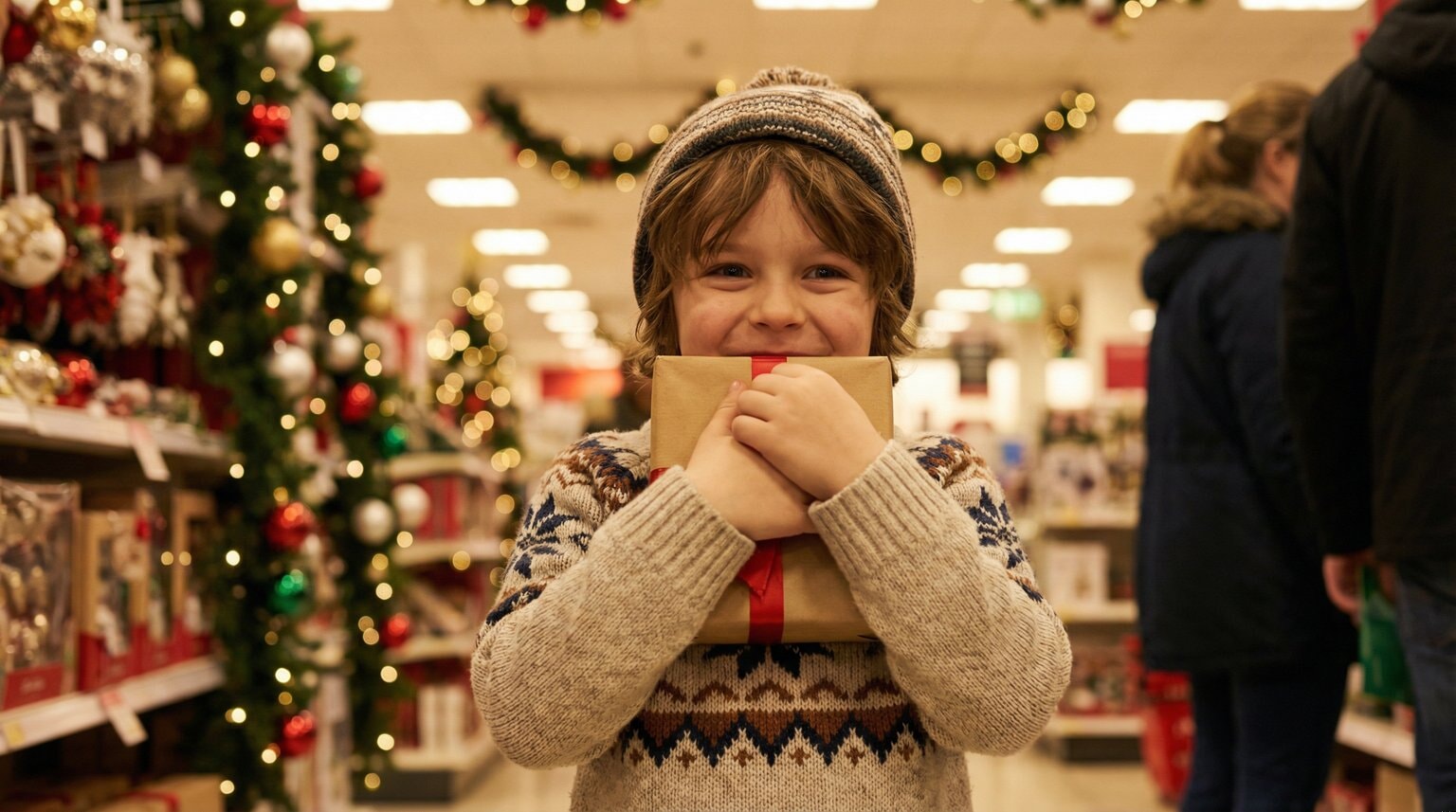
Standing in Target’s holiday section, my 8-year-old clutched a $4 bath bomb like it was made of gold. “Mom, Sophie is going to LOVE this,” he whispered, practically vibrating with excitement about surprising his little sister. That’s when it hit me: he wasn’t thinking about what he wanted for once. He was completely absorbed in imagining her reaction.
This is why sibling gift exchanges work—and why I’ve made them a cornerstone of our family’s Christmas traditions.
Key Takeaways
- Gift-giving activates reward pathways in the brain, and the happiness from giving may last longer than receiving
- Set age-appropriate budgets from $5-25 based on your child’s age and allowance
- The shopping process itself is a teaching moment—ask questions that build perspective-taking skills
- Separate the sibling exchange from main gift opening to give it its own spotlight
- Young adults with positive sibling relationships show more supportive behaviors toward family and strangers
Why Sibling Gift Exchanges Actually Work
Here’s what the research actually shows: gift-giving activates reward pathways in the brain, triggering the release of oxytocin and dopamine. But here’s the fascinating part—the happiness from giving may actually last longer than the happiness from receiving.
“Our reward pathways are sensitive to generosity. When we do anything that uplifts another person, it feels good for that person, but it also feels good for us.”
— Emiliana Simon-Thomas, Science Director, UC Berkeley’s Greater Good Science Center
The science behind sibling gift exchanges reveals something powerful about how children develop generosity.
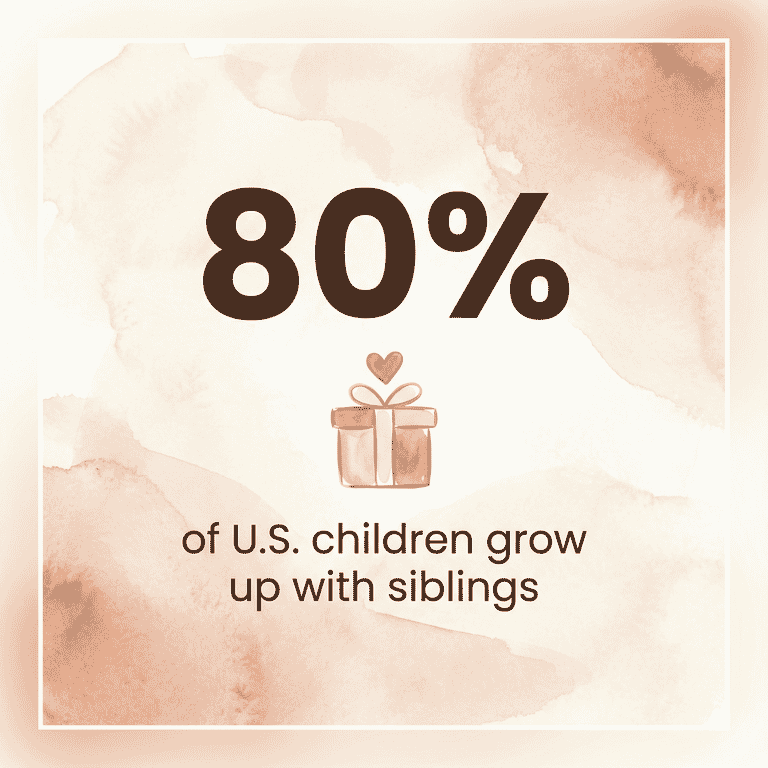
With nearly 80% of U.S. children growing up with siblings, these relationships provide built-in opportunities to practice generosity. Research from Benedictine University confirms that siblings teach each other empathy regardless of birth order.
They’re natural laboratories for learning to share, negotiate, and consider someone else’s perspective. For more on raising generous children, these everyday sibling interactions are where the real work happens.
“Gift giving has been crucial for as far back as we can remember. It’s central to our evolution as a species.”
— Elizabeth Fein, Associate Professor of Psychology, Duquesne University
When siblings exchange gifts, they’re participating in something deeply human while strengthening bonds that can last a lifetime. If you’re looking to build more intentional family gift-giving traditions, a sibling exchange is one of the simplest places to start.
Setting Budgets That Make Sense
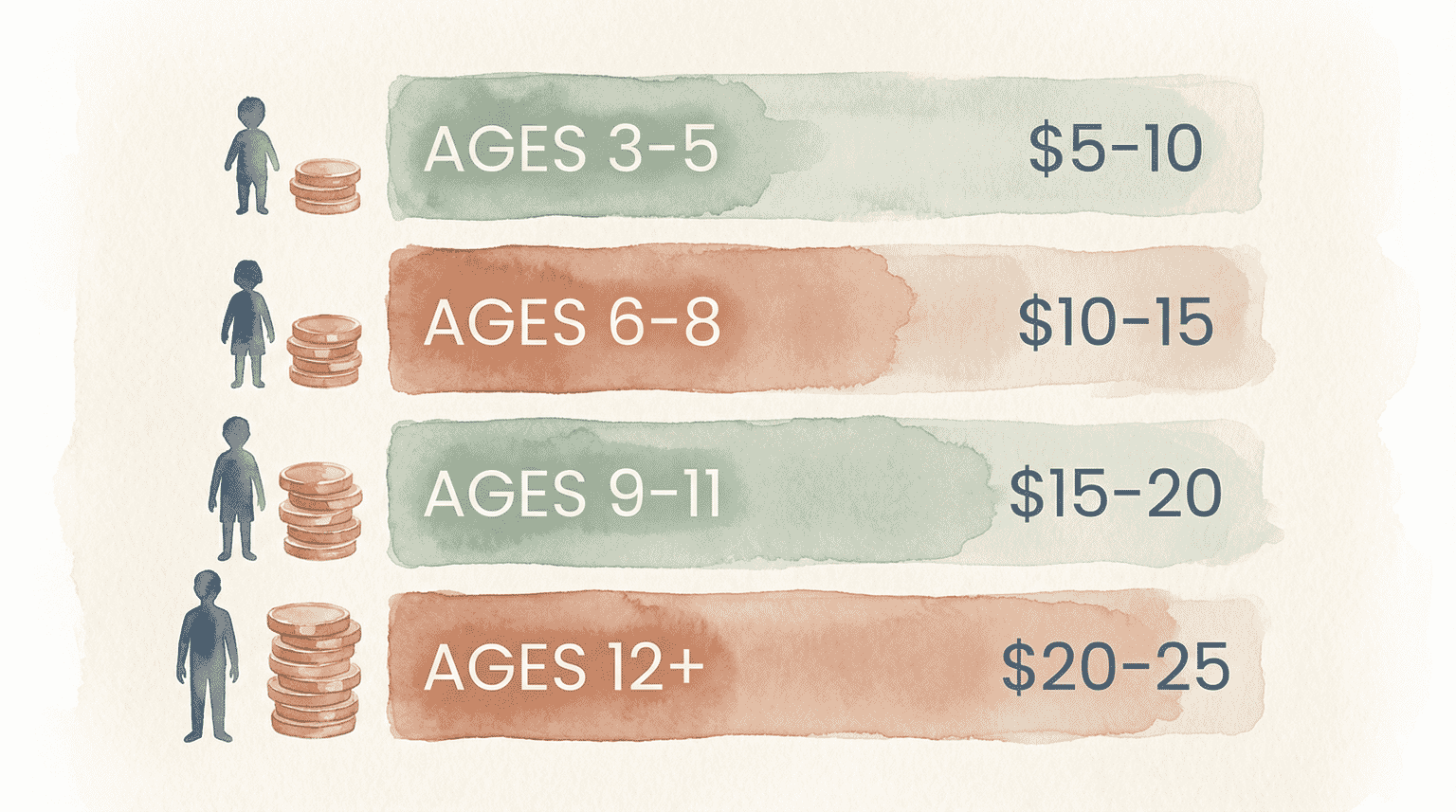
One of the biggest questions I hear: how much should kids spend on sibling gifts? Here’s a framework that’s worked across my crew:
| Child’s Age | Suggested Budget | Parent Involvement |
|---|---|---|
| Ages 3-5 | $5-10 | High (guided selection) |
| Ages 6-8 | $10-15 | Medium (supervised) |
| Ages 9-11 | $15-20 | Light (independent with approval) |
| Ages 12+ | $20-25 | Minimal (full ownership) |
Here’s something that surprised me until I saw the research: a modest gift from a sibling carries meaningful emotional weight regardless of dollar amount. Psychology research confirms that recipients judge sibling gifts by different standards than parent gifts.
Your 6-year-old’s carefully chosen $8 present can create as much joy as something far more expensive from you.
When you have kids at different ages with different allowances, acknowledge the disparity openly. “Your brother has more birthday money saved, so his budget is bigger this year. What matters is that you’re both thinking about what would make your sibling happy.”
Shopping Together: Making Selection a Teaching Moment
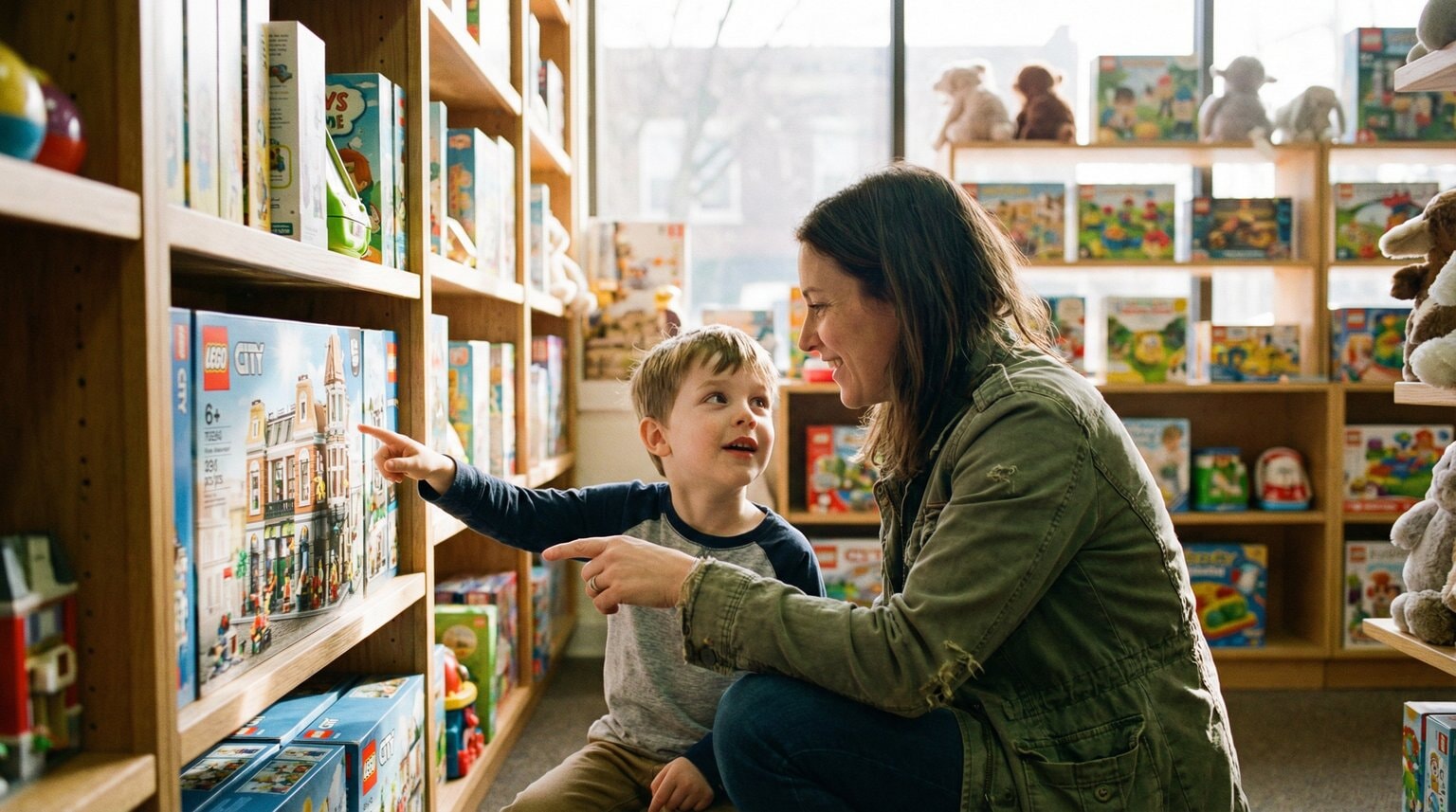
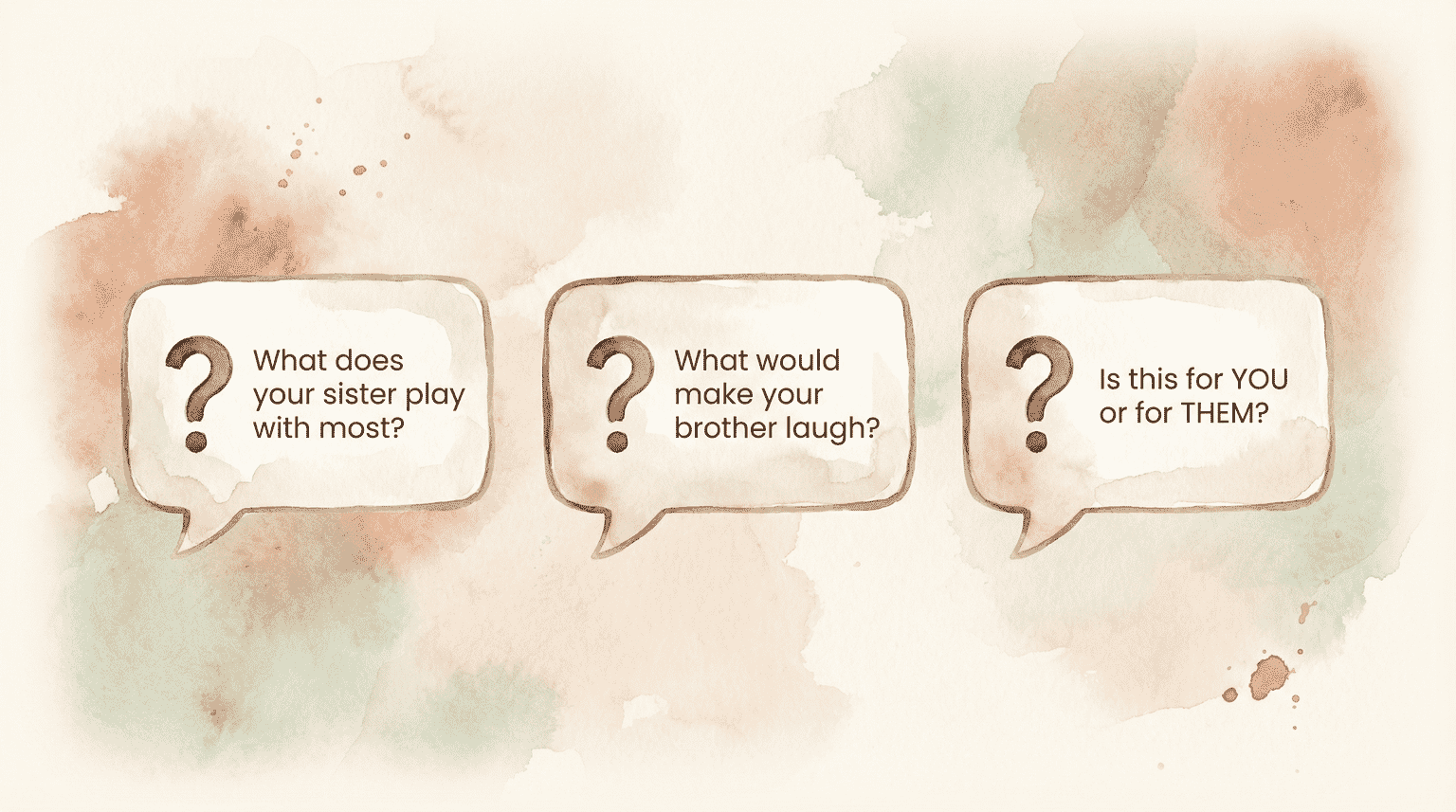
The magic happens during the selection process, not just the exchange. When shopping with your child for a sibling gift, ask questions that build perspective-taking:
- “What does your sister play with most right now?”
- “What would make your brother laugh?”
- “Is this something you would like, or something they would like?”
That last question is crucial. I’ve watched my kids reach for gifts that are clearly projections of their own wishes. Gentle redirection—”I know you love Legos, but does Emma?”—helps them practice thinking beyond themselves.
For younger children (3-5), you’re essentially making the choice together. By ages 6-8, let them narrow options while you guide. My older kids now shop independently, checking in only to confirm their choice fits the budget.
Offering a shared experience and following through is one of the most meaningful gifts you can give. Sometimes the shopping trip itself—just parent and child, focused on someone else—becomes the gift.
When Handmade Works Best
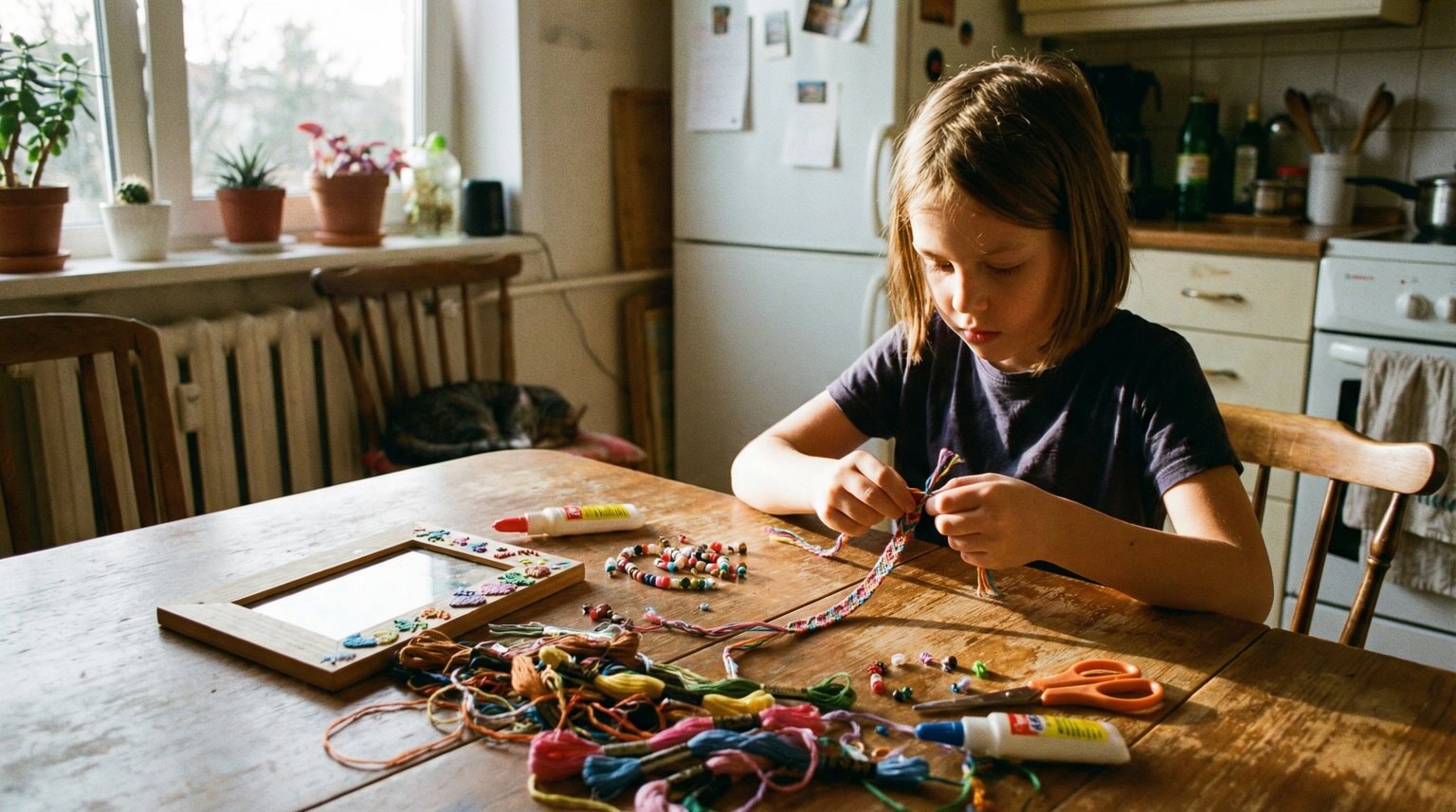
Making gifts amplifies the “warm glow” effect because children invest time and effort, not just money. But I’ll be honest: handmade gifts require realistic expectations about your child’s abilities and patience.
Low-effort options that work:
- Decorated picture frames with a photo of both siblings
- Coupon books for “help with chores” or “pick the movie”
- Simple baked goods in decorated containers
Higher-effort projects:
- Friendship bracelets or simple jewelry
- Painted pottery or personalized artwork
- Handmade card games with inside jokes
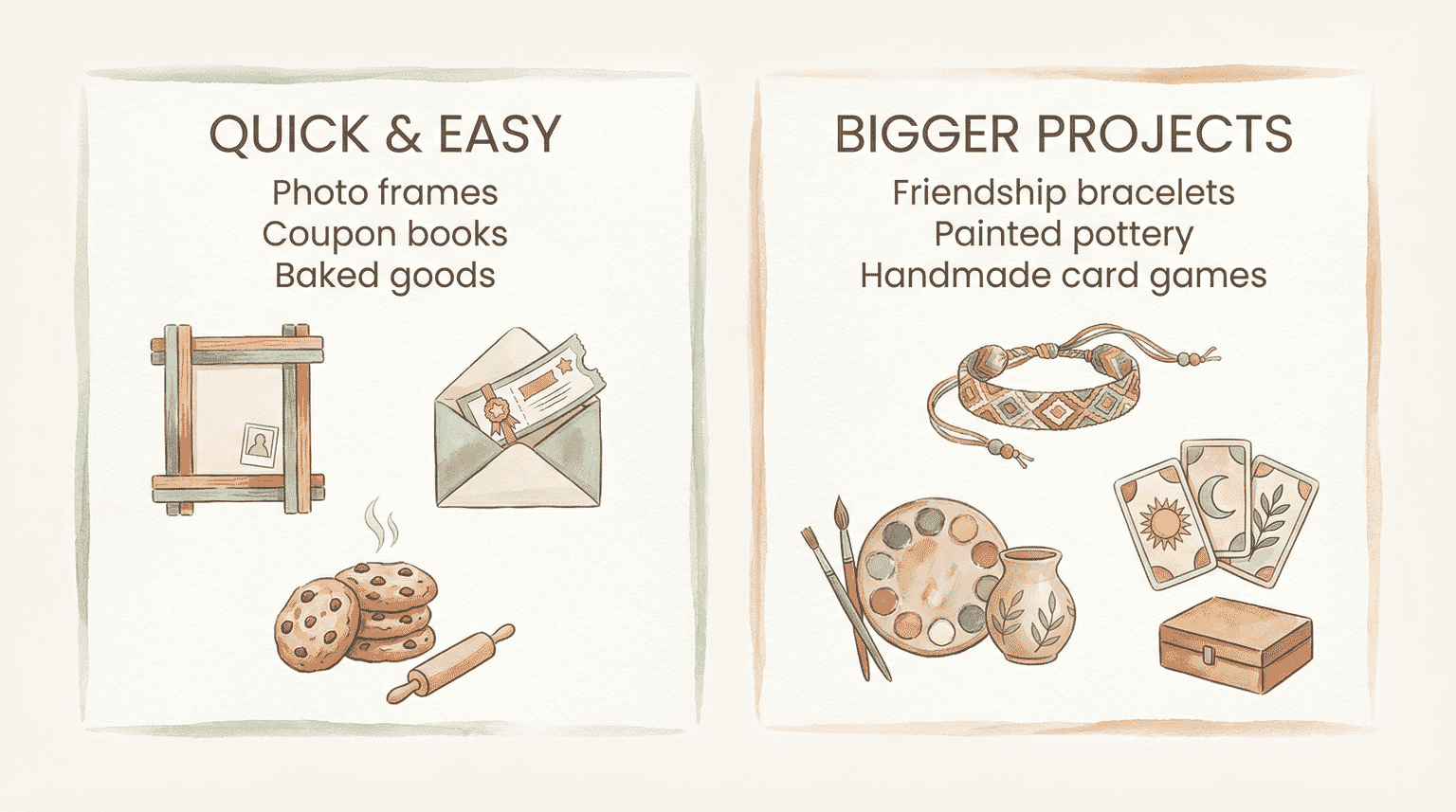
The key is matching project complexity to your child’s age and temperament. My perfectionist 10-year-old needs different craft options than my “done is better than perfect” 6-year-old. And some kids genuinely prefer choosing a purchased gift—that’s fine too.
The Wrapping Party: Building Anticipation
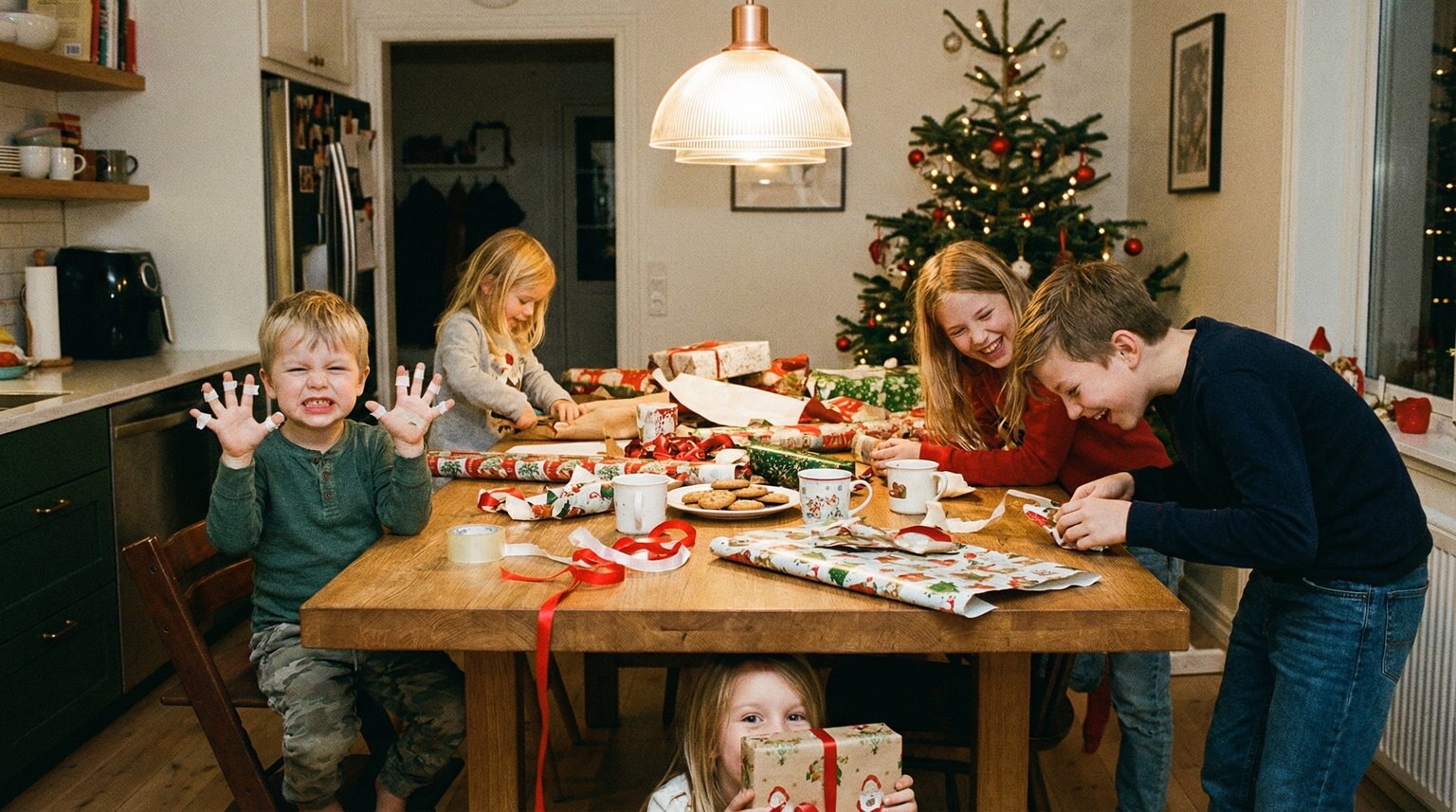
In our house, we designate one evening for sibling gift wrapping. Everyone works at the kitchen table, helping each other while maintaining secrets. It’s chaotic. Tape gets stuck everywhere. Someone inevitably sees something they shouldn’t.
Practical tips:
- Let younger kids use gift bags instead of wrapping paper
- Create “stations” so kids aren’t peeking at each other’s work
- Play Christmas music to cover whispered consultations
- Have an adult helper for the under-5 crowd—or give them special roles
The anticipation building is half the magic. My kids spend the following days dropping hints, giggling about secrets, and barely containing themselves.
How to Start a Sibling Gift Exchange
If you’re starting from scratch, here’s the simplest approach:
- Set age-appropriate budgets ($5-20 based on the child’s age)
- Draw names or assign siblings as “secret gift-givers”
- Shop or craft together with recipient-focused guidance
- Host a family wrapping party to build anticipation
- Create a special exchange moment separate from other gift opening
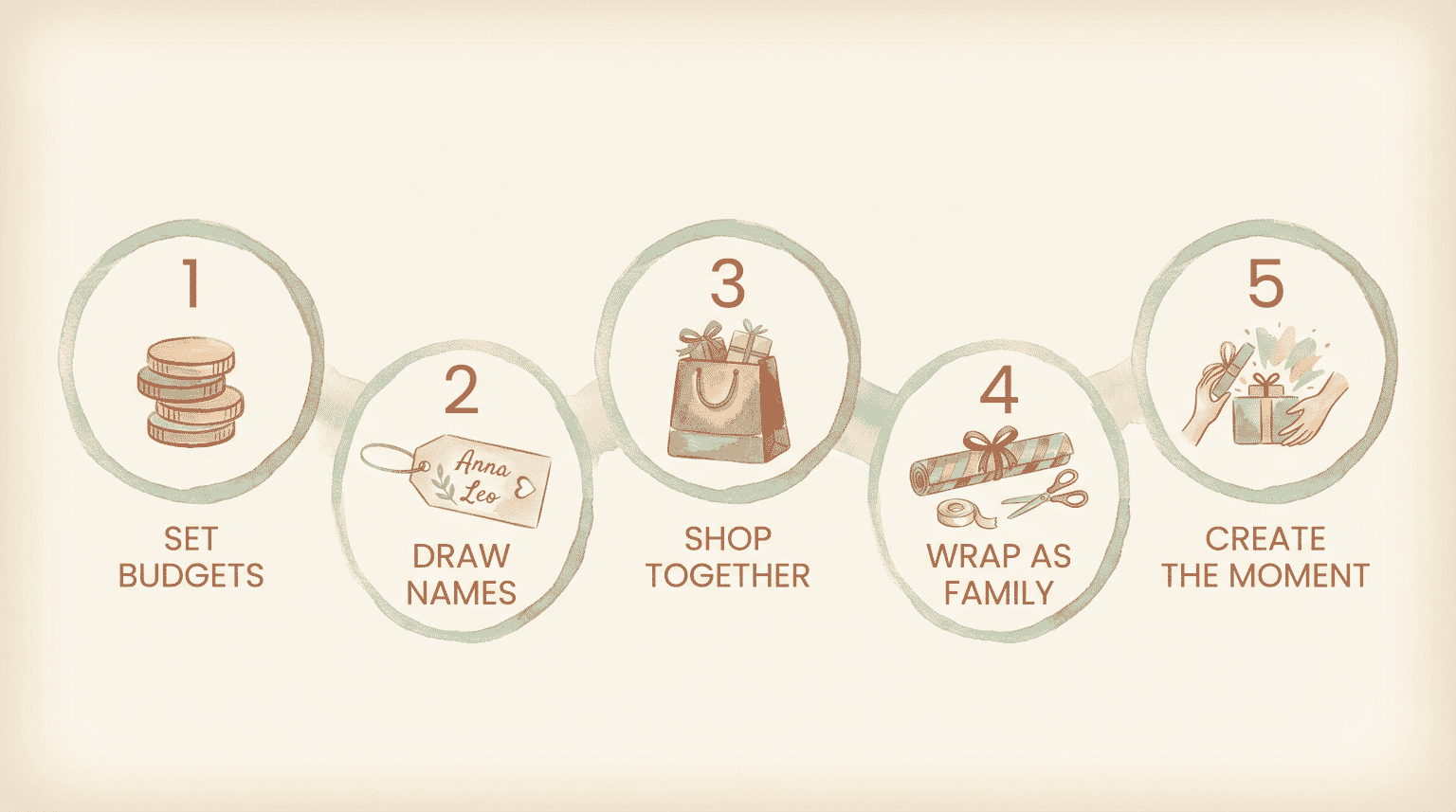
For smaller families, each child can give to every sibling. With larger families like mine, name-drawing keeps things manageable. Some years we rotate assignments to ensure different sibling pairings; other years we let the draw fall where it may.
Creating the Exchange Moment
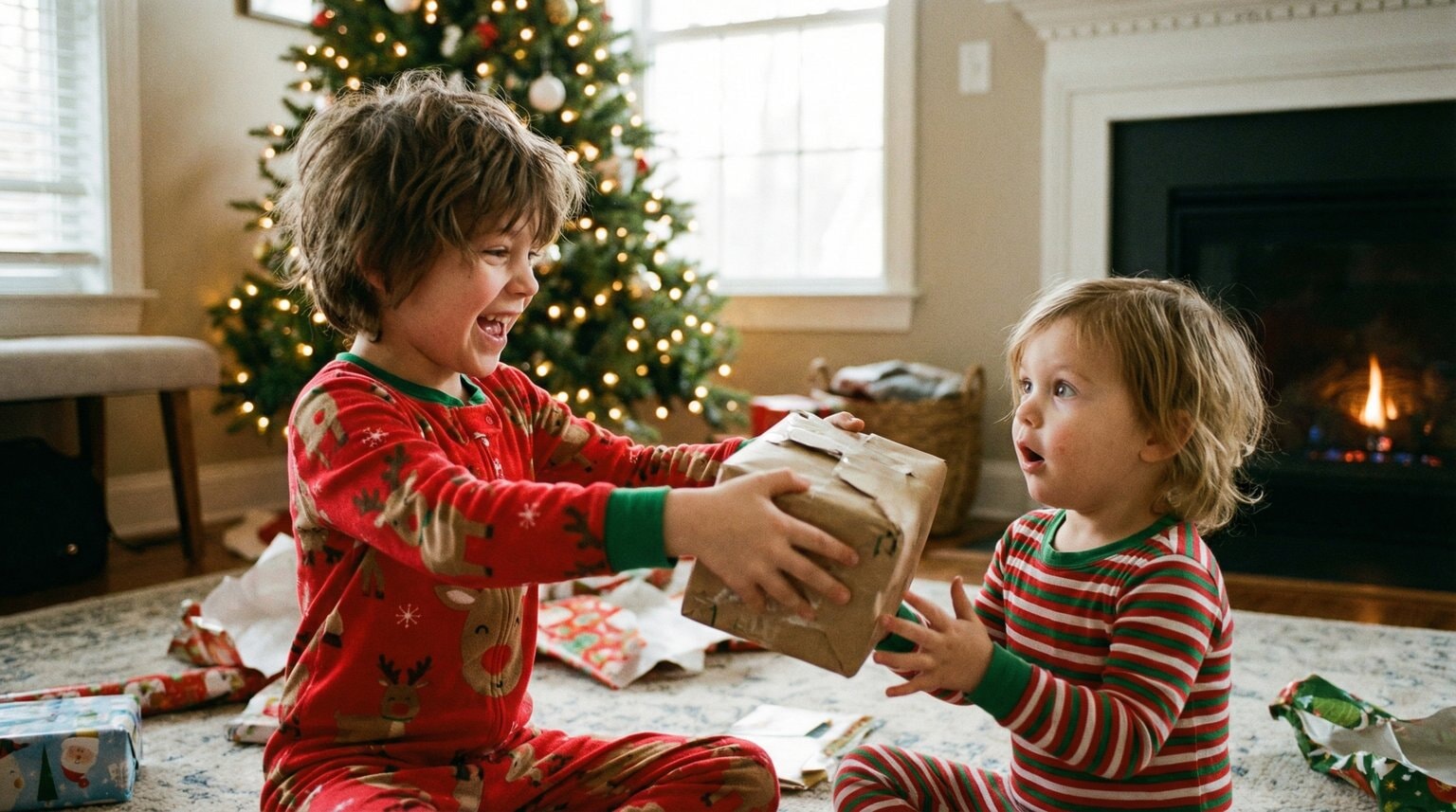
Consider separating the sibling exchange from your main Christmas morning gift opening. This gives the sibling gifts their own spotlight rather than getting lost in the general pile.
Options that work:
- Christmas Eve: Pairs naturally with a Christmas Eve box tradition
- Christmas morning, first: Before parent gifts, emphasizing sibling connection
- Separate event: A special “sibling Christmas” afternoon
When it’s time, slow down the moment. Have each child present their gift individually. Watch the giver’s face—often they’re more excited than the receiver.
And when reactions disappoint? It happens. Validate privately: “I can see you hoped for something different.” Then redirect: “Your sister worked hard choosing something she thought you’d like.” Never criticize the giver or force enthusiasm.
Building a Lasting Tradition
Research shows that being giving might actually keep us happier for longer. This isn’t just about one Christmas—it’s about building habits that extend throughout life.
I’ve watched my teenagers, who once received help picking out $5 trinkets, now put genuine thought into gifts for younger siblings. The tradition evolves as they grow.
What starts as a parent-guided activity becomes something they own completely. They take pride in surprising each other.
The long-term payoff: Research shows young adults with positive sibling relationships engage in more supportive behaviors toward both family and strangers. Those December exchanges are planting seeds for lifelong generosity.
Frequently Asked Questions
What age can children participate in gift exchanges?
Children as young as 3-4 can participate with significant parent guidance—at this age, the goal is experiencing the act of giving, not independent selection. By ages 6-8, children develop enough perspective-taking to consider what a sibling might enjoy. Full independence typically emerges around ages 10-12.
How do you handle gift exchange disappointment?
Model grateful receiving regardless of your own reaction, then address disappointment privately after the exchange. Validate the feeling while redirecting to the giver’s intention. Avoid criticizing the giver or forcing enthusiasm.
Should siblings buy each other Christmas presents?
Yes—sibling gift exchanges provide unique benefits that parent-to-child giving cannot. Siblings teach each other empathy, sharing, and perspective-taking through everyday interactions. Formalizing a gift exchange extends these lessons while creating a tradition that strengthens bonds.
Join the Conversation
Do your kids do a sibling gift exchange? I’m curious about budget limits, how you handle age gaps, and whether the gifts actually get used or just create more clutter. Real family experiences welcome.
Your sibling gift stories help other families figure out what actually works.
References
- Pittsburgh Post-Gazette – Research on brain science of gift-giving and the “warm glow” effect
- The Stuyvesant Spectator – Psychology of gift-giving and sibling gift expectations

Share Your Thoughts