
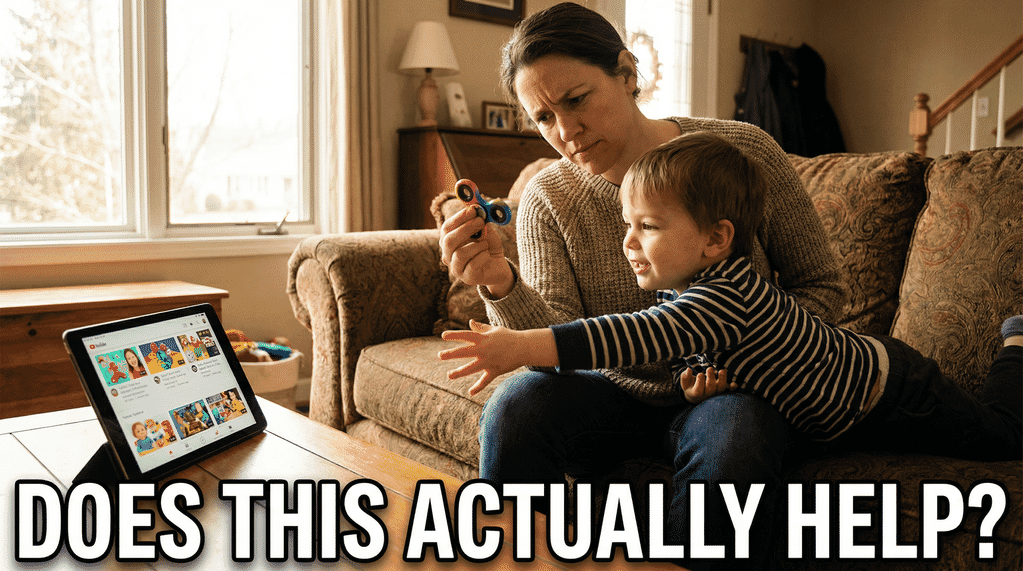
Pop-its went from 700,000 units sold in 2019 to over 7 million between 2020 and 2021. TikTok’s user base exploded from 381 million to one billion during the same period. That’s not a coincidence—it’s a pipeline, and your child’s wish list is at the receiving end.
My librarian brain couldn’t let this go without checking: do these viral sensory toys actually help kids, or just look satisfying on a screen?
Key Takeaways
- Research shows pop-its may actually hurt focus—students without them scored significantly higher on listening tasks
- Only 5-12% of children have sensory processing challenges that genuinely benefit from tactile regulation tools
- TikTok’s algorithm promotes toys based on visual satisfaction, not developmental evidence
- Before buying, ask: does my child need sensory regulation, or am I buying a distraction?
What the Research Actually Shows
Here’s the twist I wasn’t expecting. A 2022 study from the Journal of Student Research tested third-graders using pop-its during listening tasks. Students without pop-its scored significantly higher than those using them—3.8 versus 3.17. The difference was statistically significant.
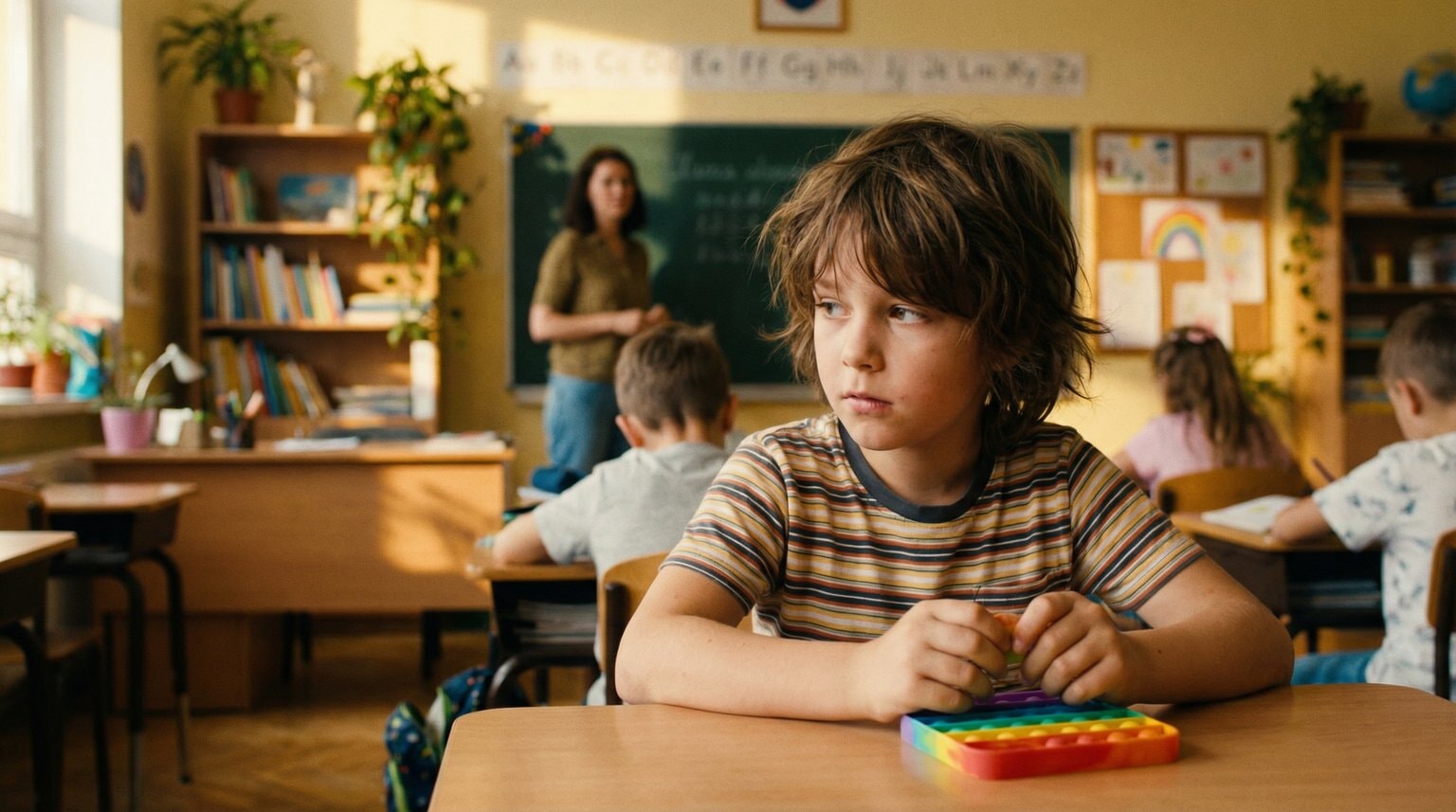
The researchers explain this through cognitive load theory: attention is a finite resource. When it divides, performance drops. Pop-its may actually compete for the mental bandwidth kids need to focus—a finding that aligns with broader research on how children’s brains process gifts.
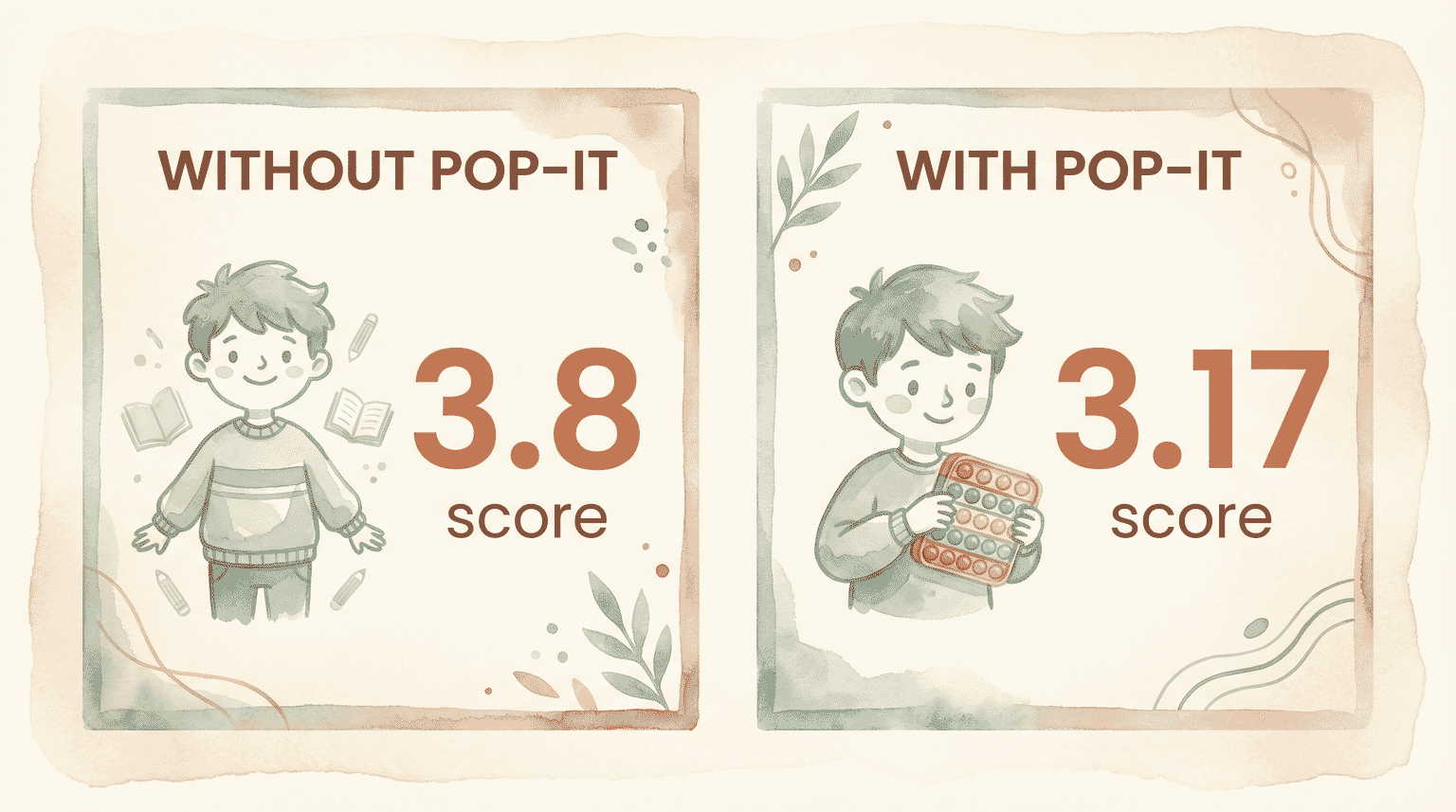
The numbers tell a clear story. Third-graders who kept their hands free outperformed those fidgeting with pop-its by nearly 20%.
This wasn’t a fluke—the difference was statistically significant. For most kids, that satisfying popping sound isn’t helping them focus. It’s stealing attention they need for learning.
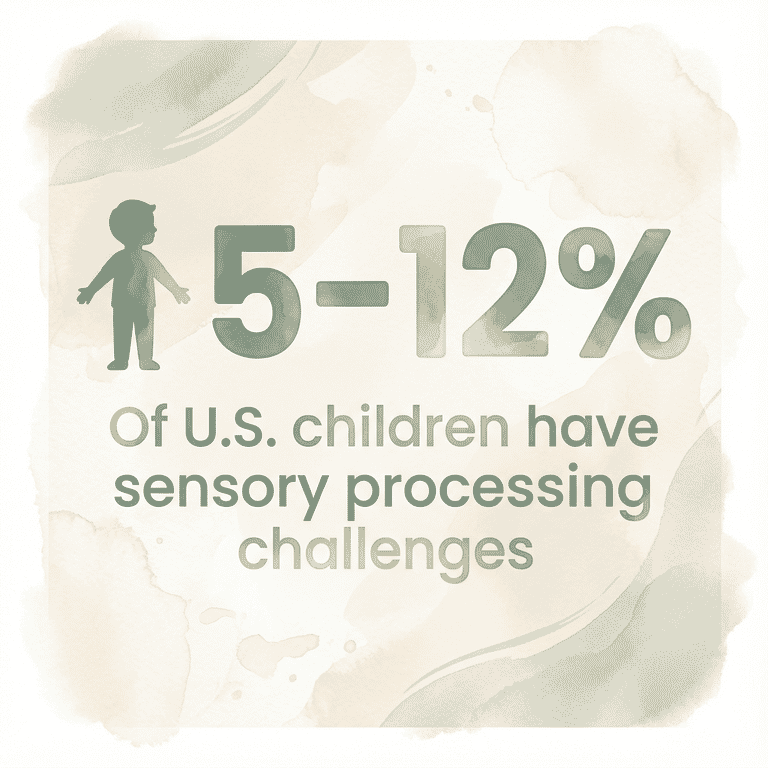
This doesn’t mean sensory toys are worthless. Some children genuinely need tactile input—UCSF research shows that 5-12% of U.S. children have sensory processing challenges. For these kids, controlled sensory input can help regulate overwhelmed brains.
Here’s where it gets nuanced. That 5-12% figure represents real children with real sensory needs—not a marketing demographic.
As Dr. Pratik Mukherjee explains, over-responsive children compensate by “dialing up” impulse control networks while “dialing down” sensory input networks. For them, a fidget isn’t a distraction—it’s regulation.
The question isn’t whether sensory toys work. It’s whether your child is one of the kids who genuinely benefits.
Why Kids Want These Toys So Badly
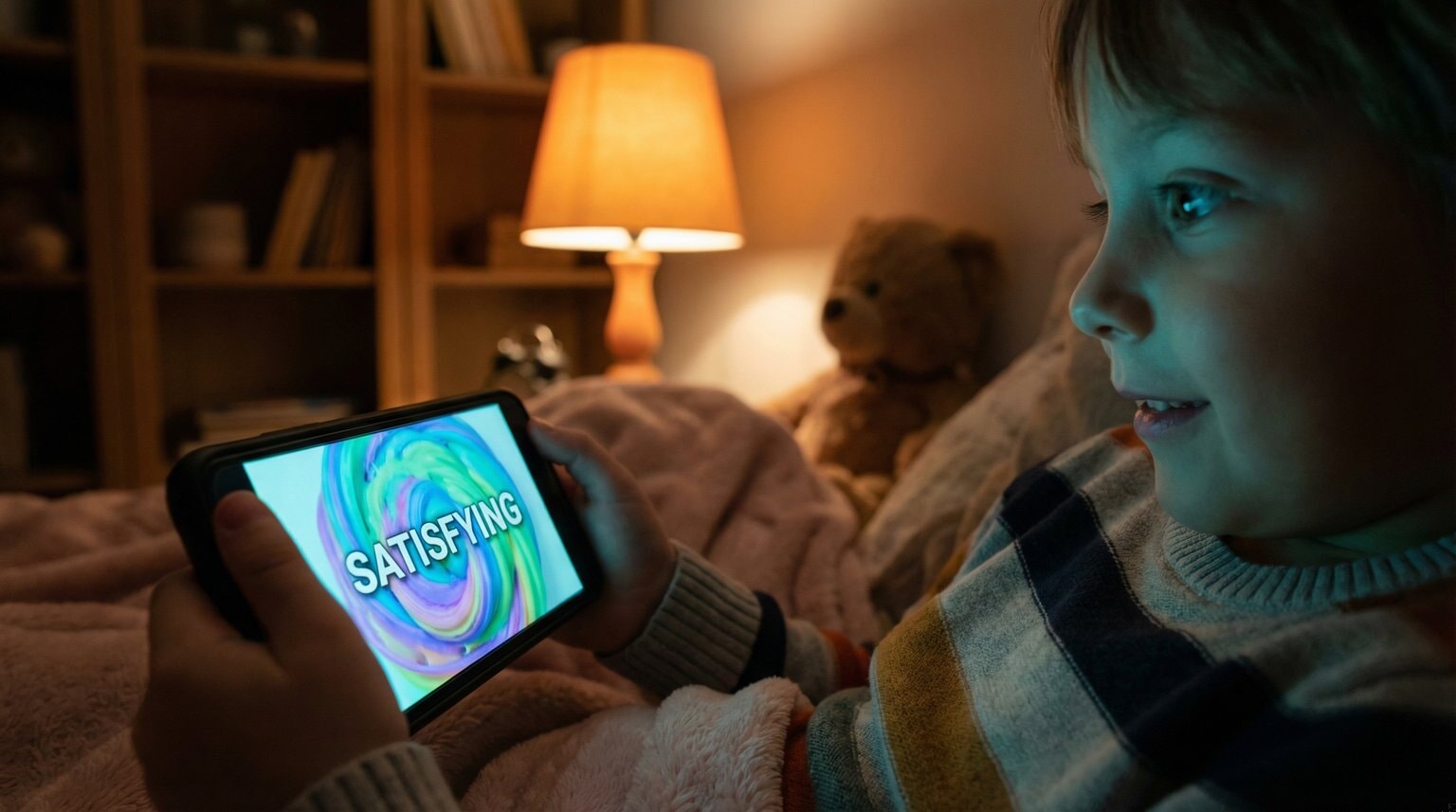
The ASMR-style content makes sensory toys irresistible to watch. Those popping sounds, that smooth slime stretch—it’s designed for dopamine hits. Add parasocial relationships (the emotional bonds kids form with influencers), and you’ve got powerful purchase motivation that persists even when children recognize they’re being sold to.
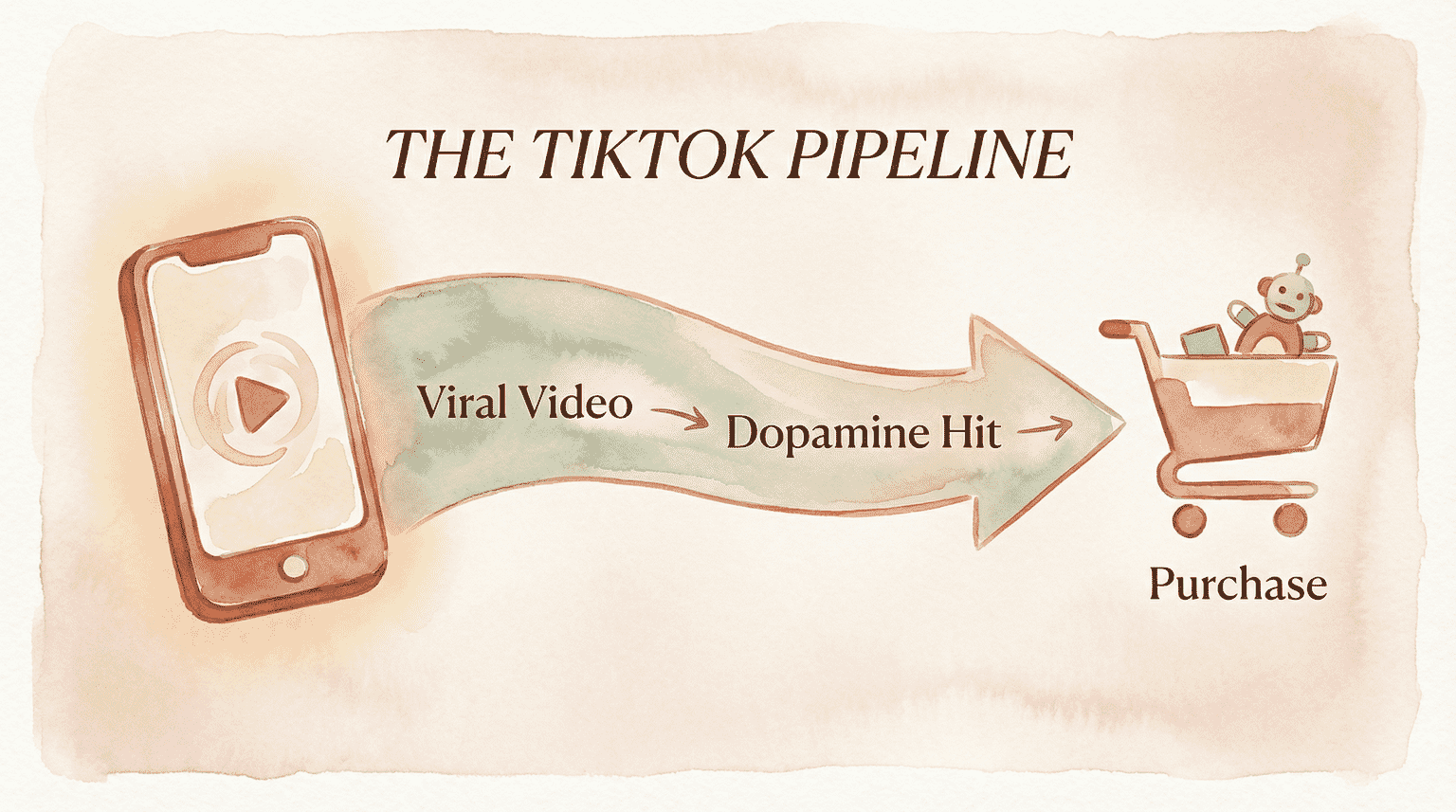
The pipeline is elegant in its simplicity. Viral video triggers dopamine. Dopamine creates desire. Desire becomes a purchase request. And honestly? The toys often look better on screen than they perform in real life.
As UTMB pediatrician Dr. Sally Robinson notes, “Many claims advertised for toys are not based on scientific evidence but on marketing potential.” Influencers rarely discuss whether these toys actually deliver developmental benefits.
They’re showing you what looks satisfying, not what actually helps kids grow.
The Real Takeaway
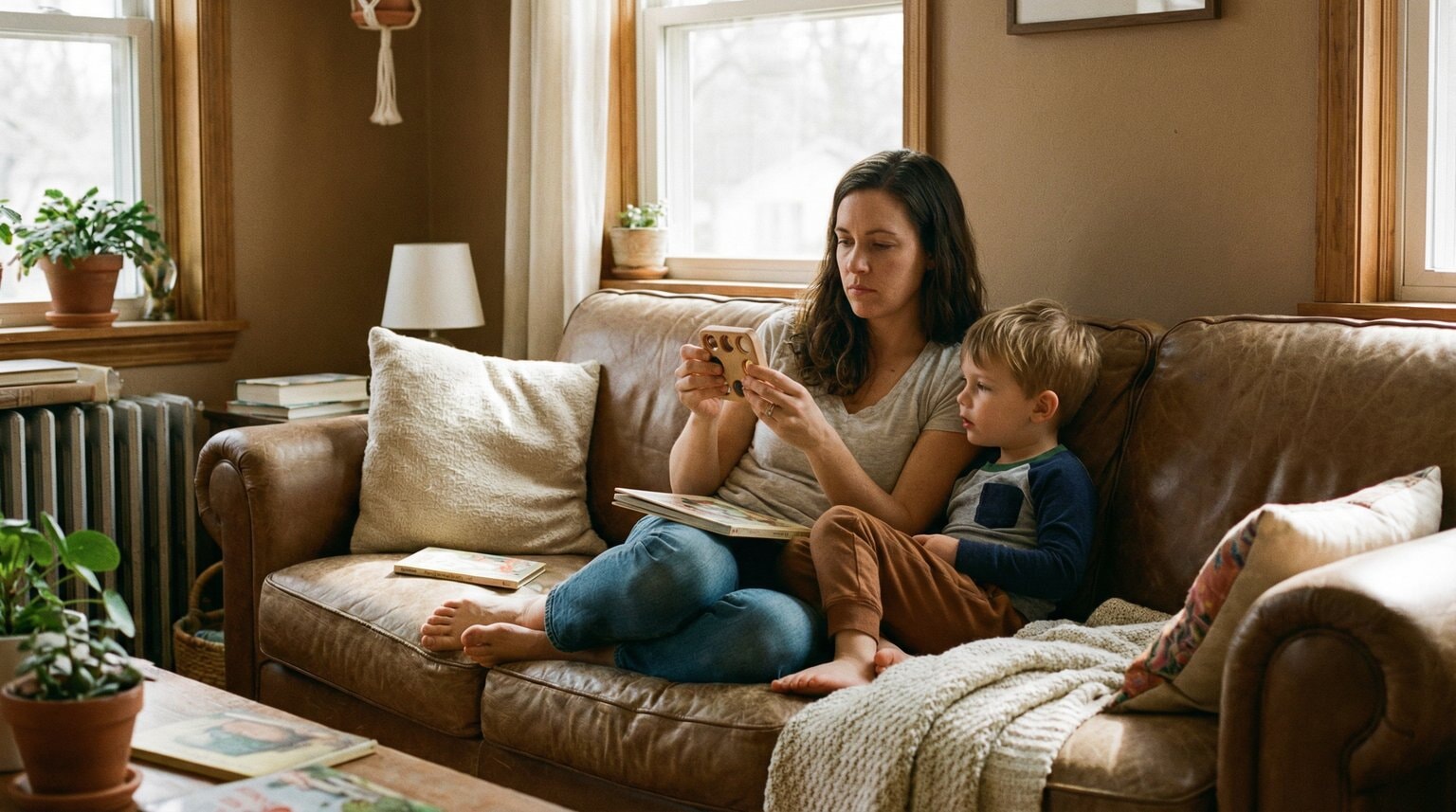
Viral appeal doesn’t equal developmental value. Some sensory toys genuinely help some children—but the TikTok pipeline delivers products based on visual satisfaction, not evidence.
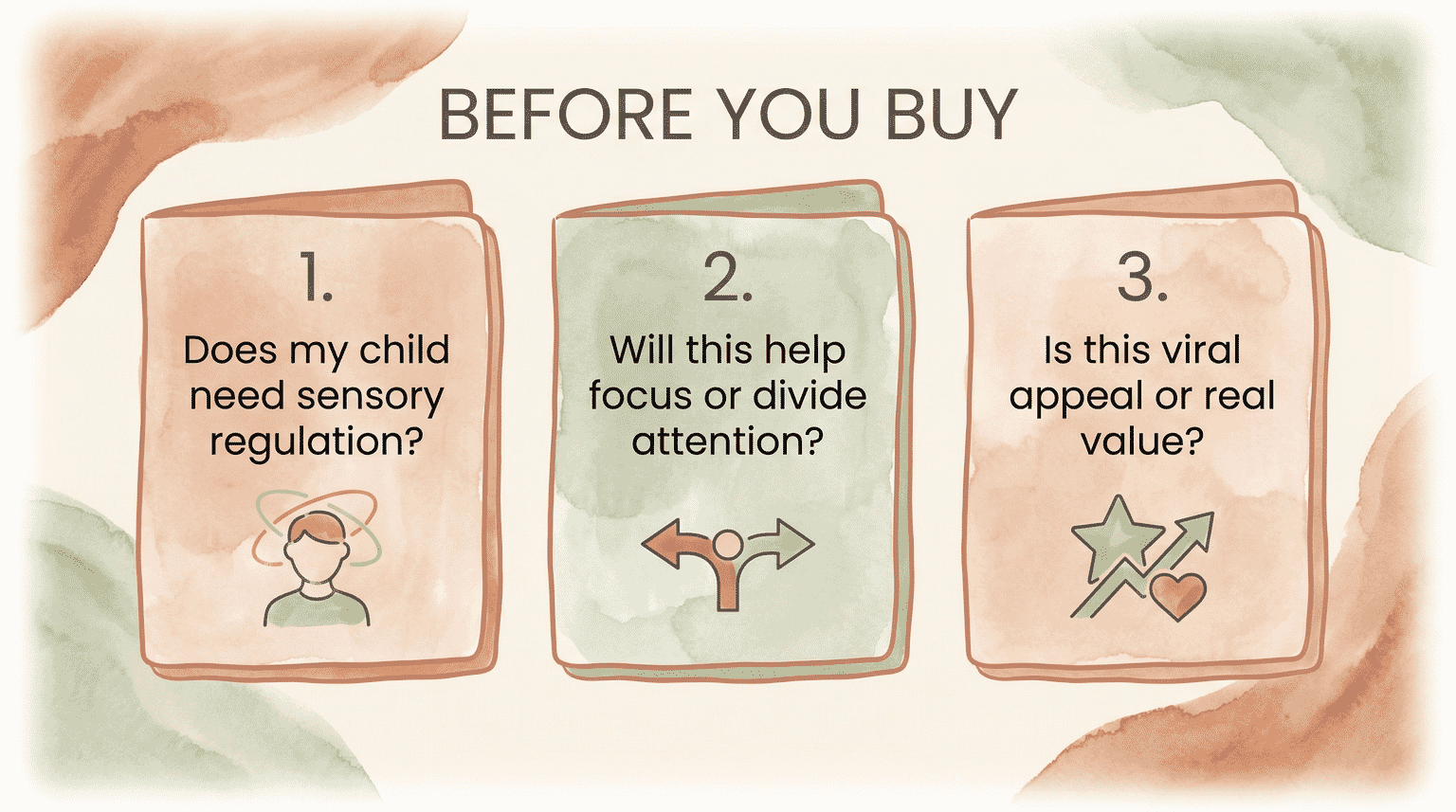
Before adding that trending fidget to your cart, consider: is your child one of the 5-12% who genuinely benefits from sensory regulation tools? Or are you buying a distraction that might actually divide their attention?
For a deeper dive into TikTok’s influence on toy purchases, I break down how to evaluate what’s actually worth buying versus what just performs well on camera.
What About You?
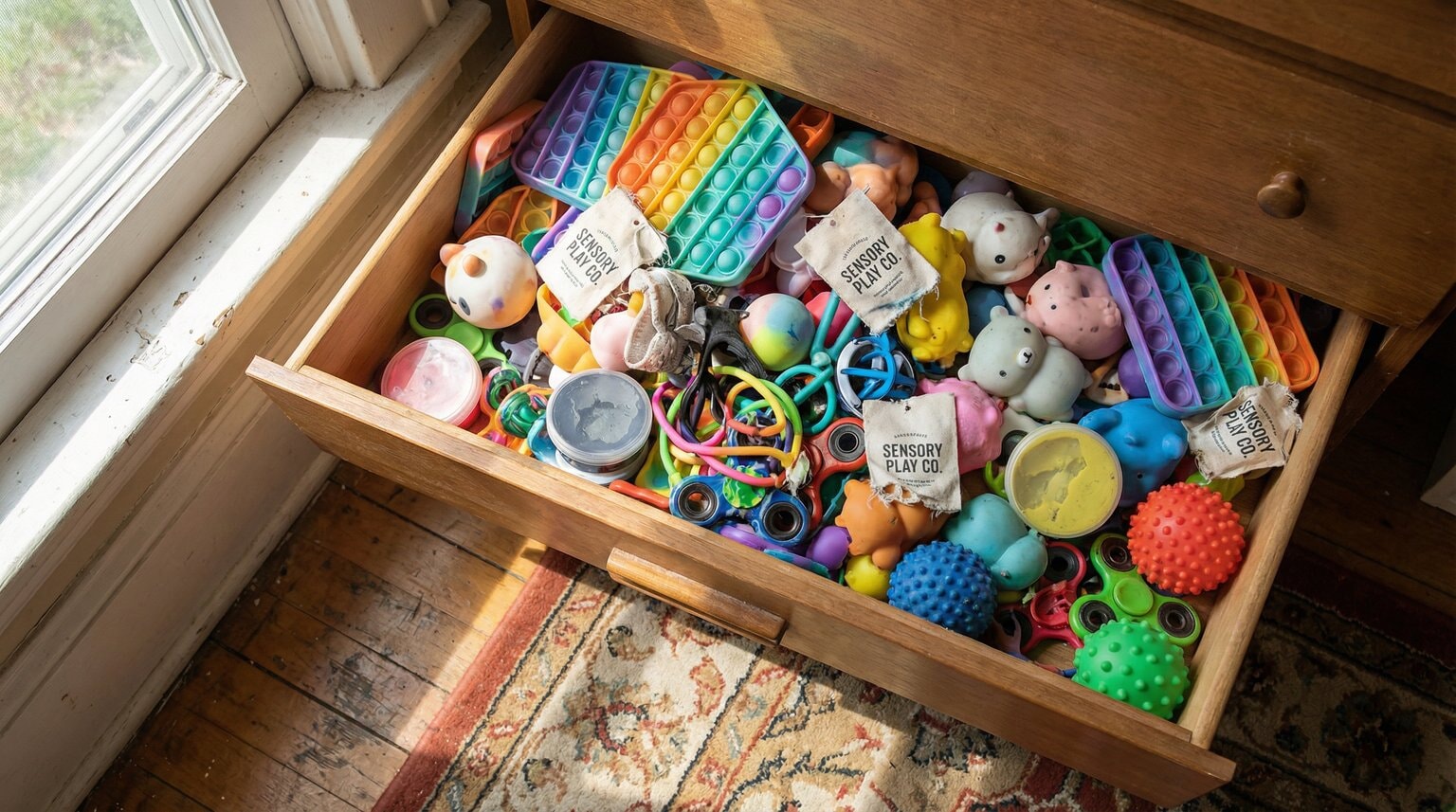
Has the sensory toy pipeline reached your house? I’m curious whether pop-its or fidgets have helped your kids—or just added to the toy pile without real benefits.
Drop a comment below—your experience helps other parents separate hype from help.
References
- The Effects of Pop-Its on Listening Comprehension – First controlled study of pop-it effects on cognitive tasks
- Some Children’s Tantrums Can Be Seen in the Brain – UCSF research on sensory processing differences
- Toys are BIG Business – UTMB Pediatrics on marketing claims vs. evidence

Share Your Thoughts