
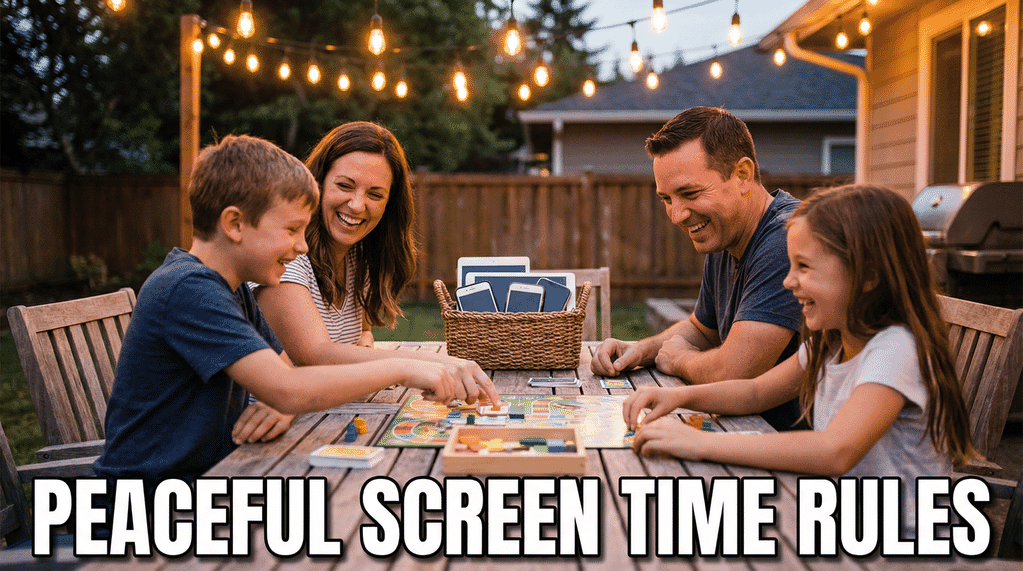
The negotiation is already happening. Your kid wants five more minutes. You want your sanity back.
Screen time battles rank among the most common challenges parents face—and here are the exact words that actually work, backed by child development research and tested in my house with eight kids across every age.

Key Takeaways
- Use “and” instead of “but” when acknowledging feelings—“but” erases everything before it
- Set and discuss screen time limits before screens come out, not during the negotiation
- Stop talking after you state the limit—no justifying, no re-explaining
- Screens are designed to be addictive—you’re not the mean parent, you’re helping them navigate
When Screen Time Ends and They Won’t Stop
This is the moment most parents dread. The timer goes off, and suddenly you’re the villain. Here’s the script:
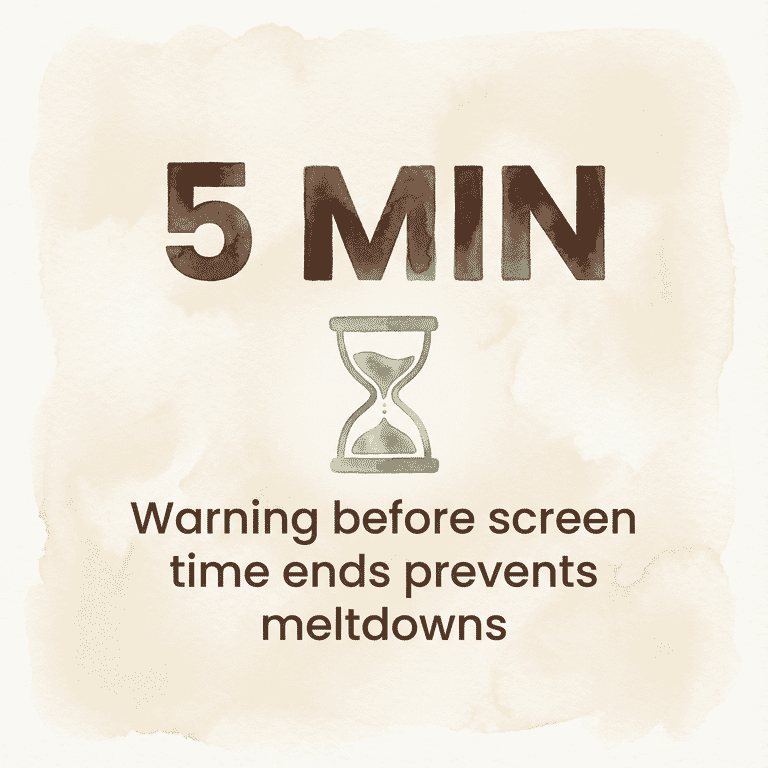
“Screen time ends in 5 minutes. What should we do after?”
When time’s up: “I’m setting a 2-minute timer so you can find a stopping point.”
When they protest: “I know it’s hard to stop when you’re having fun, AND screen time is over.”
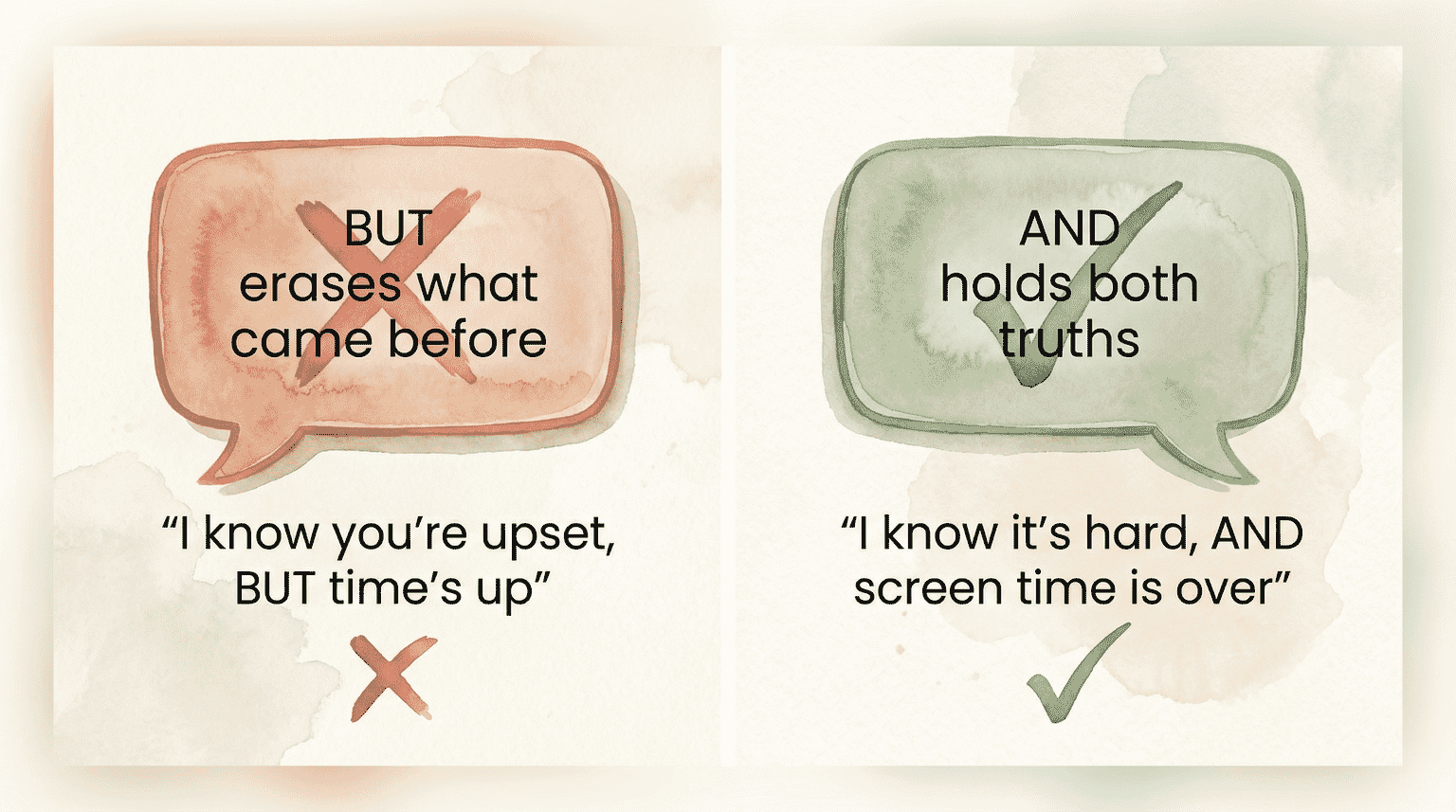
That word “and” matters more than you’d think. Research from The Peaceful Parent shows “but” erases whatever you said before it. “I know you’re upset, BUT time’s up” lands as just “time’s up.”
Using “and” holds both truths—their feelings AND your boundary.
Here’s what I’ve learned with my own kids: stop talking after you state the limit. No justifying, no re-explaining. Just “I’m not going to keep discussing this.”
When They Ask for “Five More Minutes”

This one’s a trap. Say yes once, and you’ve just taught them that limits are negotiable.
They say: “Just five more minutes, please!”
You say: “I hear you want more time. The answer is still no. Let’s find a stopping point now.”
University of Arizona research found that instructive mediation—explaining and discussing—works better than pure restriction. But here’s the key: that discussion happens before screen time, not during the negotiation.

When you set expectations before the iPad comes out, you’re not the bad guy pulling them away from fun. You’re just reminding them of what they already agreed to.
This is why family media plans work—the rules exist before emotions run high.
When They Say “Everyone Else Gets Unlimited Time”
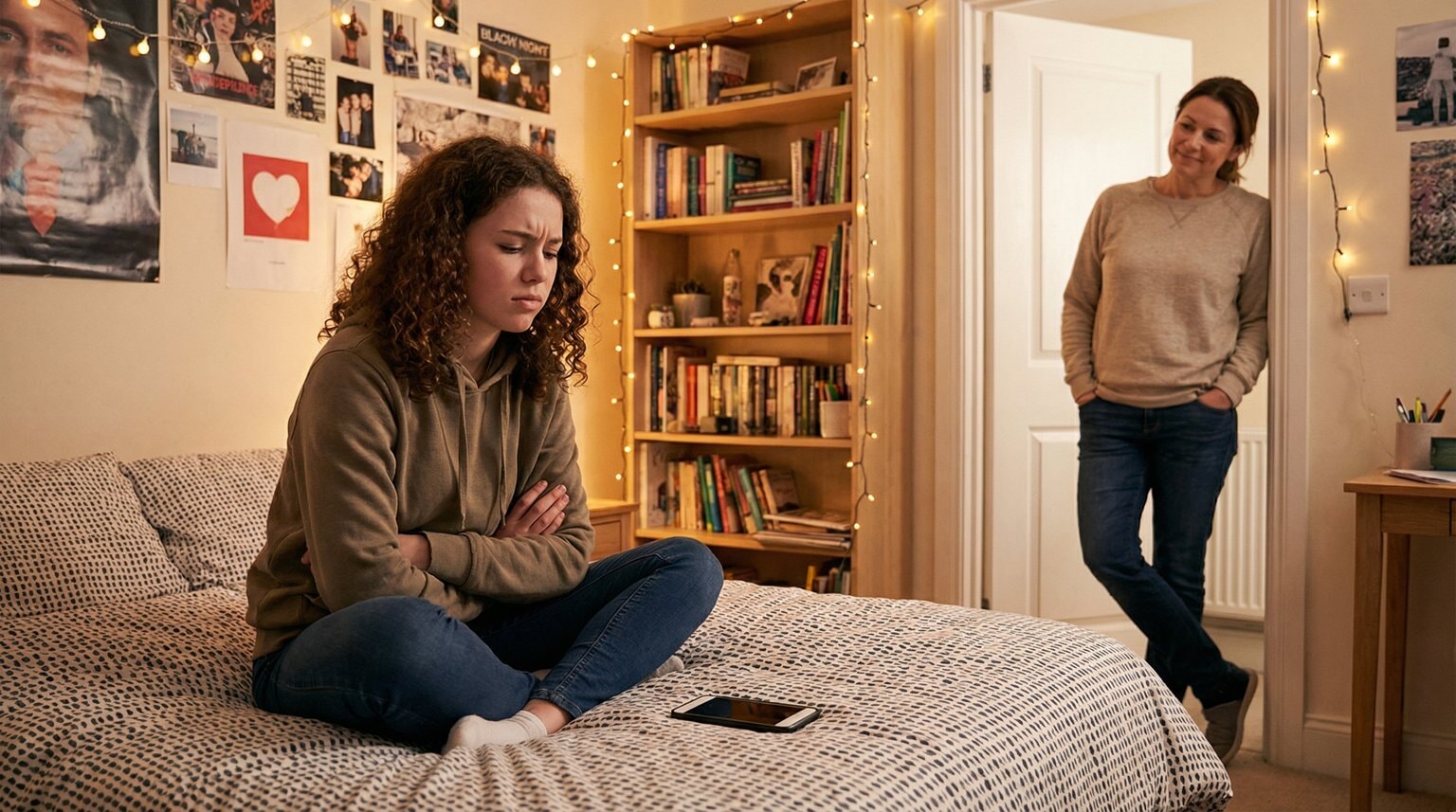
Ah, the comparison trap. My teenagers have perfected this one.
They say: “All my friends can play whenever they want!”
You say: “Different families have different rules. In our family, we [your specific rule]. I’m not going to compare us to other families.”
Here’s something that helped me let go of the guilt. As UW-La Crosse professor Tesia Marshik puts it:
“It’s not your fault that screens are so hard to put down. They’re intentionally designed to prey on our vulnerabilities.”
— Tesia Marshik, UW-La Crosse Psychology Professor
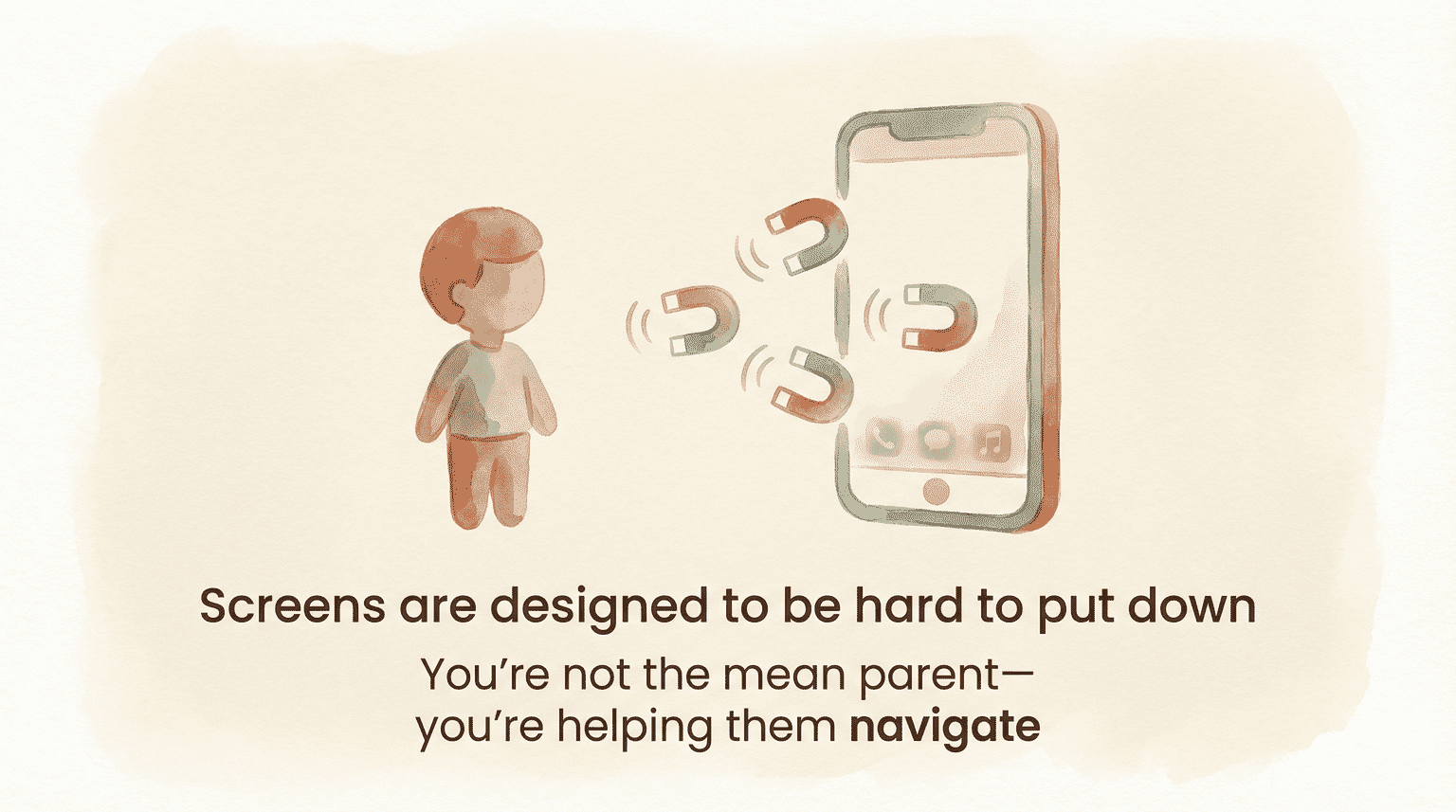
You’re not the mean parent—you’re the one helping them navigate something specifically engineered to be addictive.
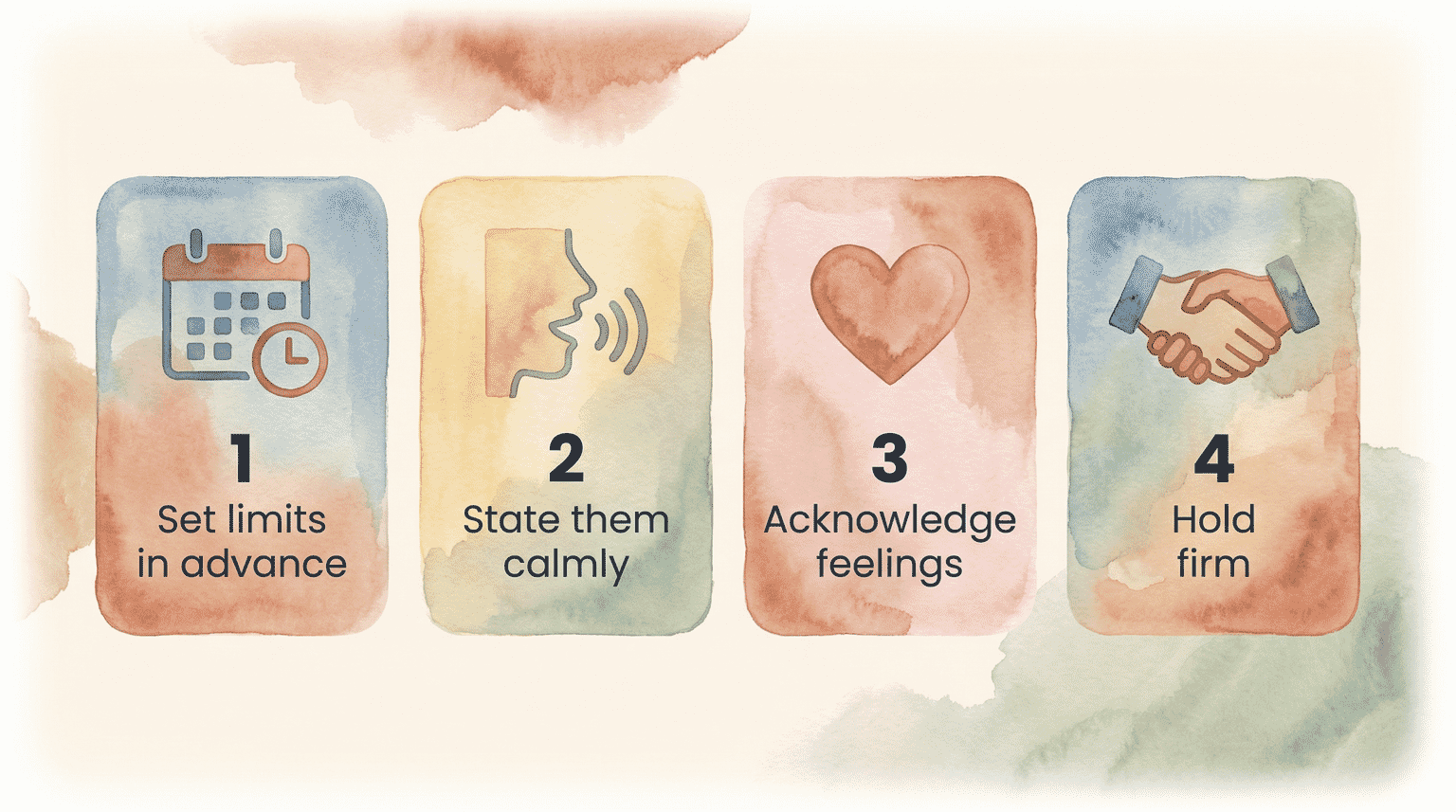
The bottom line: Set limits in advance, state them calmly, acknowledge feelings, and hold firm. For age-specific guidance on balancing screen time with other activities, or to understand how digital gifts and screens fit into the bigger picture, those resources go deeper.
Frequently Asked Questions
What do you say when your child won’t stop screen time?
Give a 5-minute warning, then state the limit calmly rather than asking. Acknowledge their frustration (“I know it’s hard to stop”) while holding the boundary using “and” instead of “but”: “I know you want to keep playing, AND time is up.”
How do I set screen time limits without fighting?
Set limits before screens come out, not in the moment. Research shows collaborative rule-making works better than heavy-handed approaches—but once rules are set, state them without renegotiating every time.
What is a good screen time rule for kids?
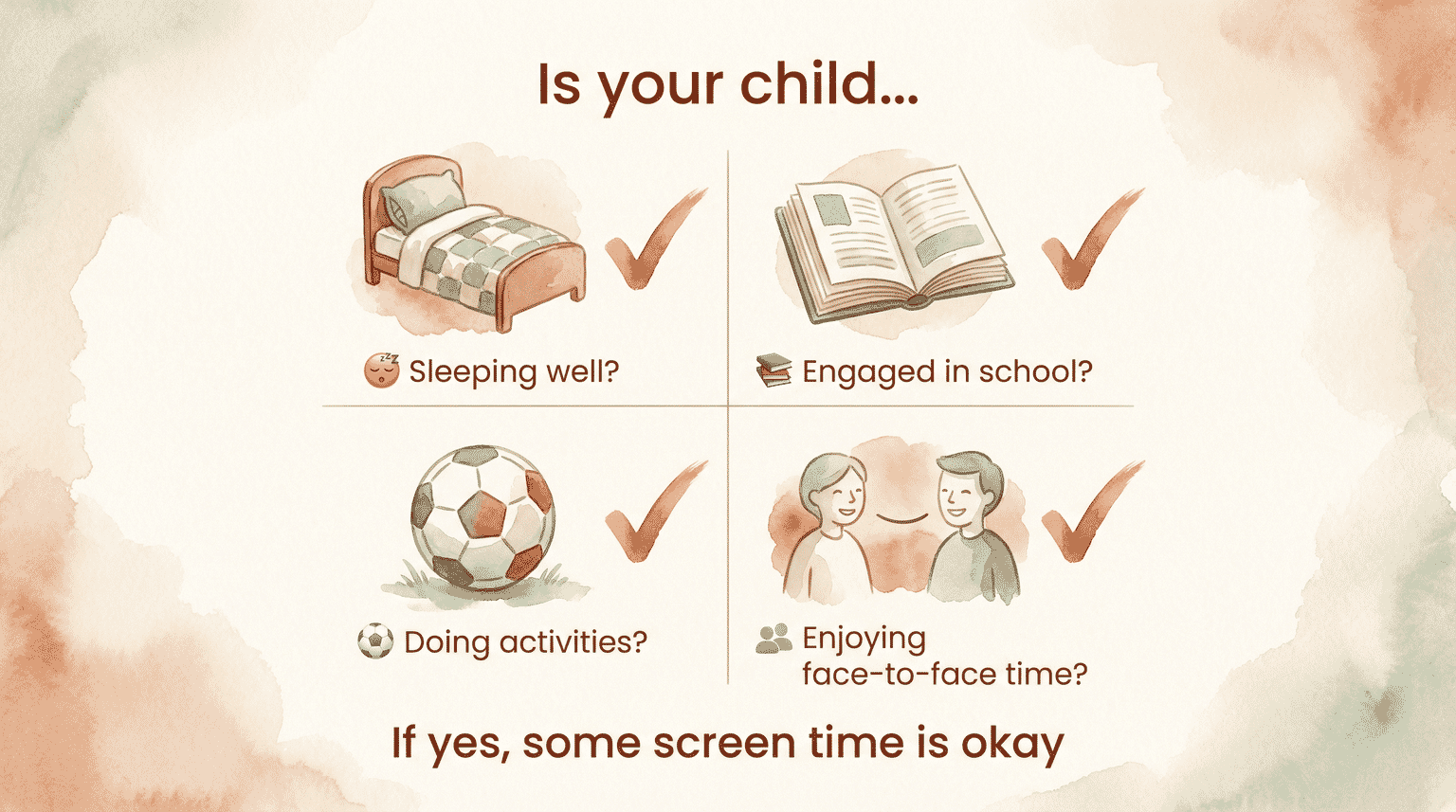
Experts now emphasize quality over quantity. UW-La Crosse psychology professor Ryan McKelley suggests asking: “Is my child sleeping well, engaged in school, participating in activities, and enjoying face-to-face time?” If yes, some screen time isn’t necessarily a problem.

Over to You
What’s your go-to screen time script? I’m always collecting phrases that actually work with real kids—share yours below.
I read every comment and test the best scripts with my own kids.
References
- The Peaceful Parent – Framework for screen time boundaries and script language
- University of Arizona News – Research on mediation strategies
- UW-La Crosse Currents – Expert perspectives on screen time management

Share Your Thoughts