

Standing in the toy aisle, you’re paralyzed. Your kid wants the tablet game their friend has. The grandparents are asking for wish lists. And everything with decent reviews seems to require charging. I get it—with eight kids spanning ages 2 to 17, I’ve stood in that exact spot more times than I can count.
Here’s the reality: Columbia University pediatricians found that the average child ages 8 to 18 now spends 7.5 hours daily on screens for entertainment alone. That number stopped me cold. Dr. Edith Bracho-Sanchez puts it simply: “The best way to get kids to put down screens is to give them something else to do.”
That’s where thoughtful gift-giving comes in. Not as a guilt trip about screen time, but as an opportunity to hand kids something genuinely engaging.

Key Takeaways
- Research shows each hour of daily screen time can decrease focus ability by 10%—making offline alternatives genuinely important for development
- The best screen-free gifts fall into five categories: creative play, building toys, active equipment, hands-on STEM, and social games
- Screen-conditioned kids may initially resist offline toys—timing and parent participation make all the difference
- Open-ended toys like blocks and art supplies outlast trendy gadgets and work across wider age ranges
Why Screen-Free Gifts Actually Matter
My librarian brain couldn’t let this go without checking the research. What I found goes beyond “screens are bad.”
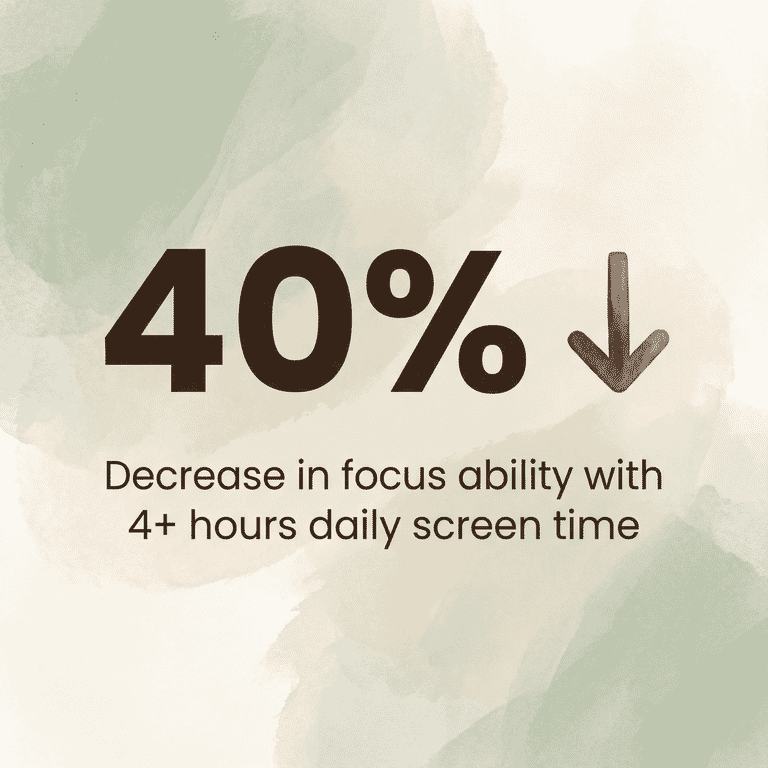
A 2022 study in Frontiers in Psychology tracked over 300 preschoolers and discovered something striking: each hour of daily screen time contributed to a 10% decrease in what researchers call “effortful control”—the ability to regulate emotions and focus attention. For kids watching four or more hours daily, that adds up to a 40% decrease.
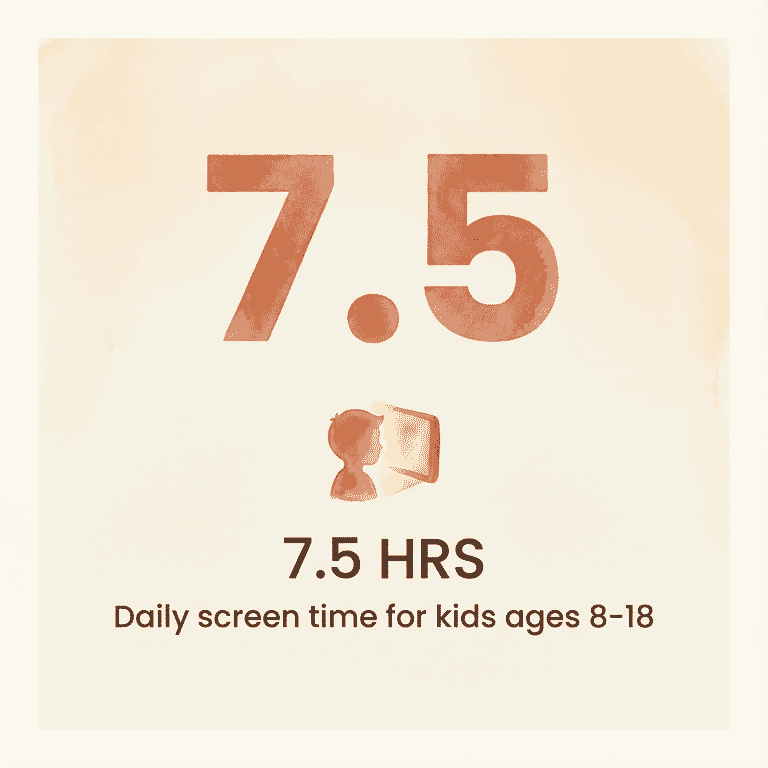
That 7.5-hour average isn’t counting school-related screen use. This is pure entertainment—streaming, gaming, scrolling. When you add educational requirements on top, kids are spending more waking hours with screens than without.
The kicker? This pattern starts younger than you’d think. Even preschoolers are logging significant screen hours before they can read.
Developmental researchers call this the “displacement hypothesis.” It’s not just that screens might be problematic—it’s that excessive screen time creates a “time debt” for other crucial experiences like imaginative play, storytelling, and hands-on exploration. These activities build the self-regulation skills that predict everything from academic success to relationship quality later in life.
That 40% decrease in focus ability isn’t just an abstract number. It shows up in classrooms, in homework battles, in the inability to stick with anything challenging for more than a few minutes.
The good news? These skills can be rebuilt. And you don’t need to eliminate screens entirely to make it happen.
Columbia’s pediatric team acknowledges that “abstaining from screens completely is really difficult” and recommends aiming for balance instead. That’s where screen-free gifts become powerful tools, not guilt-inducing mandates.
Creative & Imaginative Play Gifts

This category consistently wins across my house, from my 2-year-old to my teens who “don’t play with toys anymore” (but somehow spent two hours with polymer clay last weekend).
Play dough and modeling clay work beautifully for ages 2-8. Child development experts at UC Merced note that clays and doughs are “great for hand and finger strengthening, which aids in writing skills and other dexterous activities.” I’ve watched this play out—my kindergartener’s handwriting improved noticeably during a winter break when play dough became her obsession.
Art supply kits suit ages 3 and up, scaling in complexity. Look for quality colored pencils, washable paints, and good paper rather than gimmicky all-in-one sets. My 8-year-old burns through sketchbooks; my 15-year-old commandeers the watercolors.
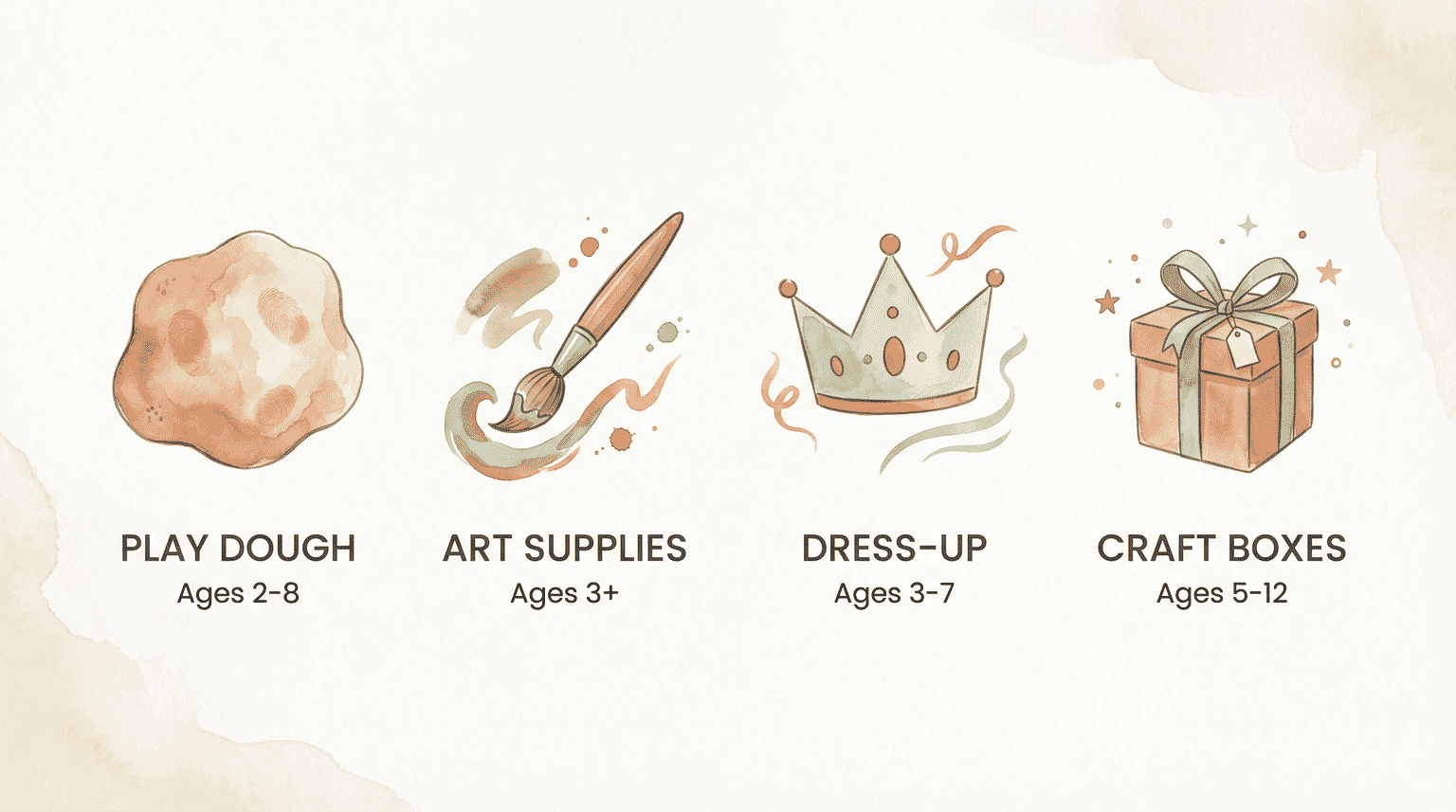
Dress-up collections hit peak engagement around ages 3-7, though my 10-year-old still pulls out costume pieces for elaborate backyard productions. Skip the licensed character costumes and invest in versatile pieces: capes, crowns, fabric lengths, hats.
Craft subscription boxes make excellent “gift that keeps giving” options for ages 5-12. They solve the “what do we do today” problem monthly and introduce techniques kids wouldn’t discover otherwise.
Budget guide: Play dough sets start under $15; quality art supplies run $25-50; subscription boxes typically $20-35/month
Building & Construction Gifts

Building toys teach what Singapore Polytechnic calls “spatial reasoning, planning, and perseverance”—skills that transfer far beyond playtime.
Wooden blocks remain undefeated for ages 1-6. Yes, they’re simple. That’s the point. I’ve handed down the same set through six children, and they still get daily use. The open-ended nature means a 2-year-old stacks towers while a 6-year-old constructs elaborate cities.
Magnetic tiles have earned their popularity for ages 3-10. The satisfying click, the geometric possibilities, and the collaborative potential make them worth the investment. My kids build together across age gaps in ways few other toys enable.
LEGO and brick systems scale from DUPLO (ages 2-5) through complex sets (ages 8+). I’d recommend starting with classic creative sets rather than licensed kits—the open-ended bricks get more sustained play than the movie tie-in that becomes a display piece.
Model kits and construction sets serve ages 8 and up. Look for wood models, architecture sets, or engineering kits that result in functional creations. The satisfaction of completing something real hooks even my screen-loving teens.
Budget guide: Quality wooden blocks $30-60; magnetic tile starter sets $40-80; brick sets range widely from $15 to $150+
Active & Movement Gifts

Every body needs to move, and the right equipment makes it irresistible.
Balance boards and wobble cushions work for ages 3 and up, providing movement opportunities even in small spaces. My kids use them while reading, watching the one family movie we allow, or just chatting. It’s sneaky physical activity.
Climbing structures like Pikler triangles suit ages 1-6, while more robust indoor climbers work through elementary years. These require space but pay dividends in rainy-day sanity. I’ve seen my cautious kids become confident climbers through daily practice.
Outdoor equipment depends entirely on your space and climate. Jump ropes (ages 4+), sports equipment appropriate to interest, and gardening tools all qualify. My 6-year-old’s gardening kit—child-sized but functional tools—has generated more outdoor hours than any toy.
Scooters and ride-ons serve ages 2-12+ depending on type. The learning curve creates engagement; the mastery creates pride.
Budget guide: Balance boards $30-60; climbing structures $100-300; outdoor equipment varies widely
STEM Without Screens
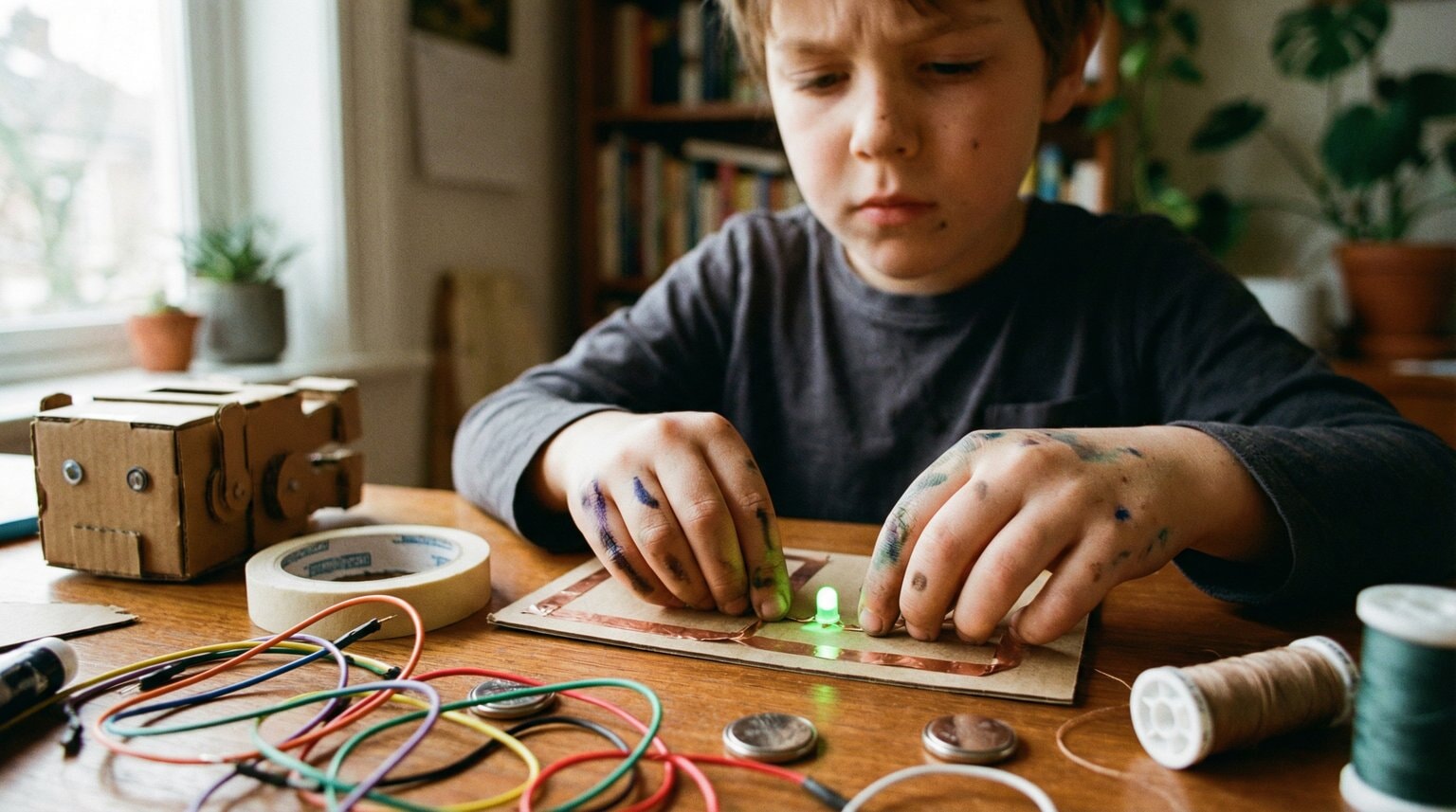
Here’s where I get excited. You can teach coding, circuitry, and engineering concepts without parking kids in front of displays.
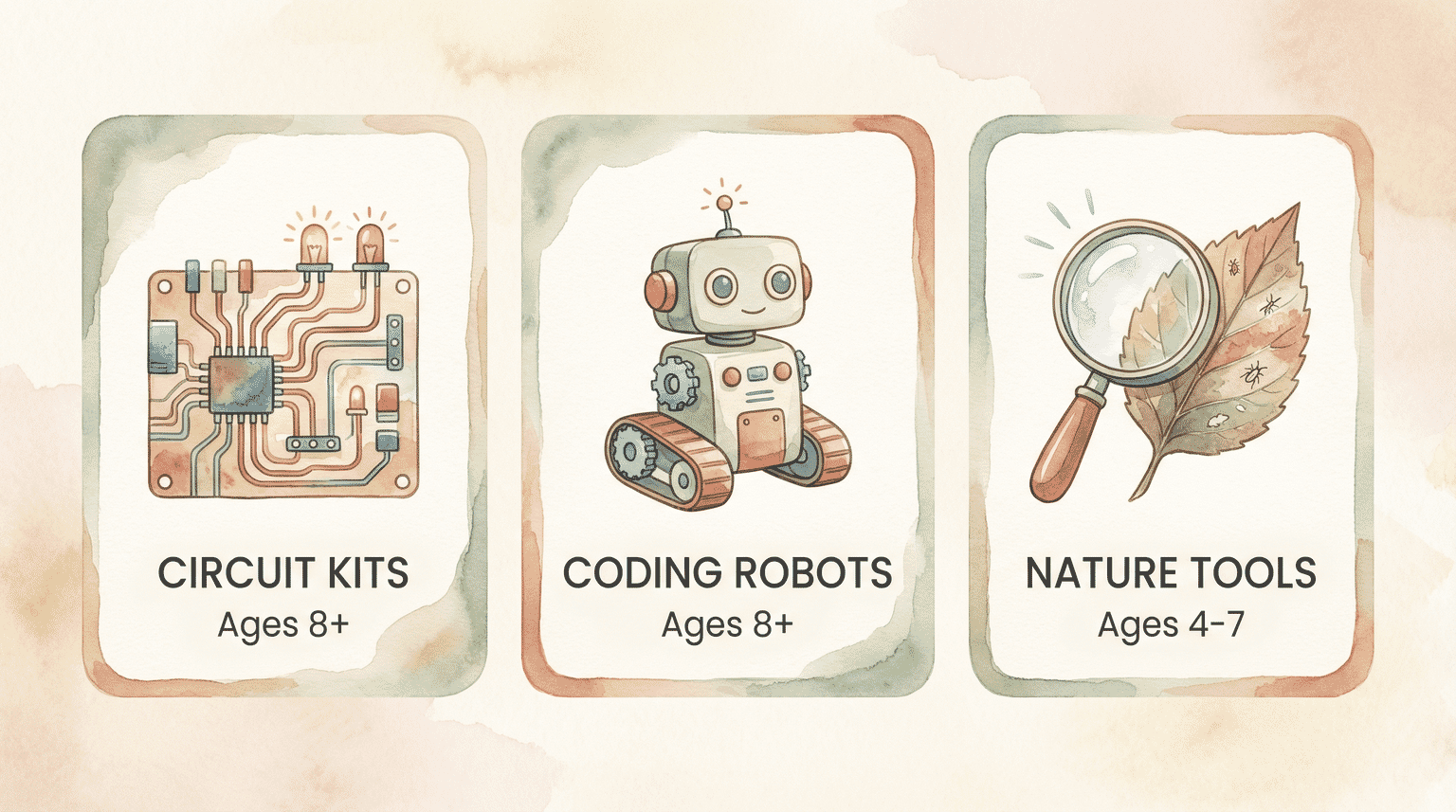
Purdue University’s School of Engineering Education has spent twelve years evaluating STEM gifts, and their recommendations favor hands-on learning. University-vetted picks include Chibitronics LED Circuit Sticker Kits, which let children create light-up art projects while learning circuitry basics (ages 8+). The Makey Makey invention kit transforms everyday objects into touchpads, teaching about circuits through play (ages 8+).
Coding robots like Pro-Bot teach programming through physical movement rather than screens—children program sequences and watch the robot execute them. Most suit ages 8 and up, though simpler options exist for younger kids.
Science experiment kits span ages 4-14 depending on complexity. Look for kits that require multiple sessions rather than one-and-done activities. My kids have gravitated toward crystal growing, chemistry sets, and electronics kits that build on themselves.
For younger scientists (ages 4-7), nature exploration kits with magnifying glasses, bug catchers, and specimen containers encourage observation skills without any screens involved.
Budget guide: Circuit sticker kits $25-50; coding robots $50-150; science kits $20-60
Social & Connection Gifts

Games that bring people together teach skills no app can replicate: reading faces, taking turns, losing gracefully, winning humbly.
Cooperative board games work for ages 4 and up, removing the competitive sting while building teamwork. Games where everyone wins or loses together have saved countless family game nights in my house.
Strategy games suit ages 7 and up, with complexity scaling through teen years. The classics endure for reason—chess, checkers, and their modern descendants teach planning and consequence.
Card games offer incredible portability and value. A single deck enables dozens of games; purpose-built card games provide focused fun. Ages 4 and up can handle simple matching games; by 8, kids can manage more complex rules.
Large-format puzzles (ages 6+) become family projects when you leave them out on a table. I’ve watched unlikely sibling combinations bond over 1,000-piece landscapes. This is one of those shifts toward digital gifting worth resisting—physical puzzles create different satisfaction than digital versions.
Budget guide: Card games under $20; board games $20-50; quality puzzles $15-40
How to Make Screen-Free Gifts Land
Here’s where most gift guides fail. They list great products without acknowledging that kids conditioned by screens may initially reject offline alternatives. I’ve learned this the hard way—sometimes the unboxing excitement fades quickly when there’s no instant digital feedback.
Time your introduction strategically. Don’t present screen-free gifts when kids are tired and craving passive entertainment. Weekend mornings, after active outdoor play, or during natural transition times work better. Never try to compete directly with an established screen routine.
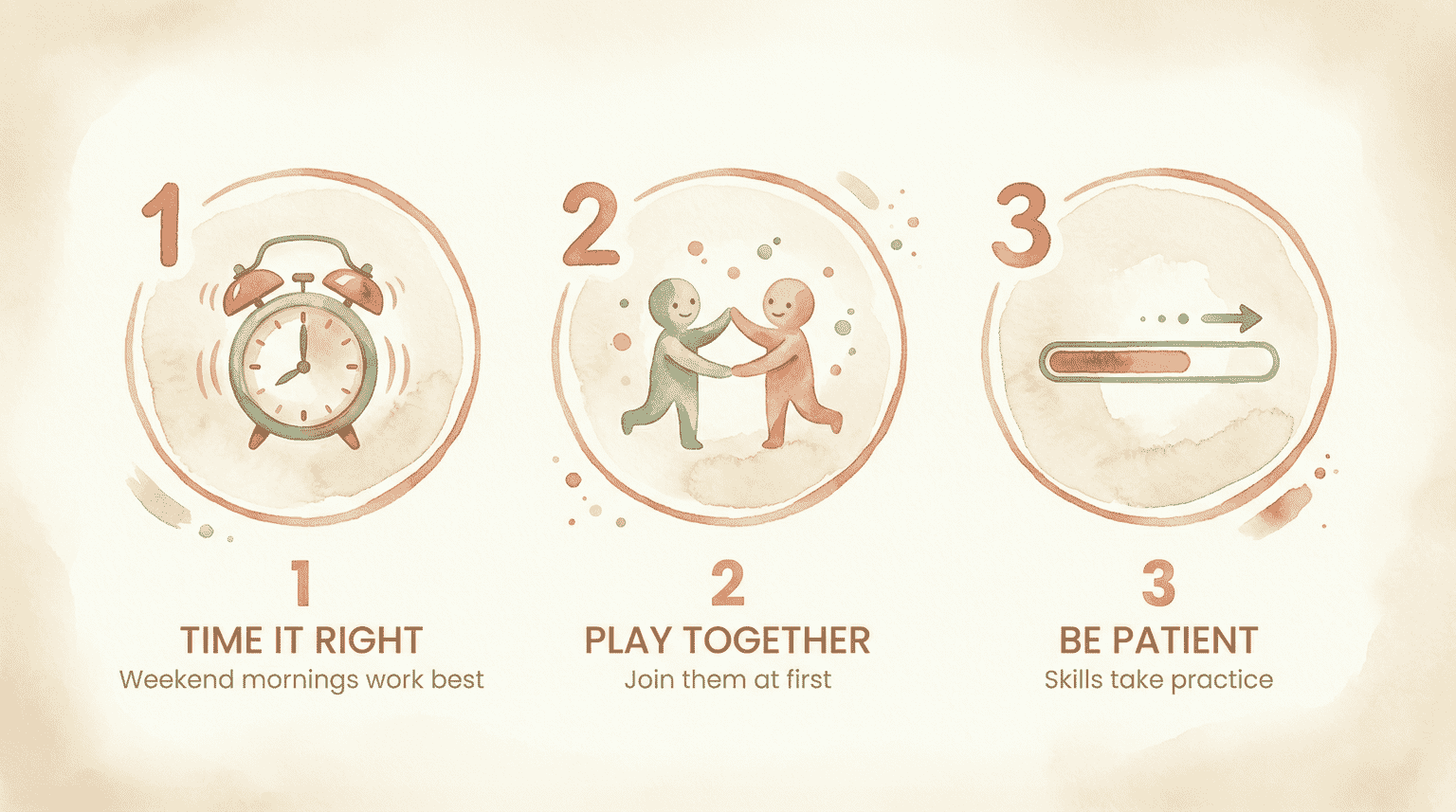
Play together first. New offline toys need your participation initially. Sit down with the building set. Join the first board game. Model engagement before expecting independent play. Research from Singapore Polytechnic confirms children “learn by example”—let them see you absorbed in non-screen activities.
Set realistic expectations. The initial play session might be shorter than you’d like. That’s normal. Offline toys often require skill-building before they become deeply engaging. The block tower keeps falling; the game rules are confusing; the art project doesn’t look like the picture. Persist through this phase.
Use transition scripts when needed:
“The iPad will still be there later. Right now, let’s try this together for ten minutes.”
— When your child asks for screens instead
And when that initial spark of interest starts to dim:
“This takes practice. Remember when [activity they’ve mastered] felt hard at first?”
— When initial interest fades
Understanding why kids gravitate toward screen-based gifts—often because of toys promoted by YouTube influencers—helps you respond with empathy rather than frustration.
Quick Reference Guide
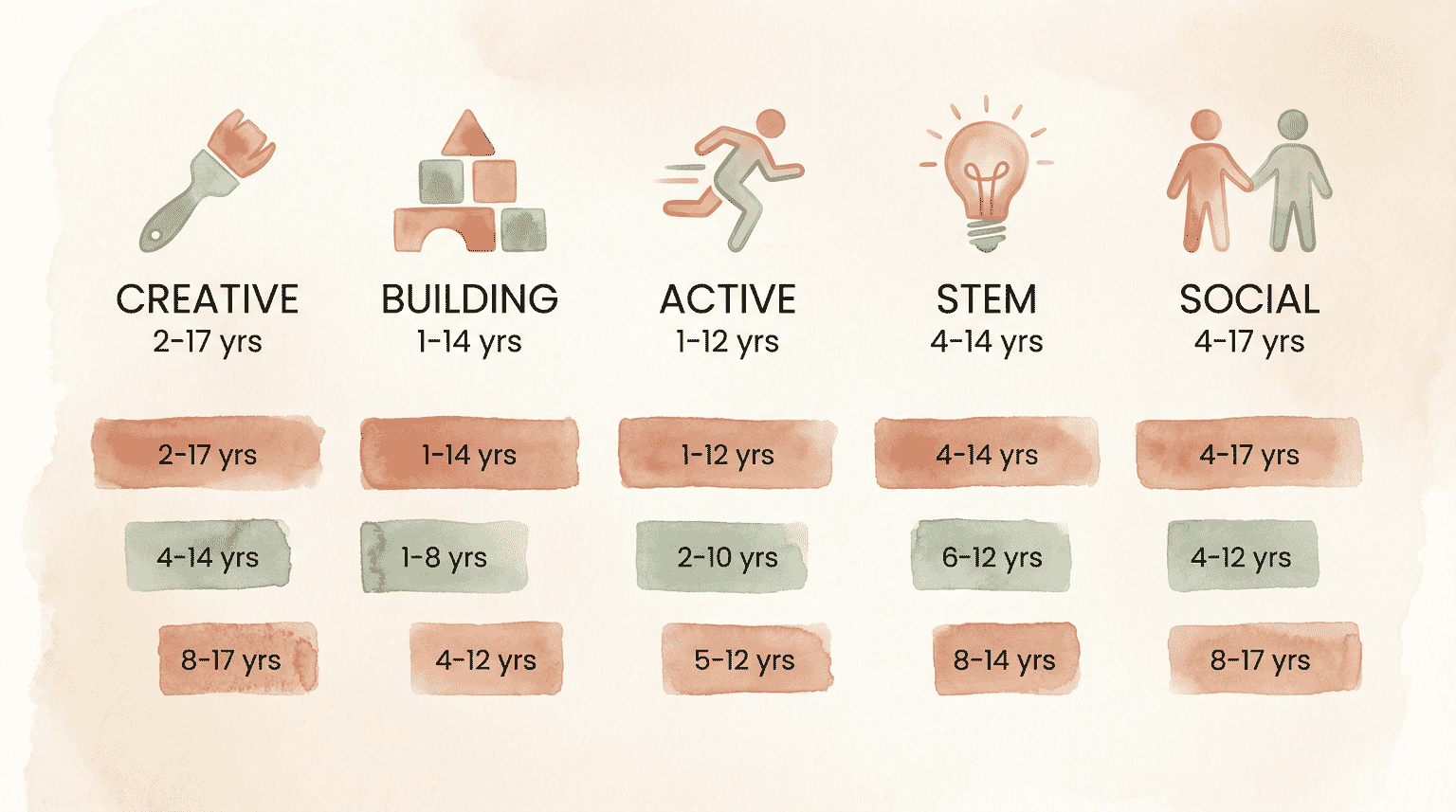
| Category | Best Ages | Budget Range | Solo or Social |
|---|---|---|---|
| Creative/Art | 2-17 | $15-50 | Both |
| Building/Construction | 1-14 | $15-150 | Both |
| Active/Movement | 1-12 | $30-300 | Both |
| STEM (hands-on) | 4-14 | $20-150 | Mostly solo |
| Social/Games | 4-17 | $15-50 | Social |
Grandparent-safe picks: Wooden blocks, art supplies, card games, quality puzzles—timeless choices that won’t become obsolete.
Sibling-friendly options: Magnetic tiles, cooperative games, outdoor equipment, building systems with enough pieces to share.
Frequently Asked Questions

What are good gifts for kids that don’t involve screens?
The best screen-free gifts fall into five categories: creative supplies (art kits, play dough), building toys (blocks, magnetic tiles), active play equipment (balance boards, outdoor gear), hands-on STEM kits (circuit stickers, coding robots), and social games (board games, card games). Focus on giving children engaging alternatives rather than simply removing screens.
How do I get my child interested in non-electronic toys?
Start by playing together—children engage longer with new toys when parents participate initially. Time introductions when screens aren’t competing (weekend mornings work better than post-school exhaustion). Model the behavior yourself by letting kids see you reading, building, or creating. Research confirms that children learn by example.
What toys help with child development?
Play dough and art supplies build fine motor skills essential for writing. Building sets develop spatial reasoning and problem-solving. Board games teach turn-taking and emotional regulation. UC Merced’s Early Childhood Education Center notes these activities build “concentration, creativity, focus, fine motor skills, gross motor skills, classification, sorting, problem solving and more.”
What are screen-free STEM toys?
Purdue University’s Engineering Gift Guide recommends Chibitronics LED Circuit Sticker Kits, Makey Makey invention kits, and programmable robots like Pro-Bot. These teach coding, circuitry, and engineering concepts through hands-on manipulation rather than screens. Look for gifts where children physically build, connect, and experiment while learning STEM concepts.
How much screen time is OK for kids?
Pediatric guidelines recommend no more than one hour daily for preschool-aged children and no more than two hours for older kids. However, Columbia University pediatricians acknowledge that complete abstinence is unrealistic and suggest aiming for balance—a mix of entertainment options both on and off screens.
Over to You
What screen-free toys have been the biggest hits at your house? I’m always looking for recommendations—especially from parents whose kids initially resisted anything without a screen.
I read every comment and add your wins to my own testing list.
References
- Columbia University Department of Pediatrics – Screen time statistics and alternatives research
- Frontiers in Psychology (2022) – Longitudinal study on screen time and self-regulation
- UC Merced Early Childhood Education Center – Fine motor development activities
- Purdue University INSPIRE Engineering Gift Guide – University-vetted STEM toy evaluations

Share Your Thoughts