
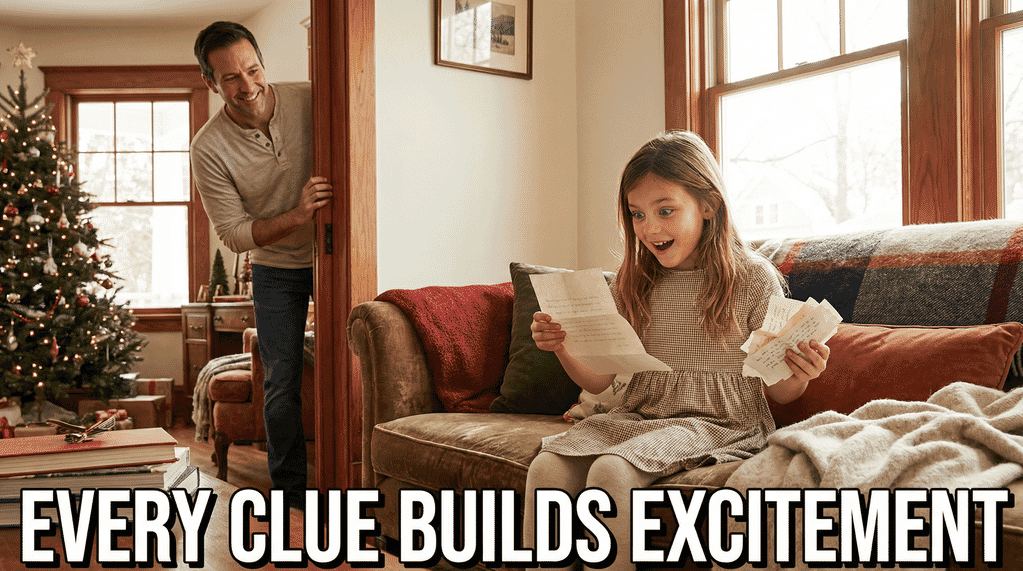
Here’s a stat that stopped me mid-research: children who participate in problem-solving activities like scavenger hunts show a 20% increase in self-confidence compared to kids who don’t. Twenty percent—from hiding a few clues around your house.
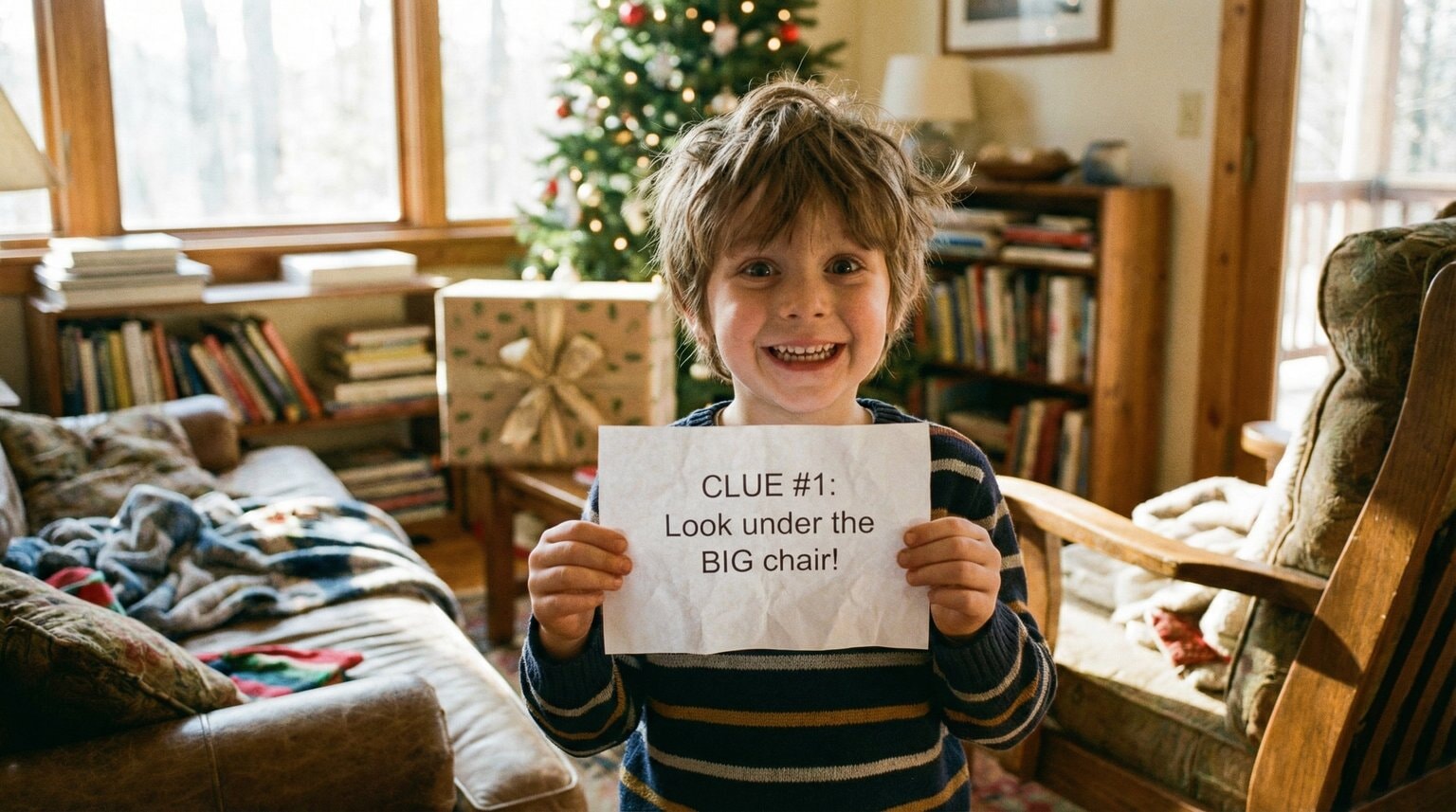
I’ve done this for birthdays, holidays, and random Tuesdays when a package arrives. The setup takes 15 minutes. The payoff? My kids still talk about “the hunt for the art supplies” three years later.
Key Takeaways
- Scavenger hunts boost child self-confidence by 20% through problem-solving engagement
- Match clue count to age: 3-4 for ages 3-5, 5-6 for ages 6-8, and 7-10 for ages 9+
- Always hide clues in reverse order starting from the gift’s hiding spot to avoid confusion
- Three clue types work for any reading level: location hints, rhymes, and simple riddles
- Guide without solving—kids benefit most when they do the thinking themselves
The Quick Formula
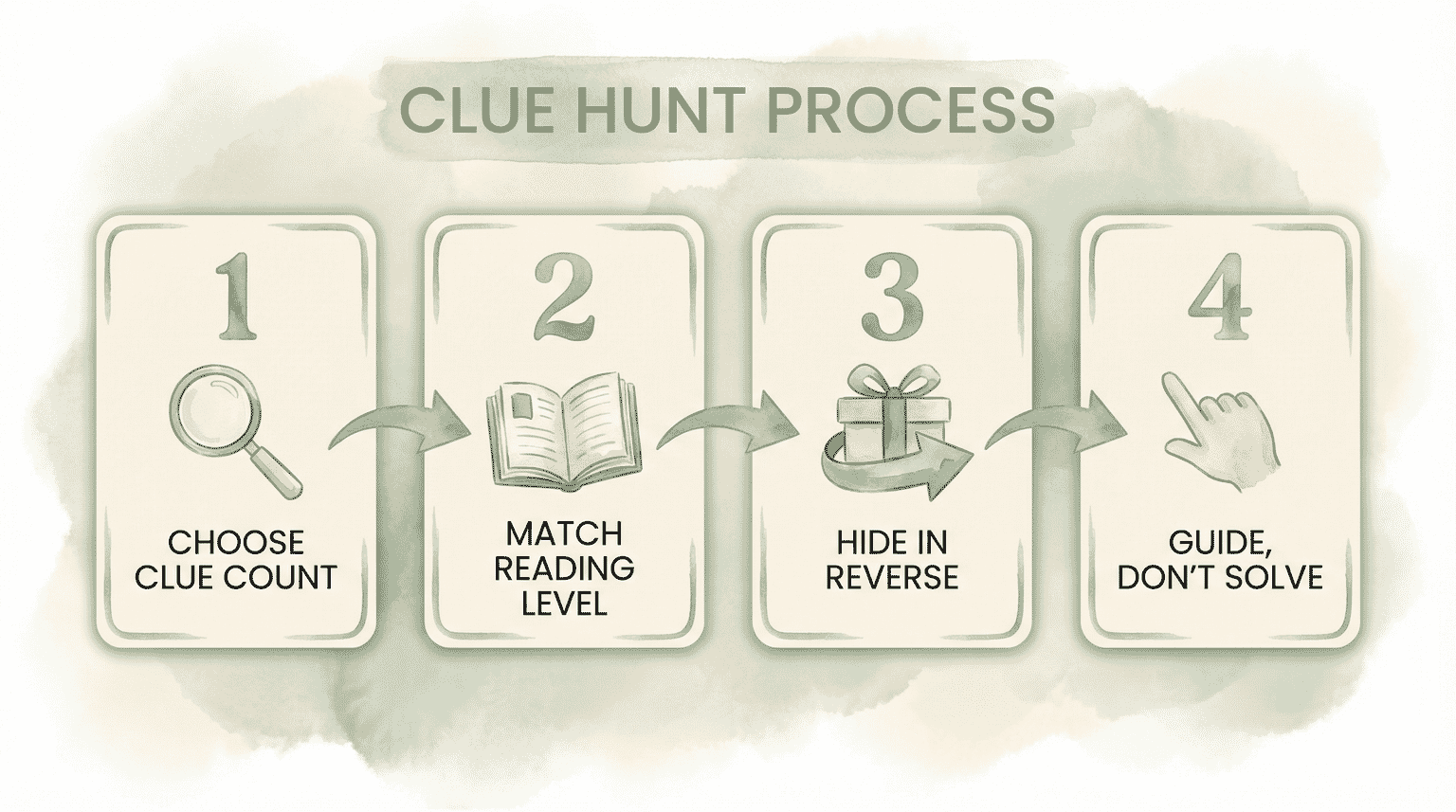
Step 1: Choose your clue count. Ages 3-5 handle 3-4 clues before losing steam. Ages 6-8 can manage 5-6. Kids 9 and older enjoy 7-10 clues with added complexity.
Step 2: Match clues to reading level. Picture clues for pre-readers (a photo of the couch means “look under the cushions”). Simple location hints for early readers (“where we keep the milk”). Rhyming riddles for confident readers.
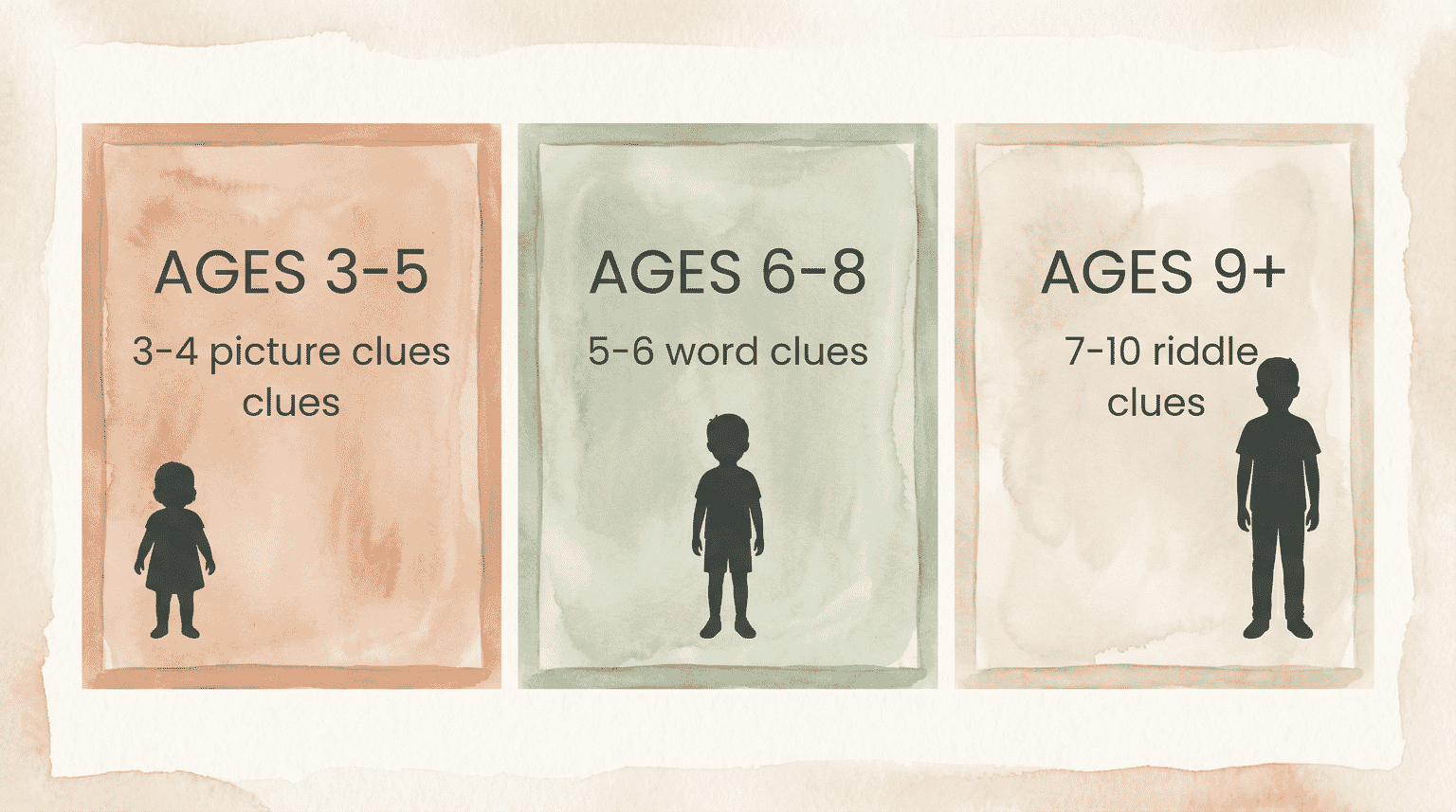
The magic number depends entirely on your child’s attention span and reading ability. Too few clues and the hunt feels rushed. Too many and frustration takes over.
When in doubt, start with fewer clues. You can always add more for the next hunt once you see how your child responds.
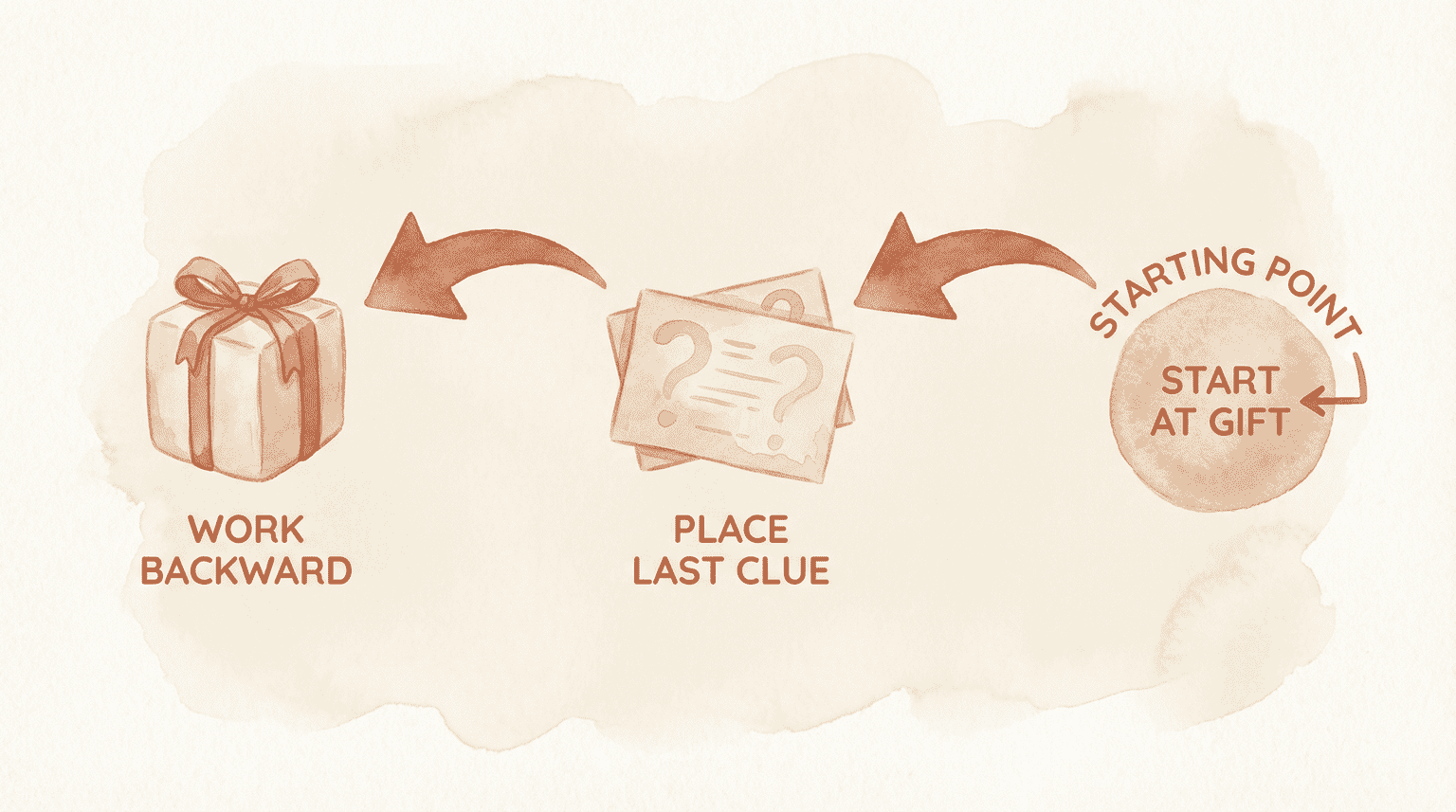
Step 3: Hide in reverse order. Start at the gift’s hiding spot, place your last clue there, then work backward. This prevents the “wait, where did I put clue four?” panic I’ve experienced more than once.
Step 4: Guide without solving. Research from the University of San Diego confirms that gamified activities “foster deeper cognitive engagement”—but only when kids do the thinking themselves. Resist the urge to point.
The whole process takes about 15 minutes once you’ve done it a couple times. And honestly? The setup becomes almost as fun as watching the hunt unfold.
Three Clue Types That Work
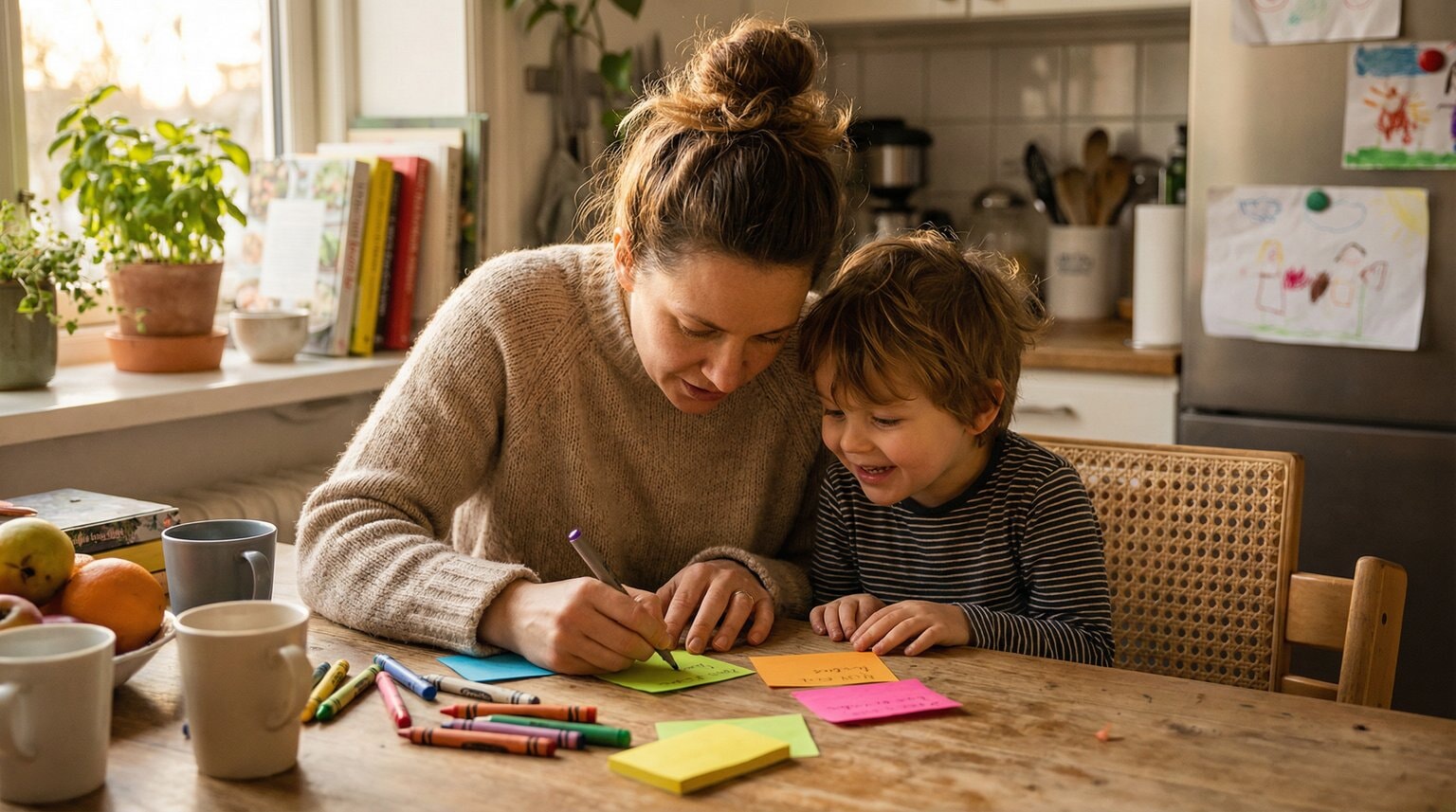
When you’re staring at a blank page, start here:
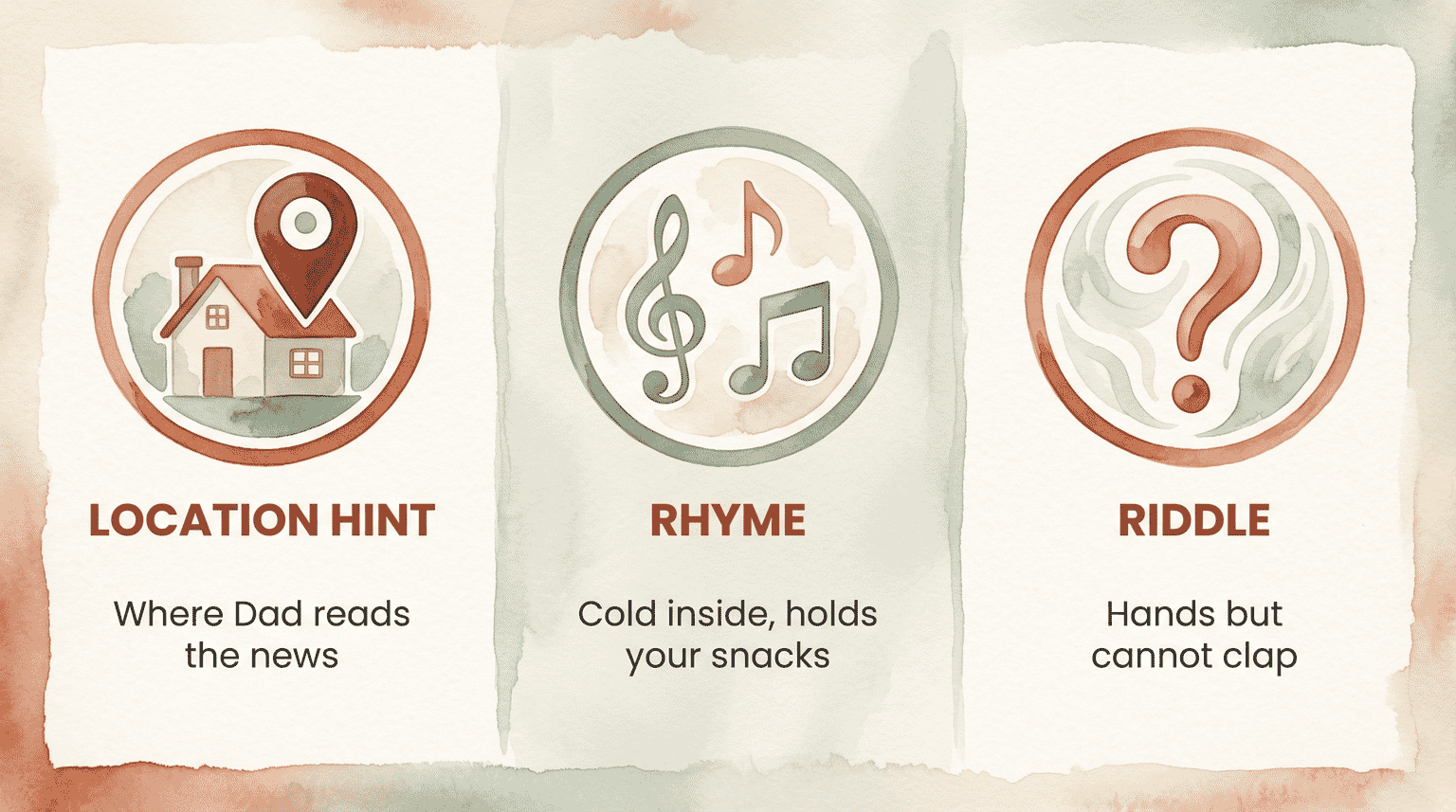
- Location hint: “Look where Dad reads the news” (kitchen table, favorite chair)
- Rhyme: “I’m cold inside and hold your snacks, open my door and check the back”
- Simple riddle: “I have hands but cannot clap” (clock)
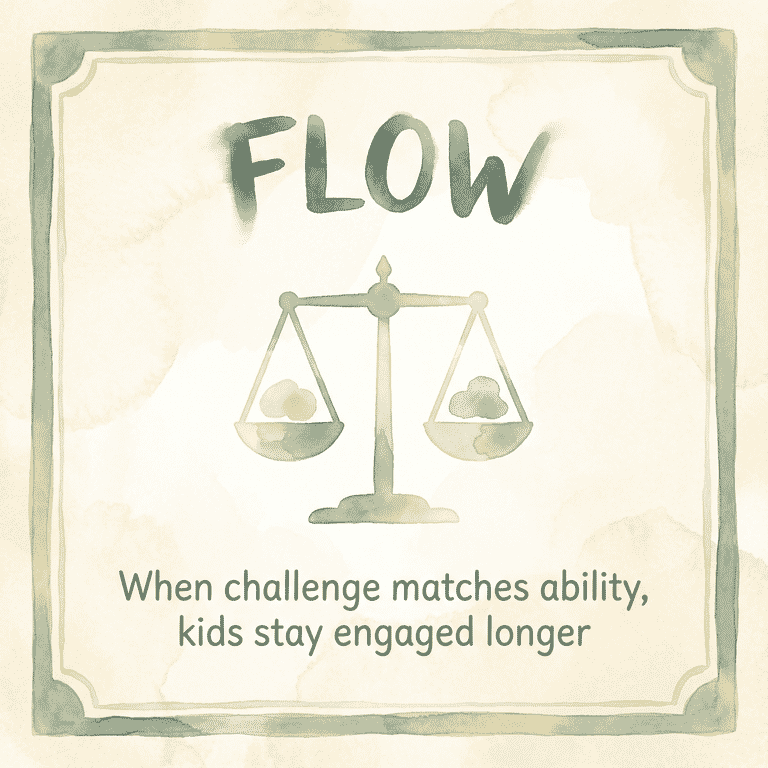
My 6-year-old can handle rhymes. My 10-year-old wants codes. Match the challenge to the child—developmental psychologists call this “flow,” where difficulty meets ability.
When the challenge level matches your child’s ability, something magical happens. They stay engaged longer, feel more confident, and actually want to keep going.
Too easy and they get bored. Too hard and they shut down. That sweet spot in the middle? That’s where the memories get made.
Quick Troubleshooting
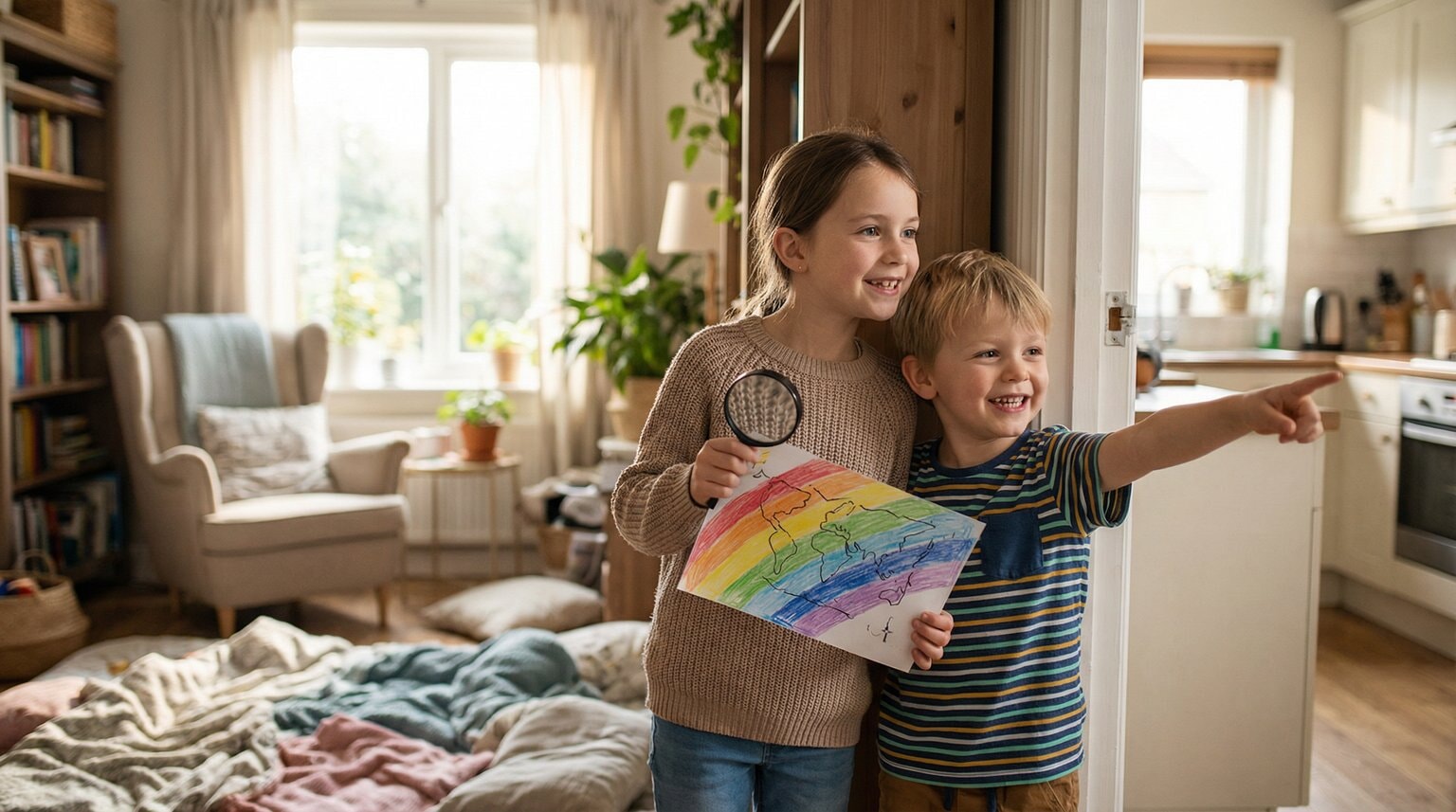
If they’re stuck: Narrow the search area verbally (“You’re in the right room”) rather than pointing.
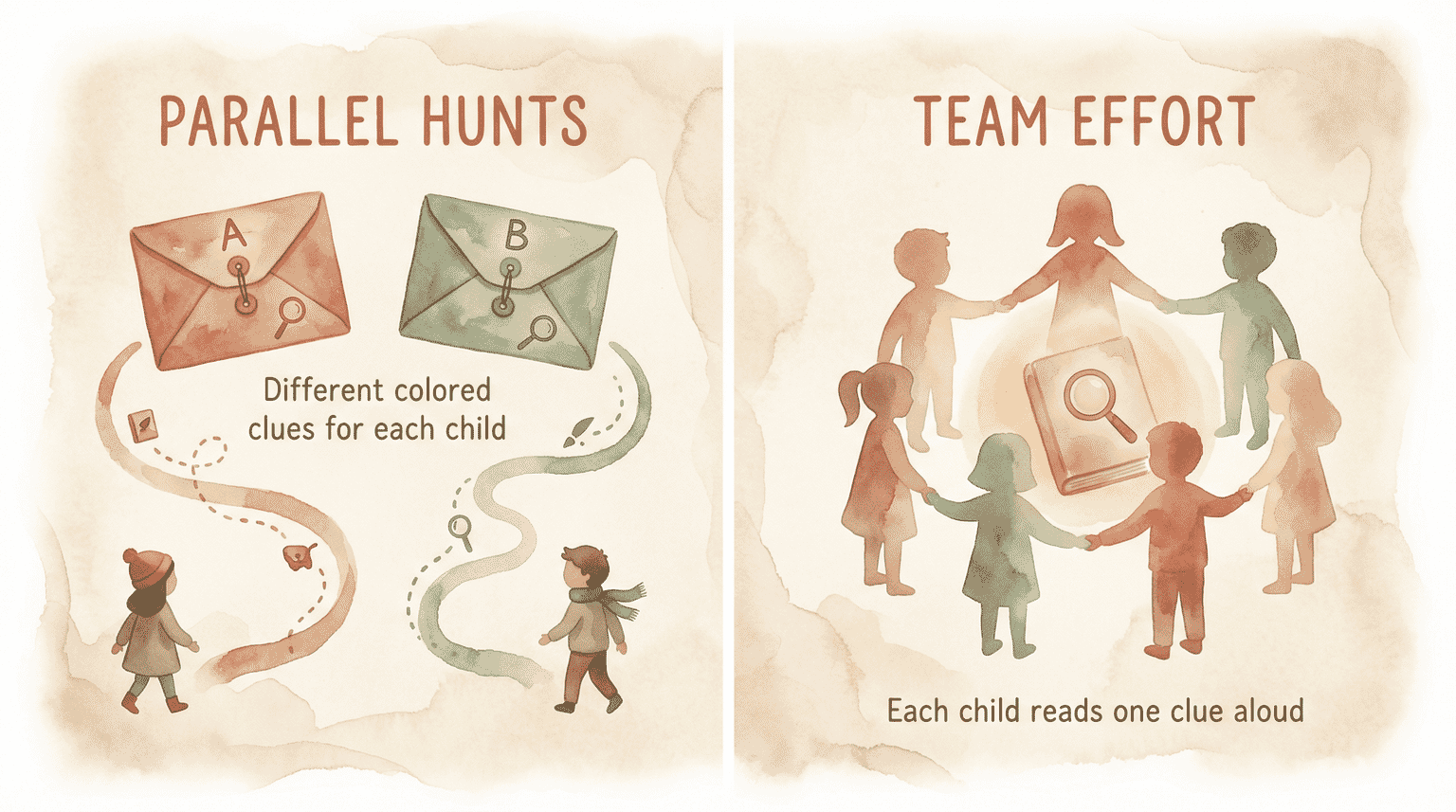
Multiple kids: Run parallel hunts with different colored clues, or make it a team effort where each child reads one clue aloud.
Short on time: A 3-clue mini-hunt works beautifully. The magic is in the seeking, not the length. This approach works especially well for Christmas morning gift opening when you want excitement without chaos.
Frequently Asked Questions
How many clues should a gift scavenger hunt have?
For children ages 3-5, use 3-4 picture-based clues. Ages 6-8 handle 5-6 word clues well. Children 9 and older enjoy 7-10 clues with riddles or puzzles. Aim for 15-30 minutes total to maintain excitement without frustration.
What age is good for scavenger hunts?
Children can participate in simple picture-based scavenger hunts starting around age 3. By age 6, most can follow written word clues. Ages 9-12 enjoy complex hunts with codes and multi-step challenges.
How do you write scavenger hunt clues for kids?
Match clue complexity to your child’s reading level. Use picture clues for pre-readers, simple location hints for early readers, and rhyming riddles for confident readers. Each clue should point clearly to the next hiding spot.
I’m Curious
Have you done a scavenger hunt gift reveal? I’d love to hear how it went—especially any clues that worked brilliantly or totally flopped. These hunts are more fun when you’ve learned from someone else’s trial runs.
Your trial runs help other parents skip the mistakes.
References
- CityQuester – Research on treasure hunts and child confidence development
- University of San Diego – Gamification and cognitive engagement in learning

Share Your Thoughts