
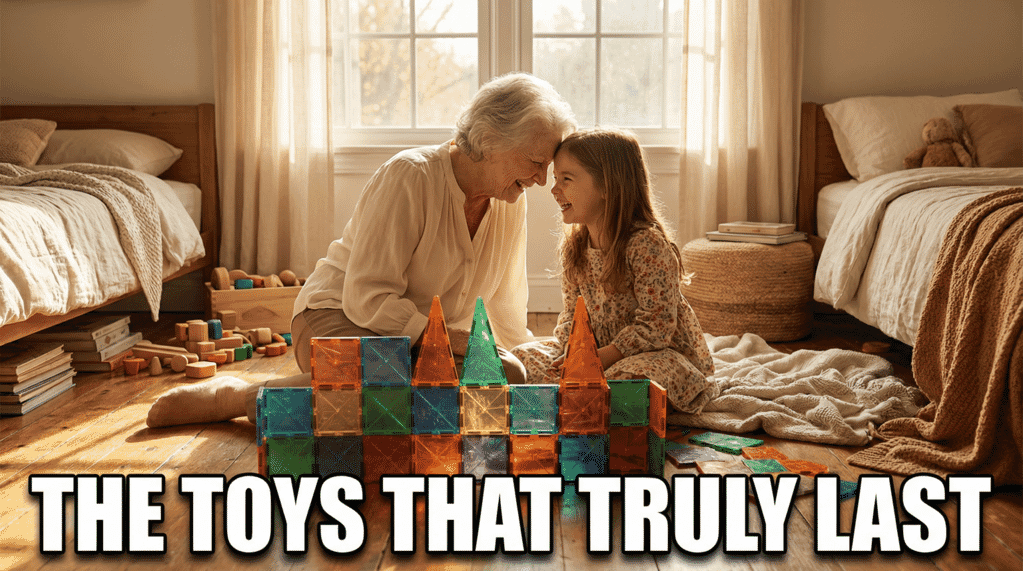
You’re standing in the toy aisle, surrounded by boxes promising to be educational, exciting, and essential. Your niece’s birthday is Saturday. Everything says “ages 3+” and she just turned 4. The pink aisle blurs into the building blocks section, and you’re no closer to a decision than you were twenty minutes ago.
Here’s what I’ve learned after buying roughly 1,200 gifts across eight kids: the box doesn’t matter. The promises don’t matter. And expensive toys don’t make kids happier. What matters is whether this gift will still be loved in six months—or abandoned by Tuesday.
My librarian brain couldn’t let this question go without digging into the research. And what I found surprised me: the toys that last aren’t necessarily the sturdiest ones. They’re the ones that fit how a particular child thinks and plays.
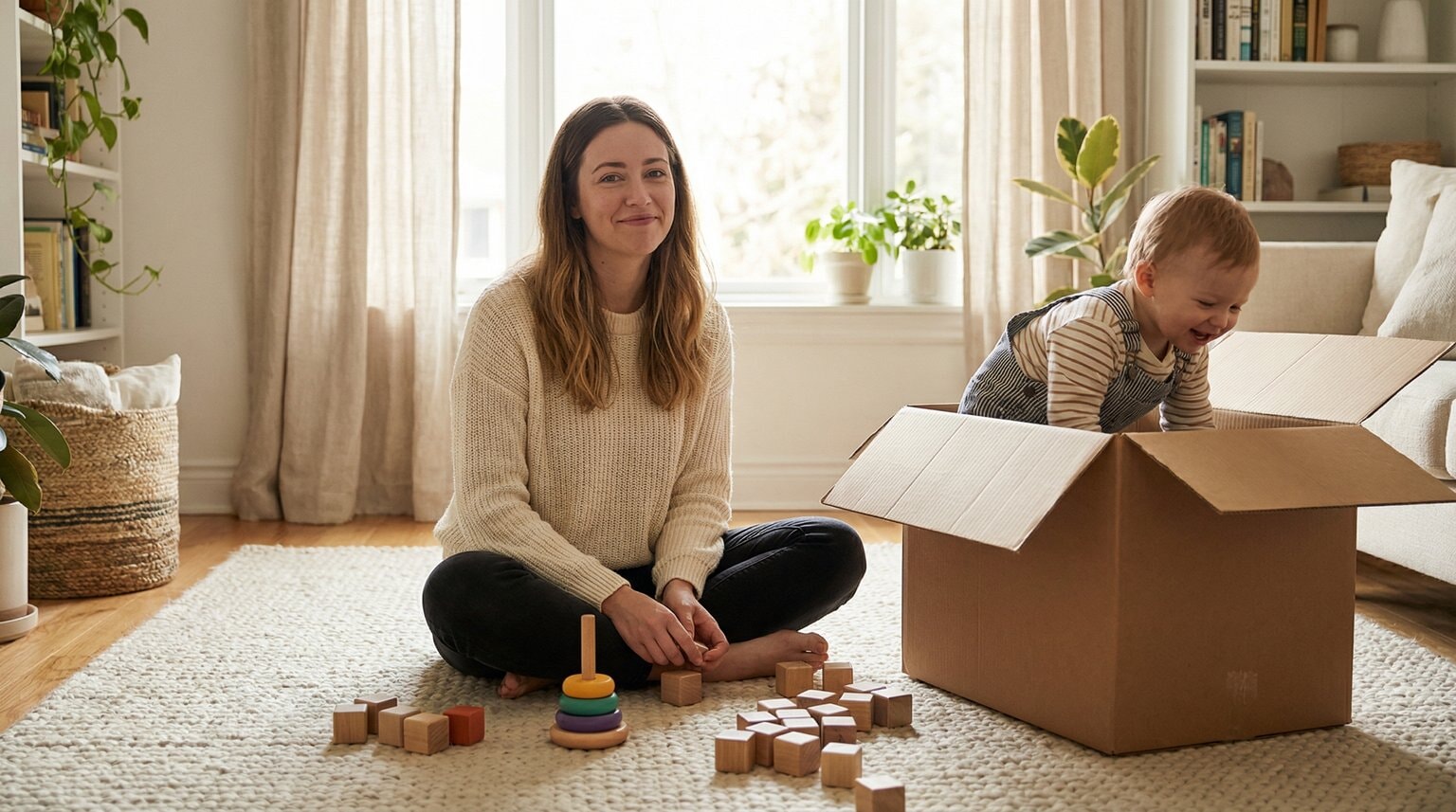
Key Takeaways
- Quality toys require children to bring imagination—they don’t do everything themselves
- Physical durability doesn’t predict play longevity; emotional durability keeps kids coming back
- Traditional toys produce more language and deeper engagement than expensive electronic alternatives
- Use the cost-per-use formula to evaluate real value before purchasing
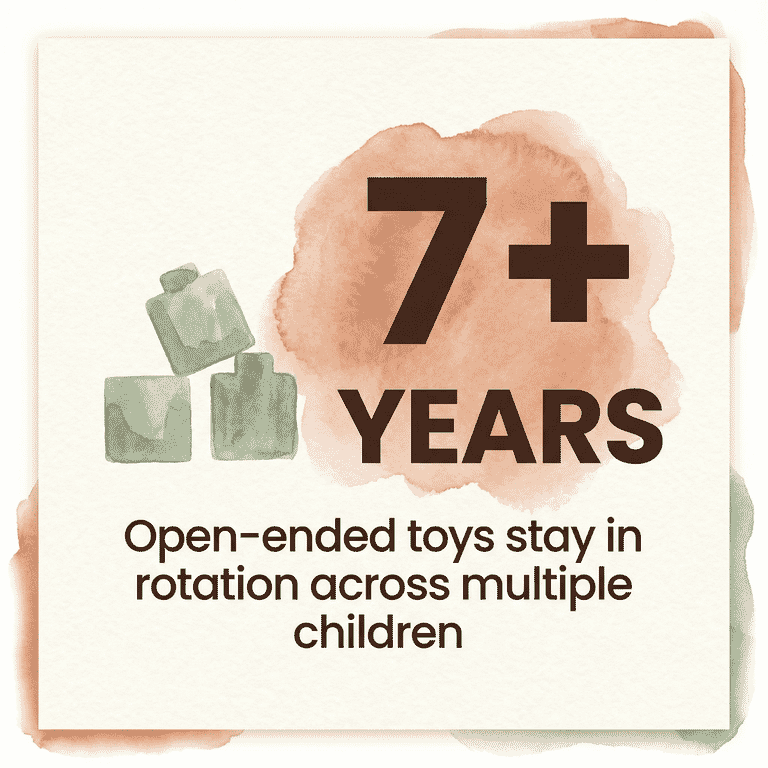
- Open-ended toys like blocks and imaginative play items work across 7+ years of childhood—pick sustainable materials
The Quality Toy Test: 3 Questions Before You Buy
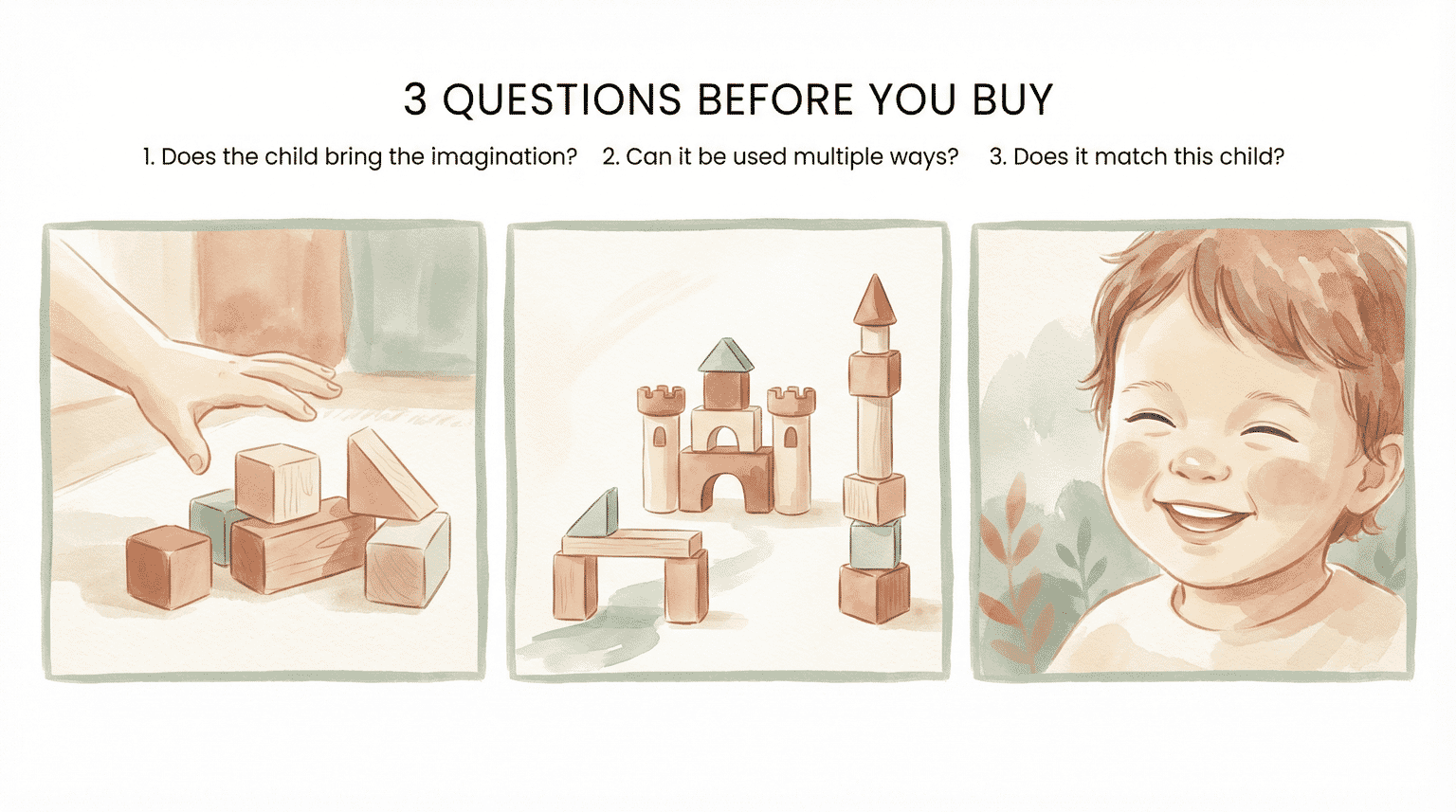
Before you grab anything off the shelf, run it through these three questions. They’re distilled from what developmental psychologists have been studying for years—and they work.
1. Does it require the child to bring the imagination?
“A really good toy is one that doesn’t do everything itself, but has the child do it.”
— Dr. Doris Bergen, Professor Emerita of Educational Psychology, Miami University
That singing, dancing, light-up dinosaur? It’s doing all the work. The child watches. When the batteries die, so does the play.
A set of wooden blocks? The child builds the castle, decides the story, creates the drama. That’s where development happens.
2. Can it be used multiple ways across multiple years?
“What makes a toy a good toy is that it could be used in a variety of different contexts and it doesn’t die.”
— Dr. Barry Kudrowitz, Product Design Research Director, University of Minnesota
His kids played with one cardboard box from a couch delivery for months—it became a fort, a rocket ship, an art canvas. The $80 electronic learning tablet? Forgotten in a week.
When you’re evaluating a potential gift, ask: can this be something different tomorrow than it is today?
3. Does it match this child’s temperament and interests?
This is where most gift guides fail. A 2025 study from Frontiers in Sustainability found something that changed how I think about toy selection: developmental relevance, emotional resonance, and adaptive growth potential matter more than physical durability alone.
In other words, a perfectly sturdy toy that doesn’t match how the child plays will still end up abandoned. The researchers call this “emotional durability”—the tendency of products to foster lasting connections over time.
When you’re selecting gifts that reflect your family’s values, start with who this child actually is, not who the packaging assumes they are.
What Quality Actually Looks Like: Category by Category
Not all toy categories are created equal when it comes to lasting value. Research has identified clear patterns in what gets used for years versus what becomes clutter.
Open-Ended Construction Toys
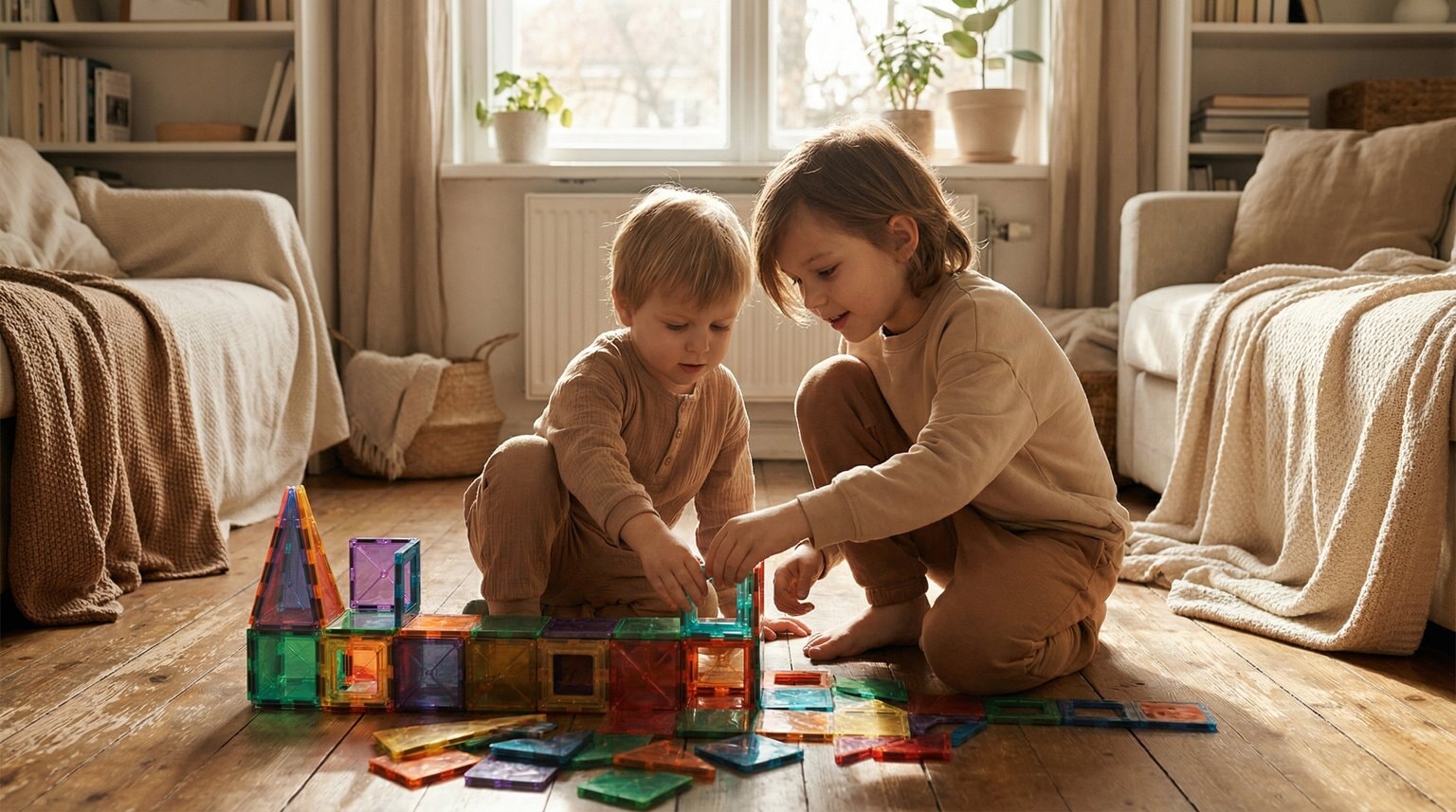
Construction toys like blocks, magnetic tiles, and modular building sets consistently rank highest for long-term engagement. Research on spatial skill development shows these toys build critical thinking abilities that transfer to math and science success.
But here’s the catch: overly themed sets lose their value fast.
The researchers put it bluntly: “Once individuals get these sets, they follow the instructions, complete the suggested composition and rarely pull it apart again. In this way, the construction pieces become display materials and lose their ability to promote spatial thinking.”
That licensed movie character LEGO set? It gets built once, displayed, and never touched again. Basic bricks that can become anything? Those get used for years.
What to look for: Modular pieces that combine multiple ways. Magna-Tiles, basic LEGO sets, unit blocks, and open-ended building systems.
Skip the sets designed to become one specific thing. Your wallet and your child’s creativity will thank you.
Imaginative Play Items
Dolls, figures, dress-up clothes, and pretend play materials show remarkable staying power. A 2022 study of children ages 1-8 found that imaginative toys showed no age-appropriateness effect—children utilized them equally well across all ages tested.
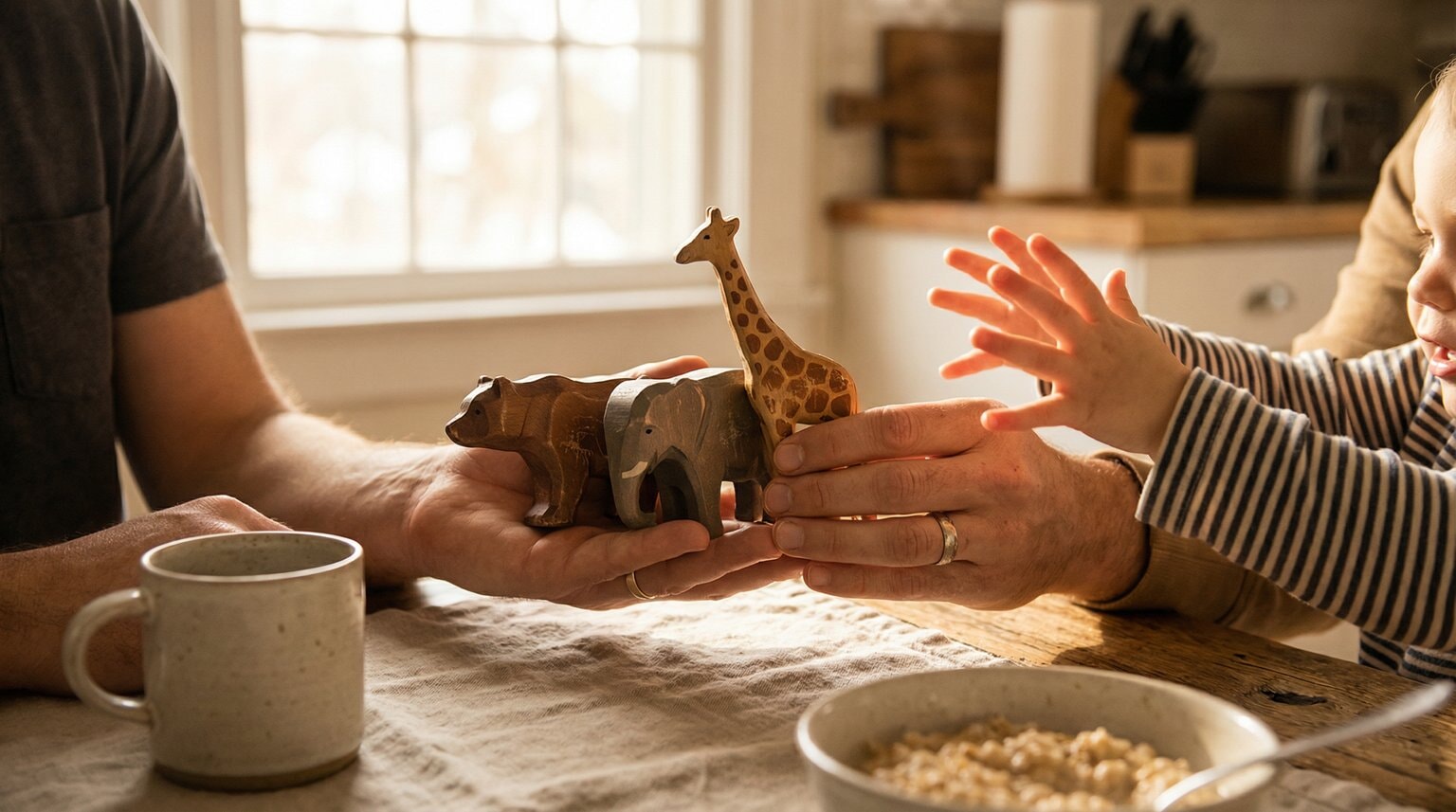
In my house, the same basket of wooden figures and fabric scraps has been a kingdom, a hospital, a restaurant, and an alien planet—across kids ranging from 3 to 12. That’s quality.
Small Vehicles and Figures
Same study, same finding: small vehicles showed no age ceiling. Your 2-year-old pushing a wooden car around the living room and your 7-year-old creating elaborate traffic scenarios are getting equal developmental value from the same toys.
Musical Instruments
Musical toys—real ones, not electronic noise-makers—demonstrated sustained engagement across the full 1-8 age range studied. A simple xylophone, a small drum, or a recorder grows with the child’s abilities.
Art and Craft Supplies
These are consumable, yes. But research suggests they offer exceptional cost-per-use value because children return to them repeatedly. Quality crayons, good paper, and real art supplies get used far more than the elaborate craft kits that produce one predetermined project.
The Durability Deception
Here’s the finding that surprised me most: physical durability doesn’t predict how long a child will play with a toy.
The Frontiers in Sustainability study found that rising toy waste is “driven less by material failure than by lack of emotional or developmental fit.” Toys don’t end up in donation bins because they broke. They end up there because children outgrew them emotionally or developmentally.
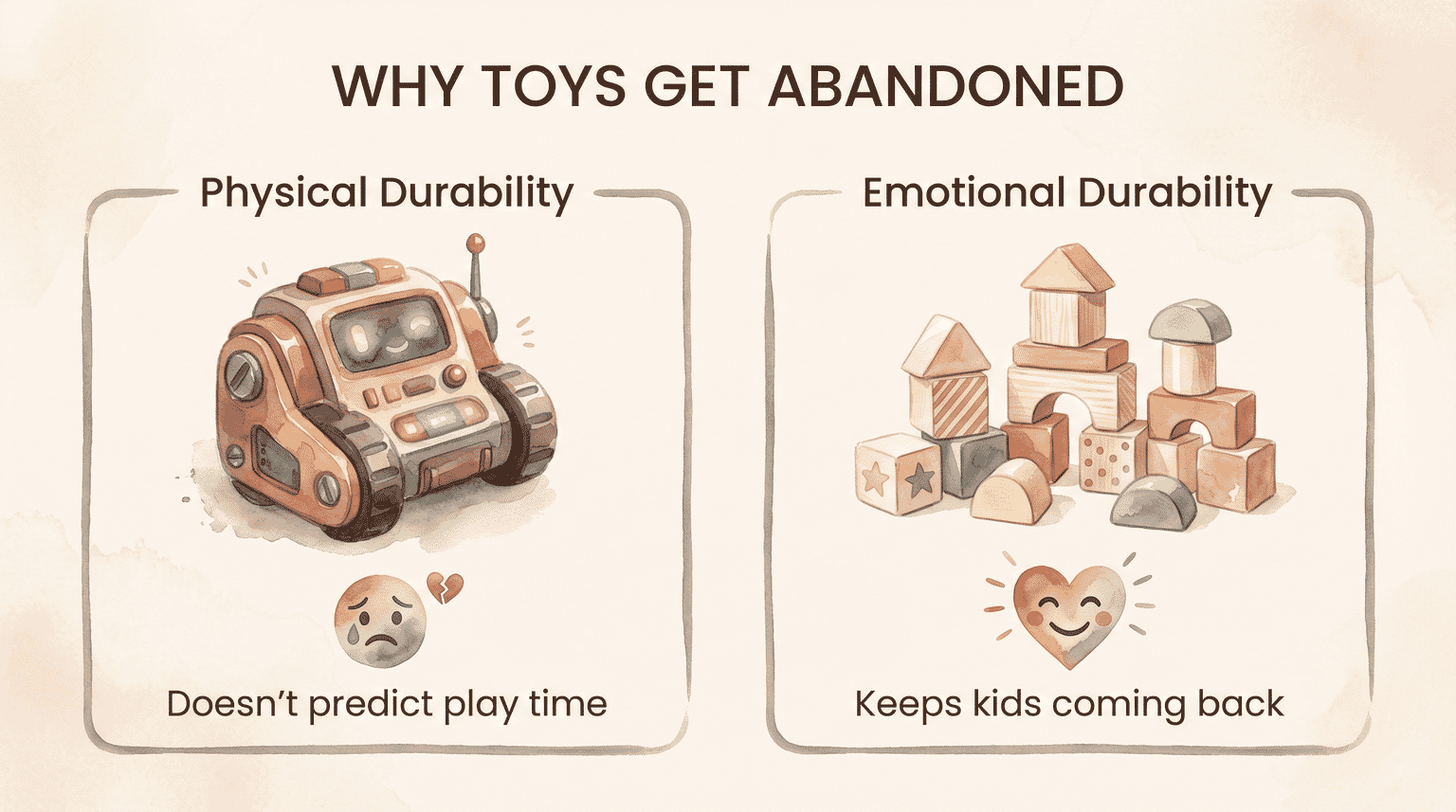
I’ve watched this play out eight times now. The cheap wooden blocks we bought for my oldest are still in rotation 15 years later—not because they’re indestructible, but because every child finds new ways to use them. Meanwhile, expensive “educational” toys rated for 10+ years of durability got abandoned after a few months.
This connects directly to why fewer toys actually lead to better play. When children have fewer options, they engage more deeply with each one. Quality creates its own quantity of play.
Calculating Real Value: The Cost-Per-Use Framework
Want a practical way to evaluate toy purchases? Use this simple formula:
(Purchase Price) ÷ (Estimated Uses Over Toy Lifespan) = Cost Per Use
A $50 toy played with twice costs $25 per use. A $30 set of blocks played with weekly for three years costs pennies per use.
When estimating lifespan, the research gives you guidance:
- Imaginative toys, vehicles, instruments: No age ceiling—potentially 7+ years of use
- Open-ended construction toys: 5-8 years if not over-themed
- Games and puzzles: Age-sensitive; 2-3 years typically
- Electronic toys: Often abandoned within months regardless of age rating
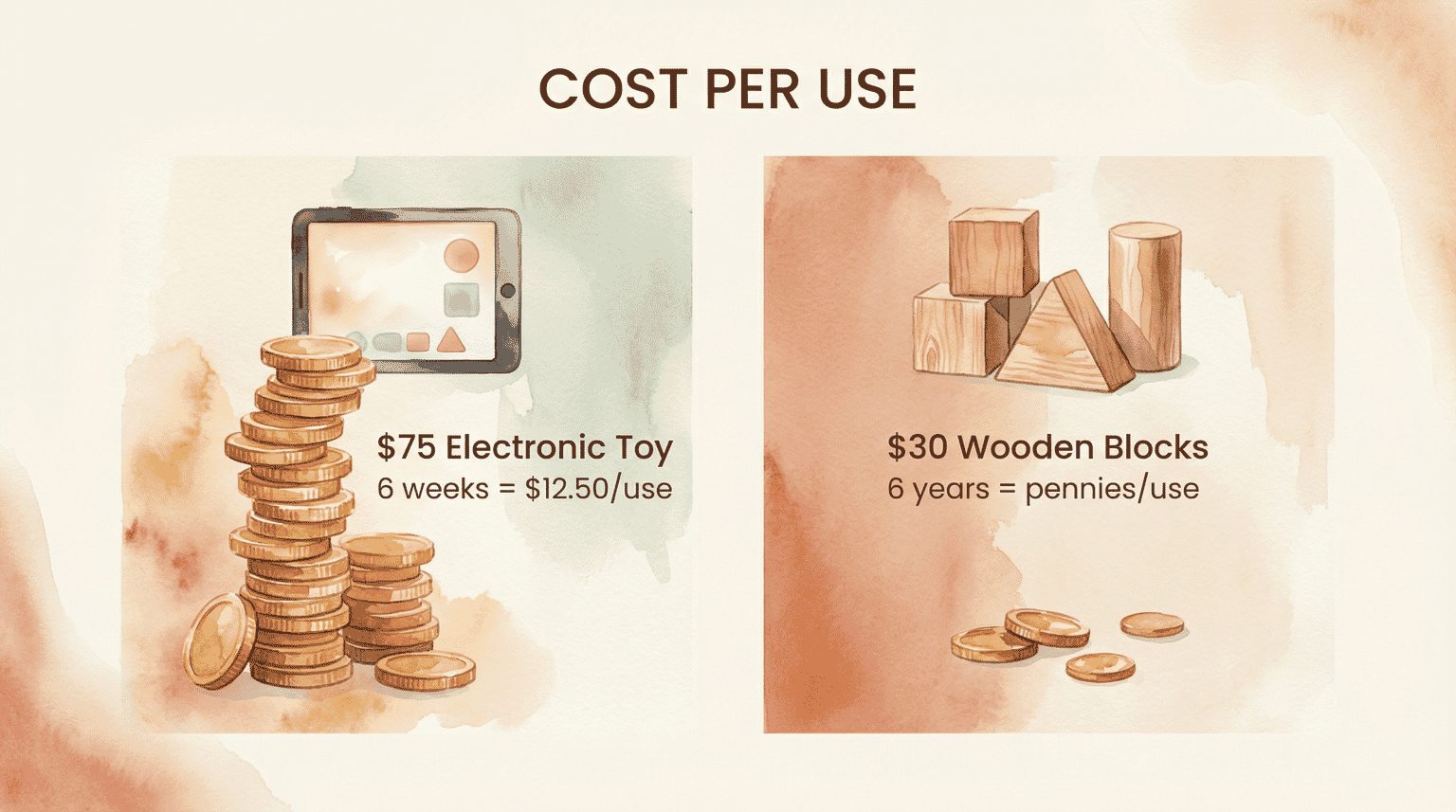
A $15 set of wooden animals with 6 years of play value beats a $75 electronic learning toy abandoned after 6 weeks. Every time.
Materials That Matter
Does it matter whether toys are made of wood or plastic? Research suggests yes—but not for the reasons you might think.
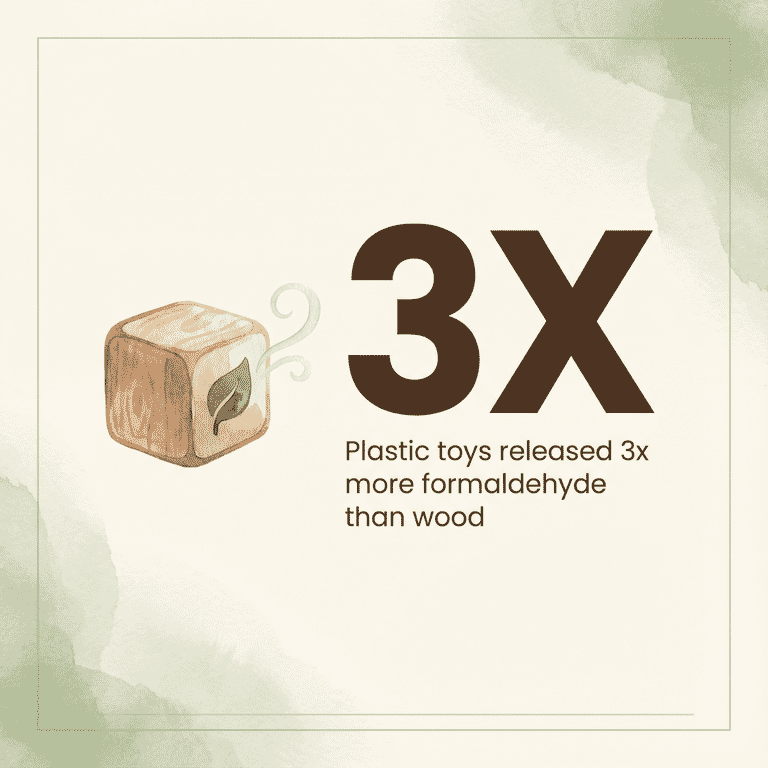
A 2025 study from NC State University examined how different toy materials affect indoor air quality in classrooms. The findings: wooden toys reduced formaldehyde and particulate matter levels compared to plastic alternatives.
The science is straightforward: wood’s porous nature absorbs harmful compounds rather than releasing them. Plastic toys showed formaldehyde concentrations increasing from 0.12 ppm to 0.36 ppm over an eight-hour period. That matters when children’s developing systems are more susceptible to environmental exposures.
Beyond air quality, a 2023 survey of 306 parents found 94% recognized traditional toys as beneficial for sensory development.
There’s something about the weight, texture, and feel of quality materials that children respond to—and parents intuitively recognize.
This doesn’t mean every plastic toy is problematic. But when choosing between a cheap plastic version and a quality wooden one at similar prices, the research supports natural materials.
What the Research Says About Electronic Toys
I have to be direct here because the research is clear.
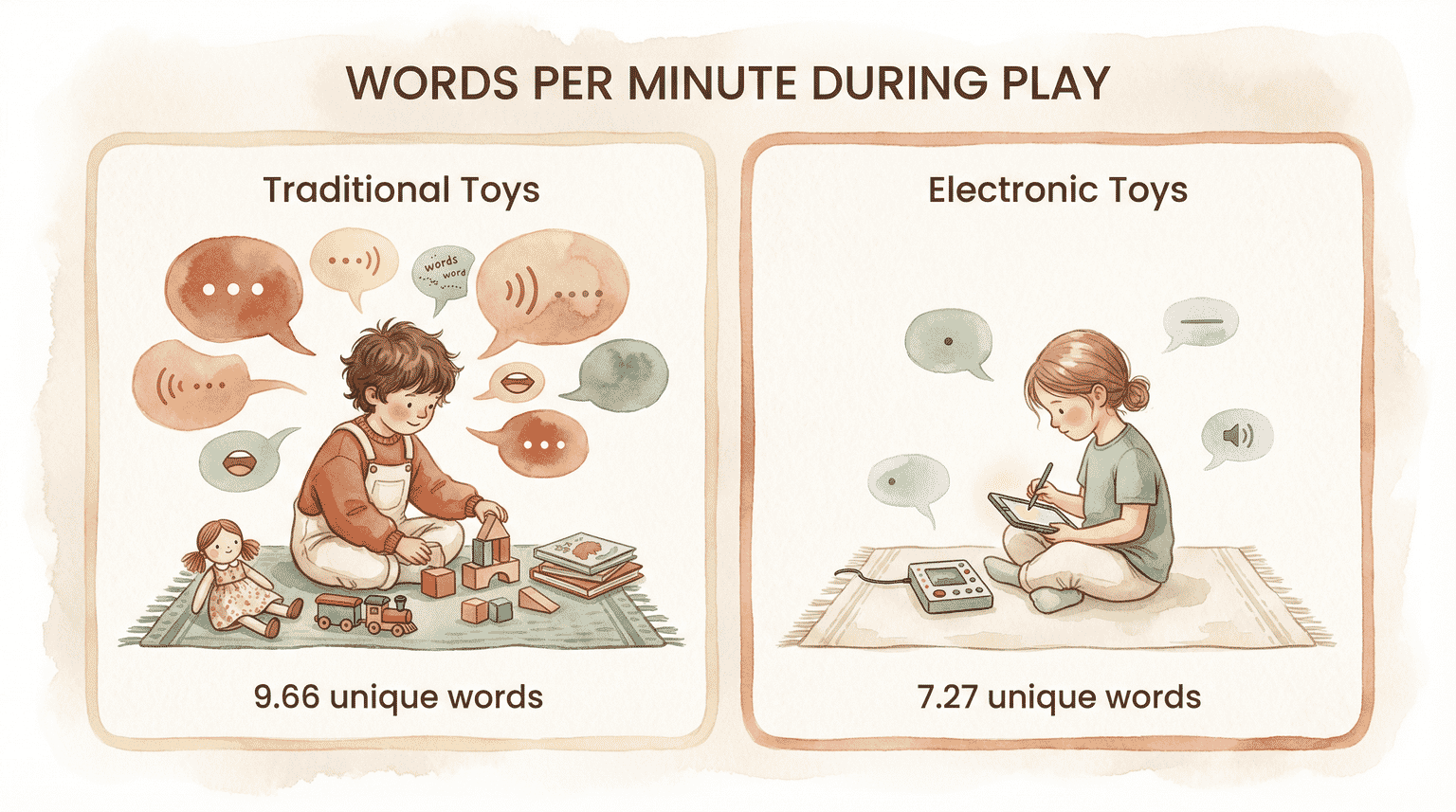
A 2022 study published in PubMed Central measured children’s language during different types of play. With traditional toys, children produced 7.74 utterances per minute and 9.66 unique words per minute. With electronic toys? Just 5.29 utterances and 7.27 unique words per minute.
The researchers explain why: “The talking, singing, sounds, and flashing lights of the electronic toys dominated the interaction, interrupting children’s utterances and decreasing the space available for parent-child communication.”
During traditional toy play, 92% of parents reported their most intense verbal communication with their children. During digital play? Only 8% reported frequent eye contact.
The researchers’ conclusion deserves quoting directly: “Expensive, technologically enhanced toys are not necessary for young children’s learning—and, in fact, may be detrimental.”
This doesn’t mean banning all electronics. It means recognizing that the flashy, expensive option isn’t automatically the quality choice.
Gifts for Households Already Overwhelmed
What if you’re buying for a family that already has toy overflow? This is where thoughtful gift-giving gets creative.
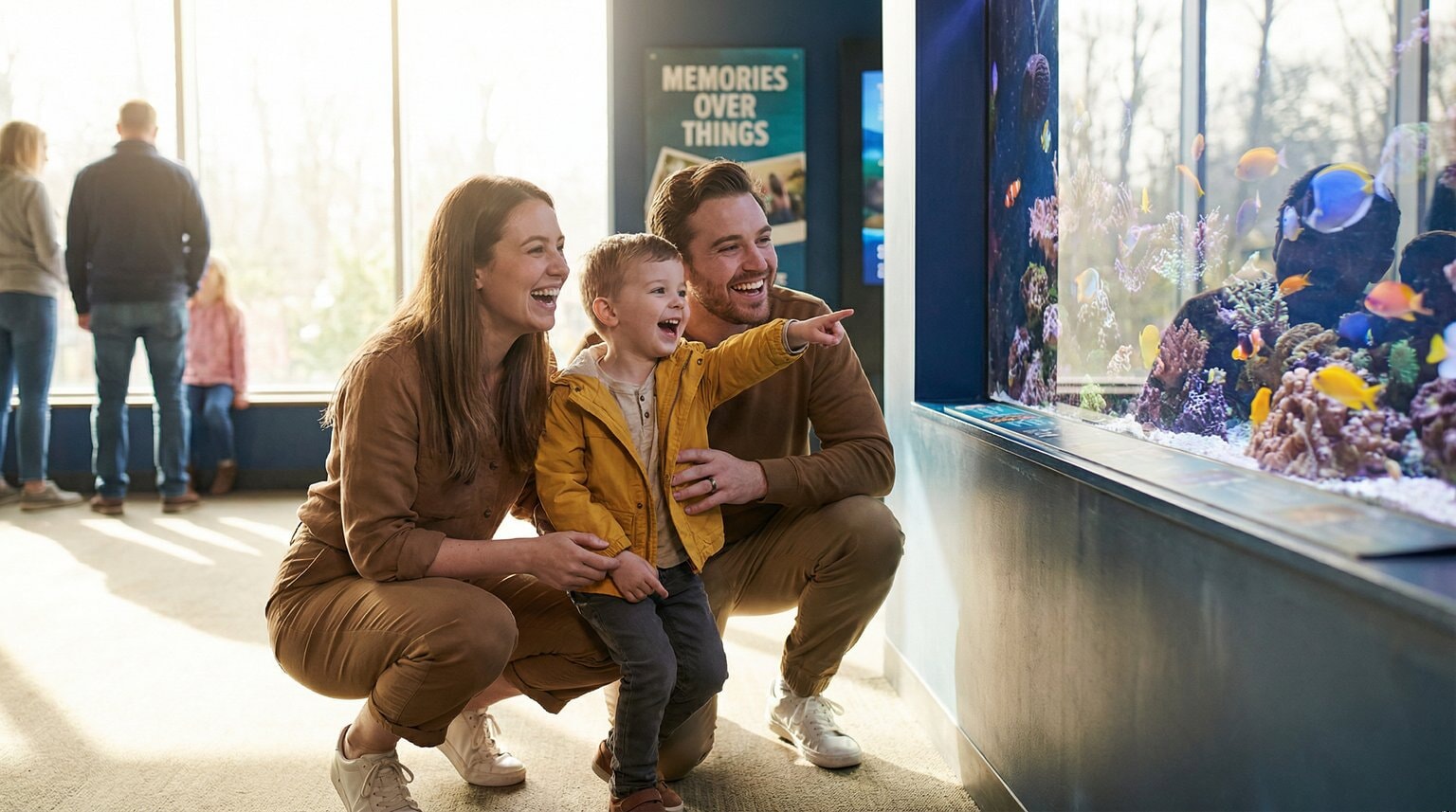
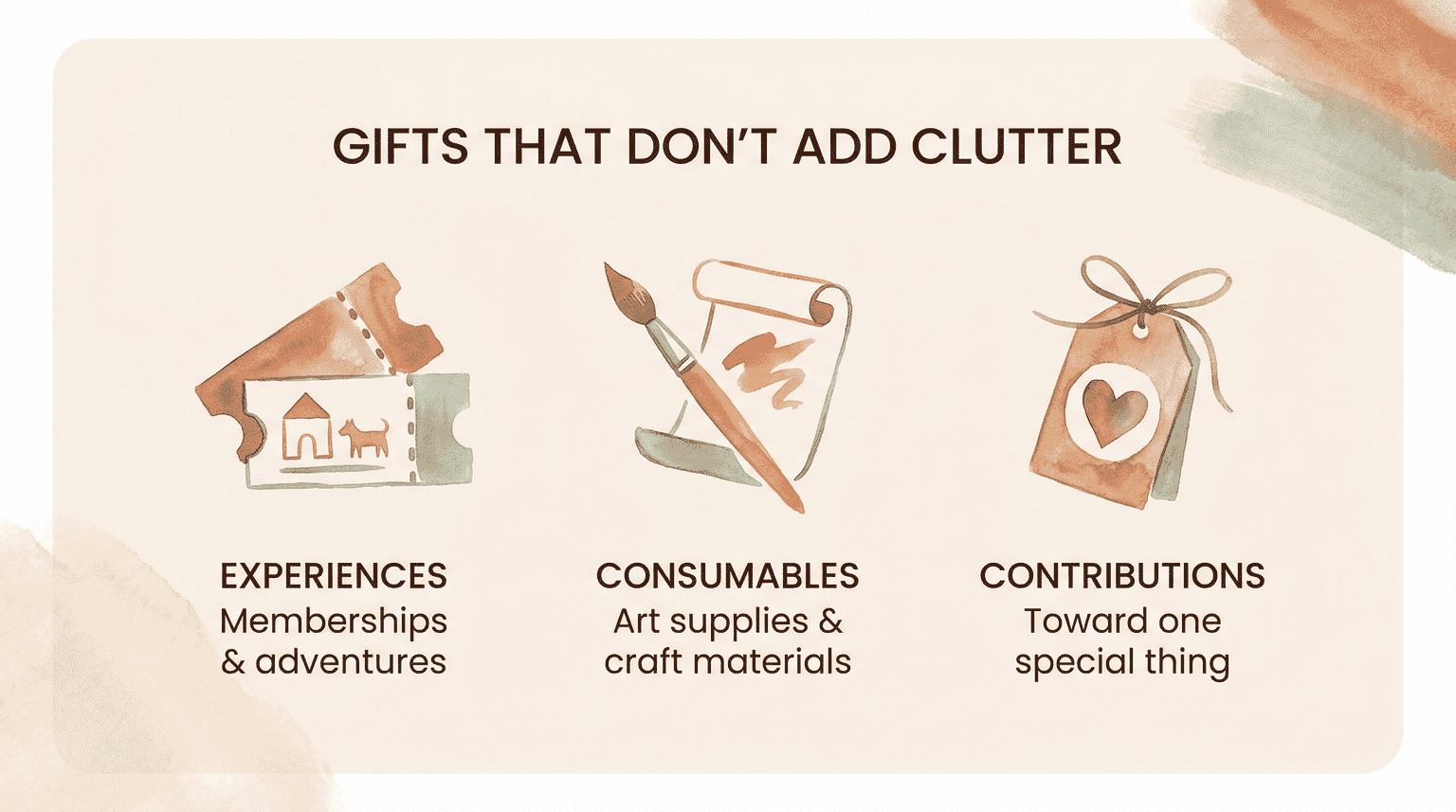
Experience gifts often outlast physical toys in children’s memories. Museum memberships, zoo passes, or tickets to a show create moments rather than clutter.
Consumable quality gifts—art supplies, building materials, craft kits with multiple uses—get used rather than stored.
Contribution gifts work well when you coordinate with parents. “I’m contributing $50 toward that one special thing she’s been wanting” often means more than another toy in the pile.
And if you’re buying for a family actively working on the one-in-one-out approach, ask what would be genuinely useful. Parents managing toy quantities often have a clear sense of what’s needed versus what will add to the overwhelm.
One more note from the research: “Instead of expensive toys, kitchen utensils in the house can also be used as toys. The key is to stimulate the child’s imagination and create time for play.” Sometimes the quality gift is permission and time, not another item.
The Bottom Line
Quality toys share three characteristics: they require the child’s imagination, they work in multiple contexts across years, and they match the child’s temperament. Everything else—the brand, the price, the durability rating—matters less than you’d think.
The research consistently points in one direction. Simpler toys produce richer play. Traditional materials outperform electronic alternatives.
And the toys that last aren’t necessarily built to last—they’re matched to how children actually develop.
Standing in that toy aisle, you now have something most gift-givers don’t: a framework for choosing well. Use it.
Frequently Asked Questions
Are expensive toys better for kids?
No. Research from PubMed Central concluded that “expensive, technologically enhanced toys are not necessary for young children’s learning—and, in fact, may be detrimental.” Studies show traditional toys costing far less produce more language, deeper engagement, and richer parent-child interaction than expensive electronic alternatives.

How many toys should a child have?
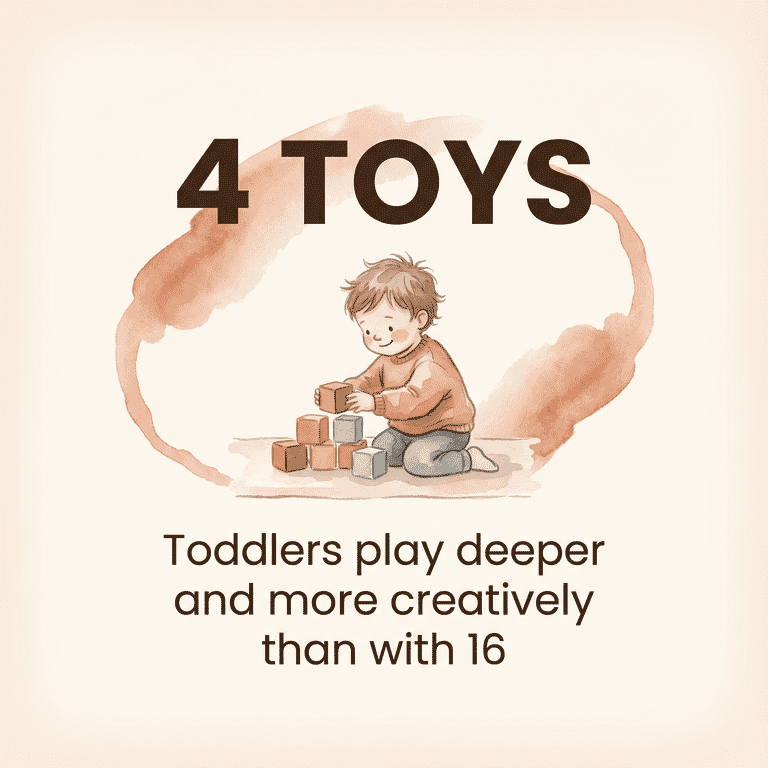
University of Toledo research found toddlers with only 4 toys demonstrated deeper, more creative play than those with 16. The specific number matters less than ensuring each toy offers open-ended play potential. Quality toys that can be used multiple ways reduce the need for quantity.
What toys are best for child development?
Research identifies three categories with exceptional developmental value across ages: imaginative play items, small vehicles, and musical instruments. A 2022 study found these categories showed no age-ceiling effect—children ages 1-8 utilized them equally well, making them excellent long-term investments.
What is the difference between quality and quantity in toys?
Quality toys require children to bring imagination and initiative—they don’t do everything themselves. Quantity approaches flood children with options, leading to shorter attention spans and scattered play. Research shows children with fewer, higher-quality toys engage more deeply and develop stronger creative skills.
What age toys should I buy for my child?
While age-appropriateness matters for some categories, research shows imaginative toys, small vehicles, and musical instruments transcend age brackets entirely. For maximum longevity, choose open-ended toys that grow with the child rather than toys designed for a narrow age window.
Share Your Story
What’s the best gift you ever gave that got years of play? I’m always collecting examples of toys that grew with kids rather than getting forgotten after a week.
I read every response—your examples help me spot the keepers faster.
References
- Surveying Parents of Preschool Children about Digital and Analog Play – Research on parent perceptions and interaction quality with different toy types
- Electronic Toys Decrease the Quantity and Lexical Diversity of Children’s Speech – Study comparing language development during traditional versus electronic toy play
- Children’s Utilization of Toys is Moderated by Age – Research on which toy categories work across multiple age groups
- ToyMatch: A Temperament-Aligned Toy Recommendation Study – Study on emotional durability and developmental fit in toy selection
- Malleability of Spatial Skills: Construction Toy Research – Research on how construction toys support spatial thinking development
- Effects of Wooden and Plastic Toys on Indoor Air Quality – 2025 study comparing material impacts on classroom air quality

Share Your Thoughts