

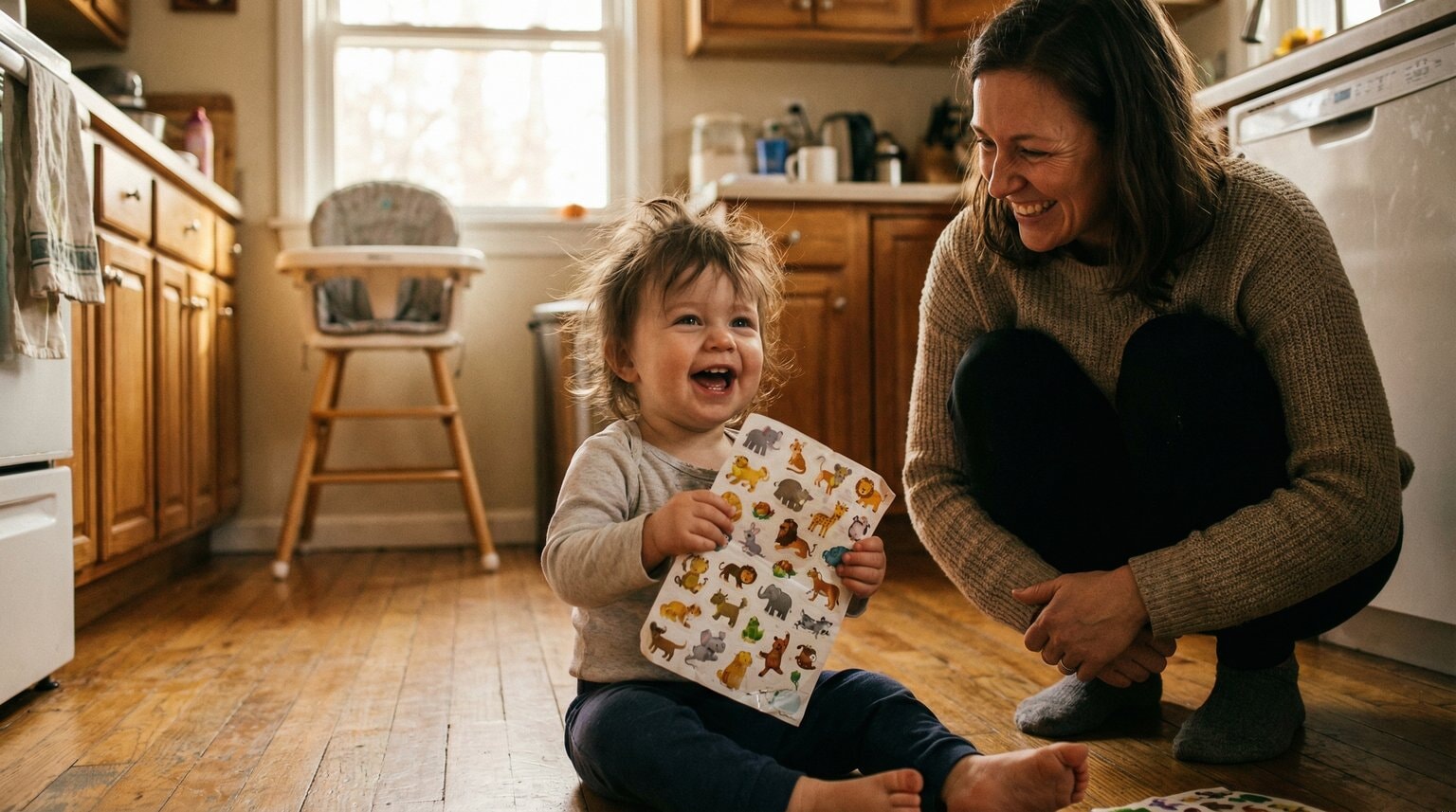
Why does your toddler lose her mind over a $3 sticker book you grabbed at checkout, when the carefully researched birthday present barely got a glance? Here’s the counterintuitive truth: the surprise matters more than the gift itself.
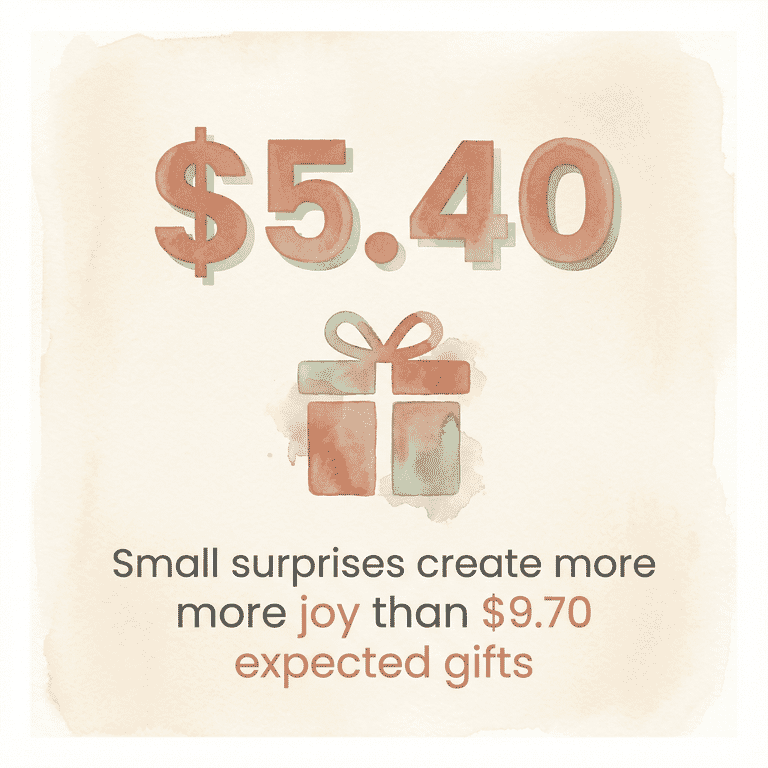
Research from the Journal of Personality and Social Psychology found that an unexpected reward of $5.40 created more pleasure than an expected one of $9.70. Read that again. A smaller surprise beat a bigger anticipated gain—by a significant margin.
I’ve watched this play out eight times now. The elaborate birthday present my kids knew was coming? Appreciated, sure. But that random Tuesday when I brought home glow sticks from the dollar store “just because”? You’d think I’d handed them a puppy.
Key Takeaways
- Unexpected gifts trigger stronger dopamine responses than anticipated ones—regardless of price
- Research shows a $5.40 surprise creates more joy than a $9.70 expected gift
- You don’t need to buy more—you need to surprise more
- Small random Tuesday treats consistently beat elaborate planned presents
What’s Happening in Your Child’s Brain

University of Arizona neuroscientist Jessica Andrews-Hanna explains it simply:
“Both giving gifts and receiving gifts activate core areas of our brain associated with reward and pleasure. These brain regions also stimulate the neurotransmitter dopamine.”
— Dr. Jessica Andrews-Hanna, University of Arizona Neuroscientist
But here’s the key—unexpected rewards trigger a stronger dopamine response than anticipated ones. Your child’s brain is essentially hardwired to light up more intensely for surprises.
The unpredictability forces attention, making the experience more memorable and emotionally significant. Your child’s brain doesn’t measure the price tag—it measures the element of surprise.
This connects to the science behind gift-giving more broadly: it’s not about what you spend. It’s about the element of surprise activating your child’s reward centers in ways that expected gifts simply can’t match.
Think about it this way: when your child knows a gift is coming, their brain has already started anticipating it. The actual moment of receiving feels like confirmation, not discovery. But a surprise? That’s a full dopamine explosion.
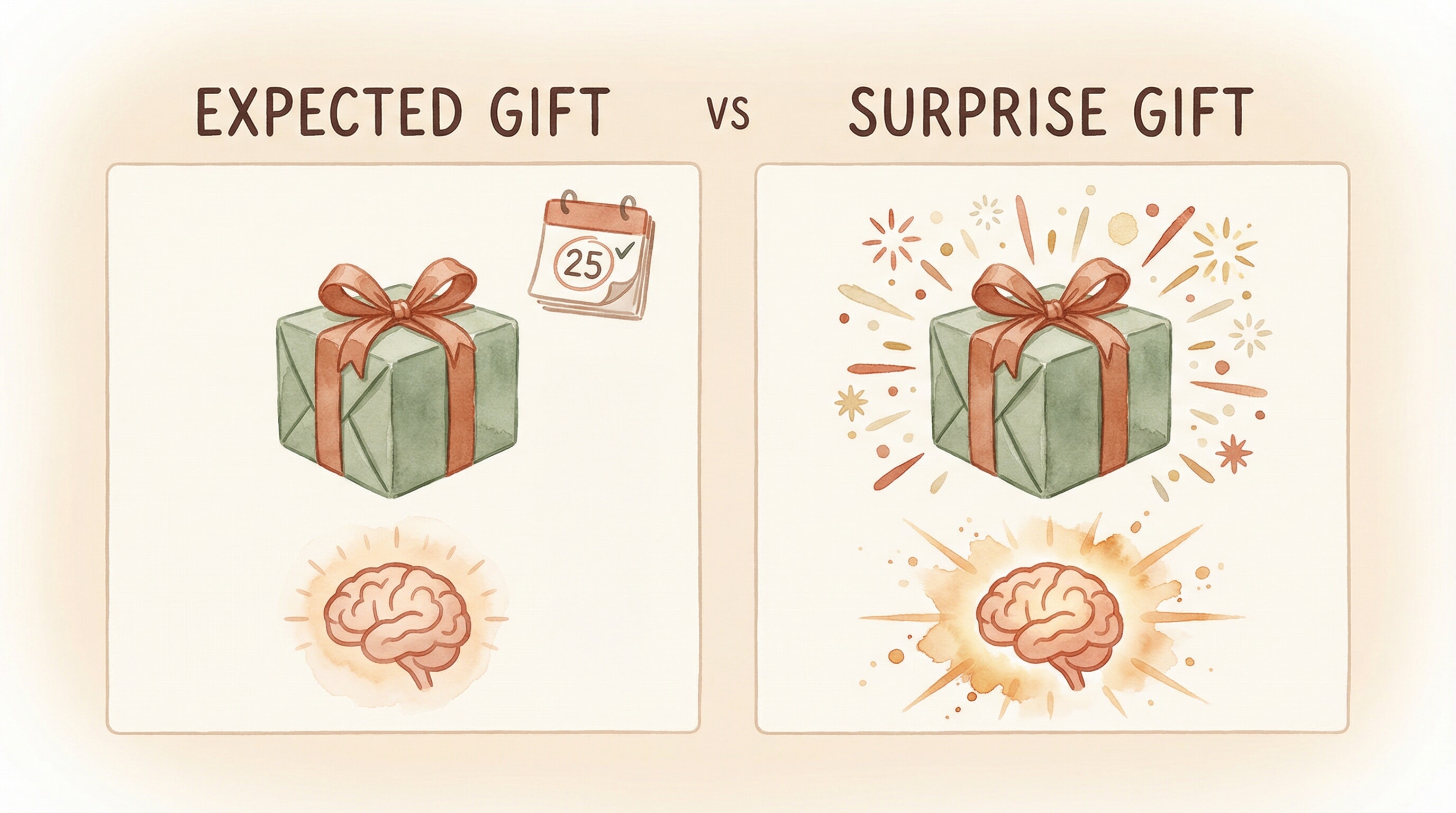
The neuroscience is clear: anticipation dulls the impact, while unpredictability amplifies it.
What This Means for You

If you’ve ever wondered why kids seem to want everything in the store, this research offers a clue. Their brains are seeking that novelty-driven dopamine hit. But here’s the practical takeaway: you don’t need to buy more—you need to surprise more.
Research published in PMC (2022) confirmed that the timing of rewards matters more than their size. Small, unexpected gestures consistently outperformed larger, anticipated ones in creating lasting positive feelings.
So skip the elaborate buildup for every gift. Save some presents to give on ordinary days. Wrap up their favorite snack randomly.
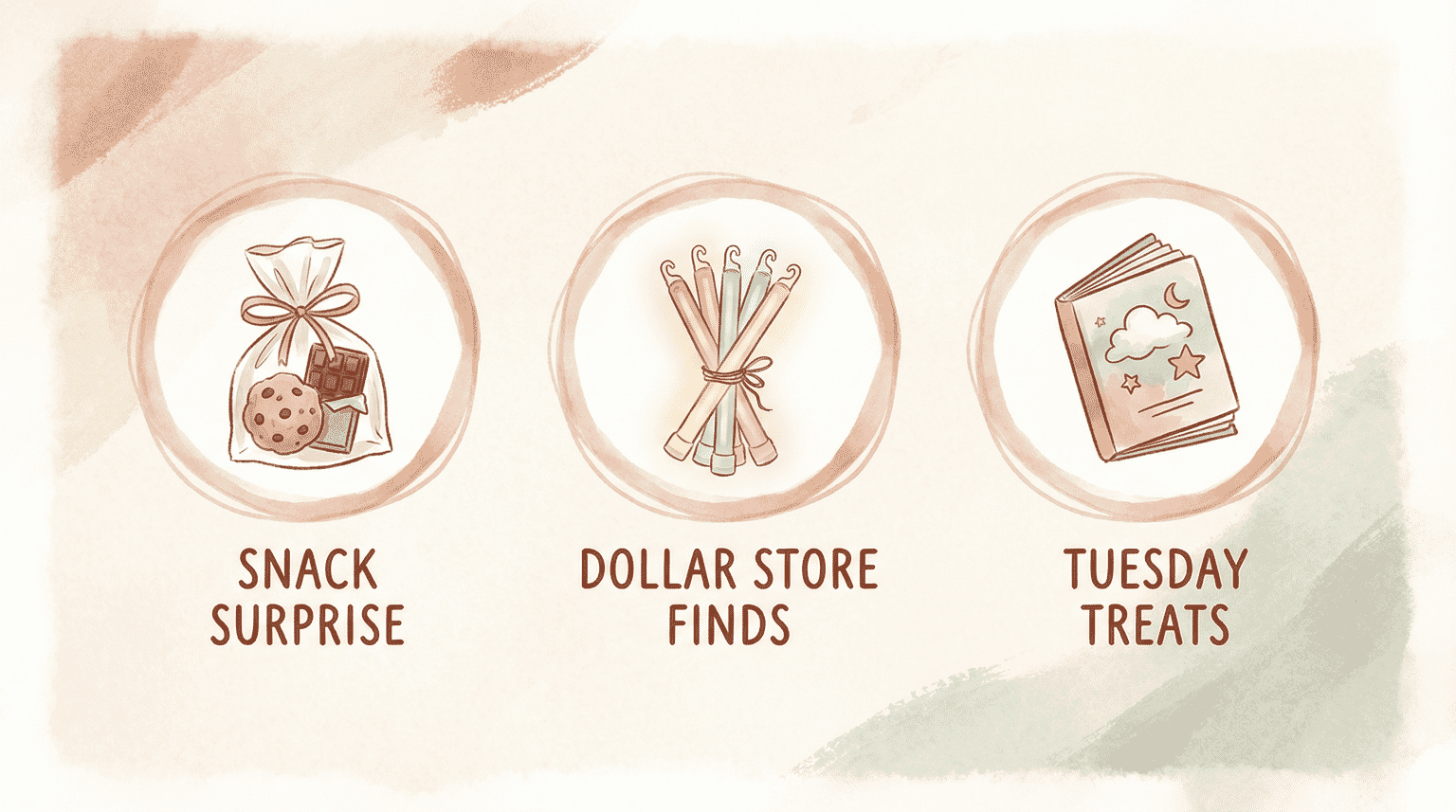
The magic isn’t in what you give—it’s in when they didn’t see it coming. A Tuesday glow stick beats a hyped-up birthday toy. Every single time.
Here’s your new strategy: next time you’re buying a gift, consider splitting it up. Instead of one big moment, create three small surprise moments spread across random days.
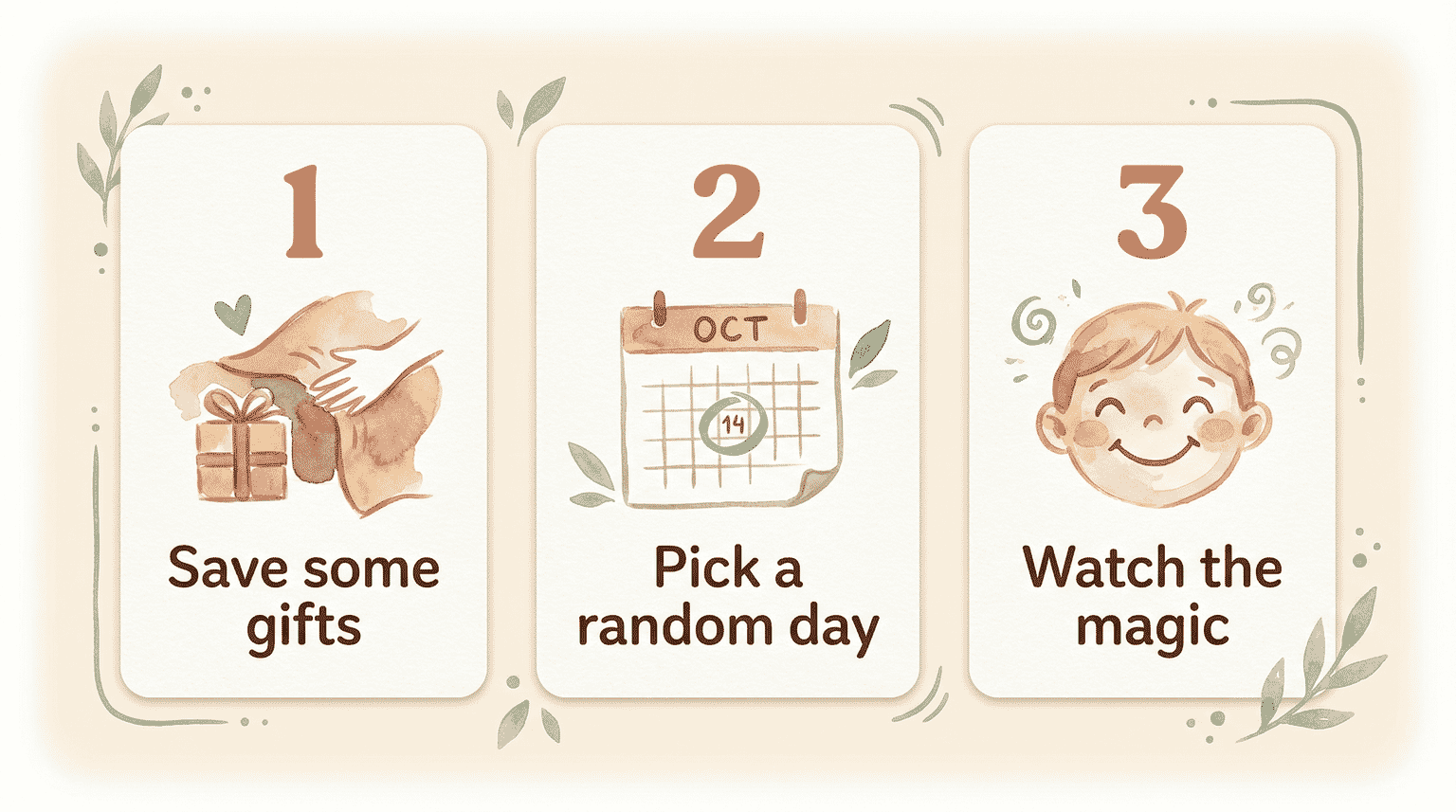
The ideas don’t have to be complicated. A wrapped favorite snack. Dollar store glow sticks. A book you grabbed at the library. The surprise does the heavy lifting.
And honestly? This takes the pressure off. You don’t need to find the perfect gift. You just need to find the unexpected moment.
Share Your Story
What’s the smallest surprise gift that got the biggest reaction from your kid? I’ve learned that random Tuesday treats beat planned presents every time—but I’d love to hear your best “didn’t see that coming” moments.
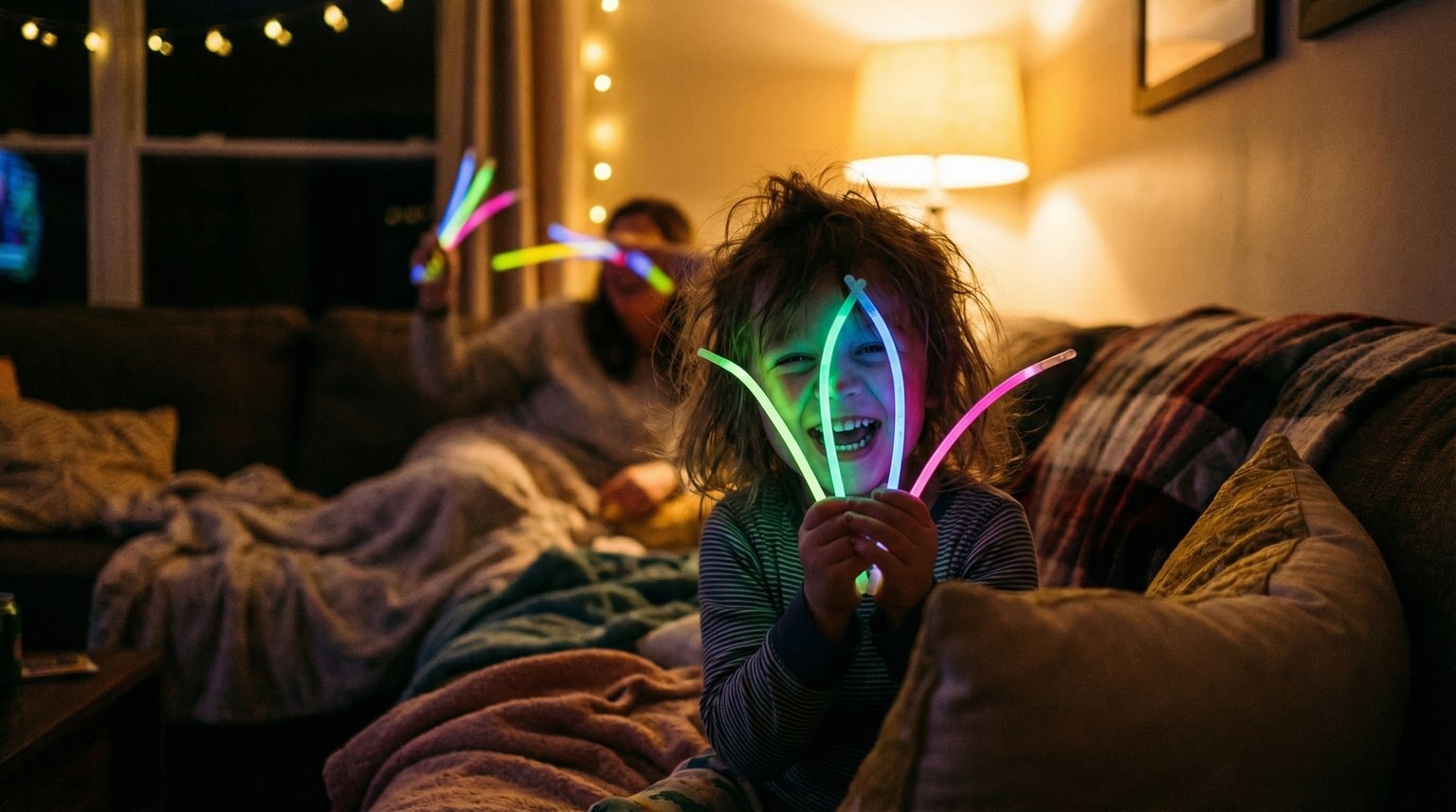
Drop a comment below—your surprise wins might spark another parent’s Tuesday magic.
References
- Journal of Personality and Social Psychology – Research on unexpected reach-outs and appreciation
- University of Arizona – Neuroscience of gift-giving and dopamine response
- PMC – Research on reward timing and intrinsic motivation

Share Your Thoughts