
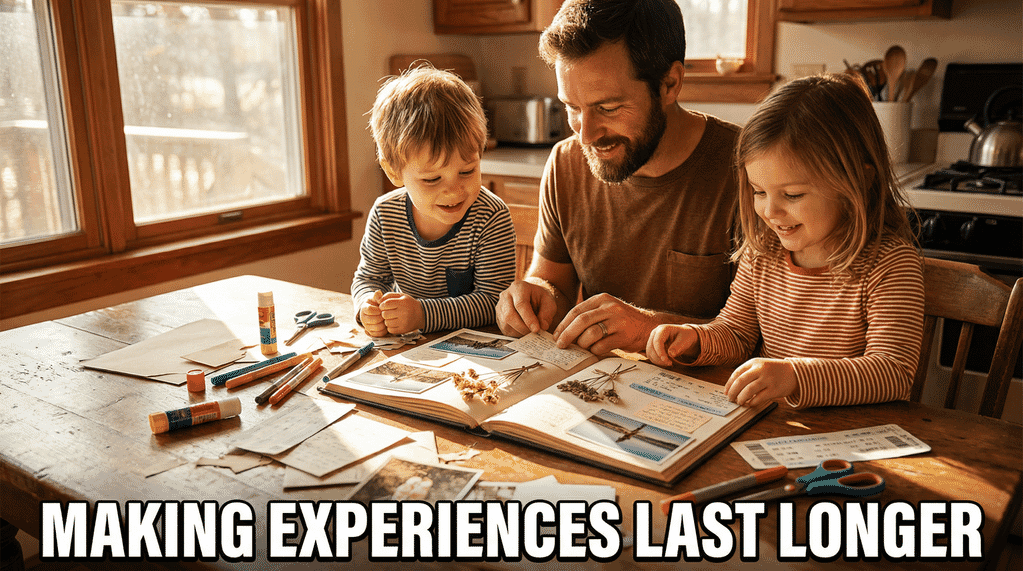
You planned the perfect zoo trip. You waited in line for the giraffes, splurged on the overpriced lunch, and your daughter declared it “the best day ever.” Three months later? She barely remembers going. Meanwhile, she still talks about that $5 plastic dinosaur from a year ago.
Here’s what the research actually shows: this isn’t a failure of your experience—it’s how young brains work. And there’s a simple fix.

Key Takeaways
- Children under 12 get more happiness from tangible items than experiences—their brains aren’t wired yet for memory-based joy
- Physical cues like photos and souvenirs trigger spontaneous memory recall in young children, even weeks later
- The best memory triggers are sensory, unique to the experience, and chosen by your child
- Regular photo review and storytelling conversations strengthen memory formation over time
Why Experiences Disappear (And How to Fix It)
Children under 12 derive more happiness from material things than from experiences. I know—it sounds backwards. But University of Illinois Chicago researchers discovered that this pattern holds across four separate studies with children ages 3-17.
Dr. Lan Nguyen Chaplin, who led the research, explains why:
“An experience is much more complex than a material good. Experiences are abstract, difficult to compare, and involve social interactions. To fully appreciate and derive happiness from experiences, children require cognitive sophistication.”
— Dr. Lan Nguyen Chaplin, University of Illinois Chicago
Your child’s developing brain struggles with the memory and reflection skills needed to hold onto experiences. That trip to the zoo? It requires her to recall sensory details, reconstruct the sequence of events, and appreciate the social connection you shared. A toy dinosaur just… exists. She can see it, touch it, and feel happy whenever she wants.
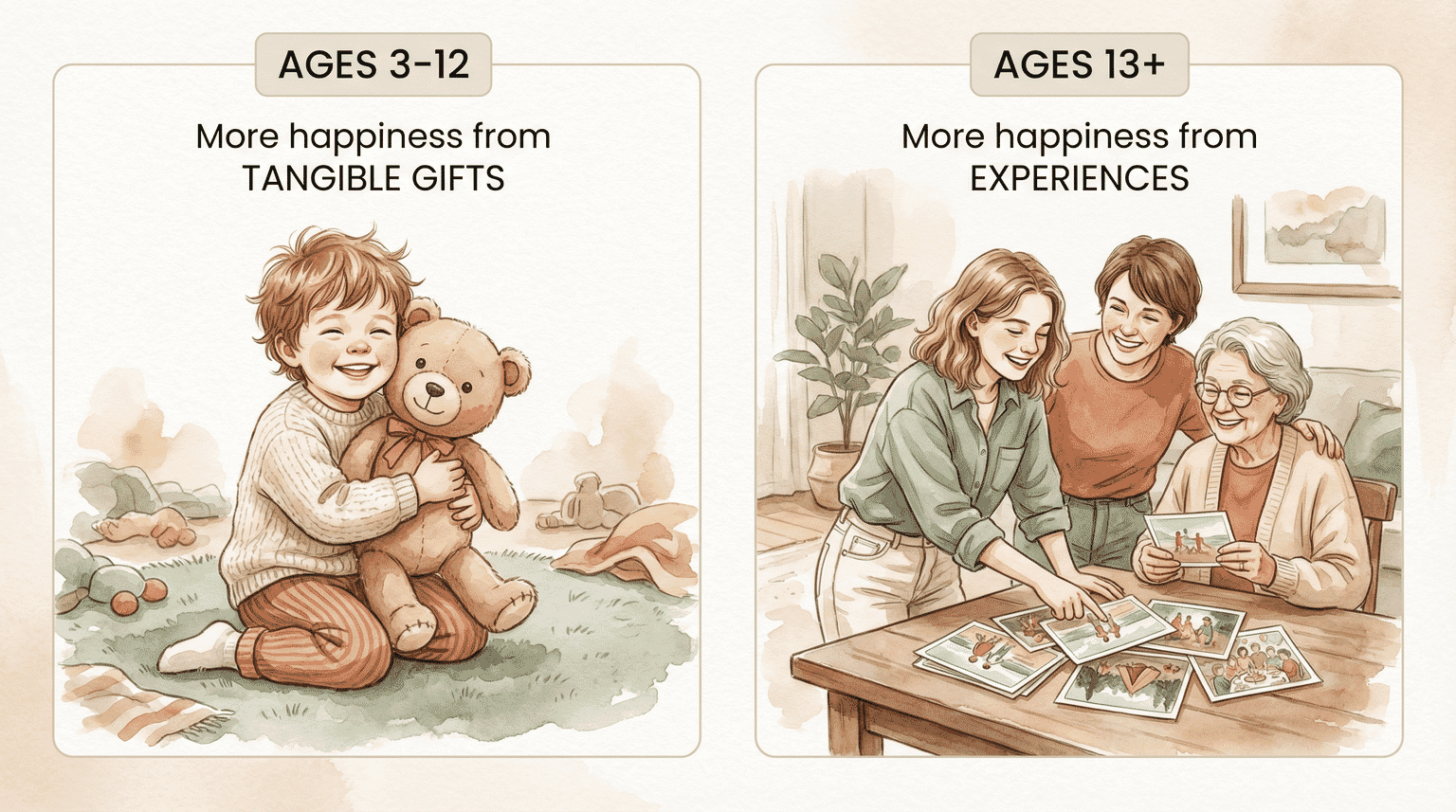
The shift happens around ages 13-17, when teenagers finally derive more happiness from experiences than possessions. But here’s what fascinated my librarian brain: we don’t have to wait a decade. We can bridge this gap now.
Children ages 3-12 typically derive more happiness from material items than experiences. Around ages 13-17, this reverses—teenagers and adults gain more happiness from experiences. This shift occurs as memory and cognitive skills develop, allowing children to better recall and appreciate past experiences. Photo books and meaningful souvenirs can help younger children bridge this gap by providing tangible memory triggers.
The Science of Memory Triggers
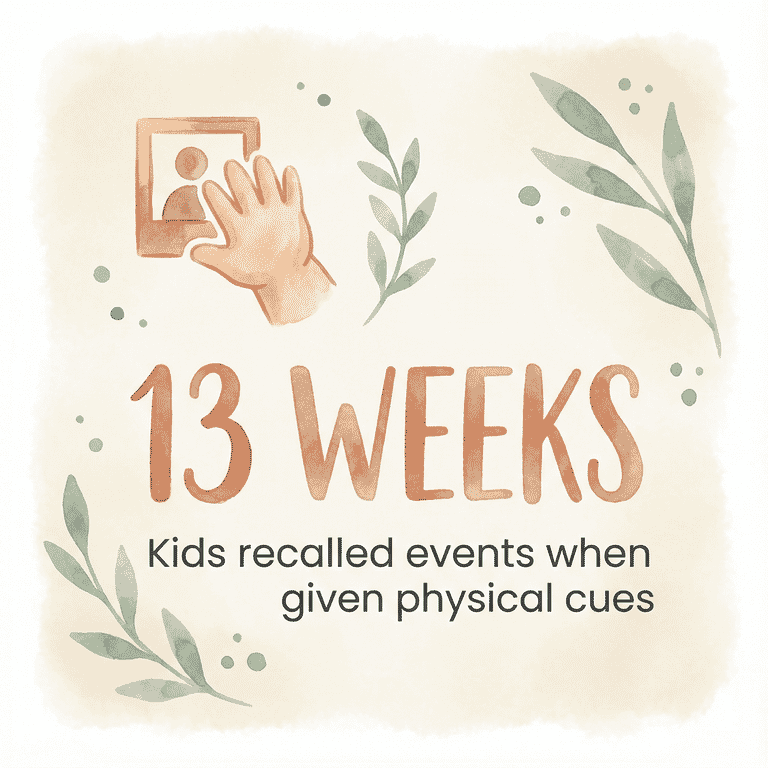
A 2022 study of 226 preschoolers revealed something that changed how I approach experience preservation: when 3- and 4-year-olds were exposed to environmental cues from a previous visit, they spontaneously recalled events—even 13 weeks later. The effect sizes were large across all conditions.
This is the “memory shortcut” researchers describe. Young children can’t strategically retrieve memories the way adults can (that’s why “What did you do at school today?” gets a blank stare). But give them a physical cue? The memory surfaces on its own.
Dr. Chaplin puts it simply: “For experiences to provide enduring happiness, children must be able to recall details of the event long after it is over.”
This is exactly why photo books and souvenirs matter. They’re not just keepsakes—they’re cognitive tools that help young brains access memories they couldn’t retrieve otherwise.
If you’re working on understanding what gifts truly mean to children, this distinction between strategic and spontaneous memory explains a lot about why tangible items feel more valuable to kids.
Photo Book Strategies That Actually Work
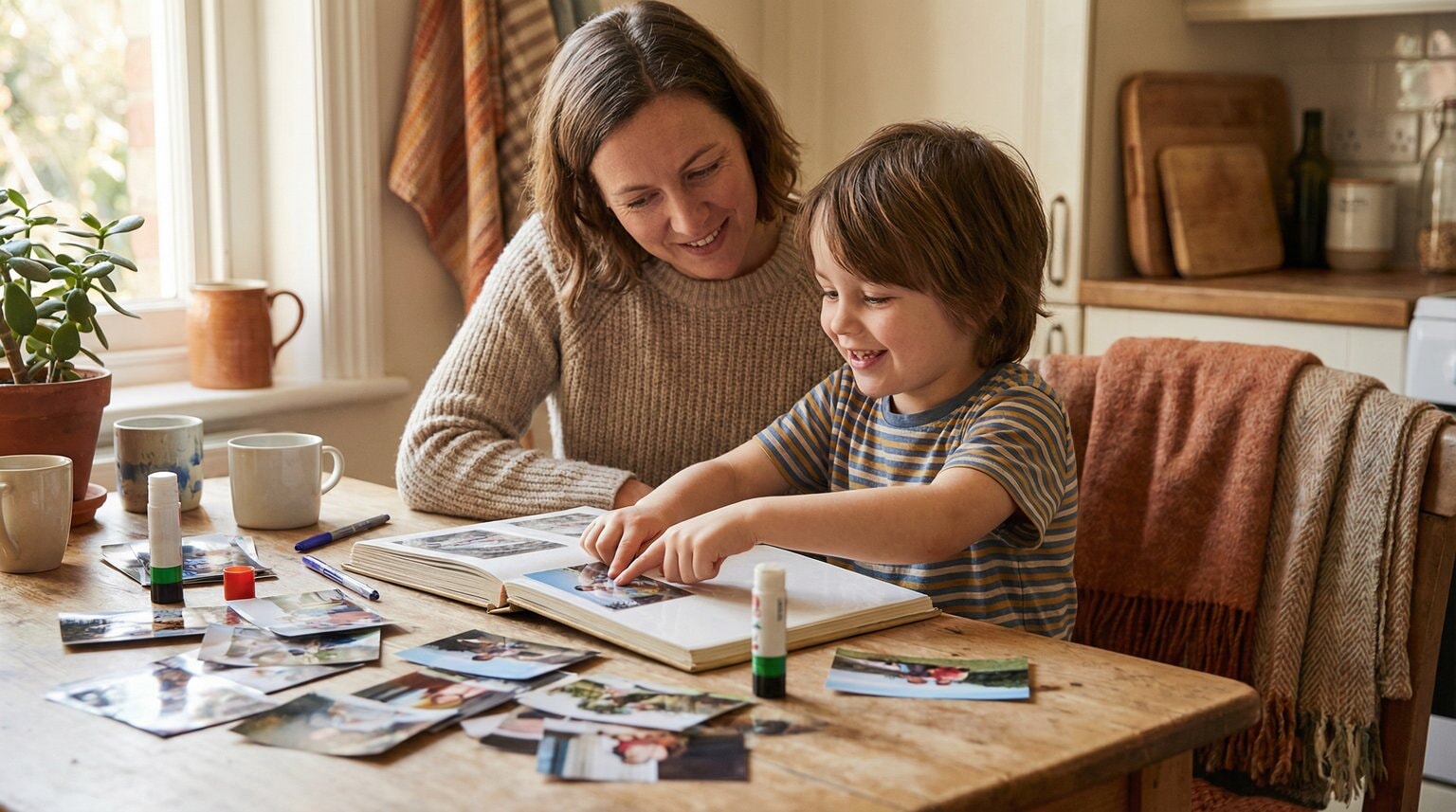
What to Capture
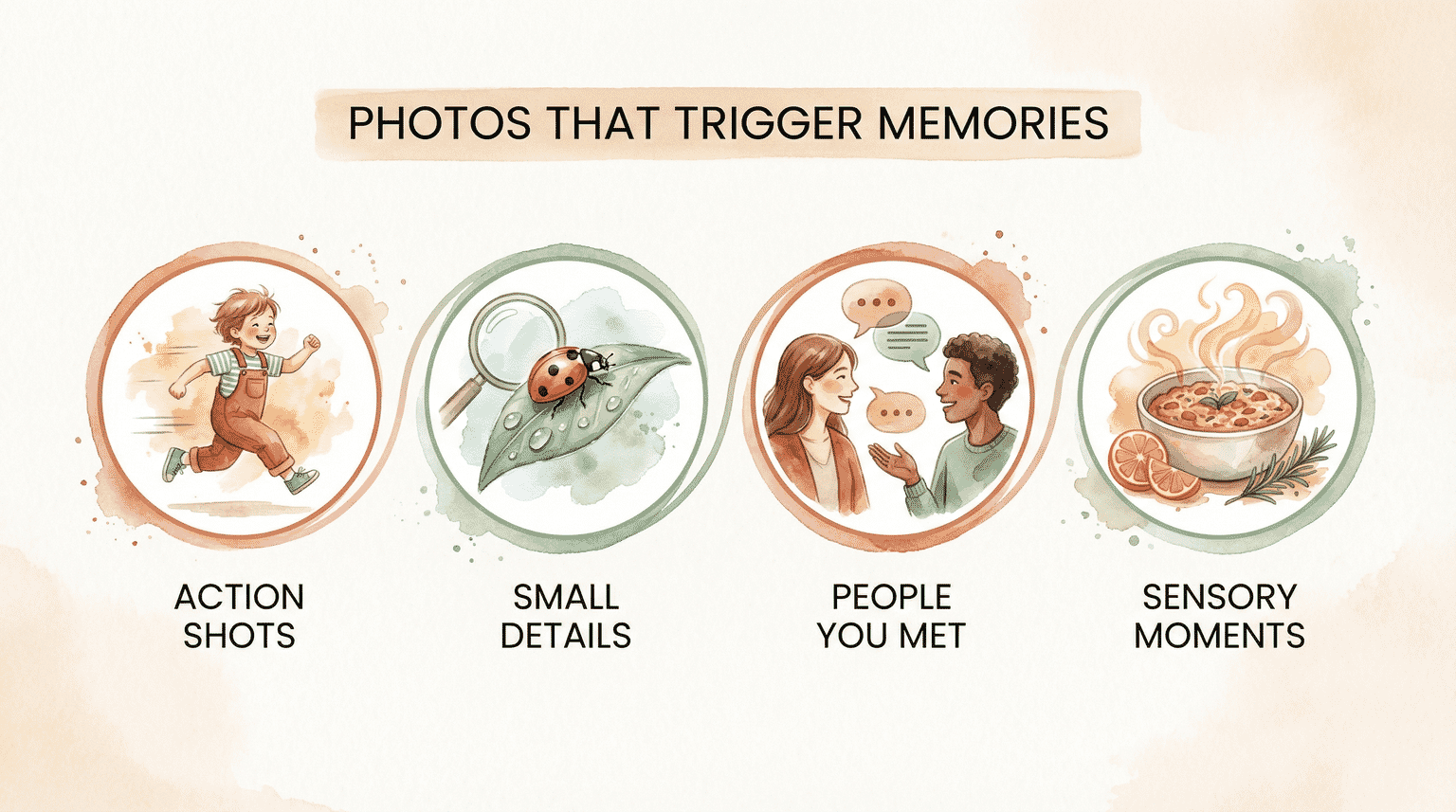
Forget the posed photos in front of landmarks. The images that trigger strongest recall are:
- Action shots showing your child doing something
- Small details they noticed (the weird bug, the funny sign)
- People you interacted with (the kind ticket-taker, cousins they played with)
- Sensory moments (the ice cream, the splash pad, the petting zoo)
I’ve tested this with my own kids. My 6-year-old can look at a posed family photo from our beach trip and say “oh, that’s the beach.” But show her the picture of the hermit crab she found? She launches into a five-minute story about how it tickled her hand.
Getting Kids Involved
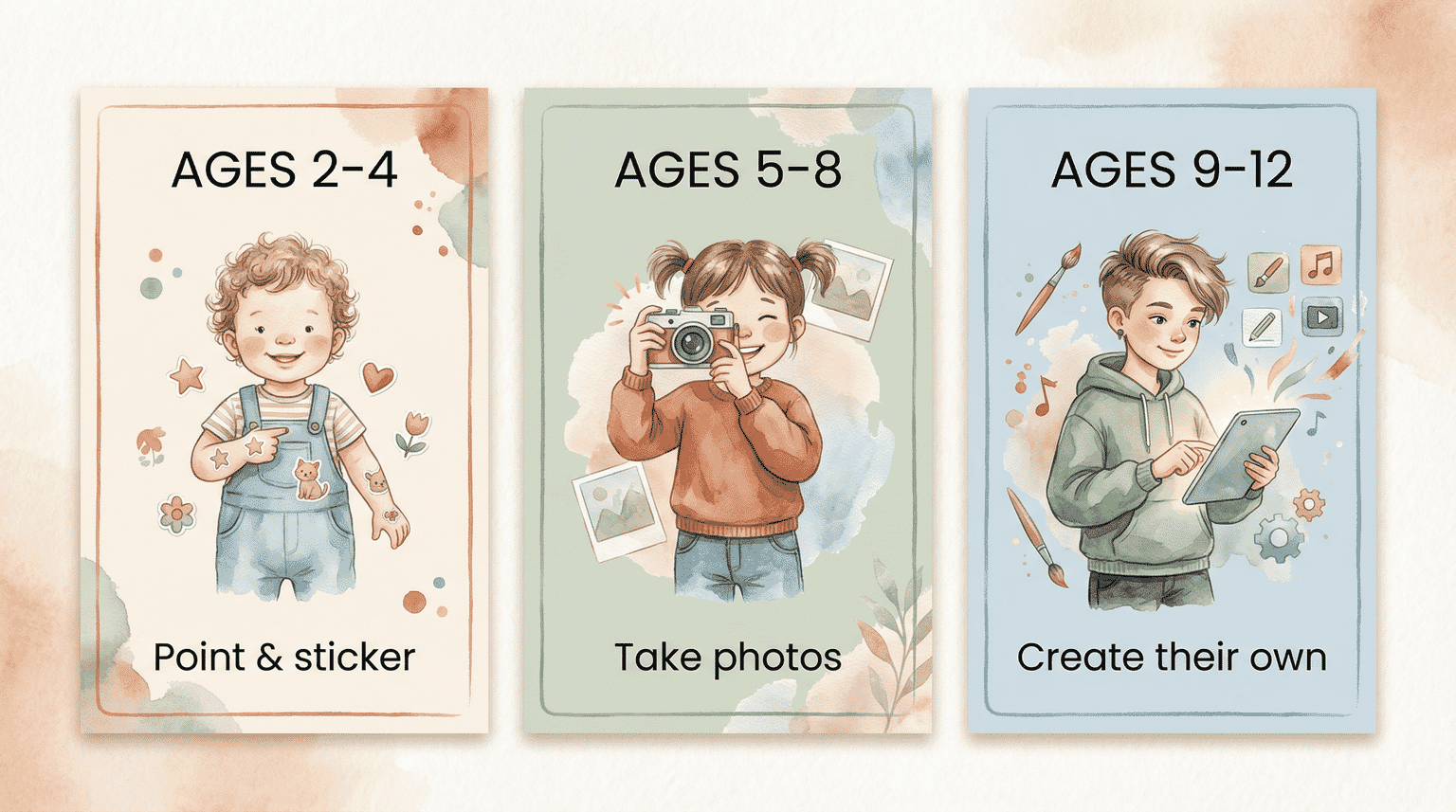
Even toddlers can participate in photo book creation—you just adjust expectations:
- Ages 2-4: Let them point to photos they like while you assemble. Add stickers or let them scribble on printed pages.
- Ages 5-8: Give them the camera during experiences to capture their perspective. Let them select which photos make the cut.
- Ages 9-12: Hand over digital photo book apps and let them create their own spreads. They’ll surprise you with what they remember.
Creation Methods
You don’t need elaborate scrapbooking skills. Options that actually get finished:
- Digital apps (Chatbooks, Shutterfly) that auto-generate from your phone photos
- Print-on-demand services for one-click photo books
- Simple binders with printed photos and handwritten captions
- Photo walls where new pictures cycle in after each experience
The best method is the one you’ll actually do. I’ve abandoned more elaborate systems than I care to admit.
The Review Ritual
Creating the photo book is half the work. Research from memory specialists shows that repetition builds memories—which explains why your toddler wants the same bedtime story for weeks straight. Their brain is doing exactly what it should.
Build photo review into your routines:
- Weekly: Flip through recent photos during a quiet moment
- Monthly: Pull out a photo book from a past adventure
- Seasonally: Review last year’s version of upcoming holidays
- Before similar experiences: Look at zoo photos before the next zoo trip
I keep our family photo books in the living room, not tucked away. When my 4-year-old is bored, she often grabs one and asks me to “tell the story” of what we did. That’s spontaneous memory retrieval in action.
Souvenirs Worth Keeping
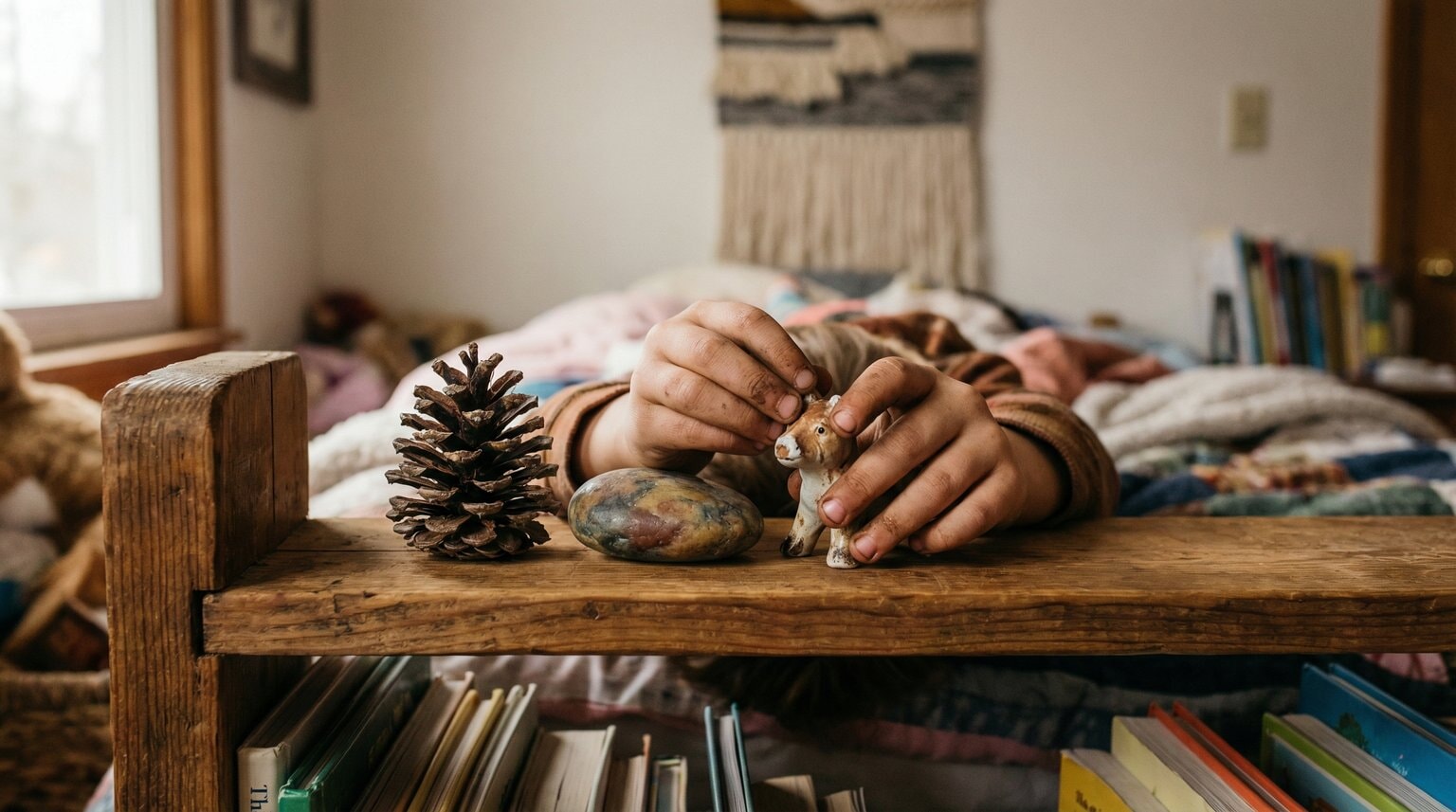
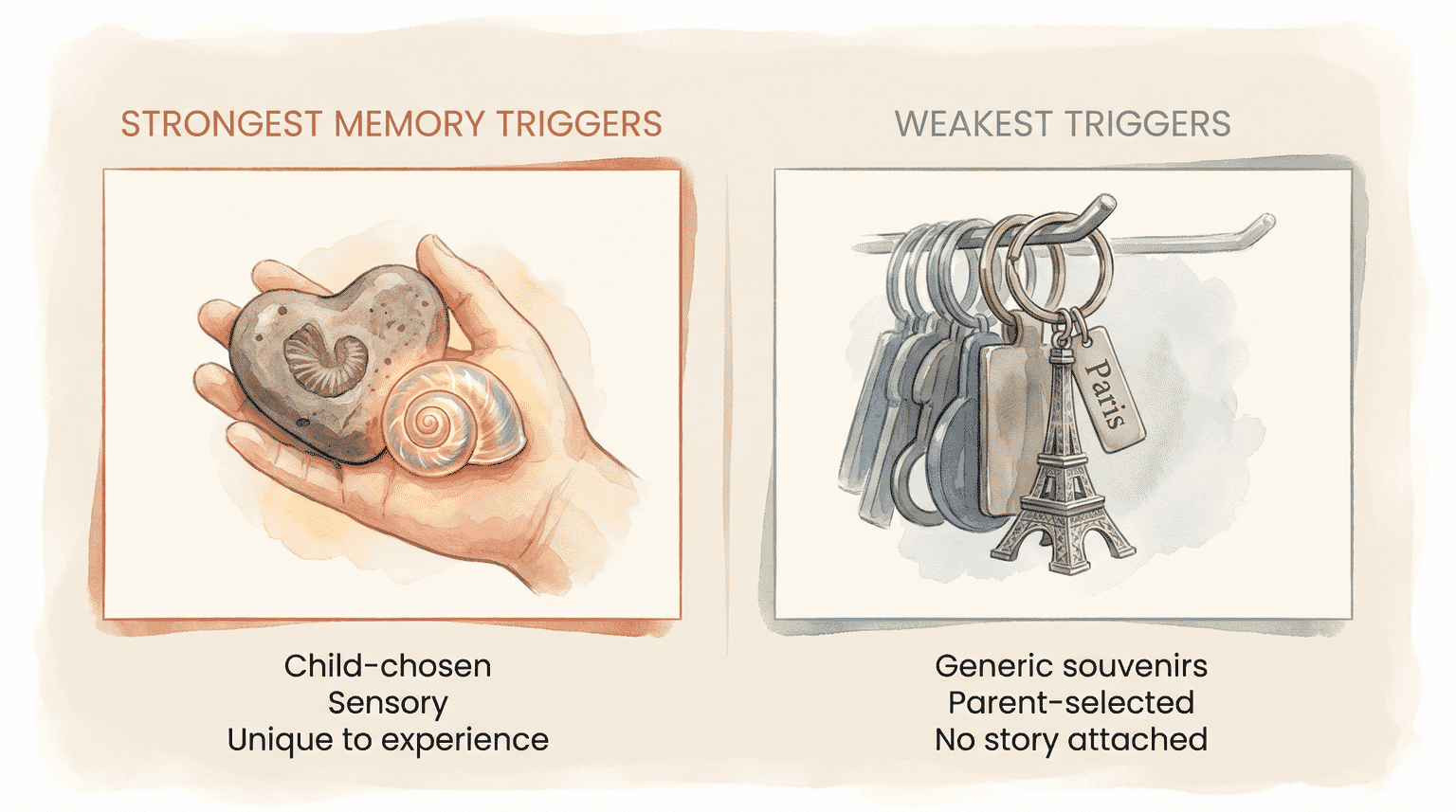
Not all souvenirs are equal. The 2022 PubMed study suggests that the best memory triggers share key characteristics:
The Memory Cue Hierarchy
Strongest triggers:
- Items your child physically interacted with during the experience
- Objects with distinctive sensory properties (texture, smell, sound)
- Things your child chose themselves
Moderate triggers:
- Photos of specific moments
- Items connected to a particular story or event
- Souvenirs unique to that location
Weakest triggers:
- Generic gift shop items that could be from anywhere
- Adult-selected “nice” keepsakes
- Items without an associated narrative
Selection Criteria
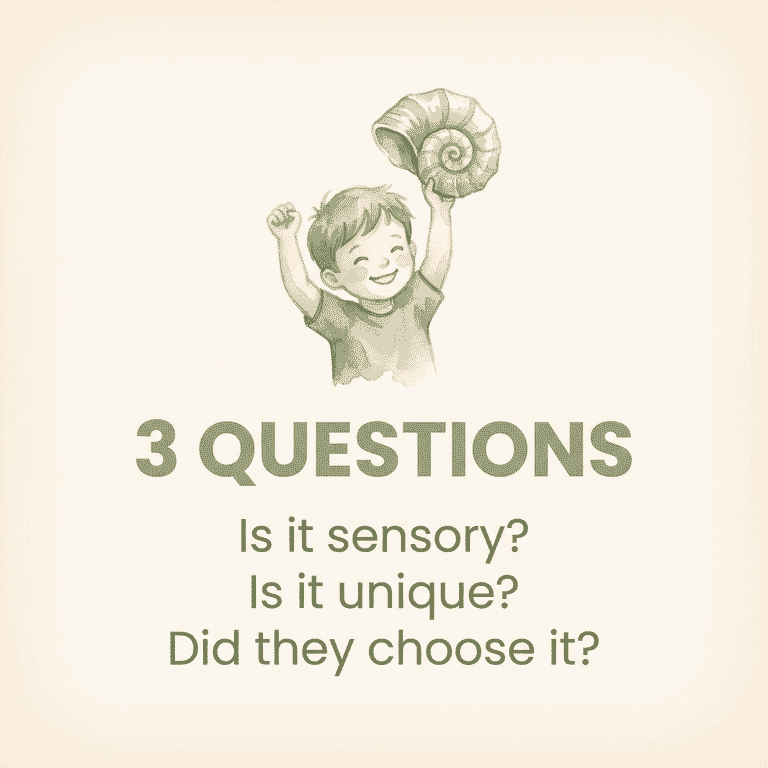
When my kids beg for gift shop souvenirs, I use three questions:
- Is it sensory? Can they touch, squeeze, or interact with it meaningfully?
- Is it unique? Does it connect specifically to this experience, or could it be from anywhere?
- Did they choose it? Child-selected items trigger stronger recall than parent-curated ones.
The seashell your child picked up on the beach will trigger more memories than the expensive snow globe you thought was prettier. I’ve learned this the hard way eight times over.
Let them choose, even when their choice seems random or “less nice.” Their brain knows what it needs.
Display Ideas
Souvenirs stuffed in a drawer become forgotten clutter. Souvenirs they can see become memory triggers:
- Dedicated shelf at child eye-level
- Shadow boxes for small items from each trip
- Map with pushpins and small attached mementos
- Rotation system keeping 3-5 items visible, cycling others
The goal is keeping memory cues accessible without overwhelming your space—or your sanity.
Storytelling That Strengthens Memory

Photo books and souvenirs work best when paired with conversation. Research on shared experiences shows that talking about memories actually strengthens them, and children “learn the social value of shared experiences” through these conversations.
Conversation Prompts That Work
Skip “Did you have fun?” Try instead:
- “What was the funniest thing that happened?”
- “What surprised you most?”
- “What did it smell/sound/feel like?”
- “Who was the nicest person we met?”
- “What should we do again next time?”
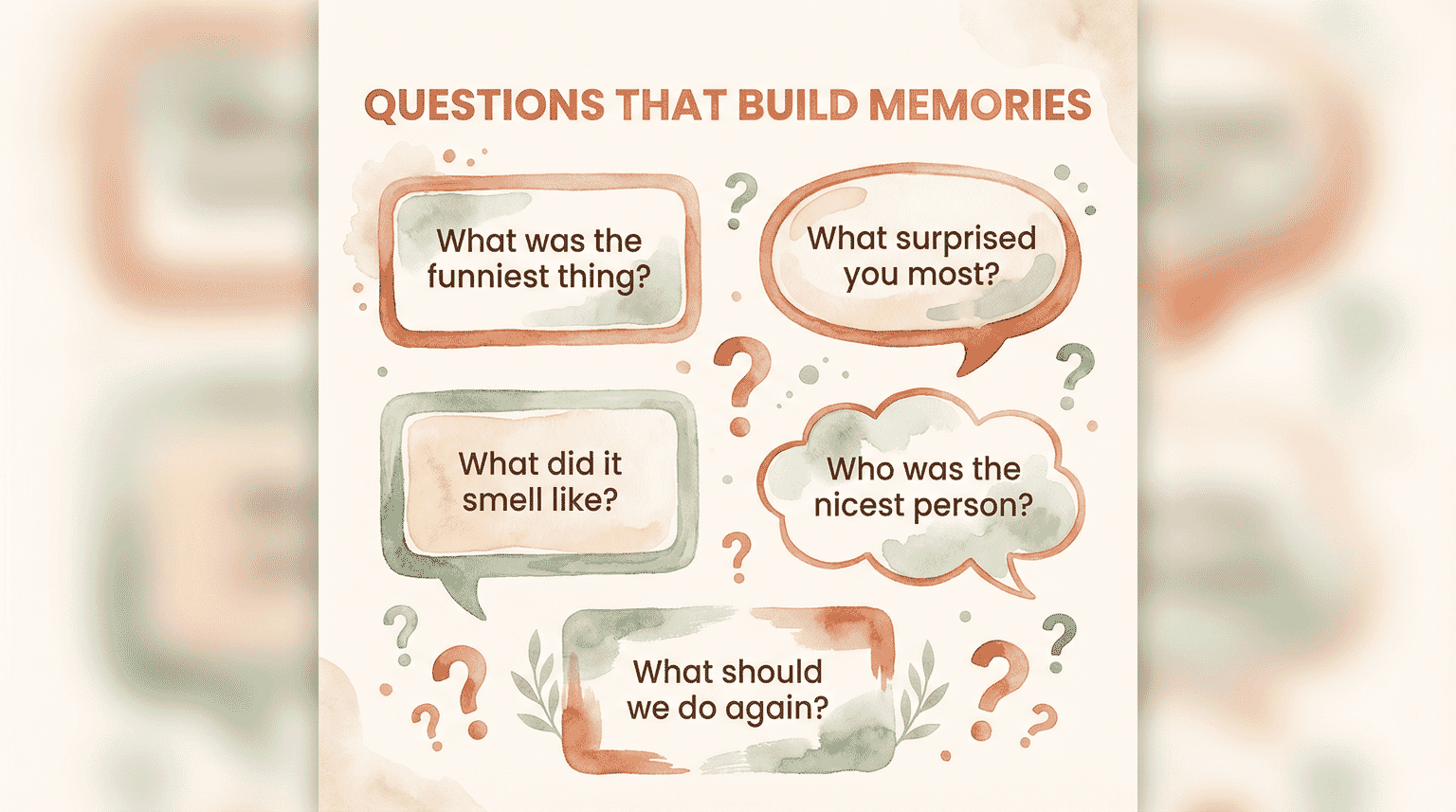
These prompts help children construct narratives around experiences—which is how memories consolidate.
Digital Memory Options
Beyond photo books:
- Voice recordings of your child describing the experience right after
- Short video clips capturing their reactions
- Photo captions in their own words
- Digital albums they can swipe through on a tablet
My 8-year-old has started making short “recap videos” after family outings. They’re hilariously unpolished, but when we watch them months later, memories flood back.
Making It a Family Practice
This doesn’t need to be another elaborate parenting project. The families I’ve seen succeed with memory preservation build small habits, not big systems—part of meaningful family gift traditions that compound over time.
Start simple:
- Take one extra photo per experience specifically for memory-triggering (not social media)
- Let your child choose one small souvenir
- Ask one storytelling question on the drive home
- Review photos together once a week
If you’re still choosing experiences that resonate with young children, the documentation strategies can develop alongside.
Seasonal reviews work well: before summer, flip through last summer’s photos. Before the holidays, revisit last year’s memories. This creates anticipation while reinforcing past experiences.

Transfer ownership gradually. Around ages 8-10, children can begin maintaining their own memory systems—their own photo albums, their own souvenir displays, their own storytelling. The goal is giving them tools they’ll use independently.
Frequently Asked Questions
Why doesn’t my child remember our vacation?
Children under 12 have developing memory systems that struggle to retain abstract experiences. They need physical reminders—like photos or souvenirs—to access past experiences. Without tangible cues, even wonderful experiences can fade within weeks. This isn’t a reflection of how much they enjoyed it in the moment.
Do souvenirs actually help children remember?
Yes. A 2022 study found that environmental cues triggered spontaneous memory recall in preschoolers even 13 weeks after an event. The best memory-triggering souvenirs are sensory (touchable, visible), unique to the experience, and chosen by the child rather than purchased generically.
What should I put in a memory book for kids?
Include action shots, images of small details your child noticed, pictures of people you met, and space for drawings or stickers. The most effective memory books capture sensory details and emotions—what you ate, what made you laugh, what surprised you—not just locations.
How often should we review photo books?
Regular, low-key review works better than occasional intensive sessions. Weekly photo conversations, monthly book reviews, and seasonal revisits before similar experiences all help. The repetition strengthens memory formation, which is why children instinctively request favorite stories repeatedly.
What About You?
Do you make memory books or collect souvenirs after family adventures? I’d love to hear what’s worked for helping your kids actually remember experiences—and whether the effort has been worth it.
Share your memory-keeping wins and fails—I read every response.
References
- What Makes Children Happier? Material Gifts or Experiences? – University of Illinois Chicago research on developmental differences in gift appreciation
- Why material gifts make young kids happier than experiences – Research on how photos help children recall experiences
- Distinct environmental cues trigger spontaneous recall of remote event memories – 2022 PubMed study on memory retrieval in young children
- The Secret Sauce for Building Children’s Memories – Strategies for memory-keeping with children

Share Your Thoughts