
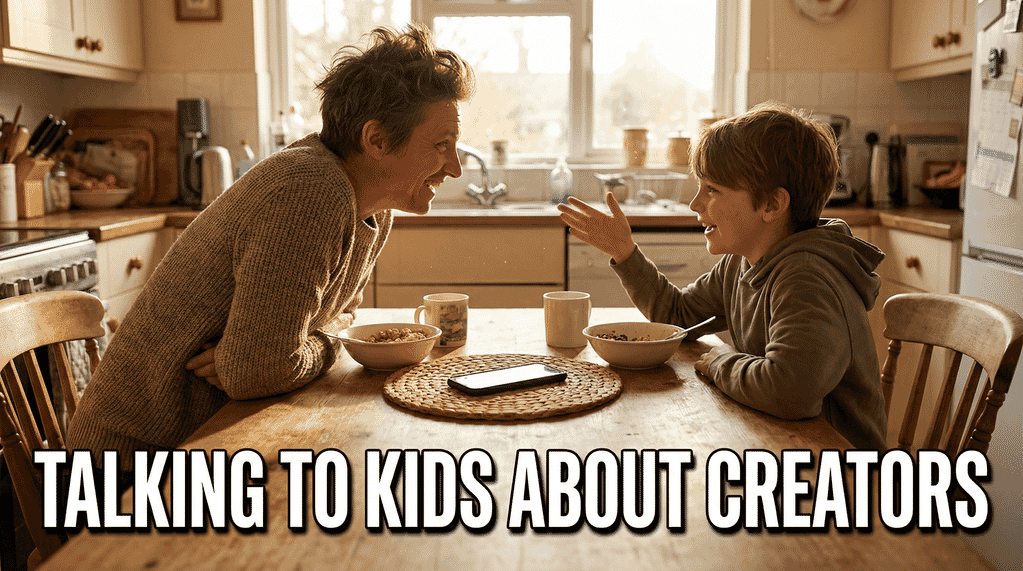
Your 9-year-old just told you MrBeast is “basically his best friend.” Your first instinct might be concern—or maybe dismissal. But before you do either, here’s something worth knowing: your child’s brain is doing something completely normal.
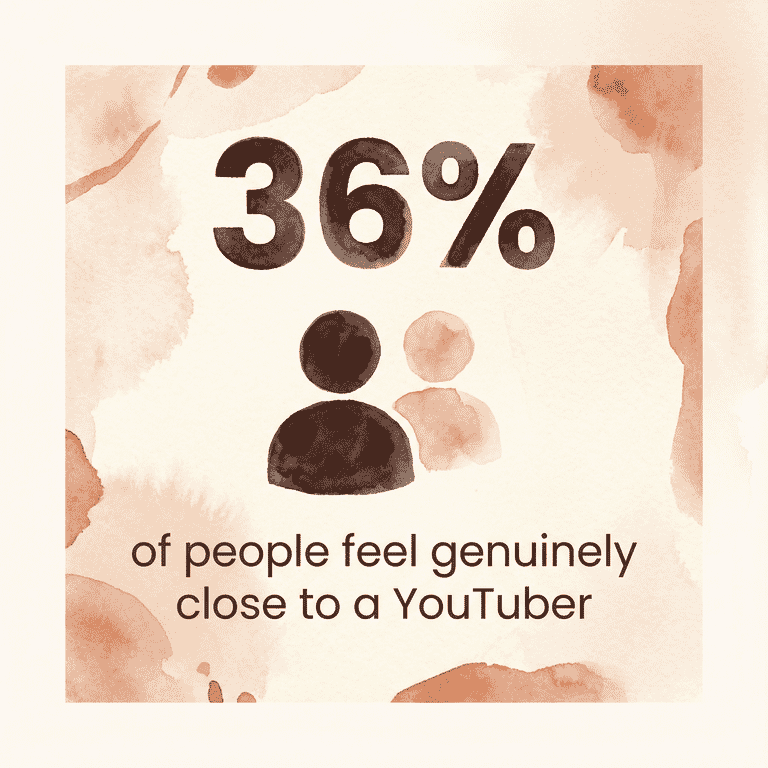
A 2024 study from the University of Essex found that 36% of people feel genuinely close to a YouTuber—and some participants said watching YouTube made them happier than talking to co-workers or neighbors. When your kid says a creator is their friend, they’re not being naive. Their brain is processing this connection through the same pathways it uses for real relationships.
My librarian brain couldn’t let this phenomenon go without investigating. With eight kids in my house—ages 2 to 17—I’ve watched parasocial relationships form across every developmental stage. My teenager and my 6-year-old both have favorite creators. Understanding what’s actually happening in their heads has completely changed how I respond.

Key Takeaways
- Parasocial relationships are neurologically normal—your child’s brain processes YouTuber connections through the same pathways as real friendships
- These relationships become concerning only when they replace rather than supplement real-world friendships
- Research shows restriction backfires—active mediation (watching together, asking questions) is the only strategy that protects kids
- YouTubers create an “intimacy illusion” through direct camera address, consistency, and 24/7 availability that real friends can’t match
- The goal isn’t elimination—it’s helping your child integrate online and offline relationships in healthy balance
What’s Actually Happening in Your Child’s Brain
A parasocial relationship is a one-sided emotional bond where someone—often a child—feels genuine closeness to a media figure who doesn’t know they exist. The term comes from foundational media psychology research, but the phenomenon is ancient. Humans have always formed attachments to storytellers, performers, and distant figures.
YouTube just made it more intense.
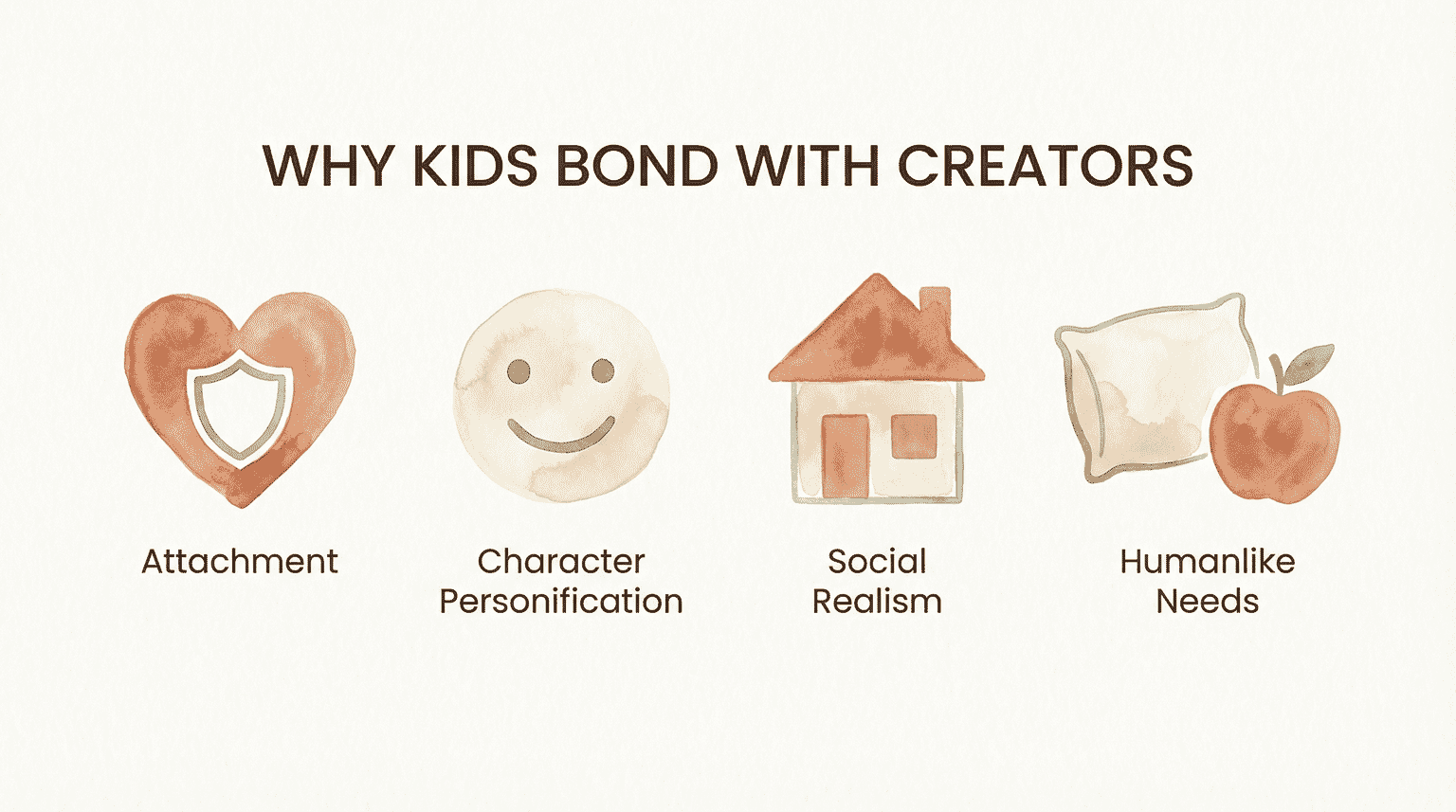
Here’s why: research from the Digital Wellness Lab identified four factors that drive parasocial relationship development in children. First, attachment—kids develop a sense of security and comfort similar to relationships with trusted adults. Second, character personification—they attribute human qualities to the person on screen.
Third, social realism—they perceive the creator as someone who could genuinely exist in their life. And fourth, humanlike needs—they believe the creator experiences hunger, tiredness, and emotions just like they do.
When all four factors align, the brain stops distinguishing between “real friend” and “YouTube friend.”
The neuroscience of one-sided connection reveals something unexpected about how children experience media.
“These parasocial relationships offer that guaranteed safe haven. They maybe can’t hold your hand the way a loved one could, but they can’t reject you or tell you they’re too busy for you because you are able to access them in your own time and on your own terms.”
— Dr. Veronica Lamarche, University of Essex
This is the key insight: a 2024 study published in Nature found that strong parasocial relationships were rated as significantly more effective than weak real-world relationships at fulfilling emotional needs.
Your child’s YouTuber “friend” may actually feel more reliable than acquaintances they see in person—because the creator is always available, always consistent, and never rejects them.
This doesn’t mean the relationship is unhealthy. It means we need to understand what need it’s filling.
Why YouTubers Create the Intimacy Illusion
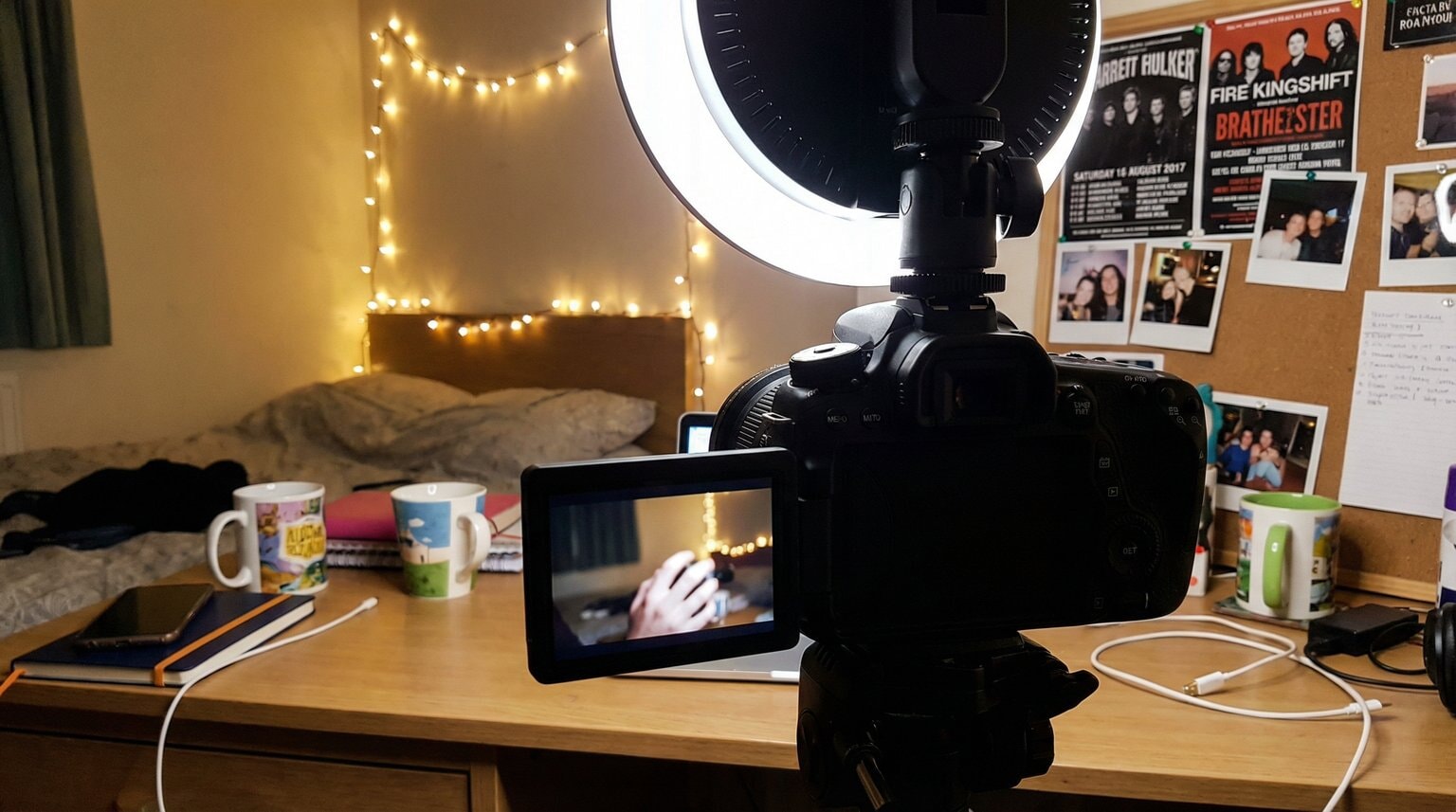
Traditional celebrities maintained distance. They appeared on red carpets, in carefully produced movies, through publicists. YouTubers do something different: they look directly into a camera in their bedroom and talk like they’re FaceTiming a friend.
This direct camera address triggers something powerful in the brain—the sense of being personally spoken to. When a creator says “you guys” while looking straight at the lens, your child’s brain registers it similarly to eye contact in conversation.
Add to this the consistency factor. Real friendships are unpredictable. Friends can be busy, moody, or unavailable. But a favorite YouTuber posts on schedule, greets viewers the same way every time, and is accessible whenever your child wants. This reliability builds attachment.

The appeal of risk-free connection runs deep for children navigating complex social worlds.
“I can see why people feel more comfortable watching YouTube than talking to someone in real life because it is one way—you don’t have to think about their reactions or think about how people perceive you.”
— Emily, 18, University of Essex study participant
For kids navigating the social complexity of school—worrying about being judged, fitting in, saying the wrong thing—a YouTuber offers connection without risk. Understanding why unboxing videos captivate children helps explain part of this appeal: these formats create a sense of shared discovery and intimacy that feels like friendship.
The Double-Edged Sword: When It Helps, When It Hurts

Here’s where I need to give you the full picture, because parasocial relationships aren’t simply good or bad. The research shows they’re both.
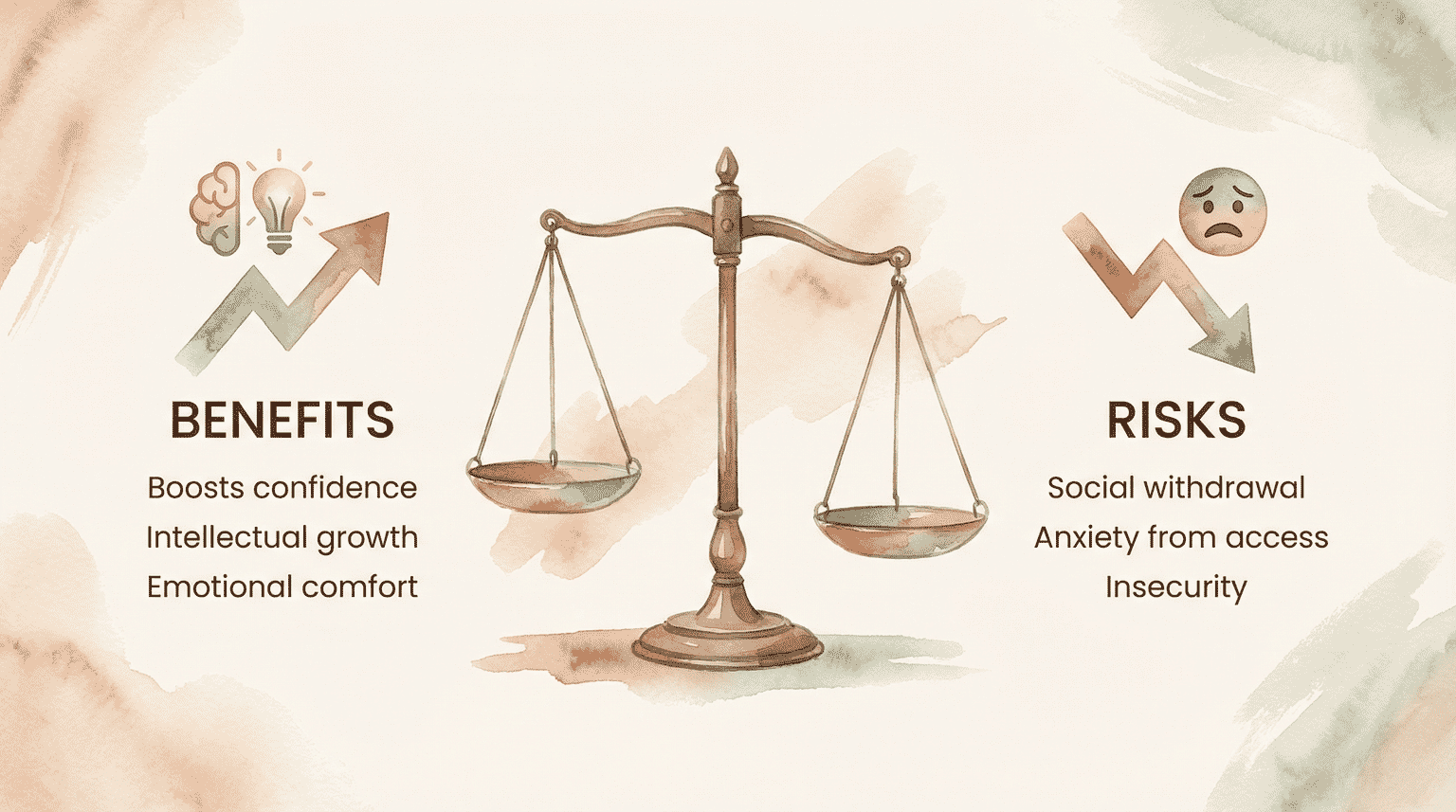
The benefits are real. A 2024 study found a significant positive correlation between parasocial relationships with YouTubers and self-efficacy—essentially, believing in your own ability to accomplish things. The key factor? Relatability. The more relatable a child found their favorite creator, the more that creator positively influenced their confidence.
Research on social media influencers found a significant positive impact on adolescents’ intellectual development (β = 0.52). Kids reported that influencers created awareness about issues, developed their dialogue abilities, and broadened their cultural perspectives.
But the costs show up too. That same study found significant negative impacts on social aspects (β = -0.51), ethical aspects (β = -0.18), and health aspects (β = -0.24). Adolescents reported learning aggressive behavior from influencers, experiencing anxiety when they couldn’t access content, and feeling nervous and psychologically pressured from extended viewing.
Lizzie, an 8th-grader in one study, put it simply: watching YouTube sometimes makes her “just feel insecure” because she “see[s] all these perfect people.”
The framework that helps: Think of parasocial relationships as supplements, not replacements. When your child’s YouTuber connection adds to their social life—giving them conversation topics with friends, modeling skills they want to learn, providing comfort during stress—it’s working well. When it’s replacing real friendships, becoming their primary source of social interaction, that’s the warning sign.
This balance connects to how digital culture shapes what children value. The creators kids admire influence everything from what they want to own to how they imagine their futures.
Warning Signs: When Healthy Becomes Concerning
I’ve watched parasocial relationships play out differently across my eight kids. Most of the time, it’s completely fine—a phase, an interest, something they enjoy alongside real friendships. But here’s what I watch for:
Signs that warrant attention:
- Excessive distress when unable to watch (beyond normal disappointment)
- Preferring YouTuber “company” to spending time with available friends
- Genuinely believing the creator personally knows them or cares about them specifically
- Imitating dangerous behaviors they’ve seen on videos
- Extreme emotional reactions to events in the creator’s life—as if a close friend experienced them
The threshold question: Is this relationship supplementing their social world or replacing it? A kid who watches their favorite creator, then talks about it with school friends, then also plays outside—that’s healthy integration.
A kid who avoids social situations because they’d rather be watching, who has no local friends but insists the YouTuber “gets them”—that’s worth addressing.
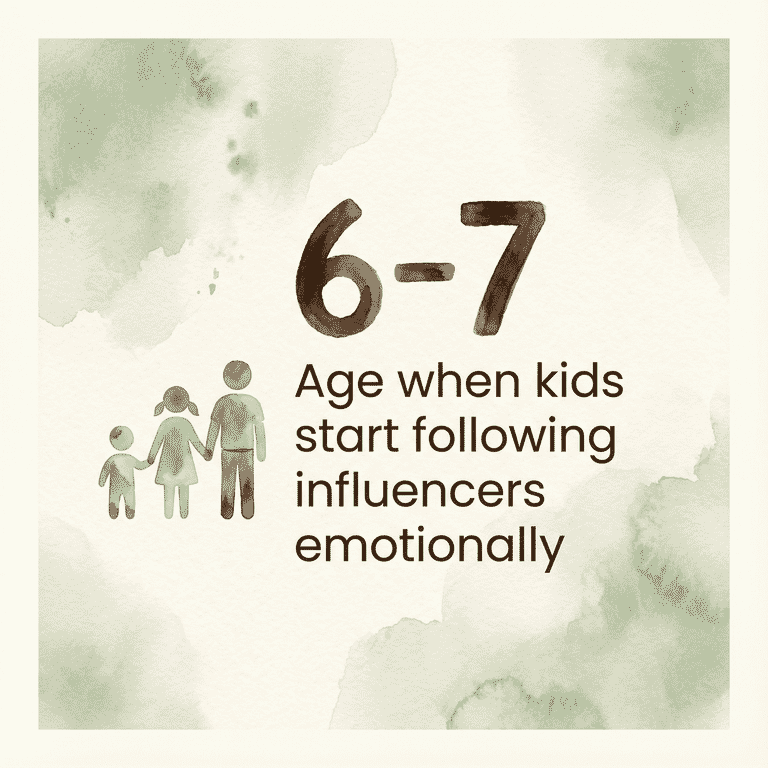
Age matters here. Research shows younger children are more susceptible to strong parasocial bonds. One study found that between ages 6-7, children begin following influencer channels, and those who emotionally connected with creators were less able to critically analyze content.
The critical awareness of media influence increases with age—27.7% of critical comments came from 12-13 year-olds compared to 38% from 18-19 year-olds.
If you’re noticing when kids see YouTube stars as best friends in concerning ways, trust your instincts—but also understand what’s developmentally normal versus what needs intervention.
What Actually Works: The Active Mediation Approach
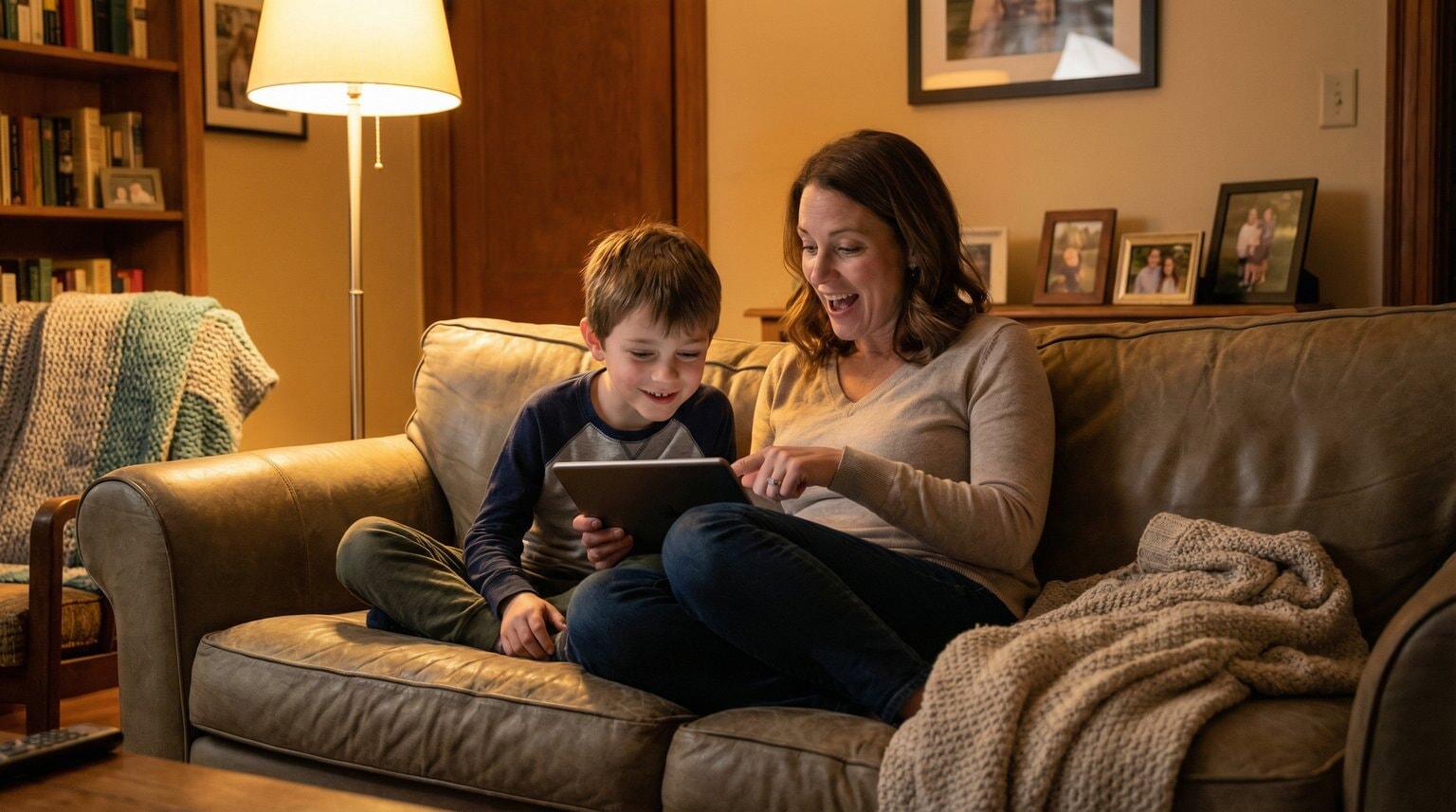
Here’s where the research completely changed my approach. I used to think that if a YouTube relationship seemed too intense, the answer was restriction—limiting access, blocking channels, enforcing screen time rules.
Then I read a 2024 study of 800 children that found something surprising: content restriction was associated with more psychological discomfort and problematic behaviors, not less.
The only parental strategy showing positive protective effects? Active mediation.
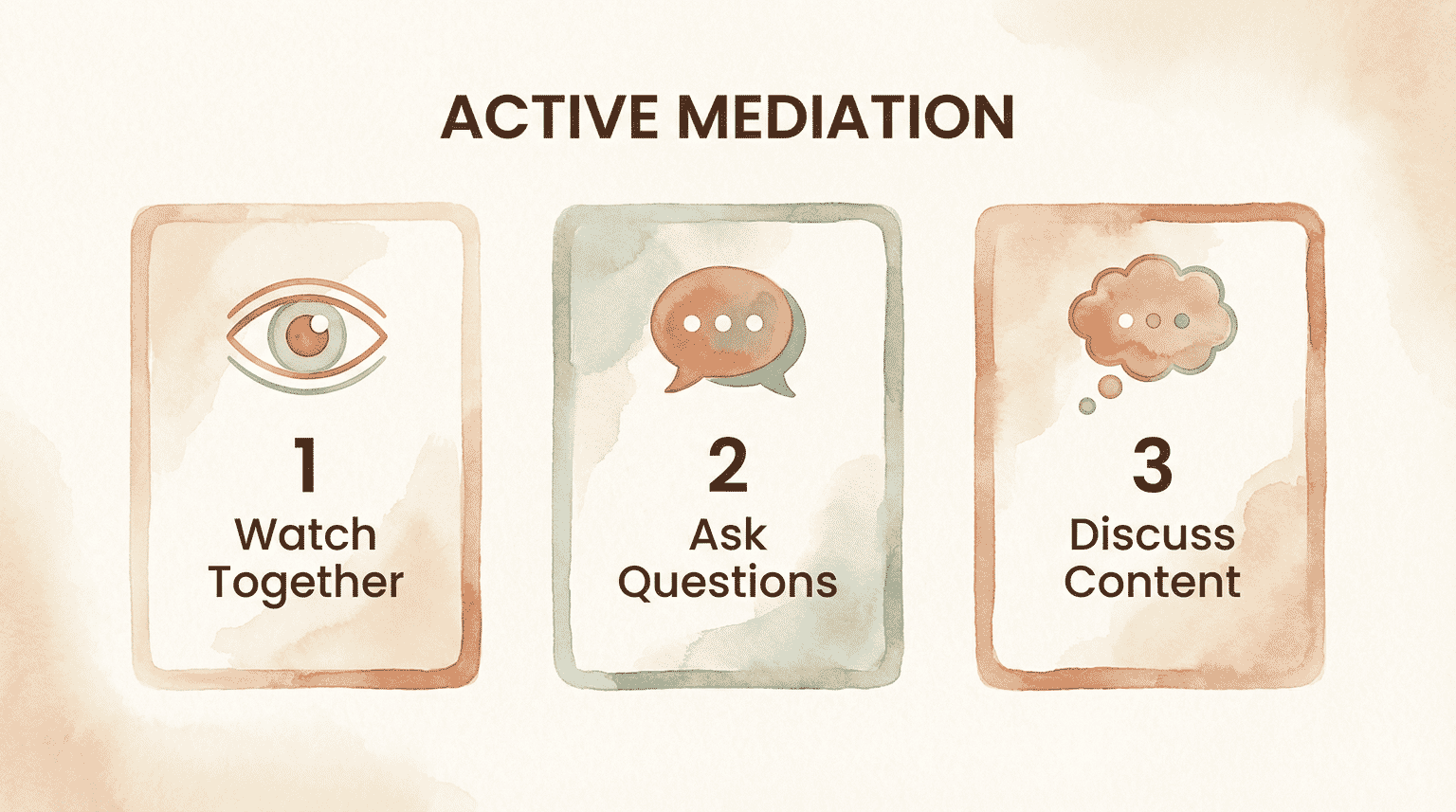
Active mediation means engaging with your child about their media consumption rather than simply controlling it. In practice, this looks like:
- Watching together occasionally—not as surveillance, but as genuine interest
- Asking questions about their favorite creators the same way you’d ask about school friends
- Discussing content—what they liked, what surprised them, what they thought about something the creator said
- Sharing your observations without judgment—”I noticed that video had a lot of product placement”
The same study found that children’s average parasocial relationship score was 5.02 out of 7—meaning these connections are nearly universal. You can’t prevent parasocial relationships, and trying to through restriction appears to backfire. What you can do is help your child develop critical thinking about these relationships.
Carlos, a 13-year-old in one study, explained that he uses YouTube “to calm down from an argument with [his] parents” because “when [he is] annoyed or sad…the funny just makes [him] forget about what happened.” Understanding that YouTube serves an emotional regulation function—not just entertainment—helps you engage more productively.
Conversation Scripts for Common Scenarios
My librarian training taught me that understanding the “why” is essential, but my mom-of-eight experience taught me that knowing what to actually say is equally important. Here are specific scripts for scenarios you’ll probably encounter:
Scenario 1: “MrBeast is my best friend!”
What your child says: “MrBeast is basically my best friend. He’s so funny and nice!”
Try: “I can see why you like him so much! What’s your favorite thing about his videos? You know, it’s interesting—he’s talking to millions of people at once, but it feels like he’s talking just to you, doesn’t it? That’s actually something your brain is really good at.”
The goal isn’t to dismiss the feeling. It’s to gently introduce the reality while validating the experience.
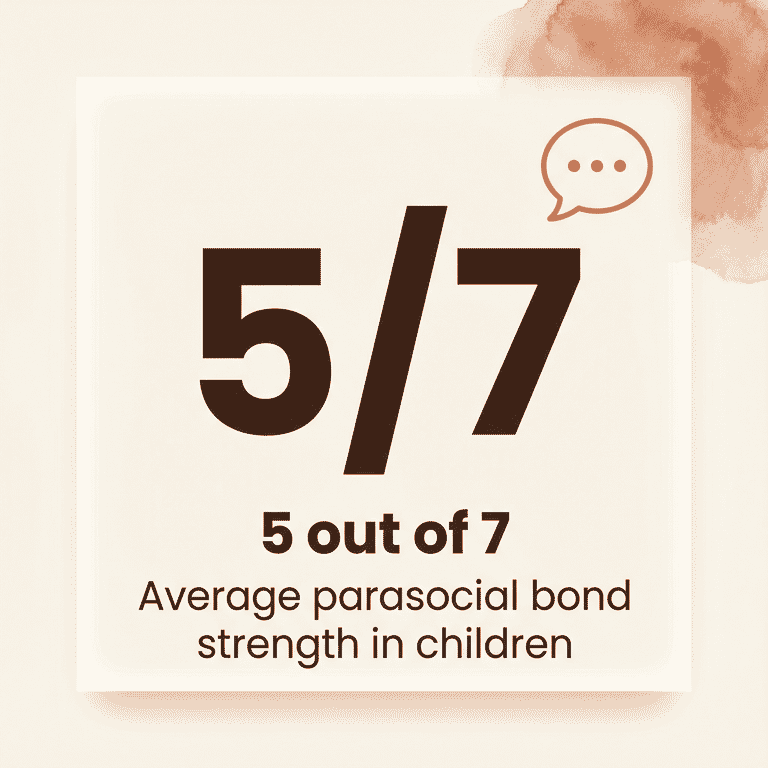
With an average parasocial bond strength of 5 out of 7, your child’s feelings are completely normal—and shared by nearly every kid their age.
The conversation isn’t about making them feel weird. It’s about building awareness they can grow into.
Scenario 2: The Merch Request
What your child says: “Can I PLEASE get the official hoodie? It’s only $65!”
Try: “I know that hoodie feels special because it connects you to someone you really enjoy watching. Let’s think about it together—is it the quality you want, or is it more about feeling connected to them? Sometimes a creator’s merch is great. Sometimes you’re mostly paying for the logo.”
This opens a conversation about building generosity alongside digital consumption and the difference between genuine value and parasocial marketing.
Scenario 3: When the Creator Faces Controversy
What your child says: “Everyone’s saying [YouTuber] did something bad but I don’t believe it!”
Try: “It’s really hard when someone you like and trust might have done something wrong. That loyalty you feel—that makes sense. You’ve spent a lot of time with them. But we only ever see what they choose to show us. How do you want to think about this?”
Scenario 4: Creator Quits or Disappears
What your child says: Visibly upset that favorite creator stopped posting
Try: “I can see you’re really sad about this. You’ve been watching them for a long time, and it makes sense to miss them. It’s kind of like when a friend moves away—the memories are still real, even if you can’t make new ones together.”
Research found that viewers of “Internet Parents” on TikTok expressed genuine grief when creators stopped posting—one viewer wrote “I just lost a mom and a dad today.” These feelings are real and deserve acknowledgment.
Building Both/And: Parasocial Relationships and Real Friendships Together
Here’s the permission slip I want to give you: parasocial relationships can coexist with healthy real friendships. Your child doesn’t have to choose between their favorite creator and their school friends. The goal isn’t elimination—it’s balance.
Questions to assess the balance:
- Does my child have friends they see in person regularly?
- Can they handle social rejection and repair friendships?
- Do they talk about their favorite creators with real friends (social glue) or instead of talking to real friends?
- When the screen is off, are they still able to regulate emotions?
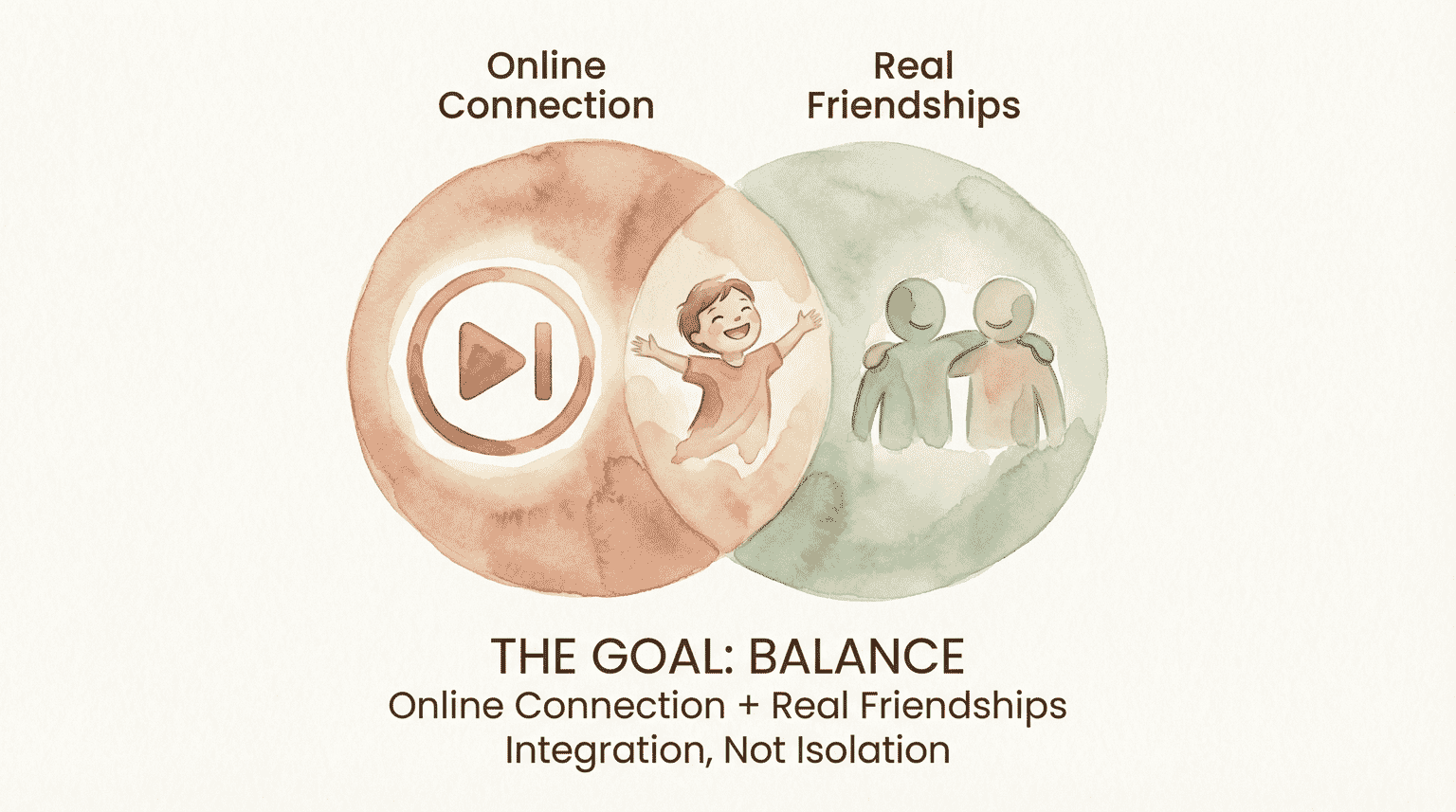
I’ve seen this go well across my household. My 12-year-old and her friends bond over shared YouTube interests—it’s social currency, not social replacement. My 8-year-old watches craft creators and then does the projects with his sister. The key is integration, not isolation.
If you’ve been feeling guilty about screen time that includes parasocial content, take a breath. Understanding the mechanism doesn’t mean you’ve failed. It means you’re equipped to guide your child through something that is, according to all the research, a completely normal part of growing up in a digital world.
Frequently Asked Questions
Are parasocial relationships bad for kids?
Not inherently. Research shows they can fulfill emotional needs, boost self-efficacy, and support intellectual development. They become concerning only when they replace rather than supplement real friendships, or when children show distress at separation from content.
Why does my child think YouTubers are their friends?
Children’s brains process consistent, direct-camera content through the same pathways as real friendships. YouTubers create an “intimacy illusion” through direct address, personal sharing, and reliable availability. The brain hasn’t evolved to distinguish “real” from “parasocial” friendships.
How do I talk to my child about their favorite YouTuber?
Ask about the creator like you would a school friend—what do they like about them? What are their favorite videos? Research found active discussion was the only parental strategy that protected children from negative outcomes. Restriction was associated with more psychological distress, not less.
What are signs of unhealthy YouTube attachment?
Watch for excessive distress when unable to watch, preferring YouTuber “company” to real friends, believing the creator personally knows them, imitating dangerous behaviors, or extreme emotional reactions to the creator’s life events. The key question: supplement or replacement?
Should I restrict my child’s YouTube access?
Research suggests restriction may backfire. A 2024 study found content restriction was associated with more psychological discomfort and problematic behaviors. Active mediation—watching together, discussing content, asking questions—was the only strategy showing protective effects.
I’m Curious
Has your child described a YouTuber as a “friend”? I’d love to hear how you’ve navigated that conversation—and whether the relationship feels healthy or concerning in your family.
Your experiences help me understand how this plays out across different families.
References
- University of Essex Parasocial Relationships Study – Research on how people perceive one-sided relationships with YouTubers
- Nature: Parasocial Relationships and Emotional Needs – Study comparing PSRs to real relationships for need fulfillment
- Parental Mediation and Children’s Well-being – Research on which parenting strategies actually protect children
- Self-Efficacy and YouTuber Relationships – Study on positive impacts of relatable role models
- Social Media Influencers and Adolescent Development – Research on intellectual, social, and health impacts
- Digital Wellness Lab: Children and AI – Research on factors driving parasocial development in young children

Share Your Thoughts