
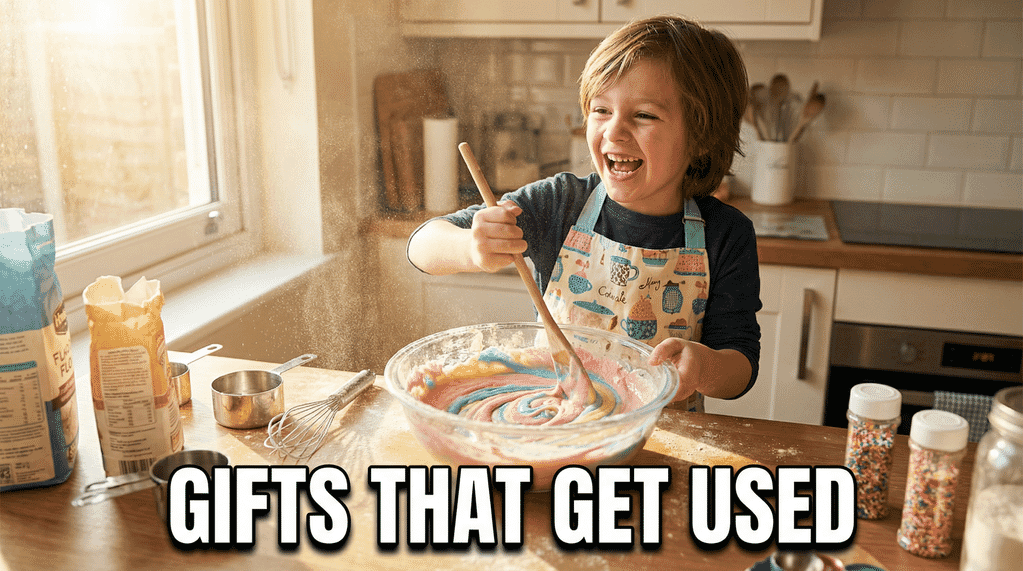
Standing in the toy aisle again, you’re scanning shelves of plastic that’ll be forgotten by February. Meanwhile, your kid already has three bins of barely-touched toys at home. There’s a better way—and the research backs it up.
Here’s what I’ve learned watching eight kids open thousands of gifts: the items that get used up through enjoyment often bring more joy than toys that pile up in corners. A 2021 study found that children with just 4-5 toys played twice as long and far more creatively than those with 12 or more.
When I first read that, I thought of my own living room after Christmas—kids bouncing between gifts, not really settling into any of them.
“The fewer things in their visual attention field, the more they can attend to in-depth.”
— Dr. Angela Narayan, Associate Professor of Clinical Child Psychology, University of Denver
When children have too many options, their brains work overtime just filtering through everything. Each gift gets less attention, less appreciation, less actual play.
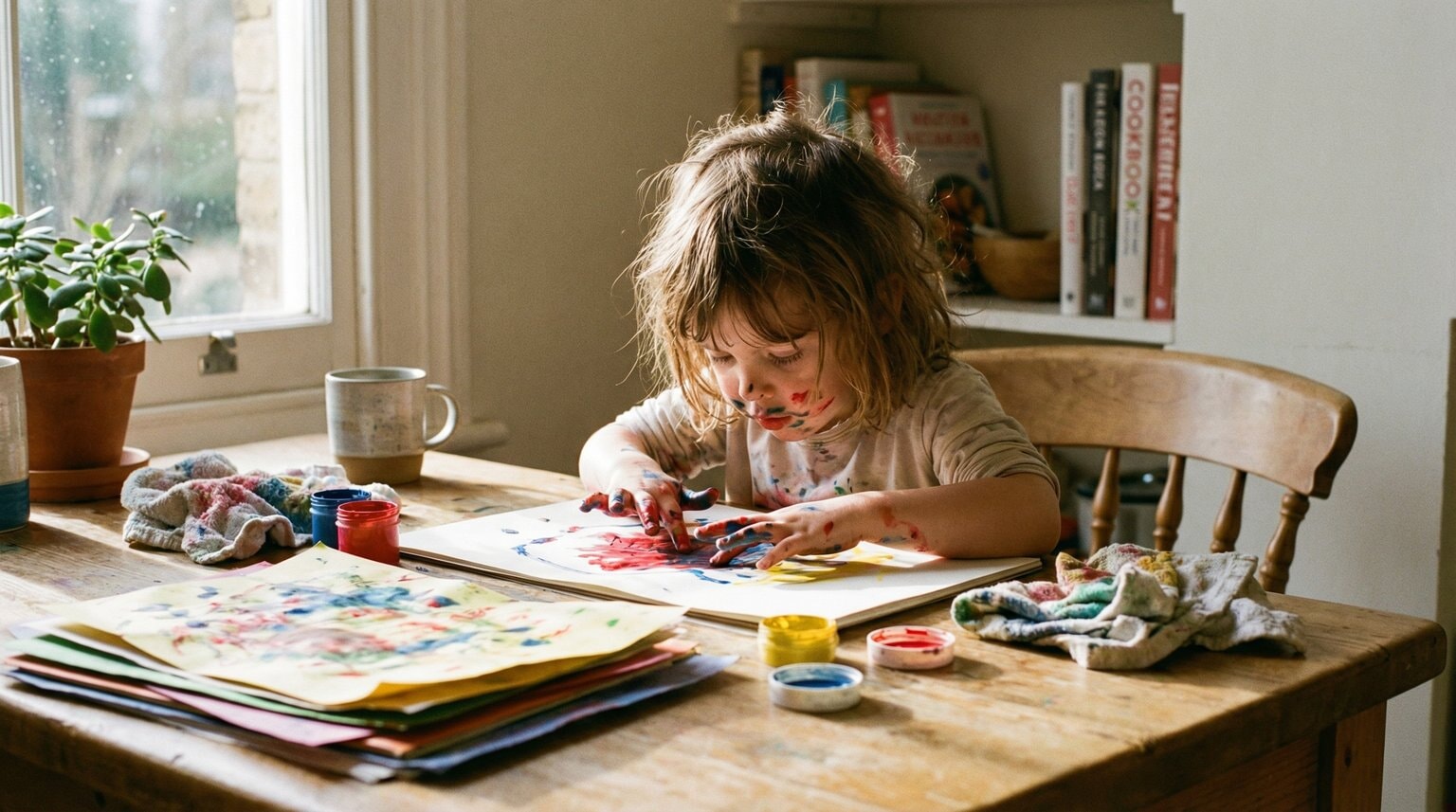
Consumable gifts—art supplies, baking kits, science experiments, bath products—solve this problem beautifully. They provide focused enjoyment, create experiences worth remembering, and then they’re done. No guilt about donating. No bins overflowing with forgotten plastic. Just good memories and maybe a few photos on the fridge.
Key Takeaways
- Children with fewer toys play twice as long and more creatively than those overwhelmed with options
- Real kitchen tools engage kids more than toy versions—experts recommend kid-safe knives over plastic pretend ones
- Subscriptions and memberships bridge the gap between material gifts kids want to unwrap and experiences that create lasting memories
- Presentation matters: bundle consumables into themed kits with a promise of time together
Best Consumable Gifts for Kids:
- Art supplies (crayons, paints, craft kits)
- Science experiment kits
- Cooking ingredients and real kitchen tools
- Bath products (bath bombs, bath crayons)
- Subscription boxes and memberships
- Seasonal consumables (sidewalk chalk, cocoa kits)
Let me walk you through each category—what works, what doesn’t, and why.
Art Supplies That Actually Get Used Up
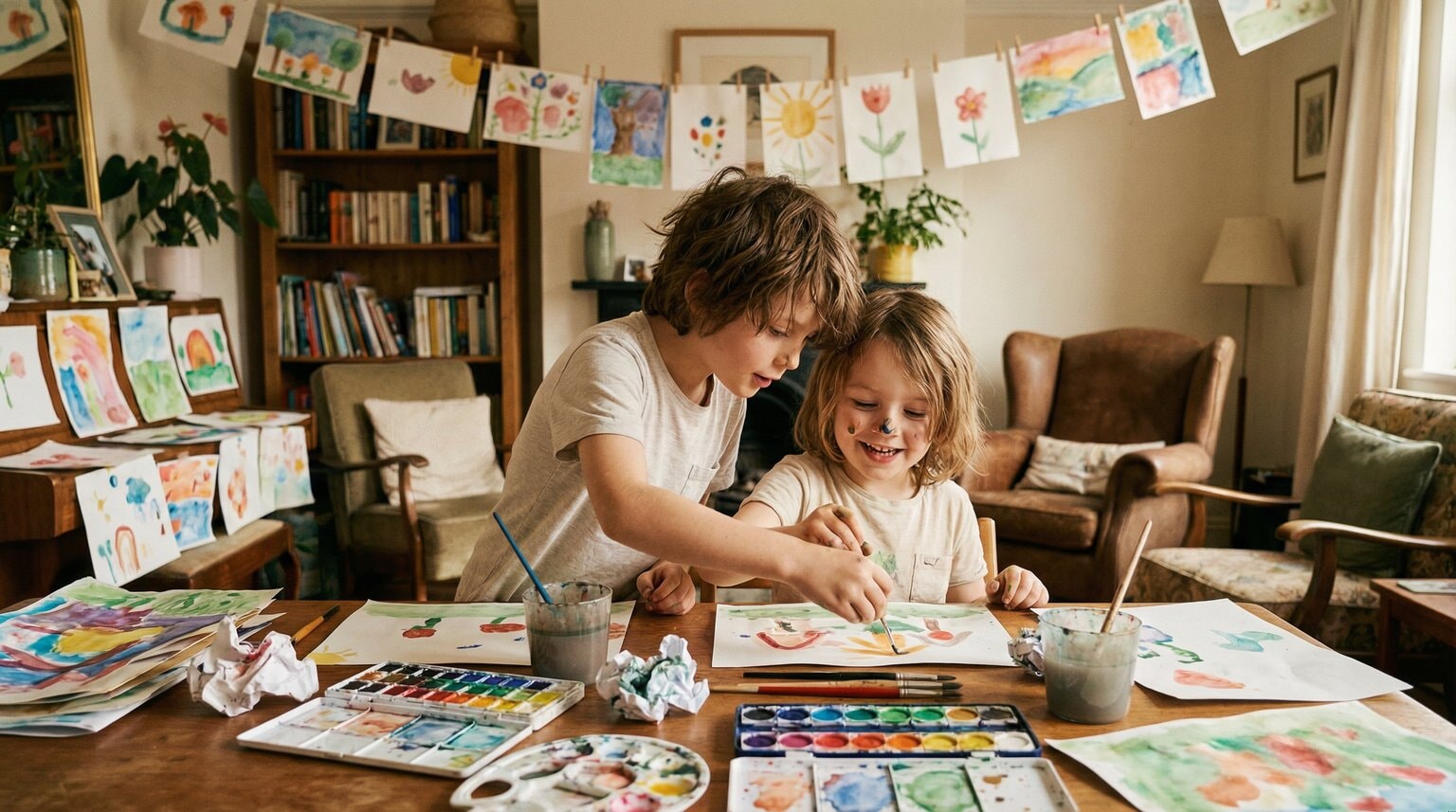
My librarian brain loves the research on this one: open-ended materials with multiple purposes encourage more imagination and creativity than single-purpose toys. A study from the Journal of Intellectual Disability Practitioners and Research Studies found that preschoolers master concepts like color, shape, and size more easily through hands-on play activities—and art supplies deliver exactly that.
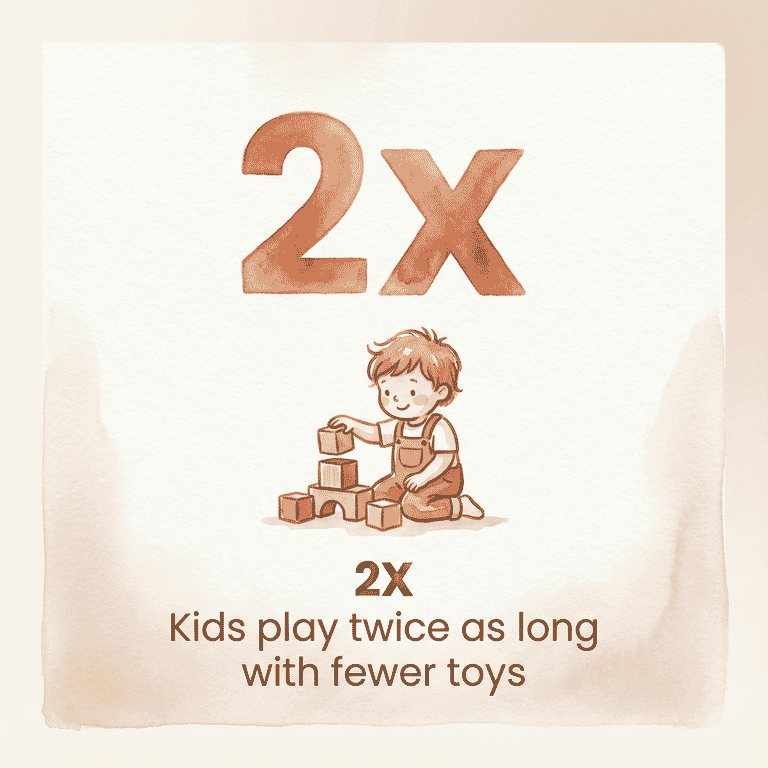
The science is clear: less really is more when it comes to toys. Children given just 4-5 items to play with engaged twice as long as those with a dozen options.
This is why consumable art supplies work so beautifully. They get used up through genuine enjoyment, naturally keeping the collection manageable without painful purges.
What works at different ages:
- Toddlers (2-3): Chunky crayons, washable finger paints, large paper pads, foam stickers
- Preschool (4-5): Watercolor sets, air-dry clay, simple craft kits, dot markers
- Elementary (6-9): Detailed coloring books, origami paper sets, jewelry-making kits, sketch pads
- Tweens (10-12): Calligraphy sets, canvas and acrylic paints, advanced craft kits

Here’s something I’ve noticed with my own kids: dollar-store art supplies frustrate children. Markers that dry out immediately, crayons that break with normal pressure, paint that barely shows on paper. Quality supplies don’t need to be expensive, but they should actually work. Crayola, Melissa & Doug, and similar brands are worth the extra few dollars.
One more thing—Stony Brook University research found that children underestimate how happy their gifts make others. Art supplies become gifts children can make for grandparents, friends, or teachers.
My 6-year-old’s watercolor cards bring genuine joy to recipients, and she gets to experience the power of giving. As researcher Dr. Margaret Echelbarger notes, “These small acts of generosity really make a bigger difference than people expect.”
Science Kits and Discovery Sets
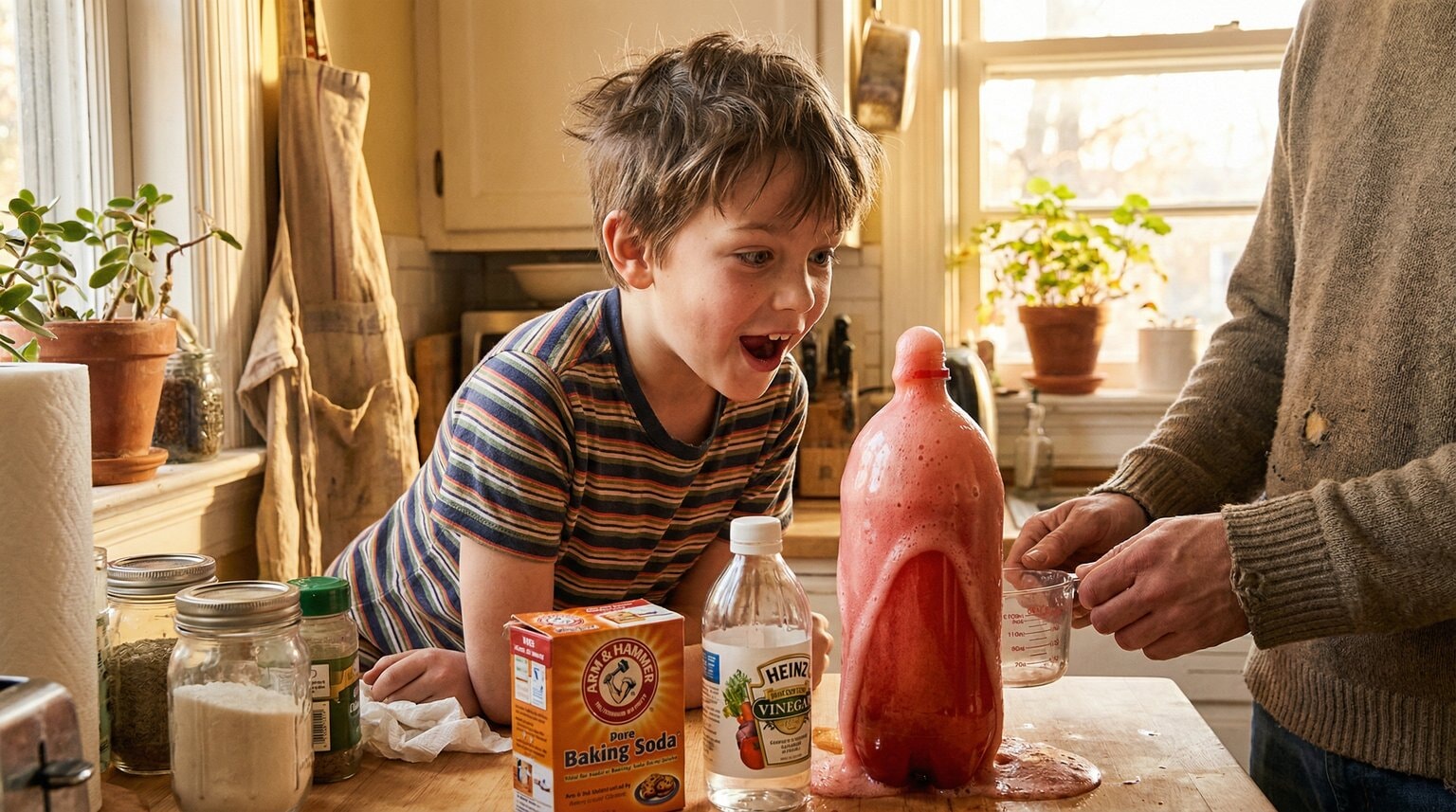
Research on highly creative adults—including MacArthur “genius” grant winners—found that almost all enjoyed “small world play” as children: creating structures, building towns, experimenting with how things work. Science kits tap directly into this instinct.
The beauty of consumable science kits is that they get used up through exploration. Slime kits need restocking. Volcano experiments erupt once (spectacularly). Crystal-growing kits finish when the crystals form. Each one creates a moment of discovery, then makes space for the next adventure.
Age-appropriate options:
- Preschoolers (3-5): Simple mixing experiments, bath-safe color tablets, bug catching supplies with magnifying glasses
- Early elementary (6-8): Slime-making kits, volcano experiments, seed-starting sets
- Older kids (9-12): Crystal growing, dissection kits, chemistry sets with multiple experiments
The key is matching complexity to attention span. My 4-year-old loves anything she can mix and watch change immediately. My 10-year-old has the patience for multi-day observation projects. Both are doing science—just at their level.
Pro tip: look for kits with refill options. Once kids discover they love making slime, you want an easy way to keep the supplies coming without buying a whole new kit.
Cooking Ingredients and Real Kitchen Tools
This is where the research gets really interesting. The American Psychological Association’s podcast on play features Dr. Barry Kudrowitz, professor of product design at the University of Minnesota, who makes a compelling case for real kitchen tools over toy versions.
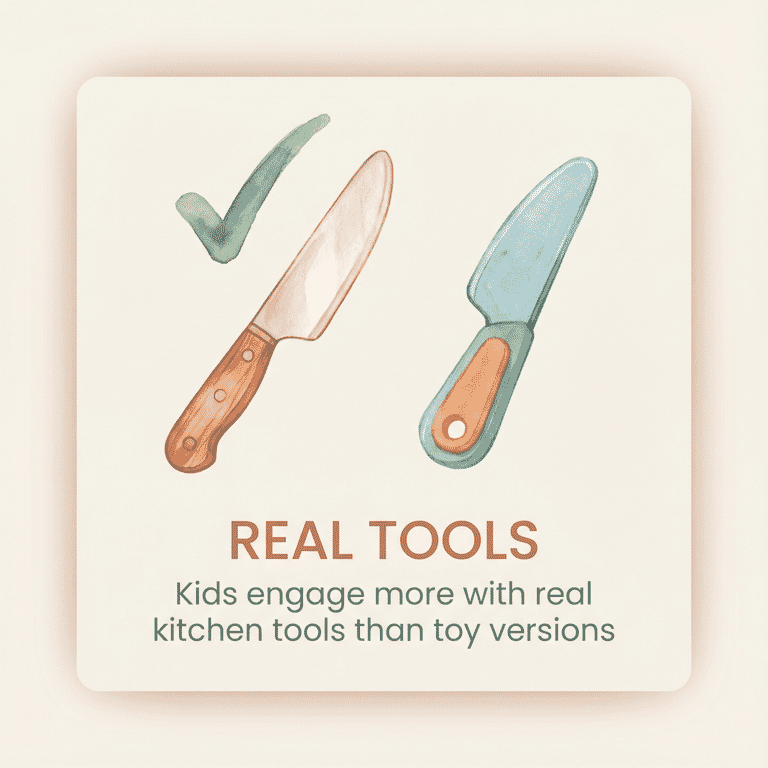
“Think beyond the toy aisle is my recommendation… I’m advocating for maybe the kids knife set that are actually knives. It’s the safer knives, but they’re still knives.”
— Dr. Barry Kudrowitz, Professor of Product Design, University of Minnesota
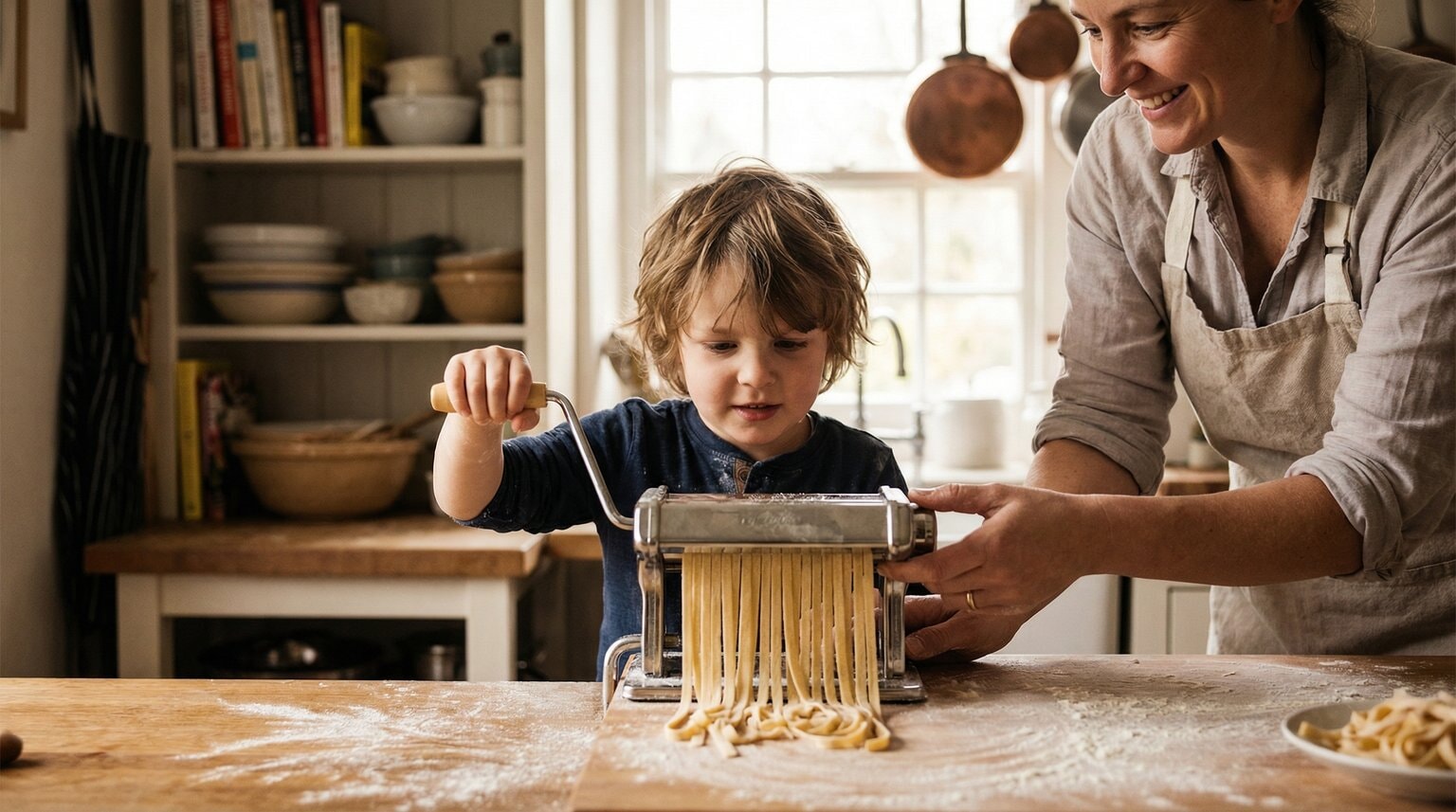
Dr. Kudrowitz describes his own family’s pasta maker: “At least once a month the children view that as a toy and we’re making food together.” The hand-crank pasta maker isn’t technically a toy—but try telling that to a kid who gets to turn the handle and watch noodles appear.
There’s something powerful about giving children real tools designed for their size rather than plastic pretend versions. Kids know the difference.
A kid-safe knife that actually cuts vegetables earns more respect and engagement than a plastic one that does nothing. The responsibility feels real because it is real.
Consumable cooking gifts by age:
- Ages 3-5: Cookie decorating kits, simple baking mixes, measuring cups and spoons (they can help pour and mix)
- Ages 6-8: Kid-safe knives (they’re real but designed for small hands), vegetable peelers, pizza-making kits
- Ages 9+: Pasta-making supplies, sushi-rolling mats, more complex baking ingredients
The relational benefit here is huge. These aren’t gifts kids use alone in their rooms—they’re gifts that bring families into the kitchen together. My 8-year-old still talks about “her” cookies from last Christmas. The cookies are long gone, but the memory of making them stuck.
For families navigating gift-giving challenges with relatives, cooking supplies are an easy sell. Grandparents who want to give something meaningful can fund baking adventures or special ingredient sets. Everyone wins.
Bath Products and Body Care
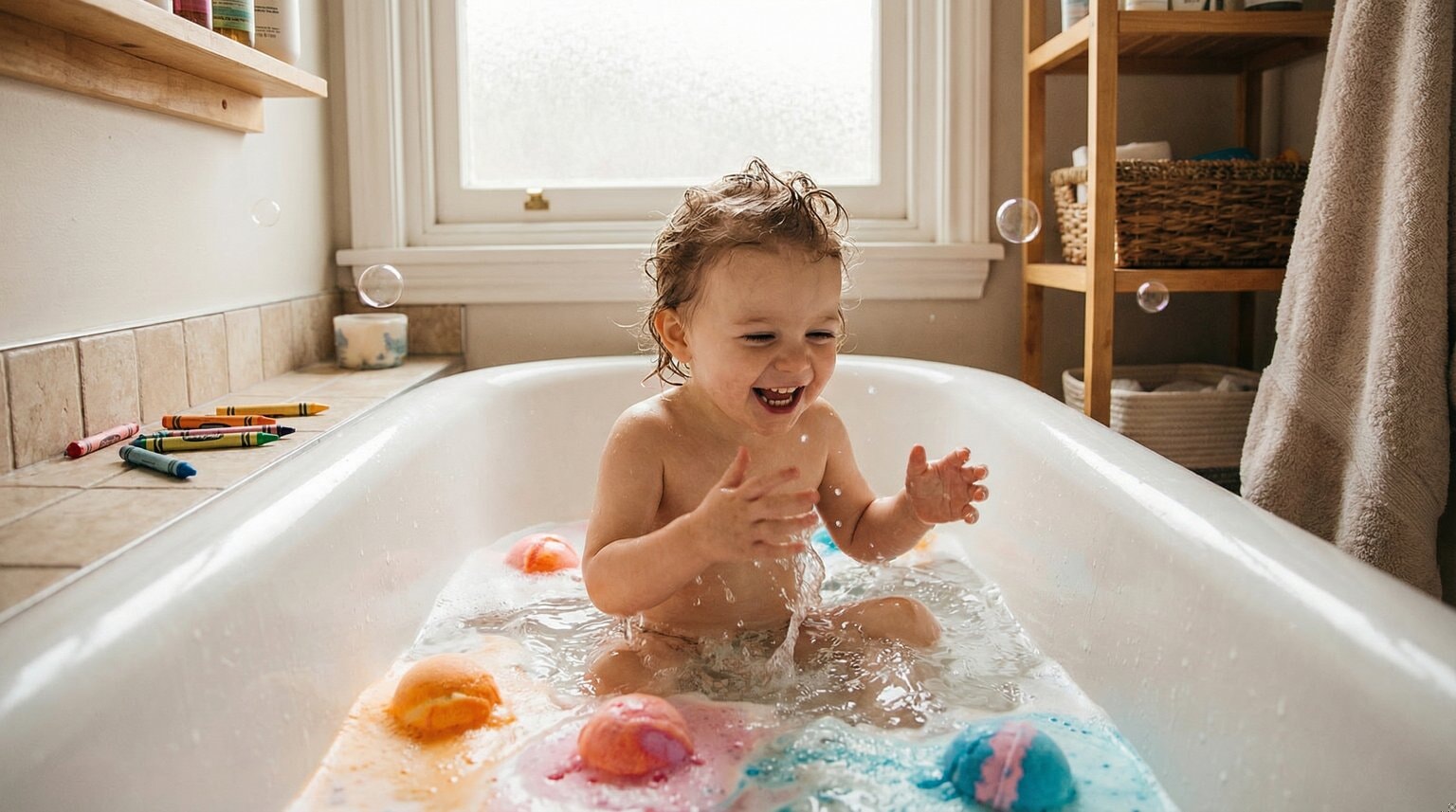
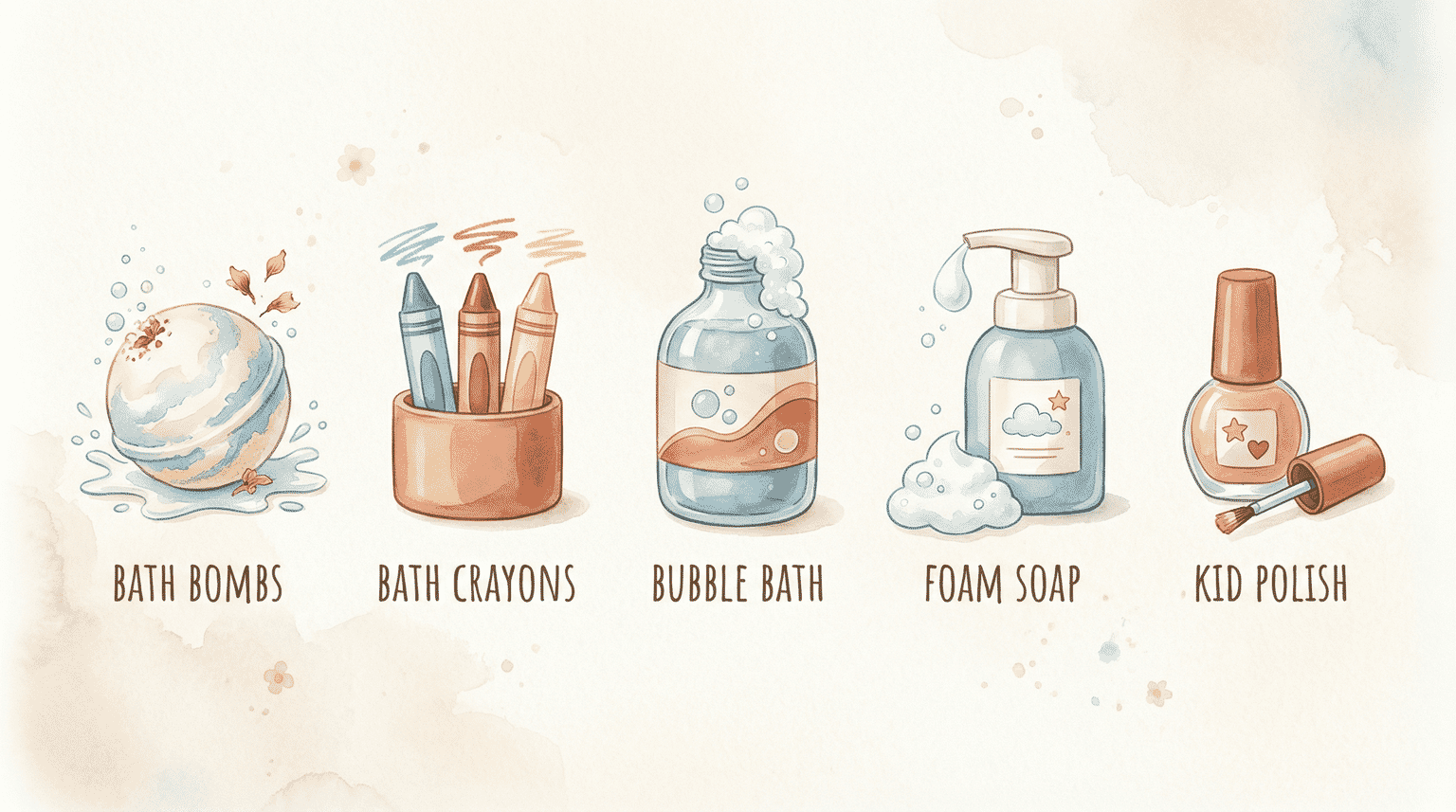
Bath products might be the most universally successful consumable gift I’ve found across all my kids’ ages. Bath bombs, bath crayons, bubble bath, foam soap—these transform an everyday routine into an event.
What works:
- Bath bombs: Buy sets of 6-12 individual bombs; wrap each separately to extend the gift
- Bath crayons: Write on tiles, rinse clean—my kids have used these for years
- Bubble bath: Fancy scents feel special compared to regular soap
- Kid-friendly face masks or nail polish: Especially popular with the 8-12 crowd
- Foam soap: Even my 2-year-old gets excited about soap that comes out as foam
The sensory experience matters for development too. Water play, different textures, and scents all engage young children’s brains in ways that screen time doesn’t.
Presentation tip: Bath bombs sold individually often come in boring bulk bags. Rewrap them in tissue paper or small boxes, and suddenly you have six separate “presents” to open. For young children especially—who often enjoy the unwrapping as much as the gift—this extends the excitement considerably.
Subscription Boxes and Memberships
Research consistently shows that experience gifts for children create stronger emotional responses and increase gratitude compared to material items. But here’s the catch: a 2020 study from the University of Illinois Chicago found that young children (ages 3-5) actually prefer material gifts because their memory systems aren’t developed enough to recall experiences long after they happen.
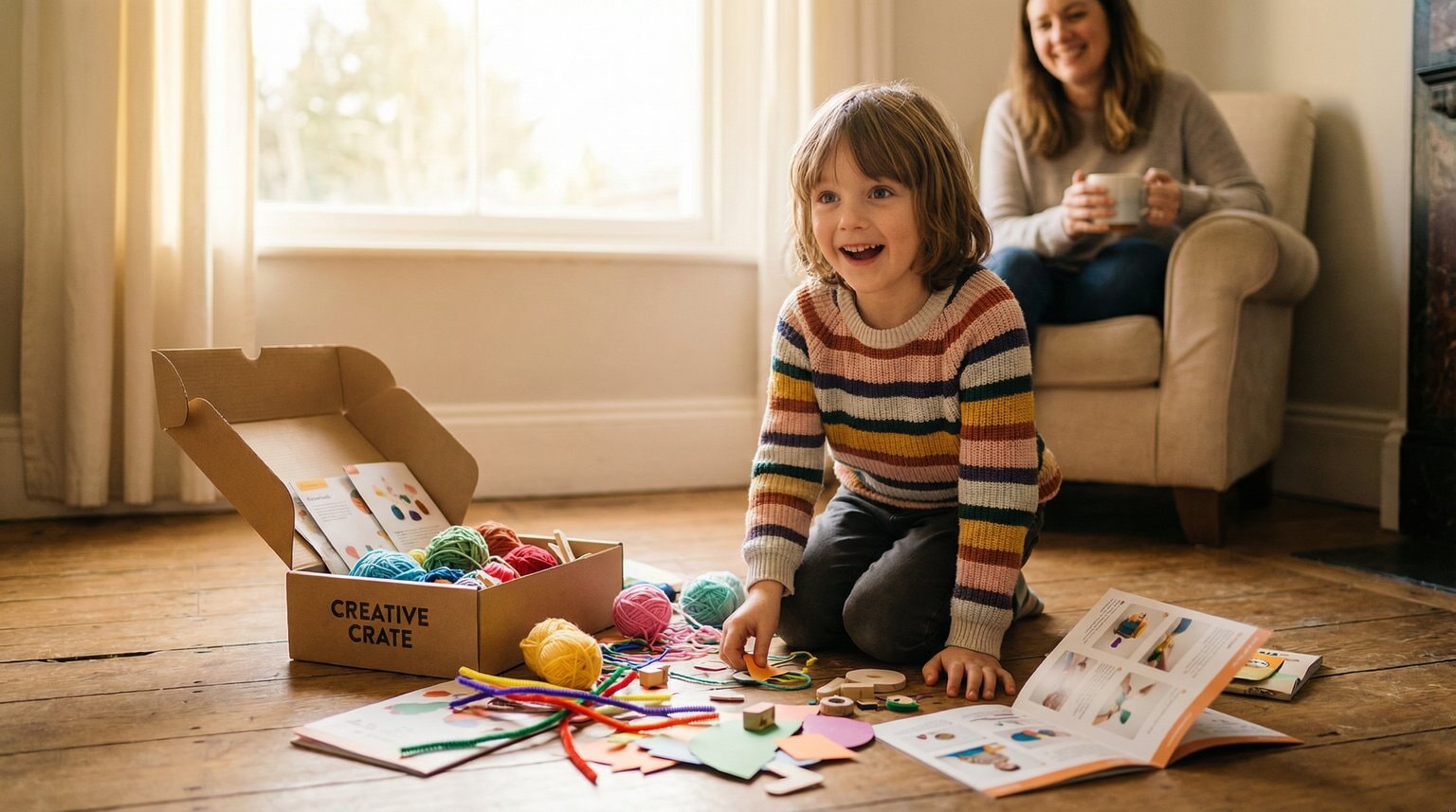
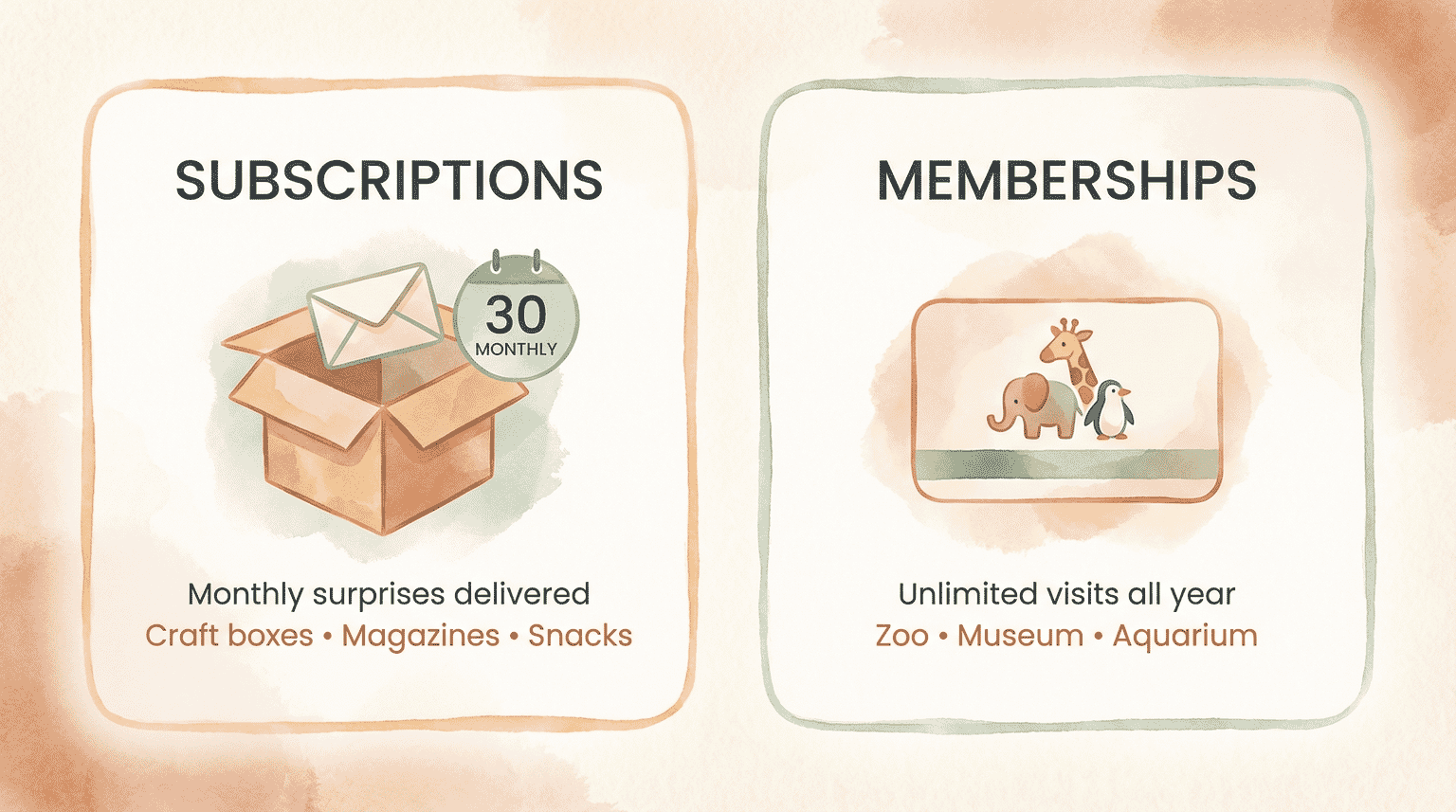
The solution? Subscriptions and memberships bridge both worlds. Children get something physical to unwrap, followed by ongoing experiences they can remember.
Subscription options:
- Craft boxes: KiwiCo, Lovevery, and similar services deliver age-appropriate projects monthly
- Magazine subscriptions: Highlights, National Geographic Kids, Ranger Rick—physical mail addressed to them
- Snack subscriptions: For adventurous eaters, international snack boxes bring discovery
Membership gifts:
- Zoo or aquarium memberships (unlimited visits = repeated memory-making)
- Children’s museum passes
- Recreation center or gym memberships
- Local attraction season passes
Lead researcher Dr. Lan Nguyen Chaplin notes that “for experiences to provide enduring happiness, children must be able to recall details of the event long after it is over.”
For young children receiving experience gifts, take lots of photos. Create a simple scrapbook or display the photos where kids can revisit them. That physical reminder helps cement the memory—turning an experience into something they can appreciate like a material gift.
Seasonal and Occasion-Specific Consumables
Some of the best consumable gifts match the season or occasion perfectly. They get used up during a specific time, creating memories tied to that moment.
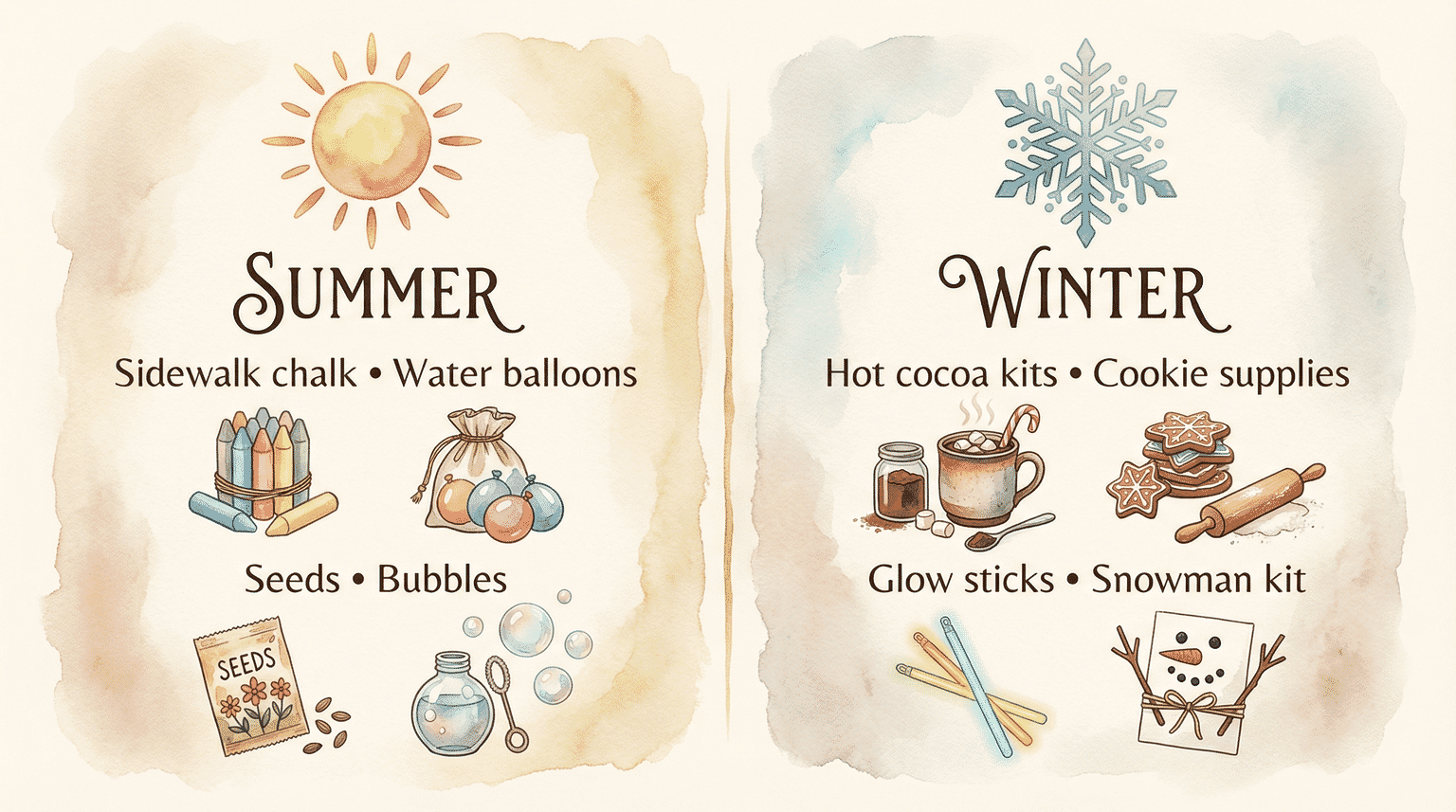
Summer consumables:
- Sidewalk chalk (bulk packs last all summer)
- Water balloons
- Seed packets for a kid’s garden
- Bubble solution refills
Winter consumables:
- Hot cocoa kits with fun toppings
- Cookie decorating supplies
- “Snowman building kits” (hat, scarf, carrot, buttons in a bag)
- Glow sticks for early-dark evenings
Birthday strategy: Consumables work especially well for birthday party gifts when you don’t know a child well. Art supplies, science kits, or bath bombs are safe choices that won’t duplicate what families already own.
Holiday strategy: When gift lists get long, consumables break up the toy parade. My kids often remember the “experience” gifts (zoo membership, cooking supplies) more distinctly than the toys because they stood out as different.
Making Consumable Gifts Feel Special
Let’s be honest: consumables can feel anticlimactic if you just hand a kid a box of crayons. The research says they’re better for development and long-term happiness—but kids don’t read research. They want exciting gift openings.
Presentation strategies:
- Wrap consumables in interesting ways (art supplies in a tackle box, bath bombs in a treasure chest)
- Bundle items into themes (“Pizza Chef Kit” with ingredients, an apron, and recipe cards)
- Include a note explaining what you’ll do together with the gift
- For experiences, create a “preview” to unwrap—photos of where you’re going, a miniature version of what you’ll do
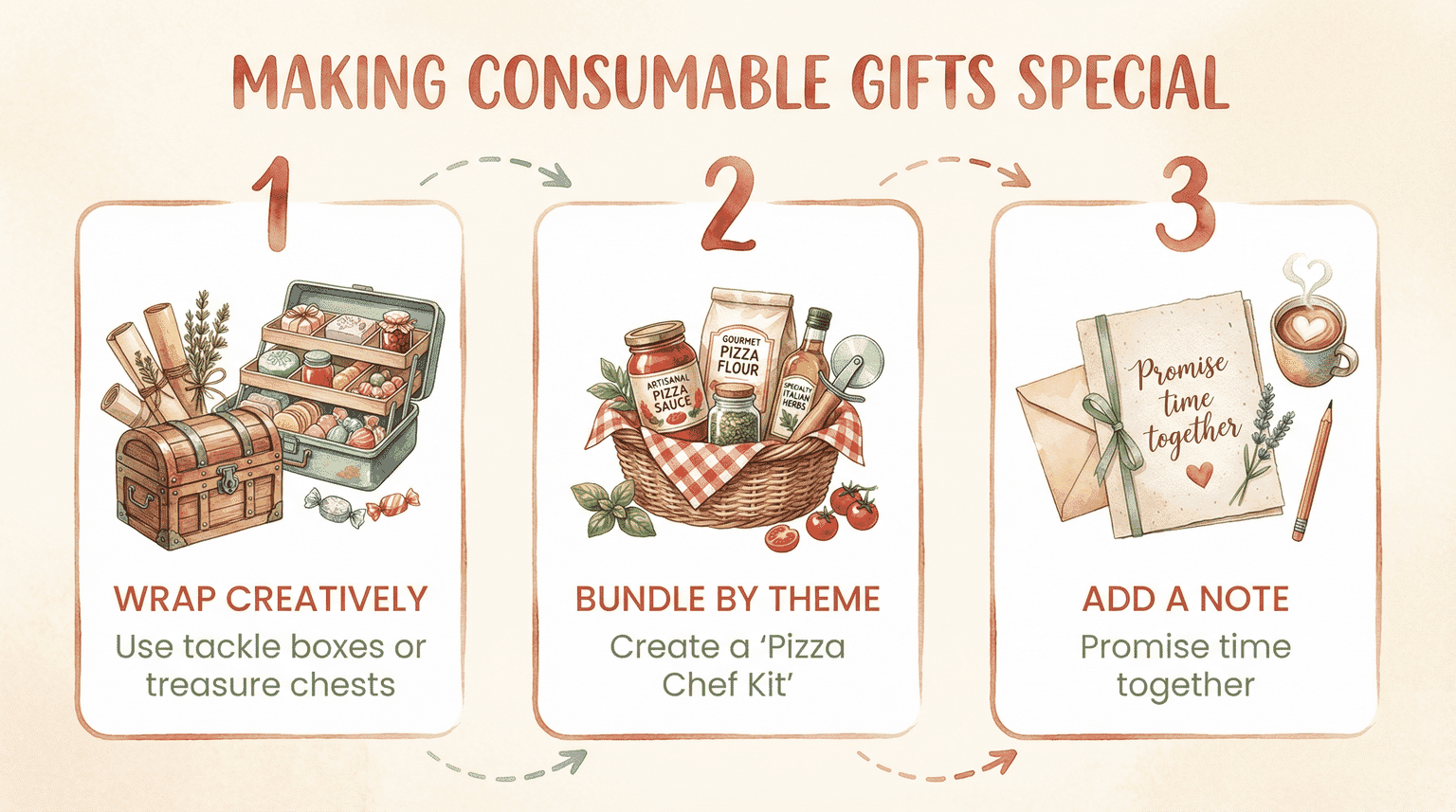
The “experience preview” technique: Pair physical items with promised time. A measuring cup set wrapped with a note: “This comes with one Saturday morning of making pancakes together—your choice of toppings.” The physical item satisfies the gift-opening moment; the promised experience creates the lasting memory.
Dr. Chaplin’s research confirms this approach: “Children are likely going to appreciate those experiences more if there is something to remind them of the event.” A physical anchor—even a small one—helps consumable and experience gifts land better with children of all ages.
Frequently Asked Questions
What can I give a child instead of toys?
Consumable gifts—items children use up through enjoyment—make engaging alternatives to traditional toys. Art supplies, baking kits, science experiment sets, bath products, and subscription boxes all provide meaningful experiences without permanent clutter. Research from the American Psychological Association suggests children often engage more deeply with real tools like kid-safe kitchen supplies than with plastic toy versions.
What gifts do children actually use?
Children use gifts that invite active participation. Open-ended items where “the child does it” hold attention longer than toys that do everything themselves. Art supplies, cooking ingredients, and science kits encourage repeated engagement and creative exploration because they require children’s involvement to become something.
How many gifts should a child get?
Child psychologist Dr. Angela Narayan recommends 1-2 meaningful gifts for young children. Her research shows that fewer gifts allow children to attend more deeply to each one, while too many items create overstimulation and reduced engagement. Consumable gifts help families prioritize quality experiences over quantity.
What are good consumable gifts for kids?
The best consumable gifts include art supplies (markers, paints, craft kits), cooking ingredients with real kitchen tools, science experiment kits, bath products (bath bombs, bath crayons), and subscription boxes. These get used up through enjoyment, creating memories without adding to toy clutter.
Your Turn
What consumable gift has been the biggest hit in your house? I’ve had kids beg for more bath bombs and completely ignore fancy craft kits. Would love to hear which “use it up” gifts actually got used—and which ones gathered dust.
Your consumable gift wins and fails help other parents skip the guesswork.
References
- Journal of Consumer Research via CNBC – Research on children’s memory development and gift preferences by age
- University of Denver via TODAY – Dr. Angela Narayan’s research on optimal gift quantity for children
- Stony Brook University – Research on children’s understanding of giving and generosity
- American Psychological Association – Expert insights on play, toys, and real tools from Dr. Barry Kudrowitz
- Journal of Intellectual Disability Practitioners and Research Studies – Research on open-ended materials and cognitive development

Share Your Thoughts