
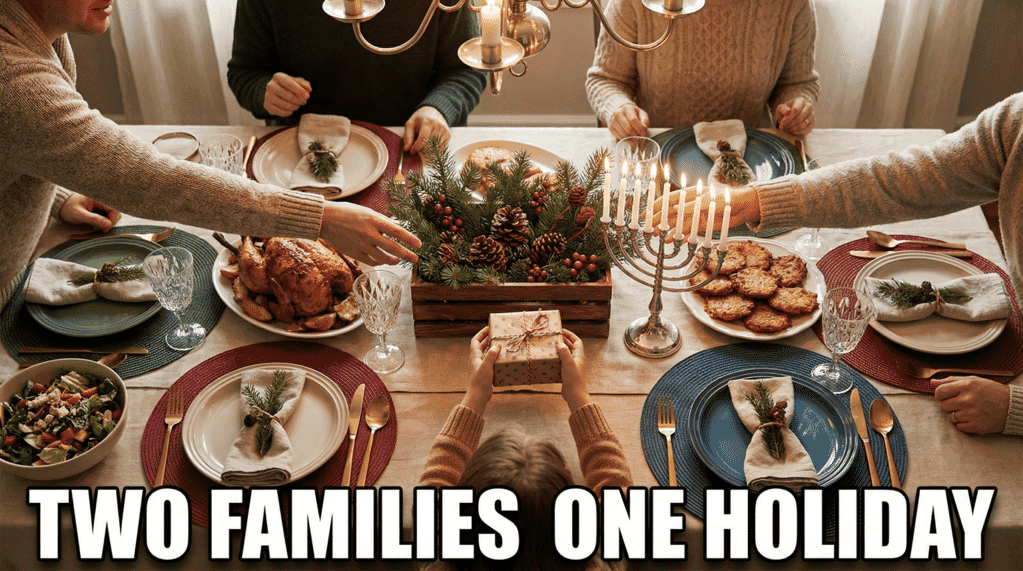
The grandparents mean well. Your ex has “the way we’ve always done it.” Your new partner’s family opens presents on Christmas Eve while yours insists on Christmas morning. And somewhere in the middle of all this, you’re just trying to give your kids a holiday that doesn’t feel like a custody negotiation.
Here’s the thing my librarian brain discovered when I started digging into the research: blending family traditions isn’t supposed to feel easy. A 2024 comprehensive study examining over 2,500 stepfamily studies identified four distinct challenges blended families face—adapting to instability, merging two families with pre-established traditions, negotiating understanding without shared history, and managing unclear expectations for new family roles.
That’s a lot of complexity packed into one holiday morning.
Add cultural or religious differences to the mix, and you’re navigating territory most parenting advice completely ignores. But the research also shows something hopeful: families who thoughtfully manage these challenges raise children with stronger empathy and conflict resolution skills. The clash isn’t the problem—it’s how you handle it.

Key Takeaways
- Blended families typically need 7-12 years to achieve real stability—give yourself permission for imperfect first holidays
- Use the “must keep, can adapt, can retire” audit to identify which traditions actually matter to each family member
- Successful multicultural families describe blending traditions as “one plus one equals three”—two practices forming something greater
- Have explicit coordination conversations with your ex before shopping starts to prevent gift competition and duplication
- Create at least one new tradition that belongs only to your blended family unit
How to Blend Family Gift Traditions in 5 Steps:
- Audit each household’s core traditions before attempting changes
- Have explicit coordination conversations before shopping begins
- Find “one plus one equals three” opportunities where traditions combine
- Create at least one new tradition unique to your blended family
- Allow 7-12 years for full integration—research shows this is normal
Why First-Year Expectations Should Be Modest
Here’s a number that reframed everything for me: research indicates blended families typically require 7 to 12 years to achieve real stability. Not 7 to 12 months. Years.
That timeline initially felt discouraging. Then I realized it was actually permission—permission to stop expecting our first Christmas together to feel like our tenth. Permission to accept that traditions need time to become ours rather than mine and yours.
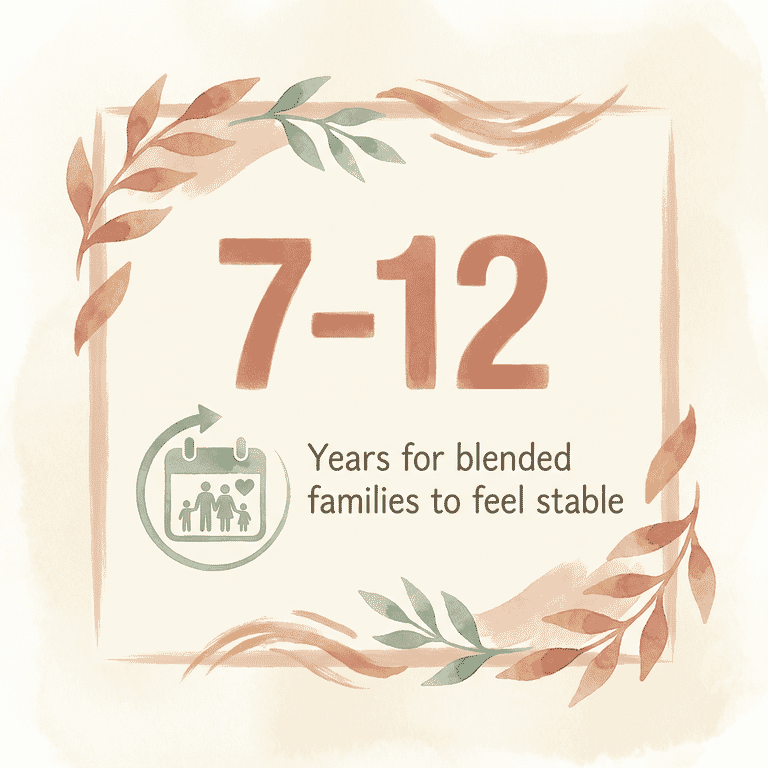
This timeline reflects the complex process of merging pre-established traditions, routines, and relationship patterns. Understanding it helps set realistic expectations for your family.
Instead of measuring success by how “perfect” the holiday feels, measure it by small moments of connection—a shared laugh, a new inside joke, a tradition that felt a little less awkward than last year.
The psychology behind this timeline reveals something important about holiday expectations.
“We tend to get into trouble when we have expectations based on the past that we may not be aware of until we’re disappointed.”
— Dr. Galena Rhoades, Research Psychology Professor, University of Denver Institute for Relationship Science
Those unconscious expectations—this is how stockings work, this is when we open presents, this is what Christmas morning feels like—collide without anyone realizing why they’re upset.
The Audit Strategy: Mapping What Actually Matters
Before you can blend traditions, you need to know what you’re working with. I recommend a simple audit with each household member old enough to articulate preferences.
Ask each person:
- What’s one tradition you’d be heartbroken to lose?
- What’s something you’ve always wanted to try?
- What tradition do you secretly find exhausting?
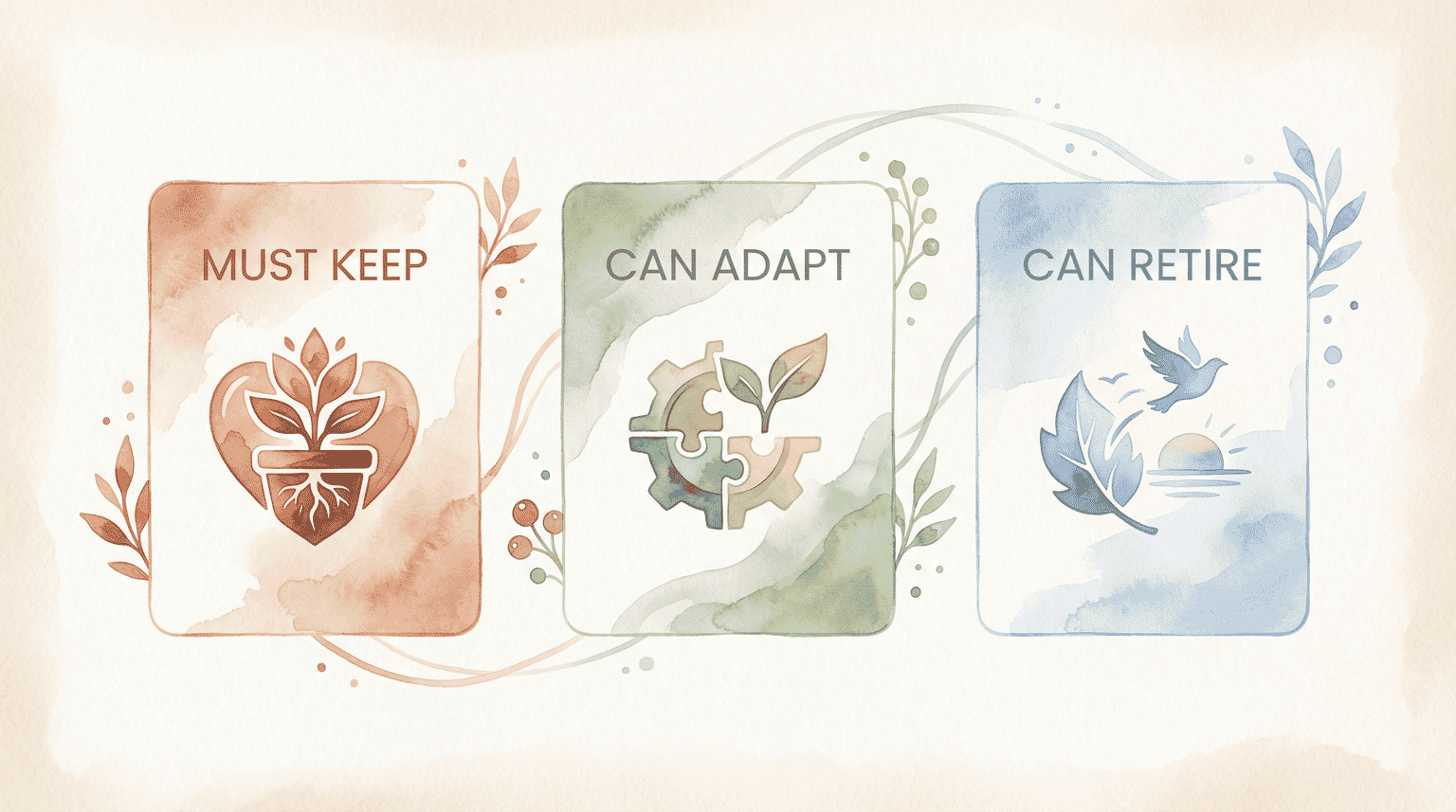
Sort the answers into three categories: must keep, can adapt, and can retire. You’ll discover that most families have 2-3 non-negotiable traditions and a lot of habits they continue simply because no one ever questioned them.
The goal isn’t to keep everything—it’s to keep what matters. For broader guidance on building family gift traditions, that foundation helps before tackling the blended-specific challenges.
When Religious or Cultural Traditions Conflict
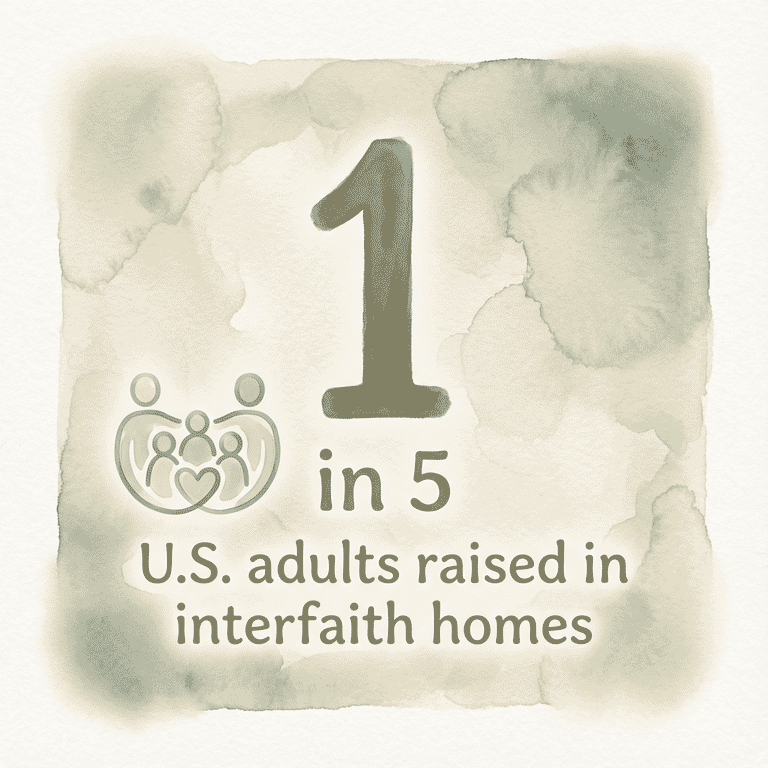
This is where most advice falls apart. Ninety-four percent of Americans now express approval of interracial marriages, and one in five U.S. adults were raised in interfaith homes. Yet almost nothing exists to help parents navigate the practical reality of different gift-giving traditions under one roof.
Here’s what researchers at UC Berkeley discovered when they interviewed over 120 members of multicultural families: parents who successfully blend traditions describe the process as “one plus one equaling three”—two distinct pieces forming something greater than either alone.
The Parallel vs. Combined Approach
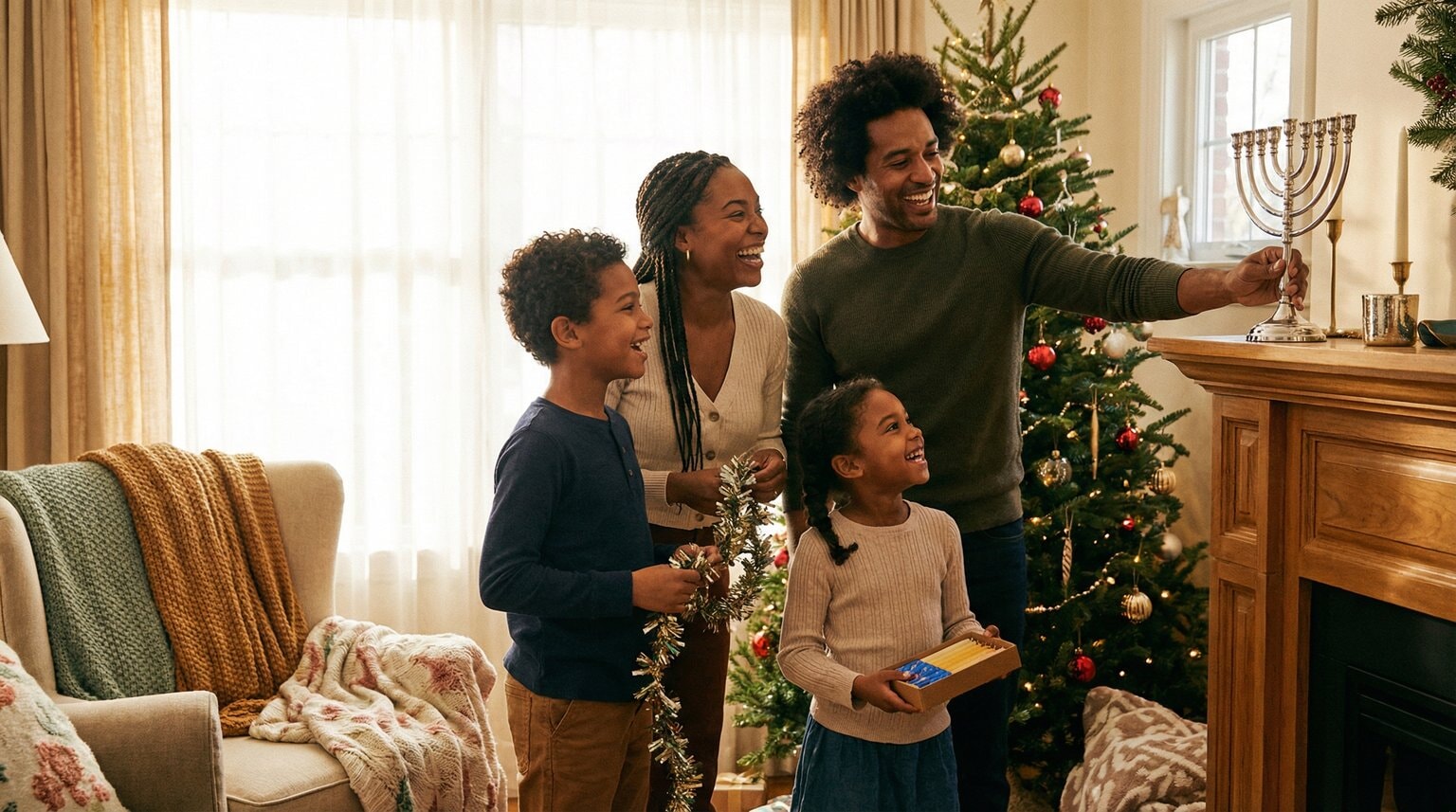
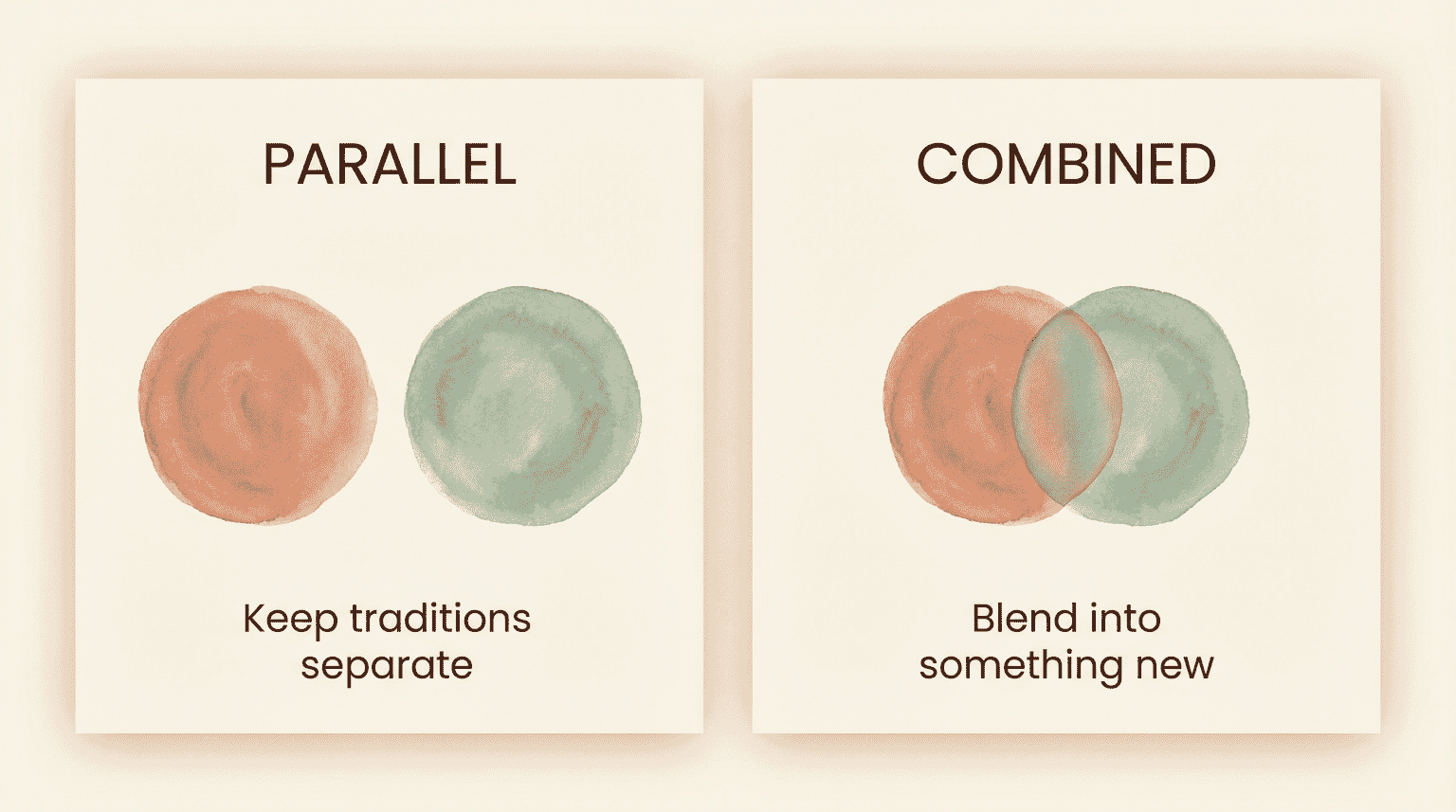
Some traditions work best maintained separately. If your family celebrates both Hanukkah and Christmas, you don’t have to merge them into one awkward hybrid. Let Hanukkah be Hanukkah. Let Christmas be Christmas. Children are remarkably capable of holding two traditions with respect when the adults model that respect.
Other traditions beg to be combined. One Sikh-Jewish family in the UC Berkeley research created a blended coming-of-age ceremony where both parents identified fundamental values from their traditions, their daughters prepared speeches about these values, and the community was invited to celebrate. The parents described it as reflecting “who we as a family are far more than something that sort of runs in parallel.”
What Children Actually Learn
Research shows children raised in families that openly navigate different traditions develop something valuable—they learn that people can love each other deeply while holding different beliefs. One young adult from a mixed-culture family described learning to balance her mother’s collectivist values with her father’s individualism, giving her “a blueprint for contending with differences in values throughout life.”
The key question isn’t “how do we avoid the conflict?” It’s what the UC Berkeley researchers suggest: “What opportunities are there for us to acknowledge and share our different value systems with our children rather than trying to conceal or paper over these differences?”
The Coordination Conversation With Your Ex

If there’s one thing that prevents holiday meltdowns, it’s this: make the implicit explicit before shopping starts.
I’ve watched families implode because one household bought the big-ticket item the other household was planning. Or because one parent spent $500 while the other spent $50, and the child came home making comparisons that hurt everyone.
Script for initiating the conversation:
“Hey, before the holiday shopping starts, can we coordinate on a few things? I want to make sure we’re not duplicating gifts and that [child’s name] has a good experience at both houses.”
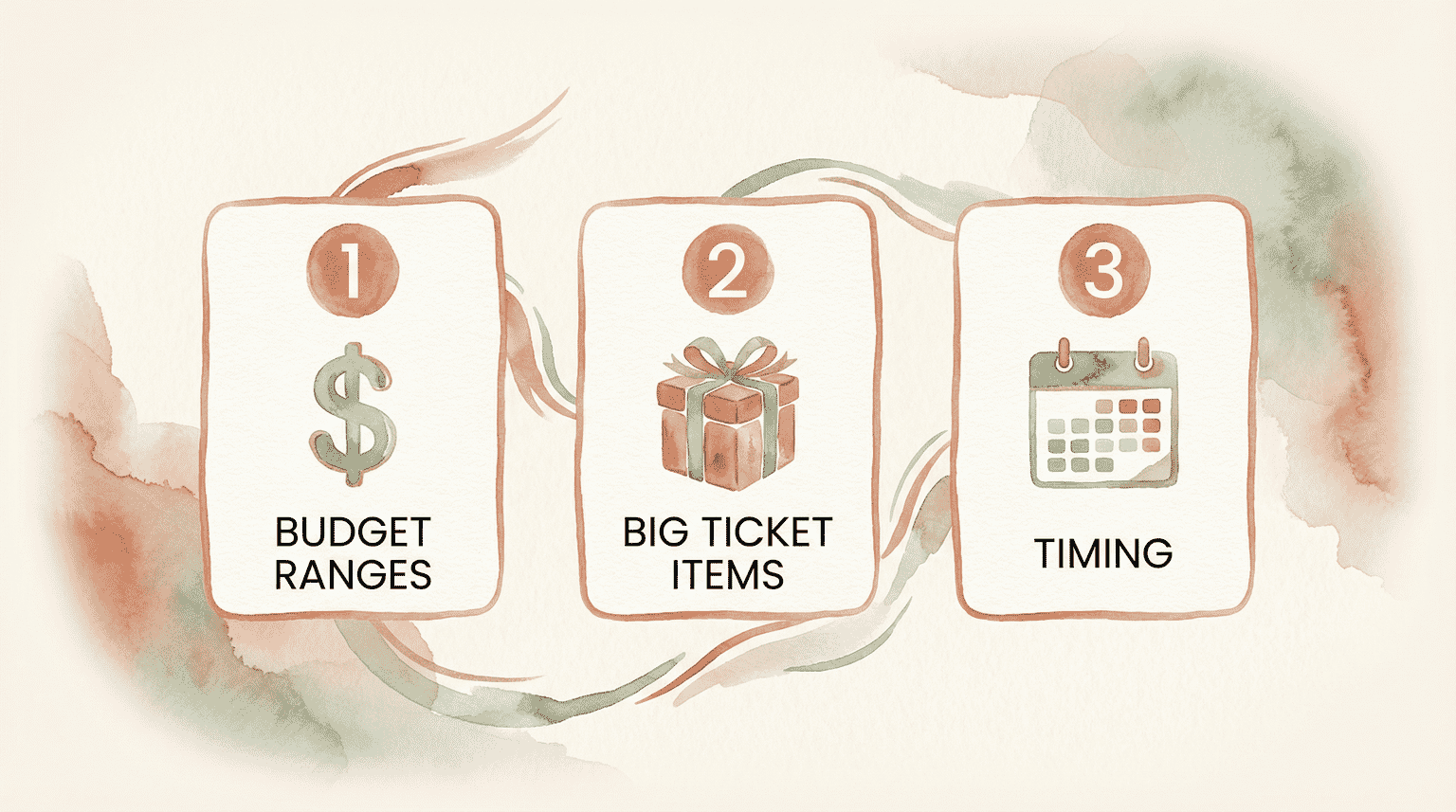
What to coordinate:
- Budget ranges: Or at minimum, gift quantity if budgets differ significantly—younger children count gifts, not price tags
- Big ticket items: Who’s handling them this year
- Shared wish list access: To prevent duplication
- Timing of celebrations: If both households are doing holiday mornings
When Coordination Breaks Down
Sometimes your ex won’t engage. When you can’t coordinate, focus on what you can control: your household’s traditions, your budget, your approach. Resist the temptation to compete.
Your child will eventually recognize consistency and thoughtfulness over spectacle.
Managing Extended Family Expectations
Kinship research reveals something important: extended family plays a far more significant role than commonly acknowledged because of the ceremonial function families perform during holidays and life-course transitions. These occasions create and maintain bonds.
Which is why grandparent gift competition can feel so loaded. It’s not just about presents—it’s about claiming a place in the family hierarchy.
The data on interfaith and multicultural families shows just how common navigating different extended family expectations has become. This isn’t a niche problem—it’s the new normal.
Children can conceptually handle “more than four grandparents”—research shows they typically draw distinctions between biological parents and stepparents but often drop this distinction for extended family. The key is the biological parent’s support.
Handling biological grandparent gift overflow:
“We love how much you love [child’s name]. This year, we’re trying to focus on experiences and fewer physical gifts. Would you consider contributing to [experience/savings fund] or choosing one special gift you’d like to give?”
Including step-grandparents:
If you warmly include step-grandparents, your children are far more likely to see them as family. Your modeling matters more than any formal title.
Scripts for redirecting well-meaning relatives:
“Thank you for thinking of the kids! We’re working on keeping gifts manageable this year. If you’d like to give something, here are a few ideas that would really mean a lot…”
Dr. Rhoades offers a perspective worth holding onto: “We could all do better in giving each other some grace around transitions across all generations.”
Creating New Traditions That Unite
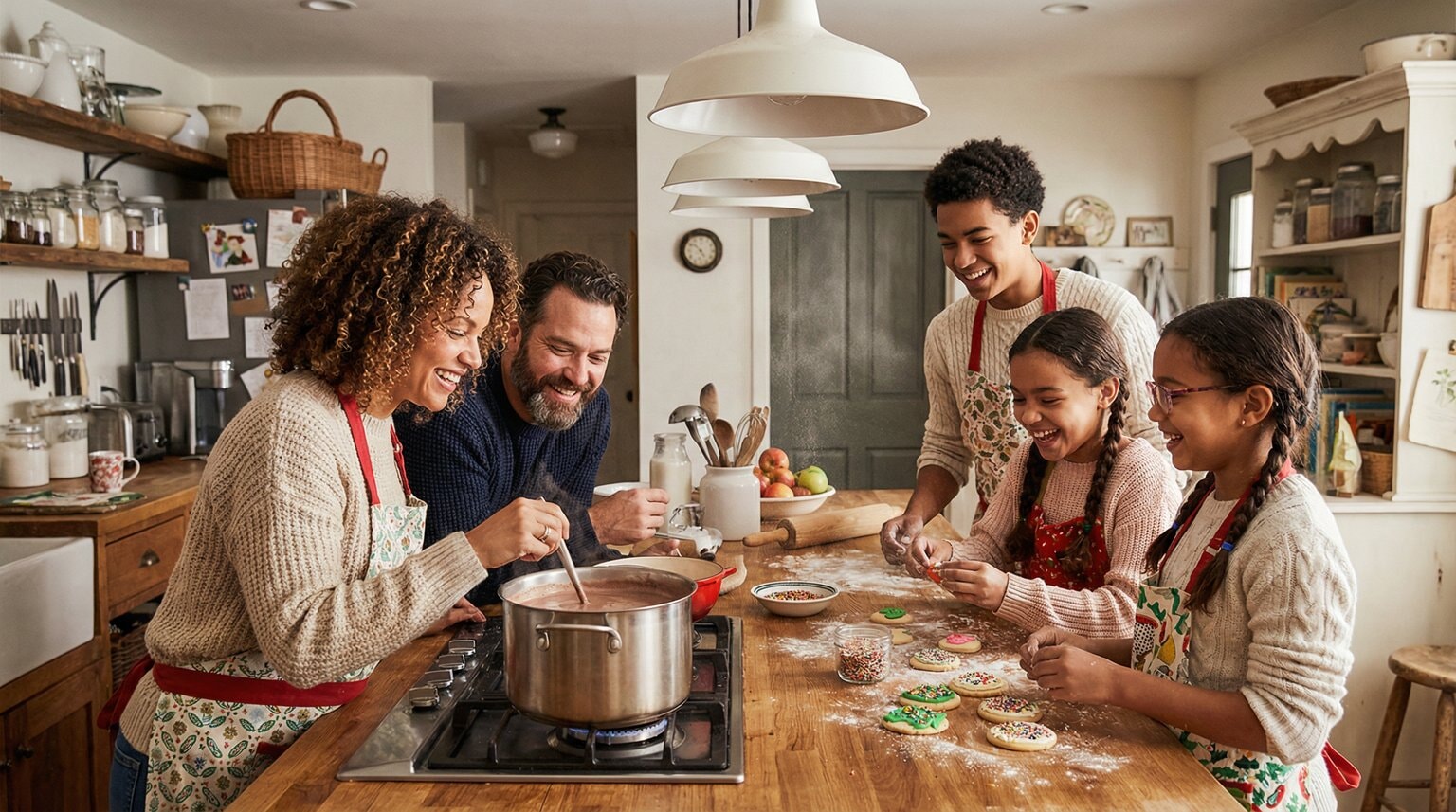
The most successful blended families I’ve observed do something specific: they create at least one tradition that belongs only to their new family unit.
This isn’t about replacing old traditions—it’s about building something that doesn’t carry baggage from either household’s past. Something that becomes ours rather than yours that I’m joining.
Ideas that travel between households:
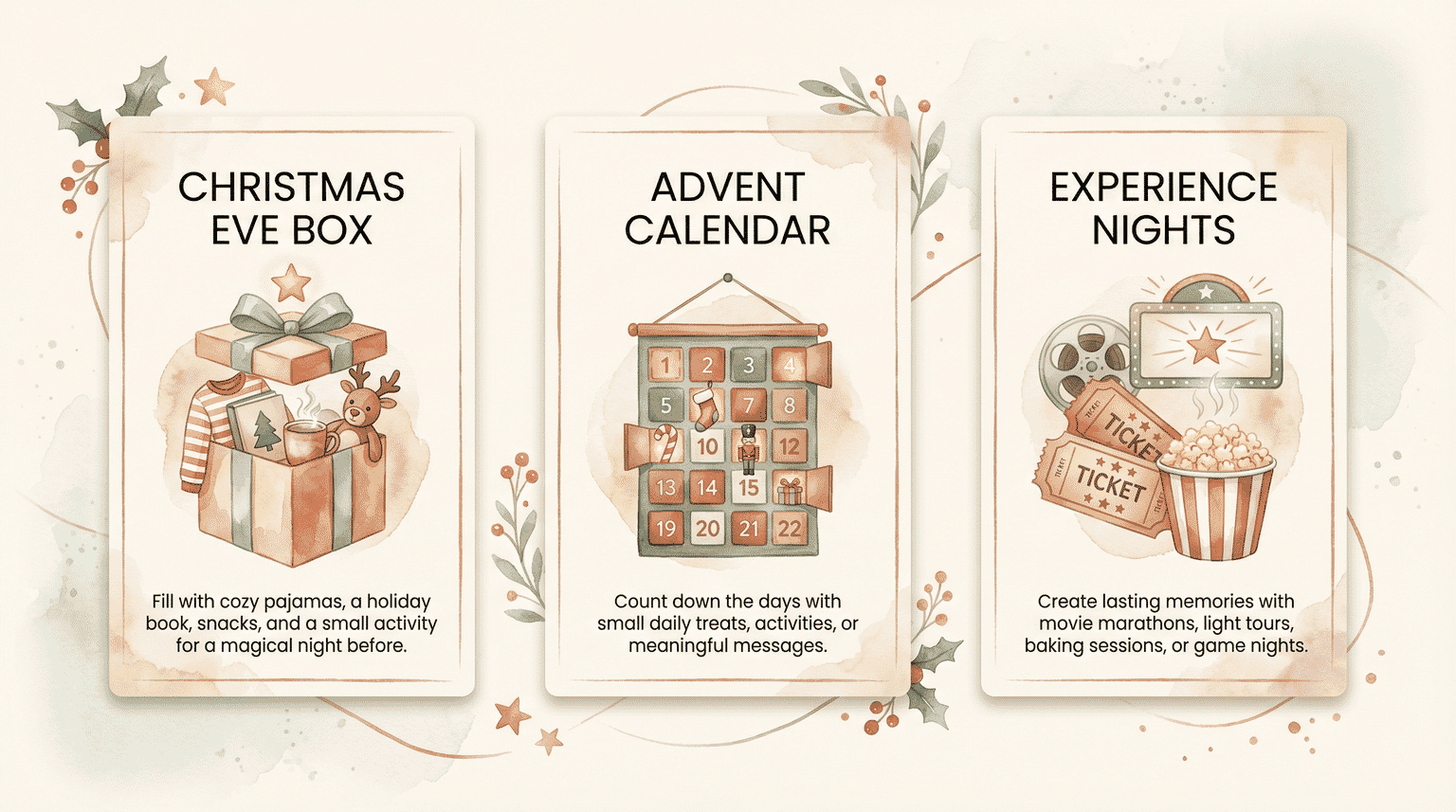
- A Christmas Eve box tradition works beautifully because it creates excitement regardless of which home children are in on the 24th
- Advent calendar traditions provide daily rituals that can continue even when children move between households
- Experience-based traditions (pajama shopping together, specific movie nights, cookie decorating) transfer more easily than material ones
Involving children in tradition creation:
Younger children (under 7) thrive with simple choices: “Should our new tradition be making hot chocolate or building gingerbread houses?” Older children and teens can handle more input: “What’s something you’d like our family to start doing together?”
Developmental specialists note that children in blended families who participate in regular rituals show higher markers of family cohesion and fewer behavioral problems. The predictability matters. The belonging matters.
Troubleshooting When Traditions Clash
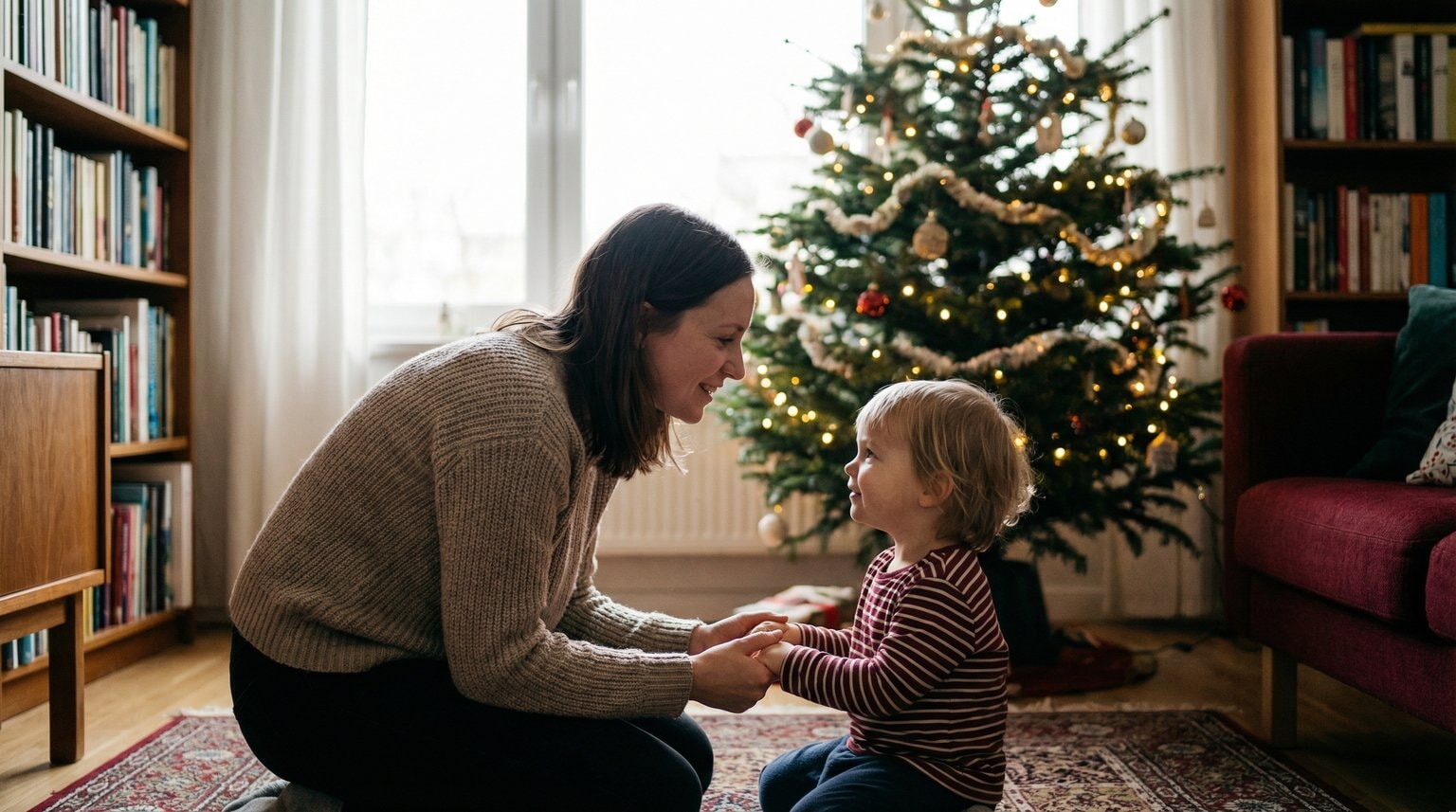
Even with planning, things go sideways. Here’s what to say when they do.
When a child compares gifts between households:
“It sounds like you noticed things are different at Dad’s house. Different families do things differently. What matters to me is that you feel loved here. Do you?”
Avoid the temptation to defend, justify, or criticize the other household. Acknowledge the difference without judgment.
When a child rejects a stepparent’s gift:
This stings, but kinship research provides context: the parent-child bond in stepfamilies must be achieved through actions rather than assumed at birth. It’s a developmental process, not a switch.
Let the biological parent acknowledge the gift warmly. Don’t force gratitude. The relationship builds through consistent small actions over time—not through one successful gift exchange.
When a tradition fails spectacularly:
Last year I tried merging two different cookie-decorating approaches and ended up with crying children and frosting on the ceiling. Sometimes you just have to say: “Well, that didn’t work! Let’s try something different next year.”
The willingness to adapt—without treating the failure as disaster—teaches children something valuable about flexibility.
Signs Your Approach Is Working
You won’t achieve tradition harmony in one season. But you can look for these indicators:
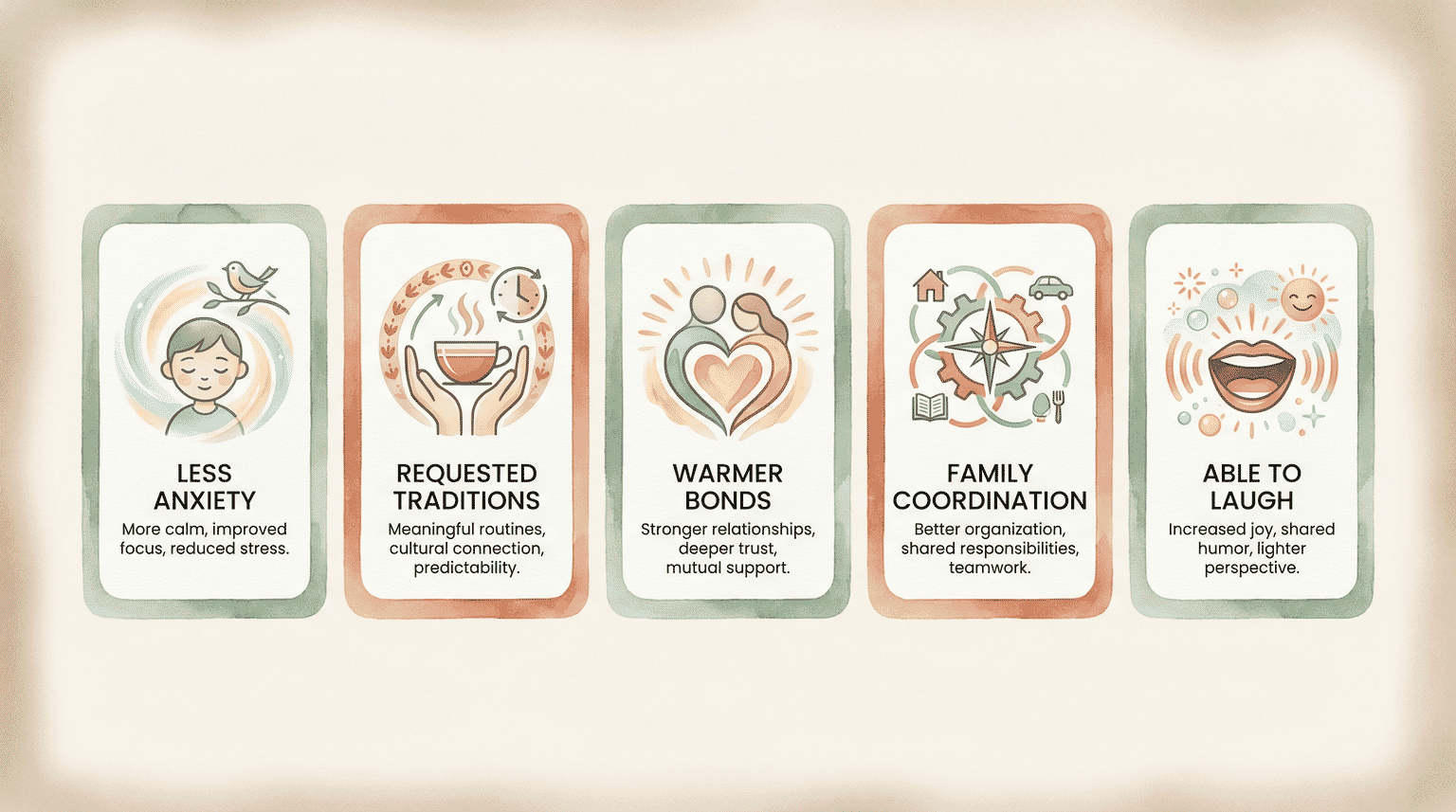
- Children stop asking “which house are we celebrating at?” with anxiety
- New traditions get requested: “Are we doing the thing again this year?”
- Step-relationships show warmth independent of gift-giving
- Extended family members coordinate rather than compete
- You can laugh about tradition mishaps rather than stewing
The research on “we-ness” in blended families emphasizes that this sense of belonging develops through accumulated actions and shared experiences. Each holiday season adds to that foundation. If specific gift problems arise, address them separately from the tradition-building work.
Dr. Rhoades’ advice applies here: “It’s good for families who are getting together not to just automatically do things the same way because that’s the way they’ve always been done but to talk about what they would like. That might mean starting some new traditions or going back to certain past traditions but either way, to be thoughtful and honor to the extent possible what everyone would like.”
Thoughtfulness over perfection. Patience over pressure. Grace across all generations.
That’s the real tradition worth building.
Frequently Asked Questions
How do you combine different family traditions?
Researchers at UC Berkeley found successful multicultural families describe combining traditions as “one plus one equaling three”—two distinct practices forming something greater. Rather than choosing one tradition over another, identify which elements matter most to each family, then create combined celebrations that honor both.
How long does it take for a blended family to feel normal?
Family psychology research indicates blended families typically require 7 to 12 years to achieve real stability. This reflects the complex process of merging pre-established traditions, routines, and relationship patterns. Understanding this timeline helps set realistic expectations.
Should step-parents buy gifts for stepchildren?
Research shows kinship bonds are built through actions rather than assigned at birth—gift-giving demonstrates care and builds connection. However, family researchers recommend stepparents support the biological parent’s lead in early years rather than taking charge. As relationships develop, stepparent gift-giving becomes increasingly natural.
What are the challenges of blending families with different cultures?
A 2024 comprehensive study identified four challenges: adapting to family transition instability, merging families with pre-established traditions, negotiating understanding without shared history, and managing unclear role expectations. Cultural or religious differences add another layer requiring intentional conversation about which traditions to maintain separately and which to combine.

What About You?
How do you blend different family traditions without losing your mind—or hurting anyone’s feelings? I’d love to hear what compromises have worked and which battles just weren’t worth fighting.
Your tradition-blending wins and fails help other families figure this out too.
References
- What Works in Stepfamilies – Comprehensive 2024 research on stepfamily dynamics and successful adaptation strategies
- What Multicultural Families Can Teach Kids About Character – UC Berkeley research on tradition-blending in interfaith and multiethnic families
- Step Parenting: Building Thriving Blended Families – Research-backed guidance on blended family stability timelines
- Psychology Professor Shares How to Navigate Family Dynamics Over Holidays – Expert insights from Dr. Galena Rhoades on holiday expectation management
- Kinship Practices Among Alternative Family Forms – Academic research on how family bonds develop through ritual and action

Share Your Thoughts