
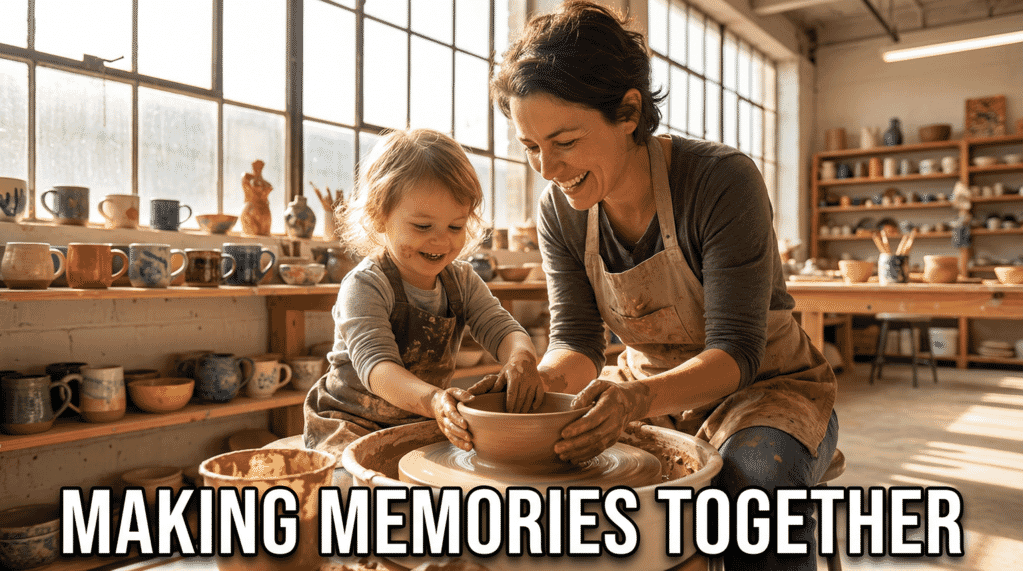
Your 5-year-old tears through the envelope containing zoo passes and immediately asks, “But where’s my real present?” Meanwhile, your 8-year-old is already planning which animals she’ll visit first and who she wants to bring—already planning the adventure. Same family, same gift style—completely different reactions.
I’ve watched this scene unfold eight times in my house, and my librarian brain couldn’t let it go without digging into why. Turns out, there’s a specific cognitive shift that has to happen before children can truly appreciate experiences as gifts—and understanding the mechanism changes everything about how we approach gift-giving.

Key Takeaways
- Children under 6 are cognitively “outcome driven” and can’t connect anticipation with enjoyment
- The shift to appreciating experiences happens around ages 6-7 when expectation-processing develops
- Children who feel genuinely heard during experiences are 5X more likely to report higher quality of life
- Over-directing experiences undermines the developmental benefits they’re meant to provide
- Three cognitive “gears” must engage: expectation-processing, feeling heard, and self-regulation through agency
Why Your 4-Year-Old Can’t Appreciate That Concert Ticket Yet
Here’s the puzzle: you give a young child an exciting experience gift, complete with enthusiastic buildup about how amazing it will be. They’re excited in the moment. But when the day arrives? Meltdowns, complaints, or a shrug followed by “what’s next?”
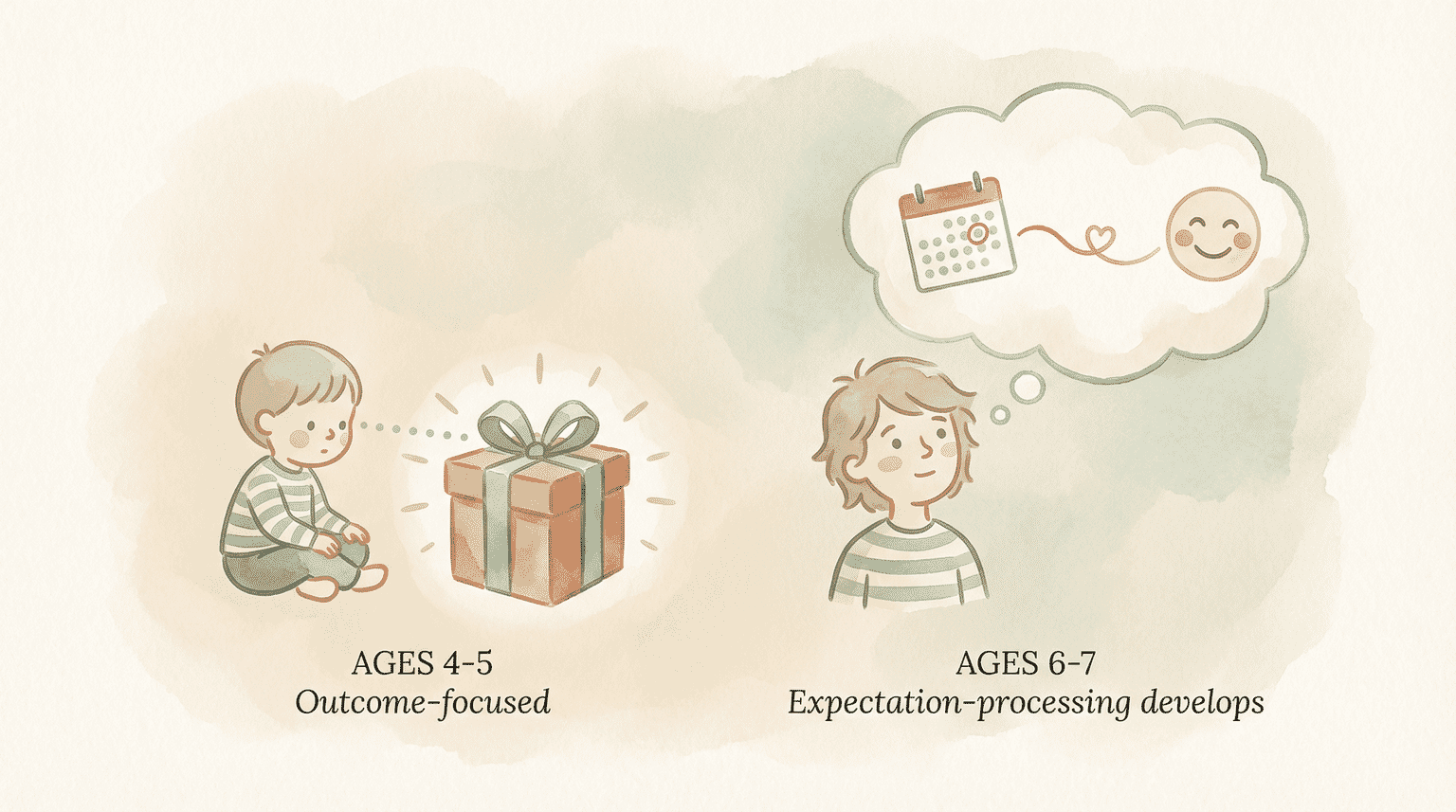
A 2021 study published in the NIH repository finally explained what I’d been observing. Researchers studied 205 participants ranging from ages 4 to adults and discovered something fascinating: children ages 4-5 are fundamentally “outcome driven.” They’re so focused on what’s happening right now that they literally cannot connect anticipation with enjoyment.

The researchers put it plainly: young children are “too overwhelmed by losing the game or winning an unappealing prize for their prior expectations to have had a measurable effect.”
In fact, not a single child in the 4-5 age range referenced their prior expectations when explaining how they felt about outcomes. Their brains simply aren’t wired for it yet.
This is why your preschooler melts down at Disney World. It’s not ingratitude—it’s brain development. They cannot yet process how expecting something amazing should make the experience feel more special.
The shift happens around age 6-7. This is when children develop what researchers call expectation-processing—the cognitive ability to link “I was looking forward to this” with “that’s why this feels so good.” By ages 8-10, children show even more sophisticated awareness, recognizing that their expectations actively shaped their enjoyment.
If you’re wondering why children often say they prefer toys, this mechanism explains a lot. Young children aren’t being materialistic—they simply can’t yet experience the full arc of an experience: the anticipation, the participation, and the meaningful memory afterward.
The “Feeling Heard” Factor That Changes Everything
But here’s where it gets more interesting. The cognitive shift at 6-7 is necessary but not sufficient. I’ve seen plenty of 8-year-olds sit through experiences looking bored. What’s missing?
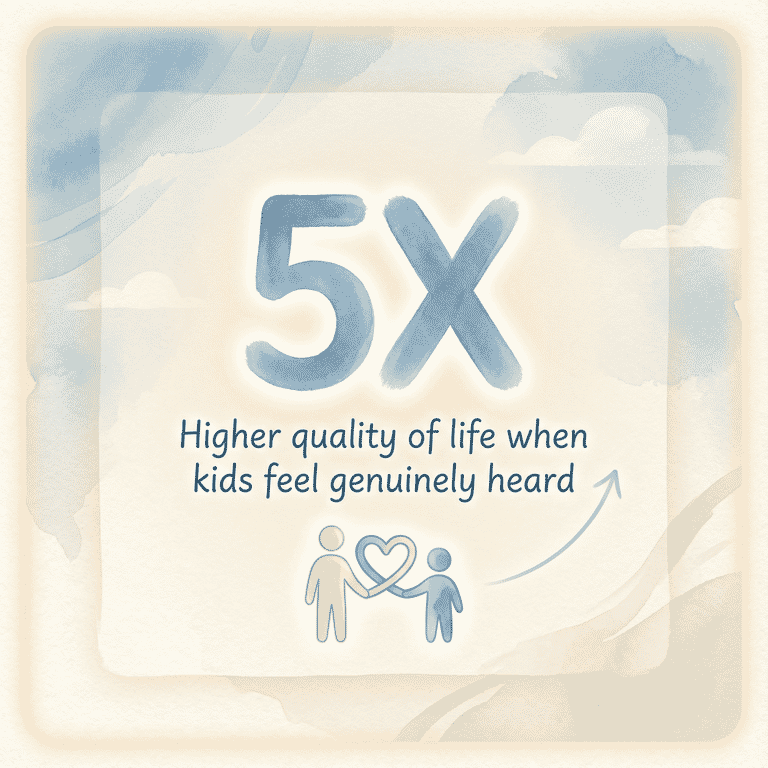
Research from Johns Hopkins Bloomberg School of Public Health (2024) reveals a second mechanism: children who feel genuinely heard during experiences are nearly five times more likely to report higher quality of life (68.4% versus 14.0%).
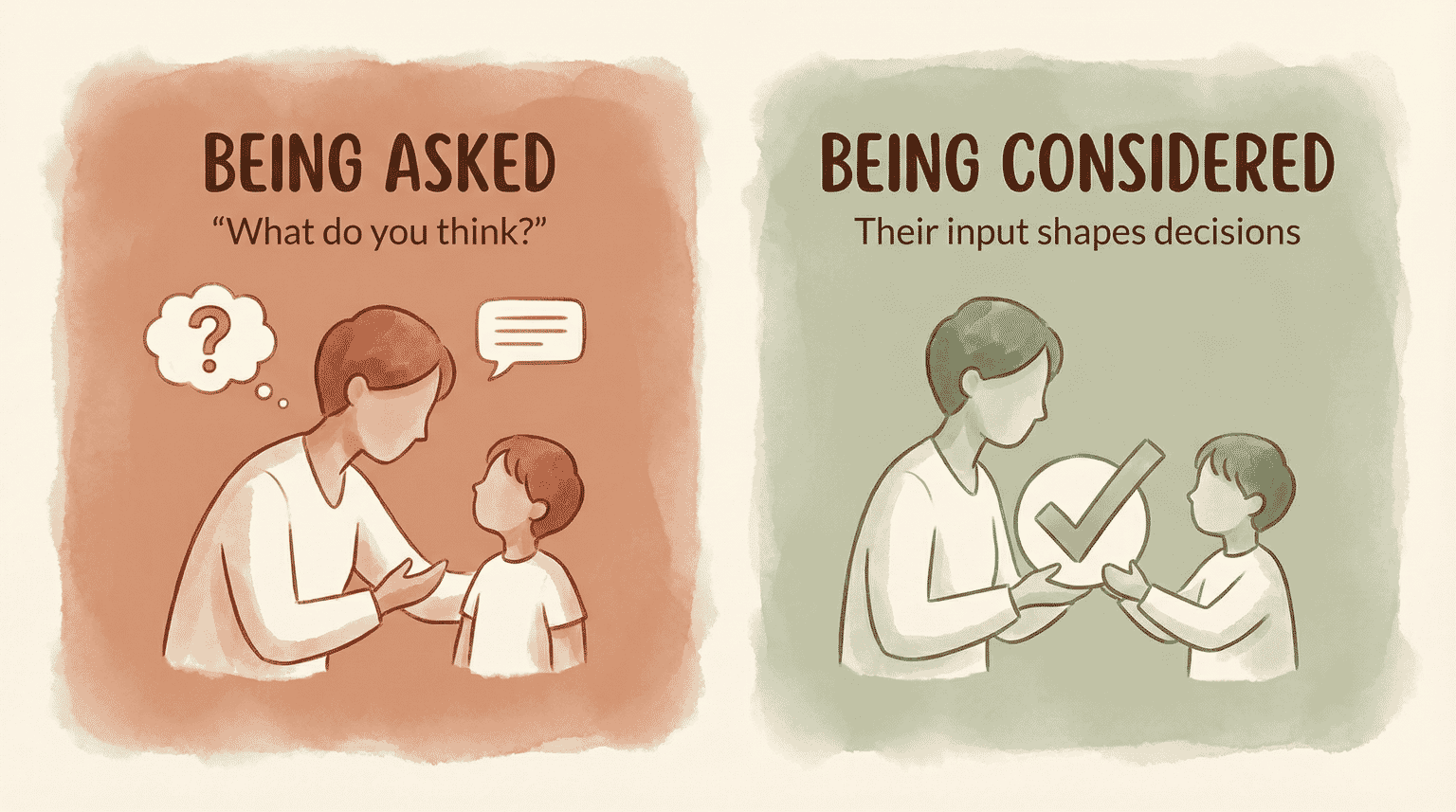
This isn’t just about asking children their opinions. The study found a critical distinction—children whose thoughts were asked about but not actually considered showed no improvement in well-being.
The magic happens when children’s input genuinely shapes what happens next. That’s a huge difference from the typical “what do you think?” that we ask while already knowing what we’re going to do anyway.
“Feeling heard is key to building safe, stable relationships that improve children’s quality of life, benefiting their mental and physical health well into adulthood.”
— Dr. Christina Bethell, Professor, Johns Hopkins Bloomberg School of Public Health
This explains why passive entertainment—even expensive passive entertainment—doesn’t deliver the same benefits as interactive experiences. Taking your child to a movie isn’t the same as creating lasting family memories where they have voice and agency.
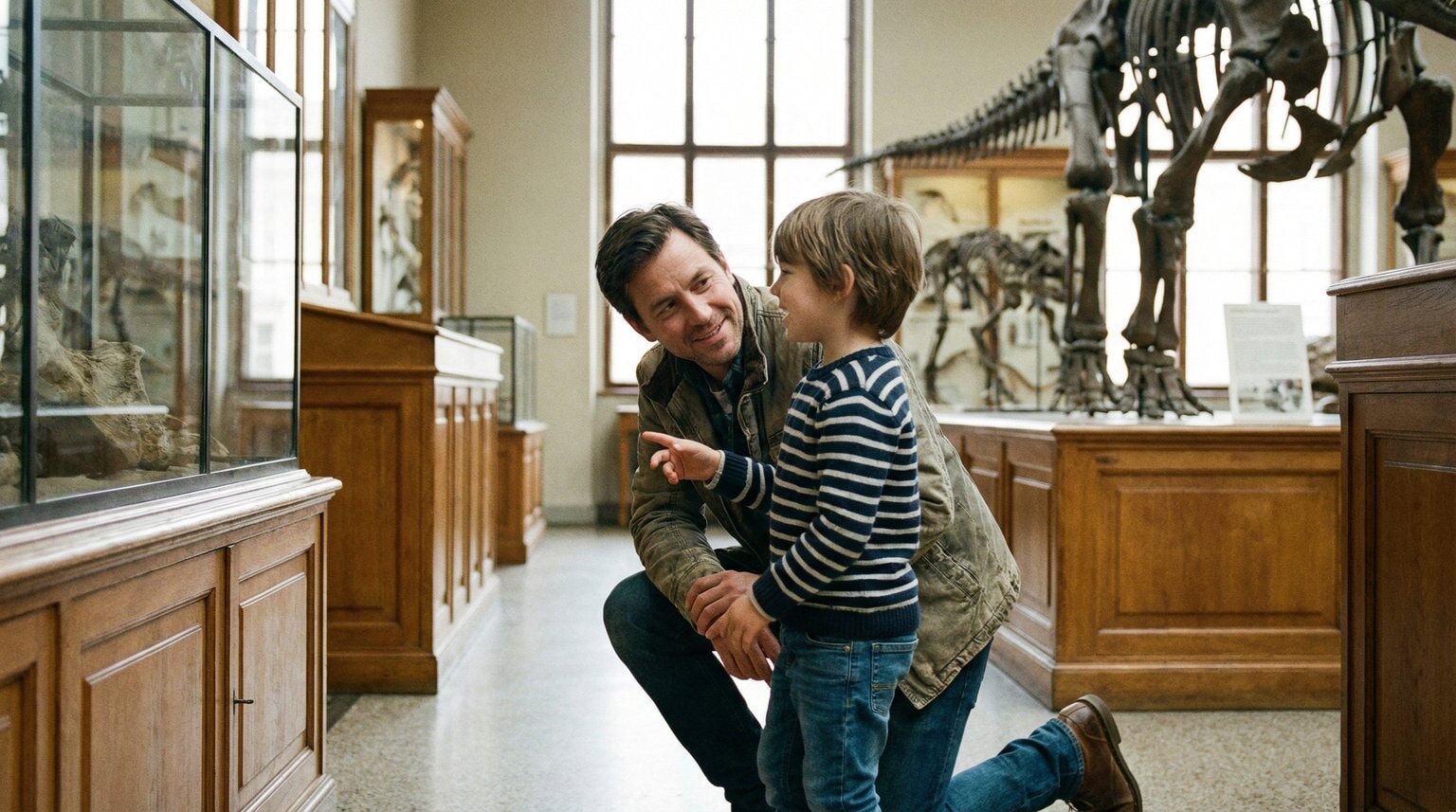
In my house, this looks like the difference between dragging everyone to the museum I chose versus asking, “Which exhibit should we explore first?” Same location, radically different experience.
What “Feeling Heard” Actually Looks Like
The study’s definition is specific and useful:
- Being asked: Adults solicit children’s thoughts and feelings
- Being considered: Those thoughts and feelings visibly influence decisions
- Both required: Asking without considering produces no measurable benefit
Just over half of children in the study met the criteria for feeling heard. That means nearly half don’t—even with well-meaning parents who think they’re being responsive.
Why Over-Directed Experiences Backfire
There’s a third mechanism that surprised me when I first encountered the research, though it immediately explained some spectacular family outing failures.
A Stanford study led by Dr. Jelena Obradović examined 102 children ages 4-6 and their caregivers. The finding? Children whose parents over-engaged—stepping in with instructions despite appropriate on-task behavior—displayed more difficulty regulating their behavior and emotions. They also performed worse on delayed gratification and executive function tasks.
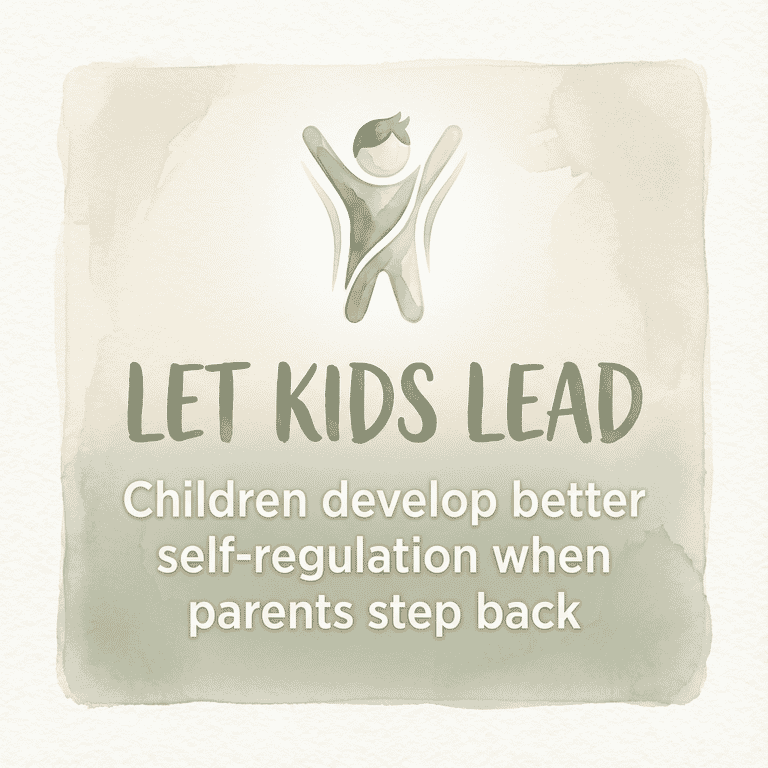
This means well-meaning parental involvement during experiences can actually undermine the developmental benefits those experiences are supposed to provide.
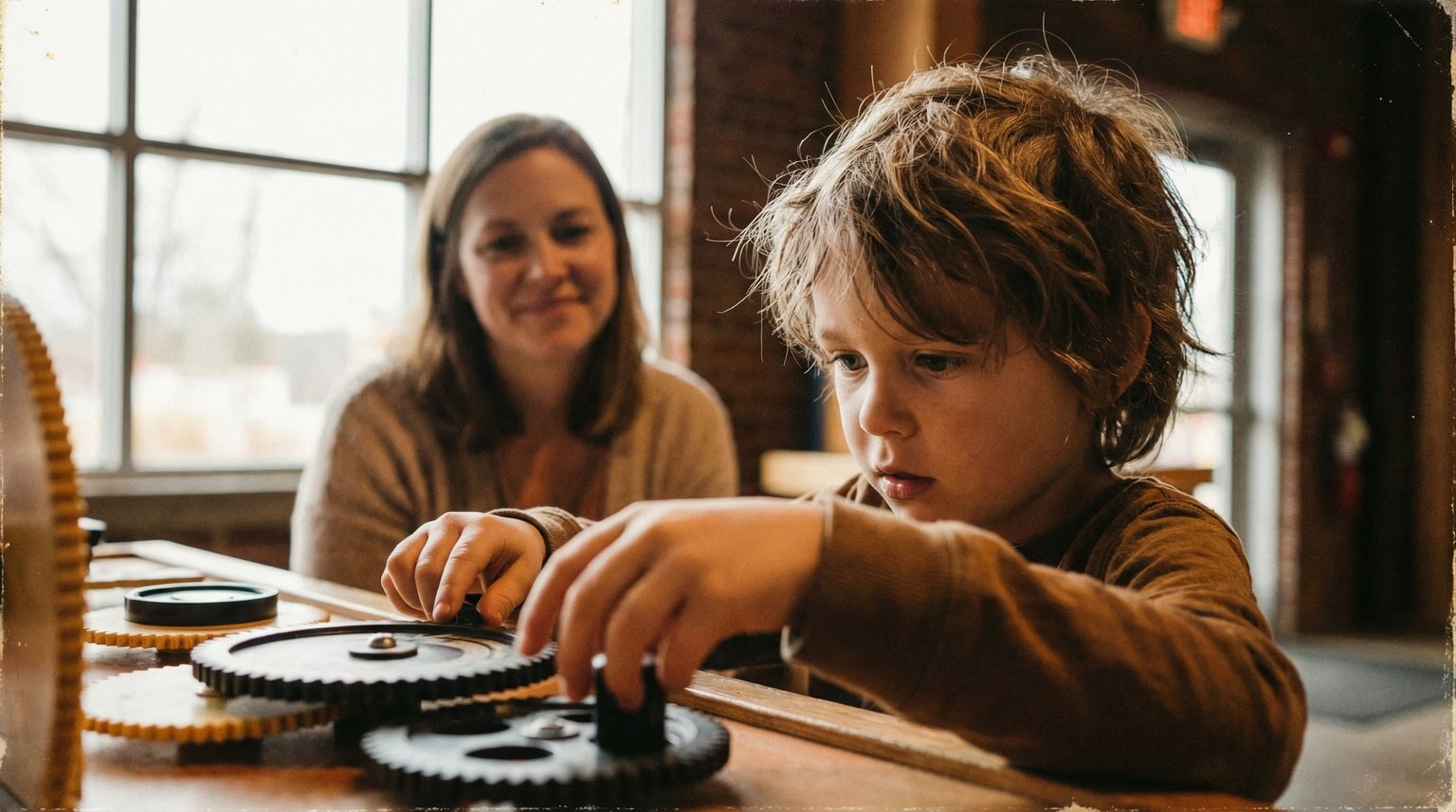
The implications for experience gifts are significant. A trip to the children’s museum where you’re constantly directing (“Look at this! Try that! Come over here!”) doesn’t build the same skills as letting your child wander, discover, and choose what captures their attention.
“When parents let kids take the lead in their interactions, children practice self-regulation skills and build independence.”
— Dr. Jelena Obradović, Associate Professor, Stanford Graduate School of Education
Dr. Obradović notes that parents have been conditioned to stay involved even when children are appropriately engaged. But she advises: “This is a really important shift, when parents have to learn to pull back.”
In my family of eight, I’ve learned that the experiences my kids talk about years later are rarely the ones I orchestrated perfectly. They’re the ones where something unexpected happened and they got to navigate it themselves.
The Three Gears That Must Engage
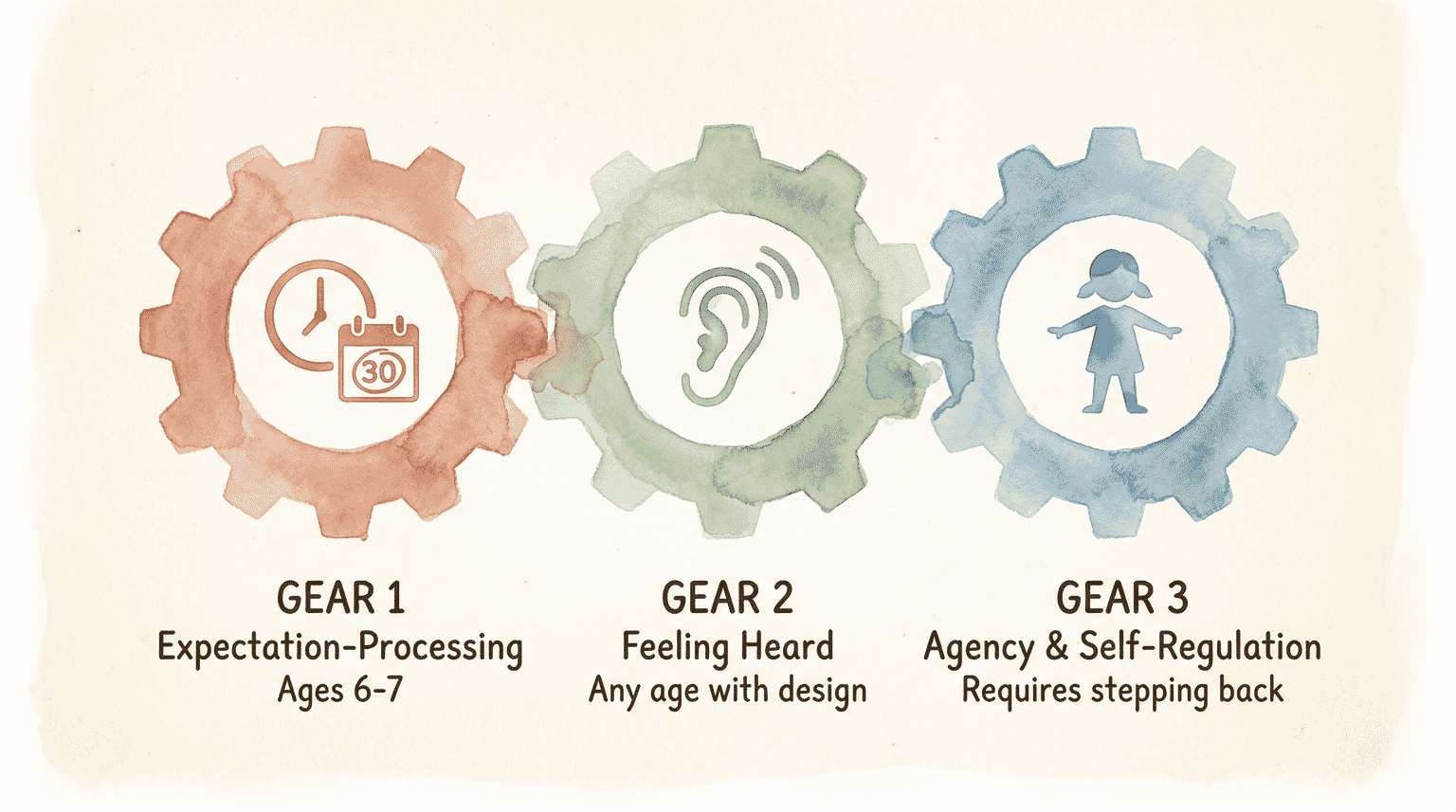
So when can children truly value experiences? All three cognitive gears need to engage:
Gear 1: Expectation-Processing (emerges ~6-7)
The ability to connect anticipation with enjoyment. Before this develops, children are purely outcome-driven and can’t appreciate the full arc of an experience.
Gear 2: Feeling Heard (requires interaction design)
The sense that their input matters and shapes what happens. Passive entertainment doesn’t engage this gear, no matter the child’s age.
Gear 3: Self-Regulation Through Agency (requires stepping back)
The developmental benefit that comes from leading their own experience. Over-direction by parents prevents this gear from turning.
Research on developmental stages supports these timelines. NIH developmental guidelines note that ages 7-8 marks when children “fully understand rules and regulations” and “show deeper understanding of relationships and responsibilities.” This cognitive sophistication appears necessary for truly valuing shared experiences.
Signs Your Child’s Mechanisms Are Developing
Watch for these indicators:
- Genuine anticipation: Your child discusses future events with excitement that connects to how they’ll feel
- Memory references: They bring up past experiences when explaining current emotions (“Remember when we…that’s why I want to…”)
- Expectation awareness: They’re beginning to understand that what they expected affects how they feel now
Most children show these signs between ages 6-8, though individual variation is significant.
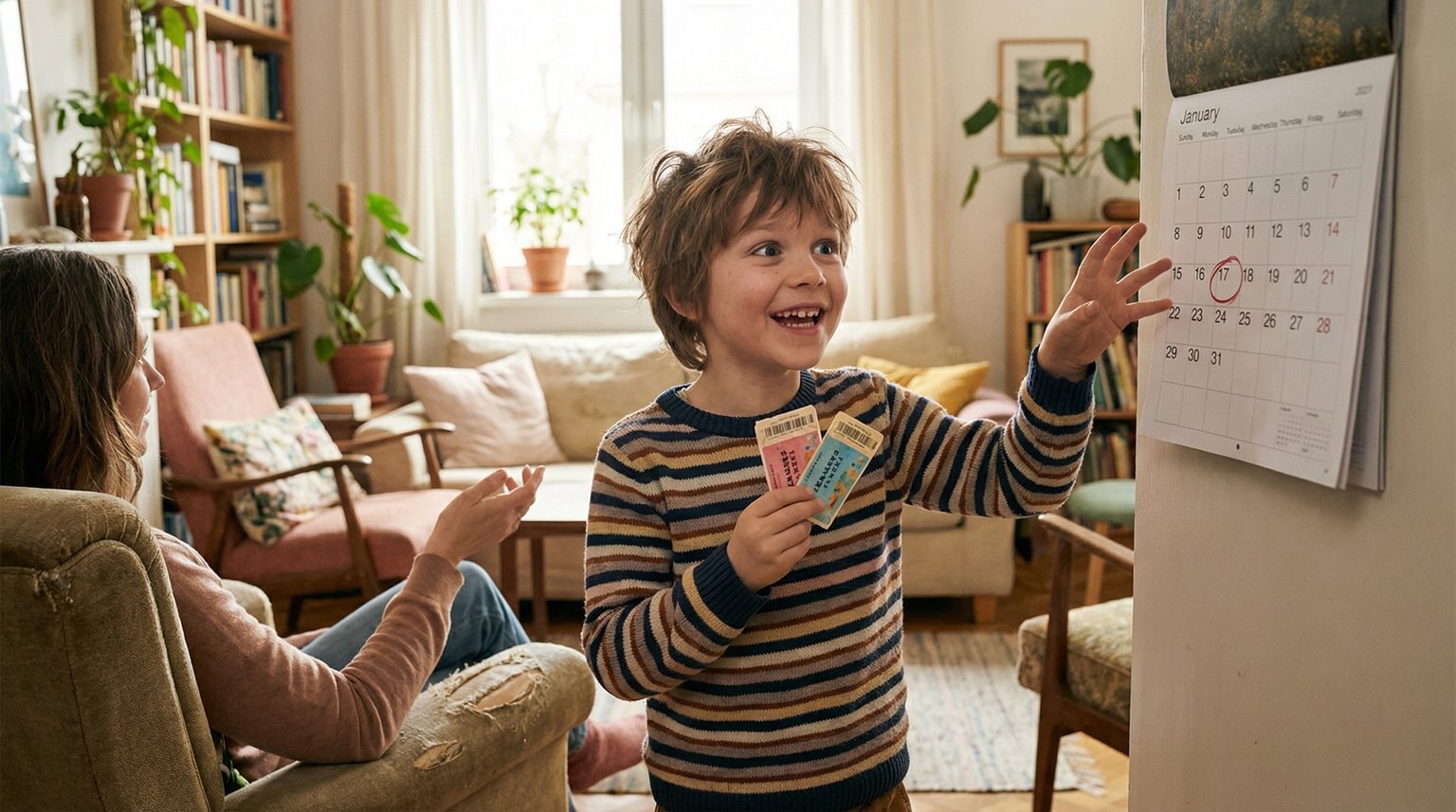
What This Means for Experience Timing
Here’s the practical application: Don’t waste elaborate experience gifts on children under 6. They physically cannot appreciate them the way you hope.
For younger children, simple, in-the-moment experiences work better than ones requiring anticipation. A spontaneous trip to the park beats concert tickets requiring weeks of waiting.
For children 6 and older, focus on experiences where they have genuine input and agency. Ask what they want to do, let them lead during the experience, and resist the urge to optimize every moment.
For detailed age-by-age guidance on experience gift-giving, the development patterns get even more specific—but understanding these three mechanisms is the foundation.
The Research on What Kids Actually Value
Here’s something that might surprise you: when researchers actually ask children what makes them happy, possessions barely register.
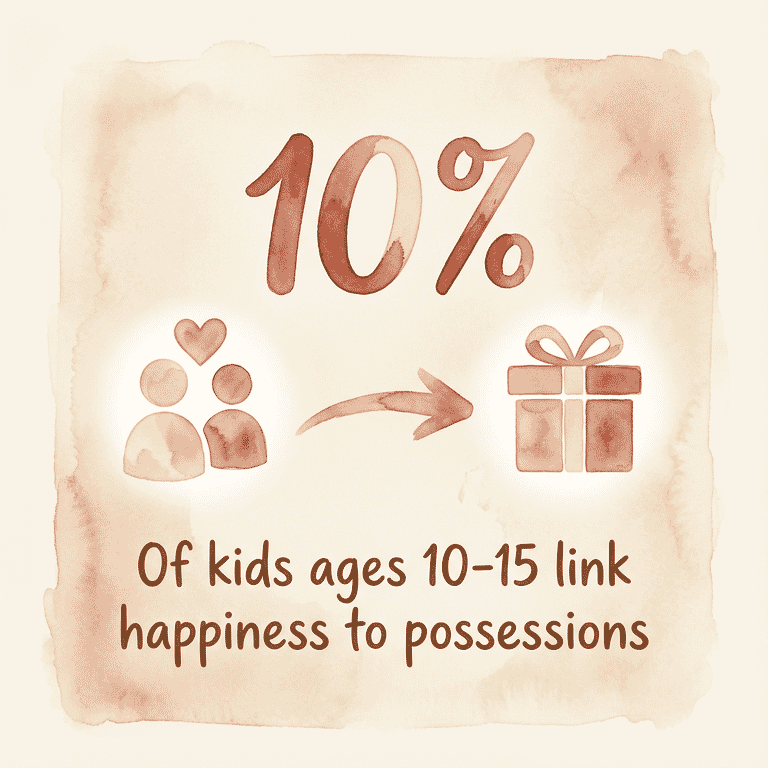
A Czech study of children ages 10-15 found that only 10.2% associated happiness with material possessions. Meanwhile, 20.3% connected happiness to relationships and interpersonal experiences. Children’s stated preferences often favor toys, but their actual happiness correlates more strongly with people and experiences than things.
This disconnect—wanting toys but being happier with experiences—makes sense once you understand the mechanisms. Young children say they want toys because they’re outcome-driven and toys provide immediate, tangible outcomes.
But the experiences that engage the feeling-heard and self-regulation gears produce deeper well-being. It’s a gap between what kids ask for and what actually makes them flourish.
The developmental research suggests values become “more abstract, consistent, stable, and connected to behaviors” during middle childhood. This is when children can genuinely internalize that experiences with people matter more than accumulating stuff—even if they couldn’t have articulated that at age 5.
What This Means for Your Family
Understanding these mechanisms doesn’t mean waiting until age 7 to ever give experiences. It means calibrating your expectations and approach.
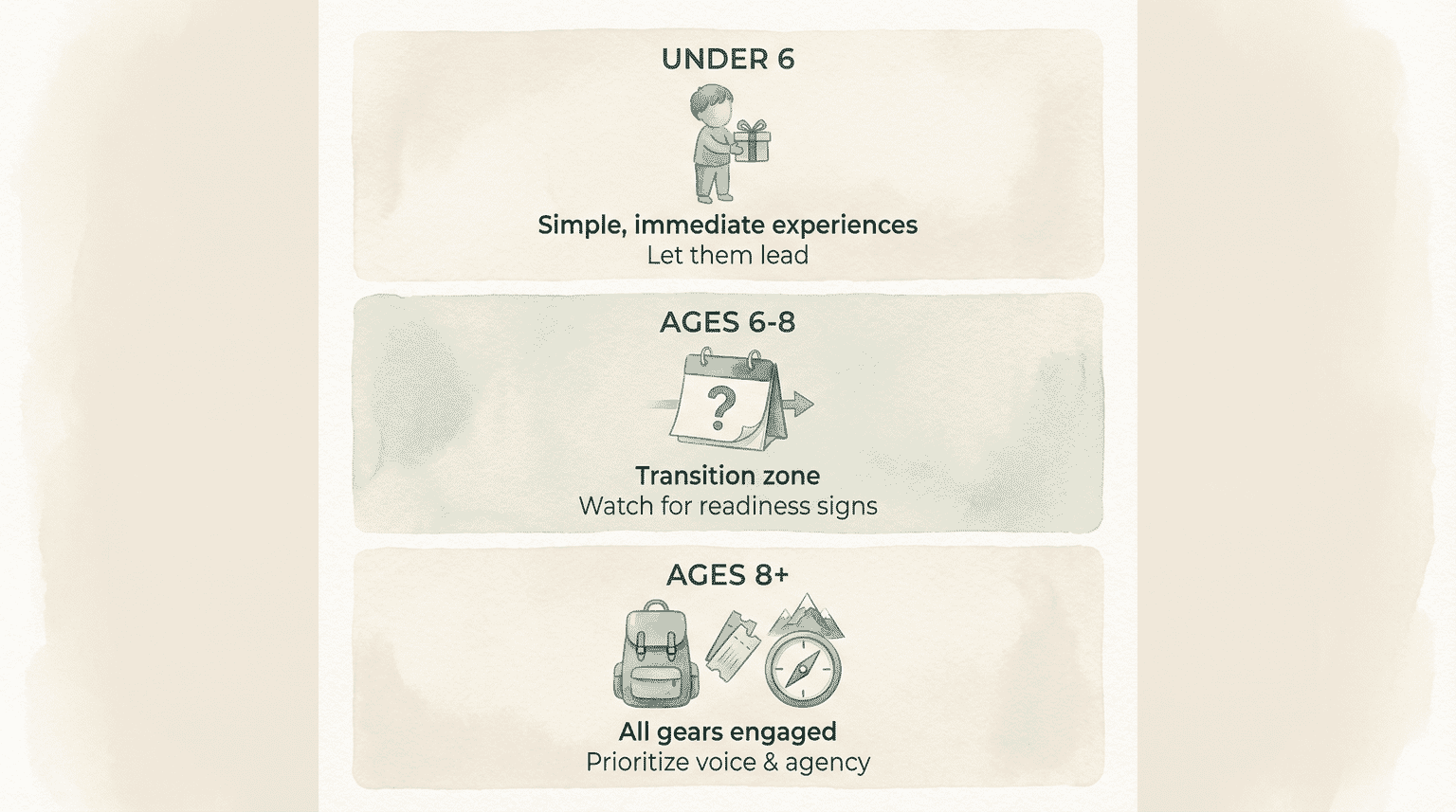
For children under 6: Keep experiences simple and immediate. Don’t spend money on anticipation-dependent gifts they can’t cognitively appreciate. Let them lead, even in small ways.
For children 6-8: This is the transition zone. Start introducing experience gifts with some anticipation, but watch for signs they’re connecting expectation with enjoyment. Prioritize experiences where they have genuine input.
For children 8 and older: The gears are engaged. Focus on experience quality—especially the feeling-heard factor and their agency during the experience itself.
The mechanisms explain both why experience gifts sometimes fail and how to set them up for success. It’s not about the experience being expensive enough or exciting enough. It’s about whether your child’s cognitive development is ready to appreciate it—and whether the experience is designed to engage all three gears.
Frequently Asked Questions
Why don’t young kids appreciate experiences?
Children ages 4-5 are cognitively “outcome driven”—they’re too focused on immediate results to connect anticipation with enjoyment. Research shows not a single child in this age range referenced prior expectations when explaining their emotional responses. The ability to link “I expected this” with “that’s why I feel this way” develops around age 6-7.
What age do kids start remembering experiences?
While children form some memories earlier, the sophisticated autobiographical memory that makes experiences personally meaningful becomes robust around ages 7-8. This is when children can discuss past experiences in ways that connect to their identity and relationships.
Do kids prefer toys or experiences?
Research on children ages 10-15 found only 10.2% associated happiness with material possessions, while 20.3% connected happiness to relationships and experiences. Children often say they prefer toys, but their actual well-being correlates more strongly with interactive experiences.
How do I know if my child is ready for experience gifts?
Look for three cognitive signs: (1) genuine anticipation of future events, (2) references to past experiences when explaining feelings, and (3) emerging awareness that expectations affect emotions. Most children show these signs between ages 6-8.
Share Your Story
When did your child start genuinely appreciating experience gifts? I’m curious whether it was a gradual shift or a sudden click—and whether certain types of experiences worked before others.
Your experience stories help me understand this shift better.
References
- Johns Hopkins Bloomberg School of Public Health (2024) – Research on children’s well-being and feeling heard
- PMC/NIH (2021) – Study on prior expectations and children’s affective experiences
- Stanford Graduate School of Education (2021) – Research on child-led interactions and self-regulation

Share Your Thoughts