
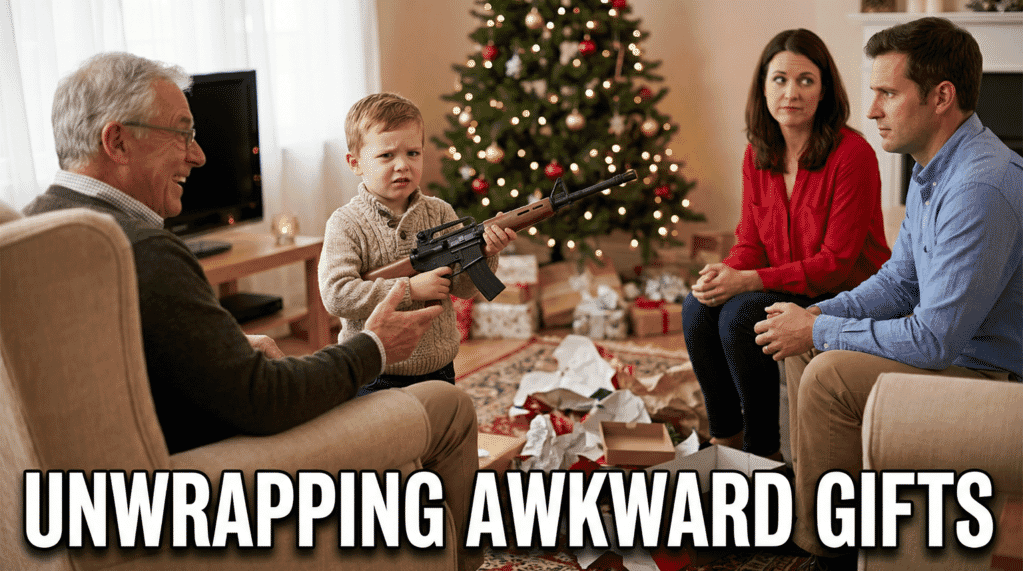
Your child just unwrapped a gift that made your stomach drop. Maybe it’s a toy gun when your family doesn’t do weapons, or a “too-babyish” doll for your ten-year-old, or something with 47 tiny pieces for your toddler. Here’s exactly what to say and do.

First, know this isn’t about you—or your child. Research on gift-giving psychology found that problematic gifts often reflect the giver’s own motivations, not their feelings about the recipient.
“Whether you receive lots of gifts or none at all, just know that it’s not a reflection of you.”
— Colleen Kirk, Ph.D., New York Tech Researcher
Let that sink in. The gift says more about them than about you or your kid.
Key Takeaways
- Inappropriate gifts reflect the giver’s motivations, not their feelings about your child
- In the moment, thank the gesture—save decisions for later in private
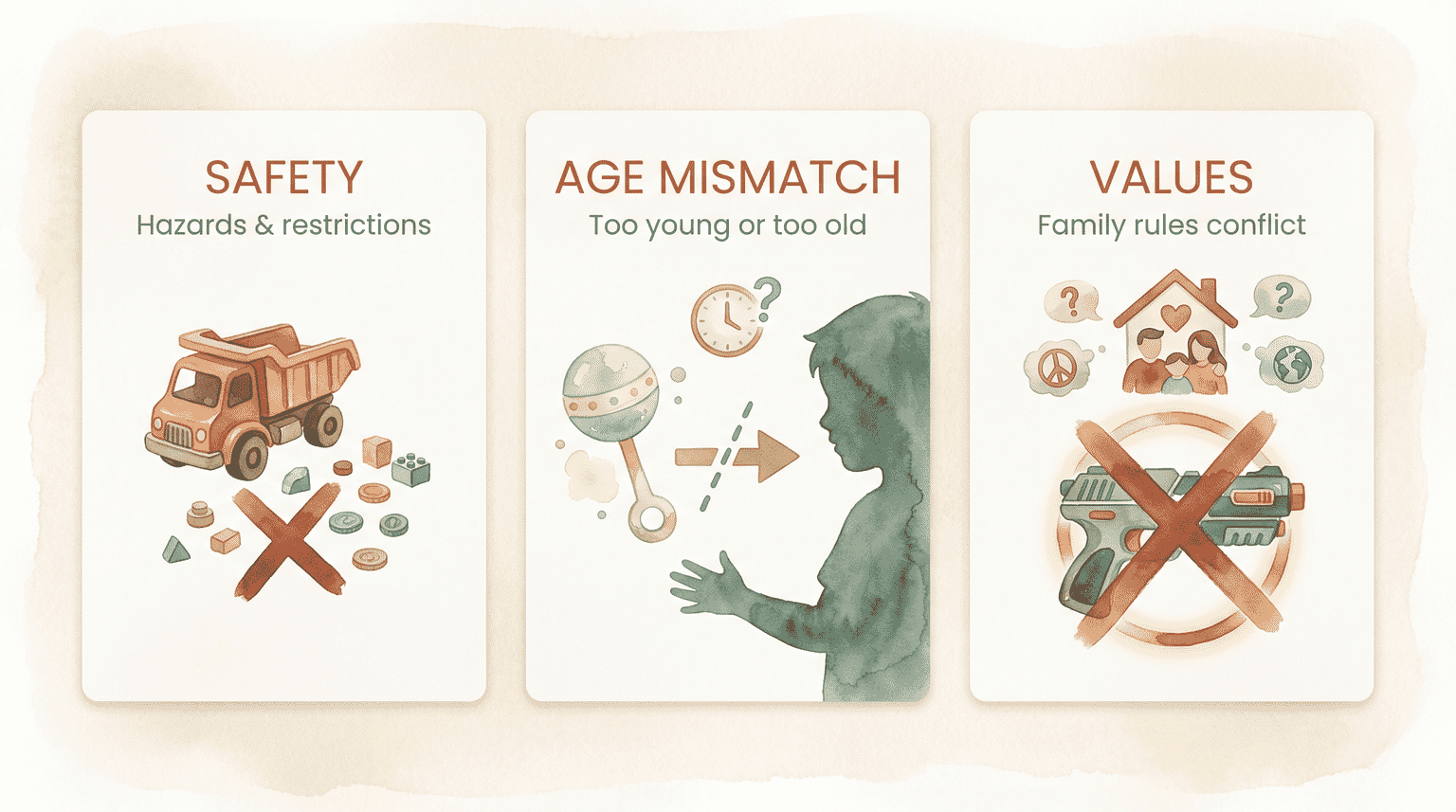
- Three categories help you assess the problem: safety, age-mismatch, or values conflict
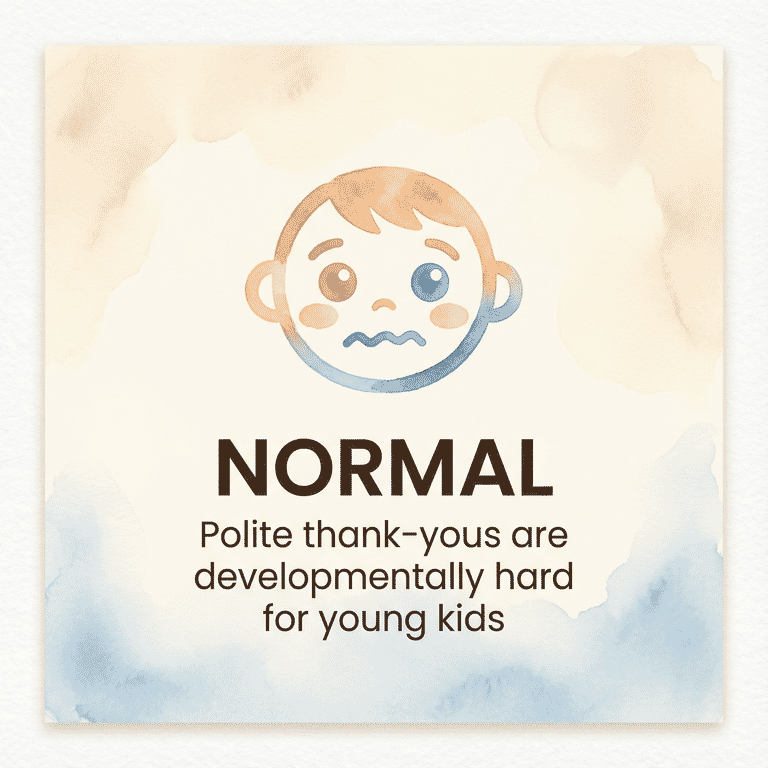
- Polite thank-yous are developmentally hard for young kids—rehearse beforehand
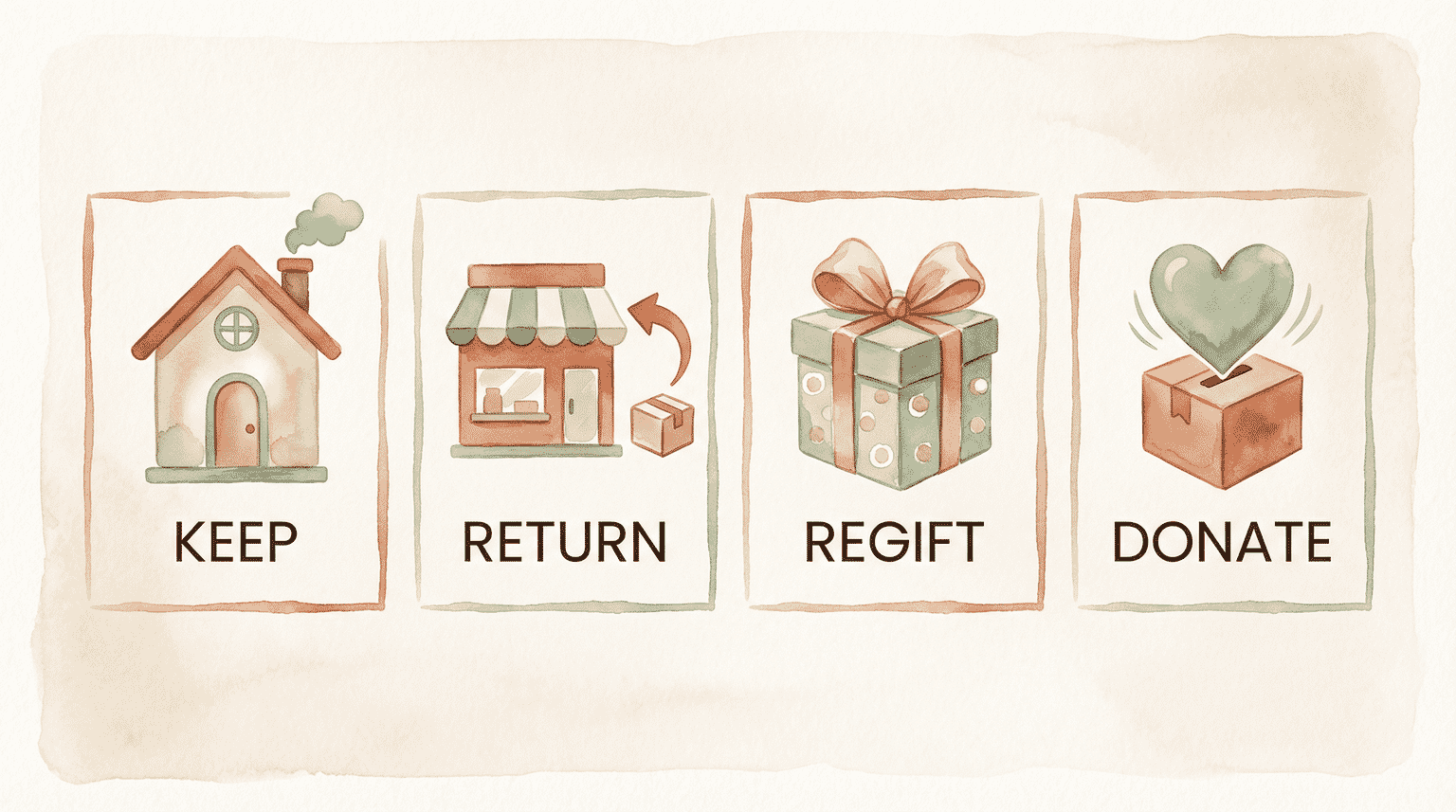
- You have four solid options: keep, return, regift, or donate
Three Types of “Inappropriate”
Not all gift problems are equal. Quick categories:
- Safety concerns: Choking hazards, toxic materials, age-restricted items
- Age-inappropriate: Too advanced or too babyish for your child’s stage
- Values conflicts: Contradicts family rules on screens, violence, or materialism
A 2025 study in the Journal of Retailing found that context changes everything. The same gift can land completely differently depending on timing and relationship.
“A yoga mat in January says, ‘I’m motivated.’ A yoga mat under the Christmas tree might say, ‘You need to lose weight.'”
— Linnéa Chapman, Researcher, Journal of Retailing Study
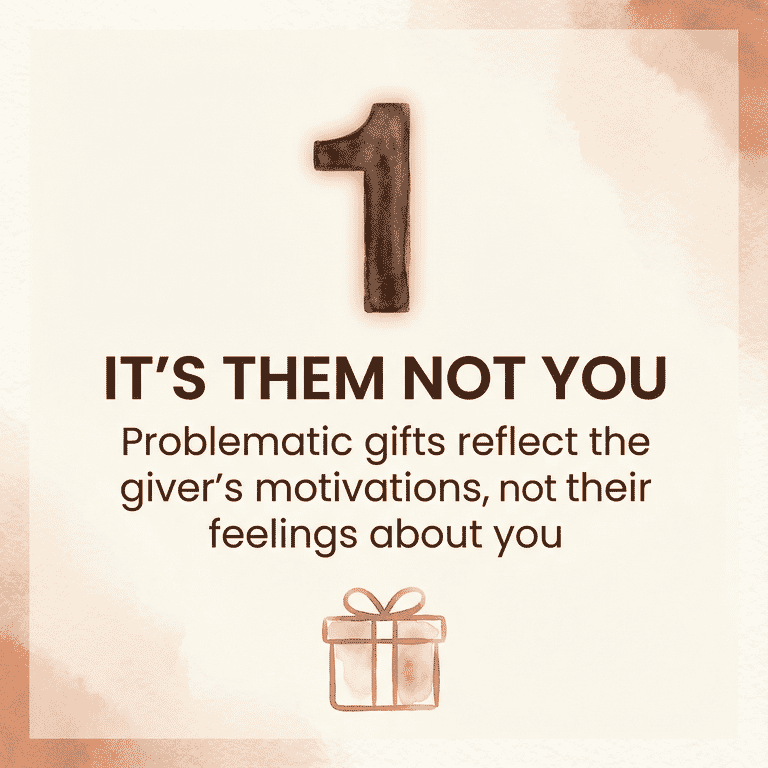
This is the most freeing thing to understand about awkward gifts. When Grandma gives your minimalist toddler a 500-piece toy set, it’s about her excitement—not a judgment on your parenting.
Once you internalize this, the sting fades. You can respond with genuine warmth because you’re not taking it personally anymore.
What to Say Right Now

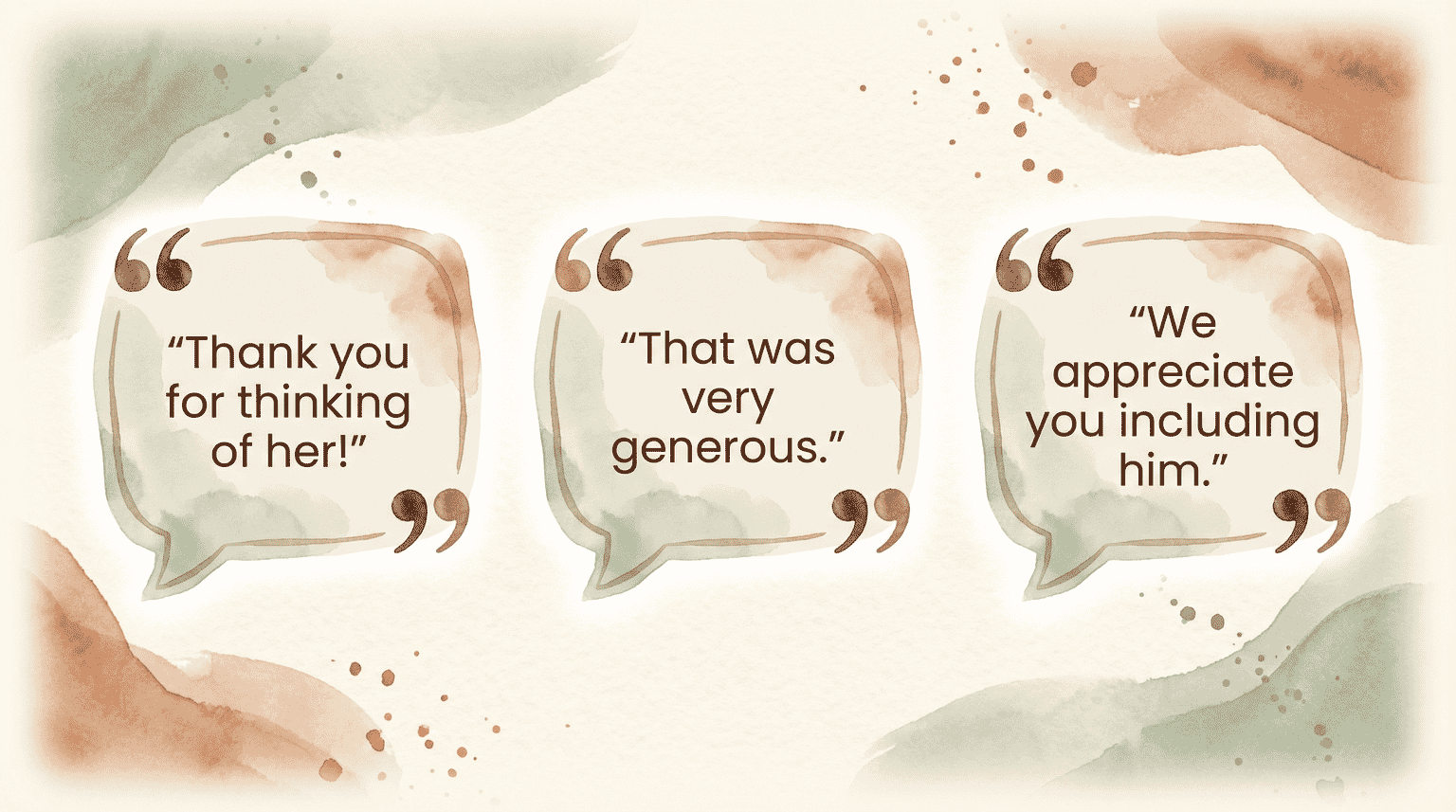
In the moment, focus on gratitude for the gesture, not the gift:
- Try: “Thank you so much for thinking of [child’s name]!”
- Or: “That was very generous of you.”
- Or: “We appreciate you including [child] in your gift-giving.”
Save decisions about the gift for later, in private. And if you’re worried about your child’s reaction? Texas State researchers found that polite responses are developmentally hard for young kids.
Your preschooler blurting “I don’t like this!” isn’t being rude—their brain literally can’t manage social niceties yet. This is completely normal development.
Professor Jennifer Clegg advises rehearsing a polite thank-you before gift exchanges. A quick practice run in the car can save everyone embarrassment.
What to Do After

Once you’re home, decide: keep, return, regift, or donate. Research confirms that regifting problematic presents is psychologically appropriate—it allows items to reach someone who’ll genuinely appreciate them.
For deeper guidance on whether regifting is appropriate, we’ve got you covered. And for ongoing challenges navigating common gift problems, the key is addressing patterns before they repeat.

The gift-giver meant well. Your child is watching how you handle it. And you’ve got this.
What About You?

What’s the most inappropriate gift your kid has received—and how did you handle it in the moment? These stories help other parents feel less alone when Uncle Bob shows up with something completely off-base.
Nothing makes parents feel less crazy than knowing they’re not the only ones dealing with Uncle Bob’s questionable choices.
References
- Journal of Retailing study on self-improvement gifts – Research on how certain gifts make recipients feel judged
- New York Tech narcissistic gift-giving research – Psychology of gift-giver motivations
- Texas State University research on children and lying – Why polite responses are hard for young children

Share Your Thoughts