
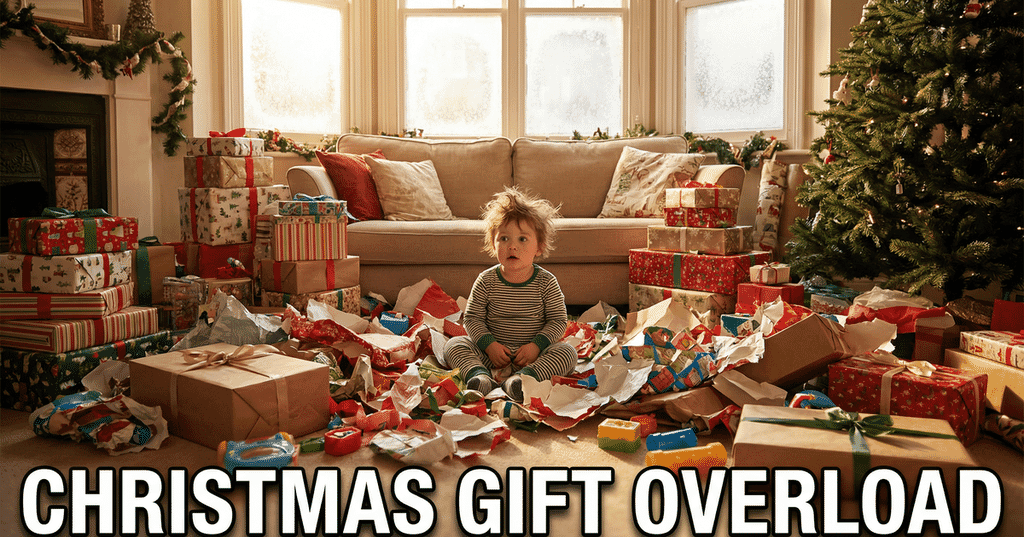
It’s 7:15 on Christmas morning. Your child has torn through a mountain of gifts in what feels like ninety seconds flat. Wrapping paper covers every surface. And now they’re asking, “Is that all?”
I’ve watched this scene unfold eight times over—with children ranging from toddlers who couldn’t care less about the toy inside the box to teenagers who’ve perfected the art of the polite-but-disappointed face. My librarian brain couldn’t let this pattern go without investigating.
Turns out, there’s solid research explaining exactly why more presents often equals less joy. Here’s what I’ve learned about the science-backed sweet spot for Christmas gifts—and a framework that actually works.

Key Takeaways
- 4-6 gifts is the research-backed sweet spot for most children—enough variety without triggering overwhelm
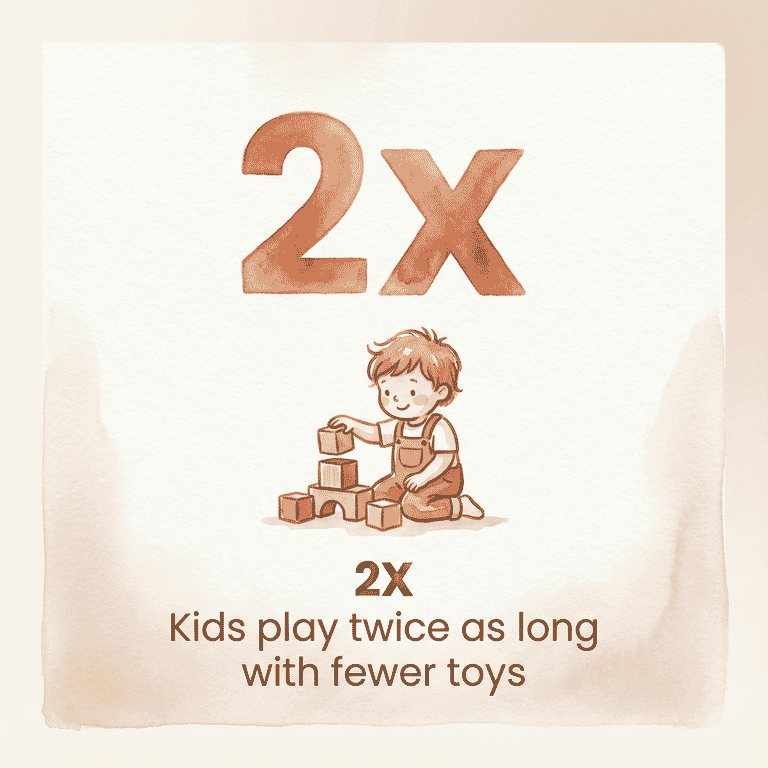
- Children with fewer toys play twice as long and show higher creativity than those surrounded by options
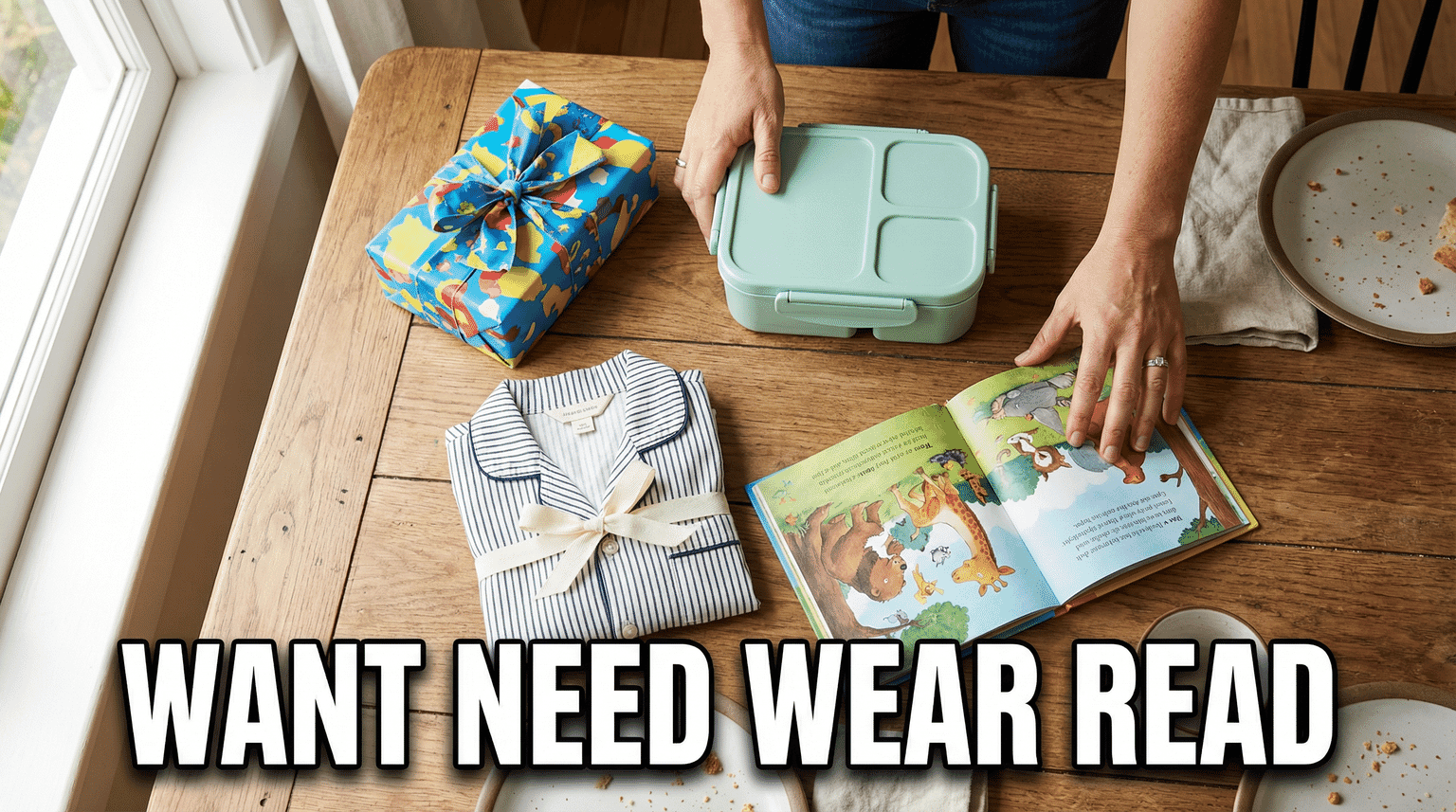
- The 4-gift rule (want, need, wear, read) provides structure that creates space for genuine appreciation
- Watch for three warning signs: rapid-fire opening, mid-session attention collapse, and post-unwrapping mood crash
- If you’ve been over-gifting, a gradual 3-year reduction works better than sudden limits
The Research-Backed Gift Formula
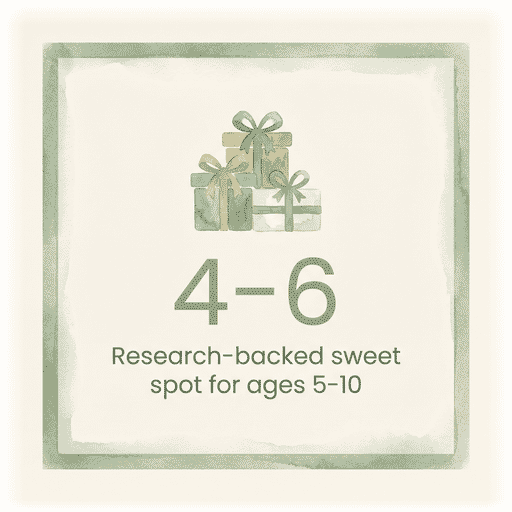
Let me save you the suspense: 4-6 gifts hits the research-supported sweet spot for most children.
This isn’t a number I pulled from holiday tradition or Pinterest aesthetics. A University of Toledo study found that toddlers with fewer toys played twice as long and showed higher creativity and focus than those surrounded by many options. The researchers concluded that “an abundance of toys present reduced quality of toddlers’ play.”
The most research-aligned framework? The 4-gift rule: something they want, something they need, something to wear, and something to read. It provides variety without triggering the overwhelm response that turns Christmas morning into chaos.
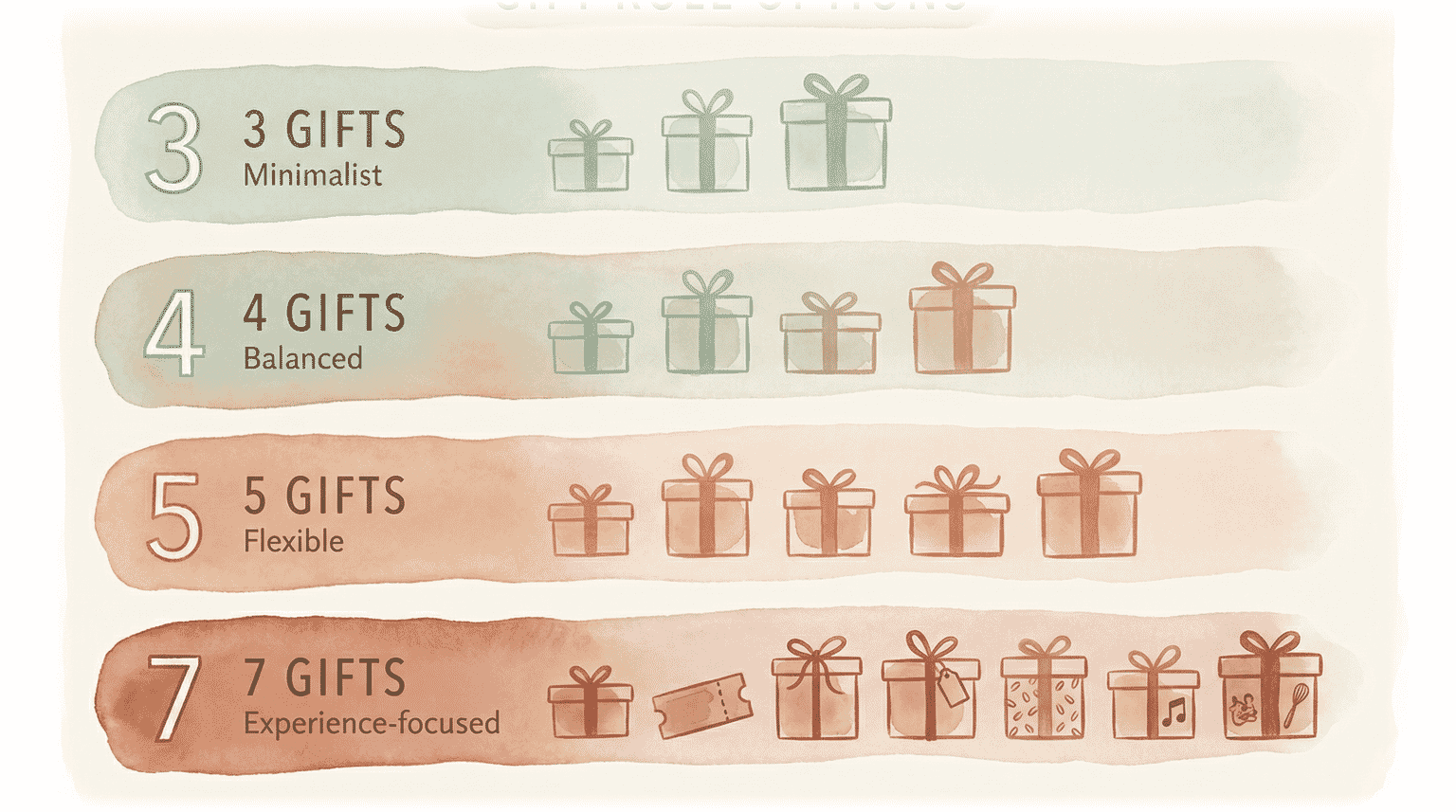
Other families adapt this to a 3-gift rule (mirroring the gifts Jesus received) or expand to 5-7 gifts with extras for experiences or family activities. The core principle remains: structured limits create space for genuine appreciation.
If you want the full breakdown, I’ve written a complete guide to the 4-gift rule that walks through implementation step by step.
“When it comes to gift-giving, moderation is key. Quality is always better than quantity. Your child doesn’t need 20 presents to be happy; a couple of thoughtful, well-chosen gifts will do just fine.”
— Mark Joseph, Founder of Parental Queries
The 4-gift framework gives you clear categories to fill rather than an endless list to complete. Each gift serves a purpose, and children learn to anticipate quality over quantity.
What Happens When Children Get Too Many Presents
So why do fewer gifts actually work better? Understanding the psychology of gift-giving helps explain what’s happening in your child’s brain on Christmas morning.
“Overwhelming [children] with too many gifts can create a cycle of anticipation and letdown, similar to a sugar rush, where the joy is fleeting and leaves them wanting more.”
— Dr. Elena Touroni, Chelsea Psychological Clinic
This “sugar rush” effect isn’t just metaphor—it’s brain chemistry. Each new gift triggers a small dopamine hit. With too many presents, children cycle through anticipation-reward-letdown so rapidly that they can’t sustain genuine enjoyment of any single item.
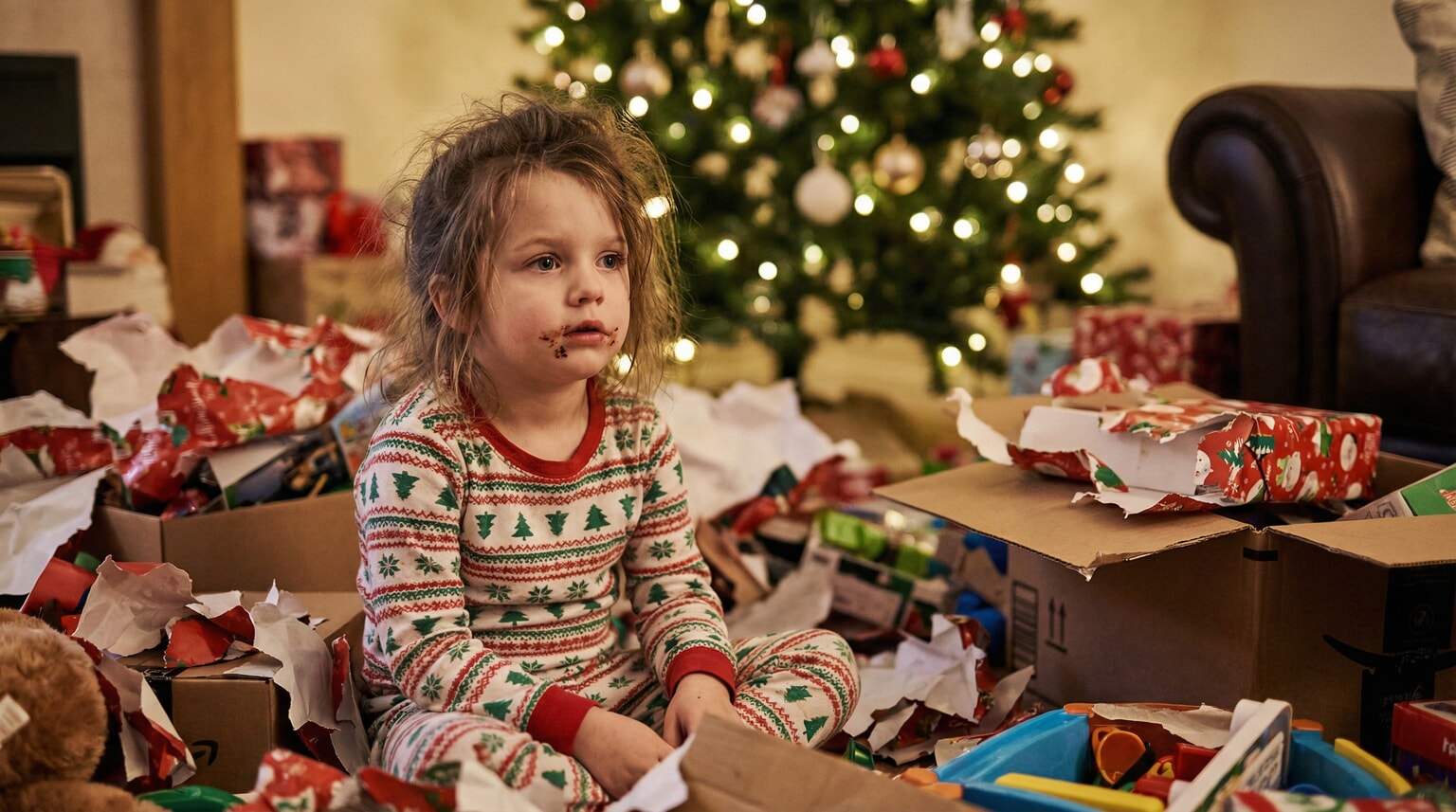
Their attention fragments across options, and decision fatigue sets in. I’ve seen this in my own living room. When my kids open gifts slowly—really examining each one, trying it out, showing siblings—the morning feels magical. When they rip through everything in a frenzy, they end up overwhelmed and oddly dissatisfied despite the abundance.
A 2022 study in the Journal of Consumer Psychology found that children receiving excessive material rewards show lower long-term satisfaction and reduced intrinsic motivation. They begin associating love or achievement with “getting things” rather than shared experiences.
“The more excessive the gift-giving is, the more likely a child—especially a young child—is likely to receive the message that possessions and getting stuff are really important…”
— Tim Kasser, Professor of Psychology, Knox College
Research shows children with materialistic values are more likely to experience depression and anxiety, less likely to be empathetic, and show lower grades and reduced interest in learning. Understanding why children develop endless want-lists can help parents address the root psychology rather than just the Christmas morning symptoms.
How to Recognize When It’s Too Much
You don’t need a psychology degree to spot gift overload. Here are three signs I watch for every Christmas:
The “crazed look” and rapid-fire opening. When children stop actually seeing what they’re unwrapping—just tearing through paper to get to the next thing—their brains have switched from enjoyment mode to acquisition mode. They’re chasing the dopamine hit of opening rather than experiencing the gift itself.
Mid-session attention collapse. About halfway through a too-large gift pile, you’ll notice children becoming distracted, unfocused, or even irritable. This is overstimulation fatigue in action—their attention has fragmented across too many options and they struggle to engage meaningfully with anything.
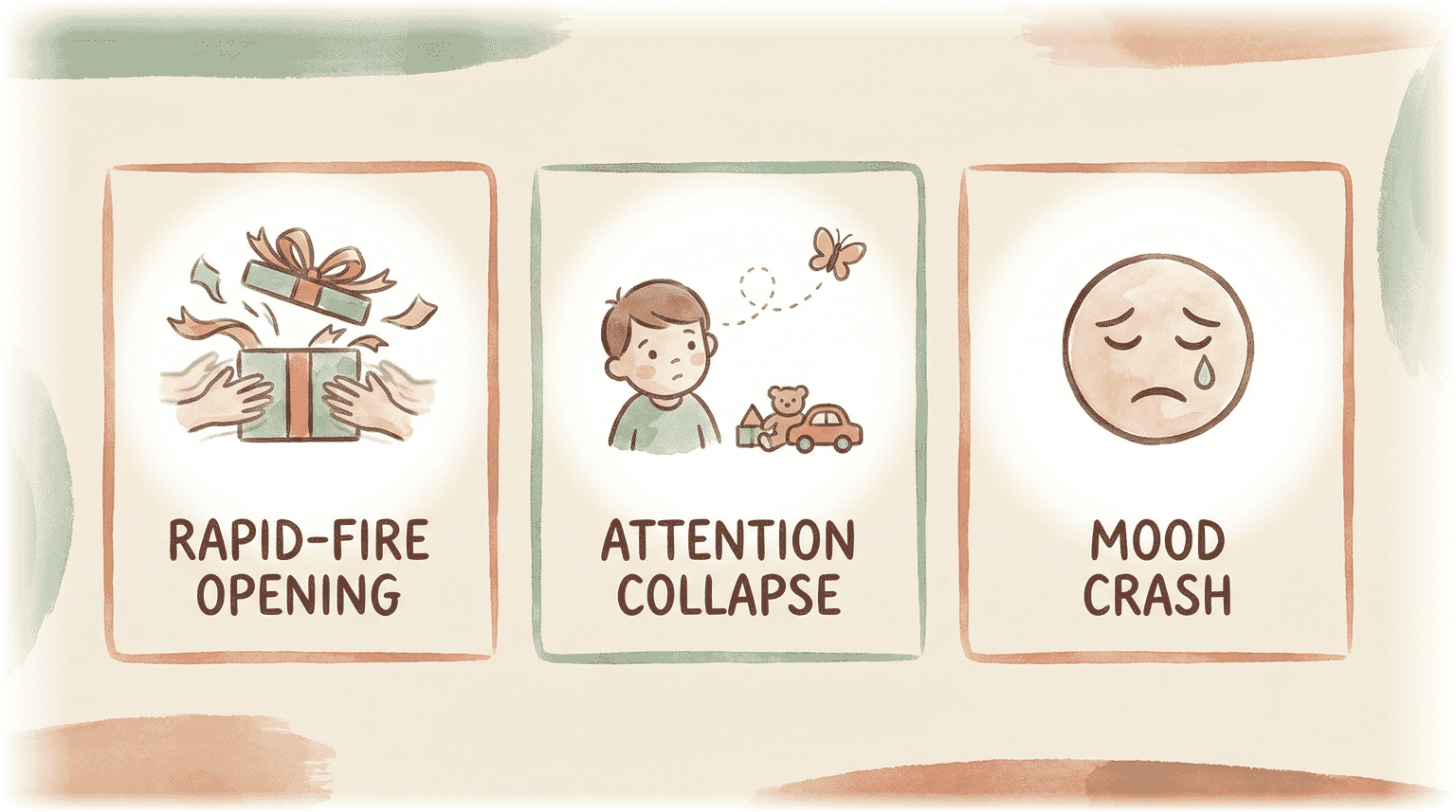
Post-unwrapping mood crash. The aftermath of excessive gifts often includes a mood slump that seems paradoxical. All those presents, and now they’re cranky? That’s the “sugar crash” Dr. Touroni describes—the anticipation-letdown cycle leaving them empty rather than satisfied.
With my eight kids, I’ve learned that the child who received fewer, thoughtfully chosen gifts often ends up happier than the one whose pile reached the ceiling. Research confirms that fewer toys actually lead to better, more creative play, even when kids initially protest the smaller count.
Which Gift Rule Fits Your Family?
Not every family needs the same approach. Here’s how the popular frameworks compare:
| Rule | Number of Gifts | Best For | Key Benefit |
|---|---|---|---|
| 3-Gift Rule | 3 | Religious families, tight budgets, minimalists | Clear limit, meaningful tradition |
| 4-Gift Rule | 4 (want, need, wear, read) | Most families ages 5-10 | Balanced variety, easy to remember |
| 5-Gift Rule | 5 (adds surprise or experience) | Families wanting slight flexibility | Room for one “wild card” |
| 7-Gift Rule | 7 | Larger budgets, experience-focused families | Includes “make,” “do,” “give” categories |
For budgeting, child development experts suggest approximately $10-20 per year of the child’s age—so a 5-year-old might receive $50-100 in total gifts. This aligns with the 28% of parents who aim to keep holiday spending below $100 per child, according to Parents.com research showing most families budget around $220 per child.
The right framework depends on your family size, traditions, and values. What matters is choosing a structure rather than letting gift accumulation happen by accident.
Quick Reference: Gift Numbers by Age
While individual children vary, developmental research supports these general ranges:
| Age | Recommended Gifts | Rationale |
|---|---|---|
| 0-2 years | 1-2 | Babies need sensory focus; they genuinely can’t process multiple gifts |
| 3-4 years | 3-4 | Toddlers benefit from variety but are easily overwhelmed |
| 5-10 years | 4-6 | Sweet spot for the 4-gift rule; attention span supports deeper engagement |
| 11+ years | 2-4 | Quality and experiences matter more than quantity |
The neuroscience of giving reveals something unexpected about what truly satisfies children.
“Choosing fewer, more thoughtful presents helps children savour each one and reinforces values like gratitude, patience, and care. Mindful gifting teaches kids that joy doesn’t come from quantity, but it comes from connection.”
— Devon Kapler, Family Wellbeing Expert, Go Au Pair
For teenagers specifically, gift cards, event tickets, or skill-based experiences like music lessons often deliver greater emotional return than volume.
My teens consistently prefer one really meaningful gift over several “fine” ones. The shift from quantity to quality happens naturally as kids develop more defined interests and preferences.
Managing Grandparents and Relatives Who Over-Gift

Here’s where things get tricky. You’ve decided on four gifts. Grandma has a car trunk full of presents. Now what?
The University of Arkansas Extension identifies three types of overindulgence: soft structure (lack of rules), over-nurture (doing things children can do themselves), and “too much”—giving more than needed or causing family strain. That last category includes gifts that drain family resources like space, time, or money.
Proactive communication works better than damage control. Before the holiday season, try conversations like:
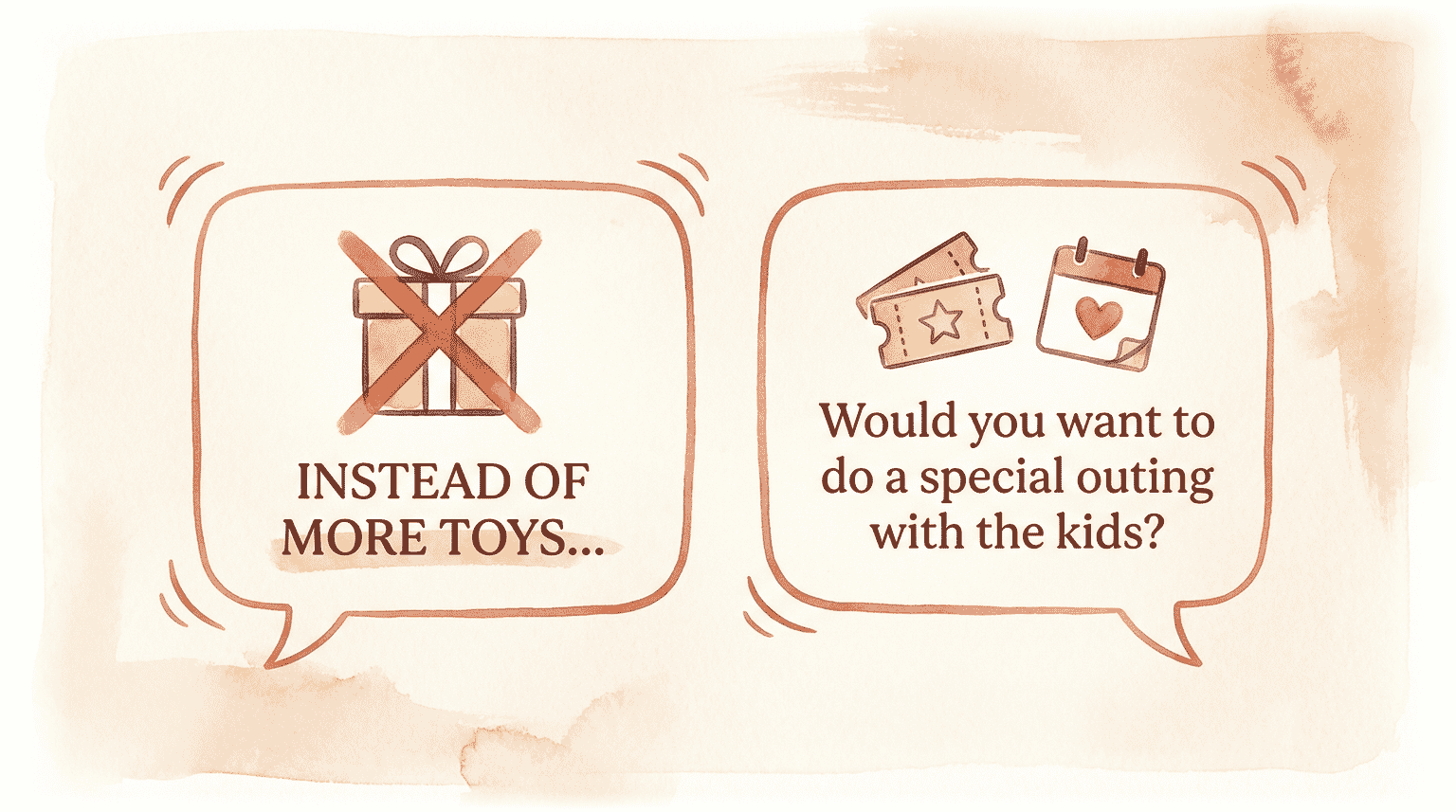
Try: “We’re focusing on experiences this year. Would you want to do a special outing with the kids instead of gifts? They’d love one-on-one time with you.”
Or: “We’re limiting presents to help the kids really appreciate what they receive. If you’d like to contribute, we’re saving for [specific item or experience].”
For large gifts that don’t fit your home, it’s completely reasonable to ask grandparents to keep items at their house. And any gifts requiring long-term maintenance—pets, vehicles, lessons requiring transportation—should never be given without parental discussion first.
If boundaries feel impossible, the “experience gifts” redirect often works: zoo memberships, movie tickets, museum passes, or special outings create memories without cluttering your home or overwhelming your child.
If You’ve Been Over-Gifting: The Gradual Reduction Strategy
Here’s what Dr. Touroni warns about: “Suddenly removing or drastically reducing gifts without preparation can feel like a withdrawal of love to a child.”
Children associate gifts with emotional security. A sudden shift from twenty presents to four—without preparation—can trigger genuine distress that has nothing to do with materialism and everything to do with feeling loved.
The 3-year transition approach:
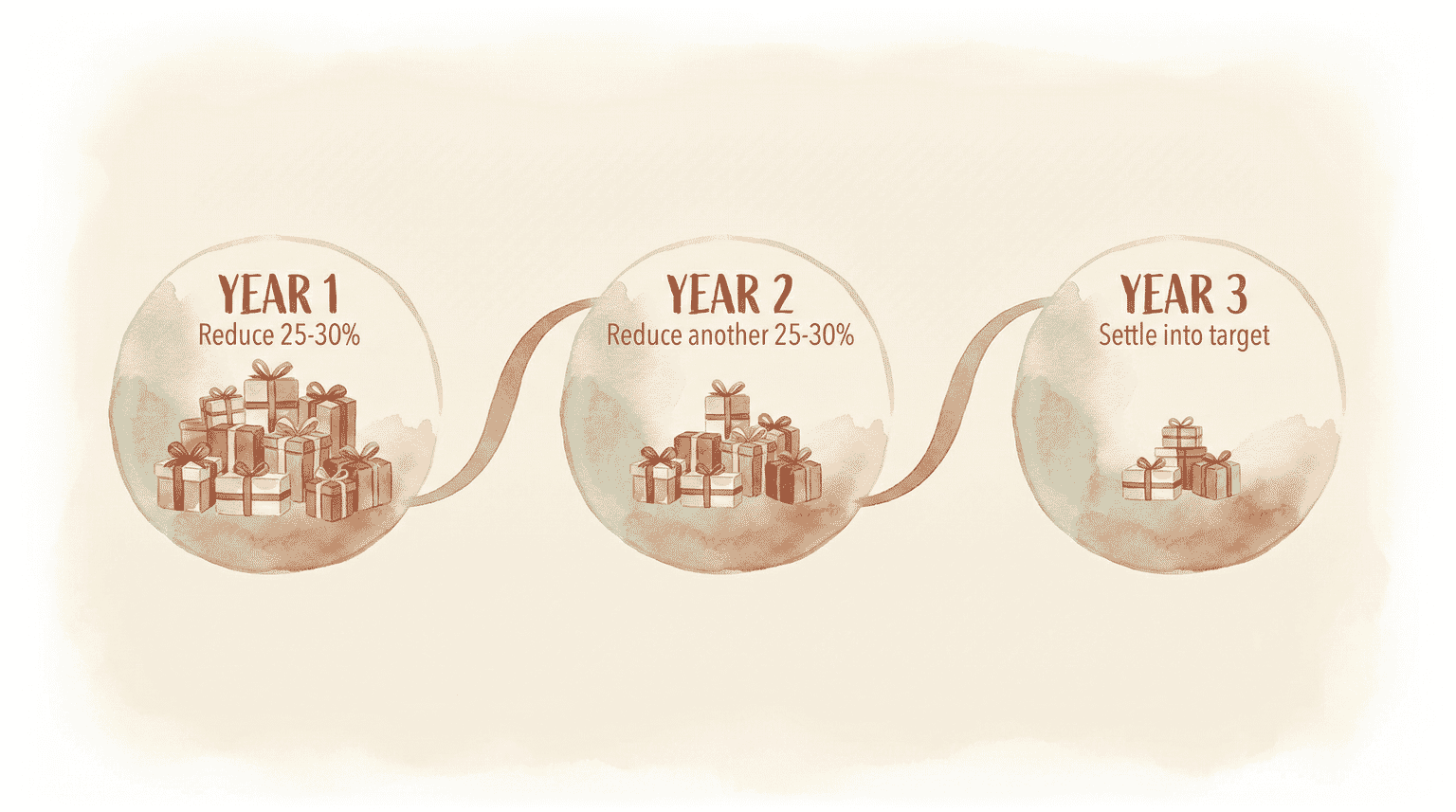
- Year 1: Reduce by 25-30%. Explain you’re “doing Christmas a little differently” and add new rituals that create anticipation (advent activities, special traditions, experiences).
- Year 2: Reduce another 25-30%. By now, children have experienced that fewer gifts didn’t ruin Christmas. The new traditions have become familiar.
- Year 3: Settle into your target range. The shift feels normal rather than punitive.
Reframing conversations help:
Try: “This year we’re making Christmas more about [experiences/time together/giving to others]. You’ll still get presents, and I think you’ll really love what we have planned.”
Replace quantity with anticipation-building: advent calendars with activities rather than toys, countdown traditions, special outings, or involvement in selecting gifts for others.
What to Do When Gift Overload Happens Anyway

Despite your best planning, sometimes the presents pile up. Extended family goes overboard, a well-meaning friend brings extras, or you underestimated how much your spouse bought. Here’s how to recover:
Pace the opening. One gift at a time, with genuine attention to each. In my house, we go around in a circle—one child opens while others watch. This stretches the morning and lets everyone actually see what was received.
Build in breaks. After every few gifts, pause. Get hot chocolate. Take photos. Let the kids actually play with something for a few minutes before moving on.
Watch for signs and pause. When you see the crazed look or attention collapse beginning, call a break. “Let’s save the rest for after breakfast.” Children often forget there’s more, and the remaining gifts become a pleasant surprise later rather than part of an overwhelming pile.
Post-crash recovery. If the mood slump happens anyway, don’t push through more presents. Physical movement helps—a walk outside, active play, or a complete change of scene. Sometimes the best gift is space to regulate.
“When parents [overspend], I’ve found, it’s in service of trying to create a magical experience for their children. But executed creativity does this much, much better than spent cash.”
— Dr. David Palmiter, Board-Certified Clinical Psychologist
The Deeper Purpose
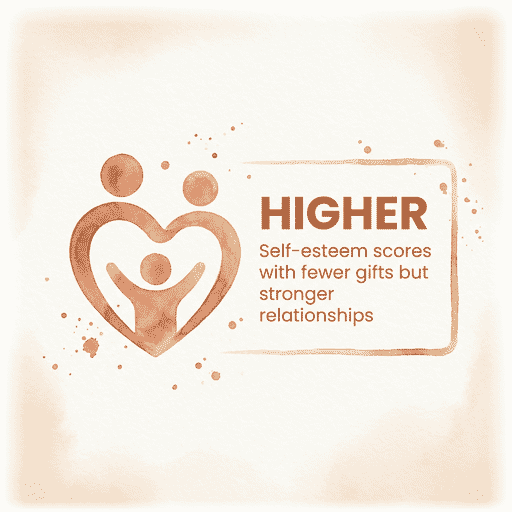
Sean Grover, psychotherapist and author of “When Kids Call the Shots,” found that children with fewer material possessions but positive relationships with parents score higher on self-esteem assessments and show greater resilience facing obstacles.
That’s the real goal here—not deprivation, but creating space for what actually matters.
After eight kids and over a thousand gifts observed, here’s what I know: the Christmas mornings my children remember best weren’t the ones with the most presents. They were the ones with the most presence—the traditions, the togetherness, the feeling of being truly seen in what they received.
Setting gift limits isn’t about being stingy. It’s about being intentional.
As Devon Kapler puts it: “Mindful gifting teaches kids that joy doesn’t come from quantity, but it comes from connection.”
Your children don’t need twenty presents to feel loved. They need a few thoughtful ones—and you, fully there, watching them discover each one.
Frequently Asked Questions
What is the 4-gift rule for Christmas?
The 4-gift rule is a framework where each child receives exactly four presents: something they want, something they need, something to wear, and something to read. Research supports this approach because it provides variety without overwhelming children’s attention spans, allowing them to fully appreciate and engage with each gift.
How many presents is too many for a child?
Research suggests gift overload typically begins around 6-8 items for most children. The University of Toledo study found children’s play quality declined significantly when surrounded by many options. Watch for rapid-fire opening, mid-session attention collapse, or post-unwrapping mood crashes as signs of “too much.”
Can too many Christmas presents be bad for kids?
Yes. Children receiving excessive material rewards show lower long-term satisfaction and reduced intrinsic motivation, according to Journal of Consumer Psychology research. The psychological effect resembles a “sugar rush”—fleeting joy followed by a crash, creating a cycle of wanting more rather than feeling satisfied.
How much should I spend on a child’s Christmas gift?
Experts suggest approximately $10-20 per year of the child’s age (so $50-100 for a 5-year-old). Research from Parents.com shows the average parent budgets $220 per child, though 28% aim for under $100. Gift thoughtfulness consistently matters more than monetary value—research confirms expensive toys don’t actually make kids happier.
Should each child get the same number of presents?
For siblings, keeping gift counts equal helps avoid perceived unfairness—young children count presents, not value. The 4-gift rule simplifies this by giving each child the same framework while allowing personalized selections within each category.
Share Your Story
How many gifts does your family do? I’d love to hear if you’ve tried the 4-gift rule or landed on a different number that works. And honestly—did scaling back actually make Christmas morning better, or am I the only one who worried the kids would revolt?
I read every response and honestly learn from your real Christmas experiences.
References
- Newsweek: How Many Christmas Presents to Buy – University of Toledo study on toy quantity and play quality
- Netmums: Maximum of 6 Christmas presents per kid – Age-specific gift recommendations and consumer psychology research
- The Independent: Christmas presents number guide – Psychological impact of gift quantity on children
- University of Arkansas Extension: Setting Limits with Grandparents – Framework for managing extended family gift-giving
- Parents.com: How Many Presents Should a Child Get – Budget benchmarking and expert perspectives

Share Your Thoughts