
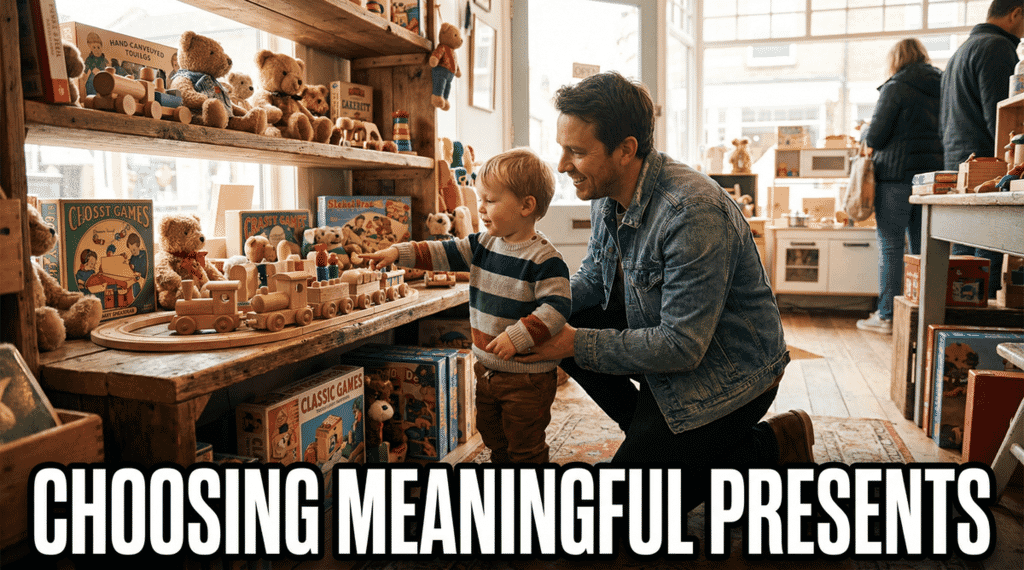
Every instinct tells parents that more gifts mean more happiness. You want to see that lit-up face, the squeals of excitement, the joy of abundance on their special day. But here’s what my librarian brain discovered when I finally dug into the research: the science says otherwise. And honestly? Eight birthdays a year in my house confirms it.
Key Takeaways
- Children with fewer toys play twice as long and show more creativity than those surrounded by abundance
- Most experts recommend 3-5 birthday presents from parents, with the four-gift rule working especially well for ages 5-10
- Kids own an average of 236 toys but play with only 12 daily—more doesn’t equal more enjoyment
- The birthday celebration matters more than the gifts—children remember rituals and special moments over piles of presents
- Fewer gifts create space for children to develop genuine gratitude rather than performing it
“More Presents = Happier Kids” — What Every Parent Assumes
I get it. I really do. When my oldest was turning 4, I wrapped seventeen presents. Seventeen. I wanted that magic, that endless unwrapping, that mountain of joy. What I got instead was a glazed-over kid who couldn’t remember what she’d opened five minutes earlier.
The impulse to give generously comes from a good place. We want our children to feel loved, celebrated, special. Birthday gifts feel like tangible proof of that love—more gifts, more love, right?
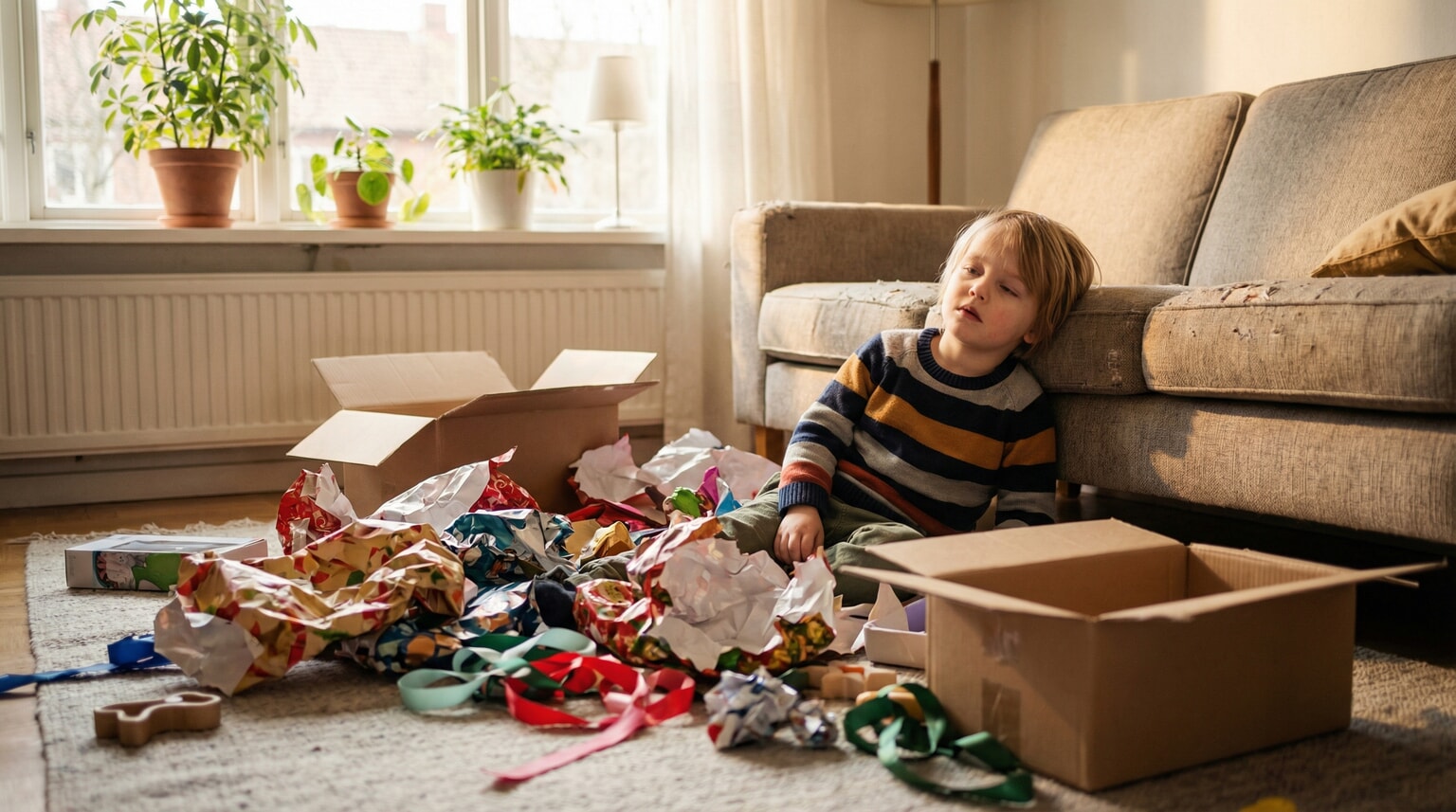
This belief runs deep. A TK Maxx study found parents spend an average of £175 on birthday gifts, with children receiving around 12 presents. We’re not stingy. We’re trying to create magic.
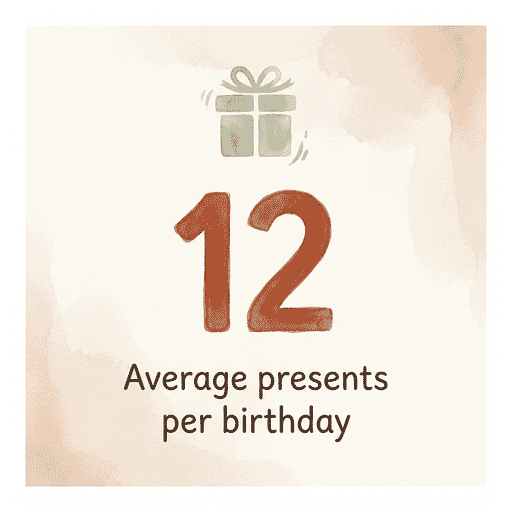
Twelve presents might not sound excessive until you multiply it by grandparents, aunts, uncles, and family friends. Suddenly that “reasonable” number becomes an avalanche.
And here’s the uncomfortable truth: more wrapping paper doesn’t translate to more lasting joy. But what if the magic formula is actually inverted?
What Research Actually Shows: The Less-Is-More Effect
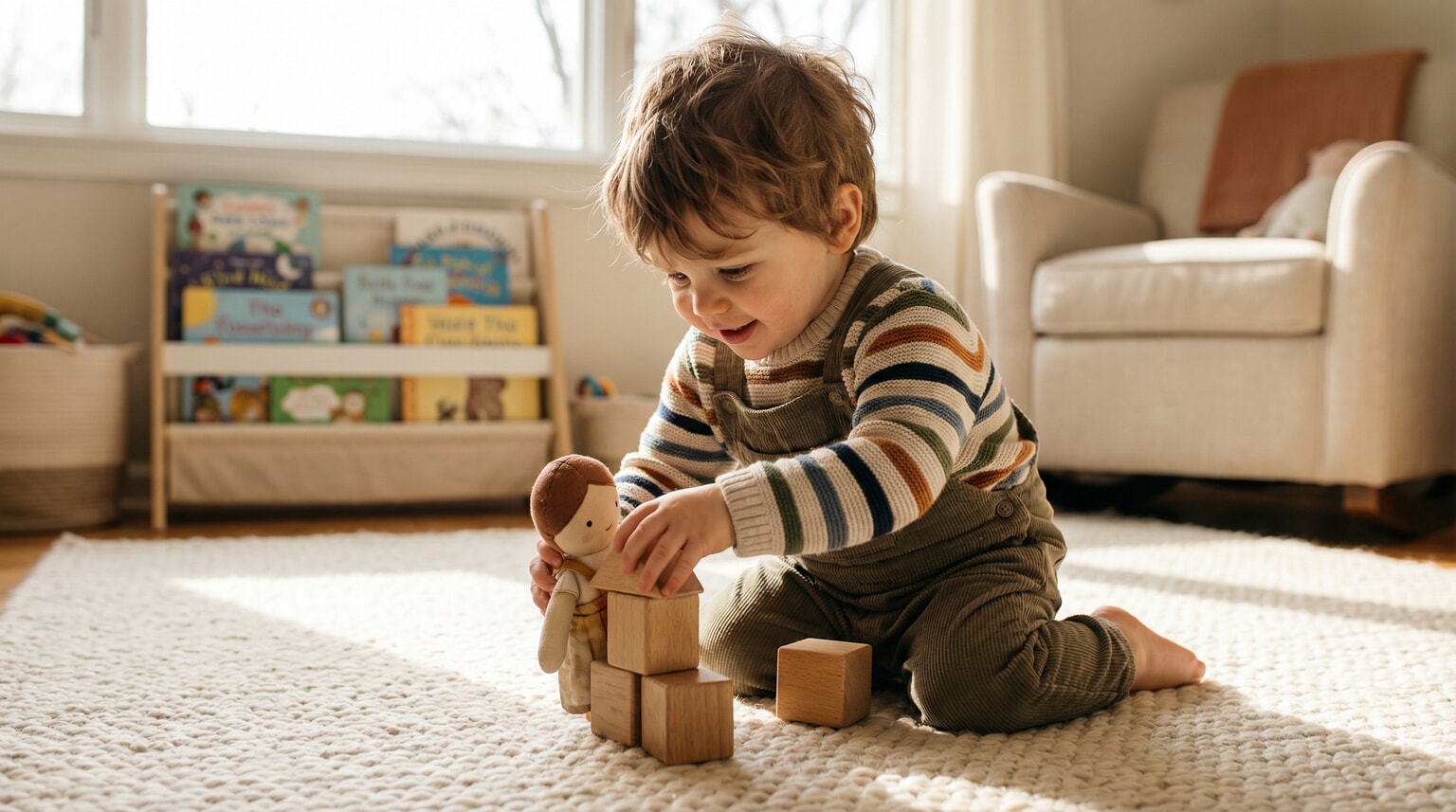
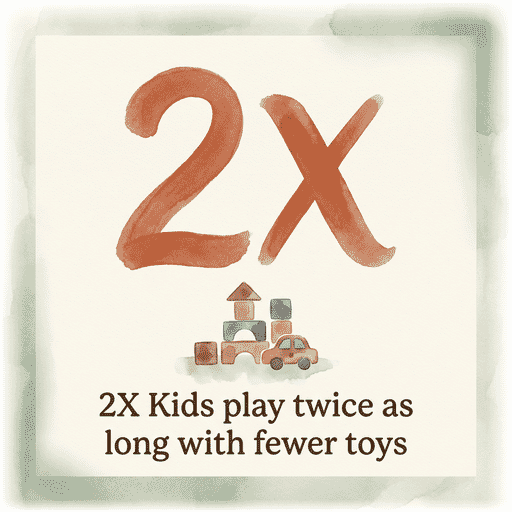
Here’s where it gets interesting. Researchers at the University of Toledo studied toddlers’ play and found something that surprised everyone except, apparently, developmental psychologists: children with fewer toys played twice as long and showed significantly more creativity than those surrounded by abundance.
Let that sink in. Fewer toys. Double the engagement.
The science is clear: when children aren’t overwhelmed with options, they actually play. They explore. They imagine. They engage deeply rather than scanning for the next shiny thing.
This isn’t about deprivation—it’s about creating conditions where genuine enjoyment can happen.
The psychology behind gift overwhelm reveals something important about how children experience celebration.
“Overwhelming children with too many gifts can create a cycle of anticipation and letdown, similar to a sugar rush, where the joy is fleeting and leaves them wanting more.”
— Dr. Elena Touroni, Chelsea Psychological Clinic
I’ve watched this sugar-rush effect play out with my own kids. The frenzy of opening, the brief dopamine hit, the “is that all?” letdown—even when “all” was more than enough.
Devon Kapler, a Family Wellbeing Expert featured in Newsweek, explains the mechanism: “When it comes to gifting, more isn’t always better… Psychologists call this the ‘choice overload’ effect: when kids have too much, they value each item less.”
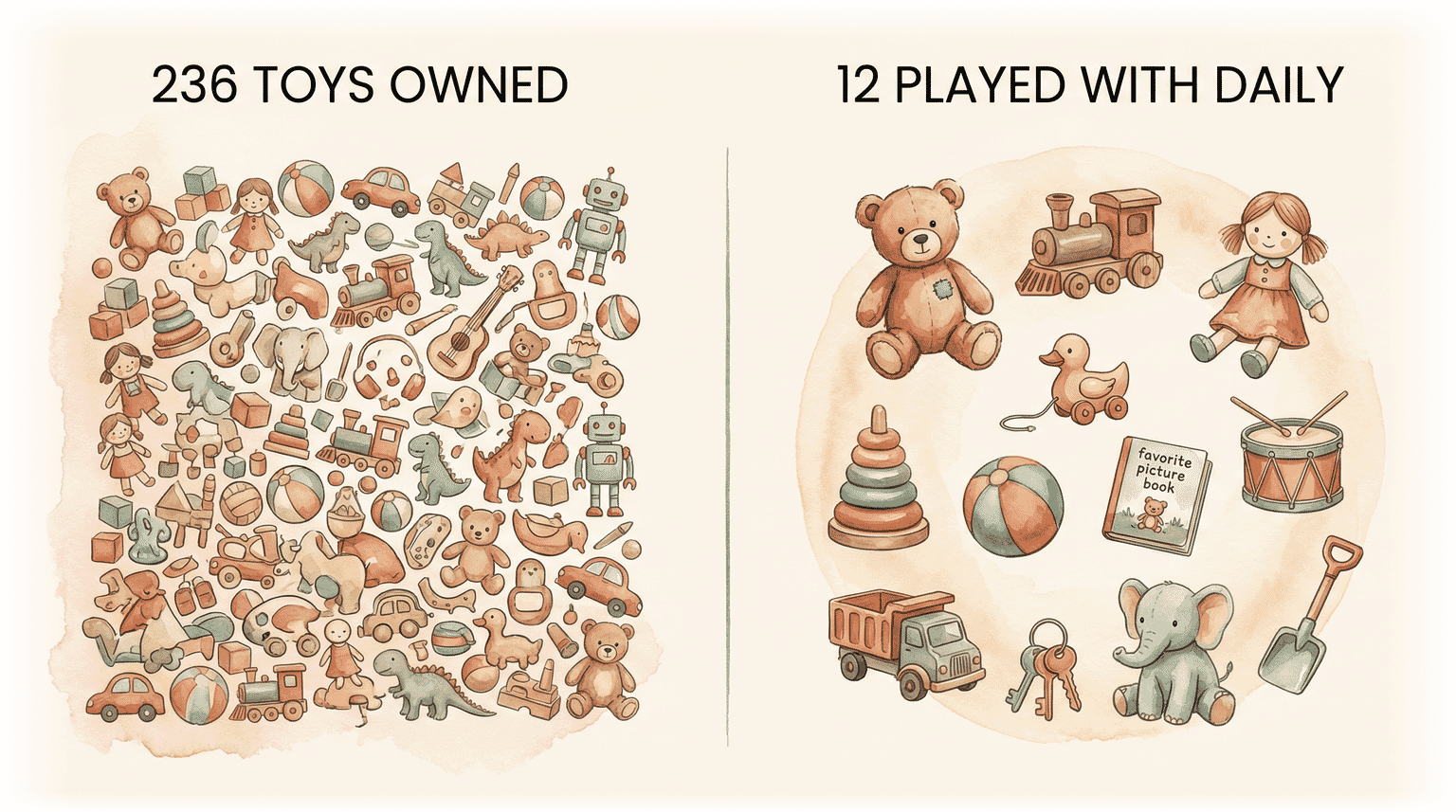
The statistics paint a stark picture. Children own an average of 236 toys but play with only about 12 daily—just 5% of what they have. More than 28% of UK parents admit to discarding toys in perfect working condition. We’re buying abundance that doesn’t translate to enjoyment.
Why Children’s Brains Respond This Way
Understanding the “why” helps this make sense rather than just feeling counterintuitive.
Choice overload is real for children. When a child faces too many options, their attention fragments. They can’t fully engage with any single toy because their brain keeps scanning for the next thing. It’s cognitive overwhelm dressed up as abundance.
Hedonic adaptation kicks in fast. This is the fancy term for how we quickly adjust to new pleasures and need more to feel the same satisfaction. With gifts, each additional present brings diminishing joy. The tenth gift doesn’t feel as special as the first—and neither feels as special as the third gift would have if you’d stopped there.
Memory formation favors focus. Children remember experiences and single treasured items far better than quantities. When I ask my kids about past birthdays, they remember the one thing that mattered—the bike, the art kit, the special outing—not the pile.
If you want to understand more about the science behind why gifts affect children the way they do, it goes even deeper than birthday presents. The same cognitive principles apply across all gift-giving occasions.
How Many Birthday Presents? A Research-Backed Framework
Most child development experts recommend 3-5 birthday presents from parents, depending on age. Here’s what the research supports:
| Age | Recommended Gifts | Why It Works |
|---|---|---|
| 1-2 years | 1-2 | Limited memory, easily overstimulated |
| 3-4 years | 3-4 | Developing preferences, manageable excitement |
| 5-10 years | 4-6 | Four-gift rule works well here |
| 11+ | 2-3 | Quality and experiences over volume |
The age-based approach acknowledges that a toddler’s capacity for appreciation differs dramatically from a tween’s. What works at 3 won’t work at 13.
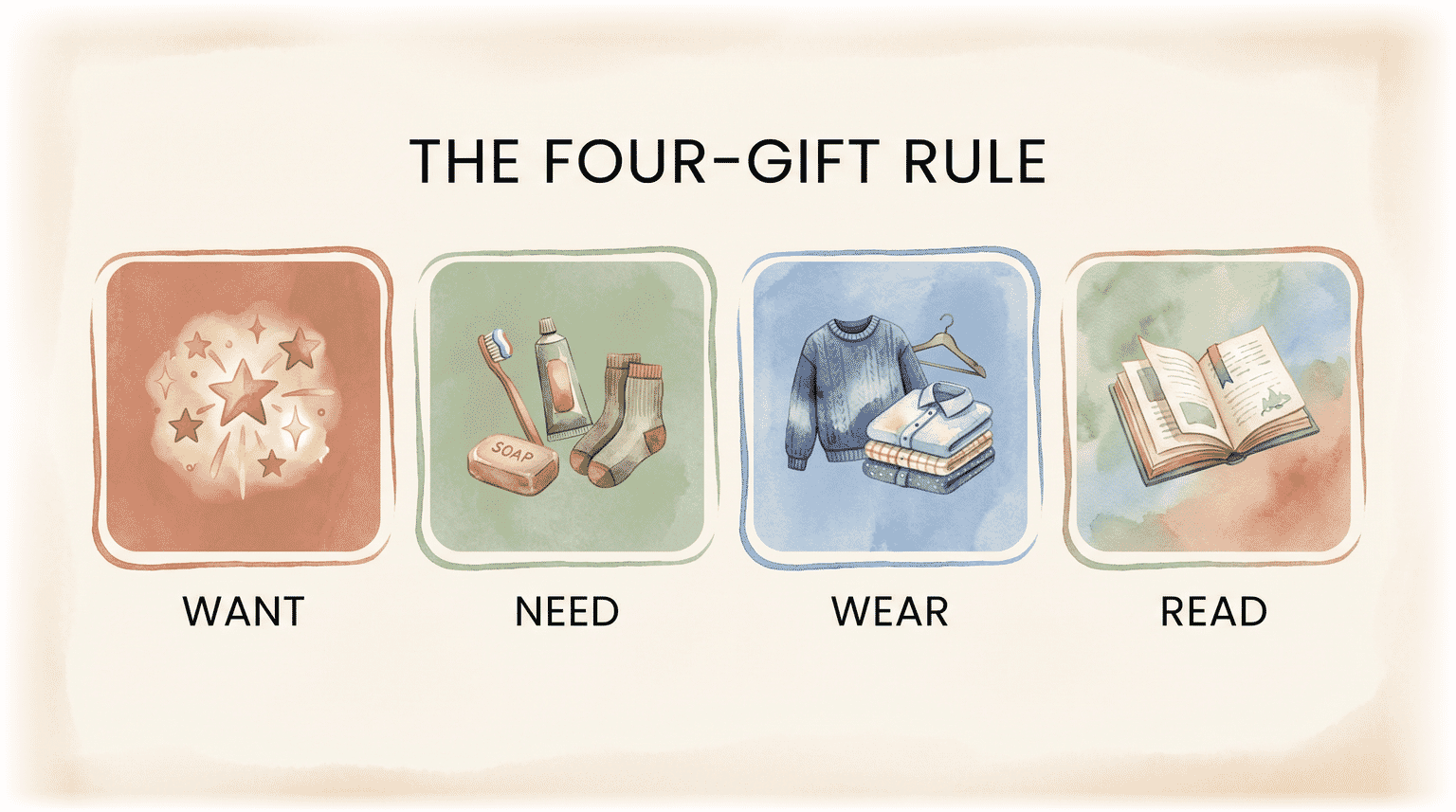
The Four-Gift Rule has become popular for good reason: something they want, something they need, something to wear, and something to read. It creates boundaries while ensuring variety, and children in this age range can actually appreciate the framework.
One mother who applied this method reported that “less really was more” and her children “actually had a more enjoyable holiday than years when we spoiled them.”
The numbers differ somewhat from how many Christmas presents children should receive—birthdays are a single-child spotlight moment rather than a family-wide occasion, which changes the dynamic.
What Kids Actually Remember
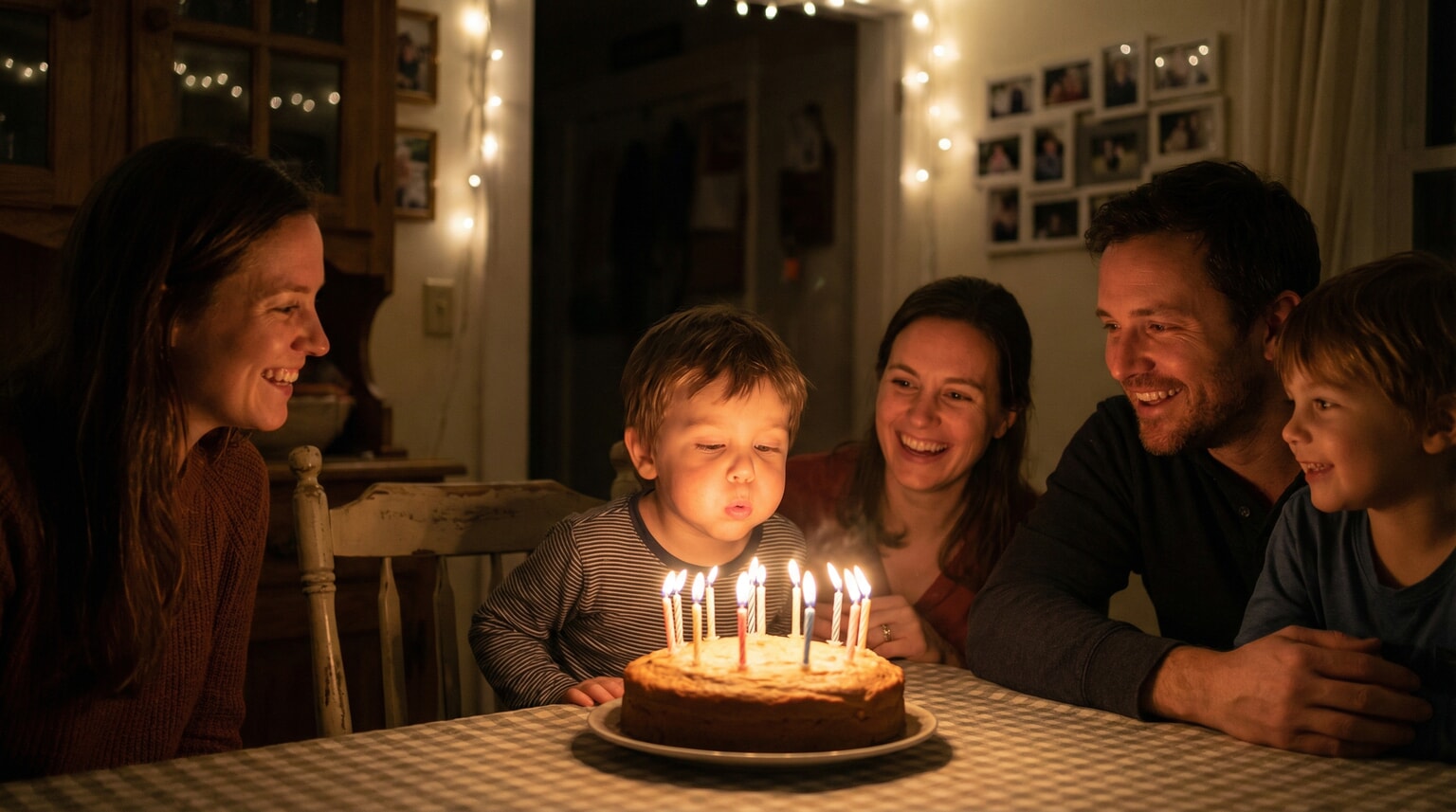
Here’s the part that shifted my perspective most dramatically.
A 2024 Japanese study of 653 sixth-graders found that children attending fewer than 10 family events annually had more than three times the risk of behavioral problems compared to those attending 21+ events. Among the families studied, 98.47% celebrated birthdays—making it the most universally observed family event.
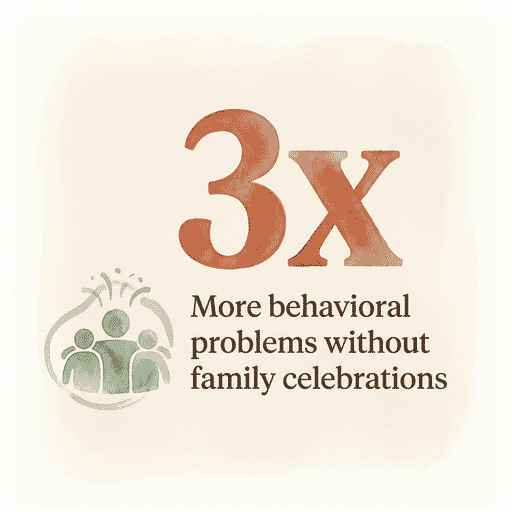
The birthday celebration matters. The ritual matters. The gifts? They’re supporting characters, not the main event.
Family traditions and shared moments build psychological resilience in ways that wrapped boxes simply cannot.
Research from the University of Chicago adds nuance here. Young children (ages 3-12) do prefer material goods over experiences—that’s developmentally normal. Your 6-year-old genuinely is more excited about the Legos than the party. But this preference shifts in adolescence, and even young children form stronger memories around meaningful gifts than abundant ones.
Perhaps most striking: research on handmade items found that when children gave emotional explanations for their preferences, 98% chose the handmade item over the factory-made one. They understand, even young, that the thought behind a gift carries weight.
“Meaningful gifts have more emotional value than a mountain of generic presents. Setting limits on gift giving triggers more thoughtfulness and consideration in children.”
— Sean Grover, Psychotherapist and Author of When Kids Call the Shots
Building Thankfulness Through Birthday Boundaries
My 6-year-old once tossed a birthday card aside to get to the presents. I was mortified—until I learned this is completely developmentally normal.
According to Harvard’s research on raising grateful children, even six-year-olds can distinguish between genuine gratitude and going through the motions. As Andrea Hussong from UNC Chapel Hill explains: “Even six-year-olds in our study said, ‘She said thank you, but she didn’t mean it.’ Six-year-olds get that the behavior is not the same thing as meaning it.”
The goal isn’t performing gratitude—it’s developing it. Fewer gifts create space for children to actually notice what they’ve received, think about who gave it and why, and feel genuine appreciation.
Research from CU Boulder found something fascinating: U.S. children waited nearly 15 minutes for gifts but less than 4 minutes for food in delayed gratification experiments.
“Cultivating habits of waiting for others could be doing much more than supporting politeness. It could make it easier for kids to succeed in future life situations without having to work so hard.”
— Dr. Yuko Munakata, Lead Researcher, CU Boulder
Birthday traditions that involve anticipation—opening presents after cake, spacing out the experience, waiting for a special moment—actually strengthen children’s self-regulation.
When Grandparents and Relatives Over-Give
Let’s talk about the elephant in the room. You can limit your own gift-giving perfectly and still end up with a gift avalanche courtesy of well-meaning extended family.
Relatives over-gift for understandable reasons: love language, distance guilt, wanting to be the “fun” grandparent. The solution isn’t warfare—it’s redirection.
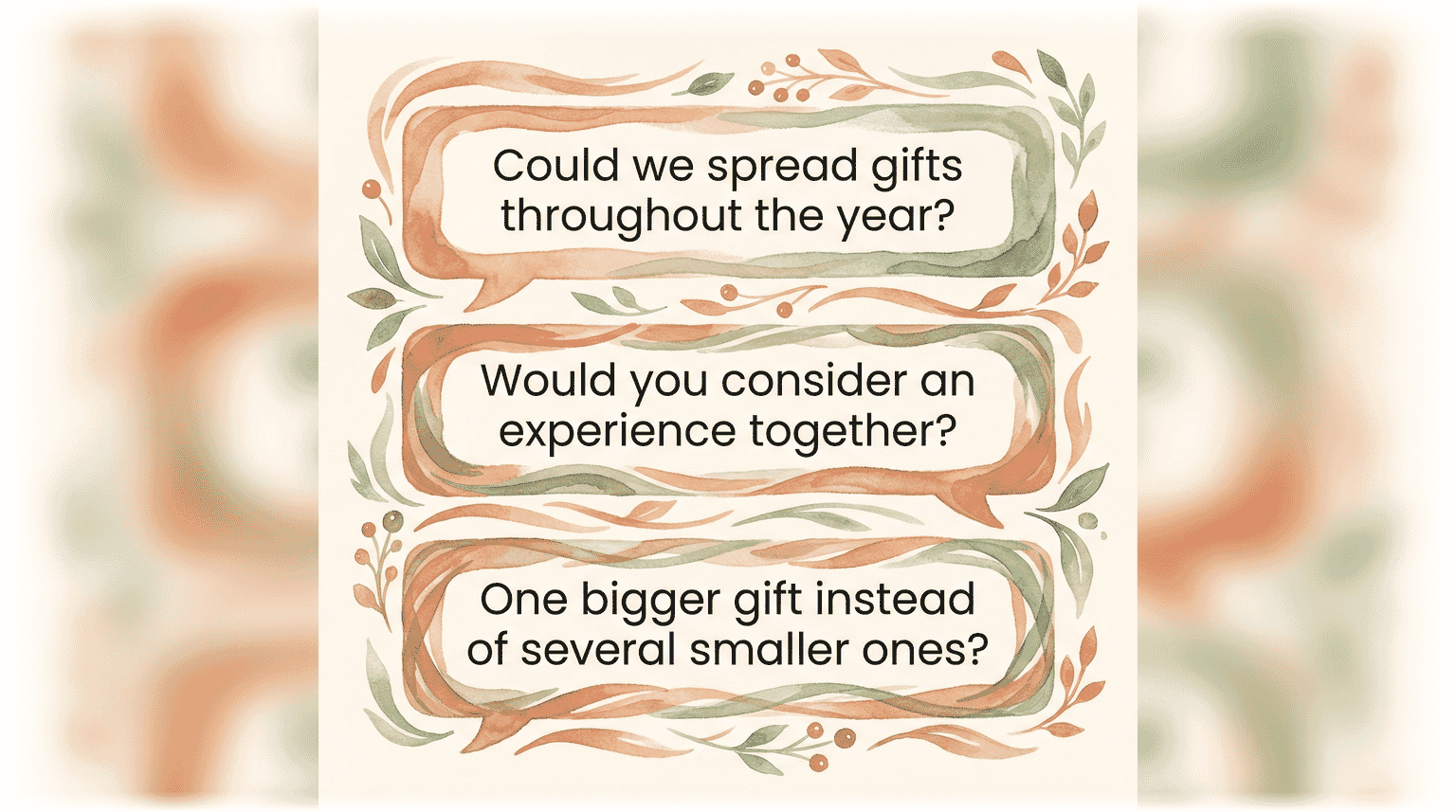
Scripts that work:
“The kids are overwhelmed by too many presents at once—could we spread your gifts out over the year for extra special moments?”
“They’d be so excited to do something with you—would you consider an experience gift like a zoo trip together?”
“We’re trying a new tradition where they get one bigger gift from grandparents instead of several smaller ones.”
For the gifts that arrive anyway, consider:
- The 1-in-1-out rule: new toy means an old one gets donated
- Rotation systems: some gifts stay stored and cycle in later
- Donation choices: children participate in deciding what to pass along
If your family struggles with what to do when children receive too many gifts, you’re not alone—and there are specific strategies that help beyond these basics.
The Birthday Gift Sweet Spot
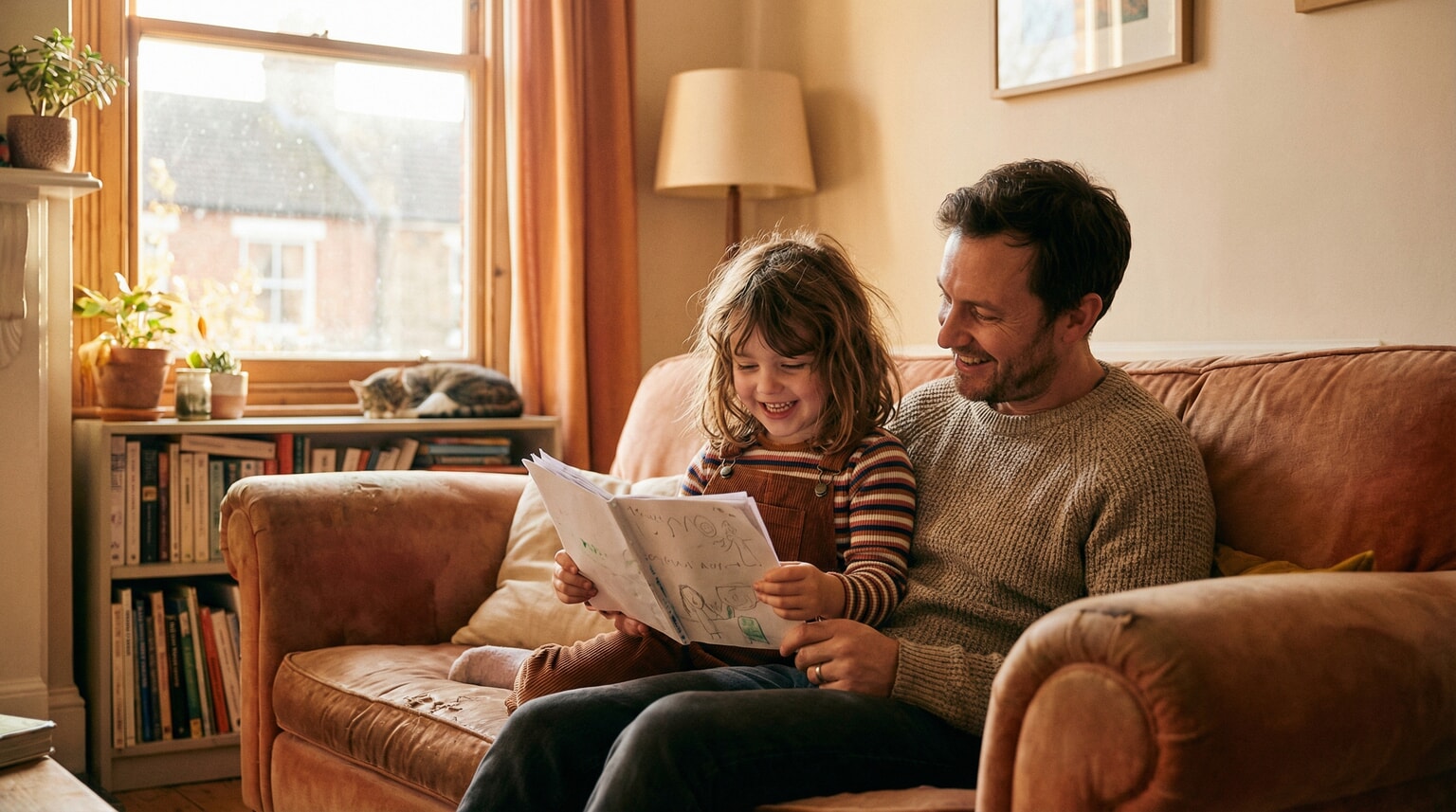
Every strand of research points the same direction: quality over quantity produces happier, more grateful, more engaged children.
Three to five meaningful presents from parents. Thoughtful selections over impressive piles. Space to actually appreciate what’s given.
“One-on-one time with a parent is much more desirable to most young children than the latest and hottest toy or gadget.”
— Dr. David Palmiter, Board-Certified Clinical Psychologist
The real gift of a birthday isn’t the presents. It’s the celebration itself—the attention, the ritual, the feeling of being special for a day. I’ve watched my kids’ faces during birthday dinners, cake moments, and silly games. That’s what they remember. That’s what matters.
Fewer presents. More presence. The research confirms what exhausted parents secretly hope is true.
Frequently Asked Questions
Is it bad to give kids too many presents?
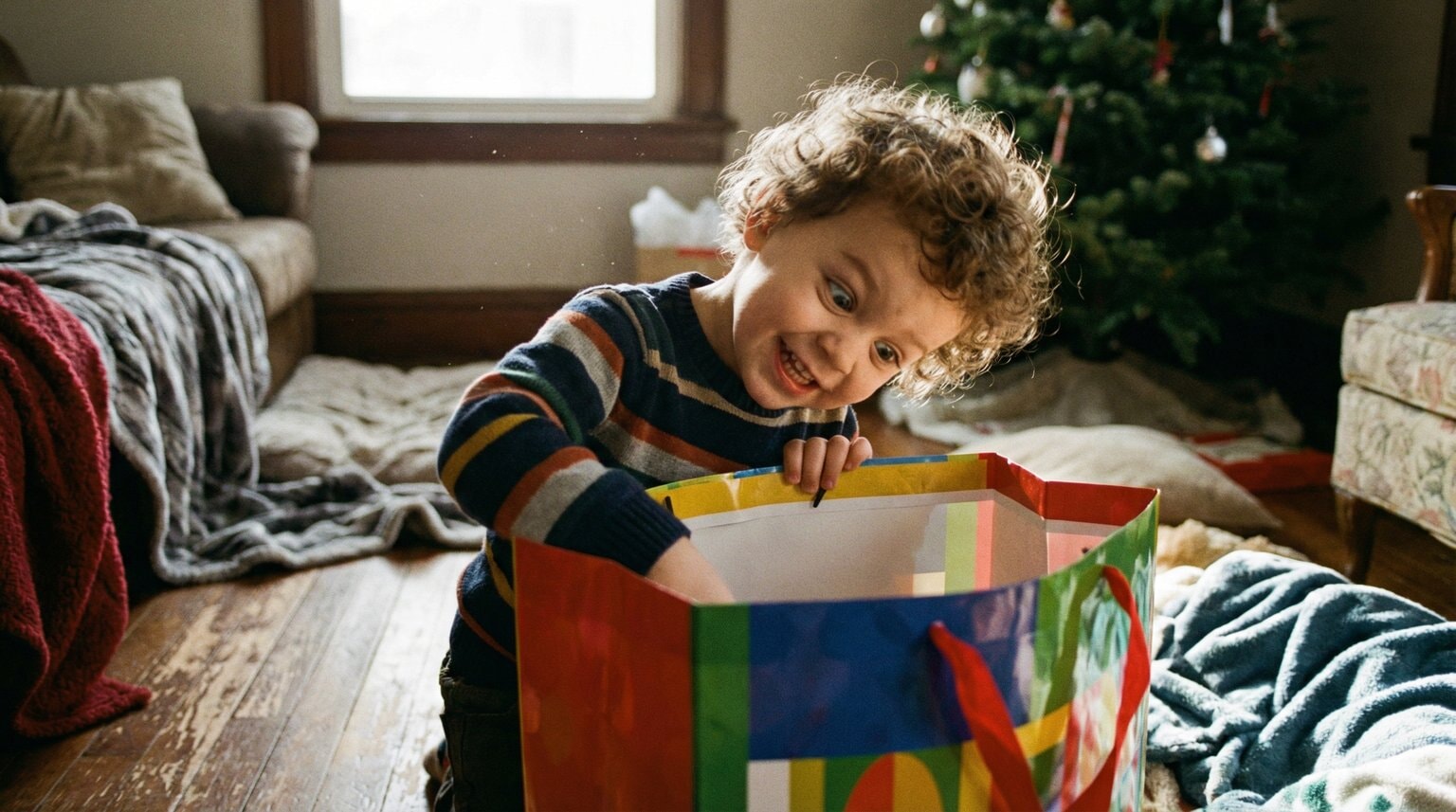
Research suggests yes—children with too many gifts experience what child psychologists call the “sugar rush” effect: brief excitement followed by wanting more. The University of Toledo study found toddlers played twice as long and more creatively when given fewer toys. Excessive gifts can create declining satisfaction where each additional present brings less joy.
What is the 4 gift rule for birthdays?
The 4-gift rule means giving children four intentional presents: something they want, something they need, something to wear, and something to read. This framework helps parents set meaningful boundaries while ensuring variety. Child development experts recommend it particularly for ages 5-10, when children can appreciate and even anticipate each category.
How many toys should a child have at once?
Research shows children benefit from accessing fewer toys at a time. The Toledo study found that toddlers with 4 toys engaged twice as long as those with 16 toys. Many families find success with toy rotation—keeping most toys stored and cycling through them—rather than limiting total ownership.
Do kids appreciate gifts more when they get fewer?
Yes. Studies consistently show children who receive fewer gifts express more genuine gratitude and engage more deeply with each item. Harvard research reveals even six-year-olds distinguish between authentic thankfulness and going through the motions. Fewer gifts create space for children to notice, appreciate, and connect emotionally with what they receive.
What About You?
Have you tried scaling back birthday gifts? I’m curious whether your kids noticed (mine didn’t, honestly) and whether it actually felt better on your end too. Or maybe you tried it and it backfired spectacularly—I’d love to hear that story too.
Your gift-giving experiments help other parents figure out what actually works.
References
- Newsweek: How Many Christmas Presents Should You Buy Your Children – Expert recommendations on age-appropriate gift quantities and the choice overload effect
- Harvard EdCast: How to Raise Grateful Children – Research on gratitude development in children and practical parenting strategies
- CU Boulder: A New Take on the Marshmallow Test – Cultural research on delayed gratification and gift-giving traditions
- PMC: Family Events and Child Behavior – 2024 study on family celebrations and developmental outcomes
- PMC: Children Expect Others to Prefer Handmade Items – Research on what makes gifts meaningful to children

Share Your Thoughts