

Last week, I caught myself standing in the toy aisle at 9 PM, phone in one hand, two nearly identical building sets in the other, genuinely frozen. Not because I couldn’t afford both. Not because I didn’t know my kid. Because my brain had simply… stopped working. Eighth kid, sixteenth holiday season as a parent, and I was paralyzed by two boxes of plastic bricks.
If you’ve been there—staring at a screen full of options, wondering if you’re about to disappoint everyone you love—you’re not alone. And you’re not broken. You’re experiencing something research has documented extensively: parental gift-giving anxiety is real, common, and distinctly different from general holiday stress..

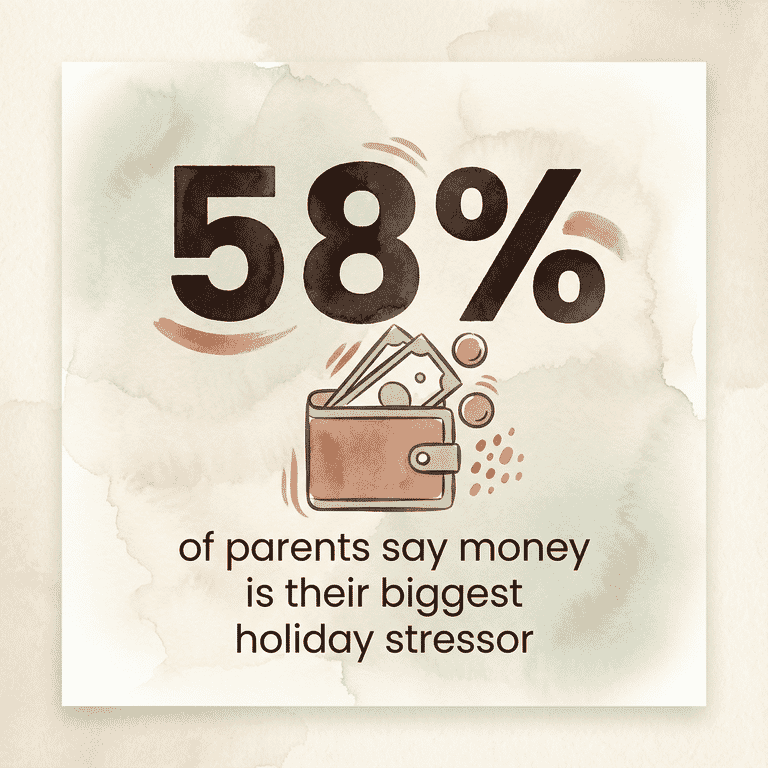
A 2023 APA survey of over 2,000 adults found that 40% cite “finding the right gifts” as a significant holiday stressor—second only to financial concerns at 58%. For parents, these numbers barely scratch the surface. We’re not just finding a gift. We’re finding gifts for multiple children at different developmental stages, coordinating with grandparents who have their own ideas, managing expectations from kids who saw something on YouTube, and somehow doing all of this while keeping the magic alive.
Here’s the thing my librarian brain couldn’t let go: stress doesn’t just make gift-giving unpleasant—it completely short-circuits the joy.
“If you are really stressed that is overwhelming your ability to anticipate or savor the experience, then dopamine and oxytocin aren’t what’s being released in your brain. You’re probably just feeling stressed the whole time.”
— Dr. Emiliana Simon-Thomas, Science Director, UC Berkeley Greater Good Science Center
In other words, managing your stress isn’t a nice-to-have before gift shopping—it’s the prerequisite for enjoying any of it. (Not sure where you stand? Take our 60-second stress check.)
Key Takeaways
- Gift-giving anxiety is documented and real—40% of adults cite it as a major holiday stressor
- Stress overrides the brain chemistry that makes giving feel good, so managing stress comes first
- Setting a firm budget reduces anxiety more than flexibility ever could
- Fewer gifts with more thought create more joy than more gifts with more stress
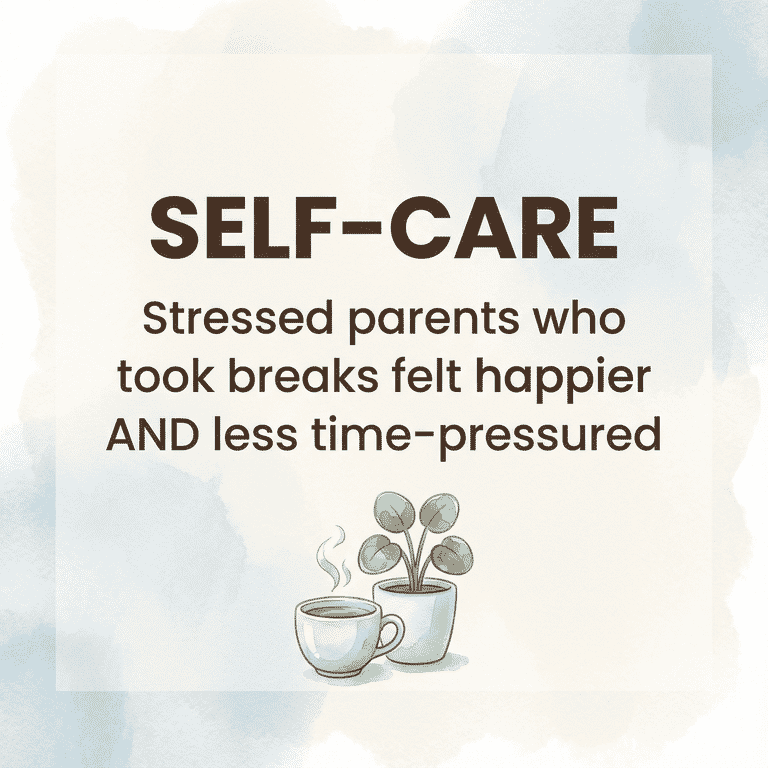
- Self-care isn’t optional—stressed parents who took breaks felt happier AND less time-pressured
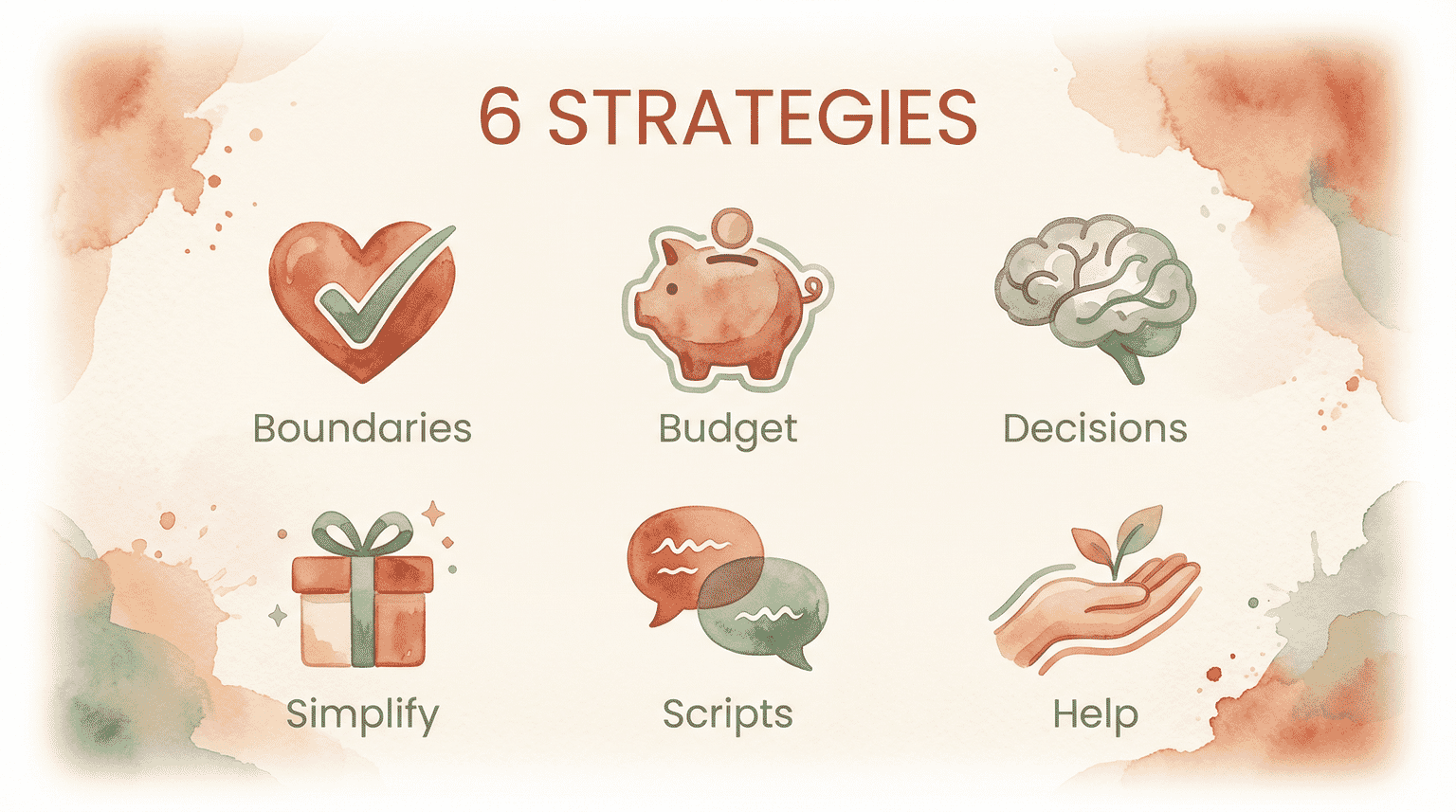
Six Strategies That Actually Work
- Set boundaries with yourself first: Release the “perfect gift” pressure
- Create a stress-proof budget: Address money anxiety without shame
- Reduce decision fatigue: Fewer choices, less mental load
- Simplify your gift universe: Limit who you buy for and how much
- Use scripts for hard conversations: Real words for real situations
- Ask for help: Including from yourself
Let’s break these down.
Strategy 1: Set Boundaries With Yourself First
The biggest source of gift-giving anxiety often isn’t external—it’s the pressure we put on ourselves.

“People think they need to make it magical and amazing, and to do that, they push themselves too far and overcommit themselves.”
— Dr. Amy Lopez, Assistant Professor of Psychiatry, University of Colorado
I’ve watched this happen in my own household. The year I tried to create personalized scavenger hunts for all eight kids on Christmas morning? By the time they were opening gifts, I was so exhausted I could barely enjoy their reactions. The dopamine I should have felt? Drowned out by cortisol.
And here’s what UT Southwestern researchers documented: that cortisol isn’t just an abstract concept. Dr. Sarah Woods explains that elevated stress hormones cause “disrupted sleep, headaches, inflammation, reduced pain tolerance, and shortness of breath.” This isn’t “just stress”—it’s your body paying a physical price for the pursuit of perfection.
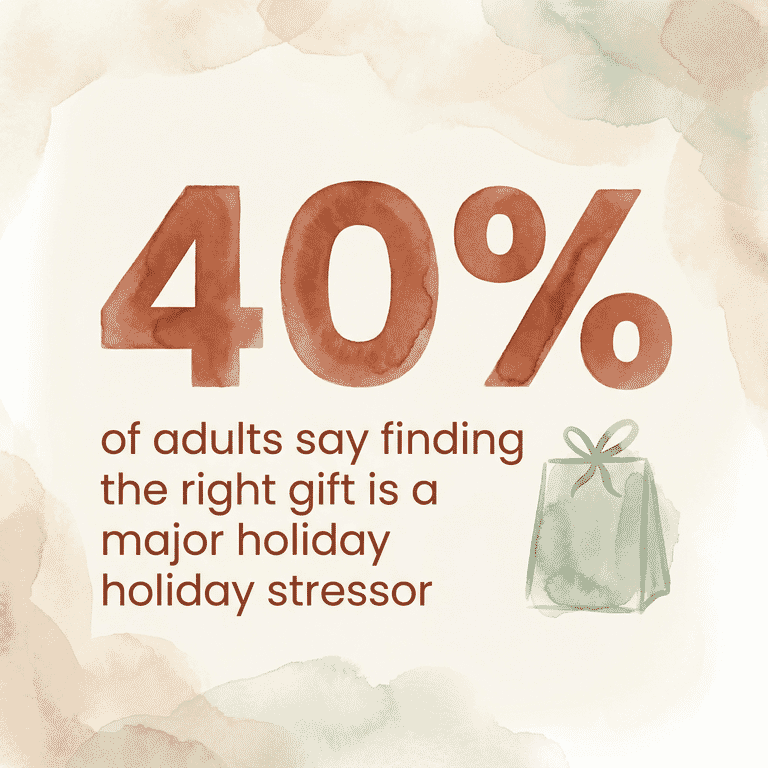
The antidote is giving yourself permission for “good enough.” Nearly half of all adults struggle with this same pressure. You’re not uniquely bad at gift-giving—you’re experiencing a documented phenomenon.
Try this: Before you start shopping, complete this sentence: “A successful gift is one that ____________.” Not the perfect gift. A successful one.
For my 4-year-old, a successful gift is one he’ll actually play with for more than three days. For my teenager, it’s one that shows I noticed something about her interests. Those are achievable standards.
When you find yourself spiraling on a decision, set a 5-minute timer. Research, compare, then choose. Done. Move on.
Strategy 2: Create a Stress-Proof Budget
Here’s what I’ve learned managing holiday budgets across eight kids: the anxiety isn’t really about the number—it’s about the uncertainty.
The 2023 APA data confirms this. Financial concerns topped the stressor list at 58%, with more recent polling showing 46% specifically worried about “affording or finding holiday gifts.” Younger parents feel this most acutely—49% of adults under 35 anticipate holiday stress compared to just 27% of those over 65.
What the research also shows is that expense and thoughtfulness aren’t the same thing. Dr. Diego Guevara Beltran at the University of Arizona offers a reframe: doing something laborious shows how much you’re willing to invest even without expensive resources.
This applies to kids too. The gift that required you to remember a passing comment they made in September? More meaningful than the expensive item from their Amazon list.
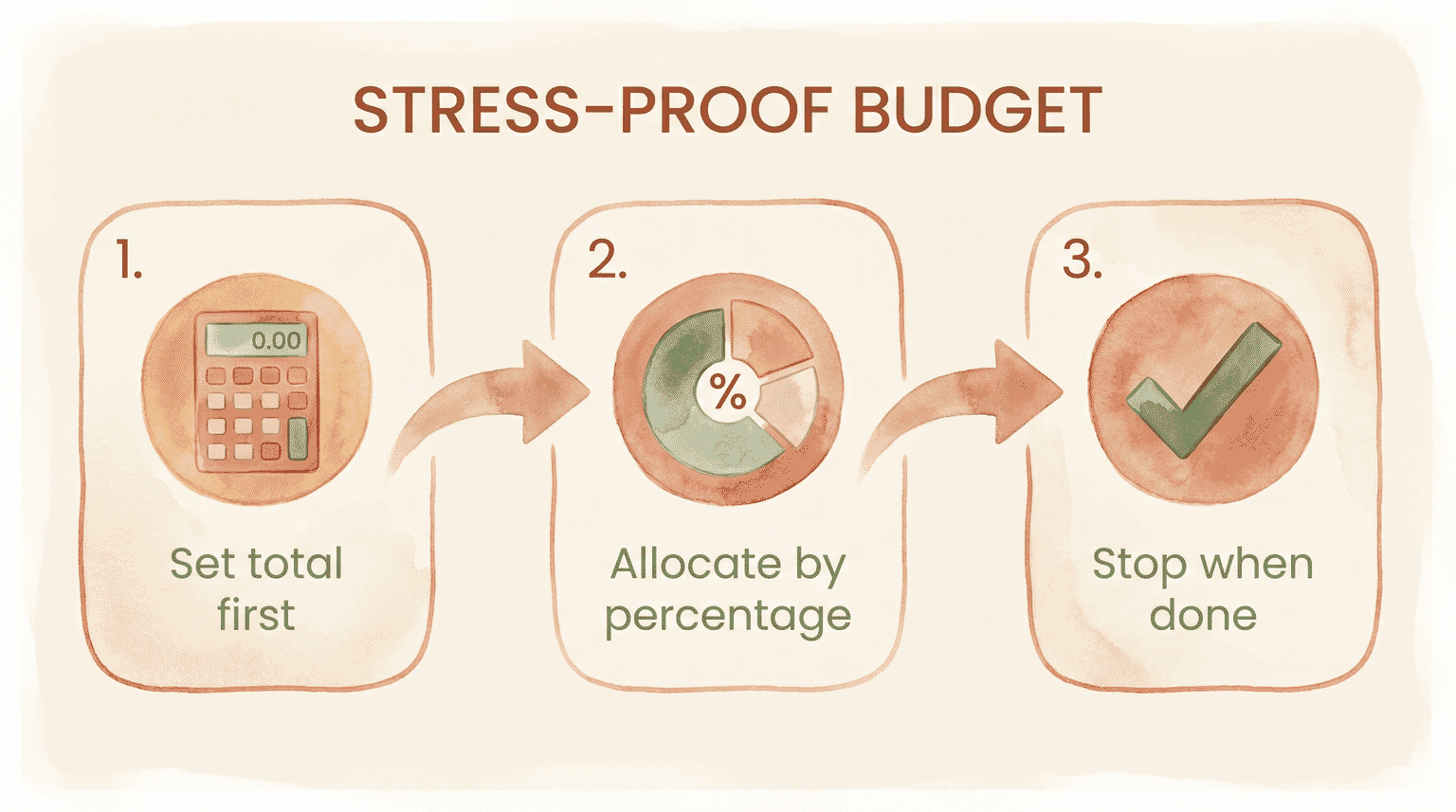
A stress-proof budget looks like this:
- Set the total number before you start shopping (not after you’ve already fallen in love with things)
- Allocate by percentages, not dollar amounts—”each kid gets 20% of the total” scales with whatever you have
- Build in a 10% buffer for shipping or that thing you forgot
- Decide upfront: when the budget is spent, you’re done. No exceptions.
The certainty of boundaries reduces anxiety more than flexibility ever could.
Strategy 3: Reduce Decision Fatigue
Here’s where my librarian brain got fascinated. Dr. Scott Rick’s research at the University of Michigan uses fMRI imaging to study what happens when we contemplate spending money. What he found: people experience actual distress—not metaphorical, measurable in brain scans.
But with gift-giving, the complexity multiplies. As Dr. Rick explains: “All the evidence we have does suggest that it’s less painful to buy the gift, but there are other emotions that could be in play, like anxiety, ‘Will they like it? What will they think?’ It could be a much more stressful experience. It’s just more charged.”
So you’re experiencing the pain of spending plus the anxiety of recipient reaction plus the mental load of tracking what you’ve bought for whom. Multiply that by however many people are on your list.
Here’s how to lighten the load:
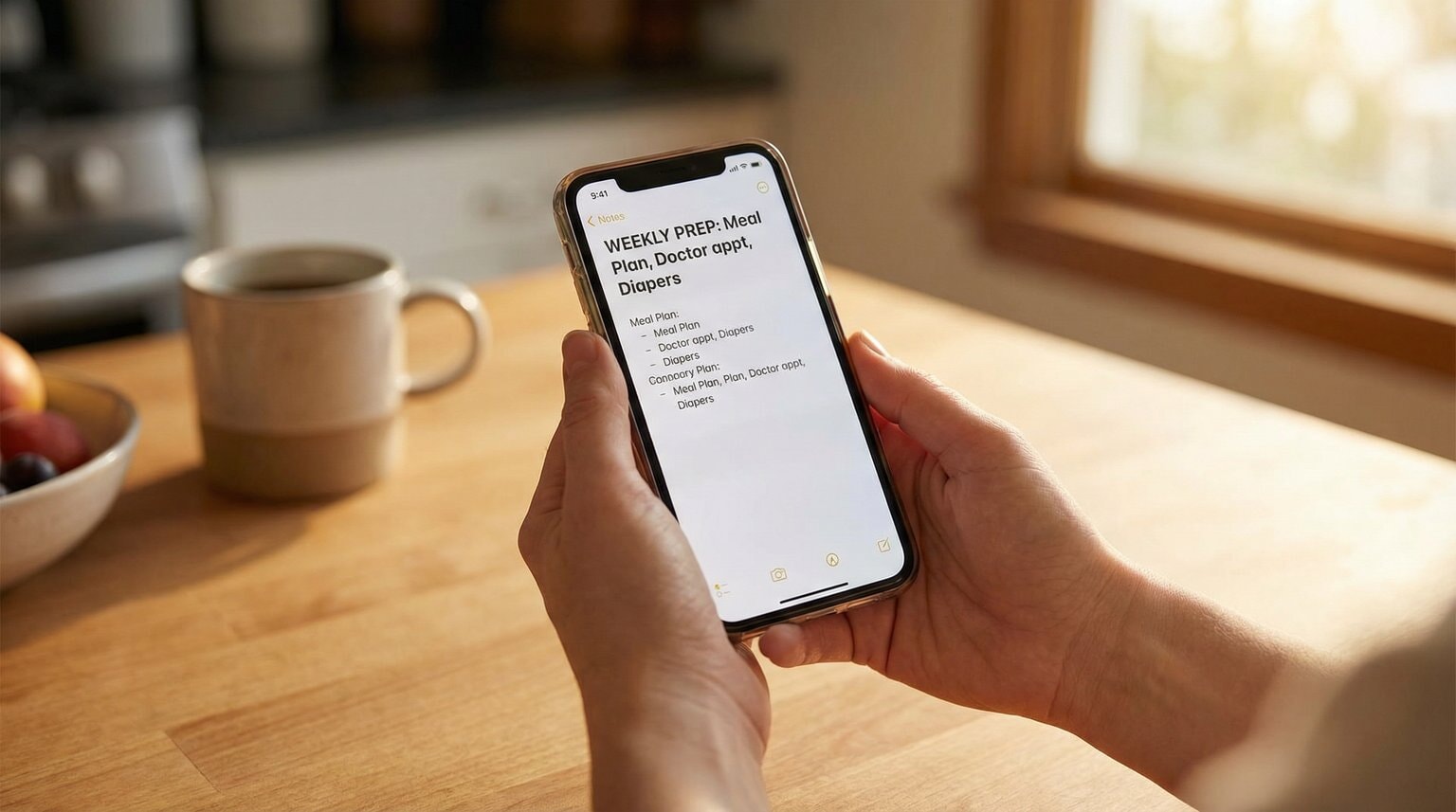
Keep a year-round gift note. When your kid mentions wanting something in March, write it down immediately. By November, you have a curated list instead of starting from scratch. I keep a running note on my phone for each child—it takes 10 seconds to add something and saves hours of December panic.
Limit yourself to 2-3 options per person. Research, narrow to three realistic possibilities, then choose. More options create more anxiety, not better gifts. This is especially helpful for addressing common gift-giving challenges that tend to compound during the holidays.
Create “speed bumps” for online shopping. Dr. Rick recommends deleting saved payment information, logging out of accounts, and using “save for later” instead of immediate checkout. That 24-hour waiting period prevents impulse purchases and the regret that follows.
In my house, this looks like: research during nap time, narrow the options, then step away. I don’t buy anything the same day I find it.
Strategy 4: Simplify Your Gift Universe
Every person on your list is a decision bundle: what to get them, how much to spend, when to buy it, how to wrap it, when to give it. Fewer people = exponentially fewer decisions = dramatically less stress.
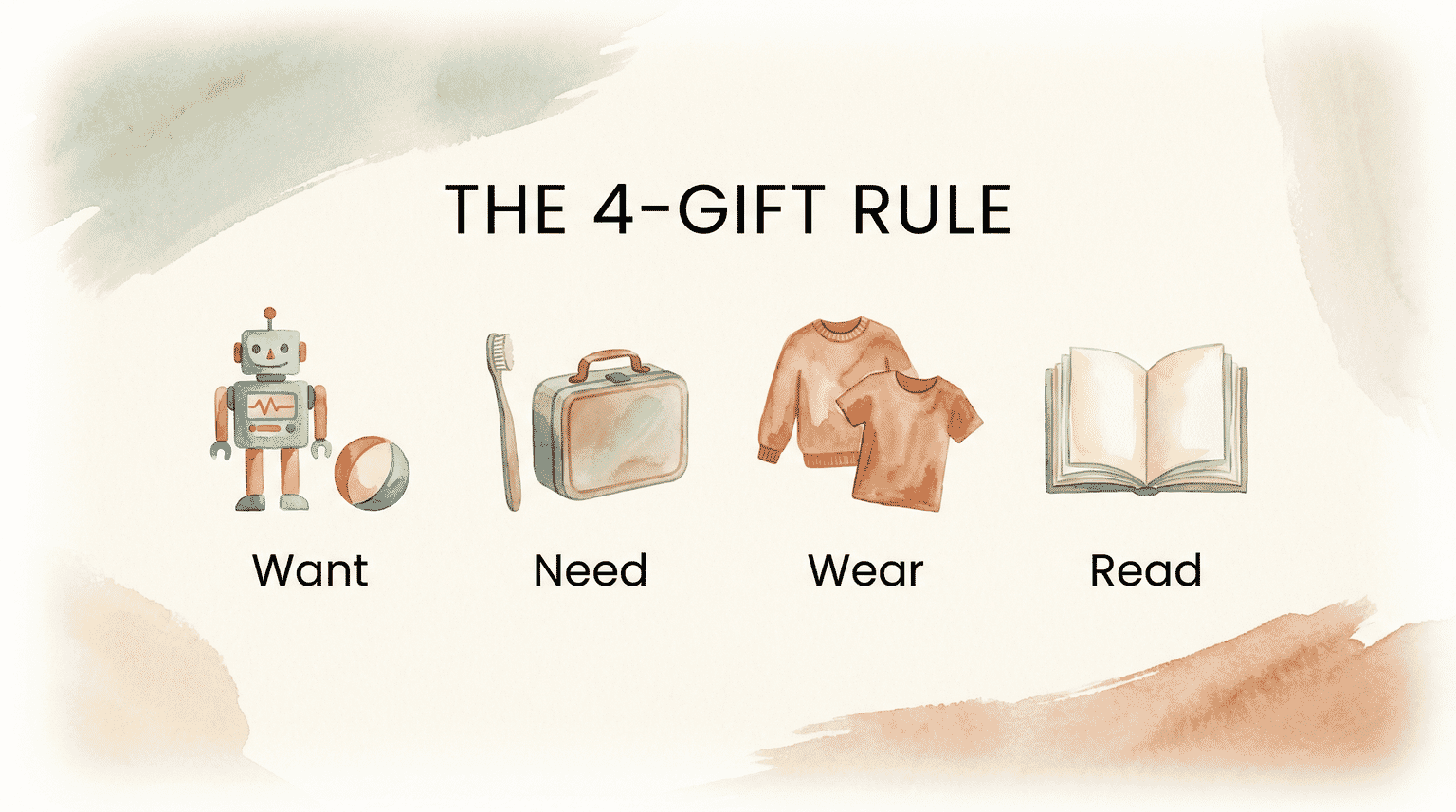
This is where frameworks like the 4-gift rule become sanity-savers. Limiting each child to four categories—something they want, need, wear, and read—doesn’t just reduce spending. It reduces the infinite browsing that exhausts your brain before you’ve purchased anything.
Dr. Lopez’s research found something counterintuitive: the joy of gift-giving comes from thinking about the recipient, not from the gift itself. Participants who bought gifts for others were happier than those who bought for themselves—”even before giving the gift or seeing the recipient’s reaction. It was just the experience of thinking about that person and what they might like.”
More gifts don’t multiply that joy. More thoughtfulness does.
Practical simplification strategies:
- Set a family gift exchange limit (one gift per adult, for example)
- Consider experience gifts that benefit everyone—a zoo membership instead of individual toys
- Reduce your list by 20%. Yes, really. Start with the obligations that stress you most.
I’ll be honest: this is hard. The guilt of “but we’ve always gotten something for…” is real. But Dr. Ryan C. Warner, a clinical psychologist, puts it directly: “Guard your time, your finances, and your emotional well-being so you don’t end up running on empty. It’s okay to say no.”
Strategy 5: Scripts for the Hard Conversations
Every parenting article tells you to “set boundaries.” None of them tell you what to actually say. Let me fix that.
When you need to set budget limits with extended family:
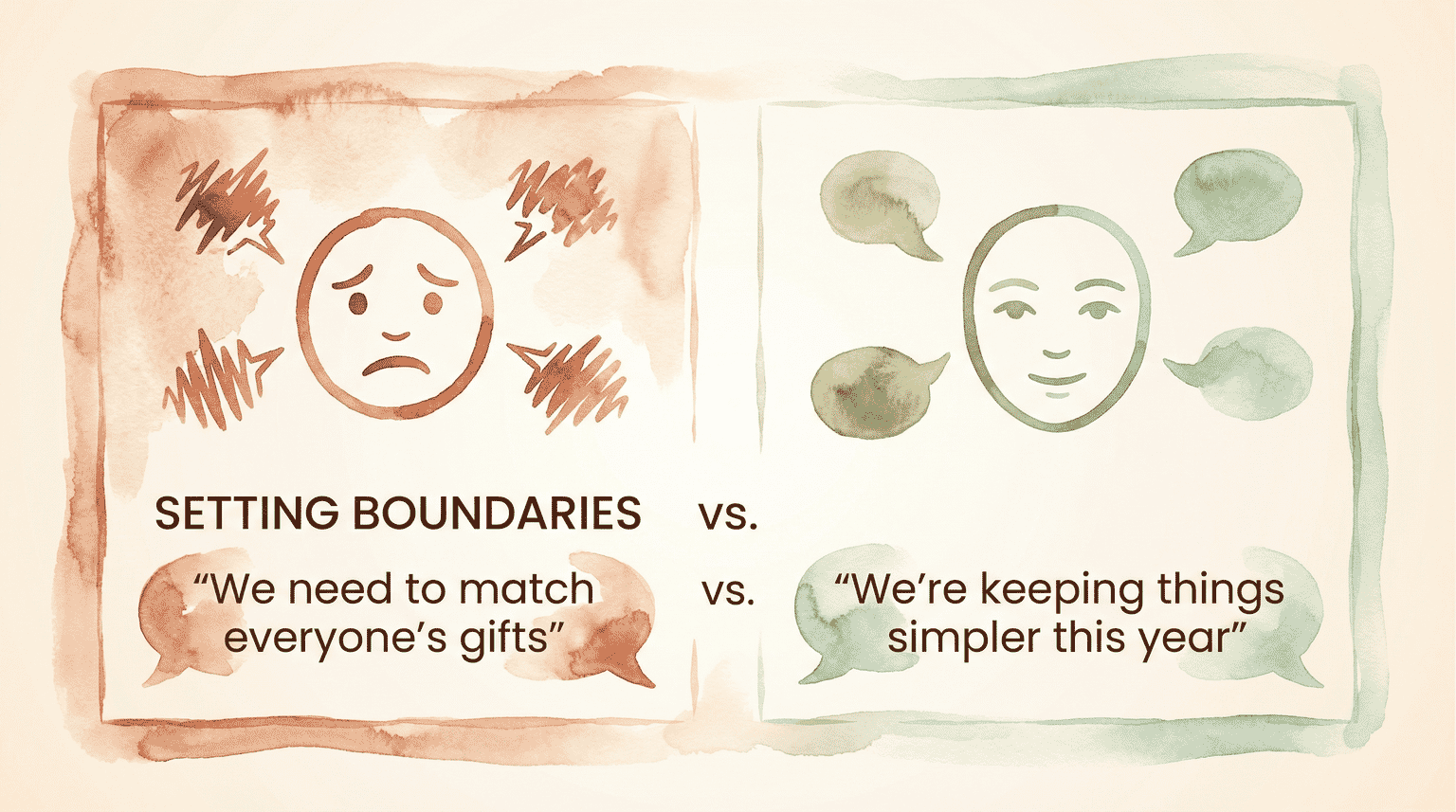
“We’re keeping things simpler this year—one gift per child, around $25. We’ve found it actually makes the day more enjoyable for everyone when there’s less chaos to manage. Thanks for understanding!”
When your child expresses disappointment:
“I hear that you’re disappointed. It’s okay to feel that way. Let’s talk about what you did get that you’re excited about, and we can add that other thing to your birthday list.”
When coordinating with co-parents or ex-partners:
“Let’s divide the list so we’re not duplicating and the kids aren’t overwhelmed. I’ll take [categories], you take [categories], and we can share notes on what we each got. Sound fair?”
When grandparents want to over-give:
This is common enough that we’ve written a whole guide on setting expectations with grandparents. The short version: lead with appreciation, be specific about your concerns (too many toys, battery-operated noise makers, whatever), and offer alternatives they can feel excited about.
The research supports being direct. Reciprocity pressure—the feeling that you must match what others give—creates shame when you can’t meet expectations. Having the conversation upfront removes that pressure entirely.
Strategy 6: Ask for Help (Including From Yourself)
Here’s research that surprised me: stressed people tend to avoid self-care even though it would help them most.

Dr. Jacqueline Rifkin at Cornell University studied this pattern and found that when people feel short on time, money, and energy, they skip treating themselves because they think they “wouldn’t really be able to enjoy it.” But when her research required stressed participants to self-gift, they reported feeling happier, more relaxed, and—counterintuitively—less time-pressured.
“You actually end up feeling like you’ve gotten a little bit of time back because you’re a little bit more rejuvenated,” Rifkin explains. Self-gifts don’t have to be purchases.
Going outside for 10 minutes. A bath after the kids are in bed. Saying no to one holiday obligation so you can breathe.
Asking for help from others matters too:
- Delegate one task completely. Not supervised, not checked on—handed off.
- Ask your partner to handle one person’s gifts entirely.
- Let older kids wrap their own sibling gifts (imperfectly, and that’s fine).
Taking care of yourself isn’t separate from creating a good holiday. It’s the foundation.
When It’s More Than Stress
One more thing, because it matters: approximately 40 million Americans have an anxiety disorder, and the holidays can amplify symptoms significantly.
If your worry about gift-giving persists long after the season ends, if it’s interfering with sleep or daily functioning, or if you notice yourself engaging in compulsive shopping to manage emotions—that’s worth talking to a professional about. There’s no shame in getting support. Recognizing when stress has crossed into something more serious is actually a sign of strength.
Frequently Asked Questions
Why does gift-giving cause so much anxiety?
Gift-giving anxiety stems from multiple pressures converging: the measurable distress of spending money (documented in brain imaging studies), fear about whether recipients will like the gift, and social pressure to reciprocate equally. For parents, add the weight of wanting holidays to feel magical for your children while managing limited time and money.

How do I stop stressing about holiday gifts?
Set a firm budget before shopping, limit yourself to 2-3 options per person, and give yourself permission to choose “good enough” rather than perfect. Research shows stress completely overrides the positive brain chemistry of giving—so managing your stress isn’t optional, it’s the prerequisite.
Is gift-giving anxiety actually real?
Yes. The 2023 APA survey found 40% of U.S. adults cite “finding the right gifts” as a significant holiday stressor. Brain imaging research shows gift-buying activates both reward and stress pathways simultaneously. This is a documented psychological phenomenon, not something you’re imagining.
How do I set gift-giving boundaries with family?
Start with direct, warm language: “We’re keeping things simpler this year—one gift per person, $25 limit. It’ll be more relaxed for everyone.” Clinical psychologists confirm that guarding your finances and emotional energy is healthy self-care, not selfishness. It’s okay to say no.
Your Turn
What’s actually helped you reduce gift-giving stress? I’ve tried budgets, lists, and just opting out of certain exchanges entirely. Some helped, some didn’t. Would love to hear what’s made the holidays feel lighter for you.
Your strategies might be exactly what another stressed parent needs to hear.
References
- American Psychological Association – Holiday Season Stress Survey 2023 – National data on gift-giving as stressor
- American Psychological Association – Brain Science of Gift Giving – Neuroscience of giving and stress override
- Everyday Health/APA – 2025 Holiday Anxiety Poll – Current trends in holiday stress
- UT Southwestern – Holiday Stress and Cortisol – Physical health effects of holiday stress
- University of Miami – Holiday Anxiety – Clinical perspective on anticipatory worry
- University of Colorado – Embrace Giving – Research on over-commitment and giving benefits
- University of Arizona – Gift-Giving Stress – Creativity vs. expense in gift value
- APA Speaking of Psychology – Shopping Behavior – fMRI research on spending distress
- Discover Magazine – Self-Gifting Research – Cornell research on self-care benefits

Share Your Thoughts