

Standing in my kitchen last December, I watched my 6-year-old rip through a pile of birthday presents. Within ten minutes, she’d opened everything, played with nothing, and asked what else there was to do. Sound familiar?
I’ve seen this scene play out eight times now—and my librarian brain couldn’t let it go without digging into why some kids seem to genuinely appreciate what they receive while others treat gifts like items on a checklist. The answer isn’t about raising “good” kids versus “ungrateful” ones. It’s about building a skill that doesn’t come naturally to anyone.

As CHOC mental health therapist Elizabeth Mu puts it:
“Think of gratitude as a muscle—you need to exercise it regularly to make it stronger.”
— Elizabeth Mu, Mental Health Therapist, CHOC
That metaphor changed how I approach gratitude in my house. We don’t just tell our kids to say thank you. We practice gratitude the same way we practice reading or riding a bike.
Here’s what the research actually shows—and the specific rituals that have worked across my crew of eight, from toddler to teenager.
Key Takeaways
- Gratitude is a skill, not a personality trait—it takes about one month of consistent practice before meaningful benefits appear.
- Family gratitude rituals outperform solo practices because shared experiences activate empathy circuits more powerfully.
- The most effective rituals combine consistency, specificity, and emotional connection—not just going through the motions.
- When kids resist, model vulnerability instead of forcing participation—and reassess timing.
- Look for spontaneous thank-yous and unprompted appreciation around the 3-month mark.
What Makes a Gratitude Ritual Actually Work?
Not all gratitude practices produce the same results. Research from 2025 published in Psychology Today found that the most significant emotional and neurological effects occur not when we silently reflect on thankfulness, but when we receive genuine gratitude from others or deeply empathize with someone else’s experience of being helped.
This is why family gratitude rituals outperform solo practices. When your kids hear you share what you’re grateful for—and when they hear siblings express appreciation—it activates brain circuits linked to empathy and reward more powerfully than journaling alone.
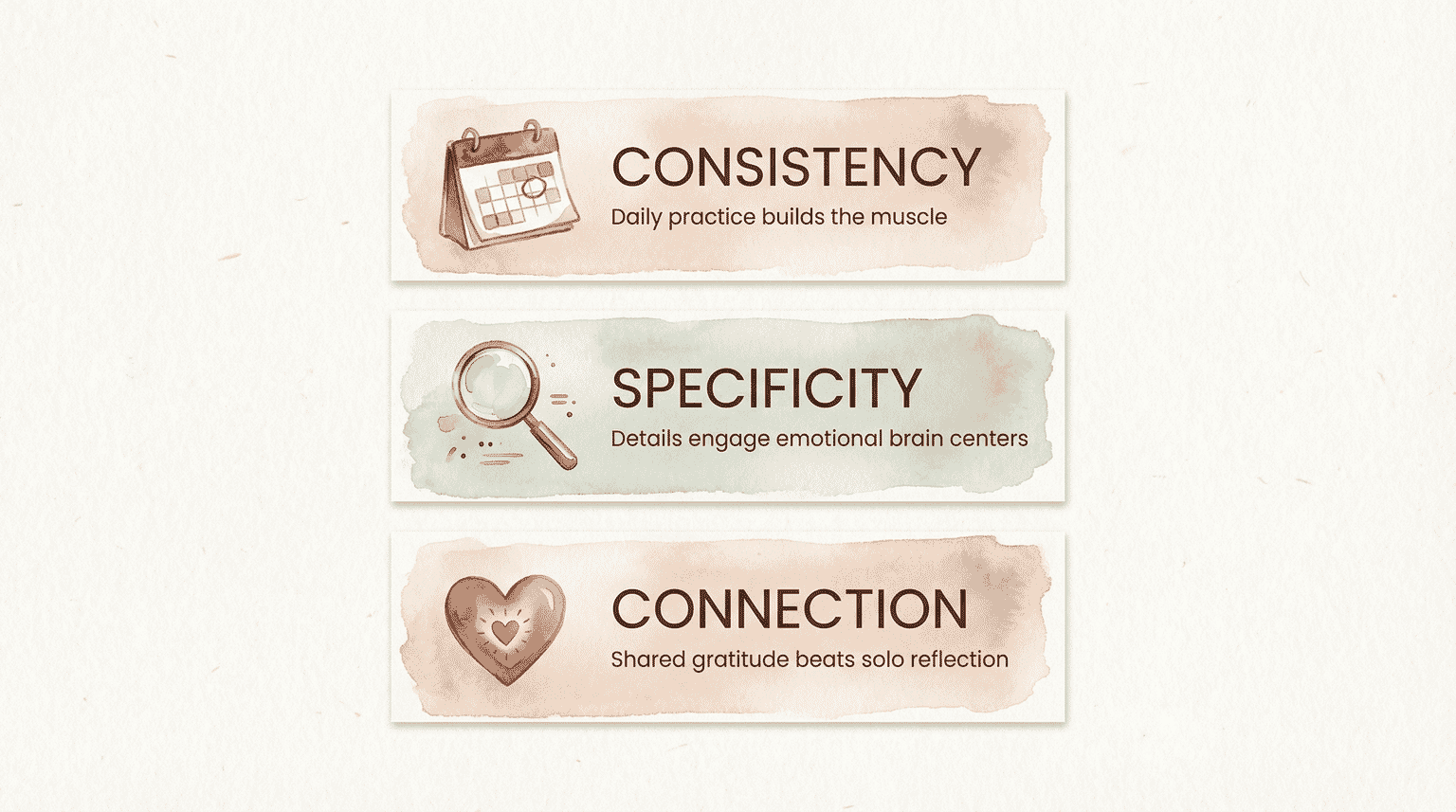
Three elements separate effective rituals from performative ones:
- Consistency: Sporadic gratitude doesn’t build the muscle. The research shows meaningful benefits appear after about one month of regular practice.
- Specificity: Yale professor Laurie Santos, creator of “The Science of Well-Being,” emphasizes that “I’m thankful for my family” doesn’t engage emotional brain centers the way “I’m grateful that my brother shared his snack with me today” does.
- Emotional connection: Genuine gratitude acknowledges both positive and challenging aspects of life—it’s not about toxic positivity or forced cheerfulness.
If you’re looking for deeper strategies beyond daily rituals, our guide on teaching kids gratitude covers the foundational lessons that make these practices stick.
Daily Rituals: The Foundation
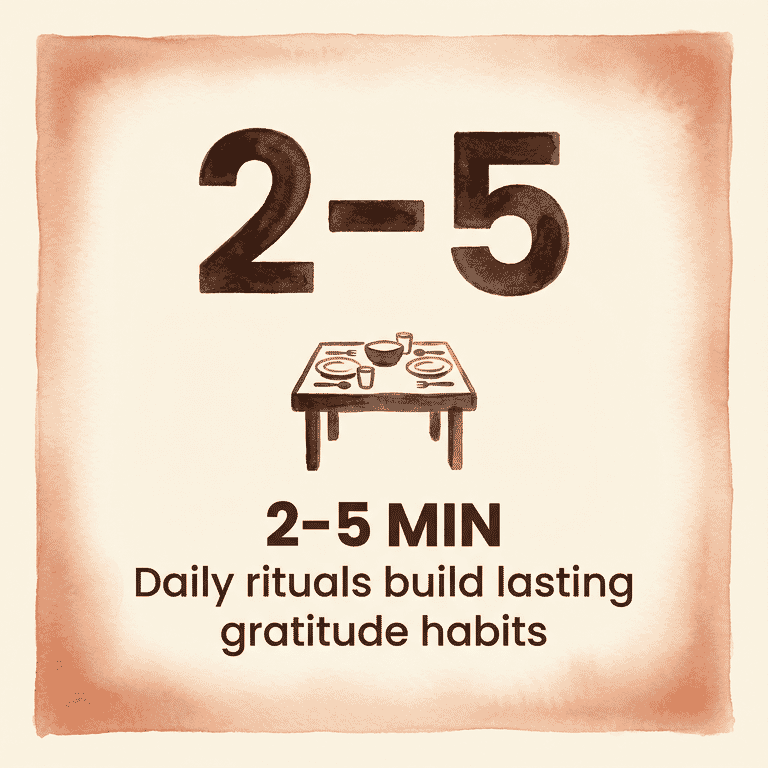
These take 2-5 minutes and build the consistency your child’s brain needs.
Bedtime Gratitude Sharing
Best for ages 3-10
This is the single ritual I’d recommend if you do nothing else. Before lights out, each person names three good things from their day.
Script for starting: “Before we turn off the light, let’s each share three things that made today good. They can be tiny—even ‘my socks were cozy’ counts. I’ll go first.”
In my house, this looks like: my 4-year-old saying “chicken nuggets” three nights in a row (perfectly fine), while my 10-year-old has started noticing moments like “when Maya saved me a seat at lunch.” Both count.
Dinner Table Appreciation Rounds
Best for ages 4-12
Each family member shares one thing they appreciated about their day or about someone at the table.
Script for starting: “Before we eat, let’s go around and share one appreciation. It can be something that happened today or something about someone here. Who wants to start?”
The key is modeling specificity yourself. Not “I’m grateful for this family” but “I’m grateful Dad picked up milk so we could have cereal tomorrow.”
When you get specific, your kids learn that gratitude is about noticing the small stuff—not performing big feelings they don’t have.
Car Ride Check-Ins
Best for ages 5-12
Turn transition time into reflection time. On the drive home from school, ask one gratitude question.
Try: “What’s one thing that went better than you expected today?” or “Did anyone do something kind for you?”
I started this accidentally when my 8-year-old complained every single day on the drive home. Redirecting to gratitude didn’t eliminate complaints—but it balanced them.
Weekly Rituals: The Amplifiers
These take 10-20 minutes and deepen the practice beyond daily habit.
The Gratitude Jar with Sunday Readings
Best for ages 4-10
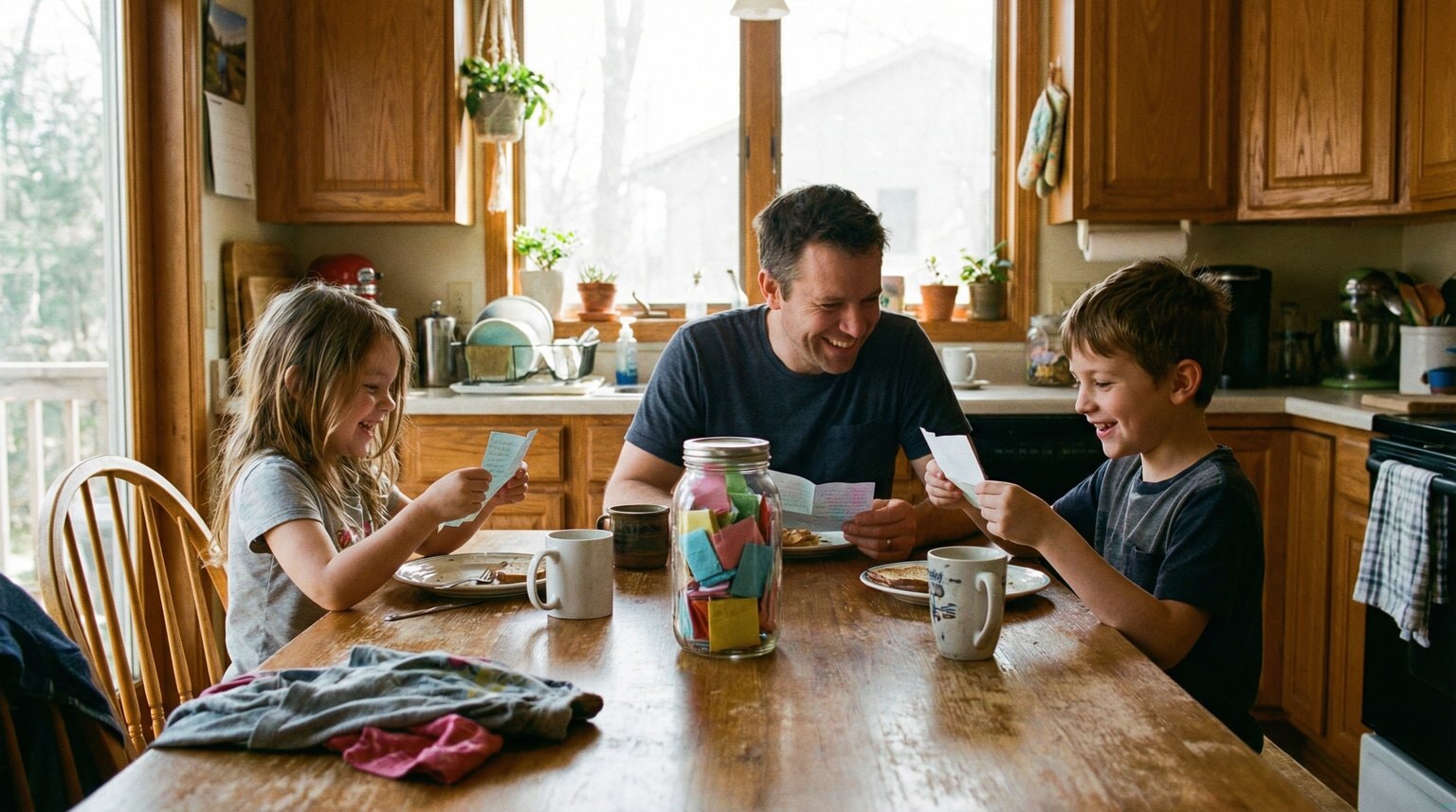
Keep a jar in a central location. Throughout the week, family members write or draw things they’re grateful for on slips of paper. Every Sunday, read them together.
A 2025 study from Psychology Today specifically examined this practice, finding it functions as an effective brain-training exercise that builds social and emotional resilience by strengthening neural pathways associated with empathy and well-being.
How to start: “We’re going to try something new. Anytime something good happens this week—big or small—write it down and put it in this jar. On Sunday, we’ll read them all together.”
My 6-year-old draws pictures. My 12-year-old writes one-word notes. Both work.
Weekend Gratitude Walks
Best for ages 5-12
During a family walk, take turns pointing out things you notice and appreciate—the neighbor’s flowers, a funny-shaped cloud, how your legs feel strong.
This works because it shifts gratitude from abstract (“be thankful”) to concrete (“notice this specific thing right now”). For younger kids especially, gratitude tied to sensory experience lands better than gratitude as an idea.
Thank-You Note Sessions
Best for ages 6-12
After birthday parties or holidays, gather supplies and write thank-you notes together. Research from Michigan State University confirms that recording gratitude in written form has lasting effects—and that real gratitude requires thought and energy, not just automatic words.
Script for reluctant writers: “Let’s think about Grandma choosing this gift. What do you think made her pick this one for you? Let’s tell her you noticed that.”
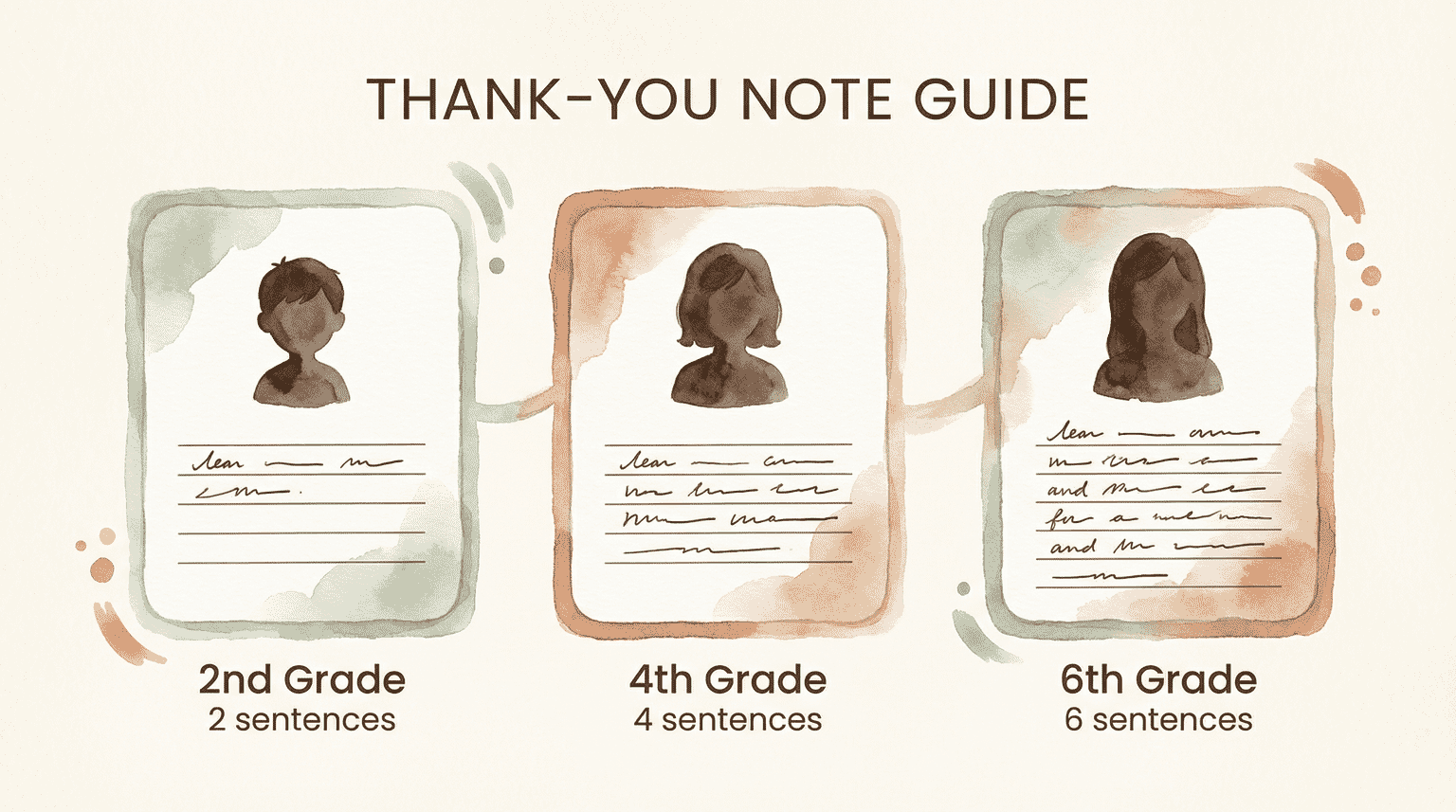
A guideline that’s worked for us: one sentence of thanks per grade level. A second grader writes two sentences. A fifth grader writes five.
This is a natural moment to explore what gifts really teach children beyond the object itself.
Special Occasion Rituals: The Anchors
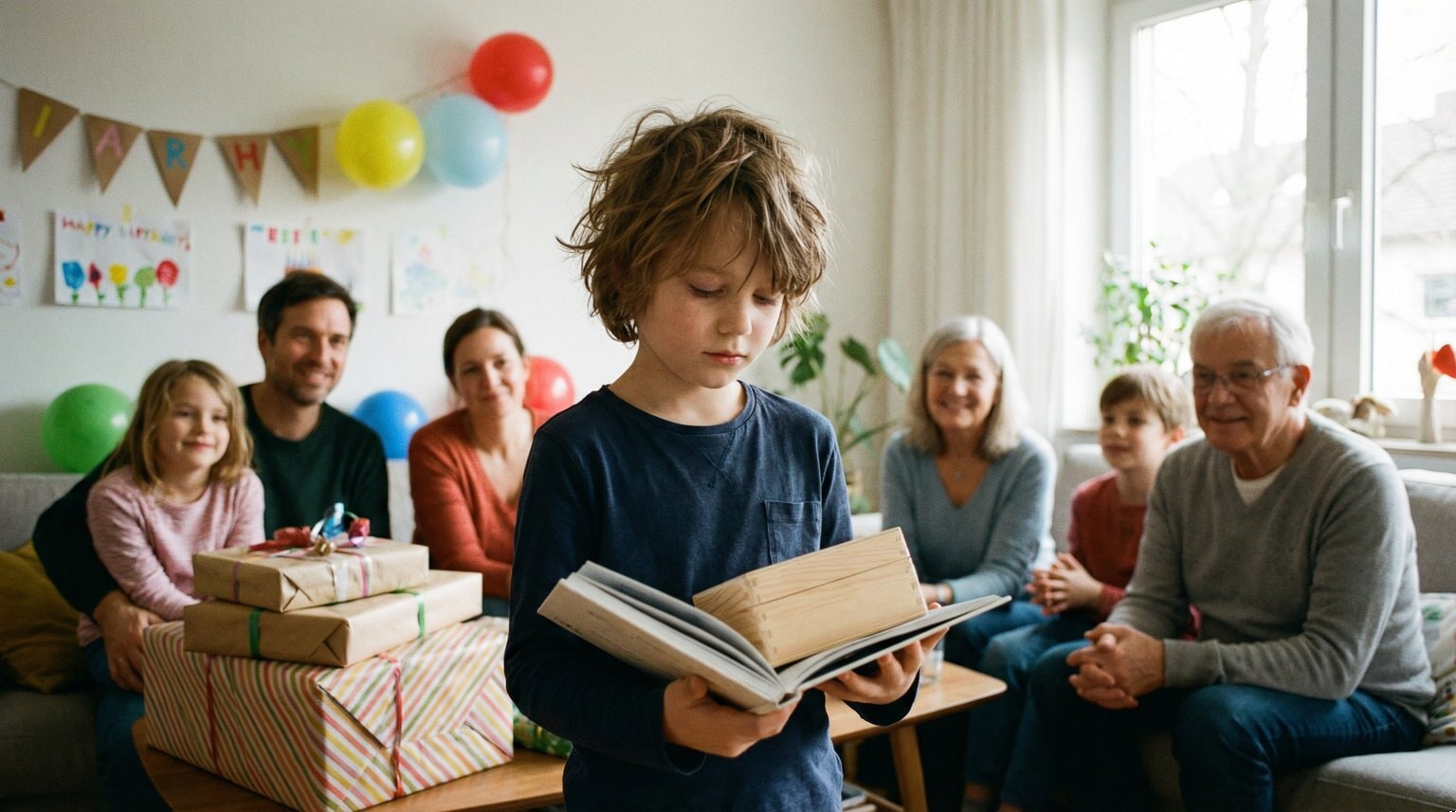
These rituals create meaningful touchpoints around gift-giving events.
Birthday Gratitude Practice
Before the party chaos begins, have your child name three people they’re grateful for and why. At the party’s end, before cleanup, share one specific thing you appreciated about the celebration.
Holiday Gift-Receiving Rituals
Instead of a gift-opening frenzy, try pacing: one gift at a time, with a pause between each to notice what was given and who gave it. Even a 30-second pause shifts the experience from consumption to appreciation.
Script for before gift opening: “Each gift is from someone who thought about you. Let’s take our time and notice each one.”
Back-to-School Gratitude Intentions
At the start of each school year, have your child write three things they’re grateful for from last year and three things they hope to appreciate about the coming year. Keep it—and revisit at year’s end.
Making Rituals Stick
Research published in Frontiers in Psychology (Bohlmeijer et al., 2022) found that weekly gratitude exercises and daily five-minute meditations produced significant boosts in well-being after approximately one month of practice. EarlyYears.tv’s research compilation found that behavioral changes—like spontaneous thank-yous and noticing others’ efforts—emerge within 3-6 months.
The one-month minimum rule: Don’t expect results before week four. And don’t start five rituals at once—pick one, establish it, then consider adding another.
Habit-stack: Attach your gratitude ritual to something you already do. Bedtime routine? Add gratitude before stories. Family dinner? Add it before eating.
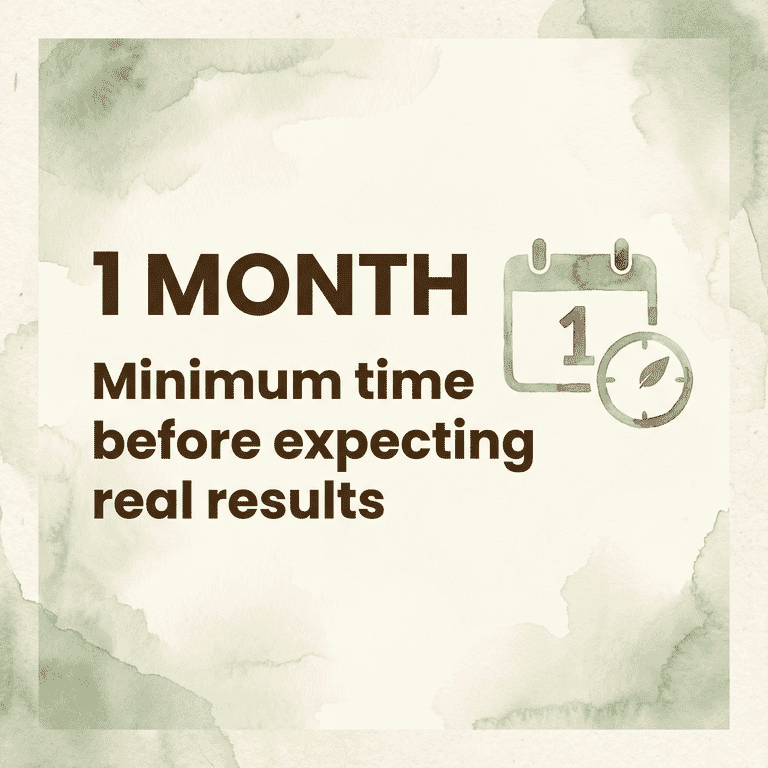
When you miss days: Just restart. We’ve abandoned and restarted our bedtime gratitude practice probably four times. Each restart counts. The research shows gains are sustained for at least six months even after formal practice ends—so imperfect consistency still matters.
When Children Resist (And What to Say)
Resistance isn’t defiance—it’s developmental. My teenagers roll their eyes. My 4-year-old says “I don’t know.” This is normal.
For shallow answers like “I’m grateful for candy”:
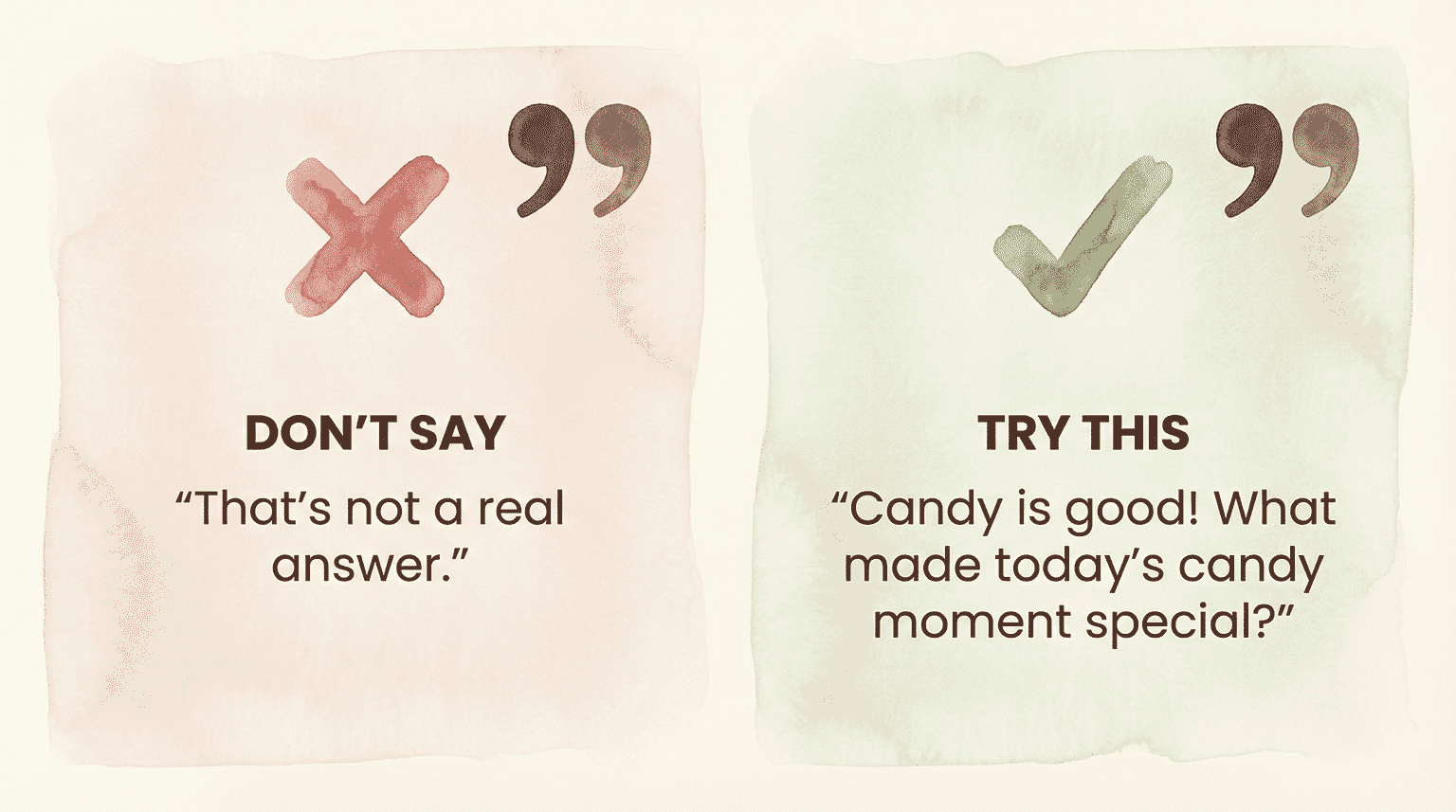
For “nothing good happened today”:
Kelly Boland, PhD at St. Louis Children’s Hospital, offers this modeling approach:
“Sometimes I feel like nothing good happened during the day, too. But then I remember, I can usually find something small to be grateful for.”
— Kelly Boland, PhD, St. Louis Children’s Hospital
Try: “I hear you. Today felt hard for me too. But I noticed the sun was warm at lunch—that was one small good thing. What’s one tiny thing, even if it feels silly?”
When to pause vs. persist: If your child is melting down or exhausted, skip it. Forcing gratitude backfires. But if it’s general resistance, stay consistent. Research from St. Louis Children’s Hospital emphasizes avoiding guilt trips—and reassessing timing to find more receptive moments.
Signs It’s Working
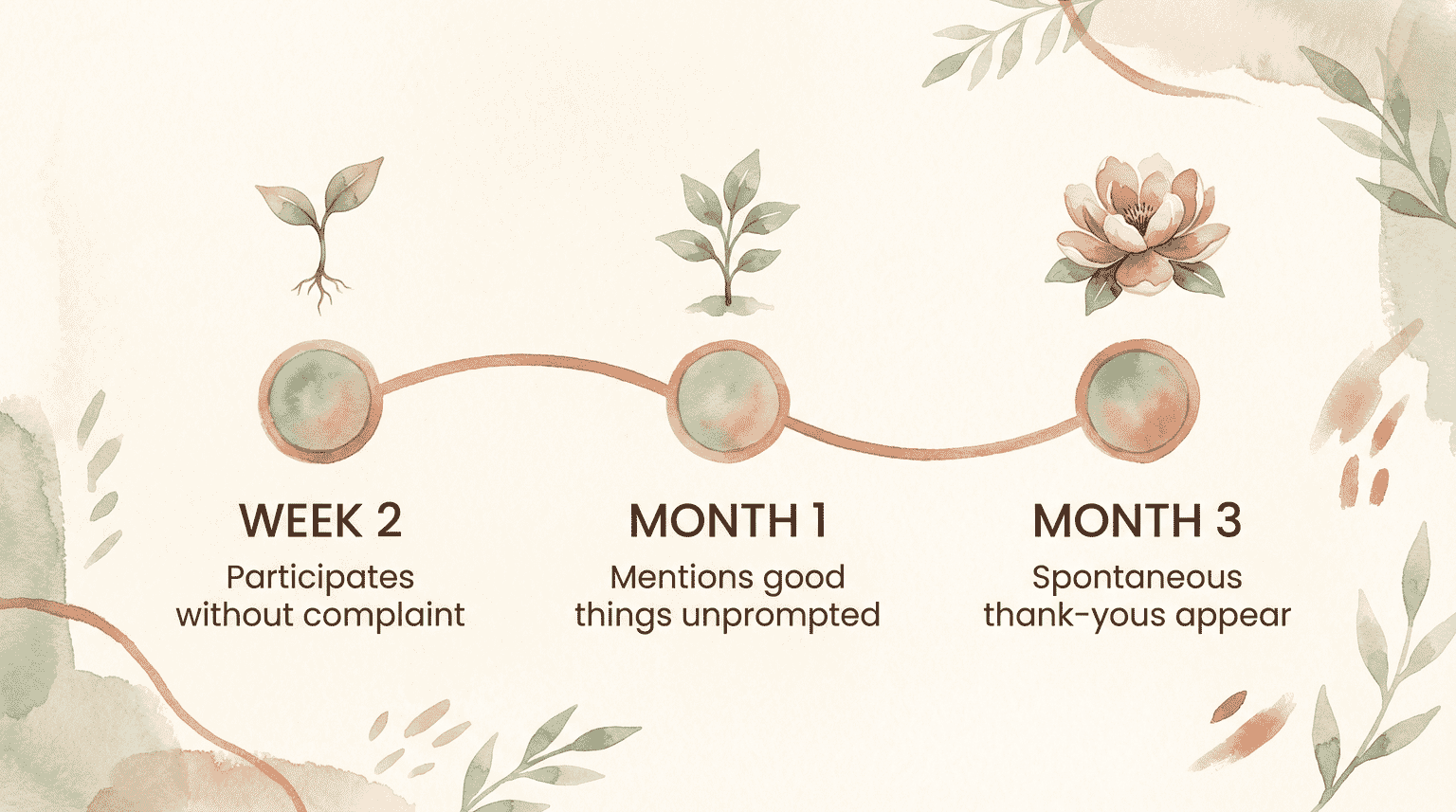
Week 2: Your child might start participating without complaint (even if answers are still surface-level).
Month 1: You may notice your child spontaneously mentioning something they liked about their day—outside of ritual time.
Month 3: Look for unprompted thank-yous, noticing when others do kind things, or gratitude mentioned during difficult moments (“At least we got to…”).
A 2024 analysis from Possibilities for Change found that gratitude practices activate the prefrontal cortex—the region responsible for impulse control and emotional regulation. Youth engaging in regular gratitude exercises reported higher life satisfaction and lower stress.
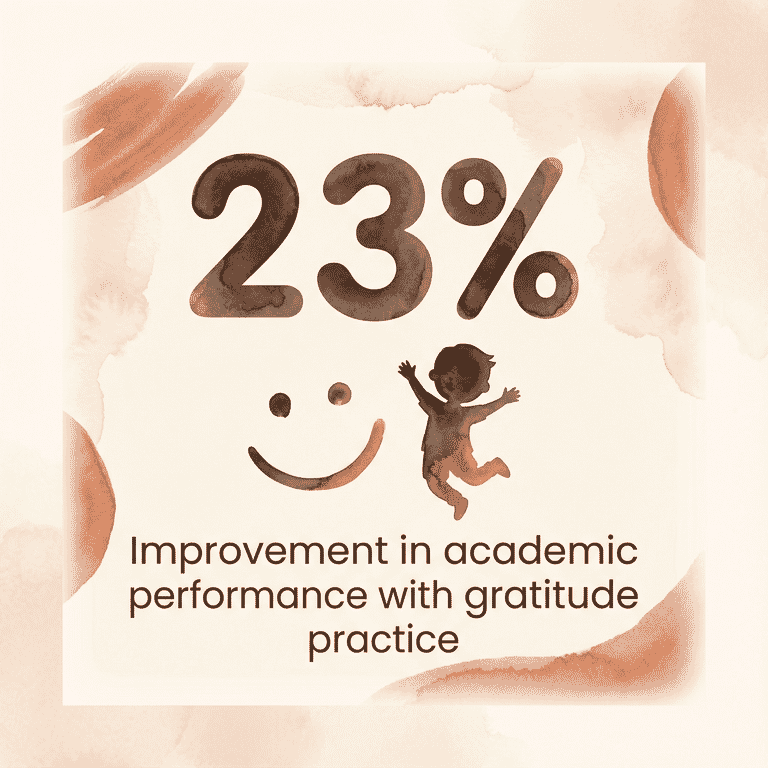
What NOT to expect: Children won’t transform overnight. The 23% improvement in academic performance documented in children with consistent gratitude practices happens over time, not weeks.
Stay patient, stay consistent, and watch for the small shifts that signal the muscle is growing.
Frequently Asked Questions
How long does it take for gratitude practice to work?
Meaningful benefits typically appear after about one month of consistent practice. Behavioral changes—like spontaneous thank-yous and noticing others’ efforts—emerge within 3-6 months. The good news: gains are sustained for at least six months even after formal practice ends.
At what age can kids understand gratitude?
Children can learn to say “thank you” by age 3, but true gratitude understanding—recognizing that kindness is a choice someone made—begins around ages 4-5. By age 7-8, children develop perspective-taking abilities that enable empathy-driven appreciation.
How do I teach my child to say thank you and mean it?
Move beyond the automatic “say thank you” prompt. Help children notice the effort behind kindness, think about why someone did something nice, and feel genuine appreciation before expressing thanks. Specific gratitude (“thank you for remembering I love dinosaurs”) produces more authentic appreciation than generic thanks.
What are good gratitude activities for families?
The most effective family rituals include nightly bedtime sharing (each person names 3 good things), dinner table appreciation rounds, and weekly gratitude jar reviews where everyone reads collected notes together. Shared experiences produce stronger effects than individual practice alone.
Join the Conversation
Which gratitude rituals have stuck at your house? I’m curious whether it’s bedtime sharing, dinner table rounds, or something else—and how long it took before your kids stopped resisting.
I read every comment and love learning what works in different families.
References
- EarlyYears.tv – Gratitude Practices for Young Children – Developmental timelines and research-backed benefits
- Psychology Today – Gratitude and Neuroscience – Neuroscience of gratitude and mason jar research
- CHOC Health – Practicing Gratitude Benefits Kids’ Mental Health – Gratitude as muscle analogy and family strategies
- Michigan State University Extension – Thankfulness is More Than Words – Gratitude journaling and authentic appreciation
- Possibilities for Change – From Brain to Heart – Youth mental health and brain activation research
- St. Louis Children’s Hospital – How Gratitude Supports Emotional Growth – Handling resistance and emotional benefits

Share Your Thoughts