
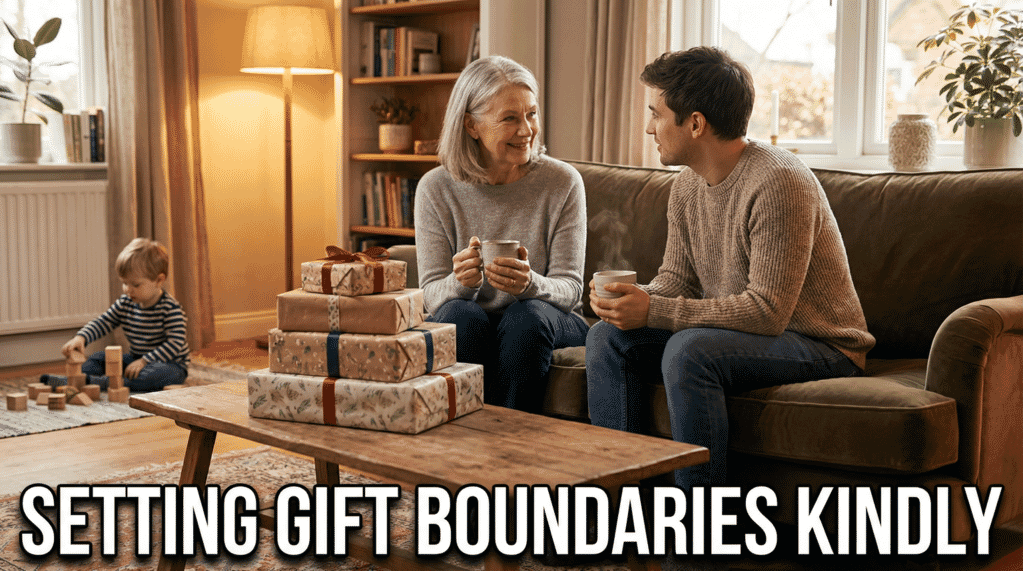
The doorbell rings. Through the window, you see Grandma unloading shopping bags from the trunk—one, two, five, seven. Your child is already bouncing at your elbow. You have approximately four seconds to figure out what to say.
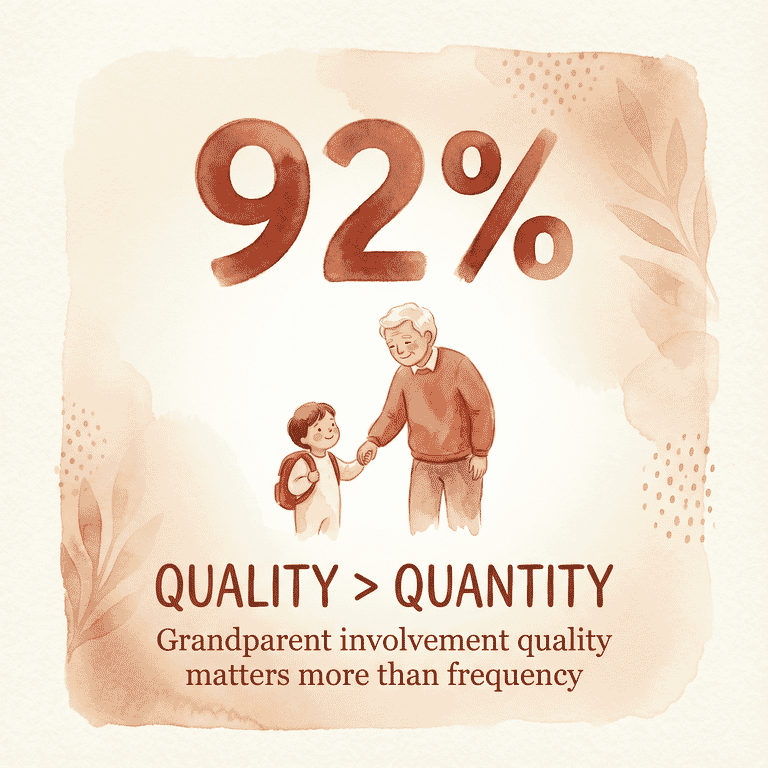
Here’s the thing: those bags represent love. A 2024 study from the Journal of Family Psychology found that the quality of grandparent involvement matters more than quantity—but Grandma doesn’t know that yet. Your job in this moment isn’t to educate. It’s to redirect with warmth.
Key Takeaways
- Use the three-sentence script: gratitude first, gentle boundary second, relationship emphasis third
- Give kids agency by letting them choose TWO gifts now, saving the rest for later
- Follow up after visits to redirect toward experiences like baking days or park trips
- Quality of grandparent involvement matters more than quantity of gifts—learn why in grandparents spoiling balance
The Three-Sentence Script
As she walks through the door, try:
“This is so generous—thank you for thinking of them. We’re working on helping them really savor each gift, so we might open a few now and save the rest for later. They’ve been counting down the minutes to see you.”
That’s it. Gratitude first. Gentle boundary second. Relationship emphasis third.
Why this works: You’ve acknowledged her effort, explained your approach without blame, and reminded everyone—including your child—that Grandma herself is the real gift.
Research backs this up. The relationship matters far more than what’s in the bags. When you emphasize connection, you’re speaking to what actually benefits your child.
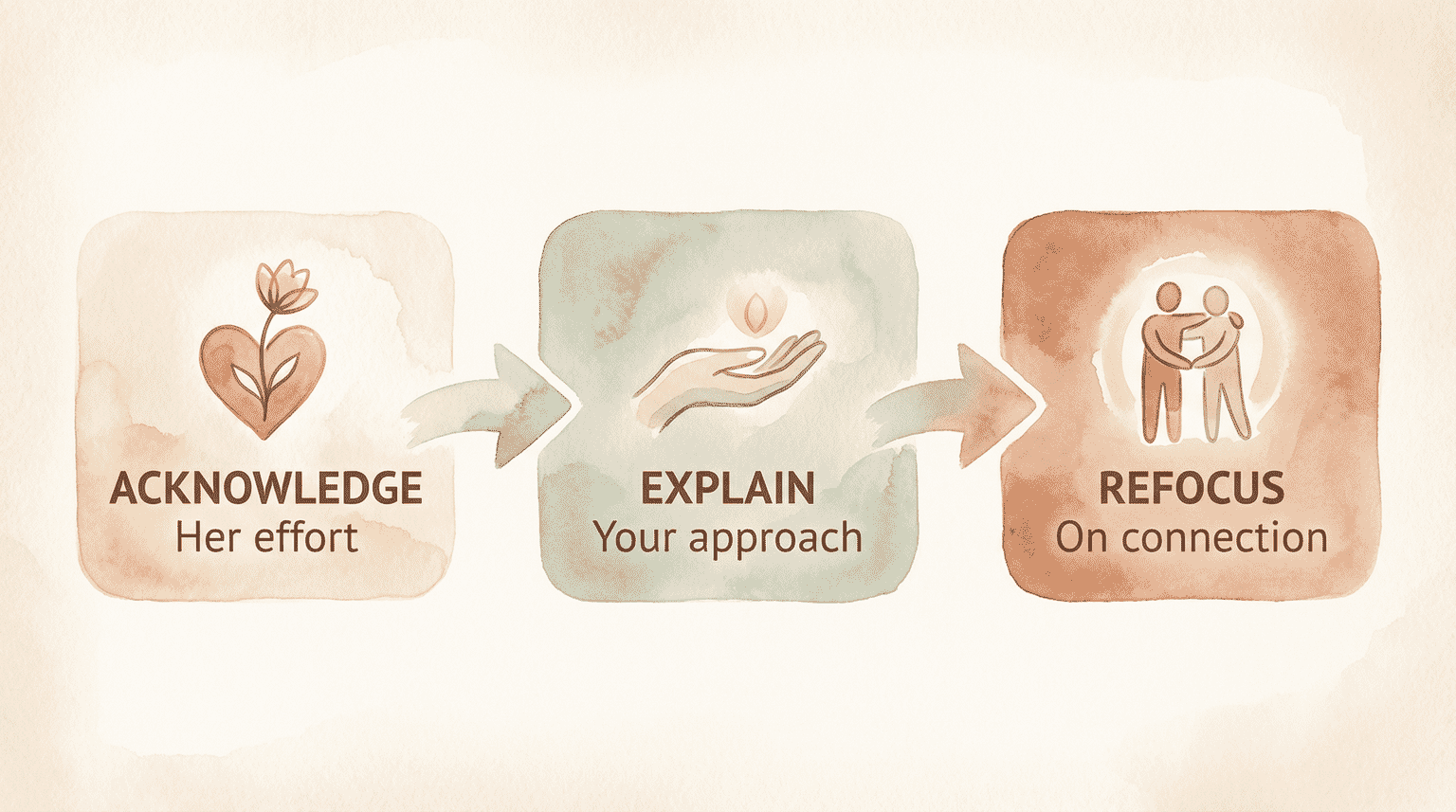
Notice what you’re not doing here: lecturing, criticizing, or making her feel unwelcome. You’re simply setting the stage for a calmer gift-opening experience while keeping the focus on what truly matters.
What to Do with Your Kid

Your child is vibrating with anticipation. Don’t pretend the bags don’t exist.
Quick redirect: “Let’s pick TWO presents to open now, and the rest will be special surprises for later this week.” Then immediately pivot: “First, show Grandma what you built yesterday!”
This gives your child agency (they chose which two), sets an expectation (more coming later), and shifts focus to connection over consumption.
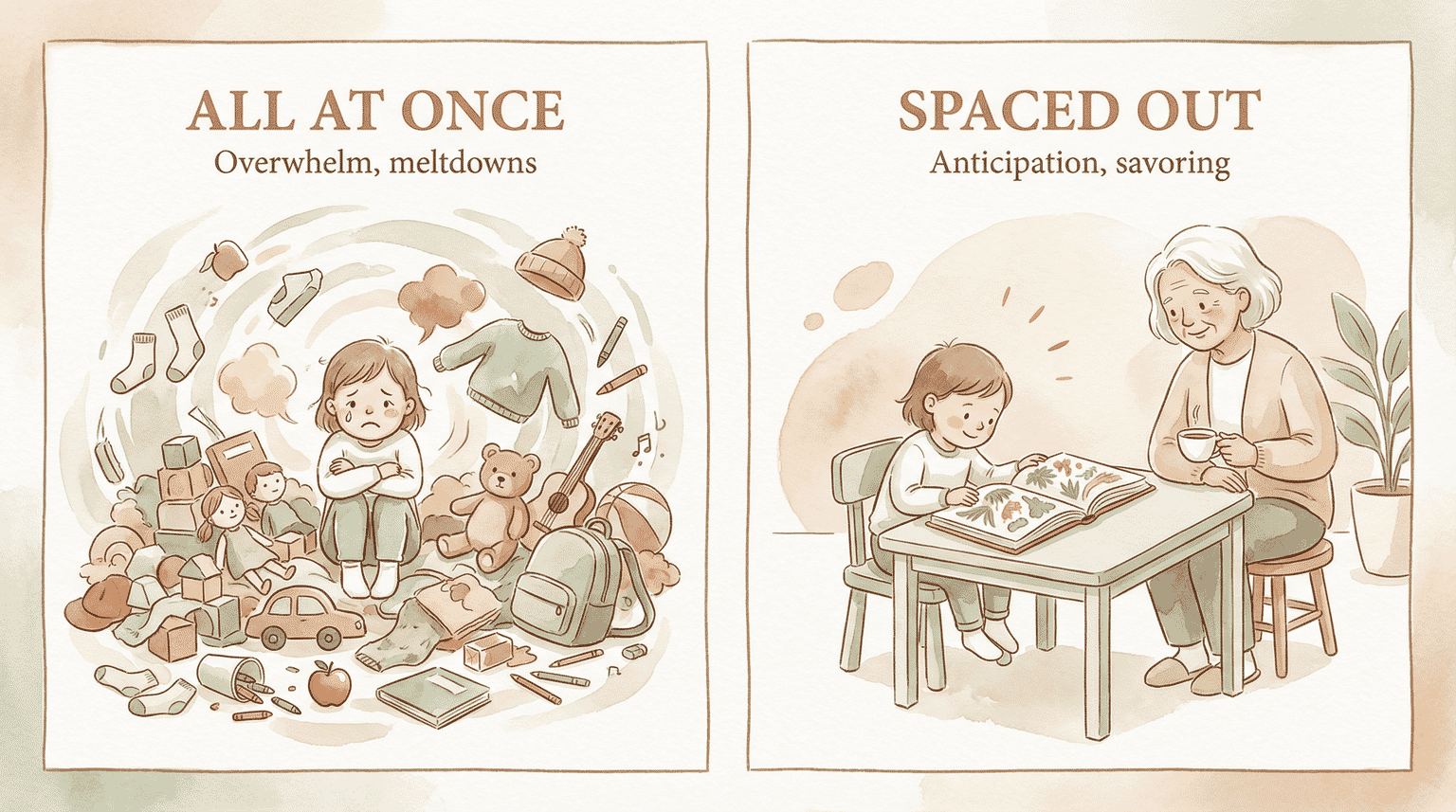
Kids actually enjoy anticipation. When they know more surprises are coming, the excitement extends far beyond that doorbell moment. And honestly? It makes each gift feel more special.
The Follow-Up Line
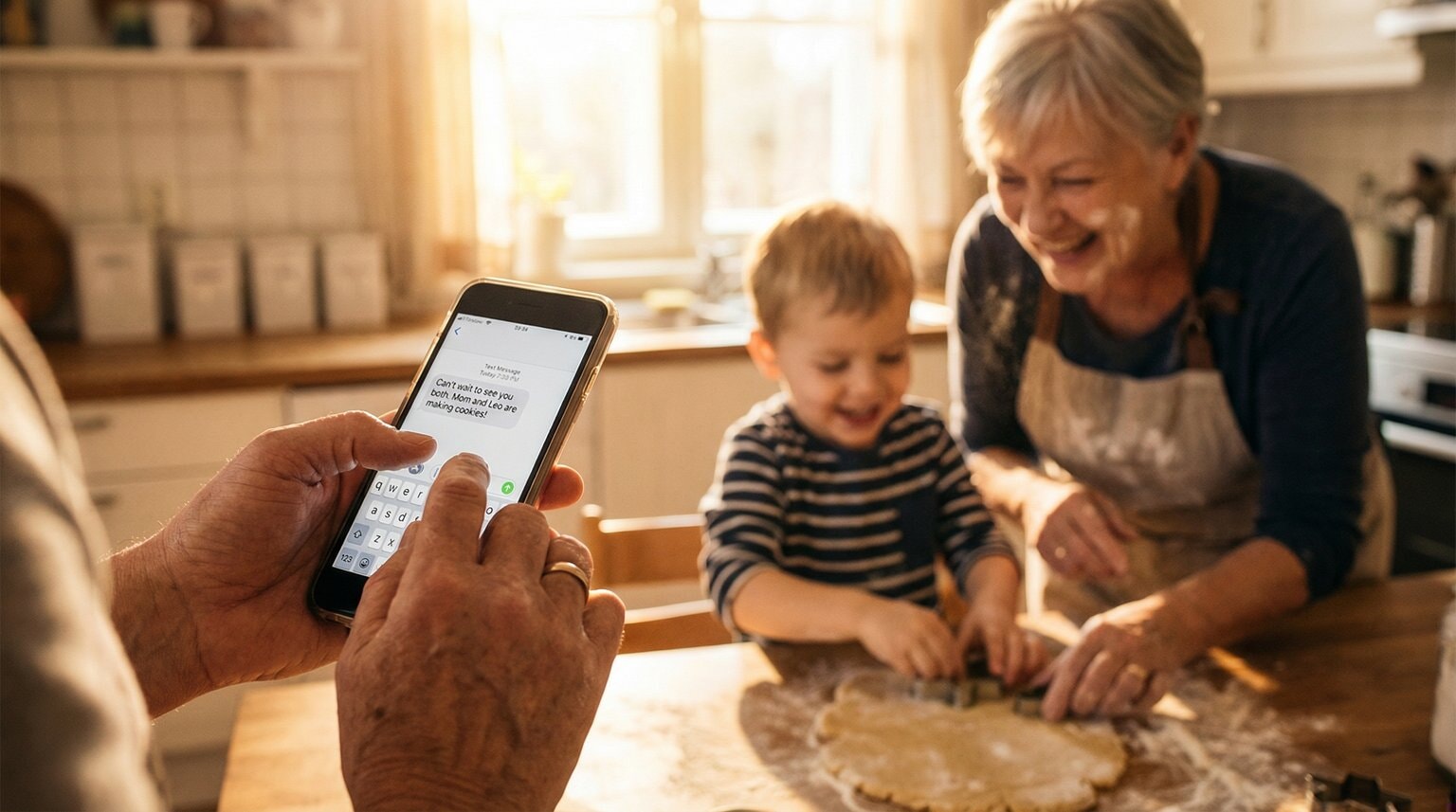
After the visit—ideally within a day or two—send a text or make a quick call:
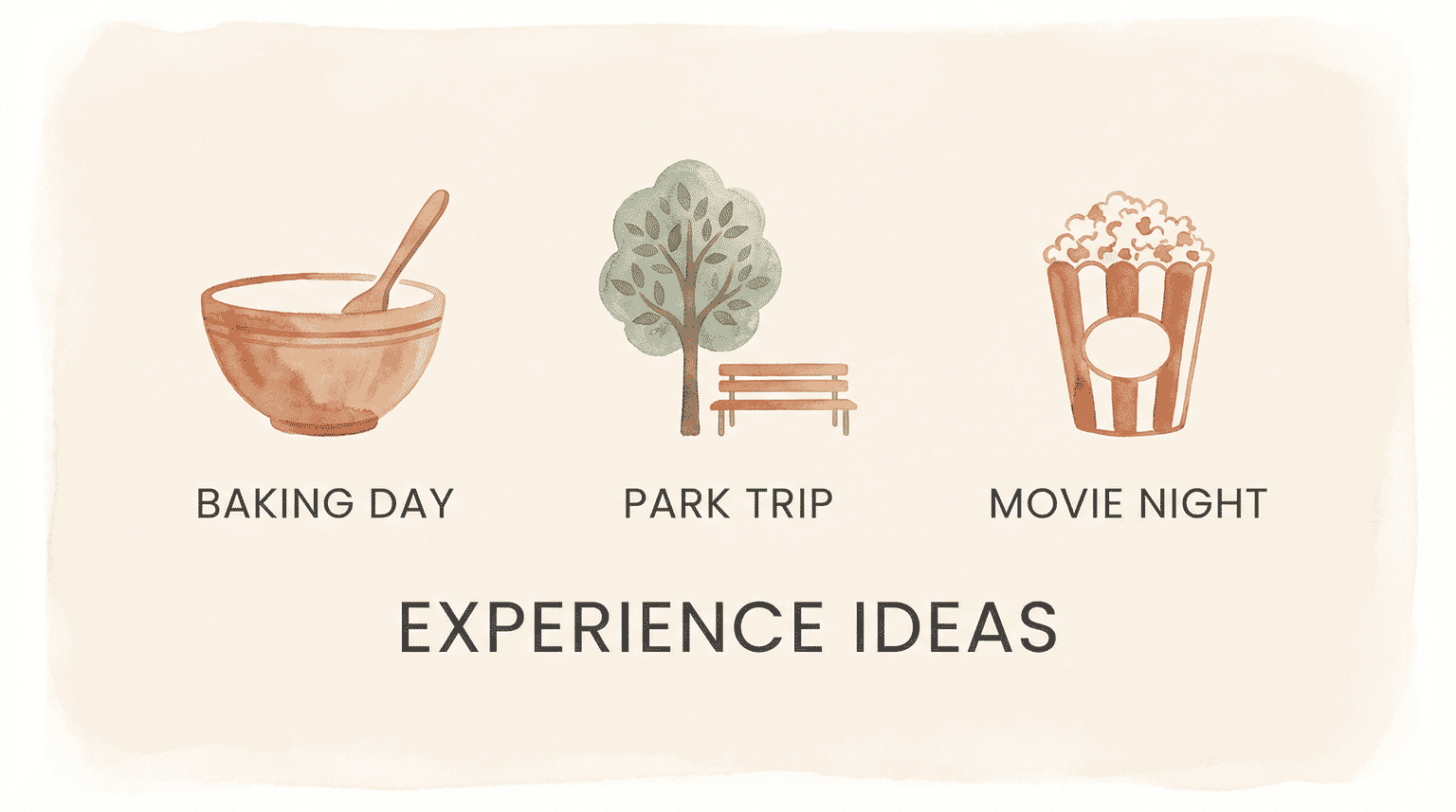
“The kids are still talking about the time with you—that’s what they’ll remember most. For next time, they’d love a baking day together (or trip to the park, or movie night). Even more than new toys.”
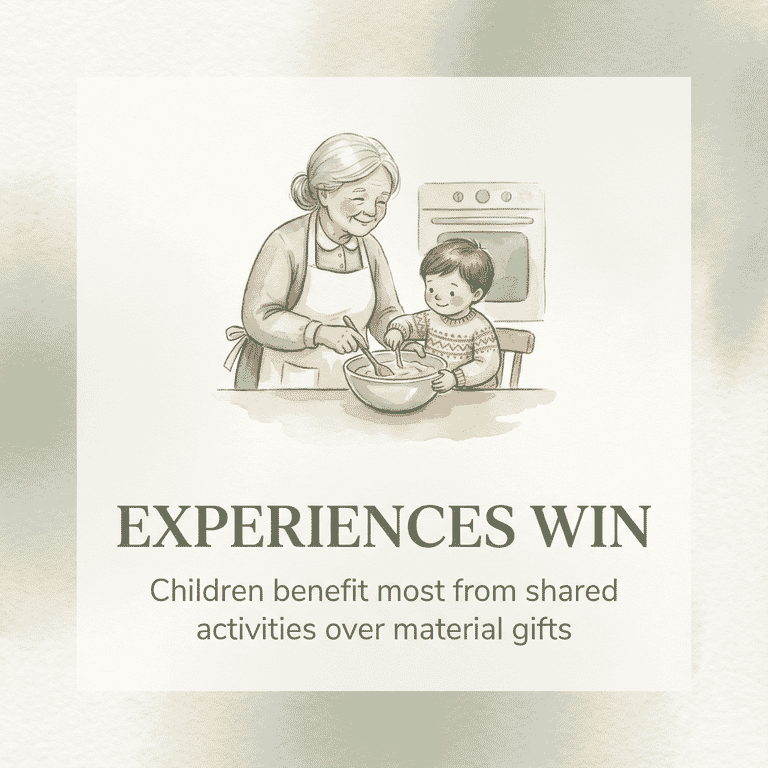
Research consistently shows children benefit most when grandparent relationships center on shared experiences rather than material gifts. You’re not limiting her involvement—you’re redirecting it toward what actually matters.
The key is framing this as what your kids want, not what you’re restricting. Grandma wants to make them happy. Show her how.
For the full conversation guide, including scripts for resistant grandparents, see our complete resource on talking to grandparents about gifts.
Need help with the bigger picture? Our guide to managing gift overload covers what to do with all those bags once they’re inside.
Your Turn
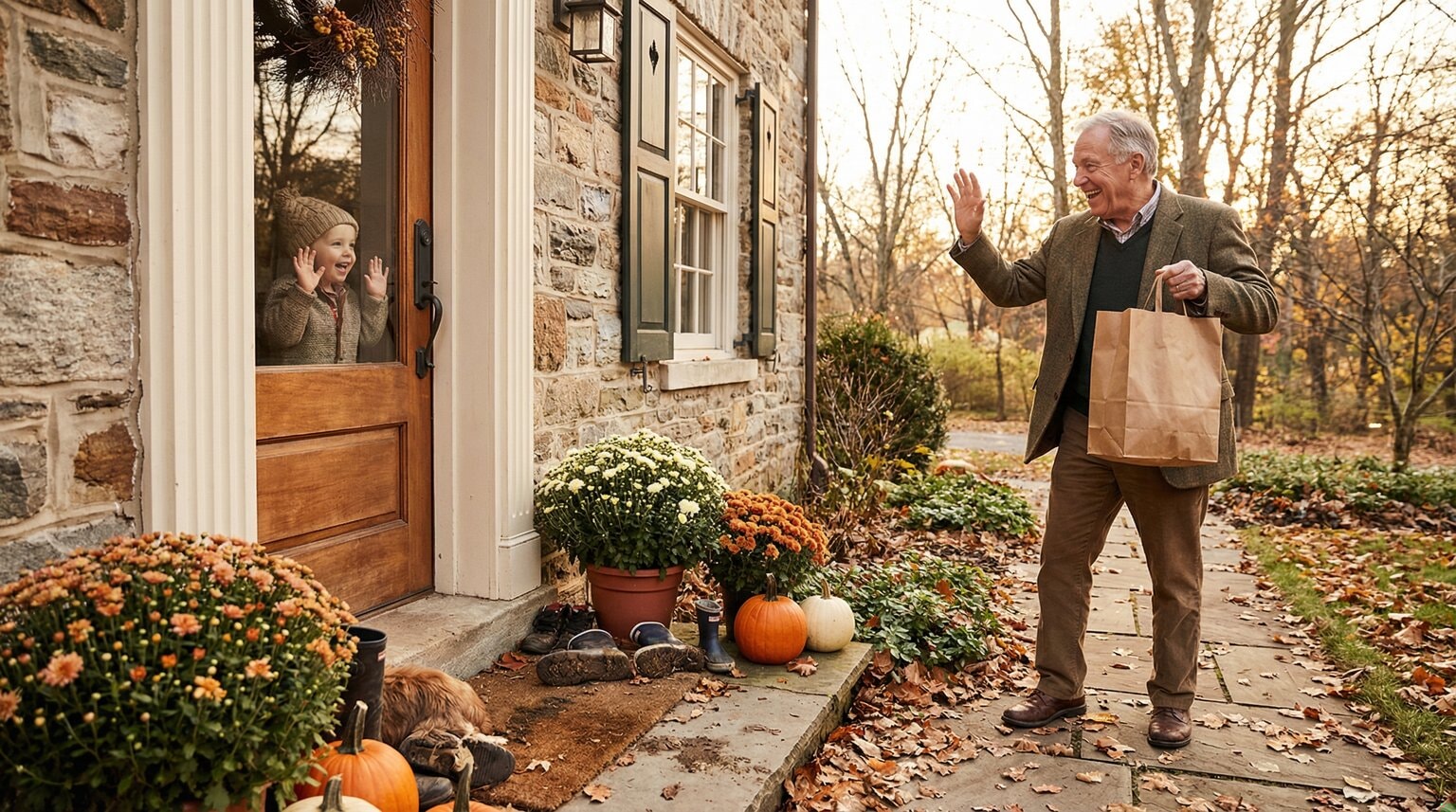
What do you say when grandma shows up loaded down? I’d love to hear the scripts that have worked in real time—not the planned conversations, but the doorstep moments.
Your doorstep disasters might save another parent’s sanity.
References
- Xu et al., Journal of Family Psychology (2024) – Grandparental involvement patterns and child development
- PMC/NIH (2025) – Intergenerational parenting alignment research

Share Your Thoughts