
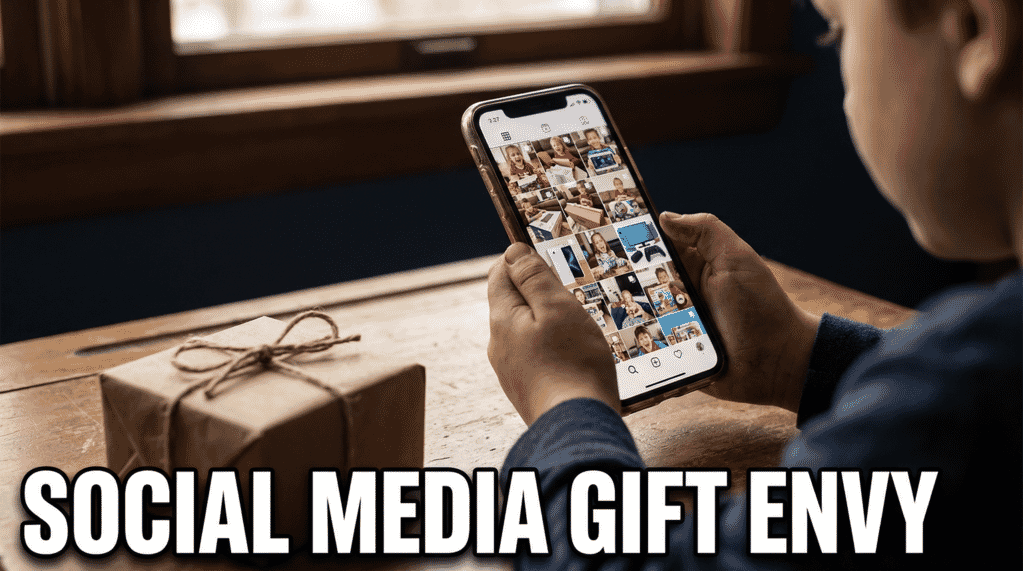
Your daughter scrolls through her tablet after her birthday party, sees a friend’s post showing off the latest must-have toy, and suddenly the gifts piled on her bed feel like nothing. “She got that? Why didn’t I get that?”
This is gift FOMO—the fear of missing out applied to presents—and in the digital age, it’s hitting our kids harder than ever. Researchers define FOMO as “a pervasive apprehension that others might be having rewarding experiences from which one is absent.” For children, that apprehension increasingly extends to what others have, not just what they’re doing.

Here’s what makes this generation different: your child sees peers’ gifts instantly, often within minutes of unwrapping. And as parenting expert Irin Rubin explains, children perceive social media as “100% real”—they can’t distinguish those curated highlight reels from actual life.
When I watch my 10-year-old compare her birthday haul to what she sees online, I’m watching a brain that hasn’t developed the filter adults take for granted.
The good news? Research points to specific strategies that actually work. Here are eight you can start using today.
Key Takeaways
- 44% of FOMO is driven by belonging needs—your child isn’t being materialistic, they’re seeking connection
- Validate feelings first, problem-solve second—dismissing emotions makes FOMO worse
- Restricting screens alone doesn’t work—active conversation is the only strategy research supports
- Give kids age-appropriate control over gift decisions to build autonomy
- Model the contentment you want to see—kids watch how you respond to what others have
1. Recognize the Signs Early
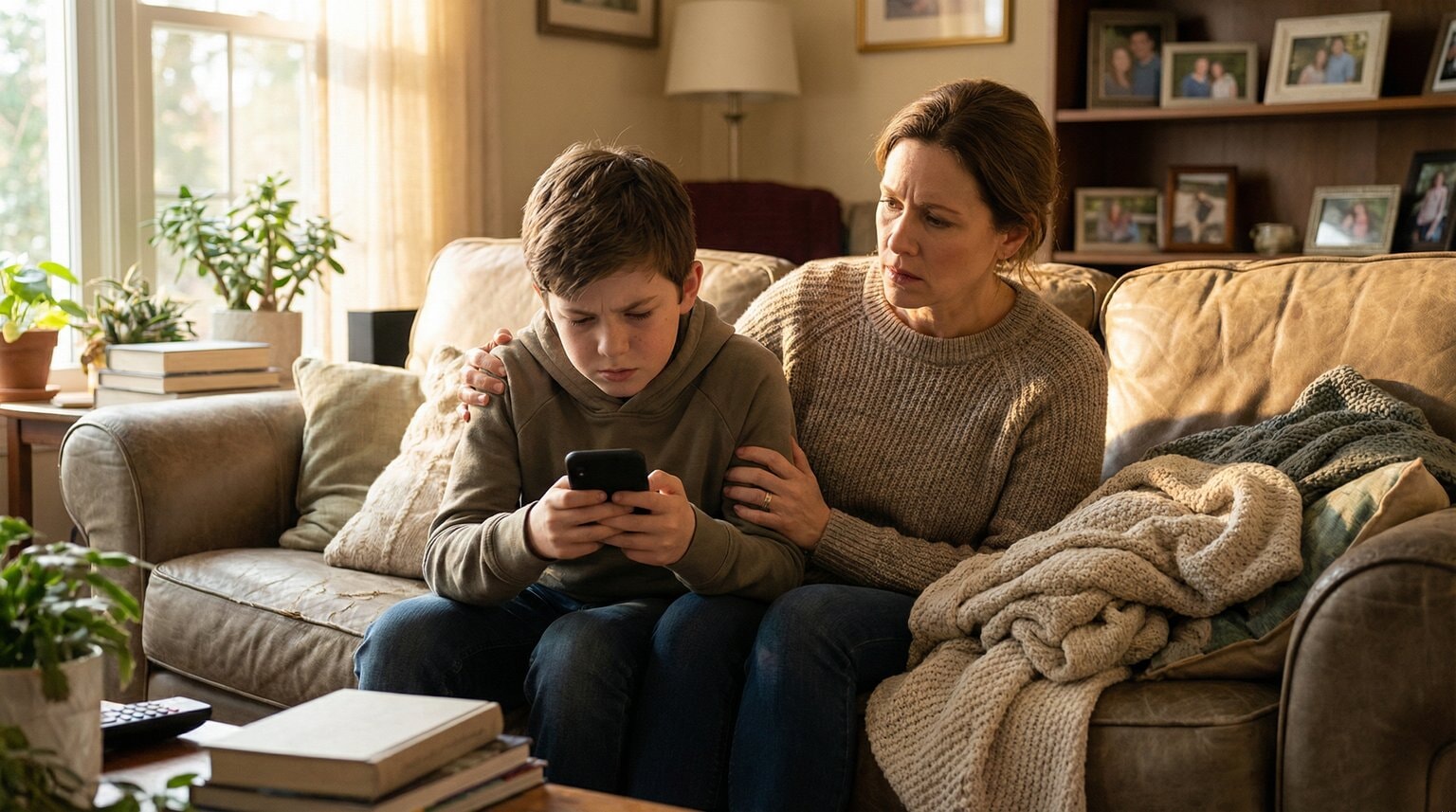
Gift FOMO doesn’t always announce itself. According to clinical psychologist Dr. Kanchi Wijesekera, “Sometimes children will say it outright—’Everyone else is doing this but me!’—but more often, it shows up in quieter ways.”
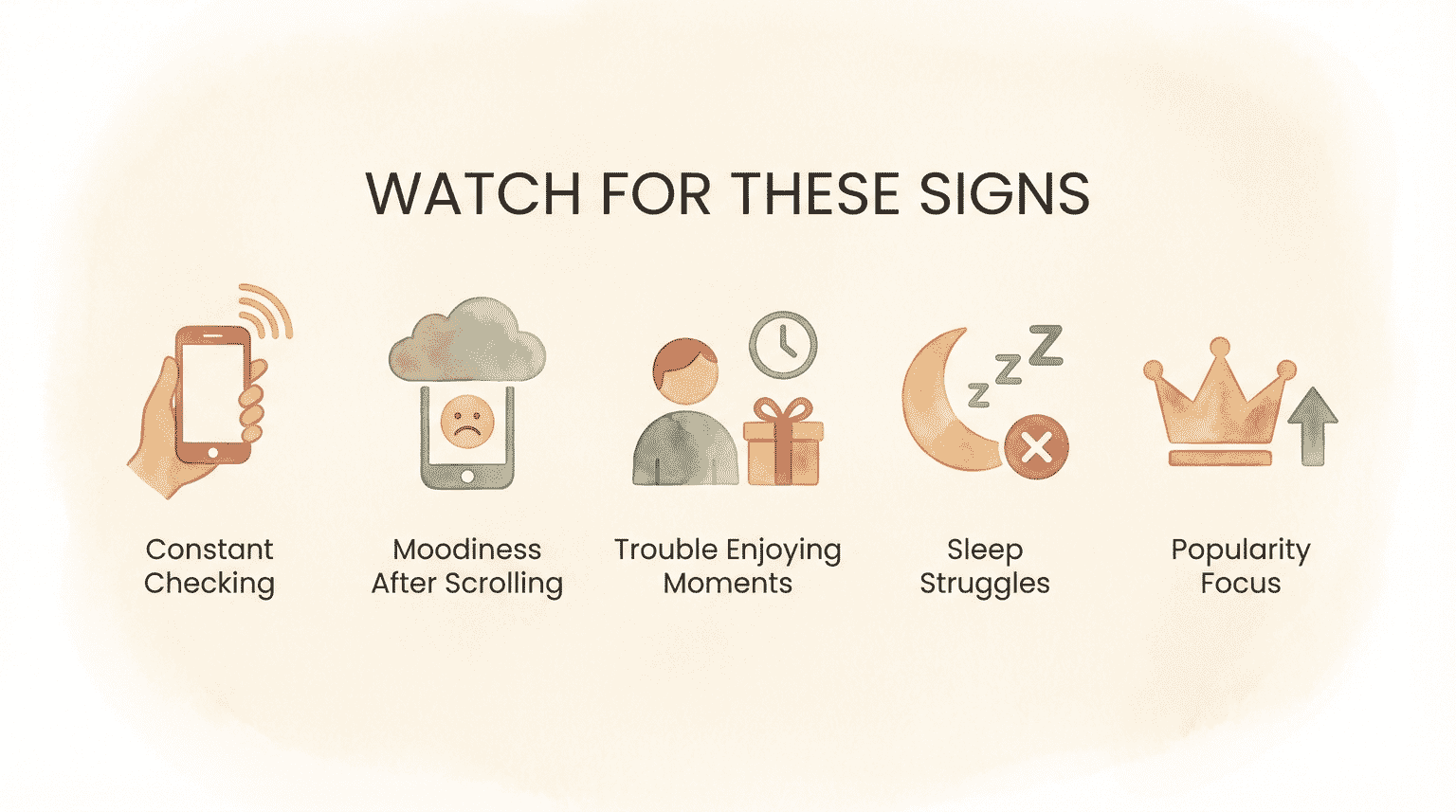
Watch for these signs:
- Constant checking of what friends received or posted
- Anxiety or moodiness after time online, especially around gift-giving occasions
- Trouble enjoying the moment—already thinking about what they didn’t get
- Sleep struggles from replaying comparisons
- Extra focus on popularity or invitation status
In my house, I’ve learned that the quiet comparison is often more concerning than the loud complaint. My 12-year-old rarely says “that’s not fair”—instead, she gets withdrawn after scrolling through birthday party posts.
A 2025 study in PLoS One found that younger adolescents report higher FOMO than older teens—age actually decreases FOMO as self-assurance develops. So if your 8-year-old seems more affected than your 14-year-old, that’s developmentally normal.
2. Validate Before You Problem-Solve
Here’s the counterintuitive truth: dismissing your child’s feelings makes FOMO worse.
Research published in Hindawi (2022) found that the need to belong accounts for 44% of what drives FOMO. Your child isn’t being materialistic—they’re experiencing a fundamental human need for connection and acceptance.
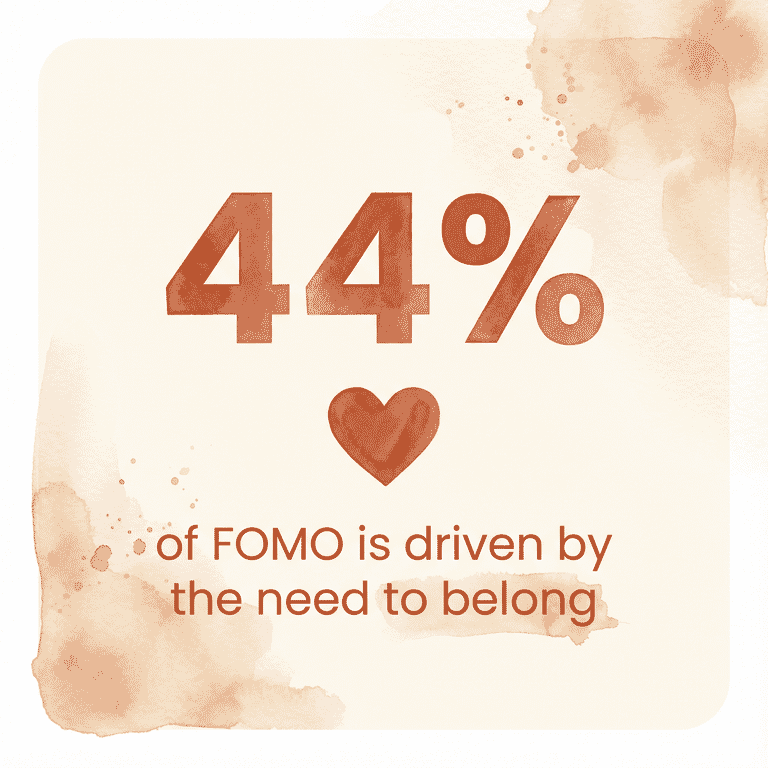
When they see a friend’s gift and feel envious, they’re really feeling “Am I part of the group?” This isn’t about wanting more stuff—it’s about wanting to fit in.
Understanding mimetic desire—wanting what others want—helped me realize my kids aren’t being greedy. They’re being human.
Dr. Wijesekera advises that “naming and normalizing your child’s feelings can distance them from the feeling, and the feeling will have less power over them.”
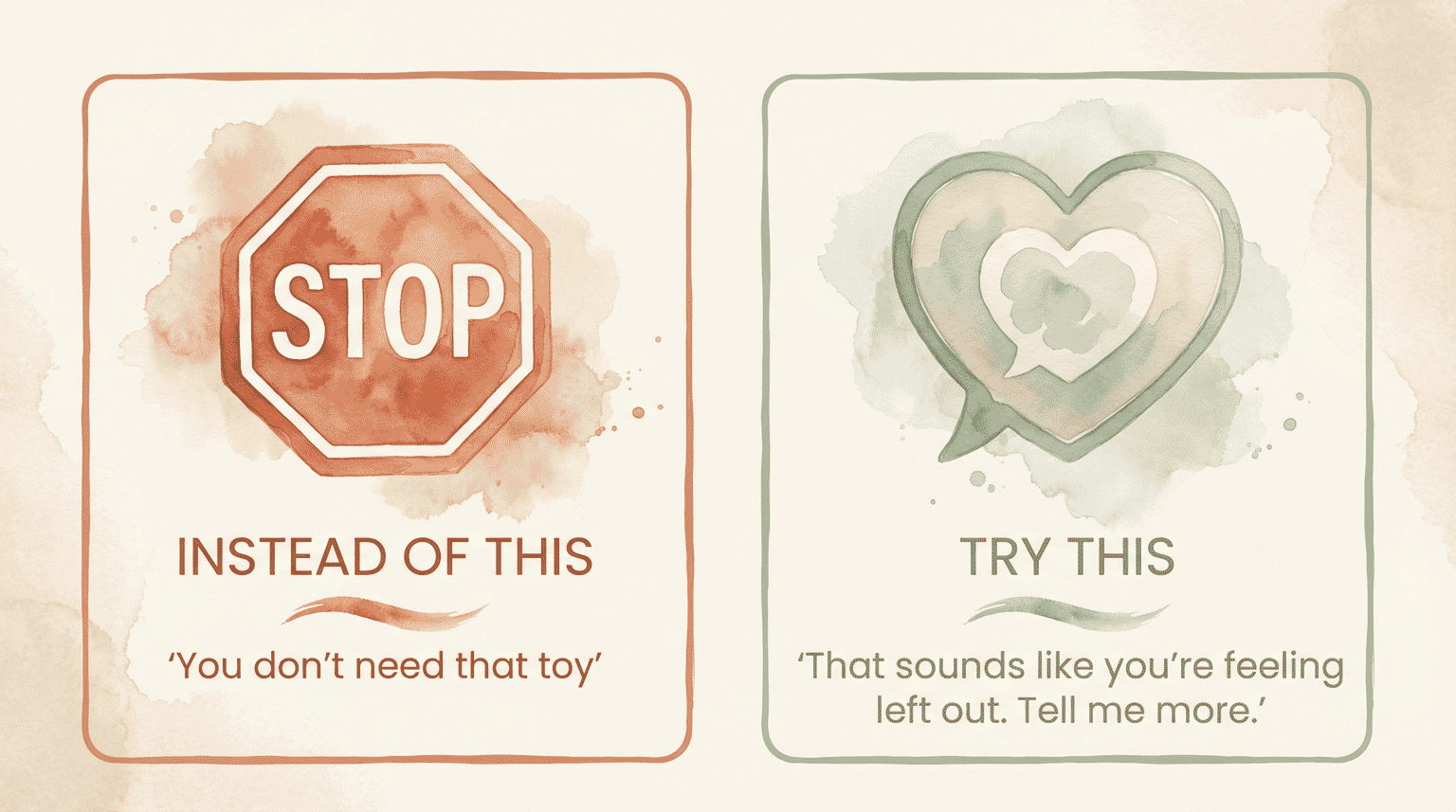
The urge to immediately explain why they don’t need that toy is strong—trust me, with eight kids, I’ve fought that urge hundreds of times. But validation first, problem-solving second.
3. Give Them Appropriate Control

Autonomy is protective against FOMO. When children feel they have choice and control, the intensity of “missing out” decreases.
A 2025 systematic review found that FOMO links to unmet needs for competence, autonomy, and relatedness. Address the autonomy piece by involving kids in gift-related decisions:
For younger children (4-7): “Would you like to open presents before or after cake?”
For elementary age (8-10): “You can choose three things for your birthday list. What matters most to you?”
For tweens (11-13): “Here’s our gift budget. How would you like to use it?”
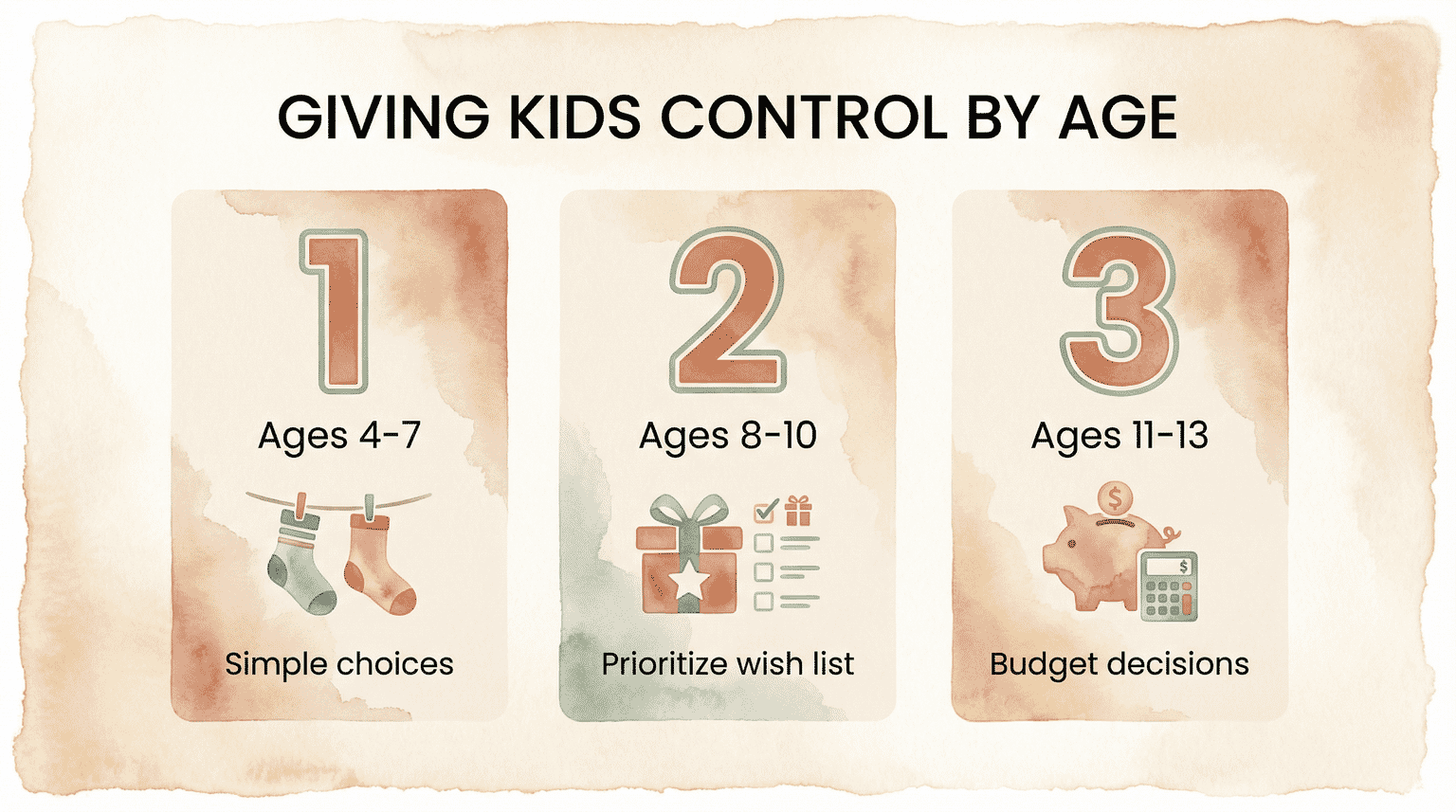
When my 8-year-old helped plan her birthday wish list, she became more invested in what she chose than what she missed. The shift was subtle but real.
4. Reframe “Missing Out” as “Choosing In”
Simply Psychology research explains that loss aversion—the tendency to feel losses more strongly than equivalent gains—drives FOMO. Your child feels the “loss” of not having something more intensely than the gain of what they do have.
The antidote? Introduce JOMO: the Joy of Missing Out.
“Rooted in social boundaries, JOMO can help youth realize that there is value in slowing down and that joy can be found in choosing rest, solitude, or personal time over constant social engagement.”
— Leah Jacobs, LMHC, Founder of the Digital Wellness Project
The language shift matters. “Missing out” frames it as loss. “Choosing” frames it as agency. With practice, kids internalize this—I’ve heard my 15-year-old use “I’m choosing to skip that” about social events, a phrase she definitely picked up from our conversations.
When your child says: “I wish I got what Tyler got.”
Try: “What did you choose instead? What are you excited about with your gifts?”
5. Practice Presence Together

Mindfulness isn’t just a buzzword—it actually moderates the relationship between FOMO and impulsive behavior. The 2025 systematic review found that mindfulness practices buffer against FOMO-driven compulsive responses.
You don’t need a formal meditation practice. Simple presence exercises work:
- Gift opening ritual: Before opening the next present, pause and really look at what’s in hand
- Three details game: What are three things you notice about this gift right now?
- Gratitude pause: Before bed on gift occasions, name one gift you’re genuinely glad you have (and why)
With younger kids, I make this playful: “Let’s be detectives and notice five things about this present before opening the next one.” With my teens, it’s more straightforward: “What’s one gift you’re actually glad you got?”
6. Talk About It, Don’t Just Restrict
This one surprised me: restricting screen time alone doesn’t work.
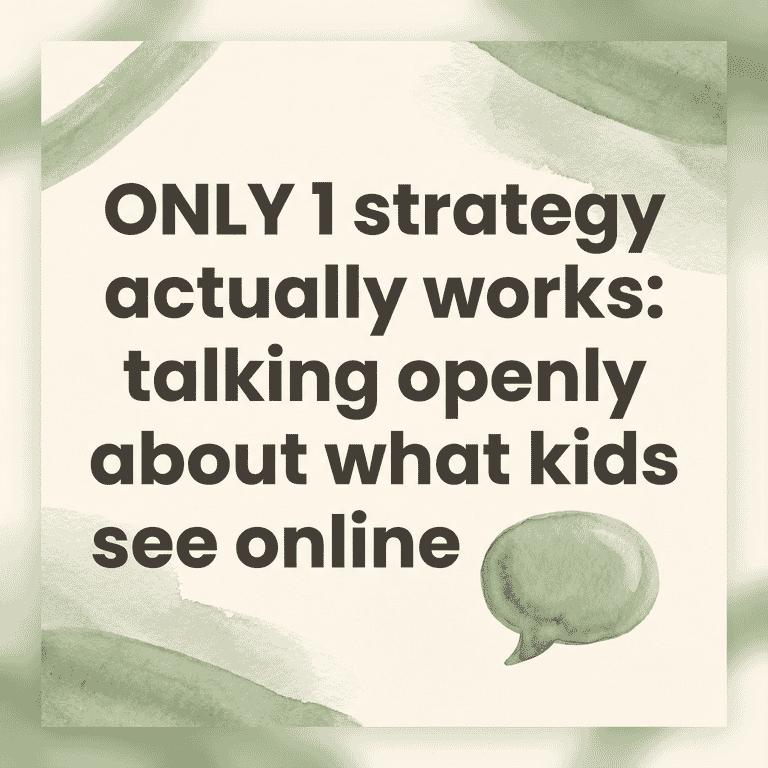
A 2024 study in the Journal of Youth and Adolescence examined parental mediation strategies and found that active mediation—discussing potential dangers and distortions—was the only strategy showing improved outcomes. Restrictive strategies regarding content actually showed positive correlation with negative consequences, possibly because “imposing restrictions could trigger active resistance.”
So instead of just limiting when your child can scroll, talk about what they’re seeing. The goal is ongoing conversation, not one-and-done lectures.
The study found that this protective effect was particularly strong for children who didn’t yet have their own devices—start these conversations early.
Try: “What did you notice about Jake’s birthday post? What do you think they didn’t show?”
7. Teach Media Literacy About Curated Content

Your child needs to understand that what they’re seeing isn’t real life—it’s the highlight reel.
Parenting expert Irin Rubin notes that children often see photos of friends “looking cool, attending parties or even flashing a new must-have gadget. What they’re not seeing is that these are very curated highlight reels and not real life for the most part.”
Ohio State University research found that FOMO about trends and possessions is linked to lower psychological, social, and financial well-being. Dr. Abbey Bartosiak, one of the study’s researchers, stated:
“Our findings are among the first to show the negative role that FOMO has on young consumers as they look to keep up with what’s fashionable.”
— Dr. Abbey Bartosiak, Ohio State University Researcher
The influencer marketing industry nearly doubled from 4,000 firms in 2019 to 7,300 in 2021. Your kids are being marketed to constantly.

For older kids navigating TikTok toy trends, media literacy conversations become even more essential.
My 12-year-old now points out when she thinks something’s “definitely an ad”—progress I wasn’t sure we’d make.
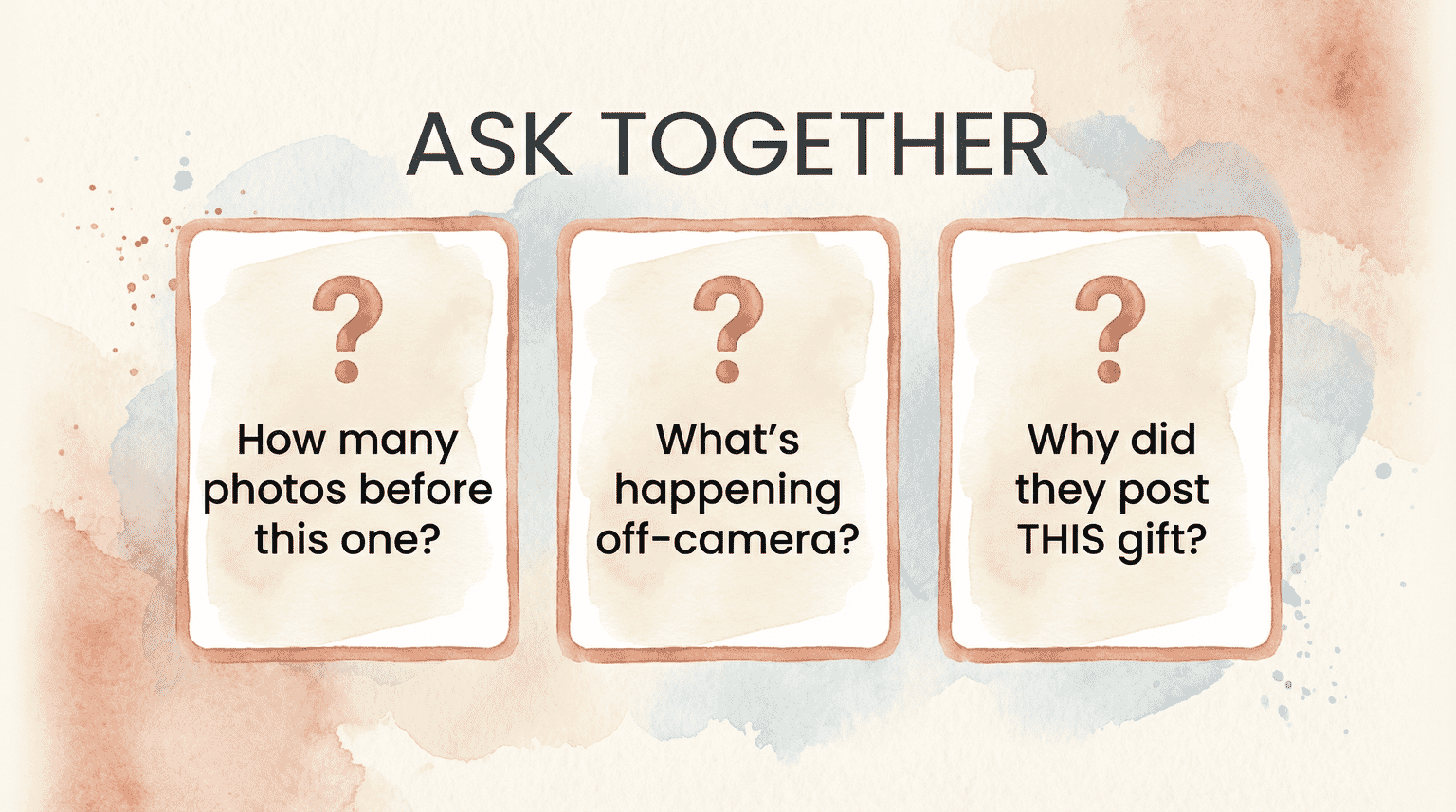
Questions to ask together:
- “How many photos do you think they took before picking that one?”
- “What might be happening off-camera?”
- “Why do you think they posted this particular gift?”
8. Model the Behavior You Want

This one’s humbling: research from 2024 found that parents’ consumption behavior directly impacts teens’ consumption patterns. Family environment quality links to FOMO levels.
Your children watch how you respond when a neighbor gets a new car. They notice if you scroll through social media comparing vacations. They hear your comments about what others have.
Ask yourself:
- Do I talk about what others have in envious terms?
- Do I reach for my phone when I’m feeling left out?
- Do I model contentment with what we have?
I’m not perfect at this—my kids have absolutely caught me comparing our kitchen to a friend’s renovation photos. But I try to narrate my own FOMO management out loud: “I noticed I felt a little jealous seeing that post. But I really love our home.”
Kids need to see that adults experience these feelings too, and manage them.
Quick Age Reference
| Age | Common Signs | Best Strategy Entry Points |
|---|---|---|
| 4-6 | “That’s not fair!” quantity focus | Strategies 2 (validate), 3 (give choices) |
| 7-9 | “Everyone has one” | Strategies 2 (validate), 6 (talk openly), 7 (media literacy) |
| 10-12 | Quiet comparison, brand awareness | Strategies 4 (reframe to JOMO), 7 (media literacy), 8 (modeling) |
The strategies that work best shift as kids develop, but the foundation stays the same: validate first, then guide.
When to Seek Professional Support
Gift FOMO is developmentally normal. But sometimes it signals something deeper that needs professional attention.
Consider reaching out to a counselor or therapist if you notice:
- Persistent sleep issues connected to social comparison
- Social withdrawal or avoiding friends
- Inability to enjoy present moments over extended periods
- Sudden drops in confidence or repeated statements about not belonging
- Changes in appetite or school performance following gift-giving occasions
As Ohio State researcher Cäzilia Loibl explains: “If you feel that you’re missing out on events or trends that your friends are involved in, it is not surprising that your well-being will be hurt.” If that hurt becomes persistent and unmanageable, professional support can help.

Over to You
How do you handle gift FOMO in your house? I’d love to hear whether limiting social media has helped—or whether the comparison problem shows up even without screens. Real strategies welcome.
Your FOMO strategies might be exactly what another parent needs to hear.
References
- Giancola et al. (2025), PLoS One – Adolescence and online vulnerability; FOMO and developmental factors
- Yin & Perry (2022), Hindawi – FOMO and belonging needs research
- Samsura & Rufaidah (2025), Society – Systematic review of FOMO and consumer behavior
- Simply Psychology – Psychology of FOMO and JOMO
- Fernández-de-la-Iglesia et al. (2024), Journal of Youth and Adolescence – Parental mediation strategies
- Parents.com (2025) – Expert guidance on childhood FOMO
- Ohio State University (2025) – Influencer impact on young consumers
Frequently Asked Questions
Is it normal for kids to compare gifts with friends?
Yes. Social comparison is a fundamental human behavior, and the need to belong accounts for nearly half of what drives FOMO. The digital age has simply made these comparisons more frequent and visible. The goal isn’t eliminating comparison—it’s building resilience to manage it.
Should I limit social media to reduce gift FOMO?
Restriction alone doesn’t work. A 2024 study found that active mediation—having ongoing conversations about what children see online—was the only parental strategy linked to better outcomes. Talk about what they’re seeing, don’t just block it.
What’s JOMO and how does it help?
JOMO (Joy of Missing Out) reframes the experience from loss to choice. Instead of focusing on what’s missed, children learn to appreciate what they chose instead—shifting from deprivation to intentional selection. It addresses the loss aversion that drives FOMO.
At what age should I start talking to kids about FOMO?
Begin conversations when children start expressing comparison (“that’s not fair” around ages 4-6). Adjust complexity as they mature, with media literacy conversations becoming more detailed by ages 10-12. Research shows younger children experience more FOMO, so early intervention matters.

Share Your Thoughts