
You’ve just survived the birthday party. The cake is demolished, the streamers are hanging by a thread, and somewhere under the couch cushions is a gift receipt you’ll never find. Now comes the part that makes you want to hide in the pantry: getting your child to write thank you notes.
Here’s the thing—this battle is so universal that researchers have actually studied why it happens. And what they’ve found might change how you approach the whole thing.
Key Takeaways
- Children’s brains don’t get the same happiness boost from gratitude that adults do—they’re not being ungrateful, they’re developmentally different
- Framing thank-you notes as an invitation with choices reduces resistance more than demands
- The 3-sentence framework (greeting, specific detail, warm close) makes writing manageable for kids
- Drawing, voice recordings, and photos are equally valid ways to express gratitude
- Keep sessions under 15 minutes and write your own notes alongside them
The Real Reason Thank You Notes Become Battles
My librarian brain couldn’t let this one go. After watching this same struggle play out with eight different kids, I finally dug into the research. And here’s what I discovered: we’re often fighting against brain development, not bad attitudes.
A Harvard Health study found something that stopped me in my tracks. When children wrote and delivered thank-you letters, they made the recipients happier—but it didn’t improve the children’s own well-being. Adults who do the same thing? Huge happiness boost.
The researchers suggest this is because gratitude is an attainment associated with emotional maturity. So when your child groans at the stack of cards, they’re not being ungrateful. Their brain simply doesn’t get the same reward we do.
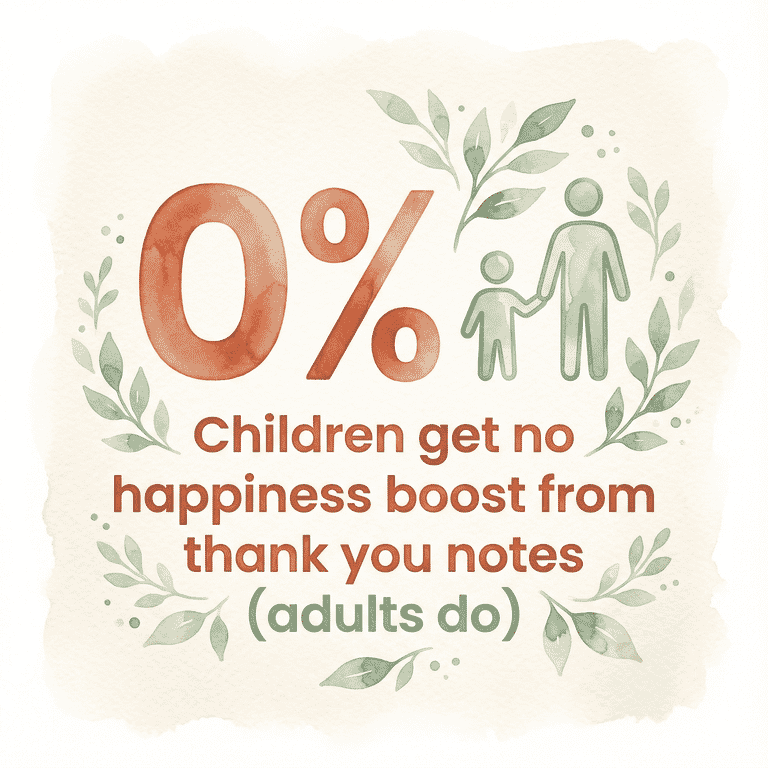
They’re giving a gift to Grandma without receiving the internal payoff adults experience. This isn’t defiance—it’s development.
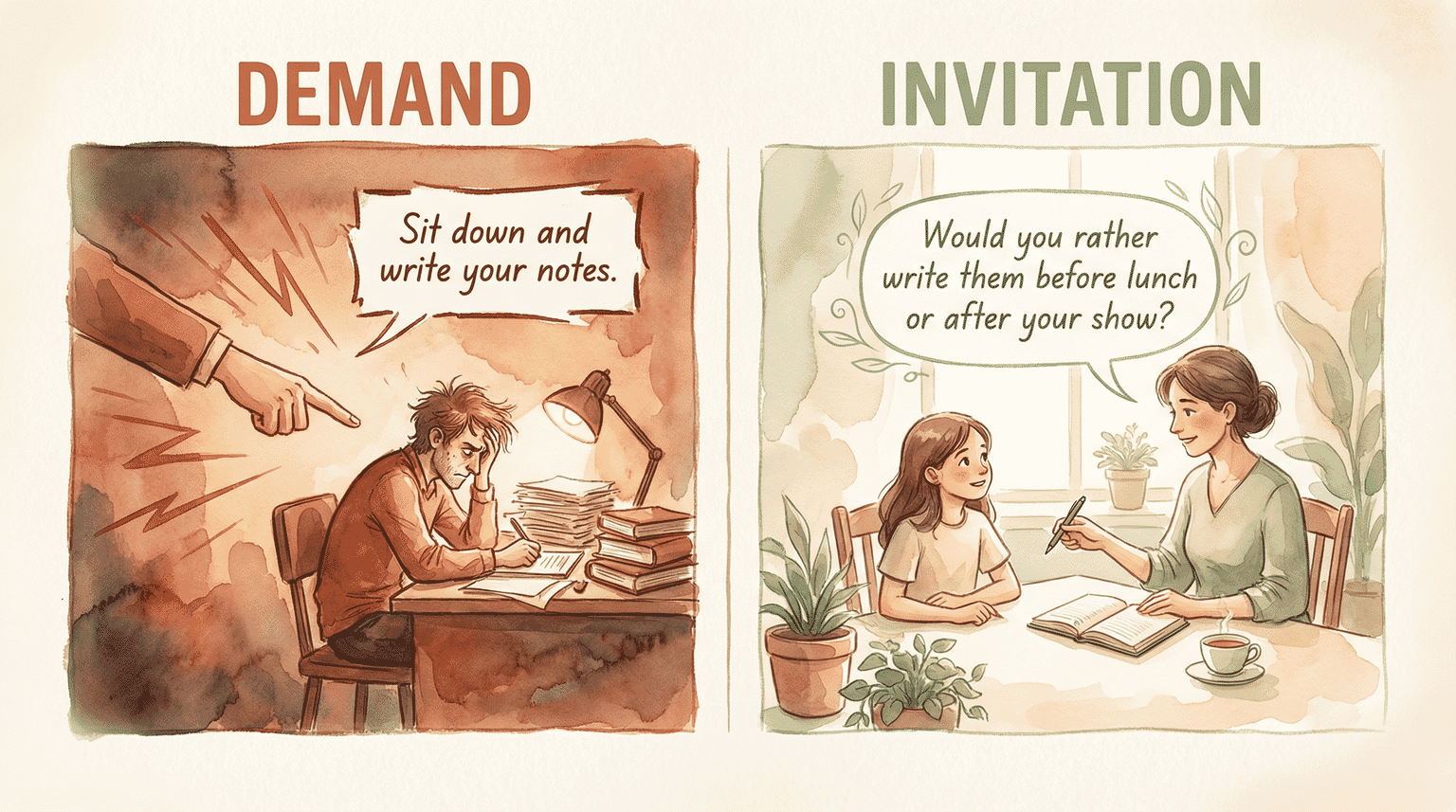
Research from UC Berkeley puts it plainly: “When gratitude is framed as an invitation rather than an expectation, children have the space to develop it in a way that feels authentic.”
Framing it as a demand? That’s when it feels empty—for everyone. The good news: once you understand this, you can work with your child’s development instead of against it.
The Invitation Approach That Reduces Resistance
The shift that changed everything in my house was simple: choices within structure.
Instead of announcing “You’re writing thank you notes now,” try offering genuine options. This isn’t about letting kids skip the notes—it’s about giving them ownership over the process. Research shows children are more likely to follow through on expectations they had a hand in shaping.
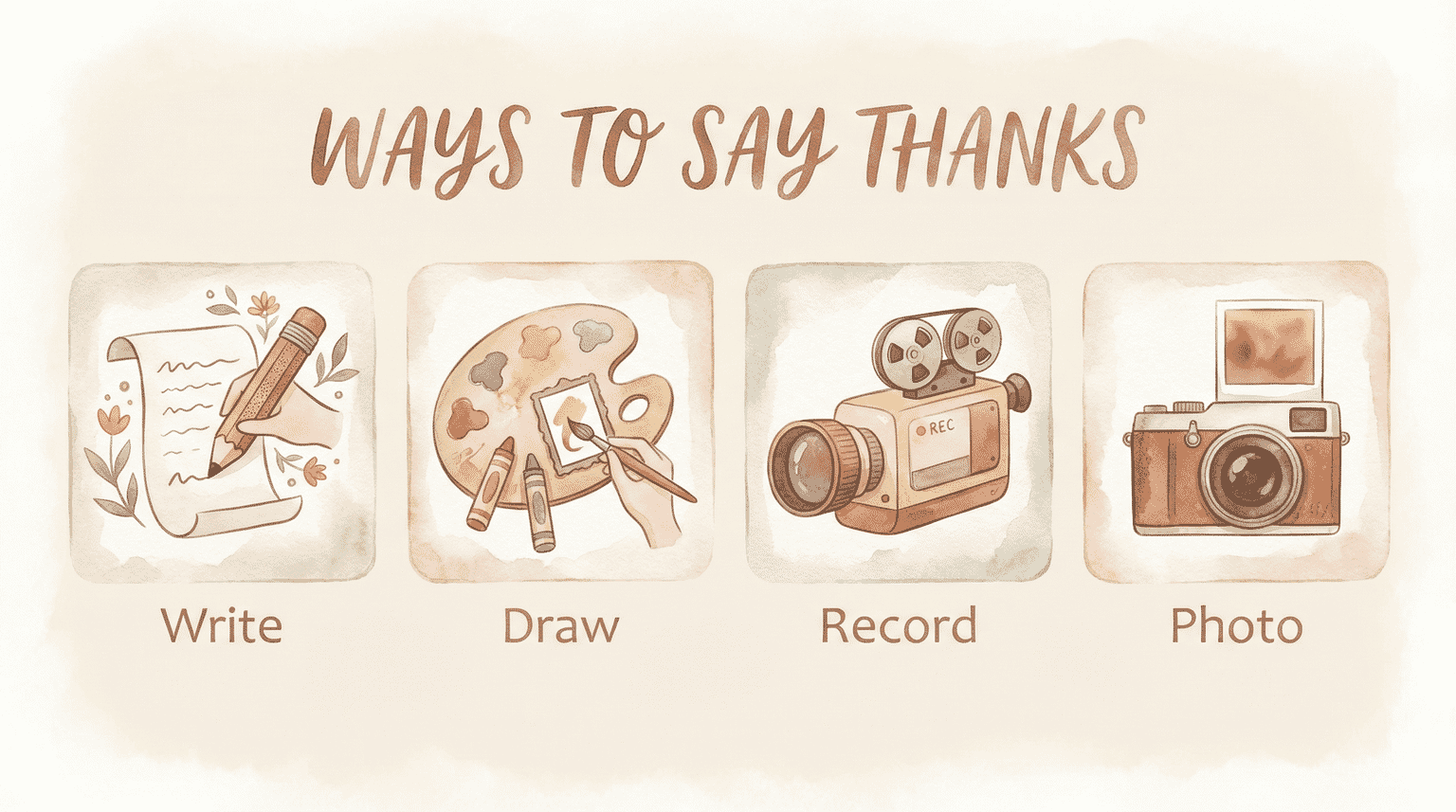
The 2025 UC Berkeley research specifically recommends offering multiple ways for children to express gratitude: writing, drawing, voice recordings, or photos. There’s no one-size-fits-all approach, and acknowledging that reduces resistance before it starts.
Other choices that work:
- Which cards or paper to use
- What order to tackle the list
- Whether to draw, write, or create a video
- Sitting at the table versus a cozy spot on the floor
The task stays non-negotiable. The details become theirs.
The 3-Sentence Framework Kids Can Remember
Every thank you note needs just three things. I call this the Name-Specific-Warm formula, based on Ohio State University’s research on effective gratitude expressions:
1. Greeting with their name
“Dear Grandma,” or “Hi Uncle Steve!”
2. One specific sentence about the gift
“Thank you for the art set. I already made three pictures with the markers!”
3. Warm closing
“I can’t wait to see you soon. Love, Maya”
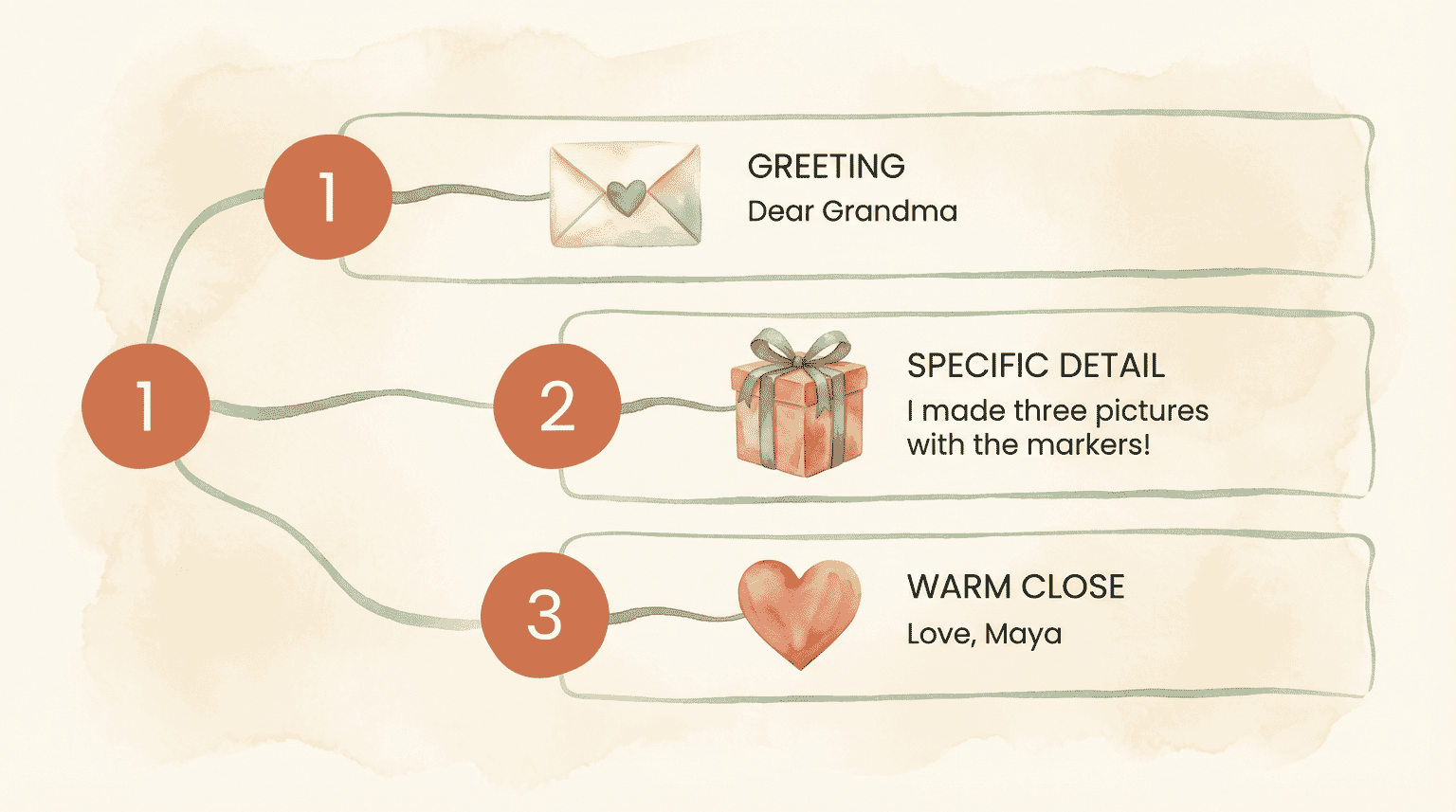
That’s it. Two to three sentences is plenty for children under 10. For kids who freeze when facing a blank card, try this fill-in-the-blank template:
“Dear ________, Thank you for the ________. I really like it because ________. Love, ________”
The magic is in that middle blank—the “because” forces them to think specifically about the gift. “Thank you for the LEGO set, I really like it because I can build spaceships” is worlds better than “Thank you for the present.”
If your child struggles with what to say when they didn’t like the gift, that’s a different challenge—but the three-sentence structure still applies.
The “Gift Behind the Gift” Conversation

Here’s where thank you notes go from obligation to actual gratitude practice.
Harvard’s Making Caring Common project found that adults often focus on telling children to say thank you while neglecting to help them understand why they’re grateful. Their recommended fix: guiding questions.
Before your child starts writing, try a quick conversation:
“What did Grandma have to do to get you this present?”
When your child says “Go to the store?” you can expand: “Right! She had to drive to the store, find something she thought you’d like, wait in line, pay for it, wrap it, and bring it to your party. That’s a lot of steps because she wanted you to feel special.”
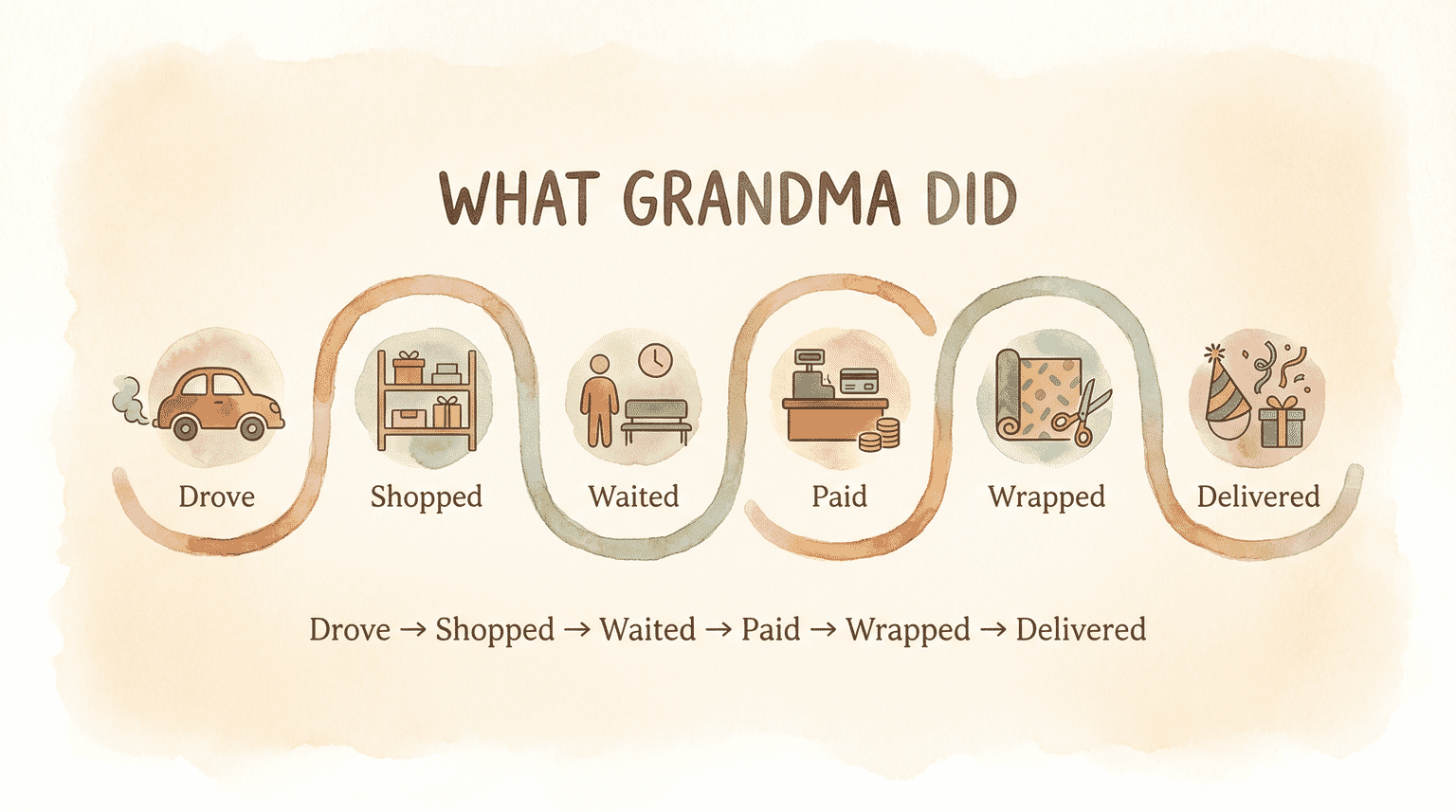
Suddenly the gift isn’t just a toy—it’s evidence that someone thought about your child, spent time, and made an effort. That’s genuine appreciation, not just manners.
The Harvard researchers suggest asking:
- What did this person give up to do this for you?
- What does that effort mean to you?
- How do you think they’ll feel when they get your note?
With my younger kids, I keep it simple: “Grandma spent her Saturday thinking about you. Your note is how we tell her that mattered.”
When They Still Resist: Scripts for Common Complaints
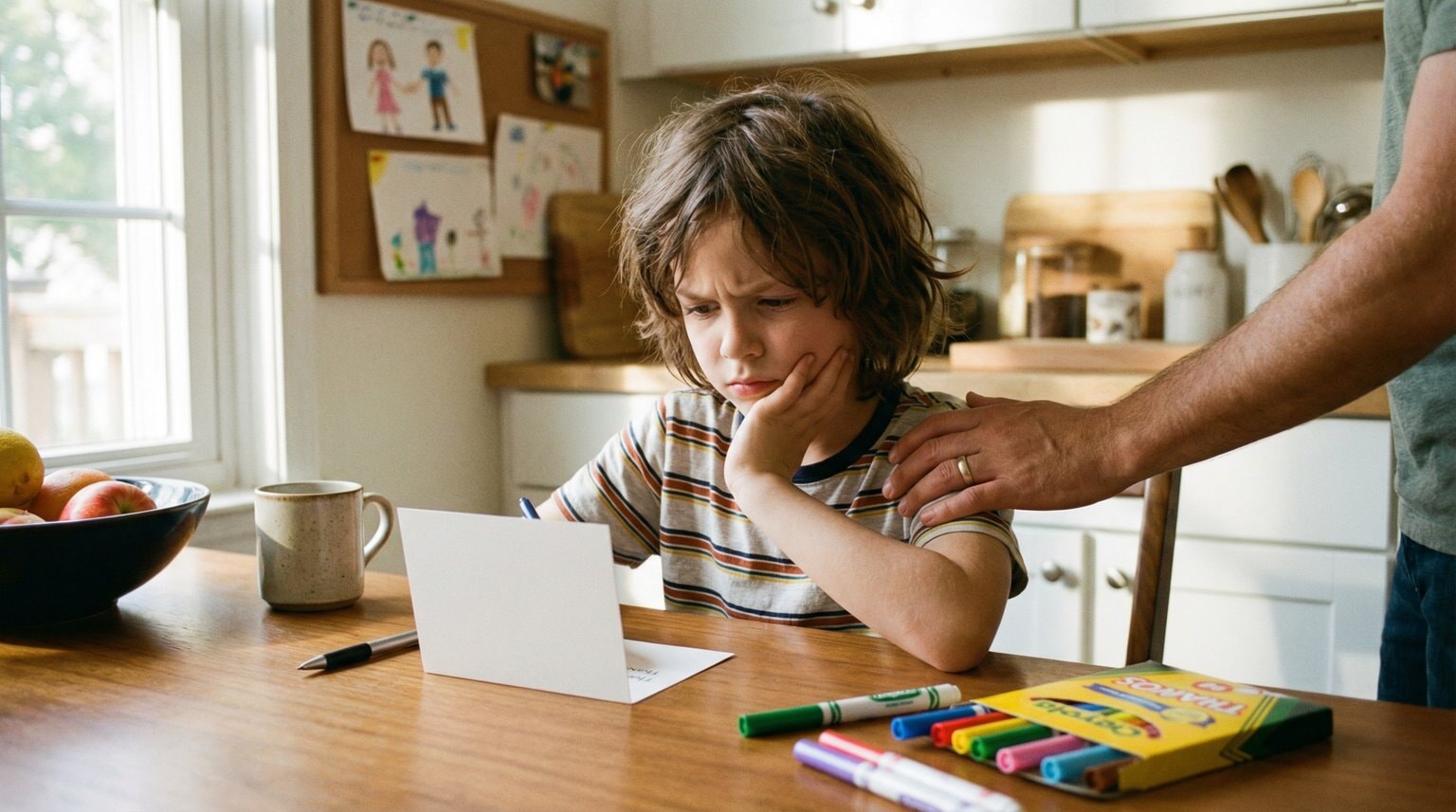
Even with the best approach, you’ll hit roadblocks. I’ve heard every excuse across eight kids—here’s what actually works.
“I don’t know what to write!”
What’s happening: Blank page paralysis is real, especially for younger kids.
Try: “Let’s look at the gift together. Tell me one thing about it—anything. Now you just told me what to write.”
Keep a prompt card nearby with simple questions: What color is it? What will you do with it? When will you use it?
“They already know I said thank you at the party!”
What’s happening: They see the verbal thanks as sufficient.
Try: “You’re right—you did thank them! The note is different though. It’s like a little present you’re sending back. When Grandma opens her mailbox and sees your handwriting, it’ll make her whole day.”
Reframing the note as a gift they’re giving—rather than a debt they’re paying—shifts the dynamic.
“This is SO boring.”
What’s happening: The task feels endless and tedious.
Try: “I hear you. Let’s set a timer for 10 minutes, do as many as we can, and take a break. Deal?”
Research on children’s attention spans supports keeping sessions to 10-15 minutes maximum. Breaking the stack into smaller batches over multiple days works better than one marathon session.
“Can I just text?”
What’s happening: They’re wondering why we’re using prehistoric technology.
Try: “For close friends, a text or video can work great. For Grandma and Aunt Susan, a handwritten note is really special to them—it’s something they can hold onto.”
If you want to dig deeper into when digital thank-yous are appropriate, the answer depends on the relationship and the recipient’s preferences. For older relatives and formal gift-givers, handwritten wins.
Beyond Writing: Expression Options That Count
The Greater Good Science Center explicitly validates what I’ve learned with my own kids: writing, drawing, voice recordings, and photos are all legitimate forms of gratitude expression.
Drawing-Based Thanks (Ages 4-7)
Have your child draw a picture of themselves using the gift, or draw the gift itself. You write their words underneath: “Maya drew herself painting with her new art set. She said, ‘Tell Grandma I love the colors!'”
This isn’t a cop-out—it’s developmentally appropriate and often more meaningful to recipients than a few copied words.
Video Thank-Yous
These work beautifully for out-of-town relatives. The key is keeping them genuine, not performative:
- Let your child hold and show the gift
- One take is fine—imperfection is charming
- Keep it under 30 seconds
- A spontaneous “I love you, Grandma!” beats a scripted speech
Photo Cards
Take a photo of your child with the gift, print it (or use a simple online card service), and have them write one sentence on the back. My 6-year-old’s photo holding his new baseball glove with “I’m going to practice every day! Love Jake” was Grandpa’s favorite note he’d ever received.
Making It Stick Without Making It Miserable
Timing Matters
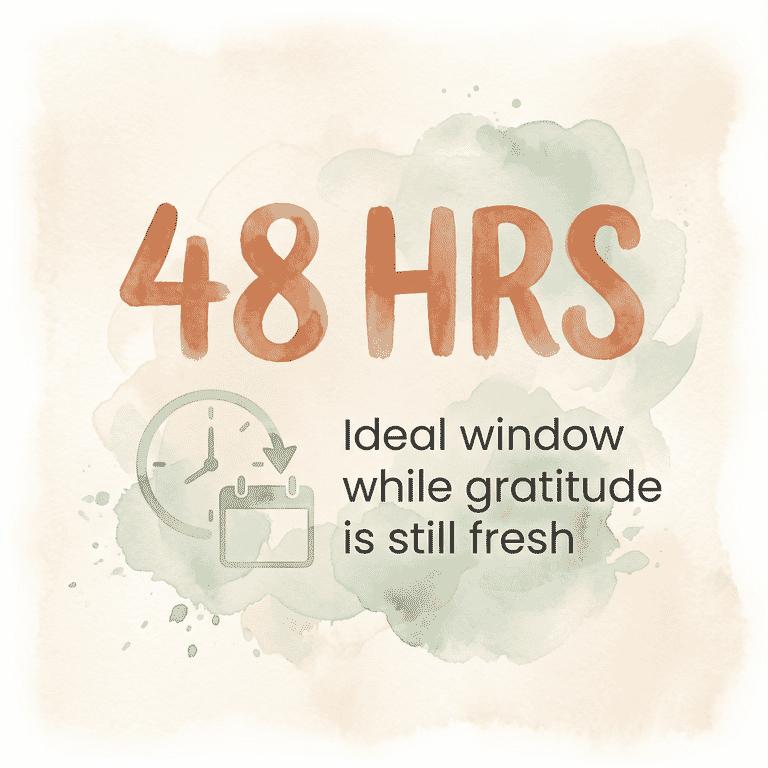
Within 48 hours is ideal. The gift is still exciting, the gratitude is still fresh, and your child can actually remember what they said when they opened it.
If you’re past that window? Don’t skip the notes—just don’t apologize for the delay. “I’ve been having so much fun with my art set!” works fine two weeks later.
The key is capturing that initial excitement while it’s still accessible in your child’s memory.
Keep Sessions Short
Match your expectations to attention spans:
- Ages 4-5: 5-10 minutes, 1-2 notes (with drawing)
- Ages 6-8: 10-15 minutes, 2-3 notes
- Ages 9-11: 15-20 minutes, 3-5 notes
- Ages 12+: Can complete a reasonable stack independently
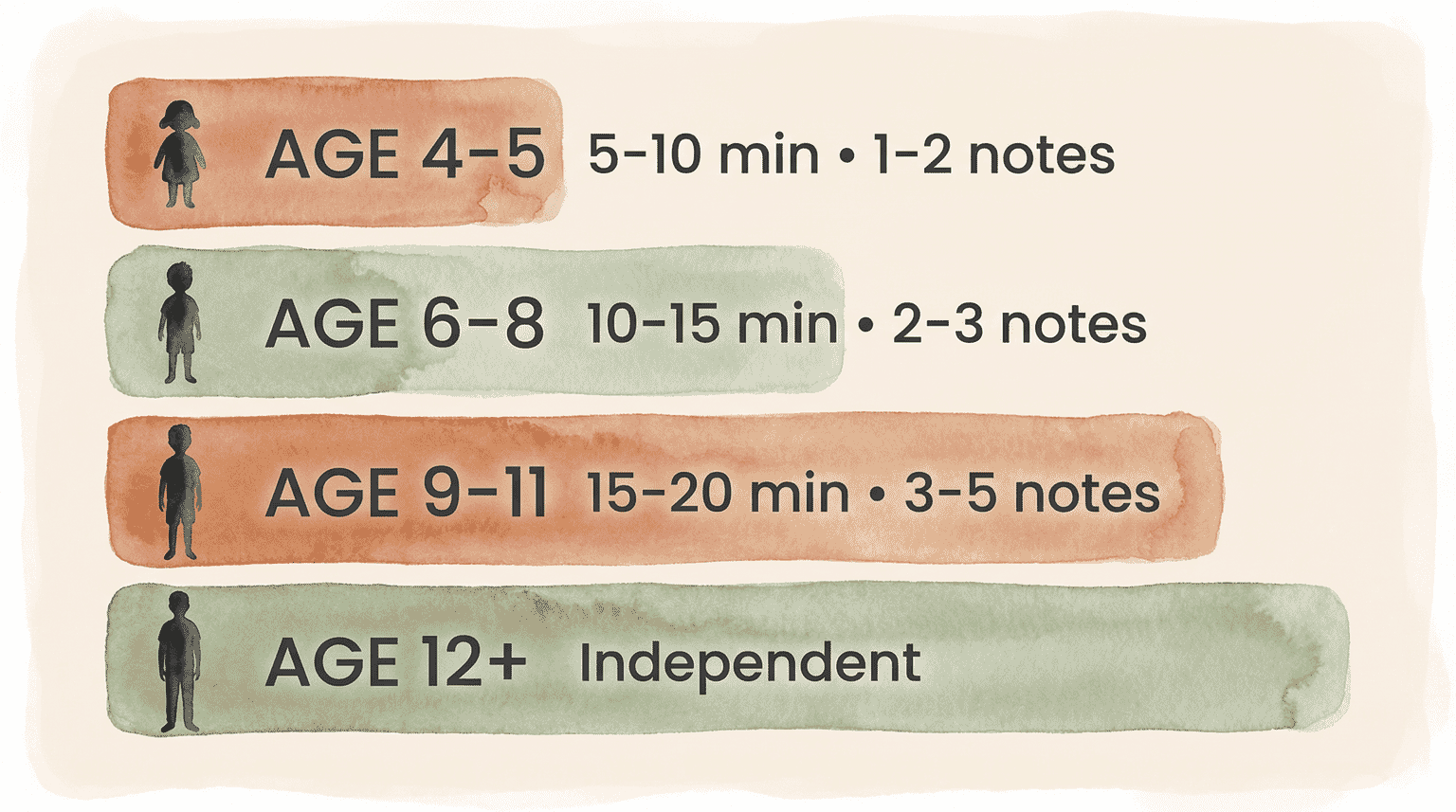
Pushing past these limits turns the next round into a bigger battle.
Reduce Friction
Keep supplies accessible and appealing:
- Cards or paper they helped choose
- Favorite pens (gel pens are magic)
- Stamps and stickers for decorating
- A list of names and gifts ready to go
When everything is gathered in advance, “time to write notes” doesn’t start with 15 minutes of hunting for markers.
Model the Process
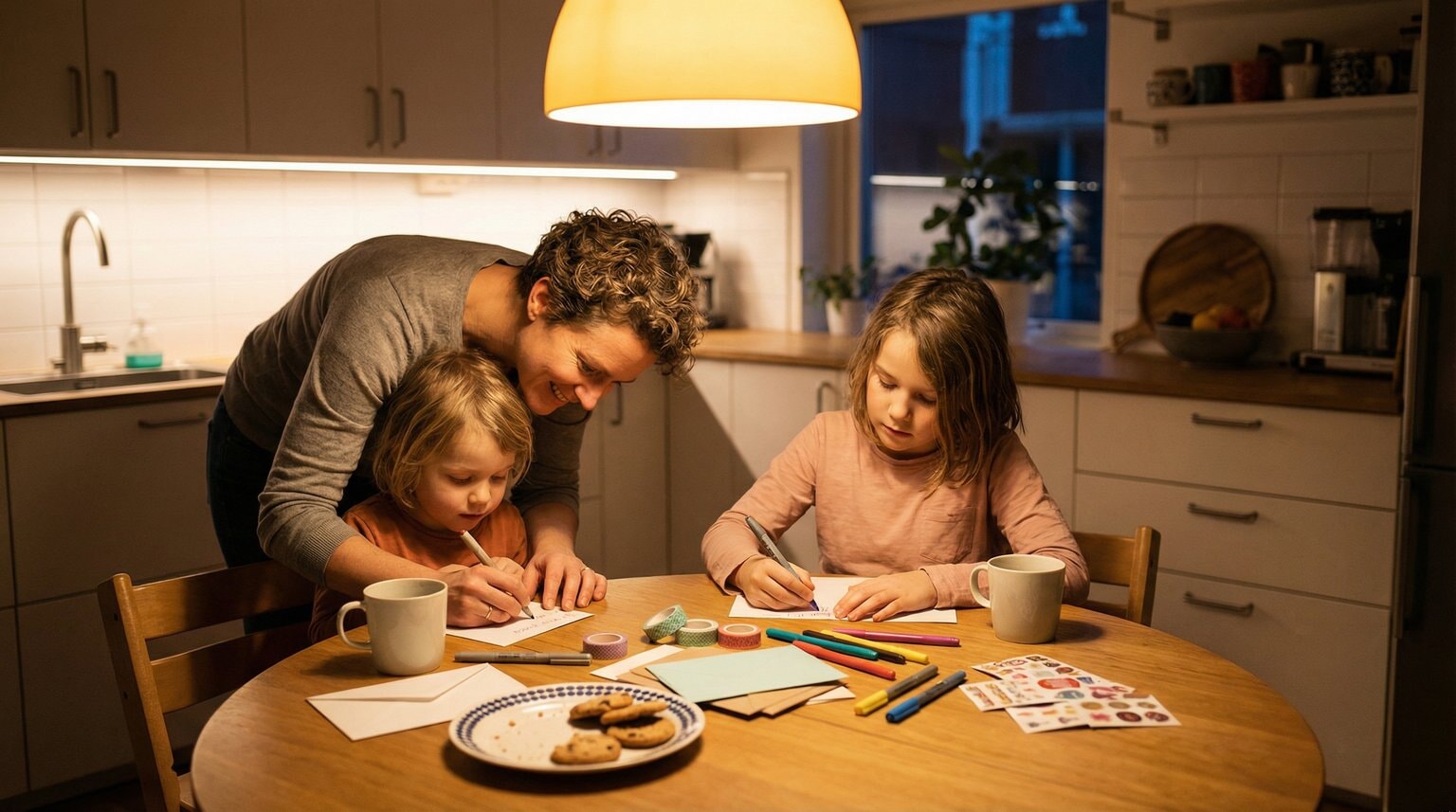
According to research from Cara Goodwin, Ph.D., children display gratitude more often on days when their parents talk about it more frequently. Write your own notes alongside them. Mention out loud what you’re writing: “I’m thanking Aunt Karen for watching you guys—I’m telling her how much that helped me.”
“It’s not just that wandering around with a sense of gratitude alone makes you happier or more resilient. It’s that it makes you behave differently in the world, build your relationships differently.”
— Giacomo Bono, Gratitude Researcher
When thank you notes become part of your family’s gift-giving traditions rather than a chore to complete, children absorb gratitude as a normal part of life. That’s the long game—and it’s worth playing.
If you’re looking to address gratitude more broadly, teaching kids gratitude beyond thank-you notes builds the foundation that makes everything else easier.
Frequently Asked Questions
At what age should a child write their own thank you notes?
Children ages 7-10 can reliably understand and express gratitude, making this the ideal range for independent note-writing with prompts. Younger children (ages 4-6) can participate by drawing pictures or dictating while an adult writes their words. By age 11, most children can write personalized notes without assistance.
How do I get my child to write thank you notes without complaining?
Frame thank-you notes as an invitation rather than a demand—research shows forced gratitude backfires and feels empty to children. Offer choices: which card to use, what order to write them, or whether to draw instead of write. Keep sessions under 15 minutes and write your own notes alongside them.
What should a child’s thank you note say?
A child’s thank you note needs just three elements: a greeting using the person’s name, one specific sentence about the gift and why they like it, and a warm closing. For example: “Dear Grandma, Thank you for the art set. I already made three pictures with the markers! Love, Maya.”
Is it okay if kids draw instead of write thank you notes?
Yes—gratitude researchers confirm that offering multiple ways for children to express thanks (writing, drawing, voice recordings, photos) is equally valid. For children under 7 especially, a drawing with a dictated sentence written by an adult is developmentally appropriate and communicates genuine appreciation to the recipient.
Share Your Story
How do thank you notes go at your house—smooth routine or annual battle? I’ve tried everything from sticker rewards to “no screens until notes are done.” Would love to know what’s actually made this easier for other families.
I read every comment and steal your best thank you note hacks.
References
- Greater Good Science Center, UC Berkeley (2025) – Research on invitation-based vs. forced gratitude approaches
- Psychology Today / Cara Goodwin, Ph.D. (2023) – Parenting strategies for raising grateful children
- Harvard Health Publishing (2021) – Research on gratitude and emotional maturity
- Harvard Graduate School of Education (2021) – Making Caring Common gratitude development framework
- Ohio State University Extension (2022) – Best practices for thank you note structure and timing

Share Your Thoughts