
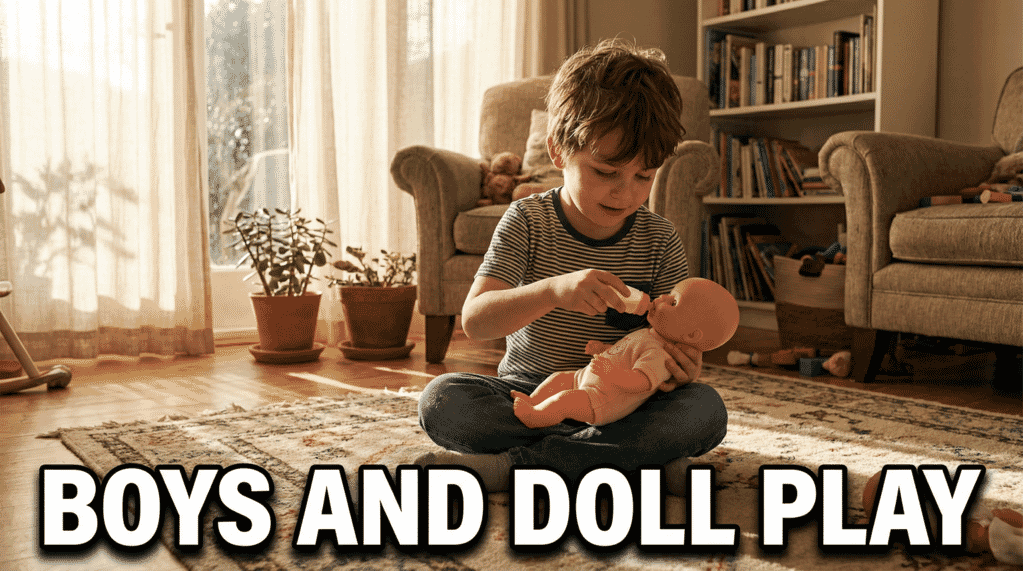
My 6-year-old son recently asked for a baby doll for his birthday. Before I could respond, my mother-in-law jumped in: “Wouldn’t you rather have a truck?” I watched his face fall—and my librarian brain immediately wanted to know: what does the science actually say about boys and doll play?
Yes—peer-reviewed research consistently shows doll play benefits all children regardless of gender. Brain imaging studies from Cardiff University demonstrate that both boys and girls show identical activation in regions associated with empathy and social processing during doll play. Playing with dolls helps children practice caregiving, develop emotional vocabulary, and understand others’ perspectives—skills every child needs.
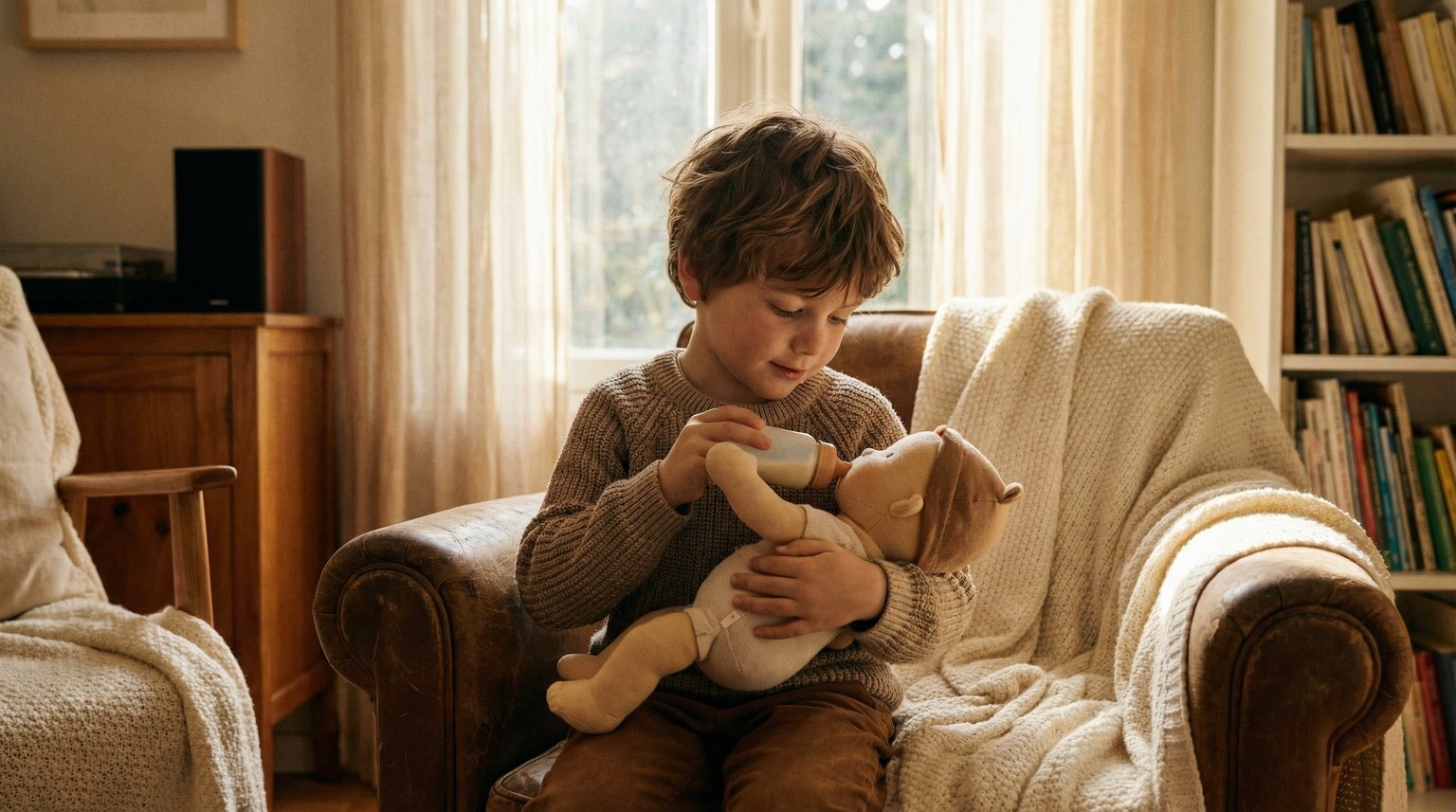
Here’s the thing: I’ve raised eight kids now, four boys and four girls. I’ve watched my sons tenderly care for stuffed animals, create elaborate family scenarios with action figures, and yes, borrow their sisters’ baby dolls. None of this surprised me once I dug into the research.
What did surprise me was how little most parents know about what science has discovered.
Key Takeaways
- Brain imaging shows boys and girls have identical neural responses during doll play—the developmental benefits are gender-neutral.
- Doll play activates the brain’s social processing center, helping children develop empathy, emotional vocabulary, and perspective-taking skills.
- Gender stereotypes peak between ages 5-7, but simple counterstereotypical messages can shift children’s toy choices significantly.
- Action figures and baby dolls serve identical developmental purposes—the brain doesn’t distinguish between marketing categories.
- Fathers modeling nurturing play has particular power in demonstrating that caregiving isn’t gendered.
What Happens in a Child’s Brain During Doll Play
In 2020, something remarkable happened in developmental psychology. For the first time ever, researchers at Cardiff University used brain imaging technology to watch what happens inside children’s heads during doll play. And what they found challenges everything many of us assumed about “girl toys” and “boy toys.”
The researchers used a technology called functional near-infrared spectroscopy (fNIRS)—essentially a cap that measures blood flow in the brain. They studied 33 children between ages 4 and 8, comparing what happened when kids played with dolls versus tablets.
The key finding? Doll play activated a specific brain region called the posterior superior temporal sulcus, or pSTS. This is the brain’s “social processing center”—the area that helps us understand other people’s thoughts, feelings, and intentions. The 2020 Cardiff study showed this activation happened whether children were playing with others or completely alone.
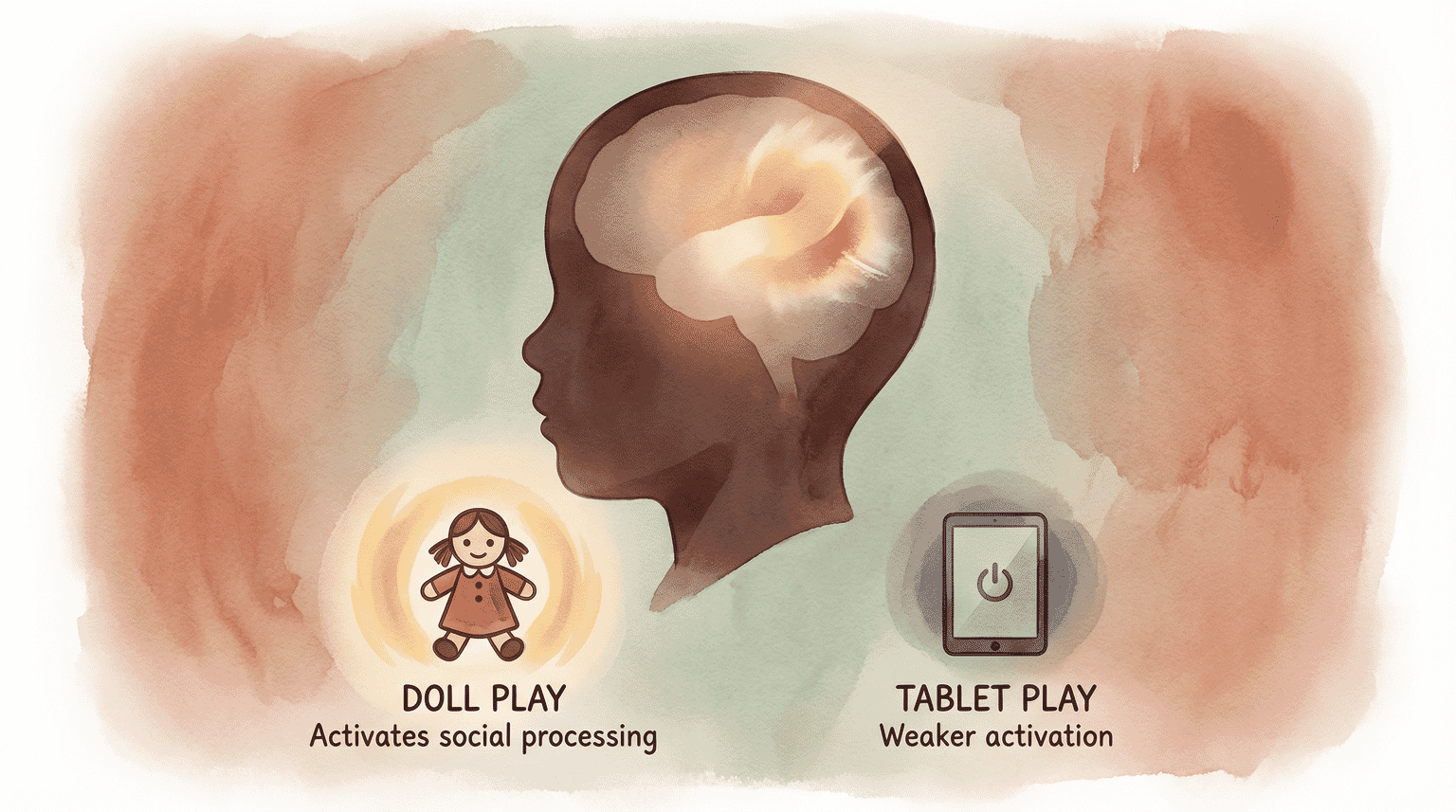
Here’s what really got my attention: the pSTS activation was far weaker when children played solo with tablets. The dolls were doing something the screens couldn’t.
“This suggested to us that playing alone with dolls engaged their social processing and let them kind of practice these social skills.”
— Dr. Sarah Gerson, Cardiff University Doll Play Research Program
A follow-up study in 2023 expanded the research to 57 children—and this is crucial—the findings were identical for boys and girls. The brain doesn’t care about toy aisle labels. When a boy plays with a doll, his pSTS lights up the same way a girl’s does.
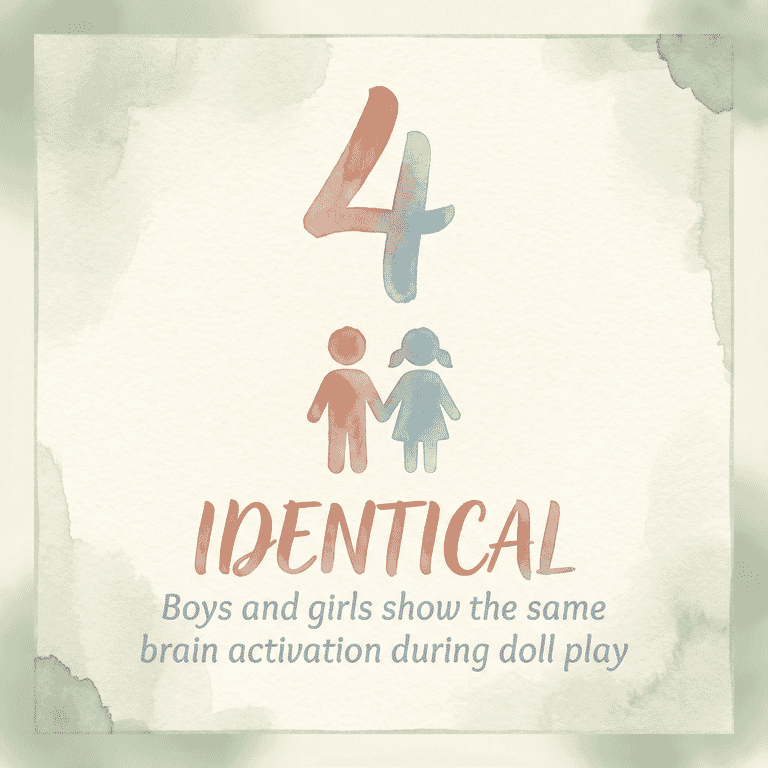
The developmental benefits are, as Forbes reported, “gender agnostic.” This means every argument about dolls being “just for girls” is contradicted by what’s actually happening in children’s brains.
The research included both neurotypical children and those with neurodevelopmental differences, strengthening the finding that these benefits are universal—not limited to any particular group of kids.
The Developmental Benefits of Doll Play
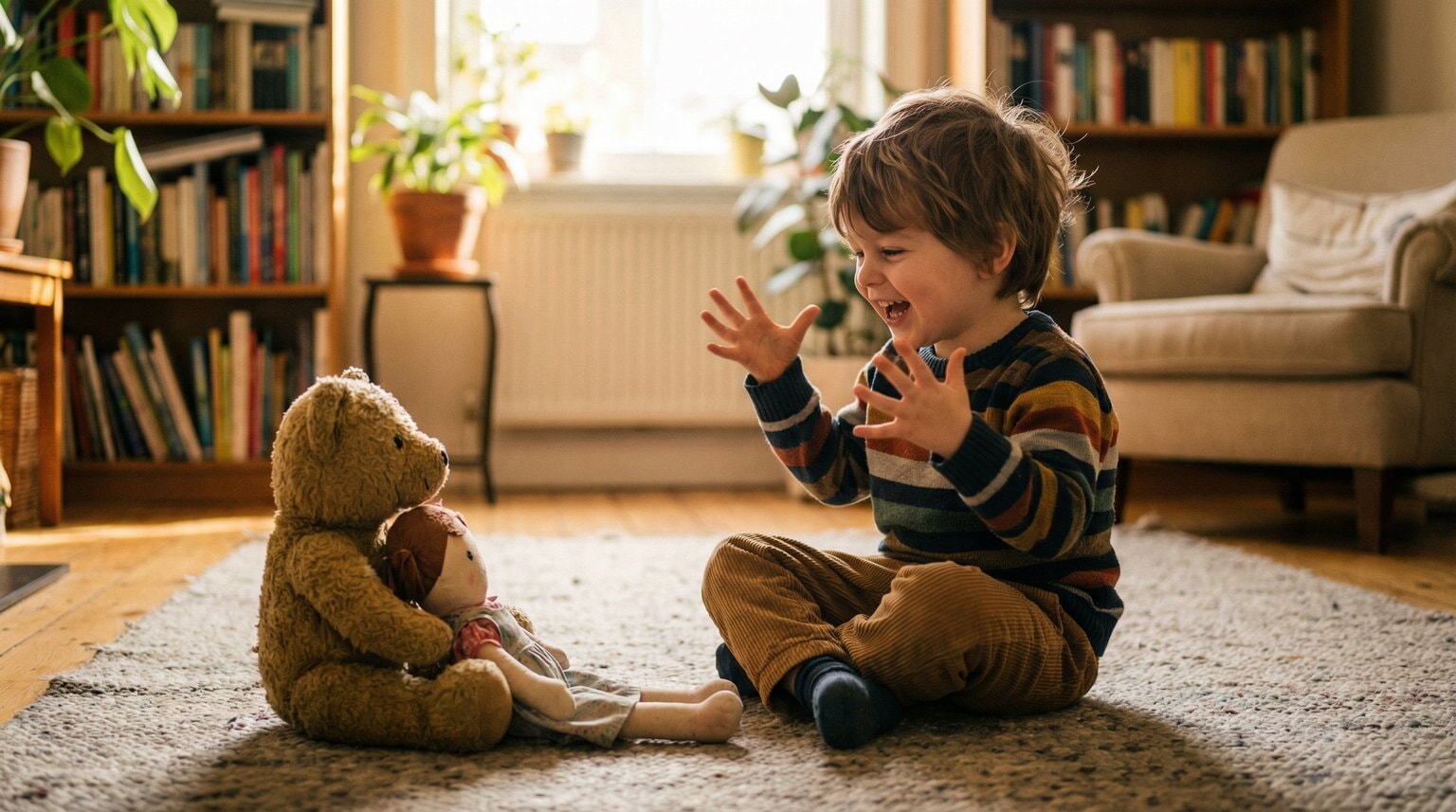
So what’s actually happening when your child picks up a doll? Understanding the science behind how toys shape development helps explain why this particular type of play is so powerful.
Empathy and Perspective-Taking
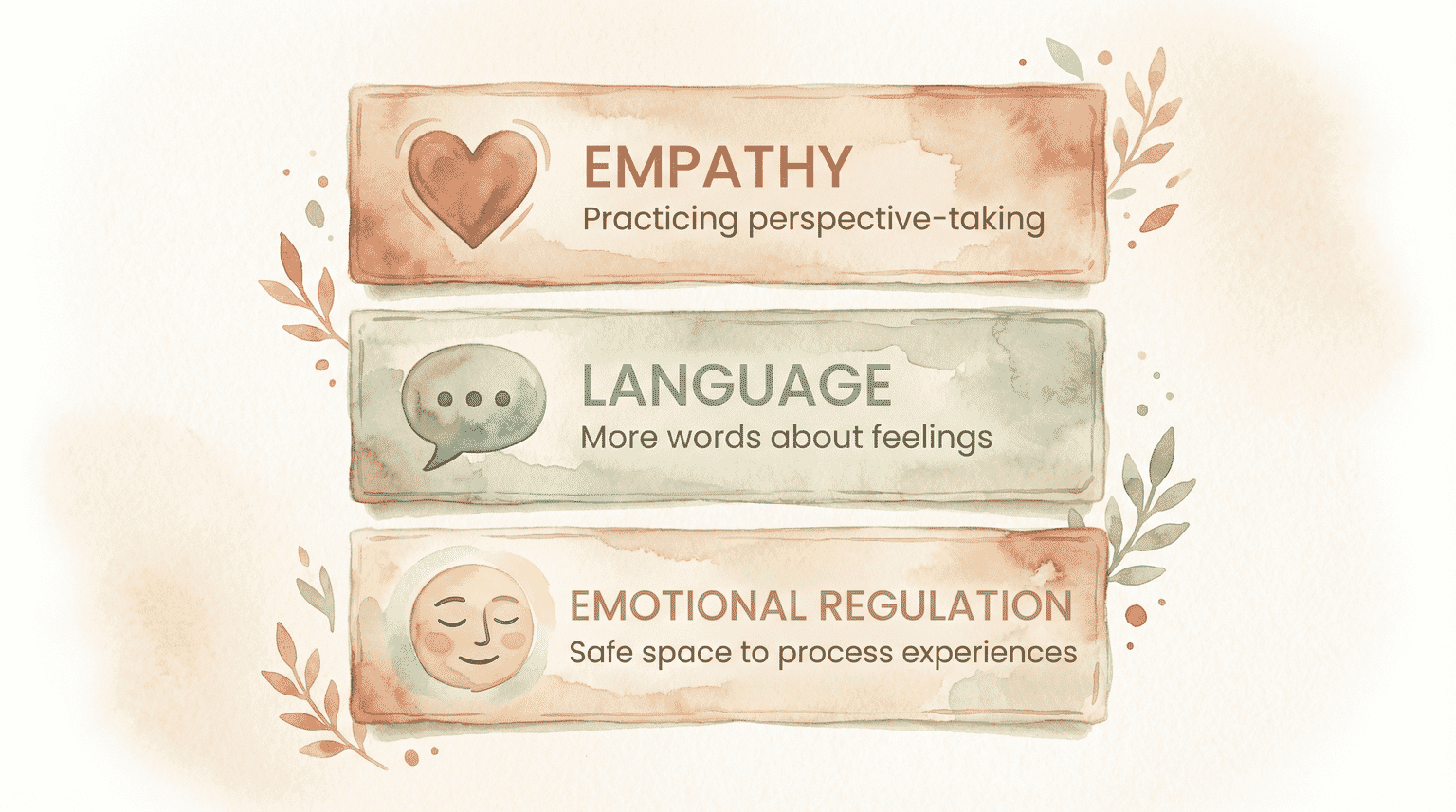
When children play with dolls, they practice imagining another being’s experience. “What does baby want?” “Is baby tired?” “Baby feels sad.” This is perspective-taking in its purest form—and it’s the foundation of empathy.
The Cardiff research showed that this practice activates the same brain regions we use when understanding real people.
“When children create imaginary worlds and role play with dolls, they communicate at first out loud and then internalize the message about others’ thoughts, emotions, and feelings. This can have long-lasting positive effects on children.”
— Dr. Sarah Gerson, Cardiff University
I’ve witnessed this exact pattern. My 4-year-old son narrates his entire doll play: “The baby is crying because she misses her mommy. I’ll hug her.” He’s literally practicing empathy out loud.
Language and Communication
Research published in 2024 found something fascinating about how children talk during doll play. They use significantly more “internal state language”—words about thoughts and emotions—when playing with dolls than during tablet games.
According to Expressable’s analysis of the Cardiff findings, children talked more about others’ feelings during doll play, and this type of language correlated directly with increased brain activation in social processing regions.
Think about what your child says during doll play: “She’s happy.” “He wants to go outside.” “The baby thinks it’s bedtime.” This emotional vocabulary becomes the foundation for later social competence.
Emotional Regulation
Beyond empathy and language, doll play gives children a safe space to process their own experiences. When my kids have rough days, I often find them reenacting the situation with their toys—working through the emotions in a low-stakes environment.
Developmental psychologists have documented this pattern for decades. Children use dolls and figures as props for social experimentation, helping them understand relationships, navigate conflicts, and practice responses they might use in real life. This is why dolls belong alongside other pretend play toys in every child’s environment.
Why Boys Face More Pushback Than Girls
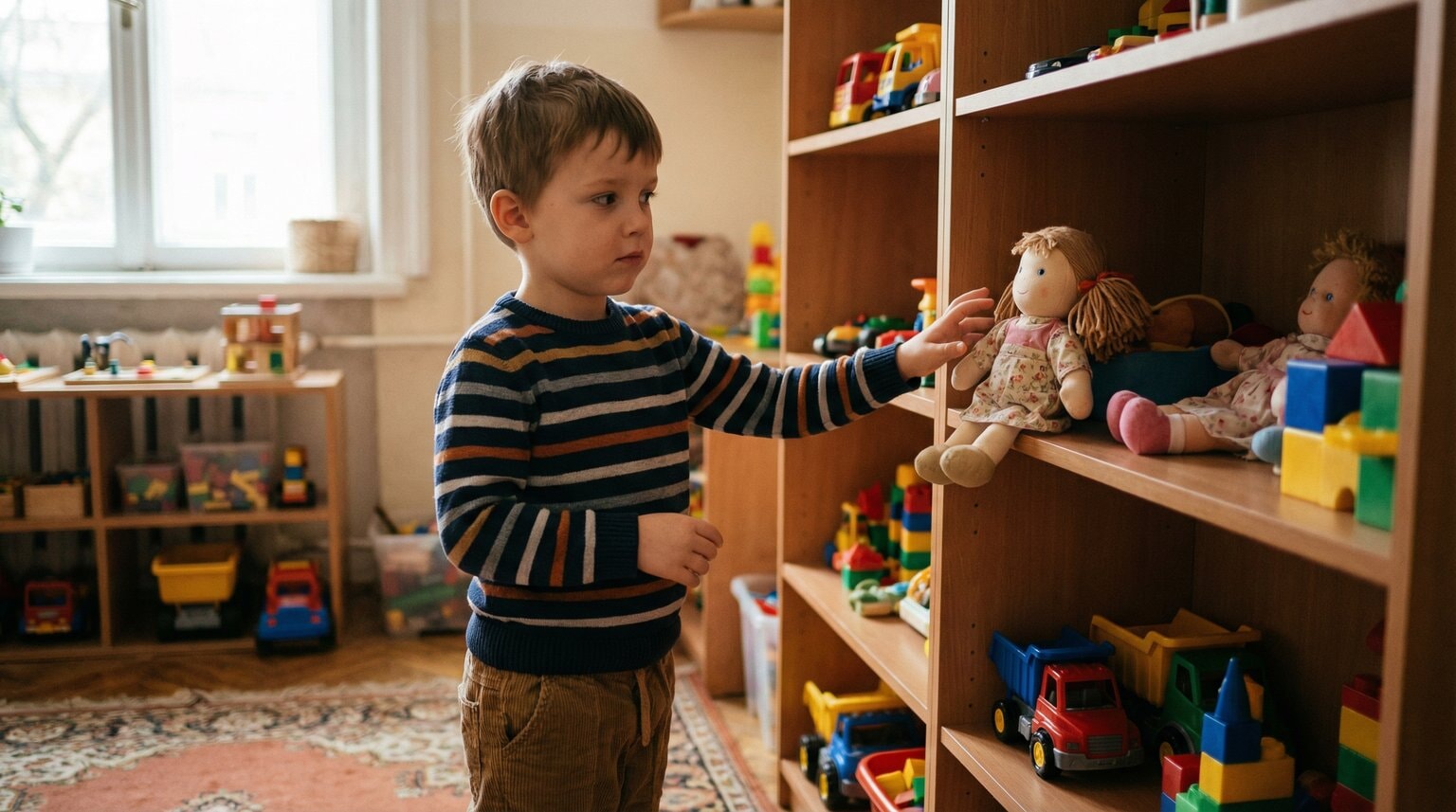
Here’s something the research makes uncomfortably clear: we enforce gender expectations far more strictly on boys than on girls.
When a girl plays with trucks, many adults barely notice. When a boy plays with dolls, alarm bells often sound. This asymmetry isn’t just anecdotal—it’s documented in peer-reviewed research.
A 2022 Marymount University analysis found that “by chastising boys for engaging in female-identified behaviors, both girls and boys become cognizant of the second class status of females in society.” In other words, when we tell boys that doll play is “girly” and therefore bad, we’re sending messages about value—not just about toys.
The research shows boys tend to view emotional disclosure as weakness, which discourages them from talking about feelings. This isn’t innate—it’s learned, and learned early. Children as young as two recognize traditional gender norms.
Research from developmental psychologists established that once children learn gender stereotypes, these beliefs are highly resistant to change. By age 10, children actively enforce these norms on each other, with studies showing kids expect “compensatory behavior” from boys who act outside masculine norms.
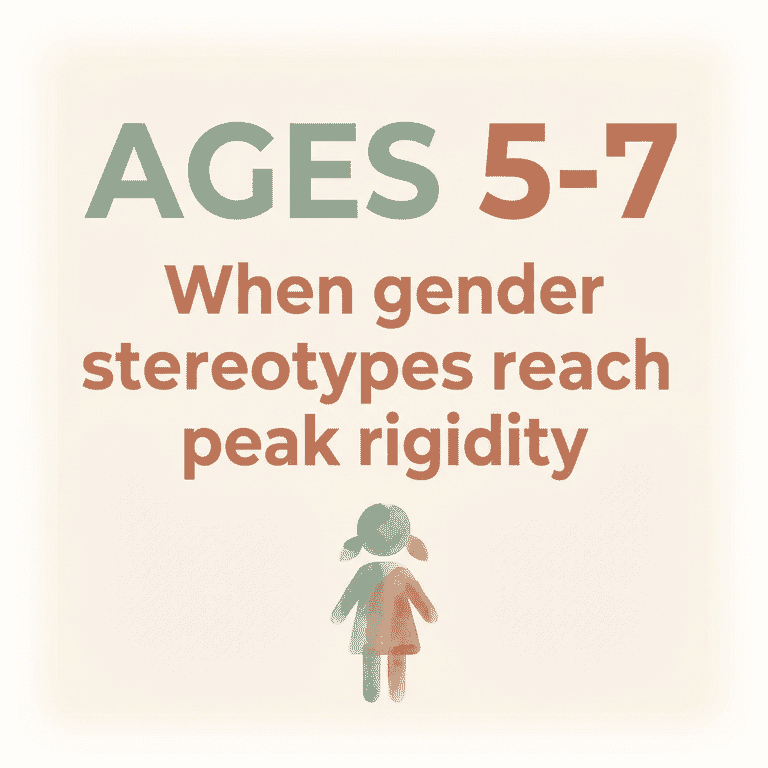
This peer pressure intensifies just as children most need opportunities to develop emotional intelligence. A 2024 intervention study found that gender stereotypes about toys reach peak rigidity between ages 5 and 7—exactly when many boys start avoiding dolls even if they previously enjoyed them.
The Logic Problem with “Action Figures Are Different”
You’ve probably heard this argument: “He doesn’t play with dolls—he plays with action figures. That’s different.”
But is it?
Foundational research on toy categorization found that strongly masculine toys emphasize aggression, competition, and danger, while strongly feminine toys focus on nurturing and appearance. But functionally, action figures and baby dolls serve the same developmental purpose: they’re both figurines representing human or humanoid characters used in imaginative play.
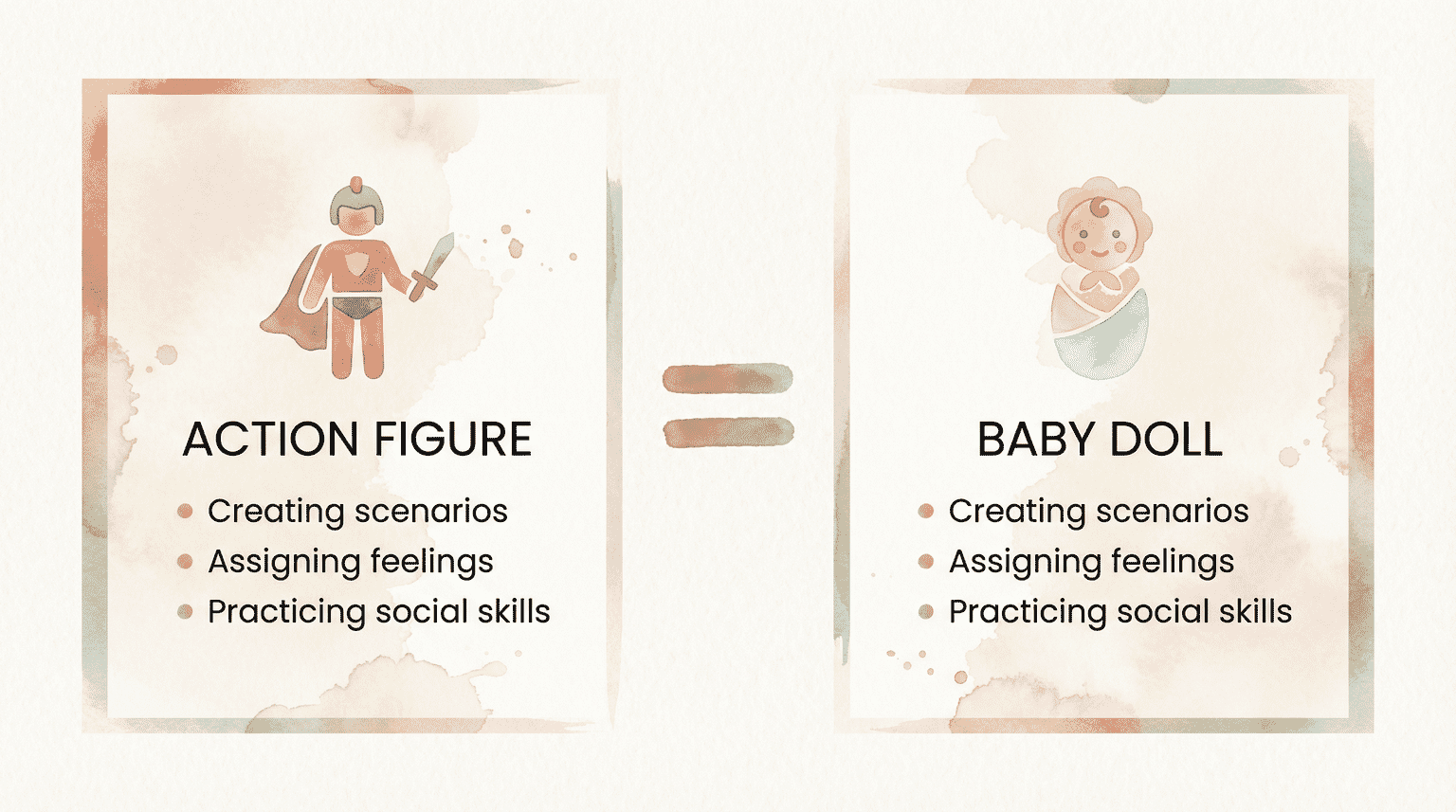
When my son makes his superhero figure comfort another figure who got hurt in battle, his brain is doing exactly what it does when his sister rocks her baby doll. The pSTS doesn’t distinguish between marketing categories.
Consider: both types of play involve creating scenarios, assigning thoughts and feelings to the figures, and practicing social interactions. The “action figures aren’t dolls” argument is about adult comfort, not child development.
I watched my 10-year-old son create elaborate story arcs with his action figures involving friendship, betrayal, loyalty, and forgiveness. He was doing deep emotional work—we just didn’t call it “playing with dolls.”
Are Toy Preferences Innate or Learned?
This question comes up constantly, so let me address it directly: the answer is “both, but probably not how you think.”
Research shows children begin developing gender-typed toy preferences as early as 18-24 months. But crucially, parents significantly shape these perceptions. Children’s environments are saturated with gendered messages—storybooks, marketing, media—and kids absorb them quickly.
According to Bem’s gender schema theory, as children develop, they create cognitive structures that organize sex-linked characteristics. These schemas then influence what children notice, prefer, and avoid. The schema isn’t the same as innate preference—it’s learned, even if it’s learned very early.
Here’s what I’ve observed across eight kids: there’s enormous individual variation. Some of my sons showed zero interest in dolls; one asked for a baby doll every Christmas for three years. Some of my daughters ignored dolls entirely in favor of building sets. Both patterns are completely normal.
When we’re thinking about age-appropriate toy selection, what matters most isn’t matching cultural expectations—it’s supporting each individual child’s developmental needs and interests.
Research on transgender and gender-diverse children adds an important nuance: both transgender and cisgender children tend to favor toys associated with their expressed gender, with wide variation in both groups. This confirms that toy preferences are complex and individual, not simple predictors of anything.
What Parents Can Actually Do
Let’s get practical. You’re convinced by the research (or at least curious). Now what?
Introducing Dolls Without Forcing Interest
The goal isn’t to make your son play with dolls—it’s to make sure he feels allowed to if he’s interested.
- Make dolls available without fanfare. Include them in the toy rotation alongside trucks, blocks, and balls.
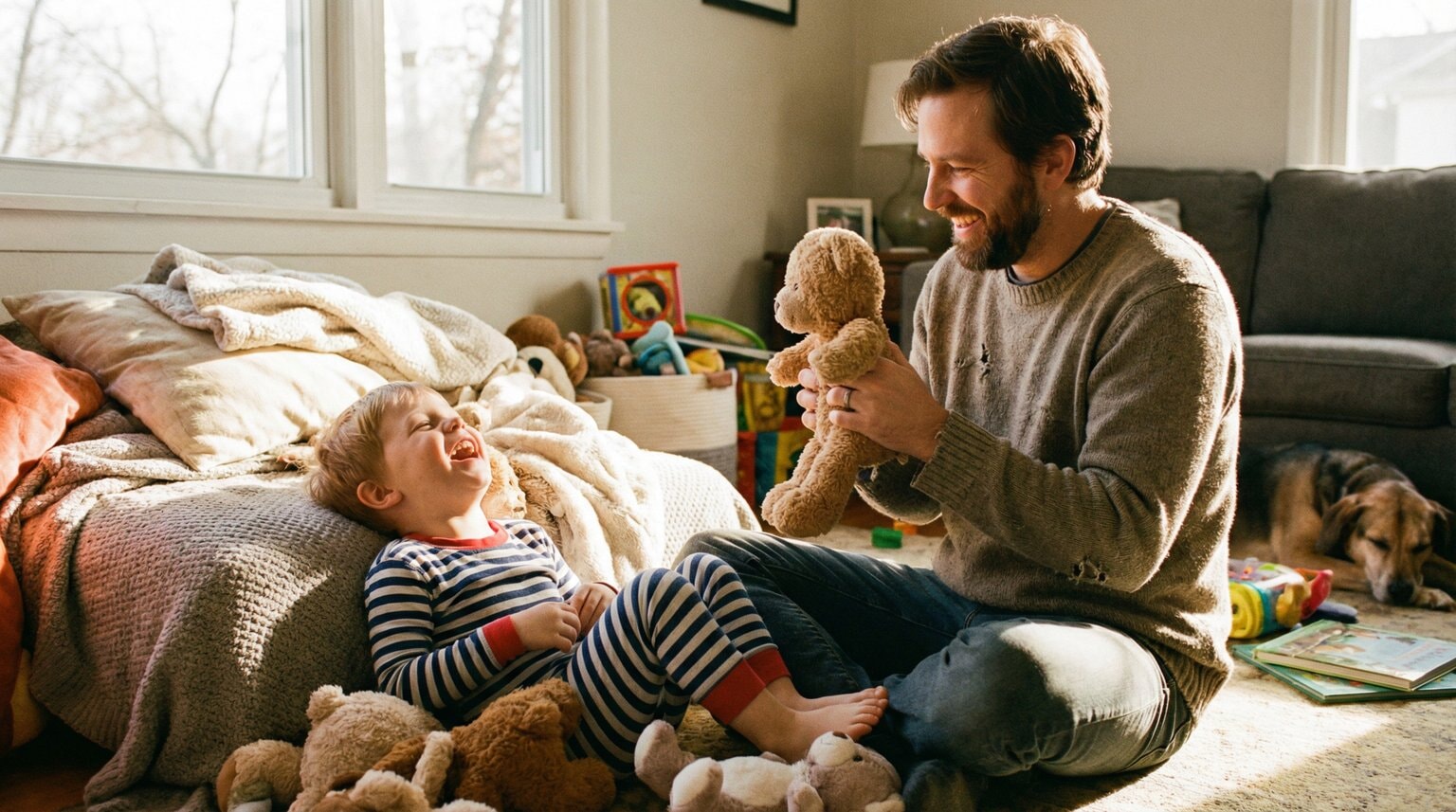
- Model nurturing play yourself. When Dad feeds the teddy bear or tucks in the stuffed dog, it normalizes caregiving for everyone.
- Don’t make it a big deal either direction. Overly praising doll play can feel as weird to kids as discouraging it.
In my house, we just have dolls around. Sometimes they get played with; sometimes they don’t. The message is simple: all toys are for all kids.
Responding to Family Criticism
This is the hard part. Grandparents, in-laws, even your partner might push back.
The 2024 intervention study found that simple counterstereotypical messages can be remarkably effective. When children (and adults) hear statements like “boys enjoy dolls,” it measurably shifts their thinking.
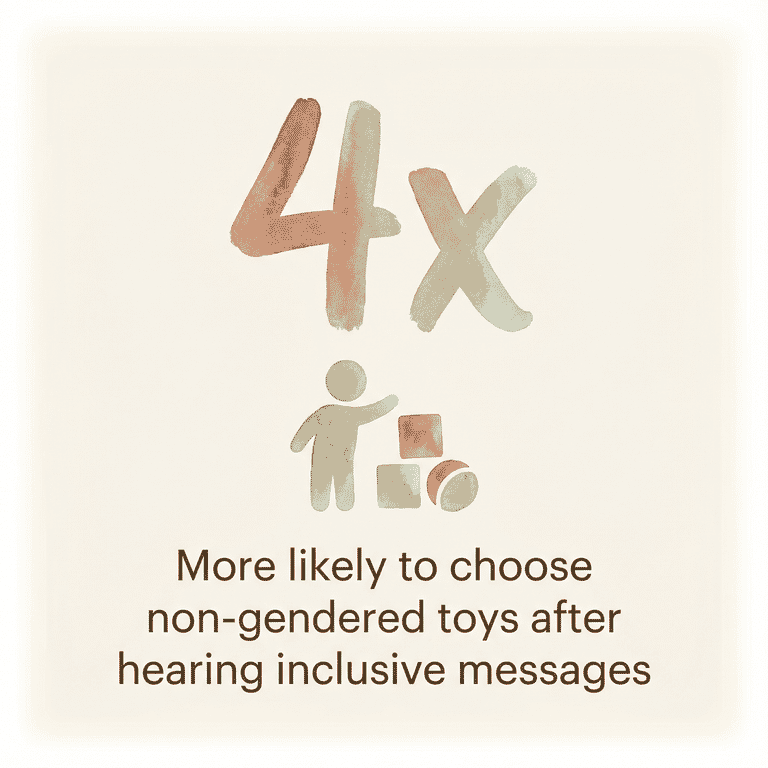
Children exposed to counterstereotypical messages were approximately four times more likely to select non-gendered toys for peers. That’s a massive shift from a simple intervention.
The same principle applies to the adults in your life. Leading with research rather than opinion often opens doors that would otherwise stay closed.
Here are some scripts I’ve used:
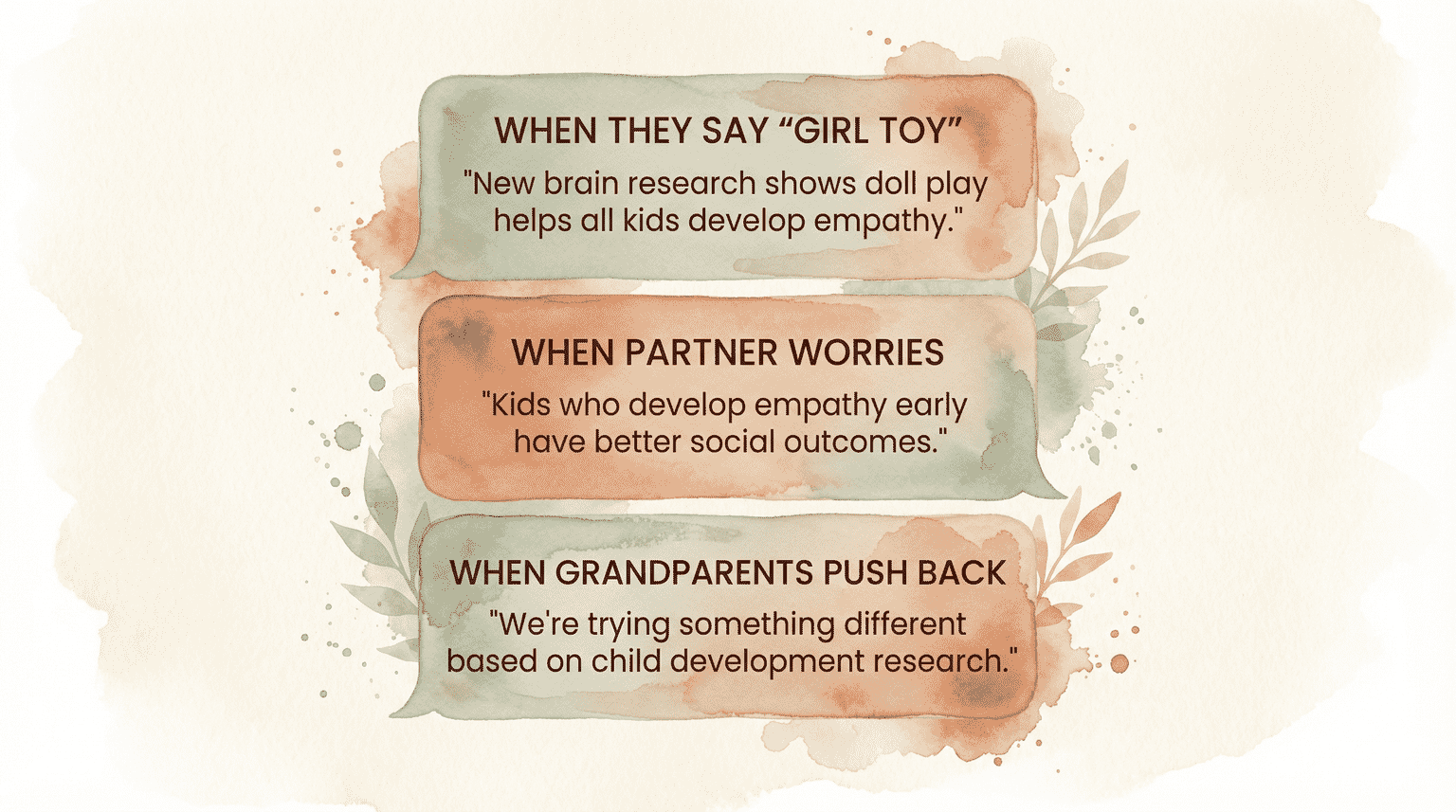
When family says: “That’s a girl toy.”
Try: “Actually, new brain research shows doll play helps all kids develop empathy. It’s pretty fascinating—want to hear about it?”
When your partner worries: “I don’t want him being teased.”
Try: “I understand that concern. The research shows kids who develop empathy early actually have better social outcomes. Can we talk about how to support him?”
When grandparents push back: “In my day, boys didn’t play with dolls.”
Try: “I appreciate you sharing that. We’re trying something different based on what child development research shows. He’s also really into trucks—maybe you could do that together next time?”
How Fathers Can Model Nurturing Behavior
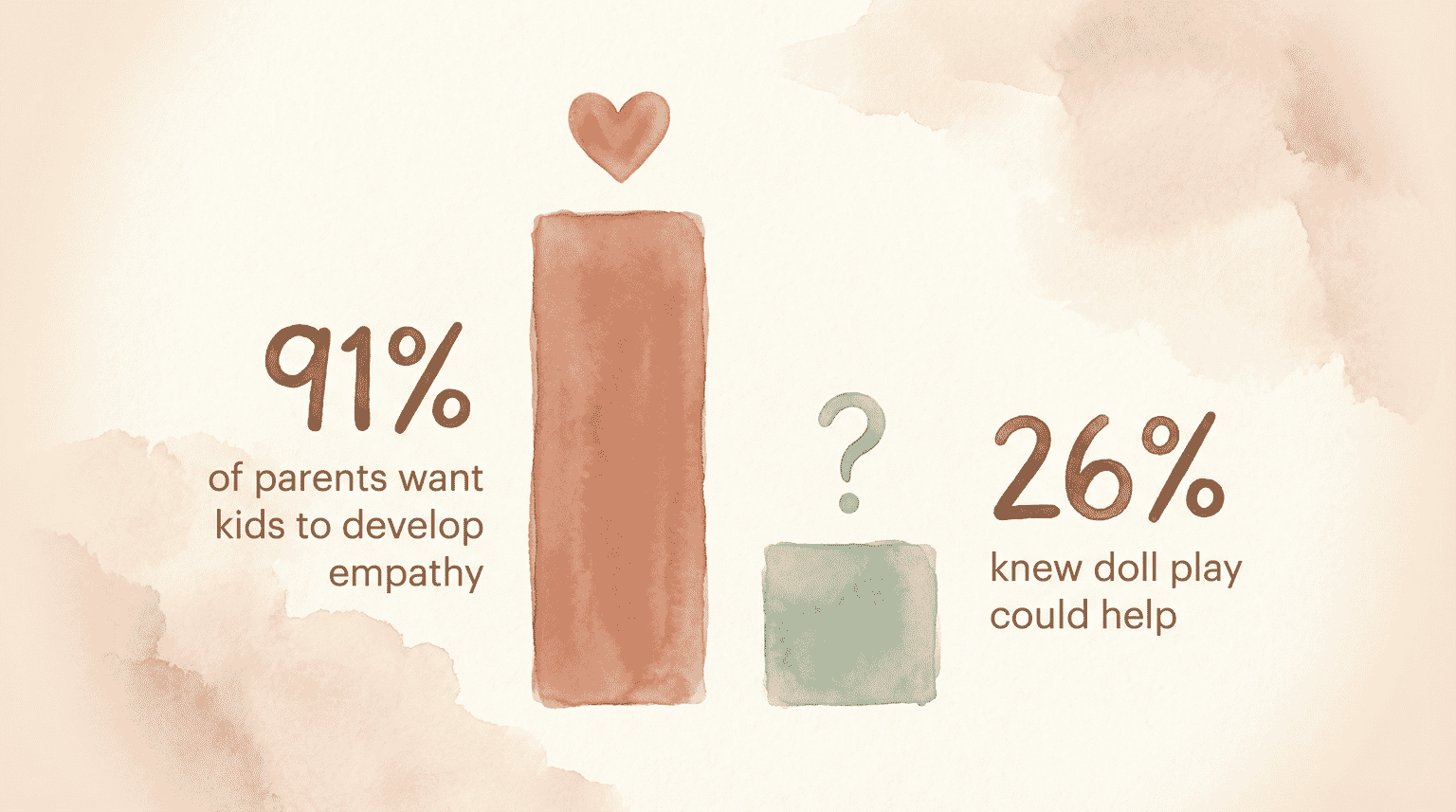
The research parent survey revealed something striking: 91% of parents rank empathy as a key skill they want their child to develop, but only 26% knew doll play could help.
Dads have particular power here. When fathers engage in nurturing play—whether with dolls, stuffed animals, or action figures—they demonstrate that caregiving isn’t gendered.
Simple acts matter: feeding the teddy bear at pretend picnics, “putting baby to bed” alongside your child, creating scenarios where action figures help each other, talking about characters’ feelings during any kind of play.
My husband does this naturally now, and I’ve watched our sons internalize the message: nurturing is just what people do.
Frequently Asked Questions
Is it normal for boys to play with dolls?
Completely normal and developmentally beneficial. Cardiff University brain imaging research shows boys and girls exhibit identical patterns of neural activation in regions associated with empathy and social processing during doll play. Children naturally engage with diverse toys when given access without social pressure.
What are the benefits of boys playing with dolls?
Research identifies three primary benefits: empathy development (doll play activates brain regions for social processing), language skills (children use more words about thoughts and emotions during doll play), and emotional regulation (practicing caregiving scenarios helps children understand and manage feelings).
At what age do boys stop playing with dolls?
Boys typically begin avoiding dolls around ages 5-7, when research shows gender stereotypes reach peak rigidity. This withdrawal is driven by social messaging and peer pressure rather than developmental changes. Simple counterstereotypical messages can significantly reduce this avoidance.
Why do some parents not let boys play with dolls?
Gender expectations are enforced more strictly on boys than girls. Research shows society applies more pressure on boys to conform to masculine norms. Parents often internalize these cultural messages unconsciously, worrying about social consequences for sons who don’t conform.
Are action figures considered dolls?
Functionally, yes. Action figures and fashion dolls serve identical developmental purposes—both are figurines used in imaginative play. The brain doesn’t distinguish between marketing categories; Cardiff research shows social processing activation occurs regardless of whether the figure is labeled “doll” or “action figure.”
Now I’d love to hear from you. Have you navigated this with your own kids? What worked? What pushback did you face? Drop a comment below—I read every single one.
References
- Cardiff University Doll Play Study (2020) – First neuroimaging research on doll play and social processing
- European Journal of Neuroscience (2023) – Expanded research including neurodivergent children
- Forbes (2022) – Overview of multi-year Cardiff findings
- Expressable (2024) – Analysis of language development during doll play
- Marymount University (2022) – Research on gender norm enforcement asymmetry
- PMC Counterstereotyping Study (2024) – Intervention research on changing children’s gender stereotypes

Share Your Thoughts